
Measurement & money
Grade 6 Math Volume 1
Work through study/example pages then practice pages (fill-in-the-blank, matching, word problems, factor trees, number-line placement) for each topic, finishing each topic with a one-page quiz.




Classroom resources
Browse by lesson focus
Choose the topic or kind of practice you need.
Showing 337–360 of 435 resources

 Show filters
 Work through study/example pages then practice pages (fill-in-the-blank, matching, word problems, factor trees, number-line placement) for each topic, finishing each topic with a one-page quiz.
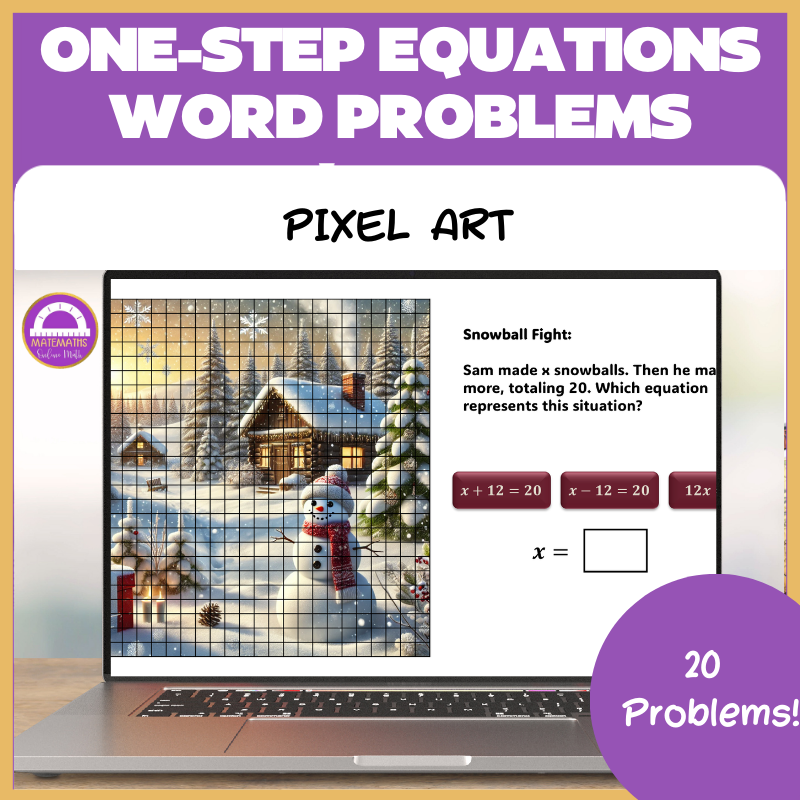
Practice writing and solving one-step algebraic equations from winter-themed word problems.
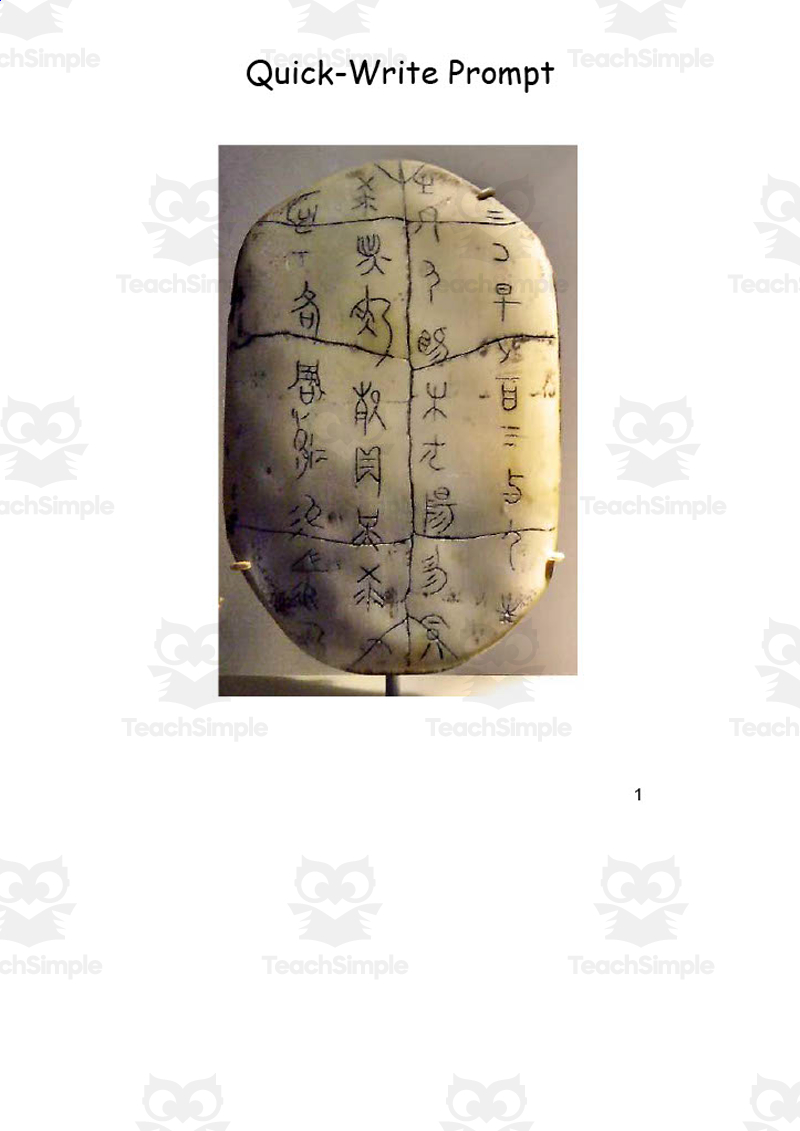
Read informational text about ancient China; answer multiple-choice comprehension questions ('What Do You Know?') after each section testing main idea, inference, opinion vs. fact, and vocabulary in context; solve two inductive real-world math word problems tied to trade careers (stone mason, silk maker) involving area, cost, and…

For each worksheet, students work through the problem using the 5-step process (think, conjecture/attempt, discuss, trial, review) and then check their reasoning against the worked strategy and solution printed on the reverse side.
Complete guided practice items (fill in answers, model/draw solutions, solve word problems) for each topic, then answer a multiple-choice/short-answer quiz on that topic.
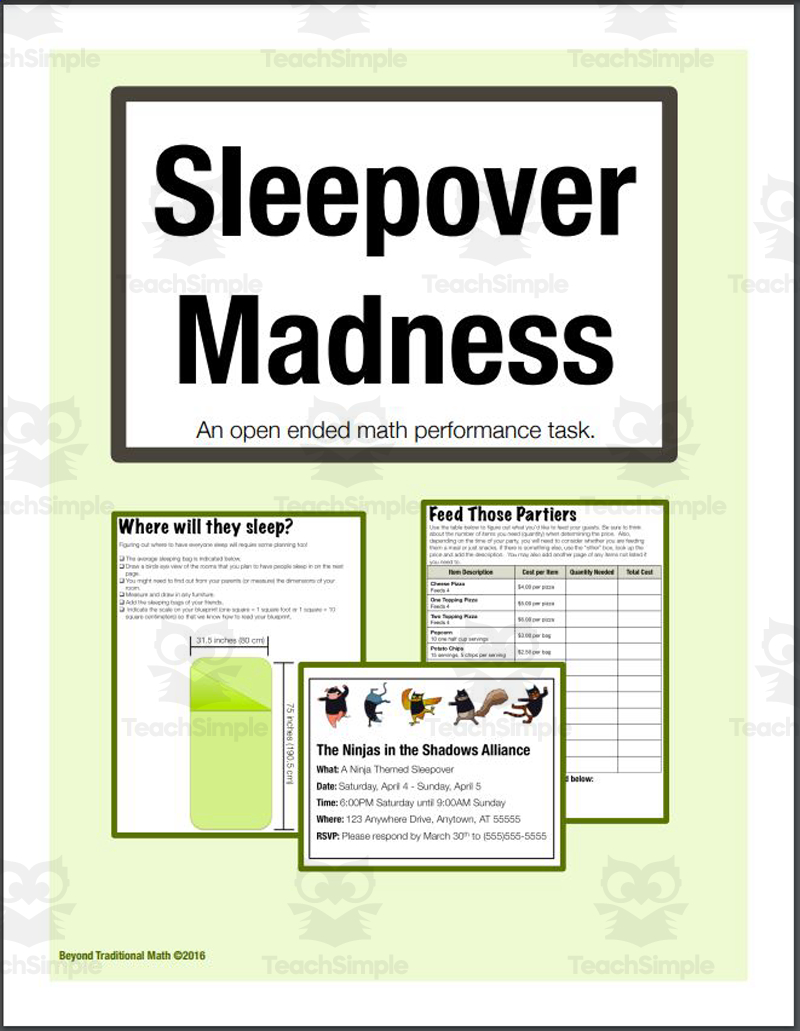
Students plan a sleepover: create a guest list with full addresses (up to 10 guests), choose and describe a party theme, design an invitation, plan and cost out breakfast/food items from a menu table, choose and cost timed activities from an activities table, map out sleeping arrangements, and write a final letter to their parents…
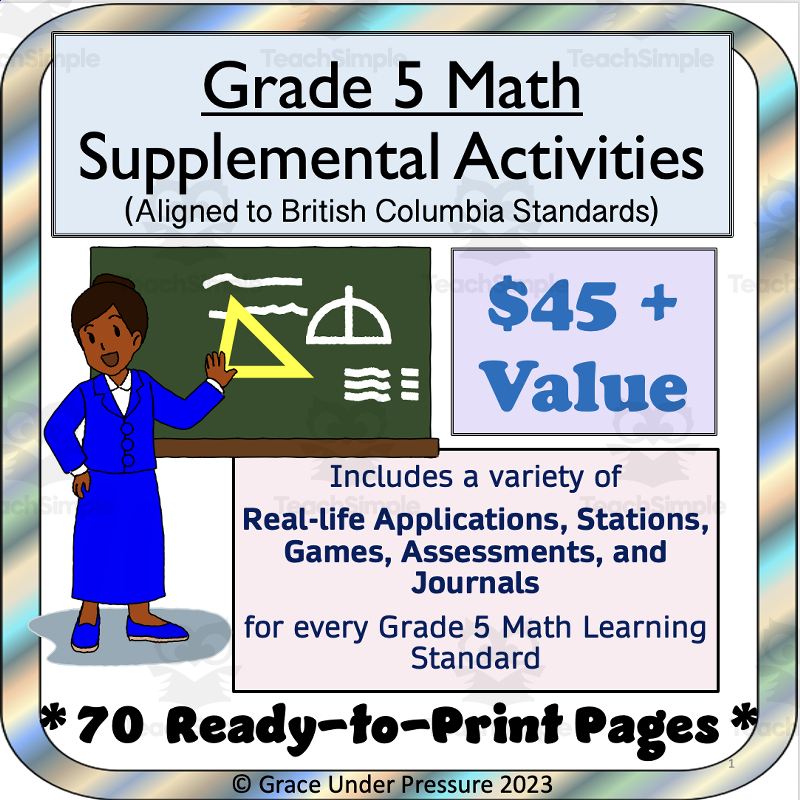
Complete real-life application worksheets, math stations/centers, games, journal prompts, projects, and quick assessments across number concepts, decimals, fractions, whole-number operations, patterns, algebra, and measurement.
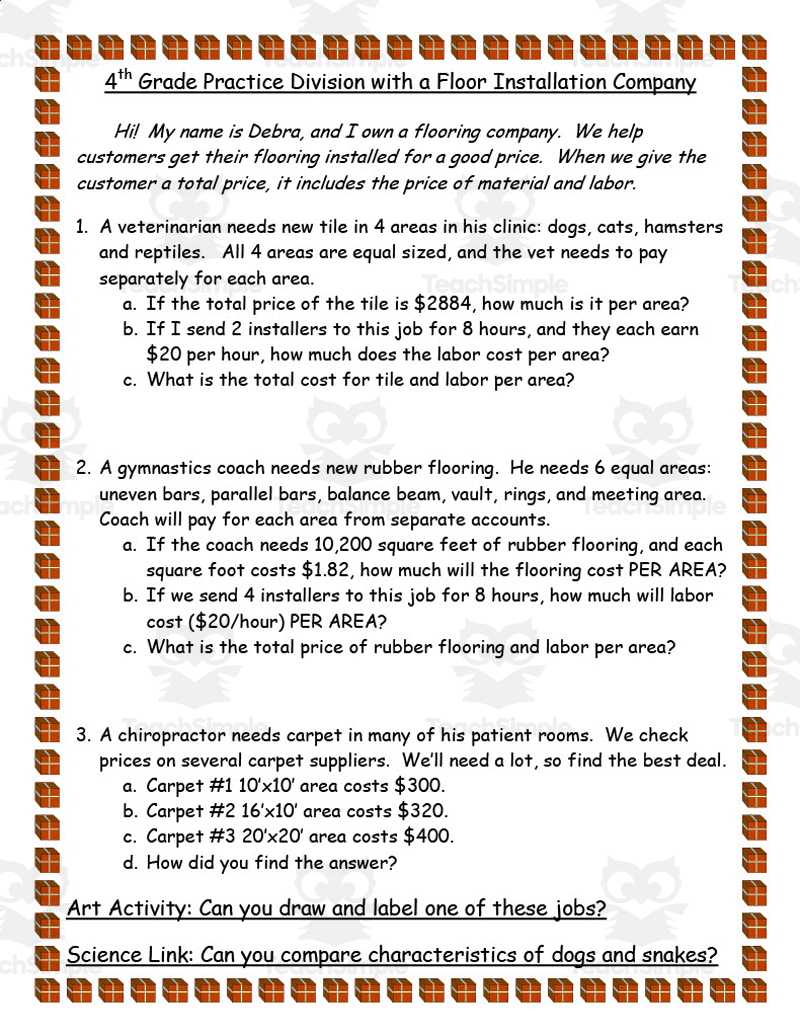
Solve 3 multi-part word problems requiring multiplication and division (calculating material costs, labor costs, and per-area/per-square-foot totals) narrated by a flooring company owner character; read a nonfiction passage on the history of flooring; complete an art activity (draw and label a job) and a science-link activity comparing…
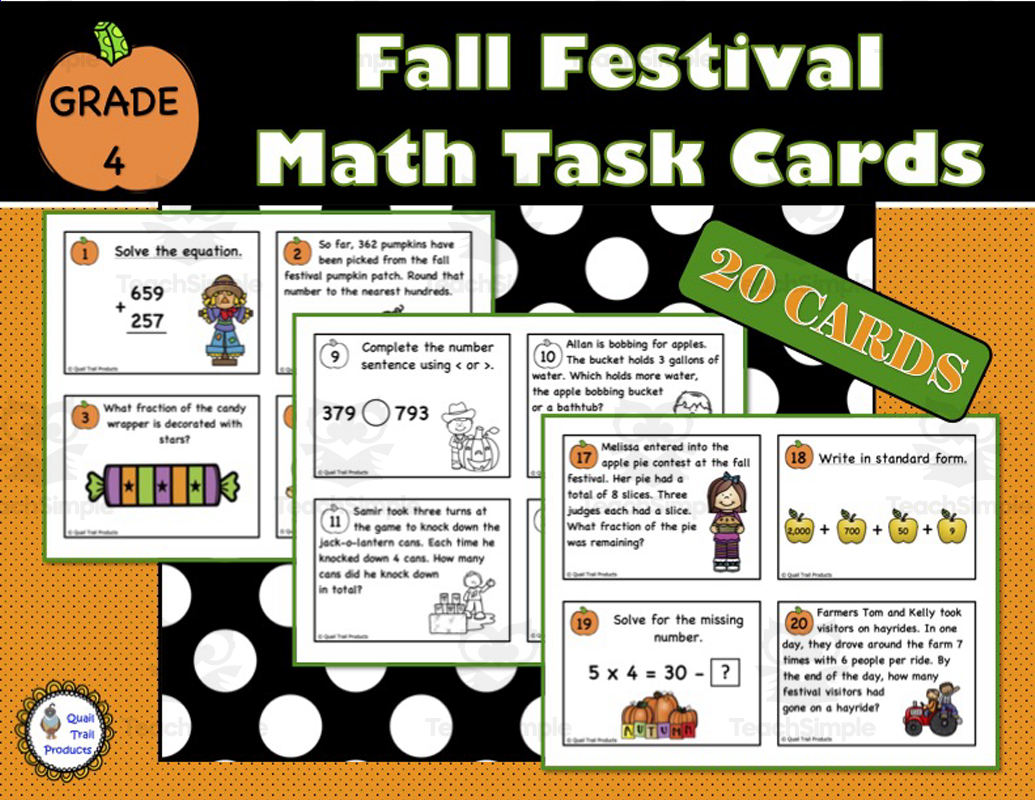
Solve individual math problems on each numbered card (addition, rounding, fractions, unit conversion, measurement, subtraction word problems) using fall-festival scenarios and record answers separately.
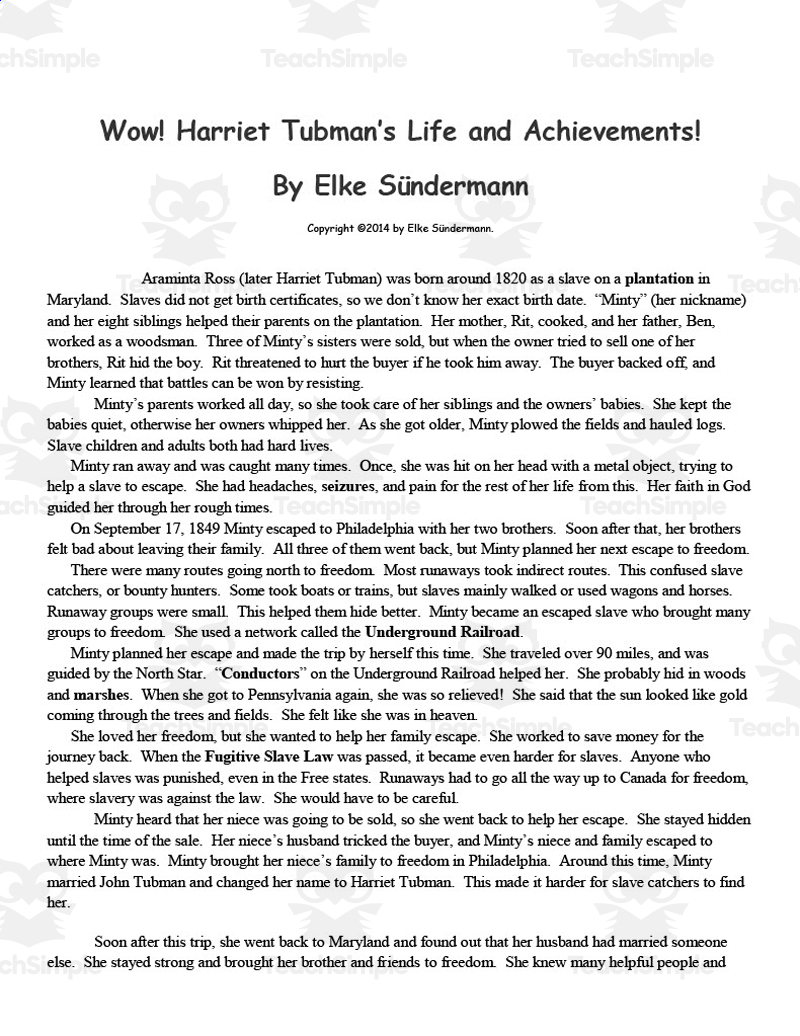
Read the biographical narrative, answer 10 multiple-choice reading comprehension, vocabulary, and literary-device questions, and solve 5 math word problems (dates/elapsed time, multiplication/division, distance/time estimation, percentages/algebra, powers of 10) based on facts from the biography.
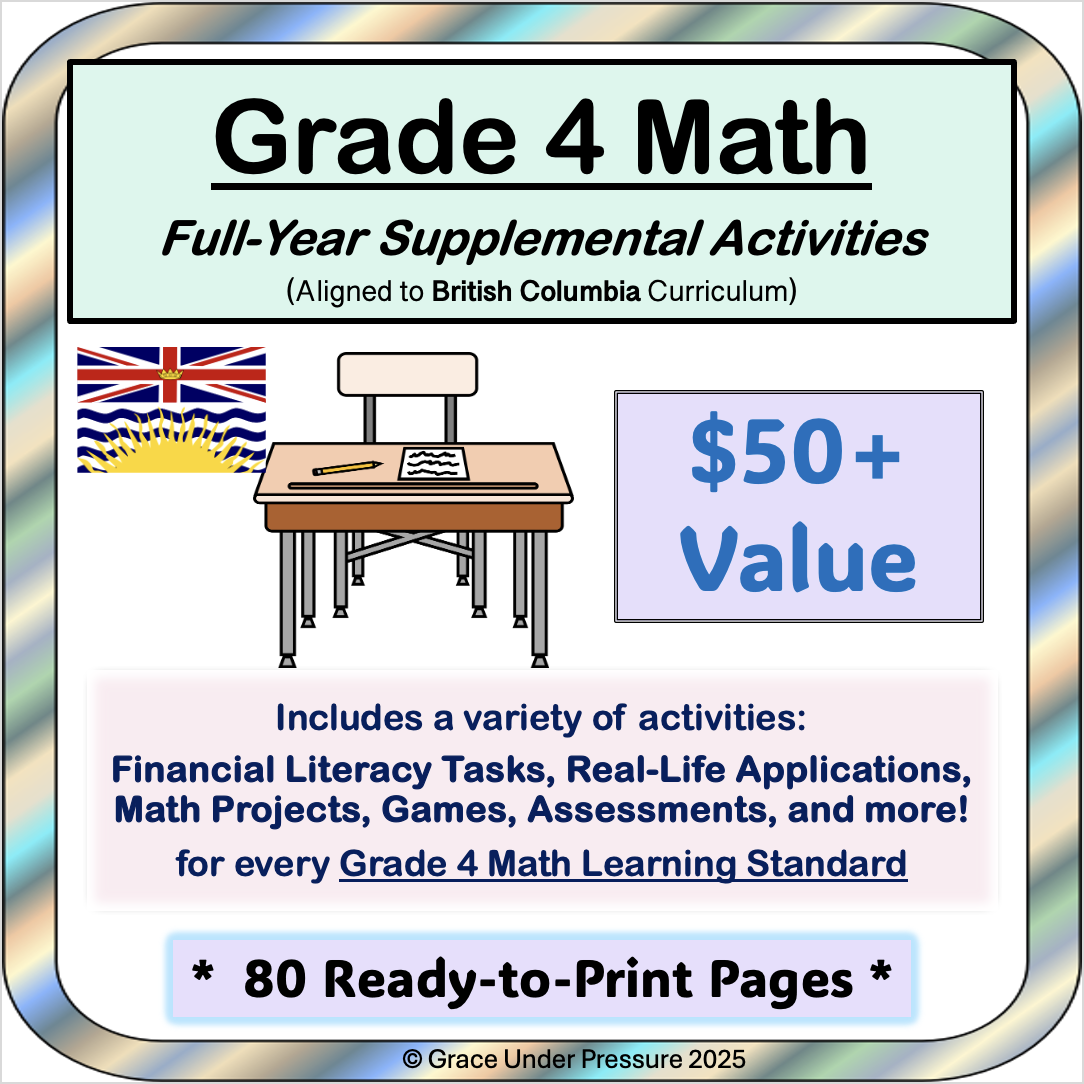
Complete a variety of real-life application worksheets, games, financial-literacy tasks, math projects, journals, and quick assessments across number concepts, decimals, fractions, whole-number operations, patterns, and algebra.
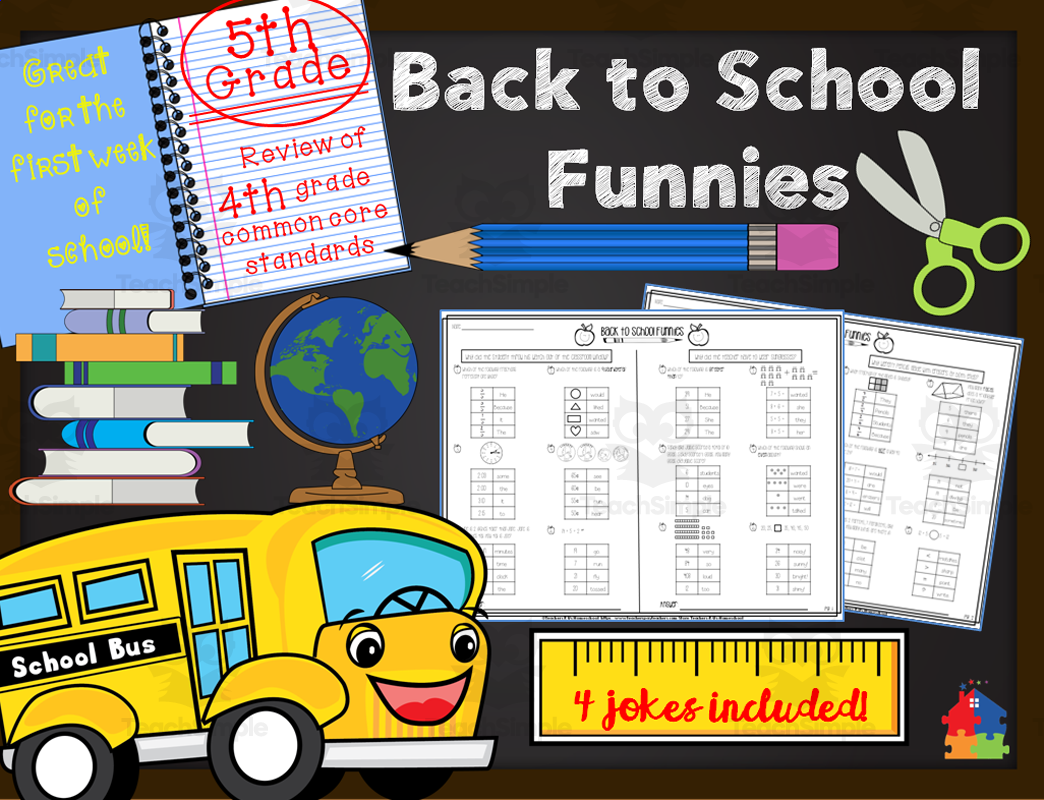
For each of 4 riddles, solve 6 multiple-choice math problems (fraction identification, rounding to the hundred-thousands place, classifying angles, decimal place value, area/perimeter, place value in large numbers, making change, equivalent fractions, and one- or two-step word problems involving money, weight, and…
Add/subtract/multiply/divide fractions and decimals, round decimals, identify place value, compare numbers, multiply/divide multi-digit numbers, compute area/perimeter/volume, classify angles, and solve multi-step word problems.
Solve 6 short math problems per page on a provided 'Answer Document' (show your work), including: writing numbers in standard form, comparing/rounding numbers, balancing equations, solving for a variable, multi-step word problems, and finding a shape's perimeter.

Students fill in blanks and solve problems: multiply whole numbers by 10 and 100; move decimal points to multiply/divide by powers of ten; write numbers in expanded exponential form and standard form; evaluate and write powers of 10; convert numbers to and from scientific notation; solve related word problems; complete a challenge…
Complete a quick-write (morning: observe; afternoon: infer); choose a career ('Anything You Want to Be') and research its job description; write and share an original math word problem related to that job; practice x2 multiplication facts; begin reading an informational passage on Chippewa/Ojibwe history ('Discover Chippewa Tribes in…
Read a fictional dialogue passage in which a girl tells her mother facts about the Aztec/Spanish/European history of chocolate; sequence five historical events from the story in correct order; write a short story about a favorite food after researching it; solve math word problems about chocolate consumption/production (fractions,…
Practice the four arithmetic operations with whole numbers, compare numbers, find factors, greatest common factor, multiples, and least common multiple, rename and simplify fractions and mixed numerals, add and subtract fractions with like and unlike denominators and mixed numbers, multiply and divide fractional numbers, add and…

Solve 20 numbered word-problem task cards covering conversions of time, length, weight, and liquid volume, and record answers on a provided answer sheet.
Complete a quick-write; solve the day's siding word problem (unit conversion from yards, fraction overlap); practice multiplication/division fact fluency; continue independent practice and the reading/writing routine.
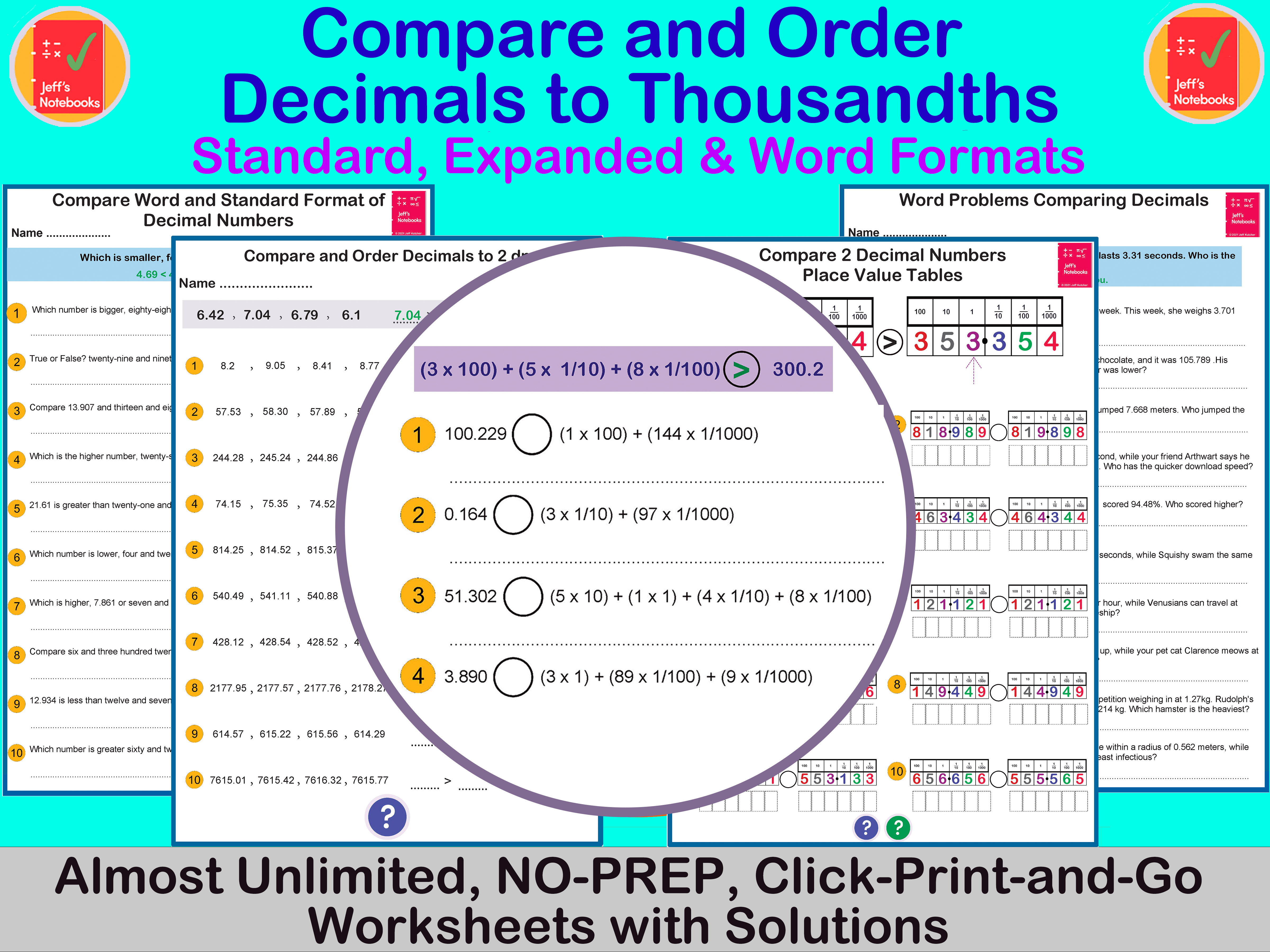
Compare pairs or sets of decimal numbers using , = symbols; convert between expanded, standard, and word formats; order decimals; solve decimal word problems.
Read the narrative passage 'Our Best Friend' about the family dog Trooper, then complete a true/false-correction comprehension exercise, write an original pet story, complete an antonym vocabulary exercise, solve a set of dog-themed math word problems (ratios, unit rates, graphing), and complete a dog-breed word-search puzzle.
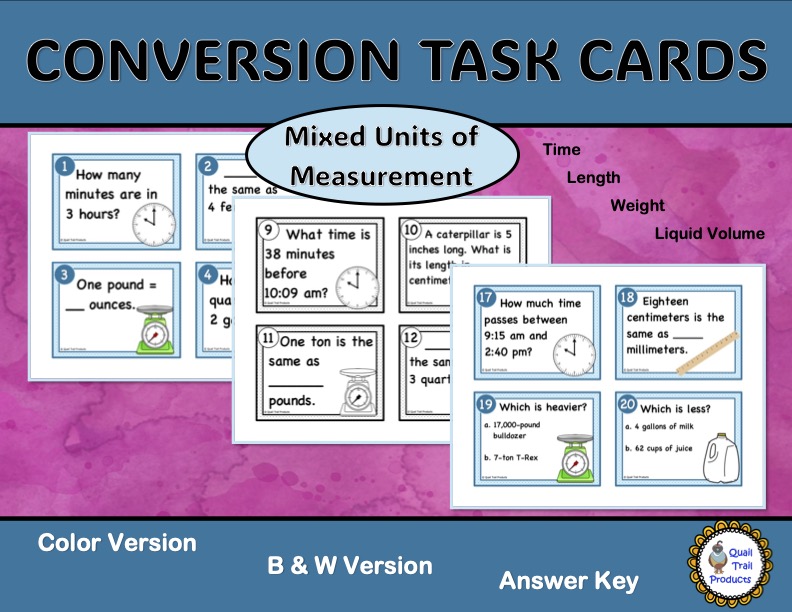
Solve 20 numbered word-problem task cards covering conversions of time, length, weight, and liquid volume, and record answers on a provided answer sheet.
Complete a quick-write; solve the day's siding word problem (unit conversion, fraction overlap); practice multiplication/division fact fluency; work toward the culminating popsicle-stick/birch-bark art project and final writing piece.