
Algebra & reasoning
Inequalities Task Cards
Solve inequalities presented as graphs, word problems, or equations on 24 task cards; record answers on a recording sheet and self-check with an answer key.
Answers included




Classroom resources
Browse by lesson focus
Choose the topic or kind of practice you need.
Showing 289–312 of 435 resources

 Show filters
 Solve inequalities presented as graphs, word problems, or equations on 24 task cards; record answers on a recording sheet and self-check with an answer key.
Read departure times and flight durations, then draw or write the arrival time on analog or digital clocks; solve related elapsed-time word problems about characters catching flights.
Use printable task cards (Below Level, On Level, Advanced tiers) to solve fraction division problems and word problems, record answers on a Mission Answer Log Sheet, and self-check with an answer key; optionally use an accompanying PowerPoint presentation.
Students solve 16 winter-themed ratio/rate word problems (e.g. finding a ratio of ingredients, determining unit price, computing rate per hour, comparing equivalent ratios), recording answers on a provided recording sheet and checking work against an included answer key; cards can be used at a center, as a 'Scoot' rotation game, or as a…

Use tape diagrams to solve ratio problems by dividing and coloring sections according to a given ratio, complete randomized/interactive practice worksheet sets, and solve ratio word problems.
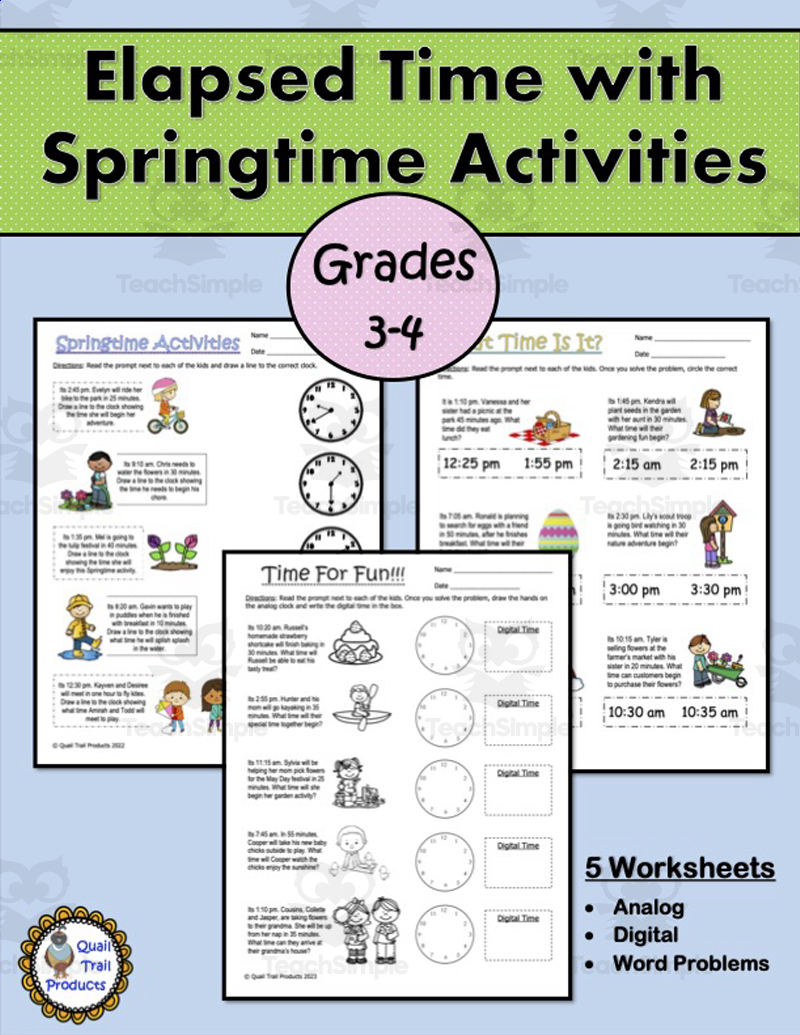
Students read spring-themed scenario prompts and draw lines connecting them to the correct clock face/time, and solve related elapsed-time word problems.
Read a nonfiction passage about Orville and Wilbur Wright; answer reading comprehension questions; write a personal narrative about a flying experience; identify compound words from the story; solve word-problem math questions (Figure It Out!) based on story facts; unscramble vocabulary words (Word Play); teacher-led…

Students work through worked examples of tape diagrams for ratio word problems, then apply the technique to solve additional problems using tape diagrams and double number lines.
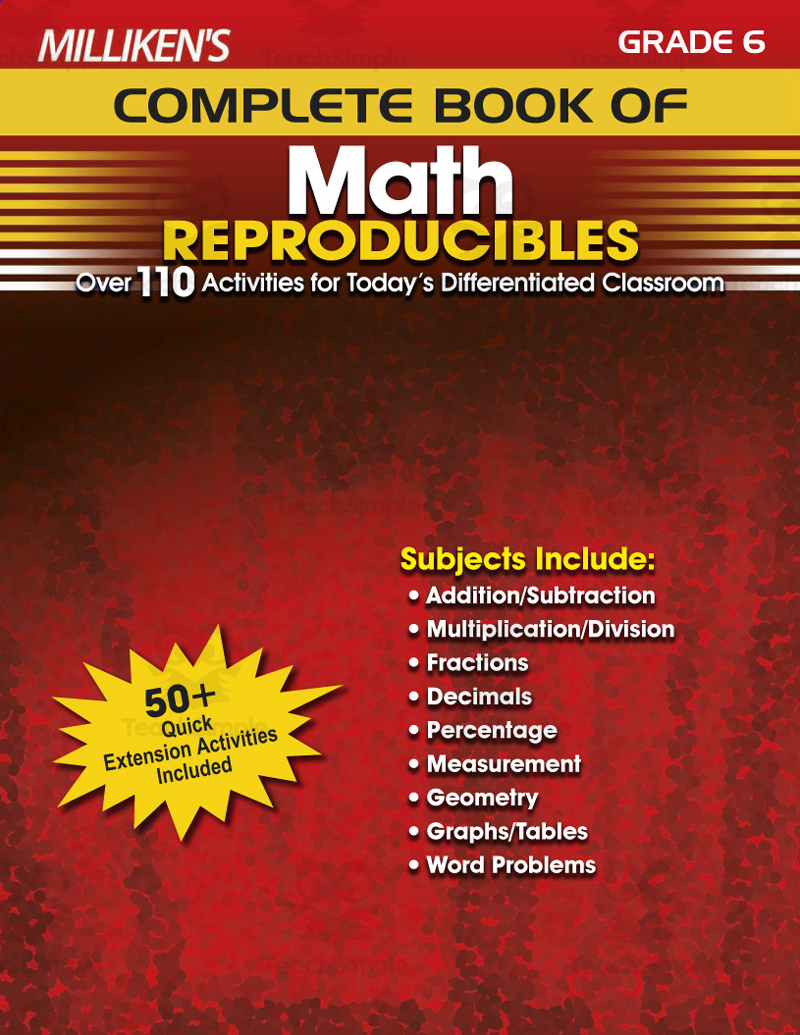
Complete pencil-to-paper computation and (later in the book, per table of contents) geometry/percentage/word-problem worksheets, largely independently; check work against an answer key at the back of the book.
Read a nonfiction story about Balto the sled dog, answer fill-in-the-blank comprehension questions, write an original story about a heroic animal, find antonyms for given words, and solve word-problem math questions based on the story's facts.

Students complete printable activity pages such as even/odd numbers, number sequences, place value with decimals, division, multiplication/word problems, mixed fractions and equivalent fractions, symmetry (including analyzing Central Australian Art and Asian Art symbols), comparing area and angles, 2D shape creation, time zones,…
Complete a sequence of multiplication practice pages progressing from basic facts (1-10) through multi-digit multiplication with renaming, word problems, mistake-finding, and missing-factor exercises.
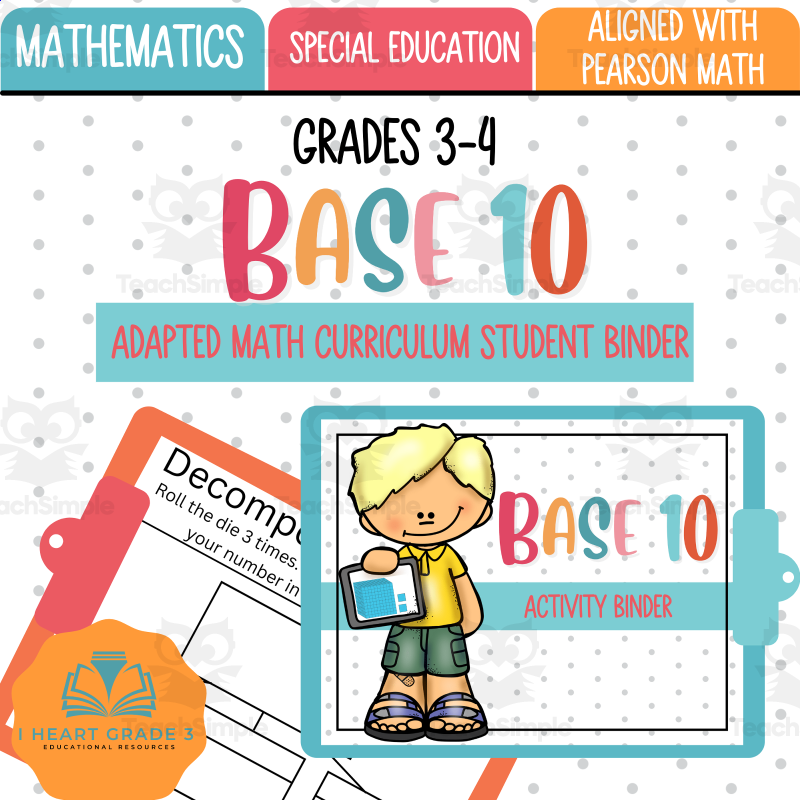
Read numbers aloud, roll a 10-sided die and use a dry-erase marker (or base-10 blocks) to build and read numbers, represent numbers with base-10 blocks/abacus drawings, compare two dice-generated numbers using correct symbols, and use a word-problem organizer mat; a rubric/checklist page is completed by the teacher to score independence…
Read a nonfiction passage about bones and the skeleton, answer reading-comprehension questions, write a short personal narrative about a broken-bone experience, find rhyming words from the story, solve math word problems using facts from the passage (bone counts, blood cell production, cost calculations), and unscramble vocabulary words…

Identify and classify angles in photographs/artwork, estimate angle measures and verify with a protractor, and solve angle-addition word problems (e.g., how many more degrees to reach a target angle).
Students read a nonfiction biography of Van Gogh, then answer reading-comprehension fill-in-the-blank questions, solve math word problems based on details from the passage, unscramble vocabulary words from the story, and draw/paint their own picture as Van Gogh might have.
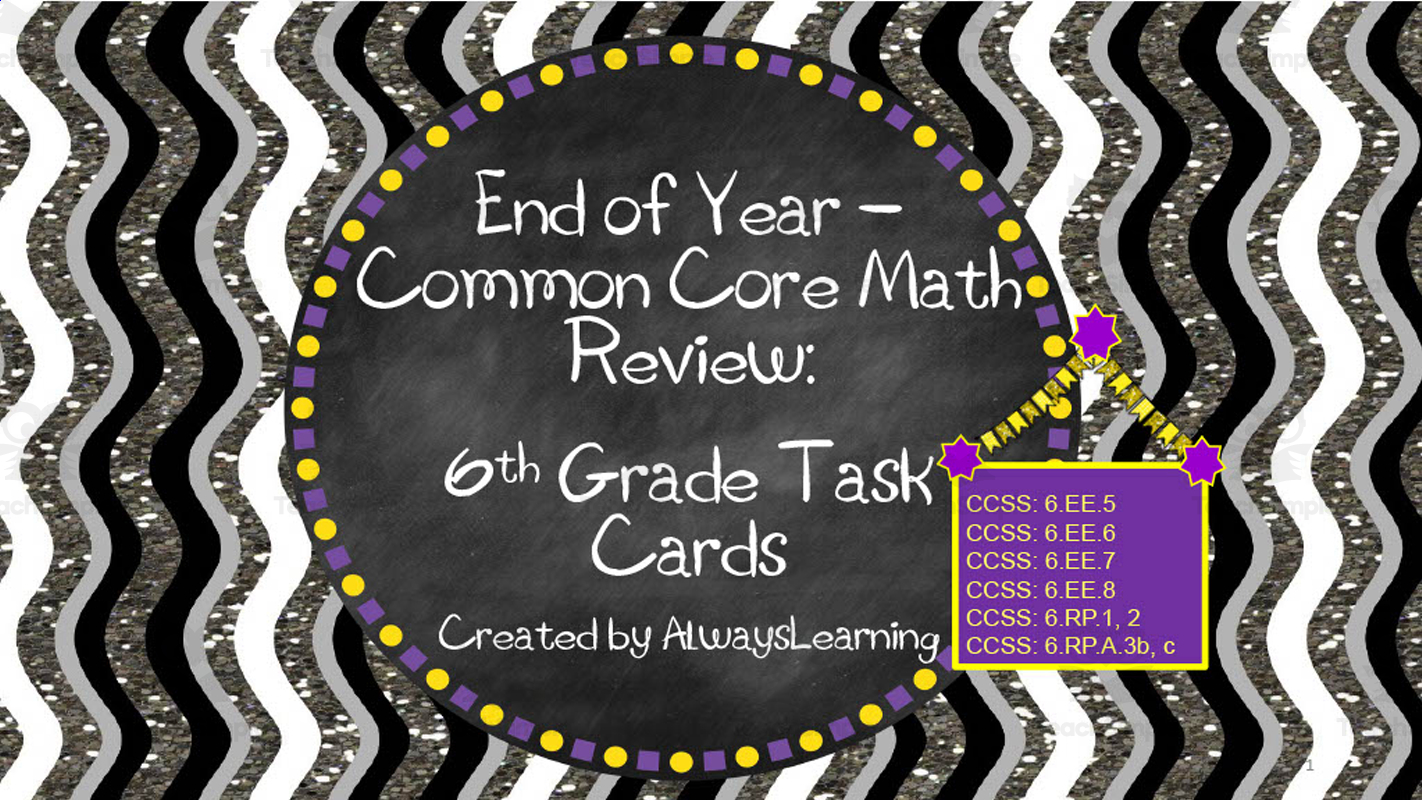
Solve equations, simplify and evaluate expressions, combine like terms, convert fractions/decimals, write and solve inequalities, solve ratio and rate word problems, and interpret a number-line inequality graph; record answers on a provided recording sheet, individually or in group/rotation games (task card center, Scoot game, or…

Read an informational passage about T. rex ('The Lizard King'), answer fill-in-the-blank comprehension questions, write and illustrate an original story about a newly discovered dinosaur, complete a rhyming vocabulary exercise, solve math word problems (weight conversion, elapsed time, money), and solve a letter-code riddle puzzle.
Students solve crossword-grid-style puzzles where Across and Down clues are arithmetic expressions whose numeric answers fill the grid cells; also complete word problems and cumulative reviews.
For each of 4 word-problem scenarios (a doghouse, a garden, a frog enclosure, a town), draw 3 different non-standard shape designs on graph paper that match a given fixed area, number each design, and calculate/write the perimeter of each design with correct units.
Students answer multiple-choice math questions (compute, round, identify shapes/angles, solve word problems, read graphs) by circling or filling in the letter of the best answer on a printed test.

Students find unit fractions and fractions of given quantities using visual arrays, complete guided fill-in-the-blank numerical calculations (find 1/n of an amount, then multiply to find the full fraction of the amount), solve word problems involving fractions of amounts, and complete a color-in fraction activity.

Complete fill-in-the-blank vocabulary definitions (divisor, dividend, quotient, partial quotient, product, estimate, algorithm, compatible numbers), answer prior-knowledge warm-up division word problems, and work through guided division examples/notes.
Solve multiple-choice, short-response, and extended-response math problems (including multi-part extended-response word problems, e.g. comparing pages read over two weeks) and show work for short/extended response items.