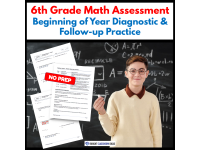
6th Grade Math Assessment | Beginning of Year Diagnostic

- Grades
- Grade 6, Middle School, Homeschool Resources
- Pages
- 42
- File type
- Answer key
- Included


- Subject
- Math
- Topic
- math, practice
- Resource types
- Assessments, Teacher Tools, Worksheets & Printables
- Answer key
- Included
About this resource
What's inside this resource
Start sixth grade with clearer data and a focused instructional plan using this Grade 6 beginning of year math assessment. This visual sixth grade math diagnostic helps identify strengths, skill gaps, and readiness across 13 essential math strands—then connects results directly to targeted follow-up practice.
With 45 questions, teacher scoring and analysis tools, and skill-specific reteaching pages, this resource creates a practical assess → analyze → group → reteach system for the beginning of the school year.
What’s Included
This sixth grade math assessment bundle provides a complete beginning-of-year diagnostic system:
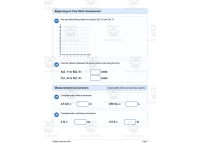
✅ 45-question Student Math Assessment
✅ 13 essential math skill strands
✅ Clear, visual student-friendly layout
✅ Complete answer key for all 45 questions
✅ Teacher “what to look for” notes
✅ Common-error and misconception guidance
✅ 45-point scoring system
✅ Secure, Developing, and Emerging score bands
✅ One-page quick-grading answer grid
✅ Step-by-step administration guide
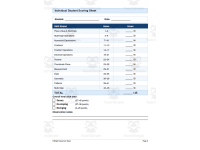
✅ Individual student scoring sheet
✅ Whole-class tracking grid
✅ Small-group planning guidance
✅ Standards alignment
✅ Reteaching roadmap
✅ 13 targeted follow-up practice pages
✅ Fresh practice problems different from assessment items
✅ Teacher answer strip for every practice page
The answer key includes correct responses plus short teacher notes that help explain common errors and turn student responses into useful instructional information.
How It Works in the Classroom
Use this Grade 6 beginning of year math assessment during the first week or two of school to see which foundational skills students bring into sixth grade.
There is no time limit, and the assessment can be split into two shorter sittings. A suggested break point comes after Decimal Operations, Question 21, so students can return with fresh attention for volume, coordinate plane, measurement, data, geometry, patterns, and multi-step problems.
Use this resource for:
⭐ Beginning-of-year math assessment
⭐ Back-to-school math diagnostic
⭐ Sixth grade math pre-assessment
⭐ Fifth-grade skills review
⭐ Middle school math readiness
⭐ Small-group planning
⭐ Math intervention
⭐ Skill-based differentiation
⭐ Targeted reteaching
⭐ Independent follow-up practice
After scoring, transfer results to the individual student scoring sheet and whole-class tracking grid. The whole-class chart on page 4 visually displays all 13 strands side by side, making class-wide strengths, shared gaps, and potential small groups easier to identify at a glance.
Then print only the follow-up practice pages each student or group needs. Part 4 includes one focused worksheet for every assessed strand, with fresh problems that differ from the original assessment items.
Standards & Learning Goals
This sixth grade math diagnostic assessment checks readiness across 13 essential strands:
🔢 Place value and decimals
✖️➗ Multi-digit operations
🧮 Numerical expressions and exponents
🍕 Fractions
✖️➗ Fraction operations
🔟 Decimal operations
🧊 Volume
📍 Coordinate plane
📏 Measurement conversions
📊 Data and statistics
📐 Geometry
🔁 Patterns and function tables
🧠 Multi-step problem solving
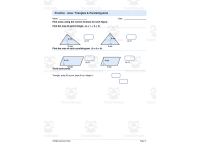
Students work with decimal place value to the thousandths, expanded form, rounding and comparing decimals, multi-digit multiplication and division, order of operations, exponents, variables, algebraic expressions, simplifying and ordering fractions, fraction-decimal conversions, multiplying and dividing fractions, decimal operations, rectangular prism volume, ordered pairs, quadrants, coordinate distance, metric and customary conversions, mean, median, mode, range, dot plots, triangle and parallelogram area, patterns, function tables, and multi-step reasoning.
The included standards and reteaching map connects strands to illustrative Common Core references, including:
5.NBT.A.3
6.NS.A.1
6.NS.B.2–3
6.NS.C.6
6.NS.C.8
6.EE.A.1–2
6.EE.B
6.EE.C.9
6.RP.A.3
6.RP.A.3d
6.G.A.1–2
6.SP.B.5
5.NF.A
5.MD.A.1
5.MD.C.5
5.OA.B.3
The standards map also points each assessed strand to its matching Part 4 practice page, helping teachers move directly from assessment results to targeted reteaching.
Why Teachers Love It
✨ See more than a total score. Results are broken down by skill strand for clearer instructional decisions.
✨ Save valuable planning time. The answer key, quick-grading grid, individual scoring sheet, and class tracker streamline the assessment process.
✨ Build purposeful small groups. Group students by shared skill needs instead of relying only on overall scores.
✨ Spot important misconceptions. Teacher notes help identify decimal place-value confusion, dropped zeros in division quotients, base-times-exponent errors, reversed “less than” expressions, misplaced decimal points, and coordinate-order mistakes.
✨ Preview algebra readiness. Students evaluate powers, use order of operations, substitute values into expressions, and translate verbal phrases into algebraic expressions.
✨ Check fraction and decimal operation readiness. Students simplify, compare, convert, multiply, and divide fractions while also adding, subtracting, multiplying, and dividing decimals.
✨ Assess coordinate plane understanding. Students name ordered pairs, identify quadrants, plot points, and determine distances along horizontal and vertical lines.
✨ Differentiate without searching for extra worksheets. Print only the specific follow-up page each student or group needs.
✨ Turn assessment data into flexible groups. The teacher tools recommend grouping by shared strand need rather than total score and rechecking skills after targeted practice.
✨ Move directly from assessment to reteaching. Practice pages cover decimals, multi-digit operations, expressions and exponents, fractions, fraction operations, decimal operations, volume, coordinate plane, measurement, statistics, geometry, patterns, function tables, and multi-step problems.
Start the year knowing what your students understand and what they need next. Download this Grade 6 beginning of year math assessment to assess readiness, identify learning gaps, form targeted small groups, and provide focused follow-up practice from one coordinated resource.
Perfect for teachers searching for a sixth grade math pre-assessment, back-to-school math diagnostic, Grade 6 readiness assessment, fifth-grade skills review, middle school math diagnostic, math intervention tool, or beginning-of-year math assessment with built-in scoring and reteaching support.
Related resources
More resources teachers may find useful
24 related resources were found using this product's title, contributor, categories and tags.


In the classroom
Teaching tips & learning objectives

Learning objectives
Address specific Grade 6 prerequisite gaps
Evaluate expressions and operate with rational-number representations

Teaching tips
Use the diagnostic results to sequence prerequisite strands before assigning later expression or geometry work.
Follow up on number-line gaps with a rational numbers on a number line worksheet.
Use these decimal operations posters when the assessment shows students need a reminder of the steps.

Skills covered
Grade 6 math diagnostic support — Address specific Grade 6 prerequisite gaps
Strand-based follow-up — Evaluate expressions and operate with rational-number representations

No reviews yet
Downloaded this resource? Tell other teachers how it went.
Resource details
Concepts & topics
Core concepts
 Core concepts
Grade 6 math diagnostic support
Strand-based follow-up
 Topics
Explore more
Categories this resource belongs to
Explore related searches
More to explore
You may also like