3,932 products added recently
Diagnostic Assessment
Start your instructional journey by administering diagnostic assessments that reveal your students' current knowledge and skills. This collection includes tools that assess prior learning, identify misconceptions, and set a baseline for growth. By utilizing diagnostic assessments, you can customize your teaching strategies to address specific areas of need.
6th Grade Science Diagnostic Assessment & Review System
Science, Grade 6, Assessments, Teacher Tools, Lesson Plans, Worksheets & Printables
Start the year with a clear picture of student readiness using this 6th grade beginning of year science assessment and targeted skills system. With a 48-question diagnostic worth 119 points , scoring and analysis tools, instructional grouping support, 11 targeted follow-up practice pages , and complete explained answer keys, this resource helps teachers move from assessment results to focused instruction without piecing together separate materials. Designed as a complete Assess → Analyze → Group → Review → Reteach system, this Grade 6 science resource emphasizes model interpretation, data analysis, graph reading, and scientific reasoning across Life Science, Earth & Space Science, Physical Science, and Scientific Practices . Students work with cells, body systems, classification, ecosystems, plate tectonics, atoms and molecules, energy transformations, forces and motion, experimental variables, and Claim-Evidence-Reasoning tasks. What’s Included This 6th grade science assessment and review system includes: ✅ 48-question beginning-of-year science diagnostic ✅ 119 total assessment points ✅ 4 major science strands ✅ Life Science questions ✅ Earth & Space Science questions ✅ Physical Science questions ✅ Scientific Practices questions ✅ Multiple-choice questions ✅ Short-answer questions ✅ Labeling activities ✅ Matching questions ✅ Diagram interpretation ✅ Data tables ✅ Multi-line graph reading ✅ Scientific scenarios ✅ Vocabulary-in-context questions ✅ Claim-Evidence-Reasoning (CER) tasks ✅ 13 labeling and diagram-interpretation items ✅ Detailed cell model ✅ Digestive system model ✅ Classification hierarchy ✅ Earth’s layers diagram ✅ Plate boundary models ✅ Moon phase interpretation ✅ Atomic structure model ✅ Molecule models ✅ Energy transformation system ✅ Distance-time graph ✅ Free-body force diagrams ✅ Experimental variables setup ✅ Answer recording sheet ✅ Quick-reference answer key ✅ Skill-by-skill scoring chart ✅ Strand analysis tool ✅ Secure, Developing, and Needs Support performance bands ✅ Individual Student Performance Profile ✅ Whole-class data tracker ✅ Suggested instructional groups ✅ 11 targeted follow-up science practice pages ✅ “Key Concept” refresher on every follow-up page ✅ “Extension” task for students who are Secure ✅ All-new follow-up practice with no repeated assessment questions ✅ Complete answer keys ✅ Suggested short-answer responses ✅ Completed visual and diagram answers ✅ Sample CER responses ✅ Short “why” explanation for every assessment item ✅ Partial-credit guidance Part 1 contains 48 mixed-format questions worth 119 total points . The Teacher Guide recommends two 45-minute sessions and specifically explains that the diagnostic emphasizes interpretation and reasoning through models, data, and graphs rather than isolated recall. The At-a-Glance chart on page 2 also identifies 13 labeling or diagram-interpretation items focused on cells, body systems, classification, Earth’s layers, plate boundaries, atomic structure, molecules, and energy systems. Part 2 turns student responses into actionable data with an answer recording sheet, quick-reference answer key, skill-by-skill scoring chart, strand analysis, performance bands, student profiles, a whole-class data tracker, and ready-made suggested instructional groups. Part 3 includes 11 ready-to-assign targeted follow-up pages with all-new practice. Each page includes a concise Key Concept refresher and an Extension task for students who are secure. Part 4 provides correct answers for all 48 questions, short explanations of why answers are correct, suggested responses for open-ended items, completed diagrams, sample CER responses, and partial-credit guidance. How It Works in the Classroom Use this 6th grade beginning of year science assessment during the first weeks of school to identify what students retained from earlier science learning and where middle school science instruction should begin. The resource follows a practical five-step system: 🔎 Assess — Students complete the 48-item mixed-format science diagnostic 📊 Analyze — Score by skill and strand to identify patterns and gaps 👥 Group — Form targeted instructional groups based on shared needs 📝 Review — Assign focused follow-up practice by strand and skill 🎯 Reteach — Use full answer keys, explanations, worked visuals, and model CER responses to support next steps The Assess → Reteach System chart on page 2 of Part 1 directly connects each step to the matching component of the four-part resource, creating a clear workflow from diagnostic assessment to targeted instruction. Use this resource for: ⭐ Beginning-of-year science assessment ⭐ 6th grade science diagnostic ⭐ Middle school science pre-assessment ⭐ Back-to-school science review ⭐ Science readiness check ⭐ Formative assessment ⭐ Small-group planning ⭐ Science intervention ⭐ Targeted reteaching ⭐ Data-driven instruction ⭐ Skill-based grouping ⭐ Independent follow-up practice ⭐ Science centers or stations ⭐ CER practice ⭐ Graph and data interpretation review ⭐ Middle school science reasoning practice The Scoring at a Glance chart on page 2 of Part 2 breaks the assessment into four strand totals: Life Science /36, Earth & Space Science /31, Physical Science /31, and Scientific Practices /21 , for 119 total points . It also defines three performance bands: Secure (80%–100%) , Developing (50%–79%) , and Needs Support (below 50%) . The Student Performance Profile on page 15 of Part 2 provides a one-page strand snapshot with space for strengths, focus areas, assigned Part 3 practice pages, and group placement. The Class Data Tracker on page 16 gives teachers a whole-class view of strand percentages so they can scan columns for class-wide gaps and rows for individual grouping needs. Standards & Learning Goals This sixth grade science diagnostic assessment reviews foundational concepts and scientific reasoning across four major strands: 🌱 Life Science — cell theory, cell structures, organelle functions, levels of organization, body systems, digestive system, interactions between body systems, classification, classification levels, kingdoms and groups, ecosystem energy flow, predator-prey data, photosynthesis, cellular respiration, and ecosystem CER reasoning 🌎 Earth & Space Science — Earth’s layers, plate boundaries, plate tectonics, evidence for tectonic movement, minerals, Mohs hardness, Earth system interactions, weather versus climate, climate graphs, Moon phases, inner and outer planets, and climate-trend CER reasoning ⚛️ Physical Science — kinetic theory, atomic structure, protons, neutrons, electrons, elements, compounds, chemical symbols, molecule models, physical and chemical changes, conservation of energy, energy transformations, motion graphs, net force, free-body diagrams, inertia, Newton’s first law, friction, and chemical-change CER reasoning 🔬 Scientific Practices — controlled experiments, independent and dependent variables, controlled variables, hypotheses, data tables, multi-line graphs, bar graphs, evaluating experimental design, drawing conclusions, and Claim-Evidence-Reasoning from data Students demonstrate understanding through varied science tasks rather than one question type. The diagnostic includes a six-part cell labeling task , organelle function analysis, body-system matching, a digestive path diagram, a classification ladder, predator-prey data, Earth’s four layers, three plate-boundary models, Mohs hardness data, Earth systems interactions, a temperature-over-time graph, Moon phases, an atom model, molecule models, an energy transformation chain, a cyclist distance-time graph, force diagrams, a dissolving-rate experiment, a two-line plant-growth graph, and a town energy-source bar graph. The Skill-by-Skill Scoring Chart on pages 11–13 of Part 2 helps teachers pinpoint specific gaps instead of relying only on one overall score. Skills include cell theory, organelle function, body systems, classification, ecosystem energy, Earth’s layers, plate boundaries, tectonic evidence, mineral identification, climate graphs, Moon phases, kinetic theory, atomic structure, elements and compounds, molecule models, energy transformations, motion graphs, net force, inertia, experimental design, variables, data interpretation, graph analysis, and CER conclusions. Why Teachers Love It ✨ Move beyond a single test score. Results can be analyzed by strand and individual skill, helping teachers see exactly where students are secure and where review is needed. ✨ Emphasize reasoning instead of isolated recall. The Teacher Guide explicitly centers model interpretation, data analysis, graph reading, and scientific reasoning—skills that matter as students transition into middle school science. ✨ Turn assessment data into an instructional plan. The scoring tools connect results to performance bands, student profiles, instructional groups, and targeted follow-up practice instead of leaving teachers with a stack of completed tests. ✨ Use visual and model-based questions to see student thinking. Students interpret cell structures, body systems, classification levels, Earth layers, plate boundaries, Moon phases, atoms, molecules, energy transformations, forces, and experimental setups. ✨ Assess deeper diagram interpretation. The diagnostic includes 13 labeling or diagram-interpretation items , giving students multiple opportunities to analyze scientific models and visual information. ✨ Support data-driven small groups. Part 2 includes ready-made suggested instructional groups that help teachers sort students by shared gaps and connect them to matching Part 3 practice. ✨ Differentiate with clear performance bands. Use Secure, Developing, and Needs Support ranges to guide enrichment, targeted practice, or foundational small-group reteaching. ✨ Assign only the review students need. The 11 targeted follow-up pages include: Cells & Body Systems Review Classification Review Ecosystems Review Earth’s Layers & Plate Tectonics Review Rocks & Minerals Review Weather & Space Review Atoms & Matter Review Energy Review Forces & Motion Review Experimental Design & Variables Review Graph Analysis Review The Practice Page Menu on page 2 of Part 3 directly matches common student difficulties to specific follow-up pages, making targeted assignment faster. ✨ Refresh key concepts before practice. Every targeted page includes a concise Key Concept section. For example, the Atoms & Matter page reviews subatomic particles, elements, compounds, mixtures, and kinetic theory before students begin the new practice tasks. ✨ Extend learning for students who are already secure. Every follow-up page includes an Extension task that pushes students beyond basic recall into explanation, prediction, or application. ✨ Use fresh follow-up practice instead of repeating the diagnostic. Part 3 explicitly provides all-new practice, allowing students to demonstrate understanding with new examples and situations. ✨ Build Claim-Evidence-Reasoning skills. The diagnostic includes CER tasks connected to ecosystem change, climate trends, chemical change, and data-based conclusions. Part 4 includes sample CER responses teachers can use when checking student reasoning. ✨ Make grading more manageable. Part 4 provides the correct answer, a short explanation of why, suggested responses for writing tasks, and guidance for awarding partial credit on multi-part items. ✨ Use completed diagrams for faster checking. The Completed Diagrams Quick View on page 2 of Part 4 identifies fully worked versions of the detailed cell, digestive system, classification ladder, Earth’s four layers, plate boundaries, atom model, molecule models, and energy system. ✨ Track individual student needs. The one-page Student Performance Profile gives teachers a place to record strand performance, strengths, focus areas, assigned practice, and group placement. ✨ See class-wide patterns quickly. The Class Data Tracker supports a whole-class view of Life, Earth, Physical, and Scientific Practices performance so teachers can identify common gaps and form groups more efficiently. ✨ Keep the instructional loop connected. Assessment, analysis, grouping, targeted review, reteaching, and answer support are designed as one coordinated system rather than disconnected activities. Start the year knowing what students understand and what they need next with this 6th grade beginning of year science assessment . Download this complete middle school science diagnostic and targeted review system to assess readiness, analyze results by strand and skill, create focused instructional groups, assign specific follow-up practice, and support reteaching with complete explained answer keys. Perfect for teachers searching for a 6th grade science diagnostic assessment , beginning-of-year science review, middle school science pre-assessment, back-to-school science assessment, sixth grade science review, Life Science review, Earth and Space Science review, Physical Science review, Scientific Practices assessment, cells and body systems, classification, ecosystems, plate tectonics, rocks and minerals, weather and climate, Moon phases, atoms and molecules, energy transformations, forces and motion, Newton’s laws, experimental design, variables, graph analysis, CER practice, science intervention, small-group science planning, data-driven instruction, or targeted science reteaching.
Author Bright Classroom Ideas Marketplace
Rating
Tags Science, Assessment, Diagnostic, Review, Back To School, Worksheet
1st Grade Math Assessment | Beginning of Year Diagnostic
Math, Grade 1, Assessments, Teacher Tools, Worksheets & Printables, Tests
Make your first weeks of math instruction more focused with this Grade 1 beginning of year math assessment . This picture-based first grade math diagnostic helps you identify strengths, skill gaps, and next teaching steps—then provides targeted practice for the skills students need most. Designed for young learners, the assessment uses clear circle it and write it response formats across 30 illustrated questions. What’s Included This first grade math assessment bundle gives you a complete assess → analyze → reteach system: ✅ 30-question Beginning-of-Year Student Math Assessment ✅ Picture-based, young-learner-friendly question formats ✅ Complete answer key for all 30 questions ✅ Teacher “what to look for” notes for common errors ✅ 30-point scoring guidance ✅ Suggested Secure, Developing, and Emerging score bands ✅ Quick-grading answer grid ✅ Step-by-step administration guide ✅ Individual student scoring sheet ✅ Whole-class tracking grid ✅ Small-group planning guidance ✅ Standards alignment and reteaching map ✅ 10 targeted follow-up practice worksheets ✅ Teacher answer strip for practice pages The answer key includes interpretation notes, while the teacher tools help turn results into actionable groups and reteaching plans. How It Works in the Classroom Use this resource at the beginning of first grade to see what students already know before planning review, intervention, or small groups. The assessment is designed as a low-pressure diagnostic with no time limit. It can also be given across two shorter sittings. For emerging readers, teachers can read prompts aloud while keeping responses independent. Use it for: ⭐ Beginning-of-year math assessment ⭐ Back-to-school math screening ⭐ Individual diagnostic assessment ⭐ Small-group planning ⭐ Math intervention ⭐ Skill-based differentiation ⭐ Progress-monitoring conversations ⭐ Targeted independent practice ⭐ Focused reteaching after assessment After scoring, record results by skill strand. The whole-class tracking grid helps identify students with shared needs, making it easier to form flexible small groups. Then print only the follow-up practice pages each student or group needs. The practice section includes fresh problems rather than simply repeating assessment items. Standards & Learning Goals This Grade 1 beginning of year math assessment checks foundational K–1 readiness skills across key strands: 🔢 Counting objects 🔢 Numbers to 10 and 20 🔢 Number recognition ⚖️ Comparing quantities ➕ Addition concepts ➖ Subtraction concepts 🔺 Shapes and attributes 📍 Positional words 🔁 Simple patterns 📏 Measurement comparisons Students work with skills such as counting sets, missing numbers, ten-frames, numeral recognition, more and fewer, greater and smaller numbers, addition within 10, subtraction within 10, shape identification, spatial vocabulary, patterns, and measurement comparisons. The included standards map provides illustrative K–1 Common Core references, including: K.CC.A.3 K.CC.B.4–5 K.CC.C.6–7 1.NBT.A.1 K.OA.A.1–2 1.OA.C.6 K.G.A.1–2 1.G.A.1 K.MD.A.1–2 1.MD.A.1 The resource notes that standards are illustrative starting points and should be checked against local or state requirements. Why Teachers Love It ✨ Go beyond a total score. See performance by skill strand so you know what to teach next. ✨ Save planning time. The answer key, quick-grading grid, scoring sheets, and class tracker streamline the assessment process. ✨ Make small groups more purposeful. Group students by shared skill need instead of relying only on overall scores. ✨ Differentiate follow-up practice. Print the specific reteaching page each child or group needs. ✨ Support young learners. Picture-based questions and simple response formats make the assessment approachable for beginning first graders. ✨ Turn mistakes into useful information. Teacher notes highlight common misconceptions and help distinguish skill gaps from vocabulary confusion. ✨ Move directly from assessment to action. The 10 focused practice worksheets cover counting, number order, number recognition, comparing, addition, subtraction, shapes, positional words, patterns, and measurement. Start the year with clearer data and a practical plan for what comes next. Download this first grade math diagnostic assessment bundle to assess foundational skills, identify learning gaps, create targeted small groups, and provide focused follow-up practice—all from one coordinated resource. Perfect for first grade teachers who want a beginning of year math assessment , back-to-school math diagnostic, first grade math pre-assessment, or K–1 readiness check with built-in scoring and reteaching support.
Author Bright Classroom Ideas Marketplace
Rating
Tags Back-to-school, Math, Assessment, Diagnostic, Practice
3rd Grade Math Assessment | Beginning of Year Diagnostic
Math, Grade 3, Assessments, Teacher Tools, Worksheets & Printables
Start third grade with clearer data and a focused plan using this Grade 3 beginning of year math assessment . This visual third grade math diagnostic identifies strengths, skill gaps, and readiness across 14 essential strands—then connects results directly to targeted follow-up practice. With 39 questions covering place value, operations, multiplication and division foundations, fractions, graphs, and more, this resource helps you move from assess → analyze → group → reteach . What’s Included This third grade math assessment bundle provides a complete beginning-of-year diagnostic system: ✅ 39-question Student Math Assessment ✅ 14 essential math skill strands ✅ Clear, visual student-friendly layout ✅ Complete answer key for all 39 questions ✅ Teacher “what to look for” notes ✅ Common-error and misconception guidance ✅ 39-point scoring system ✅ Secure, Developing, and Emerging score bands ✅ One-page quick-grading answer grid ✅ Step-by-step administration guide ✅ Individual student scoring sheet ✅ Whole-class tracking grid ✅ Small-group planning guidance ✅ Standards alignment ✅ Reteaching roadmap ✅ 14 targeted follow-up practice pages ✅ Fresh practice problems different from assessment items ✅ Teacher answer strip for every practice page The answer key includes correct responses plus brief teacher notes designed to turn student errors into useful instructional information. How It Works in the Classroom Use this Grade 3 beginning of year math assessment during the first week or two of school to see which second-grade skills students bring into third grade. There is no time limit, and the assessment can be split into two shorter sittings. Students can show their thinking through regrouping marks, arrays, jottings, and number lines. Use this resource for: ⭐ Beginning-of-year math assessment ⭐ Back-to-school math diagnostic ⭐ Third grade math pre-assessment ⭐ Second-grade skills review ⭐ Small-group planning ⭐ Math intervention ⭐ Skill-based differentiation ⭐ Targeted reteaching ⭐ Independent follow-up practice ⭐ Student support planning After scoring, transfer results to the individual student sheet and whole-class tracking grid. The grid organizes performance across all 14 strands, helping you quickly spot shared needs and form skill-based groups. Then print only the follow-up practice pages each student or group needs. Part 4 includes one focused worksheet for every assessed strand, with fresh problems rather than repeated assessment questions. Standards & Learning Goals This third grade math diagnostic assessment checks readiness across 14 essential strands: 🔢 Place value to 1,000 ⚖️ Comparing three-digit numbers ➕ Multi-digit addition ➖ Multi-digit subtraction 📖 Word problems ✖️ Foundations of multiplication ➗ Foundations of division 💰 Money and change 🕒 Telling time and elapsed time 📏 Measurement 📊 Bar graphs ⭐ Picture graphs 🔷 2D and 3D shapes 🍕 Fractions as equal parts Students work with base-ten blocks, expanded form, digit value, comparing and ordering numbers, regrouping, one-step and two-step word problems, arrays, equal groups, repeated addition, equal sharing, money, change, analog clocks, elapsed time, rulers, scaled graphs, shape attributes, and fractions of wholes and sets. The included standards map provides illustrative Grade 2–3 Common Core references, including: 2.NBT.A.1 2.NBT.A.4 2.NBT.B.7 3.NBT.A.1–2 2.OA.A.1 2.OA.C.4 3.OA.A.1–2 3.OA.D.8 2.MD.A.1 2.MD.C.7–8 2.MD.D.10 3.MD.A.1 3.MD.B.3–4 2.G.A.1 2.G.A.3 3.G.A.1 3.NF.A.1 Because a beginning-of-year Grade 3 diagnostic naturally checks end-of-second-grade mastery and readiness for third-grade content, the alignment intentionally spans both grade levels. Why Teachers Love It ✨ See more than a total score. Results are broken down by skill strand for clearer instructional decisions. ✨ Save valuable planning time. The answer key, quick-grading grid, scoring sheet, and class tracker simplify your assessment workflow. ✨ Build purposeful small groups. Group students by shared needs instead of relying only on overall scores. ✨ Spot important misconceptions. Teacher notes help identify place-value confusion, regrouping errors, operation mistakes, and misunderstandings about equal groups. ✨ Check multiplication and division understanding early. Questions use arrays, repeated addition, sharing, and grouping—not only memorized facts. ✨ Differentiate without hunting for extra worksheets. Print the specific follow-up page each student or group needs. ✨ Use a truly actionable class tracker. The whole-class grid on page 4 displays all 14 strands side by side, making clusters of shared needs easier to identify for small-group planning. ✨ Move directly from assessment to reteaching. Practice pages cover place value, comparing, regrouping, word problems, multiplication, division, money, time, measurement, graphs, shapes, and fractions. Start the year knowing what your students understand and what they need next. Download this Grade 3 beginning of year math assessment to assess readiness, identify learning gaps, form targeted small groups, and provide focused follow-up practice from one coordinated resource. Perfect for teachers searching for a third grade math pre-assessment , back-to-school math diagnostic, Grade 3 readiness assessment, second-grade skills review, math intervention tool, or beginning-of-year math assessment with built-in scoring and reteaching support.
Author Bright Classroom Ideas Marketplace
Rating
Tags Math, Assessment, Practice, Back-to-school, Diagnostic
Grade 3 Beginning of Year Social Studies Assessment Diagnostic
Social Studies, Grade 3, Assessments, Teacher Tools, Lesson Plans, Worksheets & Printables
Start the year with confidence using this 3rd Grade Beginning of Year Social Studies Assessment and complete targeted intervention system! This comprehensive Grade 3 Social Studies Diagnostic goes beyond a simple pretest by helping you assess student understanding, analyze skill gaps, create flexible small groups, assign targeted practice, and provide meaningful enrichment—all with one easy-to-use, no-prep resource. Designed as a complete Assess → Identify → Group → Practice → Reassess system, this resource helps teachers collect meaningful data and immediately turn assessment results into instructional action. With a 40-question diagnostic , skill analysis tools, 21 targeted practice pages , extension activities, and complete answer keys, you'll have everything you need to begin the school year with confidence. What's Included This 3rd Grade Beginning of Year Social Studies Assessment Bundle includes: ✅ Teacher Guide & Implementation Overview ✅ 40-question Beginning-of-Year Social Studies Diagnostic ✅ Printable Student Answer Sheet ✅ Skill Analysis & Grouping Tools ✅ Item-to-Skill Mapping Guide ✅ Class Skill Grid ✅ Individual Student Profiles ✅ Grouping Planner ✅ Reassessment Tracker ✅ 21 Targeted Follow-Up Practice Worksheets ✅ Extension Activities for students demonstrating mastery ✅ Choice Board for enrichment ✅ Complete Answer Key ✅ Scoring Guide ✅ Claim-Evidence-Reasoning (CER) Rubric ✅ Printable PDF format ✅ No-prep, print-and-go resource Students are assessed across five essential social studies strands : 🌎 Geography Cardinal directions Map keys & symbols Scale & distance Continents & oceans Physical features 📜 History Skills Past, present & future Timelines Chronological order Then & now Historical sources Cause & effect 🏛 Civics Rules & laws Community roles Rights & responsibilities Local government 💰 Economics Needs vs. wants Goods & services Producers & consumers Saving & spending 📊 Data Skills Reading tables Interpreting bar graphs Drawing conclusions Claim-Evidence-Reasoning (CER) writing The Teacher Guide explains that the complete bundle includes approximately 85 printable pages across seven coordinated resources , all using the same skill codes so every component works together seamlessly. How It Works in the Classroom This 3rd Grade Social Studies Beginning of Year Assessment makes back-to-school planning simple with an organized five-step instructional system. Step 1 — Assess Students complete the 40-question diagnostic using the separate Student Answer Sheet. Step 2 — Identify Skill Gaps Score assessments with the included Answer Key and record results using the Class Skill Grid. Step 3 — Group Students Use the Grouping Planner to build flexible intervention groups based on shared skill needs. Step 4 — Assign Targeted Practice Students receive only the follow-up worksheets that match their assessment results. Step 5 — Reassess Monitor student growth using the Reassessment Tracker and adjust instructional groups as needed. The Teacher Guide recommends administering the assessment during the first week of school in one 45-minute session or dividing it into shorter sections over several days. Questions may be read aloud so the assessment measures social studies knowledge rather than reading ability. Perfect for: Beginning of Year Assessment Social Studies Pretest Back to School Activities Diagnostic Assessment RTI MTSS Intervention Small Groups Progress Monitoring Data Meetings Review Before State Testing Flexible Grouping Standards & Learning Goals This 3rd Grade Social Studies Diagnostic Assessment reviews the foundational skills students should know at the beginning of third grade. Students demonstrate understanding of: Geography Cardinal directions Compass roses Reading maps Map keys Map symbols Scale Continents Oceans Physical features Landforms History Past, present & future Timeline sequencing Chronological thinking Historical sources Comparing life then and now Cause and effect Civics Rules Laws Rights Responsibilities Community helpers Local government Citizenship Economics Needs vs. wants Goods Services Producers Consumers Saving Spending Data Literacy Reading tables Interpreting graphs Comparing data Drawing conclusions Supporting claims with evidence Students complete a variety of engaging assessment formats including: Multiple-choice questions Maps Compass roses Timelines Tables Bar graphs Written responses CER writing The Teacher Guide identifies 21 beginning-of-year skills that are consistently coded throughout the assessment, analysis tools, follow-up practice, and answer key, making targeted instruction easy to implement. Why Teachers Love It ✨ More than a beginning-of-year test—it is a complete instructional system. ✨ Saves 10+ hours of planning by combining assessment, data analysis, intervention, enrichment, and reassessment into one coordinated resource. ✨ Every assessment question aligns directly to a specific social studies skill. ✨ Easily identify exactly what students know and where additional instruction is needed. ✨ Create flexible intervention groups using built-in planning tools. ✨ Includes 21 targeted follow-up practice worksheets that reteach each skill using a student-friendly "Remember" mini-lesson before students practice with fresh examples. ✨ Differentiate instruction with ease. Students who need additional support receive targeted skill practice while students demonstrating mastery move into engaging enrichment challenges and a choice board. ✨ Extension Activities promote higher-level thinking through projects such as: Designing maps Creating timelines Community helper reports Budget planning Data investigations Choice board challenges These activities extend learning through creativity, research, communication, and real-world application rather than repetitive worksheets. ✨ Skill Analysis Tools simplify data-driven instruction. Teachers receive: Item-to-Skill Map Class Skill Grid Student Profiles Grouping Planner Reassessment Tracker Each diagnostic question connects directly to a matching follow-up practice page, making it easy to assign only the skills each student needs. ✨ Includes complete scoring guidance. The Answer Key provides: Correct answers Skill codes Answer explanations Skill mastery bands CER scoring rubric Teachers can quickly identify whether students are Approaching , On Track , or Strong in each content area and immediately plan instruction. ✨ Encourages meaningful data conversations while keeping assessment easy to administer and simple to score. Start your school year with meaningful assessment data and a clear instructional plan using this 3rd Grade Beginning of Year Social Studies Assessment . Whether you're looking for a 3rd Grade Social Studies Diagnostic , Beginning of Year Pretest , Back to School Assessment , RTI Intervention Resource , Social Studies Skill Review , Progress Monitoring Tool , or Small Group Instruction Resource , this complete assessment system provides everything you need to assess, analyze, group, reteach, enrich, and monitor student growth throughout the year.
Author Bright Classroom Ideas Marketplace
Rating
Tags Social Studies, Assessment, Diagnostic, Back To School, Wotksheet
6th Grade Math Assessment | Beginning of Year Diagnostic
Math, Grade 6, Assessments, Teacher Tools, Worksheets & Printables
Start sixth grade with clearer data and a focused instructional plan using this Grade 6 beginning of year math assessment . This visual sixth grade math diagnostic helps identify strengths, skill gaps, and readiness across 13 essential math strands—then connects results directly to targeted follow-up practice. With 45 questions , teacher scoring and analysis tools, and skill-specific reteaching pages, this resource creates a practical assess → analyze → group → reteach system for the beginning of the school year. What’s Included This sixth grade math assessment bundle provides a complete beginning-of-year diagnostic system: ✅ 45-question Student Math Assessment ✅ 13 essential math skill strands ✅ Clear, visual student-friendly layout ✅ Complete answer key for all 45 questions ✅ Teacher “what to look for” notes ✅ Common-error and misconception guidance ✅ 45-point scoring system ✅ Secure, Developing, and Emerging score bands ✅ One-page quick-grading answer grid ✅ Step-by-step administration guide ✅ Individual student scoring sheet ✅ Whole-class tracking grid ✅ Small-group planning guidance ✅ Standards alignment ✅ Reteaching roadmap ✅ 13 targeted follow-up practice pages ✅ Fresh practice problems different from assessment items ✅ Teacher answer strip for every practice page The answer key includes correct responses plus short teacher notes that help explain common errors and turn student responses into useful instructional information. How It Works in the Classroom Use this Grade 6 beginning of year math assessment during the first week or two of school to see which foundational skills students bring into sixth grade. There is no time limit, and the assessment can be split into two shorter sittings. A suggested break point comes after Decimal Operations, Question 21, so students can return with fresh attention for volume, coordinate plane, measurement, data, geometry, patterns, and multi-step problems. Use this resource for: ⭐ Beginning-of-year math assessment ⭐ Back-to-school math diagnostic ⭐ Sixth grade math pre-assessment ⭐ Fifth-grade skills review ⭐ Middle school math readiness ⭐ Small-group planning ⭐ Math intervention ⭐ Skill-based differentiation ⭐ Targeted reteaching ⭐ Independent follow-up practice After scoring, transfer results to the individual student scoring sheet and whole-class tracking grid. The whole-class chart on page 4 visually displays all 13 strands side by side, making class-wide strengths, shared gaps, and potential small groups easier to identify at a glance. Then print only the follow-up practice pages each student or group needs. Part 4 includes one focused worksheet for every assessed strand, with fresh problems that differ from the original assessment items. Standards & Learning Goals This sixth grade math diagnostic assessment checks readiness across 13 essential strands: 🔢 Place value and decimals ✖️➗ Multi-digit operations 🧮 Numerical expressions and exponents 🍕 Fractions ✖️➗ Fraction operations 🔟 Decimal operations 🧊 Volume 📍 Coordinate plane 📏 Measurement conversions 📊 Data and statistics 📐 Geometry 🔁 Patterns and function tables 🧠 Multi-step problem solving Students work with decimal place value to the thousandths, expanded form, rounding and comparing decimals, multi-digit multiplication and division, order of operations, exponents, variables, algebraic expressions, simplifying and ordering fractions, fraction-decimal conversions, multiplying and dividing fractions, decimal operations, rectangular prism volume, ordered pairs, quadrants, coordinate distance, metric and customary conversions, mean, median, mode, range, dot plots, triangle and parallelogram area, patterns, function tables, and multi-step reasoning. The included standards and reteaching map connects strands to illustrative Common Core references, including: 5.NBT.A.3 6.NS.A.1 6.NS.B.2–3 6.NS.C.6 6.NS.C.8 6.EE.A.1–2 6.EE.B 6.EE.C.9 6.RP.A.3 6.RP.A.3d 6.G.A.1–2 6.SP.B.5 5.NF.A 5.MD.A.1 5.MD.C.5 5.OA.B.3 The standards map also points each assessed strand to its matching Part 4 practice page, helping teachers move directly from assessment results to targeted reteaching. Why Teachers Love It ✨ See more than a total score. Results are broken down by skill strand for clearer instructional decisions. ✨ Save valuable planning time. The answer key, quick-grading grid, individual scoring sheet, and class tracker streamline the assessment process. ✨ Build purposeful small groups. Group students by shared skill needs instead of relying only on overall scores. ✨ Spot important misconceptions. Teacher notes help identify decimal place-value confusion, dropped zeros in division quotients, base-times-exponent errors, reversed “less than” expressions, misplaced decimal points, and coordinate-order mistakes. ✨ Preview algebra readiness. Students evaluate powers, use order of operations, substitute values into expressions, and translate verbal phrases into algebraic expressions. ✨ Check fraction and decimal operation readiness. Students simplify, compare, convert, multiply, and divide fractions while also adding, subtracting, multiplying, and dividing decimals. ✨ Assess coordinate plane understanding. Students name ordered pairs, identify quadrants, plot points, and determine distances along horizontal and vertical lines. ✨ Differentiate without searching for extra worksheets. Print only the specific follow-up page each student or group needs. ✨ Turn assessment data into flexible groups. The teacher tools recommend grouping by shared strand need rather than total score and rechecking skills after targeted practice. ✨ Move directly from assessment to reteaching. Practice pages cover decimals, multi-digit operations, expressions and exponents, fractions, fraction operations, decimal operations, volume, coordinate plane, measurement, statistics, geometry, patterns, function tables, and multi-step problems. Start the year knowing what your students understand and what they need next. Download this Grade 6 beginning of year math assessment to assess readiness, identify learning gaps, form targeted small groups, and provide focused follow-up practice from one coordinated resource. Perfect for teachers searching for a sixth grade math pre-assessment , back-to-school math diagnostic, Grade 6 readiness assessment, fifth-grade skills review, middle school math diagnostic, math intervention tool, or beginning-of-year math assessment with built-in scoring and reteaching support.
Author Bright Classroom Ideas Marketplace
Rating
Tags Math, Practice, Assessment, Diagnostic, Back-to-school
7th Grade Science Diagnostic Assessment & Review System
Science, Grade 7, Assessments, Teacher Tools, Lesson Plans, Worksheets & Printables
Start the year with a clear picture of student readiness using this 7th grade beginning of year science assessment and targeted skills system. With a 50-question diagnostic worth 114 points , scoring and analysis tools, instructional grouping support, 11 targeted follow-up practice pages , scientific reading passages, CER tasks, and complete explained answer keys, this resource helps teachers move from assessment results to focused instruction. Designed as a complete Assess → Analyze → Group → Review → Reteach system, this Grade 7 science resource measures both content knowledge and students’ ability to reason with evidence . Students analyze scientific models, data tables, multi-series graphs, short science texts, experimental scenarios, and Claim-Evidence-Reasoning tasks across Life Science, Physical Science, Earth Science, and Scientific Practices & Reading . What’s Included This 7th grade science assessment and review system includes: ✅ 50-question beginning-of-year science diagnostic ✅ 114 total assessment points ✅ Life Science questions ✅ Physical Science questions ✅ Earth Science questions ✅ Scientific Practices & Reading questions ✅ Multiple-choice questions ✅ Short-answer questions ✅ Labeling activities ✅ Matching questions ✅ Diagram and model interpretation ✅ Data tables ✅ Graph reading ✅ Multi-series graph analysis ✅ Scientific scenarios ✅ Vocabulary-in-context questions ✅ Claim-Evidence-Reasoning (CER) tasks ✅ 2 short scientific reading passages ✅ 5 evidence-based reading questions ✅ Photosynthesis model ✅ Cellular respiration model ✅ DNA and gene hierarchy ✅ Punnett square practice ✅ Genetics and heredity analysis ✅ Ecosystem data interpretation ✅ Chemical reaction model ✅ Conservation of mass ✅ Heat transfer diagrams ✅ Velocity-time graph analysis ✅ Earth systems and natural resources ✅ Experimental design and variables ✅ Mean and repeated-trial analysis ✅ Answer recording sheet ✅ Quick-reference answer key ✅ Skill-by-skill scoring chart ✅ Strand analysis tool ✅ Secure, Developing, and Needs Support performance bands ✅ Individual Student Performance Profile ✅ Whole-class data tracker ✅ Suggested instructional groups ✅ Group planning sheet ✅ 11 targeted follow-up science practice pages ✅ “Key Concept” refresher on every follow-up page ✅ “Extension” task for students who are Secure ✅ All-new follow-up practice with no repeated assessment questions ✅ Reading-for-evidence follow-up practice ✅ CER writing follow-up practice ✅ Complete answer keys ✅ Suggested short-answer responses ✅ Suggested reading-response answers ✅ Completed visual and diagram answers ✅ Sample CER responses ✅ Short “why” explanation for every assessment item ✅ Partial-credit guidance ✅ CER scoring guidance Part 1 contains 50 mixed-format questions worth 114 total points . The Teacher Guide recommends two 45-minute sessions and explains that the diagnostic measures both retained science knowledge and students’ ability to reason with evidence. The At-a-Glance chart on page 2 identifies four reporting areas: Life Science, Physical Science, Earth Science, and Scientific Practices & Reading . Part 2 turns student responses into actionable data with an answer recording sheet, quick-reference key, skill-by-skill scoring chart, strand analysis, performance bands, student profiles, a class data tracker, suggested instructional groups, and group planning support. Part 3 includes 11 ready-to-assign targeted follow-up pages with all-new practice. Every page includes a concise Key Concept refresher and an Extension task, and the set includes dedicated pages for both Reading Science for Evidence and CER Writing . Part 4 provides correct answers for all 50 questions, explanations of why answers are correct, suggested responses for short-answer and reading items, completed diagrams, sample CER responses, and partial-credit guidance. How It Works in the Classroom Use this 7th grade beginning of year science assessment during the first weeks of school to identify what students retained from earlier science learning, how well they interpret scientific information, and where instruction should begin. The resource follows a practical five-step system: 🔎 Assess — Students complete the 50-item mixed-format science diagnostic 📊 Analyze — Score by skill and strand to identify patterns and gaps 👥 Group — Form targeted instructional groups based on shared needs 📝 Review — Assign focused follow-up practice by strand or skill 🎯 Reteach — Use complete explanations, worked visuals, and model CER responses to support next steps The Assess → Reteach System chart on page 2 of Part 1 directly connects each stage to the matching component of the four-part resource. The same page shows the broad format range, strand organization, two scientific reading passages, and suggested two-session administration plan. Use this resource for: ⭐ Beginning-of-year science assessment ⭐ 7th grade science diagnostic ⭐ Middle school science pre-assessment ⭐ Back-to-school science review ⭐ Science readiness check ⭐ Formative assessment ⭐ Small-group planning ⭐ Science intervention ⭐ Targeted reteaching ⭐ Data-driven instruction ⭐ Skill-based grouping ⭐ Independent follow-up practice ⭐ Science stations ⭐ CER practice ⭐ Reading in science ⭐ Text-evidence practice ⭐ Graph and data interpretation ⭐ Middle school science reasoning The Scoring at a Glance chart on page 2 of Part 2 breaks the assessment into four totals: Life Science /41, Physical Science /31, Earth Science /20, and Scientific Practices /22 , for 114 total points . It also defines three performance bands: Secure (80%–100%) , Developing (50%–79%) , and Needs Support (below 50%) . The Student Performance Profile on page 15 of Part 2 provides a one-page strand snapshot with space for strengths, focus areas, assigned Part 3 practice pages, and group placement. The Class Data Tracker on page 16 gives teachers a whole-class view of strand percentages, while the Suggested Instructional Groups on page 17 connect shared student needs to specific follow-up practice. Standards & Learning Goals This seventh grade science diagnostic assessment reviews foundational science concepts, evidence-based reading, and scientific reasoning across four major areas: 🌱 Life Science — cell structure and function, photosynthesis, cellular respiration, matter cycling, traits, DNA and gene hierarchy, Punnett squares, dominant and recessive alleles, probability of traits, sexual reproduction, genetic ratios, ecosystem energy flow, organism roles, limiting factors, population data, and ecosystem CER reasoning ⚛️ Physical Science — atoms and elements, chemical reactions, conservation of mass, signs of chemical reactions, heat transfer, conduction, convection, radiation, thermal energy flow, forces and motion, velocity-time graphs, acceleration, force and mass relationships, and chemical-reaction CER reasoning 🌎 Earth Science — Earth’s four interacting systems, system components, system interactions, renewable and nonrenewable resources, energy-source graphs, human impact, sustainability, and resource-use CER reasoning 🔬 Scientific Practices & Reading — experimental design, independent and dependent variables, controlled variables, inference, repeated trials, averages, graph analysis, reading scientific texts for evidence, citing text details, interpreting passage data, drawing conclusions, and reading-based CER Students demonstrate understanding through varied science tasks rather than one question type. The assessment includes a photosynthesis diagram , cellular respiration diagram , DNA hierarchy , Bb × Bb Punnett square , genetics data, ecosystem population data, a chemical reaction model, sealed-container mass data, heat-transfer scenes, a velocity-time graph, Earth-system interactions, an energy-source graph, experimental variables, repeated-trial averages, and a two-series plant-growth graph. The Skill-by-Skill Scoring Chart on pages 11–13 of Part 2 helps teachers pinpoint specific gaps rather than relying only on one overall score. Skills include photosynthesis, respiration, DNA and genes, Punnett squares, heredity, ecosystem energy, chemical reactions, conservation of mass, heat transfer, forces, acceleration, Earth systems, natural resources, experimental design, variables, averages, graph analysis, reading for evidence, text evidence, passage-data interpretation, and reading-based CER. A particularly valuable feature is the integration of science literacy . Part 1 includes two short scientific texts— “The Hand-Washing Study” and “Coral Reefs and Warming Oceans” —followed by evidence-based questions that ask students to identify variables, cite controlled-test details, explain relationships, interpret numerical trends, and construct a CER response from text evidence. Why Teachers Love It ✨ Move beyond a single test score. Results can be analyzed by strand and individual skill, helping teachers see exactly where students are secure and where review is needed. ✨ Measure both science knowledge and evidence-based reasoning. The diagnostic checks content while also asking students to interpret models, analyze data, read scientific texts, cite evidence, and explain reasoning. ✨ Turn assessment data into an instructional plan. The scoring tools connect results to performance bands, student profiles, instructional groups, and targeted follow-up practice instead of leaving teachers with a stack of completed tests. ✨ Integrate science and reading skills. Two short scientific passages are followed by five evidence-based questions, giving teachers insight into how well students extract and use information from science texts. ✨ Use authentic scientific topics for reading practice. Students analyze a hand-washing investigation and a passage about coral reefs and warming oceans, then answer questions using specific evidence from the texts. ✨ Build genetics readiness. Students work with traits, DNA and gene hierarchy, dominant and recessive alleles, Punnett squares, predicted ratios, and observed offspring data. ✨ Connect photosynthesis and cellular respiration. Students interpret both processes through diagrams, equations, inputs, outputs, organelles, energy relationships, and matter cycling. ✨ Assess chemical reactions through models and evidence. Students analyze atom rearrangement, conservation of mass, reaction signs, sealed-container data, and CER evidence from temperature change and gas formation. ✨ Strengthen graph and data analysis. Students interpret ecosystem tables, genetic ratios, reaction mass data, velocity-time graphs, energy-source graphs, repeated trials, multi-series plant-growth graphs, and numerical trends in scientific passages. ✨ Support data-driven small groups. The Suggested Instructional Groups on page 17 of Part 2 organize students around shared gaps in Life Science, Physical Science, Earth Science, or Scientific Practices and connect those groups to matching Part 3 pages. ✨ Differentiate with clear performance bands. Use Secure, Developing, and Needs Support ranges to guide enrichment, targeted practice, or foundational small-group reteaching. ✨ Assign only the review students need. The 11 targeted follow-up pages include: Cells & Energy Review Genetics & Heredity Review Ecosystems Review Chemical Reactions & Matter Review Heat Transfer Review Forces & Motion Review Earth’s Systems Review Natural Resources Review Experimental Design & Data Review Reading Science for Evidence Review CER Writing Review The Practice Page Menu on page 2 of Part 3 directly matches common student difficulties to specific follow-up pages, making targeted assignment faster. ✨ Refresh key concepts before practice. Every targeted page includes a concise Key Concept section. Students review essential ideas before completing fresh practice, reducing the need to create separate reteaching notes. ✨ Extend learning for students who are already secure. Every follow-up page includes an Extension task that pushes students into explanation, application, prediction, argument, or investigation design. ✨ Use fresh follow-up practice instead of repeating the diagnostic. Part 3 explicitly provides all-new practice so students can demonstrate understanding with new examples and situations. ✨ Teach students how to read science for evidence. The dedicated Reading Science for Evidence Review page includes a new earthworm investigation passage and asks students to cite evidence, explain repeated trials, connect biological information to results, and generate a testable follow-up question. ✨ Build stronger Claim-Evidence-Reasoning responses. CER appears throughout the diagnostic and also receives its own targeted follow-up page. Students practice distinguishing claim, evidence, and reasoning and constructing a complete response from data. ✨ Make grading more manageable. Part 4 provides correct answers, short explanations of why, suggested responses for open-ended and reading items, completed diagrams, sample CER responses, and partial-credit guidance. ✨ Use completed diagrams for faster checking. The Completed Diagrams Quick View on page 2 of Part 4 points teachers to fully worked versions of photosynthesis, cellular respiration, DNA hierarchy, the Punnett square, the chemical reaction model, and heat-transfer scenes. ✨ Score open-ended work more consistently. Part 4 explains that multi-part items can receive point-by-point partial credit and that CER and reading items should be evaluated for a reasonable claim, specific evidence, and reasoning that connects them. ✨ Keep the instructional loop connected. Assessment, analysis, grouping, targeted review, science literacy practice, reteaching, and answer support are designed as one coordinated system rather than disconnected activities. Start the year knowing what students understand, how well they reason with evidence, and what they need next with this 7th grade beginning of year science assessment . Download this complete middle school science diagnostic and targeted review system to assess readiness, analyze results by strand and skill, create focused instructional groups, assign specific follow-up practice, strengthen science reading and CER writing, and support reteaching with complete explained answer keys. Perfect for teachers searching for a 7th grade science diagnostic assessment , beginning-of-year science review, middle school science pre-assessment, back-to-school science assessment, seventh grade science review, Life Science review, Physical Science review, Earth Science review, Scientific Practices assessment, photosynthesis and cellular respiration, genetics and heredity, Punnett squares, ecosystems, chemical reactions, conservation of mass, heat transfer, forces and motion, Earth systems, natural resources, experimental design, variables, graph analysis, reading science for evidence, CER practice, science intervention, small-group science planning, data-driven instruction, or targeted science reteaching.
Author Bright Classroom Ideas Marketplace
Rating
Tags Science, Worksheet, Back To School, Assessment, Lesson, Review
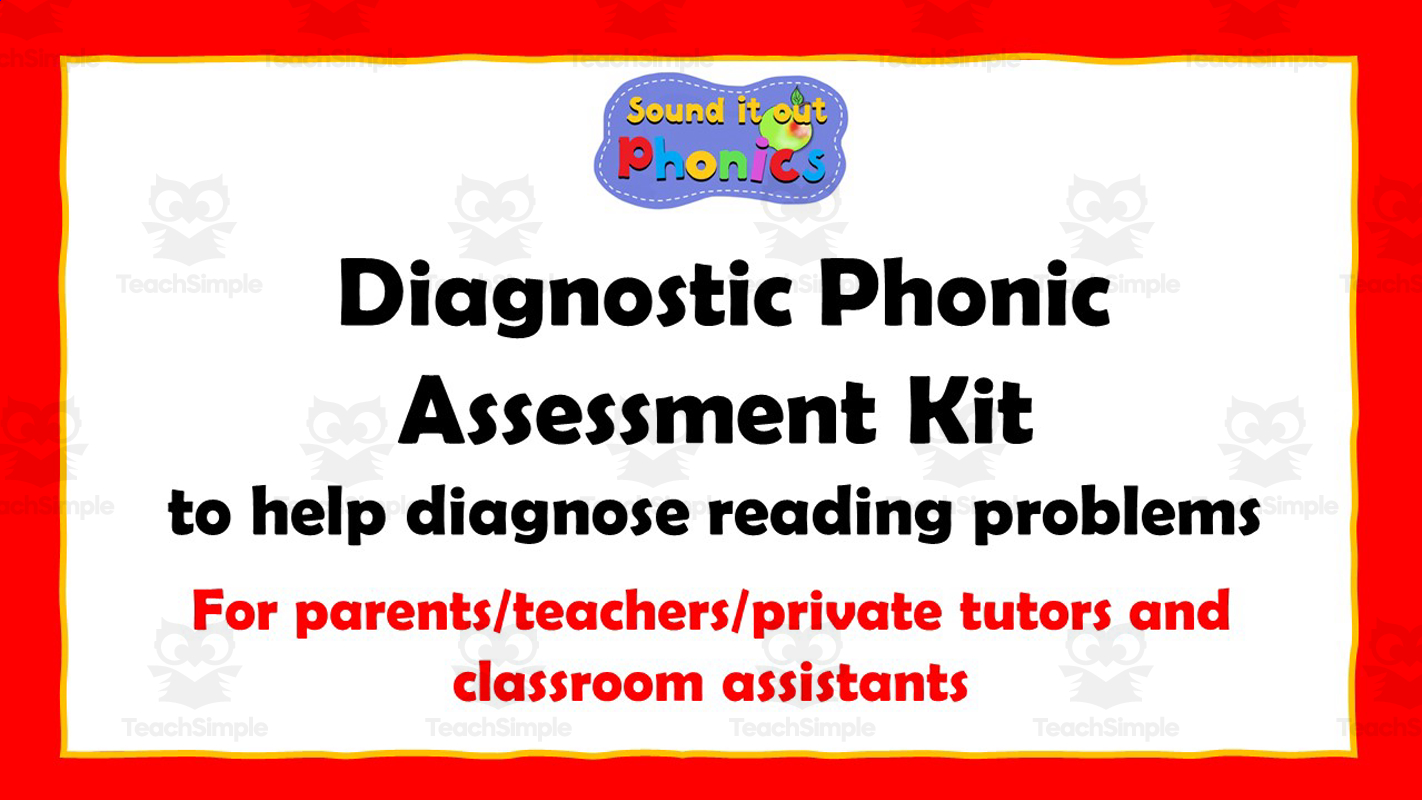
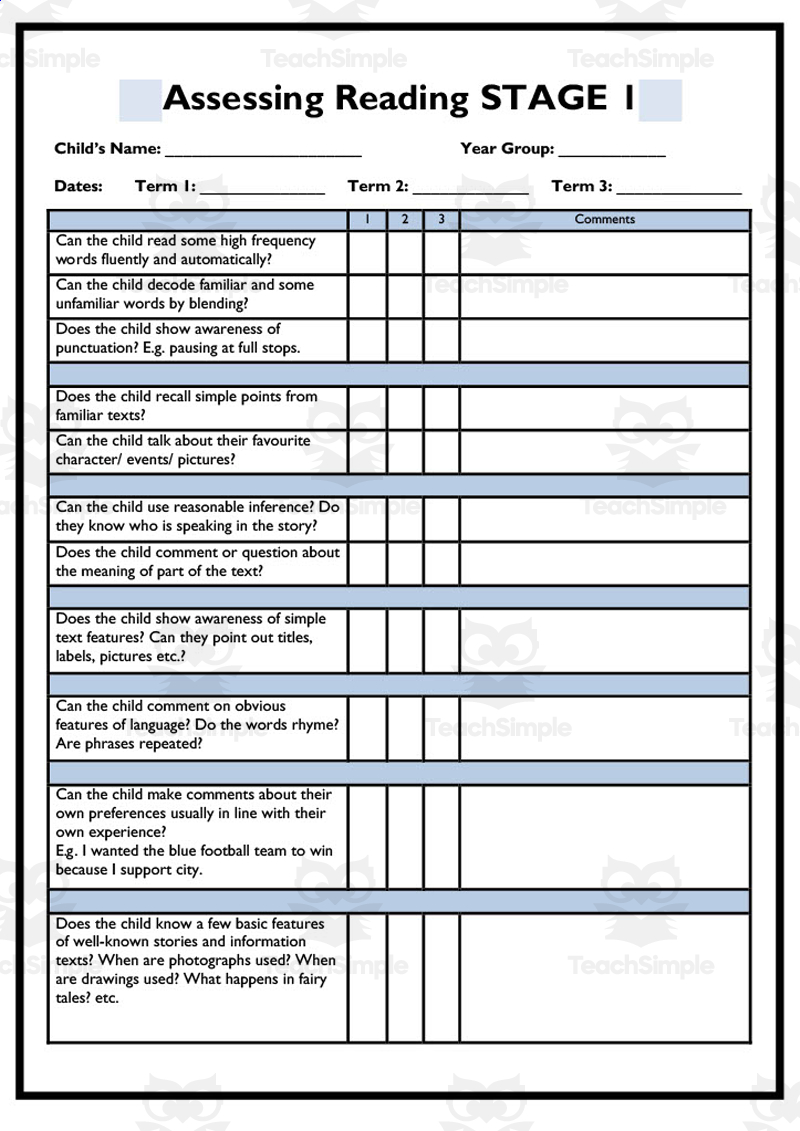
Diagnostic Phonic Assessment Tool Kit: Phonic Test
Special Resources, ELA, Special Education Needs (SEN), Language Development, Phonics, Reading, Kindergarten, Preschool, Grade 1, 2, 3, Teacher Tools, Assessments
Diagnostic Phonic Assessment Tool Kit: Phonics Test This resource is aimed at children up to the age of 12 (though it could well be used with an older child with a younger mental age) and aims to test foundational phonic skills. It can be used to help teachers assess a child's basic phonic knowledge and ability, and the results can then be used as a baseline on which to plan future work. The phonics test does not look like a test, and it is hoped that the child will enjoy the activity and not be aware that they are being tested and therefore, perform well. What is included? The Phonics Test includes an 87-slide PowerPoint that takes the pupils from one simple activity to another. Each activity has detailed instructions to help the tester feel confident about administering the tests as well as guidance as to how to interpret the results. What is tested by this phonics test? Does the child know the sounds each letter of the alphabet stands for? Can the child hear the beginning sound of a word and match it to the corresponding letter? Does the child know the vowel sounds well? Can the child sequence 3 sounds to spell a word? Can the child hear the medial and final sounds of a CVC word? Can the child sound out to read CVC words with a short vowel sound? Checks for fluency in reading sentences with CVC words Can the child blend 2 consonants? Can the child blend 4 sounds in a short vowel word with a consonant blend - initial only, as I find that final blends such as mp are easier for most children, whereas final blends such as NK and ND are harder and are best left until the child has had more experience with phonics Can the child read a short passage with a mix of CVC and CCVC words? : Versatility The Diagnostic Phonic Assessment tool kit blends well within diverse educational amplifications: homeschoolers yearning structured guidance framing phonic programs like ‘Reading Made Simple’, public school teachers seeking extra reinforcement facilities for students falling behind in peer comparisons. Even private tutors or parental caregivers anxious regarding a child’s progressing literacy levels can utilize this resourceful tool kit. Compatibility: This package melds seamlessly with any existing phonics programme and comes as a boon for special needs educators trying to bridge foundational skill gaps and rooting strong learning bedrock in students. File Types: The availability of multiple file types facilitates user convenience and enhances ease of use. Conclusion In summation, the Diagnostic Phonic Assessment Tool Kit stands as an irreplaceable partner in addressing potential reading issues, prioritizing early interventions, and nurturing consistent literacy growth across varied environments.
Author Lilibette's Resources
Rating
Tags Phonics Assessment, Early Intervention, Reading Skills, Diagnostic Tool, Literacy Growth, Phonics Test, Phonic Test
Grade 6 History Skills Review | Back-to-School Diagnostic
History, Social Studies, Grade 6, Assessments, Teacher Tools, Lesson Plans, Worksheets & Printables
Start the year with confidence using this 6th Grade Beginning of Year History Assessment and complete intervention system! This comprehensive Grade 6 History Skills Diagnostic helps you quickly identify students' strengths and learning gaps in historical thinking, geography, source analysis, and evidence-based reasoning so you can confidently plan instruction from day one. More than a simple pretest, this resource provides a complete Assess → Identify → Group → Practice → Reassess system with a 46-question diagnostic assessment , targeted intervention materials, enrichment activities, skill analysis tools, and detailed answer keys that transform assessment data into meaningful instruction. What's Included This 6th Grade Beginning of Year History Skills Assessment Bundle includes: ✅ Teacher Guide & Implementation Overview ✅ 46-question Beginning-of-Year History Skills Review ✅ Printable Student Answer Sheet ✅ Skill Analysis & Grouping Tools ✅ Item-to-Skill Mapping Guide ✅ Class Skill Grid ✅ Individual Student Profiles ✅ Grouping Planner ✅ Reassessment Tracker ✅ 26 Targeted Follow-Up Practice Worksheets ✅ Extension Activities ✅ Student Choice Board ✅ Complete Answer Key ✅ Scoring Guide ✅ Two Written Response Rubrics ✅ Printable PDF format ✅ No-prep, print-and-go resource Students are assessed across five major history skill strands : 🕰️ Time & Chronology Reading timelines BCE & CE Calculating elapsed time Chronological order Centuries & eras 🗺️ Geography for History Map interpretation Physical geography Human geography Reading maps & location Scale & distance 📜 Sources & Artifacts Primary sources Secondary sources Artifact analysis Source reliability Evidence from text 🏛️ Historical Thinking Cause & effect Multiple causes & effects Comparing civilizations Point of view Bias Change & continuity 📊 Argument & Data Reading charts & tables Population & data interpretation Evidence-based inference Claim-Evidence-Reasoning (CER) Historical argument The Teacher Guide explains that the complete bundle contains approximately 91 printable pages across seven coordinated resources , all connected through consistent skill codes that make assessment and intervention simple to implement. How It Works in the Classroom This 6th Grade History Beginning of Year Assessment follows an easy five-step instructional cycle that turns assessment data into targeted instruction. Step 1 — Assess Students complete the 46-question History Skills Review using the separate Student Answer Sheet. Step 2 — Identify Skill Gaps Score assessments with the Answer Key and record student performance using the Class Skill Grid. Step 3 — Group Students Use the Grouping Planner to create flexible intervention groups based on shared skill needs. Step 4 — Assign Targeted Practice Assign only the Follow-Up Practice pages that correspond to each student's assessment results. Step 5 — Reassess Monitor growth with the Reassessment Tracker and regroup students as needed. The Teacher Guide recommends administering the assessment during the first week of school in approximately 55 minutes , or dividing it into five shorter sessions by skill area. Questions may be read aloud because the assessment is designed to measure history skills rather than reading ability. Perfect for: Beginning of Year Assessment History Pretest Back to School Activities Diagnostic Assessment Ancient Civilizations Review World History Skills Review RTI MTSS Intervention Small Groups Progress Monitoring Flexible Grouping Standards & Learning Goals This 6th Grade History Skills Diagnostic Assessment evaluates the foundational historical thinking skills students should demonstrate at the beginning of sixth grade. Students develop and demonstrate understanding of: Time & Chronology Reading timelines BCE & CE Calculating historical elapsed time Chronological order Centuries Historical eras Geography for History Map interpretation Physical geography Human geography Geographic location Scale and distance Sources & Artifacts Primary sources Secondary sources Artifact analysis Evaluating source reliability Using textual evidence Historical Thinking Cause & effect Multiple causes & effects Comparing civilizations Historical point of view Identifying bias Change & continuity over time Argument & Data Reading charts and tables Data interpretation Evidence-based inference Claim-Evidence-Reasoning (CER) Historical argument writing Students demonstrate their understanding through a variety of engaging formats including: Timelines Maps Artifacts Primary and secondary sources Charts and tables Graphs Historical scenarios Multiple-choice questions Evidence-based written responses The diagnostic measures 26 essential history skills across five instructional strands, with every assessment item directly connected to a matching follow-up practice page through the Skill Analysis Tools. Why Teachers Love It ✨ More than a beginning-of-year assessment—it is a complete instructional system. ✨ Saves 10+ hours of planning by combining assessment, data analysis, intervention, enrichment, and reassessment into one cohesive resource. ✨ Every assessment question aligns directly to one specific history skill, making it easy to identify exactly where students need additional support. ✨ Build flexible intervention groups quickly using ready-to-use planning tools. ✨ Includes 26 targeted Follow-Up Practice worksheets , each featuring a student-friendly "Remember" mini lesson followed by fresh practice questions that reinforce the skill without repeating assessment items. ✨ Differentiate instruction with confidence. Students needing additional support receive focused practice while students demonstrating mastery complete engaging enrichment projects and a history choice board. ✨ Extension Activities encourage deeper historical thinking through challenges such as: Designing maps of ancient civilizations Building BCE and CE timelines Calculating elapsed historical time Analyzing historical artifacts Evaluating primary and secondary sources Comparing civilizations Identifying historical point of view Investigating historical bias Writing evidence-based historical arguments These enrichment projects promote inquiry, critical thinking, historical analysis, and authentic application of Grade 6 history skills. ✨ Skill Analysis Tools simplify instructional planning. Teachers receive: Item-to-Skill Map Class Skill Grid Student Profiles Grouping Planner Reassessment Tracker Every assessment question links directly to a targeted intervention worksheet so teachers can easily assign only the practice each student needs. ✨ Includes comprehensive scoring support. The Answer Key provides: Correct answers Skill codes Answer explanations Skill mastery bands Two written-response rubrics Teachers can quickly identify students who are Approaching , On Track , or Strong in each history skill area and immediately plan targeted instruction. ✨ Supports meaningful, data-driven instruction while remaining easy to administer, score, and implement. Give your students a strong start with this 6th Grade Beginning of Year History Assessment and complete intervention system. Whether you're looking for a 6th Grade History Diagnostic , Beginning of Year History Pretest , Ancient Civilizations Skills Review , World History Assessment , Historical Thinking Activities , RTI Resource , Progress Monitoring Tool , or a complete assessment-to-intervention solution, this bundle provides everything you need to assess, analyze, group, reteach, enrich, and monitor student growth throughout the school year.
Author Bright Classroom Ideas Marketplace
Rating
Tags Social Studies, History, Back To School, Assessment, Diagnostic
Grade 8 History Skills Review | Back-to-School Diagnostic
History, Social Studies, Grade 8, Assessments, Teacher Tools, Lesson Plans, Worksheets & Printables
Start your school year with confidence using this 8th Grade Beginning of Year History Assessment and complete intervention system! This comprehensive Grade 8 History Skills Diagnostic helps you quickly identify student strengths and learning gaps in source analysis, evaluating evidence, historical thinking, data interpretation, and document-based writing so you can confidently plan targeted instruction from day one. More than just a pretest, this resource provides a complete Assess → Identify → Group → Practice → Reassess system with a 46-question diagnostic assessment , targeted intervention worksheets, enrichment activities, skill analysis tools, and detailed answer keys that transform assessment results into meaningful instruction. What's Included This 8th Grade Beginning of Year History Skills Assessment Bundle includes: ✅ Teacher Guide & Implementation Overview ✅ 46-question Beginning-of-Year History Skills Review ✅ Printable Student Answer Sheet ✅ Skill Analysis & Grouping Tools ✅ Item-to-Skill Mapping Guide ✅ Class Skill Grid ✅ Individual Student Profiles ✅ Grouping Planner ✅ Reassessment Tracker ✅ 26 Targeted Follow-Up Practice Worksheets ✅ Extension Activities ✅ Student Choice Board ✅ Complete Answer Key ✅ Scoring Guide ✅ Two Written Response Rubrics ✅ Printable PDF format ✅ No-prep, print-and-go resource Students are assessed across five major historical thinking strands : 📖 Source Analysis Primary source analysis Author's perspective Purpose Audience Historical context 🔍 Evaluating Evidence Bias & limitations Reliability of evidence Corroborating sources Conflicting accounts Evaluating evidence ⚖️ Causation & Change Cause vs. trigger Underlying & multiple causes Change & continuity Historical significance Consequences 📊 Data & Context Reading charts & tables Population data Economic data Quantitative evidence Data trends & inference 📝 Historical Argument & DBQ Constructing a thesis Claim-Evidence-Reasoning (CER) Using multiple documents Counterarguments Mini-DBQ analysis Selecting evidence The Teacher Guide explains that the complete bundle contains approximately 91 printable pages across seven coordinated resources , all connected through consistent skill codes that streamline assessment, intervention, and reassessment. How It Works in the Classroom This 8th Grade History Beginning of Year Assessment follows an easy five-step instructional cycle that turns assessment data into actionable teaching. Step 1 — Assess Students complete the 46-question History Skills Review using the separate Student Answer Sheet. Step 2 — Identify Skill Gaps Score assessments with the Answer Key and record student performance using the Class Skill Grid. Step 3 — Group Students Use the Grouping Planner to create flexible intervention groups based on shared skill needs. Step 4 — Assign Targeted Practice Assign only the Follow-Up Practice pages that correspond to each student's assessment results. Step 5 — Reassess Monitor growth using the Reassessment Tracker and regroup students as needed. The Teacher Guide recommends administering the assessment during the first week of school in approximately 55–60 minutes , or dividing it into five shorter sessions by skill area. Teachers may read questions aloud because the assessment measures historical thinking skills rather than reading ability. Perfect for: Beginning of Year Assessment History Pretest Back to School Activities Diagnostic Assessment U.S. History World History Social Studies RTI MTSS Intervention Small Groups Progress Monitoring Flexible Grouping Standards & Learning Goals This 8th Grade History Skills Diagnostic Assessment measures advanced historical thinking and evidence-based reasoning skills students should demonstrate at the beginning of Grade 8. Students develop and demonstrate understanding of: Source Analysis Analyzing primary sources Determining author perspective Identifying purpose and audience Understanding historical context Evaluating Evidence Identifying bias and limitations Evaluating source reliability Corroborating historical evidence Comparing conflicting accounts Selecting relevant evidence Causation & Change Distinguishing causes from triggers Identifying multiple causes Analyzing change and continuity Evaluating historical significance Recognizing intended and unintended consequences Data & Context Reading charts and tables Interpreting population and economic data Analyzing quantitative evidence Drawing evidence-based conclusions from data Historical Argument & DBQ Writing strong thesis statements Claim-Evidence-Reasoning (CER) Using multiple historical documents Building counterarguments Completing a Mini-DBQ Selecting supporting evidence Students demonstrate understanding through engaging historical tasks including: Primary source analysis Historical notices and documents Charts and graphs Economic data Population data Source comparison Mini-DBQ activities Multiple-choice questions Evidence-based written responses Every assessment question is tied directly to one historical thinking skill and aligns with matching intervention worksheets using the included Skill Analysis Tools. Why Teachers Love It ✨ More than a beginning-of-year assessment—it is a complete instructional system. ✨ Saves 10+ hours of planning by combining assessment, data analysis, intervention, enrichment, and reassessment into one easy-to-use resource. ✨ Every assessment question is aligned to a specific historical thinking skill, allowing teachers to pinpoint exactly where students need additional support. ✨ Build flexible intervention groups quickly using ready-to-use data analysis and grouping tools. ✨ Includes 26 targeted Follow-Up Practice worksheets , each featuring a student-friendly "Remember" mini lesson followed by fresh practice questions that reinforce essential skills without repeating assessment items. ✨ Differentiate instruction with confidence. Students who need additional support receive focused intervention while advanced learners complete meaningful enrichment activities designed to deepen historical thinking. ✨ Extension Activities challenge students through authentic historical inquiry, including: Primary source analysis labs Corroborating conflicting sources Cause vs. trigger investigations Historical significance arguments Data interpretation Mini-DBQ creation Thesis writing Counterargument practice These enrichment projects promote higher-order thinking, historical inquiry, evidence evaluation, and document-based reasoning while keeping advanced students meaningfully engaged. ✨ Skill Analysis Tools simplify instructional planning. Teachers receive: Item-to-Skill Map Class Skill Grid Student Profiles Grouping Planner Reassessment Tracker Every assessment item connects directly to a matching intervention worksheet, making differentiated instruction simple and efficient. ✨ Includes comprehensive scoring support. The Answer Key provides: Correct answers Skill codes Answer explanations Skill mastery bands Two written-response rubrics Teachers can quickly identify students who are Approaching , On Track , or Strong in every major skill area and immediately plan targeted instruction. ✨ Supports meaningful, data-driven instruction while remaining easy to administer, score, and implement throughout the school year. Give your students a strong start with this 8th Grade Beginning of Year History Assessment and complete intervention system. Whether you're looking for an 8th Grade History Diagnostic , Beginning of Year History Pretest , U.S. History Assessment , Historical Thinking Activities , Primary Source Analysis , DBQ Practice , Social Studies Assessment , RTI Resource , Progress Monitoring Tool , or a complete assessment-to-intervention solution, this bundle provides everything you need to assess, analyze, group, reteach, enrich, and monitor student growth throughout the school year.
Author Bright Classroom Ideas Marketplace
Rating
Tags History, Social Studies, Back To School, Assessment, Diagnostic
5th Grade Science Diagnostic Assessment & Review System
Science, Grade 5, Assessments, Teacher Tools, Lesson Plans, Worksheets & Printables
Start the year with a clear picture of what students know using this 5th grade beginning of year science assessment and targeted skills system. With a 48-question diagnostic worth 121 points , teacher scoring and analysis tools, instructional grouping support, 11 targeted follow-up practice pages , and complete explained answer keys, this resource helps you move from assessment results to focused instruction without piecing together separate materials. Designed as a complete Assess → Analyze → Group → Review → Reteach system, this Grade 5 science resource checks readiness across Life Science, Earth & Space Science, Physical Science, and Scientific Practices using cells, food webs, Earth systems, solar system models, energy chains, graphs, data tables, scenarios, and Claim-Evidence-Reasoning tasks. What’s Included This 5th grade science assessment and review system includes: ✅ 48-question beginning-of-year science diagnostic ✅ 121 total assessment points ✅ 4 major science strands ✅ Life Science questions ✅ Earth & Space Science questions ✅ Physical Science questions ✅ Scientific Practices questions ✅ Multiple-choice questions ✅ Short-answer questions ✅ Labeling activities ✅ Matching questions ✅ Diagram interpretation ✅ Data tables ✅ Graph reading ✅ Scientific scenarios ✅ Vocabulary-in-context questions ✅ Claim-Evidence-Reasoning (CER) tasks ✅ 10 labeling and diagram-interpretation items ✅ Animal cell labeling ✅ Plant and animal cell comparison ✅ Marine food web interpretation ✅ Earth systems model ✅ Solar system diagram ✅ Physical and chemical change analysis ✅ Conservation of matter model ✅ Energy transformation chain ✅ Forces and motion model ✅ Variables and fair-test setup ✅ Answer recording sheet ✅ Quick-reference answer key ✅ Skill-by-skill scoring chart ✅ Strand analysis tool ✅ Secure, Developing, and Needs Support performance bands ✅ Individual Student Performance Profile ✅ Whole-class data tracker ✅ Suggested instructional groups ✅ Group planning sheet ✅ 11 targeted follow-up science practice pages ✅ “Remember” reteaching box on every follow-up page ✅ “Apply It” challenge on every follow-up page ✅ All-new follow-up practice with no repeated assessment questions ✅ Complete answer keys ✅ Suggested short-answer responses ✅ Completed visual and diagram answers ✅ Sample CER responses ✅ Short “why” explanation for every assessment item ✅ Partial-credit guidance ✅ CER scoring rubric Part 1 contains 48 mixed-format questions worth 121 total points across four science strands. The Teacher Guide recommends two 40–50 minute sessions and explains that the diagnostic is intended as a planning tool to reveal what fifth graders retained and where instruction should begin. Part 2 turns student responses into actionable data with an answer recording sheet, quick-reference key, skill-by-skill scoring, strand analysis, performance bands, individual student profiles, a whole-class data tracker, suggested instructional groups, and a group planning sheet. Part 3 includes 11 ready-to-assign targeted follow-up pages , each with fresh practice, a short Remember reteach box, and an Apply It challenge for students ready to extend their thinking. Part 4 provides correct answers for all 48 questions, explanations of why answers are correct, suggested open-response answers, completed diagrams, sample CER responses, partial-credit guidance, and a CER scoring rubric. How It Works in the Classroom Use this 5th grade beginning of year science assessment during the first weeks of school to identify what students retained from earlier science learning and where instruction should begin. The resource follows a practical five-step system: 🔎 Assess — Students complete the 48-item mixed-format science diagnostic 📊 Analyze — Score by skill and strand to identify patterns and gaps 👥 Group — Sort students into instructional groups based on shared needs 📝 Review — Assign only the targeted follow-up pages students need 🎯 Reteach — Use complete explanations, worked visuals, and sample CER responses to support next steps The 5-Step System chart on page 2 of Part 1 connects each stage directly to the matching part of the resource, creating a clear workflow from initial diagnostic assessment to targeted reteaching. The same page also summarizes the 48 items, 121 points, mixed formats, four strands, diagram focus, and suggested timing. Use this resource for: ⭐ Beginning-of-year science assessment ⭐ 5th grade science diagnostic ⭐ Back-to-school science review ⭐ Science pre-assessment ⭐ Science readiness check ⭐ Formative assessment ⭐ Small-group planning ⭐ Science intervention ⭐ Targeted reteaching ⭐ Data-driven instruction ⭐ Skill-based grouping ⭐ Independent follow-up practice ⭐ Science centers ⭐ CER practice ⭐ Graph and data interpretation review The Scoring at a Glance chart on page 2 of Part 2 breaks the assessment into four strand totals: Life Science /34, Earth & Space Science /31, Physical Science /35, and Scientific Practices /21 , for 121 total points . It also defines three performance bands: Secure (80%–100%) , Developing (50%–79%) , and Needs Support (below 50%) . The Class Data Tracker on page 15 of Part 2 provides a whole-class view of strand percentages and total performance, while the Suggested Instructional Groups on page 16 help teachers group students according to shared needs and connect those groups to matching Part 3 review pages. Standards & Learning Goals This fifth grade science diagnostic assessment reviews foundational concepts and scientific reasoning across four major strands: 🌱 Life Science — cells and organisms, animal cell structures, plant and animal cell differences, organelle functions, levels of organization, food webs, energy flow, ecosystems, producers, consumers, decomposers, population data, photosynthesis, and organism survival 🌎 Earth & Space Science — Earth’s four systems, system interactions, solar system order and models, day and night, seasons, planet data, climate graphs, Earth’s water, condensation, water cycle interactions, renewable resources, space objects, and conditions needed for life ⚡ Physical Science — properties of matter, physical and chemical changes, signs of chemical change, conservation of matter, energy transformations, forms of energy, potential and kinetic energy, gravity, friction, forces on a ramp, force-and-motion data, and balanced and unbalanced forces 🔬 Scientific Practices — scientific method, independent and dependent variables, controlled variables, fair tests, interpreting data tables, graph reading, drawing conclusions, and Claim-Evidence-Reasoning from data Students demonstrate understanding through varied science tasks rather than one question type. The assessment includes a five-part animal cell labeling task , plant-cell interpretation, a marine food web, ocean population data, Earth’s four systems, a solar system model, a monthly climate graph, physical and chemical change comparisons, conservation of matter in a sealed jar, an energy transformation chain, force arrows on a ramp, force-and-speed data, an experimental variables setup, line graph reading, bar graph reading, and CER tasks. The Skill-by-Skill Scoring Chart on pages 10–12 of Part 2 helps teachers pinpoint specific gaps rather than relying only on one total score. Skills include cell basics, cell structure, plant versus animal cells, organelle function, food webs, energy flow, ecosystems, Earth systems, solar system concepts, seasons, climate graphs, physical and chemical changes, conservation of matter, energy transformations, forces, variables, data interpretation, graph reading, conclusions, and CER reasoning. Why Teachers Love It ✨ Move beyond a single test score. Results can be analyzed by strand and individual skill, helping teachers see exactly where students are secure and where review is needed. ✨ Turn assessment data into an instructional plan. The scoring tools connect results to performance bands, student profiles, grouping, and targeted follow-up practice instead of leaving teachers with a stack of completed tests. ✨ Use visual, model-based questions to see student thinking. Students work with cell diagrams, food webs, Earth systems, solar system models, energy chains, force diagrams, data tables, graphs, experimental setups, and CER tasks. ✨ Assess fifth-grade science reasoning through mixed formats. The diagnostic includes multiple choice, short answer, labeling, matching, diagram interpretation, data tables, graph reading, scientific scenarios, vocabulary in context, and Claim-Evidence-Reasoning. ✨ Include 10 labeling and diagram-interpretation items. Visual tasks address cells, a marine food web, Earth systems, the solar system, physical and chemical changes, conservation of matter, energy transformations, forces, and experimental variables. ✨ Support data-driven small groups. The Suggested Instructional Groups tool organizes students around shared needs in Life Science, Earth Science, Physical Science, or Scientific Practices and connects each group to matching Part 3 practice. ✨ Differentiate with clear performance bands. Use Secure, Developing, and Needs Support ranges to guide enrichment, targeted practice, or foundational small-group reteaching. ✨ Assign only the review students need. The 11 targeted follow-up pages include: Cells & Organisms Review Food Webs & Energy Review Ecosystems Review Earth’s Systems Review Water Cycle & Weather Review The Solar System Review Matter & Changes Review Energy Review Forces & Motion Review Scientific Method & Variables Review Science Data & Graphs Review The Practice Page Menu on page 2 of Part 3 directly matches common student difficulties to specific follow-up pages, making targeted assignment faster. ✨ Reteach before students practice. Every targeted page includes a concise Remember box that reviews the essential concept before students begin. ✨ Challenge students who are already secure. Every follow-up page includes an Apply It task designed to extend thinking beyond basic recall. ✨ Use fresh follow-up practice instead of repeating the diagnostic. Part 3 explicitly provides all-new practice, allowing students to demonstrate understanding on new examples and situations. ✨ Build Claim-Evidence-Reasoning skills. Students complete CER tasks connected to marine food webs, conditions for life on Earth, physical versus chemical changes, and plant-growth data. Part 4 includes sample CER responses and scoring guidance. ✨ Make grading more manageable. Part 4 includes a correct answer, a short explanation of why, suggested responses for writing tasks, completed visual items, and partial-credit guidance for multi-part questions. ✨ Use completed diagrams for faster checking. Part 4 provides fully worked visual support for challenging items such as the animal cell, plant cell, marine food web, Earth’s four systems, solar system, and energy transformation chain. ✨ Track individual student needs. The Student Performance Profile on page 14 of Part 2 includes a strand snapshot, strengths, focus areas, assigned Part 3 pages, and group placement. ✨ See class-wide patterns quickly. The Class Data Tracker on page 15 lets teachers scan columns for whole-class strand gaps and rows for individual grouping needs. ✨ Keep the instructional loop connected. Assessment, analysis, grouping, targeted review, reteaching, and answer support are designed as one coordinated system rather than disconnected activities. Start the year knowing what students understand and what they need next with this 5th grade beginning of year science assessment . Download this complete diagnostic and targeted review system to assess readiness, analyze results by strand and skill, create focused instructional groups, assign specific follow-up practice, and support reteaching with complete explained answer keys. Perfect for teachers searching for a 5th grade science diagnostic assessment , beginning-of-year science review, back-to-school science assessment, fifth grade science pre-assessment, Life Science review, Earth and Space Science review, Physical Science review, Scientific Practices assessment, cells and organisms, food webs, Earth systems, solar system review, physical and chemical changes, conservation of matter, energy transformations, forces and motion, scientific method, variables, CER practice, science intervention, small-group science planning, data-driven instruction, or targeted science reteaching.
Author Bright Classroom Ideas Marketplace
Rating
Tags Science, Back To School, Worksheet, Lesson, Assessment
4th Grade Science Diagnostic Assessment & Review System
Science, Grade 4, Assessments, Teacher Tools, Lesson Plans, Worksheets & Printables
Start the year with a clear picture of what students know using this 4th grade beginning of year science assessment and targeted skills system. With a 46-question diagnostic worth 116 points , teacher scoring and analysis tools, instructional grouping support, 13 targeted follow-up practice pages , and complete explained answer keys, this resource helps you move from assessment results to focused instruction without piecing together separate materials. Designed as a complete Assess → Analyze → Group → Review → Reteach system, this Grade 4 science resource checks readiness across Life Science, Earth Science, Physical Science, and Scientific Practices using diagrams, food webs, cycles, models, graphs, data tables, scenarios, and Claim-Evidence-Reasoning tasks. What’s Included This 4th grade science assessment and review system includes: ✅ 46-question beginning-of-year science diagnostic ✅ 116 total assessment points ✅ 4 major science strands ✅ Life Science questions ✅ Earth Science questions ✅ Physical Science questions ✅ Scientific Practices questions ✅ Multiple-choice questions ✅ Short-answer questions ✅ Labeling activities ✅ Matching questions ✅ Diagram interpretation ✅ Data tables ✅ Graph reading ✅ Scientific scenarios ✅ Vocabulary-in-context questions ✅ Claim-Evidence-Reasoning (CER) tasks ✅ 11 labeling and diagram-interpretation items ✅ Food web interpretation ✅ Energy pyramid analysis ✅ Water cycle diagram ✅ Rock cycle diagram ✅ Forces and motion models ✅ Particle models and changes of state ✅ Answer recording sheet ✅ Quick-reference answer key ✅ Skill-by-skill scoring chart ✅ Strand analysis tool ✅ Secure, Developing, and Needs Support performance bands ✅ Individual Student Performance Profile ✅ Whole-class data tracker ✅ Suggested instructional groups ✅ Group planning sheet ✅ 13 targeted follow-up science practice pages ✅ “Remember” reteaching box on every follow-up page ✅ “Apply It” challenge on every follow-up page ✅ Fresh practice with no repeated assessment questions ✅ Complete answer keys ✅ Suggested short-answer responses ✅ Completed visual and diagram answers ✅ Sample CER responses ✅ Short “why” explanation for every assessment item ✅ CER scoring rubric Part 1 contains 46 mixed-format questions worth 116 total points across four science strands. The Teacher Guide suggests using two 35–45 minute sessions and emphasizes that the diagnostic is a planning tool designed to pinpoint where instruction should begin. Part 2 turns student responses into actionable data with answer recording tools, quick scoring, skill-by-skill analysis, strand performance bands, student profiles, a whole-class tracker, and suggested instructional groups. Part 3 includes 13 ready-to-assign targeted follow-up pages , each featuring fresh practice, a short Remember reteach box, and an Apply It challenge for extension. Part 4 provides correct answers for all 46 questions, suggested open-response answers, completed diagrams, sample CER responses, short explanations of why answers are correct, partial-credit guidance, and a CER scoring rubric. How It Works in the Classroom Use this 4th grade beginning of year science assessment during the first weeks of school to identify what students retained from earlier science learning and where instruction should begin. The resource follows a practical five-step system: 🔎 Assess — Students complete the 46-item mixed-format science diagnostic 📊 Analyze — Score by skill and strand to identify patterns and gaps 👥 Group — Sort students into instructional groups based on shared needs 📝 Review — Assign only the targeted follow-up pages students need 🎯 Reteach — Use complete explanations, worked visuals, and sample CER responses to support next steps This workflow is built directly into the four-part resource. The 5-Step System chart on page 2 of Part 1 visually connects each stage to the matching section of the pack, helping teachers move from assessment to action. Use this resource for: ⭐ Beginning-of-year science assessment ⭐ 4th grade science diagnostic ⭐ Back-to-school science review ⭐ Science pre-assessment ⭐ Science readiness check ⭐ Formative assessment ⭐ Small-group planning ⭐ Science intervention ⭐ Targeted reteaching ⭐ Data-driven instruction ⭐ Skill-based grouping ⭐ Independent follow-up practice ⭐ Science centers ⭐ CER practice ⭐ Graph and data interpretation review The Scoring at a Glance chart on page 2 of Part 2 breaks the assessment into four strand totals: Life Science /36, Earth Science /31, Physical Science /29, and Scientific Practices /20 , for 116 total points . It also defines three performance bands: Secure (80%–100%) , Developing (50%–79%) , and Needs Support (below 50%) . The Class Data Tracker on page 15 of Part 2 gives teachers a whole-class view of Life, Earth, Physical, and Scientific Practices percentages, while the Suggested Instructional Groups on page 16 connect students’ lowest strands to matching Part 3 review pages. Standards & Learning Goals This fourth grade science diagnostic assessment reviews foundational concepts and scientific reasoning across four major strands: 🌱 Life Science — animal structures, plant structures, structure and function, ecosystems, food webs, energy flow, adaptations, producers, consumers, decomposers, energy pyramids, and interpreting population data 🌎 Earth Science — water cycle, transpiration, weather and climate, climate data, dual-format graph reading, rock cycle, rock types, mineral properties, weathering, erosion, deposition, fast and slow Earth changes, and evidence-based explanations ⚡ Physical Science — forms of energy, potential and kinetic energy, energy transformations, balanced and unbalanced forces, net force, motion graphs, states of matter, particle models, changes of state, conductors and insulators, mixtures, mass, and force 🔬 Scientific Practices — fair tests, variables and controls, investigation design, data tables, graph interpretation, drawing conclusions, tools and measurement, and Claim-Evidence-Reasoning Students demonstrate understanding through varied science tasks rather than one question type. The assessment includes flower-part labeling, bird-beak structure and function, a food web, an energy pyramid, a five-stage water cycle diagram, climate data, a climate graph, the rock cycle, weathering-erosion-deposition sequencing, a roller-coaster energy model, balanced and unbalanced force diagrams, a distance-time graph, particle models, changes of state, investigation design, plant-growth data, and graph interpretation. The Skill-by-Skill Scoring Chart on pages 10–12 of Part 2 helps teachers pinpoint specific gaps instead of relying only on one total score. Skills include structures and function, food webs, ecosystems, adaptations, water cycle, weather and climate, climate graphs, rock cycle, Earth changes, energy forms, net force, motion graphs, matter and particles, investigation design, data interpretation, graph reading, drawing conclusions, and tools and measurement. Why Teachers Love It ✨ Move beyond a single test score. Results can be analyzed by strand and individual skill, helping teachers see where students are secure and where review is needed. ✨ Turn assessment data into an instructional plan. The scoring tools connect results to performance bands, grouping, and targeted follow-up practice instead of leaving teachers with a stack of completed tests. ✨ Use visual, varied questions to see student thinking. Students work with diagrams, food webs, models, data tables, graphs, labeling, matching, scenarios, vocabulary in context, short responses, and CER tasks. ✨ Assess deeper diagram interpretation. The diagnostic includes 11 labeling or diagram-interpretation items , including food webs, an energy pyramid, water and rock cycles, force models, particle models, and more. ✨ Support data-driven small groups. The Suggested Instructional Groups tool organizes students around shared needs in Life Science, Earth Science, Physical Science, or Scientific Practices. ✨ Differentiate with clear performance bands. Use Secure, Developing, and Needs Support ranges to guide enrichment, targeted practice, or foundational small-group reteaching. ✨ Assign only the review students need. The 13 targeted follow-up pages include: Structures & Function Review Food Webs Review Ecosystems & Energy Review Adaptations Review Water Cycle Review Weather & Climate Review Rocks & the Rock Cycle Review Earth Changes Review Energy & Its Forms Review Forces & Motion Review Properties of Matter Review Scientific Investigation Review Science Data & Graphs Review The Practice Page Menu on page 2 of Part 3 directly matches student difficulties to specific follow-up pages, making targeted assignment faster. ✨ Reteach before students practice. Every targeted page includes a short Remember box that reviews the essential concept before students begin. ✨ Challenge students who are already secure. Every follow-up page includes an Apply It task that extends thinking beyond basic recall. ✨ Build Claim-Evidence-Reasoning skills. Students complete CER tasks connected to adaptations, canyon formation, force and mass, and plant-growth data. Part 4 includes sample CER responses and a scoring rubric. ✨ Make grading more manageable. Part 4 includes correct answers, suggested short-answer responses, completed diagrams, explanations of why answers are correct, and guidance for awarding partial credit on multi-part items. ✨ Support visual science learning. The resource uses colorful diagrams, models, tables, food webs, graphs, particle representations, force arrows, and other visual formats to assess science reasoning in multiple ways. ✨ Use student profiles for individualized planning. The Student Performance Profile on page 14 of Part 2 includes strand snapshots, strengths, focus areas, assigned Part 3 pages, and group placement. ✨ See class-wide patterns quickly. The Class Data Tracker on page 15 lets teachers scan columns for whole-class gaps and rows for student grouping needs. ✨ Keep the instructional loop connected. Assessment, analysis, grouping, targeted review, reteaching, and answer support are designed as one coordinated system rather than disconnected activities. Start the year knowing what students understand and what they need next with this 4th grade beginning of year science assessment . Download this complete diagnostic and targeted review system to assess readiness, analyze results by strand and skill, create focused instructional groups, assign specific follow-up practice, and support reteaching with complete explained answer keys. Perfect for teachers searching for a 4th grade science diagnostic assessment , beginning-of-year science review, back-to-school science assessment, fourth grade science pre-assessment, Life Science review, Earth Science review, Physical Science review, Scientific Practices assessment, food webs, water cycle review, rock cycle review, forces and motion, properties of matter, CER practice, science intervention, small-group science planning, data-driven instruction, or targeted science reteaching.
Author Bright Classroom Ideas Marketplace
Rating
Tags Science, Back To School, Assessment, Worksheet
2nd Grade Math Assessment | Beginning of Year Diagnostic
Math, Grade 2, Assessments, Teacher Tools, Worksheets & Printables
Start second grade with clearer data and a practical teaching plan using this Grade 2 beginning of year math assessment . This visual second grade math diagnostic identifies strengths, skill gaps, and readiness across 12 essential math strands—then connects results to targeted follow-up practice. With 34 questions, teacher scoring tools, and skill-specific reteaching pages, this resource helps you move from assess → analyze → group → reteach . What’s Included This second grade math assessment bundle includes a complete beginning-of-year diagnostic system: ✅ 34-question Student Math Assessment ✅ 12 essential math skill strands ✅ Clear, visual student-friendly format ✅ Complete answer key for all 34 questions ✅ Teacher “what to look for” notes ✅ Common-error and misconception guidance ✅ 34-point scoring system ✅ Secure, Developing, and Emerging score bands ✅ One-page quick-grading answer grid ✅ Step-by-step administration guide ✅ Individual student scoring sheet ✅ Whole-class tracking grid ✅ Small-group planning guidance ✅ Standards alignment ✅ Reteaching roadmap ✅ 12 targeted follow-up practice pages ✅ Fresh practice problems different from assessment items ✅ Teacher answer strip for practice pages The answer key does more than provide correct responses. It includes brief teacher notes to help interpret errors and identify likely misconceptions. How It Works in the Classroom Use this Grade 2 beginning of year math assessment during the first week or two of school to see which first-grade skills students bring into second grade. There is no time limit, and the assessment can be divided into two shorter sittings. Students can show their thinking with drawings, number lines, or written strategies, giving you valuable information beyond a final score. Use this resource for: ⭐ Beginning-of-year math assessment ⭐ Back-to-school math diagnostic ⭐ Second grade math pre-assessment ⭐ First-grade skills review ⭐ Small-group planning ⭐ Math intervention ⭐ Skill-based differentiation ⭐ Targeted reteaching ⭐ Independent follow-up practice ⭐ Student support planning After scoring, transfer results to the individual scoring sheet and whole-class tracking grid. The grid organizes results by strand, helping you spot shared needs and create skill-based small groups. Then print only the targeted practice pages each student or group needs. The follow-up section provides one dedicated practice page for every assessed skill strand. Standards & Learning Goals This second grade math diagnostic assessment checks readiness across 12 essential strands: 🔢 Numbers to 120 🧱 Place value ⚖️ Comparing numbers ➕ Addition within 20 ➖ Subtraction within 20 ❓ Missing numbers 📖 Word problems 📏 Measurement 🕒 Telling time 📊 Data and graphs 🔷 2D and 3D shapes 🍕 Equal shares Students work with number charts, skip counting, base-ten blocks, tens and ones, expanded form, comparison symbols, ordering numbers, addition and subtraction within 20, missing addends, word problems, rulers, nonstandard measurement, analog clocks, graphs, tally charts, shape attributes, and equal parts. The included standards map provides illustrative Grade 1–2 Common Core references, including: 1.NBT.A.1 1.NBT.B.2–3 2.NBT.A.1 2.NBT.A.4 1.OA.A.1 1.OA.C.6 1.OA.D.8 2.OA.A.1 2.OA.B.2 1.MD.A.2 1.MD.B.3 1.MD.C.4 2.MD.A.1 2.MD.C.7 2.MD.D.10 1.G.A.1 1.G.A.3 2.G.A.1 2.G.A.3 Because a beginning-of-year Grade 2 diagnostic naturally checks end-of-first-grade mastery and readiness for second-grade work, the alignment intentionally spans both grade levels. Why Teachers Love It ✨ See more than a total score. Results are organized by skill strand for clearer instructional decisions. ✨ Save valuable planning time. The answer key, quick-grading grid, scoring sheet, and class tracker streamline your workflow. ✨ Build purposeful small groups. Group students by shared skill needs instead of relying only on overall scores. ✨ Identify strategy gaps. Teacher notes help you notice counting strategies, make-a-ten thinking, place-value confusion, and common misconceptions. ✨ Differentiate without extra searching. Print the specific follow-up page each student or group needs. ✨ Support data-informed instruction. The whole-class tracking grid on page 4 gives an at-a-glance view across all 12 strands, making shared gaps easier to spot. ✨ Move directly from assessment to reteaching. Practice pages include number charts, base-ten blocks, comparing numbers, operations within 20, word problems, measurement, clocks, graphs, shapes, and equal shares. ✨ Use fresh follow-up problems. Students practice the same underlying skills without simply repeating the original assessment questions. Start the year knowing what your students understand and what they need next. Download this Grade 2 beginning of year math assessment to assess readiness, identify learning gaps, form targeted small groups, and provide focused follow-up practice from one coordinated resource. Perfect for teachers searching for a second grade math pre-assessment , back-to-school math diagnostic, Grade 2 readiness assessment, first-grade skills review, math intervention tool, or beginning-of-year math assessment with built-in scoring and reteaching support.
Author Bright Classroom Ideas Marketplace
Rating
Tags Diagnostic, Practice, Math, Back-to-school, Assessment
Grade 7 History Skills Review | Back-to-School Diagnostic
History, Social Studies, Grade 7, Assessments, Teacher Tools, Lesson Plans, Worksheets & Printables
Start the school year with confidence using this 7th Grade Beginning of Year History Assessment and complete intervention system! This comprehensive Grade 7 History Skills Diagnostic helps you quickly identify students' strengths and learning gaps in historical thinking, source analysis, perspective, historical argument, and data interpretation so you can confidently plan targeted instruction from day one. More than a simple pretest, this resource provides a complete Assess → Identify → Group → Practice → Reassess system with a 46-question diagnostic assessment , targeted intervention materials, enrichment activities, skill analysis tools, and detailed answer keys that transform assessment data into meaningful instruction. What's Included This 7th Grade Beginning of Year History Skills Assessment Bundle includes: ✅ Teacher Guide & Implementation Overview ✅ 46-question Beginning-of-Year History Skills Review ✅ Printable Student Answer Sheet ✅ Skill Analysis & Grouping Tools ✅ Item-to-Skill Mapping Guide ✅ Class Skill Grid ✅ Individual Student Profiles ✅ Grouping Planner ✅ Reassessment Tracker ✅ 26 Targeted Follow-Up Practice Worksheets ✅ Extension Activities ✅ Student Choice Board ✅ Complete Answer Key ✅ Scoring Guide ✅ Two Written Response Rubrics ✅ Printable PDF format ✅ No-prep, print-and-go resource Students are assessed across five major historical thinking strands : 📜 Sourcing & Analysis Sourcing historical documents Corroboration Contextualization Source reliability Fact vs. interpretation 🧠 Perspective & Bias Historical perspective Identifying bias Persuasion & loaded language Political cartoon analysis Comparing viewpoints ⚖️ Causation & Change Cause & effect Multiple causation Short- vs. long-term causes Change & continuity Turning points Consequences 🗺️ Maps & Data Historical map interpretation Reading charts & tables Population data Economic data Data trends & interpretation 📝 Historical Argument Evidence-based inference Claims supported by evidence Claim-Evidence-Reasoning (CER) Using multiple sources Counterarguments The Teacher Guide explains that the complete bundle contains approximately 91 printable pages across seven coordinated resources , all connected through consistent skill codes that make assessment and intervention simple to implement. How It Works in the Classroom This 7th Grade History Beginning of Year Assessment follows an easy five-step instructional cycle that turns assessment data into actionable teaching. Step 1 — Assess Students complete the 46-question History Skills Review using the separate Student Answer Sheet. Step 2 — Identify Skill Gaps Score assessments with the Answer Key and record student performance using the Class Skill Grid. Step 3 — Group Students Use the Grouping Planner to create flexible intervention groups based on shared skill needs. Step 4 — Assign Targeted Practice Assign only the Follow-Up Practice pages that correspond to each student's assessment results. Step 5 — Reassess Monitor growth with the Reassessment Tracker and regroup students as needed. The Teacher Guide recommends administering the assessment during the first week of school in approximately 55 minutes , or dividing it into five shorter sessions by skill area. Questions may be read aloud because the assessment measures historical thinking skills rather than reading ability. Perfect for: Beginning of Year Assessment History Pretest Back to School Activities Diagnostic Assessment World History Social Studies RTI MTSS Intervention Small Groups Progress Monitoring Flexible Grouping Standards & Learning Goals This 7th Grade History Skills Diagnostic Assessment evaluates the advanced historical thinking skills students should demonstrate at the beginning of seventh grade. Students develop and demonstrate understanding of: Sourcing & Analysis Evaluating historical sources Corroborating evidence Contextualizing documents Assessing source reliability Distinguishing fact from interpretation Perspective & Bias Historical perspective Recognizing bias Identifying persuasion and loaded language Analyzing political cartoons Comparing historical viewpoints Causation & Change Cause and effect Multiple causes Short- and long-term causes Change and continuity Turning points Historical consequences Maps & Data Historical map interpretation Reading charts and tables Population analysis Economic data Interpreting historical trends Historical Argument Making evidence-based inferences Supporting claims with evidence Claim-Evidence-Reasoning (CER) Synthesizing multiple sources Evaluating counterarguments Students demonstrate understanding through engaging historical tasks including: Political cartoons Historical maps Primary and secondary sources Charts and tables Population graphs Economic data Historical scenarios Multiple-choice questions Evidence-based written responses The diagnostic measures 26 essential historical thinking skills across five instructional strands, with every assessment item directly connected to a matching follow-up practice page through the Skill Analysis Tools. Why Teachers Love It ✨ More than a beginning-of-year assessment—it is a complete instructional system. ✨ Saves 10+ hours of planning by combining assessment, data analysis, intervention, enrichment, and reassessment into one cohesive resource. ✨ Every assessment question aligns directly to one specific historical thinking skill, making it easy to identify exactly where students need additional support. ✨ Build flexible intervention groups quickly using ready-to-use planning tools. ✨ Includes 26 targeted Follow-Up Practice worksheets , each featuring a student-friendly "Remember" mini lesson followed by fresh practice questions that reinforce the skill without repeating assessment items. ✨ Differentiate instruction with confidence. Students needing additional support receive focused practice while students demonstrating mastery complete engaging enrichment projects and a history choice board. ✨ Extension Activities encourage deeper historical thinking through challenges such as: Designing political cartoons Corroborating historical sources Mapping multiple causes of historical events Interpreting historical maps Reading and analyzing data graphs Contextualizing historical sources Comparing viewpoints Building complete Claim-Evidence-Reasoning responses with counterarguments These enrichment projects promote inquiry, critical thinking, historical analysis, and authentic application of Grade 7 historical thinking skills. ✨ Skill Analysis Tools simplify instructional planning. Teachers receive: Item-to-Skill Map Class Skill Grid Student Profiles Grouping Planner Reassessment Tracker Every assessment question links directly to a targeted intervention worksheet so teachers can easily assign only the practice each student needs. ✨ Includes comprehensive scoring support. The Answer Key provides: Correct answers Skill codes Answer explanations Skill mastery bands Two written-response rubrics Teachers can quickly identify students who are Approaching , On Track , or Strong in each historical thinking skill area and immediately plan targeted instruction. ✨ Supports meaningful, data-driven instruction while remaining easy to administer, score, and implement. Give your students a strong start with this 7th Grade Beginning of Year History Assessment and complete intervention system. Whether you're looking for a 7th Grade History Diagnostic , Beginning of Year History Pretest , World History Skills Assessment , Historical Thinking Activities , Source Analysis Practice , Social Studies Assessment , RTI Resource , Progress Monitoring Tool , or a complete assessment-to-intervention solution, this bundle provides everything you need to assess, analyze, group, reteach, enrich, and monitor student growth throughout the school year.
Author Bright Classroom Ideas Marketplace
Rating
Tags Social Studies, History, Back To School, Assessment, Diagnostic
Diagnostic Phonic Assessment Tool Kit
Special Resources, ELA, Special Education Needs (SEN), Language Development, Phonics, Reading, Kindergarten, Preschool, Grade 1, 2, 3, Teacher Tools, Assessments
Diagnostic Phonic Assessment Tool Kit This is an excellent resource that enhances the reading capabilities of children under 12 by primarily focusing on foundational phonics. This tool kit functions as a valuable early assistance framework, tailored to pinpoint potential reading challenges in children. Crafted with engaging and child-friendly content, it ensures students do not feel assessment -related stress but rather enjoy their learning journey. Components This 87-slide PowerPoint shapes a thorough evaluation sequence through its well-conceptualized 17 tests. Each test is accompanied by detailed instructions for efficient execution and precise analysis of the outcomes. Evaluation Areas Understanding of beginning sounds in words Identification of letters for corresponding sounds Audible comprehension sounds in Consonant-Vowel-Consonant (CVC) words, etc. The Diagnostic Phonic Assessment Tool Kit hospitalizes specially designed tasks comprising interconnected spelling-sound assessments deploying CCVC (consonant-consonant-vowel-consonants) words, merging two non-vowel sounds such as sw/sk (excluding sh/ch etc.), arranging sounds within CCVC words along with reading short accounts inclusive of these elements. Additionally, it hones recognition abilities for commonly used sight words integrated at this level. Bonus Material: An added feature comprises tests pivoted around Initial Sounds that can be simultaneously employed or used separately from main examinations. Tips encouraging continuous attempts are spread throughout activities to foster profound effort in students. Versatility: The Diagnostic Phonic Assessment tool kit blends well within diverse educational amplifications: homeschoolers yearning structured guidance framing phonic programs like ‘Reading Made Simple’, public school teachers seeking extra reinforcement facilities for students falling behind in peer comparisons. Even private tutors or parental caregivers anxious regarding a child’s progressing literacy levels can utilize this resourceful tool kit. Compatibility: This package melds seamlessly with any existing phonics programme and comes as a boon for special needs educators trying to bridge foundational skill gaps and rooting strong learning bedrock in students. File Types: The availability of multiple file types facilitates user convenience and enhances ease of use. Conclusion In summation, the Diagnostic Phonic Assessment Tool Kit stands as an irreplaceable partner in addressing potential reading issues, prioritizing early interventions, and nurturing consistent literacy growth across varied environments.
Author Lilibette's Resources
Tags Phonics Assessment, Early Intervention, Reading Skills, Diagnostic Tool, Literacy Growth
3rd Grade Science Diagnostic Assessment & Review System
Science, Grade 3, Assessments, Teacher Tools, Worksheets & Printables, Lesson Plans
Start the year with a clear picture of what your students know using this 3rd grade beginning of year science assessment and targeted review system. With a 47-question science diagnostic , teacher scoring and analysis tools, instructional grouping support, 12 targeted follow-up practice pages , and complete explained answer keys, this resource helps you move from assessment results to focused instruction without piecing together separate materials. Designed as a complete Assess → Analyze → Group → Review → Reteach system, this Grade 3 science resource checks readiness across Life Science, Earth Science, Physical Science, and Scientific Practices using visual, mixed-format questions instead of a plain test-only format. What’s Included This 3rd grade science assessment and review system includes: ✅ 47-question beginning-of-year science diagnostic ✅ 107 total assessment points ✅ 4 major science strands ✅ Life Science assessment questions ✅ Earth Science assessment questions ✅ Physical Science assessment questions ✅ Scientific Practices assessment questions ✅ Multiple-choice questions ✅ Short-answer questions ✅ Labeling activities ✅ Matching questions ✅ Data tables ✅ Graph reading ✅ Diagram interpretation ✅ Scientific scenarios ✅ Vocabulary-in-context questions ✅ Claim-Evidence-Reasoning (CER) tasks ✅ Answer recording sheet ✅ Quick-reference answer key ✅ Skill-by-skill scoring chart ✅ Strand analysis tool ✅ Secure, Developing, and Needs Support performance bands ✅ Individual Student Performance Profile ✅ Whole-class data tracker ✅ Suggested instructional groups ✅ Group planning sheet ✅ 12 targeted follow-up science practice pages ✅ “Remember” reteaching box on every follow-up page ✅ “Apply It” challenge on every follow-up page ✅ Fresh practice that does not repeat assessment questions ✅ Complete answer keys ✅ Suggested short-answer responses ✅ Worked visual and diagram answers ✅ Sample CER responses ✅ Short “why” explanations for assessment items ✅ CER scoring rubric Part 1 includes 47 mixed-format questions worth 107 total points across Life Science, Earth Science, Physical Science, and Scientific Practices. The Teacher Guide suggests using two 30–40 minute sessions or one longer block, and items may be read aloud because the goal is to assess science understanding rather than reading ability. Part 2 turns student responses into actionable data with answer recording tools, a quick key, skill-by-skill scoring, strand analysis, performance bands, student profiles, a class tracker, and suggested instructional groups. Part 3 includes 12 ready-to-assign targeted review pages , each with fresh practice, a short Remember reteach box, and an Apply It challenge. Part 4 provides complete answers for all 47 questions, explanations, suggested open-response answers, worked diagrams, sample CER responses, and a CER scoring rubric. How It Works in the Classroom Use this 3rd grade beginning of year science assessment during the first weeks of school to identify what students remember from earlier science learning and where instruction should begin. The resource follows a practical five-step system: 🔎 Assess — Students complete the 47-item mixed-format science review 📊 Analyze — Score by skill and strand to identify patterns 👥 Group — Place students into instructional groups based on shared needs 📝 Review — Assign targeted follow-up practice pages 🎯 Reteach — Use complete answer keys, explanations, and sample CER responses to support next steps This workflow is built directly into the four-part resource, creating a connected system from initial diagnostic assessment through targeted follow-up. Use this resource for: ⭐ Beginning-of-year science assessment ⭐ 3rd grade science diagnostic ⭐ Back-to-school science review ⭐ Science pre-assessment ⭐ Science readiness check ⭐ Formative assessment ⭐ Small-group planning ⭐ Science intervention ⭐ Targeted reteaching ⭐ Data-driven instruction ⭐ Skill-based grouping ⭐ Science centers ⭐ Independent follow-up practice ⭐ CER practice ⭐ Graph and data interpretation review The Scoring at a Glance chart on page 2 of Part 2 breaks the assessment into four strand totals: Life Science /35, Earth Science /26, Physical Science /22, and Scientific Practices /24 , for 107 total points . It also defines three performance bands: Secure (80%–100%) , Developing (50%–79%) , and Needs Support (below 50%) . The Class Data Tracker on page 15 of Part 2 gives teachers a whole-class view of Life, Earth, Physical, and Scientific Practices percentages, while the Suggested Instructional Groups chart on page 16 helps sort students by their lowest strand and connect groups to matching Part 3 practice. Standards & Learning Goals This third grade science diagnostic assessment reviews foundational science concepts and practices across four major strands: 🌱 Life Science — living and nonliving things, plant structures, plant needs, plant responses, animal needs, habitats, life cycles, food chains, producers and consumers, and interpreting biological data 🌦️ Earth Science — weather tools, weather data, graph reading, patterns, seasons, Earth materials, natural and human-made materials, and weather-based scientific reasoning 🧲 Physical Science — states of matter, changes of state, pushes and pulls, forces and motion, friction, light, shadows, sound, and evidence-based reasoning 🔬 Scientific Practices — science tools, observation versus measurement, measuring length, interpreting data, graph reading, fair tests, recording data, designing investigations, and drawing conclusions from evidence Students work with science content through multiple formats, including tables, graphs, diagrams, scenarios, and CER tasks. The assessment includes plant labeling, butterfly life-cycle sequencing, food-chain interpretation, rainfall and temperature graphs, states-of-matter particle models, force and friction scenarios, shadow diagrams, ruler measurement, pictographs, fair-test design, and data-based conclusions. The skill-by-skill scoring chart in Part 2 helps pinpoint specific gaps rather than relying only on one total score. Teachers can identify needs such as plant structures, life cycles, food chains, weather data, seasons, matter, forces, friction, light and shadows, science tools, measuring, graph reading, fair tests, and data conclusions. Why Teachers Love It ✨ Move beyond a single test score. Results can be analyzed by science strand and individual skill, helping teachers see exactly where students are secure and where review is needed. ✨ Turn assessment data into an instructional plan. The scoring and analysis tools connect results to grouping and follow-up practice instead of leaving teachers with a stack of completed tests. ✨ Use mixed-format questions to see student thinking. Students respond through multiple choice, matching, labeling, data tables, graph reading, diagrams, short answers, scenarios, vocabulary in context, and CER tasks. ✨ Support data-driven small groups. The suggested instructional groups organize students around shared needs in Life Science, Earth Science, Physical Science, or Scientific Practices. ✨ Differentiate with clear performance bands. Use Secure, Developing, and Needs Support ranges to guide enrichment, targeted practice, or foundational small-group reteaching. ✨ Assign only the review students need. The 12 targeted follow-up pages cover: Living vs. Nonliving Plant Parts & Needs Life Cycles Habitats Food Chains Weather & Seasons Earth Materials Properties of Matter Forces & Motion Light & Sound Science Tools & Measuring Science Data & Graphs The Practice Page Menu on page 2 of Part 3 directly matches student difficulties to specific follow-up pages, making targeted assignment faster. ✨ Reteach before students practice. Every targeted page includes a short Remember box that reviews the essential concept before students begin. ✨ Challenge students who are already secure. Every follow-up page includes an Apply It task that extends thinking beyond basic recall. ✨ Build Claim-Evidence-Reasoning skills. The diagnostic includes CER tasks connected to plant needs, weather, friction, and plant-growth data, while Part 4 includes sample CER responses and a scoring rubric. ✨ Make grading more manageable. Part 4 includes correct answers, suggested short-answer responses, completed visual items, explanations of why answers are correct, and guidance for partial credit. ✨ Support visual science learning. The assessment uses colorful layouts, diagrams, data tables, bar graphs, line graphs, particle models, food chains, rulers, and other visual formats to assess understanding in varied ways. ✨ Use student profiles for individualized planning. The Student Performance Profile on page 14 of Part 2 provides strand snapshots, strengths, focus areas, assigned practice pages, and group placement. ✨ Keep the instructional loop connected. Assessment, analysis, grouping, targeted review, reteaching, and answer support are designed as one coordinated system rather than separate activities. Start the year knowing what your students understand and what they need next with this 3rd grade beginning of year science assessment . Download this complete science diagnostic and review system to assess readiness, analyze results by strand and skill, create targeted instructional groups, assign focused follow-up practice, and support reteaching with complete explained answer keys. Perfect for teachers searching for a 3rd grade science diagnostic assessment , beginning-of-year science review, back-to-school science assessment, third grade science pre-assessment, Life Science review, Earth Science review, Physical Science review, Scientific Practices assessment, CER practice, science intervention, small-group science planning, data-driven instruction, or targeted science reteaching resource.
Author Bright Classroom Ideas Marketplace
Rating
Tags Back To School, Science, Assessment, Worksheet
4th Grade Math Assessment | Beginning of Year Diagnostic
Math, Grade 4, Assessments, Teacher Tools, Worksheets & Printables
Start fourth grade with clearer data and a focused instructional plan using this Grade 4 beginning of year math assessment . This visual fourth grade math diagnostic helps identify strengths, skill gaps, and readiness across 13 essential math strands—then connects results directly to targeted follow-up practice. With 41 questions , scoring and analysis tools, and skill-specific reteaching pages, this resource creates a practical assess → analyze → group → reteach system for the beginning of the school year. What’s Included This fourth grade math assessment bundle provides a complete beginning-of-year diagnostic system: ✅ 41-question Student Math Assessment ✅ 13 essential math skill strands ✅ Clear, visual student-friendly layout ✅ Complete answer key for all 41 questions ✅ Teacher “what to look for” notes ✅ Common-error and misconception guidance ✅ 41-point scoring system ✅ Secure, Developing, and Emerging score bands ✅ One-page quick-grading answer grid ✅ Step-by-step administration guide ✅ Individual student scoring sheet ✅ Whole-class tracking grid ✅ Small-group planning guidance ✅ Standards alignment ✅ Reteaching roadmap ✅ 13 targeted follow-up practice pages ✅ Fresh practice problems different from assessment items ✅ Teacher answer strip for every practice page The answer key includes correct responses plus short teacher notes that help explain common errors and turn student responses into useful instructional information. How It Works in the Classroom Use this Grade 4 beginning of year math assessment during the first week or two of school to see which foundational skills students bring into fourth grade. There is no time limit, and the assessment can be split into two shorter sittings. Students can show their thinking through regrouping marks, arrays, jottings, or number lines, allowing you to observe strategies as well as final answers. Use this resource for: ⭐ Beginning-of-year math assessment ⭐ Back-to-school math diagnostic ⭐ Fourth grade math pre-assessment ⭐ Third-grade skills review ⭐ Small-group planning ⭐ Math intervention ⭐ Skill-based differentiation ⭐ Targeted reteaching ⭐ Independent follow-up practice ⭐ Student support planning After scoring, transfer results to the individual student scoring sheet and whole-class tracking grid. The whole-class chart on page 4 displays all 13 strands side by side, making class-wide strengths, shared gaps, and potential small groups easier to see at a glance. Then print only the follow-up practice pages each student or group needs. Part 4 includes one focused worksheet for every assessed strand, with fresh problems that differ from the original assessment items. Standards & Learning Goals This fourth grade math diagnostic assessment checks readiness across 13 essential strands: 🔢 Place value and rounding ➕ Multi-digit addition and subtraction ✖️ Multiplication facts and larger-number multiplication ➗ Division facts and division with remainders 📖 Multi-step word problems 🍕 Fractions 🟰 Equivalent fractions 📏 Measurement and unit conversions 🟦 Area 📐 Perimeter 🕒 Time and elapsed time 📊 Data, graphs, and line plots 📐 Geometry Students work with larger-number place value, expanded form, rounding, comparing numbers, regrouping across zeros, multiplication and division facts, multi-step reasoning, fraction comparison, adding and subtracting fractions with like denominators, equivalent fractions, metric conversions, area, perimeter, elapsed time, scaled graphs, line plots, right angles, parallel lines, symmetry, and quadrilateral classification. The included standards and reteaching map connects strands to illustrative Common Core references, including: 3.NBT.A.1–2 4.NBT.A.2 4.NBT.B.4–6 3.OA.C.7 3.OA.D.8 4.OA.A.3 3.NF.A.3 4.NF.A.1 4.NF.B.3 3.MD.A.1–2 3.MD.B.3 3.MD.C.7 3.MD.D.8 4.MD.A.1–3 4.MD.B.4 4.G.A.1–2 The standards map also points each assessed strand to its matching Part 4 practice page, helping teachers move directly from results to reteaching. Why Teachers Love It ✨ See more than a total score. Results are broken down by skill strand for clearer instructional decisions. ✨ Save valuable planning time. The answer key, quick-grading grid, individual scoring sheet, and class tracker streamline the assessment process. ✨ Build purposeful small groups. Group students by shared skill needs instead of relying only on overall scores. ✨ Spot important misconceptions. Teacher notes help identify place-value errors, regrouping difficulties, missed steps in word problems, fraction misunderstandings, and area-versus-perimeter confusion. ✨ Check fraction readiness before deeper Grade 4 work. Students compare fractions, add and subtract with like denominators, name shaded fractions, and identify equivalent fractions using visual models and numerical reasoning. ✨ Differentiate without searching for extra worksheets. Print only the specific follow-up page each student or group needs. ✨ Turn assessment data into flexible groups. The teacher tools recommend grouping by shared strand need rather than total score and rechecking skills after targeted practice. ✨ Move directly from assessment to reteaching. Practice pages cover place value and rounding, operations, multiplication, division, multi-step problems, fractions, equivalent fractions, measurement, area, perimeter, elapsed time, graphs, line plots, and geometry. Start the year knowing what your students understand and what they need next. Download this Grade 4 beginning of year math assessment to assess readiness, identify learning gaps, form targeted small groups, and provide focused follow-up practice from one coordinated resource. Perfect for teachers searching for a fourth grade math pre-assessment , back-to-school math diagnostic, Grade 4 readiness assessment, third-grade skills review, math intervention tool, or beginning-of-year math assessment with built-in scoring and reteaching support.
Author Bright Classroom Ideas Marketplace
Rating
Tags Math, Practice, Assessment, Diagnostic, Back-to-school
Grade 5 Beginning of Year Social Studies Assessment Diagnostic
Social Studies, Grade 5, Assessments, Teacher Tools, Lesson Plans, Worksheets & Printables
Start the year with confidence using this 5th Grade Beginning of Year Social Studies Assessment and complete targeted intervention system! This comprehensive Grade 5 Social Studies Diagnostic goes far beyond a simple pretest by helping you assess student understanding, identify skill gaps, create flexible small groups, assign targeted practice, provide enrichment, and monitor growth—all with one easy-to-use, no-prep resource. Designed as a complete Assess → Identify → Group → Practice → Reassess system, this resource includes a 46-question diagnostic assessment , skill analysis tools, 26 targeted follow-up practice pages , enrichment activities, and complete answer keys so you can immediately turn assessment data into effective instruction. What's Included This 5th Grade Beginning of Year Social Studies Assessment Bundle includes: ✅ Teacher Guide & Implementation Overview ✅ 46-question Beginning-of-Year Social Studies Diagnostic ✅ Printable Student Answer Sheet ✅ Skill Analysis & Grouping Tools ✅ Item-to-Skill Mapping Guide ✅ Class Skill Grid ✅ Individual Student Profiles ✅ Grouping Planner ✅ Reassessment Tracker ✅ 26 Targeted Follow-Up Practice Worksheets ✅ Extension Activities ✅ Choice Board for enrichment ✅ Complete Answer Key ✅ Scoring Guide ✅ Two Written Response Rubrics ✅ Printable PDF format ✅ No-prep, print-and-go resource Students are assessed across five major social studies strands : 🌎 Geography & Environment Latitude & longitude Map scale & distance Geographic regions Human-environment interaction Physical & political maps 🕰️ Time & Chronology Chronology & sequencing BCE & CE Time spans Centuries, decades & eras Change over time 📚 Sources & Historical Thinking Primary vs. secondary sources Source reliability Historical perspective Bias Cause & effect Multiple causes 🏛️ Civics & Economics Government structures Three branches & checks and balances Rights & responsibilities Basic economics Trade Supply & demand 📊 Data & Argument Reading charts & tables Population data Data interpretation Evidence-based conclusions Claim-Evidence-Reasoning (CER) The Teacher Guide explains that the complete bundle contains approximately 94 printable pages across seven coordinated resources , all using the same skill codes so every component works together seamlessly. How It Works in the Classroom This 5th Grade Social Studies Beginning of Year Assessment follows a simple five-step instructional cycle that transforms assessment data into meaningful instruction. Step 1 — Assess Students complete the 46-question diagnostic using the separate Student Answer Sheet. Step 2 — Identify Skill Gaps Score assessments with the Answer Key and record results using the Class Skill Grid. Step 3 — Group Students Use the Grouping Planner to build flexible intervention groups based on shared skill needs. Step 4 — Assign Targeted Practice Assign only the follow-up practice pages that match each student's assessment results. Step 5 — Reassess Monitor student growth using the Reassessment Tracker and regroup as needed. The Teacher Guide recommends administering the assessment during the first week of school in approximately 55 minutes , or dividing it into five shorter sessions by skill area. Questions may be read aloud because the assessment is designed to measure social studies knowledge—not reading speed. Perfect for: Beginning of Year Assessment Social Studies Pretest Back to School Activities Diagnostic Assessment RTI MTSS Intervention Small Groups Progress Monitoring Data Meetings Flexible Grouping Review Before State Testing Standards & Learning Goals This 5th Grade Social Studies Diagnostic Assessment reviews the foundational knowledge students should demonstrate at the beginning of fifth grade. Students demonstrate understanding of: Geography & Environment Latitude & longitude Map scale Measuring distance Geographic regions Human-environment interaction Physical maps Political maps Time & Chronology Chronology Sequencing BCE & CE Time spans Centuries Decades Eras Change over time Sources & Historical Thinking Primary sources Secondary sources Source reliability Historical perspective Bias Cause & effect Multiple causes Civics & Economics Government structures Federal, state & local government Three branches of government Checks & balances Rights & responsibilities Basic economics Opportunity cost Trade Exports & imports Supply & demand Data & Argument Reading charts Reading tables Population data Data interpretation Evidence-based conclusions Claim-Evidence-Reasoning (CER) Students demonstrate understanding through a variety of engaging formats including: Multiple-choice questions Coordinate maps Physical and political maps Climate region maps Timelines Historical scenarios Charts and tables Population graphs Two written CER responses The diagnostic measures 26 beginning-of-year skills across five content areas, and every assessment item is linked directly to a matching practice page through the Skill Analysis Tools. Why Teachers Love It ✨ More than a beginning-of-year test—it is a complete instructional system. ✨ Saves 10+ hours of planning by combining assessment, data analysis, intervention, enrichment, and reassessment into one coordinated resource. ✨ Every assessment question aligns directly to one specific social studies skill. ✨ Easily identify exactly what students know and where additional instruction is needed. ✨ Create flexible intervention groups using built-in planning tools. ✨ Includes 26 targeted follow-up practice worksheets , each beginning with a student-friendly "Remember" mini lesson followed by fresh practice questions that do not repeat the assessment. ✨ Differentiate instruction with ease. Students who need additional support receive targeted reteaching while students demonstrating mastery complete engaging enrichment challenges and a choice board. ✨ Extension Activities encourage higher-level thinking through projects such as: Mapping original regions with coordinates, keys, and scale Exploring how people adapt to and change environments Building BCE and CE era timelines Evaluating primary and secondary sources for reliability Investigating bias and historical perspective Demonstrating checks and balances Planning regional trade using exports and imports Writing evidence-based claims from graphs and data These enrichment activities emphasize inquiry, critical thinking, historical reasoning, and authentic application rather than repetitive practice. ✨ Skill Analysis Tools simplify instructional planning. Teachers receive: Item-to-Skill Map Class Skill Grid Student Profiles Grouping Planner Reassessment Tracker Every diagnostic question is connected directly to a matching follow-up worksheet, making it easy to assign only the practice each student needs. ✨ Includes complete scoring guidance. The Answer Key provides: Correct answers Skill codes Answer explanations Skill mastery bands Two written-response rubrics Teachers can quickly determine whether students are Approaching , On Track , or Strong in each skill area and immediately plan targeted instruction. ✨ Supports meaningful data-driven instruction while remaining easy to administer and simple to score. Start your school year with meaningful assessment data and a clear instructional plan using this 5th Grade Beginning of Year Social Studies Assessment . Whether you're looking for a 5th Grade Social Studies Diagnostic , Beginning of Year Pretest , Back to School Assessment , RTI Intervention Resource , Social Studies Skill Review , Progress Monitoring Tool , Small Group Instruction Resource , or a complete assessment-to-intervention system, this bundle gives you everything you need to assess, analyze, group, reteach, enrich, and monitor student growth throughout the year.
Author Bright Classroom Ideas Marketplace
Rating
Tags Social Studies, Back To School, Assessment, Diagnostic
5th Grade Math Assessment | Beginning of Year Diagnostic
Math, Grade 5, Assessments, Teacher Tools, Worksheets & Printables
Start fifth grade with clearer data and a focused instructional plan using this Grade 5 beginning of year math assessment . This visual fifth grade math diagnostic helps identify strengths, skill gaps, and readiness across 15 essential math strands—then connects results directly to targeted follow-up practice. With 45 questions , teacher scoring and analysis tools, and skill-specific reteaching pages, this resource creates a practical assess → analyze → group → reteach system for the beginning of the school year. What’s Included This fifth grade math assessment bundle provides a complete beginning-of-year diagnostic system: ✅ 45-question Student Math Assessment ✅ 15 essential math skill strands ✅ Clear, visual student-friendly layout ✅ Complete answer key for all 45 questions ✅ Teacher “what to look for” notes ✅ Common-error and misconception guidance ✅ 45-point scoring system ✅ Secure, Developing, and Emerging score bands ✅ One-page quick-grading answer grid ✅ Step-by-step administration guide ✅ Individual student scoring sheet ✅ Whole-class tracking grid ✅ Small-group planning guidance ✅ Standards alignment ✅ Reteaching roadmap ✅ 15 targeted follow-up practice pages ✅ Fresh practice problems different from assessment items ✅ Teacher answer strip for every practice page The answer key includes correct responses plus short teacher notes that help explain common errors and turn student responses into actionable instructional information. How It Works in the Classroom Use this Grade 5 beginning of year math assessment during the first week or two of school to see which foundational skills students bring into fifth grade. There is no time limit, and the assessment can be split into two shorter sittings. Students can show their thinking through regrouping marks, arrays, jottings, or number lines, giving you insight into strategies as well as final answers. Use this resource for: ⭐ Beginning-of-year math assessment ⭐ Back-to-school math diagnostic ⭐ Fifth grade math pre-assessment ⭐ Fourth-grade skills review ⭐ Small-group planning ⭐ Math intervention ⭐ Skill-based differentiation ⭐ Targeted reteaching ⭐ Independent follow-up practice ⭐ Student support planning After scoring, transfer results to the individual student scoring sheet and whole-class tracking grid. The whole-class chart on page 4 displays all 15 strands side by side, making class-wide strengths, shared gaps, and potential small groups easier to identify at a glance. Then print only the follow-up practice pages each student or group needs. Part 4 includes one focused worksheet for every assessed strand, with fresh problems that differ from the original assessment items. Standards & Learning Goals This fifth grade math diagnostic assessment checks readiness across 15 essential strands: 🔢 Multi-digit place value to the millions ➕ Multi-digit addition and subtraction ✖️ Multi-digit multiplication ➗ Division with remainders and two-digit divisors 🔍 Factors and multiples 🍕 Fraction operations 🟰 Equivalent fractions ⚖️ Comparing and ordering fractions 🔟 Decimal foundations 📏 Measurement conversions 🟦 Area and perimeter 📐 Angles 🔷 Lines and shapes 📊 Data interpretation 🧠 Multi-step problem solving Students work with place value to the millions, standard and expanded form, rounding, comparing numbers, regrouping across zeros, multi-digit multiplication, division, factors, multiples, prime and composite numbers, GCF, LCM, fraction operations, mixed numbers, equivalent fractions, simplifying fractions, decimal place value, measurement conversions, area, perimeter, angle relationships, symmetry, graphs, and multi-step reasoning. The included standards and reteaching map connects strands to illustrative Common Core references, including: 4.NBT.A.2 5.NBT.A.1 4.NBT.B.4 5.NBT.B.5–6 4.OA.A.3 4.OA.B.4 4.NF.A.1–2 5.NF.A.1 5.NBT.A.3 5.MD.A.1 4.MD.A.3 4.MD.C.6–7 5.NF.B.4 5.G.B.3–4 5.MD.B.2 The standards map also points each assessed strand to its matching Part 4 practice page, helping teachers move directly from results to targeted reteaching. Why Teachers Love It ✨ See more than a total score. Results are broken down by skill strand for clearer instructional decisions. ✨ Save valuable planning time. The answer key, quick-grading grid, individual scoring sheet, and class tracker streamline the assessment process. ✨ Build purposeful small groups. Group students by shared skill needs instead of relying only on overall scores. ✨ Spot important misconceptions. Teacher notes help identify place-value errors, regrouping difficulties, partial-product issues, factor-versus-multiple confusion, fraction misunderstandings, and decimal comparison misconceptions. ✨ Check fraction readiness before deeper Grade 5 work. Students add and subtract fractions, work with mixed numbers, build and simplify equivalent fractions, compare unlike fractions, order fractions, and use one-half as a benchmark. ✨ Assess decimal foundations visually. Students interpret decimal models, identify place value, compare equivalent decimals, round decimals, and connect decimals to fractions. The follow-up decimal page also uses a hundred grid and tenths strip for visual support. ✨ Differentiate without searching for extra worksheets. Print only the specific follow-up page each student or group needs. ✨ Turn assessment data into flexible groups. The teacher tools recommend grouping by shared strand need rather than total score and rechecking skills after targeted practice. ✨ Move directly from assessment to reteaching. Practice pages cover place value, operations, multiplication, division, factors and multiples, fractions, decimals, measurement, area and perimeter, angles, geometry, data, and multi-step problems. Start the year knowing what your students understand and what they need next. Download this Grade 5 beginning of year math assessment to assess readiness, identify learning gaps, form targeted small groups, and provide focused follow-up practice from one coordinated resource. Perfect for teachers searching for a fifth grade math pre-assessment , back-to-school math diagnostic, Grade 5 readiness assessment, fourth-grade skills review, math intervention tool, or beginning-of-year math assessment with built-in scoring and reteaching support.
Author Bright Classroom Ideas Marketplace
Rating
Tags Math, Diagnostic, Assessment, Back-to-school, Practice
8th Grade Science Diagnostic Assessment & Review System
Science, Grade 8, Assessments, Teacher Tools, Lesson Plans, Worksheets & Printables
Start the year with a clear picture of student readiness using this 8th grade beginning of year science assessment and targeted skills system. With a 50-question diagnostic worth 114 points , scoring and analysis tools, instructional grouping support, 11 targeted follow-up practice pages , scientific reading passages, CER tasks, and complete explained answer keys, this resource helps teachers move from assessment results to focused instruction. Designed as a complete Assess → Analyze → Group → Review → Reteach system, this Grade 8 science resource emphasizes the reasoning demands students need as they prepare for high school science. Students analyze multi-step problems, real-world scenarios, data tables, experimental setups, scientific models, graphs, reading passages, and Claim-Evidence-Reasoning tasks across Life Science, Physical Science, Earth & Space Science, and Scientific Practices & Reading . What’s Included This 8th grade science assessment and review system includes: ✅ 50-question beginning-of-year science diagnostic ✅ 114 total assessment points ✅ Life Science questions ✅ Physical Science questions ✅ Earth & Space Science questions ✅ Scientific Practices & Reading questions ✅ Multiple-choice questions ✅ Short-answer questions ✅ Diagram and model interpretation ✅ Data tables ✅ Graph reading ✅ Multi-step reasoning tasks ✅ Scientific scenarios ✅ Vocabulary-in-context questions ✅ Claim-Evidence-Reasoning (CER) tasks ✅ 2 short scientific reading passages ✅ Evidence-based reading questions ✅ Pedigree interpretation ✅ Natural selection and adaptation analysis ✅ Finch selection data ✅ Cladogram interpretation ✅ Predator-prey data ✅ Periodic table patterns ✅ Chemical equation reasoning ✅ Conservation of mass data ✅ Velocity-time graph analysis ✅ Wave anatomy ✅ Transverse and longitudinal wave comparison ✅ Electromagnetic spectrum interpretation ✅ Seafloor-spreading model ✅ Spreading-rate calculation ✅ Star life-cycle model ✅ Atmospheric CO₂ graph analysis ✅ Experimental design and reliability ✅ Mean and outlier analysis ✅ Two-series graph interpretation ✅ Answer recording sheet ✅ Quick-reference answer key ✅ Skill-by-skill scoring chart ✅ Strand analysis tool ✅ Secure, Developing, and Needs Support performance bands ✅ Individual Student Performance Profile ✅ Whole-class data tracker ✅ Suggested instructional groups ✅ 11 targeted follow-up science practice pages ✅ “Key Concept” refresher on every follow-up page ✅ “Extension” task for students who are Secure ✅ All-new follow-up practice with no repeated assessment questions ✅ Reading-for-evidence follow-up practice ✅ CER writing follow-up practice ✅ Complete answer keys ✅ Suggested short-answer responses ✅ Suggested reading-response answers ✅ Completed visual and diagram answers ✅ Sample CER responses ✅ Short “why” explanation for every assessment item ✅ Partial-credit guidance Part 1 contains 50 rigorous mixed-format questions worth 114 total points . The Teacher Guide recommends two 45-minute sessions and explains that the diagnostic emphasizes multi-step reasoning, evidence-based conclusions, data tables, experimental setups, model interpretation, and reading scientific text for evidence. Part 2 turns student responses into actionable data with an answer recording sheet, quick-reference key, skill-by-skill scoring chart, strand analysis, performance bands, individual student profiles, a whole-class data tracker, and suggested instructional groups. Part 3 includes 11 ready-to-assign targeted follow-up pages with all-new practice. Every page includes a concise Key Concept refresher and an Extension task, and the set includes dedicated pages for Reading Science for Evidence and CER Writing . Part 4 provides correct answers for all 50 questions, explanations of why answers are correct, suggested responses for short-answer and reading tasks, completed diagrams, sample CER responses, and partial-credit guidance. How It Works in the Classroom Use this 8th grade beginning of year science assessment during the first weeks of school to identify what students retained from prior science learning, how well they reason through multi-step problems, and where instruction should begin. The resource follows a practical five-step system: 🔎 Assess — Students complete the 50-item mixed-format science diagnostic 📊 Analyze — Score by skill and strand to identify patterns and gaps 👥 Group — Form targeted instructional groups based on shared needs 📝 Review — Assign focused follow-up practice by strand or skill 🎯 Reteach — Use complete explanations, worked visuals, and model CER responses to support next steps The Assess → Reteach System chart on page 2 of Part 1 directly connects each stage to the matching component of the four-part resource. The same page summarizes the 50 questions, 114 points, broad format range, four reporting areas, two scientific reading passages, and suggested administration time. Use this resource for: ⭐ Beginning-of-year science assessment ⭐ 8th grade science diagnostic ⭐ Middle school science pre-assessment ⭐ Back-to-school science review ⭐ High school science readiness ⭐ Science readiness check ⭐ Formative assessment ⭐ Small-group planning ⭐ Science intervention ⭐ Targeted reteaching ⭐ Data-driven instruction ⭐ Skill-based grouping ⭐ Independent follow-up practice ⭐ Science stations ⭐ CER practice ⭐ Reading in science ⭐ Text-evidence practice ⭐ Graph and data interpretation ⭐ Multi-step science reasoning The Scoring at a Glance chart on page 2 of Part 2 breaks the assessment into four strand totals: Life Science /31, Physical Science /40, Earth & Space Science /24, and Scientific Practices /19 , for 114 total points . It also defines three performance bands: Secure (80%–100%) , Developing (50%–79%) , and Needs Support (below 50%) . The Student Performance Profile on page 15 of Part 2 gives teachers a one-page strand snapshot with space for strengths, focus areas, assigned Part 3 practice pages, and group placement. The Class Data Tracker on page 16 provides a whole-class view so teachers can scan columns for class-wide gaps and rows for individual grouping needs. Standards & Learning Goals This eighth grade science diagnostic assessment reviews foundational science concepts and advanced scientific reasoning across four major areas: 🌱 Life Science — levels of biological organization, homeostasis, interacting body systems, pedigrees, mutations, natural selection, evolution, adaptations, selection pressure, inheritance, cladograms, common ancestry, predator-prey relationships, biodiversity, ecosystem resilience, and evolution CER reasoning ⚛️ Physical Science — periodic table patterns, atomic number, protons, groups and periods, valence electrons, periodic trends, balancing chemical equations, conservation of mass, open and closed systems, exothermic and endothermic reactions, velocity-time graphs, Newton’s second law, kinetic energy, potential and kinetic energy transformations, wave anatomy, transverse and longitudinal waves, wavelength and frequency, electromagnetic spectrum, and wave-energy transfer 🌎 Earth & Space Science — seafloor spreading, magnetic stripes, evidence for plate tectonics, mantle convection, spreading-rate calculations, star life cycles, gravity and orbits, light-years, tides, atmospheric CO₂ trends, and Earth-and-space CER reasoning 🔬 Scientific Practices & Reading — reliable experimental design, repeated trials, control groups, identifying experimental flaws, graph analysis, comparing data series, calculating means, identifying outliers, reading scientific texts for evidence, connecting evidence to science concepts, drawing evidence-based conclusions, and reading-based CER Students demonstrate understanding through varied science tasks rather than one question type. The diagnostic includes a pedigree , finch beak-depth data , cladogram , natural-selection sequence , predator-prey table , periodic table model , Group 1 reactivity data , open-versus-sealed reaction mass data , velocity-time graph , wave anatomy model , wave-type comparison , electromagnetic spectrum , seafloor-spreading diagram , seafloor age data , Sun-like star life cycle , atmospheric CO₂ graph , bacteria-growth comparison graph , and repeated-trial data analysis. The Skill-by-Skill Scoring Chart on pages 11–13 of Part 2 helps teachers pinpoint specific gaps instead of relying only on one overall score. Skills include homeostasis, pedigrees, mutations, natural selection, selection data, cladograms, adaptation, biodiversity, periodic patterns, valence electrons, balancing equations, conservation of mass, exothermic and endothermic reactions, motion graphs, Newton’s second law, kinetic energy, wave anatomy, wave types, electromagnetic spectrum, seafloor spreading, tectonic evidence, spreading rates, star life cycles, gravity and orbits, experimental reliability, identifying flaws, mean and outlier analysis, reading for evidence, and reading-based CER. A particularly valuable feature is the integration of science literacy . Part 1 includes two short scientific texts with evidence-based questions. Students read “Why Antibiotics Can Stop Working” to connect mutation, survival, reproduction, and antibiotic resistance to natural selection, and “Healing the Ozone Layer” to analyze evidence connected to CFC reduction and ozone recovery. Why Teachers Love It ✨ Move beyond a single test score. Results can be analyzed by strand and individual skill, helping teachers see exactly where students are secure and where review is needed. ✨ Prepare students for high school science reasoning. The Teacher Guide explicitly emphasizes multi-step problems, evidence-based conclusions, data tables, experimental setups, model interpretation, and scientific reading—the kinds of demands students increasingly encounter in advanced science coursework. ✨ Turn assessment data into an instructional plan. The scoring tools connect results to performance bands, student profiles, instructional groups, and targeted follow-up practice instead of leaving teachers with a stack of completed tests. ✨ Measure both science knowledge and reasoning. Students do more than recall vocabulary. They interpret models, calculate rates, compare data, explain mechanisms, evaluate evidence, analyze graphs, and justify conclusions. ✨ Integrate science and reading skills. Two short scientific passages ask students to cite evidence, connect text details to science concepts, interpret measured changes, and construct evidence-based responses. ✨ Use relevant scientific topics for reading practice. Students analyze antibiotic resistance and ozone-layer recovery, connecting real scientific evidence to natural selection, environmental change, and evidence-based reasoning. ✨ Strengthen evolution and natural selection understanding. Students work with finch data, beetle camouflage, selection pressure, adaptation, inheritance, cladograms, mutations, and CER reasoning. ✨ Build readiness for chemistry concepts. Students interpret periodic table patterns, atomic numbers, valence electrons, reactivity trends, balanced equations, conservation of mass, and exothermic versus endothermic reactions. ✨ Strengthen physics reasoning. Students analyze velocity-time graphs, apply F = m × a , reason about kinetic energy, explain potential-to-kinetic energy transformations, interpret wave features, compare transverse and longitudinal waves, and analyze the electromagnetic spectrum. ✨ Connect Earth science models to quantitative reasoning. Students interpret seafloor spreading, use age-and-distance data to calculate a spreading rate, analyze magnetic-stripe evidence, and connect mantle convection to plate movement. ✨ Support data-driven small groups. Part 2 includes suggested instructional groups that help teachers sort students by shared gaps and connect them to matching Part 3 practice. ✨ Differentiate with clear performance bands. Use Secure, Developing, and Needs Support ranges to guide enrichment, targeted practice, or foundational small-group reteaching. ✨ Assign only the review students need. The 11 targeted follow-up pages include: Cells & Genetics Review Evolution & Adaptation Review Ecosystems Review Atoms & Reactions Review Forces, Energy & Motion Review Waves Review Plate Tectonics & Earth Systems Review Space Science Review Experimental Design & Data Review Reading Science for Evidence Review CER Writing Review The Practice Page Menu on page 2 of Part 3 directly matches common student difficulties to specific follow-up pages, making targeted assignment faster. ✨ Refresh key concepts before practice. Every targeted page includes a concise Key Concept section. For example, the Atoms & Reactions page reviews atomic number, groups, periods, conservation of mass, and exothermic versus endothermic reactions before students begin fresh practice. ✨ Extend learning for students who are already secure. Every follow-up page includes an Extension task that pushes students into explanation, application, prediction, argument, or investigation design. ✨ Use fresh follow-up practice instead of repeating the diagnostic. Part 3 explicitly provides all-new practice so students can demonstrate understanding with new examples and situations. ✨ Teach students how to read science for evidence. The dedicated Reading Science for Evidence Review page includes a new passage about a warming mountain lake and changing trout and bass populations. Students identify evidence, explain biological relationships using the text, connect the passage to life science, and generate a testable follow-up question. ✨ Build stronger Claim-Evidence-Reasoning responses. CER appears throughout the diagnostic and receives its own targeted follow-up page. At Grade 8, students are expected to connect specific evidence to a named scientific principle rather than simply restating the data. ✨ Make grading more manageable. Part 4 provides correct answers, short explanations of why, suggested responses for open-ended and reading items, completed diagrams, sample CER responses, and partial-credit guidance. ✨ Use completed diagrams for faster checking. The Completed Diagrams Quick View on page 2 of Part 4 points teachers to fully worked versions of the pedigree, cladogram, natural-selection model, periodic table, wave anatomy, wave types, electromagnetic spectrum, seafloor spreading, and star life cycle. ✨ Score open-ended work more consistently. Part 4 explains that multi-part items can receive point-by-point partial credit and that CER and reading items should be evaluated for a reasonable claim, specific text or data evidence, and reasoning that links them. ✨ Keep the instructional loop connected. Assessment, analysis, grouping, targeted review, science literacy practice, reteaching, and answer support are designed as one coordinated system rather than disconnected activities. Start the year knowing what students understand, how well they reason through complex science tasks, and what they need next with this 8th grade beginning of year science assessment . Download this complete middle school science diagnostic and targeted review system to assess readiness, analyze results by strand and skill, create focused instructional groups, assign specific follow-up practice, strengthen science reading and CER writing, and support reteaching with complete explained answer keys. Perfect for teachers searching for an 8th grade science diagnostic assessment , beginning-of-year science review, middle school science pre-assessment, back-to-school science assessment, eighth grade science review, high school science readiness, Life Science review, Physical Science review, Earth and Space Science review, Scientific Practices assessment, genetics, pedigrees, natural selection, evolution, cladograms, ecosystems, periodic table, chemical reactions, conservation of mass, Newton’s laws, forces and motion, energy transformations, waves, electromagnetic spectrum, plate tectonics, seafloor spreading, star life cycles, experimental design, graph analysis, reading science for evidence, CER practice, science intervention, small-group science planning, data-driven instruction, or targeted science reteaching.
Author Bright Classroom Ideas Marketplace
Rating
Tags Science, Assessment, Worksheet, Back To School, Review
Grade 4 Beginning of Year Social Studies Assessment Diagnostic
Social Studies, Grade 4, Assessments, Teacher Tools, Lesson Plans, Worksheets & Printables
Start the year with confidence using this 4th Grade Beginning of Year Social Studies Assessment and complete targeted intervention system! This comprehensive Grade 4 Social Studies Diagnostic goes far beyond a simple pretest by helping you assess student understanding, identify skill gaps, create flexible small groups, assign targeted practice, provide enrichment, and monitor growth—all with one easy-to-use, no-prep resource. Designed as a complete Assess → Identify → Group → Practice → Reassess system, this resource includes a 44-question diagnostic assessment , skill analysis tools, 26 targeted follow-up practice pages , enrichment activities, and complete answer keys so you can immediately turn assessment data into effective instruction. What's Included This 4th Grade Beginning of Year Social Studies Assessment Bundle includes: ✅ Teacher Guide & Implementation Overview ✅ 44-question Beginning-of-Year Social Studies Diagnostic ✅ Printable Student Answer Sheet ✅ Skill Analysis & Grouping Tools ✅ Item-to-Skill Mapping Guide ✅ Class Skill Grid ✅ Individual Student Profiles ✅ Grouping Planner ✅ Reassessment Tracker ✅ 26 Targeted Follow-Up Practice Worksheets ✅ Extension Activities ✅ Choice Board for enrichment ✅ Complete Answer Key ✅ Scoring Guide ✅ Claim-Evidence-Reasoning (CER) Rubric ✅ Printable PDF format ✅ No-prep, print-and-go resource Students are assessed across five major social studies strands : 🌎 Map & Spatial Skills Map reading & keys Cardinal & intermediate directions Latitude & longitude Scale & distance Physical vs. political maps Regions 📜 Time & Chronology Timeline reading Chronological order BCE & CE Centuries & decades Migration & movement 📰 Sources & Historical Reasoning Primary vs. secondary sources Fact vs. opinion Cause & effect Compare & contrast Point of view Bias & source reliability 🏛 Civics & Economics Three branches of government Rights & responsibilities Citizenship Scarcity & choice Supply & demand 📊 Data & Argument Reading charts & tables Population data Evidence-based inference Claim-Evidence-Reasoning (CER) The Teacher Guide explains that the complete bundle contains approximately 93 printable pages across seven coordinated resources , all using the same skill codes so every component works together seamlessly. How It Works in the Classroom This 4th Grade Social Studies Beginning of Year Assessment follows a simple five-step instructional cycle that transforms assessment data into meaningful instruction. Step 1 — Assess Students complete the 44-question diagnostic using the separate Student Answer Sheet. Step 2 — Identify Skill Gaps Score assessments with the Answer Key and record results using the Class Skill Grid. Step 3 — Group Students Use the Grouping Planner to build flexible intervention groups based on shared skill needs. Step 4 — Assign Targeted Practice Assign only the follow-up practice pages that match each student's assessment results. Step 5 — Reassess Monitor student growth using the Reassessment Tracker and regroup as needed. The Teacher Guide recommends administering the assessment during the first week of school in approximately 50 minutes , or dividing it into five shorter sessions by skill area. Questions may be read aloud because the assessment is designed to measure social studies knowledge—not reading speed. Perfect for: Beginning of Year Assessment Social Studies Pretest Back to School Activities Diagnostic Assessment RTI MTSS Intervention Small Groups Progress Monitoring Data Meetings Flexible Grouping Review Before State Testing Standards & Learning Goals This 4th Grade Social Studies Diagnostic Assessment reviews the foundational knowledge students should demonstrate at the beginning of fourth grade. Students demonstrate understanding of: Map & Spatial Skills Reading maps Map keys & legends Cardinal directions Intermediate directions Latitude Longitude Scale Measuring distance Physical maps Political maps Regions Time & Chronology Timeline reading Chronological order BCE & CE Centuries Decades Migration Historical movement Sources & Historical Reasoning Primary sources Secondary sources Fact vs. opinion Cause & effect Compare & contrast Point of view Bias Source reliability Civics & Economics Legislative branch Executive branch Judicial branch Rights Responsibilities Citizenship Scarcity Supply & demand Economic choices Data & Argument Reading charts Reading tables Population data Evidence-based conclusions CER writing Students demonstrate understanding through a variety of engaging formats including: Multiple-choice questions Political maps Physical maps Coordinate maps Timelines Historical scenarios Tables Population graphs Written Claim-Evidence-Reasoning response The diagnostic measures 26 beginning-of-year skills across five content areas, and every assessment item is linked directly to a matching practice page through the Skill Analysis Tools. Why Teachers Love It ✨ More than a beginning-of-year test—it is a complete instructional system. ✨ Saves 10+ hours of planning by combining assessment, data analysis, intervention, enrichment, and reassessment into one coordinated resource. ✨ Every assessment question aligns directly to one specific social studies skill. ✨ Easily identify exactly what students know and where additional instruction is needed. ✨ Create flexible intervention groups using built-in planning tools. ✨ Includes 26 targeted follow-up practice worksheets , each beginning with a student-friendly "Remember" mini lesson followed by fresh practice questions that do not repeat the assessment. ✨ Differentiate instruction with ease. Students who need additional support receive targeted reteaching while students demonstrating mastery complete engaging enrichment challenges and a choice board. ✨ Extension Activities encourage higher-level thinking through projects such as: Designing an original region Creating BCE & CE timelines Identifying primary and secondary sources Exploring the three branches of government Running a supply-and-demand market challenge Using latitude and longitude to locate places Reading graphs and defending claims with evidence These enrichment activities emphasize creativity, reasoning, and authentic application rather than repetitive practice. ✨ Skill Analysis Tools simplify instructional planning. Teachers receive: Item-to-Skill Map Class Skill Grid Student Profiles Grouping Planner Reassessment Tracker Every diagnostic question is connected directly to a matching follow-up worksheet, making it easy to assign only the practice each student needs. ✨ Includes complete scoring guidance. The Answer Key provides: Correct answers Skill codes Answer explanations Skill mastery bands CER scoring rubric Teachers can quickly determine whether students are Approaching , On Track , or Strong in each skill area and immediately plan targeted instruction. ✨ Supports meaningful data-driven instruction while remaining easy to administer and simple to score. Start your school year with meaningful assessment data and a clear instructional plan using this 4th Grade Beginning of Year Social Studies Assessment . Whether you're looking for a 4th Grade Social Studies Diagnostic , Beginning of Year Pretest , Back to School Assessment , RTI Intervention Resource , Social Studies Skill Review , Progress Monitoring Tool , Small Group Instruction Resource , or a complete assessment-to-intervention system, this bundle gives you everything you need to assess, analyze, group, reteach, enrich, and monitor student growth throughout the year.
Author Bright Classroom Ideas Marketplace
Rating
Tags Social Studies, Back To School, Diagnostic, Assessment