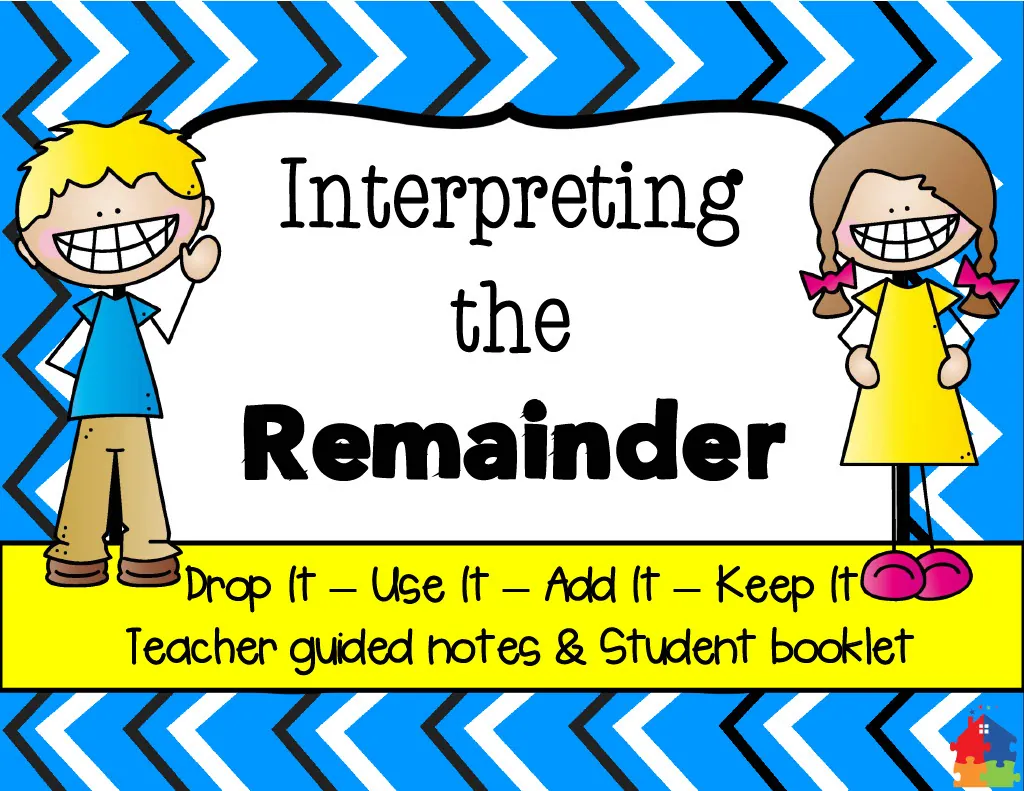
Interpreting the Remainder Booklet | Math Book & Assessment
- Grades
- Grades 4–6
- Pages
- 11
- File type
- Answer key
- Included


- Subject
- Math
- Topic
- Interpreting remainders, Division word problems
- Resource types
- Worksheets, Assessments
- Answer key
- Included
- Standards
- 4.OA.A.3
Product description
From the author
This resource is an Interpreting the Remainder Booklet & Assessment.
Students will solve word problems, interpret remainders and so much more.
There is a short assessment at the end of the booklet.
Answer key included.
Related resources
More resources teachers may find useful
24 related resources were found using this product's title, contributor, categories and tags.

In the classroom
Teaching tips & learning objectives

Learning objectives
Students will interpret division remainders using four strategies: dropping the remainder, using only the remainder, adding one to the quotient, or expressing the remainder as a fraction or decimal.
Students will determine which strategy fits a given real-world division word problem.
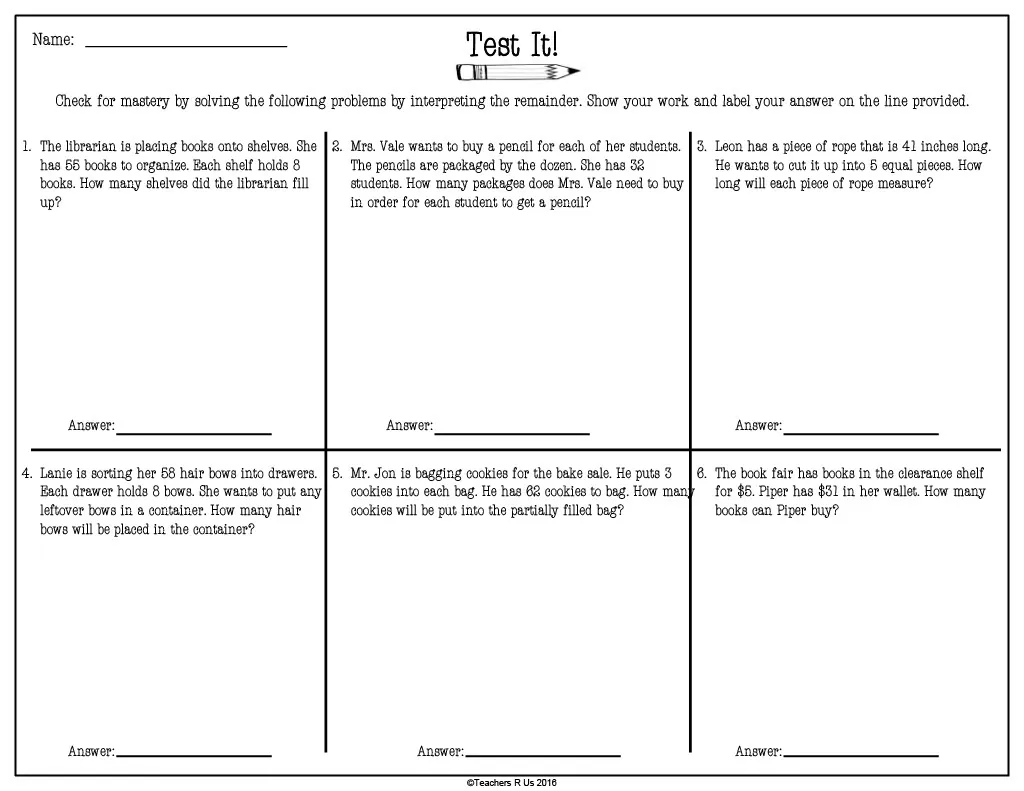
Students will solve and self-check six mastery-check word problems using the appropriate remainder strategy.

Teaching tips
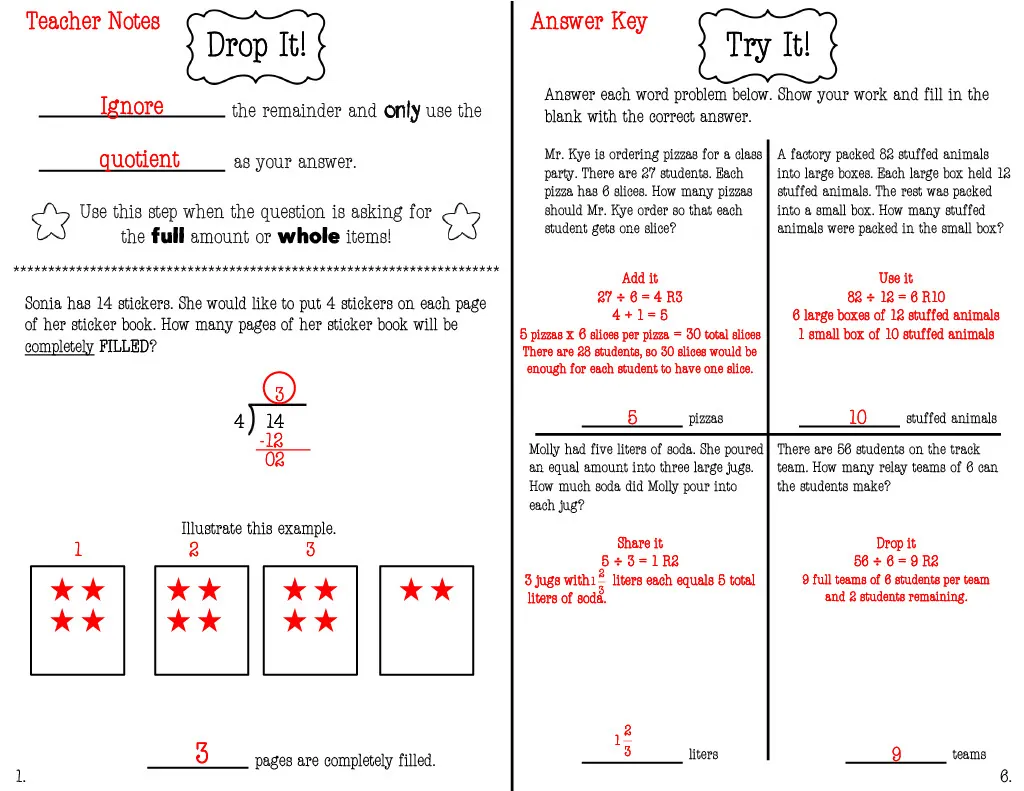
Introduce each of the four strategies one at a time using the teacher notes provided before assigning the matching practice page.
Use the 'Match It' page as a quick formative check that students can identify the correct division model before they compute.
Assign the 'Test It' mastery check after all four strategies are taught, and use the included answer key to score student work efficiently.

Skills covered
Remainder interpretation — students choose among four strategies (drop, use, add, keep) based on what a division word problem is really asking.
Division word-problem modeling — students match word problems to visual division models on the 'Match It' page.
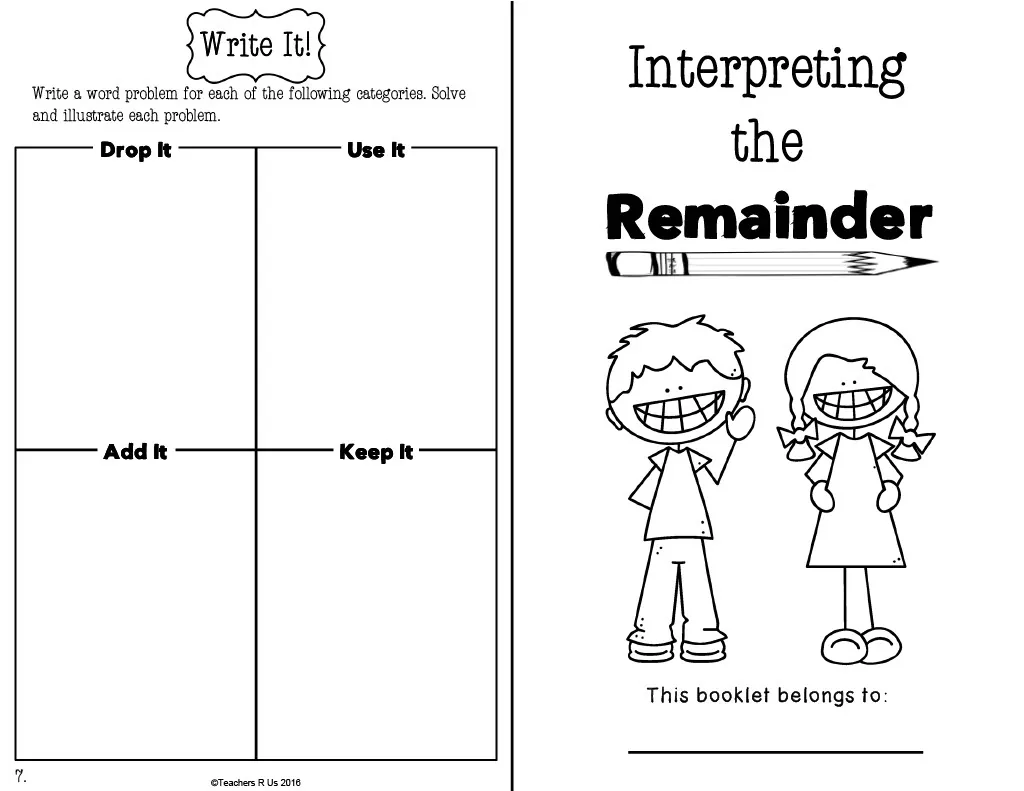
Self-generated word problems — students write and illustrate their own word problem for each remainder category on the 'Write It' page.
Good to know
Questions teachers ask about this resource
How does the booklet distinguish between when to 'Drop' a remainder versus when to 'Add' one to the quotient?
'Drop It' is used when the question asks for the full amount or whole items only, such as counting only the completely filled units in a sticker book; 'Add It' is used when everyone or everything must be included, such as finding how many tables are needed to seat an entire class.

No reviews yet
Downloaded this resource? Tell other teachers how it went.
Curriculum
Standards, concepts & topics
Standards
 Standards
- 4.OA.A.3 — Solve multistep word problems posed with whole numbers and having wholenumber answers using the four operations, including problems in which remainders must be interpreted. Represent these problems using equations with a letter standing for the unknown quantity. Assess the reasonableness of answers using mental computation and estimation strategies including rounding.
Core concepts
 Core concepts
Division
Remainders
Word problems
 Topics
More to explore
You may also like