Identifying Fractions | Math Worksheet
- Grades
- Grades 3–5, Elementary
- File type
- Preparation
- Print ready


- Subject
- Math, Fractions
- Topic
- parts of a whole, fractions worksheet
- Resource types
- Worksheets & Printables, Worksheets
- Preparation
- Print ready
About this resource
What's inside this resource
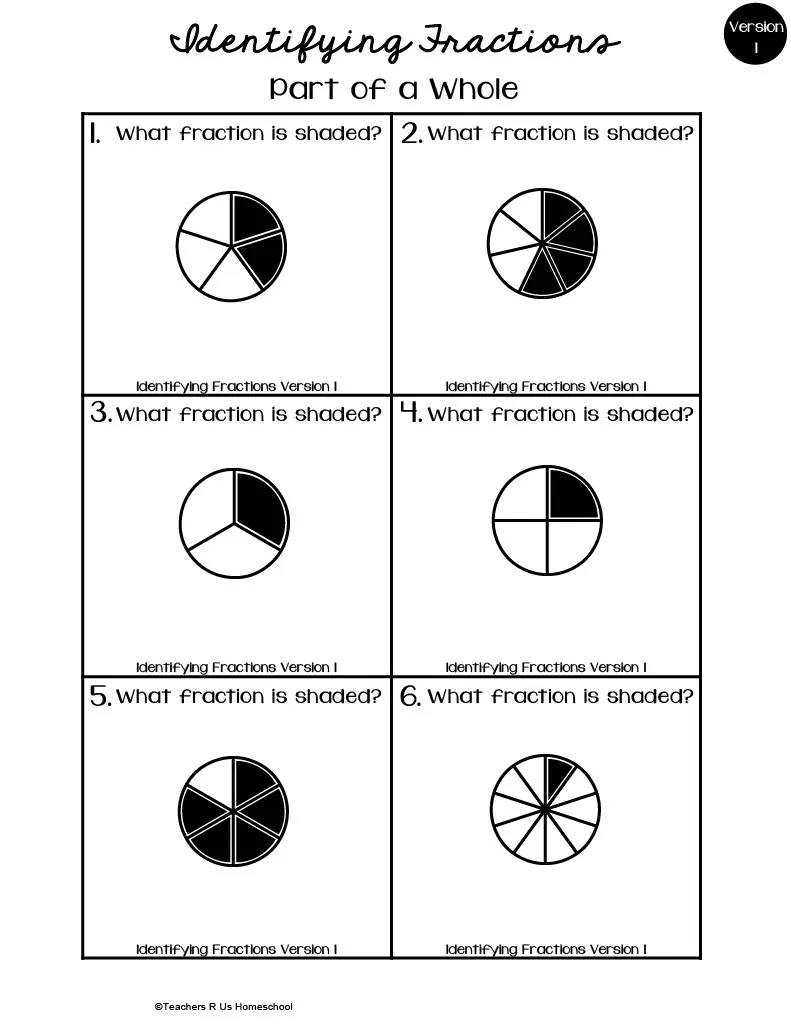
This resource is an Identifying Fractions Math Worksheet.
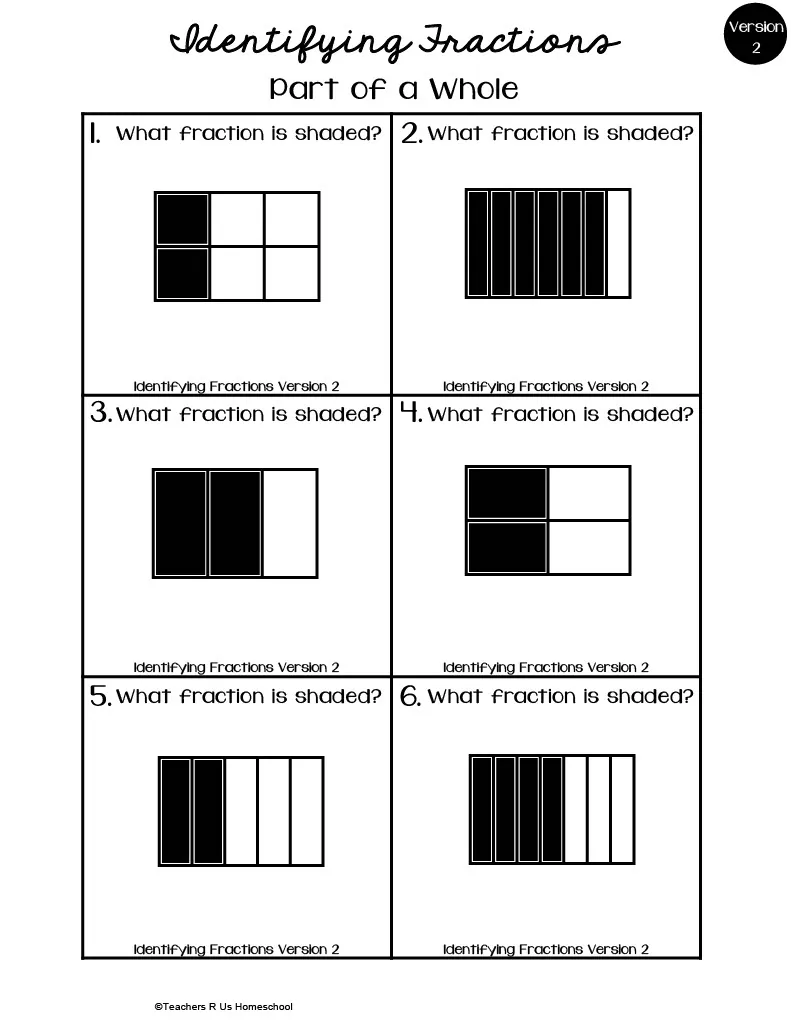
There are 3 different versions, each covering a new topic.
These worksheets are great for a quick assessment, to be placed in a math station or small group intervention.
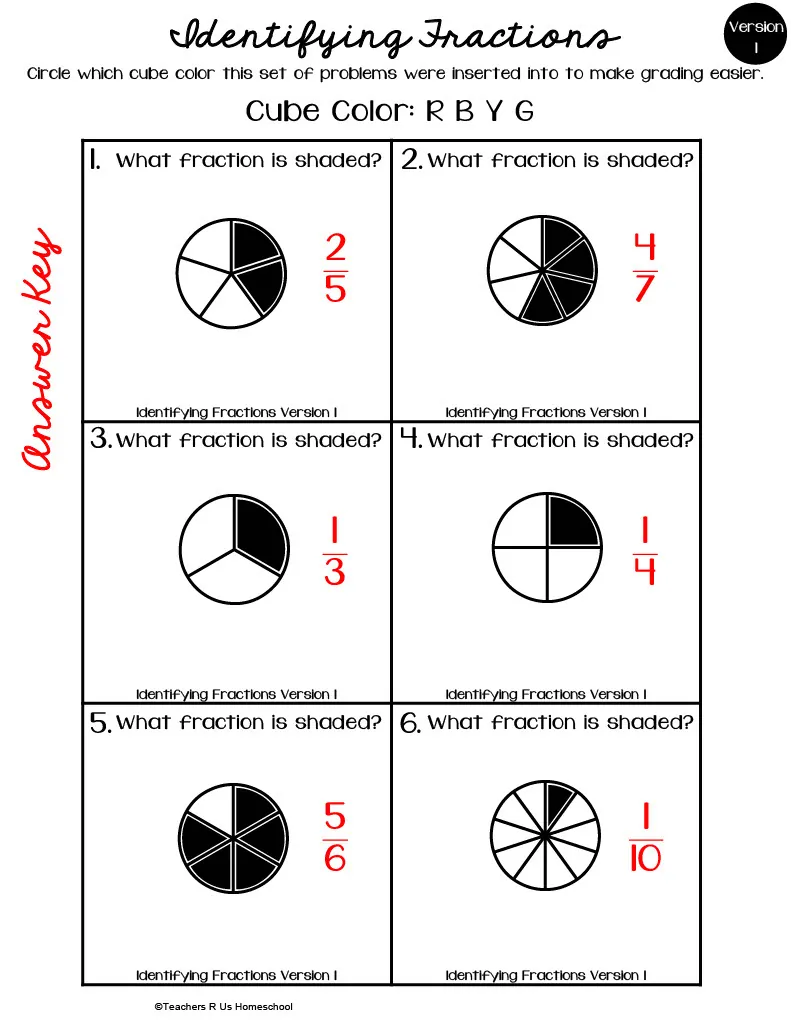
Answer key included.
Related resources
More resources teachers may find useful
24 related resources were found using this product's title, contributor, categories and tags.


In the classroom
Teaching tips & learning objectives

Learning objectives
Write the fraction of a shape that is shaded, putting the number of shaded parts over the total number of equal parts
Read a fraction from a group of objects rather than a single shape — counting how many of the school supplies are pencils, or how many dice show an odd number
Work with denominators beyond halves and quarters, including fifths, sixths, sevenths, ninths and tenths

Teaching tips
The three versions are parallel in structure, so one can serve as a pre-check, one as practice and one as a re-check without re-explaining the task
Versions 1 and 2 both stay on shaded shapes while version 3 moves to sets of objects, which is the harder step; give it once the shape work is secure
The cube-colour line exists because the sheets are built to be slotted into colour-coded cubes; circling a colour before copying means returned work sorts itself back to its set. Show fractions another way with this number line fractions worksheet.

Skills covered
Naming fractions from an area model — students count shaded parts against total parts on six diagrams per page and record answers such as 1/3, 2/5 and 5/6.
Naming fractions from a set — version 3 asks what fraction of the fruit are grapes and what fraction of the kids are girls, which means counting a subset against a whole group rather than reading a shaded diagram.
Handling unfamiliar denominators — the marked copies include sevenths, ninths and tenths alongside the more common thirds, quarters and fifths.
Good to know
Questions teachers ask about this resource
How do the three versions differ from one another?
Versions 1 and 2 are both headed "Part of a Whole" and ask what fraction of a diagram is shaded, using different shapes in each. Version 3 is headed "Parts of a Set" and asks about groups of real objects instead — pencils among school supplies, odd numbers among dice, grapes among fruit, cylinders among solids, starred cookies and girls among a group of children.
What is the "Cube Color" line for?
Sorting returned work. The instruction reads "Circle which cube color this set of problems were inserted into to make grading easier", with R, B, Y and G offered, so a teacher running a colour-coded cube or station system can match each finished sheet back to the set it came from.
Which denominators do students actually meet?
Thirds through tenths. The worked fractions include 1/3, 1/4, 2/5, 5/6, 4/7, 3/9 and 1/10 on the whole-shape versions, and 3/5, 1/8, 2/5, 3/7 and 2/3 on the set version, so the sheets go well past halves and quarters.

No reviews yet
Downloaded this resource? Tell other teachers how it went.
Resource details
Concepts & topics
Core concepts
 Core concepts
Identifying fractions
Part of a whole
Parts of a set
Fraction notation
 Topics
Explore more
Categories this resource belongs to
Explore related searches
More to explore
You may also like