



3,984 products added recently
Page 70 - 4th Grade Activities
Introduce your fourth-grade students to activities that challenge and inspire. These resources encourage analytical thinking, teamwork, and creative expression across subjects. Use them to elevate your teaching and engage students in meaningful learning experiences.

 Show filters


Dominoes: Prepositions
ELA, Reading, Grade 1, 2, 3, 4, 5, 6, Activities, Games
Introduce a fresh and fun way to teach prepositions with our engaging Dominoes Prepositions digital educational tool! This exceptional resource from TeachSimple.com is perfect for teachers who seek to create enjoyable and interactive learning experiences in the classroom, both in person and online. Our Dominoes Prepositions pack comes with five easy-to-print PDF pages, featuring domino-style tiles that showcase bright images paired with easy-to-understand text. This hands-on approach ensures students quickly grasp new preposition vocabulary and remember it more effectively. They'll confidently connect the matching tiles, reinforcing their understanding of sentence structure while enhancing visual literacy skills. This versatile teaching aid is ideal for educators working with young learners or ESL/EFL instructors catering to different grade levels. Use our Dominoes Prepositions game in whole-class activities or small groups—offering you flexibility and allowing your students to thrive. So why wait? Add this captivating and adaptive Dominoes Prepositions digital toolkit from TeachSimple.com into your teaching arsenal—because educating should be as simple as these dominoes make it out to be!
Author Better Teaching Resources
Tags Domino, Dominoes, Prepositions, Words, Matching

Heat and Light Investigation
Science, Physics, Grade 3, 4, 5, Activities
This is a Heat and Light Investigation. This small unit is a simple investigation into the sun as a heat source, along with a quick look at other sources of heat. Students will explore the vocabulary attached to the topic, how objects differ when in direct sunlight vs. in the shade, how living things are affected by the sun and its light, mechanical and electrical heat sources, and misconceptions about heat sources. At the end of the unit there is a quiz for you to give your students and there are answer keys wherever possible. • Explain to students that they will be working in groups to create a set of four movements they feel illustrate the meaning of one of the vocabulary words they’ve learned. • Separate your students into groups of three or four. • Give each group one of the Vocabulary Movement Cards. • As they are making their movements, they will also be verbally incorporating the vocabulary word and its definition. Example: if their word is ‘machine’, as they are doing their first movement they will say, “machine”. As they do their second movement they might say, “a device made to consume energy.” For the third movement they could say, “to produce another form of energy,” and for the fourth say, “to do some kind of work!” • Encourage students to USE THEIR SPACE: go high, low, and in between! • Give students enough time to come up with the movements as a group, practice the movements, and get ready to teach their movements to the rest of the class.
Author At the Core
Tags Heat And Light, Physical Science, Science Investigation, Science Activity, Small Group Work, Science Vocabulary, Friction, Temperature, Graphic Organizer

DNA Activity
Science, Life Sciences, Human Body, Grade 3, 4, 5, 6, 7, 8, 9, 10, 11, Activities
Activity Overview The human body is full of fascinating wonders to learn. This activity is created to help the students recognize the anatomy and the job of the human body. DNA Every part and organ in our human body is vital so let's see how important they are. Have you ever imagined how we look like if we didn't have a skeleton? Did you know that because we have our amazing muscles we can stand! Do you know how many teeth do we have? Have you ever wondered about the food journey inside our body? Can you name all the glands in our body? Why do we have skin? Our nervous system is really good at sending signals. Can you tell us more about it? Are you really good at Mathematics, painting, or any other thing? You should really thank your brain about it! The famous five senses are really doing a great work? Can you explain how every sense works? DNA Activity The activity is perfect for encouraging the researching skills for the students, while learning more about our fantastic human body. DNA This friendly designed worksheet is suitable for students at school, homeschooling, and as a group activity. Instruction Your characteristics are shaped by your genes and the environment you live in. Sort out the items and glue them on page 2, then cut along the dashed lines, and glue page 2 under page 1. Format Available in a PDF format.
Author Educational Voice
Tags DNA Activity, DNA, DNA Facts, DNA Facts For Kids, Genes, Genes Facts, Genes Facts For Kids, Human Body, Human Body Facts For Kids, Human Body Facts

Escalators Activity
Science, Technology, Engineering, Grade 3, 4, 5, 6, 7, 8, 9, 10, 11, Activities
Activity Introduction An amazing activity designed for the students to learn more about STEM subjects. Escalators Do you like STEM subjects? what is your favorite one? Have you ever tried to plant a seed? If yes, tell us more about it. Or have you ever tried to invent something? If yes, tell us more about it. And how do you think it will help us? Have you ever seen a microorganism under a microscope? What was it? And how it looked like? Mathematics is a marvelous subject. Let' sharpen our brains and solve some equations. Do you like timetable tricks? What is your favorite one? Do you know how to code? Have you ever created an app or a game before? If yes, how was it like? Escalators Activity The activity is perfect for encouraging the researching skills for the students, while learning more about this topic. Escalators This friendly designed worksheet is suitable for students at school, homeschooling, and as a group activity. Instructions Write down the steps of how escalators work. Format Available in a PDF format.
Author Educational Voice
Tags Escalators Activity, Escalators, Escalators Facts, Escalators Facts For Kids, Engineering , Engineering Facts, Engineering Facts For Kids, STEM, STEM Facts, STEM Facts For Kids
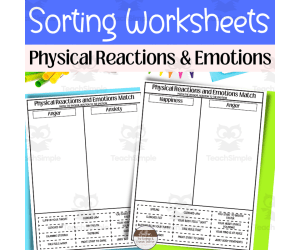
Emotions Sorting Worksheets For Matching Physical Responses To Emotion
Special Resources, Social Emotional Learning (SEL), Life Skills, Grade 1, 2, 3, 4, Activities, Games, Worksheets & Printables, Worksheets
Emotions Sorting Worksheets for Matching Physical Responses to Emotion Ages: Grades 1 through 4 This teaching resource aims to facilitate the understanding of the relationship between physical responses and emotions. The goal is to promote social emotional learning while keeping students engaged. Educational Objectives: Promote self-awareness and mindfulness by identifying physical reactions prompted by specific emotions. Foster body scanning methods among learners, a technique aimed at establishing a connection between their emotions and physiological responses. How To Use: The worksheets are user-friendly. Simply print them out for student use. Students cut out descriptions of body reactions and match them with corresponding emotions based on their intuition. Potential Applications : One-on-one lessons Small group exercises An extension activity following your main Emotions Lessons plan You can also hold insightful discussions post-activity by revisiting each category to understand why certain responses were linked with specific feelings. Ideal For: Social Emotional Learning (Primary Subject) Life Skills All these critical life skills can be instilled among young minds through an interactive approach provided by these worksheets ! Note: This product is available for download in PDF format (American spelling) but can be adapted worldwide..
Author The Feelings and Friends Teacher
Tags Emotions, Physical Responses, Social Emotional Learning, Body Scanning, Self-awareness, Matching Emotion Worksheets For Kindergarten
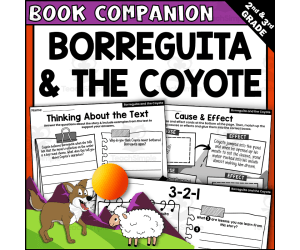
Borreguita and the Coyote Reader Response Activities
ELA, Reading, Reading Comprehension, Literature, Grade 2, 3, 4, Teacher Tools, Graphic Organizers, Worksheets & Printables, Novel Studies, Activities, Worksheets
This picture book companion is the perfect resource to accompany the book Borreguita and the Coyote by Verna Aardema. It includes 35 print-and-go reading activities to choose from, making this resource ideal for customizing learning to your student's specific needs and academic abilities. Students will investigate characters, identify story elements, determine the theme, practice plotting story events, compare & contrast, make predictions, inferences, & connections, answer questions that require them to think beyond the text, and much more! Students will love the engaging and fun activities, and you will appreciate the time saved hunting for high-level resources to teach reading concepts that students frequently struggle with. The activities provided are designed to enable students to apply higher-level thinking skills, encourage them to provide text evidence to support their thinking, and challenge them to express their own thoughts and/or perspectives. ⭐️This Resource Includes:⭐️ ◾ Elements of a Trickster Tale Anchor Chart or Notes Handout: Color and B&W ◾ Making Predictions: Before reading the book, students will make predictions about the text. ◾ Elements of a Trickster Tale: Students fill in the chart with the details of the story that characterize it as a trickster tale. ◾ Trickster Tale Tidbits: Students will answer the questions with details from the story that proves it's a trickster tale. ◾ Story Elements: Students fill in the boxes with words & pictures to represent the story elements. ◾ Sequencing: Students will retell & illustrate the important parts of the story. ◾ Retell the Story: Students retell the beginning, middle, and end of story with text and illustrations. ◾ Recalling events in Chronological Order: Students describe and illustrate four major events in the story in chronological order. ◾ Summary: Students complete the Somebody, Wanted, Because, But, So graphic organizer and write a summary of the story. ◾ Story Event Sort: Students will describe a scene or event from the story that fits into each of the categories & explain how the event made them feel & how it relates to the category. ◾ Making Inferences: Students use clues & schema to make inferences while reading the story. ◾ Making Connections: Students make connections to an event from the story. ◾ Cause & Effect (simplified cut-and-paste): Students are given either the cause or effect and will cut & match up cause & effect cards, then paste them in the correct boxes (ANSWER KEY included). ◾ Cause & Effect (cut-and-paste): Students cut & match up cause & effect cards, then paste them in the correct boxes (ANSWER KEY included). ◾ Cause & Effect: Students fill in the causes and effects (ANSWER KEY included). ◾ Author's Message: Students describe four important events from the story in chronological order and answer the questions about the author's message. ◾ Character Inside & Out (Borreguita): Students include details from the story to describe what the character says, thinks, does, and feels. ◾ Character Inside & Out (Coyote): Students include details from the story to describe what the character says, thinks, does, and feels. ◾ Character Feelings (Borreguita): Students describe how the character's feelings change throughout the story & give examples of the events that cause them to feel the way they do. ◾ Character Feelings (Coyote): Students describe how the character's feelings change throughout the story & give examples of the events that cause them to feel the way they do. ◾ Character Development (Borreguita): Students select the character traits that best describe the character at different times throughout the story and provide examples from the book to support each character trait. ◾ Character Development (Coyote): Students select the character traits that best describe the character at different times throughout the story and provide examples from the book to support each character trait. ◾ Character Change (Borreguita): Students will explain how the character changed from the beginning to the end of the story and describe the events that caused the change to happen. ◾ Character Change (Coyote): Students will explain how the character changed from the beginning to the end of the story and describe the events that caused the change to happen. ◾ Character Acrostic Poem (Borreguita): Students will write an acrostic poem to describe the character. ◾ Character Acrostic Poem (Coyote): Students will write an acrostic poem to describe the character. ◾ Sketch a Scene From the Story: Students draw a scene from the story & explain why it's important to the plot. ◾ Setting Influences the Plot: Students will draw a scene from the story that takes place in one of the settings and write about what happened there and why it was important to the plot. ◾ Setting the Scene: Students identify three different settings in the story and explain how they know that the setting changed. ◾ Theme: Students answer the questions to determine which theme best fits the story and provide text evidence to support their choice. ◾ Thinking About the Text: Students will answer the questions about the story & include examples from the text to support their answers. ◾ 3-2-1: Students will list three tricks that Borreguita played on Coyote, 2 lessons that can be learned from the story, and one word that describes Borreguita. ◾ Word Search Puzzle: Students identify the words for the definitions below. Then, find the words hidden in the puzzle (ANSWER KEY INCLUDED). ◾ Wait... There's More!: Students will write about what happens next in the story. ◾ Book Review: Students color in the stars to rate how much they enjoyed the book and draw a new cover & their favorite character from the story. Then, they will explain why other kids should or should not read it. 💡Need ideas for different ways you can implement these activities? ◾ Focus on different reading skills each day for targeted instruction, and have students complete a corresponding printable to check for understanding. ◾ During centers, students can independently read the story again and complete an activity that reviews a previously taught concept. ◾ Work with students on a reading concept they struggle with during guided reading or strategy groups. ◾ Students work with a partner or in literature circles to complete additional reading activities. The book is not included in this resource. ⭐️You may also like: ⭐ TEXT SET #1: "The Importance of Friendship" ◾ A Weekend With Wendell Read Aloud Book Companion Activities for IRA ◾ First Come the Zebra Read Aloud Book Companion Activities for IRA ◾ This is Our House Read Aloud Book Companion Activities for IRA ◾ Horace and Morris But Mostly Dolores Read Aloud Book Companion Activities for IRA ◾ The Old Woman Who Named Things Read Aloud Book Companion Activities for IRA TEXT SET #3: "Finding Your Way in a New Place" ◾ Grandfather Counts Read Aloud Book Companion Activities for IRA ◾ The Have a Good Day Cafe, Read Aloud Book Companion Activities for IRA ◾ Roses for Gita Read Aloud Book Companion Activities for IRA ◾ Mango, Abuela, and Me, Read Aloud Book Companion Activities for IRA ◾ Home at Last Read Aloud Book Companion Activities for IRA TEXT SET #7: "Exploring Narrative Nonfiction" ◾ Cactus Hotel Read Aloud Book Companion Activities for IRA ◾ A Log's Life Read Aloud Book Companion Activities for IRA ◾ Salmon Stream Read Aloud Book Companion Activities for IRA ◾ Think of an Eel Read Aloud Book Companion Activities for IRA ✨Be sure to check out my storefront here: https://teachsimple.com/contributor/creatively-gifted
Author Creatively Gifted
Tags IRA, Picture Book Activities, Read Aloud Lessons, Interactive Read Aloud Activities, Elementary Reading, Reading Comprehension, Fountas And Pinnell IRA, Second Grade, Trickster Tales, Borreguita And The Coyote
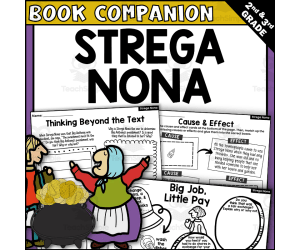
Strega Nona Read Aloud Book Companion
ELA, Reading, Reading Comprehension, Literature, Grade 2, 3, 4, Read Alouds, Activities
This picture book companion is a complete supplemental resource for the book Strega Nona by Tomie dePaola. It includes 34 print-and-go reading activities to choose from, making this resource ideal for customizing learning to your student's specific needs and academic abilities. Students will investigate characters, identify story elements, determine the theme, practice plotting story events, compare & contrast, make predictions, inferences, & connections, answer questions that require them to think beyond the text, and much more! Students will thoroughly enjoy the captivating activities, and you'll value the time saved from scouring for advanced resources to address challenging reading concepts. The offered activities are crafted to foster higher-order thinking, prompt students to present textual proof for their reasoning, and inspire them to share their personal insights and viewpoints. ⭐️This Resource Includes:⭐️ ◾ Making Predictions: Before reading the book, students will make predictions about the text. ◾ Story Elements: Students fill in the boxes with words & pictures to represent the story elements. ◾ Sequencing: Students will retell & illustrate the important parts of the story. ◾ Recalling events in Chronological Order: Students describe and illustrate four major events in the story in chronological order. ◾ Summary: Students complete the Somebody, Wanted, Because, But, So graphic organizer and write a summary of the story. ◾ Story Event Sort: Students will describe a scene or event from the story that fits into each of the categories & explain how the event made them feel & how it relates to the category. ◾ Cause & Effect (simplified): Students are given either the cause or effect and will cut & match up cause & effect cards, then paste them in the correct boxes (ANSWER KEY included). ◾ Cause & Effect: Students cut & match up cause & effect cards, then paste them in the correct boxes (ANSWER KEY included). ◾ Problem & Solution: Students will answer questions related to the problem & solution in the story. ◾ Making Inferences: Students use clues & schema to make inferences while reading the story. ◾ Making Connections: Students make connections to an event from the story. ◾ Notice & Note: Students will notice the important details the author includes in the text & illustrations and take notes on what they notice. ◾ Author's Message: Students describe four important events from the story in chronological order and answer the questions about the author's message. ◾ Character Inside & Out (Strega Nona): Students include details from the story to describe what the character says, thinks, does, and feels. ◾ Character Inside & Out (Big Anthony): Students include details from the story to describe what the character says, thinks, does, and feels. ◾ Character Feelings (Strega Nona): Students describe how the character's feelings change throughout the story & give examples of the events that cause them to feel the way they do. ◾ Character Feelings (Big Anthony): Students describe how the character's feelings change throughout the story & give examples of the events that cause them to feel the way they do. ◾ Character Development (Strega Nona): Students select the character traits that best describe Strega Nona at different times throughout the story and provide examples from the book to support each character trait. ◾ Character Development (Big Anthony): Students select the character traits that best describe Big Anthony at different times throughout the story and provide examples from the book to support each character trait. ◾ Character Change (Strega Nona): Students will explain how the character changed from the beginning to the end of the story and describe the events that caused the change to happen. ◾ Character Change (Big Anthony): Students will explain how the character changed from the beginning to the end of the story and describe the events that caused the change to happen. ◾ Sketch a Scene From the Story: Students will draw a scene from the story and explain why it's important to the plot. ◾ Setting Influences the Plot: Students will draw a scene from the story that takes place in one of the settings and write about what happened there and why it was important to the plot. ◾ Theme: Students answer the questions to determine which theme best fits the story and provide text evidence to support their choice. ◾ Thinking About the Text: Students will answer the questions about the story & include examples from the text to support their answers. ◾ Thinking Beyond the Text: Students will answer questions that require them to think beyond the text. ◾ Big Job, Little Pay: Students will answer questions about the deal Strega Nona made with Big Anthony and what she paid him for all the work he had to do. ◾ Big Anthony's Big Apology: Students write an apology note to Strega Nona from Big Anthony. ◾ Sensory Details: Students choose an event from the story and describe it using the five senses. ◾ Wait... There's More!: Students will write about what happens next in the story. ◾ Book Review: Students will color in the stars to rate how much they enjoyed the book and draw a new cover & their favorite character from the story. Then, they will explain why other kids should or should not read it. ◾ Biography Brochure: Students conduct research to learn more about the author, Tomie dePaola's life, and create a brochure. ◾ Biography One-Pager: Students research further into the life of Tomie dePaola and complete the biography handout. ◾ Acrostic Poem: Students write an acrostic poem that includes facts and describes the author, Tomie dePaola. This resource is for extension read-aloud activities only. The book is not included. ⭐️You may also like: ⭐ TEXT SET #1: "The Importance of Friendship" ◾ A Weekend With Wendell Read Aloud Book Companion Activities for IRA ◾ First Come the Zebra Read Aloud Book Companion Activities for IRA ◾ This is Our House Read Aloud Book Companion Activities for IRA ◾ Horace and Morris But Mostly Dolores Read Aloud Book Companion Activities for IRA ◾ The Old Woman Who Named Things Read Aloud Book Companion Activities for IRA TEXT SET #3: "Finding Your Way in a New Place" ◾ Grandfather Counts Read Aloud Book Companion Activities for IRA ◾ The Have a Good Day Cafe, Read Aloud Book Companion Activities for IRA ◾ Roses for Gita Read Aloud Book Companion Activities for IRA ◾ Mango, Abuela, and Me, Read Aloud Book Companion Activities for IRA ◾ Home at Last Read Aloud Book Companion Activities for IRA TEXT SET #7: "Exploring Narrative Nonfiction" ◾ Cactus Hotel Read Aloud Book Companion Activities for IRA ◾ A Log's Life Read Aloud Book Companion Activities for IRA ◾ Salmon Stream Read Aloud Book Companion Activities for IRA ◾ Think of an Eel Read Aloud Book Companion Activities for IRA ✨Be sure to check out my storefront here: https://teachsimple.com/contributor/creatively-gifted
Author Creatively Gifted
Tags IRA, Picture Book Activities, Read Aloud Lessons, Interactive Read Aloud Activities, Elementary Reading, Reading Comprehension, Fountas And Pinnell IRA, Second Grade, Tomie Depaola, Author Study
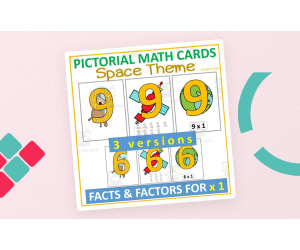
Pictorial Math Multiplication Flashcards | SPACE x1
Special Resources, Special Education Needs (SEN), Math, Addition and Subtraction, Addition, Multiplication and Division, Division, Place Value, Grade 2, 3, 4, Teacher Tools, Lesson Plans, Worksheets & Printables, Flashcards, Activities
Pictorial Math Multiplication Flashcards | SPACE x 1 : For Grade 2, Grade 3, and Grade 4 . Discovering the beauty and fun in learning math is made easier with this imaginative approach using space - themed pictorial flashcards . This resource makes understanding multiplication straightforward and engaging . This teaching tool constitutes an integral part of a broad series of flashcard materials specifically designed for multiplications ranging from 1 - 10 x 1 -12 . They are engineered as cards, mats, or even posters that could serve various functions within a classroom environment . Features : Aids educators during teaching sessions . Embellishes bulletin boards providing vibrant decor and thought-provoking visual prompts . Houses three versions or sets of each numerical fact and its corresponding factors . Fosters comprehension through repetition but with varying presentations . Promoting Organization : The resource also promotes organization by featuring unique color codes for each factor from numbers one to ten . This makes it perfect for sorting activities . Versatility : In addition to standard multiplication lessons, the tool can sufficiently support additions and place value discussions. Its versatile design allows it to function as a reference guide especially when solving word problems involving different mathematical operations—equipped with all these features enclosed in a thirteen-page PDF file offering three types of pictorial explanations accessible whenever necessary . These flashcards morph into efficient educational companions whether used during whole group lessons or smaller focused tutoring sessions—they're also great take-home assignments for additional home-based math practice! With solutions this creative yet systematic; injecting fun into teaching multiplication has never been more manageable . 13 - page PDF resource with three types of pictorial explanation for multiplication FACTS and FACTORS , for your bulletin boards , your classroom walls , your screens and your custom made task cards and books .
Author WORDS ASIDE
Tags Pictorial Math, Multiplication Flashcards, Visual Learning, SPACE, Math Center, Math Station, Repeated Addition, Task Cards, Visual Representation, Words Aside

Kids Yoga Stories: Would you Rather... ? A Choice Game for Kids eBook
P.E. & Health, Yoga, Grade 2, 3, 4, 5, Activities
Kids Yoga Stories: Would you Rather...? A Choice Game for Kids eBook The Kids Yoga Stories: Would you Rather...? A Choice Game for Kids eBook is a tool specially designed for primary school teachers, children's yoga instructors, parents, caregivers and health & recreation staff. It lends an interactive approach to teaching yoga, mindfulness & meditation principles to children. Beyond Traditional Yoga Instruction The eBook incorporates a thought-provoking game inspired by the Yamas and Niyamas of yoga. The game gives students an easy understanding path towards these ancient teachings while promoting critical thinking and nurturing communication skills. Adaptability & Usability This resource can be used in various settings like whole group discussions during class periods or small groups during extracurricular activities. It's also ideal for independent study or homework assignments due to its user-friendly structure. Tailored specifically for grades 2 through 5 but equally enjoyable and useful across almost all age groups. Ideal conversation starter within educational lessons or household environments. 66-page comprehensive guide; making it versatile pedagogical tool. Benefits of Early Age Yoga Learning Increase in strength , flexibility & improved sleep quality. Fosters positive interactions amongst adults & children. Helps kids build self-confidence and improve self-expression. Promotes improved body awareness Nurtures advocacy towards living an active-healthy lifestyle Note:While these questions are primarily designed for third through fifth graders; they could serve as amusing conversation starters for almost any age group. Access your copy today of the Kids Yoga Stories: Would you Rather... ? A Choice Game for Kids eBook, and take the first step in making learning fun with fitness & mindfulness.
Author Kids Yoga Stories
Tags Yoga Instruction, Mindfulness Game, Ethical Principles, Communication Skills, Physical Well-being

Imagine You Are An Old Toy And Write Your Story (7-11 years)
ELA, Writing, Creative Writing, Grade 3, 4, 5, 6, Activities
Imagine You Are An Old Toy And Write Your Story: A Creative Writing Resource This unique resource sparks creativity in students from Grades 3 to 6, expanding their writing skills and kindling their imagination. It's perfect for educators looking for a fresh approach to teaching Creative Writing and broader Language Arts content. Your Story: An Old Toy Rediscovered Imagine you're an old, forgotten toy stashed away in a loft – this is the basis of your student’s story. Using sentence prompts and an existing storyline, they transform themselves into that abandoned toy. They then retell the tale through their own words; detailing the rediscovery process and subsequent adventures. In Their Shoes: The Elders' Worldview The exercise doesn't stop at toys - what about experiencing life as someone elderly in a rapidly changing world? Students construct narratives around these evocative ideas guided by structured prompts and story plans. Helpful tips ensure good language use including sentence variation for lively storytelling. Multifunctional Design: This workbook uses accessible magazine-style design elements fitting various ability levels. Beyond Fiction: Students can also practice non-fiction tasks such as diary entries, reportage, and persuasive leaflet creation. Voice of Inspiration: A unique blend of instruction with imagination makes this resource more than just another workbook . Whether used part-by-part over sequential classes or as group work during conferences, it's versatile enough to find its place within any lesson plan structure. It reduces preparation time burden on teachers strained by overflowing school schedules or homeschooling parents aiming to supplement English learning outside regular schooling system.
Author Guinea Pig Education
Tags Creative Writing, Imagination, Storytelling, Old Toys, Language Arts
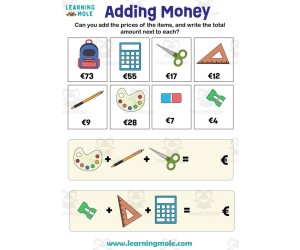
Adding Money Euro Activity
Money, Math, Addition, Addition and Subtraction, Grade 2, 3, 4, 5, 6, 7, 8, 9, 10, Activities
Activity Introduction An amazing activity designed for the students to learn more about STEM. Adding Money Euro Do you like STEM subjects? what is your favorite one? Have you ever tried to plant a seed? If yes, tell us more about it. Or have you ever tried to invent something? If yes, tell us more about it. And how do you think it will help us? Have you ever seen a microorganism under a microscope? What was it? And how it looked like? Mathematics is a marvelous subject. Let' sharpen our brains and solve some equations. Do you like timetable tricks? What is your favorite one? Do you know how to code? Have you ever created an app or a game before? If yes, how was it like? Adding Money Euro Activity The activity is perfect for encouraging the researching skills for the students, while learning more about this fantastic topic. Adding Money Euro This friendly designed worksheet is suitable for students at school, homeschooling, and as a group activity. Instructions Can you add the prices of the items, and write the total amount next to each? Format Available in a PDF format.
Author Educational Voice
Tags Adding Money Euro Activity, Adding Money Activity, Money Activity, Addition, Addition Activity, Money , Euro, Euros, Addition Facts, Money Facts
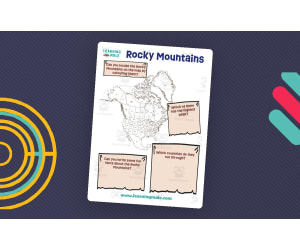
Rocky Mountains Activity
Social Studies, Geography, Grade 2, 3, 4, 5, 6, 7, 8, 9, 10, Activities
Activity Introduction An amazing activity designed for the students to learn more about famous places in different countries. Rocky Mountains What do you know about this place? Do you know in which part of the world it is? Have you ever visited this place? If yes, can you tell us more about your adventure, and what do you like the most about this place? Do you like reading about Geography? What is your favorite country in the whole world? If you are going on a trip where it will be? Which country? What you are going to see there? Does this country has a famous place to visit? Rocky Mountains Activity The activity is perfect for encouraging the researching skills for the students, while learning more about this fantastic place. Rocky Mountains This friendly designed worksheet is suitable for students at school, homeschooling, and as a group activity. Instructions Can you locate the rocky mountains on the map by colouring them? Which of them has the highest peak? Can you write some fun facts about the rocky mountains? Which countries do they run through? Format Available in a PDF format.
Author Educational Voice
Tags Rocky Mountains Activity, Rocky Mountains, Mountains, Mountain, Mountains Facts, Mountains Facts For Kids, Mountains In The United States, USA, Mountains In North America, Mountains In The US
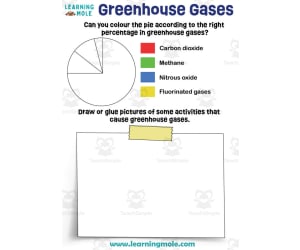
Greenhouse Gases Activity
Environmental Science, Earth and Environmental Sciences, Science, Grade 3, 4, 5, 6, 7, 8, 9, 10, Activities
Activity Introduction An amazing activity designed for the students to learn more about STEM. Greenhouse Gases Do you like STEM subjects? what is your favorite one? Have you ever tried to plant a seed? If yes, tell us more about it. Or have you ever tried to invent something? If yes, tell us more about it. And how do you think it will help us? Have you ever seen a microorganism under a microscope? What was it? And how it looked like? Mathematics is a marvelous subject. Let' sharpen our brains and solve some equations. Do you like timetable tricks? What is your favorite one? Do you know how to code? Have you ever created an app or a game before? If yes, how was it like? Greenhouse Gases Activity The activity is perfect for encouraging the researching skills for the students, while learning more about this fantastic topic. Greenhouse Gases This friendly designed worksheet is suitable for students at school, homeschooling, and as a group activity . Instructions Can you colour the pie according to the right percentage in greenhouse gases? Draw or glue pictures of some activities that cause greenhouse gases. Format Available in a PDF format.
Author Educational Voice
Tags Greenhouse Gases Activity, Greenhouse Gases, Gases Activity, Greenhouse Gases Facts, Greenhouse Gases Facts For Kids, Gases Facts, Gases, Gases Facts For Kids, Environment, Environment Facts
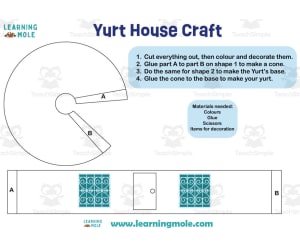
Yurt House Activity
Social Studies, Geography, Grade 2, 3, 4, 5, 6, 7, 8, Activities
Activity Introduction An amazing activity designed for the students to learn more about famous places in different countries. The Ice Fossils What do you know about these houses? Where are these houses? Who were the first people to build it? How does your house look like? Can you draw it? Do you have a favourite kind of houses? Tell us more about it. What are the colours of your house or your dream house? Do you like reading about Geography? What is your favorite country in the whole world? Ice Fossils Activity The activity is perfect for encouraging the researching skills for the students, while learning more about this fantastic phenomenon. Ice Fossils This friendly designed worksheet is suitable for students at school, homeschooling, and as a group activity. Instructions Cut everything out, then colour and decorate them. Glue part A to part B on shape 1 to make a cone. Do the same for shape 2 to make the Yurt's base. Glue the cone to the base to make your yurt. Materials needed Colours Glue Scissors Items for decoration Format Available in a PDF format.
Author Educational Voice
Tags Yurt House Activity, Yurt House, Yurt Houses, Yurt House Facts, Yurt House Facts For Kids, Yurt House Activity For Kids, House, Houses, Houses Facts, Houses Facts For Kids
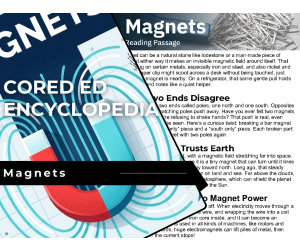
Magnets Reading Comprehension Passage - Cored Ed Encyclopedia
ELA, Language Development, Resources for Teachers, Reading Comprehension, Reading, Pre-Reading, Writing, Science, Physics, Strategies, Grade 2, 3, 4, 5, Worksheets & Printables, Worksheets, Teacher Tools, Centers, Activities, Writing Prompts, Assessments, Tests, Quizzes and Tests, Quizzes
This magnets reading comprehension contains the following: COMPANION VIDEO NOW AVAILABLE (EMBEDDED AFTER PREVIEW PICTURES IN PRODUCT DESCRIPTION) Visualize on the Cover (Teacher Read Aloud Script) Start your lesson by taking a few moments to visualize the topic and share thoughts or feelings about it. Pre-Reading Trivia Students will write down one thing they already know about the subject and then read five more facts and discuss. These facts are fun, and the students will enjoy learning about the subject before reading more. Reading Passage The text is a high-interest reading passage with set paragraphs, roughly three to four paragraphs long. It contains a variety of themes about the topic, anywhere from history to technology. The passage is between 250 and 350 words in length. Mixed Questions The first question page contains four multiple-choice questions, each with a choice of four answers, and three written response questions that require a sentence or two from the student. Vocabulary Questions Practice seven key words from the text in this section across two activities. First section is scrambled words where students will unscramble three words given a clue for each. The second section is a word to meaning matching activity. Creative Writing In this question, the student will be required to write a five to eight sentence paragraph on a question related to the topic. Extension Activities This page is optional for fast finishers or to take home. There are several activities, each one requiring a different skill. Do some, do none, do all, completely optional - but you will feel reassured knowing every possibility is planned for. Includes summary writting question. Answer Key There are answers for the multiple-choice questions, written response questions have sample answers, vocabulary answers and if there is a summary question then a sample summary will be provided as well. FULL CATALOG OF DOWNLOAD LINKS AND ENCYCLOPEDIA INDEX HERE Lesson Snapshot Title: Magnets Genre: Nonfiction Subject: Physical Science Primary Topic: Magnetic fields, poles, and electromagnets Estimated Guided Reading Level (A–Z): N What This Lesson Teaches Best Explains that magnets create an invisible magnetic field that can pull certain metals without touching them. Teaches how poles work: opposite poles attract and matching poles repel (push away). Builds science vocabulary and concepts using clear examples (paper clips, refrigerator notes, compass needle). Connects magnetism to Earth: Earth’s magnetic field helps compasses point roughly north and helps form the magnetosphere . Introduces how electricity can create an electromagnet that can be switched on and off. Learning Goals Describe how a magnet’s magnetic field can pull metal without touching it. Identify that every magnet has two poles called north and south. Explain what happens when opposite poles meet and when matching poles meet. Explain why breaking a bar magnet makes smaller magnets with two poles. Describe how a compass needle uses Earth’s magnetic field to point roughly north. Explain how an electromagnet is made using electricity and a coiled wire. Key Vocabulary From the Text Lodestone — a natural rock that acts like a magnet. Magnetic field — invisible area around a magnet that can pull metals. Poles — the two ends of a magnet: north and south. Magnetosphere — a shield around Earth made by its magnetic field. Electromagnet — a magnet made with electricity that can switch on/off. Cored Ed Encyclopedia Overview The Cored Ed Encyclopedia is a weekly series of lessons that you can pick up and use right away. These short readings fit into whatever time you have available. Each one includes a warm-up, a reading, and a set of questions, but it’s flexible — you can do just the reading, the full lesson, or skip the writing section if you need to. Each lesson focuses on a single topic so students don’t get lost. The writing is clear but never childish, making it perfect for grades two through five. Topics range from animals and science to history, inventions, and everyday things. No matter the level of the student, everyone should take away at least one new idea or fact from each lesson. The materials are easy to print, easy to explain, and require no setup. They work well for whole-class teaching, partner work, or independent study.
Author Cored Education
Rating
Tags Vocabulary, Spelling, Reading Comprehension, Reading Passages, Reading, Creative Writing, Reading Strategies, Writing Prompts, Physics
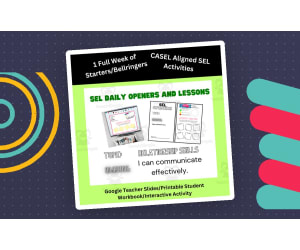
Effective Communication | SEL Openers/Bellringers and Weekly Activity
Special Resources, Social Emotional Learning (SEL), Social Skills, Life Skills, Grade 3, 4, 5, 6, Activities
Effective Communication | SEL Openers/Bellringers and Weekly Activity Effective Communication | SEL Openers/Bellringers and Weekly Activity is an notable teaching resource aimed at nurturing effective communication strategies among students of grades 3 through 6. This resource not only addresses the traditional aspects but also integrates social emotional learning (SEL) touchpoints in the classroom environment. The goal is to facilitate personal growth alongside academics. This evidence-based teaching tool persuades students to dedicate 10 minutes each day exploring topics around effective communication. The package includes a no-prep student workbook, promoting daily interaction about their mental health status. CASEL-Aligned Product Offering Vibrant Discussions: The google teacher slides, matching with student handbook pages introduce vibrant discussions in class or small group study settings. It's a solid platform for teachers keen on fostering harmonious relationships with their students and shaping them into well-rounded individuals. Simplified Weekly Lesson Planning : Easily devise weekly lessons! This pack contains everything needed to develop relationship skills via ready-to-use SEL lesson. All activities align thoughtfully with the overall topic and objective of the week. The innovative BOOM CUBE activity offers children an opportunity to express themselves while listening empathetically when peers share alike experiences. Addition Benefits: Easy-to-follow page design, designed compactly over six pages per week (including title slide). Beautifully crafted in colored or black & white versions. Five teacher slides per day provided in PDF format too, saving precious lesson planning time! In summary, Effective Communication | SEL Openers/Bellringers and Weekly Activity offers educators a smooth opportunity to venture into other empowering lessons like teamwork development, building positive relationships and constructive conflict resolution. A blend of traditional and modern learning sensibilities. Let's embrace this suite of resources now!
Author Mrs Bonie Just Teach
Tags Communication Skills, Social Emotional Learning, Student Workbook, SEL Lessons, Relationship Building
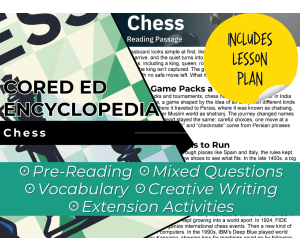
Chess Reading Comprehension Passage - Cored Ed Encyclopedia
ELA, Language Development, Reading Comprehension, Reading, Pre-Reading, Science, Social Studies, Geography, History, Technology, Grade 2, 3, 4, 5, Worksheets & Printables, Worksheets, Teacher Tools, Centers, Activities, Writing Prompts, Assessments, Quizzes and Tests, Quizzes, Lesson Plans
This chess reading comprehension with lesson plan includes: Visualization (on the front cover) Start your lesson by taking a minute to think and share something about the topic. Read the script aloud (slowly), perhaps prepare some music or sound effects. Student close their eyes and let their imaginations wander. Students open their eyes, read the question aloud and give them a few minutes to complete. Ask a few students to share or keep answers until the end to compare with what they learn in the passage. COMPANION VIDEO NOW AVAILABLE (EMBEDDED AFTER PREVIEW PICTURES IN PRODUCT DESCRIPTION) Quick pause—thousands of Cored Education products are included with your TeachSimple membership. Download links and encyclopedia index available here. Pre-Reading Trivia Students will write down one thing they already know about the subject and then read five more facts and discuss. These facts are fun, and the students will enjoy learning about the subject before reading more. Give 1 minute for students to write what they already know (no pressure—best guess is fine). Read the five facts together. After each fact, do ask a student for their opinion, was it surprising? Set a purpose by asking students to highlight/underline one fact they want to learn more about during the reading. Reading Passage The text is a high-interest reading passage with set paragraphs, roughly three to four paragraphs long. It contains a variety of themes about the topic, anywhere from history to technology. The passage is between 250 and 350 words in length. First, ask students to look at the headings and see what they’ll learn about today. What do they know about the topic/heading? First read options: Teacher read-aloud (best for support). Partner reading (paragraph by paragraph). While reading, students underline important details, and vocabulary words they think may come up in the questions section. Mixed Questions The first question page contains four multiple-choice questions, each with a choice of four answers, and three written response questions that require a sentence or two from the student. Students complete the mcqs first independently, then review quickly as a class. For the 3 written responses, try to get students giving the answer with some form of evidence: “I think ___ because the text says ___.” If students get stuck, send them back to check the passage. Vocabulary Questions Practice seven key words from the text in this section across two activities. First section is scrambled words where students will unscramble three words given a clue for each. The second section is a word to meaning matching activity. Before starting, have some students read out words they underlined in the passage. Ask students to say the word and read aloud the sentence(s) around each word. Ask students to do scrambled words and the matching exercise in pairs then go through answers as a class. For the scrambled spelling task, get four pairs to come up to the board and write the words for extra practice with the other student reading out the clue. For the matching task, prompt students to give full sentences: “I matched ___ with ___ because ___.” Creative Writing In this question, the student will be required to write a five to eight sentence paragraph on a question related to the topic. Before starting, ask students write down 3 key ideas they are going to include in their piece. Ask students for ideas to share around the class to help those struggling. Pro writing expectations: 5–8 sentences At least 2 facts or details from the passage At least 2 vocabulary words from the previous page Students read their paragraphs while classmates listen for facts and vocabulary words. Extension Activities This page is optional for fast finishers or to take home. There are several activities, each one requiring a different skill. Do some, do none, do all, completely optional - but you will feel reassured knowing every possibility is planned for. Includes summary writting question and additional facts. Answer Key There are answers for the multiple-choice questions, written response questions have sample answers, vocabulary answers and if there is a summary question then a sample summary will be provided as well. Lesson Plan Included Customized lesson plan for this lesson is included. Lesson Snapshot Title: Chess Genre: Nonfiction (informational passage with headings) Subject: Reading (Informational Text) / Social Studies (history & culture) Primary Topic: How chess works and how it changed over time Estimated Guided Reading Level (A–Z): Q What This Lesson Teaches Best Introduces key basics of the game (64 squares, 16 pieces, and the goal of checkmate). Traces chess’s spread across places and cultures (India → Persia → Muslim world → Europe). Explains how rules changed over time (the queen and bishop gaining powerful moves in the late 1400s). Uses a chronological, heading-based structure to show history in clear sections (early origins, Europe, tournaments, computers). Connects chess to modern competition and technology (international tournaments, FIDE, computers like Deep Blue). Learning Goals Students will describe the chessboard and starting pieces using details from the passage. Students will explain what “checkmate” means in the passage. Students will identify where the passage says chess traveled and what it was called in different places. Students will describe the late-1400s rule change mentioned and how it affected games. Students will summarize how chess moved into public life and became an international sport. Students will explain one way computers affected chess, based on the passage. Key Vocabulary From the Text checkmate — the king is trapped with no safe move. ancestor — something that came earlier than something else. chaturanga — an early India game linked to chess. tournament — a contest with many games. calculating — working things out by thinking ahead. FULL CATALOG OF DOWNLOAD LINKS AND ENCYCLOPEDIA INDEX HERE
Author Cored Education
Rating
Tags Vocabulary, Reading Comprehension, Reading Passages, Lesson Plans, Ela Lesson Plans, Reading Comprehension Lesson Plans, Pre-reading, Geography, Social Studies Lesson Plans, History
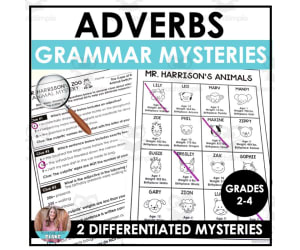
Adverbs Animal Mysteries Activity
ELA, Grammar, Grade 2, 3, 4, Activities
Here is an Adverbs Animal Mysteries Activity that your students will love! These mysteries were designed with 2nd – 4th grade students in mind. Students will have a blast helping Mr. Harrison crack the cases. What You Get: There are two mysteries included. The Case of the Food Fight This version is higher level with more application focused questions and more advanced sentences. Recommended for grades 3-4. The Case of the Missing Ticket Kiosk This version is lower level with more identification focused questions and less advanced sentences. Recommended for grades 2-3. Both versions include an extended writing opportunity, suspect list, and answer key. How This Activity Works: For students to eliminate suspects, they must follow the steps of the clues. These clues require critical thinking as they decide which animals need to be crossed out. I suggest pre-teaching this and explaining how to eliminate suspects to avoid confusion. Example: A clue that says, “The culprit’s name has the number of letters as your answer.” with the answer of 4 means that the culprit’s name has EXACTLY 4 letters. Students will need to cross off any animals that do NOT have 4 letters in their name. I hope you enjoy!
Author Blooming with Blake
Tags Adverbs Activity, Language Arts, Grammar Activity, Zoo Animals Game, Animal Mysteries, Detective Activity, Writing Prompt Extensions, Small Group
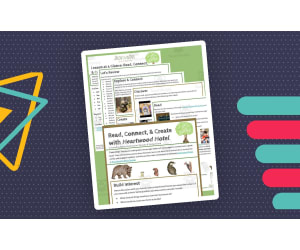
Read, Connect, & Create with Heartwood Hotel
ELA, Reading, Reading Comprehension, Literature, Preschool, Grade 1, 2, 3, 4, 5, Worksheets & Printables, Novel Studies, Activities
Description: This lesson is designed to encourage readers of various ages to connect over a great book! They will have discussions about the book, learn a bit about what animals do to survive the winter, engage in outdoor activities, and work on a S.T.E.M. project as they make connections to the book Heartwood Hotel: A True Home by Kellie George. Learning Objectives: I can… Demonstrate reading comprehension skills during and after reading (and/or listening to) a fiction story Identify qualities of a good shelter for animals Discuss ways animals survive the winter Outline Build Interest: 1 discussion and sketching activity Read: 1 chapter book Discover: 2 short videos Explore & Connect: 1 or more nature hikes Create: 1 S.T.E.M. project Let’s Review: 1 set of discussion questions As you and your learners enjoy the book, Heartwood Hotel: A True Home by Kellie George , children will be presented with opportunities to ask questions, create, explore, and think deeply. This lesson is designed to meet the needs of a diverse age range of leaners making it a great lesson for a homeschooling family, co-op, or classroom! Activities in this lesson can be completed upon reading only the first few chapters of the book or learners can engage in the activities throughout the book or as a culminating activity . This flexibility really gives you the power to make this lesson your own! You may spend a few hours reading the first few chapters and diving into some activities or you and your learners may spend several weeks on the activities in this lesson. This lesson also makes a great jumping point for related lessons about animals in the winter, animal adaptations, friendship, and so much more! Happy Reading!
Author Sprout & Inspire
Tags Read Aloud, Animals In Winter, Family Lesson, Animal Adaptations, Book Study, Elementary Chapter Book, S.T.E.M., Cross-curricular
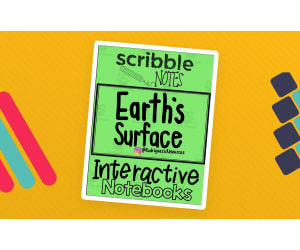
Scribble Notes - Interactive Journal - Earth's Surface
Science, Earth and Environmental Sciences, Earth Sciences, Grade 1, 2, 3, 4, 5, Activities
This resource is designed to increase students' focus, concept retention, and creativity. With scribbles notes fun and engaging visual aid, students will love to create their connections in their notes and practice to synthesize information. Concepts included in this resource are: Earth's Layers and Landforms Slow and Fast Changes to the Surface of the Earth Deposition and Weathering Erosion and Soil's Layers The pages of this resource are printer friendly, can be used in interactive science notebooks. Included are black and white version and colored version. Students might choose black and white versions so that they can create their own designs. If you are looking for differentiating, these are great to use! How to use scribble notes: Teacher-led or student-led note-taking Anchor Charts for the Classroom or Journals Independent research or homework
Author Rodriguez's Resources
Tags Earth's Surface, Interactive Journal, Scribble Notes, Landforms, Weathering
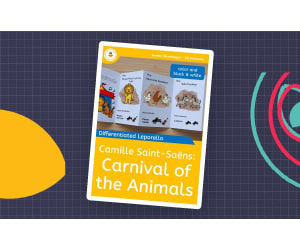
Carnival of the Animals – Differentiated Leporello
Music, Creative Arts, Grade 1, 2, 3, 4, 5, Crafts, Activities, Projects, Worksheets & Printables, Worksheets
Carnival of the Animals – Differentiated Leporello This teaching material is designed for elementary music classes and focuses on the classical piece Carnival of the Animals by Camille Saint-Saëns. Students explore the music through a creative booklet project. The resource supports listening skills, musical understanding, and knowledge about the composer. It is suitable for students in grades 2 to 5. The main component of this resource is a foldable booklet, called a leporello. It allows students to document their listening experience while interacting with the music. The leporello includes spaces to match animals, name instruments, and complete short texts. The goal is to help students remember key musical movements and understand how music can tell a story. The resource offers four levels of differentiation . Version 1 is fully guided and includes all labels. Version 2 includes cut-and-paste cards for matching. Version 3 is a cloze text version with a word bank. Version 4 has no support and is suitable for students who can write independently. The download includes color and black-and-white versions. Students can color the animals, match instruments, and fold the booklet themselves. A teacher guide is included with step-by-step instructions for preparation, printing, and usage in the classroom. The material can be used in different teaching formats: Whole-class listening sessions Music centers or stations Homework or individual work Substitute teacher plans Interdisciplinary projects (music, art, literacy) Learning goals: Listen to music attentively and describe it Learn the names and sounds of orchestral instruments Recognize the connection between animals and music Know basic facts about Camille Saint-Saëns and his life Express musical impressions through writing and coloring Included in this download: 4 differentiated leporello templates Animal and instrument cards for cut-and-paste activities Cloze text about the composer Color and B/W versions of all pages Teacher instructions for classroom use No additional materials are required , but you will need access to a recording of Carnival of the Animals to use this resource effectively. This activity supports visual, auditory, and kinesthetic learning. It is also suitable for inclusive classrooms, English language learners, and students with different ability levels. Best Wishes, Doreen Blumhagen - Die Relitante
Author Die Relitante
Rating
Tags Carnival Of The Animals, Composer Study, Camille Saint-Saëns, Elementary Music, Classical Music For Kids, Listening Activity, Music Booklet, Differentiated Learning, Music Worksheets

Indonesia Map Geography Word Search 2rd 3th 4th 5th Grade worksheet
Vocabulary, Language Development, ELA, Spelling, Geography, Social Studies, Grade 2, 3, 4, 5, Games, Activities, Word Searches, Worksheets, Worksheets & Printables
tranalate that into arabic : Make learning fun with a no-prep, printable vocabulary word search that builds vocabulary, reinforces literacy, and sparks curiosity! Students can explore the new vocabulary words while practicing spelling, scanning for letters, and identifying keywords. A word search can be a perfect and easy-to-use activity to liven up a lesson by combining learning with fun! It is an excellent way to reinforce concepts within a lesson and engage students' hands-on learning. Purpose: This activity allows students to learn new vocabulary words and contextualized vocabulary related to a topic ✏️, improve spelling, reading, and attention to detail 📚, increase awareness of concepts and knowledge about the world at large 🌍, and encourage curiosity and engagement about the topic 🐾. Word searches are a hands-on way to make learning memorable and fun for students - it engages them at all vocabulary levels! How to Do It: 1️⃣ Hand out the word search worksheet. 2️⃣ Introduce any important vocabulary or concepts that fit with the topic. 3️⃣ The students search for the words and circle or highlight each one. 4️⃣ Discuss the importance of the topic or the words that the student found. 5️⃣ Review the answers using the answer key that is included for each product ✅ Perfect For: Grades 2-5 🌟, independent practice, partner work, students who finish early, science or social studies centers, or for substitute plans 🤝 Way of Implementation: Great for independent practice early finishers, partner work, or substitute plans 🤝. Answer Keys: (these will be pencils under your three files: Given for simple checking and self-assessing. Fun Variations: Timed Challenge ⏳ - record how many words students can find in a set time. Partner Puzzle 🤝 - work together to find all of the words. Vocabulary Extension ✏️ - write sentences or a few short paragraphs using the words. Create-Your-Own Word Search 🧩 - have students make their own word search puzzles using the vocabulary. Standards Alignment: Supports CCSS/ELA vocabulary development, and can also connect to NGSS or other relevant standards, depending on the topic. File & Print Info: PDF includes both a color and black and white version, and is ink-friendly to make printing easy. Teacher Tip! Have students learn by being hands-on, engaged, and active while helping them build awareness, vocabulary, and literacy skills around any topic! 🌟tranalate that into arabic : Make learning fun with a no-prep, printable vocabulary word search that builds vocabulary, reinforces literacy, and sparks curiosity! Students can explore the new vocabulary words while practicing spelling, scanning for letters, and identifying keywords. A word search can be a perfect and easy-to-use activity to liven up a lesson by combining learning with fun! It is an excellent way to reinforce concepts within a lesson and engage students' hands-on learning. Purpose: This activity allows students to learn new vocabulary words and contextualized vocabulary related to a topic ✏️, improve spelling, reading, and attention to detail 📚, increase awareness of concepts and knowledge about the world at large 🌍, and encourage curiosity and engagement about the topic 🐾. Word searches are a hands-on way to make learning memorable and fun for students - it engages them at all vocabulary levels! How to Do It: 1️⃣ Hand out the word search worksheet. 2️⃣ Introduce any important vocabulary or concepts that fit with the topic. 3️⃣ The students search for the words and circle or highlight each one. 4️⃣ Discuss the importance of the topic or the words that the student found. 5️⃣ Review the answers using the answer key that is included for each product ✅ Perfect For: Grades 2-5 🌟, independent practice, partner work, students who finish early, science or social studies centers, or for substitute plans 🤝 Way of Implementation: Great for independent practice early finishers, partner work, or substitute plans 🤝. Answer Keys: (these will be pencils under your three files: Given for simple checking and self-assessing. Fun Variations: Timed Challenge ⏳ - record how many words students can find in a set time. Partner Puzzle 🤝 - work together to find all of the words. Vocabulary Extension ✏️ - write sentences or a few short paragraphs using the words. Create-Your-Own Word Search 🧩 - have students make their own word search puzzles using the vocabulary. Standards Alignment: Supports CCSS/ELA vocabulary development, and can also connect to NGSS or other relevant standards, depending on the topic. File & Print Info: PDF includes both a color and black and white version, and is ink-friendly to make printing easy. Teacher Tip! Have students learn by being hands-on, engaged, and active while helping them build awareness, vocabulary, and literacy skills around any topic! 🌟
Author Classsim
Rating
Tags Indonesia, Map , Geography , Word Search 2rd 3th 4th 5th Grade , Worksheet , Activity, Indonesia Map Geography , Indonesia Map Geography Word Search 2rd 3th 4th 5th Grade , Indonesia Map Geography Word Search 2rd 3th 4th 5th Grade Worksheet , VIndonesia Map Geography Word Search 2rd 3th 4th 5th Grade Worksheet Activity

Iceberg Activity
Social Studies, Economics, Grade 3, 4, 5, 6, 7, 8, 9, Activities
Activity Introduction An amazing activity designed for the students to learn more about famous places in different countries. The Icebergs What do you know about this place? Do you know in which part of the world it is? Have you ever visited this place? If yes, can you tell us more about your adventure, and what do you like the most about this place? Do you like reading about Geography? What is your favorite country in the whole world? If you are going on a trip where it will be? Which country? What you are going to see there? Does this country has a famous place to visit? Iceberg Activity The activity is perfect for encouraging the researching skills for the students, while learning more about this fantastic place. Icebergs This friendly designed worksheet is suitable for students at school, homeschooling, and as a group activity. Instructions Cut the iceberg out, glue it to construction paper, then fill out the information about yourself. Format Available in a PDF format.
Author Educational Voice
Tags Iceberg Activity, Iceberg, Iceberg Facts, Iceberg Facts For Kids, Geography, Geography Facts, Geography Facts For Kids, Activities For Kids
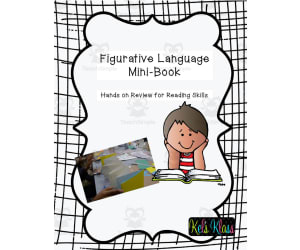
Figurative Language Mini Book | Reading Skill Review
ELA, Literature, Grade 3, 4, 5, 6, Activities, Projects
This resource is a Figurative Language Mini Book. This project is a great way to review reading skills in a hands-on way. This project includes directions and a rubric on what needs to be shown within the Figurative Language book, a planning sheet, so students have a definition and idea of what each piece of figurative language is (and provides room for notes or examples), and a planning sheet on how to make and accordion book, with pictures. Figurative Language covered: 1. Simile 2. Metaphor 3. Hyperbole 4. Onomatopoeia 5. Idiom 6. Personification 7. Alliteration 8. Allusion A Project rubric is included.
Author Kel's Klass
Tags Figurative Language, Simile, Metaphor , Reading Review, Hyperbole, Figurative Language Reader