



3,906 products added recently
Page 90 - Activities
Explore a wide array of educational activities designed to enrich your teaching and captivate students' interest. From hands-on projects to interactive games, these resources span various subjects and grade levels. Incorporate these activities into your lesson plans to foster an engaging and dynamic learning environment for all students.

 Show filters


World History: WWII Atrocities | Document Based Activity
Social Studies, History, History: World, History: USA, Grade 9, 10, 11, 12, Activities
World History: WWII Atrocities | Document Based Activity The product, World History: WWII Atrocities | Document Based Activity, is designed for educators who teach 9th to 12th-grade students. It focuses on the Social Studies curriculum, offering an engaging and detailed insight into world and US history. This activity zeroes in on the atrocities committed during World War II - notably the horrors of the Holocaust and Rape of Nanking. The resource is available in traditional formats as well as an adaptable Google format. Included are a variety of instructional materials offered via a user-friendly setup. A selection of ten photographs visually represents these historical events which further promote discussion or written reflection guided by a provided photo analysis worksheet. Eyewitness accounts from thirteen primary source excerpts deepen student comprehension whilst identifying inconsistencies. An optional addition to your lesson plan could be accessing publicly-available videos about the Holocaust, providing another layer of immersion for audio-visual learners whilst boosting interest levels. To conclude, there's an assessment segment which urges learners to synthesize lessons learned up until this point; testing their grasp and encouraging application of their newfound understanding. This expansive resource offers numerous ready-to-print pages and presentation slides perfect for hands-on interactive learning making intricate topics like holocaust rape nanking more manageable scholarly exploration considering recommended grade levels solidly aligns common core guidelines ensuring meets necessary educational standards convenient multipurpose file types this document-based activity indeed replete versatile assets teachers tackle crucial episodes history engaging accessible manner. Maintaining student enthusiasm while imparting essential knowledge is challenging but sometimes having access to just the right tools makes all the difference, and that's what this resource can offer.
Author Learning is a Passion
Tags World War II Atrocities, Holocaust, Rape Of Nanking, Primary Sources, Visual Analysis

Rainforest Habitat animals flashlight cards hidden picture activity
Animals, Life Sciences, Science, Environmental Science, Earth and Environmental Sciences, Kindergarten, Preschool, Toddler, Grade 1, 2, Flashcards, Worksheets & Printables, Centers, Activities, Games
Make learning about rainforest habitats and animals fun and interactive with these Rainforest Habitat Animals Flashlight Cards! Students will use a flashlight to reveal hidden rainforest animal pictures while practicing animal recognition and building science vocabulary through an exciting hands-on activity. I like using these flashlight cards during rainforest habitat units, tropical animal studies, animal science lessons, wildlife activities, preschool and kindergarten science centers, and homeschool learning. It's an engaging, low-prep activity that adds a fun element of discovery to habitat and animal learning. What You Will Get This printable Rainforest Habitat Animals Flashlight Cards resource gives students an exciting way to discover hidden rainforest animals and review animal and habitat vocabulary. What's Included in this Resource? • Printable rainforest animal flashlight cards • Hidden picture reveal activity • Rainforest animal and habitat vocabulary • Hands-on flashlight discovery activity • Student-friendly science center format • Easy-to-use printable cards • Great for independent or small-group learning This resource is perfect for: • Rainforest habitat science units • Rainforest animal studies • Tropical habitat lessons • Animal science activities • Preschool and kindergarten science centers • Life science learning • Small-group activities • Homeschool learning Why you will love this? • Easy to prepare and use • Creates an exciting hands-on learning experience • Builds observation and visual recognition skills • Reinforces rainforest animal vocabulary • Encourages curiosity and independent discovery • Great for science centers and habitat-themed units These Rainforest Habitat Animals Flashlight Cards are a fun way for young learners to discover hidden rainforest animals, practice animal recognition, and build observation skills through an interactive habitat science activity.
Author Perfect_Printables
Rating
Tags Animal Science, Science Center Activities, Hidden Picture Activities, Flashlight Cards, Wildlife Activities, Animal Adaptation, Animal Habitat Activity, Rainforest Animals, Amazon Rainforest, Rainforest Animals Activity

10 PUZZLES OF THE NUMBERS | WITH DINO THEMED
Math, Numbers, Kindergarten, Preschool, Grade 1, Activities, Games
HELLO! THANK YOU FOR BEING PART OF EDITORIAL ARENAS EDUCATIVAS. ON THIS OCCASION WE BRING YOU THESE 10 FABULOUS PUZZLES SO THAT YOUR STUDENTS CAN PRACTICE COUNTING NUMBERS FROM 1 TO 5. GENERAL INFORMATION OF THIS PRODUCT: - Product name: 10 puzzles of numbers from 1 to 5. Thank you very much for being part of this community of educational resources. A. The name of this educational resource is The title of this educational document is "10 puzzles of numbers from 1 to 5" B. This document contains this number of pages This educational document is made up of 10 pages, on each page you will find 1 puzzle. C. This educational resource has been prepared by: This educational document has been prepared and published by EDITORIAL ARENAS EDUCATIVAS. D. You can apply this educational document in different contexts such as: You can apply this document in class if you are a teacher and you are teaching the first numbers from 1 to 5, you can also apply it at home if you are a mother or father and you want your children to learn the first numbers from 1 to 5. SECONDARY INFORMATION ABOUT THIS PRODUCT: E. In what size and format is this resource? This document is available in PDF format, A4 size. F. Do I need any extra elements to apply it? Yes, you will need scissors and glue to solve these puzzles. G. Is this resource in color or black and white? This game is available in color. H. Is this resource free or do you have to pay to use it? This resource is free so take advantage of the opportunity and download it now. I. How many pages does this educational resource have? It contains 10 pages. OTHER FREE RESOURCES YOU MIGHT BE INTERESTED: Spanish Numbers 1-100 V2 https://teachsimple.com/product/100-spanish-numbers-flashcards-free-resource-for-kids Spanish Numbers BW https://teachsimple.com/product/100-black-and-white-flashcards-spanish-version Alphabet circle color https://teachsimple.com/product/26-alphabet-letters-circle-and-color-themed Alphabet flashcards A-Z https://teachsimple.com/product/26-alphabet-circle-cards-color-themed Alphabet a-z https://teachsimple.com/product/26-free-alphabet-flashcards-circle-themed-for-kids Alphabet Rectangle A-Z https://teachsimple.com/product/26-square-flashcards-of-the-abc-color-themed Alphabet Flashcards Black and White https://teachsimple.com/product/26-black-and-white-flashcards-abecedary
Author EDITORIAL LAURA EDUCA
Tags NUMBERS, NUMBERS 1 TO 5, NUMBERS 1 TO 10

skip counting by 12s bingo - boards 11-15
Math, Patterns, Early Math, Numbers, Grade 1, 2, 3, Activities, Games
Skip Counting by 12s Bingo engages students in practicing skip counting by 12. This math game includes 5 colorful bingo boards with corresponding calling cards. To play, students cover squares on their board as numbers are drawn. The first to cover 3 squares in a row shouts “BINGO!” and wins. Use buttons, counters or dry erase markers to cover squares. Extend the game by making additional boards. Laminate for durability. Children have fun counting by 12s with this engaging game. Differentiate by allowing partners or small groups. Modify for individual needs. Supplement counting skills with other games like Fraction Bingo, Number Bonds activities, Times Tables games, and more matching and board games from this trusted teacher-created brand.
Author Colleen's Cosmic Collection
Tags Skip Counting, Counting, Skip Counting Games, Skip Counting Activities, Skip Counting Bingo, Skip Counting By 12s, Skip Counting By 12, Cccskb12s, Counting In 12s
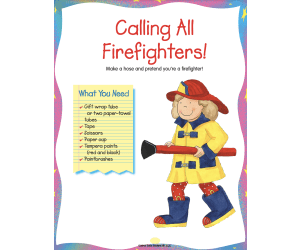
Engaging Activities For Your PreK Classroom
Creative Arts, Art, Preschool, Grade 1, 2, Activities, Crafts
You’re never too young to learn about Make-Believe! Includes these fun, easy-to-do craft projects : Calling All Firefighters, Traffic Sign, and Monster Mask.
Author Twin Sisters Digital Media
Tags Cut Out, Cut And Paste, Scissors, Color, Crafts

FREE DOMINÓ GAME OF MULTIPLICATION | Nature Themed
Math, Multiplication and Division, Division, Grade 3, 4, 5, 6, Activities, Games
THANK YOU VERY MUCH AND WELCOME TO MY STORE OF FABULOUS MATHEMATICS RESOURCES FOR PRIMARY EDUCATION CHILDREN On this occasion we bring you this fantastic puzzle with 24 multiplication tiles from the tables 1 to 12, so that your children can practice this fabulous operation in a fun and educational way! BRIEF INTRODUCTION: SO DON'T WAIT ANYMORE BECAUSE THIS DOCUMENT IS COMPLETELY FREE AND FREE FOR YOU TO DOWNLOAD IT NOW AND START USING IT NOW IN YOUR CLASSROOM. ALSO, PLEASE ASK YOU TO CAREFULLY READ THE FOLLOWING INFORMATION that will help you know what this product is about and so you can make a decision to be able to download it and use it in your home or classroom. INFORMATION REGARDING THIS PRODUCT: 1. Why should teachers use educational materials in the classroom? As is known, there are multiple reports from psychologists and even psychopedagogues who affirm that using teaching materials in the classroom is one of the best ways in which children will be able to learn, so do not hesitate and use this fabulous resource for your mathematics class now. 2. What is the name of this document? The name of this resource is "Multiplication Mastery" 3. What topic will you address in this resource? Multiplication from 1 to 12. 4. For what ages is it recommended? For children from 7 to 12 years old. 5. Who is the author of this document? Editorial ARENAS EDUCATIVAS is the author. 6. In what area of knowledge can it be applied? Apply it in your mathematics class. SECONDARY INFORMATION 7. Should I apply it individually or in groups in my class? Preferable in groups of 2 to 3 children. 8. What size and format is this resource in? PDF document, A4 size. 9. Do I need some extra elements to apply it? Yes, scissors. 10. Is it in color or black and white? Made in colors. 11. Is this resource free or do I have to pay to use it? It's free so take advantage of downloading it now. This file is for personal use only. It is not allowed to be resold or shared with others.
Author EDITORIAL LAURA EDUCA
Tags Multiplication, Domino, Domino Game, Free Resource

Number Posters 0-20
Numbers, Early Math, Math, Infant, Toddler, Kindergarten, Preschool, Grade 1, 2, Banners, Classroom Decor, Bulletin Boards, Door Decor, Posters, Word Walls, Teacher Tools, Activities, Worksheets & Printables, Flashcards
this file has a Number Posters with Ten Frames flash card a picture you can use them in class and also send a copy home with a student, requiring additional practice i hope you find it useful each card has a fun. These edited Number Posters with Ten Frames subject are created using a stylish and modern Number Posters with Ten Frames palette that is bound to catch the eye! This pack includes images and designs associated with different types of letters, including Number Posters with Ten Frames for the upper primary and cute alphabet images for the lower primary the best Number Posters with Ten Frames pack of all primary teachers at all year level these spotted Eucalyptus Alphabet themed Number Posters with Ten Frames are using my stunning Number Posters with Ten Frames. Number Posters with Ten Frames flash card posters you can use first day of schoo for kindergarten and 1st grade
Author LAMO
Rating
Tags Math, Numbers , Posters, Bulletin Board Ideas, Flash Cards, Homeschool

Cancer: Cell Division Gone Wrong Volume I - 7 Engaging Lab Station Activities
Science, Life Sciences, Biology, Grade 9, 10, 11, Activities
This fully editable Lab Station Activity on Cancer is meant to get your students out of their seats and engaged in the content. Each station not only offers a unique opportunity to test your students' knowledge (offer an opinion, answer questions based on a video or reading, draw, etc.), but also provides a fantastic learning opportunity where your kids are learning through assessment. Each station comes with a description card while some also contain more detailed instructions, a reading, questions to answer, etc. Students are equipped with a recording sheet (passport) to write their answers. There is almost no prep for you. Simply print the cards, lay them out around the room and you're all set. An answer key is also provided where applicable. ---------------------------------------------------------------------------------------------- These station cards are meant to be used as a lab activity but can also be utilized in a review task before a test or a quiz. Used either way, your students will love it! I know mine do and I'm telling you from first-hand experience as I've used this activity in my own class, This lab activity covers: - Cancer-Overview - Metastasis and Causes - Prevention and Treatments ---------------------------------------------- Bonus Activities: To ensure your students don’t have any downtime between stations, your lab also includes a 10-word word scramble and word search, both with an answer key. You can use them as part of their mark, as a bonus so it’s not mandatory, etc. However you choose to use it, it will ensure that your students are always busy and never idle. Note: For stronger classes, I give the word scramble and for weaker ones, the word search. ----------------------------------------------- How do the Lab Stations work? Each station is specially designed to be a unique complement to the material while at the same time, provide a valuable learning experience. Below is an overview of how each station works. In your activity , each will be tailored to the specific content. Station 1: Get Hands-On – using their creative skills, students are required to draw or build. Station 2: Research – using a classroom computer or their own device, students must research a specific question/issue surrounding the topic. Station 3: Explain yourself – students write down an opinion to a question in paragraph form. Station 4: Rest Station - students can use this time to catch up on work they didn't have time to complete at a previous station or prepare themselves for an upcoming one. Station 5 - Applicability reading – students read a short passage from an article, website, etc. which directly connects the classroom content to a real life application. Station 6: Test your knowledge – students answer 5 multiple choice questions then provide a written explanation for how/why they came to their conclusions. Station 7: Learn from the expert – using a classroom computer or their own device, students must watch a short video clip and answer the associated questions. They may stop, rewind and restart as often as they like during the time frame. Station 8 - Rest Station. Station 9: Become the question master – Students must create 2 multiple-choice questions, 2 true/false questions and 1 short answer question. Students must also supply the answers. ------------------------------- These station cards are meant to be used as a lab activity but can also be utilized in a review task before a test or a quiz. Used either way, your students will love it! I know mine do and I'm telling you from first-hand experience as I've used this activity in my own class. Thank you for your interest in my products. If you have any questions, please send me an email - devon@teachwithfergy.com
Author Teach With Fergy
Tags Cancer, Lab Stations

TRACE THE DOTS AND PAINT - Art Activity - Fruits and Animals
Creative Arts, Art, Kindergarten, Preschool, Grade 1, Activities
1. Introduction As is known by multiple educational agents, the ability to draw points provides multiple benefits in the development of children, especially if they are still young. 2.Objective This fabulous worksheet to review fruits and animals aims at some of the following points that I will explain below: - Develop fine motor skills: By working with dotted lines, your children will develop hand-eye coordination and, above all, they will perfect their fine motor skills. This is based on the fact that these types of activities will require control and precision in the movement of the fingers and hands, which is essential to perform tasks such as fastening buttons, writing and many other activities where we require the coordinated use of the hands. hands. - Cognitively stimulate their minds: By working with review points, we also contribute to the cognitive development of our children, because this type of activities helps them practice their concentration and attention, because they must follow the sequence carefully to avoid making mistakes and achieve almost a fine and as coordinated line as possible. Likewise, this activity will promote planning and mental organization. 3.Order, scheme and stages It is suggested to start the class with a dynamic that encourages your students. You can propose a song, a dynamic related to fruits and animals. Then distribute the token and play some music or song in the background so that your students work with more inspiration and the art class is very fun for them. 4.Grades or ages It is suggested to apply this sheet in children from 3 to 6 years old. 5. Form of application Print the activity for each of your students. Then ask them to use their pencils, markers, colors, even crayons to review the drawings. 6. Answer keys This game does not require answers. 7.Use text labels art, dotting, dotting, review, review of images, review of images, review of drawings, art for children, art activities for children. 8.Rules Specified above. 9.File types The archive is in PDF format. 10.Number of pages This document contains 10 pages.
Author EDITORIAL LAURA EDUCA
Tags Art, Art For Kids, Dots, Trace The Dots, Tracing Dots
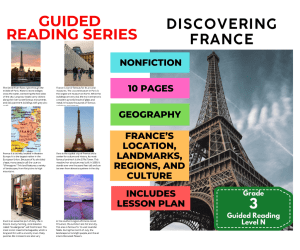
Discovering France: Guided Reading Level N with Lesson Plan
ELA, Resources for Teachers, Reading Comprehension, Reading, Science, Language Development, Vocabulary, Geography, Social Studies, Technology, Grade 2, 3, 4, Worksheets & Printables, Worksheets, Teacher Tools, Centers, Activities, Literacy Readers, Quizzes, Quizzes and Tests, Assessments, Lesson Plans
This Discovering France (level n) guided reading book with lesson plan includes: Guided Reading Color Label (front cover x1) This is a quick way to match the book’s demands to what students can generally handle.. The overall goal is to use the level/color to pick books for several smaller groups. To qualify for a certain level, a student is expected to read a book from that level with about 90–94% accuracy. If a student is consistently accurate and understands, move up a level. If the student is struggling at that level, drop down and add more support. Each student will improve at completely different rates, but it is generally one of the best ways to check progress across the class. DOWNLOAD THE CATALOG TO VIEW ALL GUIDED READING BOOKS AVAILABLE (SORTED LEVELS A-Z) Pre-Reading Question (x1) Teacher asks the prompt aloud, can be while showing the cover or first page. Students share what they already know, or make educated guesses from the cover. Prompt them to use the target vocabulary. Write some of their responses on the board to look back at during the reading. Vocabulary Words (x5) Introduce the five words, best doing it one at a time. Start by saying it, while students repeat and then see if anyone knows what it means before reading further. Read through the meaning and try to briefly connect each word to a picture or gesture so it’s meaningful. Ask students to flip through the book pages and point to where they see each of the vocabulary words. While reading the book pause upon coming across one of the vocab words or read the sentence twice to make sure students understand the word has appeared. Optional: Ask students to raise hands whenever they see/hear one of the new words. Guided Reading Pages (x10) Check the book snapshot (below) for: primary topic - do you need to prep extra reading or intro materials on this? what is taught best - decide on 1-2 bullets to focus on, use the prompt or words provided here for best results. learning goals - what you are checking for students to be able to do after the session, elicit answers using prompts or words provided. key vocabulary (see section above). questions overview - so you know what is coming up and if you need to prep extra materials to assist understanding. Run the lesson You may have already looked at a few of the pages together, but you can show them some of the pictures again first to set meaning. Depending on how much time you have and how familiar your students are with guided reading class, you may want to read the book aloud first with the group first. Students whisper or partner read, while you listen in. If time, do it as a group, one student reading a page each. Use the guided page’s prompts to coach: “Check the picture / does it make sense?” “Point under the words / try the first sound” “Reread the sentence smoothly”. Try to focus more on one student per session (rotating every time), so you can work out if they are ready to move up or need to move down a level. Comprehension Questions (back cover x3) This is your way to check that students didn’t just say the words, but actually understood the text. First, let students answer by pointing to the page/picture and saying a short sentence. After any answer, follow with: “Show me where you found that in the text.” In bigger groups, have partners answer first (10–20 seconds), then call on 2–3 students to share. Differentiation tips: Emerging speakers/struggling readers: oral + pointing On-level: oral in a full sentence Higher: one written sentence or draw + label Book Snapshot Title: Discovering France Genre: Nonfiction Subject: Social Studies (Geography/Culture) Primary Topic: France’s location, landmarks, regions, and culture Estimated Guided Reading Level (A–Z): N What This Book Teaches Best Geography basics about France , including where it is located and how its shape leads to a nickname. Key places and landmarks in Paris , such as the Eiffel Tower, the Seine River, and the Louvre Museum. Regional features of France by describing Provence, the French Alps, the French Riviera, and the Loire Valley. French culture and daily life , especially food traditions like boulangeries, baguettes, and croissants. Modern transportation in France , focusing on the TGV high-speed train and what it allows people to do. Learning Goals Students will identify where France is located and explain why it is called “L’Hexagone.” Students will describe at least two facts about Paris, including details about the Eiffel Tower. Students will explain how the Seine River is described and what people can see from boats on the river. Students will describe characteristics of at least two French regions (Provence, the Alps, the Riviera, or the Loire Valley) using details from the text. Students will describe examples of French culture from the text, including food and museums. Students will explain what the TGV is and how it changes travel across France. Key Vocabulary From the Text landmark — a famous place many people recognize. massive — very big. coastline — the land’s edge next to the sea. lavender — a purple plant/flower that can smell sweet. transportation — ways people travel from place to place. Discussion Prompts Pre-reading question: What do you already know about France, and what would you like to learn? Comprehension questions: Where does the text say France is located, and what nickname do some people give it because of its shape? Comprehension questions: What does the text tell you about the Eiffel Tower (such as when it was built or how tall it is)? Comprehension questions: Choose one region from the book (Provence, the French Alps, the French Riviera, or the Loire Valley) and describe two details the text gives about it. Printing Tips 1. Best Printing Method (Recommended) “Booklet” Printing (Best if Available) If your printer or PDF viewer supports Booklet Printing , use this. Settings to use: Print mode: Booklet Paper size: Letter or A4 (either works) Orientation: Landscape Print on both sides: Yes Flip on: Short edge Scaling: Fit to printable area Booklet subset: First test: Front sides only Then: Back sides only This will automatically: Pair pages correctly Put the cover on the outside Align everything for folding After printing, fold in half and staple along the spine . 2. If “Booklet” Printing Is NOT Available You can still print this correctly with manual duplex printing . Step-by-step: Open the PDF. Choose Print . Set: Orientation: Landscape Pages per sheet: 1 Print on both sides: Yes Flip on: Short edge Print all pages . Because each PDF page already contains two facing book pages, the result will still fold cleanly into a book. Thousands of Cored Education products are included with your TeachSimple membership. Download links and encyclopedia index available here.
Author Cored Education
Rating
Tags Reading Comprehension, Reading Passages, Reading, Guided Reading, Guided Reading Lesson Plan, Guided Reading Activity, Pre-reading, Social Studies, Geography, Technology

I Have, Who Has: Vincent Van Gogh
Creative Arts, Art, Art History, Not Grade Specific, Activities
The I Have, Who Has: Vincent Van Gogh Activity is an engaging and interactive game that combines art history with fun and learning. Designed around the works of Vincent Van Gogh, this activity allows students to deepen their understanding of the artist's life and masterpieces in an exciting way. With printable cards and easy-to-follow instructions, this game is perfect for classroom use and can be enjoyed by students of various ages. Interactive Art History: Immerse your students in the world of Vincent Van Gogh with this interactive activity. As they participate in the game , students will discover fascinating details about Van Gogh's life, art techniques, and iconic masterpieces. This hands-on approach to art history makes learning engaging and memorable. Engaging and Enjoyable: The I Have, Who Has: Vincent Van Gogh Activity is designed to make learning fun. Students will be captivated by the interactive nature of the game as they eagerly wait for their turn to share information about Van Gogh's artworks. This activity encourages active participation and helps build knowledge and appreciation for the artist and his contributions to the art world. Convenient Card Format: The activity cards are conveniently printed four per page, allowing for easy printing and distribution. Each card features a unique question or prompt related to Vincent Van Gogh and his art. Students will enjoy holding and reading the cards as they actively participate in the game . Durable and Reusable: To ensure longevity and repeated use, the activity cards can be printed and laminated. Laminating the cards adds durability and allows for easy cleaning and reuse. This makes the I Have, Who Has: Vincent Van Gogh Activity a valuable resource that can be enjoyed by multiple groups of students over time. The I Have, Who Has: Vincent Van Gogh Activity is a dynamic and interactive game that combines art history and fun. With printable and laminatable cards, this activity is convenient and durable, making it suitable for classroom use. Engage your students in a captivating journey through the world of Vincent Van Gogh as they participate in this enjoyable and educational game . The I Have, Who Has: Vincent Van Gogh Activity is a must-have resource for art teachers and educators who want to make art history come alive for their students. This resource is an I Have, Who Has: Vincent Van Gogh Activity. Students will enjoy this interactive activity while learning art history about Van Gogh. Cards and printed 4 per page. You can print and laminate for durability. Instructions are included for how to play this game .
Author Party in the Art Room - Arts & Crafts for Kids | Arts Integration
Tags Art History, I Have Who Has, Whole Group, Flashcards, Vincent Van Gogh
Let's Read! Let's Talk! Let's Write! Let's Pretend!: Preschool Language and Literature Activities
ELA, Kindergarten, Preschool, Activities
Let's Read! Let's Talk! Let's Write! Let's Pretend!: Preschool Language and Literature Activities Kick-start your preschool or kindergarten teaching journey with 'Let’s Read, Talk, Write, and Pretend: Preschool Language and Literature Activities'. It captures the essence of early childhood literacy development in an engaging manner. Crafted for preschoolers and kindergarteners, this language arts resource bridges the gap between playtime discovery & structured learning. It acknowledges that children thrive most when they interactively explore their environment. This resource adopts a unique approach that combines reading with conversation exercises. This fosters communication skills while nurturing a love for books. Writing activities are introduced gently but effectively at this stage itself to instill familiarity with scripts for smooth future academics. Pretending games make lessons thrilling by prompting kids into creative role-play scenarios. This simulation style is known to enhance cognitive growth while paving the way for stronger social bonds among peers—ideal in classrooms of all types. In terms of practicality-ready-to-print materials save valuable prep time plus ensures everything required is right at one's fingertips when needed. The package includes 160 pages worth of materials covering diverse topics under language arts curriculum specifically designed in PDF format! Fits seamlessly into multiple classroom formats Whole group usage or small group circles: Depending upon each unique class dynamics; perhaps even double up as homework assignments encouraging parent-child bonding over educational activities outside school hours too! 'Let's Read, Talk, Write, and Pretend: Preschool Language and Literature Activities'-skill-building opportunities paired alongside fun equals to academic enrichment with child-level charisma. A significant addition to any early learning teaching toolbox.
Author Classroom Complete Press
Tags Language Activities, Literature Activities, Preschool Activity, Writing Worksheet, Reading Activity, Pretend Writing
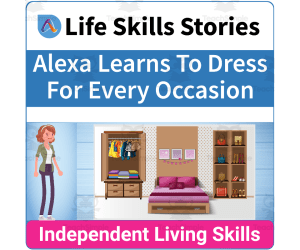
Daily Life Skills: Alexa Learns How to Dress for Every Occasion
Special Resources, Life Studies, Social Emotional Learning (SEL), Special Education Needs (SEN), Speech Therapy, Life Skills, Grade 10, 11, 12, Activities, Worksheets & Printables, Worksheets
In Alexa Learns How to Dress for Every Occasion, Alyssa teaches Alexa that dressing well can help one to stand out positively. The use of this Daily Life Skills resource will allow students to engage in: • This functional life skills story emphasizes the importance of dressing appropriately for various occasions such as school, work, and hiking. • The story uses simple and clear language to explain how appearance can influence people's perceptions. • This life skills story is an excellent conversation starter for discussing the significance of being presentable in public. • The interactive dialog and questions engage learners and reinforce their understanding of the story and the concepts. • The real-world examples, and age-appropriate visual aids, such as illustrations and diagrams , make this conversational story an excellent resource for teaching social narratives. • This social narrative's simple and direct language sets clear expectations, making it ideal for high school students and adults with intellectual disabilities. The story includes seven (7) reading comprehension questions and answers to reinforce and measure the student's understanding of the Daily Life Skills contained in the story! This life skills story will assist high school students and young adults in developing the necessary independent living skills to become more independent at school, at home, and in their communities. This story is designed to be used by special education teachers, occupational therapists, speech therapists, ABA therapists, registered behavior technicians (RBT), parents, supported living coaches, and life skills teachers to teach their students valuable life skills. In addition to interactive instruction, this resource is ideal for hands-on and community-based learning, defining, setting, and measuring IEP goals. Related Products for Developing Independent Living Skills The Value of a Bank Account How to Create a Monthly Budget How to Create a Shopping List How Credit Cards Work Level 1 Grocery Shopping Money Math Level 1 Clothes Shopping Money Math Level 1 Reading Menus Money Math Engage your special education class with this highly interactive High School Daily Life Skills Story! It's printable , easy to use, and ready to hand out! A PDF file with six(6) pages.
Author Adulting Life Skills Resources
Tags Adulting On The Spectrum, Independent Living Skills, Autism Reading Comprehension, Life Skills For Autistic Teens And Adults, Life Skills For Visual Learners, Functional Self-Care Resources, Summer Life Skills Activities, Life Skills For Occupational Therapists, Life Skills For ABA Therapists, Social And Emotional Learning
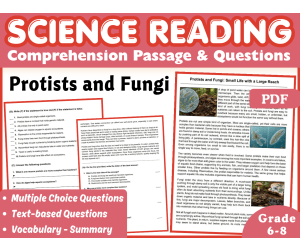
Life Science Reading Comprehension Passage: Protists and Fungi (PDF)
Science, ELA, Reading, Reading Comprehension, Strategies, Resources for Teachers, Life Sciences, Biology, Grade 6, 7, 8, 9, 10, Writing Prompts, Worksheets & Printables, Centers, Activities, Teacher Tools, Assessments, Quizzes and Tests, Quizzes, Tests
Life Science Reading Comprehension Passage and Questions: Protists and Fungi (PDF) This very engaging science reading passage is about protists and fungi , two groups of small but highly important organisms that affect ecosystems in major ways. It explains how protists can live in water, soil, or hosts; how some protists, such as algae, make food through photosynthesis and support aquatic food chains; and how others, such as Plasmodium , can cause disease. It also explains how fungi absorb nutrients, break down dead material, recycle nutrients, form helpful partnerships with plant roots, and contribute to foods and medicines such as bread and penicillin. This passage is designed to bridge the gap between science and literacy by strengthening reading comprehension while sparking scientific curiosity in middle school students. It blends English Language Arts skills with accurate science content, helping students build background knowledge, understand key concepts, use evidence from the text, and explain scientific ideas clearly. This resource supports science classroom practice while also reinforcing important literacy skills such as main idea, vocabulary, comprehension, and summarizing. Ideal for interdisciplinary learning in ELA and Science. Suitable for Grade 9 review, too! Student Tasks for The Passage: 10 multiple-choice questions targeting main idea, key details, science concepts, comparison, and real-world applications 10 True/False statements to check understanding and address common misconceptions 5 text-based short-answer questions that require students to explain important ideas from the passage 5 vocabulary matching items with clear, student-friendly definitions 1 summary prompt that asks students to condense the central ideas accurately Full answer key for every section Available Formats for this Resource Fillable PDF Word Docs Google Docs FULL CATALOG OF DOWNLOADING LINKS HERE Product Details Length: 7 pages total Grades: 6–8, also suitable for Grade 9 review Use cases: close reading, stations, homework, intervention, test prep, and sub plans Standards support: Reinforces informational-text skills and supports NGSS-style sense-making by helping students read scientific explanations, connect evidence to key concepts, interpret real-world examples, and explain cause-and-effect relationships in science. Why Teachers Choose This Set Authentic science content paired with rigorous literacy practice Consistent task structure across all passages for easier planning and smoother student routines Clear, age-appropriate writing that builds confidence without oversimplifying Other Science Reading Collections and Topics You May Find in the Store: 1. Astronomy & Space Science 2. Volcanoes, Rocks, & Mountains 3. Rock Cycle, Soil, & Sinkholes 4. Mars, Glaciers, & Antarctica 5. Water Cycle, Acid Rain, & Wastewater 6. Insects, Animals, & Ecosystems 7. Bioluminescence & Insects 8. Animal Skin, Cats, & T. Rex 9. Human Body and Senses 10. Health & Applied Bioscience 11. Waves, Light, & Imaging 12. Electricity & Energy 13. Motion & Materials 14. Chemistry and Materials Science 15. Electromagnetism 16. Acids and Bases 17. Gas Laws 18. Biotechnology 19. Periodic Trends 20. Protists and Fungi 21. Microevolution 22. Blood 23. Chemical Bonding 24. Magnets 25. Muscles 26. Nuclear Chemistry 27. Electromagnetic Devices 28. Epigenetics 29. The Law of Conservation of Mass 30. Atomic Models 31. Isotopes and Ions 32. Light 33. Human-Environment Interaction 34. Theory of Evolution 35. Photosynthesis 36. Origins of Life and Early Earth 37. Gene Expression and Regulation 38. Thermochemistry 39. Allergies 40. Coevolution 41. Birth to Adulthood 42. Cells 43. Entropy and Free Energy 44. The Human Brain 45. Mixtures and Solutions 46. Invertebrates 47. Zoo Animals 48. Biochemistry 49. Animal Behavior 50. Population Ecology ...and many more engaging science reading passages that cover intriguing and important topics designed to spark curiosity and support student learning. Use this passage to reinforce ELA skills in science, to add literacy to your lessons, and to support independent work. The passages strengthen main idea, evidence use, vocabulary in context, inference, cause and effect, and summary writing. With ready-to-use assessments and complete answer keys, you can provide focused practice that is simple to run and fast to review.
Author Middle & High School - CORED Education
Rating
Tags Middle School, Reading Comprehension, Reading Strategies, ELA, Centers, Reading Passage, Assessments, Vocabulary, Biology, Life Science

10 FREE EXERCISES FOR TRACING LINES | FUNNY AND FREE RESOURCE
Handwriting, Writing, ELA, Special Resources, Early Learning, Elementary, Pre-K, Activities, Worksheets & Printables
10 FREE EXERCISES FOR TRACING LINES FUNNY RESOURCE FOR KIDS INTRODUCTION: We are EDITORIAL ARENAS EDUCATIVAS, a publisher dedicated to designing educational resources for primary school children approximately between the ages of 3 and 12 who are learning mathematics, literacy, as well as worksheets for learning Spanish and some brain exercises. MAIN INFORMATION: 1. Brief introduction: Hello, thank you very much for being interested in this educational document. This document will help you a lot both in the classroom if you are a teacher, as well as if you homeschool and want to stimulate your children from home. 2. Title of the educational resource: This document is titled "Teaching material for children" 3. Topic to work on: Thanks to this educational document, we are going to work on a basic topic that every child and/or student should master. 4. Area of knowledge where it should be applied: Thanks to this document, we will address a topic and at the same time an important area of learning. 5. Number of pages it contains: This educational document contains the following number of pages available and ready to be used by you, you just have to download and print the document to start using it in your classroom. SECONDARY INFORMATION: 6. In what area of knowledge can it be applied? You can apply this set of educational sheets according to your criteria, in the corresponding area. 7. Should I apply it individually or as a group in my class? Also, according to your criteria, see if it is better for these sheets to be applied individually or as a group. 8. What size and format is this resource in? This set of teaching sheets has been published in A4 size, PDF format, so that it is much easier to use. 9. Do I need any extra elements to apply it? Yes, perhaps your students need pencils, colors, markers and even sometimes scissors and erasers. 10. Is it in color or black and white? This educational document has been designed mostly in color so that it is highly attractive to students.
Author EDITORIAL LAURA EDUCA
Tags TRACING, TRACING LINES, PREWRITING, WRITING, FREE RESOURCE, FREE, PRINTABLES, WORKSHEETS

Electricity & Energy: SAMPLE Physical Science Reading Passage (Google)
Science, ELA, Reading, Reading Comprehension, Strategies, Resources for Teachers, Physics, Grade 6, 7, 8, 9, Writing Prompts, Worksheets & Printables, Centers, Activities, Teacher Tools, Assessments, Quizzes and Tests, Quizzes, Tests
This is a ONE PASSAGE SAMPLE. The following is the description of the FULL resource and the downloading links: Electricity and Energy: Physical Science Reading Comprehension Passages and Questions (Google) This very engaging collection of physical science reading passages about electricity and energy is designed to bridge the gap between science and literacy through strengthening reading comprehension and sparking scientific curiosity in middle school students. Each passage blends English Language Arts skills with accurate science content that supports NGSS classroom practice. Ideal for interdisciplinary learning in ELA and Science. Suitable for Grade 9 review, too! What Is Included? There are (3) informational passages: The Lightning Rod: Turning Fear into Safety Eel Power: A Holiday Surprise Electricity: From Source to Socket Student Tasks for Each Passage: 5 multiple-choice questions targeting main idea, key details, inference, vocabulary in context, and use of evidence 5 vocabulary matching items with clear, student-friendly definitions 5 text-based questions that require citing specific lines or facts 1 summary prompt that asks students to condense central ideas accurately Full answer key for every section Available Formats for this Resource PDF Word Docs FULL CATALOG OF DOWNLOADING LINKS HERE Other Science Reading Collections and Topics You May Find in the Store: 1. Astronomy & Space Science 2. Volcanoes, Rocks, & Mountains 3. Rock Cycle, Soil, & Sinkholes 4. Mars, Glaciers, & Antarctica 5. Water Cycle, Acid Rain, & Wastewater 6. Insects, Animals, & Ecosystems 7. Bioluminescence & Insects 8. Animal Skin, Cats, & T. Rex 9. Human Body and Senses 10. Health & Applied Bioscience 11. Waves, Light, & Imaging 12. Electricity & Energy 13. Motion & Materials 14. Chemistry and Materials Science 15. Electromagnetism 16. Acids and Bases 17. Gas Laws 18. Biotechnology 19. Periodic Trends 20. Protists and Fungi 21. Microevolution 22. Blood 23. Chemical Bonding 24. Magnets 25. Muscles 26. Nuclear Chemistry 27. Electromagnetic Devices 28. Epigenetics 29. The Law of Conservation of Mass 30. Atomic Models 31. Isotopes and Ions 32. Light 33. Human-Environment Interaction 34. Theory of Evolution 35. Photosynthesis 36. Origins of Life and Early Earth 37. Gene Expression and Regulation 38. Thermochemistry 39. Allergies 40. Coevolution 41. Birth to Adulthood 42. Cells 43. Entropy and Free Energy 44. The Human Brain 45. Mixtures and Solutions 46. Invertebrates 47. Zoo Animals 48. Biochemistry 49. Animal Behavior 50. Population Ecology ...and many more engaging science reading passages that cover intriguing and important topics designed to spark curiosity and support student learning. Product Details Length: 14 pages total Grades: 6–8, also suitable for Grade 9 review Use cases: close reading, stations, homework, intervention, test prep, and sub plans Standards support: reinforces informational-text skills and supports NGSS-style sense making through observation, modeling, and clear use of claim, evidence, and reasoning Why Teachers Choose This Set Authentic science content paired with rigorous literacy practice Consistent task structure across all passages for easier planning and smoother student routines Clear, age-appropriate writing that builds confidence without oversimplifying Use this set to reinforce ELA skills in science, to add literacy to your lessons, or to support independent work. The passages strengthen main idea, evidence use, vocabulary in context, inference, cause and effect, and summary writing. With ready-to-use assessments and complete answer keys, you can provide focused practice that is simple to run and fast to review.
Author Middle & High School - CORED Education
Rating
Tags Middle School, Reading Comprehension, Reading Strategies, ELA, Centers, Reading Passage, Assessments, Vocabulary, Physical Science, Physics
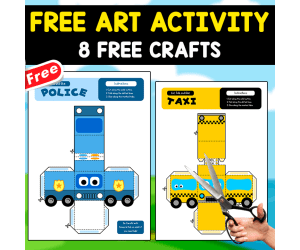
8 FREE CRAFTS OF TRANSPORTATION | ART ACTIVITY
Creative Arts, STEM, Special Resources, Resources for Teachers, Adult Education, Early Learning, Elementary, High School, Homeschool Resources, Middle School, Not Grade Specific, Pre-K, Activities, Worksheets & Printables, Teacher Tools
8 FREE CRAFTS OF TRANSPORTATION | ART ACTIVITY WITH THIS ACTIVITY, YOUR KIDS WILL BE ABLE TO LEARN THE TRANSPORTATION. MAIN INFORMATION OF THE AUTHOR: Welcome to EDITORIAL ARENAS EDUCATIVAS! We specialize in producing diverse educational tools to support children's learning journeys. Be sure to browse our store for reading, writing, math, and Spanish resources designed to make learning fun and impactful. SECONDARY AND COMPLEMENTARY INFORMATION: 1) What version or edition does this material correspond to? This document is designed in PDF format so you can print and use it much more quickly. 2) What is the recommended printing method for this resource? I recommend printing this document in PDF format so you won't experience any errors when printing. 3) What educational standards were used as the basis for creating this material? This document was not developed based on any specific standard. 4) Who is the creator of this resource and how should it be cited? The creator of this document is EDITORIAL ARENAS EDUCATIVAS. 5) Is this resource available for free or does it require a purchase? Because we vocationally work for the education of thousands of students, we are offering this document for free. PLEASE VISIT MY STORE, BECAUSE I HAVE A LOT OF FREE RESOURCES FOR YOU: COMPLETE THE IMAGE: https://teachsimple.com/product/complete-the-image-of-the-animal-8-free-exercises FOOD FLASHCARDS: https://teachsimple.com/product/6-free-flashcards-of-food-vegetables-and-fruits SECONDARY AND COMPLEMENTARY INFORMATION: 1) How can this material support children's learning or development? This material will help our students learn in an educational way. It will support your students by guiding them in a much more playful way to achieve easy and rapid learning. 2) What specific skills are developed using this resource? Students will be able to develop their attention, concentration, creativity, and imagination skills. It will also allow students to develop their cognitive skills such as comprehension, analysis, and others. 3) Who is the ideal audience for this document? This document and/or teaching resource is primarily intended for young students, meaning those between the ages of 5 and 12, in other words, students in early childhood and/or primary education. However, it can also be used by the general public if required.
Author EDITORIAL LAURA EDUCA
Rating
Tags FREE, FREE RESOURCES, ART, ART ACTIVITY, TRANSPORTATION, ART FOR KIDS, PRINTABLES, WORKSHEETS, CREATIVITY
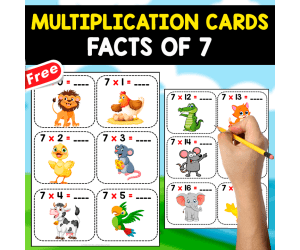
FREE MULTIPLICATION FLASHCARDS OF 7 | FOR COMPLETE THE QUESTIONS
Math, Multiplication and Division, Adult Education, Early Learning, Elementary, High School, Homeschool Resources, Not Grade Specific, Middle School, Activities, Classroom Decor, Teacher Tools, Worksheets & Printables
FREE MULTIPLICATION FLASHCARDS OF 7 | FOR PRACTICING TABLES INDICATIONS: Please, print this document for your students, then they must complete the questions. INFORMATION ABOUT THE AUTHOR: Thank you for choosing EDITORIAL ARENAS EDUCATIVAS! Our mission is to deliver a variety of learning resources that make education enjoyable and effective for children. Don't forget to visit our store to explore products for reading, writing, math, and Spanish language skills. MAIN INFORMATION OF THIS EDUCATIONAL RESOURCE: 1) Does this material allow for custom editing? This educational document is available in PDF format, so you cannot edit it. You simply need to download and then print it. 2) What main topic does the resource cover? This document has been developed to address a basic topic that children in kindergarten through elementary school should master. This document will also be helpful to the general public who want to learn. 3) What version does this document correspond to? This educational resource is designed in PDF format, which will make your download experience much simpler and easier to use. 4) Is the material designed in color or black and white? This document has been designed in color (if required) or is sometimes created in black and white to make your learning experience easier. SECONDARY INFORMATION OF THIS FABOLOUS RESOURCE: 1) How is this product described in detail? This educational document contains worksheets for children. They can be in either color or black and white. The way you print them is up to you, so evaluate this worksheet before printing it, that is, make sure it suits your needs. 2) What advantages does using this material offer? This document offers various advantages, such as: - It will help your children and/or students learn in a better or more fun way. - It will foster your students' creativity. - It will motivate your students and/or children to learn more independently. - Also, remember that you can use this material both at home and in class.
Author EDITORIAL LAURA EDUCA
Rating
Tags FREE, FREE RESOURCES, MATH, MATH RESOURCES, MULTIPLICATION, MULTIPLICATION FACTS

Beginner Music Theory: Accidentals - US Version
Creative Arts, Art, Music, Grade 1, Activities
Beginner Music Theory: Accidentals - US Version An all-encompassing learning resource designed specifically for educators in pursuit of an effective means to guide students through the essentials of music theory. This versatile seventeen-section module is perfect as either a digital or physical aid and adheres to the ABRSM syllabus, making it an optimal choice for traditionally schooled or homeschooled students embarking on their musical journey. This product offers a material glide into variegated features of music theory, starting with: Note values, Bar-lines, Time signatures Furthermore, it offers deep insights into note identification on staff and understanding various clefs. The following sections introduce them to intricate concepts such as: Sixteenth notes and beaming, Ties, dotted notes and rests. Versatile Learning Aid with Advanced Concepts The far-reaching scope proceeds beyond basic concepts offering its learners theoretical grasp over advanced topics like accidentals; simultaneously introducing half tones resulting in further enhancing one's familiarity with music. In addition, lessons in major scales& key signatures serves pivotal when advancing towards complex musical synchronization. Rounding Out The Course: Major Milestones Learners are introduced firstly to cancelling accidentals before proceeding towards other higher-level topics like degrees of scale & intervals which assists understanding spatial comprehension between different components linked with melody & harmony. Specialized lessons into tonic triad teaches how harmonious creations can gain depth eventually garnished by fascinating lessons inMusical Direction! Towards Completion: The Final Evaluative Test The course design culminates with an evaluative test at the finish line, having guided students through a gradual step-by-step learning process. Product Delivery and Reusability Offered in tutorial pdfs to interactive modules; optimized for both tablets and computers - ideal for various teaching scenarios from group instruction to individual learning or even as homework tasks. Extraordinarily multi-purpose due to its random slide generation feature ensuring fresh & engaging experience while saving precious educator prep-time. Who is this product for? Vivaciously versatile, Beginner Music Theory is especially efficient for Grade 1 Art & Music faculty, educators and homeschooling parents. Given its universal applicability within music education across all levels this set of resources quite literally tunes up a great path setting burgeoning musicians off on their exploration into melodious universe.. Product type being PDF ensures easy compilation resulting in seamless utilization.
Author Hbmusicsolutions's Shop
Tags Beginner Music Theory, Accidentals, Note Values, Key Signatures, Intervals

Letter U Reading Strips
ELA, Language Development, Phonics, Reading, Kindergarten, Preschool, Activities
Practice reading simple sentences with these letter U reading strips. Students will read words that begin with the letter U using the picture clue on each strip. There are 14 total reading strips that focus on the initial /u/ sound. All sentences are in the form of "U is for ___." These letter U reading strips are suitable to preschool or kindergarten kids who are learning to identify the initial sound of the letter U. These cards are perfect for introducing new vocabulary to students. What is Included: This resource contains 14 reading strips for the letter U. When to Use: Literacy Centers - These cards work well in a literacy or reading center for students to read independently or with a partner. Small Group Activity - The teacher can pull aside a small group of students who need extra practice with the target sound to use these cards. Early Finisher Task - If students finish a task early, they can grab these cards to look at and read. Take Home Book - The black and white pages can be sent home for students to make their own letter sound book. Task Box Activity by using pencil boxes Ways to Use Teachers can place the cards on a ring for a simple reading ring for a reading center . The teacher can cut the picture from the strip and have students match the picture to the sentence. Teachers can have simply have students read the strips to practice recognizing words that begin with the target letter. Skills Assessed: Reading Simple Sentences Beginning Sounds Using picture clues to figure out new words These reading strips are a low prep activity. The teacher simply needs to print out the strips and then cut them apart to create this activity. The strips can be laminated if desired. They can be places in a reading or literacy center and used over and over. By placing these strips on a ring or in a pencil box, students can easily take out and clean up this literacy center . These strips can be combined with the strips for other letters to create a sorting activity. Students can also sort the strips according to each beginning sound.
Author The Connett Connection
Tags Beginning Sounds, Alphabet Activities, Letter Of The Week, Reading Center, Reading Simple Sentences, Simple Sentences, Initial Sounds, Preschool Reading Center, Letter U, Letter U Activities
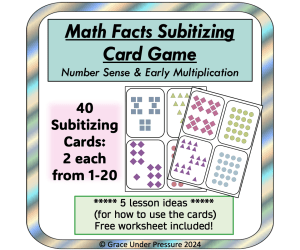
Mental Math Games: Number Sense Subitizing Flash Cards 5 Ways!
Math, Early Math, Counting, Numbers, Multiplication and Division, Multiplication, Kindergarten, Grade 1, 2, 3, Centers, Activities, Games
This unique set of 40 subitizing flashcards encourages your students to practice a vital mental math skill: subitizing, which is instantly recognizing how many there are in small groups of items and then using that knowledge for counting larger numbers! It’s a fun way to also practice early multiplication skills and learn math facts- by mentally counting equal groups in a visual display. Finally, it's an easy and simple routine to foster students' number sense. It makes a great math centre to use all year long in multiple ways! There are two unique cards for each number value from 1-20: 40 cards in all! Ways to Use: 1) Traditional Flashcards: Hold up a flashcard and ask your student to let you know how many items there are using their mental counting skills. 2) Memory Game: Spread mixed-up pairs of cards facedown on the table (you could use from 5-20 pairs, based on your students’ ages and abilities). Students will take turns, flip two cards over, and look for pairs of cards that have the same value. They continue playing as you would a standard memory matching game. 3) Line Them Up: Have your students work individually or in pairs to line up one set of cards with values from 1-20. 4) One More, One Less: One student shows a single card. Their partner can search through the rest of the cards to find one that is worth one more and a card that is worth one less. 5) Explain Your Counting: Have your students use the included worksheet to explain how they mentally count the items on one of the cards. For example, "I see 4 groups of 4 and one more." What's Included: 12 Page PDF- Ready to Print and Use! Teacher Instructions (for five different games and activities) Student Worksheet for "Explain Your Counting" 10 Pages of Flashcards
Author Grace Under Pressure
Tags Mental Math Game, Mental Math Games, Number Sense, Subitizing, Math Flash Cards, Counting, Math Center, Math Centre, Math Game, Math Facts

Cells - Bell Ringers, Class Warm-Ups, and Exit Tickets
Science, Life Sciences, Biology, Grade 8, 9, 10, Activities
This Cells unit comes with 20 days’ worth of materials that relate directly to your unit. This activity bundle is geared towards a grade 6-8 science class but will also work well for an advanced grade 4 or a lower-level grade 9-10 class. They can be used at the start of a class in the form of a bell ringer/class warm-up or at the end of class as an exit ticket. Would you like to see me walk through my Bell Ringer activity ? I created a video that overviews how they work and how you can use them effectively in your classroom in only 5 minutes per day. Click here to have a look. This resource is set up for a cells unit and includes the topics listed below. Please have a look at the list of topics. This resource covers the following topics • The Cell Theory: An Introduction • Animal Cells • Plant Cells • Diffusion and Osmosis through the Cell Membrane • Unicellular and Multicellular Organisms • Cell Organization - Cells, Tissues, Organs, and Systems These are meant to be used each day, however, the question periods are directly associated with topic lessons, so they are done on days that follow the completion of a lesson. For example, after you finish your lesson, you’d give your students the questions associated with the ecosystems lesson. Additional days will utilize the Quotes and Videos sections. There are two key reasons why this daily activity works: 1) It encourages your students to review their notes on a nightly basis so they’re ready for class. 2) It creates a routine in your classroom that encourages your student to arrive and get settled for class quickly and quietly. Once we’re done, the students are ready for class and have already gotten their brains working and thinking science. The Activities 1) Questions: Question types - Fill in the blanks - Short answer - Opinion - Drawing - Mix of above ● Everything will be included in your PowerPoint ● All questions relate directly to the previous lesson and work to test your students’ understanding ● If students are absent, they know they need to get caught up while away ● This process encourages students to keep up with the material and review their notes nightly 2) Quotes The quotes come from individuals and relate directly to the overarching topic. On these days, I have students read the quote and write down what they feel it means and/or the underlying message. 3) Videos The videos are an excellent way to settle your class down quickly and easily. Each video is selected specifically because it’s interesting and relevant to students. Each video can be accessed directly from the slide. Simply click the video image while in slideshow mode and the video will automatically open in your browser. Process ● Each week, I hand out the week’s [Topic Name] - Student Worksheet ○ You can make this activity completely digital by making the sheet available online and have them submit it there as well ● As soon as the bell rings to start class, I hand the sheets out to my students. Once the sheets are out, I start the 4-minute timer. If students are late, they miss out on their time. ● Once the timer finishes, the students flip over their papers and pass them to the front. Structure Each day’s activities, unless otherwise stated, are to be done individually and without notes. However, depending on the ability level of your students, you may want to have them work in pairs and/or use their notes. Marking We all have enough marking already and the last thing we want to do is add to our pile. However, I’ve found that this process is so streamlined and efficient that I’m easily able to mark these while my students are working in class or copying down notes. Typically, I mark only the Questions section. However, if I’m busy or don’t have time in class, I won’t and that’s OK. The point of this isn’t to make your job harder but to help your students stay on track and keep focused. Additionally, I’ll mark one of the other sections (Quote or Video) at least every other week. Each day’s mark is out of 5 but since there aren’t always 5 questions (usually it’s somewhere between 1-3), I base my mark on their understanding of what I’ve asked them to complete. This can come across as subjective, but I’ve found it gives me an excellent indication of their knowledge and keeping it consistent makes things better for everyone. Keep in mind that the outline above describes how I use them in my class. Feel free to change it up however you like (including the questions as the entire thing is completely editable). Other teachers I’ve spoken to only utilize the questions following a lesson or only mark the questions following a lesson and for the other days, show the relevant videos but don’t require their students to submit anything. A few people only mark one submission per week while others mark everything. It’s completely up to you. Whether you use Questions, Quotes, or Videos in any given lesson, your goal is to create a routine, promote understanding, and get your students thinking about science as soon as they enter your class. ***************************** For free resources, useful teaching tips, and tools, please visit my blog - TeachScienceWithFergy.com If you have any questions please feel free to send me an email - devon@teachwithfergy.com
Author Teach With Fergy
Tags Bell Ringers, Class Warm-ups, Exit Tickets, The Cell Theory, Osmosis
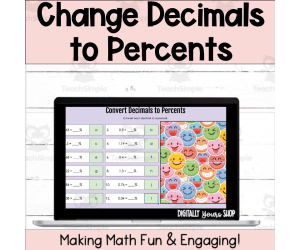
Change - Convert - Decimals to Percents Self-Checking Digital Math Activity
Math, Percentages, Decimals, Grade 6, 7, Activities
Change - Convert - Decimals to Percents Self-Checking Digital Math Activity Change - Convert - Decimals to Percents Self-Checking Digital Math Activity is an impressive teaching resource specifically designed for middle school educators. This digital math activity transforms traditional decimal and percentage problems into lively interactive tasks using Google Sheets, enabling student engagement and comprehension. About the Digital Math Activity This digital activity adopts a hands-on approach towards explaining the conversion of decimals to percents. By working on various problems, students can improve their skills in changing and converting decimals accurately, thereby moving from initial confusion about decimals to a strong proficiency in percentages. Puzzle Picture Reveal Feature The 'Puzzle Picture Reveal' is an integral part of this activity . This feature provides immediate feedback on the student's accuracy level. For every correct answer keyed in by a student, more of a mystery picture is revealed. Incorrect answers do not reveal more of the image but provide motivation for learners to try again until they get it right. Detailed Contents: 12 problems focused on converting decimals into equivalent percentages are included. An optional student recording sheet that helps monitor each learner's progress during problem-solving sessions or for class revision later on. A teacher answer key that streamlines grading process is featured too, Note: The resource can be accessed directly from your Google Drive without any file downloads or software installations. Versatile Use Cases This tool perfectly serves as morning warmup exercises, exit tickets after lessons, homework tasks or checks for understanding during lessons reinforcing both procedural learning reinforcement and conceptual mathematics ensuring fun-filled classes while enhancing vital skills. It also doubles up as an effective math practice testing tool for homeschoolers, apart from its classroom utility. Suitability Across Different Grade Levels The Change-Convert-Decimals to Percents Self-Checking Digital Math Activity , though designed with grade six and seven students in mind, is aptly suitable for any grade level that needs to learn mathematical percentages from decimals.
Author Digitally Yours Shop
Tags Decimals, Percents, Conversion

Discover Flute 3 - Interactive Instrumental Music Activity
Creative Arts, Art, Music, Not Grade Specific, Activities
Discover Flute 3 - Interactive Instrumental Music Activity This interactive flute learning system teaches beginner students notes up to the first ledger line. The modules include simple, engaging pieces for listening, playing along with, and getting help. Integrated music theory is available at a tap to aid in student comprehension. Fingering charts and warm ups are also accessible. With purchase, you receive 10 tablet modules, 10 computer modules, 30 sheet music PDFs, 30 MP3s, and 30 backing tracks for flexibility across devices. Tablet and computer versions work with projectors, while the computer version functions with smart boards too. Product access instructions provided. This versatile resource works for various implementation methods like whole group, small group, independent practice, and homework. The interactive nature suits multiple learning styles for public, private or homeschooled students. Engage your beginner flutists with this fun foundational program!
Author Hbmusicsolutions's Shop
Tags Musical, Instruments, Flute, Listening Exercises, Interactive Activity