



3,878 products added recently
Page 84 - 8th Grade Lesson Plans
Equip your eighth graders with the knowledge and skills needed for high school success using these lesson plans. Focused on advanced concepts and independent learning, these resources help students take ownership of their education. Implement them to ensure your students are ready for the next step.

 Show filters

I WONDER - Where Did Tutankhamun Get His Name | Animated Video Lesson
History: African, History, Social Studies, History: Ancient, Grade 4, 5, 6, 7, 8, 9, 10, Lesson Plans, Teacher Tools
Video Introduction An amazing video designed for the students to learn more about history. I WONDER - Where Did Tutankhamun Get His Name | Animated Video Lesson Do you like history? Which topic do you really enjoy about history? Have you ever read an interesting fact about the Vikings? If yes, can you mention them? What do you like most about the Victorian era? Can you name all the Tudors? Have you ever wondered how people used to live in ancient Japan and ancient China? Do you know any interesting facts about ancient Egyptians and the Pharaohs? Have you ever visited South America? What do you know about Incas and Aztecs? Celtic culture was really one of a kind, can you name any of the places that Celts used to live in? Imagine yourself living during the ancient Roman empire, how your life will look like? Ancient Greece was an amazing place to live in. What do you know about ancient Greek life? I WONDER - Where Did Tutankhamun Get His Name | Animated Video Lesson The video is perfect for encouraging the researching skills for the students, while learning more about history. I WONDER - Where Did Tutankhamun Get His Name | Animated Video Lesson This friendly designed video is suitable for students at school, homeschooling, and as a group activity. Format Available in MP4 format.
Author Educational Voice
Tags Where Did Tutankhamun Get His Name, Where Did Tutankhamun Get His Name Video, Tutankhamun, Tutankhamun Video, Tutankhamun Facts, Tutankhamun Video For Kids, Tutankhamun Facts For Kids

Economy & Globalization: The Great Depression Gr. 5-8
Social Studies, Economics, Grade 5, 6, 7, 8, Teacher Tools, Lesson Plans
Economy & Globalization: The Great Depression Gr. 5-8 The aptly titled resource, Economy & Globalization: The Great Depression Gr. 5-8, is a teaching tool that delves into the complexities of the global economy and its interdependencies. Equipping students with knowledge from grades 5 through 8, it explores topics as diverse as nationalization versus privatization, the evolution of currency over time— starting from bartering to metal money and then to current modes— and impactful historical events. The Great Depression One such discussed event in detail within this plan is The Great Depression. This economic downturn period serves as an immersive learning experience where students can recreate scenes indicating economic struggles faced by people during that time. Innovative Learning Methods This resource goes beyond traditional pedagogy by providing engaging debates on international immigration policy or discussions about pros and cons of trends towards economic globalization— leaving your learners analytically equipped. They also have opportunities to develop real-world skills like creating their own multinational companies complete with business proposals. Resource usage extends further than whole class instructions; it can be effortlessly incorporated into smaller groups or assigned as homework for independent study purposes. Its hands-on approach includes activities like conducting currency exchange practical applications using updated rates mimicking an international airport scenario. Economy & Globalization: The Great Depression Gr. 5-8 also incorporates fun yet educational elements such as crosswords and word searches to reinforce learning, a comprehension quiz for self-paced knowledge check-ins—and all these supplemented by a readily available answer key. As an educator aiming for optimal curriculum alignment with State Standards combined with Bloom's Taxonomy approach, this resource is your ideal companion in journeying through Social Studies Economics subdomain from Grade 5 straight into Grade 8 classrooms delivering enriched lessons. Universal Accessibility The accompanying product file comes conveniently in PDF format making it universally accessible irrespective of technology restrictions or geographical boundaries—an indispensable coveted addition enhancing your repertoire of resources ensuring enriched teaching moments are never missed!
Author Classroom Complete Press
Tags PDF, Lesson Plan On Globalization, Lesson Plan Globalization

How to Write a Book Report: Oral Book Reports
ELA, Writing, Common Core, Grade 5, 6, 7, 8, Teacher Tools, Lesson Plans
How to Write a Book Report: Oral Book Reports This is an essential teaching resource created with the focus on enhancing the language arts and writing abilities of students in grade 5 through grade 8. This learning tool, mainly intended for public school teachers and homeschooling parents, ensures effective development of students' book reporting skills by turning it into a fun and enjoyable experience. The teaching resource presents content that follows Bloom’s Taxonomy guidelines. You can use it to supplement your existing curriculum or as independent work for your students. It includes clear, organized instructions covering both drafting and revision phases. What's Inside: 24 Printable Pages: The package consists of 24 print-ready pages in PDF format. Six-Color Graphic Organizers: These help introduce skill focus areas and assist students in creating compelling book reports. Add-on Resources: Worksheets such as word puzzles complement the comprehension quiz while keeping learning interesting. If you are wondering how best to assess your pupils' progress,' implementation guide ' along with an 'assessment rubric' has also been provided for objective evaluation. This comprehensive toolkit suits whole group discussions or small parallel groups working independently from each other. It also works great as homework assignments designed to enhance individual learning. With this all-inclusive resource at disposal, you have everything needed under one roof! Note: Using How To Write A Book Report: Oral Book Reports , not only simplifies your task but also ensures alignment with Common Core State Standards expectations — leaving no stone unturned!
Author Classroom Complete Press
Tags Listening Skills, Speaking Skills, Writing Tasks

Needn't Have and Can't Have ESL TEFL Upper Intermediate Lesson Plan
ELA, Language Development, ESL, Grammar, Resources for Teachers, Grade 6, 7, 8, Teacher Tools, Lesson Plans, Worksheets & Printables
Our Needn't Have and Can't Have Upper Intermediate Lesson Plan is the essential digital educational resource for passionate educators! This great lesson plan aims to help your students understandf "needn't have" and "can't have" through clear explanations, practical examples, and interactive exercises and activities. This product offers 30 ready-to-print pages that feature a thorough exploration of these crucial grammar topics, as well as a variety of practice activities designed to accommodate diverse learning preferences. The lessons are presented in an eye-catching format that will actively engage your students as they progress in their language skills. As an added bonus, this outstanding resource also provides digital access through Google Apps integration, making it incredibly convenient for those who prefer online teaching methods. And don’t stress about grading – we've got you covered with a comprehensive answer key! The ESL lesson plan includes flashcards, a warmer, grammar rules, exercises, role-play, conversation, writing drill, activity , answers and an extra study that would be good to set as homework. There are 30+ pages and there are teachers notes to guide the teacher.
Author TEAM TEFL
Tags ESL Lesson Plan, Language Arts, Modal Verbs, Expression, Past Participles
I WONDER - How Can Volcanic Eruptions Effect Travel | Animated Video
Geography, Social Studies, Earth Sciences, Earth and Environmental Sciences, Science, Environmental Science, Grade 4, 5, 6, 7, 8, 9, 10, Lesson Plans, Teacher Tools
Video Introduction An amazing video designed for the students to learn more about natural disasters in different countries. I WONDER - How Can Volcanic Eruptions Effect Travel | Animated Video Lesson What do you know about this natural disaster? Do you know in which part of the world this could happen? Have you ever read about the safety misusers that we could have to protect ourselves from this natural disaster? If yes, can you tell us more about them? Can you name other natural disasters? If yes, tell us more about where they are likely to happen? And how frequently? Do you like reading about Geography? What is your favorite country in the whole world? If you are going on a trip where it will be? Which country? What you are going to see there? Does this country has a famous place to visit? Do you like reading about Geology? If yes, what is your favourite topic? I WONDER - How Can Volcanic Eruptions Effect Travel | Animated Video Lesson The video is perfect for encouraging the researching skills for the students, while learning more about this fantastic phenomenon. I WONDER - How Can Volcanic Eruptions Effect Travel | Animated Video Lesson This friendly designed video is suitable for students at school, homeschooling, and as a group activity. Format Available in MP4 format.
Author Educational Voice
Tags How Can Volcanic Eruptions Effect Travel, How Can Volcanic Eruptions Effect Travel Video, Volcanic Eruptions, Volcanic Eruptions Facts, Volcanic Eruptions Facts For Kids, Volcanic Eruptions Video, Volcanic Eruptions Video For Kids
I WONDER - Did Aztec Children Go To School | Animated Video Lesson
History: Ancient, History, Social Studies, History: World, Grade 2, 3, 4, 5, 6, 7, 8, Lesson Plans, Teacher Tools
Video Introduction An amazing video designed for the students to learn more about history. I WONDER - Did Aztec Children Go To School | Animated Video Lesson Do you like history? Which topic do you really enjoy about history? Have you ever read an interesting fact about the Vikings? If yes, can you mention them? What do you like most about the Victorian era? Can you name all the Tudors? Have you ever wondered how people used to live in ancient Japan and ancient China? Do you know any interesting facts about ancient Egyptians and the Pharaohs? Have you ever visited South America? What do you know about Incas and Aztecs? Celtic culture was really one of a kind, can you name any of the places that Celts used to live in? Imagine yourself living during the ancient Roman empire, how your life will look like? Ancient Greece was an amazing place to live in. What do you know about ancient Greek life? I WONDER - Did Aztec Children Go To School | Animated Video Lesson The video is perfect for encouraging the researching skills for the students, while learning more about history. I WONDER - Did Aztec Children Go To School | Animated Video Lesson This friendly designed video is suitable for students at school, homeschooling, and as a group activity. Format Available in MP4 format.
Author Educational Voice
Tags Did Aztec Children Go To School, Did Aztec Children Go To School Video, Aztec Children, Aztec Children Facts, Aztec Children Facts For Kids, Aztec Children Video, Aztec Children Video For Kids

Puzzle Paragraphs: Taking the Mystery Out of Writing Nonfiction
ELA, Writing, Grade 4, 5, 6, 7, 8, Teacher Tools, Lesson Plans
Puzzle Paragraphs: Taking the Mystery Out of Writing Nonfiction A practical and effective teaching resource designed for educators, particularly those instructing students in grades 4 through 8. This valuable tool deals with the interrelated aspects of Language Art subjects, with an emphasis on the component of Writing. Demystifying Nonfiction Writing Breaking down writing into comprehensible chunks, Puzzle Paragraphs makes nonfiction writing approachable for learners by fostering practical application. The resource helps build and dismantle paragraphs using prevalent nonfiction text types. This technique benefits developing versatile readers and writers simultaneously. Above all, this dual-edged approach boosts a key understanding of how to read nonfiction texts critically along with building capacity for creating informative writings. Inclusive Learning Material With detailed step-by-step instructions (complemented by entire lessons enriched with sample texts and graphic organizers ), each session transforms into an enriching learning experience that significantly enhances your regular curriculum. Plus, it does so while incorporating comprehensive diversity into your lesson planning. Versatile Use Cases Puzzle Paragraphs isn't limited to just whole-group instruction scenarios but exhibits flexibility by being equally useful when used in small group settings or individual assignments. It can even be assigned as homework tasks staying aligned with its core objective - improving literacy skills regarding nonfiction reading and writing. User-Friendly Access & Delivery Format To ensure maximum ease-of-use and accessibility for all teachers – including homeschoolers – Puzzle Paragraphs is delivered as a standalone PDF file ensuring quick navigation across lessons. This digital framework aptly accommodates contemporary teaching practices which unquestionably incorporate technological mediums widely. In Conclusion... Puzzle Paragraphs represents a crucial tool dedicated towards demystifying the seemingly complex process associated with penning down structured non-fiction content, making it an indispensable addition to an educator's kit nationwide!
Author Classroom Complete Press
Tags PDF
How to Write an Essay: What is a Descriptive Essay?
ELA, Writing, Common Core, Grade 5, 6, 7, 8, Teacher Tools, Lesson Plans
"How to Write an Essay: What is a Descriptive Essay?" The resource titled, "How to Write an Essay: What is a Descriptive Essay?" effectively eliminates fear from essay writing and equips students with the vital tools they need to express their perspectives comprehensively. Designed for students in Grades 5 through 8, this essential teaching tool focuses on the most common types of essays based on Bloom’s Taxonomy. Complete Resource Pack: Engaging lessons: This versatile resource comes complete with engaging lessons that cape every stage of the writing process in a clear and efficient way. Description-focused: It masterfully provides instruction about descriptive essays - aiding learners as they explore this popular form of academic writing. Evaluation tools: Teachers will find great value in our straightforward implementation guide and student assessment rubric which are included within this pack. These instruments provide useful indicators on skill mastery, guiding teachers as they assess student work and deliver useful feedback. Apart from explicit instruction about essay-writing techniques, this all-encompassing teaching material digs deeper into language arts by providing enlightening review lessons about verbs, adjectives, and pronouns. This serves not only like a refreshing course but also support learners in developing a full understanding of English grammar – an important foundation for successful essay writing. Learner Engagement Modules: Fun word puzzles: Aimed at reinforcing vocabulary knowledge and promoting language acquisition subtly. Comprehension quiz: Designed to evaluate students' understanding while making learning more interactive. "How to Write an Essay: What is a Descriptive Essay?" also includes six color graphic organizers that give visual assistance when introducing skill focus areas plus aids navigation through different stages of the writing process – giving students plenty room for planning out their thoughts before committing them onto paper. Compatibility with Common Core State Standards ensures teachers can implement this package seamlessly into existing curriculums while achieving set learning benchmarks concurrently. Completing its impressive offering is its ease-of-use design available simply by printing its ready-to-use PDF pages straight from your computer or device. This invaluable resource offers a new approach to language arts lessons that resonate with modern learners, bringing both fun and educational value into the classroom. The result: 'How to Write an Essay: What is a Descriptive Essay?' truly raises the bar in language arts education by giving teachers credible tools that are impactful and enjoyable – turning every learner into an adept essay-artist in no time.
Author Classroom Complete Press
Tags Language Arts, Writing, Essay Writing, Descriptive Essays, Adjectives
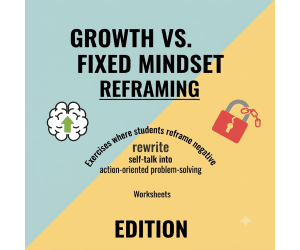
Growth Vs. Fixed Mindset Reframing
Life Skills, Special Resources, Social Emotional Learning (SEL), Social Skills, Special Education Needs (SEN), Speech Therapy, Resources for Teachers, Classroom Management, Community Building, STEM, Grade 2, 3, 4, 5, 6, 7, 8, Worksheets, Worksheets & Printables, Workbooks, Word Searches, Teacher Tools, Lesson Plans, Quizzes and Tests, Quizzes, Tests, Assessments
Instead of offering vague advice about “positive thinking,” give your students real tools to solve their issues with frustration, decision paralysis, and negative self-talk! The 36-page, neuro-developmental curriculum, “Growth Vs. Fixed Mindset Reframing: Action-Oriented Problem-Solving,” is specifically designed for 2nd through 5th graders, at a time when many kids experience the hurdles outlined above. This resource doesn't simply tell children to "keep trying"; it gives them the skills to understand how their cognitive reframing systems work so they can start to use them. Students will be exposed to real-life situations they encounter in school today. As a result, they will learn how to identify and change their "Stuck Voices" and create or develop a plan of action to tackle their individual problem. What is included in this resource: - Educator's Methodology Guide: A comprehensive understanding of the neuroscience behind self-talk and how to teach cognitive restructuring. - 8 Additional Student Worksheets: 8 highly relatable worksheets that target common youth problems like "Homework Heroes," "Recess Resolutions," "Creative Catastrophes," "Friendship Fixes," and "Chore Challenges." - Classroom Visuals and Anchor Charts: 3 classroom visuals, “The Metacognitive Reframing Cycle,” “The Cognitive Fork in the Road,” and “The Action-Strategy Matrix,” to visually reinforce the lessons taught in this curriculum. - Step-by-Step Implementation Guide: A three-phase implementation plan for parents and teachers. - Detailed Answer Keys: Subjective answer keys with examples of strategies for assessing student understanding and for generating discussion. Suitable for educators in classrooms, guidance counselors, home schooling parents all interested in developing their child’s ability to use resilience/foster self-advocacy/foster emotional self-regulation over the course of his/her life! The following are the keywords associated with this product: growth mindset, social emotional learning (SEL), cognitive behavior therapy for children, self-talk, elementary worksheets, classroom management tips, school counseling resources, character education supplies. Why Parents / Schools Love It : This program focuses on Giving Kids Specific Examples of How to Solve Problems instead of vague and meaningless quotes like "believe in yourself." In addition, the program is Based on Mechanism of the Brain; It teaches kids through simple examples how to deal with psychological issues (such as changing how you feel about something or making yourself not care about something). The worksheets used in this program are identical to those used in the children's daily life such as when you mess up your drawing, get into an argument on the playground, have no chores left to do, do not understand how to solve a math problem, etc... The ultimate goal of this program is to create self-sufficient children by Teaching Them to Become Adults. The program also has the Highest Degree of Ease-of-Use: Everything needed to start right away (theory, worksheets, visuals, etc.) is included in the package when received. Intended Audience (Classes/Students to Target): Looking at the direct text from the PDF file (i.e., Pages 1, 2, 5, 7, 8, &12) and applying the developmental psychology presented in the document the following classes/students will be targeted. Class/Grade: 2nd Grade, 3rd Grade, 4th Grade, 5th Grade Age: 7 to 11 years old Will also appeal to homeschooling families, Special Education teachers and School Counselors that work with students in the elementary school age. Copyright/Terms of Use: This Book belongs to Syed Hammad Rizvi. You are only allowed to use this material for your personal use and to utilize it in only one classroom. You are not allowed to edit, distribute or sell this book, meaning you may not upload this book anywhere on the internet for public access or download. If you wish to share this book with others, you must buy more licenses through Teachsimple. Thank you for understanding the terms of use for this item. This product was created by Syed Hammad Rizvi
Author Creative Book Store
Rating
Tags GrowthMindset, FixedMindset, SocialEmotionalLearning, SEL, SELactivities, MindsetMatters , EmotionalRegulation, GrowthMindsetForKids, ResilienceBuilding, Metacognition
I WONDER - How Was Niagara Falls Formed | Animated Video Lesson
Geography, Social Studies, Grade 4, 5, 6, 7, 8, 9, Lesson Plans, Teacher Tools
Video Introduction An amazing video designed for the students to learn more about famous places in different countries. I WONDER - How Was Niagara Falls Formed | Animated Video Lesson What do you know about this place? Do you know in which part of the world it is? Have you ever visited this place? If yes, can you tell us more about your adventure, and what do you like the most about this place? Do you like reading about Geography? What is your favorite country in the whole world? If you are going on a trip where it will be? Which country? What you are going to see there? Does this country has a famous place to visit? I WONDER - How Was Niagara Falls Formed | Animated Video Lesson The activity is perfect for encouraging the researching skills for the students, while learning more about this fantastic place. I WONDER - How Was Niagara Falls Formed | Animated Video Lesson This friendly designed video is suitable for students at school, homeschooling, and as a group activity. Format Available in MP4 format.
Author Educational Voice
Tags How Was Niagara Falls Formed, How Was Niagara Falls Formed Video, Niagara Falls, Niagara Falls Facts, Niagara Falls Facts For Kids, Niagara Falls Video, Niagara Falls Video For Kids, Waterfalls
I WONDER - What Is A Rain Dance | Animated Video Lesson
History: USA, History, Social Studies, Grade 2, 3, 4, 5, 6, 7, 8, Lesson Plans, Teacher Tools
Video Introduction An amazing video designed for the students to learn more about history. I WONDER - What Is A Rain Dance | Animated Video Lesson Do you like history? Which topic do you really enjoy about history? Have you ever read an interesting fact about the Vikings? If yes, can you mention them? What do you like most about the Victorian era? Can you name all the Tudors? Have you ever wondered how people used to live in ancient Japan and ancient China? Do you know any interesting facts about ancient Egyptians and the Pharaohs? Have you ever visited South America? What do you know about Incas and Aztecs? Celtic culture was really one of a kind, can you name any of the places that Celts used to live in? Imagine yourself living during the ancient Roman empire, how your life will look like? Ancient Greece was an amazing place to live in. What do you know about ancient Greek life? I WONDER - What Is A Rain Dance | Animated Video Lesson The video is perfect for encouraging the researching skills for the students, while learning more about history. I WONDER - What Is A Rain Dance | Animated Video Lesson This friendly designed video is suitable for students at school, homeschooling, and as a group activity. Format Available in MP4 format.
Author Educational Voice
Tags What Is A Rain Dance, What Is A Rain Dance Video, Rain Dance, Rain Dance Facts, Rain Dance Facts For Kids, Rain Dance Video, Rain Dance Video For Kids, USA, Culture

I WONDER - Why Were The Pyramids Sealed With Large Stones
History: African, History, Social Studies, History: Ancient, Grade 4, 5, 6, 7, 8, 9, 10, Lesson Plans, Teacher Tools
Video Introduction An amazing video designed for the students to learn more about history. I WONDER - Why Were The Pyramids Sealed With Large Stones | Animated Video Lesson Do you like history? Which topic do you really enjoy about history? Have you ever read an interesting fact about the Vikings? If yes, can you mention them? What do you like most about the Victorian era? Can you name all the Tudors? Have you ever wondered how people used to live in ancient Japan and ancient China? Do you know any interesting facts about ancient Egyptians and the Pharaohs? Have you ever visited South America? What do you know about Incas and Aztecs? Celtic culture was really one of a kind, can you name any of the places that Celts used to live in? Imagine yourself living during the ancient Roman empire, how your life will look like? Ancient Greece was an amazing place to live in. What do you know about ancient Greek life? I WONDER - Why Were The Pyramids Sealed With Large Stones | Animated Video Lesson The video is perfect for encouraging the researching skills for the students, while learning more about history. I WONDER - Why Were The Pyramids Sealed With Large Stones | Animated Video Lesson This friendly designed video is suitable for students at school, homeschooling, and as a group activity. Format Available in MP4 format.
Author Educational Voice
Tags Why Were The Pyramids Sealed With Large Stones, Why Were The Pyramids Sealed With Large Stones Video, Pyramids, Egyptian Pyramids, Egyptian Pyramids Facts, Egyptian Pyramids Video, Egyptian Pyramids Video For Kids

I WONDER - Is A Hot Spring The Same As A Geyser | Animated Video
Geography, Social Studies, Earth Sciences, Earth and Environmental Sciences, Science, Environmental Science, Grade 6, 7, 8, 9, 10, 11, 12, Lesson Plans, Teacher Tools
Video Introduction An amazing video designed for the students to learn more about natural disasters in different countries. I WONDER - Is A Hot Spring The Same As A Geyser | Animated Video Lesson What do you know about this natural disaster? Do you know in which part of the world this could happen? Have you ever read about the safety misusers that we could have to protect ourselves from this natural disaster? If yes, can you tell us more about them? Can you name other natural disasters? If yes, tell us more about where they are likely to happen? And how frequently? Do you like reading about Geography? What is your favorite country in the whole world? If you are going on a trip where it will be? Which country? What you are going to see there? Does this country has a famous place to visit? Do you like reading about Geology? If yes, what is your favourite topic? I WONDER - Is A Hot Spring The Same As A Geyser | Animated Video Lesson The video is perfect for encouraging the researching skills for the students, while learning more about this fantastic phenomenon. I WONDER - Is A Hot Spring The Same As A Geyser | Animated Video Lesson This friendly designed video is suitable for students at school, homeschooling, and as a group activity. Format Available in MP4 format.
Author Educational Voice
Tags Is A Hot Spring The Same As A Geyser, Is A Hot Spring The Same As A Geyser Video, Geyser, Geyser Facts, Geyser Video, Geyser Facts For Kids, Geyser Video For Kids, Spring, Spring Facts

Math Fact Fluency Mastery Sheets
Math, Addition and Subtraction, Addition, Subtraction, Algebra, Calculus, Decimals, Fractions, Measurements, Multiplication and Division, Grade 1, 2, 3, 4, 5, 6, 7, 8, Worksheets & Printables, Workbooks, Worksheets, Writing Prompts, Word Searches, Teacher Tools, Assessments, Lesson Plans, Graphic Organizers, Presentations
The Math Facts Fluency Mastery Sheets-PRO (Professional Edition) is a complete (53 page) digital PDF resource that includes a variety of structured worksheets, instructional strategies, visual aids, & answer keys to help students build automaticity in addition, subtraction, multiplication, and division. This Professional Edition of the Math Facts Fluency Mastery Sheets were specifically designed to help students practice math fact fluency from basic facts (0-5) to advanced operations (6-12) including, regrouping; fact families; mixed operations; & timed drills. The Math Facts Fluency Mastery Sheets have been specifically designed to provide scaffolded modules that allow students to progress from concrete to abstract materials. Included are: number lines, arrays, part-part-whole diagrams; multiplication tables; and real-world word problems all of which support Elementary Math Standards. Finally, each of the 53 pages includes a baseline assessment; progress monitoring chart; implementation instructions for parents/teachers; and full answer keys to make grading easy. The Math Facts Fluency Mastery Sheets provide an ideal way to provide students with 5-10 minutes daily of deliberate practice for increasing their math fluency, eliminating finger counting, reducing cognitive load while preparing them for multi-digit math, fractions, and algebra. The Math Facts Fluency Mastery Sheets are perfect for use in the classroom, homeschooling; tutoring; & intervention groups in order to increase students' confidence in math and speed through deliberate practice. Why Parents and Schools Appreciate It Tested Method With No Guesswork – The clear mastery pattern, leveled practice exercises, timed benchmarks and answer keys enable teachers and parents to assess children's progress in minutes with absolutely no preparation. Fast Pain-Free Confidence – All kids can go from counting on fingers to having graduated to automatic recall in 5 to 10 minutes a day therefore reducing 'math anxiety' and allowing their brain to be focused on solving word problems or doing advanced maths Multi-Sensory Visual Aids – Abstract mathematics become concrete with the aid of using arrays, number lines, fact family charts, and other concrete models making it easier for visual learners, ESL students/learners, and students in the Special Education Program. Flexible Usage – Used in the classroom, homeschool, tutor (school breaks), summer review etc., has parent implementation ideas along with ability to track data for the benefit of school administration. Professional Quality – 53 pages of printable resources inclusive of strategies to enhance student learning outcomes that will be visible in report cards and standardized tests. Target Audience of the Resource (Based on a Study of the Complete Resource) : A resource that targets students in Grade 1–4 grades. (Most aligned to students in grades 2–3.) Addition Fundamentals (0 to 5) + Advanced Addition (6 to 12) + Addition Basics (0 to 5). Used by kindergarten/first grade students through second grade. Advanced Subtraction (up to four-digit regrouping) + Multiplication Foundations (0 to 5) . Used by second and third grade students. Multiplication Mastery (6 to 12) + Division Basics (1 through to 5) + Division Mastery (6 through to 12) + Mixed Operations Used by students in fourth and fifth grades. Therefore, it can be used to remediate fourth-grade students or to enrich first-grade students, but since this early mastery resource is based on developing fact fluency, it is ideally positioned for students in second or third grades. Copyright/Terms of Use This book was published copyright owned by Syed Hammad Rizvi for personal/single classroom use only; any alteration, redistribution or sale of this resource in any format including digital would constitute an infringement of copyright law. You are welcome to use this resource in your own classroom, but cannot share with another teacher unless you purchase additional rights through Teachsimple. Thank you for honoring these terms of use! Syed Hammad Rizvi is happy to provide this resource.
Author Creative Book Store
Rating
Tags MathFactFluency, MathFluency, ElementaryMath, MathWorksheets, MathMastery, AdditionSubtractionMultiplicationDivision, TimedMathDrills, MathFacts, FactFamilies, MathFactFluencyWorksheets
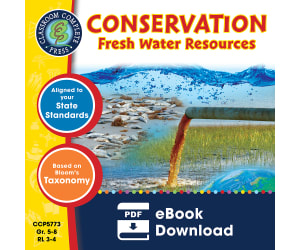
Conservation: Fresh Water Resources Gr. 5-8
Science, Earth and Environmental Sciences, Environmental Science, Grade 5, 6, 7, 8, Teacher Tools, Lesson Plans
Conservation: Fresh Water Resources Gr. 5-8 Teaching Resource This resource provides a thorough guide for students in grades 5 through 8 to understand the importance of water conservation, mainly focusing on our precious freshwater resources. With an educational approach that combines practical demonstrations with theory, this tool fosters a profound understanding among learners. The science lesson plan aligns with contemporary instruction standards, following clear objectives led by Bloom's Taxonomy and STEAM initiatives to start by explaining what freshwater is and its significance within Earth's overall water system. Learner Activities Learners can create their own water cycle diagram as a visual aid for understanding concepts. An experiment where students build mini greenhouses to observe firsthand the impact of climate change on freshwater resources. A comparison project allows learners to evaluate how different geographical regions are affected differently by climatic changes based on their availability or lack of fresh water resources; thereby teaching them about resource vulnerability and preservation necessity. An engaging gardening task enables learning about smart irrigation methods for conserving significant amounts of water during gardening tasks. Add-on Features Included graphic organizers help students map information visually. Crossword puzzles centered around key terminologies used throughout lessons foster fun while learning example. A vocabulary-strengthening word search game and comprehension quizzes at regular intervals helps check for consistent learning retention—an intuitive mix of creative incentives ensuring comprehensive coverage beyond typical school assignments! The curriculum is delivered in convenient PDF format suitable for public school settings (both whole group or small), homeschoolers seeking structured guidance, or distance learning needs that require concise yet comprehensive instructional tools. It’s a vital addition to any educational setting determined to create a difference—one drop at a time!
Author Classroom Complete Press
Tags PDF

I WONDER - Who Was Florence Nightingale | Animated Video Lesson
Biographies, Social Studies, Grade 4, 5, 6, 7, 8, 9, 10, Lesson Plans, Teacher Tools
Video Introduction An amazing video designed for the students to learn more about famous people in different countries. I WONDER - Who Was Florence Nightingale | Animated Video Lesson Do you know this person? How much do you know about him/her? Who is your idol? Why did you choose this person? Tell us more about him/her? Who is your favorite athlete? Or what is your favorite team? Have you recently heard a story about a famous person? Who was this person? Can you tell us more about him/her. Who is your favorite president, king, or queen? Why you chose that person? In your country, who are the most famous people? What did they do? Can you tell us more about them. What is your favorite invention? Who invented it? Who is your favorite artist? What is the most famous thing he/she have done? What is the most enjoyable you have read before? Who wrote it? I WONDER - Who Was Florence Nightingale | Animated Video Lesson The video is perfect for encouraging the researching skills for the students, while learning more about this fantastic place. I WONDER - Who Was Florence Nightingale | Animated Video Lesson This friendly designed video is suitable for students at school, homeschooling, and as a group activity. Format Available in MP4 format.
Author Educational Voice
Rating
Tags Who Was Florence Nightingale, Who Was Florence Nightingale Video, Florence Nightingale, Florence Nightingale Facts, Florence Nightingale Video, Florence Nightingale Video For Kids, Florence Nightingale Facts For Kids
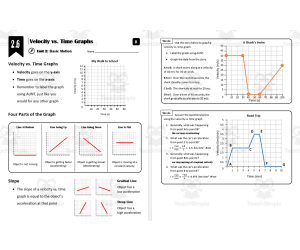
Lesson 2.6 - Velocity vs. Time Graphs
Science, Chemistry, Physics, Grade 6, 7, 8, 9, 10, 11, 12, Lesson Plans, Teacher Tools
Lesson 2.6 - Velocity vs. Time Graphs includes the following files: 2.6 Velocity vs. Time Graph Notes Covers how to give meaning to a velocity vs. time graph and how slope is related to acceleration. This notes sheet comes with an (A) version that has blanks for students to fill out as well as a completed (B) version for students who are absent or may require accommodations. 2.6 Velocity vs. Time Graphs Practice Students practice reading and creating velocity vs. time graphs. This practice sheet comes with an (A) version to be used for the majority of students as well as a shorter and/or different (B) version to be used for students who are absent or may require accommodations. 2.6 Objectives & Starter Questions PowerPoint Learning objectives and sample starter questions for the topic. 2.6 PowerPoint Notes Notes in PowerPoint format to make presentation to the class a breeze. The following 2016 Indiana State Standards for Integrated Chemistry & Physics are addressed in this resource: ICP.2.1 Develop graphical, mathematical, and pictorial representations (such as a motion map) that describe the relationship between the clock reading (time) and velocity of an object moving at a constant acceleration and apply those representations to qualitatively and quantitatively describe the motion of an object in terms of its change in position or velocity.
Author Integrated Chemistry and Physics
Tags Integrated Chemistry & Physics, Velocity Vs. Time
I WONDER - How Do You Find The Perimeter Of An Octagon
STEM, Geometry, Math, Grade 4, 5, 6, 7, 8, 9, 10, Lesson Plans, Teacher Tools
Video Introduction An amazing video designed for the students to learn more about STEM. I WONDER - How Do You Find The Perimeter Of An Octagon | Animated Video Lesson Do you like STEM subjects? what is your favorite one? Have you ever tried to plant a seed? If yes, tell us more about it. Or have you ever tried to invent something? If yes, tell us more about it. And how do you think it will help us? Have you ever seen a microorganism under a microscope? What was it? And how it looked like? Mathematics is a marvelous subject. Let' sharpen our brains and solve some equations. Do you like timetable tricks? What is your favorite one? Do you know how to code? Have you ever created an app or a game before? If yes, how was it like? I WONDER - How Do You Find The Perimeter Of An Octagon | Animated Video Lesson The video is perfect for encouraging the researching skills for the students, while learning more about this fantastic topic. I WONDER - How Do You Find The Perimeter Of An Octagon | Animated Video Lesson This friendly designed video is suitable for students at school, homeschooling, and as a group activity. Format Available in MP4 format.
Author Educational Voice
Tags How Do You Find The Perimeter Of An Octagon, How Do You Find The Perimeter Of An Octagon Video, Perimeter Of An Octagon, Perimeter Of An Octagon Facts, Perimeter Of An Octagon Video, Perimeter Of An Octagon Video For Kids
I WONDER - Are Fossils The Same As Bones | Animated Video Lesson
Earth and Environmental Sciences, Science, Earth Sciences, Geology, Grade 4, 5, 7, 8, 9, 10, Lesson Plans, Teacher Tools
Video Introduction An amazing activity designed for the students to learn more about STEM. I WONDER - Are Fossils The Same As Bones | Animated Video Lesson Do you like STEM subjects? what is your favorite one? Have you ever tried to plant a seed? If yes, tell us more about it. Or have you ever tried to invent something? If yes, tell us more about it. And how do you think it will help us? Have you ever seen a microorganism under a microscope? What was it? And how it looked like? Mathematics is a marvelous subject. Let' sharpen our brains and solve some equations. Do you like timetable tricks? What is your favorite one? Do you know how to code? Have you ever created an app or a game before? If yes, how was it like? I WONDER - Are Fossils The Same As Bones | Animated Video Lesson The video is perfect for encouraging the researching skills for the students, while learning more about this fantastic topic. I WONDER - Are Fossils The Same As Bones | Animated Video Lesson This friendly designed video is suitable for students at school, homeschooling, and as a group activity. Format Available in MP4 format.
Author Educational Voice
Tags Are Fossils The Same As Bones, Are Fossils The Same As Bones Video, Fossils, Fossil, Fossils Facts, Fossils Facts For Kids, Fossils Video, Fossils Video For Kids, Stem, Stem Video For Kids

I WONDER - How Strong Are Leopards | Animated Video Lesson
STEM, Biology, Life Sciences, Science, Animals, Grade 1, 2, 3, 4, 5, 6, 7, 8, Lesson Plans, Teacher Tools
Video Introduction Animal kingdoms are full of fascinating wonders to learn. This video is designed for the students to learn more about animals in different countries. I WONDER - How Strong Are Leopards | Animated Video Lesson Do you like animals? what is your favorite one? Do you own a pet? If yes, tell us more about it, like what its name? And what do you like most about it? What are the animal kingdoms? Can you write down the characteristics of each animal class like mammals, birds, reptiles, amphibian, fish and mollusks. Do you know that some animals can sing, can you name any of them? What is the largest and the smallest mammal in the world? What is the largest and the smallest bird in the world? What is the largest and the smallest fish in the world? I WONDER - How Strong Are Leopards | Animated Video Lesson The video is perfect for encouraging the researching skills for the students, while learning more about these fantastic animals. I WONDER - How Strong Are Leopards | Animated Video Lesson This friendly designed video is suitable for students at school, homeschooling, and as a group activity. Format Available in MP4 format.
Author Educational Voice
Tags How Strong Are Leopards, How Strong Are Leopards Video, Leopards, Leopards Facts, Leopards Facts For Kids, Leopards Video, Leopards Video For Kids, Leopard, Leopard Facts, Leopard Facts For Kids

I WONDER - What Is An Enzyme | Animated Video Lesson
Biology, Life Sciences, Science, Human Body, STEM, Grade 6, 7, 8, 9, 10, 11, 12, Lesson Plans, Teacher Tools
Video Overview The human body is full of fascinating wonders to learn. This video is created to help the students recognize the anatomy and the job of the human body. I WONDER - What Is An Enzyme | Animated Video Lesson Every part and organ in our human body is vital so let's see how important they are. Have you ever imagined how we look like if we didn't have a skeleton? Did you know that because we have our amazing muscles we can stand! Do you know how many teeth do we have? Have you ever wondered about the food journey inside our body? Can you name all the glands in our body? Why do we have skin? Our nervous system is really good at sending signals. Can you tell us more about it? Are you really good at Mathematics, painting, or any other thing? You should really thank your brain about it! The famous five senses are really doing a great work? Can you explain how every sense works? I WONDER - What Is An Enzyme | Animated Video Lesson The video is perfect for encouraging the researching skills for the students, while learning more about our fantastic human body. I WONDER - What Is An Enzyme | Animated Video Lesson This friendly designed video is suitable for students at school, homeschooling, and as a group activity. Format Available in MP4 format.
Author Educational Voice
Tags What Is An Enzyme, What Is An Enzyme Video, Enzyme, Enzymes, Enzyme Facts, Enzyme Facts For Kids, Enzyme Video, Enzyme Video For Kids, Enzymes Facts, Enzymes Video For Kids
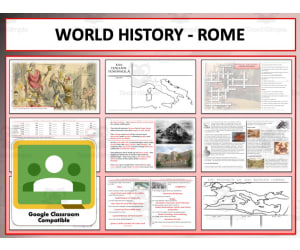
Roman Empire World History Unit
Social Studies, History, History: World, Grade 6, 7, 8, 9, Teacher Tools, Lesson Plans
Roman Empire World History Unit This is aRoman Empire World History Unit that will provide students with resources from the beginning to end of a unit. This unit will leave students feeling more knowledgeable about this point in history and equipped to tackle any and all comprehensive activities related toRoman Empire. This unit is great for middle school students. What You Get: You will receive a zip file that includes: 1. Info Sheet 2. Homework 3. Lesson Plans 4. Crosswords 5. Flashcards 6. Presentation 7. Tests How to Use Roman Empire World History Unit: This is a comprehensive unit of study that will have many components to make learning come to life: Worksheets cover thirteen topics on the history of ancient Rome and the Byzantine Empire: • Italian Geography • Roman Government • The Emperors • Art & Philosophy • Entertainment • Engineering • Religion • Internal & External Problems • The Crisis of the 3rd Century • The Goth Sack of Rome • The Fall of the Western Empire • The Byzantine Empire • Byzantine Engineering The basic set includes text readings, analysis questions, and a variety of different project and image sheets. Modified worksheets are included in the file which have more concise readings as well as a variety of different tasks and activities for ELL students and those who require a modified curriculum. Each worksheet has a corresponding answer sheet to help check students work. A test is included which features multiple choice, short written response, and picture questions. Students can use a set of flashcards to help revise of their tests. A PowerPoint presentation is included which features enlarged readings, animations, and images to help guide students through the materials and illustrate key points. Also included are replacement note-taking slides and sheets which can be used in place of the readings/worksheets for each topic if you wish to save time or practice note taking. Crossword sheets have been made for each topic as potential review/challenge activities for students. I hope you enjoy!! Take A Look At My Best Sellers: Biscayne Bay National Park Geography Unit Medieval Castles Mini Unit The Underground Railroad Mini Unit Japan Complete Elementary Unit Navajo Code Talkers Mini Unit Black Canyon National Park Geography Unit You Can Find More Resources at My Store Front Here: Mr. Gray History
Author Mr Gray History
Tags Roman Empire, World History Unit, Roman Government, Engineering, Religion, Byzantine Empire, Art, Philosophy, Reading Worksheets
I WONDER - Why Did Castles Have Thick Walls | Animated Video Lesson
History: Europe, History, Social Studies, History: Ancient, History: World, History: British, Grade 5, 6, 7, 8, 9, 10, 11, Lesson Plans, Teacher Tools
Video Introduction An amazing video designed for the students to learn more about history. I WONDER - Why Did Castles Have Thick Walls | Animated Video Lesson Do you like history? Which topic do you really enjoy about history? Have you ever read an interesting fact about the Vikings? If yes, can you mention them? What do you like most about the Victorian era? Can you name all the Tudors? Have you ever wondered how people used to live in ancient Japan and ancient China? Do you know any interesting facts about ancient Egyptians and the Pharaohs? Have you ever visited South America? What do you know about Incas and Aztecs? Celtic culture was really one of a kind, can you name any of the places that Celts used to live in? Imagine yourself living during the ancient Roman empire, how your life will look like? Ancient Greece was an amazing place to live in. What do you know about ancient Greek life? I WONDER - Why Did Castles Have Thick Walls | Animated Video Lesson The video is perfect for encouraging the researching skills for the students, while learning more about history. I WONDER - Why Did Castles Have Thick Walls | Animated Video Lesson This friendly designed video is suitable for students at school, homeschooling, and as a group activity. Format Available in MP4 format.
Author Educational Voice
Tags Why Did Castles Have Thick Walls, Why Did Castles Have Thick Walls Video, Castles Thick Walls, Castles Thick Walls Video, Castles Thick Walls Facts, Castles Thick Walls Video For Kids, Castles Thick Walls Facts For Kids
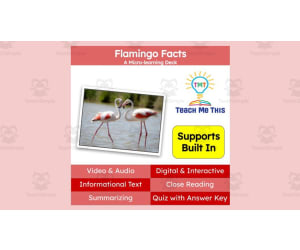
Flamingo | Interactive Science Lesson | Micro-Learning Deck
Science, Life Sciences, Animals, Grade 5, 6, 7, 8, Teacher Tools, Lesson Plans
This micro-learning deck is the perfect accessory to your Science instruction! This digital slideshow presents Flamingo. Within this slideshow, you will receive: -Video Lesson -Reading Passage w/ Audio -Close Reading -Quick Write The informational texts included in this resource alongside the informal assessments will keep your students engaged from beginning to end.
Author Teach Me This
Tags Interactive Science, Digital Lesson, Flamingo, Feeding Behaviors, Breeders