



3,973 products added recently
Page 184 - Elementary Lesson Plans
Support your elementary students with lesson plans that cover a broad range of subjects and skills. These resources are designed to promote cognitive, social, and emotional growth. Incorporate them into your teaching to provide a well-rounded education that meets the needs of all your students.

 Show filters


The Wild Robot Lesson Plan, Worksheets & PowerPoint | Grades 3 - 6
ELA, Social Emotional Learning (SEL), Special Resources, Grade 3, 4, 5, 6, Lesson Plans, Teacher Tools, Worksheets & Printables
The Wild Robot Lesson Plan, Worksheets & PowerPoint | Grades 3 - 6 Bring science, social-emotional learning, and critical thinking together with this engaging, no-prep lesson inspired by The Wild Robot (2024)! Students explore animal adaptations, survival strategies, character growth, and the power of kindness while developing data analysis and reflection skills. Perfect for science units, SEL lessons, literature connections, substitute plans, and cross-curricular learning, this ready-to-use resource encourages students to think about survival, belonging, community, and how helping others can make a difference. ⭐ What's Included: ✔ Detailed Teacher Lesson Plan & Guide ✔ Student Worksheet Packet ✔ Complete Answer Key ✔ Animal Adaptation & Survival Activities ✔ Science Vocabulary Practice ✔ Character Growth & Reflection Questions ✔ Bar Graph & Pie Chart Data Analysis Activities ✔ Class Survey & Graphing Activity ✔ Discussion Questions & Teaching Notes 📚 Skills Covered: • Animal adaptations and survival strategies • Migration, hibernation, camouflage, and instinct • Character development and change • Reading and interpreting graphs and charts • Critical thinking and problem-solving • Social-emotional learning and empathy • Reflection and personal connections • Data collection and analysis 🎯 Learning Objectives: Students will: • Define adaptation and explain how animals survive in their habitats. • Identify survival strategies such as migration, hibernation, and camouflage. • Analyze how characters learn, grow, and respond to challenges. • Read and interpret bar graphs and pie charts. • Reflect on kindness, belonging, and community. • Connect scientific concepts to real-world animal behaviors. 🏫 Perfect For: • Grades 3–6 • Science & Life Science Units • Animal Adaptations Lessons • Social-Emotional Learning (SEL) • Literature Connections • STEM & Cross-Curricular Activities • Substitute Teacher Plans • Homeschool Learning ✨ Why Teachers Love It : • No-prep and easy to implement • Combines science and SEL in one engaging lesson • Supports multiple learning standards • Encourages meaningful discussion and reflection • Includes answer keys for quick grading • Works whether students have seen the film or not • Promotes empathy, resilience, and community-building Students will discover how animals survive in the wild while exploring powerful themes of friendship, kindness, adaptation, and belonging. This lesson creates meaningful connections between science concepts and social-emotional learning, making it a valuable addition to any upper elementary classroom.
Author Bright Classroom Ideas Marketplace
Rating
Tags Wild Robot, Movie, Film, Lesson, Plan, End Of Year, Worksheet, Ela, Sel
Geometry: Transformations & Symmetry - Practice the Skill 1 - MAC Software
Math, Geometry, Common Core, Kindergarten, Preschool, Grade 1, 2, Teacher Tools, Lesson Plans
Geometry: Transformations and Symmetry - Practice the Skill 1 - MAC Software The Geometry: Transformations and Symmetry - Practice the Skill 1 - MAC Software is a comprehensive educational resource designed to assist educators in teaching geometry to younger learners. It utilizes interactive timed drill activities to introduce concepts of transformations and symmetry. Students get to analyze pairs of shapes, determining the type of transformation that each pair represents. This helps them visualize these key mathematical ideas while building their spatial reasoning skills. To complement these exercises, math tools are provided within the software that help reinforce geometric understanding. The software includes both English and Spanish voice overs and text options for inclusivity, making it a valuable tool across multilingual classrooms around the world. This learning resource is aligned with: Common Core State Standards (CCSS), ensuring students gain knowledge adhering to US education standards, National Councils of Teachers Mathematics (NCTM) norms, endorsing its commitment towards delivering quality education from Preschool through Grade 2. This multifunctional resource can effectively be used in group settings like classroom lessons or breakout sessions. It also makes an excellent enrichment activity for home assignments ( prioritizing flexibility based on different teaching strategies . Your download includes essential compatibility details: Your download includes one zip file only compatible with Mac software. This falls under lesson plans for Math subject area focusing particularly on geometry sub-subject – serving as an efficient aide for teachers aiming at high quality education delivery. Promoting Learning Made Fun! Introduce your students to the exciting world of geometry transformations and symmetry with the transformational Geometry: Transformations & Symmetry - Practice the Skill 1 - MAC Software!
Author Classroom Complete Press
Tags Math Lesson, Geometry, Symmetry, Digital Math, Math Skills

Number & Operations: Percentages with Fractions - Learn the Skill - MAC Software
Math, Percentages, Common Core, Grade 3, 4, 5, Teacher Tools, Lesson Plans
Number & Operations: Percentages with Fractions - Learn the Skill - MAC Software Overview: A comprehensive teaching resource designed for educators guiding students in grades 3 to 5. This software provides a hands-on experience in understanding calculations involving percentages and fractions, aligning perfectly with classroom lesson plans . Specially developed for math lessons focusing on percentages. Presents abstract mathematical ideas through real-world word problems. Fostering an engaging learning environment where students can connect their topics to everyday scenarios. Multilingual Support: In addition to English, our software also includes a Spanish text option and voice over accompaniment, catering to bilingual or Spanish-speaking classrooms. In-Classroom or Homeschool Application : Ideal for whole-group instruction or discussion sessions, this dynamic resource ensures an interactive learning experience. Can also be used effectively at home for homework assignments and reinforcement activities. Certifications : Closely Adheres: Common Core State Standards and STEM initiatives. Fully Compliant : NCTM standards. User-friendly Experience: The software is conveniently contained within one zip file specifically designed for MAC systems making it user-friendly. Post downloading onto your system it is instantly ready-to-use allowing immediate integration into your existing math lesson framework. To Sum Up :'Number & Operations: Percentages with Fractions'brings together best educational practices alongside technological convenience. Make mathematics more engaging than ever before! Consider integrating this tool today!
Author Classroom Complete Press
Tags Percentages, Fractions, Operations, Math Skills, Digital Math

Llama Drama Animated Writing Activity | Short Film
ELA, Writing, Grade 1, 2, 3, 4, Teacher Tools, Lesson Plans
This resource allows students to explore writing in a fun way. They will engage with an animated short film "Llama Drama." Included: -Short animated story -Sequencing -True False -Main Idea & Details -Summarizing
Author Teach Me This
Tags Llama Drama, Animated Film, Short Film, Writing Activity, Creative Writing

Curriculum Map for 2nd Grade - Florida
Common Core, Grade 2, Lesson Plans, Teacher Tools
Curriculum Map for 2nd Grade - Florida This essential teaching resource, specifically designed to cover standard areas for the 2nd grade according to the Florida state standards, ensures a systematic and comprehensive approach. It comprises aspects like: Math Language Arts Social studies Science An editable Excel file facilitates immense flexibility, enabling educators to customize it according to their unique needs and curriculum dynamics. Additionally, teachers can optimally engage students during whole group instruction sessions or within small breakout groups. Digital Convenience: Coming in a digital format ripe with advantages such as prevention from loss, damage or wear seen in conventional paper resources. Its editable nature also allows prompt updates across academic terms or years without necessitating creating fresh lesson plans from scratch each time there are minor changes required. Ideal for Public School Educators and Homeschooling Parents Alike! If you're a public school teacher seeking better alignment with Florida standards or a homeschooling parent intending on ensuring comprehensive instructional methods covering all subject areas equally, consider incorporating the Curriculum Map for Grade 2 - Florida into your toolkit. Experience efficiency combined with adaptability resulting in high educational performance outcomes while saving invaluable preparation time.
Author DK's Creations
Tags Florida Standards, Curriculum Resource, Customizable, Multi-subject, Engagement

Discovering Differentiation: Strategies for Success in the Language Arts Classroom
ELA, Strategies, Grade 4, 5, 6, 7, 8, Teacher Tools, Lesson Plans
Discovering Differentiation: Strategies for Success in the Language Arts Classroom This is an educational resource that serves as a powerful tool for educators striving to effectively engage their students. This curriculum aid is thoughtfully designed to cater to the varied academic needs of students, specifically from grade 4 through grade 8. A Unique Resource Designed With Flexibility and Variety The standout quality of this resource is its attention to flexibility and variety. A one-size-fits-all approach doesn't always work in education which makes this product an invaluable asset. It contains a myriad of creative activities expertly crafted for success in the language arts classroom including: Independent work menus, Alluring book responses sheets, Detailed task sheets, User-friendly project templates, and A comprehensive array of activity boards. Inclusive Educational Environment Benefitting Everyone! {" "} "A well-rounded educational experience involves everyone!" {" "} This product accommodates different learning styles lending itself useful in creating an inclusive educational environment ideal amongst public school teachers or homeschoolers alike. Whether implemented during whole group instruction or small group breakout sessions, these tools provide tailored support ensuring every student can thrive within their specific learning mode. Bonus Feature: {" "} An appendix brimming with samples of various writing genres furnishing your lesson plans while reaching curriculum requirements of grades four through eight. Main File Type: {" "} You will find most teaching resources packaged here in universally accessible and shareable PDF format suited for both physical printouts and online usage such as distance learning or blended teaching setups. Verdict: Discovering Differentiation: Strategies for Success in the Language Arts Classroom emerges as an empowering sidekick steering educators via their differentiated instruction journey; promoting equitable access within Language Arts study areas thus fostering academic growth among learners at varying developmental stages.
Author Classroom Complete Press
Tags PDF
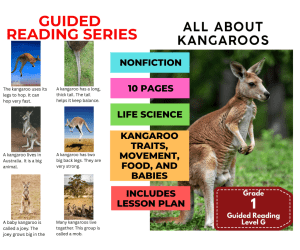
All About Kangaroos: Guided Reading Level G with Lesson Plan
ELA, Resources for Teachers, Reading Comprehension, Reading, Science, Language Development, Vocabulary, Life Sciences, Geography, Social Studies, Kindergarten, Grade 1, 2, Worksheets & Printables, Worksheets, Teacher Tools, Centers, Activities, Literacy Readers, Quizzes, Quizzes and Tests, Assessments, Lesson Plans
This All About Kangaroos (level g) guided reading book with lesson plan includes: Guided Reading Color Label (front cover x1) This is a quick way to match the book’s demands to what students can generally handle.. The overall goal is to use the level/color to pick books for several smaller groups. To qualify for a certain level, a student is expected to read a book from that level with about 90–94% accuracy. If a student is consistently accurate and understands, move up a level. If the student is struggling at that level, drop down and add more support. Each student will improve at completely different rates, but it is generally one of the best ways to check progress across the class. DOWNLOAD THE CATALOG TO VIEW ALL GUIDED READING BOOKS AVAILABLE (SORTED LEVELS A-Z) Pre-Reading Question (x1) Teacher asks the prompt aloud, can be while showing the cover or first page. Students share what they already know, or make educated guesses from the cover. Prompt them to use the target vocabulary. Write some of their responses on the board to look back at during the reading. Vocabulary Words (x5) Introduce the five words, best doing it one at a time. Start by saying it, while students repeat and then see if anyone knows what it means before reading further. Read through the meaning and try to briefly connect each word to a picture or gesture so it’s meaningful. Ask students to flip through the book pages and point to where they see each of the vocabulary words. While reading the book pause upon coming across one of the vocab words or read the sentence twice to make sure students understand the word has appeared. Optional: Ask students to raise hands whenever they see/hear one of the new words. Guided Reading Pages (x10) Check the book snapshot (below) for: primary topic - do you need to prep extra reading or intro materials on this? what is taught best - decide on 1-2 bullets to focus on, use the prompt or words provided here for best results. learning goals - what you are checking for students to be able to do after the session, elicit answers using prompts or words provided. key vocabulary (see section above). questions overview - so you know what is coming up and if you need to prep extra materials to assist understanding. Run the lesson You may have already looked at a few of the pages together, but you can show them some of the pictures again first to set meaning. Depending on how much time you have and how familiar your students are with guided reading class, you may want to read the book aloud first with the group first. Students whisper or partner read, while you listen in. If time, do it as a group, one student reading a page each. Use the guided page’s prompts to coach: “Check the picture / does it make sense?” “Point under the words / try the first sound” “Reread the sentence smoothly”. Try to focus more on one student per session (rotating every time), so you can work out if they are ready to move up or need to move down a level. Comprehension Questions (back cover x3) This is your way to check that students didn’t just say the words, but actually understood the text. First, let students answer by pointing to the page/picture and saying a short sentence. After any answer, follow with: “Show me where you found that in the text.” In bigger groups, have partners answer first (10–20 seconds), then call on 2–3 students to share. Differentiation tips: Emerging speakers/struggling readers: oral + pointing On-level: oral in a full sentence Higher: one written sentence or draw + label Book Snapshot Title: All About Kangaroos Genre: Nonfiction (informational) Subject: Science (Life Science) Primary Topic: Kangaroo traits, movement, food, and babies Estimated Guided Reading Level (A–Z): G What This Book Teaches Best Identifies a kangaroo’s habitat by stating it lives in Australia . Describes how kangaroos move: they have two big back legs , and they hop very fast. Explains how a kangaroo’s tail helps it by keeping balance . Shares what kangaroos eat by stating they like green grass and find food on the ground. Teaches family/group terms: a baby is a joey that grows in the pouch , and a group is a mob . Learning Goals Students will identify where a kangaroo lives using details from the text. Students will describe how kangaroos move, using the book’s words and examples. Students will explain how a kangaroo’s tail helps it keep balance. Students will describe what kangaroos eat and where they find food. Students will name what a baby kangaroo is called and where it grows. Students will identify what a group of kangaroos is called. Key Vocabulary From the Text Australia — a country where kangaroos live. balance — staying steady and not falling over. pouch — a pocket where a mother carries her baby. joey — a baby kangaroo. mob — a group of kangaroos that live together. Discussion Prompts Pre-reading question: What do you already know about kangaroos? Comprehension questions: Where does the book say a kangaroo lives? Comprehension questions: How does a kangaroo move in this book? Comprehension questions: What is a group of kangaroos called? Printing Tips 1. Best Printing Method (Recommended) “Booklet” Printing (Best if Available) If your printer or PDF viewer supports Booklet Printing , use this. Settings to use: Print mode: Booklet Paper size: Letter or A4 (either works) Orientation: Landscape Print on both sides: Yes Flip on: Short edge Scaling: Fit to printable area Booklet subset: First test: Front sides only Then: Back sides only This will automatically: Pair pages correctly Put the cover on the outside Align everything for folding After printing, fold in half and staple along the spine . 2. If “Booklet” Printing Is NOT Available You can still print this correctly with manual duplex printing . Step-by-step: Open the PDF. Choose Print . Set: Orientation: Landscape Pages per sheet: 1 Print on both sides: Yes Flip on: Short edge Print all pages . Because each PDF page already contains two facing book pages, the result will still fold cleanly into a book. Thousands of Cored Education products are included with your TeachSimple membership. Download links and encyclopedia index available here.
Author Cored Education
Rating
Tags Reading Comprehension, Reading Passages, Reading, Guided Reading, Guided Reading Lesson Plan, Guided Reading Activity, Pre-reading, Science Lesson Plans, Life Science, Geography
Health 2nd Grade Unit 4: Substance Use and Abuse
P.E. & Health, Health, Physical Education, Special Resources, Life Skills, Social Emotional Learning (SEL), Social Skills, Grade 2, Lesson Plans, Teacher Tools, Worksheets & Printables, Worksheets
For 2nd Grade Health there are seven standards that need to be taught. Unit 1 Personal Health Unit 2 Growth and Development Unit 3 Nutrition and Physical Activity Unit 4 Substance Use and Abuse Unit 5 Injury/ Violence Prevention Control and Safety Unit 6 Prevention/Control of Disease Unit 7 Environmental Consumer Health These units can be taught out of order. They are only numbered for your convenience. At the end of each unit, there is an assessment to test students’ understanding. Through using this Health 2nd Grade Unit 4: Substance Use and Abuse students will learn to identify how adults can help with unknown substances and understand what is a safe and what is not safe or otherwise what is known as an unsafe substance. Students will also learn the following concepts: * How adults help students to understand what is an unknown substance. * Students will learn to “Just say no” to many harmful substances that are not healthy and habit forming. * How families and peers help with harmful / helpful substances. At the end of the unit, there is an assessment to check for understanding. A total of 10 pages for this 2nd Grade Health Unit 4 on Substance Use and Abuse. There are seven units that cover all the health requirements for second grade. Here are the links to other health units: Health 2nd Grade Unit 1: Personal Health Health 2nd Grade Unit 2: Growth and Development Health 1st Grade Unit 3: Nutrition and Physical Activity Health 2nd Grade Unit 4: Substance Use and Abuse Health 2nd Grade Unit 5: Injury / Violence Prevention and Safety Health 2nd Grade Unit 6: Prevention / Control of Disease Health 2nd Grade Unit 7: Environmental / Consumer Health 2nd grade Coronavirus / Covid-19 Facts This unit meets Common Core Standards.
Author K-5 Treasures
Tags Health Unit, Substance Use, Substance Abuse, Safe And Unsafe Substances, 2nd Grade Health, Second Grade Health, Health, Elementary Health, Health Resources, Health For 2nd Grade
I WONDER - Are Fossils The Same As Bones | Animated Video Lesson
Earth and Environmental Sciences, Science, Earth Sciences, Geology, Grade 4, 5, 7, 8, 9, 10, Lesson Plans, Teacher Tools
Video Introduction An amazing activity designed for the students to learn more about STEM. I WONDER - Are Fossils The Same As Bones | Animated Video Lesson Do you like STEM subjects? what is your favorite one? Have you ever tried to plant a seed? If yes, tell us more about it. Or have you ever tried to invent something? If yes, tell us more about it. And how do you think it will help us? Have you ever seen a microorganism under a microscope? What was it? And how it looked like? Mathematics is a marvelous subject. Let' sharpen our brains and solve some equations. Do you like timetable tricks? What is your favorite one? Do you know how to code? Have you ever created an app or a game before? If yes, how was it like? I WONDER - Are Fossils The Same As Bones | Animated Video Lesson The video is perfect for encouraging the researching skills for the students, while learning more about this fantastic topic. I WONDER - Are Fossils The Same As Bones | Animated Video Lesson This friendly designed video is suitable for students at school, homeschooling, and as a group activity. Format Available in MP4 format.
Author Educational Voice
Tags Are Fossils The Same As Bones, Are Fossils The Same As Bones Video, Fossils, Fossil, Fossils Facts, Fossils Facts For Kids, Fossils Video, Fossils Video For Kids, Stem, Stem Video For Kids

I WONDER - How Do Joints Move Freely | Animated Video Lesson
Human Body, Life Sciences, Science, Biology, STEM, Grade 5, 6, 7, 8, 9, 10, 11, Lesson Plans, Teacher Tools
Video Overview The human body is full of fascinating wonders to learn. This video is created to help the students recognize the anatomy and the job of the human body. I WONDER - How Do Joints Move Freely | Animated Video Lesson Every part and organ in our human body is vital so let's see how important they are. Have you ever imagined how we look like if we didn't have a skeleton? Did you know that because we have our amazing muscles we can stand! Do you know how many teeth do we have? Have you ever wondered about the food journey inside our body? Can you name all the glands in our body? Why do we have skin? Our nervous system is really good at sending signals. Can you tell us more about it? Are you really good at Mathematics, painting, or any other thing? You should really thank your brain about it! The famous five senses are really doing a great work? Can you explain how every sense works? I WONDER - How Do Joints Move Freely | Animated Video Lesson The video is perfect for encouraging the researching skills for the students, while learning more about our fantastic human body. I WONDER - How Do Joints Move Freely | Animated Video Lesson This friendly designed video is suitable for students at school, homeschooling, and as a group activity. Format Available in MP4 format.
Author Educational Voice
Tags How Do Joints Move Freely, How Do Joints Move Freely Video, Joints, Joint, Joints Facts, Joints Facts For Kids, Joints Video, Joints Video For Kids, Joints Movements, Joints Movement

I WONDER - What Shape Are Arachnid Bodies | Animated Video Lesson
STEM, Biology, Life Sciences, Science, Animals, Grade 4, 5, 6, 7, 8, 9, 10, Lesson Plans, Teacher Tools
Video Introduction Animal kingdoms are full of fascinating wonders to learn. This video is designed for the students to learn more about animals in different countries. I WONDER - What Shape Are Arachnid Bodies | Animated Video Lesson Do you like animals? what is your favorite one? Do you own a pet? If yes, tell us more about it, like what its name? And what do you like most about it? What are the animal kingdoms? Can you write down the characteristics of each animal class like mammals, birds, reptiles, amphibian, fish and mollusks. Do you know that some animals can sing, can you name any of them? What is the largest and the smallest mammal in the world? What is the largest and the smallest bird in the world? What is the largest and the smallest fish in the world? I WONDER - What Shape Are Arachnid Bodies | Animated Video Lesson The video is perfect for encouraging the researching skills for the students, while learning more about these fantastic animals. I WONDER - What Shape Are Arachnid Bodies | Animated Video Lesson This friendly designed video is suitable for students at school, homeschooling, and as a group activity. Format Available in MP4 format.
Author Educational Voice
Tags What Shape Are Arachnid Bodies, What Shape Are Arachnid Bodies Video, Arachnid Bodies, Arachnid, Arachnid Bodies Facts, Arachnid Bodies Facts For Kids, Arachnid Bodies Video, Arachnid Bodies Video For Kids

Reading Well - Grades 3-4
ELA, Reading, Grade 3, 4, Teacher Tools, Lesson Plans
The Reading Well for Grades 3-4: An Educational Resource The Reading Well for Grades 3-4 is an educational tool focused on language arts and reading, designed as a lesson plan. The content is suitable for grade levels 3 and 4, making it an excellent addition to classroom and homeschool settings. Content Diversity This resource engages a broad range of reading materials and styles including: Realistic Fiction Biography Poetry Fantasy Informational Texts ' Myths and Legends. ' In addition to these, specialised areas like tall tales or plays/skits, are integrated into this comprehensive package. It's designed with incremental learning in mind – each successive book takes dynamically from previous lessons ensuring longitudinal learning progression. Skill Development & Assessment Tools The package includes tailored comprehension activities along with a unique The Reading Comprehension Chart, which lists skills unique to each grade level. Assessment of progress becomes effortless through various rubrics included in the pack. Digital Format... Crafted as a single PDF file type product - this tool can be adapted across various devices. It offers the flexibility of printing worksheets making management easy both online and offline environments. Versatile Use..! This resource can be implemented at different capacities: whole group instruction, small group engagement or even as homework assignments. Teaching-learning remains seamless regardless of location constraints. A Must-have Tool For Every Educator....! Specially curated by experienced educators who understand nuances behind successful literacy development among children - The Reading Well for Grades 3-4 remains a key tool in every teacher's toolkit.
Author Classroom Complete Press
Tags PDF
Number & Operations: Counting & Ordering Objects - Practice the Skill 3 - MAC Software
Math, Numbers, Common Core, Kindergarten, Preschool, Grade 1, 2, Teacher Tools, Lesson Plans
Number & Operations: Counting & Ordering Objects - Practice the Skill 3 - MAC Software The Number & Operations: Counting & Ordering Objects - Practice the Skill 3 MAC software is a groundbreaking educational tool for educators that makes it easy to teach foundational math skills. Its design focuses on creating an understanding of counting and ordering objects, a crucial part of number and operations. The resource features curriculum -based content delivered through activities. An interactive platform with timed drill exercises allows students to demonstrate their grasp of distinguishing odd or even numbers, engaging interest while developing agility and confidence from preschool up to grade 2. This product was developed with inclusivity in mind. It incorporates both English and Spanish voice-over tutorials accompanying written text, fitting various educational contexts such as group sessions, small collaborative groups, or individual assignments completed at home or in school. The knowledge acquired by students using this software aligns well with Common Core State Standards and STEM initiatives making it suitable for instruction modeled on critical thinking components demanded by current teaching strategies such as NCTM. This resource comes as a single zip file designed for Mac systems allowing effortless access to essential educational tools; much like carrying your mini-math lab inclusive of practice drills plus maths tools all in one efficient platform. Including adaptability across different grades from preschool to grade 2 focusing chiefly on numbers and order gives educators a comprehensive toolset aiding them create practical lesson plans based around the pillars of active learning approaches – genuine engagement fosters better retention leading towards optimal acquisition of targeted skills giving students real success!
Author Classroom Complete Press
Tags Math Skills, Math Practice, Operations Lesson, Counting, Digital Math

The First 21 Days | Day 2: Looks Right, Sounds Right | Reading Instruction
ELA, Reading, Preschool, Grade 1, 2, 3, Teacher Tools, Lesson Plans
This resource is Day 2: Looks Right, Sounds Right in the First 21 Days lesson set. This presentation is full of comprehension and reading strategies, anchor charts , interactive activities and so much more.
Author First in Line
Tags Reading Instruction, Anchor Charts, Reading Chart, Interactive Notebook, Listening Strategies

Modal Verbs: Must and Can't ESL ELA TEFL Intermediate Lesson Plan
ELA, Grammar, Grade 5, 6, 7, 8, 9, 10, 11, 12, Teacher Tools, Lesson Plans
This is an intermediate ESL ELA TEFL lesson plan worksheet set for Modal Verbs: Must and Can't for deductions. Help to build your students English grammar capabilities with this lesson plan about making deductions using must and can't. Your students will learn to understand why something can't have have happened or why it must have been someone else by using the information provided to make an educated guess. Students will learn more about these and then complete the exercises to follow, which will assess their comprehension and implement grammar skills. This ESL ELA TEFL lesson plan includes flash cards, warmer, conversation questions, main use, construction, rules, examples, open questions, closed questions, activity, writing drill and extra study. The TEFL resource is available in PDF with 79 ready to print pages and one digital access file. A part of it is on Google Apps. The answer key is also included for reference.
Author TEAM TEFL
Tags Modal Verbs, Deductions, Small Group Work, Past Participles, Conclusions

Guided Reading Level M - Shanghai (with Lesson Plan)
ELA, Resources for Teachers, Reading Comprehension, Reading, Science, Earth and Environmental Sciences, Economics, Social Studies, Geography, Language Development, Grade 2, 3, 4, Worksheets & Printables, Worksheets, Teacher Tools, Centers, Activities, Literacy Readers, Quizzes, Quizzes and Tests, Assessments, Lesson Plans
This Guided Reading Book - Shanghai (Level M) with lesson plan includes: Guided Reading Color Label (front cover x1) This is a quick way to match the book’s demands to what students can generally handle.. The overall goal is to use the level/color to pick books for several smaller groups. To qualify for a certain level, a student is expected to read a book from that level with about 90–94% accuracy. If a student is consistently accurate and understands, move up a level. If the student is struggling at that level, drop down and add more support. Each student will improve at completely different rates, but it is generally one of the best ways to check progress across the class. DOWNLOAD THE CATALOG TO VIEW ALL GUIDED READING BOOKS AVAILABLE (SORTED LEVELS A-Z) Pre-Reading Question (x1) Teacher asks the prompt aloud, can be while showing the cover or first page. Students share what they already know, or make educated guesses from the cover. Prompt them to use the target vocabulary. Write some of their responses on the board to look back at during the reading. Vocabulary Words (x5) Introduce the five words, best doing it one at a time. Start by saying it, while students repeat and then see if anyone knows what it means before reading further. Read through the meaning and try to briefly connect each word to a picture or gesture so it’s meaningful. Ask students to flip through the book pages and point to where they see each of the vocabulary words. While reading the book pause upon coming across one of the vocab words or read the sentence twice to make sure students understand the word has appeared. Optional: Ask students to raise hands whenever they see/hear one of the new words. Guided Reading Pages (x10) Check the book snapshot (below) for: primary topic - do you need to prep extra reading or intro materials on this? what is taught best - decide on 1-2 bullets to focus on, use the prompt or words provided here for best results. learning goals - what you are checking for students to be able to do after the session, elicit answers using prompts or words provided. key vocabulary (see section above). questions overview - so you know what is coming up and if you need to prep extra materials to assist understanding. Run the lesson You may have already looked at a few of the pages together, but you can show them some of the pictures again first to set meaning. Depending on how much time you have and how familiar your students are with guided reading class, you may want to read the book aloud first with the group first. Students whisper or partner read, while you listen in. If time, do it as a group, one student reading a page each. Use the guided page’s prompts to coach: “Check the picture / does it make sense?” “Point under the words / try the first sound” “Reread the sentence smoothly”. Try to focus more on one student per session (rotating every time), so you can work out if they are ready to move up or need to move down a level. Comprehension Questions (back cover x3) This is your way to check that students didn’t just say the words, but actually understood the text. First, let students answer by pointing to the page/picture and saying a short sentence. After any answer, follow with: “Show me where you found that in the text.” In bigger groups, have partners answer first (10–20 seconds), then call on 2–3 students to share. Differentiation tips: Emerging speakers/struggling readers: oral + pointing On-level: oral in a full sentence Higher: one written sentence or draw + label Book Snapshot Title: World Cities: Shanghai Genre: Nonfiction (informational text) Subject: Social Studies (Geography) Primary Topic: Shanghai’s location, waterways, and key city features Estimated Guided Reading Level (A–Z): M What This Book Teaches Best Explains where Shanghai is located and why its place near the Yangtze River Delta and the East China Sea matters. Describes how the Huangpu River functions as a major waterway and supports large ships year-round because the water never freezes. Compares two parts of the city along the river—Pudong’s modern skyline and Puxi’s historic area, including the Bund. Connects landforms to city development by explaining Shanghai’s flat, alluvial plain and limited land. Highlights how waterways and islands shape life and trade, including Suzhou Creek, Chongming Island habitats, and a deep-water port for global shipping. Learning Goals Identify Shanghai’s location on the eastern coast of China using details from the text. Explain why the Huangpu River is important for ships, based on the book’s description. Describe how Pudong and Puxi are different, using evidence from the text. Describe Shanghai’s landform (an alluvial plain) and tell what that means for mountains or hills in the main city area. Explain how islands and waterways support wildlife, neighborhoods, and trade in and around Shanghai. Describe Shanghai’s climate and seasons as stated in the book. Key Vocabulary From the Text vital — very important. waterway — a river or channel ships can travel on. district — a part of a city. alluvial — made from soil rivers leave behind over time. tributary — a smaller river or stream that flows into a larger river. Discussion Prompts Pre-reading question: What places in a city might be built near water, and why? Comprehension questions: Where does the text say Shanghai is located? Comprehension questions: What does the text say makes the Huangpu River important for large ships? Comprehension questions: What details does the book give about Shanghai’s climate and seasons? Printing Tips 1. Best Printing Method (Recommended) “Booklet” Printing (Best if Available) If your printer or PDF viewer supports Booklet Printing , use this. Settings to use: Print mode: Booklet Paper size: Letter or A4 (either works) Orientation: Landscape Print on both sides: Yes Flip on: Short edge Scaling: Fit to printable area Booklet subset: First test: Front sides only Then: Back sides only This will automatically: Pair pages correctly Put the cover on the outside Align everything for folding After printing, fold in half and staple along the spine . 2. If “Booklet” Printing Is NOT Available You can still print this correctly with manual duplex printing . Step-by-step: Open the PDF. Choose Print . Set: Orientation: Landscape Pages per sheet: 1 Print on both sides: Yes Flip on: Short edge Print all pages . Because each PDF page already contains two facing book pages, the result will still fold cleanly into a book. Thousands of Cored Education products are included with your TeachSimple membership. Download links and encyclopedia index available here.
Author Cored Education
Rating
Tags Reading Comprehension, Reading Passages, Reading, Guided Reading, Guided Reading Lesson Plan, Guided Reading Activity, Pre-reading, Social Studies Lesson Plans, Geography, Economics
I WONDER - When Was The Great Wall Of China Built | Animated Video
Government, Social Studies, History: Asian, History, History: Ancient, Grade 4, 5, 6, 7, 8, 9, 10, Lesson Plans, Teacher Tools
Video Introduction An amazing video designed for the students to learn more about famous places in different countries. I WONDER - When Was The Great Wall Of China Built | Animated Video Lesson What do you know about this place? Do you know in which part of the world it is? Have you ever visited this place? If yes, can you tell us more about your adventure, and what do you like the most about this place? Do you like reading about Geography? What is your favorite country in the whole world? If you are going on a trip where it will be? Which country? What you are going to see there? Does this country has a famous place to visit? I WONDER - When Was The Great Wall Of China Built | Animated Video Lesson The activity is perfect for encouraging the researching skills for the students, while learning more about this fantastic place. I WONDER - When Was The Great Wall Of China Built | Animated Video Lesson This friendly designed video is suitable for students at school, homeschooling, and as a group activity. Format Available in MP4 format.
Author Educational Voice
Rating
Tags When Was The Great Wall Of China Built, When Was The Great Wall Of China Built Video, Great Wall Of China, Great Wall Of China Video, Great Wall Of China Facts, Great Wall Of China Video For Kids, Great Wall Of China Facts For Kids
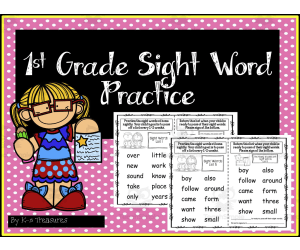
First Grade Sight Words - 100 Words to Practice and Learn
ELA, Language Development, Pre-Reading, Reading, Spelling, Vocabulary, Grade 1, 2, Worksheets & Printables, Worksheets, Lesson Plans, Teacher Tools
This list includes 10 take home sight word sheets for a total of 100 First Grade words. 100 FIRST GRADE FRY Sight Words! 10 PAGES INCLUDED! For children to learn how to read, sight words are important for kids to master. Practicing and reading sight words account for seventy five percent of words that children read. The Fry Sight words are words that are most often used and begins with the first one hundred words for Kindergarten.Using these words often to practice reading is essential to their skills and to improve in their reading comprehension. These words are often not easy to sound out like most CVC words, so recognizing them and memorizing these words is the most helpful to enhance a child's reading skills. You can find the first 100 words here which include some of the following words as an example: over knew take only little me work back give most very after things our man good think help where great say This list includes the second one hundred words for First Grade. There are different sight words for each grade level and the words build on each other. Students will recognize the previous words and continue to add more words to their memory as they practice them over and over. This list is mainly used for first and second grade students. It is intended to be used not only in the classroom, but to be used at home for practice with an adult. Then, it can be signed by a parent or guardian of the child and passed off at school. A total of 13 pages for students to practice and pass off once the students have mastered each word. Have parents sign the page once students are ready to pass them off with their teacher.
Author K-5 Treasures
Tags Sight Words, List Of Words, Reading, 1st Grade Reading, First Grade Sight Words, First Grade Reading, 1st Grade Sight Words, FRY Sight Words, 2nd Grade Sight Words, Second Grade Sight Words

I WONDER - When Is Martin Luther King Day | Animated Video Lesson
Biographies, Social Studies, Grade 4, 5, 6, 7, 8, 9, 10, Lesson Plans, Teacher Tools
Video Introduction An amazing video designed for the students to learn more about famous people in different countries. I WONDER - When Is Martin Luther King Day | Animated Video Lesson Do you know this person? How much do you know about him/her? Who is your idol? Why did you choose this person? Tell us more about him/her? Who is your favorite athlete? Or what is your favorite team? Have you recently heard a story about a famous person? Who was this person? Can you tell us more about him/her. Who is your favorite president, king, or queen? Why you chose that person? In your country, who are the most famous people? What did they do? Can you tell us more about them. What is your favorite invention? Who invented it? Who is your favorite artist? What is the most famous thing he/she have done? What is the most enjoyable you have read before? Who wrote it? I WONDER - When Is Martin Luther King Day | Animated Video Lesson The video is perfect for encouraging the researching skills for the students, while learning more about this fantastic place. I WONDER - When Is Martin Luther King Day | Animated Video Lesson This friendly designed video is suitable for students at school, homeschooling, and as a group activity. Format Available in MP4 format.
Author Educational Voice
Rating
Tags When Is Martin Luther King Day, When Is Martin Luther King Day Video, Martin Luther King Day, Martin Luther King Day Video, Martin Luther King Day Facts, Martin Luther King Day Facts For Kids, Martin Luther King Day Video For Kids

Rain, Rain, Go Away: Full Lesson Plan w/ PowerPoints & Graphic Organizers
ELA, Reading, Grade 5, 6, 7, 8, Lesson Plans, Teacher Tools
This resource will give you everything you need to complete a full, comprehensive reading lesson plan for Rain, Rain, Go Away text by Isaac Asimov. Files are offered as PDFs and Word documents. Included: -Rain, Rain, Go Away Lesson Plan -Rain, Rain, Go Away Worksheet -Rain, Rain, Go Away Answer Key Graphic Organizers: Author’s Purpose Characterization Chart Figurative Language Chart Historical Analysis Chart Imagery Chart Peer Evaluation Sheet Plot Diagram Read for Detail Setting Style Chart Symbol Chart Symbolism Chart Theme Diagram Tone and Mood Diagram Universal Plot Diagram Venn Diagram PowerPoints: Characterization Imagery, Voice, and Persona Irony and Ambiguity Narrator and Voice Plot Structure Symbolism and Allegory Theme - How to Interpret Theme Thank You Bonus Stuff!
Author Quality Teaching Products
Tags Literature, Fiction Text, Lesson Plan, Reading Powerpoint, Graphic Organizer, Rain Rain Go Away Short Story

I WONDER - What Did Ancient Greek men Wear | Animated Video Lesson
History: Ancient, History, Social Studies, History: Europe, Grade 3, 4, 5, 6, 7, 8, 9, Lesson Plans, Teacher Tools
Video Introduction An amazing video designed for the students to learn more about history. I WONDER - What Did Ancient Greek men Wear | Animated Video Lesson Do you like history? Which topic do you really enjoy about history? Have you ever read an interesting fact about the Vikings? If yes, can you mention them? What do you like most about the Victorian era? Can you name all the Tudors? Have you ever wondered how people used to live in ancient Japan and ancient China? Do you know any interesting facts about ancient Egyptians and the Pharaohs? Have you ever visited South America? What do you know about Incas and Aztecs? Celtic culture was really one of a kind, can you name any of the places that Celts used to live in? Imagine yourself living during the ancient Roman empire, how your life will look like? Ancient Greece was an amazing place to live in. What do you know about ancient Greek life? I WONDER - What Did Ancient Greek men Wear | Animated Video Lesson The video is perfect for encouraging the researching skills for the students, while learning more about history. I WONDER - What Did Ancient Greek men Wear | Animated Video Lesson This friendly designed video is suitable for students at school, homeschooling, and as a group activity. Format Available in MP4 format.
Author Educational Voice
Tags What Did Ancient Greek Men Wear, What Did Ancient Greek Men Wear Video, Ancient Greek Men, Ancient Greek Men Video, Ancient Greek Men Facts, Ancient Greek Men Facts For Kids, Ancient Greek Men Video For Kids

Nonfiction Text Features: Title Lesson
ELA, Reading, Grade 1, 2, 3, 4, Teacher Tools, Lesson Plans
Nonfiction Text Features: Title Lesson Plan This engaging Google Slides resource teaches students about the key nonfiction text feature - the title. Through class discussions and practice activities, students will learn how to identify titles and apply this knowledge. Animated slides explain what a title is and how it is used in nonfiction texts. Additional student slides provide opportunities for further practice. This resource can be used to introduce or review the concept of titles in an interactive small group or whole class setting. Extend student learning by using the additional nonfiction text features lessons linked at the end, covering topics like captions, glossaries, and more. This reading resource helps build nonfiction comprehension in grades 1-4.
Author Ezee 101
Tags Title, Text Features, Nonfiction, Interactive Reading

I WONDER - Why Do Chameleons Change Colour | Animated Video Lesson
STEM, Biology, Life Sciences, Science, Animals, Grade 3, 4, 5, 6, 7, 8, 9, Lesson Plans, Teacher Tools
Video Introduction Animal kingdoms are full of fascinating wonders to learn. This video is designed for the students to learn more about animals in different countries. I WONDER - Why Do Chameleons Change Colour | Animated Video Lesson Do you like animals? what is your favorite one? Do you own a pet? If yes, tell us more about it, like what its name? And what do you like most about it? What are the animal kingdoms? Can you write down the characteristics of each animal class like mammals, birds, reptiles, amphibian, fish and mollusks. Do you know that some animals can sing, can you name any of them? What is the largest and the smallest mammal in the world? What is the largest and the smallest bird in the world? What is the largest and the smallest fish in the world? I WONDER - Why Do Chameleons Change Colour | Animated Video Lesson The video is perfect for encouraging the researching skills for the students, while learning more about these fantastic animals. I WONDER - Why Do Chameleons Change Colour | Animated Video Lesson This friendly designed video is suitable for students at school, homeschooling, and as a group activity. Format Available in MP4 format.
Author Educational Voice
Tags Why Do Chameleons Change Colour, Why Do Chameleons Change Colour Video, Chameleons, Chameleon, Chameleons Facts, Chameleons Facts For Kids, Chameleons Video, Chameleons Video For Kids

E-Mail the Mayor about Colony Collapse Disorder (Persuasive Writing)
ELA, Writing, Creative Writing, Common Core, Grade 4, 5, 6, 7, Teacher Tools, Lesson Plans
E-Mail the Mayor about Colony Collapse Disorder (Persuasive Writing): A Teaching Resource Designed for educators seeking to engage their students in relevant real-world issues, while nurturing their persuasive writing skills. This resource is most appropriate for public school teachers and homeschoolers teaching grade levels 4 through 7. The main objective of this material is to tutor learners in the art of persuasive writing. The focus is on an environmental subject of urgency – Colony Collapse Disorder, a phenomenon contributing massively to global bee population decline. Students get to experience interactive learning as they draft a persuasive email targeted at their mayor regarding this critical issue - thereby acquiring essential language arts skills while advocating for important environmental causes. Lesson Structure and Objectives The lesson framework involves initial study and analysis of textual features typically found in persuasive compositions. All learning outcomes align smoothly with the National Curriculum of England (2014). Where possible, concepts are paralleled with similar ideas in the Common Core State Standards. Versatility and Adaptability This educational tool can be flexibly used within different scenarios such as: Whole group instruction, Smaill group activities, In-class assignments or homework tasks. With adaptations tailored for differing ability pupils, every student can effectively participate regardless of his or her starting level. Inclusive Supplementary Materials: A variety of graphic organizers facilitating clear, structured thought during planning stages, Comprehensive lesson plans – saving hours needed for planning, Grading rubrics ensuring a fair assessment criteria. The instructional resource is downloadable as PDF files. For convenience, digital file versions perfect for editing or sharing on online educational platforms are also included. In conclusion, educational experience has shown that students engage more deeply when meaningful topics intersect with their academic objectives; this unique creative writing project about Colony Collapse Disorder promises just that! The resource uniquely merges academic enhancement with real-world relevance!
Author Connecting Curriculum
Tags Persuasive Writing, Environmental Issues, Colony Collapse Disorder, E-mail Writing, Interactive Learning