



3,955 products added recently
Page 4 - Science Lesson Plan Template
Enhance your science instruction with a flexible lesson plan template designed for educators. This tool helps you structure objectives, materials, procedures, and assessments efficiently. Use it to create organized and impactful science lessons that cater to your students' needs.

 Show filters


Guided Reading Level M - The Sport of Fencing (with Lesson Plan)
ELA, Resources for Teachers, Reading Comprehension, Reading, Science, Engineering, Technology, Sports, P.E. & Health, Physical Education, Grade 2, 3, 4, Worksheets & Printables, Worksheets, Teacher Tools, Centers, Activities, Literacy Readers, Quizzes, Quizzes and Tests, Assessments, Lesson Plans
This Guided Reading Book - The Sport of Fencing (Level M) with lesson plan includes: Guided Reading Color Label (front cover x1) This is a quick way to match the book’s demands to what students can generally handle.. The overall goal is to use the level/color to pick books for several smaller groups. To qualify for a certain level, a student is expected to read a book from that level with about 90–94% accuracy. If a student is consistently accurate and understands, move up a level. If the student is struggling at that level, drop down and add more support. Each student will improve at completely different rates, but it is generally one of the best ways to check progress across the class. DOWNLOAD THE CATALOG TO VIEW ALL GUIDED READING BOOKS AVAILABLE (SORTED LEVELS A-Z) Pre-Reading Question (x1) Teacher asks the prompt aloud, can be while showing the cover or first page. Students share what they already know, or make educated guesses from the cover. Prompt them to use the target vocabulary. Write some of their responses on the board to look back at during the reading. Vocabulary Words (x5) Introduce the five words, best doing it one at a time. Start by saying it, while students repeat and then see if anyone knows what it means before reading further. Read through the meaning and try to briefly connect each word to a picture or gesture so it’s meaningful. Ask students to flip through the book pages and point to where they see each of the vocabulary words. While reading the book pause upon coming across one of the vocab words or read the sentence twice to make sure students understand the word has appeared. Optional: Ask students to raise hands whenever they see/hear one of the new words. Guided Reading Pages (x10) Check the book snapshot (below) for: primary topic - do you need to prep extra reading or intro materials on this? what is taught best - decide on 1-2 bullets to focus on, use the prompt or words provided here for best results. learning goals - what you are checking for students to be able to do after the session, elicit answers using prompts or words provided. key vocabulary (see section above). questions overview - so you know what is coming up and if you need to prep extra materials to assist understanding. Run the lesson You may have already looked at a few of the pages together, but you can show them some of the pictures again first to set meaning. Depending on how much time you have and how familiar your students are with guided reading class, you may want to read the book aloud first with the group first. Students whisper or partner read, while you listen in. If time, do it as a group, one student reading a page each. Use the guided page’s prompts to coach: “Check the picture / does it make sense?” “Point under the words / try the first sound” “Reread the sentence smoothly”. Try to focus more on one student per session (rotating every time), so you can work out if they are ready to move up or need to move down a level. Comprehension Questions (back cover x3) This is your way to check that students didn’t just say the words, but actually understood the text. First, let students answer by pointing to the page/picture and saying a short sentence. After any answer, follow with: “Show me where you found that in the text.” In bigger groups, have partners answer first (10–20 seconds), then call on 2–3 students to share. Differentiation tips: Emerging speakers/struggling readers: oral + pointing On-level: oral in a full sentence Higher: one written sentence or draw + label Book Snapshot Title: The Sport of Fencing Genre: Nonfiction (informational) Subject: Physical Education / Reading (Informational Text) Primary Topic: Fencing gear, swords, and how matches work Estimated Guided Reading Level (A–Z): M What This Book Teaches Best Basic overview of fencing as a sport, including where it takes place (a long, narrow mat called a “strip”). Safety equipment and how it protects fencers (mask, jacket, glove, cuff). Differences among the three fencing swords and how points are scored with each (foil, épée, sabre). Key fencing moves and positions used in a match (“En Garde” stance, lunge). How modern fencing tracks points and how respect is shown before and after matches. Learning Goals Students will describe what fencing looks like and where it takes place using details from the text. Students will explain how fencing safety gear protects a fencer during a match. Students will compare foil, épée, and sabre by describing how targets and scoring work. Students will identify and describe the “En Garde” stance and why it helps movement. Students will explain how a lunge helps a fencer reach an opponent to score a point. Students will describe how fencing shows respect before and after a match. Key Vocabulary From the Text strip — the long, narrow mat where fencers move. foil — a light, flexible sword used in fencing. épée — the heaviest fencing sword with the whole body as target. sabre — a fast sword that can score with tip or edge. lunge — a move stepping forward to reach an opponent. Discussion Prompts Pre-reading question: What safety gear do you think someone would need to fence safely? Comprehension questions: Why do fencers wear a fencing mask? In a foil match, what part of the opponent is the target for scoring points? What do fencers do before and after a match to show respect? Printing Tips 1. Best Printing Method (Recommended) “Booklet” Printing (Best if Available) If your printer or PDF viewer supports Booklet Printing , use this. Settings to use: Print mode: Booklet Paper size: Letter or A4 (either works) Orientation: Landscape Print on both sides: Yes Flip on: Short edge Scaling: Fit to printable area Booklet subset: First test: Front sides only Then: Back sides only This will automatically: Pair pages correctly Put the cover on the outside Align everything for folding After printing, fold in half and staple along the spine . 2. If “Booklet” Printing Is NOT Available You can still print this correctly with manual duplex printing . Step-by-step: Open the PDF. Choose Print . Set: Orientation: Landscape Pages per sheet: 1 Print on both sides: Yes Flip on: Short edge Print all pages . Because each PDF page already contains two facing book pages, the result will still fold cleanly into a book. Thousands of Cored Education products are included with your TeachSimple membership. Download links and encyclopedia index available here.
Author Cored Education
Rating
Tags Reading Comprehension, Reading Passages, Reading, Guided Reading, Guided Reading Lesson Plan, Guided Reading Activity, Pre-reading, Health Lesson Plans, P.e., Sports
Bird Migration | Animated Birds Video Lesson
Science, Life Sciences, Animals, Not Grade Specific, Lesson Plans, Teacher Tools
Title: Bird Migration | Animated Birds Video Lesson This educational resource, named Bird Migration | Animated Birds Video Lesson, is a tool for all educators in public and home-schooling settings. It provides an engaging way to learn about bird science. Main Specifications A 12-minute video lesson which uses animation to explain advanced concepts. The video is not grade-specific and can be integrated across various curriculum levels. The resource exists in MP4 format, making learning more efficient without unnecessary clutter or hard-to-follow instructions. Categorization & Applications Bird Migration | Animated Birds Video Lesson falls under the broader subject of Science with Zoology being its specific field of study. Though primarily meant for classrooms, it's as effective when used for small group sessions or individual tasks at home. This makes it a versatile addition to any educator's teaching toolkit. Suited Learning Styles & Investment Worthiness This animated bird migration video lesson caters mainly to visual learners who find picture-based learning more beneficial than the traditional methods that rely solely on text-based information. However, auditory learners are also catered to via helpful voiceovers that come with each animation. In short, this pedagogic strategy brings strong conceptual clarity along with interactivity, thus proving worth every penny invested in this innovative solution.
Author Educational Voice
Tags Bird Migration, Animated Birds, Video Lesson, Science, Zoology, Birds Animated

Insects Reading Comprehension Passage - Cored Ed Encyclopedia
ELA, Reading Comprehension, Reading, Science, Pre-Reading, Language Development, Life Sciences, Insects, Earth and Environmental Sciences, Vocabulary, Grade 2, 3, 4, 5, Worksheets & Printables, Worksheets, Teacher Tools, Centers, Activities, Writing Prompts, Assessments, Quizzes and Tests, Quizzes, Lesson Plans
This Insects reading comprehension with lesson plan includes: Visualization (on the front cover) Start your lesson by taking a minute to think and share something about the topic. Read the script aloud (slowly), perhaps prepare some music or sound effects. Student close their eyes and let their imaginations wander. Students open their eyes, read the question aloud and give them a few minutes to complete. Ask a few students to share or keep answers until the end to compare with what they learn in the passage. Quick pause—thousands of Cored Education products are included with your TeachSimple membership. Download links and encyclopedia index available here. Pre-Reading Trivia Students will write down one thing they already know about the subject and then read five more facts and discuss. These facts are fun, and the students will enjoy learning about the subject before reading more. Give 1 minute for students to write what they already know (no pressure—best guess is fine). Read the five facts together. After each fact, do ask a student for their opinion, was it surprising? Set a purpose by asking students to highlight/underline one fact they want to learn more about during the reading. Reading Passage The text is a high-interest reading passage with set paragraphs, roughly three to four paragraphs long. It contains a variety of themes about the topic, anywhere from history to technology. The passage is between 250 and 350 words in length. First, ask students to look at the headings and see what they’ll learn about today. What do they know about the topic/heading? First read options: Teacher read-aloud (best for support). Partner reading (paragraph by paragraph). While reading, students underline important details, and vocabulary words they think may come up in the questions section. Mixed Questions The first question page contains four multiple-choice questions, each with a choice of four answers, and three written response questions that require a sentence or two from the student. Students complete the mcqs first independently, then review quickly as a class. For the 3 written responses, try to get students giving the answer with some form of evidence: “I think ___ because the text says ___.” If students get stuck, send them back to check the passage. Vocabulary Questions Practice seven key words from the text in this section across two activities. First section is scrambled words where students will unscramble three words given a clue for each. The second section is a word to meaning matching activity. Before starting, have some students read out words they underlined in the passage. Ask students to say the word and read aloud the sentence(s) around each word. Ask students to do scrambled words and the matching exercise in pairs then go through answers as a class. For the scrambled spelling task, get four pairs to come up to the board and write the words for extra practice with the other student reading out the clue. For the matching task, prompt students to give full sentences: “I matched ___ with ___ because ___.” Creative Writing In this question, the student will be required to write a five to eight sentence paragraph on a question related to the topic. Before starting, ask students write down 3 key ideas they are going to include in their piece. Ask students for ideas to share around the class to help those struggling. Pro writing expectations: 5–8 sentences At least 2 facts or details from the passage At least 2 vocabulary words from the previous page Students read their paragraphs while classmates listen for facts and vocabulary words. Extension Activities This page is optional for fast finishers or to take home. There are several activities, each one requiring a different skill. Do some, do none, do all, completely optional - but you will feel reassured knowing every possibility is planned for. Includes summary writting question and additional facts. Answer Key There are answers for the multiple-choice questions, written response questions have sample answers, vocabulary answers and if there is a summary question then a sample summary will be provided as well. Lesson Plan Included Customized lesson plan for this lesson is included. Lesson Snapshot Title: Insects Genre: Nonfiction (informational text) Subject: Reading (Informational Text) / Life Science Primary Topic: Insect body parts, growth, history, and study Estimated Guided Reading Level (A–Z): R What This Lesson Teaches Best Identifies core insect body parts and features (head, thorax, abdomen; six legs; antennae; compound eyes; many have wings). Explains how insects grow using an outside skeleton (exoskeleton) and why molting is needed as they get bigger. Describes butterfly life stages as an example of changing shape in stages (egg, caterpillar, chrysalis, winged adult). Connects insects to deep time and evidence from fossils (oldest known flying insects in the Carboniferous Period; many species today). Introduces how people study and classify insects over time (Aristotle, Carl Linnaeus, and modern entomology). Learning Goals Students will identify the three main insect body parts and describe what each part includes. Students will explain why insects must molt as they grow, using the idea of an exoskeleton. Students will describe the butterfly’s life stages in order, using details from the passage. Students will explain what fossils reveal about early flying insects and how insect groups changed over time. Students will define entomology and describe tools scientists use to study insects. Key Vocabulary From the Text thorax — middle body part where legs attach. abdomen — back body section behind the thorax. antennae — feelers that taste the air. exoskeleton — hard outer coat that works like a skeleton. entomology — the study of insects. FULL CATALOG OF DOWNLOAD LINKS AND ENCYCLOPEDIA INDEX HERE
Author Cored Education
Rating
Tags Vocabulary, Reading Comprehension, Reading Passages, Lesson Plans, Ela Lesson Plans, Reading Comprehension Lesson Plans, Pre-reading, Science Lesson Plans, Life Science, Insects

Vegetables Reading Comprehension Passage - Cored Ed Encyclopedia
ELA, Language Development, Reading Comprehension, Reading, Pre-Reading, Science, Life Sciences, Health, P.E. & Health, Nature & Plants, Grade 2, 3, 4, 5, Worksheets & Printables, Worksheets, Teacher Tools, Centers, Activities, Writing Prompts, Assessments, Quizzes and Tests, Quizzes, Lesson Plans
This vegetables reading comprehension with lesson plan includes: Visualization (on the front cover) Start your lesson by taking a minute to think and share something about the topic. Read the script aloud (slowly), perhaps prepare some music or sound effects. Student close their eyes and let their imaginations wander. Students open their eyes, read the question aloud and give them a few minutes to complete. Ask a few students to share or keep answers until the end to compare with what they learn in the passage. Quick pause—thousands of Cored Education products are included with your TeachSimple membership. Download links and encyclopedia index available here. COMPANION VIDEO NOW AVAILABLE (EMBEDDED AFTER PREVIEW PICTURES IN PRODUCT DESCRIPTION) Pre-Reading Trivia Students will write down one thing they already know about the subject and then read five more facts and discuss. These facts are fun, and the students will enjoy learning about the subject before reading more. Give 1 minute for students to write what they already know (no pressure—best guess is fine). Read the five facts together. After each fact, do ask a student for their opinion, was it surprising? Set a purpose by asking students to highlight/underline one fact they want to learn more about during the reading. Reading Passage The text is a high-interest reading passage with set paragraphs, roughly three to four paragraphs long. It contains a variety of themes about the topic, anywhere from history to technology. The passage is between 250 and 350 words in length. First, ask students to look at the headings and see what they’ll learn about today. What do they know about the topic/heading? First read options: Teacher read-aloud (best for support). Partner reading (paragraph by paragraph). While reading, students underline important details, and vocabulary words they think may come up in the questions section. Mixed Questions The first question page contains four multiple-choice questions, each with a choice of four answers, and three written response questions that require a sentence or two from the student. Students complete the mcqs first independently, then review quickly as a class. For the 3 written responses, try to get students giving the answer with some form of evidence: “I think ___ because the text says ___.” If students get stuck, send them back to check the passage. Vocabulary Questions Practice seven key words from the text in this section across two activities. First section is scrambled words where students will unscramble three words given a clue for each. The second section is a word to meaning matching activity. Before starting, have some students read out words they underlined in the passage. Ask students to say the word and read aloud the sentence(s) around each word. Ask students to do scrambled words and the matching exercise in pairs then go through answers as a class. For the scrambled spelling task, get four pairs to come up to the board and write the words for extra practice with the other student reading out the clue. For the matching task, prompt students to give full sentences: “I matched ___ with ___ because ___.” Creative Writing In this question, the student will be required to write a five to eight sentence paragraph on a question related to the topic. Before starting, ask students write down 3 key ideas they are going to include in their piece. Ask students for ideas to share around the class to help those struggling. Pro writing expectations: 5–8 sentences At least 2 facts or details from the passage At least 2 vocabulary words from the previous page Students read their paragraphs while classmates listen for facts and vocabulary words. Extension Activities This page is optional for fast finishers or to take home. There are several activities, each one requiring a different skill. Do some, do none, do all, completely optional - but you will feel reassured knowing every possibility is planned for. Includes summary writting question. Answer Key There are answers for the multiple-choice questions, written response questions have sample answers, vocabulary answers and if there is a summary question then a sample summary will be provided as well. Lesson Plan Included Customized lesson plan for this lesson is included. Lesson Snapshot Title: Vegetables Genre: Nonfiction (Informational text) Subject: Science (Life Science: plants, nutrition) / Reading (informational text) Primary Topic: What vegetables are and why they matter Estimated Guided Reading Level (A–Z): N What This Lesson Teaches Best What counts as a vegetable (in this text): Defines vegetables as edible parts of plants people choose to eat, including roots (carrot), leaves (spinach), and flower buds (broccoli). Plant parts and categories: Explains that many vegetables come from soft-stemmed, herbaceous plants rather than woody trees, and that vegetables come in many shapes because plants have many useful parts. Early farming and seed-saving: Describes how people once gathered edible plants from the wild, then began planting and saving seeds (about 10,000–7,000 BC), keeping and sharing plants that tasted better or grew bigger. Science vs. everyday language (tomato debate): Contrasts the botanical definition of “fruit” (seed-bearing part formed from a flower’s ovary) with how “vegetable” often means a savory plant food served with meals, noting a U.S. court decision in 1893 calling tomatoes vegetables for a tax rule. Nutrition and food preservation: States vegetables are usually low in fat and calories, filling because they bring water and fiber, and may contain vitamins/minerals (examples include vitamin A and vitamin C); also notes chilling, freezing, or canning to keep vegetables longer. Learning Goals Students will define a vegetable using examples from the text (root, leaf, bud). Students will describe where many vegetables come from (soft-stemmed, herbaceous plants) and explain what that means. Students will explain how seed-saving helped wild plants become “garden favorites,” using details from the passage. Students will compare the botanical meaning of fruit with the cooking meaning of vegetable, using the tomato example. Students will identify two reasons vegetables can be filling and healthy (water, fiber, vitamins/minerals) based on the text. Key Vocabulary From the Text edible — safe and good to eat. herbaceous — soft-stemmed; not woody. botanists — scientists who study plants. ovary — flower part that can form fruit. fiber — nutrient that helps you feel full. FULL CATALOG OF DOWNLOAD LINKS AND ENCYCLOPEDIA INDEX HERE
Author Cored Education
Rating
Tags Vocabulary, Reading Comprehension, Reading Passages, Lesson Plans, Ela Lesson Plans, Reading Comprehension Lesson Plans, Pre-reading, Science Lesson Plans, Nature And Plants, Health

Simple Machines: Inclined Planes, Wedges, and Screws
Science, Technology, Engineering, Common Core, Grade 5, 6, 7, 8, Teacher Tools, Lesson Plans
Simple Machines: Inclined Planes, Wedges, and Screws Teaching Resource This remarkable teaching resource has been tailored specifically for grade levels 5-8. It offers a comprehensive walkthrough of force, motion, and work before diving into types of simple machines. Equally useful for public school teachers as well as homeschoolers. An overview of force, motion, and work. Detailed explanations about levers, inclined planes, wedges, screws along with pulleys & wheels/axles in layman's terms. Relating information to everyday life scenarios to aid understanding like explaining the mechanics behind a basic can opener. Variety in Learning Material: A Key Attribute The guide incorporates various types of activities catering towards difference learning styles: Visually attractive mini posters designed specifically for visual learners. Tangible hands-on activities for kinesthetic learners. Crossword puzzles and word searches which reiterate key terminology exposure to students. Suitability & Application This material can be easily applied in diverse settings including whole group instruction or small study groups. Also suitable as homework reinforcement tasks due to its clear presentation style. A final quiz is included within the material for quick comprehension assessment after completion. The guide complies with Common Core State Standards as well common pedagogical frameworks like Bloom's Taxonomy & STEM initiatives ensuring an up-to-date pedagogical standard adherence. In Summary... A downloadable PDF lesson plan intended not only provide teachers with ease in integrating scientific principles into their teaching routine but guarantees enriched learning experiences for the students.
Author Classroom Complete Press
Tags PDF, Wedges And Screws, Simple Machines Lesson Plans Pdf

Forces On Structures Gr. 4-7
Science, Physics, Grade 4, 5, Teacher Tools, Lesson Plans
Forces on Structures Gr. 4-7 An engaging and informative teaching resource ideal for Grade 4 to Grade 7 educators. This enlightening unit focusses on physical science, introducing students to the captivating concepts of forces, simple machines, and structures in an energetic way. Learning Themes This resource centers around relevant student activities paired with related lesson themes. These include: Building bridges Catapults Towers and more. As students participate in these activities, they experience firsthand how different forces interact with various structures—an approach that elevates their understanding beyond just memorizing facts. Additional Features In addition to the study-related themes, Forces On Structures Gr. 4-7 contains concise yet comprehensive student notes—crucial for enhancing knowledge retention while improving comprehension skills. Puzzles & Games Variability & Flexibility : One exceptional feature of this unit is its adaptability. Optional activities are included adding variability making it suitable for diverse teaching approaches or classroom environments—from whole group sessions to smaller group setups—it can even serve as enriching homework assignments! A Well Organized Tool For Educators : This teaching resource provides meticulously organized teachers' instructions along with students' sections like reading passages about the topic—enabling smooth navigation through each lesson saving invaluable prep time. In Conclusion,\ With its vibrant format designed not just for academic gain, but also to keep student interest at peak levels—Forces On Structures Gr. 4-7 certainly fulfills its goal: To ensure students fall in love with science class!
Author Classroom Complete Press
Tags PDF

Conservation: How The Purity Of Fresh Water Could Change Gr. 5-8
Science, Earth and Environmental Sciences, Environmental Science, Grade 5, 6, 7, 8, Teacher Tools, Lesson Plans
The Conservation: How The Purity Of Fresh Water Could Change Gr. 5-8 A robust teaching resource focusing on the significant issue of fresh water conservation, tailored for middle school educators instructing Grades 5 through 8. This interactive tool is vital to understanding our world and survival. Defining and Locating Fresh Water The resource begins by explaining the concept of fresh water and identifying its locations worldwide. It then delves into how climate change, another pressing concern, impacts this crucial resource's purity and quantity. Reading Passages & Comprehension Questions This resource includes reading passages that present comprehensive information in an engaging manner. All comprehension questions aim to reinforce understanding and enhance critical thinking abilities about preserving fresh water sources. Suitable for students aged between 10 to 14 years old. All concepts are simplified to suit Grade-level appropriateness. Creative Activities Apart from reading material, the module also offers creative activities that combine practical experiences with theoretical knowledge—a more effective learning method than conventional rote learning techniques. Assessment Tools The Bloom's Taxonomy-guided test prep module assesses student understanding effectively after using this teaching resource. Inclusive color mini posters serve as visual aids during lessons. List Potential Usage: Fits well within group discussions or individual studies depending on student competency levels; Can be used as supplementary homework assignments for a deeper exploration of the topic outside the classroom setting. Final Thoughts The Conservation: How The Purity Of Fresh Water Could Change Gr. 5-8 is not just a science lesson plan; it's an holistic educational resource that inspires students to become informed citizens by promoting respect for their environment. Its design makes learning about environmental science engaging, logical, and memorable. ** File Type: PDF (easy download & use)
Author Classroom Complete Press
Tags PDF
Space Travel & Technology: The Future of Space Exploration Gr. 5-8
Science, Earth and Environmental Sciences, Space, Common Core, Grade 5, 6, 7, 8, Teacher Tools, Lesson Plans
Space Travel & Technology: The Future of Space Exploration Gr. 5-8 This educational resource provides a vivid picture of the exciting frontiers of space travel and technological advancement in astronomy. It invites students from Grade 5 to Grade 8 to board on a hypothetical shuttle mission to the International Space Station, offering an immersion into the world of scientists, engineers, and astronauts who are at the helm of humanity's journey back to the moon and eventually towards Mars. This teaching tool is particularly suitable for remedial students as it presents complex science concepts about space exploration in simplified language and vocabulary; this makes those concepts more understandable and appealing. It consists primarily of: Reading passages: filled with relevant information, Student activities: engaging tasks designed for hands-on learning experience, TTest preparations:a practical approach for academic progress checks, posters : these could potentially inspire budding astronomers. The material can be appropriately used in various settings such as whole-class group discussions or small group activities—making it versatile for classroom scenarios or home schooling. "As educators utilize this resource in their pedagogy, they play a pivotal role in igniting young minds' curiosity about what unfolds beyond our familiar earthly confines." This educational tool aligns with State Standards, built upon Bloom's Taxonomy principles,and integrated with STEM-driven contents. It aims not only to impart basic subject-matter knowledge but also endorse: Analytical thinking, A solution-oriented mindset,and technological competence—the skills core,the future scientific pioneers need. Note: The product contains one file which is accessible through PDF format—a common file type ensuring usability across different systems, gadgets, and software platforms. Having just one consolidated product file means less clutter,easing navigation within your teaching resources'
Author Classroom Complete Press
Tags PDF

Reducing Your Community's Carbon Footprint: Climate is Changing, and So Must We Gr. 5-8
Science, Earth and Environmental Sciences, Environmental Science, Grade 5, 6, 7, 8, Teacher Tools, Lesson Plans
Reducing Your Community's Carbon Footprint: Climate is Changing, and So Must We Gr. 5-8 An engaging teaching resource for educators aimed at offering in-depth knowledge about the impact of global climate change on communities and habitats. Suitable for students from Grade 5 to Grade 8, under the subject of Environmental Science. Climate is Changing, and So Must We Gr. 5-8 Subsection This section focuses on enhancing the understanding of our changing world by identifying cause-and-effect relationships between daily human activities and major environmental issues. Cuba’s transformation case study provides students a practical illustration of how societies can tackle climate change by reducing their carbon footprint. The lessons explore heat island effect caused by cities modification on local climates Learning Strategies Incorporated In The Resource Whole group discussions: Focusing on distinct living environments' influence on commuters' travel footprints. Small group brainstorming sessions: Imagining new lives for recycled goods with peers. Individual assignments: Researching green cities across the globe independently. These methodologies create various avenues rendering enlightening yet enjoyable lessons. This resource emphasizes using realistic cases to incite genuine interest in environmental sciences amongst pupils while inspiring development sustainable solutions for their communities. The development as a PDF file type product ensures basic compatibility with existing technology platforms making its usage flexible, including but not limited to homeschooling arrangements. In addition to theoretical learning material, this resource also includes: - Graphic organizers - Carbon footprint calculator - Crossword puzzles - Comprehension quizzes These additional materials facilitate effective assessment mechanisms while maintaining high levels of student engagement. To facilitate the teachers, an answer key is also provided for convenience during grading processes.
Author Classroom Complete Press
Tags PDF

Solar System: The Moon - FLASH-PC
Science, Earth and Environmental Sciences, Space, Common Core, Grade 5, 6, 7, 8, Teacher Tools, Lesson Plans
Solar System: The Moon - FLASH-PC Solar System: The Moon - FLASH-PC is a teaching resource designed to make solar system education accessible for students, focussing specifically on 'The Moon'. Crafted to teach Grades 5 to 8, it adheres strictly with the standards set down by Common Core State Standards (CCSS). Interactive Activities and Strategies The resource combines learning with technology through: Interactive activities: Enhances retention for digital-native students. Diverse Educational strategies: It offers readings as well as questions to foster understanding. Pictorial Learning Assistance: Picture cards expand vocabulary related to 'The Moon' aiding visual learners. A Multifaceted Approach towards Learning In addition to the above, this package includes: Auditory pieces:An excellent aid for auditory learners or those with different learning styles. Videos as well: These engage different senses simultaneously ensuring maximum absorption of content. Bloom’s Taxonomy and CCSS Compliant This program emphasizes Bloom’s Taxonomy within its lessons, assuring the nurturing of progressive capacities from knowledge acquisition through evaluation. In line with mandates by Common Core State Standards (CCSS), Solar System: The Moon - FLASH-PC strictly conforms while emphasizing this approach in its lessons. Easily Accessible Teaching Material This software product file designed specifically for PC-use can be easily accessed and deployed based on individual teaching strategies or student requirements. ‘FLASH’ lives up its name giving immediate access upon download. Tagged under Astronomy, this resource combines space exploration with core academic curriculum . Solar System: The Moon – FLASH-PC makes understanding 'The Moon' an engaging and educational experience for students.
Author Classroom Complete Press
Tags Software (PC)

All About The Digestive System | Human Body Video Lesson
Science, Life Sciences, Human Body, Not Grade Specific, Lesson Plans, Teacher Tools
All About The Digestive System | Human Body Video Lesson This instructive teaching resource is a 9-minute video lesson in MP4 format, providing detailed information about the human digestive system. As it's not grade-specific, it can be used across a broad spectrum of class levels. Uses for the All About The Digestive System Video Lesson: Incorporate into class discussions: Use this video during group instruction to encourage collective engagement with digestion-related matters. Small group sessions: Serve as an excellent tool during lab rotations or tutorials, encouraging students to delve deeper into specific areas of human biology. Homeschooling and one-on-one sessions: A straightforward method for tutors or homeschooling parents to introduce or review this vital science subject. Homework review aid: An accessible digital resource that students can use independently at home to reinforce learning. The features of All About The Digestive System | Human Body Video Lesson make it an invaluable asset for making complex topics like the digestive system more intriguing and less daunting. Therefore, enhance your science curriculum today by integrating appealing visual elements combined with useful knowledge through this video lesson!
Author Educational Voice
Tags Digestive System, Human Body, Video Lesson, Science Education, Teaching Resource
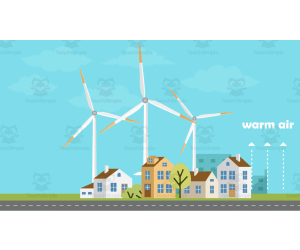
All About Rain, Wind & Snow | Animated Weather Video Lesson
Science, Earth and Environmental Sciences, Environmental Science, Not Grade Specific, Lesson Plans, Teacher Tools
All About Rain, Wind & Snow | Animated Weather Video Lesson This educational resource is a comprehensive tool for educators, from public school teachers to homeschooling parents providing a detailed understanding of essential Environmental Science concepts related to weather. The pedagogical content effectively serves a broad range of grade levels. By transcending the scope of traditional textbooks, it aids in making education lively and alluring. At its core is an interactive 8-minute animated video that elucidates different aspects of weather - rain, wind and snow. This MP4 file eases sharing across various platforms making it versatile for diverse mediums – be it projectors or computers or tablets. Versatility of Use: This educational tool can be utilized efficiently over multiple teaching strategies such as introducing new topics as well as reinforcing already taught materials with real world visuals. This could be also part of Guided Reading curriculum used in small groups, helping students engage more visually while building their science vocabulary simultaneously. Possible Applications: This video lesson might be used during homework assignments ensuring conceptual absorption at individual level. It can also transform regular classroom activities into collaborative knowledge-sharing sessions. Incorporating this unique All About Rain Wind & Snow | Animated Weather Video Lesson into academic resources not only sparks excitement among learners but also transforms challenging weather concepts into readily comprehensible knowledge while igniting their natural curiosity about environment sciences. </p
Author Educational Voice
Tags Weather, Rain, Wind, Snow, Science

Energy: What Is Energy?
Science, Physics, Common Core, Grade 5, 6, 7, 8, Teacher Tools, Lesson Plans
Energy: What Is Energy? A comprehensive teaching resource specially designed to demystify the concept of energy for middle school students. This reliable supplemental material is closely aligned with Common Core State Standards, Bloom's Taxonomy, and STEM initiatives. Diverse Forms of Energy This resource provides a deep dive into various forms of energy such as: Mechanical Thermal Sound waves Light energy. Potential Energy Types - Simplified! In addition, the text offers insights into potential energy types, often found challenging by students. The versatility allows for both whole-group instruction and small group discussions or individual learning activities. Crafted using highly readable language aimed at grade level 5 through 8 students, even complex ideas are distilled down in an accessible format. The module is uniformly welcoming to all students regardless of prior knowledge or ability. A Thoughtfully Constructed Teaching Resource An informative module complete with a collection of reading passages further elaborated with student-oriented activities aimed at sustaining engagement while reinforcing concepts learned. Included within this unique package are mini posters that bridge verbal and visual learning mediums providing an interactive mode aiding in better retention and understanding. "Energy: What Is Energy?" explains 'the ability to do work' in easily digestible chunks that encourages interactive learning while staying true to curriculum goals." Finally, "Energy: What Is Energy?" is available as a PDF-formatted teaching resource suited perfectly for technology-driven classrooms. Consequently serving as a potent tool for homework assignments or learning adventures embarked upon solo, fostering independent thinking among young minds.
Author Classroom Complete Press
Tags PDF
Atoms, Molecules & Elements: What Are Elements? Gr. 5-8
Science, Life Sciences, Biology, Grade 5, 6, 7, 8, Teacher Tools, Lesson Plans
Atoms, Molecules & Elements: What Are Elements? Gr. 5-8 A gripping teaching resource for educators that desire to engender a love for science in their pupils. Specially designed for grade ranges 5 to 8, this content plunges into the intriguing and hidden universe of atoms, molecules, and elements. Utilizing simple language and vocabulary, this product presents complex scientific concepts in an understandable format ideal for remedial learners. Included in the lesson plan is guidance on labeling various parts of an atom, thereby providing learners with a detailed understanding of its structure at a basic but comprehensive level. Exciting Student Experience In the subsequent sections of the lesson plan, students explore what makes up compounds while functioning as fledgling scientists! This immersive experience is designed to pique their interest in science while imparting essential knowledge about compound structures. Included are engaging hands-on activities within this package, students have the chance to probe into the mysteries housed within our universe's most fundamental building blocks by exploring patterns in periodic tables. Broadening Access To Science Basics The resource expands access to atomic science and chemistry basics through engaging hooks like exploring popular elements like calcium (Ca), chlorine (Cl), and helium (He); setting aside intimidation typically associated with these subjects. The learning materials feature varied tools that cater diverse learning styles: - Reading passages: These aid progression comprehension; - Student activities: For interactive learning; - Crosswords and word searches: Specially created for linguistic learners; - Colorful mini posters: Ideal for visual-oriented learners. The resource is thus perfectly suited not just for whole class instruction but also small group work or even homework tasks. Benchmarked By Bloom's Taxonomy Standards This ensures rigorous development of cognitive skills in alignment with STEM initiatives making sure your instruction material aligns with your State Standards while remaining sufficiently challenging. Ease Of Use Exclusively available in PDF format, this brings convenience and adaptability to any learning environment – be it classrooms or homes! Equip yourself with Atoms, Molecules & Elements: What Are Elements? Gr. 5-8 – an irreplaceable teaching instrument to throw light on the unknown domains of atoms, molecules, and elements for young budding scientists in your classrooms or homeschools. Happy learning!
Author Classroom Complete Press
Tags PDF

Circulatory,Digestive & Reproductive Systems: The Circulatory System - Blood Vessels - FLASH-PC
Science, Life Sciences, Human Body, Common Core, Grade 5, 6, 7, 8, Teacher Tools, Lesson Plans
Circulatory, Digestive & Reproductive Systems: The Circulatory System - Blood Vessels - FLASH-PC Geared towards students in grades 5 through 8, this lesson plan dives into the complexities of blood vessels prominent in these three core systems. Offering a comprehensive approach, this resource includes: Reading Passages: Tailored to simplify even complex concepts. 'Before You Read' questions: To gauge prior knowledge and stimulate interest. 'After You Read' queries: Designed for reinforcing learned content. This well-rounded method facilitates key concepts to cement in students' minds. Included Supplemental Printables Packed with supplemental printables useful across various teaching scenarios like whole-class instruction or smaller group activities, these resources bring added visual context for enhanced understanding. An Engaging Package The package also includes interactive activities offering hands-on opportunities for learners—a sure way to maintain high educational value while drumming up excitement. A handy addition is vocabulary flashcards focusing on critical terminologies—use them as classroom resources or homework tasks—students will find these flexible reference tools enable independent learning each time they use it. Incorporation of Audio and Video Learning Methods To appeal to diverse learners, FLASH-PC incorporates both audio and video into its expansive set of tools. The product features video clips for visual enthusiasts while auditory learners will benefit from the audio tracks included. Bloom's Taxonomy Principles and Compliance with CCSS Standards: The product design is underscored by Bloom's Taxonomy principles and complies with Common Core State Standards (CCSS)—a pedagogically sound feature, ensuring compliance with established curriculum requirements—a factor educators will definitely find valuable! Software file types: The importance of suitable software file types is taken into account—necessary PC software files come as part of this excellent teaching resource. So, turn complex lessons into engaging sessions with this dynamic product geared towards simplifying the learning process for both educators and students alike!
Author Classroom Complete Press
Tags Software (PC)

Polar Bears Gr. 1-2
Science, Life Sciences, Animals, Grade 1, 2, Teacher Tools, Lesson Plans
Polar Bears Gr. 1-2 Target Audience: This product is specifically designed for Grade One or Two students who have gained some independent reading and writing abilities. Main Focus: The comprehensive two-week science and language arts unit aims at enhancing these essential skills whilst incorporating teaching about polar bears - one of the most intriguing creatures in zoology. An Integrated Approach: This product seamlessly blends science lessons with language arts, concentrating on refining children's attention to the use of language. The engaging activities stimulate young minds with tasks like brainstorming, studying words, alphabetizing, rhyming, using descriptive words as well as categorizing words. Cultivating Reading and Writing Skills: To foster an early love for reading amongst students, they are encouraged to read polar bear fact cards using their knowledge of reading strategies. The resource also emphasizes writing; students practice answering questions in complete sentences and participate in various interesting writing assignments. Rich Content for Teacher-Student Engagement: A section features a rich variety of learning activities including numerous reading passages and lessons. For lighter moments during lesson sessions — a crossword puzzle alongside stimulating word search games are included! Versatile Usage: This tool can cater towards whole group instruction or it can be used within smaller clusters or one-on-one tutoring scenarios. The format also fits comfortably into homework assignments whenever remote learning is required. Note: All materials are consolidated into a single-PDF file rendering it extremely convenient for teachers integrating their lesson plans without dealing with multiple files. In summary: Polar Bears Gr 1-2 not only fosters literacy but simultaneously fuels curiosity through intriguing facts about polar bears; amalgamating Science with Language Arts—thereby nurturing well-rounded knowledge seekers!
Author Classroom Complete Press
Tags PDF
Prevention, Recycling & Conservation: Fresh Water Resources Gr. 5-8
Science, Earth and Environmental Sciences, Environmental Science, Grade 5, 6, 7, 8, Teacher Tools, Lesson Plans
Prevention, Recycling & Conservation: Fresh Water Resources Gr. 5-8 Overview A comprehensive teaching resource specifically designed for Educators of Grades 5 through 8. Featuring detailed insights into Environmental Science, it simplifies and enriches information about Prevention, Recycling & Conservation initiatives. Coverage of Topics The notion of conservation and distinction between natural, renewable and non-renewable resources. Landfill waste reduction techniques and composting practices suitable for everyday life. Understanding how organic materials decompose over time. Educational material on preventing pollution of our critical fresh water resources. Sustainable land management practices to minimize environmental degradation from burning fossil fuels which leads to smog production, ozone layer depletion, and increased levels of greenhouse gases. Simplified Language Usage This specially designed resource breaks down complex topics into easily understandable terms for Grade 5-8 students irrespective of how technical they may initially sound. Educational Aid Features: Inbuilt Lesson Planning System: An ideal companion for teachers or homeschoolers that outlines effective lesson plans in Environmental Science education; this PDF type educational aid includes ready-to-use reading passages aligned meticulously with respective state standards plus a diverse selection of student activities—the perfect choice either as a whole group study aid or small group engagement tool or even for homework assignments. Bloom's Taxonomy Compliant: This resource governs its design based on the educational guidelines provided by Bloom's Taxonomy—it contains test prep materials ensuring effective revisions before examinations while aiding educators in tracking complete development outcomes regarding critical environmental subjects amongst students. Add-on Feature: Special attention is given for remedial learners as it includes color mini posters—catering to visually oriented learners with success in retaining complex concepts—an integrative approach indeed! Conclusion: To sum up: The novel educational instrument that is Prevention, Recycling & Conservation: Fresh Water Resources Gr. 5-8, serves as a reliable resource for educators enthusiastic about instilling necessary environmental knowledge in their students with efficiency.
Author Classroom Complete Press
Tags PDF

Generative AI Ethics, Deepfakes & Responsible Use Case Studies
Science, Technology, Computer Science, Engineering, Research, Resources for Teachers, Classroom Management, STEM, ELA, Language Development, Grade 6, 7, 8, 9, 10, 11, 12, Worksheets & Printables, Workbooks, Worksheets, Word Searches, Writing Prompts, Teacher Tools, Lesson Plans, Presentations, Outlines, Quizzes and Tests
The complete high school curriculum is prepared and provides an interactive exploration of the topic of ethics in generative AI; deepfakes; responsible use of synthetic media; and provides a thorough introduction to how synthetic media works (to be used by all of our student participants in grades 9-12). The curriculum includes an academic overview of Synthetic Media architecture; multiple chapters for deepfake discussion/analysis; Copyright/Author status; algorithmic bias and epistemic security/provability protocols regarding the use of synthetic media. In addition, there are ten practical, complete, and interactive worksheets for active, individual student participation that have real examples, such as "the Synthesized Senator," "Med-Synthetica Diagnostic Bias," "Voice Cloning," "Influencer Avatars," etc. The students have to complete fill-in-the-blank terminology exercises, scenario analyses, and ethical synthesis prompts that promote critical thinking, media literacy, and digital citizenship skill acquisition. There is also the following in the resource book: (conceptual visual diagrams [mind maps, escalation matrices, process flows], a comprehensive answer key with notes for teachers and benchmarks for mastery) and a detailed teacher guide with pedagogical strategies, assessment tools (rubrics) and teaching protocols. This curriculum is also perfect for English/Language Arts, Social Studies, Computer Science, Digital Literacy, or elective Technology & Ethics classes. This resource is an instant digital download and requires no prep time. Give your students the information they need to be responsible in their use of AI and the topics related to ethics regarding the generative technology called "deepfake." Parents/Schools Appreciate It Because: Essential 21st century skills are being taught through critical thinking, verifying media sources & making ethical choices in dealing with misinformation & threats from deep-fakes and counterfeit media, thereby counteracting those very problems. Students remain engaged while staying motivated to learn by using real-world examples of ethical & responsible use of technology through use of case studies/workheets. The format requires zero preparation & can be easily implemented by teachers; includes lesson plans, case studies, worksheets, visuals, answer keys, teacher’s implementation guide (in pdf format). Responsible use of artificial intelligence & digital stewardship is promoted through use of technology in an aligned manner with modern school standards regarding digital citizenship/social-emotional learning. Materials are flexible in nature so can be used across multiple curriculum areas & for hybrid & remote learning situations. Based on a complete analysis of the submitted PDF, the target audience for this document are Students in grades 9-12 (age 14-18). This project is most suited for high school students enrolled in the following classes: - English/Language Arts or Media Literacy - Social Studies/Civics/Government - Computer Science/Digital Citizenship/Technology and Society - Ethics/Philosophy/STEM/STEAM The majority of the content is age appropriate for students and offers academically challenging material using fictional case studies that are relatable to a student's experience (there are no graphic illustrations or inappropriate material) on real-world current events such as misinformation, bias, copyright, and consent regarding the use of generative AI technology. "Terms & Copyright of Use": This resource has been copyrighted by Syed Hammad Rizvi. Personal use/Single-use in a classroom only. You may NOT change, share or sell this resource. i.e You may NOT post this on the Internet for others to search for/download. If you want to share this resource with other people in your school or district purchase additional copies through Teachsimple. Thank you for your cooperation. This product is provided to you by Syed Hammad Rizvi
Author Creative Book Store
Rating
Tags AIEthics, Deepfakes, GenerativeAI, SyntheticMedia, AI Ethics, DeepfakeAwareness, AIEthicsCurriculum, DeepfakesLessonPlans, GenerativeAIEthics, SyntheticMediaEthics

Insects Around the World | Animated Insect Video Lesson
Science, Life Sciences, Insects, Grade 3, 4, 5, 6, Lesson Plans, Teacher Tools
This animated science video lesson is all about insects around the world. Students will love this engaging and interactive video as they learn more about insects. This video serves as a great introduction or review video for your learners. This is an 11-minute science video lesson.
Author Educational Voice
Tags Insects, Around The World, Mantis, Science Lesson, Science Video, Educational Videos On Insects, Insect Videos For First Grade

Measurement and Classification
Science, Basic Science, Grade 5, Teacher Tools, Lesson Plans
Measurement and Classification Teaching Resource - Grade 5 Measurement and Classification is a comprehensive teaching resource specifically constructed with a focus on basic science for grade 5 students. This product not only supports teachers in shaping engaging lessons but also encourages learners to delve deeper into the world of science, cultivating their analytical thinking and problem-solving skills. The Concept of Classification This detailed lesson plan starts by introducing students to the concept of classification. It encourages young minds to comprehend categorizing objects, plants, and animals according to unique characteristics. This interactive section paves the way for students to understand how grouping items based on commonalities helps bring order and understanding. An Exploration of Bar Graphs We then seamlessly transition into an exploration of bar graphs. Here, learners will get hands-on experience with: Data collection followed by charting this data using bar graphs—pivotal tools in obtaining scientific conclusions accurately displayed visually. Answering queries about collected data relying primarily on their plotted bar graph—a significant skill in analytical interpretation. The Understanding of Physical Properties & Materials The educational journey continues through delving into physical properties of materials where identifiers such as texture, color or flexibility influence classification decisions. Students engage in sorting a variety of objects according to these salient physical properties providing an interactive understanding towards material characteristic identification. Diving Deep Into Measurements The finale involves demystifying measurements—an essential skill not confined solely within scientific boundaries but forming an integral part across real-life scenarios too! The resource guides learners into comprehending various units from length and mass up till volume best measured using predefined tools like rulers or graduated cylinders—it all dives down here! Additionally setting a strong foundation about standardized measures’ importance because consistency matters when it comes down comparing or estimating quantities overall! Thus exemplifying its utility across different learning setups whether a whole class session, small group interaction even extending down towards homework assignments as well! An ideal choice for both public school teachers focused on ensuring standard-compliant lessons or homeschooling parents eager pollutants imbibe comprehensive knowledge among kids practically intertwined thoroughly around everyday life situations. Resource Format This PDF format file contains everything that educators need to pursue fun-filled, knowledge-packed science lessons covering measurement and classification in depth. Get ready for interactive, engaging classroom experiences rooting deep within students’ minds effectively making "science" their favorite subject!
Author Classroom Complete Press
Tags PDF

Cells, Skeletal & Muscular Systems - Digital Lesson Plan Gr. 5-8 | MAC Software
Science, Life Sciences, Human Body, Grade 3, 4, 5, 6, 7, 8, Teacher Tools, Lesson Plans
Cells, Skeletal & Muscular Systems - Digital Lesson Plan Gr. 5-8 | MAC Software An impactful and interactive teaching resource for students from grades 5 to 8, focusing on the biology of human body exploring cells, skeletal systems, and muscular systems. The Learning Journey: Begins by examining the structure and functions of cells. Progresses to learn how cells form tissues, organs, and organ systems. Culminates in a comprehensive study of both skeletal and muscular systems. Inspiring Classroom Engagement: This software incorporates pre-and post-reading activities such as Crossword Puzzles, Memory Match Games, Word Search Tasks, Suits Multi-Modal Learning Styles: The product features accompanying learning aids like audio-video supports which help in understanding complex biological concepts while catering multi-modal learners smoothly effectively. center '> Aligns with Set Standards : The lesson plan adheres to state educational standards ensuring a well-rounded coverage per grade level expectations without any additional effort for curriculum alignment. Bloom's Taxonomy Inspired Content :"); Influenced by Bloom's Taxonomy all content is designed to promote high-order cognitive capabilities leading beyond just fact recollection. Tailored for MAC Users : Easily downloadable as zip file exclusively designed user-friendly for MAC users. Incorporate this very vital educational resource, into your teaching plan and uplift the quality of pedagogy one lesson at a time! <br/
Author Classroom Complete Press
Tags Digital Lesson Plan, Science Lesson Plan, Skeletal Systems, Anatomy Lesson, Science Passage
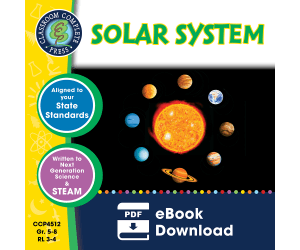
Solar System Gr. 5-8
Science, Earth and Environmental Sciences, Space, Grade 5, 6, 7, 8, Teacher Tools, Lesson Plans
Solar System Gr. 5-8: Indispensable Teaching Resource Solar System Gr. 5-8 is a meticulously crafted teaching resource designed to inspire and educate young learners about the mysteries and wonders of our solar system. Customized to simplify fundamental astronomy concepts for students in grades 5 through 8, this resource illuminates every facet of our celestial neighborhood. Enlightening Content This asset demystifies constituents of the solar system such as planets, moons, asteroids, and beyond. It further delves into each inner and outer planet presenting a comprehensive view for curious minds. Versatile Teaching Tool Used effectively in whole group lessons fueling interactive discussions. Encourages teamwork when incorporated into smaller learning clusters. A useful reference material for homework assignments. Addition of Practical Experience This educational module includes hands-on projects like constructing scale models of the solar system or planning imaginary trips to any chosen planet stimulating knowledge retention among students significantly! The Phases of the Moon: An Essential Topic Intriguing phenomena like 'Blue Moon' are covered promoting enhanced understanding towards mysterious lunar phases. Differences Between Stars Based on Colour and Size: For instance: Yellow Dwarfs Vs Blue Giants comparison encourages awareness about stellar differences among pupils! Creativity Meets Science: Students can also create imaginative presentations recounting fascinating stories about their favourite constellation. Distinguishing Astronomy Objects: This guide dives deep into differentiating asteroids from meteors and comets cultivating critical differentiation skills among young learners. Accordance with Education Standards The tool aligns seamlessly with Next Generation State Standards, Bloom's Taxonomy and STEAM initiatives ensuring comprehensive knowledge delivery within lessons. Additional Engagement Features To make learning further engaging, this guide also includes: Experiments, Crossword Puzzles, Word Searches, and Comprehension Quizzes An answer key is available promptly validating the acquired understanding of students. The entire resource comes enclosed as a single PDF file for swift accessibility to all aspects of 'Solar System Gr. 5-8 making it an excellent choice to sharpen students’ cosmic knowledge significantly!
Author Classroom Complete Press
Tags PDF
Carbon Footprint Calculator & Personal Sustainability Plans
Science, Basic Science, Earth and Environmental Sciences, Life Sciences, Earth Sciences, Environmental Science, Geology, Space, Nature & Plants, Biology, Homeschool Curriculum, Homeschool Templates, Grade 4, 5, 6, 7, 8, Worksheets & Printables, Workbooks, Worksheets, Word Searches, Teacher Tools, Assessments, Lesson Plans, Quizzes and Tests, Quizzes, Tests
This fully planned out unit, straying away from Climate Anxiety and allowing students to build agency related to climate action, can be printed right out of this document and used in the classroom immediately. Designed for use in Grades 5–7 (ages 10–14), students will progress through this unit comprehensively by learning about the Carbon Cycle, measuring their actual CO₂e emissions, and creating their own personal plan for sustainability. The unit provides scientific text, real-world case studies (i.e. The Life of a White Cotton T-shirt), 10 individual audit worksheets related to home energy, transportation, diet, consumption, and water use. There is a Carbon Calculator provided which translates students' daily habits into actual data as well as templates for SMART Goal Setting and Advocacy Letters to promote action from students after completing the project. The materials align with NGSS (Earth and Human Activity Standard) and are ideal for Earth Day, STEM, or to promote Environmental Literacy throughout the rest of the school year. Not only does this package come with an extensive Teacher's Guide complete with answer keys, grading rubrics, visual aids, and a flexible 5-day pacing guide; the materials have been scaffolded to help mitigate eco-anxiety with both kindness and evidence-based science. The highlights include: 4 engaging chapters on greenhouse gases, CO₂e, and Life Cycle Assessment 10 student audit worksheets and a Carbon Calculator to synthesize student audit results SMART Goals Workshop for setting student action plans and evaluating systemic actions Professional writing activity related to Advocacy Letters A comprehensive Teacher Key, including Answer Keys, Grading Rubrics, and 5-Day Unit Plan All materials have been classroom-tested and proved to be effective. Appreciated by Parents and Educators: Empowerment Versus Fear – Empowers children and youth to make positive changes by turning their fear of climate change into tangible steps they can take themselves. Real-World Math/Data Skills – Develops mathematics and data-based skills through the calculation of CO₂e from current activities, reinforcing applied math and unit conversion skills and improving critical thinking. Systems Thinking – Students develop a deeper understanding of system relationships and the ripple effects of human activity on the ecological system through Life Cycle Assessment (T-shirts) and permafrost feedback loops. Teacher-friendly, Minimal Prep/Materials Needed – All materials required for implementation are provided (e.g., rubrics, answer keys, visuals, and 5-day pacing guides), so even non-science specialists can implement without difficulty. Opens Up Conversation at Home/School/Community – The advocacy letter and family audit provide an avenue for discussion beyond the classroom, resulting in actual changes to household sustainability. Targeted Grade Levels: The statement in the introduction clearly states that targeted grade levels are ‘5th, 6th, and 7th Grade.’ Therefore, because the math being introduced in this program involves multiplication, metric/unit conversions, basic percentage reasoning and cognitive complexity, I believe students in grades 5 through 7 will best use this resource as follows: Primary Group: 5th – 7th Grade (10-13 year olds) Secondary/Extension Group: (4th Grade) Advanced; 8th – 9th Grade as a basic review of what they learned in grades 5 and/or 6. Copyright/Terms of Use : The copyright for this book is owned by Syed Hammad Rizvi. This resource is intended for personal use and to be used in a single classroom. This means that you may not repurpose, sell, or give away any part of this resource. In essence, you cannot upload this resource to any public place on the internet and make it available to the world. If you wish to distribute this resource to other teachers, please purchase additional licenses through Teachsimple. Thank you for respecting these terms of use. This product is brought to you proudly by Syed Hammad Rizvi.
Author Creative Book Store
Rating
Tags ClimateChangeEducation, EcoLiteracy, SustainableClassroom, GlobalWarming, ClimateAction, GoGreen, ZeroWasteClassroom, EnvironmentalEducation, GreenSTEM, EarthWarriors

Morphology Matrix Builders
Science, Basic Science, Inventors, Theories, ELA, Reading, Reading Comprehension, Writing, Creative Writing, Handwriting, Homeschool Curriculum, Homeschool Templates, Grade 3, 4, 5, 6, 7, Worksheets & Printables, Worksheets, Workbooks, Word Searches, Teacher Tools, Lesson Plans, Quizzes and Tests, Quizzes, Tests, Assessments
Tired of vocabulary lists that are memorized on Thursday and forgotten by Monday? It's time to transform your students from passive memorizers into active "word architects"! Introducing Morphology Matrix Builders —a comprehensive, no-prep resource designed to revolutionize vocabulary instruction in your 3rd, 4th, or 5th-grade classroom. Based on the science of reading and structured literacy principles, this unit shifts the focus from rote learning to deep structural analysis of words. Students will learn that English isn't random; it's a fascinating system waiting to be decoded. By mastering a core set of Greek and Latin roots, prefixes, and suffixes, your students will gain the power to decipher thousands of unfamiliar academic words independently. Watch their confidence, reading comprehension, and test scores soar across all subject areas—from ELA to science and social studies! What's Inside This All-in-One Resource? Part 1: Comprehensive Teacher's Guide (11 Pages): A robust theoretical framework that explains the "why" behind morphological instruction. It covers free vs. bound morphemes, prefix functions (including chameleon prefixes), the power of Greek and Latin roots, derivational vs. inflectional suffixes, and key orthographic rules. This guide will empower you to teach with confidence and expertise. Part 2: Student Workbook (15 Pages): Ten engaging, ready-to-print worksheets that guide students from foundational concepts to complex synthesis. Activities include morphological matching, sentence synthesis, word deconstruction, and creative construction. Worksheets Cover: Prefixes, Suffixes, Greek Roots (bio, phon, graph, photo), Latin Roots (port, tract, spect, struct), Number Prefixes, Elemental Roots, Suffixes of Profession, and more! Includes a final Master Morphologist Assessment to evaluate student mastery. Part 3: Visuals & Teacher Resources (7 Pages): Everything you need to implement this unit seamlessly. Pedagogical Visuals: Three high-quality, printable/projectable anchor charts (Morphology Matrix, Structural Word Anatomy, Greek Root Word Web) to make abstract concepts concrete. Comprehensive Answer Key: Fast, easy grading for all 10 worksheets. 4-Day Pacing & Implementation Guide: A step-by-step, week-long plan ("Matrix Monday," "Word Web Wednesday," etc.) to integrate this unit perfectly into your literacy block. Stop teaching one word at a time. Hand your students the master key to the English language and watch them unlock a world of vocabulary! Keywords: Morphology, Greek and Latin Roots, Prefixes and Suffixes, Vocabulary Instruction, Word Study, ELA, English Language Arts, 3rd Grade, 4th Grade, 5th Grade, Upper Elementary, Reading Comprehension, Structured Literacy, Science of Reading, Orton-Gillingham Aligned, Word Building, Etymology, Printable Worksheets, Digital Download, No Prep, Homeschool. Why Parents/Schools Love It: Goes Beyond Rote Memorization: It teaches students a transferable system for decoding words, fostering true understanding and critical thinking instead of just memorizing for a test. Exponential Vocabulary Growth: By learning one root liketract, students don't just learn one word; they unlock the meaning ofattract,distract,extract,tractor,retract, and dozens more. Boosts Reading Comprehension: When students can break down complex, multi-syllabic words in science and history texts, their overall comprehension and academic performance across all subjects improve dramatically. Comprehensive & "Done-For-You": This isn't just a pack of worksheets. It's a complete instructional unit with a teacher's guide, student activities, visual aids, an answer key, and a pacing guide, saving educators valuable prep time. Builds Academic Independence: It empowers students to become confident "word detectives," equipping them with the skills to tackle challenging new vocabulary without relying on a teacher or a dictionary for every word. Target Student Classes : Based on the explicit text on pages 1, 3, 27, and 33, and the complexity of the concepts, should target: Upper Elementary School: 3rd Grade, 4th Grade, and 5th Grade. The resource is also perfect for Middle School intervention groups who need foundational vocabulary skills, as well as Homeschool parents teaching these grade levels. Copyright/Terms of Use: This Book was copyrighted by Syed Hammad Rizvi. This resource is for personal and single classroom use only. You may not alter, redistribute, or sell any part of this resource. In other words, you may not put it on the Internet where it could be publicly found and downloaded. If you want to share this resource with colleagues, please purchase additional licenses from Teachsimple. Thank you for respecting these terms of use. This product is happily brought to you by Syed Hammad Rizvi
Author Creative Book Store
Rating
Tags Morphology, Vocabulary, WordStudy, ELA, EnglishLanguageArts, Literacy, Reading, Teaching, Teacher, GreekAndLatinRoots