



3,943 products added recently
Page 5 - Science Lesson Plan Template
Enhance your science instruction with a flexible lesson plan template designed for educators. This tool helps you structure objectives, materials, procedures, and assessments efficiently. Use it to create organized and impactful science lessons that cater to your students' needs.

 Show filters

AI-Ready Skills for Creatives (writers, designers, artists) Book
Science, Technology, Computer Science, Engineering, Life Skills, Special Resources, Resources for Teachers, Classroom Management, Community Building, Research, Homeschool Curriculum, Grade 8, 9, 10, 11, 12, Teacher Tools, Assessments, Lesson Plans, Presentations, Workbooks, Worksheets & Printables, Writing Prompts, Diagrams, Projects, Activities
Explore the future of creativity with "AI Ready Skills for Creatives: Building Portfolios Using AI Tools" - the essential resource for new writers, graphic designers, visual artists, and all types of multimedia creators. Authored by Syed Hammad Rizvi, this 204-page PDF contains everything you need to know about working with AI through your projects, along with strategies, workflows, and ethical considerations to use AI as a collaborator rather than a replacement. Regardless of whether you're a freelancer, student, educator, or working professional in industry, you'll learn how to turn the overwhelming media coverage associated with emerging technologies into an easy-to-follow guide. You will learn how to use popular AI technologies such as ChatGPT, Midjourney, Adobe Firefly, DALL-E, Claude and Runway in each stage of the creative process, including idea generation, writing, and the final presentation of your portfolio. You will learn: Foundations of AI: The inner workings of large language models, diffusion models and generative applications. Workflow Instructional Materials by Discipline: Each discipline has designated chapters created specifically for writers (fiction/nonfiction/copywriters), graphic designers (logo creation, branding and photo enhancement), graphics artists (stylized transfer/generative graphics) and video/audio producers derive workflow materials designed specifically for their industry. Prompt Development: Understanding what it is to develop effective prompts; thus providing you with appropriate high end results that are based on consistency will help you gain the confidence and knowledge about the tools themselves. Portfolios and Personal Brand Development/Building your Brand/Developing Your Skills as a Creator who creates image/content based on capabilities/Abilities that Share Your Expertise with Your Clients. Monetization Strategies with AI-Enhanced Work: Value-based pricing, retaining services, productizing services, and selling subscriptions to AI as a work enhancement tool. Ethics and Copyright by Navigating the Legal Gray Area/Creatively Authentic/Building a Future Supported by Enduirng Creative Human-based Skills. Hands-On Exercises and Case Studies by Implementing Real-World Examples With More Than 15 Practical Hands-On Exercises That Allow You to Develop Your Color Compiling & Style Compiling Skills. Who is This for? Creatives seeking to increase their output by 10 times while maintaining high-quality. Educators & schools with students preparing for creative industries using AI. Freelancers & agencies looking at AI as a way to grow their businesses. Beginners going from an AI novice to an AI-confidence practitioner. Don't just adapt to the AI revolution; lead it! Your most significant asset as a creator is your unique point of view, your taste, and your judgment. This book will demonstrate how to take your creative vision beyond its boundaries through limitless capabilities afforded by artificial intelligence! PDF (Digital Download) 204 pages Professional edition Categories: Professional Development / Creative Technology / Portfolio Development / Artificial Intelligence (A.I.) in Education Reasons Parents/Teachers Appreciate It : Preparing for Future Careers: Helping Young Adults Get Ready for the Presence of AI / Artificial Intelligence (AI) in Every Creative Industry has helped students prepare for college admissions and job opportunities by creating a comprehensive portfolio of both the technical skills required and the ethical use of AI technology they will need to have after graduating from high school. Integrating Technology with Values: The book includes entire chapters on topics that relate to Creative Authenticity, Copyright and Ethical Concerns, and then teaches students how to use AI as a tool or amplifier of their individual voices and not just "stuff” that just takes the place of their own creativity, which adheres completely to the Academic Integrity policies of Schools/Colleges. Providing Ready-to-Use Curriculum: The curriculum and textbook (complete with planned out projects, case studies, and step-by-step instructional pacing) may be utilized to develop and teach an AI course over the course of a school year or through workshops, or can also be used for self-learning and independent study. Saving Time for Teachers: It saves teachers time by providing them with a single source of all the information to use when teaching their students how to effectively utilize AI tools for writing, design, visual art, video production and audio production. This includes instruction about the development of the process of creating an effective prompt, the processes associated with creating successful workflow designs, and the steps needed to build a professional digital portfolio. Intended Classes & Level of Education: Professional level (High School & College): Grades 9-12 - Graphic Design & Digital Media - Creative Writing/Journalism - Media Arts/Film & Video Production - Computer Science (Artificial Intelligence & Society Course) - Career and Technical Education (CTE) Pathway in Art, Media, & Entertainment - Yearbook/School Publication Staff College/University - Introduction to Digital Art, Interaction Design, Visual Communication - Professional Writing, Content Strategy, Technical Writing - Marketing & Advertising (Copywriting & Managing Social Media) - Closing Portfolio Development Class - Fine Art majors using technology & new media Adult Education/Professional Development: - Teacher Professional Development workshops (Integrating AI Technology Classroom) - Continuing Education for Freelance Professionals - Home School Co-Ops (Grades 8+) with a focus on Emerging Occupations Why These Classes? This book has no prerequisites for AI knowledge, but will teach all levels of professional workflow application (for career preparation and portfolio development). As such, it is very applicable for advanced high school students and for anyone pursuing any form of creative discipline in the college/university setting. Disclaimer: You can expect this book by Syed Hammad Rizvi to be under copyright. It is a single-use only resource and cannot be modified, sold, or passed on to anyone other than the purchaser without written consent. You are welcome to share your use of this resource with other teachers; please purchase additional licenses from Teachsimple so that they can also have access to it. Thank you for complying with our terms and conditions. Syed Hammad Rizvi would like you to use this product to enrich the lives of young children everywhere.
Author Creative Book Store
Rating
Tags AICreatives, AIPortfolio, CreativeAI, AIToolsForCreatives, AIReadySkills, GenerativeAI, PromptEngineering, AIWorkflow, CreativeTechnology, PortfolioBuilding
Hovercraft Reading Comprehension Passage - Cored Ed Encyclopedia
ELA, Reading Comprehension, Reading, Pre-Reading, Language Development, History, Social Studies, Science, Physics, Technology, Grade 2, 3, 4, 5, Worksheets & Printables, Worksheets, Teacher Tools, Centers, Activities, Writing Prompts, Assessments, Quizzes and Tests, Quizzes, Lesson Plans
This hovercraft reading comprehension with lesson plan includes: Visualization (on the front cover) Start your lesson by taking a minute to think and share something about the topic. Read the script aloud (slowly), perhaps prepare some music or sound effects. Student close their eyes and let their imaginations wander. Students open their eyes, read the question aloud and give them a few minutes to complete. Ask a few students to share or keep answers until the end to compare with what they learn in the passage. Quick pause—thousands of Cored Education products are included with your TeachSimple membership. Download links and encyclopedia index available here. Pre-Reading Trivia Students will write down one thing they already know about the subject and then read five more facts and discuss. These facts are fun, and the students will enjoy learning about the subject before reading more. Give 1 minute for students to write what they already know (no pressure—best guess is fine). Read the five facts together. After each fact, do ask a student for their opinion, was it surprising? Set a purpose by asking students to highlight/underline one fact they want to learn more about during the reading. Reading Passage The text is a high-interest reading passage with set paragraphs, roughly three to four paragraphs long. It contains a variety of themes about the topic, anywhere from history to technology. The passage is between 250 and 350 words in length. First, ask students to look at the headings and see what they’ll learn about today. What do they know about the topic/heading? First read options: Teacher read-aloud (best for support). Partner reading (paragraph by paragraph). While reading, students underline important details, and vocabulary words they think may come up in the questions section. Mixed Questions The first question page contains four multiple-choice questions, each with a choice of four answers, and three written response questions that require a sentence or two from the student. Students complete the mcqs first independently, then review quickly as a class. For the 3 written responses, try to get students giving the answer with some form of evidence: “I think ___ because the text says ___.” If students get stuck, send them back to check the passage. Vocabulary Questions Practice seven key words from the text in this section across two activities. First section is scrambled words where students will unscramble three words given a clue for each. The second section is a word to meaning matching activity. Before starting, have some students read out words they underlined in the passage. Ask students to say the word and read aloud the sentence(s) around each word. Ask students to do scrambled words and the matching exercise in pairs then go through answers as a class. For the scrambled spelling task, get four pairs to come up to the board and write the words for extra practice with the other student reading out the clue. For the matching task, prompt students to give full sentences: “I matched ___ with ___ because ___.” Creative Writing In this question, the student will be required to write a five to eight sentence paragraph on a question related to the topic. Before starting, ask students write down 3 key ideas they are going to include in their piece. Ask students for ideas to share around the class to help those struggling. Pro writing expectations: 5–8 sentences At least 2 facts or details from the passage At least 2 vocabulary words from the previous page Students read their paragraphs while classmates listen for facts and vocabulary words. Extension Activities This page is optional for fast finishers or to take home. There are several activities, each one requiring a different skill. Do some, do none, do all, completely optional - but you will feel reassured knowing every possibility is planned for. Includes summary writting question and additional facts. Answer Key There are answers for the multiple-choice questions, written response questions have sample answers, vocabulary answers and if there is a summary question then a sample summary will be provided as well. Lesson Plan Included Customized lesson plan for this lesson is included. Lesson Snapshot Title: Hovercraft Genre: Nonfiction (informational text) Subject: Science / Engineering (transportation) Primary Topic: How hovercraft ride on air and where they’re used Estimated Guided Reading Level (A–Z): Q What This Lesson Teaches Best Explains how a hovercraft rides on a “cushion of air trapped underneath,” instead of sitting in water. Describes why the air cushion reduces rubbing so the craft can slide over water, sand, or flat grass. Gives a brief invention history (an 1870s patented idea, then a smarter 1950s improvement to stop air leaking). Shows how design changes improved performance, including the flexible “skirt” for obstacles and choppy water. Connects hovercraft to real-world uses today (ferries, rescue missions, military landings, racing/recreation) and notes challenges like wind and waves. Learning Goals Students will describe how a hovercraft is like a boat, a small airplane, and a moving fan. Students will explain how an air cushion helps a hovercraft slide with very little rubbing. Students will describe how Christopher Cockerell improved hovercraft by reducing air leaking in the 1950s. Students will identify the SR.N1 and tell what happened when it was shown to the public on June 11, 1959. Students will explain how the flexible “skirt” helped hovercraft handle obstacles and choppy water. Students will list at least two places or jobs hovercraft can do today, using text evidence. Key Vocabulary From the Text patented — legally protected an invention idea. pressure — pushing force of trapped air underneath. flexible — able to bend without breaking. obstacles — things in the way that block movement. ferries — boats that carry people across a route. FULL CATALOG OF DOWNLOAD LINKS AND ENCYCLOPEDIA INDEX HERE
Author Cored Education
Rating
Tags Vocabulary, Reading Comprehension, Reading Passages, Lesson Plans, Ela Lesson Plans, Reading Comprehension Lesson Plans, Pre-reading, Science Lesson Plans, Physics, Technology

Video Editing Storyboard & B-Roll Worksheets
Resources for Teachers, Classroom Management, Community Building, Technology, Science, Computer Science, Engineering, Special Resources, Special Education Needs (SEN), Social Emotional Learning (SEL), Grade 6, 7, 8, 9, 10, 11, 12, Worksheets & Printables, Workbooks, Worksheets, Word Searches, Teacher Tools, Lesson Plans, Quizzes and Tests, Quizzes, Tests, Assessments
Transform Your Students from "Point-and-Shoot" Amateurs to "Architects of Cinema" with this Comprehensive Video Editing Pre-Production Unit! Are your students' video projects plagued by shaky footage, jarring cuts, and a lack of a clear story? Do they jump straight to filming without a plan, leaving them with hours of unusable footage and a messy, confusing final product? It's time to teach them the most crucial part of filmmaking: pre-production. This complete, no-prep Video Editing & Filmmaking Unit is a 42-page curriculum designed to teach middle and high school students the art and science of planning a video before the camera ever rolls. Rooted in the pedagogy of pre-visualization, this resource shifts the cognitive load from the stressful editing room to the structured, creative space of the storyboard. Students will learn the professional workflow that powers every great film, documentary, and YouTube video. What’s Included in this 2-Week Unit: Part 1: Instructional Text (10 Pages): Four in-depth chapters covering the core concepts of professional video editing theory, including: The Architecture of the Edit (Storyboards & the 180-Degree Rule) Mastering the Jump-Cut and Temporal Compression Transitional Theory (Match Cuts, Whip-Pans) Supplementary Footage (B-Roll) as Narrative Scaffolding Part 2: Student Workbook (18 Pages): Ten engaging, scaffolded worksheets that turn theory into practice. Students will plan, brainstorm, and problem-solve sequences for jump-cuts, transitions, B-roll, continuity, and more. Part 3: Teacher Resources & Visuals (14 Pages): Everything you need to teach with confidence, even with no film background! Visual Anchor Charts: Clear diagrams explaining Jump-Cut Mitigation, the Narrative Transition Matrix, and Pre-Visualizing the Edit Timeline. Perfect for projecting or printing. Comprehensive Teacher Answer Key: Detailed answers and sample responses for all 10 worksheets. 2-Week Implementation & Pacing Guide: A day-by-day plan (10 days) to effortlessly guide your class through the entire unit, from introducing concepts to a final, summative project blueprint. By the end of this unit, your students will not just create better videos; they will be more intentional storytellers, critical thinkers, and effective communicators in a digital world. Perfect for Media Arts, Digital Storytelling, Journalism, English Language Arts (ELA) project-based learning, Film Studies, and any class that involves video creation! Keywords: Video Editing, Filmmaking Unit, Storyboard Worksheet, B-Roll Planning, Jump Cuts, Media Arts Curriculum, Digital Storytelling, Project-Based Learning, Middle School Media, High School Film, Pre-Production, Visual Organizers, No-Prep Lesson, CTE, Technology, ELA. Why Parents/Schools Love It: Develops Critical Thinking, Not Just Tech Skills: This unit teaches students essential 21st-century skills like planning, problem-solving, sequencing, and foresight. It moves beyond just using an app and forces them to think like architects and authors. Builds Real-World, Professional Habits: It bridges the gap between casual social media video (TikToks) and the deliberate, structured workflow used in professional media careers, giving students a tangible advantage. Increases Engagement Through Relevance: It takes a subject students are already passionate about—creating videos—and injects academic rigor, making learning both fun and deeply meaningful. Comprehensive & Teacher-Friendly: It’s a complete, "print-and-go" curriculum. The included pacing guide, visual aids, and detailed answer key empower any teacher, regardless of their film experience, to deliver a high-quality, expert-level unit with confidence. Target Student Audience : Based on the language ("eighth-grade media scholars"), concepts, and structure, target: Primary Target: Grades 7-10 . This is the sweet spot. It's advanced enough for gifted 7th graders, perfect for 8th and 9th-grade media or tech classes, and a fantastic foundational unit for 10th-grade introductory film or journalism courses. Secondary Target: Grades 11-12 . This can serve as a powerful remediation or review unit for older students who lack foundational pre-production skills. It's also excellent for any ELA or Social Studies teacher doing a video project who needs a structured way to teach the technical planning aspect. Copyright/Terms of Use: This Book was copyrighted by Syed Hammad Rizvi. This resource is for personal and single classroom use only. You may not alter, redistribute, or sell any part of this resource. In other words, you may not put it on the Internet where it could be publicly found and downloaded. If you want to share this resource with colleagues, please purchase additional licenses from Teachsimple. Thank you for respecting these terms of use. This product is happily brought to you by Syed Hammad Rizvi
Author Creative Book Store
Rating
Tags VideoEditing, Filmmaking, DigitalStorytelling, MediaArts, ProjectBasedLearning, PBL, TeacherResources, LessonPlans, Storyboard, VideoProduction
Galaxies & The Universe - Digital Lesson Plan Gr. 5-8 - FLASH-MAC
Science, Earth and Environmental Sciences, Space, Grade 5, 6, 7, 8, Teacher Tools, Lesson Plans
Galaxies & The Universe - A Digital Lesson Plan for Grades 5-8 (FLASH-MAC) The lesson facilitates an in-depth exploration of the universe, from the tiniest particles that make up matter to the mammoth star systems. This journey starts with our home turf: The Milky Way Galaxy, then propels your students into intriguing celestial entities such as Black Holes and their gravity fields. Beyond these, students will probe deep into Nebulae, learning about their compositions and roles within space. Intriguing subjects such as Pulsars and real-world applications concerning the Speed of Light are also explored. To cap off, an investigative study into Quasars – some of the furthest objects in our universe will be undertaken. Detailed Lesson Plan Interactions The plan harbors 80 screen-pages blending reading passages coupled with pre and post-reading activities to create a dynamic learning experience. A memory match game is embedded for reinforcing learned content plus tests materials are made available to help students consolidate knowledge. To keep things vibrant yet educational there are crossword puzzles and word searches. The package includes dedicated printables ensuring convenience never sacrifices quality teaching resources. Considering differentiated learners' needs there exists text-to-speech features both in English & Spanish – guaranteeing no learner falls behind due to language barriers or auditory preferences. Note:Including comprehension quizzes allows educators to gauge how well students grasp concepts after each lesson segment. Versatile Usage For Groups And Individual Students This detailed resource can function as a whole-group activity tool but also proves adaptable for small groups working on specific aspects like 'Black Holes' or 'Pulsars'. Alternately, it can be utilized for individual homework assignments. Be assured that the curriculum is aligned with state standards and articulates Bloom's Taxonomy . So let your student experience the profound wonder of Astronomy as an enriching journey with this digital lesson plan for Grades 5-8.
Author Classroom Complete Press
Tags Software (Mac)

All About Invertebrates | Animated Animals Video Lesson
Science, Life Sciences, Animals, Grade 3, 4, 5, 6, 7, Lesson Plans, Teacher Tools
All About Invertebrates | Animated Animals Video Lesson This product is an engaging and educational tool suitable for students from grade 3 to grade 7 (ages 8-12). It focuses on the exciting domain of invertebrates, beautifully merging zoology and animal science. The package includes one MP4 video file. The video lesson aims at stimulating interest and creating understanding among students about animals without backbones. Its creative animations offer a captivating journey into the lives of these diverse organisms, providing both education and entertainment over a duration of six minutes. Application and Versatility A Solution for Various Learning Environments or Teaching Strategies: It can be integrated seamlessly into different teaching scenarios - whole-group instruction, independent study periods etc. An Aid for Homeschoolers or Remote Learners: Serves as a visual aid simplifying complex topics like animal classification at manageable lengths. A Tool for Small Group Sessions: Can be used by teachers focusing on proficiency areas with particular groups of pupils. Creative Homework Material Contribution: An effective resource to review learned materials outside the classroom setting. Beyond Ordinary Understanding This resource exceeds just a basic understanding, it stimulates real-world application thereby significantly increasing relevance. 'All About Invertebrates | Animated Animals Video Lesson' offers deep insight with special emphasis on keeping learning fun – an indispensable asset beyond standard textbooks but still within curriculum mandates! Whether you happen to be an educator or homeschooling parent aiming at creating engaging ways to teach scientific concepts then this lesson is perfect!
Author Educational Voice
Tags Invertebrates, Zoology, Animal Science, Animated Video Lesson, Engaging Content

Motion: How to Graph Motion - FLASH-PC
Science, Physics, Common Core, Grade 5, 6, 7, 8, Teacher Tools, Lesson Plans
Motion: How to Graph Motion - FLASH-PC An innovative tool designed to simplify the teaching and understanding of the concepts involved in graphing motion. This resource has been thoughtfully crafted for educators aiming at grades 5 through 8, providing valuable content that aligns with Common Core State Standards. In The Realm Of Science And Physics Combining interactive elements and comprehensive theory in a user-friendly software format, this teaching aid navigates students through the intricate aspects of plotting motion on graphs. It presents engaging methods including reading passages with pre-reading questions (before you read) as well as assessment questions (after you read). A Multi-dimensional Learning Tool Lively audio for an auditory learning experience. Dynamic visual content and printable resources aiding in visual retention. Vocabulary flashcards add to its appeal making it an all-inclusive package suitable for teachers and homeschoolers alike. An Array of Possibilities... The hands-on activities that optimize student engagement while enhancing critical thinking skills according to Bloom's Taxonomy. The technology can be used for individual assignments or homework tasks thereby fostering independent learning, further more this immersive product can also serve as a platform for classroom experimentation or demonstrations. "Motion: How to Graph Motion - FLASH-PC" thus bridges gaps between textbook knowledge and real-world comprehension in an accessible way. Ideal For Varied Instructional Settings! Fostering group discussions during whole group instruction or center-focused small group activities. A useful addition to any science curriculum due to its abundant embedded tools offering numerous possibilities for lesson plans related to Physics concepts. Lastly, the added feature of video content aims at clarifying techniques needed when graphing motion — ensuring an all-around approach towards mastery of this subject matter. Overall, it serves as tool enhancing academic performance by strengthening student's understanding of complex scientific principles.
Author Classroom Complete Press
Tags Software (PC)
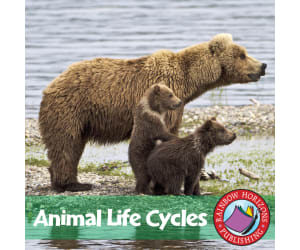
Animal Life Cycles Gr. 2-3
Science, Life Sciences, Animals, Grade 2, 3, Teacher Tools, Lesson Plans
Animal Life Cycles Gr. 2-3 An invigorating teaching resource for enriching the understanding of second and third-grade science students with comprehensive information. The subjects are broad, encompassing ten different animals' life cycles. These include: Mammals: Black Bears, Blue Whales Reptiles: Turtles, Garter Snakes Birds: Canada Geese, Penguins Amphibians: Frogs, Salamanders Insects: Ladybugs and Honeybees. This extensive study unit delves deeper than merely introducing physical nuances of these species; it forms a thorough grounding in comprehending their life cycle from infancy to adulthood. Why is Animal Life Cycles Gr. 2-3 essential? The breadth of knowledge shared through this exclusive offering not only makes learning science enjoyable but also establishes an unshakeable foundation in zoology for grade 2-3 learners. This promises unforgettable teaching moments and contributes towards high student engagement rates. A Peek into the Offering: Fascinating Animal Fact Cards about each subject. A structured Research Outline to facilitate organized learning. A Final Report Outline to guide summary generation. An interactive Match Game featuring interesting riddles. A comprehensive Unit Test enabling end-term student evaluation, which leads into an actionable Unit Evaluation highlighting improvement areas. User Friendly Design & Flexibility: The PDF format makes this lesson plan extremely easy to include in any classroom or homeschooling setup within moments! Besides being suitable for full classrooms or small groups, it can also be employed as homework assignments. Enhance the joy of teaching whilst ensuring elevated comprehension rates with the 'Animal Life Cycles Gr. 2-3'! Start exploring this digital resource today.
Author Classroom Complete Press
Tags PDF

Elephants: Guided Reading Level Q with Lesson Plan
ELA, Resources for Teachers, Reading Comprehension, Reading, Science, Language Development, Life Sciences, Earth and Environmental Sciences, Geography, Social Studies, Grade 3, 4, 5, Worksheets & Printables, Worksheets, Teacher Tools, Centers, Activities, Literacy Readers, Quizzes, Quizzes and Tests, Assessments, Lesson Plans
This Elephants (level q) guided reading book with lesson plan includes: Guided Reading Color Label (front cover x1) This is a quick way to match the book’s demands to what students can generally handle.. The overall goal is to use the level/color to pick books for several smaller groups. To qualify for a certain level, a student is expected to read a book from that level with about 90–94% accuracy. If a student is consistently accurate and understands, move up a level. If the student is struggling at that level, drop down and add more support. Each student will improve at completely different rates, but it is generally one of the best ways to check progress across the class. DOWNLOAD THE CATALOG TO VIEW ALL GUIDED READING BOOKS AVAILABLE (SORTED LEVELS A-Z) Pre-Reading Question (x1) Teacher asks the prompt aloud, can be while showing the cover or first page. Students share what they already know, or make educated guesses from the cover. Prompt them to use the target vocabulary. Write some of their responses on the board to look back at during the reading. Vocabulary Words (x5) Introduce the five words, best doing it one at a time. Start by saying it, while students repeat and then see if anyone knows what it means before reading further. Read through the meaning and try to briefly connect each word to a picture or gesture so it’s meaningful. Ask students to flip through the book pages and point to where they see each of the vocabulary words. While reading the book pause upon coming across one of the vocab words or read the sentence twice to make sure students understand the word has appeared. Optional: Ask students to raise hands whenever they see/hear one of the new words. Guided Reading Pages (x10) Check the book snapshot (below) for: primary topic - do you need to prep extra reading or intro materials on this? what is taught best - decide on 1-2 bullets to focus on, use the prompt or words provided here for best results. learning goals - what you are checking for students to be able to do after the session, elicit answers using prompts or words provided. key vocabulary (see section above). questions overview - so you know what is coming up and if you need to prep extra materials to assist understanding. Run the lesson You may have already looked at a few of the pages together, but you can show them some of the pictures again first to set meaning. Depending on how much time you have and how familiar your students are with guided reading class, you may want to read the book aloud first with the group first. Students whisper or partner read, while you listen in. If time, do it as a group, one student reading a page each. Use the guided page’s prompts to coach: “Check the picture / does it make sense?” “Point under the words / try the first sound” “Reread the sentence smoothly”. Try to focus more on one student per session (rotating every time), so you can work out if they are ready to move up or need to move down a level. Comprehension Questions (back cover x3) This is your way to check that students didn’t just say the words, but actually understood the text. First, let students answer by pointing to the page/picture and saying a short sentence. After any answer, follow with: “Show me where you found that in the text.” In bigger groups, have partners answer first (10–20 seconds), then call on 2–3 students to share. Differentiation tips: Emerging speakers/struggling readers: oral + pointing On-level: oral in a full sentence Higher: one written sentence or draw + label Book Snapshot Title: Elephants Genre: Nonfiction (informational) Subject: Life Science Primary Topic: Elephant species, adaptations, behavior, and threats Estimated Guided Reading Level (A–Z): Q What This Book Teaches Best Explains that scientists recognize three distinct species of elephants and describes physical differences (like ear shape and head shape) that fit their environments. Describes key body structures and functions (trunk muscles and “fingers,” tusks as elongated incisor teeth, sensitive skin). Shows behavioral adaptations for survival , including how elephants protect themselves from heat and insects by using water or mud. Highlights social organization and communication , including matriarchal herds and vocalizations such as trumpets, rumbles, and infrasound. Connects elephants to their ecosystems and conservation by explaining seed dispersal (African Forest elephants) and current threats like habitat loss and poaching for ivory. Learning Goals Describe the three elephant species named in the text and one physical difference mentioned between African and Asian elephants. Explain how elephants use their skin and what they do to protect themselves from heat and insects. Identify how the text describes an elephant’s trunk and list at least three things elephants use it to do. Explain what tusks are and give examples from the text of how tusks help elephants survive. Describe how elephants live in groups and how a matriarch helps keep a herd safe. Explain how African Forest elephants help plant new trees in the forest, according to the text. Key Vocabulary From the Text distinct — clearly different from something else. characteristic — an important feature that helps describe something. matriarchal — led by a female (mother) in the group. vocalizations — animal sounds used to communicate. endangered — in danger of disappearing because there are not many left. Discussion Prompts Pre-reading question: What do you already know about how elephants live and survive in their habitats? Comprehension questions: What are the three species of elephants that scientists recognize in the text? Comprehension questions: What does the text say elephants do to protect themselves from heat and insects? Comprehension questions: How do African Forest elephants help plant the next generation of trees in the forest? Printing Tips 1. Best Printing Method (Recommended) “Booklet” Printing (Best if Available) If your printer or PDF viewer supports Booklet Printing , use this. Settings to use: Print mode: Booklet Paper size: Letter or A4 (either works) Orientation: Landscape Print on both sides: Yes Flip on: Short edge Scaling: Fit to printable area Booklet subset: First test: Front sides only Then: Back sides only This will automatically: Pair pages correctly Put the cover on the outside Align everything for folding After printing, fold in half and staple along the spine . 2. If “Booklet” Printing Is NOT Available You can still print this correctly with manual duplex printing . Step-by-step: Open the PDF. Choose Print . Set: Orientation: Landscape Pages per sheet: 1 Print on both sides: Yes Flip on: Short edge Print all pages . Because each PDF page already contains two facing book pages, the result will still fold cleanly into a book. Thousands of Cored Education products are included with your TeachSimple membership. Download links and encyclopedia index available here.
Author Cored Education
Rating
Tags Reading Comprehension, Reading Passages, Reading, Guided Reading, Guided Reading Lesson Plan, Guided Reading Activity, Pre-reading, Science Lesson Plans, Life Science, Geography

Earthquake!: A Cross-Curricular Unit
Science, Earth and Environmental Sciences, Environmental Science, Grade 5, 6, Teacher Tools, Lesson Plans
Earthquake!: A Cross-Curricular Unit Introduction: As a comprehensive educational resource, Earthquake!: A Cross-Curricular Unit offers enriched pedagogical content for Grade 5 and Grade 6 educators looking to impart environmental science lessons. It boasts valuable insights on plate tectonics and earthquakes, ensuring students understand the vast geological operations happening within our planet. Main Content: The unit commences with an informative article that clarifies queries surrounding earthquakes - from their origin at fault zones to their measurement using the Richter scale. This deeply engaging content presents complex scientific data in a manner easily digestible for fifth and sixth graders. Cross-Curricular Worksheets: The unit expands past the main article, offering cross-curricular worksheets that test comprehension while encouraging critical thinking—a broader learning scope that combines aspects across academic fields. Worksheets also serve as perfect stimuli for class debates, reinforcing active learning processes further. Interactive Activities: Beyond theoretical knowledge, this packet suggests various activity ideas designed to enhance classroom interaction or at-home study (for homeschooling purposes). This hands-on conceptual practice strives to make education fun yet academically enriching. The unit can be utilized in larger interactive group sessions or smaller tutor-led teachings alike. It also proves ideal as a homework assignment—seamlessly extending classroom lessons into home-based review exercises the following day. All instructional materials included in this enlightening unit come compiled into one easy-to-use PDF composed of six ready-to-print pages; thus simplifying planning efforts for teachers everywhere. In Conclusion : "Earthquake!": A Cross-Curricular Unit leverages this all-in-one platform to offer theoretical knowledge through easily understandable articles, application practice via comprehensive worksheets, and interactive student engagement through thought-provoking activities—housed within a single, streamlined file. It's the ideal asset for any environmental science lesson plan portfolio.
Author Classroom Complete Press
Tags Lesson Plan, Science Lesson, Earthquakes, Vocabulary Builder, Tectonic Plates, Earthquakes Lesson Plans Middle School, Earthquake Lesson Plans Middle School
Solar System: Asteroids, Meteors & Comets - FLASH-PC
Science, Earth and Environmental Sciences, Space, Common Core, Grade 5, 6, 7, 8, Teacher Tools, Lesson Plans
``` Solar System: Asteroids, Meteors & Comets - FLASH-PC This is a comprehensive teaching resource designed to help students understand the intricate parts of our solar system including asteroids, meteors, and comets. It is tailored towards learners in grades 5 through 8 and places emphasis on astronomy within the larger subject matter of science. Materials for Multi-Faceted Learning Experience Reading passages that lay out the curriculum-based content 'Before you read' and 'after you read' questions to ensure comprehension and stimulate critical thinking Flashcards for vocabulary acquisition related to planetary science such as asteroids, meteors and comets An interactive video for enhancing understanding. Inclusive Tool Handy Across Different Learning Environments This teaching resource provides printable materials that can be used as handouts or homework assignments. The incorporation of Bloom's Taxonomy makes it a valuable tool not only for classroom teachers but also homeschooling parents aiming to teach astronomy subjects at home. The Solar System: Asteroids, Meteors & Comets - FLASH-PC aligns with the Common Core State Standards effectively mixing lesson plans so educators can be confident they're meeting key educational benchmarks while providing fertile ground where their student’s interest in natural sciences will be piqued. This software type resource offers versatility allowing it to cater not only varying levels of learner ability but giving flexibility on how its contents could be used whether through direct instruction or more guided discovery-based approach depending on educator preferences thereby making it an inclusive tool handy across different learning environments. ```
Author Classroom Complete Press
Tags Software (PC)
Cold Exposure & Sauna Recovery Logs
P.E. & Health, Health, Mental Health, Physical Education, Sports, Yoga, Mindfulness, Science, Life Sciences, Human Body, Grade 6, 7, 8, 9, 10, 11, 12, Worksheets & Printables, Workbooks, Worksheets, Word Searches, Teacher Tools, Lesson Plans, Quizzes and Tests, Quizzes, Tests, Assessments
Unlock Peak Performance with the Ultimate Athlete Recovery Workbook: A Sports Science Deep Dive into HRV & Contrast Therapy Are your student-athletes training hard but struggling with burnout, nagging injuries, or performance plateaus? The secret to unlocking their true potential isn't just more practice—it's smarter recovery. Introducing the Cold Exposure & Sauna Recovery Logs: HRV Tracking for Athletes , a comprehensive, data-driven curriculum designed to transform young athletes from passive participants into active scientists of their own physiology. This isn't just another workout log; it's a complete educational resource that bridges the gap between high school athletics, biology, and cutting-edge sports science. This 39-page digital PDF workbook empowers students to objectively measure their recovery using Heart Rate Variability (HRV) and understand the powerful effects of contrast therapy (sauna and cold plunge). They will learn to listen to their bodies, prevent overtraining, and strategically peak for competition. What's Inside This Complete, No-Prep Resource? Part 1: The Science of Recovery (Theory Section): A detailed yet accessible introduction to the core concepts, including: The Physiology of Contrast Therapy (Vasomotor Gymnastics, Endocrine Response) Decoding Heart Rate Variability (HRV) and the Autonomic Nervous System The Principle of Hormesis and the "Rebound Effect" Protocols for Accurate Data Collection with real-world case studies. Part 2: The Student Workbook (10 In-Depth Worksheets): Actionable, printable logs and analysis sheets that guide students through every step of the process. Worksheets include: Baseline Physiological Metrics & Autonomic Regulation The Contrast Therapy Protocol Log Acute HRV Response & Somatic Feedback Environmental Variables & Thermal Dynamics Longitudinal Tracking: The Weekly Micro-Cycle Subjective Perception vs. Objective Biometrics Sleep Architecture & Thermal Recovery Synergies Game-Day Readiness & CNS Priming Analyzing a "Red Day" (Maladaptation & Overtraining) Capstone Synthesis: Designing a Periodized Recovery Plan Part 3: Visuals & Teacher Resources: High-Quality Visual Aids: Clear, conceptual flowcharts and graphs illustrating the physiological mechanisms and tracking protocols. Complete Teacher & Coach Answer Key: Comprehensive model responses and grading notes for every single question, saving you valuable time and ensuring you can confidently guide your students. Who is this resource for? This is a perfect tool for High School Coaches, PE Teachers, Athletic Directors, and Science Teachers (Biology, Anatomy & Physiology, Health). It’s also an invaluable resource for parents of dedicated student-athletes who want to give their child a competitive edge in a safe, science-backed way. Stop guessing and start measuring. Empower your athletes with the knowledge to train smarter, recover faster, and perform better. Download this game-changing resource today! Keywords: Sports Science, Athlete Recovery, Heart Rate Variability, HRV, Contrast Therapy, Ice Bath, Sauna, PE Curriculum, Health, Biology, Anatomy, Physiology, Student Athlete, High School, Data Tracking, STEM for Athletes, Overtraining, Peak Performance, Wearable Technology, Digital Worksheet, Printable PDF, Sports Medicine. Why Parents/Schools Love It : Bridges Academics and Athletics: This resource masterfully integrates STEM concepts (biology, data analysis) with physical education, making science tangible and exciting for student-athletes. Prevents Injury & Burnout: By teaching athletes to use objective data (HRV), it moves them beyond "no pain, no gain" and empowers them to recognize signs of overtraining before injury or burnout occurs. Fosters Autonomy & Critical Thinking: It transforms students into proactive managers of their own health. They learn to analyze data, hypothesize, and create personalized plans, skills that last a lifetime. Provides a Competitive Edge: This is the same science used by professional athletes. Giving high schoolers access to these advanced recovery protocols offers them a significant, science-backed advantage over their competition. Comprehensive & Turnkey Solution: With detailed theory, 10 worksheets, visuals, and a full answer key, it is a complete, no-prep curriculum that saves teachers and coaches hours of research and preparation time. Target Student Audience : Based on the language, concepts (hormesis, RMSSD), and direct references ("tenth-grade student," "high school athletes"), target: Primary Target: High School Students (Grades 10-12) . Specific Courses: This is ideal for: Advanced Physical Education / Athletic Training Programs: For schools with elite sports teams. Sports Science or Kinesiology Electives. Advanced Biology or Human Anatomy & Physiology Classes: As a practical application unit connecting classroom concepts to real-world performance. Health Science Classes. Secondary Target: College Freshmen in introductory Kinesiology or Exercise Science courses. The material is robust enough for this level. Copyright/Terms of Use: This Book was copyrighted by Syed Hammad Rizvi. This resource is for personal and single classroom use only. You may not alter, redistribute, or sell any part of this resource. In other words, you may not put it on the Internet where it could be publicly found and downloaded. If you want to share this resource with colleagues, please purchase additional licenses from Teachsimple. Thank you for respecting these terms of use. This product is happily brought to you by Syed Hammad Rizvi
Author Creative Book Store
Rating
Tags SportsScience, AthleteRecovery, HRV, Recovery, Biohacking, Performance, Athletics, Training, Fitness, Health

AI Image Creation Ethics & Creative Prompt Engineering Pack Worksheets
Research, Resources for Teachers, Classroom Management, Community Building, Science, Technology, Computer Science, Engineering, Special Resources, Social Emotional Learning (SEL), Homeschool Curriculum, Homeschool Templates, Grade 4, 5, 6, 7, 8, Worksheets & Printables, Worksheets, Workbooks, Word Searches, Writing Prompts, Teacher Tools, Graphic Organizers, Lesson Plans, Diagrams, Quizzes and Tests
Prepare your students for a creative and ethical future with a comprehensive (34-page) digital workbook designed specifically for grade level students that covers everything students need to know when creating and using Images created by Machines (AI). That means learning how to use AI ethically. This Creative Prompt Engineering Pack provides elementary teachers, homeschool parents, and digital literacy coaches with everything they need to teach students how to create image-based prompts through the use of the Four Pillars of Prompt Construction (Subject, Environment, Lighting and Aesthetic) while also covering such topics as (but not limited to) Intellectual Property Rights; Digital Consent; Misinformation; Combating Bias; and Full Disclosure. Components Included: *) 4 chapters of hands-on student worksheets (fill-in-the-blank; scenario analysis; prompt rewriting; ethical debates) *) Visual anchors and flowcharts *) 1 Lifecycle diagrams *) 1 complete answer key for educators with complete implementation guide *) No prep, print-and-go/digital Google Classroom compatible Ideal for STEM, Arts, ELA, Digital Citizenship and AI Literacy curricula. Support your students develop into ethical and creative "prompt engineers" who respect artists and tell the truth when creating images generated by AI. Keywords that are integrated naturally into this Creative Prompt Engineering Pack Include AI Prompt Engineering for Kids; AI Ethics Curriculum Grade 93; Text-to-Image AI Workbook; Responsible Digital Art Maker; Digital Literacy PDF; Creative Prompt Engineering Pack. Parents and Schools Appreciate This Product: Provides Students with TRUE 21st Century Skills - Demonstrated through students’ ability to write quality prompts, demonstrate ethical decision making, be good digital citizens and use critical thinking; exactly what was requested in new educational standards. No Preparation Required - Easy to use for the teacher. Includes full answer keys, visual aides, Madlib sheets; everything you need to have no preparation time. This is a time saver! (Additionally, Families can use them to home school.) Promotes Creativity and Responsibility - Ongoing excitement generated by kids learning to create art through AI while at the same time understanding why it is inappropriate to steal the style of an artist, spread false information and/or conceal their use of AI. Ideal for Diverse Learning Needs (Although all materials created/based on target grade level - Fourth Grade) - Case studies, fill in the blanks and pictures make it attainable to all grades 4 & 5 regardless of ability (includes exceptional education students). Future-Proofing Students with Digital Literacy - Equips students with at least an understanding of how to appropriately use technology (Artificial Intelligence), enabling parents and schools to feel good about the ethical use of technology by their children. The target audience : of the material is 4th and 5th graders (ages 9 - 11 years old). The teacher's guide on page 25 clearly indicates this is intended for "students in the 4th/5th grade" and uses "Grade 4-5 Student Pack" as reference. The vocabulary and activities, as well as case studies and visuals, are ideally suited for upper elementary and/or early middle school students. This resource could also be used with success in a homeschool setting, advanced gifted 3rd graders, and as a beginning unit in 6th grade technology/digital literacy/arts classes. Copyright and Usage Terms: This publication is owned by Syed Hammad Rizvi and is intended only for personal and classroom use. You may not sell, alter, or redistribute this publication in any way. In other words, you cannot place it on the World Wide Web for anyone to find and download. If you wish to share this publication with other teachers, please purchase another license from Teachsimple. Thank you for respecting the use of this publication. This publication was created with much joy by Syed Hammad Rizvi
Author Creative Book Store
Rating
Tags AIPromptEngineering, AIForKids, AIEthics, PromptEngineering, AIImageCreation, DigitalLiteracy, AIArtForKids, TextToImage, ResponsibleAI, EthicalAI

Cellular Respiration Lesson | Middle School Lesson and Activity
Science, Basic Science, Earth and Environmental Sciences, Life Sciences, Grade 6, 7, 8, Lesson Plans, Teacher Tools, Presentations, Worksheets, Worksheets & Printables
Help students understand how cells generate energy with this complete Cellular Respiration lesson, designed for middle school science classrooms (Grades 6–8). This no-prep package explains the process of cellular respiration and how it connects to photosynthesis, using student-friendly visuals, activities, and built-in assessments. ✅ Explores Cellular Respiration with scaffolded slides and critical-thinking prompts, including how it relates to photosynthesis ✅ Includes Editable Presentations, Auto-Graded Exit Ticket, and Video Worksheet Activity ✅ Aligned with NGSS MS-LS1-1, MS-LS1-2, and MS-LS1-7 standards ✅ Fully Digital + Print-Friendly Format with embedded videos and structured student note-taking This resource includes both teacher and student versions of the slideshow presentation, two embedded instructional videos, a worksheet to accompany the videos, an auto-graded exit ticket with four questions, and a student handout. It’s ready to use and built to support inquiry-based learning and classroom discussion. Lesson topics in order of presentation: How cells use and store energy ATP: The energy currency of cells How photosynthesis creates glucose How cells convert sugar into usable energy The link between photosynthesis and cellular respiration The role of mitochondria in energy production Real-world application of cellular respiration concepts What’s included: Teacher version of the presentation with completed notes Student presentation version featuring underlined fill-in-the-blank notes Auto-graded Exit Ticket (4 questions) for quick understanding checks Two embedded instructional videos Video Worksheet for guided viewing Printable and editable student lesson handout The student presentation contains fill-in-the-blank notes to keep learners focused and involved without having them write down every detail. This strategy encourages participation, reinforces key vocabulary, and frees up class time for discussions and group learning. Whether you're introducing the concept for the first time or reviewing before a test, this lesson gives you the structure, clarity, and flexibility you need to teach Cellular Respiration effectively—without any prep time.
Author Teach With Fergy
Rating
Tags Cellular Respiration, Biology Lesson, Photosynthesis, Consumers, Energy, Mitochondria

Life Cycle of a Mouse Worksheet | Animal Science Unit Study fun facts
Life Sciences, Science, Biology, Animals, Kindergarten, Preschool, Grade 1, 2, 3, Coloring Pages, Worksheets, Worksheets & Printables, Parts of and Anatomy of, Flashcards, Diagrams, Teacher Tools, Lesson Plans
Help students explore the fascinating life cycle of a mouse with this engaging animal science worksheet! Students will learn about the different stages of a mouse's life cycle while building science vocabulary, sequencing skills, and understanding of animal growth and development. I like using this resource during animal life cycle units, mammal studies, animal science lessons, life science activities, science centers, and homeschool learning. It's a simple way for students to study how a mouse grows and changes through different stages of its life. What You Will Get This printable mouse life cycle worksheet gives students an easy and engaging way to learn about animal growth and development. What's Included in this Worksheet? • Mouse life cycle diagram • Life cycle sequencing activity • Mouse growth and development information • Fun facts about mice • Animal science vocabulary • Student-friendly worksheet activities • Review and learning questions This resource is perfect for: • Animal life cycle units • Mammal studies • Mouse science activities • Life science lessons • Animal science unit studies • Science centers • Classroom review • Homeschool learning Why you will love this? • Easy to print and use • Introduces students to the stages of a mouse's life cycle • Builds sequencing and observation skills • Reinforces animal science vocabulary • Includes fun facts to encourage curiosity • Great for independent work or science centers This Life Cycle of a Mouse Worksheet is a simple and engaging way for students to explore animal growth and development, learn interesting mouse facts, and strengthen their science skills through a fun animal science unit study.
Author Perfect_Printables
Rating
Tags Life Cycle, Life Cycle Activity, Mouse Life Cycle, Mouse Body Parts, Rodent Life Cycle, Rodent Activity, Mouse Life Cycle Worksheet, Rodent Coloring Page, Life Cycle Worksheet, House Mouse
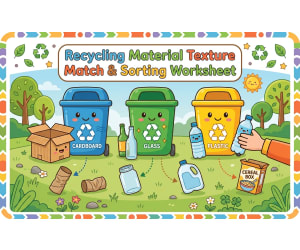
Recycling Material Texture Match & Sorting
Science, Life Sciences, Earth and Environmental Sciences, Earth Sciences, Environmental Science, Geology, Space, Nature & Plants, Human Body, Basic Science, Preschool, Grade 1, 2, 3, 4, 5, 6, Worksheets & Printables, Workbooks, Worksheets, Word Searches, Teacher Tools, Lesson Plans, Quizzes and Tests, Quizzes, Tests, Assessments
Transform your recycling lesson from a flat, boring worksheet into an unforgettable, hands-on sensory adventure! This comprehensive, research-based curriculum is designed to teach toddlers and preschoolers about recycling through the way they learn best: by touching, feeling, and doing. Grounded in the principles of Embodied Cognition, Montessori, and Vygotskian scaffolding , this resource moves beyond simple picture matching. It guides children to understand the fundamental properties of materials like cardboard, plastic, and glass (using safe proxies) through their distinct textures, temperatures, weights, and sounds. It’s the perfect, developmentally appropriate resource for your Earth Day unit, sensory tables, fine motor centers, or at-home learning. This isn't just a set of printables; it's a complete pedagogical system designed for early childhood educators, occupational therapists, and dedicated parents. ► What's Included in this 33-Page PDF? Phase 1: Core Content & Theory: A professional, in-depth guide for the educator. It explains the neuroscience behind tactile learning in early childhood, the design of the sensory materials, and the cognitive mapping process that helps toddlers connect a physical object to a symbolic icon. Phase 2: Facilitator's Workbook: 10 detailed, scaffolded worksheets that serve as lesson plans and observation guides. Each worksheet focuses on a different sensory attribute (e.g., Thermal Conductivity, Auditory Feedback, Material Elasticity) and provides step-by-step instructions and prompts for recording the child's progress. Phase 3: Visuals & Teacher Resources: Everything you need for seamless implementation! Professional Diagrams: Visual models of the learning process and ideal classroom setup. Developmental Milestones Matrix: Track a child's progress from exploration to mastery. Teacher Implementation Guide: Detailed instructions on material preparation, safety protocols, and a step-by-step guide to executing the lessons. Comprehensive Answer Key & Observation Rubric: Understand the "why" behind a child's actions and identify emerging, developing, and mastering skills. ► Skills Developed: Sensory Processing: Tactile, thermal, auditory, and kinesthetic discrimination. Fine Motor Skills: Pincer grasp, grip-force modulation, object manipulation. Cognitive Skills: Sorting and categorizing, problem-solving, working memory, cognitive flexibility. Early Science/Environmental Concepts: Understanding material properties, introduction to recycling and ecological stewardship. Language Development: Builds vocabulary for textures and properties ("bumpy," "smooth," "cold," "crinkly"). ► Perfect For: Preschool, Pre-K, and Toddler Teachers Occupational Therapists (A fantastic tool for sensory integration and fine motor goals!) Homeschooling Parents Special Education Professionals Montessori & Reggio Emilia inspired classrooms Stop the "laminate and lecture" cycle. Download this curriculum today and empower your little learners to become true "somatic ecologists" who understand their world through meaningful interaction! Keywords: Recycling, Earth Day, Sensory Bin, Toddler Activities, Preschool Curriculum, Montessori, Occupational Therapy, Fine Motor Skills, Sorting Activities, Tactile Learning, Hands-On Learning, Special Education, SPED, Sensory Integration, Early Childhood, Teacher Resource, Case Study Why Parents/Schools Love It: Goes Beyond Worksheets: It’s a multi-sensory, hands-on experience that turns abstract concepts like recycling into concrete, memorable play. It aligns perfectly with how young children naturally learn. Builds Real-World Skills: This curriculum masterfully combines critical developmental goals (fine motor, sensory discrimination) with an essential real-world lesson on environmental responsibility. Research-Backed & Professional: Unlike many resources, this curriculum is grounded in solid educational theory (Montessori, Vygotsky) and neuroscience, giving educators and therapists confidence in its effectiveness. Incredibly Versatile & Adaptable: It can be used for one-on-one therapy, a home learning activity, or a classroom sensory station. The detailed rubrics help track individual progress in any setting. Target Student Classes : Based on the content, case studies (ages 28-48 months), and developmental focus, target facilitators (the adults) working with: Toddlers (18 months - 3 years) Preschool / Pre-K (3 - 4 years) This resource is also exceptionally well-suited for Early Intervention and Special Education classrooms focusing on sensory processing and fine motor development, as well as for Occupational Therapy (OT) sessions. Copyright/Terms of Use: This Book was copyrighted by Syed Hammad Rizvi. This resource is for personal and single classroom use only. You may not alter, redistribute, or sell any part of this resource. In other words, you may not put it on the Internet where it could be publicly found and downloaded. If you want to share this resource with colleagues, please purchase additional licenses from Teachsimple. Thank you for respecting these terms of use. This product is happily brought to you by Syed Hammad Rizvi
Author Creative Book Store
Rating
Tags Recycling, Sorting, Earthday, Environment, Sustainability, Recyclingactivities, Sortingactivities, Earthdayactivities, Learningtorecycle, Environmentalscience

Discover! Plants
Science, Life Sciences, Nature & Plants, Grade 4, 5, 6, Teacher Tools, Lesson Plans
Discover! Plants: An Enlightening Educational Resource Your ideal guide for introducing or advancing the study of botany in Grade 4, 5, and 6 classrooms. This compilation of activities centers around many essential plant concepts. Key Concepts Include: The understanding of seeds Seedling germination and growth phases Intricate details about roots and stems Diverse features and functions of flowers Distinguishing characteristics between different trees species' The structure of leaves tied to the process of photosynthesis Seasonal Effects on Plant Life Cycle: This resource also includes sections highlighting how different weather patterns impact the natural development process in vegetation. A Hands-On Approach To Learning This teaching aid is more than a set of plain facts - it's an activity -driven approach to learning about plants. Tailored Activities Include: Sets of questions associated with each topic that encourages critical thinking A discussion forum among learners Answers provided within the materials for teachers to deliver accurate information Accessible Anytime, Anywhere One concrete PDF file accessible anywhere without any issues typical with traditional textbooks - merging traditional familiarity with digital education standards. A Versatile Teaching Resource! Use it during whole group class sessions or break it down into targeted instruction during extra classes or tutoring. Assign homework tasks from this resource to reinforce classroom learning - ensuring effective comprehension retention. In Summary, An all-in-one material offering detailed comprehensive assessment questions, fostering student interest & participation while instilling a profound appreciation for nature’s green kingdom. It's more than a textbook - it's an experiential gateway into botany under your guidance, and makes every science period an educational adventure.
Author Classroom Complete Press
Tags PDF

Insects and Humans | Animated Insect Video Lesson
Science, Life Sciences, Insects, Grade 3, 4, 5, 6, Lesson Plans, Teacher Tools
This animated science video lesson is all about insects and humans. Students will love this engaging and interactive video as they learn more about insects. This video serves as a great introduction or review video for your learners. This is an 11-minute science video lesson.
Author Educational Voice
Tags Science Video, Science Lesson, Insects, Science Activities, Insects Lesson

Global Warming CAUSES: Greenhouse Gases: Water Vapor - FLASH-PC
Science, Earth and Environmental Sciences, Environmental Science, Common Core, Grade 5, 6, 7, 8, Teacher Tools, Lesson Plans
Global Warming CAUSES: Greenhouse Gases: Water Vapor - FLASH-PC An impactful teaching resource designed to impart a comprehensive understanding of the role water vapor plays in global warming. This mini-chapter covers core content required for grades 5 through 8, rooted firmly in curriculum guidelines. Features: Multifaceted approach to learning: Engages students both visually and audibly with reading passages and video content explaining greenhouse gases' impact on our planet's climate. Practical Questions: 'Before you read' and 'after you read' questions reinforce critical information, enabling effective assessment of students' progression. Diverse Usability: Perfect as a whole-group instructional tool during class time, smaller group discussions, or even individual homework assignments. Vocabulary Flash Cards & Interactive Activities: specifically aimed at augmenting vocabulary related to global warming causes. Hands-on engagement with key concepts about water vapor's role in climate change enriches learning experience. Last but not the least, this resource is user-friendly and designed specifically for PC platforms—the common device used by most educators. Educational Standards Compliance: The approach aligns clearly with Common Core State Standards along with Bloom's Taxonomy learning objectives. In conclusion , Global Warming CAUSES: Greenhouse Gases: Water Vapor - FLASH-PC presents factual environmental science content engagingly while preparing young learners for more advanced scientific studies.
Author Classroom Complete Press
Tags Software (PC)

Guided Reading Level M - Acid Rain (with Lesson Plan)
ELA, Resources for Teachers, Reading Comprehension, Reading, Science, Technology, Physics, Life Sciences, Earth and Environmental Sciences, Environmental Science, Grade 2, 3, 4, Worksheets & Printables, Worksheets, Teacher Tools, Centers, Activities, Literacy Readers, Quizzes, Quizzes and Tests, Assessments, Lesson Plans
This Guided Reading Book - Acid Rain (Level M) with lesson plan includes: Guided Reading Color Label (front cover x1) This is a quick way to match the book’s demands to what students can generally handle.. The overall goal is to use the level/color to pick books for several smaller groups. To qualify for a certain level, a student is expected to read a book from that level with about 90–94% accuracy. If a student is consistently accurate and understands, move up a level. If the student is struggling at that level, drop down and add more support. Each student will improve at completely different rates, but it is generally one of the best ways to check progress across the class. DOWNLOAD THE CATALOG TO VIEW ALL GUIDED READING BOOKS AVAILABLE (SORTED LEVELS A-Z) Pre-Reading Question (x1) Teacher asks the prompt aloud, can be while showing the cover or first page. Students share what they already know, or make educated guesses from the cover. Prompt them to use the target vocabulary. Write some of their responses on the board to look back at during the reading. Vocabulary Words (x5) Introduce the five words, best doing it one at a time. Start by saying it, while students repeat and then see if anyone knows what it means before reading further. Read through the meaning and try to briefly connect each word to a picture or gesture so it’s meaningful. Ask students to flip through the book pages and point to where they see each of the vocabulary words. While reading the book pause upon coming across one of the vocab words or read the sentence twice to make sure students understand the word has appeared. Optional: Ask students to raise hands whenever they see/hear one of the new words. Guided Reading Pages (x10) Check the book snapshot (below) for: primary topic - do you need to prep extra reading or intro materials on this? what is taught best - decide on 1-2 bullets to focus on, use the prompt or words provided here for best results. learning goals - what you are checking for students to be able to do after the session, elicit answers using prompts or words provided. key vocabulary (see section above). questions overview - so you know what is coming up and if you need to prep extra materials to assist understanding. Run the lesson You may have already looked at a few of the pages together, but you can show them some of the pictures again first to set meaning. Depending on how much time you have and how familiar your students are with guided reading class, you may want to read the book aloud first with the group first. Students whisper or partner read, while you listen in. If time, do it as a group, one student reading a page each. Use the guided page’s prompts to coach: “Check the picture / does it make sense?” “Point under the words / try the first sound” “Reread the sentence smoothly”. Try to focus more on one student per session (rotating every time), so you can work out if they are ready to move up or need to move down a level. Comprehension Questions (back cover x3) This is your way to check that students didn’t just say the words, but actually understood the text. First, let students answer by pointing to the page/picture and saying a short sentence. After any answer, follow with: “Show me where you found that in the text.” In bigger groups, have partners answer first (10–20 seconds), then call on 2–3 students to share. Differentiation tips: Emerging speakers/struggling readers: oral + pointing On-level: oral in a full sentence Higher: one written sentence or draw + label Book Snapshot Title: Acid Rain Genre: Nonfiction (informational science text) Subject: Science (Earth & Environmental Science) Primary Topic: Causes, effects, and solutions for acid rain Estimated Guided Reading Level (A–Z): M What This Book Teaches Best Explains how human activities (factories, power plants, and vehicles) change the chemistry of the air by releasing gases into the sky. Describes a chemical reaction in the clouds where gases mix with water vapor and oxygen to form acids that stay suspended in the air. Defines acid rain as acids falling to the ground as rain or snow, and notes it can also fall as fog or as dry dust during a drought. Uses the pH scale to compare normal rain (about 5.6) to acid rain (often between 4.2 and 4.4). Shows environmental impacts on forests (nutrients dissolving; difficulty taking up water) and on lakes/streams (changes to water chemistry that affect fish and other animals). Learning Goals Describe how rain is part of the water cycle and helps plants and animals survive. Identify gases released by factories, power plants, and vehicles that contribute to acid rain. Explain how gases high in the clouds can react and form acids that stay in the air. Use details from the text to compare normal rain and acid rain using pH numbers. Describe how acid rain can affect forests, lakes, streams, fish, birds, and other animals. Explain one way people can help reduce acid rain by using cleaner energy sources. Key Vocabulary From the Text chemistry — how materials can change when they mix. atmosphere — the air that surrounds Earth. reaction — a change that happens when substances mix. drought — a long time with little or no rain. nutrients — substances living things need to grow healthy. Discussion Prompts Pre-reading question: What do you think might happen when gases from cars and factories mix with water in the air? Comprehension questions: What gases do factories and power plants release when they burn fuels like coal? Comprehension questions: What happens to these gases high in the clouds, according to the text? Comprehension questions: What is one way people can help reduce acid rain in this book? Printing Tips 1. Best Printing Method (Recommended) “Booklet” Printing (Best if Available) If your printer or PDF viewer supports Booklet Printing , use this. Settings to use: Print mode: Booklet Paper size: Letter or A4 (either works) Orientation: Landscape Print on both sides: Yes Flip on: Short edge Scaling: Fit to printable area Booklet subset: First test: Front sides only Then: Back sides only This will automatically: Pair pages correctly Put the cover on the outside Align everything for folding After printing, fold in half and staple along the spine . 2. If “Booklet” Printing Is NOT Available You can still print this correctly with manual duplex printing . Step-by-step: Open the PDF. Choose Print . Set: Orientation: Landscape Pages per sheet: 1 Print on both sides: Yes Flip on: Short edge Print all pages . Because each PDF page already contains two facing book pages, the result will still fold cleanly into a book. Thousands of Cored Education products are included with your TeachSimple membership. Download links and encyclopedia index available here.
Author Cored Education
Rating
Tags Reading Comprehension, Reading Passages, Reading, Guided Reading, Guided Reading Lesson Plan, Guided Reading Activity, Pre-reading, Science Lesson Plans, Earth Science, Physics
Intro to Classification and Pysical Properties
Science, Basic Science, Grade 5, Teacher Tools, Lesson Plans
Introduction to Classification and Physical Properties Guide: An invaluable resource for Grade 5 Basic Science teachers. This comprehensive tool provides a thorough exploration of two core scientific principles — classification and physical properties. It is meticulously crafted to promote hands-on learning through step-by-step activities that engage students' critical thinking skills. Unraveling Classification Concepts In-depth look into how objects, plants, and animals can be grouped based on different factors. An effective foundation for more advanced subjects like taxonomy and biological nomenclature. A Deep Dive into Physical Properties of Materials Theoretical concepts are expertly explained so that students grasp their practical applications in everyday life. The guide promotes active learning experiences as pupils sort out materials in their environment based on specific properties. Presented in an easy-to-use PDF format, this 17-page guide is replete with academic standards-compliant content. It's perfect for either whole class instruction, small group discussions, or independent at-home study (including homeschooling). Making the Lessons Practical with Real-Life Examples: . To add contextuality into these lessons, instructors are encouraged to use common household items or dismantle everyday objects. This tangible approach fosters deep understanding as it brings the theoretical aspects of science to life right within students' environments. In essence, this Introduction to Classification and Physical Properties isn't just another lesson plan but rather an engaging tool that sparks stimulating conversations among young learners. With its clear yet enjoyable format, it encourages pupils to ponder deeply about why things are what they are; making science interactive and straightforward fun.
Author Classroom Complete Press
Tags Science, Classification, Physical Properties, Living Things, Science Quiz

Cells, Skeletal & Muscular Systems - Digital Lesson Plan Gr. 5-8 - FLASH-PC
Science, Life Sciences, Human Body, Grade 3, 4, 5, 6, 7, 8, Teacher Tools, Lesson Plans
Cells, Skeletal & Muscular Systems - Digital Lesson Plan Gr. 5-8 - FLASH-PC Teaching Resource This interactive platform is tailored for educators seeking to impart human anatomy knowledge in a captivating manner. Apt for both public school teachers and homeschooling parents, this product strictly adheres to the diverse state standards of the U.S educational system. A Rundown of The Cellular World: Geared towards students in grades 3 through 8, the platform showcases an intriguing tale about human cells' complexities, skeletal structures, and muscular systems. An 80 screen-page structure ripe with animated graphics paves the way for profound comprehension regarding cell specialization processes that give birth to our tissues eventually forming organs and organ systems. Tapping into The Body's Mysteries: The journey extends further into exploring acute body functions performed by our skeletal and muscular systems. This step-by-step methodology fosters better content assimilation among learners while amplifying their fervor towards grasping bio-scientific realities. Diversified Learning Aids & Activities: The digital teaching resource comprises pre-designed screens that present related reading passages synced with current units under study in science classes focusing on the human body domain. Accompanied by lively before-and-after reading exercises along with assessment preparation materials, these tools help pupils assess learned concepts competently. Additional features include: "Memory match" games: Fostering attention retention skills whereby students enhance anticipation reflexes alongside cognitive recall abilities. Puzzle Games: Incorporating crossword puzzles harmonizing vocabulary enhancement with casual fun. Word Search Games: Offering interesting language exercises through discovering subject-relevant terms. To promote easier understanding, multimedia supports have been embedded fulfilling diverse learning requirements thereby suiting visual , auditory and kinesthetic learners. This device-friendly package proves efficient whether used for individual self-study , group projects or even transforming home assignments into delightful student activities.
Author Classroom Complete Press
Tags Software (PC)
Scream Machines (Roller Coasters): Emergency Lesson Plan
Science, Technology, Engineering, Grade 3, 4, Teacher Tools, Lesson Plans
Scream Machines (Roller Coasters): Emergency Lesson Plan Designed for grade 3 and grade 4 learners, this teaching aid effectively links the scientific and engineering concepts with real-world applications, specifically through the theme of roller coasters! This comprehensive lesson plan is created primarily to assist educators in need to swiftly prepare a teaching plan during unforeseen scenarios like medical emergencies or unexpected school events. The structured content allows maintaining continuous learning for students even under unusual circumstances. About Roller Coasters: The central idea revolves around intriguing facts about roller coasters, helping kids understand the underlying scientific principles that govern these exhilarating machines. Included is a two-page reader-friendly narrative revealing fascinating information about roller coasters, captivating students' attention while making knowledge application relatable. Worksheets: Apart from this narrative, engaging worksheets are designed to stir creative thoughts and secure knowledge retention among students. These can be used in various settings - classroom discussions or independent work during class hours or as homework components - offering adaptability in delivery methods. Extension Activities: The package comes with extension activities suitable for those difficult teaching moments. These bonus elements ensure continued learner engagement beyond set-classroom times while solidifying their understanding of conventional concepts. Note:All materials are available as a ready-to-print PDF with eight pages allowing easy preparation by teachers thus ensuring smooth execution of lessons even under unexpected situations. Scream Machines (Roller Coasters): Emergency Lesson Plan uses familiar applications to highlight significant scientific principles bringing academics closely related to everyday student life.
Author Classroom Complete Press
Tags Emergency Lesson Plan, Science, Engineering, Roller Coasters, Reading Lesson
Ferris Wheels Reading Comprehension Passage - Cored Ed Encyclopedia
ELA, Reading Comprehension, Reading, Science, Technology, Language Development, Social Studies, History, Pre-Reading, Writing, Grade 2, 3, 4, 5, Worksheets & Printables, Worksheets, Teacher Tools, Centers, Activities, Writing Prompts, Assessments, Quizzes and Tests, Quizzes, Lesson Plans
This Ferris wheels reading comprehension with lesson plan includes: Visualization (on the front cover) Start your lesson by taking a minute to think and share something about the topic. Read the script aloud (slowly), perhaps prepare some music or sound effects. Student close their eyes and let their imaginations wander. Students open their eyes, read the question aloud and give them a few minutes to complete. Ask a few students to share or keep answers until the end to compare with what they learn in the passage. Quick pause—thousands of Cored Education products are included with your TeachSimple membership. Download links and encyclopedia index available here. Pre-Reading Trivia Students will write down one thing they already know about the subject and then read five more facts and discuss. These facts are fun, and the students will enjoy learning about the subject before reading more. Give 1 minute for students to write what they already know (no pressure—best guess is fine). Read the five facts together. After each fact, do ask a student for their opinion, was it surprising? Set a purpose by asking students to highlight/underline one fact they want to learn more about during the reading. Reading Passage The text is a high-interest reading passage with set paragraphs, roughly three to four paragraphs long. It contains a variety of themes about the topic, anywhere from history to technology. The passage is between 250 and 350 words in length. First, ask students to look at the headings and see what they’ll learn about today. What do they know about the topic/heading? First read options: Teacher read-aloud (best for support). Partner reading (paragraph by paragraph). While reading, students underline important details, and vocabulary words they think may come up in the questions section. Mixed Questions The first question page contains four multiple-choice questions, each with a choice of four answers, and three written response questions that require a sentence or two from the student. Students complete the mcqs first independently, then review quickly as a class. For the 3 written responses, try to get students giving the answer with some form of evidence: “I think ___ because the text says ___.” If students get stuck, send them back to check the passage. Vocabulary Questions Practice seven key words from the text in this section across two activities. First section is scrambled words where students will unscramble three words given a clue for each. The second section is a word to meaning matching activity. Before starting, have some students read out words they underlined in the passage. Ask students to say the word and read aloud the sentence(s) around each word. Ask students to do scrambled words and the matching exercise in pairs then go through answers as a class. For the scrambled spelling task, get four pairs to come up to the board and write the words for extra practice with the other student reading out the clue. For the matching task, prompt students to give full sentences: “I matched ___ with ___ because ___.” Creative Writing In this question, the student will be required to write a five to eight sentence paragraph on a question related to the topic. Before starting, ask students write down 3 key ideas they are going to include in their piece. Ask students for ideas to share around the class to help those struggling. Pro writing expectations: 5–8 sentences At least 2 facts or details from the passage At least 2 vocabulary words from the previous page Students read their paragraphs while classmates listen for facts and vocabulary words. Extension Activities This page is optional for fast finishers or to take home. There are several activities, each one requiring a different skill. Do some, do none, do all, completely optional - but you will feel reassured knowing every possibility is planned for. Includes summary writting question and additional facts. Answer Key There are answers for the multiple-choice questions, written response questions have sample answers, vocabulary answers and if there is a summary question then a sample summary will be provided as well. Lesson Plan Included Customized lesson plan for this lesson is included. Lesson Snapshot Title: Ferris Wheels Genre: Nonfiction (Informational Text) Subject: Social Studies (History) / Science & Technology / Reading (Informational Text) Primary Topic: Origins, design, and purpose of Ferris wheels Estimated Guided Reading Level (A–Z): P What This Lesson Teaches Best Explains the origin story of the first Ferris wheel at the 1893 Chicago world’s fair and why people wanted a daring new attraction. Uses clear facts and measurements (about 264 feet/80 meters , 36 cars , ride cost and time) to build informational reading skills. Shows how Ferris wheels spread to new places and why they’re also called “observation wheels” (because looking is part of the fun). Compares past and present Ferris wheels, including modern wheels built for slow sightseeing like the London Eye with enclosed capsules. Highlights how modern wheels rely on strong steel, careful testing, and steady motors for smooth turns. Learning Goals Students will describe why the 1893 world’s fair crowd wanted something “brand-new” to see. Students will identify key details about the first Ferris wheel (height, number of cars, ride time, and cost). Students will explain why Ferris wheels are also called “observation wheels” using evidence from the text. Students will describe how Ferris wheels spread to other places after Chicago, including the example in Vienna. Students will compare how some Ferris wheels are designed for thrills versus slow sightseeing today. Key Vocabulary From the Text Exposition — a huge fair where inventions and exhibits are shown. engineer — a person who designs and builds things. fairgrounds — the area where a fair is held. capsules — closed pods that carry riders on a wheel. skyline — the outline of a city’s buildings against the sky. FULL CATALOG OF DOWNLOAD LINKS AND ENCYCLOPEDIA INDEX HERE
Author Cored Education
Rating
Tags Vocabulary, Reading Comprehension, Reading Passages, Lesson Plans, Ela Lesson Plans, Reading Comprehension Lesson Plans, Pre-reading, Science Lesson Plans, Social Studies Lesson Plans, History

Glaciers: The Chilly Facts: A Cross-Curricular Unit
Science, Earth and Environmental Sciences, Environmental Science, Grade 3, 4, Teacher Tools, Lesson Plans
Glaciers: The Chilly Facts: A Cross-Curricular Unit An engaging educational resource crafted for teachers and homeschoolers targeting third-grade and fourth-grade students. This comprehensive teaching tool takes a deep dive into the intriguing world of glaciers, bridging scientific knowledge with practical learning. A Unique Learning Approach The distinctive aspect of this product lies in its structured content, integrating an informative nonfiction article revealing intriguing facts about these slow-moving ice structures. Students have the opportunity to gain a deeper understanding of glaciers from various perspectives, enriching their knowledge beyond simply defining what a glacier is. Cross-curricular Worksheets Included besides this well-researched article are several cross-curricular worksheets. These worksheets developed with interdisciplinary insight cover distinct subject areas contributing to holistic learning experiences surpassing pure science education constraints. Fostering Creative Thinking: Activities within this unit encourage thinking creatively while reinforcing learned concepts from the main text. Versatility in Teaching Situations: Activity ideas can adapt seamlessly across multiple teaching situations - be it whole-group classroom discussions or assigned homework for personalized at-home learning engagements. Simplified Structuring & Efficient Planning This PDF file spans six pages ready for immediate printing upon purchase, serving effectively as both a comprehensive lesson plan and time-efficient prep-tool for educators focused on delivering top-tier environmental science instruction. Inspire Interest & Knowledge Growth In Environmental Sciences: Utilizing Glaciers: The Chilly Facts: A Cross-Curricular Unit will stimulate increased student interest in environmental sciences while equipping them with essential glacier information – transforming lessons into captivating explorations of Earth's icy wonders.
Author Classroom Complete Press
Tags Glaciers, Chilly Facts, Environmental Science, Cross-curricular Unit, Science Worksheet