



3,906 products added recently
Page 76 - Science Lesson Plan Template
Enhance your science instruction with a flexible lesson plan template designed for educators. This tool helps you structure objectives, materials, procedures, and assessments efficiently. Use it to create organized and impactful science lessons that cater to your students' needs.

 Show filters

I WONDER - How Are Mars And The Earth Different | Animated Video
Space, Earth and Environmental Sciences, Science, Grade 3, 4, 5, 6, 7, 8, 9, Lesson Plans, Teacher Tools
Video Introduction An amazing video designed for the students to learn more about space facts. I WONDER - How Are Mars And The Earth Different | Animated Video Lesson Have you ever thought about travelling to space?! Join us with this amazing video about planets in our solar system. Do you think we can live on planet Mars some day? How amazing is space! Let's discover some amazing facts about Earth and Mars! Do you know that we have two kinds of planets in our solar system? Can you name the planets based upon their core type? I WONDER - How Are Mars And The Earth Different | Animated Video Lesson The video is perfect for encouraging the researching skills for the students, while learning more about the fantastic space. I WONDER - How Are Mars And The Earth Different | Animated Video Lesson This friendly designed video is suitable for students at school, homeschooling, and as a group activity. Format Available in MP4 format.
Author Educational Voice
Rating
Tags How Are Mars And The Earth Different, Mars, Mars Facts, Mars Facts For Kids, Mars Video, Mars Video For Kids, Earth, Earth Facts, Earth Facts For Kids, Earth Video

I WONDER - How Long Did The Brontosaurus Live | Animated Video Lesson
History: Ancient, History, Social Studies, History: World, Animals, Life Sciences, Science, Grade 4, 5, 6, 7, 8, 9, 10, Lesson Plans, Teacher Tools
Video Introduction An amazing video designed for the students to learn more about dinosaurs in different countries. I WONDER - How Long Did The Brontosaurus Live | Animated Video Lesson Do you like dinosaurs? what is your favorite one? Do you own a pet? If yes, tell us more about it, like what its name? And what do you like most about it? Do you think that your pet has been evolved from a dinosaur? Can you write down the characteristics of your favourite dinosaur like it's shape, their rivals, where did it use to live and what was their favourite food? What is the largest and the smallest dinosaur that ever found? Why is the T-rex is so famous? Have you ever read any interesting facts about it? Can you name any of the carnivores or herbivores dinosaurs? I WONDER - How Long Did The Brontosaurus Live | Animated Video Lesson The video is perfect for encouraging the researching skills for the students, while learning more about dinosaurs. I WONDER - How Long Did The Brontosaurus Live | Animated Video Lesson This friendly designed video is suitable for students at school, homeschooling, and as a group activity. Format Available in MP4 format.
Author Educational Voice
Rating
Tags How Long Did The Brontosaurus Live, How Long Did The Brontosaurus Live Video, Brontosaurus, Brontosaurus Facts, Brontosaurus Video, Brontosaurus Video For Kids, Brontosaurus Facts For Kids

I WONDER - What Does Binary Mean In Coding | Animated Video Lesson
STEM, Computer Science, Technology, Science, Grade 6, 7, 8, 9, 10, 11, 12, Lesson Plans, Teacher Tools
Video Introduction An amazing video designed for the students to learn more about STEM. I WONDER - What Does Binary Mean In Coding | Animated Video Lesson Do you like STEM subjects? what is your favorite one? Have you ever tried to plant a seed? If yes, tell us more about it. Or have you ever tried to invent something? If yes, tell us more about it. And how do you think it will help us? Have you ever seen a microorganism under a microscope? What was it? And how it looked like? Mathematics is a marvelous subject. Let' sharpen our brains and solve some equations. Do you like timetable tricks? What is your favorite one? Do you know how to code? Have you ever created an app or a game before? If yes, how was it like? I WONDER - What Does Binary Mean In Coding | Animated Video Lesson The video is perfect for encouraging the researching skills for the students, while learning more about this fantastic topic. I WONDER - What Does Binary Mean In Coding | Animated Video Lesson This friendly designed video is suitable for students at school, homeschooling, and as a group activity. Format Available in MP4 format.
Author Educational Voice
Tags What Does Binary Mean In Coding, What Does Binary Mean In Coding Video, Binary, Binary Facts, Binary Facts For Kids, Binary Video, Binary Video For Kids, Binary In Coding, Binary In Coding Video

I WONDER - Why Is Plastic Harmful | Animated Video Lesson
Environmental Science, Earth and Environmental Sciences, Science, Grade 4, 5, 6, 7, 8, 9, 10, Lesson Plans, Teacher Tools
Video Introduction An amazing video designed for the students to learn more about STEM. I WONDER - Why Is Plastic Harmful | Animated Video Lesson Do you like STEM subjects? what is your favorite one? Have you ever tried to plant a seed? If yes, tell us more about it. Or have you ever tried to invent something? If yes, tell us more about it. And how do you think it will help us? Have you ever seen a microorganism under a microscope? What was it? And how it looked like? Mathematics is a marvelous subject. Let' sharpen our brains and solve some equations. Do you like timetable tricks? What is your favorite one? Do you know how to code? Have you ever created an app or a game before? If yes, how was it like? I WONDER - Why Is Plastic Harmful | Animated Video Lesson The video is perfect for encouraging the researching skills for the students, while learning more about this fantastic topic. I WONDER - Why Is Plastic Harmful | Animated Video Lesson This friendly designed video is suitable for students at school, homeschooling, and as a group activity. Format Available in MP4 format.
Author Educational Voice
Tags Why Is Plastic Harmful, Why Is Plastic Harmful Video, Plastic, Plastics, Plastics Facts, Plastics Facts For Kids, Plastics Video, Plastics Video For Kids, Environment, Environment Facts
I WONDER - How Did Pangolins Get Their Name | Animated Video Lesson
STEM, Animals, Life Sciences, Science, Biology, Grade 1, 2, 3, 4, 5, 6, 7, 8, Lesson Plans, Teacher Tools
Video Introduction Animal kingdoms are full of fascinating wonders to learn. This video is designed for the students to learn more about animals in different countries. I WONDER - How Did Pangolins Get Their Name | Animated Video Lesson Do you like animals? what is your favorite one? Do you own a pet? If yes, tell us more about it, like what its name? And what do you like most about it? What are the animal kingdoms? Can you write down the characteristics of each animal class like mammals, birds, reptiles, amphibian, fish and mollusks. Do you know that some animals can sing, can you name any of them? What is the largest and the smallest mammal in the world? What is the largest and the smallest bird in the world? What is the largest and the smallest fish in the world? I WONDER - How Did Pangolins Get Their Name | Animated Video Lesson The video is perfect for encouraging the researching skills for the students, while learning more about these fantastic animals. I WONDER - How Did Pangolins Get Their Name | Animated Video Lesson This friendly designed video is suitable for students at school, homeschooling, and as a group activity. Format Available in MP4 format.
Author Educational Voice
Tags How Did Pangolins Get Their Name, How Did Pangolins Get Their Name Video, Pangolins, Pangolin, Pangolins Facts, Pangolins Facts For Kids, Pangolins Video, Pangolins Video For Kids
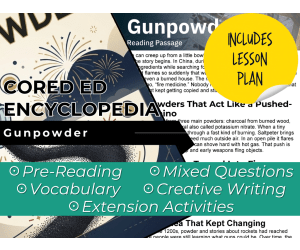
Gunpowder Reading Comprehension Passage - Cored Ed Encyclopedia
ELA, Reading Comprehension, Reading, Science, Technology, Pre-Reading, Language Development, History, Social Studies, Physics, Grade 2, 3, 4, 5, Worksheets & Printables, Worksheets, Teacher Tools, Centers, Activities, Writing Prompts, Assessments, Quizzes and Tests, Quizzes, Lesson Plans
This gunpowder reading comprehension with lesson plan includes: Visualization (on the front cover) Start your lesson by taking a minute to think and share something about the topic. Read the script aloud (slowly), perhaps prepare some music or sound effects. Student close their eyes and let their imaginations wander. Students open their eyes, read the question aloud and give them a few minutes to complete. Ask a few students to share or keep answers until the end to compare with what they learn in the passage. Quick pause—thousands of Cored Education products are included with your TeachSimple membership. Download links and encyclopedia index available here. Pre-Reading Trivia Students will write down one thing they already know about the subject and then read five more facts and discuss. These facts are fun, and the students will enjoy learning about the subject before reading more. Give 1 minute for students to write what they already know (no pressure—best guess is fine). Read the five facts together. After each fact, do ask a student for their opinion, was it surprising? Set a purpose by asking students to highlight/underline one fact they want to learn more about during the reading. Reading Passage The text is a high-interest reading passage with set paragraphs, roughly three to four paragraphs long. It contains a variety of themes about the topic, anywhere from history to technology. The passage is between 250 and 350 words in length. First, ask students to look at the headings and see what they’ll learn about today. What do they know about the topic/heading? First read options: Teacher read-aloud (best for support). Partner reading (paragraph by paragraph). While reading, students underline important details, and vocabulary words they think may come up in the questions section. Mixed Questions The first question page contains four multiple-choice questions, each with a choice of four answers, and three written response questions that require a sentence or two from the student. Students complete the mcqs first independently, then review quickly as a class. For the 3 written responses, try to get students giving the answer with some form of evidence: “I think ___ because the text says ___.” If students get stuck, send them back to check the passage. Vocabulary Questions Practice seven key words from the text in this section across two activities. First section is scrambled words where students will unscramble three words given a clue for each. The second section is a word to meaning matching activity. Before starting, have some students read out words they underlined in the passage. Ask students to say the word and read aloud the sentence(s) around each word. Ask students to do scrambled words and the matching exercise in pairs then go through answers as a class. For the scrambled spelling task, get four pairs to come up to the board and write the words for extra practice with the other student reading out the clue. For the matching task, prompt students to give full sentences: “I matched ___ with ___ because ___.” Creative Writing In this question, the student will be required to write a five to eight sentence paragraph on a question related to the topic. Before starting, ask students write down 3 key ideas they are going to include in their piece. Ask students for ideas to share around the class to help those struggling. Pro writing expectations: 5–8 sentences At least 2 facts or details from the passage At least 2 vocabulary words from the previous page Students read their paragraphs while classmates listen for facts and vocabulary words. Extension Activities This page is optional for fast finishers or to take home. There are several activities, each one requiring a different skill. Do some, do none, do all, completely optional - but you will feel reassured knowing every possibility is planned for. Includes summary writting question and additional facts. Answer Key There are answers for the multiple-choice questions, written response questions have sample answers, vocabulary answers and if there is a summary question then a sample summary will be provided as well. Lesson Plan Included Customized lesson plan for this lesson is included. Lesson Snapshot Title: Gunpowder Genre: Nonfiction (informational text) Subject: Science Primary Topic: How gunpowder was discovered and used over time Estimated Guided Reading Level (A–Z): Q What This Lesson Teaches Best Explains how gunpowder began in China during the Tang dynasty when alchemists mixed ingredients while searching for a life-lasting “elixir.” Identifies the three main powders in gunpowder—charcoal, sulfur, and saltpeter (also called potassium nitrate)—and describes what saltpeter adds to help burning. Describes how gunpowder behaves differently in an open pile versus a tight tube, leading to a strong push of hot gas. Traces how “fire medicine” was used first for celebrations and signals, then developed into fire arrows, bombs, fire lances, and hand cannons by the late 1200s. Shows how ideas travel as gunpowder and stories about rockets reached Europe, and how uses expanded to quarrying rock and digging tunnels, not only fighting. Learning Goals Students will describe how the text says gunpowder was discovered during the Tang dynasty in China. Students will identify the three main powders in gunpowder and explain what saltpeter adds to the burning process. Students will compare what happens when gunpowder burns in an open pile versus in a tight tube. Students will explain how “fire medicine” changed from signals and celebrations to fire arrows and later weapons over time. Students will describe two non-celebration uses of the powder mentioned in the text (quarrying rock and digging tunnels). Students will explain what the author means by “Ideas travel,” using the example of gunpowder reaching Europe. Key Vocabulary From the Text alchemists — people who mixed ingredients while searching for an “elixir.” elixir — a life-lasting drink they searched for. charcoal — powder from burned wood. sulfur — one of the three main powders. saltpeter — a mineral also called potassium nitrate. Discussion Prompts Pre-reading question: What do you think might happen if a powder burns very fast? Comprehension questions: How did the mixture get the name huoyao, or “fire medicine”? Comprehension questions: What role does saltpeter play when a tiny grain is lit? Comprehension questions: How did the uses of “fire medicine” change from celebrations to later tools or weapons? FULL CATALOG OF DOWNLOAD LINKS AND ENCYCLOPEDIA INDEX HERE
Author Cored Education
Rating
Tags Vocabulary, Reading Comprehension, Reading Passages, Lesson Plans, Ela Lesson Plans, Reading Comprehension Lesson Plans, Pre-reading, Science Lesson Plans, Social Studies Lesson Plans, History

Zoo Animal Research Writing Project on ELEPHANTS for K-2nd Grade
Life Studies, ELA, Writing, Creative Writing, Reading, Science, Life Sciences, Animals, Research, Kindergarten, Grade 1, 2, Teacher Tools, Worksheets & Printables, Lesson Plans, Presentations, Worksheets, Coloring Pages, Writing Prompts
Animal Research Writing Project on Elephants for K-2. Engage young students in reading, writing, and science with this 19-page informational writing project on elephants. Students will read fascinating facts, examine real-life photos, color images, draw habitat scenes, organize information with writing organizers, and compose their own informative writing piece on elephants. Three differentiated writing levels are included to accommodate varying abilities. When completed, the project can be bound into a printed book for the classroom or home library. This elephant unit can be implemented in whole groups, small groups, or as an individual student project. Pair it with the 7 other available animal projects for a cross-curricular writing program. Suitable for kindergarten through 2nd grade. Teachers appreciate the ready-to-use animal units covering reading, note-taking, drafting, illustrating, and publishing. Engage your class in meaningful informational writing with this standards-based project on monkeys. Plus, there are many more zoo animals to research as well in my store: K-5 Treasures! For additional Zoo Animal reports, click on the following links below: Animal Research Writing Project on TIGERS for K-2nd Grade Animal Research Writing Project on MONKEYS for K-2nd Grade Animal Research Writing Project on PANDAS for K-2nd Grade Animal Research Writing Project on HIPPOS for K-2nd Grade Animal Research Writing Project on ELEPHANTS for K-2nd Grade Animal Research Writing Project on GIRAFFES for K-2nd Grade Here are even more informational resources on report writing for OCEAN ANIMALS. Click on the links below: Animal Research Writing Project on WHALES for K-2nd Grade Animal Research Writing Project on the OCTOPUS for K-2nd Grade Animal Research Writing Project on SEA TURTLES for K-2nd Grade Animal Research Writing Project on ORCAS for K-2nd Grade Animal Research Writing Project on the SHELLFISH for K-2nd Grade Animal Research Writing Project on DOLPHINS for K-2nd Grade Animal Research Writing Project on SEALS for K-2nd Grade
Author K-5 Treasures
Tags Animal Research, Informational Writing, Writing Report, Zoo Animals, Report On Animals, Report On Zoo Animals, 1st Grade Writing, 2nd Grade Writing, Elephants, Report On Elephants
I WONDER - Is It Possible To Rent Clothes | Animated Video Lesson
Environmental Science, Earth and Environmental Sciences, Science, Grade 6, 7, 8, 9, 10, 11, 12, Lesson Plans, Teacher Tools
Video Introduction An amazing video designed for the students to learn more about STEM. I WONDER - Is It Possible To Rent Clothes | Animated Video Lesson Do you like STEM subjects? what is your favorite one? Have you ever tried to plant a seed? If yes, tell us more about it. Or have you ever tried to invent something? If yes, tell us more about it. And how do you think it will help us? Have you ever seen a microorganism under a microscope? What was it? And how it looked like? Mathematics is a marvelous subject. Let' sharpen our brains and solve some equations. Do you like timetable tricks? What is your favorite one? Do you know how to code? Have you ever created an app or a game before? If yes, how was it like? I WONDER - Is It Possible To Rent Clothes | Animated Video Lesson The video is perfect for encouraging the researching skills for the students, while learning more about this fantastic topic. I WONDER - Is It Possible To Rent Clothes | Animated Video Lesson This friendly designed video is suitable for students at school, homeschooling, and as a group activity. Format Available in MP4 format.
Author Educational Voice
Tags Is It Possible To Rent Clothes, Is It Possible To Rent Clothes Video, Rent Clothes, Rent Clothes Facts, Rent Clothes Facts For Kids, Rent Clothes Video, Rent Clothes Video For Kids, Environment
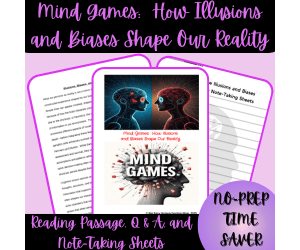
Mind Games: How Illusions and Biases Shape Our Reality Reading Passage
ELA, Reading, Writing, Research, Resources for Teachers, Science, STEM, Life Skills, Special Resources, High School, Homeschool Resources, Teacher Tools, Assessments, Lesson Plans, Quizzes and Tests, Worksheets & Printables, Writing Prompts
As a homeschool mom who is passionate about bringing real science into our learning, I created this resource after watching my own kids become fascinated by optical illusions and questioning "how do we really know what we see?" This comprehensive package takes that natural curiosity and channels it into serious academic exploration of how our minds work. I have spent countless hours researching current neuroscience studies to ensure this material meets the rigor your advanced students deserve while remaining engaging and accessible. Whether you are preparing high schoolers/homeschoolers for college psychology courses or diving deep into critical thinking with curious learners, this resource delivers the kind of substantial content that sparks meaningful discussions around your kitchen table or classroom. INCLUDED IN THIS RESOURCE: Comprehensive reading passage that makes complex neuroscience understandable 20 carefully crafted questions that really make students think (not just recall facts) Complete answer key with detailed explanations Five note-taking sheets TOPICS COVERED: How optical illusions reveal the shortcuts our brains take every day Why we believe what we want to believe (confirmation bias explained) The sneaky ways first impressions influence all our decisions How growing up in different cultures literally changes what we see This resource bridges the gap between high school and college-level work beautifully. I designed it specifically for families and educators who want to offer their students/homeschoolers the kind of rigorous, research-based content they will encounter in university psychology and neuroscience courses. The depth and sophistication of the material challenges advanced learners while the clear organization and teaching supports make it manageable for dedicated students/homeschoolers. Whether you are homeschooling through high school or teaching AP-level courses, this resource provides the academic foundation and critical thinking development that sets students/homeschoolers up for success in higher education and beyond. If you and your students/homeschoolers enjoyed this resource, please leave a review. Thank you for your support! Tina - Big Easy Homeschooling Mom
Author Homeschool with Big Easy Homeschooling Mom
Rating
Tags How Optical Illusions Work Educational Resource, Cognitive Biases Lesson Plan High School, Cognitive Psychology, Neuroscience, Visual Perception, Psychology Curriculum, Homeschool Psychology Resources, Perception And Reality Educational Content, Psychology Reading Comprehension Activities, , Neuroscience Curriculum Homeschool
I WONDER - What Makes Neptune Special | Animated Video Lesson
Space, Earth and Environmental Sciences, Science, Grade 6, 7, 8, 9, 10, 11, 12, Lesson Plans, Teacher Tools
Video Introduction An amazing video designed for the students to learn more about space facts. I WONDER - What Makes Neptune Special | Animated Video Lesson Do you like reading about space? If yes, what is your favorite topic? What do you know about our solar system? What is the smallest planet in our solar system? What is the biggest planet in our solar system? What is the hottest planet in our solar system? And what is the coldest one? Do you think there are aliens? If yes, what do you think they look like? What do they eat and how they speak to each other? Where do they live? What is a galaxy? And what is a milky way? Have you recently saw a shooting star? If yes, tell us more about it, like when did it happen and where? What is a blackhole? Can a blackhole gets bigger by time? Do you like counting the stars? What do you think a star is made of? I WONDER - What Makes Neptune Special | Animated Video Lesson The video is perfect for encouraging the researching skills for the students, while learning more about the fantastic space. I WONDER - What Makes Neptune Special | Animated Video Lesson This friendly designed video is suitable for students at school, homeschooling, and as a group activity. Format Available in MP4 format.
Author Educational Voice
Tags What Makes Neptune Special, What Makes Neptune Special Video, Neptune Special, Neptune Special Facts, Neptune Special Facts For Kids, Neptune Special Video, Neptune Special Video For Kids, Neptune
Simple Machines: What Are Simple Machines - FLASH-PC
Science, Technology, Engineering, Common Core, Grade 5, 6, 7, 8, Teacher Tools, Lesson Plans
Simple Machines: What Are Simple Machines - FLASH-PC This is a teaching aid specially designed for educators in the fields of Science and Engineering, most suited for students from grades 5 through 8. It offers a comprehensive approach to the subject of Simple Machines. Main Objective The primary objective lies in giving an in-depth understanding of what simple machines are, supported by reading passages that deliver curriculum -based content. Before and after reading discussions help to reinforce learning and stimulate critical thinking. Highlights Of The Product Videos and audios: Various forms of media are used to engage students since they cater to different learning styles. Interactive activities: Active student participation is encouraged throughout each lesson via interactive sessions. Printables & flashcards: These resources enhance recall rates while on the one hand, expanding domain-specific vocabulary, on the other. This teaching resource can be utilized flexibly based on class size (whole group or smaller focus groups) or instructional methods (in-class teaching or homework assignments). Pedagogical Alignment & Standards Adherence Blooms Taxonomy - This software adheres strictly to Bloom's Taxonomy thereby promoting comprehensive topic mastery among learners by ensuring depth within all instructional components. CSS Alignment - The software aligns with Common Core State Standards affirms its relevance as well as effectiveness within modern syllabi aims. In conclusion,, "Simple Machines: What Are Simple Machines - FLASH-PC" provides an engaging blend of textual readings, interactive sessions & varied multimedia resources, making it a versatile and adaptable to multiple teaching strategies.
Author Classroom Complete Press
Tags Software (PC)

Gravitational Fields, Orbits, and Kepler’s Laws - Senior Physics Lesson
Science, Earth and Environmental Sciences, Space, Grade 9, 10, Teacher Tools, Lesson Plans
Gravitational Fields, Orbits, and Kepler’s Laws - Senior Physics Lesson Deepen the foundational understanding of physics topics like gravitational fields and planetary motion in a dynamic, engaging manner with the Gravitational Fields, Orbits, and Kepler's Laws - Senior Physics lesson resource. This comprehensive teaching resource is tailored to meet the educational needs of senior high school students studying physics. This lesson dives into gravitational fields with focused instruction on calculating their strength. It subsequently explores Kepler's three laws of planetary motion in an accessible manner for students. Furthermore, discussions on the constant of proportionality are aimed at enhancing student capabilities in calculating orbital periods and distances. The package contains student-friendly materials that maximize opportunities for inquiry-based learning while encouraging active participation through fill-in-the-blank tasks present throughout lessons. These tasks are clearly marked on an accompanying teacher copy to help guide instruction seamlessly. For added engagement value, the package features two embedded videos that can serve as detailed supplements to complex concepts discussed during lessons. A student handout is also included to reinforce ideas after class sessions or for use during dedicated homework time. One noteworthy aspect is its adaptability across various platforms including Office formats as well as Google formats – PowerPoint or Google Slides presentations and Word or Google Docs respectively for all documents. This flexibility ensures stress-free integration into physical classrooms or distance learning platforms like Google Classroom. center ">Its content aligns perfectly with broader units such as 'Gravitational and Electric Fields' Which include lesson packages extending from introductory topics such as: 'Electric Charge' to more advanced themes like: 'Magnetism-and-Electromagnetism'. In conclusion, whether used for whole-group discussions large scale collaborative activities small group work individual assignments this multifunctional teaching resource empowers educators make serious scientific subjects relatable manageable their senior high school students no matter where they may be learning from. Truly a practical addition any science curriculum plan supplementation study program astronomy subject studies!
Author Teach With Fergy
Tags Gravitational Fields, Orbits, Kepler's Laws, Planetary Motion, Physics

The 'Sick Day' Savior: K-5 Emergency Sub Plans Bundle
Science, Special Resources, Social Emotional Learning (SEL), Life Skills, Social Skills, Special Education Needs (SEN), Basic Science, Life Studies, Career, Leadership, Kindergarten, Preschool, Grade 1, 2, 3, 4, 5, Teacher Tools, Anchor Charts, Assessments, Charts, Diagrams, Graphic Organizers, Lesson Plans, Literacy Readers, Outlines, Presentations
Find out what is considered the ultimate "Sick Day" Savior – K-5 Emergency Sub Plans Bundle Professional Edition – your one-stop-shop for No Prep Substitute Teacher Lesson Plans specifically created for Elementary Teachers and School Administrators. This 49-page PDF bundle is designed to alleviate the pressure of unplanned teacher absences with its ready-to-deploy, standards-based independent work packets for English Language Arts, Mathematics, Science, Social Studies, and Integrated Studies for Kindergarten through 5th Grade students. This bundle includes detailed overviews, quick-start deployment instructions, substitute teacher welcome packets, grade-level activities (phonics and tracing for Kindergarten, analysis and decimals for 5th Grade), differentiated math drills, early finisher activities such as word searches and logic puzzles, behavior management tools, complete answer keys, and editable instruction templates – all designed for a seamless classroom deployment. Reusable for multiple years, this bundle is perfect for teachers looking for peace of mind – protect your students' learning journey against unplanned sick days with this essential emergency sub plans bundle for Elementary Teachers and School Administrators. Why Parents/Schools Love It: Peace of Mind During Absences: The absence of "lost days" is ensured with ready-to-use and independent activities that will keep students productively engaged and allow teachers to concentrate on recovery without worrying about classroom disruptions. Standards-Aligned and Versatile: The material covers basic subjects like ELA, math, science, and social studies with age-appropriate and differentiated content that is aligned with elementary school curricula and meets the needs of diverse learners from pre-readers to advanced students. Easy Implementation for Subs: The material is equipped with instructions and behavior tools and provides answer keys, enabling substitute teachers to easily maintain classroom routines and high expectations without prior knowledge of classroom operations. Reusable and Cost-Effective: The digital/print-optimized material is reusable and saves administrative hassles and money on last-minute planning. Promotes Student Growth: The material develops students' fine motor skills, critical thinking skills, and independence through fun extensions like puzzles and color-by-code, and provides stability and structure for young students. Target Classes/Students : After a thorough analysis of the PDF, which has different sections for different grades with appropriate material for each grade, such as tracing and pattern activities for pre-readers in Kindergarten, CVC words and single-digit math for Grade 1, reading comprehension and double-digit math for Grade 2, grammar and multiplication for Grade 3, writing and fractions for Grade 4, and scientific analysis with decimals for Grade 5, it can be deduced that the target classes would be from Kindergarten to 5th grade. This would include elementary school classes and would be appropriate for the different developmental phases from literacy and numerical basics for 5-6-year-olds to more critical thinking and multi-step problems for 10-11-year-olds. Copyright/Terms of Use: This Book was copyrighted by Syed Hammad Rizvi. This resource is only for personal and single classroom use. You are not allowed to change, redistribute, and/or sell this resource. In other words, you are not allowed to put this resource on the Internet where it can be publicly found and/or downloaded. If you want to share this resource with your fellow teachers, please buy additional licenses from Teachsimple. Thank you very much for respecting these terms of use. This product is happily brought to you by Syed Hammad Rizvi
Author Creative Book Store
Rating
Tags EmergencySubPlans, K5LessonPlans, SubstituteTeacherResources, NoPrepSubPlans, ElementaryEducation, TeacherSickDay, SubPlansBundle, StandardsAlignedActivities, KindergartenWorksheets, FirstGradeActivities

I WONDER - What Is A Seed | Animated Video Lesson
Nature & Plants, Life Sciences, Science, Grade 4, 5, 6, 7, 8, 9, 10, Lesson Plans, Teacher Tools
Video Introduction An amazing activity designed for the students to learn more about STEM. I WONDER - What Is A Seed | Animated Video Lesson Do you like STEM subjects? what is your favorite one? Have you ever tried to plant a seed? If yes, tell us more about it. Or have you ever tried to invent something? If yes, tell us more about it. And how do you think it will help us? Have you ever seen a microorganism under a microscope? What was it? And how it looked like? Mathematics is a marvelous subject. Let' sharpen our brains and solve some equations. Do you like timetable tricks? What is your favorite one? Do you know how to code? Have you ever created an app or a game before? If yes, how was it like? I WONDER - What Is A Seed | Animated Video Lesson The video is perfect for encouraging the researching skills for the students, while learning more about this fantastic topic. I WONDER - What Is A Seed | Animated Video Lesson This friendly designed video is suitable for students at school, homeschooling, and as a group activity. Format Available in MP4 format.
Author Educational Voice
Tags What Is A Seed, What Is A Seed Video, Seed, Seed Facts, Seeds, Seeds Facts For Kids, Seeds Video, Seeds Video For Kids, Plant, Plants Facts

Weather Unit Pack
Science, Earth and Environmental Sciences, Environmental Science, Preschool, Grade 1, Lesson Plans, Teacher Tools
The Weather Unit is full of posters, printables and worksheets for your students to explore the weather, seasons and water cycle. All you have to do is print and go. There are posters/ anchor charts , matching worksheets and so much more.
Author The Kinder Lady
Tags Weather Unit, Reading Comprehension, Environment, Water Cycle, Seasons, Anchor Charts, Vocabulary, Matching, Cut And Paste, Morning Meeting

Lesson Plan on Butterfly Life Cycle
Biology, Life Sciences, Science, Insects, Grade 2, 3, 4, Lesson Plans, Teacher Tools, Activities, Worksheets & Printables
Overview of the Lesson Plan: The Intriguing Life Cycle of Butterflies Get ready for an exciting 90-minute butterfly-themed adventure! For young students who are curious about the development and change of butterflies, this lesson is perfect. Together, we will learn about the four fascinating stages of a butterfly's life cycle: from tiny eggs to ravenous caterpillars (larvae), transformation into a pupa (chrysalis), and finally, beautiful adult butterflies. We'll begin with a fun conversation to find out what the students know about butterflies. We will then watch a fascinating and educational YouTube video called "Butterfly Life Cycle" that demonstrates these phases. In order to promote deeper reflection on their learning, students will answer guided questions after seeing the movie. After that, students will work through an interactive worksheet that includes activities like matching, event sequencing, vocabulary discovery, illustration, and solving some critical thinking problems. In addition to fostering creativity and curiosity, these exercises seek to strengthen important ideas. By the end of the lesson, students will understand the idea of metamorphosis, be able to confidently name and describe each stage of the butterfly's life cycle, and even give examples of other animals that experience amazing changes. Whether kids learn best through hands-on activities, visual aids, or aural experiences, this session provides an excellent chance to improve science abilities, increase vocabulary, and suit different learning styles. This lesson is ideal for students in grades two through four, but it can be easily modified for younger or older pupils. Additionally, all the materials you need are included, together with a helpful worksheet and answer key, to guarantee a smooth and successful teaching experience.
Author Bright Classroom Ideas Marketplace
Rating
Tags Butterfly, Life, Cycle, Biology, Insect, Lesson, Plan

I WONDER - How Did The Quetzalcoatlus Eat | Animated Video Lesson
History: Ancient, History, Social Studies, History: World, Animals, Life Sciences, Science, Grade 4, 5, 6, 7, 8, 9, 10, Lesson Plans, Teacher Tools
Video Introduction An amazing video designed for the students to learn more about dinosaurs in different countries. I WONDER - How Did The Quetzalcoatlus Eat | Animated Video Lesson Do you like dinosaurs? what is your favorite one? Do you own a pet? If yes, tell us more about it, like what its name? And what do you like most about it? Do you think that your pet has been evolved from a dinosaur? Can you write down the characteristics of your favourite dinosaur like it's shape, their rivals, where did it use to live and what was their favourite food? What is the largest and the smallest dinosaur that ever found? Why is the T-rex is so famous? Have you ever read any interesting facts about it? Can you name any of the carnivores or herbivores dinosaurs? I WONDER - How Did The Quetzalcoatlus Eat | Animated Video Lesson The video is perfect for encouraging the researching skills for the students, while learning more about dinosaurs. I WONDER - How Did The Quetzalcoatlus Eat | Animated Video Lesson This friendly designed video is suitable for students at school, homeschooling, and as a group activity. Format Available in MP4 format.
Author Educational Voice
Rating
Tags How Did The Quetzalcoatlus Eat, How Did The Quetzalcoatlus Eat Video, Quetzalcoatlus, Quetzalcoatlus Facts, Quetzalcoatlus Video, Quetzalcoatlus Video For Kids, Quetzalcoatlus Facts For Kids

I WONDER - How Long Have Crocodiles Existed | Animated Video Lesson
STEM, Biology, Life Sciences, Science, Animals, Grade 1, 2, 3, 4, 5, 6, 7, 8, Lesson Plans, Teacher Tools
Video Introduction Animal kingdoms are full of fascinating wonders to learn. This video is designed for the students to learn more about animals in different countries. I WONDER - How Long Have Crocodiles Existed | Animated Video Lesson Do you like animals? what is your favorite one? Do you own a pet? If yes, tell us more about it, like what its name? And what do you like most about it? What are the animal kingdoms? Can you write down the characteristics of each animal class like mammals, birds, reptiles, amphibian, fish and mollusks. Do you know that some animals can sing, can you name any of them? What is the largest and the smallest mammal in the world? What is the largest and the smallest bird in the world? What is the largest and the smallest fish in the world? I WONDER - How Long Have Crocodiles Existed | Animated Video Lesson The video is perfect for encouraging the researching skills for the students, while learning more about these fantastic animals. I WONDER - How Long Have Crocodiles Existed | Animated Video Lesson This friendly designed video is suitable for students at school, homeschooling, and as a group activity. Format Available in MP4 format.
Author Educational Voice
Tags How Long Have Crocodiles Existed, How Long Have Crocodiles Existed Video, Crocodile, Crocodiles, Crocodiles Facts, Crocodiles Facts For Kids, Crocodiles Video, Crocodiles Video For Kids
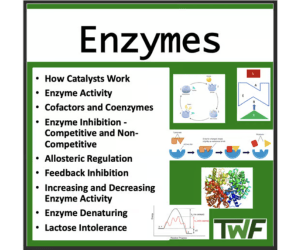
Enzymes - Senior High School Biology lesson
Science, Life Sciences, Biology, Grade 11, 12, Teacher Tools, Lesson Plans
Enyzmes - Senior High School Biology lesson The lesson covers the following topics; How Catalysts Work, Enzyme Activity, Cofactors and Coenzymes, Enzyme Inhibition - Competitive and Non-Competitive, Allosteric Regulation, Feedback Inhibition, Increasing and Decreasing Enzyme Activity, Enzyme Denaturing, and Lactose Intolerance. The lesson includes the teacher and student version of the presentation, three embedded videos, an auto-graded exit ticket, and a student lesson handout so the students can record the notes on a more condensed medium. The lesson is entertaining, engaging, and classroom-tested. This lesson is designed to be effective whether you're in a traditional classroom or a virtual one. With both a teacher version and a student version, it seamlessly fits into your lesson plans, making learning engaging and adaptable. Assessment made easy I've included an auto-graded Exit Ticket and a quiz with an answer key. This allows you to assess your student's understanding without increasing your workload. Whether you use PowerPoint or Google Slides, prefer Word or Google Docs, this lesson will be perfect for your classroom as it comes in both Office and Google formats for your convenience. The student version of the presentation has some of the text removed so that your students can fill in some notes while not spending the entire class doing so. This keeps them active and engaged, and encourages discussion.
Author Teach With Fergy
Tags Biochemistry, Senior Biology Lesson, Biology Lesson, Senior Biology, Proteins, Enzymes, Cofactors, Coenzymes, Allosteric Regulation

I WONDER - Can Owls Live In The Desert | Animated Video Lesson
STEM, Biology, Life Sciences, Science, Animals, Grade 1, 2, 3, 4, 5, 6, 7, 8, Lesson Plans, Teacher Tools
Video Introduction Animal kingdoms are full of fascinating wonders to learn. This video is designed for the students to learn more about animals in different countries. I WONDER - Can Owls Live In The Desert | Animated Video Lesson Do you like animals? what is your favorite one? Do you own a pet? If yes, tell us more about it, like what its name? And what do you like most about it? What are the animal kingdoms? Can you write down the characteristics of each animal class like mammals, birds, reptiles, amphibian, fish and mollusks. Do you know that some animals can sing, can you name any of them? What is the largest and the smallest mammal in the world? What is the largest and the smallest bird in the world? What is the largest and the smallest fish in the world? I WONDER - Can Owls Live In The Desert | Animated Video Lesson The video is perfect for encouraging the researching skills for the students, while learning more about these fantastic animals. I WONDER - Can Owls Live In The Desert | Animated Video Lesson This friendly designed video is suitable for students at school, homeschooling, and as a group activity. Format Available in MP4 format.
Author Educational Voice
Tags Can Owls Live In The Desert, Can Owls Live In The Desert Video, Owls, Owl, Owls Facts, Owls Facts For Kids, Owls Video, Owls Video For Kids, Owl Facts, Owl Video

Middle School Earth Science Lesson: Weathering, Erosion, & Deposition
Science, Earth and Environmental Sciences, Environmental Science, Earth Sciences, Grade 6, 7, 8, 9, Teacher Tools, Lesson Plans
Middle School Earth Science Lesson: Weathering, Erosion, & Deposition Attention educators! Whether you're guiding students in a traditional classroom or leading young minds through homeschooling, this Middle School Earth Science Lesson: Weathering, Erosion, & Deposition resource is designed to simplify the teaching of vital Earth Science topics. Focusing on Weathering, Erosion, and Deposition, this comprehensive two-day lesson is tailored for middle school students. The material, which spans a two-day lesson plan, provides both student and teacher versions of the presentation. This Middle School Earth Science Lesson: Weathering, Erosion, & Deposition is organized to facilitate hands-on, inquiry-based learning while also promoting essential discussions. The lesson has been constructed in clear language, ensuring that middle school students find it accessible and straightforward. To augment understanding, the presentation is enhanced with many visuals, and you'll also find six embedded videos. These videos make comprehension not only easier but also more engaging for young learners. Here's a glimpse of the topics you'll encounter in sequence: Physical Weathering Chemical Weathering Erosion Sediment Transport Deposition This resource equips educators with: A teacher-specific version of the presentation A student version of the presentation Six integrated instructional videos An auto-graded Exit Ticket A separate quiz (along with an answer key) A detailed student lesson handout Crafted with attention to detail, this Earth Science lesson offers an effective and enjoyable learning experience. It serves as a reliable guide for educators aiming to instill a robust understanding of weathering, erosion, and deposition processes in middle school students. Google and Distance Learning Ready This lesson includes both Office and Google formats for ALL resources. The presentation is in PowerPoint and Google Slides while all documents contain Word and Google Doc versions. Your resource is perfect for distance learning and integrates seamlessly with Google Classroom as I've included a link that will automatically create a copy of the resources and put them directly into your Google Drive with one click. Download--> Open --> Click --> Assign to your students Having both options allows you to use either without worrying about formatting issues as all the work has already been done for you. It safeguards you in case your department or school decides to go Google 100% and allows you as well as your students to access everything no matter where you are or what kind of equipment is being used. The student version of the presentation contains multiple blanks that need to be filled in throughout the lesson. These blanks are conveniently underlined and bolded on the teacher copy. I have found this to be the most effective means of keeping my students engaged and active without having them write everything out. This also leaves more time for discussion and activities. I also have a range of assignments and lessons/units from other grade levels at my store. Also, please visit my blog Teach With Fergy for my thoughts on teaching, learning, and everything in between.
Author Teach With Fergy
Tags Earth’s Elliptical Path , Earth’s Motion Around The Sun , The Seasons , Earth’s Tilt , Earth’s Revolution , Equinox , Perihelion , Aphelion
I WONDER - What Did The Albertosaurus Eat | Animated Video Lesson
Animals, Life Sciences, Science, History: Ancient, History, Social Studies, History: World, Grade 4, 5, 6, 7, 8, 9, 10, Lesson Plans, Teacher Tools
Video Introduction An amazing video designed for the students to learn more about dinosaurs in different countries. I WONDER - What Did The Albertosaurus Eat | Animated Video Lesson Do you like dinosaurs? what is your favorite one? Do you own a pet? If yes, tell us more about it, like what its name? And what do you like most about it? Do you think that your pet has been evolved from a dinosaur? Can you write down the characteristics of your favourite dinosaur like it's shape, their rivals, where did it use to live and what was their favourite food? What is the largest and the smallest dinosaur that ever found? Why is the T-rex is so famous? Have you ever read any interesting facts about it? Can you name any of the carnivores or herbivores dinosaurs? I WONDER - What Did The Albertosaurus Eat | Animated Video Lesson The video is perfect for encouraging the researching skills for the students, while learning more about dinosaurs. I WONDER - What Did The Albertosaurus Eat | Animated Video Lesson This friendly designed video is suitable for students at school, homeschooling, and as a group activity. Format Available in MP4 format.
Author Educational Voice
Rating
Tags What Did The Albertosaurus Eat, What Did The Albertosaurus Eat Video, Albertosaurus, Albertosaurus Facts, Albertosaurus Video, Albertosaurus Video For Kids, Albertosaurus Facts For Kids, Dinosaur
I WONDER - How Are Echoes Caused | Animated Video Lesson
Physics, Science, Grade 4, 5, 6, 7, 8, 9, 10, Lesson Plans, Teacher Tools
Video Introduction An amazing activity designed for the students to learn more about STEM. I WONDER - How Are Echoes Caused | Animated Video Lesson Do you like STEM subjects? what is your favorite one? Have you ever tried to plant a seed? If yes, tell us more about it. Or have you ever tried to invent something? If yes, tell us more about it. And how do you think it will help us? Have you ever seen a microorganism under a microscope? What was it? And how it looked like? Mathematics is a marvelous subject. Let' sharpen our brains and solve some equations. Do you like timetable tricks? What is your favorite one? Do you know how to code? Have you ever created an app or a game before? If yes, how was it like? I WONDER - How Are Echoes Caused | Animated Video Lesson The video is perfect for encouraging the researching skills for the students, while learning more about this fantastic topic. I WONDER - How Are Echoes Caused | Animated Video Lesson This friendly designed video is suitable for students at school, homeschooling, and as a group activity. Format Available in MP4 format.
Author Educational Voice
Tags How Are Echoes Caused, How Are Echoes Caused Video, Echoes, Echo, Echoes Facts, Echoes Facts For Kids, Echoes Video, Echoes Video For Kids, Sound, Sound Facts

Lorikeet Unit Study | Build a Love Bird Craft | Rainforest Animals
ELA, Reading, Reading Comprehension, Grammar, Language Development, Spelling, Writing, Science, Life Sciences, Animals, Grade 2, 3, 4, Lesson Plans, Teacher Tools
Lorikeet Unit Study | Build a Love Bird Craft | Rainforest Animals This engaging and ready-to-use educational resource is designed for Grades 2, 3, and 4. It's versatile enough to fit into any lesson plans, be it language arts or science. Boasting an interactive learning experience, the unit study engages multiple subjects including zoology, spelling, writing, grammar and reading comprehension along with elements of Science. No-Prep Feature One of its key features is its No-Prep functionality. This ensures that high content quality and engagement are delivered without compromising on your valuable teaching time - be it teaching large groups or single students at home. About The Unit The unit revolves around Rainbow Lorikeets. It focuses on developing fine motor skills through cutting & crafting activities while stimulating critical thinking with literature art interactions. 'Fast Facts about rainbow lorikeets' provides inputs for mini projects or class discussions— a hands-on approach in learning about rainforests animal ecosystems. Inclusion of various online sources such as YouTube via QR codes allows user-friendly digital access still maintaining necessary hygiene factor during these times. Holiday-based themes like Valentine’s Day can transform into charming love bird crafts serving as both an educational project each adding value beyond aesthetics besides making early finisher activities fun! All Round Growth & Assessment Avenues Apart from improving cognitive development amongst students by blending varied interdisciplinary methods; to ascertain effective understanding—a delicate balance between interest & assessment —is maintained through designing comprehension quizzes in multiple-choice format yet not intimidating young learners! In essence, the Lorikeet Unit Study isn't just another educational resource.. it's a fun-filled journey exploring the fascinating world of lorikeets.
Author Heather Huhman
Tags Lorikeet, Rainforest Animals, Bird Craft, Language Arts, Science