



3,970 products added recently
Page 119 - Popular Lesson Plans
Explore a curated selection of popular lesson plans that have proven successful in classrooms. Covering various subjects and topics, these resources provide innovative ideas and activities. Use them to refresh your curriculum and engage your students with tried-and-true methods.

 Show filters


8th Grade Science Diagnostic Assessment & Review System
Science, Grade 8, Assessments, Teacher Tools, Lesson Plans, Worksheets & Printables
Start the year with a clear picture of student readiness using this 8th grade beginning of year science assessment and targeted skills system. With a 50-question diagnostic worth 114 points , scoring and analysis tools, instructional grouping support, 11 targeted follow-up practice pages , scientific reading passages, CER tasks, and complete explained answer keys, this resource helps teachers move from assessment results to focused instruction. Designed as a complete Assess → Analyze → Group → Review → Reteach system, this Grade 8 science resource emphasizes the reasoning demands students need as they prepare for high school science. Students analyze multi-step problems, real-world scenarios, data tables, experimental setups, scientific models, graphs, reading passages, and Claim-Evidence-Reasoning tasks across Life Science, Physical Science, Earth & Space Science, and Scientific Practices & Reading . What’s Included This 8th grade science assessment and review system includes: ✅ 50-question beginning-of-year science diagnostic ✅ 114 total assessment points ✅ Life Science questions ✅ Physical Science questions ✅ Earth & Space Science questions ✅ Scientific Practices & Reading questions ✅ Multiple-choice questions ✅ Short-answer questions ✅ Diagram and model interpretation ✅ Data tables ✅ Graph reading ✅ Multi-step reasoning tasks ✅ Scientific scenarios ✅ Vocabulary-in-context questions ✅ Claim-Evidence-Reasoning (CER) tasks ✅ 2 short scientific reading passages ✅ Evidence-based reading questions ✅ Pedigree interpretation ✅ Natural selection and adaptation analysis ✅ Finch selection data ✅ Cladogram interpretation ✅ Predator-prey data ✅ Periodic table patterns ✅ Chemical equation reasoning ✅ Conservation of mass data ✅ Velocity-time graph analysis ✅ Wave anatomy ✅ Transverse and longitudinal wave comparison ✅ Electromagnetic spectrum interpretation ✅ Seafloor-spreading model ✅ Spreading-rate calculation ✅ Star life-cycle model ✅ Atmospheric CO₂ graph analysis ✅ Experimental design and reliability ✅ Mean and outlier analysis ✅ Two-series graph interpretation ✅ Answer recording sheet ✅ Quick-reference answer key ✅ Skill-by-skill scoring chart ✅ Strand analysis tool ✅ Secure, Developing, and Needs Support performance bands ✅ Individual Student Performance Profile ✅ Whole-class data tracker ✅ Suggested instructional groups ✅ 11 targeted follow-up science practice pages ✅ “Key Concept” refresher on every follow-up page ✅ “Extension” task for students who are Secure ✅ All-new follow-up practice with no repeated assessment questions ✅ Reading-for-evidence follow-up practice ✅ CER writing follow-up practice ✅ Complete answer keys ✅ Suggested short-answer responses ✅ Suggested reading-response answers ✅ Completed visual and diagram answers ✅ Sample CER responses ✅ Short “why” explanation for every assessment item ✅ Partial-credit guidance Part 1 contains 50 rigorous mixed-format questions worth 114 total points . The Teacher Guide recommends two 45-minute sessions and explains that the diagnostic emphasizes multi-step reasoning, evidence-based conclusions, data tables, experimental setups, model interpretation, and reading scientific text for evidence. Part 2 turns student responses into actionable data with an answer recording sheet, quick-reference key, skill-by-skill scoring chart, strand analysis, performance bands, individual student profiles, a whole-class data tracker, and suggested instructional groups. Part 3 includes 11 ready-to-assign targeted follow-up pages with all-new practice. Every page includes a concise Key Concept refresher and an Extension task, and the set includes dedicated pages for Reading Science for Evidence and CER Writing . Part 4 provides correct answers for all 50 questions, explanations of why answers are correct, suggested responses for short-answer and reading tasks, completed diagrams, sample CER responses, and partial-credit guidance. How It Works in the Classroom Use this 8th grade beginning of year science assessment during the first weeks of school to identify what students retained from prior science learning, how well they reason through multi-step problems, and where instruction should begin. The resource follows a practical five-step system: 🔎 Assess — Students complete the 50-item mixed-format science diagnostic 📊 Analyze — Score by skill and strand to identify patterns and gaps 👥 Group — Form targeted instructional groups based on shared needs 📝 Review — Assign focused follow-up practice by strand or skill 🎯 Reteach — Use complete explanations, worked visuals, and model CER responses to support next steps The Assess → Reteach System chart on page 2 of Part 1 directly connects each stage to the matching component of the four-part resource. The same page summarizes the 50 questions, 114 points, broad format range, four reporting areas, two scientific reading passages, and suggested administration time. Use this resource for: ⭐ Beginning-of-year science assessment ⭐ 8th grade science diagnostic ⭐ Middle school science pre-assessment ⭐ Back-to-school science review ⭐ High school science readiness ⭐ Science readiness check ⭐ Formative assessment ⭐ Small-group planning ⭐ Science intervention ⭐ Targeted reteaching ⭐ Data-driven instruction ⭐ Skill-based grouping ⭐ Independent follow-up practice ⭐ Science stations ⭐ CER practice ⭐ Reading in science ⭐ Text-evidence practice ⭐ Graph and data interpretation ⭐ Multi-step science reasoning The Scoring at a Glance chart on page 2 of Part 2 breaks the assessment into four strand totals: Life Science /31, Physical Science /40, Earth & Space Science /24, and Scientific Practices /19 , for 114 total points . It also defines three performance bands: Secure (80%–100%) , Developing (50%–79%) , and Needs Support (below 50%) . The Student Performance Profile on page 15 of Part 2 gives teachers a one-page strand snapshot with space for strengths, focus areas, assigned Part 3 practice pages, and group placement. The Class Data Tracker on page 16 provides a whole-class view so teachers can scan columns for class-wide gaps and rows for individual grouping needs. Standards & Learning Goals This eighth grade science diagnostic assessment reviews foundational science concepts and advanced scientific reasoning across four major areas: 🌱 Life Science — levels of biological organization, homeostasis, interacting body systems, pedigrees, mutations, natural selection, evolution, adaptations, selection pressure, inheritance, cladograms, common ancestry, predator-prey relationships, biodiversity, ecosystem resilience, and evolution CER reasoning ⚛️ Physical Science — periodic table patterns, atomic number, protons, groups and periods, valence electrons, periodic trends, balancing chemical equations, conservation of mass, open and closed systems, exothermic and endothermic reactions, velocity-time graphs, Newton’s second law, kinetic energy, potential and kinetic energy transformations, wave anatomy, transverse and longitudinal waves, wavelength and frequency, electromagnetic spectrum, and wave-energy transfer 🌎 Earth & Space Science — seafloor spreading, magnetic stripes, evidence for plate tectonics, mantle convection, spreading-rate calculations, star life cycles, gravity and orbits, light-years, tides, atmospheric CO₂ trends, and Earth-and-space CER reasoning 🔬 Scientific Practices & Reading — reliable experimental design, repeated trials, control groups, identifying experimental flaws, graph analysis, comparing data series, calculating means, identifying outliers, reading scientific texts for evidence, connecting evidence to science concepts, drawing evidence-based conclusions, and reading-based CER Students demonstrate understanding through varied science tasks rather than one question type. The diagnostic includes a pedigree , finch beak-depth data , cladogram , natural-selection sequence , predator-prey table , periodic table model , Group 1 reactivity data , open-versus-sealed reaction mass data , velocity-time graph , wave anatomy model , wave-type comparison , electromagnetic spectrum , seafloor-spreading diagram , seafloor age data , Sun-like star life cycle , atmospheric CO₂ graph , bacteria-growth comparison graph , and repeated-trial data analysis. The Skill-by-Skill Scoring Chart on pages 11–13 of Part 2 helps teachers pinpoint specific gaps instead of relying only on one overall score. Skills include homeostasis, pedigrees, mutations, natural selection, selection data, cladograms, adaptation, biodiversity, periodic patterns, valence electrons, balancing equations, conservation of mass, exothermic and endothermic reactions, motion graphs, Newton’s second law, kinetic energy, wave anatomy, wave types, electromagnetic spectrum, seafloor spreading, tectonic evidence, spreading rates, star life cycles, gravity and orbits, experimental reliability, identifying flaws, mean and outlier analysis, reading for evidence, and reading-based CER. A particularly valuable feature is the integration of science literacy . Part 1 includes two short scientific texts with evidence-based questions. Students read “Why Antibiotics Can Stop Working” to connect mutation, survival, reproduction, and antibiotic resistance to natural selection, and “Healing the Ozone Layer” to analyze evidence connected to CFC reduction and ozone recovery. Why Teachers Love It ✨ Move beyond a single test score. Results can be analyzed by strand and individual skill, helping teachers see exactly where students are secure and where review is needed. ✨ Prepare students for high school science reasoning. The Teacher Guide explicitly emphasizes multi-step problems, evidence-based conclusions, data tables, experimental setups, model interpretation, and scientific reading—the kinds of demands students increasingly encounter in advanced science coursework. ✨ Turn assessment data into an instructional plan. The scoring tools connect results to performance bands, student profiles, instructional groups, and targeted follow-up practice instead of leaving teachers with a stack of completed tests. ✨ Measure both science knowledge and reasoning. Students do more than recall vocabulary. They interpret models, calculate rates, compare data, explain mechanisms, evaluate evidence, analyze graphs, and justify conclusions. ✨ Integrate science and reading skills. Two short scientific passages ask students to cite evidence, connect text details to science concepts, interpret measured changes, and construct evidence-based responses. ✨ Use relevant scientific topics for reading practice. Students analyze antibiotic resistance and ozone-layer recovery, connecting real scientific evidence to natural selection, environmental change, and evidence-based reasoning. ✨ Strengthen evolution and natural selection understanding. Students work with finch data, beetle camouflage, selection pressure, adaptation, inheritance, cladograms, mutations, and CER reasoning. ✨ Build readiness for chemistry concepts. Students interpret periodic table patterns, atomic numbers, valence electrons, reactivity trends, balanced equations, conservation of mass, and exothermic versus endothermic reactions. ✨ Strengthen physics reasoning. Students analyze velocity-time graphs, apply F = m × a , reason about kinetic energy, explain potential-to-kinetic energy transformations, interpret wave features, compare transverse and longitudinal waves, and analyze the electromagnetic spectrum. ✨ Connect Earth science models to quantitative reasoning. Students interpret seafloor spreading, use age-and-distance data to calculate a spreading rate, analyze magnetic-stripe evidence, and connect mantle convection to plate movement. ✨ Support data-driven small groups. Part 2 includes suggested instructional groups that help teachers sort students by shared gaps and connect them to matching Part 3 practice. ✨ Differentiate with clear performance bands. Use Secure, Developing, and Needs Support ranges to guide enrichment, targeted practice, or foundational small-group reteaching. ✨ Assign only the review students need. The 11 targeted follow-up pages include: Cells & Genetics Review Evolution & Adaptation Review Ecosystems Review Atoms & Reactions Review Forces, Energy & Motion Review Waves Review Plate Tectonics & Earth Systems Review Space Science Review Experimental Design & Data Review Reading Science for Evidence Review CER Writing Review The Practice Page Menu on page 2 of Part 3 directly matches common student difficulties to specific follow-up pages, making targeted assignment faster. ✨ Refresh key concepts before practice. Every targeted page includes a concise Key Concept section. For example, the Atoms & Reactions page reviews atomic number, groups, periods, conservation of mass, and exothermic versus endothermic reactions before students begin fresh practice. ✨ Extend learning for students who are already secure. Every follow-up page includes an Extension task that pushes students into explanation, application, prediction, argument, or investigation design. ✨ Use fresh follow-up practice instead of repeating the diagnostic. Part 3 explicitly provides all-new practice so students can demonstrate understanding with new examples and situations. ✨ Teach students how to read science for evidence. The dedicated Reading Science for Evidence Review page includes a new passage about a warming mountain lake and changing trout and bass populations. Students identify evidence, explain biological relationships using the text, connect the passage to life science, and generate a testable follow-up question. ✨ Build stronger Claim-Evidence-Reasoning responses. CER appears throughout the diagnostic and receives its own targeted follow-up page. At Grade 8, students are expected to connect specific evidence to a named scientific principle rather than simply restating the data. ✨ Make grading more manageable. Part 4 provides correct answers, short explanations of why, suggested responses for open-ended and reading items, completed diagrams, sample CER responses, and partial-credit guidance. ✨ Use completed diagrams for faster checking. The Completed Diagrams Quick View on page 2 of Part 4 points teachers to fully worked versions of the pedigree, cladogram, natural-selection model, periodic table, wave anatomy, wave types, electromagnetic spectrum, seafloor spreading, and star life cycle. ✨ Score open-ended work more consistently. Part 4 explains that multi-part items can receive point-by-point partial credit and that CER and reading items should be evaluated for a reasonable claim, specific text or data evidence, and reasoning that links them. ✨ Keep the instructional loop connected. Assessment, analysis, grouping, targeted review, science literacy practice, reteaching, and answer support are designed as one coordinated system rather than disconnected activities. Start the year knowing what students understand, how well they reason through complex science tasks, and what they need next with this 8th grade beginning of year science assessment . Download this complete middle school science diagnostic and targeted review system to assess readiness, analyze results by strand and skill, create focused instructional groups, assign specific follow-up practice, strengthen science reading and CER writing, and support reteaching with complete explained answer keys. Perfect for teachers searching for an 8th grade science diagnostic assessment , beginning-of-year science review, middle school science pre-assessment, back-to-school science assessment, eighth grade science review, high school science readiness, Life Science review, Physical Science review, Earth and Space Science review, Scientific Practices assessment, genetics, pedigrees, natural selection, evolution, cladograms, ecosystems, periodic table, chemical reactions, conservation of mass, Newton’s laws, forces and motion, energy transformations, waves, electromagnetic spectrum, plate tectonics, seafloor spreading, star life cycles, experimental design, graph analysis, reading science for evidence, CER practice, science intervention, small-group science planning, data-driven instruction, or targeted science reteaching.
Author Bright Classroom Ideas Marketplace
Rating
Tags Science, Assessment, Worksheet, Back To School, Review
I WONDER - What Entertainment Did The Romans Have | Animated Video Les
History: Ancient, History, Social Studies, History: Europe, Grade 6, 7, 8, 9, 10, 11, 12, Lesson Plans, Teacher Tools
Video Introduction An amazing video designed for the students to learn more about history. I WONDER - What Entertainment Did The Romans Have | Animated Video Lesson Do you like history? Which topic do you really enjoy about history? Have you ever read an interesting fact about the Vikings? If yes, can you mention them? What do you like most about the Victorian era? Can you name all the Tudors? Have you ever wondered how people used to live in ancient Japan and ancient China? Do you know any interesting facts about ancient Egyptians and the Pharaohs? Have you ever visited South America? What do you know about Incas and Aztecs? Celtic culture was really one of a kind, can you name any of the places that Celts used to live in? Imagine yourself living during the ancient Roman empire, how your life will look like? Ancient Greece was an amazing place to live in. What do you know about ancient Greek life? I WONDER - What Entertainment Did The Romans Have | Animated Video Lesson The video is perfect for encouraging the researching skills for the students, while learning more about history. I WONDER - What Entertainment Did The Romans Have | Animated Video Lesson This friendly designed video is suitable for students at school, homeschooling, and as a group activity. Format Available in MP4 format.
Author Educational Voice
Tags What Entertainment Did The Romans Have, What Entertainment Did The Romans Have Video, Romans Entertainment, Romans Entertainment Facts, Romans Entertainment Video, Romans Entertainment Video For Kids

I WONDER - What Instruments Are In The Percussion Section
Music, Creative Arts, Grade 3, 4, 5, 6, 7, 8, 9, Lesson Plans, Teacher Tools
Video Introduction An amazing video designed for the students to learn more about music. I WONDER - What Instruments Are In The Percussion Section | Animated Video Lesson The percussion section is the most diverse and versatile group in the orchestra, with instruments of various shapes, sizes, and materials. Timpani, also known as kettle drums, are large, bowl-shaped drums that can be tuned to specific pitches, often used for dramatic moments or to add depth to the music. Xylophones have wooden bars that produce a bright, melodic sound when struck with mallets. Snare drums have a crisp, sharp sound, often used for rhythm and accenting. Cymbals, made of metal, can create a range of sounds from a soft shimmer to a loud crash, adding excitement and drama to the music. I WONDER - What Instruments Are In The Percussion Section | Animated Video Lesson The video is perfect for encouraging the artistic skills for the students, while learning more about this fantastic topic. I WONDER - What Instruments Are In The Percussion Section | Animated Video Lesson This friendly designed video is suitable for students at school, homeschooling, and as a group activity. Format Available in MP4 format.
Author Educational Voice
Rating
Tags What Instruments Are In The Percussion Section, What Instruments Are In The Percussion Section Video, Percussion Instruments, Percussion Instruments Facts, Percussion Instruments Video, Percussion Instruments Video For Kids
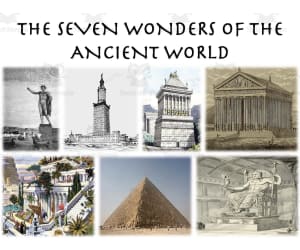
Seven Wonders Mini Unit
Social Studies, History, History: World, History: Ancient, Grade 6, 7, 8, 9, Teacher Tools, Lesson Plans
Introducing the Seven Wonders Mini Unit This exciting teaching resource takes students on a journey to discover the Seven Wonders of the Ancient World, delivering curriculum-appropriate content for grades 6 to 9. It aligns specifically with Social Studies - world history topics, focusing on ancient and global aspects. Inclusions in the Mini Unit: Reading sheets: Packed with information, these allow students to gain knowledge about these wonders around the world. Image sheets: These stir vivid imaginations, painting accurate pictures of what once stood as marvels across different continents. Crosswords and question sheets: Helps test retention while keeping engagement levels high. Included PowerPoint presentation:Another platform where learners can absorb vital content through visual means– designed around multimodal teaching strategies. Multimodal teaching strategies:A standout feature providing multiple ways for students to learn and engage. Pedagogical instructions & guidelines: A valuable addition is included setting guidebooks for each lesson; perfect whether you're an educator in a public school setting or homeschool environment gives clarity leading lessons Poster/Booklet materials : The Convenience Of Downloadable Content All elements are downloadable via ZIP file type format at your convenience- this well-thought-out instructional kit is more than just compilation of material. It aids you in orchestrating holistic lessons that do more than instruct—they inspire! Check out our previews for more detailed insights into our resources plus examples from our readings. We've got plenty other social studies resources up on offer at my store. Transform your class into an innovative history class where history leaps off pages into young minds willing to go back in time - Welcome aboard on this educative adventure! And don't forgetWe've got many other social studies resources available so keep hunting ;)
Author Mr Gray History
Tags Ancient Wonders, World History, Social Studies, Critical Thinking, Multimodal Teaching
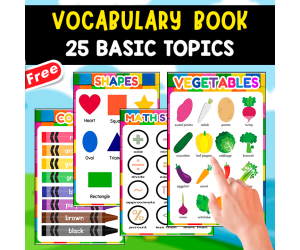
VOCABULARY BOOK FOR KIDS | 25 FREE BASIC TOPICS
Vocabulary, Language Development, ELA, Phonics, Spelling, Pre-Reading, Early Learning, Elementary, Homeschool Resources, Not Grade Specific, Pre-K, Activities, Worksheets & Printables, Teacher Tools, Lesson Plans, Quizzes and Tests
VOCABULARY BOOK FOR KIDS | 25 FREE BASIC TOPICS INTRODUCTION: At EDITORIAL ARENAS EDUCATIVAS our goal is to create engaging and effective educational resources that help children learn and grow. We invite you to explore our full store and discover a wide range of materials. You'll find resources for reading, writing, math, and Spanish language development! MAIN DESCRIPTION: 1) What is the recommended printing method for this resource? I recommend printing this document in PDF format so you won't experience any errors when printing. 2) What educational standards were used as the basis for creating this material? This document was not developed based on any specific standard. 3) Who is the creator of this resource and how should it be cited? The creator of this document is EDITORIAL ARENAS EDUCATIVAS. 4) Is this resource available for free or does it require a purchase? Because we vocationally work for the education of thousands of students, we are offering this document for free. 5) This resource is for individual use only; what restrictions apply to its redistribution or sale? We ask that you share our link so more people can download our resource or recommend our store. It would help us greatly. SECONDARY AND COMPLEMENTARY INFORMATION: 1) Does this material allow for custom editing? This educational document is available in PDF format, so you cannot edit it. You simply need to download and then print it. 2) What main topic does the resource cover? This document has been developed to address a basic topic that children in kindergarten through elementary school should master. This document will also be helpful to the general public who want to learn. 3) What version does this document correspond to? This educational resource is designed in PDF format, which will make your download experience much simpler and easier to use. 4) Is the material designed in color or black and white? This document has been designed in color (if required) or is sometimes created in black and white to make your learning experience easier.
Author EDITORIAL LAURA EDUCA
Rating
Tags FREE, FREE RESOURCES, LEARNING BINDER, VOCABULARY, BASIC VOCABULARY, SPELLING, VOCABULARY FOR KIDS
I WONDER - What Is A Group Of Lions Called | Animated Video Lesson
STEM, Biology, Life Sciences, Science, Animals, Grade 1, 2, 3, 4, 5, 6, 7, 8, Lesson Plans, Teacher Tools
Video Introduction Animal kingdoms are full of fascinating wonders to learn. This video is designed for the students to learn more about animals in different countries. I WONDER - What Is A Group Of Lions Called | Animated Video Lesson Do you like animals? what is your favorite one? Do you own a pet? If yes, tell us more about it, like what its name? And what do you like most about it? What are the animal kingdoms? Can you write down the characteristics of each animal class like mammals, birds, reptiles, amphibian, fish and mollusks. Do you know that some animals can sing, can you name any of them? What is the largest and the smallest mammal in the world? What is the largest and the smallest bird in the world? What is the largest and the smallest fish in the world? I WONDER - What Is A Group Of Lions Called | Animated Video Lesson The video is perfect for encouraging the researching skills for the students, while learning more about these fantastic animals. I WONDER - What Is A Group Of Lions Called | Animated Video Lesson This friendly designed video is suitable for students at school, homeschooling, and as a group activity. Format Available in MP4 format.
Author Educational Voice
Tags What Is A Group Of Lions Called, What Is A Group Of Lions Called Video, Group Of Lions, Group Of Lions Facts, Group Of Lions Facts For Kids, Group Of Lions Video, Group Of Lions Video For Kids, Lions
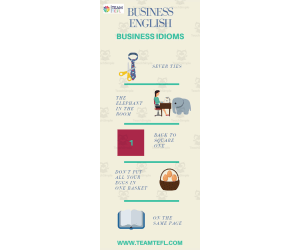
Business Idioms Lesson Plan | Business English Level 2
ELA, Language Development, ESL, Grade 10, 11, 12, Teacher Tools, Lesson Plans
Business English ESL EFL ELL TEFL lesson plan about Business Idioms. It is ideal for older students and adult education. Students will learn how to develop and use idioms in different areas of business . They will learn vital vocabulary and gain confidence on their English speaking journey. This business English lesson plan includes: A warmer Closed exercises Open exercise Group activity Revision Role-play Writing task This lesson can also be accessed through Google Apps. There are exercises for students to complete in this lesson. Answer key included. This resource is a part of our level 2 series for intermediate and advanced ESL students. All of the TEAM TEFL Business English lessons are available on Teach Simple. You can see the table of contents for all three levels below: Business English Level 1 contents TELEPHONE SKILLS LETTERS & EMAILS CUSTOMER SERVICE SOCIAL MEDIA BRANDING SETTING TARGETS WORK ENVIRONMENT SALES PRESENTATIONS MEETINGS Business English Level 2 contents LETTERS & EMAILS CUSTOMER SERVICE ADVERTISING NEGOTIATIONS SOCIAL MEDIA SETTING TARGETS MARKETING LEADERSHIP MARKET RESEARCH WORK ENVIRONMENT HOW TO WRITE A C.V ENVIRONMENTAL ISSUES BUSINESS IDIOMS Business English Level 3 contents ADVERTISING SALES MEETINGS COMPUTERS & TECHNOLOGY CULTURAL DIFFERENCES INTERVIEWS MONEY & FINANCE PRESENTATIONS MEDIA IMPACT BUSINESS IDIOMS NEGOTIATIONS LEADERSHIP INVESTMENTS
Author TEAM TEFL
Tags Business, Idioms, Adult Education, English, EFL, Idioms Lesson Plan, Lesson Plans On Idioms
I WONDER - Why Do Bats Sleep Upsidedown | Animated Video Lesson
STEM, Life Sciences, Science, Biology, Animals, Grade 1, 2, 3, 4, 5, 6, 7, 8, Lesson Plans, Teacher Tools
Video Introduction Animal kingdoms are full of fascinating wonders to learn. This video is designed for the students to learn more about animals in different countries. I WONDER - Why Do Bats Sleep Upsidedown | Animated Video Lesson Do you like animals? what is your favorite one? Do you own a pet? If yes, tell us more about it, like what its name? And what do you like most about it? What are the animal kingdoms? Can you write down the characteristics of each animal class like mammals, birds, reptiles, amphibian, fish and mollusks. Do you know that some animals can sing, can you name any of them? What is the largest and the smallest mammal in the world? What is the largest and the smallest bird in the world? What is the largest and the smallest fish in the world? I WONDER - Why Do Bats Sleep Upsidedown | Animated Video Lesson The video is perfect for encouraging the researching skills for the students, while learning more about these fantastic animals. I WONDER - Why Do Bats Sleep Upsidedown | Animated Video Lesson This friendly designed video is suitable for students at school, homeschooling, and as a group activity. Format Available in MP4 format.
Author Educational Voice
Tags Why Do Bats Sleep Upsidedown, Why Do Bats Sleep Upsidedown Video, Bats Sleep Upsidedown, Bats Sleep Upsidedown Facts, Bats Sleep Upsidedown Facts For Kids, Bats Sleep Upsidedown Video, Bats Sleep Upsidedown Video For Kids
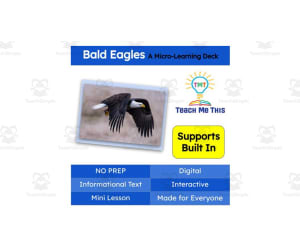
Bald Eagle | Interactive Science Lesson | Nature Collection | Micro-Learning Deck
Science, Life Sciences, Animals, Grade 6, 7, 8, 9, Teacher Tools, Lesson Plans
This micro-learning deck is the perfect accessory to your Science instruction! This digital slideshow presents Bald Eagle - Nature Collection Within this slideshow, you will receive: -Preview and Engager -Video Lesson -Reading Passage w/ Audio -Close Reading -Quick Write -Exit Ticket -Links for more learning The informational texts included in this resource alongside the informal assessments will keep your students engaged from beginning to end.
Author Teach Me This
Tags Interactive Science, Bald Eagle, Nature Collection, Learning Deck, Zoology
Force: Other Forces That Act Without Touching - FLASH-PC
Science, Physics, Common Core, Grade 5, 6, 7, 8, Teacher Tools, Lesson Plans
The Force: Other Forces That Act Without Touching - FLASH-PC Teaching Resource This teaching resource is designed to help students gain a deeper understanding of the concept of Force, especially covering aspects that involve forces acting without any physical contact. It is most suitable for students within fifth through eighth grades, and aligns with the Common Core State Standards. Main Components: Reading Passages: These carry essential concepts on 'other forces that act without touching', providing educators with all necessary knowledge for robust class discussions or engaging individual study sessions. 'Before You Read' Questions: To assess students’ prior knowledge and support new learning. 'After You Read' Questions: For reflection on learnt material, enabling learners to express their understanding confidently, thereby reinforcing physics principles inherent in Force. Dynamically produced Printables: These can perfectly supplement group activities or independent study time. Vocabulary Flashcards : Significantly enhance vocabulary retention and subject comprehension by use of these tools. In addition, there are also video elements available in order to facilitate visual learning while auditory learners are catered via high-quality audio resources. The software can function across PC compatible platforms either as an independent tool or within classroom settings while ensuring instructions align with Bloom's Taxonomy methodology which guides cognitive skills development across various disciplines. Inspirational note: This resource serves as a potential stepping stone towards nurturing future physicists!
Author Classroom Complete Press
Tags Software (PC)

Science Seek and Find Plants and Animals
Science, Life Sciences, Nature & Plants, Grade 2, 3, 4, Teacher Tools, Lesson Plans
Science Seek and Find Plants and Animals Resource The Science Seek and Find Plants and Animals resource is an engaging teaching tool, designed specifically for educators working with students in grades 2 through 4. This resource integrates botany learning with effective pedagogical practices as part of the science curriculum. Scope: This tool provides students a view into plants and animals knowledge. The twenty meticulously designed lessons intended to enhance young learners understanding on diverse characteristics, habitats, and intrinsic fascinations surrounding flora and fauna. Illustrations: Each lesson boasts finely detailed illustrations that encourage deeper understanding—reinforcing knowledge while stimulating curiosity. Engaging artwork across brings dual benefits: capturing attention while offering useful visual cues for memory enhancement. Versatility: This tool can adapt to several formats: In-class whole group instruction - Provokes discussions around animals & plants fostering critical thinking In smaller group instruction - Encourages detailed exploration of each aspect discussed related to flora & fauna As individual homework - Assists learners at their pace in unravelling key concepts about botany while encouraging them to know more about the immense animal diversity across earth's habitats Digital Format: We offer this product in a user-friendly PDF format which can be smoothly integrated into your lesson strategy, maintaining focus on learner outcomes without compromising on fun during the science learning journey – all set to light their interest path towards natural sciences from early age. In Nutshell... "Science Seek & Find: Plants &Animals" helps build bridges between fact-based education application including creative exploration giving enriching experience for student through comprehensive understanding leaning toward scientific literacy concerning plant life along triggering curiosity regarding myriad gorgeous species sharing Earth with us.</i
Author Classroom Complete Press
Tags PDF

Let's Chat Conversation Cards | "Forgive So You Can Live"
Special Resources, Social Emotional Learning (SEL), Grade 5, 6, 7, 8, 9, 10, 11, 12, Teacher Tools, Lesson Plans
Let's Chat Conversation Cards: Forgive So You Can Live The Let's Chat Conversation Cards are a wonderful teaching resource to help students build a positive mindset and strengthen relationships. This set focuses on the theme of forgiveness, encouraging constructive conversations about different perspectives. The cards spark thoughtful dialogue through open-ended questions and quotes related to showing compassion, taking responsibility, and moving forward. By grappling with the social-emotional topic of forgiveness, students practice respectful communication, critical thinking, and conflict resolution. Teachers can facilitate impactful small or whole group discussions using the Conversation Cards. The questions and quotes promote self-reflection, growth mindset, and mutual understanding. Use them for advisory lessons, morning meetings, or informal conversations. The Let's Chat Conversation Cards align with social-emotional learning standards focused on relationship skills. The constructive conversations build community, resilience, empathy, and forgiveness. Applicable for upper elementary through high school.
Author Respectful Ways
Tags SEL Lesson Plan, Conversation Cards, Spanish, Respectful Ways, Forgive, Trauma-informed, Social Emotional Learning, SEL, Character Education

I WONDER - How Long Would It Take To Climb Mount Everest
Geography, Social Studies, Grade 6, 7, 8, 9, 10, 11, 12, Lesson Plans, Teacher Tools
Video Introduction An amazing video designed for the students to learn more about famous places in different countries. I WONDER - How Long Would It Take To Climb Mount Everest | Animated Video Lesson What do you know about this place? Do you know in which part of the world it is? Have you ever visited this place? If yes, can you tell us more about your adventure, and what do you like the most about this place? Do you like reading about Geography? What is your favorite country in the whole world? If you are going on a trip where it will be? Which country? What you are going to see there? Does this country has a famous place to visit? I WONDER - How Long Would It Take To Climb Mount Everest | Animated Video Lesson The activity is perfect for encouraging the researching skills for the students, while learning more about this fantastic place. I WONDER - How Long Would It Take To Climb Mount Everest | Animated Video Lesson This friendly designed video is suitable for students at school, homeschooling, and as a group activity. Format Available in MP4 format.
Author Educational Voice
Tags How Long Would It Take To Climb Mount Everest, How Long Would It Take To Climb Mount Everest Video, Mount Everest, Mount Everest Facts, Mount Everest Facts For Kids, Mount Everest Video, Mount Everest Video For Kids

The Tell-Tale Heart: Full Lesson Plan w/ PowerPoints & Graphic Organizers
ELA, Literature, Grade 9, 10, 11, 12, Lesson Plans, Teacher Tools
The Tell-Tale Heart Full Lesson Plan Bundle This comprehensive reading lesson plan bundle for The Tell-Tale Heart short story provides educators with everything needed to teach Edgar Allan Poe's classic tale. The bundle contains a complete lesson plan, worksheets, answer keys, graphic organizers , and PowerPoint presentations that cover topics like characterization, plot structure, theme, symbolism, and more. Implementation ideas include whole-group instruction, small reading groups, or independent practice. The engaging materials are designed to help students understand this complex story through close reading, analysis, and discussion. Offered as editable Word and PDF files, this bundle offers flexible high school ELA resources to teach key reading skills with an iconic Gothic text.
Author Quality Teaching Products
Tags Reading Lesson Plan, Reading Powerpoint, Short Story, Fiction Text, Edgar Allan Poe, The Tell Tale Heart Plot Diagram
Number & Operations: Percentages with Fractions - Practice the Skill 2 - MAC Software
Math, Percentages, Common Core, Grade 3, 4, 5, Teacher Tools, Lesson Plans
Introduction to Number & Operations: Percentages with Fractions - Practice the Skill 2 - Mac Software A comprehensive educational tool, the Number & Operations: Percentages with Fractions - Practice the Skill 2 software targets enhancing understanding of percentages linked with fractions. Designed for educators across public schools and homeschooling initiatives, it is suitable for students at grade levels 3-5. Features The primary mode of learning revolves around a 'chapter mini' that contains curriculum -oriented content through practice skill activities developed in a timed drill format. This multifaceted approach not only provides entertainment but also effectively challenges learners by having them decipher fraction equivalents for given percentages. The software comes equipped with various math tools to amplify mathematical comprehension further. A standout feature of this Mac software lies in its multilingual support as it includes not only an English voice over and text but extends towards Spanish voice over and text as well; catering towards diversified classrooms with varying linguistic preferences. Pedagogical Goals and Alignments The pedagogical goals transcend standard didactical boundaries by aligning accordingly with Common Core State Standards and STEM initiatives. Furthermore, it adheres to guidelines penned down by NCTM (National Council Of Teachers Of Mathematics). Versatility in Teaching Styles The resource can be executed effectively across various teaching styles such as whole group discussions or small group collaborations. However adding flexibility for teachers, this tool can be efficiently utilized as a homework assignment too. That said, upon purchase you will receive one zip file containing MAC software which needs proper installation on device(s). Conclusion In sum, this teaching medium bridges the gap between students' understanding levels when it comes to percentages incorporated within fractions under math operations.
Author Classroom Complete Press
Tags Math Lesson Plan, Fractions Lesson, Percentages Activity, Digital Percentages, Math Skills
I WONDER - Did The Greeks Believe In Different Gods | Animated Video
History: Ancient, History, Social Studies, History: Europe, Grade 4, 5, 6, 7, 8, 9, 10, Lesson Plans, Teacher Tools
Video Introduction An amazing video designed for the students to learn more about history. I WONDER - Did The Greeks Believe In Different Gods | Animated Video Lesson Ancient Greece was an amazing place to live in. What do you know about ancient Greek life? Greek gods and goddesses used to have great powers. One can control the sea while the other can control the weather. Can you name any of the Greek gods or goddesses and mention their roles? Do you know that we still use some of the Greek gods and goddesses to name our new explorations in the space! I WONDER - Did The Greeks Believe In Different Gods | Animated Video Lesson The video is perfect for encouraging the researching skills for the students, while learning more about history. I WONDER - Did The Greeks Believe In Different Gods | Animated Video Lesson This friendly designed video is suitable for students at school, homeschooling, and as a group activity. Format Available in MP4 format.
Author Educational Voice
Rating
Tags Did The Greeks Believe In Different Gods, Did The Greeks Believe In Different Gods Video, Greek Gods, Greek Gods Video, Greek Gods Facts, Greek Gods Facts For Kids, Greek Gods Video For Kids

I WONDER - Can Spiders Live In Water | Animated Video Lesson
Animals, Life Sciences, Science, Biology, STEM, Grade 1, 2, 3, 4, 5, 6, 7, 8, Lesson Plans, Teacher Tools
Video Introduction Animal kingdoms are full of fascinating wonders to learn. This video is designed for the students to learn more about animals in different countries. I WONDER - Can Spiders Live In Water | Animated Video Lesson Do you like animals? what is your favorite one? Do you own a pet? If yes, tell us more about it, like what its name? And what do you like most about it? What are the animal kingdoms? Can you write down the characteristics of each animal class like mammals, birds, reptiles, amphibian, fish and mollusks. Do you know that some animals can sing, can you name any of them? What is the largest and the smallest mammal in the world? What is the largest and the smallest bird in the world? What is the largest and the smallest fish in the world? I WONDER - Can Spiders Live In Water | Animated Video Lesson The video is perfect for encouraging the researching skills for the students, while learning more about these fantastic animals. I WONDER - Can Spiders Live In Water | Animated Video Lesson This friendly designed video is suitable for students at school, homeschooling, and as a group activity. Format Available in MP4 format.
Author Educational Voice
Tags Can Spiders Live In Water, Can Spiders Live In Water Video, Spiders, Spider, Spiders Facts, Spiders Facts For Kids, Spiders Video, Spiders Video For Kids, Spider Facts, Spider Video
Measurement: Area & Volume - Practice the Skill 3 - MAC Software
Math, Measurements, Common Core, Kindergarten, Preschool, Grade 1, 2, Teacher Tools, Lesson Plans
Measurement: Area & Volume – Practice the Skill 3 - MAC Software This tailored tool aids educators in teaching and sharpening students understanding of measuring area and volume, crucial components of modern mathematics curriculum. Key Features: Specially designed as a chapter mini, this software offers curriculum-congruent content with an emphasis on Practice the Skill timed drill activities for enhanced learning benefits. Incorporating this educational resource into classroom activity promises to engage students in practical tasks where theyll convert provided volume measurements using various formulas. This real-life application approach honours NCTM guidelines while offering an essential bridge between theory and practice. User-friendly Math Tools: Variety adds spice to learning. Whether book time is allocated for whole groups or assisting small-sized clusters during tuition hours, these intuitive math tools can flex according to need in order to intensify every students grasp of measurement concepts. Dual Language offering: An innovative feature of this software lies within its dual language offerings - English and Spanish voice-over options accompany legible text. It caters both English and Spanish learners ensuring inclusivity for all classmates. Fundamental Alignment with Education Standards: Fundamentally aligned with Common Core State Standards and STEM initiatives Negotiates rigorous competency expectations alongside engaging manipulatives Specifically targets preschool-grade students up till grade 2 pupils. This coherent alignment makes it perfect for lesson planning within Math classrooms especially under subtopics like Measurements. Hassle-free Download: Ooffered compactly coded within one zip file compatible with MAC interfaces; without affecting operational speed or overall system efficiency. Overall, introducing computational intelligence without the categorial jargon makes education impactful significantly contributing towards molding capable future citizens who not just memorize but understand mathematical concepts. Embarking on this functionality enriched journey with the Measurement: Area & Volume - Practice the Skill 3 - MAC Software widens educational perspectives while maintaining enthusiasm.
Author Classroom Complete Press
Tags Math Lesson Plan, Digital Math, Digital Measurement, Are, Volume

Hoodwink | Figurative Language Activity | Micro-Learning Deck
ELA, Reading, Reading Comprehension, Grade 4, 5, 6, 7, Teacher Tools, Lesson Plans
Hoodwink | A Micro-Learning Deck for Figurative Language This teaching resource allows students to explore the figurative language term "hoodwink" in an engaging way. Through a short video lesson, a reading passage with audio, and comprehension activities, learners will grasp the meaning of hoodwink and how it is used in writing. Teachers can utilize this self-paced activity for independent practice or small group instruction. The micro-learning format takes under 15 minutes for students to complete independently. As an supplemental ELA resource, this learning deck offers a focused way for upper elementary and middle school students to build skills analyzing and applying figurative language. With audio support and multiple chances for students to interact with new vocabulary in context, this resource promotes improved reading fluency and comprehension.
Author Teach Me This
Tags Comprehension Activity, Reading Lesson, Learning Deck, Figurative, Language

I WONDER - Why Are Farmers Busy In Spring | Animated Video Lesson
Earth Sciences, Earth and Environmental Sciences, Science, Grade 4, 5, 6, 7, 8, 9, 10, Lesson Plans, Teacher Tools
Video Introduction An amazing video designed for the students to learn more about famous phenomena in different countries. I WONDER - Why Are Farmers Busy In Spring | Animated Video Lesson Weather phenomena can affect our lives, crops and even animals! Can you name any of the weather phenomena that happened in your country? Do you know when hailstorms happen? And what is the most country who has lots of hailstorms happening per year? Do you think the all countries have four seasons? If no, can you name any? Why do some animals sleep at winter? Can you name any of these animals? I WONDER - Why Are Farmers Busy In Spring | Animated Video Lesson The video is perfect for encouraging the researching skills for the students, while learning more about this fantastic phenomenon. I WONDER - Why Are Farmers Busy In Spring | Animated Video Lesson The video is perfect for encouraging the researching skills for the students, while learning more about this fantastic phenomenon. Format Available in a PDF format.
Author Educational Voice
Rating
Tags Why Are Farmers Busy In Spring, Spring, Spring Facts, Spring Video, Spring Video For Kids, Spring Facts For Kids, Farmers, Farmers Facts, Farmers Facts For Kids, Farmers Video For Kids

Romeo & Juliet Plainspoken
ELA, Literature, Common Core, Grade 7, 8, 9, 10, 11, 12, Teacher Tools, Lesson Plans
Romeo & Juliet Plainspoken: A Teaching Resource Romeo & Juliet Plainspoken is a practical and innovative teaching resource designed for educators. This unique tool presents a significant blueprint to teach students Language Arts, while developing their understanding of literature. Formulated specifically for grade 7 through 12, the content can be tailored to various learning settings. Facing the challenge of old language vs modern usage Shakespeare's timeless classic "Romeo & Juliet" holds substantial value in literature-based curriculums. Yet, interpreting centuries-old text into modern language usage can pose challenges for teachers and students alike. Dual-text feature to the rescue! The magic of Romeo & Juliet Plainspoken lies in its unique bifocal structure - presenting both the traditional script and a relatable contemporary adaptation side by side. This acts as an inviting bridge connecting students' prior knowledge with literary classics. Cultivating insightful discussions The resource not only mitigates reluctance when studying Shakespeare but also ignites class discussions about themes told through everyday language use. The included discussion questions are perfect aids for fostering: Vibrant classroom debates Group activities that engage active participation An efficient guide reducing workload! This well-planned guide eliminates additional workload by providing teachers with precise structure, making study sessions result-oriented yet enjoyable. The packaged PDF file further provides convenient access anytime needed. In conclusion... Romeo & Juliet Plainspoken has revolutionized teaching legendary works such as Romeo&Juliet.The efficiency and student engagement it offers is something every educator desires.
Author Classroom Complete Press
Tags PDF, Plainspoken, Romeo And Juliet Common Core, Romeo And Juliet Lesson Plans Common Core

Poker Face | Figurative Language Activity | Micro-Learning Deck
ELA, Reading, Reading Comprehension, Grade 4, 5, 6, 7, Teacher Tools, Lesson Plans
This resource allows students to explore figurative learning in a fun way. The figurative language term for this learning deck is "Poker Face." Through close reading and a reading passage with audio, your students will better comprehend figurative language! Included: -Video lesson on language concept -Reading passage w/ audio Comprehension -Quick write
Author Teach Me This
Tags Learning Deck, Comprehension Lesson, Figurative, Language, Poker Face

Hurry Up | English Conversations Video Lesson
ELA, Language Development, ESL, Not Grade Specific, Lesson Plans, Teacher Tools
Product Description: The Hurry Up | English Conversations Video Lesson is an innovative educational tool specifically designed for educators enforcing prominent teaching methods that impart thorough Language Arts competencies. Designed towards assisting ESL learners, the product's applicability ranges across numerous age groups and language competency levels. Animated Video Format Advantage: The primary draw of this resource is its riveting animation format that illuminates the learning atmosphere, fostering enthusiasm and learner engagements. In this digital age, educational tools such as video content significantly supersize the learning experience. Content Overview: A 5-minute video focusing on common English conversations related to daily routines. The dialogue context mirrors real-life situations fostering comprehension and application of conversational skills learned in class. An interactive approach making ESL acquisition a delightful process rather than just an academic pursuit. Digital Compatibility & Usage: This lesson content comes in MP4 format ensuring easy access across multiple digital platforms - be it classroom projectors or individual devices. These video lessons can be utilized during standard classroom hours or prescribed as homework resources for further practice at home.(Optimized for both group classes as well as solo study sessions) In Conclusion: If you seek an ingenious teaching approach catering to both traditional classrooms and homeschooling alike - the Hurry Up | English Conversations Video Lesson ideally matches your needs! A mix of captivating animated sequences along with practical conversation drills makes it a key part of any Language Arts curriculum emphasizing on ESL students' skill enhancement.
Author Educational Voice
Tags English Conversations, ESL Learners, Language Arts Skills, Interactive Learning, Video Lesson
Climate Change: Causes: Greenhouse Gases: Methane Gr. 5-8
Science, Earth and Environmental Sciences, Environmental Science, Grade 5, 6, 7, 8, Teacher Tools, Lesson Plans
Climate Change: Causes: Greenhouse Gases: Methane Gr. 5-8 Climate Change: Causes: Greenhouse Gases: Methane Gr. 5-8 is an instructive resource aimed towards students in grades 5 to grade 8 that elucidates the science associated with our atmosphere and the influence of human activities on Earth's systems. The Atmosphere Layers and Effects of Color on Radiation Absorption: This teaching tool discusses the different layers comprising our atmosphere. An intriguing experiment demonstrates how an object's color can affect the amount of radiation it absorbs, providing a hands-on activity that captivates your students. Effects of Rising Temperatures on Oceans and Carbon Cycle Model: An understanding of climate change isn't comprehensive without realizing what increasing temperatures do to Earth's oceans - a point well addressed within this resource. Students are motivated to build their own model of the carbon cycle, reinforcing their theoretical knowledge through practical application. Methane’s Atmospheric Residence Time, Ozone’s Impact and More: Moving beyond merely climate change, this robust package elucidates topics like methane’s atmospheric residence time as a weapon against climate change and ozone’s impact on human health – ensuring your lesson adopts a holistic approach intertwined with real-life implications. Educational Games & Vocabulary: This research-backed lesson plan includes subject-relevant vocabulary along with educational games such as crosswords and word searches which stimulate proactive participation among pupils while fortifying their learned concepts. This unit meets Bloom’s Taxonomy standards while aligning with STEAM initiatives for a balanced learning experience. Nitrogen-Fixing Bacteria Vs Synthetic Gases Discussion: The lesson goes beyond the environmental science curriculum by probing nitrogen-fixing bacteria versus synthetic gases topic, offering a clear view towards future sustainable practices and challenging current norms in agriculture. Adaptability to Different Teaching Formats: This resource can be used in whole group discussions, small student groups like project-based learning tasks or even as individual homework for it is bundled into one easy-to-navigate PDF file ready for print or digital usage. The pack also includes a comprehension quiz and an answer key as a feedback and evaluation tool. In conclusion, combining theoretical knowledge with practical understanding makes Climate Change: Causes: Greenhouse Gases: Methane Gr. 5-8 an essential addition to your teaching arsenal.
Author Classroom Complete Press
Tags PDF