



3,942 products added recently
Page 32 - Popular Lesson Plans
Explore a curated selection of popular lesson plans that have proven successful in classrooms. Covering various subjects and topics, these resources provide innovative ideas and activities. Use them to refresh your curriculum and engage your students with tried-and-true methods.

 Show filters


Leisure Activities ESL ELA TEFL Intermediate Lesson Plan
ELA, Language Development, ESL, Grade 5, 6, 7, 8, 9, 10, 11, 12, Lesson Plans, Teacher Tools
Leisure Activities Intermediate ESL Lesson Plan This intermediate English lesson plan helps students learn vocabulary and grammar skills related to leisure activities. Students will listen to an audio recording and engage in exercises focused on comprehension, vocabulary usage, and grammar. The versatile materials can be used for whole-class instruction, small groups, independent practice, or homework. Included components allow implementation in traditional or remote settings. Teachers can assess students' grasp of the content with the answer key. With engaging and level-appropriate content, this teaching resource enables educators to efficiently build upper-elementary and middle school students’ language skills. The materials complement a diverse range of ESL and language arts curriculum. This ESL ELA TEFL lesson plan is started with some new flash cards and a warmer and then followed by learning some vocabulary suitable for the lesson. That's followed by a reading passage and some exercises. The class is finished with another exercise, conversation topics and an activity . If there is time there is an added writing drill and further exercises that can be completed in the classroom or set as homework.
Author TEAM TEFL
Tags Bingo, Vocabulary Words, ESL Lesson, Water Sports, Reading Passage
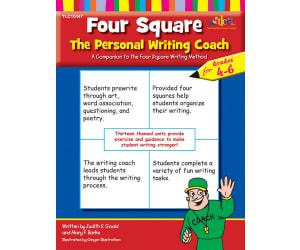
Four Square: The Personal Writing Coach for Grades 4-6:
ELA, Writing, Grade 4, 5, 6, Teacher Tools, Lesson Plans
Four Square: The Personal Writing Coach for Grades 4-6 This is an innovative teaching resource that helps students become competent and confident writers. Specifically designed for grades 4 through 6, the material covers a wide spectrum of writing aspects: Prewriting strategies like art and word association Planning and composing prose pieces. The book's unique feature lies in its approach to make writing less daunting. Through carefully planned exercises, learners dive into the colorful world of language arts. These exercises target improvement in: Word choice, Sentence structure, Paragraph development, and /i> The topics chosen are close to students' hearts which aid free expression as they polish their writing skills at the same time. Versatility in Use The resource can be seamlessly integrated into any learning environment: M /b>. mi lstmaller group settings or paired work initiatives - study circles, peer tutoring programs promoting mutual critique and creative thinking.discussions on relatable themes. e olbrss= Four Square: The Personal Writing Coach for Grades 4-6 stands as an invaluable add-on to your teaching toolkit. Focused on nurturing creativity, communication skills and courage in writing, this book empowers children to relentlessly explore the broad landscape of words.
Author Classroom Complete Press
Tags Four Square, Writing Coach, Writing Process, Writing Units, Poetry, Personal Writing Coach
I WONDER - What Are The Different Types Of Cells
Biology, Life Sciences, Science, Human Body, STEM, Grade 5, 6, 7, 8, 9, 10, 11, Lesson Plans, Teacher Tools
Video Overview The human body is full of fascinating wonders to learn. This video is created to help the students recognize the anatomy and the job of the human body. I WONDER - What Are The Different Types Of Cells | Animated Video Lesson Every part and organ in our human body is vital so let's see how important they are. Have you ever imagined how we look like if we didn't have a skeleton? Did you know that because we have our amazing muscles we can stand! Do you know how many teeth do we have? Have you ever wondered about the food journey inside our body? Can you name all the glands in our body? Why do we have skin? Our nervous system is really good at sending signals. Can you tell us more about it? Are you really good at Mathematics, painting, or any other thing? You should really thank your brain about it! The famous five senses are really doing a great work? Can you explain how every sense works? I WONDER - What Are The Different Types Of Cells | Animated Video Lesson The video is perfect for encouraging the researching skills for the students, while learning more about our fantastic human body. I WONDER - What Are The Different Types Of Cells | Animated Video Lesson This friendly designed video is suitable for students at school, homeschooling, and as a group activity. Format Available in MP4 format.
Author Educational Voice
Tags What Are The Different Types Of Cells , What Are The Different Types Of Cells Video, Different Types Of Cells , Different Types Of Cells Facts, Different Types Of Cells Facts For Kids, Different Types Of Cells Video
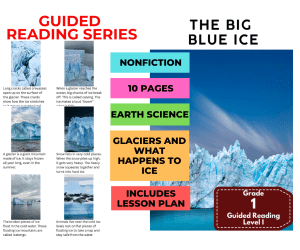
Guided Reading Level I - The Big Blue Ice (with Lesson Plan)
ELA, Resources for Teachers, Reading Comprehension, Reading, Science, Language Development, Earth and Environmental Sciences, Geography, Social Studies, Life Sciences, Grade 1, 2, 3, Worksheets & Printables, Worksheets, Teacher Tools, Centers, Activities, Literacy Readers, Quizzes, Quizzes and Tests, Assessments, Lesson Plans
This Guided Reading Book - The Big Blue Ice (Level I) with lesson plan includes: Guided Reading Color Label (front cover x1) This is a quick way to match the book’s demands to what students can generally handle.. The overall goal is to use the level/color to pick books for several smaller groups. To qualify for a certain level, a student is expected to read a book from that level with about 90–94% accuracy. If a student is consistently accurate and understands, move up a level. If the student is struggling at that level, drop down and add more support. Each student will improve at completely different rates, but it is generally one of the best ways to check progress across the class. DOWNLOAD THE CATALOG TO VIEW ALL GUIDED READING BOOKS AVAILABLE (SORTED LEVELS A-Z) Pre-Reading Question (x1) Teacher asks the prompt aloud, can be while showing the cover or first page. Students share what they already know, or make educated guesses from the cover. Prompt them to use the target vocabulary. Write some of their responses on the board to look back at during the reading. Vocabulary Words (x5) Introduce the five words, best doing it one at a time. Start by saying it, while students repeat and then see if anyone knows what it means before reading further. Read through the meaning and try to briefly connect each word to a picture or gesture so it’s meaningful. Ask students to flip through the book pages and point to where they see each of the vocabulary words. While reading the book pause upon coming across one of the vocab words or read the sentence twice to make sure students understand the word has appeared. Optional: Ask students to raise hands whenever they see/hear one of the new words. Guided Reading Pages (x10) Check the book snapshot (below) for: primary topic - do you need to prep extra reading or intro materials on this? what is taught best - decide on 1-2 bullets to focus on, use the prompt or words provided here for best results. learning goals - what you are checking for students to be able to do after the session, elicit answers using prompts or words provided. key vocabulary (see section above). questions overview - so you know what is coming up and if you need to prep extra materials to assist understanding. Run the lesson You may have already looked at a few of the pages together, but you can show them some of the pictures again first to set meaning. Depending on how much time you have and how familiar your students are with guided reading class, you may want to read the book aloud first with the group first. Students whisper or partner read, while you listen in. If time, do it as a group, one student reading a page each. Use the guided page’s prompts to coach: “Check the picture / does it make sense?” “Point under the words / try the first sound” “Reread the sentence smoothly”. Try to focus more on one student per session (rotating every time), so you can work out if they are ready to move up or need to move down a level. Comprehension Questions (back cover x3) This is your way to check that students didn’t just say the words, but actually understood the text. First, let students answer by pointing to the page/picture and saying a short sentence. After any answer, follow with: “Show me where you found that in the text.” In bigger groups, have partners answer first (10–20 seconds), then call on 2–3 students to share. Differentiation tips: Emerging speakers/struggling readers: oral + pointing On-level: oral in a full sentence Higher: one written sentence or draw + label Book Snapshot Title: The Big Blue Ice Genre: Nonfiction (informational) Subject: Earth Science + Reading (Informational Text) Primary Topic: Glaciers and what happens to ice Estimated Guided Reading Level (A–Z): I What This Book Teaches Best Defines what a glacier is and explains that it stays frozen all year long. Explains how snow can squeeze together and turn into hard ice in very cold places. Describes how glaciers move slowly like “rivers of ice” down mountain slopes. Teaches glacier features and changes, including crevasses, calving, and icebergs. Connects glaciers to living things and Earth systems (animals resting on ice, fresh water, keeping the world cool). Learning Goals Describe what a glacier is using details from the text. Explain how piled-up snow turns into hard ice in very cold places. Tell how glaciers move and where they move (down mountain slopes). Identify crevasses and describe what the text says they show. Explain what calving is and what happens when a glacier reaches the ocean. Describe two ways glaciers are important on Earth (cooling the world, holding fresh water). Key Vocabulary From the Text glacier — a huge mountain of ice. frozen — turned to ice from very cold weather. crevasses — long cracks on the glacier’s surface. calving — when big ice chunks break off into the ocean. icebergs — floating mountains of ice in cold water. Discussion Prompts Pre-reading question: What do you think a glacier is, and where might you find one? Comprehension questions: How does snow turn into hard ice, according to the book? Comprehension questions: Why do some glaciers look bright blue in the text? Comprehension questions: Where do seals rest to take a nap and stay safe from the water? Printing Tips 1. Best Printing Method (Recommended) “Booklet” Printing (Best if Available) If your printer or PDF viewer supports Booklet Printing , use this. Settings to use: Print mode: Booklet Paper size: Letter or A4 (either works) Orientation: Landscape Print on both sides: Yes Flip on: Short edge Scaling: Fit to printable area Booklet subset: First test: Front sides only Then: Back sides only This will automatically: Pair pages correctly Put the cover on the outside Align everything for folding After printing, fold in half and staple along the spine . 2. If “Booklet” Printing Is NOT Available You can still print this correctly with manual duplex printing . Step-by-step: Open the PDF. Choose Print . Set: Orientation: Landscape Pages per sheet: 1 Print on both sides: Yes Flip on: Short edge Print all pages . Because each PDF page already contains two facing book pages, the result will still fold cleanly into a book. Thousands of Cored Education products are included with your TeachSimple membership. Download links and encyclopedia index available here.
Author Cored Education
Rating
Tags Reading Comprehension, Reading Passages, Reading, Guided Reading, Guided Reading Lesson Plan, Guided Reading Activity, Pre-reading, Science Lesson Plans, Earth Science, Geography
I WONDER - Can We Still Hear In Our Sleep | Animated Video Lesson
Biology, Life Sciences, Science, Human Body, Grade 3, 4, 5, 6, 7, 8, 9, Lesson Plans, Teacher Tools
Video Overview The human body is full of fascinating wonders to learn. This video is created to help the students recognize the anatomy and the job of the human body. I WONDER - Can We Still Hear In Our Sleep | Animated Video Lesson Our brain is a marvelous organ inside our bodies! Can you mention five facts about the brain? Can you mention 5 organs that are controlled by the brain? How do our senses work? Have you ever wondered why the muscles are important for our body? Do you think we can sit down or stand up with using our muscles? I WONDER - Can We Still Hear In Our Sleep | Animated Video Lesson The video is perfect for encouraging the researching skills for the students, while learning more about our fantastic human body. I WONDER - Can We Still Hear In Our Sleep | Animated Video Lesson This friendly designed video is suitable for students at school, homeschooling, and as a group activity. Format Available in MP4 format.
Author Educational Voice
Rating
Tags Can We Still Hear In Our Sleep, Ears, Ears Facts, Ears Facts For Kids, Ears Video, Brain, Brain Facts, Brain Video, Brain Video For Kids, Brain Facts For Kids

I WONDER - How Did Pluto Get So Many Moons | Animated Video Lesson
Space, Earth and Environmental Sciences, Science, Grade 4, 5, 6, 7, 8, 9, 10, Lesson Plans, Teacher Tools
Video Introduction An amazing video designed for the students to learn more about space facts. I WONDER - How Did Pluto Get So Many Moons | Animated Video Lesson Do you like reading about space? If yes, what is your favorite topic? What do you know about our solar system? What is the smallest planet in our solar system? What is the biggest planet in our solar system? What is the hottest planet in our solar system? And what is the coldest one? Do you think there are aliens? If yes, what do you think they look like? What do they eat and how they speak to each other? Where do they live? What is a galaxy? And what is a milky way? Have you recently saw a shooting star? If yes, tell us more about it, like when did it happen and where? What is a blackhole? Can a blackhole gets bigger by time? Do you like counting the stars? What do you think a star is made of? I WONDER - How Did Pluto Get So Many Moons | Animated Video Lesson The video is perfect for encouraging the researching skills for the students, while learning more about the fantastic space. I WONDER - How Did Pluto Get So Many Moons | Animated Video Lesson This friendly designed video is suitable for students at school, homeschooling, and as a group activity. Format Available in MP4 format.
Author Educational Voice
Tags How Did Pluto Get So Many Moons, How Did Pluto Get So Many Moons Video, Pluto's Moons, Pluto's Moons Facts, Pluto's Moons Facts For Kids, Pluto's Moons Video, Pluto's Moons Video For Kids, Pluto

4th Grade Spelling Unit | Spelling Curriculum | Spelling Lists
ELA, Language Development, Spelling, Grade 4, Lesson Plans, Teacher Tools
Teaching spelling has never been easier! With over 30 weeks of engaging content and more than 500 pages of resources, this program focuses on spelling patterns and rules to help students truly understand the "why" behind the words they spell. Each week offers a list of 10 carefully chosen words, plus room for 5 personalized vocabulary words that you can tailor to fit current themes or areas where your students need a little extra help. This curriculum covers many spelling conventions like prefixes, vowel pairs, and silent letters. Your students will dive into the reasons behind spelling rules, all while strengthening their overall language arts skills. Just print and go! No prep required! Each weekly package comes with a colorful poster that showcases the week’s spelling words and patterns, a handy test sentence sheet, pretest and test templates, and a variety of worksheets tailored to different learning styles. Whether your students are tracing words or identifying the correct spellings in context, the activities ensure a well-rounded approach to spelling. I’ve also included supplementary resources to make the curriculum even more adaptable, such as a comprehensive 4th grade spelling list, multiple test templates, and personalized practice sheets. Give your 4th graders the tools they need to succeed in spelling with a curriculum that encourages active learning and lasting retention through understanding and connection. Spelling Rules and Patterns Included By Week: Week 1- Open Syllables in a vowel/consonant/vowel pattern Week 2- Open Syllables in a vowel/vowel pattern Week 3- Double Vowel Syllables (-ai and -ay) Week 4- Double Vowel Syllables (-oa and -oe) Week 5- Double Vowel Syllables (-ea) Week 6- Double Vowel Syllables (-ie and -ei) Week 7- Suffixes (-able and -ible) Week 8- Ending Spelling Pattern (-ought and -ound) Week 9- Suffixes (-tion and -sion) Week 10- Contractions Week 11- Dipthong (-ow) Week 12- Plural Nouns (with -es endings) Week 13- Ending Spelling Pattern (-igh) Week 14- Prefixes (dis-, im-, and in-) Week 15- Homophones Week 16- "R-controlled" vowels (-ir, -er, -ur) Week 17- Plural Forms of nouns that end with -f or -fe Week 18- Beginning Letter Combinations (thr-, scr-, str-, and squ-) Week 19- Suffixes (-er and -est) Week 20- Beginning Combinations (sh-, ch-, and wh-) Week 21- Letter Combinations (-sh, -ch, and -tch) Week 22- Compound Words Week 23- Commonly Misspelled Words Week 24- Commonly Misspelled Words Week 25- Commonly Misspelled Words Week 26- Plural Nouns (add an -s and change -y to -e and add -es) Week 27- Phonograms (kn-, gn-, and wr-) Week 28- Suffixes (-ful and -ly) Week 29- Hard and Soft C and G Sounds and Spellings Week 30- Ending Spelling Patterns (-old, -ost, -oll, and -olt) Check out other resources from my store: Simply Schoolgirl! Please contact me with any questions and concerns at simplyschoolgirl1@gmail.com
Author Simply Schoolgirl
Tags Spelling Lists, Spelling Patterns, Fourth, Spelling Test, Printable Spelling, No Prep Spelling, Quiz, Vocabulary, Spelling Pages, Spelling Activities

Conservation: Waterway Habitat Resources: How Climate Change Can Affect Aquatic Ecosystems Gr. 5-8
Science, Earth and Environmental Sciences, Environmental Science, Grade 5, 6, 7, 8, Teacher Tools, Lesson Plans
Conservation: Waterway Habitat Resources: How Climate Change Can Affect Aquatic Ecosystems Gr. 5-8 Conservation: Waterway Habitat Resources: How Climate Change Can Affect Aquatic Ecosystems Gr. 5-8 is an educational resource targeted at students from Grade 5 to Grade 8. The primary subjects covered are Science and Environmental Science. This PDF contains 30 print-ready pages, focusing on the impact of human activities on aquatic ecosystems worldwide. It nudges students to play the role of ecologists by understanding the difference between biotic (living) and abiotic (non-living) factors in an ecosystem. To pique student interest in ecology, this resource proposes a host of field activities, including visits to local aquatic habitats for observation or trips to local aquariums for a deep dive into marine life. The topic also delves into the relationship between climate change trends and adaptation difficulties faced by certain aquatic organisms. In addition, it sheds light on the disastrous impact of human activity like increased rate of marine species extinction or pearl formation in so-called 'aquarium dead zones’. Educational Tools Included: The teaching tools included within aim at reinforcing subject matter as well as acting as assessment tools: Graphic organizers—such as crossword puzzles & word searches Comprehension quizzes — includes answer keys at the end-of-chapter In conclusion,'Conservation: Waterway Habitat Resources' not only arms students with vital knowledge about eco-conservation but provides practical steps towards what we can do to reverse the effects of global warming on our water resources. This module forms an excellent resource for group teaching sessions or homework assignments.
Author Classroom Complete Press
Tags Science, Environment, Conservation, Water Habitats, Climate Change
I Wonder - Why Is The Maple Leaf A Symbol Of Canada | Animated Video
Nature & Plants, Life Sciences, Science, Geography, Social Studies, Grade 3, 4, 5, 6, 7, 8, 9, Lesson Plans, Teacher Tools
Video Introduction An amazing video designed for the students to learn more about famous places in different countries. I WONDER - Why Is The Maple Leaf A Symbol Of Canada | Animated Video Lesson What do you know about this place? Do you know in which part of the world it is? Have you ever visited this place? If yes, can you tell us more about your adventure, and what do you like the most about this place? Do you like reading about Geography? What is your favorite country in the whole world? If you are going on a trip where it will be? Which country? What you are going to see there? Does this country has a famous place to visit? I WONDER - Why Is The Maple Leaf A Symbol Of Canada | Animated Video Lesson The activity is perfect for encouraging the researching skills for the students, while learning more about this fantastic place. I WONDER - Why Is The Maple Leaf A Symbol Of Canada | Animated Video Lesson This friendly designed video is suitable for students at school, homeschooling, and as a group activity. Format Available in MP4 format.
Author Educational Voice
Tags Why Is The Maple Leaf A Symbol Of Canada, Why Is The Maple Leaf A Symbol Of Canada Video, Maple Leaf, Maple Leaf Facts, Maple Leaf Video, Canada, Canada Facts, Canada Video, Canada Facts For Kids
I WONDER - How Many Types Of Rocks Are There | Animated Video Lesson
Social Studies, Geography, Grade 1, 2, 3, 4, 5, 6, 7, 8, Lesson Plans, Teacher Tools
Video Introduction An amazing video designed for the students to learn more about famous places in different countries. I WONDER - How Many Types Of Rocks Are There | Animated Video Lesson What do you know about this place? Do you know in which part of the world it is? Have you ever visited this place? If yes, can you tell us more about your adventure, and what do you like the most about this place? Do you like reading about Geography? What is your favorite country in the whole world? If you are going on a trip where it will be? Which country? What you are going to see there? Does this country has a famous place to visit? I WONDER - How Many Types Of Rocks Are There | Animated Video Lesson The activity is perfect for encouraging the researching skills for the students, while learning more about this fantastic place. I WONDER - How Many Types Of Rocks Are There | Animated Video Lesson This friendly designed video is suitable for students at school, homeschooling, and as a group activity. Format Available in MP4 format.
Author Educational Voice
Tags How Many Types Of Rocks Are There, How Many Types Of Rocks Are There Video, Types Of Rocks, Types Of Rocks Video, Types Of Rocks Video For Kids, Types Of Rocks Facts, Types Of Rocks Facts For Kids

I WONDER - Where Do We See Potential Energy In Everyday Life
Physics, Science, Grade 4, 5, 6, 7, 8, 9, 10, Lesson Plans, Teacher Tools
Video Introduction An amazing video designed for the students to learn more about STEM. I WONDER - Where Do We See Potential Energy In Everyday Life | Animated Video Lesson Plants world is really fascinating! Do you know that some flowers eat insects? Some other plants like to grow on walls can you mention any? Do you know what is the difference between fungicide and pesticide? If yes, Can you tell us more about it? What is nuclear energy? Is it safe to use it? Do you think it is a clean energy? Have you ever read about potential energy? If yes, tell us what it is? Do you think that potential energy can be converted into another form of energy? How it happens? I WONDER - Where Do We See Potential Energy In Everyday Life | Animated Video Lesson The video is perfect for encouraging the researching skills for the students, while learning more about this fantastic topic. I WONDER - Where Do We See Potential Energy In Everyday Life | Animated Video Lesson This friendly designed video is suitable for students at school, homeschooling, and as a group activity. Format Available in MP4 format.
Author Educational Voice
Rating
Tags Where Do We See Potential Energy In Everyday Life, Potential Energy, Potential Energy Facts, Potential Energy Video, Potential Energy Video For Kids, Potential Energy Facts For Kids, Potential Energy In Everyday Life

I WONDER - How Do Joints Move Freely | Animated Video Lesson
Human Body, Life Sciences, Science, Biology, STEM, Grade 5, 6, 7, 8, 9, 10, 11, Lesson Plans, Teacher Tools
Video Overview The human body is full of fascinating wonders to learn. This video is created to help the students recognize the anatomy and the job of the human body. I WONDER - How Do Joints Move Freely | Animated Video Lesson Every part and organ in our human body is vital so let's see how important they are. Have you ever imagined how we look like if we didn't have a skeleton? Did you know that because we have our amazing muscles we can stand! Do you know how many teeth do we have? Have you ever wondered about the food journey inside our body? Can you name all the glands in our body? Why do we have skin? Our nervous system is really good at sending signals. Can you tell us more about it? Are you really good at Mathematics, painting, or any other thing? You should really thank your brain about it! The famous five senses are really doing a great work? Can you explain how every sense works? I WONDER - How Do Joints Move Freely | Animated Video Lesson The video is perfect for encouraging the researching skills for the students, while learning more about our fantastic human body. I WONDER - How Do Joints Move Freely | Animated Video Lesson This friendly designed video is suitable for students at school, homeschooling, and as a group activity. Format Available in MP4 format.
Author Educational Voice
Tags How Do Joints Move Freely, How Do Joints Move Freely Video, Joints, Joint, Joints Facts, Joints Facts For Kids, Joints Video, Joints Video For Kids, Joints Movements, Joints Movement

Argumentative Letter on a Candidate or Mandatory Voting
Social Studies, ELA, Government, History, History: USA, Writing, Grade 7, 8, 9, Teacher Tools, Lesson Plans
The low-prep, 27-page resource, Argumentative Letter on a Candidate or Mandatory Voting has your middle and high school students take a position on either which presidential candidate to support or whether voting should be mandatory in the United States, write a 4-paragraph argumentative letter to the editor, and then send them off to online sites that accept letters to the editors, such as local, state, or national news sites. I have included links to four online articles that address the pros and cons of making voting mandatory in the United States that the students can use for their research. If your students choose to do the candidate letter, this lesson works best if students have done my lesson, Where the Candidates Stand on the Issues or something similar to that. This lesson doesn’t specifically teach how to write an argumentative essay. It builds on what students already know, assuming they have already written argumentative essays. Embedded in this lesson are a brainstorming activity for evidence and analysis, a template for writing the essay, a graphic organizer all of which provide scaffolded support to your diverse range of writers, and a rubric. Argumentative Letter on a Candidate or Mandatory Voting includes the following: a hyperlinked Table of Contents About this Resource-- an easy-to-use guide to everything you need to know about this resource a forced link copy to the Google Doc Common Core Literacy Standards for Writing in History Objectives and Learning Targets An Essential Question for Each Prompt: For the Candidate Letter to the Editor: What key qualities and policies make one presidential candidate more suitable than another? For the Mandatory Voting Letter to the Editor: Should voting be mandatory in a democratic society? 3 Guiding Questions for Each Prompt: For the Candidate Letter to the Editor: What are the major policy differences between the two candidates? How do the candidates' backgrounds and experiences shape their suitability for the presidency? Which candidate's proposed solutions do you believe are more effective in addressing current societal challenges? For the Mandatory Voting Letter to the Editor: What are the arguments for and against mandatory voting? How does mandatory voting affect voter turnout and representation? What are the potential benefits and drawbacks of implementing mandatory voting laws? Student Handouts: Evidence/Analysis Matrix for Candidates Argumentative Essay Evidence Analysis Matrix for Mandatory Voting Argumentative Essay Candidate Argumentative Essay Prompt Mandatory Voting Argumentative Essay Prompt Template for Candidate Argumentative Essay Prompt Template for Mandatory Voting Argumentative Essay Prompt Verbs and Transition Words and Phrases for Argumentative Writing Graphic Organizer for Argumentative Essay Argumentative Essay Rubric: Portrait and Landscape Format Interested in more 2024 Presidential Election Resources? Check out these: The U.S. Presidential Election: Anticipation Guide, Questions, Discussion 12 Essential Election Terms for Middle & High School- Vocabulary Strategies 12 Essential Election Terms Color by Number Vocabulary Review for Middle School What are your Political Viewpoints? A Survey for Middle and High School Students Major & Minor Political Parties in US History & Modern Times- Text and Questions A Brief History of Who Can Vote in the United States, Text, Terms, Questions United States Presidential Election Process- Primaries to the Electoral College Propaganda & Political Campaign Ads- Close Viewing Analysis & Written Reflection Where do the Candidates Stand on the Issues? Research and Analyze their Websites Argumentative Letter on a Candidate or Mandatory Voting Presidential Election Project-Collaborative, Creative, & Analytical
Author Intentional Teaching and Learning
Tags Presidential Elections, Argumentative Letter, Presidential Candidates, Cross-curricular, Critical Thinking, Claims And Counterclaims, Evidence And Analysis, Mandatory Voting, Rubric, Middle And High School;

Mexican Government: The Constitution of Mexico Gr. 5-8
Social Studies, Government, Grade 5, 6, 7, 8, Teacher Tools, Lesson Plans
Mexican Government: The Constitution of Mexico Gr. 5-8 An educational resource providing a comprehensive overview of the political landscape and historical evolution of Mexico's Constitution for Grade 5 to Grade 8 students, this informative lesson plan serves both public schools and home-schooling settings. Students will learn about the subtleties of how Mexico's Constitution is designed to avoid a concentration of power within one individual or branch of government. They'll explore Article 3, which emphasizes every citizen’s right to education; additionally, they'll understand why abolishing slavery was integral part in the formation process of the 1917 Constitution. This material encourages an analysis on Presidential oath under Mexican law, driving learners towards understanding about presidential promises during their tenure period. Moreover, it sheds light on various departments such as Health, Environment, Tourism and Agriculture within Mexico’s Executive Branch. The structure aids in understanding different political parties in United Mexican States along with unique ideologies each holds and represent. Apart from sharing enlightening facts - it includes brainstorming sessions prompting students towards thinking creatively about qualities they would envisage in an ideal leader for Mexico. Educational Standards & Activities In adherence with State Standards and guidelines outlined by Bloom's Taxonomy – this tool ensures pedagogically sound content while incorporating interactive activities like crosswords puzzle games, word searches along with comprehension quizzes for better learner engagement. This approach helps retention score making learning more fun; coining it as Edutainment (Scholarly Fun). Distribution Ease: All encapsulated within one distributable PDF file catering ease - whether it be group discussions or solitary homework tasks. Although primarily intended as ground level Social Studies curriculum focusing on government based lesson – it remains versatile enough to be integrated into various learning scenarios, making it an invaluable teaching aid.
Author Classroom Complete Press
Tags PDF

The 'Sick Day' Savior: K-5 Emergency Sub Plans Bundle
Science, Special Resources, Social Emotional Learning (SEL), Life Skills, Social Skills, Special Education Needs (SEN), Basic Science, Life Studies, Career, Leadership, Kindergarten, Preschool, Grade 1, 2, 3, 4, 5, Teacher Tools, Anchor Charts, Assessments, Charts, Diagrams, Graphic Organizers, Lesson Plans, Literacy Readers, Outlines, Presentations
Find out what is considered the ultimate "Sick Day" Savior – K-5 Emergency Sub Plans Bundle Professional Edition – your one-stop-shop for No Prep Substitute Teacher Lesson Plans specifically created for Elementary Teachers and School Administrators. This 49-page PDF bundle is designed to alleviate the pressure of unplanned teacher absences with its ready-to-deploy, standards-based independent work packets for English Language Arts, Mathematics, Science, Social Studies, and Integrated Studies for Kindergarten through 5th Grade students. This bundle includes detailed overviews, quick-start deployment instructions, substitute teacher welcome packets, grade-level activities (phonics and tracing for Kindergarten, analysis and decimals for 5th Grade), differentiated math drills, early finisher activities such as word searches and logic puzzles, behavior management tools, complete answer keys, and editable instruction templates – all designed for a seamless classroom deployment. Reusable for multiple years, this bundle is perfect for teachers looking for peace of mind – protect your students' learning journey against unplanned sick days with this essential emergency sub plans bundle for Elementary Teachers and School Administrators. Why Parents/Schools Love It: Peace of Mind During Absences: The absence of "lost days" is ensured with ready-to-use and independent activities that will keep students productively engaged and allow teachers to concentrate on recovery without worrying about classroom disruptions. Standards-Aligned and Versatile: The material covers basic subjects like ELA, math, science, and social studies with age-appropriate and differentiated content that is aligned with elementary school curricula and meets the needs of diverse learners from pre-readers to advanced students. Easy Implementation for Subs: The material is equipped with instructions and behavior tools and provides answer keys, enabling substitute teachers to easily maintain classroom routines and high expectations without prior knowledge of classroom operations. Reusable and Cost-Effective: The digital/print-optimized material is reusable and saves administrative hassles and money on last-minute planning. Promotes Student Growth: The material develops students' fine motor skills, critical thinking skills, and independence through fun extensions like puzzles and color-by-code, and provides stability and structure for young students. Target Classes/Students : After a thorough analysis of the PDF, which has different sections for different grades with appropriate material for each grade, such as tracing and pattern activities for pre-readers in Kindergarten, CVC words and single-digit math for Grade 1, reading comprehension and double-digit math for Grade 2, grammar and multiplication for Grade 3, writing and fractions for Grade 4, and scientific analysis with decimals for Grade 5, it can be deduced that the target classes would be from Kindergarten to 5th grade. This would include elementary school classes and would be appropriate for the different developmental phases from literacy and numerical basics for 5-6-year-olds to more critical thinking and multi-step problems for 10-11-year-olds. Copyright/Terms of Use: This Book was copyrighted by Syed Hammad Rizvi. This resource is only for personal and single classroom use. You are not allowed to change, redistribute, and/or sell this resource. In other words, you are not allowed to put this resource on the Internet where it can be publicly found and/or downloaded. If you want to share this resource with your fellow teachers, please buy additional licenses from Teachsimple. Thank you very much for respecting these terms of use. This product is happily brought to you by Syed Hammad Rizvi
Author Creative Book Store
Rating
Tags EmergencySubPlans, K5LessonPlans, SubstituteTeacherResources, NoPrepSubPlans, ElementaryEducation, TeacherSickDay, SubPlansBundle, StandardsAlignedActivities, KindergartenWorksheets, FirstGradeActivities

I WONDER - Why Do We Blush | Animated Video Lesson
Animals, Life Sciences, Science, Biology, Grade 2, 3, 4, 5, 6, 7, 8, Lesson Plans, Teacher Tools
Video Overview The human body is full of fascinating wonders to learn. This video is created to help the students recognize the anatomy and the job of the human body. I WONDER - Why Do We Blush | Animated Video Lesson Every part and organ in our human body is vital so let's see how important they are. Have you ever imagined how we look like if we didn't have a skeleton? Did you know that because we have our amazing muscles we can stand! Do you know how many teeth do we have? Have you ever wondered about the food journey inside our body? Can you name all the glands in our body? Why do we have skin? Our nervous system is really good at sending signals. Can you tell us more about it? Are you really good at Mathematics, painting, or any other thing? You should really thank your brain about it! The famous five senses are really doing a great work? Can you explain how every sense works? I WONDER - Why Do We Blush | Animated Video Lesson The video is perfect for encouraging the researching skills for the students, while learning more about our fantastic human body. I WONDER - Why Do We Blush | Animated Video Lesson This friendly designed video is suitable for students at school, homeschooling, and as a group activity. Format Available in MP4 format.
Author Educational Voice
Tags Why Do We Blush, Why Do We Blush Video, Human Body, Human Body Facts, Human Body Facts For Kids, Human Body Video, Human Body Video For Kids, Blood, Blood Facts, Blood Facts For Kids

I WONDER - How Do Plants Make Food | Animated Video
Nature & Plants, Life Sciences, Science, Grade 6, 7, 8, 9, 10, 11, 12, Lesson Plans, Teacher Tools
Video Introduction An amazing activity designed for the students to learn more about STEM. I WONDER - How Do Plants Make Food | Animated Video Lesson Do you like STEM subjects? what is your favorite one? Have you ever tried to plant a seed? If yes, tell us more about it. Or have you ever tried to invent something? If yes, tell us more about it. And how do you think it will help us? Have you ever seen a microorganism under a microscope? What was it? And how it looked like? Mathematics is a marvelous subject. Let' sharpen our brains and solve some equations. Do you like timetable tricks? What is your favorite one? Do you know how to code? Have you ever created an app or a game before? If yes, how was it like? I WONDER - How Do Plants Make Food | Animated Video Lesson The video is perfect for encouraging the researching skills for the students, while learning more about this fantastic topic. I WONDER - How Do Plants Make Food | Animated Video Lesson This friendly designed video is suitable for students at school, homeschooling, and as a group activity. Format Available in MP4 format.
Author Educational Voice
Tags How Do Plants Make Food, How Do Plants Make Food Video, Plants Make Food, Plants, Plant, Plants Facts, Plants Facts For Kids, Plants Video, Plants Video For Kids, Science

I WONDER - Where Is Château De Chambord | Animated Video Lesson
Geography, Social Studies, History: Europe, History, History: Ancient, Grade 3, 4, 5, 6, 7, 8, 9, Lesson Plans, Teacher Tools
Video Introduction An amazing video designed for the students to learn more about history. I WONDER - Where Is Château De Chambord | Animated Video Lesson Do you like history? Which topic do you really enjoy about history? Have you ever read an interesting fact about the Vikings? If yes, can you mention them? What do you like most about the Victorian era? Can you name all the Tudors? Have you ever wondered how people used to live in ancient Japan and ancient China? Do you know any interesting facts about ancient Egyptians and the Pharaohs? Have you ever visited South America? What do you know about Incas and Aztecs? Celtic culture was really one of a kind, can you name any of the places that Celts used to live in? Imagine yourself living during the ancient Roman empire, how your life will look like? Ancient Greece was an amazing place to live in. What do you know about ancient Greek life? I WONDER - Where Is Château De Chambord | Animated Video Lesson The video is perfect for encouraging the researching skills for the students, while learning more about history. I WONDER - Where Is Château De Chambord | Animated Video Lesson This friendly designed video is suitable for students at school, homeschooling, and as a group activity. Format Available in MP4 format.
Author Educational Voice
Tags Where Is Château De Chambord, Where Is Château De Chambord Video, Château De Chambord, Château De Chambord Facts, Château De Chambord Video, Château De Chambord Video For Kids, Château De Chambord Facts For Kids
Poetry Analysis Sub Plans Lessons (Print & Pass)
ELA, Literature, Poetry, Grade 6, 7, 8, 9, 10, 11, 12, Teacher Tools, Lesson Plans
Never worry about preparing a substitute plan again! This comprehensive collection of concise poem analysis lessons provides teachers with all the necessary resources for 10 substitute-led class sessions. Simply print out the readily available sub note along with the lesson handouts, which also include a helpful rubric, and you're all set. Both your substitute teacher and students will easily manage the rest! What's even better is that your students will have the opportunity to enhance their analysis and essay writing skills even in your absence! Here's how simple this sub plan series is to present: Simply print out and sign the included sub plan note, make copies of one of the 10 poetry analysis worksheets included in this resource, and leave them on your desk for your substitute. Students can work through the analysis questions in one class period and complete the analysis essay in the next (or simply forego the essay). Either way, you have a perfect 1-to-2 day lesson that requires almost no direct instruction! While student familiarity with the poetry concept is helpful, the handouts directions will be more than enough information to get your students working diligently while you're away. Each of the 10 included lessons contain the following: - A prepared sub plan note with teacher instructors - An annotation and discussion activity based around a literary concept and classic poem (see list below) - A clear lesson flow chart attached to the lesson hand-out - An engaging analysis essay prompt that builds on the annotation and discussion activities surrounding each included poem - A self-and-peer-review checklist activity - Clear and organized analysis essay writing tips that will succinctly function as learning guides for when you leave your class in the hands of a substitute (or when you just need a day's break from direct instruction) - A Common Core Standards-based grading rubric (Tied to 4 ELA standards) POEMS & CONCEPTS INCLUDED IN RESOURCE: Apostrophe: "Break Break Break," by Alfred, Lord Tennyson Rhyme: “How Do I Love Thee? Let Me Count the Ways,” by Elizabeth Barrett Browning Symbolism: “A Noiseless Patient Spider,” by Walt Whitman Theme: “One Dignity Delays for All,” by Emily Dickinson Consonance: “The Road Not Taken,” by Robert Frost Blank Verse: “Shall I Compare Thee to a Summer’s Day,” by William Shakespeare Ambiguity: “The Walk,” by Thomas Hardy Repetition: “The Negro Speaks of Rivers,” by Langston Hughes Elegy: "To an Athlete Dying Young," by A. E. Housman Metaphor: “We Wear the Mask,” by Paul Laurence Dunbar Although this resource can be fitted for any secondary Language Arts classroom, it has been carefully designed to work best in grades 9, 10, 11, and 12. The included rubrics are subtly but specifically tied to Common Core ELA Standards for Writing (4 and 5) and Language (1 and 2). This resource is provided in print-ready, bookmarked, and adjustable PDF files. This resource contains 32 Pages.
Author The Language of Educational Art, LLC
Tags Poetry, Exposition, Analysis

Move to Learn!
P.E. & Health, Resources for Teachers, Classroom Management, Grade 2, 3, 4, 5, 6, Teacher Tools, Lesson Plans
Move to Learn: A Comprehensive Educational Resource Move to Learn is a comprehensive educational resource designed specifically for educators in both classroom and homeschool settings. This valuable kit offers a blend of physical education and academic lessons, engineered to optimize student's brain capacity and enhance learning outcomes. Grounded in scientific studies that illustrate the positive impact of physical movement on cognitive capabilities, Move to Learn introduces an array of 33 games , all creatively tailored to engage students dynamically. It encourages active participation, fosters peer interaction, and promotes healthier classroom environment while simultaneously contributing towards the improvement of memory power and focus levels amongst learners. Versatile Applications and Multi-Grade Approach The exercises are highly adaptable spanning across several subject areas making them flexible in integration with existing curriculum plans or even as standalone sessions. This tool is equipped with versatile applications meeting different teaching methods - whole-group instruction, small group engagement or even fun homework assignments. Caters effectively to early intermediate level (Grade 2) extending up until Grade 6 delivering age-appropriate content for each tier. The multi-grade approach allows educators to make progressive adjustments based on their student's developmental trajectory ensuring every child's needs are catered for individually. User-Friendly Navigation Packaged as a single PDF file under the Lesson Plans category within the P.E. & Health department along with Classroom Management resources for teachers section on TeachSimple.com - Move To Learn ensures easy accessibility and user-friendly navigation throughout its contents enabling quick planning for educators on-the-go. In Summary... If you're seeking out innovative instruments that bring joyous vitality into your teaching setting while augmenting academic aptitude - Move To Learn is one significant addition worth considering!
Author Classroom Complete Press
Tags Move To Learn, Games, Movement, Classroom Management, Strategies For Classroom Management

Folkfest: Folktales From Around The World Gr. 4-6
Creative Arts, Art, Drama, Grade 4, 5, Teacher Tools, Lesson Plans
Folkfest: Folktales From Around The World Gr. 4-6 is an engaging teaching resource designed for educators interested in a comprehensive exploration of global folktales. This program, specially crafted for grade 4, 5, and 6 classrooms, can be adapted both for public school settings or homeschooling environments. In the Folkfest course, students will journey to distant lands through captivating folktales led by their teachers. They will engage with various subgenres including: Legends Riddles Trickster narratives An integral part of this product centers on creative writing activities where learners not only absorb but also create their own tales inspired by universal themes found in folklore. Folkfest material also provides optional activities allowing educators flexibility when planning according to specific goals or student needs. For instance: A smaller group can explore additional tales together Tackle one-on-one writing tasks during breakout sessions A significant highlight includes contributing towards crafting a "Folktale Booklet", an end-of-unit project that compiles each student's unique story—an artifact symbolizing their collective journey witnessed via folklore study. To complement the curriculum is an array of selected tales meant to enrich lessons further—a thoughtful addition augmenting understanding beyond provided information within lesson modules themselves. This educational package crafted in PDF format available online at Teach Simple's website brims with wonderful opportunities. With Folkfest: Folktales From Around The World Gr. 4-6, we can aspirenurture globally-aware students who appreciate cultural diversity as mirrored via enchanting world folklores.'
Author Classroom Complete Press
Tags PDF

Measurement and Classification
Science, Basic Science, Grade 5, Teacher Tools, Lesson Plans
Measurement and Classification Teaching Resource - Grade 5 Measurement and Classification is a comprehensive teaching resource specifically constructed with a focus on basic science for grade 5 students. This product not only supports teachers in shaping engaging lessons but also encourages learners to delve deeper into the world of science, cultivating their analytical thinking and problem-solving skills. The Concept of Classification This detailed lesson plan starts by introducing students to the concept of classification. It encourages young minds to comprehend categorizing objects, plants, and animals according to unique characteristics. This interactive section paves the way for students to understand how grouping items based on commonalities helps bring order and understanding. An Exploration of Bar Graphs We then seamlessly transition into an exploration of bar graphs. Here, learners will get hands-on experience with: Data collection followed by charting this data using bar graphs—pivotal tools in obtaining scientific conclusions accurately displayed visually. Answering queries about collected data relying primarily on their plotted bar graph—a significant skill in analytical interpretation. The Understanding of Physical Properties & Materials The educational journey continues through delving into physical properties of materials where identifiers such as texture, color or flexibility influence classification decisions. Students engage in sorting a variety of objects according to these salient physical properties providing an interactive understanding towards material characteristic identification. Diving Deep Into Measurements The finale involves demystifying measurements—an essential skill not confined solely within scientific boundaries but forming an integral part across real-life scenarios too! The resource guides learners into comprehending various units from length and mass up till volume best measured using predefined tools like rulers or graduated cylinders—it all dives down here! Additionally setting a strong foundation about standardized measures’ importance because consistency matters when it comes down comparing or estimating quantities overall! Thus exemplifying its utility across different learning setups whether a whole class session, small group interaction even extending down towards homework assignments as well! An ideal choice for both public school teachers focused on ensuring standard-compliant lessons or homeschooling parents eager pollutants imbibe comprehensive knowledge among kids practically intertwined thoroughly around everyday life situations. Resource Format This PDF format file contains everything that educators need to pursue fun-filled, knowledge-packed science lessons covering measurement and classification in depth. Get ready for interactive, engaging classroom experiences rooting deep within students’ minds effectively making "science" their favorite subject!
Author Classroom Complete Press
Tags PDF
Literary Devices: Theme
ELA, Literature, Common Core, Grade 5, 6, 7, 8, Teacher Tools, Lesson Plans
Literary Devices: Theme Aimed at grades 5 to 8, Literary Devices: Theme dives into the rich world of literature. This resource investigates the fundamental elements of storytelling and provides a thorough understanding on varied topics such as: Characterization Setting Plot Theme Point of View Foreshadowing and flashback techniques; The guide presents clear definitions and simplified explanations making it easier for students to comprehend these critical literary devices. The teaching resource is designed with precision to suit different learning abilities - perfect for use in large groups or tailor-made for smaller study circles or individual homework tasks. Bloom’s Taxonomy & Common Core State Standards This material aligns with Bloom’s Taxonomy of Learning,a pedagogical model ensuring educational relevance throughout its application. Outlining how educators can effectively impart knowledge about these literary devices while also enabling students to decipher meaning from diverse categories of literature. A major highlight is its alignment with Common Core State Standards-this assures that content integrates seamlessly into your curriculum , adhering strictly to requisite academic standards. User-friendly Format The PDF lesson plan available under Language Arts Literature subheading lets students unlock their imagination within the realms of language arts through age-appropriate activities, while also discussing narrative constructs in stories they encounter daily. In conclusion,Literary Devices: Theme translates reading from an essential academic task into an exciting journey where every story becomes an intriguing mystery waiting to be unveiled by each student – making them active analyzers rather than passive readers.
Author Classroom Complete Press
Tags PDF

Put-Down SEL Presentation
Special Resources, Social Emotional Learning (SEL), Social Skills, Grade 3, 4, 5, 6, Teacher Tools, Lesson Plans, Worksheets & Printables, Writing Prompts
The Put-Down SEL Lesson An educational resource designed to instruct students on understanding and managing verbal and nonverbal put-downs. This comprehensive teaching tool is suitable for Grades 3 through 6, and includes an interactive presentation combined with innovative handouts. Presentation Structure A seven-slide presentation focuses on the rudimentary yet significant issue among school-age children - the use of disheartening words or gestures towards each another. During this spirited lesson, students as a group identify what constitutes a put-down in both verbal and nonverbal forms. Lively Discussions & Engaging Activities Educators trigger discussions by reading passages from selected books that link to the theme of put-downs. The Crumpled Heart activity provides a metaphorical representation of the impact of hurtful words or actions. Multimedia elements like video clips offer opportunities for whole group involvement, with each student counting instances of 'put-downs' in media content; this aims at increasing awareness about harmful remarks found in everyday media consumption. 'Tally Put-Down Homework' empowers children beyond classroom boundaries; students tally instances showcasing verbal or non-verbal put-downs from TV shows or books they interact with at home. Included Handouts & Focus Areas This PowerPoint-based package includes three detailed handouts catering to different learning styles while encouraging active participation during class activities and quiet times alike. Under special resources, the plan focuses explicitly on Social Emotional Learning (SEL). The Put-Down SEL Lesson integrates dynamic teaching techniques geared towards creating an inclusive environment fostering empathy among students - making it a valuable addition to the repertoire for public school teachers and homeschoolers alike. For more SEL resources, activities, SEL coloring pages, SEL presentations, please visit my store at: https://teachsimple.com/contributor/jennifer-moyer-taylor I am a full-time school counselor for grades kindergarten through 8th graders and I test all of my SEL products on my students at my school. My SEL products are truly "kid tested" and "kid approved".
Author Jennifer Moyer Taylor
Tags Social Emotional Learning, Verbal Put-Downs, Nonverbal Put-Downs, Classroom Activities, SEL Presentations, SEL Activity, School Counseling, SEL