



3,942 products added recently
Page 43 - Popular Lesson Plans
Explore a curated selection of popular lesson plans that have proven successful in classrooms. Covering various subjects and topics, these resources provide innovative ideas and activities. Use them to refresh your curriculum and engage your students with tried-and-true methods.

 Show filters


Are You An Optimist or Pessimist SEL presentation & Survey!
Special Resources, Life Skills, Social Emotional Learning (SEL), Social Skills, Grade 4, 5, 6, 7, 8, 9, 10, Teacher Tools, Lesson Plans, Worksheets & Printables, Presentations, Assessments
Are You An Optimist or Pessimist SEL Presentation Lesson Plan With Student Survey is a resource designed to bring educational lessons on optimism and pessimism directly into the classroom. Perfect for educators of grades 4 through 10, this tool is equally useful for both public school teachers employing enhanced teaching techniques and homeschooled students. This lesson plan revolves around a 20-slide PowerPoint presentation, offering clear guidance to students through each stage of the learning course. The content includes two embedded videos (located at slide numbers 9 and 10) which serve as visual aids to better understand the topic. The first segment features seven quick question image prompts intended to engage student thought processes - these can be conducted via stand-up/sit-down methods or simple hand raising. This is followed by an interactive survey where participants score their answers based on personal feelings, fostering open dialogue among peers about their choices. Detailed answer sheets are provided post-survey; these aim at easy comprehension by all participants, thus making life skill education seamless! The final slide inducts additional resources - links that guide students towards strategies employed for developing optimistic thinking over pessimistic attitudes. Furthermore, enjoyable GIFS strewn throughout ensure that sessions remain lively and engaging until the end! Note: This resource primarily uses Microsoft PowerPoint; ensuring a flawless backdrop for memorable lessons. Optimally designed for whole-class settings, small group discussions, individual activities or even homework assignments; its versatility makes it adaptable across various teaching scenarios needing minimal preparation beforehand (except printing survey documents). This is a wonderful lesson that students LOVE. They get to discover a bit about themselves as well as get to know the other students around them. For more products and resources like these to teach SEL and SEN lessons, please go to: https://teachsimple.com/contributor/jennifer-moyer-taylor You may also enjoy my lesson on introverts versus extroverts here: https://teachsimple.com/product/are-you-an-introvert-or-extrovert-lesson-with-kahoot-and-student-survey
Author Jennifer Moyer Taylor
Tags Optimism, Pessimism, Lesson Plan, SEL Presentations, Survey, School Counseling, SEL, Social Emotional Learning, Health, Social Skills
I WONDER - How Did Victorians Mourn | Animated Video Lesson
History: Europe, History, Social Studies, History: British, Grade 6, 7, 8, 9, 10, 11, 12, Lesson Plans, Teacher Tools
Video Introduction An amazing video designed for the students to learn more about history. I WONDER - How Did Victorians Mourn | Animated Video Lesson Do you like history? Which topic do you really enjoy about history? Have you ever read an interesting fact about the Vikings? If yes, can you mention them? What do you like most about the Victorian era? Can you name all the Tudors? Have you ever wondered how people used to live in ancient Japan and ancient China? Do you know any interesting facts about ancient Egyptians and the Pharaohs? Have you ever visited South America? What do you know about Incas and Aztecs? Celtic culture was really one of a kind, can you name any of the places that Celts used to live in? Imagine yourself living during the ancient Roman empire, how your life will look like? Ancient Greece was an amazing place to live in. What do you know about ancient Greek life? I WONDER - How Did Victorians Mourn | Animated Video Lesson The video is perfect for encouraging the researching skills for the students, while learning more about history. I WONDER - How Did Victorians Mourn | Animated Video Lesson This friendly designed video is suitable for students at school, homeschooling, and as a group activity. Format Available in MP4 format.
Author Educational Voice
Tags How Did Victorians Mourn, How Did Victorians Mourn Video, Victorians Mourn, Victorians Mourn Facts, Victorians Mourn Video, Victorians Mourn Facts For Kids, Victorians Mourn Video For Kids, Victorians

I WONDER - How Was Angel Falls Named | Animated Video Lesson
Economics, Social Studies, Grade 3, 4, 5, 6, 7, 8, 9, Teacher Tools, Lesson Plans
Video Introduction An amazing video designed for the students to learn more about famous places in different countries. I WONDER - How Was Angel Falls Named | Animated Video Lesson What do you know about this place? Do you know in which part of the world it is? Have you ever visited this place? If yes, can you tell us more about your adventure, and what do you like the most about this place? Do you like reading about Geography? What is your favorite country in the whole world? If you are going on a trip where it will be? Which country? What you are going to see there? Does this country has a famous place to visit? I WONDER - How Was Angel Falls Named | Animated Video Lesson The activity is perfect for encouraging the researching skills for the students, while learning more about this fantastic place. I WONDER - How Was Angel Falls Named | Animated Video Lesson This friendly designed video is suitable for students at school, homeschooling, and as a group activity. Format Available in MP4 format.
Author Educational Voice
Tags How Was Angel Falls Named, How Was Angel Falls Named Video, Angel Falls, Angel Falls Facts, Angel Falls Facts For Kids, Angel Falls Video, Angel Falls Video For Kids, Waterfalls, Waterfalls Facts

Guided Reading Lesson Plan & Activities for Grade 2
Reading, ELA, Grade 2, Activities, Lesson Plans, Teacher Tools
Second Grade Reading Second graders keep enhancing their literacy abilities as they acquire more intricate vocabulary and engage with lengthier, more challenging texts across various genres, such as fiction, non-fiction, and poetry. Learners enhance their reading comprehension abilities while discussing their readings and cultivate more sophisticated concepts related to those subjects. As in prior years, second graders consistently engage in reading as they utilize texts for other subjects during the day. To develop reading abilities, a second grader: Reads more intricate words, like two-syllable terms. Recognizes words that have common prefixes and suffixes, such as: pre-, re-, un-, -able, -ad, and -er. Reads grade-level, irregularly spelled words (ask your child's teacher for an exact list of these words). Peruses a range of writings encompassing fiction, nonfiction, fables, and poetry. This ebooks features a guided reading lesson plan and activities, designed especially for Grade 2, that can last up to 40 minutes.
Author Bright Classroom Ideas Marketplace
Tags Guided, Reading, Grade 2, Language, Lesson, Plan, Activities

Mixed Conditionals Advanced ESL Lesson Plan
ELA, Language Development, ESL, Grammar, Not Grade Specific, Adult Education, Middle School, Teacher Tools, Lesson Plans, Worksheets & Printables
Mixed Conditionals | Advanced Lesson Plan This educational resource helps students master mixed conditionals, an advanced English grammar topic. The informative lesson plan defines mixed conditionals and when to use them. Learners then apply their knowledge by completing targeted exercises assessing comprehension and grammar skills. Educators can implement this versatile resource in various settings like whole group instruction, small group practice, or as a homework assignment. An answer key is included for teacher reference. This practical lesson supports English language learners by developing strong grammar skills needed for clear communication. Presented in an accessible PDF, it also works with Google Apps for flexible digital instruction. The ESL ELL ELA and TEFL lesson plan includes flashcards, a warmer, grammar rules, exercises, role-play, conversation, writing drill, activity, answers and an extra study that would be good to set as homework. There are 32+ pages and there are teachers notes to guide the teacher.
Author TEAM TEFL
Tags Conditionals, Tenses, Verbs, ESL, Grammar, Conditionals Esl
I WONDER - What Do Selkies Look Like | Animated Video Lesson
History, Social Studies, Common Core, Grade 4, 5, 6, 7, 8, 9, 10, Lesson Plans, Teacher Tools
Video Introduction An amazing video designed for the students to learn more about mythological creatures in different cultures. I WONDER - What Do Selkies Look Like | Animated Video Lesson Mythology is full of wonders and spectacular stories. Ancient civilizations were trying to explore every aspect of life, while they search for new technologies, they wanted to believe in something big and can change the world, so they created mythical creatures and mythical stories. Let's hear about them! What do you know about these creatures? Cyclops, Centaurs, Selkies, Phoenix, Gnomes, Dragons, Gorgons, Orcs, Cerberus, Trolls, Minotaur, Griffins, Mermaids, Elves, Polyphemus, Pegasus, and Ogres. I WONDER - What Do Selkies Look Like | Animated Video Lesson The video is perfect for encouraging the creativity skills for the students, while learning more about this fantastic mythical creature. I WONDER - What Do Selkies Look Like | Animated Video Lesson This friendly designed video is suitable for students at school, homeschooling, and as a group activity. Format Available in MP4 format.
Author Educational Voice
Rating
Tags What Do Selkies Look Like, What Do Selkies Look Like Video, Selkies, Selkies Facts, Selkies Video, Selkies Video For Kids, Selkies Facts For Kids, Mythology, Mythology Facts, Mythology Video
I WONDER - What Is A Drought | Animated Video Lesson
Geography, Social Studies, Earth Sciences, Earth and Environmental Sciences, Science, Environmental Science, Grade 4, 5, 6, 7, 8, 9, 10, Lesson Plans, Teacher Tools
Video Introduction An amazing video designed for the students to learn more about natural disasters in different countries. I WONDER - What Is A Drought | Animated Video Lesson What do you know about this natural disaster? Do you know in which part of the world this could happen? Have you ever read about the safety misusers that we could have to protect ourselves from this natural disaster? If yes, can you tell us more about them? Can you name other natural disasters? If yes, tell us more about where they are likely to happen? And how frequently? Do you like reading about Geography? What is your favorite country in the whole world? If you are going on a trip where it will be? Which country? What you are going to see there? Does this country has a famous place to visit? Do you like reading about Geology? If yes, what is your favourite topic? I WONDER - What Is A Drought | Animated Video Lesson The video is perfect for encouraging the researching skills for the students, while learning more about this fantastic phenomenon. I WONDER - What Is A Drought | Animated Video Lesson This friendly designed video is suitable for students at school, homeschooling, and as a group activity. Format Available in MP4 format.
Author Educational Voice
Tags What Is A Drought, What Is A Drought Video, Drought, Drought Facts, Drought Facts For Kids, Drought Video, Droughtvideo For Kids, Natural Disaster, Natural Disasters, Natural Disaster Video

Business Career Exploration Unit (Full Intro to Business Unit)
Life Studies, Social Studies, Finance, Business, Career, Economics, Grade 7, 8, 9, 10, 11, 12, Teacher Tools, Lesson Plans
Embark on a meaningful unit of career exploration with this comprehensive roadmap to guide your students toward fulfilling and meaningful professional paths! Ultimately, there is no greater lesson to be learned in business than what one's ideal place in it is! This unit allows students to question and explore where they feel most comfortable in the world of business. It's a great addition to your business curriculum , and the 8th entry into the Business Series! This unit includes 4 main topics: Exploring Career Paths: Explore and assess your student's compatibility for various career paths within business through some typology "quizzes" and tools. Professional Skills Development: What does it take to thrive in various lanes of business? Students have the chance to explore that question, and other ways to develop professionally. Often, students are unaware of a number of tools at their disposal to develop their skills in business and beyond. Networking and Informational Interviews: "It's not what you know, it's who you know" is one of those annoyingly true pieces of advice your students have no doubt heard before. This section of the unit allows them to think critically about building out their network and some concrete steps they can take to begin. Career Planning and Goal Setting: Students can transform their dreams into actionable plans with a focus on career planning and goal setting. This chapter introduces the idea of SMART goals and other strategies for setting and reaching their goals in the short, medium, and long term. This unit comes complete with a goal-setting video worksheet, student follow-along notes for a simple note-taking method, two online career exploration "quizzes", and a unit slideshow to tie it all together. In short, this collection of resources is designed to make your job easy in developing an impactful unit on career exploration.
Author Ed Dynamic
Rating 5
Tags Career Exploration, Business, Careers In Business, Jobs In Business, Career Paths, Career Quizzes, College, Professional Development, Career Pathways

I WONDER - Are There Different Types Of Gases | Animated Video Lesson
Basic Science, Science, Grade 4, 5, 6, 7, 8, 9, 10, Lesson Plans, Teacher Tools
Video Introduction An amazing activity designed for the students to learn more about STEM. I WONDER - Are There Different Types Of Gases | Animated Video Lesson Do you like STEM subjects? what is your favorite one? Have you ever tried to plant a seed? If yes, tell us more about it. Or have you ever tried to invent something? If yes, tell us more about it. And how do you think it will help us? Have you ever seen a microorganism under a microscope? What was it? And how it looked like? Mathematics is a marvelous subject. Let' sharpen our brains and solve some equations. Do you like timetable tricks? What is your favorite one? Do you know how to code? Have you ever created an app or a game before? If yes, how was it like? I WONDER - Are There Different Types Of Gases | Animated Video Lesson The video is perfect for encouraging the researching skills for the students, while learning more about this fantastic topic. I WONDER - Are There Different Types Of Gases | Animated Video Lesson This friendly designed video is suitable for students at school, homeschooling, and as a group activity. Format Available in MP4 format.
Author Educational Voice
Tags Are There Different Types Of Gases, Are There Different Types Of Gases Video, Types Of Gases, Types Of Gases Facts, Types Of Gases Facts For Kids, Types Of Gases Video, Materials, Materials Facts
I WONDER - How Does Digital Literacy Keep Us Safe | Animated Video
Computer Science, Technology, Science, Grade 4, 5, 6, 7, 8, 9, Lesson Plans, Teacher Tools
Video Introduction An amazing video designed for the students to learn more about STEM. I WONDER - How Does Digital Literacy Keep Us Safe | Animated Video Lesson What do you think the future of communication will look like? Do you think we will have an AI friend someday? Have you ever read about quantum computing? If yes, tell us what is it and why it is considered to be the future of computing? Are you interested in learning a coding language? If yes, tell us what is the language you are interested in? And what can this language create: games, apps, or websites? Image if you can create a game, or an app, or even a website. Tell us what you will create and how is it going to serve humanity? I WONDER - How Does Digital Literacy Keep Us Safe | Animated Video Lesson The video is perfect for encouraging the researching skills for the students, while learning more about this fantastic topic. I WONDER - How Does Digital Literacy Keep Us Safe | Animated Video Lesson This friendly designed video is suitable for students at school, homeschooling, and as a group activity. Format Available in MP4 format.
Author Educational Voice
Rating
Tags How Does Digital Literacy Keep Us Safe, Digital Literacy, Digital Literacy Facts, Digital Literacy Video, Digital Literacy Facts For Kids, Digital Literacy Video For Kids, Importance Of Digital Literacy, Importance Of Digital Literacy Video For Kids
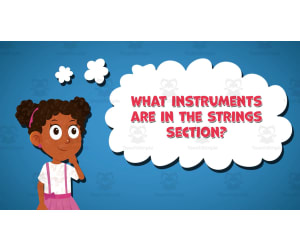
I WONDER - What Instruments Are In The Strings Section
Music, Creative Arts, Grade 4, 5, 6, 7, 8, 9, 10, Lesson Plans, Teacher Tools
Video Introduction An amazing video designed for the students to learn more about music. I WONDER - What Instruments Are In The Strings Section | Animated Video Lesson The string section is the largest group in an orchestra and is known for its warm, rich, and expressive sound. It consists of four main instruments: violin, viola, cello, and double bass. There are typically many more violins than other string instruments, divided into two groups called "first violins" and "second violins." The first violins often play the main melody, while the second violins provide harmony and support. Violas have a slightly lower pitch than violins, and they add depth to the music. Cellos and double basses provide the foundation of the orchestra's sound with their deep, resonant tones. I WONDER - What Instruments Are In The Strings Section | Animated Video Lesson The video is perfect for encouraging the artistic skills for the students, while learning more about this fantastic topic. I WONDER - What Instruments Are In The Strings Section | Animated Video Lesson This friendly designed video is suitable for students at school, homeschooling, and as a group activity. Format Available in MP4 format.
Author Educational Voice
Rating
Tags What Instruments Are In The Strings Section, What Instruments Are In The Strings Section Video, Strings Instruments, Music Instruments, Music Instruments Facts, Music Instruments Video, Music Instruments Video For Kids

Kids Love Canada: In Winter Gr. K-2
Social Studies, History, History: Canada, Grade 1, Teacher Tools, Lesson Plans
Kids Love Canada: In Winter Gr. K-2 This comprehensive package is perfect for public school teachers and homeschoolers alike looking to immerse their students into Canadian heritage during winter season. Themes included are, but not limited to communities, animals, legends and folktales, families, trees and more. Covered Topics The package contains illustrative materials such as big book and little book folktales on "Rabbit, North Wind, and Mountain Ash". To enhance interaction, an "Animal Bucks" board game is included. Unique storyboard stories like " Martha and the Northern Lights " covers relevant historical aspects. Art studies featuring works of popular Canadian artists like Mary Pratt are incorporated for broader artistic understanding. Aimed at enhancing reading skills in younger learners, there is a captivating Rebus story called "Canadian Children in Winter" along with a Ribbon Candy art lesson by Monique Martin promoting creativity. In honor of National Family Literary Day, a special family bookmaking activity was added to the resources. Specially Designed for Grade 1 Students Specializing in Social Studies (History: Canada Category) These Teaching resources were created keeping grade 1 students majoring in Social Studies with particular focus on History: Canada category. The material simplifies complex subjects for easy understanding while focusing on enhancing various skills including Reading Comprehension, Broadening Mathematical Understanding, Nurturing Critical Thinking Abilities. All these valuable topics merged into one compact PDF file type lesson plan providing great practicality. The resource pack can be employed for whole group instruction or small group activities . It also makes excellent homework assignments. Teacher-Student sections come equipped with board games, storyboard stories, word cards and big books as well as little books enabling teachers to craft flexible, well-rounded lesson plans that cater to each learner's individual needs while assuredly injecting fun throughout this educational journey of exploring Canadian winters.
Author Classroom Complete Press
Tags PDF
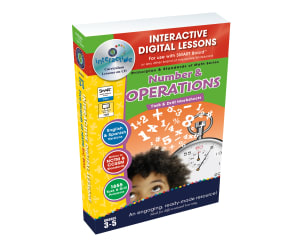
Number & Operations - Digital Lesson Plan Gr. 3-5 | PC Software
Math, Algebra, Grade 3, 4, 5, Teacher Tools, Lesson Plans
Number & Operations - Digital Lesson Plan Gr. 3-5 | PC Software This software offers a comprehensive, digitally-managed teaching resource aimed at fostering math excellence in students within grades 3 to 5. Featuring over 230 individual activities embedded across more than 80 interactive screen pages. Finding the Right Fit for Educators and Students The tool is designed with both educators and students in mind, aligning with NCTM standards as well as your state's curriculum requirements for Number & Operations subject areas. An Interactive Environment for Learning Pre- assessment Activities: These help gauge student preparedness while creating an environment conducive for dealing with word problems that reflect real-life situations. A Drill Bank: The inclusion of more than 150 drill problems helps build procedural proficiency while strengthening mathematical principles understanding. Bilingual Text-to-Speech Options: : Integrated tools available in English or Spanish add versatility depending on your learning group's specific needs or demographic makeup. A Wealth of Additional Resources The package comes packed with printable resources plus interactive lessons focused on test preparations alongside other fun yet educative elements such as memory match games, board games effectively combining education and recreation. Each chapter ends with an assessment quiz ensuring confirmation of comprehension. Taking Education Beyond Just Software This tool stands as an avenue that promotes critical thinking in your students, makes math digestible and fun, whilst making teaching experiences more manageable promoting meaningful learning growth. It truly can be a game-changer when it comes to mastering Number & Operations concepts for grades 3-5.</p
Author Classroom Complete Press
Tags Math Lesson Plan, Digital Math Lesson, Number And Operations, Operations Lesson Plan, Board Game
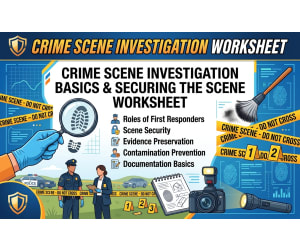
Crime Scene Investigation Basics & Securing the Scene
Science, Physics, Chemistry, Resources for Teachers, Classroom Management, Community Building, Law, Social Studies, Psychology, Sociology, Grade 6, 7, 8, 9, 10, 11, 12, Teacher Tools, Lesson Plans, Quizzes and Tests, Quizzes, Tests, Worksheets & Printables, Workbooks, Worksheets, Word Searches, Assessments
Transform your classroom into a crime scene and your students into forensic detectives! Are you looking for a high-interest, no-prep resource to introduce the fascinating world of forensic science? This comprehensive digital unit, "Crime Scene Investigation Basics & Securing the Scene," is the ultimate, all-in-one package designed to captivate middle and high school students and build critical thinking skills. This isn't just a set of worksheets; it's a complete educational journey. The resource is professionally designed and divided into three powerful phases: a detailed student reading guide, a robust student workbook with 10 activities, and a complete teacher resource pack with visuals, answer keys, and an implementation guide. What's Inside This 47-Page Unit? Part 1: The Investigator's Guide: A detailed, engaging 11-page guide that serves as the core text. It covers foundational concepts with real and fictional case studies. Topics include: Locard's Exchange Principle ("Every contact leaves a trace") The Vital Roles of First Responders (Life over evidence) The "Golden Hour" of Evidence The Three-Tier Perimeter System (Hot, Warm, and Cold Zones) Evidence Preservation & Contamination Prevention (PPE, Cross-Contamination) The Chain of Custody The Documentation Triad: Note-taking, Photography, and Sketching Part 2: The Student Workbook: Ten unique worksheets that build on the guide, moving from basic knowledge to complex application and synthesis. Activities include: Fill-in-the-blanks, true/false, and matching Scenario analysis and critical thinking prompts A final Capstone Challenge that requires students to apply everything they've learned to a complex, multi-layered crime scene scenario. Part 3: Teacher's Toolkit: Everything you need to teach this unit effectively and save valuable prep time! Instructional Visuals: Clean, professional diagrams (Flowchart, Concentric Zones, Documentation Triad) perfect for presentations or handouts. Comprehensive Answer Key: Detailed answers for all 10 worksheets, including model answers for open-ended questions. Teacher Implementation Guide: A 5-day suggested lesson plan, strategies for correcting common misconceptions, a hands-on lab activity ("The Contamination Walk"), and tips for differentiated instruction. This resource is perfect for your Forensic Science, Criminal Justice, Law & Public Safety, Biology, or general science classes. Bring the thrill of CSI to your classroom and watch your students' engagement and analytical skills soar! Keywords for Tags: Forensic Science, forensics, forensic science curriculum, CSI, Crime Scene Investigation, Criminal Justice, Evidence Collection, Locard's Principle, No-Prep, Digital Resource, Printable, first day of school activities, Worksheets, Activity, Lesson Plan, Unit Plan, High School Science, Middle School Science, CTE, Law Enforcement. Why Parents/Schools Love It: Builds Real-World Critical Thinking: Moves beyond simple memorization, challenging students to analyze complex scenarios, evaluate evidence, and make logical decisions—skills essential for any career path. Irresistibly Engaging Content: Taps into the popularity of crime shows and mysteries, making learning about scientific principles and protocols exciting and relevant for students who might otherwise be disengaged. Comprehensive & Time-Saving for Teachers: This is a complete, "print-and-go" or "post-and-go" unit. The detailed guides, worksheets, and answer keys save teachers hours of prep time. Promotes STEM and Career Exploration: Directly introduces students to the real-world application of science and the protocols used in law enforcement and forensic careers, sparking interest in valuable STEM fields. Adaptable for Diverse Learners: The included Teacher Implementation Guide provides clear strategies for differentiation, ensuring that analytical, kinesthetic, and language-focused learners can all access and excel with the material. Target Student Audience : Based on the vocabulary, concepts, and the critical thinking required in the worksheets, target the following: Primary Target: High School Students (Grades 9-12) Forensic Science Electives: This is a perfect introductory unit. Criminal Justice / Law & Public Safety (CTE) Classes: It directly aligns with the foundational principles of their curriculum. Biology or Chemistry Classes: An excellent high-interest application unit for scientific methodology, observation, and contamination control. Secondary Target: Advanced Middle School Students (Grades 7-8) Gifted and Talented Programs: The complexity is suitable for advanced learners. Science Electives or Enrichment Clubs: A fantastic and engaging topic for an after-school program or a special unit in a general science class. Copyright/Terms of Use: This Book was copyrighted by Syed Hammad Rizvi. This resource is for personal and single classroom use only. You may not alter, redistribute, or sell any part of this resource. In other words, you may not put it on the Internet where it could be publicly found and downloaded. If you want to share this resource with colleagues, please purchase additional licenses from Teachsimple. Thank you for respecting these terms of use. This product is happily brought to you by Syed Hammad Rizvi
Author Creative Book Store
Rating
Tags Forensicscience, Crimesceneinvestigation, Csi, Forensics, Criminalistics, Locardsprinciple, Evidencecollection, Chainofcustody, Forensicfiles, Criminaljustice
I WONDER - What Is Tundra | Animated Video Lesson
Environmental Science, Earth and Environmental Sciences, Science, Grade 6, 7, 8, 9, 10, 11, 12, Lesson Plans, Teacher Tools
Video Introduction An amazing video designed for the students to learn more about STEM. I WONDER - What Is Tundra | Animated Video Lesson Do you like STEM subjects? what is your favorite one? Have you ever tried to plant a seed? If yes, tell us more about it. Or have you ever tried to invent something? If yes, tell us more about it. And how do you think it will help us? Have you ever seen a microorganism under a microscope? What was it? And how it looked like? Mathematics is a marvelous subject. Let' sharpen our brains and solve some equations. Do you like timetable tricks? What is your favorite one? Do you know how to code? Have you ever created an app or a game before? If yes, how was it like? I WONDER - What Is Tundra | Animated Video Lesson The video is perfect for encouraging the researching skills for the students, while learning more about this fantastic topic. I WONDER - What Is Tundra | Animated Video Lesson This friendly designed video is suitable for students at school, homeschooling, and as a group activity. Format Available in MP4 format.
Author Educational Voice
Tags What Is Tundra, What Is Tundra Video, Tundra, Tundra Facts, Tundra Facts For Kids, Tundra Video, Tundra Video For Kids, Educational Video, Educational Video For Kids, Science
I WONDER - How Can Buildings Be Protected From Earthquakes
Geography, Social Studies, Earth Sciences, Earth and Environmental Sciences, Science, Environmental Science, Grade 4, 5, 6, 7, 8, 9, 10, Lesson Plans, Teacher Tools
Video Introduction An amazing video designed for the students to learn more about natural disasters in different countries. I WONDER - How Can Buildings Be Protected From Earthquakes | Animated Video Lesson What do you know about this natural disaster? Do you know in which part of the world this could happen? Have you ever read about the safety misusers that we could have to protect ourselves from this natural disaster? If yes, can you tell us more about them? Can you name other natural disasters? If yes, tell us more about where they are likely to happen? And how frequently? Do you like reading about Geography? What is your favorite country in the whole world? If you are going on a trip where it will be? Which country? What you are going to see there? Does this country has a famous place to visit? Do you like reading about Geology? If yes, what is your favourite topic? I WONDER - How Can Buildings Be Protected From Earthquakes | Animated Video Lesson The video is perfect for encouraging the researching skills for the students, while learning more about this fantastic phenomenon. I WONDER - How Can Buildings Be Protected From Earthquakes | Animated Video Lesson This friendly designed video is suitable for students at school, homeschooling, and as a group activity. Format Available in MP4 format.
Author Educational Voice
Tags How Can Buildings Be Protected From Earthquakes, How Can Buildings Be Protected From Earthquakes Video, Earthquakes, Earthquake, Earthquakes Facts, Earthquakes Facts For Kids, Earthquakes Video

I WONDER - How Long Should Tea Brew | Animated Video Lesson
Nature & Plants, Life Sciences, Science, STEM, Grade 6, 7, 8, 9, 10, 11, 12, Lesson Plans, Teacher Tools
Video Introduction An amazing activity designed for the students to learn more about STEM. I WONDER - How Long Should Tea Brew | Animated Video Lesson Do you like STEM subjects? what is your favorite one? Have you ever tried to plant a seed? If yes, tell us more about it. Or have you ever tried to invent something? If yes, tell us more about it. And how do you think it will help us? Have you ever seen a microorganism under a microscope? What was it? And how it looked like? Mathematics is a marvelous subject. Let' sharpen our brains and solve some equations. Do you like timetable tricks? What is your favorite one? Do you know how to code? Have you ever created an app or a game before? If yes, how was it like? I WONDER - How Long Should Tea Brew | Animated Video Lesson The video is perfect for encouraging the researching skills for the students, while learning more about this fantastic topic. I WONDER - How Long Should Tea Brew | Animated Video Lesson This friendly designed video is suitable for students at school, homeschooling, and as a group activity. Format Available in MP4 format.
Author Educational Voice
Tags How Long Should Tea Brew, How Long Should Tea Brew Video, Tea Brew, Tea Brew Facts, Tea Brew Facts For Kids, Tea Brew Video, Tea Brew Video For Kids, Science, Stem, Stem Video
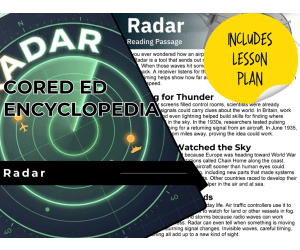
Radar Reading Comprehension Passage - Cored Ed Encyclopedia
ELA, Language Development, Reading Comprehension, Reading, Pre-Reading, Writing, History, Social Studies, Technology, Science, Grade 2, 3, 4, 5, Worksheets & Printables, Worksheets, Teacher Tools, Centers, Activities, Writing Prompts, Assessments, Quizzes and Tests, Quizzes, Lesson Plans
This radar reading comprehension includes: Visualization (on the front cover) Start your lesson by taking a minute to think and share something about the topic. Read the script aloud (slowly), perhaps prepare some music or sound effects. Student close their eyes and let their imaginations wander. Students open their eyes, read the question aloud and give them a few minutes to complete. Ask a few students to share or keep answers until the end to compare with what they learn in the passage. Quick pause—thousands of Cored Education products are included with your TeachSimple membership. Download links and encyclopedia index available here. Pre-Reading Trivia Students will write down one thing they already know about the subject and then read five more facts and discuss. These facts are fun, and the students will enjoy learning about the subject before reading more. Give 1 minute for students to write what they already know (no pressure—best guess is fine). Read the five facts together. After each fact, do ask a student for their opinion, was it surprising? Set a purpose by asking students to highlight/underline one fact they want to learn more about during the reading. Reading Passage The text is a high-interest reading passage with set paragraphs, roughly three to four paragraphs long. It contains a variety of themes about the topic, anywhere from history to technology. The passage is between 250 and 350 words in length. First, ask students to look at the headings and see what they’ll learn about today. What do they know about the topic/heading? First read options: Teacher read-aloud (best for support). Partner reading (paragraph by paragraph). While reading, students underline important details, and vocabulary words they think may come up in the questions section. Mixed Questions The first question page contains four multiple-choice questions, each with a choice of four answers, and three written response questions that require a sentence or two from the student. Students complete the mcqs first independently, then review quickly as a class. For the 3 written responses, try to get students giving the answer with some form of evidence: “I think ___ because the text says ___.” If students get stuck, send them back to check the passage. Vocabulary Questions Practice seven key words from the text in this section across two activities. First section is scrambled words where students will unscramble three words given a clue for each. The second section is a word to meaning matching activity. Before starting, have some students read out words they underlined in the passage. Ask students to say the word and read aloud the sentence(s) around each word. Ask students to do scrambled words and the matching exercise in pairs then go through answers as a class. For the scrambled spelling task, get four pairs to come up to the board and write the words for extra practice with the other student reading out the clue. For the matching task, prompt students to give full sentences: “I matched ___ with ___ because ___.” Creative Writing In this question, the student will be required to write a five to eight sentence paragraph on a question related to the topic. Before starting, ask students write down 3 key ideas they are going to include in their piece. Ask students for ideas to share around the class to help those struggling. Pro writing expectations: 5–8 sentences At least 2 facts or details from the passage At least 2 vocabulary words from the previous page Students read their paragraphs while classmates listen for facts and vocabulary words. Extension Activities This page is optional for fast finishers or to take home. There are several activities, each one requiring a different skill. Do some, do none, do all, completely optional - but you will feel reassured knowing every possibility is planned for. Includes summary writting question. Answer Key There are answers for the multiple-choice questions, written response questions have sample answers, vocabulary answers and if there is a summary question then a sample summary will be provided as well. Lesson Plan Included Customized lesson plan for this lesson is included. Lesson Snapshot Title: Radar Genre: Nonfiction (informational text with support pages) Subject: Science (Physical Science/Technology) Primary Topic: Using radio waves to find objects Estimated Guided Reading Level (A–Z): R What This Lesson Teaches Best Explains how radar works using radio waves, an “echo,” and a receiver that measures return time. Connects timing to distance (how long the trip takes helps show how far away something is). Builds background knowledge about radar’s development before World War II (tests in the 1930s; June 1935 detection; Chain Home stations). Shows real-world uses after the war (air traffic control, ships in fog, weather radar tracking rain and storms). Includes support pages that match the passage content (questions, vocabulary, writing, and extension activities focus on radio waves, echoes, Chain Home, and the 1935 test). Learning Goals Students can describe radar as a tool that sends out radio waves and listens for the waves that bounce back. Students can explain how a receiver uses the echo’s return time to show distance. Students can describe one early step in radar’s development mentioned in the passage (1930s tests or the June 1935 detection). Students can explain why early-warning stations mattered as World War II was getting closer. Students can identify at least two ways radar is used in everyday life after the war (planes, ships, or weather). Key Vocabulary From the Text receiver — device that listens for the returning signal echo — a returning signal that bounces back pulsing — sending waves in repeated bursts detected — found or noticed something was there vessels — boats or ships FULL CATALOG OF DOWNLOAD LINKS AND ENCYCLOPEDIA INDEX HERE
Author Cored Education
Rating
Tags Vocabulary, Reading Comprehension, Reading Passages, Reading, Creative Writing, Reading Strategies, Writing Prompts, Lesson Plans, History, Radar

Gamified Budgeting & Reality Cost of Living
Math, Money, Homeschool Curriculum, Grade 8, 9, 10, 11, 12, Worksheets & Printables, Workbooks, Worksheets, Word Searches, Teacher Tools, Assessments, Lesson Plans, Quizzes and Tests, Quizzes, Tests
Are abstract financial literacy lessons that simply do not engage your students giving you frustration? This immersive Curriculum of Gamified Budgeting & Cost of Living PBL makes the theory from the textbook material tangible in the experience. This is not an ordinary worksheet, but an eye-opening multi-day undertaking aimed at making students realize the real cost of living independently. By choosing a job opportunity and working with real-time data from their area, students will create a clear monthly budget. They will face the financial reality of taxes, the difficulty of searching for a reasonably-priced apartment with the help of Zillow, the complexity of finding the grocery bills as well as utility costs, and the burden of debts. This comprehensive curriculum requires no preparation in advance and allows for having great “A-ha” moments as well as develops critical thinking, resilience, and got a deep understanding of money issues. What is Included In this 42 Pages All-in-One PDF: Part 1: A Comprehensive Theory Guide (9 Pages): An exhaustive orientation for the instructors about the learning process and methods that includes ideas such as Income Illusion, Housing Heavyweights, Convenience Tax and Subscription Creep in connection with the evidence. Part 2: The Student Assignment of 10 Worksheets (20 Pages): An assignment providing an intricate guide to students concerning the following: Worksheet 1: Choosing Careers, Gross and Net Income, and Taxes Worksheet 2: Reality of Housing Market (checking local rents) Worksheet 3: Utility Costs and Connectivity (actual costs of electricity, internet, etc.) Worksheet 4: Food Spending & Eating Out (actual supermarket prices) Worksheet 5: Historical Costs of Transport (auto-loan payments and public transport) Worksheet 6: Health and Emergency Expenses Worksheet 7: Lifestyle Audit (spending for pleasures) Worksheet 8: Debt and Obligations (credits) Worksheet 9: The Monthly Report (bringing everything together) Worksheet 10: The Pivot (experiencing a financial crisis like rent increase or car problems) Part 3: Elaboration on the Instructional Tools for Educators (13 Pages): Illustrative Visuals: The educational tool gives as many graphics to make complex ideas easier. Detailed Example Answer Key: Detailed examples that illustrate the whole project using a specific example (Dental Hygienist in Austin, Texas). Five Days Implementation Guide for Teachers: Teacher's handbook. Assessment and Grading Sheet: Grading rubric made easy and comprehensible. It is vital that the Manners Project gives students crucial financial survival skills they will need later in their lives. Why Parents/Schools Think It's a Wonderful Idea: Practical Applications: The curriculum is based on local and current real data (like Zillow) that is tapped to teach budgeting, causing students to learn it in a practical way that has great relevance to their own local community. Engaging & Game-based: The curriculum is very engaging as learning is approached in a project approach (it is gamified, as students are allowed to choose a profession and deal with financial surprises) that gets students interested and involved in the learning process. Builds Useful Skills: This curriculum allows students to work in tough situations when they have to make decisions about money. Target Audience Choice: Due to the complexity of its content, its emphasis on independent living and its application of mathematical concepts, we recommend: High school students (10th-12th grade): This is probably the best audience, especially for juniors and seniors who are studying economics, personal finance, life skills, or even in a general math course as an end project. Homeschooling cooperatives: Home school parents look for high-quality real-life themes for their teenagers. Community colleges/early-stage university students: A very suitable application for "First-Year Experience" or other student success sessions to assist the young adults with the necessary transition to life away from home. Copyright and Terms of Use: This book is copyrighted by Syed Hammad Rizvi. This resource is meant for personal use only, in a classroom. You cannot edit, change, or copy this resource. Simply put, you cannot upload this resource on the free internet for everybody to access and download. If you would like to share this resource with other persons, please buy additional licenses from Teachsimple. Thanks for respecting the terms of use. This product is happily provided by Syed Hammad Rizvi.
Author Creative Book Store
Rating
Tags AcademicBurnout, StudentBurnout, StressManagement, AcademicStress, StudentAnxiety, TestAnxiety, Perfectionism, Procrastination, Overwhelm, StudentMentalHealth
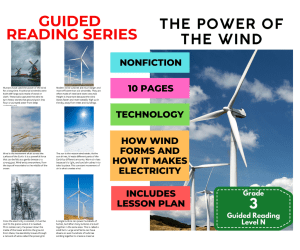
Guided Reading Level N - The Power of the Wind (with Lesson Plan)
ELA, Resources for Teachers, Reading Comprehension, Reading, Social Studies, Geography, Earth and Environmental Sciences, Science, Physics, Technology, Grade 2, 3, 4, Worksheets & Printables, Worksheets, Teacher Tools, Centers, Activities, Literacy Readers, Quizzes, Quizzes and Tests, Assessments, Lesson Plans
This Guided Reading Book - The Power of the Wind (Level N) with lesson plan includes: Guided Reading Color Label (front cover x1) This is a quick way to match the book’s demands to what students can generally handle.. The overall goal is to use the level/color to pick books for several smaller groups. To qualify for a certain level, a student is expected to read a book from that level with about 90–94% accuracy. If a student is consistently accurate and understands, move up a level. If the student is struggling at that level, drop down and add more support. Each student will improve at completely different rates, but it is generally one of the best ways to check progress across the class. DOWNLOAD THE CATALOG TO VIEW ALL GUIDED READING BOOKS AVAILABLE (SORTED LEVELS A-Z) Pre-Reading Question (x1) Teacher asks the prompt aloud, can be while showing the cover or first page. Students share what they already know, or make educated guesses from the cover. Prompt them to use the target vocabulary. Write some of their responses on the board to look back at during the reading. Vocabulary Words (x5) Introduce the five words, best doing it one at a time. Start by saying it, while students repeat and then see if anyone knows what it means before reading further. Read through the meaning and try to briefly connect each word to a picture or gesture so it’s meaningful. Ask students to flip through the book pages and point to where they see each of the vocabulary words. While reading the book pause upon coming across one of the vocab words or read the sentence twice to make sure students understand the word has appeared. Optional: Ask students to raise hands whenever they see/hear one of the new words. Guided Reading Pages (x10) Check the book snapshot (below) for: primary topic - do you need to prep extra reading or intro materials on this? what is taught best - decide on 1-2 bullets to focus on, use the prompt or words provided here for best results. learning goals - what you are checking for students to be able to do after the session, elicit answers using prompts or words provided. key vocabulary (see section above). questions overview - so you know what is coming up and if you need to prep extra materials to assist understanding. Run the lesson You may have already looked at a few of the pages together, but you can show them some of the pictures again first to set meaning. Depending on how much time you have and how familiar your students are with guided reading class, you may want to read the book aloud first with the group first. Students whisper or partner read, while you listen in. If time, do it as a group, one student reading a page each. Use the guided page’s prompts to coach: “Check the picture / does it make sense?” “Point under the words / try the first sound” “Reread the sentence smoothly”. Try to focus more on one student per session (rotating every time), so you can work out if they are ready to move up or need to move down a level. Comprehension Questions (back cover x3) This is your way to check that students didn’t just say the words, but actually understood the text. First, let students answer by pointing to the page/picture and saying a short sentence. After any answer, follow with: “Show me where you found that in the text.” In bigger groups, have partners answer first (10–20 seconds), then call on 2–3 students to share. Differentiation tips: Emerging speakers/struggling readers: oral + pointing On-level: oral in a full sentence Higher: one written sentence or draw + label Book Snapshot Title: The Power of the Wind Genre: Nonfiction (informational science text) Subject: Science (Energy/Earth Science) Primary Topic: How wind forms and how it makes electricity Estimated Guided Reading Level (A–Z): N What This Book Teaches Best Defines wind as the movement of air across Earth’s surface and describes wind as a breeze or a strong gust. Explains the cause of wind : the sun heats Earth unevenly, warm air rises, and cool air moves in to replace it. Shows how people have used wind over time, comparing traditional windmills (grinding grain, pumping water) to modern wind turbines. Describes how a wind turbine works, including blades spinning a shaft connected to a generator that makes electricity. Connects wind energy to sustainability by explaining wind farms , offshore wind farms , and wind energy as a clean, renewable resource. Learning Goals Students will explain what wind is using details from the text. Students will describe how the sun’s heating of Earth helps create wind. Students will describe how traditional windmills used wind to help people. Students will explain how wind turbines change wind’s motion into electricity. Students will describe what a wind farm is and why offshore wind farms can capture strong winds. Students will explain why wind energy is described as renewable and clean in the text. Key Vocabulary From the Text movement — going from one place to another. gust — a short, strong burst of wind. turbines — big machines with blades that spin in wind. generator — a machine that makes electricity. renewable — can be used again and won’t run out. Discussion Prompts Pre-reading question: Where have you seen wind do work, like moving something or making power? Comprehension questions: What does the text say creates wind? Comprehension questions: How did traditional windmills use wind to help people? Comprehension questions: How does a wind turbine turn wind into electricity, according to the text? Printing Tips 1. Best Printing Method (Recommended) “Booklet” Printing (Best if Available) If your printer or PDF viewer supports Booklet Printing , use this. Settings to use: Print mode: Booklet Paper size: Letter or A4 (either works) Orientation: Landscape Print on both sides: Yes Flip on: Short edge Scaling: Fit to printable area Booklet subset: First test: Front sides only Then: Back sides only This will automatically: Pair pages correctly Put the cover on the outside Align everything for folding After printing, fold in half and staple along the spine . 2. If “Booklet” Printing Is NOT Available You can still print this correctly with manual duplex printing . Step-by-step: Open the PDF. Choose Print . Set: Orientation: Landscape Pages per sheet: 1 Print on both sides: Yes Flip on: Short edge Print all pages . Because each PDF page already contains two facing book pages, the result will still fold cleanly into a book. Thousands of Cored Education products are included with your TeachSimple membership. Download links and encyclopedia index available here.
Author Cored Education
Rating
Tags Reading Comprehension, Reading Passages, Reading, Guided Reading, Guided Reading Lesson Plan, Guided Reading Activity, Pre-reading, Geography, Science Lesson Plans, Technology
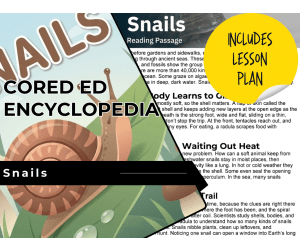
Snails Reading Comprehension Passage - Cored Ed Encyclopedia
ELA, Language Development, Reading Comprehension, Reading, Pre-Reading, Writing, Science, Animals, Life Sciences, Strategies, Grade 2, 3, 4, 5, Worksheets & Printables, Worksheets, Teacher Tools, Centers, Activities, Writing Prompts, Assessments, Quizzes and Tests, Quizzes, Lesson Plans
This snails reading comprehension includes: Visualization (on the front cover) Start your lesson by taking a minute to think and share something about the topic. Read the script aloud (slowly), perhaps prepare some music or sound effects. Student close their eyes and let their imaginations wander. Students open their eyes, read the question aloud and give them a few minutes to complete. Ask a few students to share or keep answers until the end to compare with what they learn in the passage. Quick pause—thousands of Cored Education products are included with your TeachSimple membership. Download links and encyclopedia index available here. Pre-Reading Trivia Students will write down one thing they already know about the subject and then read five more facts and discuss. These facts are fun, and the students will enjoy learning about the subject before reading more. Give 1 minute for students to write what they already know (no pressure—best guess is fine). Read the five facts together. After each fact, do ask a student for their opinion, was it surprising? Set a purpose by asking students to highlight/underline one fact they want to learn more about during the reading. Reading Passage The text is a high-interest reading passage with set paragraphs, roughly three to four paragraphs long. It contains a variety of themes about the topic, anywhere from history to technology. The passage is between 250 and 350 words in length. First, ask students to look at the headings and see what they’ll learn about today. What do they know about the topic/heading? First read options: Teacher read-aloud (best for support). Partner reading (paragraph by paragraph). While reading, students underline important details, and vocabulary words they think may come up in the questions section. Mixed Questions The first question page contains four multiple-choice questions, each with a choice of four answers, and three written response questions that require a sentence or two from the student. Students complete the mcqs first independently, then review quickly as a class. For the 3 written responses, try to get students giving the answer with some form of evidence: “I think ___ because the text says ___.” If students get stuck, send them back to check the passage. Vocabulary Questions Practice seven key words from the text in this section across two activities. First section is scrambled words where students will unscramble three words given a clue for each. The second section is a word to meaning matching activity. Before starting, have some students read out words they underlined in the passage. Ask students to say the word and read aloud the sentence(s) around each word. Ask students to do scrambled words and the matching exercise in pairs then go through answers as a class. For the scrambled spelling task, get four pairs to come up to the board and write the words for extra practice with the other student reading out the clue. For the matching task, prompt students to give full sentences: “I matched ___ with ___ because ___.” Creative Writing In this question, the student will be required to write a five to eight sentence paragraph on a question related to the topic. Before starting, ask students write down 3 key ideas they are going to include in their piece. Ask students for ideas to share around the class to help those struggling. Pro writing expectations: 5–8 sentences At least 2 facts or details from the passage At least 2 vocabulary words from the previous page Students read their paragraphs while classmates listen for facts and vocabulary words. Extension Activities This page is optional for fast finishers or to take home. There are several activities, each one requiring a different skill. Do some, do none, do all, completely optional - but you will feel reassured knowing every possibility is planned for. Includes summary writting question. Answer Key There are answers for the multiple-choice questions, written response questions have sample answers, vocabulary answers and if there is a summary question then a sample summary will be provided as well. Lesson Plan Included Customized lesson plan for this lesson is included. Lesson Snapshot Title: Snails Genre: Nonfiction (informational text with support pages) Subject: Science (Life Science) Primary Topic: Snail traits, habitats, and how they survive Estimated Guided Reading Level (A–Z): S What This Lesson Teaches Best What snails are (gastropods, “belly-footed” mollusks) and how they move using a strong foot on the bottom of their bodies. How snail body parts work, including the mantle making the shell, tentacles with tiny eyes, and a radula that scrapes food with many tiny teeth. How snails live in many habitats (mostly ocean; also land and freshwater), including near shore, on reefs, and in deep, dark water. How snails stay safe and survive tough conditions by pulling into their shell, becoming dormant, and sometimes sealing the opening with mucus or an operculum. How scientists use evidence (shell growth spirals and silvery trails) to study snails and understand how they live in so many places. Learning Goals Explain what “gastropods” means and how snails move using a strong foot. Describe how a snail’s mantle helps make and grow its shell. Identify what a radula is and how it helps a snail eat. Describe how land and freshwater snails avoid drying out and handle hot or cold weather. Use details from the passage to describe where snails live (near shore, reefs, deep water, and moist land places). Key Vocabulary From the Text gastropods — “belly-footed” animals that move using a strong foot. mantle — a flap of skin that makes the shell. radula — a scraper with many tiny teeth for eating. dormant — resting and not active for a while. operculum — a little door that can seal a shell opening. FULL CATALOG OF DOWNLOAD LINKS AND ENCYCLOPEDIA INDEX HERE
Author Cored Education
Rating
Tags Vocabulary, Reading Comprehension, Reading Passages, Reading, Creative Writing, Reading Strategies, Writing Prompts, Lesson Plans, Snails, Life Science

'Soul' Lesson Plan & Worksheets | Grades 5 - 12
ELA, Social Emotional Learning (SEL), Special Resources, Grade 5, 9, 10, 11, 12, Lesson Plans, Teacher Tools, Worksheets & Printables
Soul Movie Study | Pixar Movie Guide | ELA, SEL, Philosophy, Music & Critical Thinking Activities | Grades 5–12 Inspire meaningful conversations about purpose, joy, gratitude, and what makes life truly fulfilling with this engaging Soul Movie Study ! Based on Pixar’s thought-provoking film, this resource helps students explore themes of identity, passion, purpose, mindfulness, and personal growth while strengthening reading comprehension, critical thinking, writing, discussion, and social-emotional learning skills. Through 30 engaging activities, students analyze character development, explore big life questions, and reflect on the moments that make life meaningful. What's Included 30 student activities Printable student workbook Comprehensive teacher guide Complete answer key Reading comprehension questions Character analysis activities Theme and symbolism exploration Vocabulary development exercises Philosophy and reflection prompts Purpose and passion discussions Social-emotional learning (SEL) activities Music and jazz appreciation lessons Improvisation and creativity connections Survey and data-analysis activities Critical-thinking questions Debate and discussion prompts Creative writing projects Diary writing activity Letter-to-your-future-self assignment Art and design extension activities Students will explore: Purpose and meaning Joy and gratitude Identity and self-discovery Living in the moment Passion and balance Mindfulness and wellbeing Personal growth Friendship and mentorship Music as self-expression Appreciating everyday experiences How It Works in the Classroom This Soul movie guide is designed for flexible classroom use and works well for: English Language Arts lessons Social-Emotional Learning (SEL) Character education units Philosophy and ethics discussions Music appreciation lessons Independent work Homeschool learning Substitute plans Small-group discussions Cross-curricular learning Students complete activities before, during, and after viewing the film. Lessons include comprehension checks, character studies, vocabulary practice, reflection exercises, discussion activities, music connections, creative writing projects, and personal growth opportunities. The included teacher guide provides a complete 90-minute lesson plan with differentiation strategies and extension ideas. Standards & Learning Goals Students will: Recall and sequence major events from the film Analyze how Joe and 22 change throughout the story Explore themes of purpose, passion, and identity Interpret symbolism, metaphors, and deeper meaning Strengthen reading comprehension and vocabulary skills Develop critical-thinking and discussion abilities Connect music and improvisation to self-expression Interpret and analyze survey data Reflect on gratitude, mindfulness, and wellbeing Articulate personal ideas about what makes life meaningful Supports instruction in: English Language Arts Social-Emotional Learning (SEL) Philosophy & Ethics Music Education Critical Thinking Writing Skills Speaking and Listening Mathematics & Data Analysis Why Teachers Love It ✅ No-prep printable resource ✅ Includes teacher guide and complete answer key ✅ Encourages deep and meaningful classroom discussions ✅ Strong SEL and wellbeing connections ✅ Promotes gratitude, mindfulness, and self-reflection ✅ Integrates literacy, music, philosophy, and critical thinking ✅ Encourages students to think beyond academic success ✅ Includes engaging creative writing and reflection activities ✅ Flexible for classroom, homeschool, and enrichment settings ✅ Helps students connect movie themes to their own lives Teachers love how this resource transforms a popular Pixar film into a powerful learning experience. Students engage with meaningful questions about purpose, happiness, and personal growth while strengthening literacy, discussion, and analytical skills. The thoughtful blend of SEL, philosophy, music, and reflection creates opportunities for authentic learning and lasting conversations. Add this Soul Movie Study to your classroom today and help students explore purpose, joy, gratitude, identity, and personal growth through engaging activities that inspire thoughtful reflection and meaningful discussion long after the movie ends.
Author Bright Classroom Ideas Marketplace
Rating
Tags Soul, Film, Movie, Guide, Lesson, Plan, Worksheet, Ela, Sel
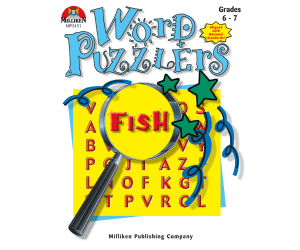
Word Puzzlers - Grades 6-7
ELA, Language Development, Vocabulary, Grade 6, 7, Teacher Tools, Lesson Plans
Word Puzzlers for Grades 6-7: A Stimulating Teaching Resource Stimulate student interest in words and enrich their vocabulary with this collection of word puzzles, an essential addition to any middle school teacher's resource kit. Educational and Engaging The Word Puzzlers for Grades 6-7 combines the delight of solving puzzles with the value of vocabulary learning. Modeled as an educational exerciser, these word puzzles nourish students' language skills while keeping their minds active. Variety in Learning Formats Codes Mazes Riddles, rhymes & rebuses Word searches Matching activities & crossword puzzles All these puzzle formats scrutinize reasoning skills and reinforce spelling proficiency. A Beyond Downtime Activity ! Nobody ever said no to fun - especially when it stimulates the brain! The Word Puzzlers serves as action-packed alternatives to routine lesson plans. They can supplement core or extended curricular materials effortlessly giving your learning process that much-needed spice! Fits Wide Span of Settings: Whole group activities around cooperative learning spaces, Small group tasks promoting collective problem-solving, Inidividual at-home assignments. Hassle-free Access! The icing on the cake? Teachers get access to 35 print-ready pages packed in one easily downloadable PDF file — perfect for busy teaching schedules! It's particularly helpful for teachers counseling Grade 6 and Grade 7 Language Arts classes specializing in Vocabulary subjects. Word Puzzler, a comprehensive yet uncomplicated teaching resource.
Author Classroom Complete Press
Tags Word Puzzles, Vocabulary Activity, Word Search, Grammar, Language Arts
I WONDER - Are Trees Important For The Environment | Animated Video
Environmental Science, Earth and Environmental Sciences, Science, Earth Sciences, Nature & Plants, Life Sciences, Grade 3, 4, 5, 6, 7, 8, 9, Lesson Plans, Teacher Tools
Video Introduction An amazing video designed for the students to learn more about STEM. I WONDER - Are Trees Important For The Environment | Animated Video Lesson Do you like STEM subjects? what is your favorite one? Have you ever tried to plant a seed? If yes, tell us more about it. Or have you ever tried to invent something? If yes, tell us more about it. And how do you think it will help us? Have you ever seen a microorganism under a microscope? What was it? And how it looked like? Mathematics is a marvelous subject. Let' sharpen our brains and solve some equations. Do you like timetable tricks? What is your favorite one? Do you know how to code? Have you ever created an app or a game before? If yes, how was it like? I WONDER - Are Trees Important For The Environment | Animated Video Lesson The video is perfect for encouraging the researching skills for the students, while learning more about this fantastic topic. I WONDER - Are Trees Important For The Environment | Animated Video Lesson This friendly designed video is suitable for students at school, homeschooling, and as a group activity. Format Available in MP4 format.
Author Educational Voice
Tags Are Trees Important For The Environment, Are Trees Important For The Environment Video, Trees Are Important For The Environment, Trees, Trees Facts, Trees Video, Trees Video For Kids, Trees Facts For Kids