



3,932 products added recently
Page 2 - Holiday and Seasonal Quizzes
Holiday and Seasonal Quizzes add a festive element to assessments, making them more enjoyable for students. These quizzes feature questions related to holidays like Christmas, Halloween, and Spring festivals, blending curriculum content with seasonal themes. They can cover topics such as historical origins, cultural practices, or subject-specific questions presented in a holiday context. Using these quizzes keeps students motivated and interested in learning, especially during times when attention spans might wane due to holiday excitement.

 Show filters

Cars Reading Comprehension Passage - Cored Ed Encyclopedia
ELA, Language Development, Resources for Teachers, Reading Comprehension, Reading, Pre-Reading, Writing, Science, Physics, Strategies, Grade 2, 3, 4, 5, Worksheets & Printables, Worksheets, Teacher Tools, Centers, Activities, Writing Prompts, Assessments, Tests, Quizzes and Tests, Quizzes
This cars reading comprehension contains the following: Pre-Reading Trivia Students will write down one thing they already know about the subject and then read five more facts and discuss. These facts are fun, and the students will enjoy learning about the subject before reading more. Reading Passage The text is a high-interest reading passage with set paragraphs, roughly three to four paragraphs long. It contains a variety of themes about the topic, anywhere from history to technology. The passage is between 250 and 350 words in length. Mixed Questions The first question page contains four multiple-choice questions, each with a choice of four answers, and three written response questions that require a sentence or two from the student. Creative Writing In this question, the student will be required to write a five to eight sentence paragraph on a question related to the topic. Extension Activities This page is optional for fast finishers. If there are five to ten minutes left at the end of the lesson, the student can choose one of three activities, each one requiring a different skill. Answer Key There are answers for the multiple-choice questions and three written response questions have sample answers. FULL CATALOG OF DOWNLOAD LINKS AND ENCYCLOPEDIA INDEX HERE Cored Ed Encyclopedia Overview The Cored Ed Encyclopedia is a weekly series of lessons that you can pick up and use right away. These short readings fit into whatever time you have available. Each one includes a warm-up, a reading, and a set of questions, but it’s flexible — you can do just the reading, the full lesson, or skip the writing section if you need to. Each lesson focuses on a single topic so students don’t get lost. The writing is clear but never childish, making it perfect for grades two through five. Topics range from animals and science to history, inventions, and everyday things. No matter the level of the student, everyone should take away at least one new idea or fact from each lesson. The materials are easy to print, easy to explain, and require no setup. They work well for whole-class teaching, partner work, or independent study.
Author Cored Education
Rating
Tags Vocabulary, Spelling, Reading Comprehension, Reading Passages, Cored Encyclopedia, Facts, Reading, Creative Writing, Physical Science, Cars

Equator Reading Comprehension Passage - Cored Ed Encyclopedia
ELA, Reading Comprehension, Reading, Science, Technology, Language Development, History, Social Studies, Earth and Environmental Sciences, Geography, Grade 2, 3, 4, 5, Worksheets & Printables, Worksheets, Teacher Tools, Centers, Activities, Writing Prompts, Assessments, Quizzes and Tests, Quizzes, Lesson Plans
This Equator reading comprehension with lesson plan includes: Visualization (on the front cover) Start your lesson by taking a minute to think and share something about the topic. Read the script aloud (slowly), perhaps prepare some music or sound effects. Student close their eyes and let their imaginations wander. Students open their eyes, read the question aloud and give them a few minutes to complete. Ask a few students to share or keep answers until the end to compare with what they learn in the passage. Quick pause—thousands of Cored Education products are included with your TeachSimple membership. Download links and encyclopedia index available here. Pre-Reading Trivia Students will write down one thing they already know about the subject and then read five more facts and discuss. These facts are fun, and the students will enjoy learning about the subject before reading more. Give 1 minute for students to write what they already know (no pressure—best guess is fine). Read the five facts together. After each fact, do ask a student for their opinion, was it surprising? Set a purpose by asking students to highlight/underline one fact they want to learn more about during the reading. Reading Passage The text is a high-interest reading passage with set paragraphs, roughly three to four paragraphs long. It contains a variety of themes about the topic, anywhere from history to technology. The passage is between 250 and 350 words in length. First, ask students to look at the headings and see what they’ll learn about today. What do they know about the topic/heading? First read options: Teacher read-aloud (best for support). Partner reading (paragraph by paragraph). While reading, students underline important details, and vocabulary words they think may come up in the questions section. Mixed Questions The first question page contains four multiple-choice questions, each with a choice of four answers, and three written response questions that require a sentence or two from the student. Students complete the mcqs first independently, then review quickly as a class. For the 3 written responses, try to get students giving the answer with some form of evidence: “I think ___ because the text says ___.” If students get stuck, send them back to check the passage. Vocabulary Questions Practice seven key words from the text in this section across two activities. First section is scrambled words where students will unscramble three words given a clue for each. The second section is a word to meaning matching activity. Before starting, have some students read out words they underlined in the passage. Ask students to say the word and read aloud the sentence(s) around each word. Ask students to do scrambled words and the matching exercise in pairs then go through answers as a class. For the scrambled spelling task, get four pairs to come up to the board and write the words for extra practice with the other student reading out the clue. For the matching task, prompt students to give full sentences: “I matched ___ with ___ because ___.” Creative Writing In this question, the student will be required to write a five to eight sentence paragraph on a question related to the topic. Before starting, ask students write down 3 key ideas they are going to include in their piece. Ask students for ideas to share around the class to help those struggling. Pro writing expectations: 5–8 sentences At least 2 facts or details from the passage At least 2 vocabulary words from the previous page Students read their paragraphs while classmates listen for facts and vocabulary words. Extension Activities This page is optional for fast finishers or to take home. There are several activities, each one requiring a different skill. Do some, do none, do all, completely optional - but you will feel reassured knowing every possibility is planned for. Includes summary writting question and additional facts. Answer Key There are answers for the multiple-choice questions, written response questions have sample answers, vocabulary answers and if there is a summary question then a sample summary will be provided as well. Lesson Plan Included Customized lesson plan for this lesson is included. Lesson Snapshot Title: Equator Genre: Nonfiction (Informational Text) Subject: Social Studies (Geography) / Science (Earth Science) / Reading (Informational Text) Primary Topic: Equator, latitude, hemispheres, sunlight, and navigation Estimated Guided Reading Level (A–Z): N What This Lesson Teaches Best Explains the equator as an imaginary line at 0 degrees latitude that circles Earth’s widest part. Shows how the equator splits Earth into the Northern and Southern Hemispheres and acts as a starting line for measuring north and south . Connects observation to science by telling how Eratosthenes compared shadow angles to help estimate Earth’s size long ago. Describes how sunlight near the equator is more direct , helping many equator regions stay warm and keeping day and night close in length. Links geography to modern tools by noting GPS and satellites still begin with the 0-degree equator circle. Learning Goals Students will identify the equator as an imaginary line at 0 degrees latitude . Students will explain how the equator divides Earth into the Northern Hemisphere and Southern Hemisphere . Students will describe how latitude is measured north or south of the equator. Students will explain how shadow angles helped Eratosthenes estimate Earth’s size. Students will describe why sunlight near the equator can feel more direct and how that affects warmth and day/night length. Students will describe how the equator is used as a reference point in GPS and satellites . Key Vocabulary From the Text latitude — degrees north or south of the equator. hemispheres — the two halves of Earth. shadows — dark shapes made when light is blocked. solstice — a day when the Sun’s position is special. satellites — objects in space used to help find locations. FULL CATALOG OF DOWNLOAD LINKS AND ENCYCLOPEDIA INDEX HERE
Author Cored Education
Rating
Tags Vocabulary, Reading Comprehension, Reading Passages, Lesson Plans, Ela Lesson Plans, Reading Comprehension Lesson Plans, Pre-reading, Geography, Earth Science, Science Lesson Plans

Scientist Jean-Baptiste Lamarck Fact Sheet, Quiz + more | PDF + H5P
Life Sciences, Science, Biology, STEM, History: World, History, Social Studies, Nature & Plants, Animals, Biographies, Grade 7, 8, 9, 10, Worksheets, Worksheets & Printables, Quizzes, Quizzes and Tests, Teacher Tools, Projects, Activities
Discover Jean-Baptiste Lamarck – The Scientist Who Shaped the Theory of Evolution Did you know that Jean-Baptiste Lamarck was one of the first scientists to propose a theory of evolution? Long before Darwin, Lamarck suggested that living organisms change over time to adapt to their environment. He even introduced the term "biology" to describe the study of life. His work laid the groundwork for evolutionary science and sparked ideas that continue to influence biology today. This teaching resource is designed for grades 7–10 and introduces your students to Lamarck’s revolutionary ideas in a way that’s easy to understand and engaging. Perfect for a 45-minute lesson, it combines interesting facts with creative and interactive tasks that will bring Lamarck’s story and contributions to life in your classroom. What’s Included: Concise Informational Text: A clear and engaging overview of Jean-Baptiste Lamarck’s role in science. Fact Sheet Activity: Encourages students to organize knowledge and work creatively. Quiz with Solutions: Promotes fun, interactive learning and self-assessment. Additional Exercises: Students can create their own questions and collaborate in pairs to deepen their understanding. Flexible Formats: Includes a color and black-and-white printable PDF, as well as interactive H5P tasks for digital learning. Why You’ll Love This Resource: Time-Saving: Perfect for teachers who need a ready-to-go, well-structured lesson. Versatile Use: Ideal for biology, history of science, or cross-curricular lessons in English and science classes. Promotes Independence: Solutions are included, allowing students to check their work and explore the topic at their own pace. Interactive and Engaging: Tasks are designed to keep students actively involved while learning about Jean-Baptiste Lamarck’s legacy. Whether you use it for a regular lesson, substitute teaching, or as part of a digital learning activity, this resource will make Jean-Baptiste Lamarck’s contributions come alive for your students. Bring Jean-Baptiste Lamarck’s fascinating world of science into your classroom and inspire your students to see history and science in a whole new light! Have fun exploring the world of science with your students! Warmly, Lernfitness Did You Know? I teach with a certified therapy dog, and together we focus on creating a positive and inspiring learning environment.
Author Lernfitness
Tags Science, Biology, Famous Scientists Lesson, H5P, Interactive Science Exercises, STEM, History, Scientists, Jean-Baptiste Lamarck, Evolution
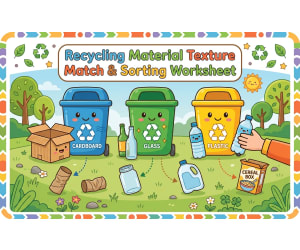
Recycling Material Texture Match & Sorting
Science, Life Sciences, Earth and Environmental Sciences, Earth Sciences, Environmental Science, Geology, Space, Nature & Plants, Human Body, Basic Science, Preschool, Grade 1, 2, 3, 4, 5, 6, Worksheets & Printables, Workbooks, Worksheets, Word Searches, Teacher Tools, Lesson Plans, Quizzes and Tests, Quizzes, Tests, Assessments
Transform your recycling lesson from a flat, boring worksheet into an unforgettable, hands-on sensory adventure! This comprehensive, research-based curriculum is designed to teach toddlers and preschoolers about recycling through the way they learn best: by touching, feeling, and doing. Grounded in the principles of Embodied Cognition, Montessori, and Vygotskian scaffolding , this resource moves beyond simple picture matching. It guides children to understand the fundamental properties of materials like cardboard, plastic, and glass (using safe proxies) through their distinct textures, temperatures, weights, and sounds. It’s the perfect, developmentally appropriate resource for your Earth Day unit, sensory tables, fine motor centers, or at-home learning. This isn't just a set of printables; it's a complete pedagogical system designed for early childhood educators, occupational therapists, and dedicated parents. ► What's Included in this 33-Page PDF? Phase 1: Core Content & Theory: A professional, in-depth guide for the educator. It explains the neuroscience behind tactile learning in early childhood, the design of the sensory materials, and the cognitive mapping process that helps toddlers connect a physical object to a symbolic icon. Phase 2: Facilitator's Workbook: 10 detailed, scaffolded worksheets that serve as lesson plans and observation guides. Each worksheet focuses on a different sensory attribute (e.g., Thermal Conductivity, Auditory Feedback, Material Elasticity) and provides step-by-step instructions and prompts for recording the child's progress. Phase 3: Visuals & Teacher Resources: Everything you need for seamless implementation! Professional Diagrams: Visual models of the learning process and ideal classroom setup. Developmental Milestones Matrix: Track a child's progress from exploration to mastery. Teacher Implementation Guide: Detailed instructions on material preparation, safety protocols, and a step-by-step guide to executing the lessons. Comprehensive Answer Key & Observation Rubric: Understand the "why" behind a child's actions and identify emerging, developing, and mastering skills. ► Skills Developed: Sensory Processing: Tactile, thermal, auditory, and kinesthetic discrimination. Fine Motor Skills: Pincer grasp, grip-force modulation, object manipulation. Cognitive Skills: Sorting and categorizing, problem-solving, working memory, cognitive flexibility. Early Science/Environmental Concepts: Understanding material properties, introduction to recycling and ecological stewardship. Language Development: Builds vocabulary for textures and properties ("bumpy," "smooth," "cold," "crinkly"). ► Perfect For: Preschool, Pre-K, and Toddler Teachers Occupational Therapists (A fantastic tool for sensory integration and fine motor goals!) Homeschooling Parents Special Education Professionals Montessori & Reggio Emilia inspired classrooms Stop the "laminate and lecture" cycle. Download this curriculum today and empower your little learners to become true "somatic ecologists" who understand their world through meaningful interaction! Keywords: Recycling, Earth Day, Sensory Bin, Toddler Activities, Preschool Curriculum, Montessori, Occupational Therapy, Fine Motor Skills, Sorting Activities, Tactile Learning, Hands-On Learning, Special Education, SPED, Sensory Integration, Early Childhood, Teacher Resource, Case Study Why Parents/Schools Love It: Goes Beyond Worksheets: It’s a multi-sensory, hands-on experience that turns abstract concepts like recycling into concrete, memorable play. It aligns perfectly with how young children naturally learn. Builds Real-World Skills: This curriculum masterfully combines critical developmental goals (fine motor, sensory discrimination) with an essential real-world lesson on environmental responsibility. Research-Backed & Professional: Unlike many resources, this curriculum is grounded in solid educational theory (Montessori, Vygotsky) and neuroscience, giving educators and therapists confidence in its effectiveness. Incredibly Versatile & Adaptable: It can be used for one-on-one therapy, a home learning activity, or a classroom sensory station. The detailed rubrics help track individual progress in any setting. Target Student Classes : Based on the content, case studies (ages 28-48 months), and developmental focus, target facilitators (the adults) working with: Toddlers (18 months - 3 years) Preschool / Pre-K (3 - 4 years) This resource is also exceptionally well-suited for Early Intervention and Special Education classrooms focusing on sensory processing and fine motor development, as well as for Occupational Therapy (OT) sessions. Copyright/Terms of Use: This Book was copyrighted by Syed Hammad Rizvi. This resource is for personal and single classroom use only. You may not alter, redistribute, or sell any part of this resource. In other words, you may not put it on the Internet where it could be publicly found and downloaded. If you want to share this resource with colleagues, please purchase additional licenses from Teachsimple. Thank you for respecting these terms of use. This product is happily brought to you by Syed Hammad Rizvi
Author Creative Book Store
Rating
Tags Recycling, Sorting, Earthday, Environment, Sustainability, Recyclingactivities, Sortingactivities, Earthdayactivities, Learningtorecycle, Environmentalscience
Toothbrushes Reading Comprehension Passage - Cored Ed Encyclopedia
ELA, Language Development, Reading Comprehension, Reading, Science, Technology, Engineering, History, Social Studies, Life Sciences, Grade 2, 3, 4, 5, Worksheets & Printables, Worksheets, Teacher Tools, Centers, Activities, Writing Prompts, Assessments, Quizzes and Tests, Quizzes, Lesson Plans
This toothbrushes reading comprehension includes: Visualization (on the front cover) Start your lesson by taking a minute to think and share something about the topic. Read the script aloud (slowly), perhaps prepare some music or sound effects. Student close their eyes and let their imaginations wander. Students open their eyes, read the question aloud and give them a few minutes to complete. Ask a few students to share or keep answers until the end to compare with what they learn in the passage. Quick pause—thousands of Cored Education products are included with your TeachSimple membership. Download links and encyclopedia index available here. Pre-Reading Trivia Students will write down one thing they already know about the subject and then read five more facts and discuss. These facts are fun, and the students will enjoy learning about the subject before reading more. Give 1 minute for students to write what they already know (no pressure—best guess is fine). Read the five facts together. After each fact, do ask a student for their opinion, was it surprising? Set a purpose by asking students to highlight/underline one fact they want to learn more about during the reading. Reading Passage The text is a high-interest reading passage with set paragraphs, roughly three to four paragraphs long. It contains a variety of themes about the topic, anywhere from history to technology. The passage is between 250 and 350 words in length. First, ask students to look at the headings and see what they’ll learn about today. What do they know about the topic/heading? First read options: Teacher read-aloud (best for support). Partner reading (paragraph by paragraph). While reading, students underline important details, and vocabulary words they think may come up in the questions section. Mixed Questions The first question page contains four multiple-choice questions, each with a choice of four answers, and three written response questions that require a sentence or two from the student. Students complete the mcqs first independently, then review quickly as a class. For the 3 written responses, try to get students giving the answer with some form of evidence: “I think ___ because the text says ___.” If students get stuck, send them back to check the passage. Vocabulary Questions Practice seven key words from the text in this section across two activities. First section is scrambled words where students will unscramble three words given a clue for each. The second section is a word to meaning matching activity. Before starting, have some students read out words they underlined in the passage. Ask students to say the word and read aloud the sentence(s) around each word. Ask students to do scrambled words and the matching exercise in pairs then go through answers as a class. For the scrambled spelling task, get four pairs to come up to the board and write the words for extra practice with the other student reading out the clue. For the matching task, prompt students to give full sentences: “I matched ___ with ___ because ___.” Creative Writing In this question, the student will be required to write a five to eight sentence paragraph on a question related to the topic. Before starting, ask students write down 3 key ideas they are going to include in their piece. Ask students for ideas to share around the class to help those struggling. Pro writing expectations: 5–8 sentences At least 2 facts or details from the passage At least 2 vocabulary words from the previous page Students read their paragraphs while classmates listen for facts and vocabulary words. Extension Activities This page is optional for fast finishers or to take home. There are several activities, each one requiring a different skill. Do some, do none, do all, completely optional - but you will feel reassured knowing every possibility is planned for. Includes summary writting question. Answer Key There are answers for the multiple-choice questions, written response questions have sample answers, vocabulary answers and if there is a summary question then a sample summary will be provided as well. Lesson Plan Included Customized lesson plan for this lesson is included. Lesson Snapshot Title: Toothbrushes Genre: Nonfiction (informational text) Subject: Science (Health & Technology) Primary Topic: How toothbrushes changed over time Estimated Guided Reading Level (A–Z): R What This Lesson Teaches Best Explains how people cleaned teeth before store-bought toothbrushes by chewing a twig until it turned “fuzzy” and rubbing it on teeth. Shows how evidence from the past (archaeologists finding signs in places like Mesopotamia and Egypt) can tell us about tooth care long ago. Traces the history of the bristled brush from China’s Tang dynasty to Europe in the 1600s, highlighting how inventions travel. Describes how toothbrush designs changed to solve problems (for example, natural bristles staying damp and trapping bacteria). Summarizes key innovations—nylon bristles (1938) and the electric toothbrush (1954)—and connects them to the ongoing goal of protecting teeth. Learning Goals Students will describe how a “chew stick” was used to clean teeth long ago. Students will identify evidence in the text that people cared about clean mouths thousands of years ago. Students will explain how the bristled brush began in China and later spread to Europe. Students will summarize how toothbrush-making changed after 1780 using details about materials and design. Students will explain why inventors searched for new bristle materials and what nylon changed. Students will describe how an electric toothbrush helped brushing by adding steady motion. Key Vocabulary From the Text archaeologists — scientists who study the past using old remains. Mesopotamia — an ancient region where people lived long ago. miswak — a special stick used for cleaning teeth. patent — legal rights that protect an invention. bacteria — tiny germs that can cause problems. FULL CATALOG OF DOWNLOAD LINKS AND ENCYCLOPEDIA INDEX HERE
Author Cored Education
Rating
Tags Vocabulary, Reading Comprehension, Reading Passages, Lesson Plans, Ela Lesson Plans, Reading Comprehension Lesson Plans, Pre-reading, History, History Lesson Plans, Toothbrushes
Guided Reading Level N - Nanjing (with Lesson Plan)
ELA, Resources for Teachers, Reading Comprehension, Reading, Social Studies, Geography, Earth and Environmental Sciences, Science, History, Economics, Grade 2, 3, 4, Worksheets & Printables, Worksheets, Teacher Tools, Centers, Activities, Literacy Readers, Quizzes, Quizzes and Tests, Assessments, Lesson Plans
This Guided Reading Book - Nanjing (Level N) with lesson plan includes: Guided Reading Color Label (front cover x1) This is a quick way to match the book’s demands to what students can generally handle.. The overall goal is to use the level/color to pick books for several smaller groups. To qualify for a certain level, a student is expected to read a book from that level with about 90–94% accuracy. If a student is consistently accurate and understands, move up a level. If the student is struggling at that level, drop down and add more support. Each student will improve at completely different rates, but it is generally one of the best ways to check progress across the class. DOWNLOAD THE CATALOG TO VIEW ALL GUIDED READING BOOKS AVAILABLE (SORTED LEVELS A-Z) Pre-Reading Question (x1) Teacher asks the prompt aloud, can be while showing the cover or first page. Students share what they already know, or make educated guesses from the cover. Prompt them to use the target vocabulary. Write some of their responses on the board to look back at during the reading. Vocabulary Words (x5) Introduce the five words, best doing it one at a time. Start by saying it, while students repeat and then see if anyone knows what it means before reading further. Read through the meaning and try to briefly connect each word to a picture or gesture so it’s meaningful. Ask students to flip through the book pages and point to where they see each of the vocabulary words. While reading the book pause upon coming across one of the vocab words or read the sentence twice to make sure students understand the word has appeared. Optional: Ask students to raise hands whenever they see/hear one of the new words. Guided Reading Pages (x10) Check the book snapshot (below) for: primary topic - do you need to prep extra reading or intro materials on this? what is taught best - decide on 1-2 bullets to focus on, use the prompt or words provided here for best results. learning goals - what you are checking for students to be able to do after the session, elicit answers using prompts or words provided. key vocabulary (see section above). questions overview - so you know what is coming up and if you need to prep extra materials to assist understanding. Run the lesson You may have already looked at a few of the pages together, but you can show them some of the pictures again first to set meaning. Depending on how much time you have and how familiar your students are with guided reading class, you may want to read the book aloud first with the group first. Students whisper or partner read, while you listen in. If time, do it as a group, one student reading a page each. Use the guided page’s prompts to coach: “Check the picture / does it make sense?” “Point under the words / try the first sound” “Reread the sentence smoothly”. Try to focus more on one student per session (rotating every time), so you can work out if they are ready to move up or need to move down a level. Comprehension Questions (back cover x3) This is your way to check that students didn’t just say the words, but actually understood the text. First, let students answer by pointing to the page/picture and saying a short sentence. After any answer, follow with: “Show me where you found that in the text.” In bigger groups, have partners answer first (10–20 seconds), then call on 2–3 students to share. Differentiation tips: Emerging speakers/struggling readers: oral + pointing On-level: oral in a full sentence Higher: one written sentence or draw + label Book Snapshot Title: World Cities: Nanjing Genre: Nonfiction (informational text) Subject: Social Studies (Geography) Primary Topic: Nanjing’s rivers, landmarks, and seasonal changes Estimated Guided Reading Level (A–Z): N What This Book Teaches Best How Nanjing’s location along the Yangtze River helped it become a travel and trade hub. How a major river can divide a city and lead to bridges being built to connect districts. How landforms and green spaces (like Purple Mountain’s forests) can help keep a city’s air clean and support plant life. How human-built features (the ancient city wall) can follow natural geography like hills and lakes. How climate and seasons change a city’s landscape through spring blossoms, autumn leaf color, and summer shade from “green tunnels.” Learning Goals Students will describe where Nanjing is located and what major river it sits along. Students will explain why bridges were built across the Yangtze River in Nanjing. Students will identify Purple Mountain and explain how its forests help the city. Students will describe how Nanjing’s ancient city wall follows the natural geography of the land. Students will describe one role Xuanwu Lake plays (islands/bridges or collecting rainwater). Students will describe how Nanjing’s humid subtropical climate connects to changes across seasons. Key Vocabulary From the Text districts — parts of a city. subtropical — warm climate, often with lots of humidity. transformation — a big change. fertile — good for plants to grow. geography — land features of a place. Discussion Prompts Pre-reading question: How might rivers and hills help a city grow and change? Comprehension questions: Where does the text say Nanjing is located, and what river runs through it? Comprehension questions: Why were massive bridges built across the Yangtze River in Nanjing? Comprehension questions: What change does the text describe happening in Nanjing during autumn? Printing Tips 1. Best Printing Method (Recommended) “Booklet” Printing (Best if Available) If your printer or PDF viewer supports Booklet Printing , use this. Settings to use: Print mode: Booklet Paper size: Letter or A4 (either works) Orientation: Landscape Print on both sides: Yes Flip on: Short edge Scaling: Fit to printable area Booklet subset: First test: Front sides only Then: Back sides only This will automatically: Pair pages correctly Put the cover on the outside Align everything for folding After printing, fold in half and staple along the spine . 2. If “Booklet” Printing Is NOT Available You can still print this correctly with manual duplex printing . Step-by-step: Open the PDF. Choose Print . Set: Orientation: Landscape Pages per sheet: 1 Print on both sides: Yes Flip on: Short edge Print all pages . Because each PDF page already contains two facing book pages, the result will still fold cleanly into a book. Thousands of Cored Education products are included with your TeachSimple membership. Download links and encyclopedia index available here.
Author Cored Education
Rating
Tags Reading Comprehension, Reading Passages, Reading, Guided Reading, Guided Reading Lesson Plan, Guided Reading Activity, Pre-reading, Geography, Social Studies Lesson Plans, History
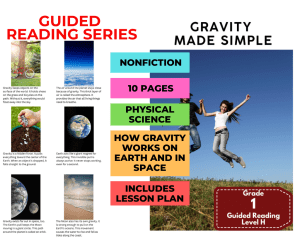
Guided Reading Level H - Gravity Made Simple
ELA, Resources for Teachers, Reading Comprehension, Reading, Science, Pre-Reading, Language Development, Vocabulary, Physics, Earth and Environmental Sciences, Kindergarten, Grade 1, 2, Worksheets & Printables, Worksheets, Teacher Tools, Centers, Activities, Literacy Readers, Quizzes, Quizzes and Tests, Assessments
This Guided Reading Book - Gravity Made Simple (Level H) includes: Guided Reading Color Label (front cover x1) This is a quick way to match the book’s demands to what students can generally handle.. The overall goal is to use the level/color to pick books for several smaller groups. To qualify for a certain level, a student is expected to read a book from that level with about 90–94% accuracy. If a student is consistently accurate and understands, move up a level. If the student is struggling at that level, drop down and add more support. Each student will improve at completely different rates, but it is generally one of the best ways to check progress across the class. DOWNLOAD THE CATALOG TO VIEW ALL GUIDED READING BOOKS AVAILABLE (SORTED LEVELS A-Z) Pre-Reading Question (x1) Teacher asks the prompt aloud, can be while showing the cover or first page. Students share what they already know, or make educated guesses from the cover. Prompt them to use the target vocabulary. Write some of their responses on the board to look back at during the reading. Vocabulary Words (x5) Introduce the five words, best doing it one at a time. Start by saying it, while students repeat and then see if anyone knows what it means before reading further. Read through the meaning and try to briefly connect each word to a picture or gesture so it’s meaningful. Ask students to flip through the book pages and point to where they see each of the vocabulary words. While reading the book pause upon coming across one of the vocab words or read the sentence twice to make sure students understand the word has appeared. Optional: Ask students to raise hands whenever they see/hear one of the new words. Guided Reading Pages (x10) Check the book snapshot (below) for: primary topic - do you need to prep extra reading or intro materials on this? what is taught best - decide on 1-2 bullets to focus on, use the prompt or words provided here for best results. learning goals - what you are checking for students to be able to do after the session, elicit answers using prompts or words provided. key vocabulary (see section above). questions overview - so you know what is coming up and if you need to prep extra materials to assist understanding. Run the lesson You may have already looked at a few of the pages together, but you can show them some of the pictures again first to set meaning. Depending on how much time you have and how familiar your students are with guided reading class, you may want to read the book aloud first with the group first. Students whisper or partner read, while you listen in. If time, do it as a group, one student reading a page each. Use the guided page’s prompts to coach: “Check the picture / does it make sense?” “Point under the words / try the first sound” “Reread the sentence smoothly”. Try to focus more on one student per session (rotating every time), so you can work out if they are ready to move up or need to move down a level. Comprehension Questions (back cover x3) This is your way to check that students didn’t just say the words, but actually understood the text. First, let students answer by pointing to the page/picture and saying a short sentence. After any answer, follow with: “Show me where you found that in the text.” In bigger groups, have partners answer first (10–20 seconds), then call on 2–3 students to share. Differentiation tips: Emerging speakers/struggling readers: oral + pointing On-level: oral in a full sentence Higher: one written sentence or draw + label Book Snapshot Title: Gravity Made Simple Genre: Nonfiction (informational) Subject: Science (Physical Science / Earth & Space Science) Primary Topic: How gravity works on Earth and in space Estimated Guided Reading Level (A–Z): H What This Book Teaches Best Gravity is a hidden, always-active force that pulls things toward Earth’s center. Gravity keeps objects on Earth’s surface—without it, things would float away. Gravity keeps the air close to Earth, forming the atmosphere that living things need to breathe. Gravity works in space too: Earth’s pull keeps the Moon in an orbit, and the Moon’s gravity affects ocean tides. Mass and gravity connect: more mass means a stronger gravitational pull, and weight measures gravity’s pull. Learning Goals Explain what gravity is and what it does to objects on Earth. Describe what happens when an object is dropped, according to the text. Tell how gravity helps keep objects (and air) close to Earth. Describe how Earth’s gravity affects the Moon’s orbit. Explain how the Moon’s gravity is connected to tides along the coast. Use the text to explain how mass relates to gravitational pull. Key Vocabulary From the Text gravity — a force that pulls things toward Earth. atmosphere — the thick layer of air around Earth. orbit — the path something takes around a planet. mass — how much matter is inside an object. tides — ocean water rising and falling along the coast. Discussion Prompts Pre-reading question: What do you think happens when you drop an object? Comprehension questions: What does the book say happens when an object is dropped? Comprehension questions: What does Earth’s pull do for the Moon’s path around Earth? Comprehension questions: What does the book say causes tides along the coast? Printing Tips 1. Best Printing Method (Recommended) “Booklet” Printing (Best if Available) If your printer or PDF viewer supports Booklet Printing , use this. Settings to use: Print mode: Booklet Paper size: Letter or A4 (either works) Orientation: Landscape Print on both sides: Yes Flip on: Short edge Scaling: Fit to printable area Booklet subset: First test: Front sides only Then: Back sides only This will automatically: Pair pages correctly Put the cover on the outside Align everything for folding After printing, fold in half and staple along the spine . 2. If “Booklet” Printing Is NOT Available You can still print this correctly with manual duplex printing . Step-by-step: Open the PDF. Choose Print . Set: Orientation: Landscape Pages per sheet: 1 Print on both sides: Yes Flip on: Short edge Print all pages . Because each PDF page already contains two facing book pages, the result will still fold cleanly into a book. Thousands of Cored Education products are included with your TeachSimple membership. Download links and encyclopedia index available here.
Author Cored Education
Rating
Tags Vocabulary, Reading Comprehension, Reading Passages, Leveled Reading, Nonfiction, Reading, Guided Reading, Gravity, Physics, Earth Science

Candy Reading Comprehension 1 Lesson Sample Google Forms
ELA, Language Development, Resources for Teachers, Vocabulary, Spelling, Reading Comprehension, Reading, Common Core, Grade 2, 3, 4, 5, Teacher Tools, Centers, Activities, Assessments, Tests, Quizzes and Tests, Quizzes, Word Problems, Worksheets & Printables, Writing Prompts
THIS IS A ONE LESSON FREE SAMPLE OF THE FOLLOWING PRODUCT: Themed Reading Comprehension Passages Series - Candy This reading comprehension series is built for grades 2 to 5 and keeps things simple, clear, and easy to use. Every title follows a fun, kid-friendly theme and comes with two passage levels, one written for grades 2 to 3 and a more challenging version for grades 4 to 5. Students then work through a mix of follow-up pages that check understanding in different ways: multiple-choice questions, short written responses, scrambled words, a quick summary, and a theme-based word problem. Answer keys are included, so prep stays minimal. Each resource also comes in nine classroom-friendly formats, so you can choose what fits your setup: print or digital, editable or ready to go, and even self-grading options. Because the layout stays consistent, it is easy to plug into whole-class lessons, small groups, literacy centers, morning work, fast finisher tubs, sub plans, or home learning. It is a straightforward way to build comprehension, practice reading skills in context, and strengthen written responses without adding extra steps for you. Candy Lesson List Note: This product has titles different to those in the rest of the themed series. 1. Candy Types 2. Candy Flavors 3. Candy Shapes and Colors 4. Candy Ingredients 5. Candy Fun Facts GOOGLE FORMS VERSION Mostly self-grading quizzes with built-in answer keys and sample responses, so you can collect scores and feedback in minutes. Non-self grading questions have a star before them, primarily the further questions writing section (4 questions), creative writing prompt and the summary. Sample answers are given for all but the creative writing. Other versions are available in the links list below or in the full catalog. How to Use These Lessons Perfect for: Morning work or early-finisher bins Guided reading blocks or comprehension warmups Literacy centers or small-group rotations Holiday/seasonal review lessons Independent stations, sub plans, or take-home enrichment More Candy Themed Products CROSSWORDS WORDSEARCHES MAZES FULL CATALOG OF DOWNLOAD LINKS HERE Themed Reading Links Addition Animals Around the Home Birthday FORMATS: -FORMAL ASSESSMENT VERSION -PRESENTABLE PDF -PPT -SLIDES - PDF -FILLABLE PDF -WORD -FORMS -DOCS SUPPLEMENTARY MATERIALS (COMING SOON): -VISUAL READING PASSAGE VIDEO -GUIDED LEARNING VIDEO -LESSON PLANS Candy FORMATS: -FORMAL ASSESSMENT VERSION -PRESENTABLE PDF -PPT -SLIDES -PDF -FILLABLE PDF -WORD -FORMS -DOCS SUPPLEMENTARY MATERIALS (COMING SOON): -VISUAL READING PASSAGE VIDEO -GUIDED LEARNING VIDEO -LESSON PLANS Christmas Cinco de Mayo Clothes Colors Days and Months Division Earth Day Easter Easy Mazes Fall Father's Day Food Geography (Set 1) Geography (Set 2) Geography (Set 3) Graduation Health History (Set 1) History (Set 2) History (Set 3) Human Body Kindness Life Skills Mother's Day Multiplication Science (Set 1) Science (Set 2) Science (Set 3) Shapes Social Skills Spring Sports St. Patrick's Day Subtraction Summer Thanksgiving Transport Valentine's Day Winter Free One Lesson Themes Chinese New Year Lunar New Year Halloween Pink Shirt Day Independence Day Juneteenth President's Day Groundhog Day Readings in Depth Structure Each resource is built around a focused sub-theme within the broader topic. Students read two leveled passages (Grades 2–3 and Grades 4–5), then move through a short, consistent sequence of activities that checks understanding and keeps momentum: multiple-choice, brief written responses, a scrambled-words review, a compact summary task, and a light theme-linked word problem. The flow is predictable for students, but varied enough to feel fresh across topics. Each completed resource includes: Two differentiated reading passages (lower and upper level) A multiple-choice comprehension page Short written-response questions A scrambled-words or quick vocabulary check A brief summary activity A simple, theme-connected word problem Answer keys for fast marking and easy self-checking Nine classroom-friendly formats, including print, editable, digital, and self-grading options Themes Included These readings span a wide range of age-appropriate, high-interest topics, such as: Seasons and celebrations Real-world science and nature Community, character, and life skills Everyday high-frequency themes students already enjoy Each title connects to familiar experiences while strengthening comprehension, vocabulary in context, and clear written expression. Easy extensions (optional): Read twice: first for gist, second to highlight key details Write two “right there” questions and swap with a partner Create a 3-bullet fact list or mini mind map Turn the summary into a 3-sentence retell using sequence words Add one extra math question connected to the topic Compare the two levels: what details appear in both? Differentiation tips: Pre-teach 2–3 key words with quick examples Offer sentence starters for written responses Use partner reading: one reads aloud, one tracks evidence Allow highlighting or underlining before answering questions Provide a shorter chunking option for students who need breaks Encourage confident readers to justify answers with a quoted detail For similar downloads and other frees, do check out Cored Group on TeachSimple.
Author Cored Education
Rating
Tags Vocabulary, Spelling, Candy, Candy Activities, Writing Prompts, Word Problems, Reading Comprehension, Candy Reading, Candy Passages, Reading Passages

Yoga Reading Comprehension Passage - Cored Ed Encyclopedia
ELA, Language Development, Reading Comprehension, Reading, History, Social Studies, Pre-Reading, P.E. & Health, Yoga, Geography, Grade 2, 3, 4, 5, Worksheets & Printables, Worksheets, Teacher Tools, Centers, Activities, Writing Prompts, Assessments, Quizzes and Tests, Quizzes, Lesson Plans
This yoga reading comprehension with lesson plan includes: Visualization (on the front cover) Start your lesson by taking a minute to think and share something about the topic. Read the script aloud (slowly), perhaps prepare some music or sound effects. Student close their eyes and let their imaginations wander. Students open their eyes, read the question aloud and give them a few minutes to complete. Ask a few students to share or keep answers until the end to compare with what they learn in the passage. Quick pause—thousands of Cored Education products are included with your TeachSimple membership. Download links and encyclopedia index available here. Pre-Reading Trivia Students will write down one thing they already know about the subject and then read five more facts and discuss. These facts are fun, and the students will enjoy learning about the subject before reading more. Give 1 minute for students to write what they already know (no pressure—best guess is fine). Read the five facts together. After each fact, do ask a student for their opinion, was it surprising? Set a purpose by asking students to highlight/underline one fact they want to learn more about during the reading. Reading Passage The text is a high-interest reading passage with set paragraphs, roughly three to four paragraphs long. It contains a variety of themes about the topic, anywhere from history to technology. The passage is between 250 and 350 words in length. First, ask students to look at the headings and see what they’ll learn about today. What do they know about the topic/heading? First read options: Teacher read-aloud (best for support). Partner reading (paragraph by paragraph). While reading, students underline important details, and vocabulary words they think may come up in the questions section. Mixed Questions The first question page contains four multiple-choice questions, each with a choice of four answers, and three written response questions that require a sentence or two from the student. Students complete the mcqs first independently, then review quickly as a class. For the 3 written responses, try to get students giving the answer with some form of evidence: “I think ___ because the text says ___.” If students get stuck, send them back to check the passage. Vocabulary Questions Practice seven key words from the text in this section across two activities. First section is scrambled words where students will unscramble three words given a clue for each. The second section is a word to meaning matching activity. Before starting, have some students read out words they underlined in the passage. Ask students to say the word and read aloud the sentence(s) around each word. Ask students to do scrambled words and the matching exercise in pairs then go through answers as a class. For the scrambled spelling task, get four pairs to come up to the board and write the words for extra practice with the other student reading out the clue. For the matching task, prompt students to give full sentences: “I matched ___ with ___ because ___.” Creative Writing In this question, the student will be required to write a five to eight sentence paragraph on a question related to the topic. Before starting, ask students write down 3 key ideas they are going to include in their piece. Ask students for ideas to share around the class to help those struggling. Pro writing expectations: 5–8 sentences At least 2 facts or details from the passage At least 2 vocabulary words from the previous page Students read their paragraphs while classmates listen for facts and vocabulary words. Extension Activities This page is optional for fast finishers or to take home. There are several activities, each one requiring a different skill. Do some, do none, do all, completely optional - but you will feel reassured knowing every possibility is planned for. Includes summary writting question. Answer Key There are answers for the multiple-choice questions, written response questions have sample answers, vocabulary answers and if there is a summary question then a sample summary will be provided as well. Lesson Plan Included Customized lesson plan for this lesson is included. Lesson Snapshot Title: Yoga Genre: Nonfiction (informational text) Subject: Social Studies & Health/SEL (culture and well-being) / Informational Reading Primary Topic: Yoga’s origins, key ideas, and modern practice Estimated Guided Reading Level (A–Z): Q Support pages present: pre-reading trivia, mixed questions, vocabulary activities, creative writing, extension activities, and an answer key. What This Lesson Teaches Best Explains yoga as an old practice that began in India and grew over time. Defines what the word “yoga” can mean in the passage (“yoke” or “union,” like two things working as one). Describes key tools in yoga: body positions, steady breathing, and quiet attention (and how breathing can steady the mind). Introduces “sutras” and explains that Patanjali gathered yoga ideas into short lines meant to be remembered, including a description of yoga as a path with eight “limbs.” Traces how yoga changed in the 1900s, noting that teachers such as Tirumalai Krishnamacharya helped create modern postural yoga with flowing sequences taught in classes. Learning Goals Students will describe what the passage says the word “yoga” can mean. Students will identify tools the passage says yoga uses (body positions, steady breathing, quiet attention). Students will explain why careful breathing matters in some yoga traditions, using details from the text. Students will describe what sutras are and why they were written, according to the passage. Students will summarize how yoga changed in the 1900s based on the passage’s timeline. Key Vocabulary From the Text Sanskrit — a very old language from India. traditions — ways people practice and pass ideas over time. sutras — short lines of teaching meant to be remembered. meditation — a quiet practice to help the mind rest. asana — a steady seat for meditation, not a gym pose. FULL CATALOG OF DOWNLOAD LINKS AND ENCYCLOPEDIA INDEX HERE
Author Cored Education
Rating
Tags Vocabulary, Reading Comprehension, Reading Passages, Lesson Plans, Ela Lesson Plans, Reading Comprehension Lesson Plans, Pre-reading, Social Studies Lesson Plans, Yoga, History
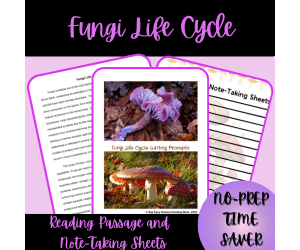
High School Science Fungi Life Cycle Reading Passage & Note-Taking She
ELA, Reading, Writing, Science, Life Sciences, Nature & Plants, High School, Homeschool Resources, Middle School, Worksheets & Printables, Writing Prompts, Teacher Tools, Assessments, Quizzes and Tests, Quizzes
Take a journey the incredible world of fungi with this High School Science Fungi Life Cycle resource! As a homeschool mom who's passionate about quality science education, I created this reading passage and note-taking sheets with your biology students in mind – whether you're teaching in a traditional classroom or at your kitchen table like I do. Instead of drowning our kids in boring technical jargon, I have wrapped key mycological concepts in stories and explanations they will actually want to read (trust me, I have tested these on my own teenager daugther!), all while maintaining scientific integrity. INCLUDED IN THIS RESOURCE: ✔️10-page comprehensive reading passage with advanced mycological concepts ✔️20 challenging critical thinking questions with complete answer key ✔️Detailed note-taking sheets TOPICS COVERED: ✔️Plant Reproductive Cycles: Alternation of Generations and Seed Structure ✔️Germination: Molecular Regulation, Hormonal Control, and Dormancy Mechanisms ✔️Vegetative Growth Patterns and Meristematic Activity ✔️Flower Development: Genetic Basis, Floral Induction, and Pollination Ecology ✔️Fertilization Processes: Double Fertilization and Endosperm Development ✔️Ecological Dynamics: Seed Dispersal Strategies and Climate Change Impacts Your students/homeschoolers will get genuinely excited learning how fungi reproduce through fascinating processes like spore dispersal and hyphal networks, examine their unique structures up-close, and discover why these overlooked organisms are absolute superstars in practically every ecosystem. The reading passage flows naturally into questions and activities that encourage real critical thinking – no mindless worksheet filling here! I developed this resource because I believe our high schoolers/homeschoolers deserve science education that respects their intelligence and nurtures their curiosity. The content hits that sweet spot—deep enough to prepare them for college-level biology without overwhelming them. Beyond just teaching facts, these materials foster genuine appreciation for organisms most people walk right past. From the antibiotics in our medicine cabinets to the bread on our tables and the hidden networks beneath forest floors, fungi shape our world in remarkable ways. By connecting concepts to real life, I hope to spark a curiosity in your students that lasts long after the unit ends, just as I've seen happen with my own children. If you and your students/homeschoolers enjoyed this resources, please leave a review. Thank you for your support. Tina - Big Easy Homeschooling Mom
Author Homeschool with Big Easy Homeschooling Mom
Rating
Tags Fungi Life Cycle High School, Advanced Mycology Curriculum, Homeschool Biology Resources, Mycology Teaching Resources, Fungi Reproduction Lesson Plans, Homeschool Science, Fungal Biology Critical Thinking, Symbiotic Relationships Lessons, Fungi Life Cycle, High School Fungi Biology
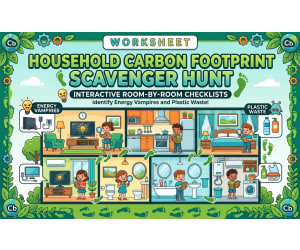
Household Carbon Footprint Scavenger Hunt
Science, Earth and Environmental Sciences, Environmental Science, Earth Sciences, Geology, Theories, Basic Science, Technology, Engineering, Space, Grade 3, 4, 5, 6, 7, 8, 9, Worksheets & Printables, Workbooks, Worksheets, Word Searches, Teacher Tools, Assessments, Lesson Plans, Quizzes and Tests, Quizzes, Tests
Transform your students into real-life Eco-Detectives! Are you looking for a hands-on, engaging, and impactful environmental science activity that goes beyond a standard worksheet? This Household Carbon Footprint Scavenger Hunt turns learning about climate change into a fun, actionable mission that empowers students to make a real difference, right in their own homes. This comprehensive, no-prep resource tackles two of the biggest "invisible" contributors to a household's carbon footprint: Energy Vampires (devices draining standby power) and Single-Use Plastics . By turning abstract concepts into a tangible hunt, students will develop critical thinking, data collection, and problem-solving skills aligned with Next Generation Science Standards (NGSS) . Perfect for Earth Day , a unit on environmental science, project-based learning (PBL), or a meaningful distance learning assignment, this scavenger hunt gets kids moving, observing, and collaborating with their families to create a more sustainable home. What's Included in this 38-Page PDF Resource: Part 1: Educator's Scientific Guide: A detailed 10-page introduction for the teacher or parent, explaining the science behind phantom power and the lifecycle of plastics in clear, easy-to-understand terms. Part 2: The Student Workbook (19 pages): Vocabulary Mission Briefing: Ensures students understand key terms before they begin. 8 Unique Room-by-Room Checklists: Students audit the Kitchen, Living Room, Bedroom, Bathroom, Laundry Room, and Home Office, hunting for culprits. 2 Action Plan Worksheets: Guides students to synthesize their data and create realistic, actionable plans for reducing energy and plastic waste. Part 3: Teacher Resources & Visuals (9 pages): 3 High-Quality Visual Aids: Concept maps and charts, perfect for classroom projection or as print-outs. Step-by-Step Teacher Implementation Guide: Includes pre-hunt prep, safety protocols, and tips for facilitating a powerful post-hunt reflection. Comprehensive Answer Key: A complete key with evaluation rubrics to make grading simple and objective. Give your students the gift of eco-agency, not eco-anxiety. Download today and empower the next generation of environmental stewards! Keywords: Earth Day, Carbon Footprint, Environmental Science, Scavenger Hunt, Project-Based Learning, At-Home Activity, Distance Learning, 3rd Grade, 4th Grade, 5th Grade, NGSS, Climate Change, Energy Conservation, Plastic Waste, Recycling, STEM, Go Green. Why Parents/Schools Love It: Turns Abstract Concepts into a Fun Game: It transforms the overwhelming idea of "climate change" into a tangible "scavenger hunt" for "energy vampires," making learning active, memorable, and incredibly engaging for kids. Empowers Students with Actionable Solutions: Instead of causing eco-anxiety, this resource gives children a sense of agency. By unplugging a charger or choosing a reusable bottle, they see an immediate, positive impact they can make. Comprehensive & No-Prep: This is a complete, ready-to-go resource. With a detailed teacher guide, student workbooks, visual aids, and an answer key, it saves educators and parents valuable preparation time. Strengthens the Home-School Connection: It's the perfect project to send home. The activity encourages students to collaborate with their families, bringing environmental education from the classroom to the living room. Builds Real-World Science Skills: Students aren't just memorizing facts; they are acting like real scientists—observing, collecting data (on their checklists), analyzing findings, and proposing solutions (in their action plans), directly aligning with NGSS practices. Target Student Audience : Based on a complete analysis of the language, concepts, and tasks in the workbook: Primary Target: 3rd Grade (8-9 years old). The PDF explicitly mentions this grade level, and the content is perfectly aligned with their cognitive abilities (the concrete operational stage). The tasks involve reading, counting, identification, and simple written responses. Secondary Target: 4th Grade and 5th Grade. This activity is still highly relevant and engaging for these students. They can complete it with more independence and provide more detailed, analytical responses in the action plan sections. Possible Niche Target: Advanced 2nd Graders (with significant parent/teacher guidance) or Middle School Special Education students who benefit from hands-on, concrete learning activities. Copyright/Terms of Use: This Book was copyrighted by Syed Hammad Rizvi. This resource is for personal and single classroom use only. You may not alter, redistribute, or sell any part of this resource. In other words, you may not put it on the Internet where it could be publicly found and downloaded. If you want to share this resource with colleagues, please purchase additional licenses from Teachsimple. Thank you for respecting these terms of use. This product is happily brought to you by Syed Hammad Rizvi
Author Creative Book Store
Rating
Tags EarthDay, TeacherResources, EnvironmentalScience, STEM, Homeschool, ScavengerHunt, DigitalDownload, Printable, CarbonFootprint, EarthDayActivities

Adaptive Sensory-Friendly Fitness Routines
Science, Life Sciences, Human Body, P.E. & Health, Health, Physical Education, Sports, Yoga, Mental Health, Mindfulness, Homeschool Curriculum, Homeschool Templates, Grade 9, 10, 11, 12, Teacher Tools, Quizzes and Tests, Quizzes, Tests, Worksheets & Printables, Assessments, Workbooks, Worksheets, Word Searches, Lesson Plans
Transform your approach to fitness and somatic care for adults with profound physical and neurological barriers. This comprehensive, 40-page digital curriculum, "Adaptive Sensory-Friendly Fitness Routines," is a groundbreaking resource designed for special education teachers, transition specialists, occupational therapists (OT), physical therapists (PT), and direct support professionals. Frustrated with traditional fitness models that are inaccessible or dysregulating? This evidence-based program is built on the Low-Arousal Adaptive Somatic Framework (LAASF) , which shifts the focus from impossible standards to dignity, comfort, and neurological safety. It redefines "fitness" for individuals with conditions such as severe cerebral palsy, traumatic brain injury (TBI), advanced multiple sclerosis, cortical visual impairment (CVI), and profound neurodevelopmental differences. This is more than just a set of exercises; it's a complete pedagogical system. WHAT'S INCLUDED: Part 1: In-Depth Clinical Guide (Pages 1-12): A professional deep dive into the neurobiology of sensory-friendly movement. Understand the science behind sensory gating, proprioceptive deficits, CVI adaptations, and low-stimulation design. Features two detailed case studies. Part 2: The Data-Driven Workbook (Pages 13-28): Ten meticulously designed, printable worksheets to guide your practice and document progress. These logs are the core of the program and include: Environmental Sensory Baseline (Pre-Workout Assessment) Somatic Readiness & Pain Scale Range of Motion (ROM) Micro-Movements Log Breath Control and Pacing Tracker Isometric Engagement & Release Log Assisted Mobility & Proprioceptive Input Logs Post-Exertion Decompression & Transition Protocols Weekly Neurological Fatigue Mapping Part 3: Visuals & Teacher Resources (Pages 29-40): Everything you need for successful implementation. Clear visual diagrams explaining the sensory ecosystem. A "Neurological Barrier Adaptation Matrix" for specific student profiles. A comprehensive Answer Key and Assessment for facilitator training. A sample "Exemplar Key" showing how to fill out the logs for a hypothetical case. A step-by-step Teacher Implementation Guide. This curriculum champions an age-appropriate, non-infantilizing approach, using high-contrast, minimalist visuals to reduce cognitive load and promote autonomy. Empower your students and clients to engage with their bodies in a safe, consensual, and meaningful way. Perfect for: Special Education Transition Programs (18+) Occupational Therapy & Physical Therapy Sessions Adult Day Programs & Supported Living Facilities Adapted Physical Education (APE) Caregiver and Paraprofessional Training Download today and unlock a world of intentional, accessible movement for the individuals you support. Keywords: Adaptive PE, Special Education, Life Skills, Adult Day Program, Transition Program, Occupational Therapy, Physical Therapy, Cerebral Palsy, TBI, CVI, Non-Verbal, Sensory-Friendly, Low Stimulation, Visual Supports, Workout Log, Data Tracking, IEP Goals, Somatic, Neurodiversity. Why Parents/Schools Love It: Dignity-Centered & Age-Appropriate: It rejects the infantilizing cartoons and primary colors common in special education, treating adults with the respect they deserve through mature, minimalist design. Inclusively Designed for the Most Profound Needs: This isn't a one-size-fits-all program. It's one of the few resources specifically engineered for individuals with the most significant physical, neurological, and sensory barriers, providing a path to engagement where none existed before. Data-Driven and Goal-Oriented: The 10-part workbook provides a clear, professional way to track subtle but critical progress—from breathing patterns to neurological fatigue. This is invaluable for IEPs, therapy goals, and demonstrating program efficacy. Empowers Staff & Ensures Safety: The comprehensive guide and implementation keys act as a powerful training tool, equipping staff with the knowledge to create a neurologically safe environment, prevent sensory overload, and facilitate movement consensually and effectively. Target Audience : This PDF is highly specialized. target the professionals and caregivers who will be implementing the program, not the end-users themselves. Primary Target Audience: Special Education Teachers (specifically those working in high school transition programs, ages 18-22). Occupational Therapists (OTs) and Physical Therapists (PTs) who work with adults with severe disabilities. Adapted Physical Education (APE) Teachers . Directors and Lead Staff at adult day programs, group homes, and supported living facilities. Case Managers and Transition Specialists for adults with disabilities. Parents and Guardians who are actively involved in directing the care of their adult children with profound needs. The content is written at a very high clinical level, so it reflect that professionalism. This is a tool for trained professionals to enhance their practice. Copyright/Terms of Use: This Book was copyrighted by Syed Hammad Rizvi. This resource is for personal and single classroom use only. You may not alter, redistribute, or sell any part of this resource. In other words, you may not put it on the Internet where it could be publicly found and downloaded. If you want to share this resource with colleagues, please purchase additional licenses from Teachsimple. Thank you for respecting these terms of use. This product is happily brought to you by Syed Hammad Rizvi
Author Creative Book Store
Rating
Tags AdaptiveFitness, SensoryFriendly, LowStimulation, SomaticCare, VisualSupports, SensoryRegulation, ProprioceptiveInput, AdaptedWorkout, SomaticAwareness, NeurologicalSupport

Data Visualization with AI Tools – Charts & Insights Practice
Technology, Science, Computer Science, Engineering, STEM, Resources for Teachers, Classroom Management, Research, ELA, Reading, Grade 6, 7, 8, 9, 10, 11, 12, Worksheets & Printables, Workbooks, Worksheets, Word Searches, Crosswords Puzzles, Teacher Tools, Lesson Plans, Quizzes and Tests, Quizzes, Tests
Enhance your understanding of data visualization and AI by using this comprehensive, easily accessible 38-page student workbook and teacher resource kit! This guide is ideal for 21st century classrooms as it teaches you how to turn raw data into graphic visual stories through analytical charting principles, ethical practices for the creation of visual materials, and hands-on worksheets that help you understand how to create visual stories from data. You will learn how to identify common types of charting (bar charts, line charts, scatter plots, histograms, stacked bar charts, etc.), create charts that do not mislead viewers, extract actionable insights from data, and leverage computational and/or AI platforms to analyze real life data sets such as urban heat islands, microplastic pollution, butterfly migration patterns and school nutrition. The following materials are included with each workbook: - Theoretical foundation on methodology, Gestalt principles, and the "So What?" (i.e., why is this important?) framework for visual storytelling; - 10 engaging worksheet activities with real world scenarios (i.e., ecology, agriculture, urban design, ethics); - Instructional visuals, chart selection matrices, and epistemic workflow diagrams; - Complete teacher answer keys, or rubrics for use with the worksheets provided in the workbook (Part 3); and - Designed to improve data literacy, critical thinking and AI-assisted analysis skills - you can print or digitally create the materials needed; perfect for teaching data science, statistics, STEM, computer science or environmental studies. Use visuals that are of professional quality to increase the engagement of students and ultimately prepare them for future success as a professional in a data-dominated world. Keywords : Data visualization workbooks, AI-based charting tools, practice with student data analysis, resources for creating data literacy worksheets, ethical data visualization resources, teacher resources for creating charts, and development of scatter plot and histogram practice materials are all included in the high school data science curriculum. Reasons Parents/Schools Like It: *) Developing Skills for the Future: Learn to utilise AI to visualise data in a way that is ethical and can be used to assist with making informed decisions (i.e., college admission requirements and job applications). *) No Prep/High Student Engagement: The student workbook has been pre-completed and includes keys/rubrics for teachers to save them hours of prep time while providing the students with relevant work experience. *) Teaching Analytical Reasoning and Ethics: More than just a nice colourful chart, this course will help students comprehend how to variable *) Social Studies/Math/Science/Tech all use these lessons to create detailed and real-world examples (Ex: Eco- Planning, Urban Planning, Nutrition, and Immigration) that all students can relate to. *) Diverse Learning Levels/Access: All students will receive support through scaffolding, pictures, and fill-ins throughout the course, while advanced students will be sufficiently challenged. Levels for which this content is appropriate (Full PDF Analysis): *) This material is aimed at 8-12th grade (MIDDLE SCHOOL - ADVANCED) – Graduation Year - 9-12 - Level HS *) The material is evenly divided into the high school level classes; Data Science, Statistics, AP Statistics, Computer Science, or STEM and Environmental Sciences. Level HS - Graduation Year - 9-12 - Level MS - Grades 7-8 *) The language and real-world scenarios associated with these materials are well within the cognitive abilities of adolescents, as noted in the teacher resources. (see More Detail 10 - Adolescent - Grade 7-8) Copyright / Terms of Usage Syed Hammad Rizvi has obtained copyright on this book and this document is intended only for single personal and classroom use. You cannot alter, sell or redistribute anything associated with this document. This means to not put it up on the internet and available publicly. If you would like to share this document with others you need to go through Teachsimple to buy additional licenses. Thank you for adhering to the terms above. Syed Hammad Rizvi is the proud owner of this product.
Author Creative Book Store
Rating
Tags DataVisualization, DataLiteracy, DataScience, AITools, AIForEducation, STEMEducation, TeacherResources, DataVisualizationWorkbook, AICharts, ChartingWithAI
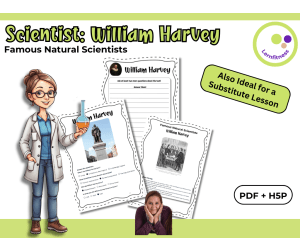
Scientist: William Harvey Fact Sheet, Quiz, and Interactive Exercises
Life Sciences, Science, Biology, Physics, STEM, Human Body, History, Social Studies, Grade 7, 8, 9, Worksheets, Worksheets & Printables, Quizzes, Quizzes and Tests, Teacher Tools, Projects, Activities
Discover William Harvey – The Scientist Who Unveiled the Circulatory System William Harvey is best known as the physician who discovered the circulation of blood, revolutionizing our understanding of the human body and laying the groundwork for modern physiology. This comprehensive teaching resource introduces your students in grades 6–8 to Harvey’s groundbreaking contributions to biology and medicine. Designed for a 45-minute lesson, it combines engaging informational content with interactive and creative tasks to ensure a memorable and educational experience. What’s Included: Concise Informational Text: A clear and engaging overview of William Harvey’s role in science. Fact Sheet Activity: Encourages students to organize knowledge and work creatively. Quiz with Solutions: Promotes fun, interactive learning and self-assessment. Additional Exercises: Students can create their own questions and collaborate in pairs to deepen their understanding. Flexible Formats: Includes a color and black-and-white printable PDF, as well as interactive H5P tasks for digital learning. Why You’ll Love This Resource: Time-Saving: Perfect for teachers who need a ready-to-go, well-structured lesson. Versatile Use: Ideal for biology, history of science, or cross-curricular lessons in English and science classes. Promotes Independence: Solutions are included, allowing students to check their work and explore the topic at their own pace. Interactive and Engaging: Tasks are designed to keep students actively involved while learning about William Harvey’s legacy. Whether you use it for a regular lesson, substitute teaching, or as part of a digital learning activity, this resource will make William Harvey’s contributions come alive for your students. Bring William Harvey’s fascinating world of science and medicine into your classroom and inspire your students to see history and science in a whole new light! Have fun exploring the world of science with your students! Warmly, Lernfitness Did You Know? I teach with a certified therapy dog, and together we focus on creating a positive and inspiring learning environment.
Author Lernfitness
Tags Science, Biology, Famous Scientists Lesson, H5P, Interactive Science Exercises, STEM, William Harvey, Circulatory System, Medicine, Physician
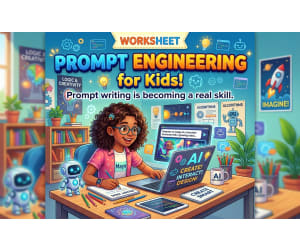
Prompt Engineering for Kids
Science, Technology, Computer Science, Engineering, Research, Resources for Teachers, Classroom Management, Community Building, STEM, Special Resources, Grade 4, 5, 6, 7, 8, 9, 10, Worksheets & Printables, Workbooks, Worksheets, Word Searches, Writing Prompts, Teacher Tools, Lesson Plans, Quizzes and Tests, Quizzes, Tests
Unlock the #1 Skill of the AI Age! | Prompt Engineering for Kids: A Complete Curriculum Are you looking to prepare your students for a future powered by Artificial Intelligence? "Prompt Engineering for Kids" is a comprehensive, no-prep curriculum designed to transform students from passive technology users into active, confident digital creators. This is the essential guide to teaching the most critical new literacy of the 21st century: how to communicate effectively with AI. In a world where the quality of an answer depends entirely on the quality of the question, this resource teaches students the art and science of "prompt writing." Forget vague questions and generic answers. Students will master the C.A.S.T. methodology (Context, Action, Subject, Target Constraints) to craft precise, powerful instructions that unlock the full potential of any digital tool. This 42-page resource is more than just a workbook; it's a complete, three-part curriculum perfect for middle school technology, ELA, computer science, or gifted and talented programs. What's Inside? Part 1: The Textbook (Core Theory): Four engaging chapters that break down the core concepts of prompt engineering, from the "Anatomy of a Perfect Instruction" to the "Iterative Cycle" of refining prompts. Part 2: The Student Workbook: Ten hands-on, scaffolded worksheets that challenge students to apply what they've learned. They'll practice everything from contextual framing and setting constraints to persona calibration and algorithmic thinking. Part 3: Teacher Resources: Everything you need to successfully implement the curriculum, including pedagogical visuals (anchor charts), a comprehensive answer key for all worksheets, and a detailed Teacher Implementation Guide with classroom strategies and a professional grading rubric. By the end of this unit, your students won't just know about AI; they'll know how to command it. They will have developed invaluable skills in logic, precision, critical thinking, and clear communication that will give them a formidable advantage in high school, college, and their future careers. Equip your students with the ultimate toolset for tomorrow's professional landscape. Download "Prompt Engineering for Kids" today! Keywords: Prompt Engineering for Kids, AI for Students, Digital Literacy, Middle School Technology, 21st Century Skills, AI Curriculum, Student Workbook, Teacher Resources, Future-Ready Skills, Critical Thinking, Computer Science, STEM, ELA, Google, ChatGPT for Education. Why Parents/Schools Love It: Builds Future-Proof Skills: This curriculum teaches prompt engineering, a critical and in-demand skill that prepares students for the AI-driven jobs of the future. Develops Critical Thinking: It goes beyond simple tech use, training students in logic, problem-solving, and precision, turning them into active, analytical thinkers. Complete "No-Prep" Resource: It's an all-in-one package with a textbook, 10 student worksheets, visual aids, full answer keys, and a teacher's guide with a grading rubric, saving educators valuable prep time. Engaging & Relevant Content: The lessons use fun, kid-friendly scenarios (superheroes, video games, fantasy stories) to explain complex concepts, keeping students highly engaged. Promotes Active Digital Citizenship: It transforms students from passive consumers of digital content into confident "digital architects" who can control and command technology effectively and responsibly. Target Student Classes : Based on a full analysis of the content, vocabulary, and examples (e.g., Grade 5, Grade 6, and Grade 7 are mentioned), target the following: Primary Target: Middle School (Grades 5-8) . The concepts of logic, abstract thinking, and the complexity of the worksheets are perfectly suited for this age group. Secondary Target: Advanced Upper Elementary (Grade 4) in gifted and talented programs. Introductory High School (Grade 9) for tech, digital literacy, or career-readiness classes. Ideal Subject Areas: Technology Class, Computer Science, Digital Literacy, English Language Arts (ELA) (for its focus on precise writing and communication), STEM/STEAM electives, and Enrichment Programs. Copyright/Terms of Use: This Book was copyrighted by Syed Hammad Rizvi. This resource is for personal and single classroom use only. You may not alter, redistribute, or sell any part of this resource. In other words, you may not put it on the Internet where it could be publicly found and downloaded. If you want to share this resource with colleagues, please purchase additional licenses from Teachsimple. Thank you for respecting these terms of use. This product is happily brought to you by Syed Hammad Rizvi
Author Creative Book Store
Rating
Tags PromptEngineeringForKids, AILiteracy, FutureReadySkills, AIinEducation, AIforStudents, 21stCenturySkills, DigitalLiteracy, ComputerScienceForKids, STEMeducation, STEAMeducation
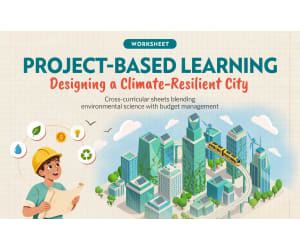
Project-Based Learning Designing a Climate-Resilient City
Science, Earth and Environmental Sciences, Life Sciences, Earth Sciences, Environmental Science, Geology, Space, Nature & Plants, STEM, Special Resources, Grade 6, 7, 8, 9, 10, 11, 12, Teacher Tools, Lesson Plans, Quizzes and Tests, Quizzes, Tests, Worksheets & Printables, Workbooks, Worksheets, Word Searches, Assessments
Transform your classroom into a hub of real-world problem-solving with this comprehensive Project-Based Learning (PBL) module: Designing a Climate-Resilient City! Are you looking for a rigorous, engaging, and cross-curricular project that prepares students for the challenges of the 21st century? This turnkey resource is the perfect solution. It masterfully blends Environmental Science, Earth Science, Mathematics, Economics, and Civics into one high-impact simulation. Students step into the dual role of a city's Chief Sustainability Officer and Chief Financial Officer. Tasked with a $500,000,000 budget , they must make critical decisions to protect their fictional municipality, "Nova Civitas," from the escalating impacts of climate change. From urban heat islands and flood defense to renewable energy transitions and waste management, every choice has both ecological and financial consequences. This isn't just a worksheet packet; it's a complete, three-phase educational experience: Phase 1: Core Content & Theory (Student Field Manual): A detailed guide that teaches the foundational scientific and economic principles, including concepts like CapEx vs. OpEx, Return on Investment (ROI), green vs. grey infrastructure, and the circular economy. Phase 2: The Student Workbook: Ten detailed, scaffolded worksheets guide students through the entire city-planning process. They will perform calculations, analyze data, and justify their budgetary decisions, tackling everything from energy grids and public transit to disaster insurance and sustainable housing. Phase 3: Visuals & Teacher Resources: This package is ready to go with printable/projectable visual aids (flowcharts, graphs, mind maps) and a comprehensive, step-by-step answer key with exemplar responses and crucial teacher notes. Perfect for in-class, hybrid, or homeschool environments, this project fosters critical thinking, financial literacy, data analysis, and collaborative problem-solving. Empower your students to grapple with relevant, real-world issues and discover that the most sustainable solutions are often the most economically sound. Download today and empower your students to build a better, more resilient future! Keywords: Project-Based Learning (PBL), STEM, STEAM, Climate Change, Environmental Science, AP Environmental Science (APES), Earth Science, Economics, Civics, Sustainability, Urban Planning, City Design, Budgeting, Financial Literacy, Math, Critical Thinking, Real-World Application, Cross-Curricular, Middle School, High School, Digital Resource, Printable Worksheets. Why Parents/Schools Love It: Teaches Real-World Skills: This project moves beyond theory. It teaches critical 21st-century skills like financial literacy, data-driven decision-making, and long-term strategic planning that students will use their entire lives. Deeply Engaging & Relevant: The role-playing simulation is highly engaging. Students are not just learning about climate change; they are actively working to solve its challenges, making the topic personal and urgent. Truly Cross-Curricular: In an era of siloed subjects, this resource beautifully demonstrates how science, math, and social studies are interconnected in the real world, promoting holistic understanding. Complete Turnkey Solution: It is a massive time-saver for educators. The package includes all student-facing materials, teacher visuals, and a comprehensive answer key with detailed calculations, saving hours of prep work. Target Audience: Student Classes : Based on the complexity of the concepts (e.g., municipal finance, payback periods, ROI) and the level of mathematics, target the following: High School (Grades 9-12): This is the primary target. It is perfect for: Environmental Science / AP Environmental Science (APES): This is a perfect fit, covering numerous topics from the APES curriculum. Earth Science: Excellent for units on human impact and climate systems. Economics / Government / Civics: Provides a practical, tangible application of public finance, policy-making, and resource allocation. General Math / Financial Algebra: A fantastic real-world application for math concepts. STEM or PBL Elective Courses: An ideal capstone or unit-long project. Advanced Middle School (Grades 7-8): This resource would be highly effective for gifted and talented programs, advanced science or math classes, or a school with a strong PBL focus. The concepts are challenging but achievable with the right guidance. Copyright/Terms of Use: This Book was copyrighted by Syed Hammad Rizvi. This resource is for personal and single classroom use only. You may not alter, redistribute, or sell any part of this resource. In other words, you may not put it on the Internet where it could be publicly found and downloaded. If you want to share this resource with colleagues, please purchase additional licenses from Teachsimple. Thank you for respecting these terms of use. This product is happily brought to you by Syed Hammad Rizvi
Author Creative Book Store
Rating
Tags EnvironmentalScience, EarthScience, STEM, STEAM, Economics, ClimateChange, Sustainability, Civics, UrbanPlanning, Ecology
Archimedes – Scientist Profile and Comprehension Activities PDF + H5P
Life Sciences, Science, STEM, Social Studies, Biographies, Inventors, Basic Science, Physics, Chemistry, Math, Grade 6, 7, 8, 9, Worksheets, Worksheets & Printables, Quizzes, Quizzes and Tests, Teacher Tools, Projects, Activities
Archimedes – Scientist Profile and Comprehension Activities Informational Text, Student Tasks & Quiz (PDF, DOCX, H5P) ⚖️🧠 This resource introduces students in grades 7–10 to Archimedes, one of the most influential figures in early science. Best known for his work on buoyancy and the principle of density determination for irregular objects, Archimedes connects classical thought with key scientific concepts still taught today. The material combines factual reading with structured tasks. It can be used flexibly: in science lessons, for cross-curricular units, or as an easy-to-run activity in substitute teaching. Students read a short informational text, fill in a profile worksheet, complete quiz questions, and – if time allows – create their own questions to exchange with a partner. What’s included: Informational text about Archimedes Profile worksheet for comprehension and reflection Answer key for the profile Quiz questions with solutions Two extension tasks: – Create your own questions – Exchange and answer a partner’s questions File formats: – Printable PDF – Editable DOCX (text only) – Interactive H5P version (text-based, no images) In the classroom: I’ve used this kind of resource in regular science lessons as well as in non-specialist cover lessons. The tasks are clear enough for independent work and provide a good balance between reading, writing, and critical thinking. The H5P version allows for easy digital use on learning platforms, especially when students work from home or on devices in class. It’s also great for differentiation: stronger students can work on their own questions, while others use the glossary or reread sections to complete the basics. Whether you use it to introduce Archimedes in physics or to practice nonfiction reading strategies, this is a flexible resource that’s ready to go with little prep. Have fun exploring the world of science with your students! Warmly, Lernfitness Did You Know? I teach with a certified therapy dog, and together we focus on creating a positive and inspiring learning environment.
Author Lernfitness
Rating
Tags Science, Famous Scientists Lesson, H5P, Interactive Science Exercises, STEM, History, Scientists, Chemistry, Archimedes, Scientific Concepts
Caps Reading Comprehension Passage - Cored Ed Encyclopedia
ELA, Language Development, Resources for Teachers, Reading Comprehension, Reading, Pre-Reading, Creative Writing, Writing, Strategies, Common Core, Grade 2, 3, 4, 5, Worksheets & Printables, Worksheets, Teacher Tools, Centers, Activities, Writing Prompts, Assessments, Tests, Quizzes and Tests, Quizzes
This caps reading comprehension contains the following: Pre-Reading Trivia Students will write down one thing they already know about the subject and then read five more facts and discuss. These facts are fun, and the students will enjoy learning about the subject before reading more. Reading Passage The text is a high-interest reading passage with set paragraphs, roughly three to four paragraphs long. It contains a variety of themes about the topic, anywhere from history to technology. The passage is between 250 and 350 words in length. Mixed Questions The first question page contains four multiple-choice questions, each with a choice of four answers, and three written response questions that require a sentence or two from the student. Creative Writing In this question, the student will be required to write a five to eight sentence paragraph on a question related to the topic. Extension Activities This page is optional for fast finishers. If there are five to ten minutes left at the end of the lesson, the student can choose one of three activities, each one requiring a different skill. Answer Key There are answers for the multiple-choice questions and three written response questions have sample answers. FULL CATALOG OF DOWNLOAD LINKS AND ENCYCLOPEDIA INDEX HERE Cored Ed Encyclopedia Overview The Cored Ed Encyclopedia is a weekly series of lessons that you can pick up and use right away. These short readings fit into whatever time you have available. Each one includes a warm-up, a reading, and a set of questions, but it’s flexible — you can do just the reading, the full lesson, or skip the writing section if you need to. Each lesson focuses on a single topic so students don’t get lost. The writing is clear but never childish, making it perfect for grades two through five. Topics range from animals and science to history, inventions, and everyday things. No matter the level of the student, everyone should take away at least one new idea or fact from each lesson. The materials are easy to print, easy to explain, and require no setup. They work well for whole-class teaching, partner work, or independent study.
Author Cored Education
Rating
Tags Vocabulary, Spelling, Reading Comprehension, Reading Passages, Cored Encyclopedia, Facts, Reading, Creative Writing, Caps, Pre-reading

Social Studies Comprehension Passages: Food Customs (Fillable PDF)
ELA, Reading, Reading Comprehension, Strategies, Resources for Teachers, Social Studies, Sociology, Grade 6, 7, 8, 9, Writing Prompts, Worksheets & Printables, Centers, Activities, Teacher Tools, Assessments, Quizzes and Tests, Quizzes, Tests
Social Studies Reading Comprehension Passages and Questions: Global Food Customs (Fillable PDF) This resource introduces a collection of Social Studies reading comprehension passages with questions about Global Food Customs. The passages are carefully designed to bridge the gap between social studies and literacy through strengthening reading comprehension and sparking knowledge curiosity in middle school students. Each passage blends English Language Arts skills with accurate social studies content . Ideal for interdisciplinary learning in ELA and Social Studies. Suitable for Grade 9 review, too! These worksheets are designed as fillable PDFs , which means students can type their answers directly into the document on any computer or tablet . Each page includes highlighted text fields that show them exactly where to type! What Is Included in this Collection? There are three informational passages (with full answer keys): On the Menu: Why Some Cultures Eat Insects More Than a Drink: Tea Customs Sweet Cravings: Understanding Sugar “Addiction” For Each Passage, students will have multiple tasks to complete as follow: 5 multiple-choice questions targeting main idea, key details, inference, vocabulary in context, and use of evidence 5 vocabulary matching items with clear, student-friendly definitions 5 text-based questions that require citing specific lines or facts 1 summary prompt that asks students to condense central ideas accurately Available Formats for this Resource PDF Word Docs Google Docs FULL CATALOG OF DOWNLOADING LINKS HERE For more Social Studies Reading Passages, check the following Links: Ancient Civilizations PDF Fillable PDF Word Docs Google Docs Early Empires and Trade Networks PDF Fillable PDF Word Docs Google Docs The Founding of the United States PDF Fillable PDF Word Docs Google Docs Language, Culture, and Meaning PDF Fillable PDF Word Docs Google Docs Psychology and Society PDF Fillable PDF Word Docs Google Docs Global Festivals and Traditions PDF Fillable PDF Word Docs Google Docs Extreme Environments and People PDF Fillable PDF Word Docs Google Docs Food, Culture, and Preservation PDF Fillable PDF Word Docs Google Docs Global Food Customs PDF Fillable PDF Word Docs Google Docs Media, Communication, and Popular Culture PDF Fillable PDF Word Docs Google Docs Human Impact on the Environment PDF Fillable PDF Word Docs Google Docs Civic Action and Social Change PDF Fillable PDF Word Docs Google Docs Fashion, Society, and Power PDF Fillable PDF Word Docs Google Docs People, Places, and Unusual Histories PDF Fillable PDF Word Docs Google Docs How to Use These PDFs Click on the highlighted area to start typing your answer. Move to the next question by clicking in the next highlighted box. When you are finished, close the document and select SAVE so your answers stay recorded. If you want to keep a blank copy for later, choose Save As and give your completed version a new name. Product Details Length: 14 pages total Grades: 6–8, also suitable for Grade 9 review Use cases: close reading, stations, homework, intervention, test prep, and sub plans Why Teachers Choose This Set Authentic social studies content paired with rigorous literacy practice Consistent task structure across all passages for easier planning and smoother student routines Clear, age-appropriate writing that builds confidence without oversimplifying Use this set to reinforce ELA skills in social studies, to add literacy to your lessons, and to support independent work. The passages strengthen main idea, evidence use, vocabulary in context, inference, cause and effect, and summary writing. With ready-to-use assessments and complete answer keys, you can provide focused practice that is simple to run and fast to review.
Author Middle & High School - CORED Education
Rating
Tags Middle School, Reading Comprehension, Reading Strategies, ELA, Centers, Reading Passage, Assessments, Vocabulary, Social Studies, Food And Culture
Dyscalculia Visual Fraction Manipulatives
Math, Fractions, Addition and Subtraction, Addition, Subtraction, Graphing, Money, Number Lines, Order Of Operations, Time, Homeschool Curriculum, Homeschool Templates, Grade 3, 4, 5, 6, 7, Worksheets & Printables, Workbooks, Worksheets, Word Searches, Teacher Tools, Assessments, Lesson Plans, Quizzes and Tests, Quizzes, Tests
Change the nature of instruction for fractions, and help all students by using this complete, evidence-based guide for teaching fractions to students who may have any or all of the following: Dyscalculia, Learning Disabilities in Mathematics, or Anxiety with regard to mathematics. Are you an educator or parent looking for an effective way to teach your students with prior difficulties with abstract mathematic concepts? If so, this is the resource for which you have been searching. This is NOT just another worksheet packet. This is a complete neuro-informed intervention system built to circumvent all cognitive barriers common to the students you teach, and create true and lasting understanding of fractions that will be retained for the remainder of the student's educational career. By following the Concrete-Pictorial-Abstract (CPA) framework along with the principles of cognitive science, this guide provides students with a means for teaching fractions in a way that they will finally be able to process and master from their neurodivergent brain perspective. Your students will no longer suffer from mathematics anxiety or the "Whole Number Bias", which results in students believing that 1/8 is greater than 1/3. We use Linear Fraction Bars as a visual aid and High Contrast Visual Mapping to make fractions tangible and explainable to students through the use of their neural systems, thus enabling students to understand fractions as Predictable and Intuitive. We deliberately avoid all of the Circular Fraction Models (i.e., Pizza) that confuse students with poor or absent spatial perception. THIS 37-PAGE COMPREHENSIVE GUIDELINE CONSISTS OF: The Educators Guide: This document consists of an in-depth look at the "why" behind the method in phase one. It will include definitions of the cognitive make-up behind dyscalculia, the incorrectness of standard methods, and the architectural guidelines for creating educational tools, including manipulatives that are compatible with how the brain works. This phase will also include case studies based on individual students that can be utilized in grade-level math classes. The Student Workbook: Phase Two will consist of a sequential ten part set of worksheets that will serve as step-by-step guides for students in grades three through five. In other words, the first page of the ten page guide will help students learn what a numerator and a denominator are before they then will be a part of the worksheet on determining whether two fractions are equal or comparable. The remainder of the pages will continue to follow the same sequence, with the last page covering mixed numbers. The Teacher Resources and Visual Aids Section: This section contains all the resources necessary for teacher's to correctly implement the above two guides. In addition to possessing high-resolution diagnostic diagrams that can be utilized in the classroom, this section also contains an answer key that has been developed with pedagogical notes included, and a clinical implementation guide that contains scripted interventions for how to address common errors made by students. PLEASE NOTE THE FOLLOWING Group: Individuals who provide direct instructional support to students with disabilities and other struggles in mathematics, such as: SE Teachers/Specialists Math Interventionists/ Specialists (Tier 2 & 3) Resource Room/Co-Teach Models Tutor and Educational Therapists Homeschool Parents General Ed Teachers who want to use effective differentiation strategies. Break the cycle of poor math performance. Get your students the tools they need to develop confidence and obtain true mastery of fractions through this master guide through the Math Anxiety. Key Terms: Dyscalculia, Math Intervention, Special Education Math, Fractions, Visual Math, Manipulatives, Math Anxiety, Learning Disabilities, Third, Fourth, Fifth, Grade, Homeschooling, RTI, Math Support, Number Sense, *CPA Framework (Concrete, Picture, Abstract) Teacher’s Guide. Reasons Why Parents/Schools Are Enthusiastic About This Resource: Evidence Based and Neuro-informed: This is truly not just a collection of activities but rather a structured program based on cognitive science; designed specifically to help students whom have dyscalculia. Eliminates Math Anxiety: The clear, visual, step-by-step approach removes uncertainty and abstract confusion which builds student confidence and creates a positive attitude ("I can do math") about math. Comprehensive All-In-One System: The complete package allows educators to save a tremendous amount of time in planning. It contains the theoretical document, the workbook (student-facing) as well as the full answer key that contains additional clinical cues. This resource is ready for immediate use as an intervention resource. Promotes True Understanding, Not Just Rote Memorization: By making fractions physical and visual, this program goes beyond mere memorization of rules and fosters true, deep conceptual understanding, which can be applied to future concepts. Highly Targeted for Intervention: This resource is an excellent Tier 2/3 resource for intervention, special education resource rooms, tutoring, and homeschooling. It provides very powerful and focused support, right where struggling learners require it most. An in-depth analysis of the content, research, and worksheets indicates the primary target audiences are: Special Education Teachers: This is a critical instructional support for teachers within this specialty since the resource was designed specifically for students diagnosed with learning disabilities. Math Interventionists: This resource meets the needs of small groups of students (Tier 2 and Tier 3) who are considerably below grade level in mathematics. Educational Therapists and Tutors: Qualified professionals who provide one-on-one support to students with dyscalculia. Homeschooling Parents: Especially for those children who have a diagnosis or possibly math deficits. Targeted Grade Levels: The component will specifically target grades three, four and five because all of the fractions address fundamental fractions through to adding fractions and mixed numbers, which are all taught at these grade levels. Rewriting Terms: All rights reserved. The author has copyright (Copyrighted by Syed Hammad Rizvi) on this work. A teacher may use this resource for his/her classroom and for private individual use. You may not modify this resource, distribute it, or sell it. You may not publish or make it available on the internet. If you would like to share this resource with your colleagues, please buy additional licenses from Teachsimple. Thank you for being honest and following my copyright terms. This product is made with love by Syed Hammad Rizvi.
Author Creative Book Store
Rating
Tags Dyscalculia, Dyscalculiaresources, Dyscalculiasupport, Mathintervention, Visualmath, Mathmanipulatives, Mathlearningdisability, Specialneedsmath, Neurodivergentlearning, Cpaframework
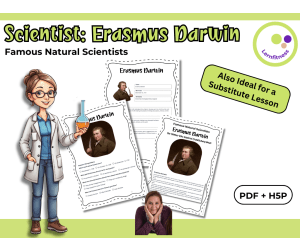
Scientist Erasmus Darwin Fact Sheet, Quiz + Exercises | PDF + H5P
Life Sciences, Science, Biology, STEM, History: World, History, Social Studies, Nature & Plants, Animals, Biographies, Grade 7, 8, 9, 10, Worksheets, Worksheets & Printables, Quizzes, Quizzes and Tests, Teacher Tools, Projects, Activities
Discover Erasmus Darwin – The Thinker Who Inspired Evolutionary Ideas Did you know that Erasmus Darwin, the grandfather of Charles Darwin, was a brilliant scientist, physician, and poet? He was one of the first to suggest that living things change and adapt over time – ideas that later influenced the theory of evolution. Erasmus Darwin’s work combined science and imagination, making him a true pioneer of his time. This teaching resource introduces your grades 7–10 students to the fascinating life and contributions of Erasmus Darwin. Designed for a 45-minute lesson, it includes engaging content and creative tasks to make his revolutionary ideas come alive in the classroom. What’s Included: Concise Informational Text: A clear and engaging overview of Erasmus Darwin’s role in science. Fact Sheet Activity: Encourages students to organize knowledge and work creatively. Quiz with Solutions: Promotes fun, interactive learning and self-assessment. Additional Exercises: Students can create their own questions and collaborate in pairs to deepen their understanding. Flexible Formats: Includes a color and black-and-white printable PDF, as well as interactive H5P tasks for digital learning. Why You’ll Love This Resource: Time-Saving: Perfect for teachers who need a ready-to-go, well-structured lesson. Versatile Use: Ideal for biology, history of science, or cross-curricular lessons in English and science classes. Promotes Independence: Solutions are included, allowing students to check their work and explore the topic at their own pace. Interactive and Engaging: Tasks are designed to keep students actively involved while learning about Erasmus Darwin’s legacy. Whether you use it for a regular lesson, substitute teaching, or as part of a digital learning activity, this resource will make Erasmus Darwin’s contributions come alive for your students. Bring Erasmus Darwin’s fascinating world of science into your classroom and inspire your students to see history and science in a whole new light! Have fun exploring the world of science with your students! Warmly, Lernfitness Did You Know? I teach with a certified therapy dog, and together we focus on creating a positive and inspiring learning environment.
Author Lernfitness
Tags Science, Biology, Famous Scientists Lesson, H5P, Interactive Science Exercises, STEM, History, Scientists, Evolution, Darwin

Human Body & Senses: Life Science Reading Comprehension (Word)
Science, ELA, Reading, Reading Comprehension, Strategies, Resources for Teachers, Life Sciences, Human Body, Grade 6, 7, 8, 9, Writing Prompts, Worksheets & Printables, Centers, Activities, Teacher Tools, Assessments, Quizzes and Tests, Quizzes, Tests
Human Body and Senses: Life Science Reading Comprehension Passages (Word) This very engaging collection of life science reading passages about Contact Lenses, Goosebumps, and Skin is designed to bridge the gap between science and literacy through strengthening reading comprehension and sparking scientific curiosity in middle school students. Each passage blends English Language Arts skills with accurate science content that supports NGSS classroom practice. Ideal for interdisciplinary learning in ELA and Science. Suitable for Grade 9 review, too! What Is Included? There are (3) informational passages: Clear Vision: The Story of Contact Lenses: Early lenses were hard, bulky, and uncomfortable, but the idea was simple: correct vision right on the eye. Modern soft lenses let oxygen in, stay in place, and give people clear sight without glasses. Goosebumps: A Chilly Reminder of Our Past: When you get cold or scared, tiny muscles pull on each hair and make bumps. It once helped our hairy ancestors look bigger and hold heat, so today it’s mostly a leftover reflex. Skin: Your Protective Shield: Skin keeps germs out, moisture in, and helps your body stay at a steady temperature. With nerves and blood vessels close to the surface, it also lets you feel and heal. Student Tasks for Each Passage: 5 multiple-choice questions targeting main idea, key details, inference, vocabulary in context, and use of evidence 5 vocabulary matching items with clear, student-friendly definitions 5 text-based questions that require citing specific lines or facts 1 summary prompt that asks students to condense central ideas accurately Full answer key for every section Available Formats for this Resource PDF Google Docs FULL CATALOG OF DOWNLOADING LINKS HERE Other Science Reading Collections you May find in the store: 1. Astronomy & Space Science 2. Volcanoes, Rocks, & Mountains 3. Rock Cycle, Soil, & Sinkholes 4. Mars, Glaciers, & Antarctica 5. Water Cycle, Acid Rain, & Wastewater 6. Insects, Animals, & Ecosystems 7. Bioluminescence & Insects 8. Animal Skin, Cats, & T. Rex 9. Human Body and Senses 10. Health & Applied Bioscience 11. Waves, Light, & Imaging 12. Electricity & Energy 13. Motion & Materials 14. Chemistry and Materials Science Product Details Length: 14 pages total Grades: 6–8, also suitable for Grade 9 review Use cases: close reading, stations, homework, intervention, test prep, and sub plans Standards support: reinforces informational-text skills and supports NGSS-style sense making through observation, modeling, and clear use of claim, evidence, and reasoning Why Teachers Choose This Set Authentic science content paired with rigorous literacy practice Consistent task structure across all passages for easier planning and smoother student routines Clear, age-appropriate writing that builds confidence without oversimplifying Use this set to reinforce ELA skills in science, to add literacy to your lessons, or to support independent work. The passages strengthen main idea, evidence use, vocabulary in context, inference, cause and effect, and summary writing. With ready-to-use assessments and complete answer keys, you can provide focused practice that is simple to run and fast to review.
Author Middle & High School - CORED Education
Rating
Tags Middle School, Reading Comprehension, Reading Strategies, ELA, Centers, Reading Passage, Assessments, Vocabulary, Life Science, Human Body

Astronomy & Space Science: Reading Comprehension Passages (Word)
Science, Space, Earth and Environmental Sciences, ELA, Reading, Reading Comprehension, Strategies, Resources for Teachers, Grade 6, 7, 8, 9, Writing Prompts, Worksheets & Printables, Centers, Activities, Teacher Tools, Assessments, Quizzes and Tests, Quizzes, Tests
Astronomy & Space Science: Reading Comprehension Passages & Questions (Word) - Editable and Fillable This engaging collection of science reading passages about Astronomy and Space Science is designed to bridge the gap between science and literacy through strengthening reading comprehension and sparking scientific curiosity in middle school students. Each passage blends English Language Arts skills with accurate science content that supports NGSS classroom practice. Ideal for interdisciplinary learning in ELA and Science. Suitable for Grade 9 review, too! What Is Included? There are (3) informational passages: The Solar System: A Neighborhood in Motion Understand orbits, the Sun’s role, the differences between inner and outer planets, and where asteroids and comets fit in the system. The Story of Space Science Trace the path from early skywatching to telescopes, satellites, exploration missions, and the ISS, with practical links to GPS, communications, and weather forecasting. Stars of Many Sizes: Dwarfs, Giants, and Neutrons Explore stellar types and life cycles, including our Sun, red giants, supernovas, neutron stars, and pulsars. Student Tasks for Each Passage 5 multiple-choice questions targeting main idea, key details, inference, vocabulary in context, and use of evidence 5 vocabulary matching items with clear, student-friendly definitions 5 text-based questions that require citing specific lines or facts 1 summary prompt that asks students to condense central ideas accurately Full answer key for every section Available Formats for this Resource: PDF Google Docs FULL CATALOG OF DOWNLOADING LINKS HERE Other Science Reading Collections you May find in the store: 1. Astronomy & Space Science 2. Volcanoes, Rocks, & Mountains 3. Rock Cycle, Soil, & Sinkholes 4. Mars, Glaciers, & Antarctica 5. Water Cycle, Acid Rain, & Wastewater 6. Insects, Animals, & Ecosystems 7. Bioluminescence & Insects 8. Animal Skin, Cats, & T. Rex 9. Human Body and Senses 10. Health & Applied Bioscience 11. Waves, Light, & Imaging 12. Electricity & Energy 13. Motion & Materials 14. Chemistry and Materials Science Product Details Length: 14 pages total Grades: 6–8, also suitable for Grade 9 review Use cases: close reading, stations, homework, intervention, test prep, and sub plans Standards support: reinforces informational-text skills and supports NGSS-style sense making through observation, modeling, and clear use of claim, evidence, and reasoning Why Teachers Choose This Set Authentic science content paired with rigorous literacy practice Consistent task structure across all passages for easier planning and smoother student routines Clear, age-appropriate writing that builds confidence without oversimplifying Use this set to reinforce ELA skills in science, to add literacy to your lessons, or to support independent work. The passages strengthen main idea, evidence use, vocabulary in context, inference, cause and effect, and summary writing. With ready-to-use assessments and complete answer keys, you can provide focused practice that is simple to run and fast to review.
Author Middle & High School - CORED Education
Rating
Tags Middle School, Reading Comprehension, Reading Strategies, Reading Passages, ELA, Centers, Reading Passage, Assessments, Vocabulary, Earth Science
Lighthouses Reading Comprehension Passage - Cored Ed Encyclopedia
ELA, Language Development, Resources for Teachers, Reading Comprehension, Reading, Pre-Reading, Writing, Strategies, Science, Physics, Grade 2, 3, 4, 5, Worksheets & Printables, Worksheets, Teacher Tools, Centers, Activities, Writing Prompts, Assessments, Tests, Quizzes and Tests, Quizzes
This lighthouses reading comprehension contains the following: Visualize on the Cover (Teacher Read Aloud Script) Start your lesson by taking a few moments to visualize the topic and share thoughts or feelings about it. Pre-Reading Trivia Students will write down one thing they already know about the subject and then read five more facts and discuss. These facts are fun, and the students will enjoy learning about the subject before reading more. Reading Passage The text is a high-interest reading passage with set paragraphs, roughly three to four paragraphs long. It contains a variety of themes about the topic, anywhere from history to technology. The passage is between 250 and 350 words in length. Mixed Questions The first question page contains four multiple-choice questions, each with a choice of four answers, and three written response questions that require a sentence or two from the student. Vocabulary Questions Practice seven key words from the text in this section across two activities. First section is scrambled words where students will unscramble three words given a clue for each. The second section is a word to meaning matching activity. Creative Writing In this question, the student will be required to write a five to eight sentence paragraph on a question related to the topic. Extension Activities This page is optional for fast finishers or to take home. There are several activities, each one requiring a different skill. Do some, do none, do all, completely optional - but you will feel reassured knowing every possibility is planned for. Includes summary writting question. Answer Key There are answers for the multiple-choice questions, written response questions have sample answers, vocabulary answers and if there is a summary question then a sample summary will be provided as well. FULL CATALOG OF DOWNLOAD LINKS AND ENCYCLOPEDIA INDEX HERE Lesson Snapshot Title: Lighthouses Genre: Nonfiction (informational text) Subject: Science & Technology / Social Studies (navigation and safety) Primary Topic: Lighthouse signals, fog warnings, and why lighthouses matter Estimated Guided Reading Level (A–Z): P What This Lesson Teaches Best What lighthouses do for ships: help pilots find safe water, avoid reefs and shoals, and line up with a harbor entrance. How lighthouse lights communicate: a strong beam can sweep as the lamp and lens rotate, and timed flashes form patterns that identify a lighthouse. Why special tools are needed in fog: thick fog can hide light, so lighthouses use other signals like foghorns and sometimes radio or radar signals. How lighthouses connect to history and change: the Lighthouse of Alexandria (built around 280 BCE) became ruins after earthquakes, and many modern lights are now automatic and may use LEDs. Learning Goals Students will explain the main job of a lighthouse using details from the passage. Students will describe how a lighthouse lens helps shape and send light into a strong beam. Students will explain how blinking patterns help sailors know which lighthouse they are seeing. Students will identify at least two signals lighthouses can use when fog makes the light hard to see. Students will summarize one way lighthouses have changed from the past to today (keepers, automation, LEDs, navigation). Key Vocabulary From the Text sandbar — a shallow pile of sand near/under water. shoals — shallow water areas that can be dangerous. beam — a strong line of light shining outward. rotate — to turn around in a circle. daymark — bold paint patterns that help in daylight. Cored Ed Encyclopedia Overview The Cored Ed Encyclopedia is a weekly series of lessons that you can pick up and use right away. These short readings fit into whatever time you have available. Each one includes a warm-up, a reading, and a set of questions, but it’s flexible — you can do just the reading, the full lesson, or skip the writing section if you need to. Each lesson focuses on a single topic so students don’t get lost. The writing is clear but never childish, making it perfect for grades two through five. Topics range from animals and science to history, inventions, and everyday things. No matter the level of the student, everyone should take away at least one new idea or fact from each lesson. The materials are easy to print, easy to explain, and require no setup. They work well for whole-class teaching, partner work, or independent study.
Author Cored Education
Rating
Tags Vocabulary, Spelling, Reading Comprehension, Reading Passages, Reading, Creative Writing, Reading Strategies, Writing Prompts, Lighthouses, Physics