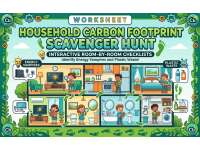
Household Carbon Footprint Scavenger Hunt

Science, Earth and Environmental Sciences, Environmental Science, Earth Sciences, Geology, Theories, Basic Science, Technology, Engineering, Space
Worksheets & Printables, Workbooks, Worksheets, Word Searches, Teacher Tools, Assessments, Lesson Plans, Quizzes and Tests, Quizzes, Tests


About This Product
Transform your students into real-life Eco-Detectives! Are you looking for a hands-on, engaging, and impactful environmental science activity that goes beyond a standard worksheet? This Household Carbon Footprint Scavenger Hunt turns learning about climate change into a fun, actionable mission that empowers students to make a real difference, right in their own homes.
This comprehensive, no-prep resource tackles two of the biggest "invisible" contributors to a household's carbon footprint: Energy Vampires (devices draining standby power) and Single-Use Plastics. By turning abstract concepts into a tangible hunt, students will develop critical thinking, data collection, and problem-solving skills aligned with Next Generation Science Standards (NGSS).
Perfect for Earth Day, a unit on environmental science, project-based learning (PBL), or a meaningful distance learning assignment, this scavenger hunt gets kids moving, observing, and collaborating with their families to create a more sustainable home.
What's Included in this 38-Page PDF Resource:
Part 1: Educator's Scientific Guide: A detailed 10-page introduction for the teacher or parent, explaining the science behind phantom power and the lifecycle of plastics in clear, easy-to-understand terms.
Part 2: The Student Workbook (19 pages):
Vocabulary Mission Briefing: Ensures students understand key terms before they begin.
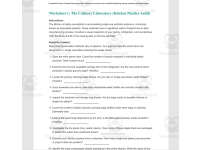
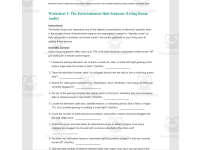
8 Unique Room-by-Room Checklists: Students audit the Kitchen, Living Room, Bedroom, Bathroom, Laundry Room, and Home Office, hunting for culprits.
2 Action Plan Worksheets: Guides students to synthesize their data and create realistic, actionable plans for reducing energy and plastic waste.
Part 3: Teacher Resources & Visuals (9 pages):
3 High-Quality Visual Aids: Concept maps and charts, perfect for classroom projection or as print-outs.
Step-by-Step Teacher Implementation Guide: Includes pre-hunt prep, safety protocols, and tips for facilitating a powerful post-hunt reflection.
Comprehensive Answer Key: A complete key with evaluation rubrics to make grading simple and objective.
Give your students the gift of eco-agency, not eco-anxiety. Download today and empower the next generation of environmental stewards!
Keywords: Earth Day, Carbon Footprint, Environmental Science, Scavenger Hunt, Project-Based Learning, At-Home Activity, Distance Learning, 3rd Grade, 4th Grade, 5th Grade, NGSS, Climate Change, Energy Conservation, Plastic Waste, Recycling, STEM, Go Green.
Why Parents/Schools Love It:
Turns Abstract Concepts into a Fun Game: It transforms the overwhelming idea of "climate change" into a tangible "scavenger hunt" for "energy vampires," making learning active, memorable, and incredibly engaging for kids.
Empowers Students with Actionable Solutions: Instead of causing eco-anxiety, this resource gives children a sense of agency. By unplugging a charger or choosing a reusable bottle, they see an immediate, positive impact they can make.
Comprehensive & No-Prep: This is a complete, ready-to-go resource. With a detailed teacher guide, student workbooks, visual aids, and an answer key, it saves educators and parents valuable preparation time.
Strengthens the Home-School Connection: It's the perfect project to send home. The activity encourages students to collaborate with their families, bringing environmental education from the classroom to the living room.
Builds Real-World Science Skills: Students aren't just memorizing facts; they are acting like real scientists—observing, collecting data (on their checklists), analyzing findings, and proposing solutions (in their action plans), directly aligning with NGSS practices.
Target Student Audience :
Based on a complete analysis of the language, concepts, and tasks in the workbook:
Primary Target: 3rd Grade (8-9 years old). The PDF explicitly mentions this grade level, and the content is perfectly aligned with their cognitive abilities (the concrete operational stage). The tasks involve reading, counting, identification, and simple written responses.
Secondary Target: 4th Grade and 5th Grade. This activity is still highly relevant and engaging for these students. They can complete it with more independence and provide more detailed, analytical responses in the action plan sections.
Possible Niche Target: Advanced 2nd Graders (with significant parent/teacher guidance) or Middle School Special Education students who benefit from hands-on, concrete learning activities.
Copyright/Terms of Use:
This Book was copyrighted by Syed Hammad Rizvi. This resource is for personal and single classroom use only. You may not alter, redistribute, or sell any part of this resource. In other words, you may not put it on the Internet where it could be publicly found and downloaded.
If you want to share this resource with colleagues, please purchase additional licenses from Teachsimple. Thank you for respecting these terms of use.
This product is happily brought to you by Syed Hammad Rizvi
Resource Tags
0 Reviews
Check out these other great products