



3,911 products added recently
Page 4 - High School Word Searches

 Show filters

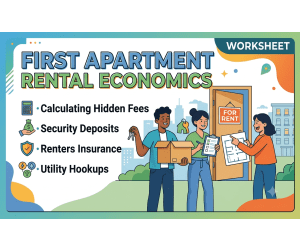
First Apartment Rental Economics
Resources for Teachers, Classroom Management, Community Building, Math, Money, Statistics, STEM, Special Resources, Social Emotional Learning (SEL), Life Skills, Homeschool Curriculum, Homeschool Templates, Grade 9, 10, 11, 12, Worksheets & Printables, Workbooks, Worksheets, Word Searches, Teacher Tools, Lesson Plans, Quizzes and Tests, Quizzes, Tests, Assessments
If you're looking for an effective and exciting program to teach financial concepts, then look no further. With this lesson on the Economics of First Apartment Rentals, your high school students can be prepared for one of the biggest financial choices of their lives. Gone are the days of basic budgeting. This program provides a thorough academic understanding of everything that goes into renting an apartment. Students will be able to analyze lease agreements and determine hidden costs, as well as calculate the actual finances they will need in order to live on their own. The first part consists of a total of 10 pages with 4 chapters explaining some key terms related to finances. The chapter titles include: Chapter 1 - Move-In Expenses and Security Fees: The principle of funds that are unrecoverable compared to budget that is recoverable. Chapter 2 - The Iceberg Phenomenon of Rental Charges: The breakdown of administrative charges, garbage fees, and pet fees. Chapter 3 - Utility Costs in the Rental Business: The understanding of monopoly service providers and the concept of refundable deposits. Chapter 4 - Renters Insurance Economics: The formulas used for risk distribution, deductible amounts, and liabilities. This part contains interesting practical examples of how theories work. The second part is called Student Workbook and consists of 21 pages. It has 10 very extensive worksheets containing more than 80 questions aimed at checking the knowledge of some math. Some of the topics here are: Move-In Expenses and Availability of Capital The Two-Fold Nature of Security Deposits Hidden Administrative Costs Exposed Utility Connections and Credit Provisions Renters Insurance Payments and Deductibles The Science of Prorated Rent The "Pet Penalty" Price Expenses and Chances Cost Lease Contract Analysis and Punishments A Master Sheet with a final exam consisting of all the practical and useful data. PART 3: Visuals and Teacher Materials (22 Pages) Three Instructional Graphics: Three effective images suitable for classroom instruction or presentations ("The Move-In Iceberg," "The Lifecycle of the Security Deposit," "The Utility Activation Matrix"). A Detailed, Comprehensive Teacher Answer Key: Not only the answers but detailed calculations and interpretations for each question—delivering significant time savings on preparation. Teach your students to become knowledgeable and confident individuals who transition from passive consumers to informed decision-makers. Reasons why Parents/Schools appreciate it: Boosts Self-Assurance in the Real-World: With its practical approach, it is able to go beyond theoretical teaching and equips students with all the necessary skills to be able to conquer a challenging process and avoid beginner mistakes. Interdisciplinary & Challenging: The unit integrates mathematics (calculations, percentages), economics (market concepts), and language studies (dissecting a legal text) thus making learning very valuable. Fosters Financial Literacy: The program encourages students to go beyond the advertised price of a product and to examine the terms of the contract, thus becoming better consumers. Fully Comprehensive & Simplifies Teaching: This instructional resource provides teachers with all the necessary materials including detailed lesson plans, 10 worksheets for students, and a complete answer key. Classes for Students: According to the terminology used (asymmetric information, microeconomics, liquidity, sunk cost), degree of difficulty, and the topics covered, the material is most suitable for: High School Juniors and Seniors (11th and 12th Grade): These students are most receptive to achieving independence and will find the material directly relevant and useful in their near future. They may include: Personal Finance classes Economics classes (as an applied microeconomics project) Consumer Mathematics or other applied math classes Life Skills or Home Economics classes College Freshmen: The material is particularly well suited for a "First Year Experience" or "College Success" seminar. Young Adults in Community Education Programs: The material may be adjusted and presented in form of a workshop addressing the needs of young adults aged 18-25. Copyright and Usage Policy: This book is copyrighted to Syed Hammad Rizvi and is intended for personal use and classroom use only. No part of this resource can be changed, given away, or sold. Thus, it cannot be uploaded online for public access. If you want to share this resource with your friends, please buy more licenses from Teachsimple. This product is proudly given to you by Syed Hammad Rizvi.
Author Creative Book Store
Rating
Tags FinancialLiteracy, PersonalFinance, LifeSkills, Budgeting, Economics, MoneyManagement, FinancialEducation, InvestingForBeginners, RealWorldMath, ConsumerMath

The Elements of the Periodic Table Word Search and Scramble Activity
Science, Chemistry, Grade 6, 7, 8, 9, 10, 11, Word Searches, Worksheets, Worksheets & Printables
Your students will love this engaging science review activity. Everyone loves word searches and scrambles and they make for a great review activity that is fun and competitive. This interactive game reinforces key scientific concepts and theories, ensuring curriculum relevance and accuracy. The game package includes 25 common Elements of the Periodic Table terms and concepts. The first part of this activity is a word search using the common terms while the second part uses the same terms in a word scramble and define where your students need to unscramble the word and define it. Simply print and go. This is a no-prep activity and can be used to introduce terms, review, or as additional work for those who finish early. Tailor the experience to the level of your students. You can use one or both parts to help your students learn key concept terms. Some example terms include: ALUMINUM BERYLLIUM SCANDIUM BORON
Author Teach With Fergy
Tags Word Search, Word Scramble, Elements, Periodic Table

Homologous Series of Alcohols – Word Search Activity (Differentiated)
Life Sciences, Science, STEM, Basic Science, Physics, Chemistry, Biology, Earth and Environmental Sciences, Environmental Science, Grade 6, 7, 8, 9, 10, 11, Worksheets, Worksheets & Printables, Quizzes, Quizzes and Tests, Teacher Tools, Activities, Games, Task Cards, Crosswords Puzzles, Word Searches
Homologous Series of Alcohols – Word Search Activity (Differentiated) A flexible review task for organic chemistry lessons (Grades 8–11) 🧪🔍 Alkanols Alcanoles This set of word search puzzles offers a quiet but focused way for students to review the homologous series of alcohols in organic chemistry. Instead of asking for definitions or formulae, students engage with key terms through active searching – which can be a surprisingly effective way to reinforce terminology. The material includes 10 word search puzzles , each in two variants (A/B), with five levels of difficulty . These levels are marked with stars (1 to 5), so you can easily differentiate within your classroom. Puzzles vary by grid size and by the direction in which words are hidden – from simple (only forward) to more challenging (also backward and diagonal). The content covers terminology related to the alcohol functional group and homologous series, making it a suitable supplement to introductory or review units in organic chemistry. What’s included: 10 unique puzzles × 2 variants (A and B) 5 differentiation levels based on grid size and word direction Answer keys for all puzzles Color and black-and-white versions for easy printing Chemistry-themed clipart to add visual appeal Ideas for classroom use: I’ve used these word searches both as a quiet review tool and as a warm-up or cool-down at the beginning or end of a lesson. The A/B version is especially useful for classroom management – students working side by side aren’t tempted to copy but still complete equivalent tasks. Students often appreciate the variety, especially when switching between more structured exercises and creative, self-paced activities. Whether as an individual task, a group competition, or a calming option during busy weeks – this resource supports technical vocabulary in a format that feels low-pressure and accessible. A simple and effective addition to your chemistry toolkit. Have fun exploring the world of science with your students! Warmly, Lernfitness Did You Know? I teach with a certified therapy dog, and together we focus on creating a positive and inspiring learning environment.
Author Lernfitness
Rating
Tags Science, STEM, Chemistry, Homologous Series, Alcohols, Word Search Activity, Differentiated, Organic Chemistry, Alkanols, Alcanoles

Reading Comprehension for Science Articles – Critical Analysis
Science, Basic Science, Inventors, Theories, Chemistry, Earth and Environmental Sciences, Earth Sciences, Environmental Science, Life Sciences, Nature & Plants, Grade 6, 7, 8, 9, 10, 11, 12, Worksheets & Printables, Workbooks, Worksheets, Word Searches, Teacher Tools, Assessments, Lesson Plans, Quizzes and Tests, Quizzes, Tests
This comprehensive literature unit on scientific article analysis will turn your students from being passive readers into critical thinkers! True scientific literacy—being able to evaluate evidence critically—has become the most important skill of our time due to the overwhelming amount of information and misinformation in today’s society. This unit is a complete, no-prep 5-day lesson plan that will help students in middle and high school understand how to break down scientific articles. With this unit’s help, students will learn how to look at methodological procedures; how to find biases; how to tell the difference between correlation and causation; and how to develop evidence-based arguments—all of which are necessary for success in AP classes, as well as in college! This unit is appropriate for the following classes: Biology, Chemistry, Environmental Science, Physics and as a cross-curricular project with ELA. This resource also correlates with the NGSS Science and Engineering Practices (Engaging in Argument Based on Evidence) and other Common Core Literacy standards. Included in this unit: 1. Educator & Student Master Guide (47 pgs) : Part 1 consists of an in-depth detailed core instructional guide for teachers on Scientific Reading Theory. Core principles and concepts included: IMRAD (scientific structure) ; Hierarchy of Evidence ; Identifying Fallacies Part 2 consists of constructing 10 scaffolded, grade level appropriate worksheets using High-Interest/Relevant scientific reading materials. Examples include: Anatomy of an Abstract Isolation of Variable and Control Critique Methodology Interpret Data & Statistical Literacy Correlation vs. Causation Identify Bias/Conflict of Interest Synthesize Competing Hypotheses Peer Review Simulation Part 3 consists of teacher support systems: 3 Visual Professional Anchor Charts/Posters (anatomy of a scientific argument, source credibility matrix, interrogating empirical graphics) Comprehensive Answer Key (all 10 worksheets) 5-Day Implementation/Teaching Plan: step-by-step plan to facilitate complete unit implementation successfully Will enable your students to read as scientists, question as reporters, and think as researchers; providing the necessary tools to assist in developing their confidence/skepticism towards the scientific world. How Parents and Schools Appreciate It: Teaches Skills for the 21st Century: Instead of teaching through rote memorization, this unit prepares students to learn to think critically. Students learn to use the problem-solving skills needed for success in college and their future career paths. Teaches Digital and Media Literacy: In this age of "fake news" and false claims, the unit provides students with tools to evaluate the credibility of scientific information they see online, including news headlines and social media posts. Prepares Students for Academic Challenge: The analytical skills that students develop (being able to analyze dense texts, understand research design, and base their opinion on credible evidence) give students a solid head-start into AP science classes and university studies. Comprehensive Teaching Tools for Teachers: The unit is a complete unit, and includes everything that teachers need to implement student learning. Each teacher will find all of the information and teaching materials necessary, along with a comprehensive teacher guide, ready-to-publish worksheets, visual aids, and answer key; which will save every teacher dozens of hours on the preparation and planning of each lesson. Audience: The Target Audience includes: Primary: Grades 8-12 Science (On Level); High School AP or Honors Biology; Chemistry; Environmental Science; Physics Secondary: Gifted or Advanced (Grades 6-7-Science), as the concepts may be difficult for Sixth-grade students who are not Advanced or Gifted; nevertheless, students classified as Advanced will do well. Cross-Curricular: High School ELA/ELA or Media Literacy planer interested in adding analysis of non-fictional/informational text to their plan. Copyright/Terms of Use: This Book is the property of Syed Hammad Rizvi, and it is provided as a resource for you to use in a personal and single classroom only. You cannot alter, redistribute or sell any part of this resource. Thereby, any part of this resource cannot be placed on the Internet where all can access (e.g., downloaded). If you would like to share this resource with colleagues, please purchase additional licenses from Teachsimple. Thank you for abiding by these terms. Syed Hammad Rizvi, thank you for bringing you (with a smile) this product.
Author Creative Book Store
Rating
Tags STEM, ScienceEducation, Education, Teaching, EdTech, STEMeducation, TeacherLife, Homeschool, BackToSchool, ScientificLiteracy

Freelance Client Onboarding & Contract Logic
Career, Life Studies, Business, Finance, Coaching, Leadership, Research, Classroom Management, Resources for Teachers, Community Building, Grade 7, 8, 9, 10, 11, 12, Worksheets & Printables, Workbooks, Worksheets, Word Searches, Teacher Tools, Assessments, Lesson Plans, Quizzes and Tests, Quizzes, Tests
Are your students or young freelancers getting overwhelmed by client demands, scope creep, and unpaid work? Equip them with the ultimate survival guide to thrive in the gig economy! This comprehensive workbook, "Freelance Client Onboarding & Contract Logic," is a must-have resource for any vocational, business, or creative technology program. It moves beyond abstract theory and provides a powerful, hands-on curriculum designed to teach young professionals the most critical and often overlooked skill: how to set firm, professional boundaries. Through a unique methodology of "Applied Conversational Architecture," this guide uses fill-in-the-blank roleplay scripts to build "cognitive muscle memory." Students won't just learn what to do when a client asks for "one more thing" or contacts them on a weekend—they will have the exact, pre-approved, professional language to handle the situation with confidence and clarity. This isn't just a collection of worksheets; it's a complete pedagogical system to transform students from reactive workers into proactive, respected consultants. What's Included in This 34-Page Resource: Part 1: Core Theory (10 Pages): A deep dive into the "why" behind professional boundaries, covering the architecture of a project scope, the boundary degradation cycle, and translating verbal boundaries into legally sound contract clauses. Part 2: Student Workbook (17 Pages): Eight powerful, scenario-based worksheets covering: Worksheet 1: Filtering Red Flags in Initial Inquiries Worksheet 2: Defining Scope from Vague Ideas Worksheet 3: Architecting Timelines & Communicating Delays Worksheet 4: Talking About Budgets & Payment Terms Without Flinching Worksheet 5: Defending Against "Scope Creep" Worksheet 6: Setting Communication Channels & Office Hours Worksheet 7: Structuring the Revision Process Worksheet 8: Handling "Emergency" Client Requests Part 3: Teacher Resources & Visuals (7 Pages): Visual Diagrams: Three clear flowcharts explaining Scope Creep Deflection, Watertight Scope Architecture, and "Pushback" Script Logic. Perfect for visual learners. Comprehensive Answer Key: Definitive keys for the roleplay scenarios. Teacher Implementation Guide: A step-by-step guide on how to facilitate the "Roleplay Triad" (Client, Freelancer, Observer) in the classroom for maximum impact, including a detailed evaluation rubric. Empower the next generation of freelancers to protect their time, their profits, and their professional dignity. Download now to add this essential, career-defining tool to your curriculum! Why Parents/Schools Love It: Builds Real-World Business Acumen: It bridges the critical gap between technical skill and business survival, teaching the practical "soft skills" that determine long-term success. Empowers with Actionable Language: Instead of vague advice like "set boundaries," it provides the exact scripts students need, building confidence and reducing the anxiety of client confrontation. Prevents Burnout and Exploitation: It directly teaches young professionals how to value their work, charge appropriately, and protect their mental health from the pressures of the gig economy. Turnkey Curriculum for Teachers: The resource is ready to implement immediately, complete with student-facing worksheets, visual aids, a full answer key, and a detailed teacher guide with a roleplay rubric. Fosters Professionalism and Independence: Students learn to see themselves not as subordinates waiting for orders, but as expert consultants who guide the client relationship with authority and respect. Target Student Audience : Based on the content, language, and practical scenarios, target the following student groups: High School (Grades 11-12): Specifically students in Career and Technical Education (CTE) programs, business/entrepreneurship classes, graphic design, web development, digital media, or videography courses. College/University Students: Undergraduates in creative arts, marketing, communications, computer science, and business faculties who are likely to do freelance work or start their own business. Vocational & Trade School Students: Anyone in a program that leads to independent contract work (e.g., videography certification, coding bootcamps, design schools). Young Adults & Early-Career Professionals: This is also a perfect resource for direct-to-consumer sales for young people (18-25) just starting their freelance careers. Copyright/Terms of Use: This Book was copyrighted by Syed Hammad Rizvi. This resource is for personal and single classroom use only. You may not alter, redistribute, or sell any part of this resource. In other words, you may not put it on the Internet where it could be publicly found and downloaded. If you want to share this resource with colleagues, please purchase additional licenses from Teachsimple. Thank you for respecting these terms of use. This product is happily brought to you by Syed Hammad Rizvi
Author Creative Book Store
Rating
Tags Freelance, Freelancer , FreelanceLife, SmallBusiness, Entrepreneur, Solopreneur, Creativepreneur, BusinessOwner, GigEconomy, ClientManagement

Real World Financial Literacy Pack
Math, Money, Statistics, Time, Mental Health, P.E. & Health, Mindfulness, Research, Resources for Teachers, Classroom Management, Grade 6, 7, 8, 9, 10, 11, 12, Assessments, Teacher Tools, Lesson Plans, Outlines, Presentations, Worksheets & Printables, Workbooks, Worksheets, Word Searches
The Real-World Financial Literacy Pack Professional Edition is an extensive educational resource that contains 14 detailed financial worksheets and modules within its 52-page scope. The financial resource covers essential financial management skills such as financial goal setting using the SMART system, understanding paychecks and deductions, the 50/30/20 budgeting system, the difference between wants and needs, daily expense management, banking and ledger balancing, credit score explanations, debt management strategies such as the debt snowball and avalanche methods, compound interest, emergency savings, smart grocery shopping using unit pricing, apartment move-in cost calculators, automobile purchase vs. lease comparisons, and net worth statements. The financial resource is suitable for developing financial independence and is geared toward interactive classroom and homeschooling environments, progressing from basic financial management skills to complex decision-making strategies for financial success. Unleash vital high school financial literacy knowledge with the Real-World Financial Literacy Pack Professional Edition – a 52-page PDF package of 14 printable worksheets covering budgeting, managing debt, credit scores, compound interest, emergency savings, grocery shopping techniques, cost of apartments, cost of cars (loans vs. leases), and net worth calculations. Ideal for high school educators, homeschooling parents, and teachers looking for exciting personal finance activities, life skills learning, and money management instruction. This SEO-optimized digital product includes step-by-step instructions, calculation tools, self-assessment activities, and visual charts to teach high school students vital budgeting tips, debt relief techniques, credit building knowledge, and wealth creation skills. Improve financial freedom for your students, avoid debt traps, and ready them for adulthood with these classroom-ready, homeschool-friendly financial literacy worksheets. Why Parents/Schools Love It: Practical Life Skills Focus: Engages students with real-world topics like budgeting, debt, and credit in an interactive worksheet style that prepares young people for independent living. Comprehensive Coverage: Offers 14 modules with examples, calculations, and visuals, making it an exhaustive curriculum that can cover personal finance classes or homeschooling. Easy Implementation: Includes printable, ready-to-use resources with easy-to-follow instructions that even parents without financial knowledge can follow. Fosters Financial Independence: Encourages responsible practices like goal setting, expense tracking, and smart shopping that can help young adults avoid debt in the future. Adaptable for All Learners: Suitable for high school students with different learning abilities, including thought-provoking questions that stimulate critical thinking. Target Student Classes: From the comprehensive analysis of the PDF, the various terms such as "high school students," "adolescence to early adulthood," and the examples provided that are suitable for teens who are getting ready for college, part-time jobs, or living on their own (such as saving for prom, college, paychecks, loans, etc.) indicate that the target classes for the provided material are high school students in grades 9-12, ages 14-18 years old. The material provided assumes that the reader knows basic math skills but has no prior financial knowledge, thus eliminating the possibility of using the material for middle school students or college-level classes. Copyright/Terms of Use: This Book was copyrighted by Syed Hammad Rizvi. This resource is for personal and single classroom use only. You shall not reproduce, redistribute, or sell in any manner any part of this resource. This means that you shall not place it on the Internet in such a way that it can be found and downloaded by anyone. If you wish to share it with your colleagues, you can buy additional licenses from Teachsimple. Thank you for your understanding. This product is happily brought to you by Syed Hammad Rizvi
Author Creative Book Store
Rating
Tags FinancialLiteracy, PersonalFinance, BudgetingTips, MoneyManagement, HighSchoolFinance, HomeschoolResources, TeacherTools, FinancialEducation, DebtManagement, CreditScoreTips

Water Purification Filter Engineering Specs
Science, Earth and Environmental Sciences, Earth Sciences, Environmental Science, Geology, Life Sciences, Human Body, Nature & Plants, Technology, Engineering, Grade 6, 7, 8, 9, 10, 11, 12, Worksheets & Printables, Workbooks, Worksheets, Word Searches, Writing Prompts, Teacher Tools, Lesson Plans, Quizzes and Tests, Quizzes, Tests
Transform your science class into a real-world engineering challenge with this comprehensive, hands-on STEM project! This all-inclusive resource guides students through the process of designing, blueprinting, building, and testing a functional DIY survival water filter using sand, charcoal, and gravel. Perfect for engaging middle school and high school students in Physics, Chemistry, Earth Science, and Environmental Science, this project-based learning (PBL) unit makes abstract scientific principles tangible and exciting. Students will move beyond theory to apply concepts like mechanical filtration, chemical adsorption, fluid dynamics, and the engineering design process to solve a critical survival problem. This No-Prep/Low-Prep Resource is Packed with Value and Includes: Part 1: The Engineering Guide (10 Pages): A detailed, student-facing "textbook" that professionally explains the core science. Topics include the physics of macroscopic filtration (sand/gravel), the chemistry of purification (activated charcoal), pyrolysis, adsorption vs. absorption, and iterative design principles. Part 2: The Student Workbook (19 Pages): Ten distinct, ready-to-print worksheets that reinforce key concepts. These worksheets cover everything from material properties and volumetric calculations to flow-rate dynamics and blueprinting schematics. Questions include fill-in-the-blanks, calculations, and critical thinking short answers. Part 3: Visuals & Teacher Resources (13 Pages): Everything you need to guide students and assess their work with ease! High-Quality Schematics: Clear diagrams illustrating filter stratification, the adsorption process, and the iterative engineering design loop. Perfect for anchor charts! Comprehensive Answer Key: A complete, detailed answer key for all 10 worksheets, including ideal responses for short-answer questions. Advanced Assessment Guides: Includes model calculations and analytical short answer benchmarks to help you grade with confidence. This isn't just a craft; it's a rigorous academic exercise that challenges students to think like engineers. Watch their engagement soar as they create a life-saving device from scratch. Ideal for your next STEM unit, Earth Day activity, or as an unforgettable sub-plan. Download today and bring the engineering of survival to your classroom! Keywords: STEM, STEAM, Project-Based Learning (PBL), Water Filter Project, Engineering Design Process, DIY Survival, Environmental Science, Earth Science, Chemistry, Physics, High School Science, Middle School Science, Hands-On Lab, Workbook, Worksheets, Answer Key, Homeschool, No Prep. Why Parents/Schools Love It: Truly Multi-Disciplinary (STEM/STEAM): This single project masterfully integrates core principles from Physics (flow rate), Chemistry (adsorption), Earth Science (sedimentation), and Engineering (design, testing, iteration), providing immense educational value. Promotes Critical Thinking & Problem Solving: Students don't just follow instructions; they must calculate ratios, troubleshoot failures like "channeling," analyze data, and iterate on their designs, just like real engineers. Makes Abstract Science Concrete: Concepts like "surface area" and "molecular bonding" can be hard to grasp. This project makes them tangible as students see how a larger surface area of charcoal leads to cleaner water. Comprehensive & Teacher-Friendly: This is a "business in a box." With a student guide, 10 worksheets, diagrams, and a full, detailed answer key, it saves teachers dozens of hours of preparation time. Target Student Classes : After analyzing the vocabulary (e.g., tortuosity, pyrolysis, van der Waals forces, effluent ), the mathematical calculations (volume of a cylinder, ratios), and the depth of the scientific concepts, targeting the following students: Primary Target: Grades 9-12 (High School). This resource is perfectly suited for courses in: Environmental Science Earth Science Chemistry (concepts of adsorption, chemical properties) Physics (fluid dynamics, pressure) Engineering or STEM Elective courses. Secondary Target: Grades 7-8 (Advanced/Gifted) . An advanced or honors middle school science class could absolutely handle and benefit from this challenge. It would be an excellent capstone project for a physical or earth science unit. Copyright/Terms of Use: This Book was copyrighted by Syed Hammad Rizvi. This resource is for personal and single classroom use only. You may not alter, redistribute, or sell any part of this resource. In other words, you may not put it on the Internet where it could be publicly found and downloaded. If you want to share this resource with colleagues, please purchase additional licenses from Teachsimple. Thank you for respecting these terms of use. This product is happily brought to you by Syed Hammad Rizvi
Author Creative Book Store
Rating
Tags STEM, STEAM, Engineering, Science, WaterFilter, WaterPurification, DIYWaterFilter, SurvivalSkills, EnvironmentalScience, EarthScience
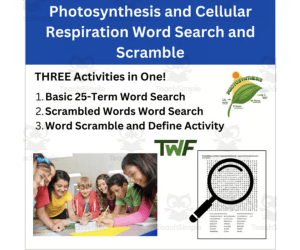
Photosynthesis & Cellular Respiration Word Search & Scramble Activity
Science, Life Sciences, Biology, Nature & Plants, Grade 6, 7, 8, 9, 10, 11, Word Searches, Worksheets, Worksheets & Printables
Your students will love this engaging science review activity. Everyone loves word searches and scrambles and they make for a great review activity that is fun and competitive. This interactive game reinforces key scientific concepts and theories, ensuring curriculum relevance and accuracy. The game package includes 25 common Photosynthesis and Cellular Respiration terms and concepts. The first part of this activity is a word search using the common terms while the second part uses the same terms in a word scramble and define where your students need to unscramble the word and define it. Simply print and go. This is a no-prep activity and can be used to introduce terms, review, or as additional work for those who finish early. Tailor the experience to the level of your students. You can use one or both parts to help your students learn key concept terms. Some example terms include: PHOTOSYNTHESIS CHLOROPHYLL MITOCHONDRIA GLUCOSE
Author Teach With Fergy
Tags Word Search, Word Scramble, Photosynthesis, Cellular Respiration, Photosynthesis And Cellular Respiration

Electricity and Magnetism Word Search and Scramble Review Activity
Science, Physics, Grade 9, 10, 11, 12, Word Searches, Worksheets, Worksheets & Printables
Your students will love this engaging science review activity. Everyone loves word searches and scrambles and they make for a great review activity that is fun and competitive. This interactive game reinforces key scientific concepts and theories, ensuring curriculum relevance and accuracy. The game package includes 25 common Electricity and Magnetism terms and concepts. The first part of this activity is a word search using the common terms while the second part uses the same terms in a word scramble and define where your students need to unscramble the word and define it. Simply print and go. This is a no-prep activity and can be used to introduce terms, review, or as additional work for those who finish early. Tailor the experience to the level of your students. You can use one or both parts to help your students learn key concept terms. Some example terms include: ELECTRICITY CURRENT VOLTAGE RESISTANCE CIRCUIT CONDUCTOR
Author Teach With Fergy
Tags Electricity And Magnetism, Electricity, Magnetism, Word Search And Scramble, Word Search, Word Scramble

50 U.S States Word Search
Social Studies, Geography, Elementary, High School, Homeschool Resources, Middle School, Worksheets & Printables, Worksheets, Word Searches
Challenge your students with this fun and engaging 50 U.S. States Word Search ! This word search is perfect for upper elementary and beyond; this activity helps reinforce geography skills while building attention to detail. Students will search for all 50 state names hidden in multiple directions, including horizontally, vertically, diagonally, forward, and backward. An answer key is included for easy checking. This activity is great for early finishers, independent work, or a fun classroom challenge! How This Word Search Will Help Your Students: ✅ Reinforces Geography Knowledge – Students familiarize themselves with the names of all 50 U.S. states, improving their recall and spelling. ✅ Boosts Pattern Recognition – Searching for words in multiple directions enhances cognitive skills like visual scanning and pattern recognition. ✅ Improves Spelling and Vocabulary – Seeing and finding state names repeatedly strengthens spelling skills and word recognition. ✅ Encourages Focus and Persistence – Word searches require concentration and perseverance, helping students develop valuable skills. ✅ Provides an Engaging, Low-Pressure Activity – This worksheet is a great option for early finishers, brain breaks, or independent learning.
Author Socially Skilled Kids
Tags US States, Word Search, Geography
Coding Logic & Algorithm Design (No-Code) Practice Sheets
Science, Technology, Computer Science, Engineering, STEM, Special Resources, Life Skills, Research, Resources for Teachers, Classroom Management, Grade 3, 4, 5, 6, 7, 8, 9, Worksheets & Printables, Workbooks, Worksheets, Word Searches, Teacher Tools, Assessments, Lesson Plans, Quizzes and Tests, Quizzes, Tests
By teaching the logic of code, you'll be able to unlock the true power of programming!!! This comprehensive curriculum has been created specifically for students in grades four through seven and will provide them with a strong foundation in Computational Thinking using a completely screen-free method—all without writing a single line of code. Are you interested in teaching Computer Science fundamentals but unable to cross the barrier of Syntax and software? Introducing Computer Science’s Fundamentals with an „Unplugged Coding” unit is the perfect solution. Students will learn to think about problems and create solutions like Engineers, Problem Solvers, and Innovators through real-world examples and well-designed worksheets. Instead of just providing another set of puzzles, this four-week, ready to go, complete unit will teach your students to convert abstract concepts into concrete skills. Once students have mastered this Architecture of Thought, they will be ready for any programming languages they may encounter in the future. THIS RESOURCE CONTAINS 40 PAGES OF MATERIAL, INCLUDING: 1) A comprehensive guide & theoretical framework that will help teachers (or older students) get a basic understanding of each of the four pillars of computer science: 1) Sequencing and Precision (anatomy of an algorithm) 2) Conditionals and Branching (logic at the crossroads) 3) Loops and Iteration (how to use repetition effectively) 4) Debugging and Optimization (the art of fixing things) 2) A fun, hands-on workbook that contains 10 different worksheets, each based on using the theoretical concepts in real-world situations. | Worksheet #1 = The Architecture of Sequence (Deep-Sea Drone Mission) Worksheet #2 = Conditional Pathways (Mars Rover Logic) Worksheet #3 = The Power of Iteration (Automated Greenhouse) Worksheet #4 = Variables and State (Retro Arcade Game) Worksheet #5 = Boolean Logic Gates (High-Tech Security Vault) Worksheet #6 = Function Design (Drone Light Show) Worksheet #7 = Debugging and Logical Errors (Theme Parks Ride) Worksheet #8 = Pattern Recognition and Abstraction (Alien Puzzle Box) Worksheet #9 = Algorithm Optimization (Robotic Postal Service) Worksheet #10 = System Design (Intelligent Vending Machine) Teacher Resources and Visuals: Everything You Need to Implement This Unit With Confidence - 3 High-Resolution Visual Anchor Charts to Display in the Classroom (Algorithm Design Process, Control Structures, Debugging Protocol). - Detailed Teacher Implementation Guide: pedagogical philosophy, 4-week pacing/deployment strategy, and differentiation tips. - "Logic E.D.G.E." Evaluation Rubric: One-of-a-Kind Methodology Assessment Tool As An Assessment Tool For Methodologies Not Only Right or Wrong Answers. - Comprehensive Answer Key: Easily Check Student Work. This resource is ideal for middle school computer science, STEM or STEAM electives, coding clubs, homeschool co-ops and/or gifted & talented upper elementary programs. Student empowerment = Master Problem Solvers! Download today to build the foundation for a lifetime of logical thinkers! Keywords: Unplugged Coding, Coding Without a Computer, Computational Thinking, Algorithm Design, Logic Puzzles, STEM, STEAM, Middle School Computer Science, Hour of Code, Screen-Free Activities, 4th Grade, Fifth Grade, Sixth Grade, Seventh Grade, Homeschool, Digital Resource Reasons Why Educators/Parents Appreciate The Program: Develops Real Skills at the Fundamental Level: It does not only have educational value as a game, but allows learners to see the logic of computer programming - students begin to see how computers function in the digital world. Completely Hand-Emphasis On Learning: In this modern world where we have become over-reliant on technology, the unplugged curriculum offers an hands-on means to integrate computer science into the lives of children while promoting critical thinking skills as well as reducing screen times. Everything Needed for Teachers to Implement Unit: All of the components required for teacher/educator to successfully implement the 28-day unit are included - Teacher’s Guide - Worksheets - Visuals - Answer Key with all included One-Time Prep for Teacher, however is Minimal. Fun, Imagination Driven Learning Through Unplugging: This unit assists educators in the "math" of coding and programming by allowing them to eliminate the frustration of syntax errors and develop understanding without the use of device and apparatus. Interesting but simple scenarios (Example - Program a Mars rover) keep students engaged and excited about learning. Development of Resilience and Problem Solving: The incredible focus and emphasis on NEAT Debugging Concepts, allow students to experience and understand that errors are both normal and will continue to happen during the learning journey while building analytic skills and resiliency. Intended Audience for Student: According to the PDF's recommendations and its degree of complexity, the target audiences are: Primary Target: Grades 4 through 7 (Aged 9 through 13) Secondary Target: 3rd grade: Gifted and Talented Program 8th grade: Introduction or remedial courses Families that are home-schooled with a structured STEM curriculum After-school coding clubs that would like an introduction to the fundamentals. Copyright/Terms of Use This book has been published by Syed Hammad Rizvi and is intended for personal use only. Any alteration, redistribution or sale of this resource is strictly prohibited. For example, you cannot place this resource on the internet in any way that someone might find it and download it. If you would like to share this resource with others you work with, please go to Teachsimple and purchase the appropriate number of licenses. Thank you for your consideration of these terms of use. This product is proudly produced by Syed Hammad Rizvi
Author Creative Book Store
Rating
Tags STEM, Coding, ComputerScience, EdTech, Education, CriticalThinking, ProblemSolving, TeachersOfInstagram, TechForKids, Coding Worksheets
Task Initiation & Micro-Step Breakdown
Life Studies, Career, Leadership, Physical Education, P.E. & Health, Mental Health, Mindfulness, Resources for Teachers, Science, Classroom Management, Grade 6, 7, 8, 9, 10, 11, 12, Teacher Tools, Worksheets & Printables, Workbooks, Worksheets, Word Searches, Assessments, Lesson Plans, Quizzes and Tests, Quizzes, Tests
Are your students or kids stuck with a blank page due to a large assignment? Do they know how to do the assignment but can’t figure out the best way to jump into it? This is not because of laziness—this is an example of a breakdown in Task Initiation, which is one of the key executive functions of the brain. Support your students to move from being passive and procrastinating to becoming active creators of their success with our comprehensive neuroscience-based curriculum. This 42-page instructional manual and workbook supports creating a step-by-step strategy to overcome your student's brain's resistance to getting started with completing tasks. By applying the principles of cognitive offloading and granular sequencing, this manual and workbook will provide you with the ultimate guide to how to accomplish your goals. This resource is designed for teachers, parents, school counselors, and executive function coaches to support helping to create lifelong habits, build confidence in school, and decrease the anxiety and stress associated with homework. Contents of this 42-page document. The Neuroscience Guide (Part 1) (The “Why”) The neuroscience of procrastination. Easy-to-understand explanations for the science of procrastination (brain science) include energy, limbic friction, activation energy, time blindness, etc. Real-life examples of the science from students and short quizzes to test knowledge and understanding. The Student Workbook (Part 2) (The “How”) 10 in-depth printed worksheets provide a complete scaffolded framework for developing executive function. Actionable Steps: Deconstruct larger projects into small tasks, identify and eliminate friction, create a five-minute launchpad, master micro steps, create an executive execution ladder, eliminate distractions, and create empathy for your future self. Capstone Project: A master blueprint for a major project using taught strategies. Part Three: Visual & Teacher/Parent Resources (The “Tools”) Three Strong Visual Supports: Printables and classroom appropriate anchor charts will give students' cognitive relief through visual representation of how to use their brain there are three charts to choose from (The Anatomy of Task Paralysis, The Micro-Step Bridge, The Task Activation Loop). Complete Answer Key: An answer key for all ten student worksheets so that teachers can provide students with a comprehensive answer key. Teacher Implementation Guide: A detailed scripted guide on how to introduce these concepts and protocols such as the “Body Double” technique. Differentiation for Neurodivergent Learners: A separate section for specific, powerful strategies for students with ADHD, ASD, and Dyslexia. Not only is this a study skills printable, but it is a powerful cognitive resource that helps students understand themselves so that they may use the resources available to them to work more efficiently with their brain, rather than against it. Keywords: Executive Functioning, Study Skills, Procrastination, Task Initiation, ADHD Support, Neurodiversity, SEL, Middle School, High School, Printable Workbook, Digital Download, Homework Help, Time Management, Metacognition, Growth Mindset, Resources for Teachers, Resources for School Counselors, Parent Guide. What Makes It Busy and Maternal/School Parent-Friendly : Based on Neuroscience (not-created based off "Shame"): It regards procrastination as a normal neurological event, not an individual's defect nor character flaw. This removes guilt associated with procrastination by providing students with a "hacker" mindset to achieve the best outcome for their situation based on the wiring of their brains. Has Actionable, Step-By-Step Tools: Instead of vague and subjective statements like “just break it down,” this curriculum focuses on rigorous, rigorous sequencing (providing valuable resource worksheets/checklists) and concrete ways that a student can apply the information immediately. Targets Neurodivergent Learners: The section on differentiation for ADHD, ASD and Dyslexia students is a must-have addition to any inclusive classroom and will meet needs of all parents with children needing specific support; therefore, it is an extremely "valuable" and "highly-valuable" resource. Develops Lifelong Skills (beyond a one-time project): In addition to a single project, skills presented include metacognition, self-regulation, and planning—all important life-skills needed to continue and succeed throughout high school, college and after. The primary target audience is middle school students (6th-8th grade). The multiple case studies included (6th, 8th grade), the reorganization of the prefrontal cortex and task characteristics align directly with this group. The second target audience is upper elementary (4th-5th Grade) and high school (9th-12th Grade). As stated in the "Visuals & Teacher Keys" section: "(Grade 4-8)". The concepts provided are foundational and lend themselves readily to alteration, both upwards and downwards. High school students with executive functioning issues, especially those diagnosed with ADHD, would see tremendous benefit from this resource. Copyright Notice: This book was copyrighted by Syed Hammad Rizvi. This resource is available for personal use in a single-classroom setting only and cannot be changed (modifications), No part of this book can be shared, sold, or posted on the Internet to be found or downloaded by the public. Please note that if you wish to share this resource with others (teachers), you must buy additional licenses (a fee) from Teachsimple. Thank you for your cooperation in following these terms of usage. This product has been brought to you with pride by Syed Hammad Rizvi.
Author Creative Book Store
Rating
Tags Procrastination, Motivation, StudySkills, TimeManagement, Organization, Neuroscience, ADHD, GrowthMindset, ExecutiveFunctioning, TaskInitiation

Podcast Interview Question Outlines
Technology, Science, Computer Science, Engineering, Special Resources, Life Skills, Social Emotional Learning (SEL), Special Education Needs (SEN), Reading, ELA, Grade 6, 7, 8, 9, 10, 11, 12, Worksheets & Printables, Workbooks, Worksheets, Word Searches, Teacher Tools, Assessments, Lesson Plans, Quizzes and Tests, Quizzes, Tests
Transform your students from passive listeners into masterful storytellers with this complete, no-prep Podcasting Interview Skills Unit! Are you looking for an engaging, real-world project that goes beyond the traditional essay or book report? This comprehensive resource is designed to teach middle school students the sophisticated art of conducting powerful podcast interviews. Students will move beyond simple Q&A and learn to become architects of inquiry, crafting open-ended questions, listening actively, and unearthing compelling narratives. This is more than just a set of worksheets; it's a full-fledged pedagogical journey into the heart of communication, critical thinking, and media literacy. Perfect for your ELA, Journalism, Public Speaking, or Media Studies class, this unit equips students with the 21st-century skills they need to succeed. What's Included in this 48-Page Resource? This unit is meticulously structured into three phases to ensure student success and make implementation a breeze for you: Part 1: The Methodology & Theory (10 Pages) Deep dive into the "Architecture of Inquiry." Clear explanations of open-ended vs. closed questions, active listening, and structuring a narrative arc. Engaging case studies and examples that illustrate core concepts like "Narrative Anchors" and "Thematic Buckets." Strategies for troubleshooting common interview problems like reluctant guests or tangents. Part 2: The Student Workbook (19 Pages) 10 scaffolded, high-interest worksheets that move students from theory to practice. Exercises on identifying and transforming weak questions, drafting powerful follow-ups, spotting "the drop," using the "5 Whys" technique, structuring a narrative, navigating emotion, and more. A final "Master Blueprint" worksheet that guides students in creating a full interview outline from start to finish. Part 3: Visuals & Teacher Resources (19 Pages) Classroom-Ready Visual Aids: Three clear, printable anchor charts/visual frameworks explaining the core concepts (Anatomy of a Question, Active Listening Funnel, Interview Flow). Comprehensive Answer Key: Detailed, exemplar answers and pedagogical notes for all 10 student worksheets to make grading easy and effective. A Complete Teacher Implementation Guide: A 5-day+ lesson plan that walks you through direct instruction, modeling, guided practice, role-playing activities, and a final audio documentary project. Assessment Rubric: A clear, 4-point rubric for grading the final student interview project, focusing on question quality, narrative structure, follow-up agility, and audio professionalism. This isn't just a project; it's an experience. Watch your students' confidence soar as they learn to listen with empathy, think on their feet, and curate truth through the power of the human voice. Why Parents/Schools Love It: Develops Core Critical Thinking Skills: This curriculum explicitly teaches students how to move beyond surface-level facts and analyze information, synthesize ideas, and construct logical inquiries—skills essential for academic and life success. Builds 21st-Century Communication Skills: In an age of digital distraction, this program cultivates the "soft skills" that are most in demand: active listening, empathetic conversation, public speaking, and clear articulation of thought. Promotes Media & Digital Literacy: Instead of just consuming media, students become thoughtful creators. They learn the process behind the podcasts they listen to, gaining a deeper understanding of narrative construction and journalistic ethics. Provides Authentic, Real-World Application: Students are highly motivated by this project because it feels relevant and real. They are not just learning for a test; they are creating a tangible product (an audio documentary) that they can be proud of. Comprehensive and Teacher-Friendly: This is a complete, "plug-and-play" unit. The detailed teacher's guide, answer keys, and rubric save educators dozens of hours of prep time, making it easy for schools to implement a high-quality, engaging curriculum. Target Student Classes : Based on the explicit text in the PDF ("sixth-grade scholar," "Target Audience: Grade 6 Educators"), the primary target is 6th Grade . However, the material is sophisticated and rigorous enough to be highly effective for a broader range. I would recommend it for: Middle School ELA (Grades 6-8): As an alternative to traditional research papers or oral presentations. It hits standards for speaking, listening, writing, and critical analysis. Middle School Journalism or Media Studies Electives (Grades 7-9): This is a perfect foundational unit for any introductory journalism course. High School (Grades 9-10): Excellent for remedial or introductory communications, public speaking, or journalism classes. Gifted and Talented Programs (Grades 5-6): Ideal for younger, advanced learners who are ready for a challenging, project-based learning experience. Copyright/Terms of Use: This Book was copyrighted by Syed Hammad Rizvi. This resource is for personal and single classroom use only. You may not alter, redistribute, or sell any part of this resource. In other words, you may not put it on the Internet where it could be publicly found and downloaded. If you want to share this resource with colleagues, please purchase additional licenses from Teachsimple. Thank you for respecting these terms of use. This product is happily brought to you by Syed Hammad Rizvi
Author Creative Book Store
Rating
Tags Podcasting, CriticalThinking, ActiveListening, ProjectBasedLearning, PBL, DigitalStorytelling, MediaLiteracy, PublicSpeaking, CommunicationSkills, 21stCenturySkills

French: The Environment and Pollution - Word Searches
Science, Earth and Environmental Sciences, Environmental Science, Grade 6, 7, 8, 9, 10, 11, 12, Word Searches, Worksheets, Worksheets & Printables
The French: The Environment and Pollution - Word Searches resource is a fun way to accomplish 2 sets of core instruction - science and language. Students will have fun completing these word searches with vocabulary related to the environment and pollution. There are 3 word searches .
Author Love Learning Languages
Tags French Word Search, Science Word Search, French Printable, French Activity, Environment Word Search

The Water Cycle Word Search and Scramble Activity
Science, Earth and Environmental Sciences, Earth Sciences, Grade 6, 7, 8, 9, 10, 11, Word Searches, Worksheets, Worksheets & Printables
Your students will love this engaging science review activity. Everyone loves word searches and scrambles and they make for a great review activity that is fun and competitive. This interactive game reinforces key scientific concepts and theories, ensuring curriculum relevance and accuracy. The game package includes 25 common Water Cycle terms and concepts. The first part of this activity is a word search using the common terms while the second part uses the same terms in a word scramble and define where your students need to unscramble the word and define it. Simply print and go. This is a no-prep activity and can be used to introduce terms, review, or as additional work for those who finish early. Tailor the experience to the level of your students. You can use one or both parts to help your students learn key concept terms. Some example terms include: WATER CYCLE EVAPORATION CONDENSATION PRECIPITATION TRANSPIRATION INFILTRATION GROUNDWATER RUNOFF
Author Teach With Fergy
Tags Word Search, Word Scramble, Biomes, Ecosystems, Ecology, Water Cycle

Our Solar System Word Search and Scramble Activity
Science, Earth and Environmental Sciences, Space, Grade 6, 7, 8, 9, 10, 11, Word Searches, Worksheets, Worksheets & Printables
Your students will love this engaging science review activity. Everyone loves word searches and scrambles and they make for a great review activity that is fun and competitive. This interactive game reinforces key scientific concepts and theories, ensuring curriculum relevance and accuracy. The game package includes 25 common Solar System terms and concepts. The first part of this activity is a word search using the common terms while the second part uses the same terms in a word scramble and define where your students need to unscramble the word and define it. Simply print and go. This is a no-prep activity and can be used to introduce terms, review, or as additional work for those who finish early. Tailor the experience to the level of your students. You can use one or both parts to help your students learn key concept terms. Some example terms include: SUN MERCURY VENUS EARTH
Author Teach With Fergy
Tags Word Search, Word Scramble, Solar System, Planets, Space

Guy Fawkes and the Gunpowder plot : Bonfire Night Quote Cryptograms
ESL, Language Development, ELA, Government, Social Studies, History: Europe, History, History: British, Sociology, STEM, Grade 9, 10, 11, 12, Novel Studies, Worksheets & Printables, Word Problems, Worksheets, Word Searches
21 Celtic Code Puzzles for the Gunpowder Plot | Guy Fawkes and Bonfire Night History Activity Get your students involved in a fun code-breaking activity that is great for lessons leading up to Bonfire Night (November 5). This resource has 21 important quotes and historical terms from the Guy Fawkes and Robert Catesby conspiracy of 1605. Each puzzle has a different Celtic Knotwork design that helps you learn about 1605 History and builds important logic and critical thinking skills. Main Features 21 Puzzles: Covers the whole story, from why the conspirators did what they did to what happened to them. Important Quotes: Contains strong phrases like "REMEMBER THE FIFTH OF NOVEMBER," "TO BLOW UP THE KING WITH GUNPOWDER," and "HOLD YOUR PEACE KNAVE AND UNBIND ME." Cross-Curricular: Combines ELA (logic, quote analysis) and history. High Engagement: Celtic designs that are one of a kind can also be used as coloring sheets. Grade Level: For students in middle school (KS3) to high school (KS4). There are answer keys. Today, make your history class more fun by giving them a code-breaking challenge! Use for: activities for Bonfire Night, history lessons, ELA, sub plans, critical thinking, and people who finish early.
Author Celtic Puzzle
Rating
Tags Guy Fawkes, Bonfire Night, Gunpowder Plot, Cryptogram, No Prep, Independent Activity

Composting Ratio & Soil Chemistry Trackers
Science, Earth and Environmental Sciences, Earth Sciences, Environmental Science, Geology, STEM, Chemistry, Biology, Life Sciences, Nature & Plants, Grade 6, 7, 8, 9, 10, 11, 12, Worksheets & Printables, Workbooks, Worksheets, Word Searches, Writing Prompts, Teacher Tools, Lesson Plans, Quizzes and Tests, Quizzes, Tests
Transform your science class into a buzzing hub of discovery with this comprehensive, hands-on composting unit! This is not just a set of worksheets; it's a complete, multi-week STEM project that guides students through the fascinating "soil alchemy" of decomposition. Watch them go from passive learners to active scientists as they track, measure, and manage their very own compost ecosystem. Perfect for Earth Day, an environmental science unit, or a life science module, this resource makes complex chemistry and biology tangible and exciting. Students will master the critical Carbon-to-Nitrogen (C:N) ratio, learn to diagnose problems using sensory data (smell, temperature, texture), and witness the incredible transformation of waste into "black gold." This resource is fully aligned with Next Generation Science Standards (NGSS 5-LS2-1: Ecosystems) and seamlessly integrates science, math, and critical thinking. ► What's Included in this 40-Page Resource? Part 1: The Science of Soil Alchemy (11-Page Guide): A detailed, student-friendly reading guide that explains the core science behind composting, including: The roles of Carbon ("Browns") and Nitrogen ("Greens"). The "Microscopic Workforce" of bacteria, fungi, and microbes. The perfect C:N ratio and the practical "Rule of Thumb." Real-world case studies for problem-solving. Part 2: The Student Workbook (10 Differentiated Worksheets): Engaging activities that reinforce key concepts. Categorizing Organic Matter Mathematical Modeling of the 30:1 Ratio Thermodynamics of the Compost Pile Hydration and Aeration Dynamics Odor Diagnostics & Troubleshooting ...and 5 more in-depth worksheets! Part 3: Teacher Resources (Complete Support): Everything you need to implement this project with confidence. Instructional Visuals: Clear, printable diagrams explaining the C:N balance, the biological engine, and a diagnostic matrix. Teacher Implementation Guide: A step-by-step guide covering pedagogical hurdles, material sourcing, classroom safety, and scaffolding the lessons. Differentiation Strategies: Tips for supporting both tactile learners and analytically advanced students. Comprehensive Answer Key: Definitive answers for all 10 worksheets and observation scenarios. ► Ideal For: 4th, 5th, and 6th Grade Science Classes Middle School Environmental Science Electives Homeschool Co-ops and STEM Clubs Fulfilling NGSS 5-LS2-1 Requirements Empower your students with the knowledge to make a real-world environmental impact. Download now and start your composting adventure! Keywords: Composting, Soil Science, STEM Project, Environmental Science, Earth Day, NGSS Aligned, 5-LS2-1, Decomposition, Carbon Nitrogen Ratio, Biology, Chemistry, Life Science, Student Workbook, Hands-On Science, 4th Grade, 5th Grade, 6th Grade, Middle School Science. Why Parents/Schools Love It: Truly Hands-On, Real-World Science: This unit moves beyond textbook theory and allows students to engage in a long-term, tangible scientific experiment. They learn by doing, problem-solving, and seeing the direct results of their actions. Integrates Multiple Subjects (Cross-Curricular): It masterfully blends Science (biology, chemistry), Math (ratios, measurement, data analysis), and Language Arts (descriptive writing in observation logs), reinforcing learning across the curriculum. Teaches Sustainability and Environmental Stewardship: Students don't just learn about the environment; they learn a practical skill that reduces waste and benefits the planet. It fosters a sense of responsibility and empowerment. Comprehensive & Low-Prep for Teachers: This is a complete, "print-and-go" unit. The detailed teacher guide, visual aids, and full answer key mean educators can implement a high-quality, rigorous project with minimal preparation time. Aligned with Academic Standards: Its direct alignment with NGSS standards (specifically 5-LS2-1) is a huge selling point for schools and teachers who need to ensure their curriculum meets state and national requirements. Target Student Audience : Based on the content's language, the specific mention of a "5th-grade science class" in a case study, and the direct reference to NGSS Standard 5-LS2-1 , primary target audience is: 4th to 6th Grade Students. The material is perfectly scaffolded for this age range. It can also be easily adapted for 7th and 8th-grade middle school science, especially for students needing a more hands-on approach to chemistry and biology. Copyright/Terms of Use: This Book was copyrighted by Syed Hammad Rizvi. This resource is for personal and single classroom use only. You may not alter, redistribute, or sell any part of this resource. In other words, you may not put it on the Internet where it could be publicly found and downloaded. If you want to share this resource with colleagues, please purchase additional licenses from Teachsimple. Thank you for respecting these terms of use. This product is happily brought to you by Syed Hammad Rizvi
Author Creative Book Store
Rating
Tags Composting, SoilScience, Decomposition, EnvironmentalScience, STEM, ScienceEducation, Ecology, LifeScience, Biology, ChemistryForKids

Crypto & Digital Money Literacy (Age-Appropriate Intro)
Math, Statistics, Money, Order Of Operations, Business, Life Studies, Career, Finance, Coaching, Home Economics, Homeschool Curriculum, Grade 7, 8, 9, 10, 11, 12, Worksheets & Printables, Workbooks, Worksheets, Word Searches, Teacher Tools, Assessments, Lesson Plans, Quizzes and Tests, Quizzes, Tests
This complete curriculum on the topic of Cryptocurrency and Digital Currency Literacy is a NO-PREP curriculum to prepare your students for the 21st Century's economy as it relates to Cryptocurrency and Digital Currency! This 40-page resource will transform your students from passive consumers to critical thinkers. This curriculum will guide students through the complex world of blockchain, Web3, and digital assets using an academically rigid and unbiased basis. Each student must understand the technology, economics, and history so that they can build a solid foundation on which to build their financial future. The curriculum is appropriate for high schools, and advanced middle schools to study Economics, Computer Science, Business, Financial Literacy, and Social Studies. By removing the speculative hype around these topics and focusing on first principles, this curriculum will provide students with the necessary tools and skills to understand, analyze and critique the "next generation" of the internet. WHAT'S IN THIS 40-PAGE RESOURCE: Part One: The Core Academic Framework (4 Chapters) Chapter One: The Evolution of Value; Barter and Rai Stones to Fiat Currency Chapter Two: The Architecture of Trust; Deconstructing Blockchain, Cryptography & Distributed Ledgers Chapter Three: Programmable Money; Smart Contracts and DeFi Chapter Four: Economics, Ethics & The Future; Volatility, CBDCs and Global Impact Part Two: Student Workbook (10 Worksheets) Over 90 Questions to Test Critical Thinking and Comprehension Historical Antecedents, Decentralized ledgers, Cryptography, Bitcoin & Scarcity, Smart contracts, Digital wallets & Custody, Tokenomics, Scams/Risk Mitigation, Regulation and the Future of Web3 Part Three: Teacher Resources & Visuals (3) High Quality Visuals; Presentations/Explaining Immutable Blockchains, Network Topologies, and the Public/Private Key Analogy Detailed Teacher Implementation Guide; 4 Week Suggested Lesson Plan, Recommendations for Pedagogy and Cross Curricular Instruction (Math, Civics, CS) Comprehensive Answer Key; 10 Page Answer Key with Full Detail and Answered Questions for each Workbook Question and each Chapter Reflection This Curriculum is a Great Resource to Help Students Develop a Strong Foundation of Future Proof Understanding of One of The Greatest Technological Shifts of Their Lifetime. Help Your Students Become Truly Digitally Literate! Keywords: The financial literacy curriculum around the world focuses on Cryptocurrency, Blockchain, Bitcoin, The Digital Currency Age, Web3, High School Economics, Computer Science, Low/no-prep resources to support education in Cryptocurrencies and Digital assets without the risk of speculation, DeFi/NFT technologies - Smart Contracts, 21st Century Skills for educators. Why Parents/Schools Love It: Fosters Critical Thinking Not Speculation: This curriculum teaches students the "How" (the technical side of they did this) and the "Why" (the economic principle behind it), not just teaching students risk to the financial markets through investment advice. Completely No-Prep & Turn-Key: This curriculum will save teachers time because all they have to do is print the lessons, engaging worksheets, high-quality visuals, etc., along with a complete answer key, and be ready to teach on a very complex topic. Builds Essential 21st Century Skills to Prepare Students for their Future: Students will learn more than just financial literacy because they will understand the digital economy and decentralized economy they will be inheriting so they are prepared to become good citizens and productive members of society in the future. True Neutral and Academically Rigorous Perspective: The materials are presented neutrally and educationally, and use real-world case studies and historical context in order to provide a neutral and sophisticated understanding of this polarizing topic. Integration of Many Subjects: This is not merely a technology curriculum; it incorporates lessons from History (Evolution of Money), Civics (CBDC vs. Private Currency), Economics (Scarcity, Inflation), and Computer Science (Cryptography, Logic), etc. Target Student Audience: According to the PDF document, this content is meant for grades 7-12; however, after considering the complexity of the material, a more detailed breakdown can be made as follows: - Primary Target: for students in grades 9-12 (high school). The material presented such as the Byzantine Generals Problem, Turing Completeness, Tokenomics, and Regulatory Arbitrage are all concepts that align with and can be understood by the cognitive level of high school students; thus this material fits perfectly within offerings of honors/ap economics, principles of computer science or as a course under the financial technology branch. - Secondary Target: for advanced/gifted students in 7-8 grades (middle school). The use of this material in the standard/mainstream classroom curriculum may not be appropriate for 7th grade students; however, it would be beneficial in some cases (i.e. gifted program, after school technology club) where there is evidence of interest and ability toward this subject. Copyright to this Book is with Syed Hammad Rizvi and is provided solely for personal use or in one class per teacher. No part of this Book can be changed, copied, shared, or sold. You may not post this Book on the internet for anyone else to find or download. If you wish to give a copy to fellow teachers, please purchase additional licenses from Teachsimple. Your cooperation and respect for these terms of use are greatly appreciated. Thank you for your contribution to this project by Syed Hammad Rizvi.
Author Creative Book Store
Rating
Tags FinancialLiteracy, Cryptocurrency, Blockchain, Bitcoin, Web3, DigitalCurrency, DigitalAssets, DeFi, SmartContracts, DecentralizedFinance

Digital Product Layout Wireframing
Technology, Science, Computer Science, Engineering, Research, Resources for Teachers, Classroom Management, Community Building, Language Development, ELA, Grade 6, 7, 8, 9, 10, 11, 12, Worksheets & Printables, Workbooks, Worksheets, Word Searches, Teacher Tools, Assessments, Lesson Plans, Quizzes and Tests, Quizzes, Tests
Unlock the world of digital design for your students with this complete, no-prep UI/UX Wireframing Curriculum! Are you looking for a dynamic, project-based learning (PBL) unit that teaches relevant, real-world STEM and CTE skills? This comprehensive resource transforms students from passive tech consumers into thoughtful digital architects. With zero software required, this pencil-and-paper curriculum is an accessible and powerful way to introduce the core principles of User Interface (UI) and User Experience (UX) design. Students will embark on a journey through the "architecture of digital space," learning how to structure mobile apps, simple websites, and interactive digital planners. This unit is meticulously designed to build skills from the ground up, blending foundational theory with hands-on, practical application. WHAT'S INCLUDED IN THIS 46-PAGE UNIT: PHASE 1: Core Content & Theory (10 Pages): An engaging student-facing textbook that clearly explains the "why" behind digital design. Topics include: The Anatomy of a Grid System (Columns, Rows, Gutters, Margins) Designing for Different Screens: Apps vs. Websites vs. Digital Planners Mastering Visual Hierarchy and creating intuitive User Flow Real-world case studies and professional vocabulary. PHASE 2: Student Workbook (21 Pages): A collection of 10 rigorous worksheets that challenge students to apply their knowledge. Activities include: Analytical questions and vocabulary reinforcement. Grid-based math and layout calculations. Hands-on drafting exercises for mobile apps, websites, and digital planners. A final "Master Project" to design a complete app wireframe from scratch. PHASE 3: Visuals & Teacher Resources (15 Pages): Everything you need to teach with confidence and save valuable prep time! Conceptual Vector Graphics: Clear, projectable diagrams for direct instruction (Anatomy of a Grid, Eye-Tracking Patterns, Typology of Wireframes). Comprehensive Answer Key: Complete, detailed answers for all 10 worksheets. Teacher Implementation Guide: A pedagogical philosophy, a full 2-week (10-day) pacing guide , and milestone suggestions. Differentiated Instruction & Accessibility Guide: Strategies for supporting students with fine motor challenges, advanced learners, and those needing cognitive scaffolding. Summative Grading Rubric: A detailed 4-point rubric to easily and objectively assess student wireframe projects on Grid Application, Visual Hierarchy, User Flow, and Clarity. Keywords: UI/UX Design, Wireframing, Web Design, App Design, Graphic Design, Digital Design, STEM, CTE, Project-Based Learning (PBL), Computer Science, Technology, Middle School, High School, No-Prep, Printable Worksheets, Answer Key, Rubric. Why Parents/Schools Love It: Teaches In-Demand, Real-World Skills: This unit goes beyond basic computer literacy, introducing students to the highly sought-after field of UI/UX design. It equips them with the language and thinking skills used by professionals at companies like Apple, Google, and Spotify. Completely Turnkey & No-Prep: This is a full curriculum in a box. With a detailed 2-week pacing guide, student-facing texts, worksheets, answer keys, and a grading rubric, it saves teachers dozens of hours of planning and prep time. 100% Accessible, No Software Needed: The "pencil-and-paper first" approach is pedagogically sound and equitable. It ensures that every student can participate without the need for expensive computer software, licenses, or high-spec devices. It focuses on critical thinking, not tech skills. Fosters Critical Thinking & Problem Solving: Students don't just draw boxes; they use mathematical reasoning to build grids, apply psychological principles to guide users, and practice empathy to create intuitive, frustration-free digital experiences. Target Student Classes & Grade Levels : Based on the vocabulary, concepts, and explicit mentions in the teacher's guide ("seventh-grade students"), target the following: Primary Target: Middle School (Grades 7-9) Technology / Computer Applications Classes STEM or STEAM Labs Introduction to Graphic Design or Coding Classes Secondary Target: High School (Grades 10-12) Introductory Web Design or Graphic Design Courses Computer Science Principles (as a design-focused unit) Career and Technical Education (CTE) pathways Homeschool students with an interest in technology and art. Copyright/Terms of Use: This Book was copyrighted by Syed Hammad Rizvi. This resource is for personal and single classroom use only. You may not alter, redistribute, or sell any part of this resource. In other words, you may not put it on the Internet where it could be publicly found and downloaded. If you want to share this resource with colleagues, please purchase additional licenses from Teachsimple. Thank you for respecting these terms of use. This product is happily brought to you by Syed Hammad Rizvi
Author Creative Book Store
Rating
Tags UIUX, Wireframing, WebDesign, AppDesign, GraphicDesign, UserInterface, UserExperience, UIDesign, UXDesign, DesignThinking
Mindfulness for Exam Stress – Focused Attention Worksheets
Life Skills, Special Resources, Social Emotional Learning (SEL), Social Skills, Special Education Needs (SEN), Speech Therapy, STEM, Resources for Teachers, Classroom Management, Community Building, Grade 6, 7, 8, 9, 10, 11, 12, Worksheets & Printables, Workbooks, Worksheets, Word Searches, Teacher Tools, Assessments, Lesson Plans, Presentations, Quizzes and Tests, Tests
A complete 40-page workbook to promote the use of mindfulness and learn how to manage exam stress using neuroscience-based methods. This workbook includes clear theoretical concepts (e.g., "Amygdala Hijacking", "Working Memory Bottleneck", "Default Mode Network versus Task Positive Network") paired with a total of 10 student worksheets, 3 visually appealing colored models for use throughout the course, an answer key that shows all answers for the worksheets and a teacher guide to implementation. In addition to theory, there are practical tools to help the student manage their stress level and perform well on assessments. Practical tools include: Cognitive Defusion (to eliminate the "failure script" you tell yourself), using Somatic Mapping and micro-interventions (e.g., Physiological Sigh, 5-4-3-2-1 Grounding, Box Breathing), using the POP (Pause, Observe, Proceed) method to eliminate "blanks" on assessments, utilizing pre-test mental rehearsal and post-test decompression exercises. This workbook is perfect for use in the classroom, individual counseling sessions, study skills programs, or home schooling. It is available for immediate digital download, and can be printed from your computer or used in your digital course materials with no preparation needed. These strategies have been researched and proven to effectively lower levels of test anxiety and provide access to your working memory when under pressure to perform. Reasons Parents and Schools Love this Product: Science-based methods that help students calm themselves when they take exams through teaching them how to control their brains instead of just telling them to calm themselves down. No preparation required on the part of teachers with regard to having materials like worksheets, visuals, answer keys, and an implementation guide to use immediately in their classrooms or with students who need support. Helps develop true resilience by teaching students ways to cope with anxiety over a lifetime rather than relying on temporary motivation techniques. All micro-interventions available through this product can be done without being seen or heard, therefore making it more conducive to use during exam time. Very easy for both parents and counselors to understand how to use the micro-interventions in a way that they will get maximum benefit from doing so; great for SEL programs, study skills classes, or using at home. Intended Readers : The target audience for this resource is students who belong to the ages of 12-16 (Grades 7-10). The research case studies were conducted with 7th grade (ADHD/test anxiety), 8th grade, 9th grade and 10th grade (AP Biology) students. The resource sections of the Teacher Implementation Guide focus on the students themselves as they relate to their neurodevelopmental stage (middle and early high school). This resource is perfect for middle school (Grades 7-8) and early high school (Grades 9-10) students, who are preparing for any number of major exams, standardized exams and high stakes assessments (i.e., any subject). Not intended for elementary students (too difficult) or late high school/college students (the language and examples were written specifically for the adolescent population). Copyright / Terms of Use : This book is copyrighted to Syed Hammad Rizvi. It should only be used by you or as a single classroom reference resource. You cannot edit, share, or sell anything contained in this book, so please do not upload it to the internet and make it available for download to anyone else. If you would like to share this book with co-workers, please purchase another copy of this book through Teachsimple and respect the above terms of use. Thanks for using and supporting this product from Syed Hammad Rizvi!
Author Creative Book Store
Rating
Tags Mindfulness, TestAnxiety, ExamStress, StressRelief, AnxietyRelief, MentalHealth, SelfCare, SEL, SocialEmotionalLearning, MindfulnessForStudents

Space Shuttle Dot-to-Dot / Connect the Dots PDF - 669 Dots!
Creative Arts, Math, Science, Elementary, High School, Middle School, Worksheets & Printables, Worksheets, Word Searches
Connect the 669 dots to recreate the image of the famous space shuttle! After the Apollo missions, the space shuttle became the main vehicle for the next generation of NASA explorers. Now retired, the space shuttle remains an iconic vehicle for space exploration. This unique connect the dots puzzle is a rewarding activity for space enthusiasts and hobbyists. I hope your kids enjoy this printable, and that it may inspire them to learn more about space shuttles! Dot-to-dots such as this one are a relaxing activity that can both educate and entertain kids. These fun puzzles can help improve fine motor skills, and also help kids develop patience and focus. This space shuttle dot-to-dot printable created by Tim van de Vall and is copyright Tim’s Printables LLC. Terms of use: May be printed/downloaded for personal and educational purposes only. The space shuttle connect the dots is activity on page 1, and the answer key is on page 2. The page dimensions are: 8.5”x11”. PDF format.
Author Tim's Printables
Rating
Tags Space Shuttle, Space, Rocket, NASA, Solar System, Earth, Moon, Mars, Worksheet, Printable

The Salem Witch Trials Historical Fiction Story with Questions
Common Core, ELA, Reading, Writing, Research, Social Studies, History, History: USA, Homeschool Curriculum, Grade 6, 7, 8, 9, Worksheets & Printables, Worksheets, Writing Prompts, Word Searches
Introduction Keep middle school students engaged with The Salem Witch Trials historical fiction story for reading comprehension with vocabulary work, discussion questions, and writing prompts. This no-prep resource provides an easy-to-use lesson that your kids will love! The story and student pages may be printed as worksheets or used digitally through Google Slides. Easy setup makes this perfect for centers or emergency sub plans. Objective Use to enhance reading comprehension and high level questioning skills, build vocabulary, practice for writing and research. Also build critical thinking skills. Steps for Use Readv 5-page reading passage Use context clues to define 11 vocabulary words Complete vocabulary crossword puzzle Discuss 9 comprehension or higher level thinking questions Play educational game Students complete 2 writing prompts Use in printable pdf. file or link to Google Slides Check student work with answer key Grades 6 - 9 Use this resource with: Gifted and talented students or those in the regular classroom For early finishers Fun Friday Language arts activity between novel studies Social Studies activity Before a break To change of class routine Whole Group Small Group Partner Work Independent Work Emergency Sub Plans Answer Key Included Standards CCSSCCRA.R.1 CCSSCCRA.R.3 CCSSCCRA.R.4 CCSSCCRA.R.6 CCSSCCRA.R.10 CCSSCCRA.W.1 CCSSCCRA.W.2 CCSSCCRA.W.7 CCSSCCRA.W.8 CCSSCCRA.W.9 CCSSCCRA.W.10 File Types Printable Pdf. Files Link to Google Slides Number of Pages 17 Pages and Digital Worksheets
Author Catch My Products
Tags Salem Witch Trials, Reading Passage, Historical Fiction Story, Reading Comprehension Passage

Light and Optics Word Search and Scramble Activity
Science, Physics, Grade 9, 10, 11, 12, Word Searches, Worksheets, Worksheets & Printables
Your students will love this engaging science review activity. Everyone loves word searches and scrambles and they make for a great review activity that is fun and competitive. This interactive game reinforces key scientific concepts and theories, ensuring curriculum relevance and accuracy. The game package includes 25 common Light and Optics terms and concepts. The first part of this activity is a word search using the common terms while the second part uses the same terms in a word scramble and define where your students need to unscramble the word and define it. Simply print and go. This is a no-prep activity and can be used to introduce terms, review, or as additional work for those who finish early. Tailor the experience to the level of your students. You can use one or both parts to help your students learn key concept terms. Some example terms include: LIGHT WAVE REFLECTION REFRACTION DIFFRACTION ABSORPTION FREQUENCY WAVELENGTH
Author Teach With Fergy
Tags Word Search, Word Scramble, Light, Optics, Light And Optics, Physical Science, Energy