



3,952 products added recently
Page 83 - 3rd Grade Activities
Enhance your third-grade curriculum with activities that stimulate interest and understanding. These resources offer hands-on experiments, creative projects, and problem-solving tasks. Incorporate them to support skill development and make learning a captivating experience.

 Show filters


Phonics Matching Games
ELA, Language Development, Phonics, Grade 1, 2, 3, Activities, Games
This resource is a set of Phonics Matching Games . There are card games and word building for the sounds: /sh/ /ch/ /ck/ /th/ Each sound comes with 28 playing cards and an overview sheet. There are many ways to play these cards including: - Flashcards - Fill in the blank - Concentration - Fish - Snap Directions are included.
Author Top Notch Teaching
Tags Phonics Games, Card Games, Word Building, Sounds, Matching
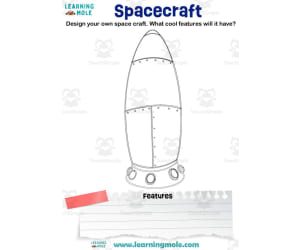
Spacecraft Activity
Science, Earth and Environmental Sciences, Space, Technology, Engineering, Grade 3, 4, 5, 6, 7, 8, 9, Activities
Activity Introduction An amazing activity designed for the students to learn more about STEM subjects. Spacecraft Do you like STEM subjects? what is your favorite one? Have you ever tried to plant a seed? If yes, tell us more about it. Or have you ever tried to invent something? If yes, tell us more about it. And how do you think it will help us? Have you ever seen a microorganism under a microscope? What was it? And how it looked like? Mathematics is a marvelous subject. Let' sharpen our brains and solve some equations. Do you like timetable tricks? What is your favorite one? Do you know how to code? Have you ever created an app or a game before? If yes, how was it like? Spacecraft Activity The activity is perfect for encouraging the researching skills for the students, while learning more about this topic. Spacecraft This friendly designed worksheet is suitable for students at school, homeschooling, and as a group activity. Instructions Design your own space craft . What cool features will it have? Format Available in a PDF format.
Author Educational Voice
Tags Spacecraft Activity, Spacecraft, Spacecrafts, Spacecraft Facts, Spacecraft Facts For Kids

Summer Special Activities, Stories and Questions (3-9 years)
ELA, Writing, Creative Writing, Kindergarten, Preschool, Grade 1, 2, 3, 4, 5, Activities
Summer Special Activities, Stories and Questions: A Complete Resource The resource, Summer Special Activities, Stories and Questions, is an interactive guide providing a fun-filled combination of linguistic exercises, cognitive tasks and captivating storytelling. Ideal for students aged 3-9 years old in diverse teaching settings such as public schools or homeschools. Engaging Storyline with Popular Characters Fundamental to the resource is an engaging storyline featuring popular characters Pom Pom, Zoggy and Sam. Their exciting seaside adventures keep young learners' curiosity peaked throughout the activities. Diverse Set of Stimulating Exercises Word Searches - A great way to expand vocabulary in a fun fashion. Puzzles - Crafted to challenge reasoning skills in early learners. Crosswords - Focusing on age-appropriate words for further enhancing vocabulary use among students. 'What Can I Tell You About My Holiday?' Section for Imaginative Development This creative section calls upon the kids' imaginative abilities as they narrate their own holiday experiences fostering critical communication skills. Promoting Independent Thinking with Open-ended Questions Features after Stories:} 'The Sandcastle'- This story ending with open-ended questions invites young readers to reflect on narratives promoting independent thinking. This enriching guide isn't limited by seasonality. It's versatility crates suitability year-round across various academic settings from whole group instructions, small learning pods or even individual homework assignments. A noteworthy feature is its length – this comprehensive PDF activity guide includes 94 pages ensuring continued learning engagement over time. To sum up - Summer Special Activities, Stories and Questions is an indispensable tool in the hands of educators looking to provide holistic learning experiences.
Author Guinea Pig Education
Tags Interactive Learning, Summer Activities, Educational Resource, Storytelling, Cognitive Exercises

Decimal Campout Activity
Math, Decimals, Fractions, Grade 3, 4, 5, Activities
If you want to give your math students extra practice with decimals, I have just the resource for you! What You Get: This is aDecimal Campout Activitythat was designed for upper elementary students who have learned or are reviewing this skill. This resource is a 6-page printable . There are 12 decimal cards and 12 fraction cards - each set printed 6 per page. There is a 1-page worksheet and an answer key included. How To Implement This Resource: You will print all the decimal and fraction cards. You can print them on card stock or heavy duty paper and laminate them for durability, so you can use this activity over and over again! Print enough copies of the worksheet for all students to complete or print just enough for each small group if they are working together. Students will use decimal notation for fractions with denominators 10 or 100. They will match the fraction cards to the decimal cards. Then, complete the practice worksheet to check for understanding. I hope you enjoy! Here are more of my resources for you to enjoy: Total Solar Eclipse Worksheet Recognizing Fractions Worksheet Long U Matching Puzzle 1.OA.5 Common Core Math Lesson Point of View Activity Rounding to the Nearest Hundred Thousandth Worksheet You can find more resources at my storefront here: Have Fun Teaching
Author Have Fun Teaching
Tags Math Task Cards, Math Activity, Math Cards, Decimals Review, Math Review, Decimals Task Cards, Decimals Campout, Notations, Fractions
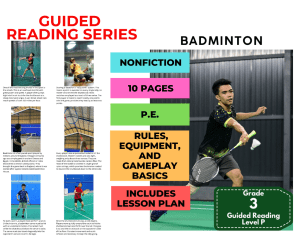
Guided Reading Level P - Badminton (with Lesson Plan)
ELA, Resources for Teachers, Reading Comprehension, Reading, Pre-Reading, Language Development, Health, P.E. & Health, Sports, Physical Education, Grade 2, 3, 4, Worksheets & Printables, Worksheets, Teacher Tools, Centers, Activities, Literacy Readers, Quizzes, Quizzes and Tests, Assessments
This Guided Reading Book - Badminton (Level P) with lesson plan includes: Guided Reading Color Label (front cover x1) This is a quick way to match the book’s demands to what students can generally handle.. The overall goal is to use the level/color to pick books for several smaller groups. To qualify for a certain level, a student is expected to read a book from that level with about 90–94% accuracy. If a student is consistently accurate and understands, move up a level. If the student is struggling at that level, drop down and add more support. Each student will improve at completely different rates, but it is generally one of the best ways to check progress across the class. DOWNLOAD THE CATALOG TO VIEW ALL GUIDED READING BOOKS AVAILABLE (SORTED LEVELS A-Z) Pre-Reading Question (x1) Teacher asks the prompt aloud, can be while showing the cover or first page. Students share what they already know, or make educated guesses from the cover. Prompt them to use the target vocabulary. Write some of their responses on the board to look back at during the reading. Vocabulary Words (x5) Introduce the five words, best doing it one at a time. Start by saying it, while students repeat and then see if anyone knows what it means before reading further. Read through the meaning and try to briefly connect each word to a picture or gesture so it’s meaningful. Ask students to flip through the book pages and point to where they see each of the vocabulary words. While reading the book pause upon coming across one of the vocab words or read the sentence twice to make sure students understand the word has appeared. Optional: Ask students to raise hands whenever they see/hear one of the new words. Guided Reading Pages (x10) Check the book snapshot (below) for: primary topic - do you need to prep extra reading or intro materials on this? what is taught best - decide on 1-2 bullets to focus on, use the prompt or words provided here for best results. learning goals - what you are checking for students to be able to do after the session, elicit answers using prompts or words provided. key vocabulary (see section above). questions overview - so you know what is coming up and if you need to prep extra materials to assist understanding. Run the lesson You may have already looked at a few of the pages together, but you can show them some of the pictures again first to set meaning. Depending on how much time you have and how familiar your students are with guided reading class, you may want to read the book aloud first with the group first. Students whisper or partner read, while you listen in. If time, do it as a group, one student reading a page each. Use the guided page’s prompts to coach: “Check the picture / does it make sense?” “Point under the words / try the first sound” “Reread the sentence smoothly”. Try to focus more on one student per session (rotating every time), so you can work out if they are ready to move up or need to move down a level. Comprehension Questions (back cover x3) This is your way to check that students didn’t just say the words, but actually understood the text. First, let students answer by pointing to the page/picture and saying a short sentence. After any answer, follow with: “Show me where you found that in the text.” In bigger groups, have partners answer first (10–20 seconds), then call on 2–3 students to share. Differentiation tips: Emerging speakers/struggling readers: oral + pointing On-level: oral in a full sentence Higher: one written sentence or draw + label Book Snapshot Title: Badminton Genre: Nonfiction (informational text) Subject: Reading (Informational Text) / Physical Education Primary Topic: Badminton rules, equipment, and gameplay basics Estimated Guided Reading Level (A–Z): P What This Book Teaches Best Sport history and naming: Explains where badminton came from and how it got its name (including “poona” and “Badminton House”). Equipment features and purpose: Describes the racket (materials, strings, tension) and the shuttlecock’s special design. Court setup and “in” rules: Teaches the court shape, net height, boundary lines, and what it means when the shuttlecock lands on a line. How play works: Breaks down serves, rallies, goals of a rally, and key skills like reflexes and constant movement. Scoring and match format: Defines the “rally point” system and explains best-of-three games to 21 (win by 2). Learning Goals Students will explain how badminton got its name using details from the text. Students will describe the main pieces of equipment (racket and shuttlecock) and what makes the shuttlecock unique. Students will identify key court features (net, lines, boundaries) and state what “in” means when the shuttlecock lands on a line. Students will describe the rules of a legal serve (underhand, below the waist, diagonally to the service court). Students will explain what a rally is and what players try to do during a rally. Students will explain the “rally point” scoring system and how a game is won. Key Vocabulary From the Text specialized — made for one special job or purpose. shuttlecock — the “birdie” hit back and forth. tension — tight pulling strength in the racket strings. diagonally — moving at a slant, not straight across. endurance — being able to keep going a long time. Discussion Prompts Pre-reading question: What rules or equipment might make badminton different from other sports? Comprehension questions: How did badminton get its name, according to the text? Comprehension questions: What makes a badminton serve legal in the text? Comprehension questions: What does the text mean by a “rally point” scoring system? Printing Tips 1. Best Printing Method (Recommended) “Booklet” Printing (Best if Available) If your printer or PDF viewer supports Booklet Printing , use this. Settings to use: Print mode: Booklet Paper size: Letter or A4 (either works) Orientation: Landscape Print on both sides: Yes Flip on: Short edge Scaling: Fit to printable area Booklet subset: First test: Front sides only Then: Back sides only This will automatically: Pair pages correctly Put the cover on the outside Align everything for folding After printing, fold in half and staple along the spine . 2. If “Booklet” Printing Is NOT Available You can still print this correctly with manual duplex printing . Step-by-step: Open the PDF. Choose Print . Set: Orientation: Landscape Pages per sheet: 1 Print on both sides: Yes Flip on: Short edge Print all pages . Because each PDF page already contains two facing book pages, the result will still fold cleanly into a book. Thousands of Cored Education products are included with your TeachSimple membership. Download links and encyclopedia index available here.
Author Cored Education
Rating
Tags Reading Comprehension, Reading Passages, Reading, Guided Reading, Guided Reading Lesson Plan, Guided Reading Activity, Pre-reading, Health Lesson Plans, Sports, P.e.
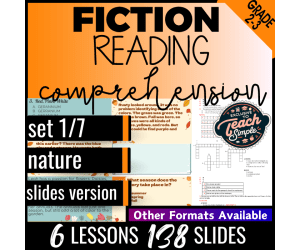
Reading Comprehension Passages Fiction Set 1 - Nature (Google Slides)
ELA, Reading, Language Development, Spelling, Common Core, Creative Writing, Writing, ESL, Vocabulary, Resources for Teachers, Grade 2, 3, Teacher Tools, Presentations, Assessments, Tests, Quizzes and Tests, Activities
Reading Comprehension Passages Fiction Set 1 Overview Fascinating reading comprehension passages, each with an array of activities included. Stories are written for the modern classroom and topics are designed to promote enthusiasm from each student. Each lesson contains a mixed questions section to check understanding, a vocabulary or spelling activity to help remember key language introduced, and a writing exercise. Full answer keys are provided. For a more detailed overview, check the section under the links at the bottom of this description. Passages Include 1.Bring on the Snow: Kellie wants to make it snow. How does she try? 2.Walk through the Woods: A walk in the woods turns into a huge adventure. 3.Nature Photographer: Donna get some amazing snaps in this story. 4.Nature's Beautiful Colors: Rusty enjoys finding out about the colors in nature. 5.Flower Fun: Learn about flower names and colors in this fun lesson. 6.Picking Cherries: Ross spends his day picking cherries but is it worth it? Additional File: Nature Photographer: Drawing Nature Printable Google Slides Version This is the Google Slides editable and fillable version. This download is available in GOOGLE Docs, GOOGLE Forms, GOOGLE Slides. PDF, PPT, WORD. FULL CATALOG OF DOWNLOAD LINKS HERE Grade 2/3 Links Fiction Set 1 - Nature Google Docs Google Forms Google Slides PDF PPT Word Guided Reading Materials Fiction Set 2 - Animals Google Docs Google Forms Google Slides PDF PPT Word Guided Reading Materials Fiction Set 3 - Food Google Docs Google Forms Google Slides PDF PPT Word Guided Reading Materials Fiction Set 4 - School Google Docs Google Forms Google Slides PDF PPT Word Guided Reading Materials Fiction Set 5 - Friends Google Docs Google Forms Google Slides PDF PPT Word Guided Reading Materials Fiction Set 6 - Family Google Docs Google Forms Google Slides PDF PPT Word Guided Reading Materials Fiction Set 7 - Sports Google Docs Google Forms Google Slides PDF PPT Word Guided Reading Materials Nonfiction Set 1 - Technology Google Docs Google Forms Google Slides PDF PPT Word Guided Reading Materials Nonfiction Set 2 - Nutrition Google Docs Google Forms Google Slides PDF PPT Word Guided Reading Materials Nonfiction Set 3 - Animals Google Docs Google Forms Google Slides PDF PPT Word Guided Reading Materials Reading Passages Overview Each passage is especially written for Grade 2-3 students, including key vocabulary required for this age group. Topics are varied and are accompanied by colorful graphics. Topics are meant to educate, yet entertain the modern student. These passages are perfect for the modern classroom. Whereas textbooks can become outdated in no time, any changes to technology or the world will result in updates to this product. Mixed Questions The mixed questions section of each lesson includes a variation of fivecomprehension, vocabulary and math questions. In addition, key reading strategies are frequently covered including cause & effect, summarizing, compare & contrast and making conclusions. Three of the questions will be MCQs and two will require a written response of some kind. Full answers and example responses appear at the end of the lesson. Spelling & Vocab Each reading passage contains a variety of words and phrases designed for Grade 2-3 students. Spelling and vocab activities provide the opportunity to build fluency with these words. As it can become quite mundane doing the same activities over and over, each lesson in a set will contain a different spelling and vocab activity . Writing Prompts Writing prompts are designed to continue the theme or lessons learned in the story. Students are persuaded to write in a variety of ways and each prompt includes several cues to help. As with the spelling/vocab section, writing prompts will vary. This includes research pieces, reading responses, poetry and creative writing prompts. Full Answer Keys Full answer keys and sample responses are provided so no matter how busy you are, you know you're covered! Mixed question answers provide evidence from the text, math questions contain the relevant workings. Answers are designed for use by the teacher, but also suitable as a handout to the student. Additional File One lesson will have an additional file. This is something fun to extend the lesson with. For similar downloads and other frees, do check out Cored Group on TeachSimple.
Author Cored Education
Tags Elementary, Reading, Comprehension, Vocabulary, Answers, Ccss, Common Core, Speling, Writing, Passages
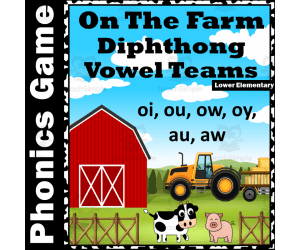
File Folder Game: On the Farm | Diphthong Vowel Teams
ELA, Language Development, Phonics, Preschool, Grade 1, 2, 3, Activities, Games
This is a File Folder Game called On the Farm. It is for Diphthong Vowel Teams. The vowel teams included are: oi, ou, ow, oy, au, aw This product includes: 4 Versions of the phonics game, On the Farm, Diphthong Vowel Teams are included. Level 1 – oi, ow, oy, aw: This version is appropriate for most kindergarten and 1st grade students. However, this version may be suitable for some 2nd and even 3rd graders who are still developing their phonics skills. Level 2 – oi, ou, ow, oy, aw: This version is appropriate for most 1st and 2nd grade students. However, this version may be suitable for some 3rd graders who are still developing their phonic skills. Level 3 – oi, ou, ow, oy, au, aw: This version is appropriate for most 2nd and 3rd grade students. However, some 1st graders may be ready for the challenge. Level 4 – oi, ou, ow, oy, au, aw: This version is appropriate for most 3rd grade students. However, some 2nd graders may be ready for the challenge. All 4 Levels of the game include the following: -Game Cover Sheet (attach to the front of a file folder) -Game Board (2 slides – attach to the inside of a file folder) -Spinner -16 Animal Markers (4 blue, 4 green, 4 pink, 4 yellow) -Directions -Word List All you have to do is print and assemble everything for your file folder game. You will: -Glue the cover sheet on the front of the file folder. -Print the game markers and spinner on cardstock. You can also laminate to make them more durable. -Put the two game boards together on the inside of the file folder. -Puncture a hole in the middle of the spinner board. Students can use a pencil and paper clip to make a spinner. -Another option is to attach a brass fastener to the center of the spinner board instead of using a pencil.
Author Creatively Gifted
Tags File Folder Games, Diphthongs, Vowel Teams, Vowel Sounds, Literacy Center, Phonics Activity, Early Finishers, Independent Activity, Farm Animals, Diphthong Vs Vowel Team, Vowel Team Games

Kids Yoga Stories: New York City Yoga Cards for Kids
P.E. & Health, Yoga, Kindergarten, Preschool, Grade 1, 2, 3, Activities
Yoga Poses to Teach About New York City Use yoga and movement to teach students about New York City with this set of yoga cards for kids! Included are 20 illustrated pose cards showing children demonstrating beginner-friendly postures, along with 20 corresponding New York City-themed keywords like "Statue of Liberty" and "Empire State Building". Tip cards provide guidance on teaching yoga while an index organizes the sequence of poses that flow from one to the next. Ideal for ages 3+ in small groups or whole class settings like morning circle time . An engaging way to teach children about New York City landmarks while promoting body awareness, flexibility, strength, and confidence through the mindfulness of yoga.
Author Kids Yoga Stories
Tags Kids Yoga Stories, New York City Yoga, Yoga Cards, Kids Cards, Yoga Poses

Acrostic Poem Template National Poetry Month Activity Lesson Plan
ELA, Poetry, Literature, Homeschool Templates, Grade 2, 3, 4, 5, Centers, Activities, Graphic Organizers, Teacher Tools, Lesson Plans, Rubrics, Worksheets & Printables
Looking for an acrostic poem template that actually helps your students write meaningful poetry during National Poetry Month? If you’ve ever had students stare at a blank page unsure how to start… you’re not alone. Poetry can feel overwhelming without the right structure — and that’s exactly where this resource makes a difference. This acrostic poem resource is the perfect writing activity to celebrate National Poetry Month this April. It gives your students clear scaffolding, engaging examples, and step-by-step support so they can confidently create their own poems. What's Included Acrostic poem interactive notebook templates to guide student writing Clear, student-friendly example (posters in color and black and white) Structured lesson plan for easy implementation A publishing page An assessment rubric for quick and consistent marking Perfect For Grades 2-6 National Poetry Month activities Poetry units Writing lessons Literacy centers Homeschool learning Small group or whole-class instruction Why Teachers Love This Takes the stress out of teaching poetry Supports reluctant writers with clear structure Makes National Poetry Month lessons engaging and meaningful Helps students move from ideas → draft → published piece Saves you planning time with ready-to-use materials How to Use in Your Classroom You might introduce acrostic poems as a whole-class lesson using the included examples, then guide your students through brainstorming ideas. From there, students can use the interactive notebook templates to plan and draft their poems before creating a polished final version using the publishing sheet. The included rubric makes assessment simple and consistent — no guesswork needed. Skills Covered Poetry writing Vocabulary development Creative expression Writing structure and organization Editing and revising Presentation and publishing This works beautifully as a low-prep, high-engagement activity during National Poetry Month — especially when you want something meaningful without reinventing the wheel.
Author Teach2Tell
Rating
Tags Poetry Lesson Plan, Poetry Writing Activity, National Poetry Month , Writing Rubric, Creative Writing Lesson, Poetry Examples, Acrostic Poem, Acrostic Poem Template, Acrostic Poem Examples, Poetry Writing Rubric
Found Song (MP3)
ELA, Reading, Preschool, Kindergarten, Grade 1, 2, 3, Songs, Activities
The FOUND Song (MP3) is a fun and easy way for students to learn the sight word FOUND. The song is catchy and easy to follow, and the word is repeated, spelled, and used in sentences throughout the song.
Author Have Fun Teaching
Tags Counting

Stephen Hawking Biography Set | Integrated Study | Sub Plan
Social Studies, ELA, Biographies, Reading, Reading Comprehension, Science, Inventors, Grade 3, 4, 5, Activities, Projects
This Stephen Hawking Biography Set is a collection of activities focusing on the life, achievements, and legacy of Stephen Hawking. Made for 3rd to 5th grade primary level learners, this resource is perfect for lessons relating to biographies of important and famous people in subjects like English Language Arts, Science, and Social Studies. What’s Included: 1.Reading Passage (Stephen Hawking: The Brilliant Scientist) 2.3 The Brilliant Scientist Reading Comprehension Exercises 3.3 The Brilliant Scientist Research Activities 4.The Brilliant Scientist Pop-Up Board Project The reading passage gives the information for students to learn about Stephen Hawking. The reading comprehension activities are focused on checking and aligning the students’ learning and knowledge about what they just read. They are also a perfect tool for class discussions and assessments. The research set of activities are engaging way for them to explore more about the topic and create their own learning. The final project Pop-Up board on Stephen Hawking is a perfect assessment tool that is hands-on, creative and encouraging for students to present what they learned from the lesson. This resource is a perfect addition and supplemental tool in lessons related to biography. This can also be used for teacher emergencies and sub plans.
Author It's Teacher L
Tags Famous People, Stephen Hawking Biography, Reading Comprehension, Scientist Projects

Personal Space Behaviors | Activities, Visuals and Stories
Special Resources, Life Skills, Preschool, Grade 1, 2, 3, 4, 5, Activities
Personal Spaceis a very importantSocial Skillfor children in elementary school to learn, practice and grow. A good understanding of Personal Space will help your students have bettersocial relationships,makeandmaintain friendships. Understanding and keeping good personal space helps children tostay safeand be able toself advocatefor their needs. Do you have students who have a difficult time keeping good Personal Space? Do they... *Lean on others *Touch others without permission *Bump into others without seeming to notice or care *Push others out of their way *Blow in other's faces... Kids that do these things oftenstruggle to make and keep friends. Usually, they don't even understand why! This set ofPersonal Space Activities andSocial Storieswill help your students practice the necessary skills to understand and engage in good Personal Space behaviors. Through these activities , children will gain an understanding of what good Personal SpaceLOOKS LIKEandFEELS LIKEfor themselves, and for others.
Author Socially Skilled Kids
Tags Personal Space, Social Skills, Perspective Taking, Special Education, Inclusion

Equivalent Fractions Activity - Bingo Game - Fraction Circles - Boards 11-15
Math, Fractions, Grade 2, 3, 4, Activities, Games
Equivalent Fractions Bingo engages students in identifying equivalent fractions represented as fraction circles, squares, strips, and symbols. This math game includes 4 sets of calling cards to match the bingo boards. To prepare, print and optionally laminate bingo boards, playing squares, and calling cards. Students cover equivalent fractions on their board as the teacher draws and displays calling cards. The first student to cover 3 spaces in a row wins! Use buttons or dry erase markers if not printing playing squares. Shuffle cards when the stack runs out. With different boards available, this collaborative game easily differentiates and supplements fraction instruction in small groups or a whole class. Students will love practicing equivalencies with this interactive bingo!
Author Colleen's Cosmic Collection
Tags Fractions, Fraction Game, Fractions Activity, Fractions Games, Equivalent Fractions, Equivalent Fraction Game, Equivalent Fractions Game, Equivalent Fractions Activity, Math Games, Cccfbec

skip counting by 11s bingo - boards 21-25
Math, Patterns, Early Math, Numbers, Grade 1, 2, 3, Activities, Games
Skip Counting by 11s Bingo Engage students in practicing skip counting by having them play this fun math bingo game focused on elevens. The game includes 5 different bingo boards with corresponding calling cards to draw and call out. To set up, print, laminate, and cut out materials. Provide each student a bingo board and manipulatives to cover called numbers. Shuffle calling cards and draw one at a time, calling it aloud. Students search boards, covering matches. First to cover 3 spaces in a row wins! Play continues until someone wins bingo. Lamination makes materials reusable for years. Use this activity during small group instruction, centers, or even homework. Check out more skip counting bingo games and other math activities at the link below.
Author Colleen's Cosmic Collection
Tags Skip Counting, Counting, Skip Counting Games, Skip Counting Activities, Skip Counting Bingo, Skip Counting By 11s, Skip Counting By 11, Cccskb11s, Counting In 11s
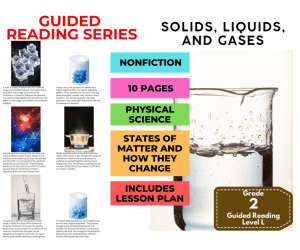
Guided Reading Level L - Solids, Liquids, and Gases
ELA, Resources for Teachers, Reading Comprehension, Reading, Science, Pre-Reading, Language Development, Physics, Grade 1, 2, 3, Worksheets & Printables, Worksheets, Teacher Tools, Centers, Activities, Literacy Readers, Quizzes, Quizzes and Tests, Assessments
This Guided Reading Book - Solids, Liquids, and Gases (Level L) includes: Guided Reading Color Label (front cover x1) This is a quick way to match the book’s demands to what students can generally handle.. The overall goal is to use the level/color to pick books for several smaller groups. To qualify for a certain level, a student is expected to read a book from that level with about 90–94% accuracy. If a student is consistently accurate and understands, move up a level. If the student is struggling at that level, drop down and add more support. Each student will improve at completely different rates, but it is generally one of the best ways to check progress across the class. DOWNLOAD THE CATALOG TO VIEW ALL GUIDED READING BOOKS AVAILABLE (SORTED LEVELS A-Z) Pre-Reading Question (x1) Teacher asks the prompt aloud, can be while showing the cover or first page. Students share what they already know, or make educated guesses from the cover. Prompt them to use the target vocabulary. Write some of their responses on the board to look back at during the reading. Vocabulary Words (x5) Introduce the five words, best doing it one at a time. Start by saying it, while students repeat and then see if anyone knows what it means before reading further. Read through the meaning and try to briefly connect each word to a picture or gesture so it’s meaningful. Ask students to flip through the book pages and point to where they see each of the vocabulary words. While reading the book pause upon coming across one of the vocab words or read the sentence twice to make sure students understand the word has appeared. Optional: Ask students to raise hands whenever they see/hear one of the new words. Guided Reading Pages (x10) Check the book snapshot (below) for: primary topic - do you need to prep extra reading or intro materials on this? what is taught best - decide on 1-2 bullets to focus on, use the prompt or words provided here for best results. learning goals - what you are checking for students to be able to do after the session, elicit answers using prompts or words provided. key vocabulary (see section above). questions overview - so you know what is coming up and if you need to prep extra materials to assist understanding. Run the lesson You may have already looked at a few of the pages together, but you can show them some of the pictures again first to set meaning. Depending on how much time you have and how familiar your students are with guided reading class, you may want to read the book aloud first with the group first. Students whisper or partner read, while you listen in. If time, do it as a group, one student reading a page each. Use the guided page’s prompts to coach: “Check the picture / does it make sense?” “Point under the words / try the first sound” “Reread the sentence smoothly”. Try to focus more on one student per session (rotating every time), so you can work out if they are ready to move up or need to move down a level. Comprehension Questions (back cover x3) This is your way to check that students didn’t just say the words, but actually understood the text. First, let students answer by pointing to the page/picture and saying a short sentence. After any answer, follow with: “Show me where you found that in the text.” In bigger groups, have partners answer first (10–20 seconds), then call on 2–3 students to share. Differentiation tips: Emerging speakers/struggling readers: oral + pointing On-level: oral in a full sentence Higher: one written sentence or draw + label Book Snapshot Title: Solids, Liquids, and Gases Genre: Nonfiction (informational) Subject: Science (Physical Science) Primary Topic: States of matter and how they change Estimated Guided Reading Level (A–Z): L What This Book Teaches Best Defines matter as anything that takes up space and has mass, made of tiny particles including atoms and molecules. Explains the three primary states of matter— solid, liquid, gas —and links each state to how closely particles are packed and how much energy they have. Describes key properties of each state (solids have definite shape/volume; liquids have definite volume but no fixed shape; gases have neither and expand to fill containers). Shows how heat/energy changes states (melting, freezing, evaporation at boiling point, and condensation into droplets). Connects science ideas to observable examples (liquids flow downward, gases can be compressed with pressure, dew as an example of condensation). Learning Goals Define matter using the book’s description (takes up space and has mass). Describe how particle spacing and energy relate to whether matter is a solid, liquid, or gas. Compare solids, liquids, and gases by shape and volume using details from the text. Explain what happens to particles when a solid is heated enough to melt into a liquid. Explain evaporation as described in the book when a liquid reaches its boiling point. Explain condensation as described in the book when a gas cools into droplets of liquid. Key Vocabulary From the Text matter — anything that takes up space and has mass. particles — tiny pieces everything is made of. molecules — very tiny groups of atoms that make up matter. evaporation — when a liquid changes into a gas. condensation — when a gas cools and turns into tiny drops of liquid. Discussion Prompts Pre-reading question: What are some things you think could be solids, liquids, or gases? Comprehension questions: What does the book say matter is? Comprehension questions: How does the book describe the particles inside a solid? Comprehension questions: According to the book, what is condensation? Printing Tips 1. Best Printing Method (Recommended) “Booklet” Printing (Best if Available) If your printer or PDF viewer supports Booklet Printing , use this. Settings to use: Print mode: Booklet Paper size: Letter or A4 (either works) Orientation: Landscape Print on both sides: Yes Flip on: Short edge Scaling: Fit to printable area Booklet subset: First test: Front sides only Then: Back sides only This will automatically: Pair pages correctly Put the cover on the outside Align everything for folding After printing, fold in half and staple along the spine . 2. If “Booklet” Printing Is NOT Available You can still print this correctly with manual duplex printing . Step-by-step: Open the PDF. Choose Print . Set: Orientation: Landscape Pages per sheet: 1 Print on both sides: Yes Flip on: Short edge Print all pages . Because each PDF page already contains two facing book pages, the result will still fold cleanly into a book. Thousands of Cored Education products are included with your TeachSimple membership. Download links and encyclopedia index available here.
Author Cored Education
Rating
Tags Vocabulary, Reading Comprehension, Reading Passages, Leveled Reading, Nonfiction, Reading, Guided Reading, Physics, States Of Matter, Water

Geography Word Search - Set 1: 1 Page Sample (PDF)
ELA, Language Development, Vocabulary, Spelling, ESL, Resources for Teachers, Geography, Social Studies, Grade 2, 3, 4, 5, Worksheets & Printables, Worksheets, Teacher Tools, Centers, Activities, Word Searches
THIS IS A ONE PAGE SAMPLE OF A SIX PAGE WORD SEARCH DOWNLOAD FULL SIX PAGE WORD SEARCH DOWNLOAD INFORMATION This wordsearch series is designed for students in grades 2–5. Each set of wordsearches is built around a clear vocabulary theme, helping students develop word recognition, improve spelling, and boost topic-related understanding through engaging visual puzzles. Every wordsearch also includes a fun hidden shape for students to guess—adding an interactive twist to traditional vocabulary practice. These wordsearches are student-friendly, classroom-ready, and perfect for integrating into literacy warmups, seasonal units, fast-finisher tasks, or home learning extensions. Each puzzle reinforces themed vocabulary in a playful, structured format that keeps learners motivated. Geography Word Search Set 1 Word List 1. Countries of the World Canada, Brazil, China, India, Egypt, France, Japan, Mexico 2. Famous Cities New York, Paris, London, Tokyo, Sydney, Cairo, Rome, Rio 3. Famous Landmarks Eiffel Tower, Great Wall, Statue of Liberty, Colosseum, Taj Mahal, Mount Everest, Amazon River, Grand Canyon 4. Continents and Oceans Asia, Africa, Europe, Australia, Antarctica, Pacific, Atlantic, Indian 5. Natural Wonders Niagara Falls, Grand Canyon, Mount Everest, Amazon Rainforest, Sahara Desert, Great Barrier Reef, Victoria Falls, Northern Lights 6. Landforms and Geography Terms Mountain, River, Desert, Island, Peninsula, Volcano, Valley, Glacier PDF Version Other versions will appear here when available. Follow the store for the lastest on new products. How to Use These Wordsearches These wordsearches are ideal for: Morning work or early finisher bins Vocabulary centers or anchor activities Holiday or seasonal review lessons Independent literacy stations or take-home enrichment Each puzzle includes a themed word list and a shaped grid for students to complete. Word directions may vary (horizontal, vertical, diagonal), and answer keys are included for easy checking. Optional vocabulary challenges or writing tasks can be added to extend the learning experience. Whether you're reviewing key vocabulary, exploring a seasonal topic, or offering fun literacy practice, these wordsearches provide a flexible and engaging tool to support vocabulary growth in grades 2–5. More Geography Themed Products Geography Crosswords (Set 1) PDF Geography Crosswords (Set 2) PDF Geography Crosswords (Set 3) PDF Geography (Set 2) PDF Geography (Set 3) PDF FULL CATALOG OF DOWNLOAD LINKS HERE Themed Word Search Links Addition PDF Animals PDF Around the Home PDF Birthday PDF Candy PDF Christmas PDF Cinco de Mayo PDF Clothes PDF Colors PDF Days and Months PDF Division PDF Earth Day PDF Easter PDF Easy Word Searches PDF Fall PDF Father's Day PDF Food PDF Geography (Set 1) PDF Geography (Set 2) PDF Geography (Set 3) PDF Graduation PDF Health PDF History (Set 1) PDF History (Set 2) PDF History (Set 3) PDF Human Body PDF Kindness PDF Life Skills PDF Mother's Day PDF Multiplication PDF Science Word Searches (Set 1) PDF Science Word Searches (Set 2) PDF Science Word Searches (Set 3) PDF Shapes PDF Social Skills PDF Spring PDF Sports PDF St. Patrick's Day PDF Subtraction PDF Summer PDF Thanksgiving PDF Transport PDF Valentine's Day PDF Winter PDF Wordsearches in Depth Structure Each wordsearch is crafted around a focused sub-theme and includes a visual puzzle shaped like a related object (e.g., balloon, gift, snowman). Students complete each puzzle using the provided themed word list, strengthening both content knowledge and spelling skills in a highly engaging format. Each completed set includes: A shaped wordsearch puzzle with 10 vocabulary words A student instruction guide with search directions (horizontal, vertical, diagonal) An answer key for teacher support or student self-checking A Did You Know? fact connected to the theme for enrichment or discussion Themes Included The wordsearches cover a wide range of fun, age-appropriate themes, including: Seasons & Holidays (e.g., Halloween, Easter, Valentine’s Day) Math Concepts (e.g., Addition, Number Words) Everyday Topics (e.g., Animals, Weather, School) Special Units (e.g., Health, Earth Day, Sports, Kindness) Each topic is selected to reflect students’ real-life experiences and interests while reinforcing literacy skills and content understanding in a playful, visual way. For similar downloads and other frees, do check out Cored Group on TeachSimple.
Author Cored Education
Rating 5
Tags Vocabulary, Spelling, Geography, Countries Of The World, Famous Cities, Famous Landmarks, Natural Wonders, Continents And Oceans, Word Searches, Geography Word Searches

Bucket Filling Versus Bucket Dipping SEL Boom Cards -With Audio
Special Resources, Life Studies, Life Skills, Kindergarten, Preschool, Grade 1, 2, 3, Activities
Bucket Filling Versus Bucket Dipping SEL Boom Cards - With Audio An esteemed interactive teaching resource that enriches the learning environment, aimed towards early learning, preschool and kindergarten to grades 1-3 students. This deck provides comprehensive and engaging lessons about conceptualizing abstract behavior and emotions. Origin of the concept Taking inspiration from the insightful book 'Have You Filled A Bucket Today' by Carol McCloud, this unique tool encompasses: 26 enrichment task cards An addition of six informational ones focusing on life skills subjects. Students learn valuable lessons about contrasting 'bucket filling' with 'bucket dipping', with each card elucidating on emotional outcomes in an easy-to-digest format for young learners. A Supportive Audio Component No need for students to read any text - there's also a supporting audio component! It makes these cards convenient even for auditory learners or those struggling with reading skills. Suitable for maximizing inclusivity whether in classroom situations or remote settings. Owing to its flexibility, This resource can be utilized: In teacher-led whole group discussions/ small team exercises promoting peer interaction. As an individual homework project in which students illustrate ways they could fill someone's bucket—this increases creativity and encourages self-reflection. For efficient utilization of these Boom Cards: You must be connected to the internet; The focus is modern browsers like Chrome, Safari, Firefox, Edge alongside Android Apps on iPads, iPhones & Kindle Fires; If you're seeking secured use of these cards along with assignment features providing feedback regarding students' progress to teachers, it would be necessary to acquire a premium account. Finally, Leveraging such intuitive resources tends to elevate teaching methods while ensuring maximum engagement amongst young minds!
Author Jennifer Moyer Taylor
Tags Bucket Filling, Bucket Dipping, Social-emotional Learning, Interactive Teaching Resource, Audio Component
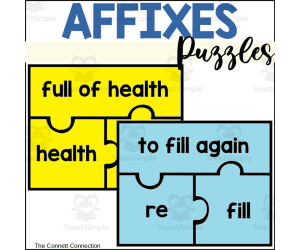
Affixes Puzzles for Prefixes and Suffixes
ELA, Language Development, Phonics, Grade 2, 3, 4, Activities
Practice building words with affixes with these prefix and suffix puzzles. Students will have fun building words with prefixes and suffixes with this this literacy activity. What is Included: These resource contains 48 three piece puzzles that feature the word's definition on the top piece, the root word on another piece and the prefix or suffix on the 3rd piece. There are four puzzles to each printed page making these puzzles the ideal size for morning tubs, baskets or task boxes. When to Use Early Finishers - If students finish their work early, they can use these puzzles for extra practice. Small Group Work - Teachers can use these puzzles to target small groups of students who need more practice. Literacy Center - Students can practice building words individually or with a partner in a literacy center . Morning Tub or Basket - Students can work independently or with a partner to complete the puzzles while waiting on classmates to arrive at class. Tasks Boxes - These puzzles fit well in tasks boxes making literacy centers easy to set up and put away. Other ways these puzzles can be used is to add magnets to the back of each piece and use a baking tray or magnetic board to build each word and match each word's definition. Prefixes Included: de-, dis-, il-, in-, inter-, im-, mis-, non-, over-, pre-, re-, tri-, un-, under- Suffixes Included: -able, -er, -ful, -less, -ly, -ness, -ous, -y Skills Assessed: These puzzles help with identifying words with prefixes These puzzles help with learning the meaning of prefixes These puzzles help students learn how prefixes change the meaning of words. These affixes puzzles are a low prep activity for students to practice words with prefixes and suffixes. The teacher simply needs to print the puzzles on card stock, cut apart each puzzle, then place the puzzles in the desired location for students to complete. Printing on colored card stock will give these puzzles a colorful pop! These puzzles include American, British and Australian spellings for root words.
Author The Connett Connection
Tags Affixes, Morphology, Prefixes, Suffixes, Prefix Puzzles, Suffix Puzzles, Affix Puzzles, Literacy Activities
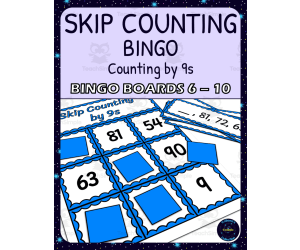
skip counting by 9s bingo - boards 6-10
Math, Patterns, Early Math, Numbers, Grade 1, 2, 3, Activities, Games
Skip Counting by 9s Bingo engages students in practicing skip counting, an essential early math skill. This resource includes 5 colorful bingo boards focused on counting by 9s, calling cards, and playing squares. To play, students cover squares on their boards when their number is drawn. The first to cover 3 squares in a row wins! Use this game whole-class on a projector, in small groups, or for independent practice. Laminate materials for durability or use dry erase markers. Extend learning by creating new calling cards or making class sets of customized boards. Check out more skip counting bingo games and math activities on the author's store. This manipulative game transforms essential skip counting practice into engaging, differentiated fun for early elementary math students!
Author Colleen's Cosmic Collection
Tags Skip Counting, Counting, Skip Counting Games, Skip Counting Activities, Skip Counting Bingo, Skip Counting By 9s, Skip Counting By 9, Cccskb9s, Counting In 9s
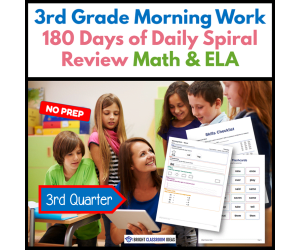
3rd Grade Morning Work | 180 Days Review | Math & ELA | 3rd Quarter
ELA, Math, Grade 3, Centers, Activities, Lesson Plans, Teacher Tools, Worksheets & Printables
Grade 3 Morning Work | 3rd Quarter Student Pages + Full-Year Teacher Resources Keep your third grade mornings consistent, purposeful, and easy to manage with 45 days of Grade 3 morning work for Quarter 3 . This resource includes ALL teacher resources for the complete 180-day program , while the student practice pages in this pack are specifically for 3rd Quarter: Days 91–135 . What’s Included ⭐ FULL-YEAR TEACHER RESOURCES You receive the complete teacher toolkit for planning, organizing, differentiating, and assessing the entire 180-day Grade 3 morning work program : Teacher Guide Full 36-week Pacing Guide Skills Checklist for tracking student progress Fully Editable Morning Work Schedule Weekly planning and classroom organization support 36-week Year-at-a-Glance Planner Differentiation strategies Complete Answer Key for Days 1–180 Printing and classroom organization guidance 📚 STUDENT PAGES INCLUDED: 3RD QUARTER The student portion of this product includes Days 91–135 , providing 45 days of ready-to-use Grade 3 morning work . Each day includes a two-page set with 22 consistent sections . Page A — Reading & Language Editing Prefixes Context clues Reading comprehension Vocabulary word of the day Targeted writing skill Writing prompt Reading challenge SEL check-in Fun fact Page B — Math & Think Multiplication Division Fractions Elapsed time Area Perimeter Word problems Math challenges Jokes and riddles Brain teasers Growth mindset Would You Rather questions Important: The student practice pages included in this product are Days 91–135 only , while the teacher resources and Answer Key cover the complete 180-day program . How It Works in the Classroom Use this Grade 3 morning work as a daily bell ringer, morning routine, independent practice, homework, or spiral review. The routine is designed for approximately 15 minutes : 0–2 minutes: Students arrive, unpack, and begin Page A. 2–9 minutes: Independent Reading & Language practice. 9–14 minutes: Independent Math & Think practice. 14–15 minutes: Quick sharing using the joke, brain teaser, or Would You Rather question. The same 22 sections appear each day, helping students quickly learn the routine and work independently. You can also use the pages for: Morning work Bell ringers Homework Early finishers Sub plans Small-group warm-ups Math intervention Spiral review Test preparation Independent practice Print the pages two-sided, flipping on the long edge , for one sheet per student per day. You can also print Quarter 3 as a complete Days 91–135 student packet . Standards & Learning Goals This Grade 3 morning work resource provides daily spiral review across important Common Core Grade 3 ELA and math skills . 📖 ELA Skills Students continue practicing: Editing and language conventions Prefixes Context clues Reading comprehension Vocabulary Writing skills Reading response Writing development Reading challenges Sentence construction Quarter 3 continues moving students toward more advanced comprehension and language work. Reading passages become slightly longer, while questions shift from simple recall toward inference and evidence-based thinking . 🔢 Math Skills Students continue practicing: Multiplication Division Fractions Elapsed time Area Perimeter Word problems Mathematical reasoning Quarter 3 increases the level of challenge with multiples of 10, larger quotients, elapsed time to the minute, and comparing fractions using number lines . Students also continue applying area and perimeter skills as problems move beyond simple counting and toward finding missing sides. Why Teachers Love It ✨ You get ALL the teacher resources for the entire year. The Teacher Guide, pacing guide, Skills Checklist, editable schedule, differentiation tools, and complete 180-day Answer Key are included. ✨ Students get exactly what they need for Quarter 3. Days 91–135 provide a complete 45-day student set for the third quarter. ✨ Save valuable planning time. The daily routine is already organized across reading, language, writing, math, and engaging thinking activities. ✨ Build student independence. The familiar 22-section format helps students know exactly what to do each morning. ✨ True spiral review. Every Grade 3 skill returns throughout the year while the difficulty increases. The content does not repeat across all 180 days. ✨ A built-in difficulty ramp. Quarter 3 moves students into larger multiplication and division work, time to the minute, and more advanced fraction comparisons. ✨ Differentiate with ease. The teacher resources support students who need additional help, on-level learners, advanced students, English learners, and small-group instruction. ✨ Track student growth. The Skills Checklist allows you to mark skills as Introduced, Practiced, or Mastered . ✨ Keep mornings engaging. Jokes, brain teasers, growth mindset prompts, SEL check-ins, reading challenges, and Would You Rather questions add variety to the academic practice. ✨ Use it beyond morning work. The pages work well for homework, early finishers, sub plans, intervention warm-ups, and spiral review. ✨ Have answers for the entire year. The complete Answer Key supports the full Days 1–180 program, so you have teacher support for every quarter. Looking for Grade 3 morning work for Quarter 3 that saves planning time and keeps students practicing essential skills every day? This pack includes 45 days of student practice (Days 91–135) PLUS ALL teacher resources for the full 180-day program . Give your third graders a predictable, engaging morning routine that strengthens ELA and math skills while building independence throughout the school year! Print it, prep it, and make your mornings easier! 💛
Author Bright Classroom Ideas Marketplace
Rating
Tags Math, Ela, Morning Work, Back To School

Back To School: An Interactive Story - COVID19 Edition - BOOM Cards
Special Resources, Speech Therapy, Kindergarten, Grade 1, 2, 3, 4, 5, Activities
An Back to School/COVID19-themed Interactive Story for your kiddos! A great opportunity to correctly identify a picture; repeat core vocabulary, and expand utterances.
Author The Tattooed Speechie
Tags Early Intervention, Oral Communication, Speech Therapy, Boom Deck

Game pichenette: junk food
ELA, Language Development, Vocabulary, Grade 2, 3, 4, 5, Games, Activities
Game Pichenette: Junk Food Game Pichenette: Junk Food is an interactive teaching resource designed to aid educators in teaching vocabulary related to junk food. This game is perfect for students in grades 2 through 5 and offers a fun and engaging twist on traditional Language Arts and Vocabulary instruction. How it Works The format of the Game Pichenette is similar to a race track. To progress, learners need to hit the tip of their pencil along the path. The goal? To be first at the finish line. But beware! If your pencil lands on a picture, you have to go back to where you were! Vocabulary Acquisition While this unique game element adds excitement for students, it also reinforces vocabulary acquisition skills. As the track is decorated with junk food-related terms and illustrations which generate familiarity through repeated gameplay. Educational Benefits & Adaptability: Diverse Setting Application: This game can be adaptably utilized within various classroom settings or homeschool environments. Fostering Healthy Competition: During group sessions, it incubates healthy competition between learners. Promoting Teamwork: In smaller groups, encourages teamwork while simultaneously refreshing vocabulary knowledge. Suitable Homework Assignment: It could also be assigned as homework for further practice outside school hours leading towards comprehensive mastery over learned vocabularies. Ease of Use & Practical Benefits: This resource comes in an easy-to-use PDF file type worksheet material ensuring quick setup giving teachers more quality time for instruction rather than preparation. The possible ways of utilizing "Game Pichenette: Junk Food" are not just limited to vocabulary reinforcement. Its dynamic nature could spark enlightening discussions about nutrition choices making learning thoroughly engaging and effective.
Author Learn it ANY way
Tags Interactive Teaching Resource, Vocabulary Acquisition, Junk Food, Language Arts, Educational Game

Sight Words Playdough Mat- Fry's 4th 100, Sight Words Practice & Activities
ELA, Reading, Language Development, Vocabulary, Writing, Grade 1, 2, 3, Activities
Sight Words Playdough Mat- Fry's 4th 100, Sight Words Practice & Activities is an excellent educational resource that integrates tactile activity with literacy development for students from Grade 1 to Grade 3. Mainly focusing on Language Arts - Reading, Vocabulary and Writing prompts. Finding methods to enhance children's reading skills can be challenging. These playdough mats bridge the gap, combining two fundamental facets of language learning; sight words that play a crucial role in fluency and comprehension, and shaping letters using the tactile feel of playdough. Packaged more than mere flashcards, these mats are developed with learning strategies that are both enjoyable and beneficial. This package features Fry's Fourth Hundred Sight Words prominently displayed on each mat in a friendly method for learning frequently used words. To make them even easier to read large bold letters have been utilized thereby enhancing their visibility. Implementing this Resource into Your Teaching Curriculum You can integrate these mats seamlessly into your existing reading curriculum; You can position them within independent-study workstations or small groups giving students ample time to practice vocabulary acquisition; Students shape the sight words using playdough which is not only fun but also effective in aiding memory retention through this active learning process. Included in the Package: This extensive set entails one PDF file comprises of: A total of 50 pages carrying unique sight words; The print size is standardized US Letter making it suitable for large classrooms or even individual tutoring sessions - offering unprecedented versatility. In conclusion, Sight Words Play Dough Mat- Fry's Fourth Set offers practicality mingled with productivity, thereby ensuring learners enjoy the learning process whilst objectively observing their progress. This package aims to make early literacy skill development fun and effective for all students and easy to implement for all teachers, parents, and caregivers!
Author TeacherYouWant
Tags Sight Words, Playdough Mats, Language Arts, Reading Practice, Vocabulary Development
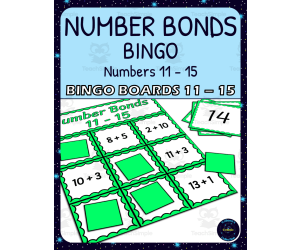
Number Bonds 11-15 Bingo - Boards 11-15
Math, Fact Families, Addition and Subtraction, Addition, Grade 1, 2, 3, Activities, Games
Number Bonds 11-15 Bingo helps students practice number bonds for 11-15 in a fun, engaging way. This math game includes 5 colorful bingo boards with accompanying calling cards. To play, students cover squares on their board when a number bond is called. The first to cover 3 squares in a row wins! Lamination is recommended so materials last across years. Manipulatives like buttons can replace "playing squares" to reduce printing. Alternatively, students could mark and erase boards with dry erase markers. Bingo never gets old, so try this with small groups or a whole class. Differentiate by making calling cards easier or more complex. Extend learning using additional bingo boards found here. Check out other number bonds games too! Students will love building fluency with bonds to 15 while playing an all-time favorite game.
Author Colleen's Cosmic Collection
Tags Number Bonds, Number Bonds Games, Addition Game, Addition Activity, Math Facts, Addition Facts, Addition Math Facts, Math Fact Practice, Number Bonds To 15, Cccnbb1115