



3,985 products added recently
Page 79 - 4th Grade Activities
Introduce your fourth-grade students to activities that challenge and inspire. These resources encourage analytical thinking, teamwork, and creative expression across subjects. Use them to elevate your teaching and engage students in meaningful learning experiences.

 Show filters


Think It Or Say It-- Interactive Impulse Control Activity For The Classroom
Special Resources, Social Emotional Learning (SEL), Grade 1, 2, 3, 4, Activities
Are you looking for a way to practice self control with your students? This is the perfect impulse control activity you need for your groups, push-in sessions, and SEL morning meetings! This think it or say it activity is perfect for kids (or classrooms as a whole) who struggle with following classroom rules, or even struggle with social skills. This paddle activity includes DIY paddles for each student and a prompt sheet with things that kids might say. Students are then instructed to hold up a paddle if that was something they should say or keep in their head! If you are doing individual lessons, take turns saying the prompts and answering and seeing if the students can catch your mistakes or wins! This activity is perfect for early elementary students, students that struggle with appropriate social skills, and students who struggle with blurting out. If you are using this activity as a whole class lesson, you can have them use white boards to answer the prompts with a thought bubble or a mouth as their answer! Ideas for Use; ⭐Push-In Lessons ⭐Group Lessons ⭐For students who struggle with blurting in class ⭐Students that may struggle with kind words
Author The Feelings and Friends Teacher
Tags Think It Or Say It, Impulse Control Activity, Worksheets, School Counseling Activities, Executive Functioning Activities, Impulse Control Activities For Kids, Activities For Impulse Control, Impulse Control Worksheets For Kids, Impulse Control Class, Impulse Control Activities For Youth, Impulse Control Activities For Children, Impulse Control Activities, Impulse Control Worksheet, Free Printable Impulse Control Worksheets For Youth, Impulse Control Worksheets
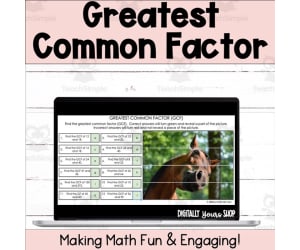
Greatest Common Factor - GCF - Self-Checking Digital Activity
Math, Numbers, Fractions, Grade 4, 5, Activities
Greatest Common Factor - GCF - Self-Checking Digital Activity The Greatest Common Factor (GCF) Self-Checking Digital Activity is a dynamic educational tool that enhances the comprehension and practice of GCF principles. Whether used in public education or home school curricula, this interactive resource encourages active learning as an alternative to traditional worksheets. Usage Scenarios Group Discussions Small Group Sessions Homework Assignment Assessment Tool Main Features This Google Sheets-based activity features 12 unique GCF problems with integrated self-checking capabilities. Correct answers trigger a green indication and reveal part of a hidden image while incorrect answers result in a red indication. Included Components: GCF problems on Google Sheets Note: This eliminates manual grading for teachers! A Student Recording Sheet for tracking individual progress. We've got you covered; there's copious space to jot down each step undertaken! An all-inclusive Teacher Answer Key. You can check your students' responses within no time! This resource can be easily incorporated into various roles, such as morning work tasks, bell ringers, homework assignments, exit tickets, warm-ups, or as checks for understanding the lesson content. Achieve enriched mathematical ability using the Greatest Common Factor - GCF - Self-Checking Digital Activity—a must-have tool for engaging math lessons.
Author Digitally Yours Shop
Tags GCF, Self-checking, Digital Activity, Google Sheets, Math Problems
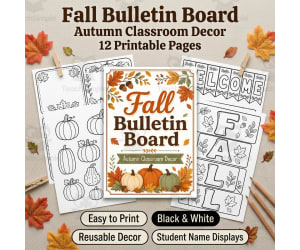
Fall Bulletin Board Decor | Autumn Classroom Display Printable
Creative Arts, Kindergarten, Grade 1, 2, 3, 4, 5, Classroom Decor, Activities, Worksheets & Printables
Create a warm, welcoming autumn classroom display with this easy-to-print Fall Bulletin Board decor set! Designed with clean black-and-white artwork and versatile seasonal pieces, this resource gives teachers a simple way to refresh a classroom door, hallway, or bulletin board for fall. What's Included A coordinating fall bulletin-board title Large printable lettering for an easy-to-read display Seasonal leaf, pumpkin, acorn, and nature-inspired decorative elements Student-name display pieces Coordinating accent pieces for building a cohesive classroom display Black-and-white designs that are printer-friendly and easy to color or leave as-is Skills Developed Fine-motor practice through coloring and cutting Creative expression Classroom community and student ownership Visual organization and presentation Perfect For Fall classroom decorating Bulletin boards and classroom doors Hallway displays Student-name displays Autumn classroom themes Back-to-school seasonal refreshes Why Teachers Love It The clean printable design keeps preparation simple while giving teachers plenty of flexibility to create a display that fits their classroom. Use the pieces together for a coordinated autumn board or select individual elements for smaller decorating projects. Print, cut, arrange, and display for an inviting fall classroom atmosphere.
Author TeachTrend Studio
Rating
Tags Classroom Decor; Bulletin Board Ideas; Posters; Printables; Seasonal; Autumn
Self-Guided Logic Activities #5: Focusing on the Future:
, Grade 4, 5, 6, 7, 8, Activities
Self-Guided Logic Activities #5: Focusing on the Future Self-Guided Logic Activities #5: Focusing on the Future is an exciting and thought-provoking teaching resource designed to stoke the fires of critical thinking in students. Specifically developed for grades 4 through 8, these logic activities pose a delightful challenge to young minds. This packet encompasses two distinct units, inviting your students to engage not only in word games but also encourages them to broadly envision and hypothesize about their own future. The first activity is a unique rhyming game with couplets which trains their minds in language skills while promoting creative thought simultaneously. The second unit diverges from linguistic challenges and directs attention towards forward-thinking abilities, stimulating students' planning skills for dormant talents that are yet untouched by traditional educational methods. This resource can be tailored to suit various learning environments: Whole group instruction: where collective ideas produce diverse solutions. Small groups: that induce cooperative learning. Solo Homework assignments: suitable for challenging single students participating remotely. "A simultaneous blessing for public school teachers and homeschoolers alike." 'Student Self-Check' sections The special 'Student Self-Check' sections ensures understanding was comprehended correctly throughout the exercises by providing correct answers as well as prompts for further discussion or analysis if necessary. It's great tool of gauging student progress without formal assessment appliances. A feature worth remarking upon... What distinctively sets Self-Guided Logic Activities #5: Focusing on the Future apart from other materials is its instant readiness capability maintained by providing all content in one ready-to-print PDF document with: Nine comprehensive pages Packed full of intellectual nourishment ready at your disposal anytime anywhere. No need for dull preparation procedures or tedious downloads—a true blessing amidst busy schedules! In conclusion, this product tactfully combines elements of literary stimulation with logical reasoning practice while opening up spaces for introspection into personal futures making it an invaluable asset while navigating diverse intellectual terrains of elementary to middle school grades.
Author Classroom Complete Press
Tags Self-guided, Logic Activities, Focusing On The Future, Critical Thinking, Printables
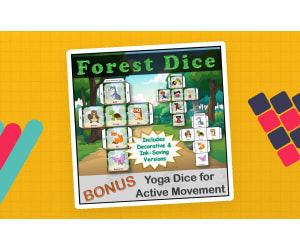
Forest Animals Dice Games with Both Picture and Kids Yoga Pose Dice Included
P.E. & Health, Physical Education, Kindergarten, Preschool, Grade 1, 2, 3, 4, 5, Activities, Games
These BRIGHT & COLORFUL forest animals dice games are designed for use in both a traditional classroom setting as well as kids yoga classes. It includes one set of dice with adorable animal clip art and an additional set of dice with kid's yoga poses. How to Assemble the Dice 1. Cut the outside lines. 2. Fold along all lines. 3. Glue or tape the tabs into place (I like to use double-sided tape). How to Play Yoga Version: Roll the dice and instruct the children how to safely move into the yoga poses. Classroom Version: 1. Roll the dice. 2. Lead an open discussion about the animal that lands facing up. Suggested Questions: Have they ever seen the animal in real life? What does the animal eat? Is it a predator or prey? Where does it live? When does it like to sleep? Does it have any special characteristics or qualities? Would they like to have this animal for a pet? What color is this animal? Is it big or small? What noise does it make? Does it hibernate? What would they do if they saw this animal? This resource is great for: ⭐ Children's Yoga Classes ⭐ Mindful Moments ⭐ Brain Breaks ⭐ Sensory & Movement Breaks ⭐ Gym Class ⭐ Transitions ⭐ Indoor Recess ⭐ Morning Group ⭐ Rainy Day Activities ⭐ Calm-Down Time Physical Benefits of Yoga: ⛹ Helps Build Strength, Balance, and Coordination ⛹ Aides in Maintaining Flexibility ⛹ Relaxes and Helps Alleviate Stress ⛹ Teaches Children Self-Awareness ⛹ Increases Body Awareness & Overall Muscle Tone ⛹ Great for Warming-Up Before Sports ⛹ Helps Children Channel their Energy Emotional & Mental Benefits of Yoga: ❤️ Increased Confidence ❤️ Encourages Mindfulness ❤️ Helps Steady Emotions, Reduce Anxiety & Stress ❤️ Teaches Self-Regulation & Calming Techniques ❤️ Non-Competitive & Non-Judgmental- Helps Kids feel Valued & Accepted ❤️ It’s All-Inclusive and Children can Participate at their own Comfort Level ❤️ Teaches Self-Discipline & Reduces Impulsivity ❤️ Helps Children Manage their Anxiety ❤️ Aides in Developing Emotional Regulation Skills ❤️ Enhances Children’s Memory & Concentration ❤️ Teaches Self-Acceptance ❤️ Helps Boosts Children’s Self-Esteem & Supports Positive Mental Health Click here to check out more of my mindfulness, self-regulation, calming/coping skills, classroom decor , kid's yoga activities, and preschool teacher listings.
Author Kids Adventure Yoga
Tags Dice Game, Kids Yoga Game, Forest Animals, Woodland Animals, Circle Time Game, Animal Dice Game

Insects Reading Comprehension Passage - Cored Ed Encyclopedia
ELA, Reading Comprehension, Reading, Science, Pre-Reading, Language Development, Life Sciences, Insects, Earth and Environmental Sciences, Vocabulary, Grade 2, 3, 4, 5, Worksheets & Printables, Worksheets, Teacher Tools, Centers, Activities, Writing Prompts, Assessments, Quizzes and Tests, Quizzes, Lesson Plans
This Insects reading comprehension with lesson plan includes: Visualization (on the front cover) Start your lesson by taking a minute to think and share something about the topic. Read the script aloud (slowly), perhaps prepare some music or sound effects. Student close their eyes and let their imaginations wander. Students open their eyes, read the question aloud and give them a few minutes to complete. Ask a few students to share or keep answers until the end to compare with what they learn in the passage. Quick pause—thousands of Cored Education products are included with your TeachSimple membership. Download links and encyclopedia index available here. Pre-Reading Trivia Students will write down one thing they already know about the subject and then read five more facts and discuss. These facts are fun, and the students will enjoy learning about the subject before reading more. Give 1 minute for students to write what they already know (no pressure—best guess is fine). Read the five facts together. After each fact, do ask a student for their opinion, was it surprising? Set a purpose by asking students to highlight/underline one fact they want to learn more about during the reading. Reading Passage The text is a high-interest reading passage with set paragraphs, roughly three to four paragraphs long. It contains a variety of themes about the topic, anywhere from history to technology. The passage is between 250 and 350 words in length. First, ask students to look at the headings and see what they’ll learn about today. What do they know about the topic/heading? First read options: Teacher read-aloud (best for support). Partner reading (paragraph by paragraph). While reading, students underline important details, and vocabulary words they think may come up in the questions section. Mixed Questions The first question page contains four multiple-choice questions, each with a choice of four answers, and three written response questions that require a sentence or two from the student. Students complete the mcqs first independently, then review quickly as a class. For the 3 written responses, try to get students giving the answer with some form of evidence: “I think ___ because the text says ___.” If students get stuck, send them back to check the passage. Vocabulary Questions Practice seven key words from the text in this section across two activities. First section is scrambled words where students will unscramble three words given a clue for each. The second section is a word to meaning matching activity. Before starting, have some students read out words they underlined in the passage. Ask students to say the word and read aloud the sentence(s) around each word. Ask students to do scrambled words and the matching exercise in pairs then go through answers as a class. For the scrambled spelling task, get four pairs to come up to the board and write the words for extra practice with the other student reading out the clue. For the matching task, prompt students to give full sentences: “I matched ___ with ___ because ___.” Creative Writing In this question, the student will be required to write a five to eight sentence paragraph on a question related to the topic. Before starting, ask students write down 3 key ideas they are going to include in their piece. Ask students for ideas to share around the class to help those struggling. Pro writing expectations: 5–8 sentences At least 2 facts or details from the passage At least 2 vocabulary words from the previous page Students read their paragraphs while classmates listen for facts and vocabulary words. Extension Activities This page is optional for fast finishers or to take home. There are several activities, each one requiring a different skill. Do some, do none, do all, completely optional - but you will feel reassured knowing every possibility is planned for. Includes summary writting question and additional facts. Answer Key There are answers for the multiple-choice questions, written response questions have sample answers, vocabulary answers and if there is a summary question then a sample summary will be provided as well. Lesson Plan Included Customized lesson plan for this lesson is included. Lesson Snapshot Title: Insects Genre: Nonfiction (informational text) Subject: Reading (Informational Text) / Life Science Primary Topic: Insect body parts, growth, history, and study Estimated Guided Reading Level (A–Z): R What This Lesson Teaches Best Identifies core insect body parts and features (head, thorax, abdomen; six legs; antennae; compound eyes; many have wings). Explains how insects grow using an outside skeleton (exoskeleton) and why molting is needed as they get bigger. Describes butterfly life stages as an example of changing shape in stages (egg, caterpillar, chrysalis, winged adult). Connects insects to deep time and evidence from fossils (oldest known flying insects in the Carboniferous Period; many species today). Introduces how people study and classify insects over time (Aristotle, Carl Linnaeus, and modern entomology). Learning Goals Students will identify the three main insect body parts and describe what each part includes. Students will explain why insects must molt as they grow, using the idea of an exoskeleton. Students will describe the butterfly’s life stages in order, using details from the passage. Students will explain what fossils reveal about early flying insects and how insect groups changed over time. Students will define entomology and describe tools scientists use to study insects. Key Vocabulary From the Text thorax — middle body part where legs attach. abdomen — back body section behind the thorax. antennae — feelers that taste the air. exoskeleton — hard outer coat that works like a skeleton. entomology — the study of insects. FULL CATALOG OF DOWNLOAD LINKS AND ENCYCLOPEDIA INDEX HERE
Author Cored Education
Rating
Tags Vocabulary, Reading Comprehension, Reading Passages, Lesson Plans, Ela Lesson Plans, Reading Comprehension Lesson Plans, Pre-reading, Science Lesson Plans, Life Science, Insects
Balloons Reading Comprehension Passage - Cored Ed Encyclopedia
ELA, Language Development, Resources for Teachers, Reading Comprehension, Reading, Pre-Reading, Strategies, Science, Physics, Common Core, Grade 2, 3, 4, 5, Worksheets & Printables, Worksheets, Teacher Tools, Centers, Activities, Writing Prompts, Assessments, Tests, Quizzes and Tests, Quizzes
This balloons reading comprehension contains the following: Pre-Reading Trivia Students will write down one thing they already know about the subject and then read five more facts and discuss. These facts are fun, and the students will enjoy learning about the subject before reading more. COMPANION VIDEO NOW AVAILABLE (EMBEDDED AFTER PREVIEW PICTURES IN PRODUCT DESCRIPTION) Reading Passage The text is a high-interest reading passage with set paragraphs, roughly three to four paragraphs long. It contains a variety of themes about the topic, anywhere from history to technology. The passage is between 250 and 350 words in length. Mixed Questions The first question page contains four multiple-choice questions, each with a choice of four answers, and three written response questions that require a sentence or two from the student. Creative Writing In this question, the student will be required to write a five to eight sentence paragraph on a question related to the topic. Extension Activities This page is optional for fast finishers. If there are five to ten minutes left at the end of the lesson, the student can choose one of three activities, each one requiring a different skill. Answer Key There are answers for the multiple-choice questions and three written response questions have sample answers. FULL CATALOG OF DOWNLOAD LINKS AND ENCYCLOPEDIA INDEX HERE Cored Ed Encyclopedia Overview The Cored Ed Encyclopedia is a weekly series of lessons that you can pick up and use right away. These short readings fit into whatever time you have available. Each one includes a warm-up, a reading, and a set of questions, but it’s flexible — you can do just the reading, the full lesson, or skip the writing section if you need to. Each lesson focuses on a single topic so students don’t get lost. The writing is clear but never childish, making it perfect for grades two through five. Topics range from animals and science to history, inventions, and everyday things. No matter the level of the student, everyone should take away at least one new idea or fact from each lesson. The materials are easy to print, easy to explain, and require no setup. They work well for whole-class teaching, partner work, or independent study.
Author Cored Education
Rating
Tags Vocabulary, Spelling, Reading Comprehension, Reading Passages, Cored Encyclopedia, Facts, Reading, Balloons, Physics, Science
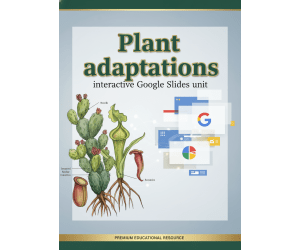
Plant Adaptations Interactive Google Slides Unit
Science, Earth and Environmental Sciences, Earth Sciences, Environmental Science, Geology, Space, Life Sciences, Animals, Nature & Plants, Biology, Grade 3, 4, 5, 9, 10, 11, 12, Experiments, Activities, Labs, Projects, Assessments, Teacher Tools, Diagrams, Lesson Plans, Outlines, Presentations
Find the best 4th Grade Plant Adaptations Interactive Google Slides Unit – a complete no-prep digital science resource that is perfectly correlated to NGSS 4-LS1-1! This teacher edition is a game-changer for teaching plant biology as an interactive adventure for students! With this resource, students will enjoy a hands-on approach to learning about plant adaptations as they explore interactive slides featuring desert succulents/cacti, rainforest drip tips/epiphytes, water plants floating leaves/stretching stems, structural vs. behavioral adaptations, roots, stem/leaf adaptations, defense structures, carnivorous plants Venus flytrap/pitcher plant, seed dispersal, mystery plant analysis, and a final knowledge check with answer keys! Students will actively engage in classifying adaptations, creating their own extremophiles, analyzing scenarios using Claim Evidence Reasoning, and connecting science to ELA, math, engineering, and technology using cross-curricular activities. It includes a teacher guide, standard alignment, steps to integrate into Google Classroom, instructional tips, interactive slide ideas, image credits, and ideas for self-grading. It can be used in a variety of learning environments, such as in-class learning, distance learning, homeschooling, etc. It saves automatically in Google Slides. Keywords: plant adaptation 4th grade, NGSS 4-LS1-1, Google Slides, interactive science unit, desert rainforest aquatic plants, carnivorous plants, seed dispersal activities, digital science resource, structure and function NGSS, no prep plant biology. Why Parents/Schools Love It : NGSS-Aligned & Standards-Ready: No planning required – lesson plans, objectives, and assessments are provided and align perfectly with 4th grade requirements. Truly Interactive & Engaging: Drag and drop sorting, CER plant mysteries, and biome builders ensure all students (including reluctant ones) are actively engaged and motivated to learn for hours. Cross-Curricular Powerhouse: Perfectly blends ELA (informative writing, vocabulary), math (data analysis, volume calculation), and engineering (biomimicry design challenges). Google Classroom Perfection: One-click “make a copy for each student,” auto-saving, and self-grading features save teachers 10+ hours per unit. Differentiation Built-In: Visual aids, scaffolding, and differentiation in activity levels and types meet the needs of diverse learners and challenge advanced students. Target Student Classes : This lesson is designed for 4th grade science (ages 9-10), specifically targeting the 4-LS1-1 standard for Structure and Function in plants/animals, as well as the cross cutting concepts of Systems and System Models + the Science and Engineering Practices of Engaging in Argument from Evidence. This lesson is suitable as the main resource for: Standard 4th grade life science curriculum for 4th grade students in public/private schools Homeschool 4th grade science curriculum (allows for fast or slow pacing for gifted or remedial students) Advanced 3rd grade science for 3rd grade students or 5th grade review for 5th grade students Special education or ESL students (visual learning tool of drag and drop CERs) Not recommended as the main resource for middle school students (6th+). Copyright/Terms of Use: This Book is copyrighted by Syed Hammad Rizvi. This is for your personal and single classroom use only. You may not change, reproduce, redistribute, or sell this in any way. This means you may not put it on the Internet in a way that it can be located and downloaded by others. If you wish to share this resource with others, please consider purchasing additional licenses from Teachsimple. Thank you for respecting these copyright laws! This product is happily brought to you by Syed Hammad Rizvi
Author Creative Book Store
Rating
Tags PlantAdaptations, 4thGradeScience, NGSS4LS11, GoogleSlidesScience, InteractiveScience, ScienceTeachers, ElementaryScience, NGSSScience, PlantAdaptationsUnit, DigitalScienceResource

Guided Reading Level P - A Guide to Sharks (with Lesson Plan)
ELA, Resources for Teachers, Reading Comprehension, Reading, Pre-Reading, Language Development, Animals, Life Sciences, Science, Vocabulary, Grade 2, 3, 4, Worksheets & Printables, Worksheets, Teacher Tools, Centers, Activities, Literacy Readers, Quizzes, Quizzes and Tests, Assessments
This Guided Reading Book - A Guide to Sharks (Level P) with lesson plan includes: Guided Reading Color Label (front cover x1) This is a quick way to match the book’s demands to what students can generally handle.. The overall goal is to use the level/color to pick books for several smaller groups. To qualify for a certain level, a student is expected to read a book from that level with about 90–94% accuracy. If a student is consistently accurate and understands, move up a level. If the student is struggling at that level, drop down and add more support. Each student will improve at completely different rates, but it is generally one of the best ways to check progress across the class. DOWNLOAD THE CATALOG TO VIEW ALL GUIDED READING BOOKS AVAILABLE (SORTED LEVELS A-Z) Pre-Reading Question (x1) Teacher asks the prompt aloud, can be while showing the cover or first page. Students share what they already know, or make educated guesses from the cover. Prompt them to use the target vocabulary. Write some of their responses on the board to look back at during the reading. Vocabulary Words (x5) Introduce the five words, best doing it one at a time. Start by saying it, while students repeat and then see if anyone knows what it means before reading further. Read through the meaning and try to briefly connect each word to a picture or gesture so it’s meaningful. Ask students to flip through the book pages and point to where they see each of the vocabulary words. While reading the book pause upon coming across one of the vocab words or read the sentence twice to make sure students understand the word has appeared. Optional: Ask students to raise hands whenever they see/hear one of the new words. Guided Reading Pages (x10) Check the book snapshot (below) for: primary topic - do you need to prep extra reading or intro materials on this? what is taught best - decide on 1-2 bullets to focus on, use the prompt or words provided here for best results. learning goals - what you are checking for students to be able to do after the session, elicit answers using prompts or words provided. key vocabulary (see section above). questions overview - so you know what is coming up and if you need to prep extra materials to assist understanding. Run the lesson You may have already looked at a few of the pages together, but you can show them some of the pictures again first to set meaning. Depending on how much time you have and how familiar your students are with guided reading class, you may want to read the book aloud first with the group first. Students whisper or partner read, while you listen in. If time, do it as a group, one student reading a page each. Use the guided page’s prompts to coach: “Check the picture / does it make sense?” “Point under the words / try the first sound” “Reread the sentence smoothly”. Try to focus more on one student per session (rotating every time), so you can work out if they are ready to move up or need to move down a level. Comprehension Questions (back cover x3) This is your way to check that students didn’t just say the words, but actually understood the text. First, let students answer by pointing to the page/picture and saying a short sentence. After any answer, follow with: “Show me where you found that in the text.” In bigger groups, have partners answer first (10–20 seconds), then call on 2–3 students to share. Differentiation tips: Emerging speakers/struggling readers: oral + pointing On-level: oral in a full sentence Higher: one written sentence or draw + label Book Snapshot Title: A Guide to Sharks Genre: Nonfiction (informational text) Subject: Life Science / Reading (Informational Text) Primary Topic: Shark adaptations, senses, and ocean ecosystem roles Estimated Guided Reading Level (A–Z): P What This Book Teaches Best Food chains and ecosystem balance: Sharks are “apex predators” that help regulate marine animal populations, and the text explains what could happen “without sharks.” Body structure and movement: Sharks’ skeletons are made of cartilage, which helps them stay buoyant and turn quickly while swimming. How sharks breathe: The book explains gills, oxygen extraction, and why many sharks must keep swimming to breathe. Feeding and hunting adaptations: Sharks’ teeth work like a “conveyor belt,” replacing lost or broken teeth. Special senses and survival strategies: The text describes electroreception (Ampullae of Lorenzini), camouflage (Wobbegong shark), and different ways sharks reproduce. Learning Goals Students will describe what it means for sharks to be apex predators in an underwater food chain. Students will explain how cartilage helps sharks stay buoyant and move in water. Students will explain why many sharks must swim constantly in order to breathe. Students will describe how a shark’s teeth are replaced when one is lost or broken. Students will describe electroreception and how it helps sharks find prey hiding under sand. Students will explain one way sharks help keep ocean fish populations and the marine ecosystem healthy. Key Vocabulary From the Text apex — the very top or highest level. cartilage — flexible body material that is not bone. buoyant — able to float or stay up in water. electroreception — sensing tiny electrical signals in the water. ecosystem — living things and how they interact in a place. Discussion Prompts Pre-reading question: What body features might help a shark survive in the ocean? Comprehension questions: According to the text, why do many sharks need to keep swimming in order to breathe? Comprehension questions: What does the text say happens when a shark loses or breaks a tooth? Comprehension questions: How does the text explain that sharks help keep the ocean’s fish populations and ecosystem healthy? Printing Tips 1. Best Printing Method (Recommended) “Booklet” Printing (Best if Available) If your printer or PDF viewer supports Booklet Printing , use this. Settings to use: Print mode: Booklet Paper size: Letter or A4 (either works) Orientation: Landscape Print on both sides: Yes Flip on: Short edge Scaling: Fit to printable area Booklet subset: First test: Front sides only Then: Back sides only This will automatically: Pair pages correctly Put the cover on the outside Align everything for folding After printing, fold in half and staple along the spine . 2. If “Booklet” Printing Is NOT Available You can still print this correctly with manual duplex printing . Step-by-step: Open the PDF. Choose Print . Set: Orientation: Landscape Pages per sheet: 1 Print on both sides: Yes Flip on: Short edge Print all pages . Because each PDF page already contains two facing book pages, the result will still fold cleanly into a book. Thousands of Cored Education products are included with your TeachSimple membership. Download links and encyclopedia index available here.
Author Cored Education
Rating
Tags Reading Comprehension, Reading Passages, Reading, Guided Reading, Guided Reading Lesson Plan, Guided Reading Activity, Pre-reading, Science Lesson Plans, Life Science, Animals

Sorting the Adjectives Activity
ELA, Grammar, Grade 3, 4, 5, 6, 7, 8, 9, Activities
Activity Introduction An amazing activity designed for the students to learn more about languages. Sorting the Adjectives Do you enjoy learning English? Which topic do you like the most Grammar, writing, reading, spelling, comprehension, vocabulary or phonics? Have you ever tried to learn any other language? If yes, tell us more about it? How many languages are spoken in the world? What do you think the most interesting one? Can you say Hello in Spanish, French or even Japanese? You can give it a try! Can you name the countries that speaks Portuguese? How many countries speaks Dutch? What is the less spoken language in the whole world? Would you like to learn a new language someday? If yes, which language will you choose? Sorting the Adjectives Activity The activity is perfect for encouraging the researching skills for the students, while learning more about world languages. Sorting the Adjectives This friendly designed worksheet is suitable for students at school, homeschooling, and as a group activity. Instructions What is an adjective? Sort out the following adjectives on the correct column. Format Available in a PDF format.
Author Educational Voice
Tags Sorting The Adjectives, Sorting The Adjectives Activity, Adjectives, Adjectives Facts, Adjectives Facts For Kids, English, English For Kids, English Facts, English Facts For Kids
10 Fun Ceramic Projects for Elementary Students
Art, Creative Arts, Graphic Arts, Grade 1, 2, 3, 4, 5, Crafts, Activities, Projects
An entertaining and simple-to-follow e-book called 10 Fun Ceramic Projects for Elementary Students aims to encourage young students' creativity via practical ceramic art. This resource, which teaches elementary school kids the basics of working with clay through basic techniques like pinching, coiling, and slab building, is ideal for both in-class and at-home study. Beginners may easily complete the ten projects, which include clay monsters, wind chimes, leaf bowls, and pinch pot creatures. Each project includes detailed instructions and a list of basic ingredients. In addition to exposing pupils to three-dimensional art, the activities are designed to foster artistic expression, increase confidence, and develop fine motor abilities. For parents, homeschoolers, or art teachers who want to add creative, hands-on learning to their daily routine, this booklet is perfect. Projects allow for a great deal of individuality and may be modified for a variety of ages and skill levels. Students will enjoy using their imaginations while cultivating a respect for ceramics through projects like creating textured tiles and sculpting animal figures. This ebook provides an enjoyable and instructive experience that kids will love—and proudly take home to show off—whether you're introducing clay for the first time or are searching for new project ideas.
Author Bright Classroom Ideas Marketplace
Rating
Tags Ceramic, Project, Elementary, Pottery, Clay, Craft, Art
Literacy Sheets: Activities First Nations children
ELA, Social Studies, Language Development, Vocabulary, Grade 3, 4, 5, Activities
First Nations Literacy Activities This educational resource provides elementary educators with over 25 printable literacy activities to help students learn about First Nations culture. With vocabulary lists, worksheets, games , research prompts, and more, students will build literacy skills while making cross-curricular connections. Use the materials for independent practice, small groups, or whole class instruction. Topics cover First Nations traditions, values, art, and history. By immersing learners in rich cultural content, these materials aim to foster appreciation and respect for diversity. The packet includes vocabulary lists, bingo games , comics, and prompts for students to write stories and make personal connections. Teachers can differentiate or use activities over multiple lessons. This teaching resource is designed for grades 3-5.
Author Learn it ANY way
Tags First Nations, Natives, Autochtones, Vocabulary, Writing
Gettysburg Address Song
Creative Arts, Art, Social Studies, Music, History, History: USA, Grade 3, 4, 5, Songs, Activities
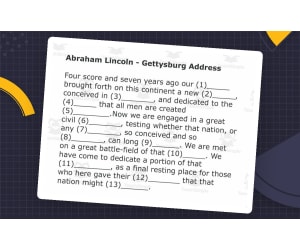
We are always looking for ways to teach our students new skills. Being able to tailor instruction to their learning styles is just one effective way to increase student engagement and set students up for success. Many of our students, from year to year, are visual and auditory learners. Most children (and even adults) can attest to their ability to better retain information that they have learned through music and song. Because of this, my resources seek to teach students skills through song. This particular resource is aGettysburg Address Song. This can be used in your social studies classroom with your elementary students. Included in this resource: -- Gettysburg Address Song MP4 video Student will love learning and reviewing U.S. history with the many details included here. You can use this video to introduce this segment in time for America and then use it again to review later on. This particular video will provide students the opportunity to fill in the blank for the Gettysburg Address. You may choose to incorporate it into your lesson’s presentation , so it is easily accessible for you. Students will listen to this song and be able to make connections to the other components of the lesson as well as any independent work they may be doing. I hope you enjoy! Here are links to similar resources in my store: Column Addition Practice Song Quadratic Formula Song Southern Europe Song Counting Backwards from 20 Song Sound Spelling Song #2 Times Tables Practice Song (7s to 9s) Check Out More Resources from My Store: Audio Memory
Author Audio Memory
Tags Gettysburg Address, American Documents, History Documents, U.S. History, American History, Social Studies Song, Social Studies Fill In The Blank, Gettysburg Address Song
Lollipops Reading Comprehension Passage - Cored Ed Encyclopedia
ELA, Language Development, Resources for Teachers, Reading Comprehension, Reading, Pre-Reading, Writing, Science, Physics, Strategies, Grade 2, 3, 4, 5, Worksheets & Printables, Worksheets, Teacher Tools, Centers, Activities, Writing Prompts, Assessments, Tests, Quizzes and Tests, Quizzes
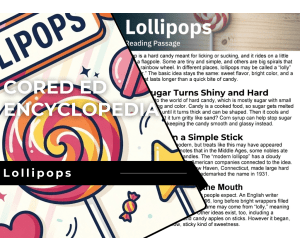
This lollipops reading comprehension contains the following: Visualize on the Cover (Teacher Read Aloud Script) Start your lesson by taking a few moments to visualize the topic and share thoughts or feelings about it. Pre-Reading Trivia Students will write down one thing they already know about the subject and then read five more facts and discuss. These facts are fun, and the students will enjoy learning about the subject before reading more. Reading Passage The text is a high-interest reading passage with set paragraphs, roughly three to four paragraphs long. It contains a variety of themes about the topic, anywhere from history to technology. The passage is between 250 and 350 words in length. Mixed Questions The first question page contains four multiple-choice questions, each with a choice of four answers, and three written response questions that require a sentence or two from the student. Vocabulary Questions Practice seven key words from the text in this section across two activities. First section is scrambled words where students will unscramble three words given a clue for each. The second section is a word to meaning matching activity. Creative Writing In this question, the student will be required to write a five to eight sentence paragraph on a question related to the topic. Extension Activities This page is optional for fast finishers or to take home. There are several activities, each one requiring a different skill. Do some, do none, do all, completely optional - but you will feel reassured knowing every possibility is planned for. Includes summary writting question. Answer Key There are answers for the multiple-choice questions, written response questions have sample answers, vocabulary answers and if there is a summary question then a sample summary will be provided as well. FULL CATALOG OF DOWNLOAD LINKS AND ENCYCLOPEDIA INDEX HERE Lesson Snapshot Title: Lollipops Genre: Nonfiction (informational text) Subject: Reading (Informational Text) / Science (cooking & materials) / Social Studies (history of foods) Primary Topic: Hard candy on a stick: making, history, name Estimated Guided Reading Level (A–Z): O What This Lesson Teaches Best Defines a lollipop as hard candy for licking or sucking, on a stick, and notes different names in different places (“lolly,” “sucker”). Explains how hard candy is made: sugar is cooked with water until thick, then cooled so it hardens. Describes why corn syrup matters in hard candy: it can help stop sugar crystals from forming so candy stays smooth and “glassy.” Shares historical background: candy on sticks appeared long ago (including the Middle Ages), and the “modern lollipop” has a cloudy history with early 1900s U.S. companies (including a story about George Smith and later trademarking). Explores word history: “lollipop” was recorded in 1796, with possible connections to “lolly” and “pop,” plus other ideas (including Romani words and candy apples on sticks). Learning Goals Students will describe what a lollipop is and how people eat it, using details from the text. Students will explain the steps that turn sugar and water into hard candy (cook, thicken, cool, harden). Students will explain how corn syrup affects hard candy by helping stop sugar crystals from forming. Students will identify key time references about lollipops (Middle Ages, early 1900s, 1796) and tell what the text says about each. Students will summarize what the passage says about where the name “lollipop” may have come from. Key Vocabulary From the Text crystals — tiny hard bits that can make candy feel gritty. gritty — rough, like sand. glassy — smooth and shiny, like glass. trademarked — legally protected a name for a product. spirals — twisty, swirl shapes. Cored Ed Encyclopedia Overview The Cored Ed Encyclopedia is a weekly series of lessons that you can pick up and use right away. These short readings fit into whatever time you have available. Each one includes a warm-up, a reading, and a set of questions, but it’s flexible — you can do just the reading, the full lesson, or skip the writing section if you need to. Each lesson focuses on a single topic so students don’t get lost. The writing is clear but never childish, making it perfect for grades two through five. Topics range from animals and science to history, inventions, and everyday things. No matter the level of the student, everyone should take away at least one new idea or fact from each lesson. The materials are easy to print, easy to explain, and require no setup. They work well for whole-class teaching, partner work, or independent study.
Author Cored Education
Rating
Tags Vocabulary, Spelling, Reading Comprehension, Reading Passages, Reading, Creative Writing, Reading Strategies, Writing Prompts, Lollipops, Physics
Draw the Verb Activity
Grammar, Language Development, ELA, Grade 1, 2, 3, 4, 5, 6, 7, 8, Activities
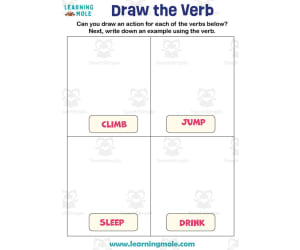
Activity Introduction An amazing activity designed for the students to learn more about languages. Draw the Verb Do you enjoy learning English? Which topic do you like the most Grammar, writing, reading, spelling, comprehension, vocabulary or phonics? Have you ever tried to learn any other language? If yes, tell us more about it? How many languages are spoken in the world? What do you think the most interesting one? Can you say Hello in Spanish, French or even Japanese? You can give it a try! Can you name the countries that speaks Portuguese? How many countries speaks Dutch? What is the less spoken language in the whole world? Would you like to learn a new language someday? If yes, which language will you choose? Draw the Verb Activity The activity is perfect for encouraging the researching skills for the students, while learning more about world languages. Draw the Verb This friendly designed worksheet is suitable for students at school, homeschooling, and as a group activity. Instructions Can you draw an action for each of the verbs below? Next, write down an example using the verb. Format Available in a PDF format.
Author Educational Voice
Tags Draw The Verb Activity, Verb Activity, Draw The Verb, Verb, Verbs, Verbs Facts, Verbs Facts For Kids, Grammar, Grammar Facts, Grammar Facts For Kids

Synonyms Practice Questions - Vocabulary Grade 3-4 (Docs)
ELA, Language Development, ESL, Common Core, Resources for Teachers, Vocabulary, Grade 3, 4, Worksheets & Printables, Worksheets, Quizzes and Tests, Teacher Tools, Tests, Assessments, Centers, Activities
Synonyms Vocabulary Practice MCQS ELA MCQS Overview: In this series of lessons, students will embark on an engaging journey to explore the grammar skills that make our language vibrant and expressive. These lessons are crafted to help students identify, comprehend, and effectively apply language arts skills in both writing and speech. Accompanied by free supplementary materials available for all topics, each lesson builds on the previous one, offering a balanced mix of direct instruction, interactive group activities, and independent practice. Through fun and creative tasks, students will learn to recognize grammar within sentences, understand their function, and use them to enrich their own writing and speech. Synonyms Overview: Nouns Synonyms Verbs Synonyms Adjectives Synonyms Synonyms in a Sentence Docs Version This is the Docs editable and fillable version. This download is available in GOOGLE Docs, GOOGLE Forms, GOOGLE Slides. PDF, PPT, WORD, check the links below for more details. FULL CATALOG OF DOWNLOAD LINKS HERE Grade 3/4 Links: Adjectives Google Docs Google Forms Google Slides PDF PPT Word Free Supplementary Materials Pack Adverbs Google Docs Google Forms Google Slides PDF PPT Word Free Supplementary Materials Pack Conjunctions Google Docs Google Forms Google Slides PDF PPT Word Free Supplementary Materials Pack Nouns Google Docs Google Forms Google Slides PDF PPT Word Free Supplementary Materials Pack Pronouns Google Docs Google Forms Google Slides PDF PPT Word Free Supplementary Materials Pack Verbs Google Docs Google Forms Google Slides PDF PPT Word Free Supplementary Materials Pack Sentence Structure Google Docs Google Forms Google Slides PDF PPT Word Free Supplementary Materials Pack Present Tense Google Docs Google Forms Google Slides PDF PPT Word Free Supplementary Materials Pack Past Tense Google Docs Google Forms Google Slides PDF PPT Word Free Supplementary Materials Pack Future Tense Google Docs Google Forms Google Slides PDF PPT Word Free Supplementary Materials Pack Context Clues Google Docs Google Forms Google Slides PDF PPT Word Free Supplementary Materials Pack Defining Words Google Docs Google Forms Google Slides PDF PPT Word Free Supplementary Materials Pack Fill the Blanks Google Docs Google Forms Google Slides PDF PPT Word Free Supplementary Materials Pack Homophones Google Docs Google Forms Google Slides PDF PPT Word Free Supplementary Materials Pack Synonyms Google Docs Google Forms Google Slides PDF PPT Word Free Supplementary Materials Pack ELA Review Questions Overview Questions have three answer choices. There are a handful of pictures on each test for aesthetic purposes, as well as a review sheet covering most of the topics covered in the product. Introduction or Example Sheet Each topic will include an introduction or example sheet to go through first with your students. Full Answer Keys Full answer keys and sample responses are provided so no matter how busy you are, you know you're covered! In the Supplementary Pack Interactive Ice Breakers: Fun, hands-on activities that get students thinking about adjectives right from the start. Guided Practice: Teacher-led exercises that reinforce the day’s lesson, ensuring students can confidently identify and use adjectives. Group and Partner Tasks: Collaborative activities that allow students to work together to solve problems, categorize adjectives, and create descriptive sentences. Independent Worksheets: Structured worksheets that provide individual practice and help solidify understanding of key concepts. Exit Tasks: Quick, reflective activities at the end of each lesson that assess understanding and encourage students to apply what they’ve learned. For similar downloads and other frees, do check out Cored Group on TeachSimple.
Author Cored Education
Tags Elementary, Answers, Ccss, Common Core, Tests, Test Prep, Grade 3, Grade 4, Vocabulary, Digital Centers
SOCIAL/EMOTIONAL ADHD STORY & ACTIVITIES
Social Emotional Learning (SEL), Special Resources, Grade 1, 2, 3, 4, Read Alouds, Activities, Worksheets & Printables
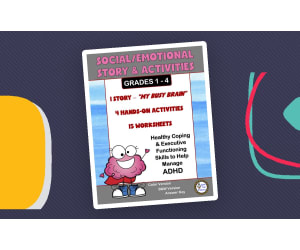
Are you a parent, counselor, therapist, or educator working with learners who struggle with ADHD? If so, this is perfect product to add to your social/emotional toolbox. Kids in grades 1 through 4 will be engaged with the story, “My Busy Brain”, and corresponding activities. With its kid-friendly graphics and rhyming structure, your learners will connect with the story’s main characters, George and Julia. From start to finish, your learners will witness the progression of common ADHD struggles and ways in which they can cope. The story’s ending will leave a smile on the reader’s face and a sense of hope that the multitude of emotions associated with ADHD can be overcome. As a means of extending the story’s message into learners’ lives, there are worksheets and hands-on activities available. Within these pages are real-life ways in which your learners can practice healthy coping and executive functioning skills. They’ll learn to identify 7 emotions, practice breathing techniques, list positive self-qualities, and have the opportunity to make their own fidget toy(s). Not only that, but they will also perform tasks in sequencing, telling time, and writing lists. This product was designed to meet the criteria for several of the SEL Core Competencies, making it a solid addition to your curriculum. All worksheets are print and go, and while the fidget toys do require prep work, your learners will love the hands-on sensory activities. For worksheets with definitive answers, an answer key is provided. Many worksheets are available in both color and black & white formats. In either case, laminating them provides an instant write-on/wipe-off activity that can be used time over time. For more details on this product’s content, take a look at the list below. STORY – “My Busy Brain” (version 1: George, version 2: Julia) FLASHCARDS – 7 emotions (multi-cultural kids, emotion words) WORKSHEET 1 : learners will read a scenario from the story and draw a line to the kid with the matching emotion. WORKSHEET 2 : learners will read a scenario from the story and write the emotion word they might feel in that situation. WORKSHEET 3 : learners will identify different types of weather and color the clothing item most appropriate to wear. WORKSHEET 4 : learners will write numbers to sequence daily tasks (brushing teeth, setting table, making pb&j sandwich. WORKSHEET 5 : learners will cut and glue alarm clocks showing the time for tasks in a daily routine. WORKSHEET 6 : learners will identify, write, and illustrate special qualities unique to their brains. WORKSHEET 7 : learners will illustrate a situation in which their mind might wander, then decorate the cloud with cotton balls. WORKSHEET 8 : learners will circle the hidden (lost) sports balls in the picture and use a check-off list as they find each ball. WORKSHEET 9 : learners will write and illustrate three facts about something of interest to them. WORKSHEET 10 : learners will identify and color the movement activities they enjoy. WORKSHEET 11 : learners will identify the benefits of water and decorate the water bottle. WORKSHEET 12 : learners will write a list of three tasks they complete each day. WORKSHEET 13 : learners will identify scents that are pleasing to them and practice a deep breathing exercise. WORKSHEET 14 : learners will write about and illustrate a new healthy coping skill to try. WORKSHEET 15 : learners will find words hidden in the wordsearch that were mentioned in the story and worksheets. ACTIVITIES : learners will have the opportunity to make their own fidget toy (4 options included)
Author Quail Trail Products
Rating
Tags ADHD, Coping Skills, Executive Functioning, Story, Worksheets, Hands-on Activities, Fidgets, Emotions, Brain, Character Building

3D Shapes & Properties Activity
Shapes, Early Math, Math, Kindergarten, Grade 1, 2, 3, 4, 5, 6, 7, 8, Activities
Activity Introduction An amazing activity designed for the students to learn more about STEM. 3D Shapes & Properties Do you like STEM subjects? what is your favorite one? Have you ever tried to plant a seed? If yes, tell us more about it. Or have you ever tried to invent something? If yes, tell us more about it. And how do you think it will help us? Have you ever seen a microorganism under a microscope? What was it? And how it looked like? Mathematics is a marvelous subject. Let' sharpen our brains and solve some equations. Do you like timetable tricks? What is your favorite one? Do you know how to code? Have you ever created an app or a game before? If yes, how was it like? 3D Shapes & Properties Activity The activity is perfect for encouraging the researching skills for the students, while learning more about this fantastic topic. 3D Shapes & Properties This friendly designed worksheet is suitable for students at school, homeschooling, and as a group activity. Instructions Look for things around your house that match each shape, draw them on the frames, then write down how many faces/ surfaces, edges, and vertices they have. Format Available in a PDF format.
Author Educational Voice
Tags 3D Shapes & Properties Activity, 3D Shapes Activity, 3D Shapes Properties Activity, 3D Shapes , 3D Shapes Properties, 3D Shapes Facts, 3D Shapes Facts For Kids, 3D Shape, Shapes, Shapes Pro[erties
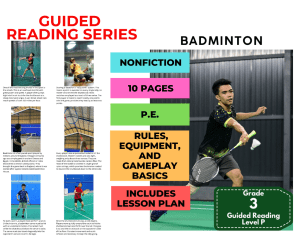
Guided Reading Level P - Badminton (with Lesson Plan)
ELA, Resources for Teachers, Reading Comprehension, Reading, Pre-Reading, Language Development, Health, P.E. & Health, Sports, Physical Education, Grade 2, 3, 4, Worksheets & Printables, Worksheets, Teacher Tools, Centers, Activities, Literacy Readers, Quizzes, Quizzes and Tests, Assessments
This Guided Reading Book - Badminton (Level P) with lesson plan includes: Guided Reading Color Label (front cover x1) This is a quick way to match the book’s demands to what students can generally handle.. The overall goal is to use the level/color to pick books for several smaller groups. To qualify for a certain level, a student is expected to read a book from that level with about 90–94% accuracy. If a student is consistently accurate and understands, move up a level. If the student is struggling at that level, drop down and add more support. Each student will improve at completely different rates, but it is generally one of the best ways to check progress across the class. DOWNLOAD THE CATALOG TO VIEW ALL GUIDED READING BOOKS AVAILABLE (SORTED LEVELS A-Z) Pre-Reading Question (x1) Teacher asks the prompt aloud, can be while showing the cover or first page. Students share what they already know, or make educated guesses from the cover. Prompt them to use the target vocabulary. Write some of their responses on the board to look back at during the reading. Vocabulary Words (x5) Introduce the five words, best doing it one at a time. Start by saying it, while students repeat and then see if anyone knows what it means before reading further. Read through the meaning and try to briefly connect each word to a picture or gesture so it’s meaningful. Ask students to flip through the book pages and point to where they see each of the vocabulary words. While reading the book pause upon coming across one of the vocab words or read the sentence twice to make sure students understand the word has appeared. Optional: Ask students to raise hands whenever they see/hear one of the new words. Guided Reading Pages (x10) Check the book snapshot (below) for: primary topic - do you need to prep extra reading or intro materials on this? what is taught best - decide on 1-2 bullets to focus on, use the prompt or words provided here for best results. learning goals - what you are checking for students to be able to do after the session, elicit answers using prompts or words provided. key vocabulary (see section above). questions overview - so you know what is coming up and if you need to prep extra materials to assist understanding. Run the lesson You may have already looked at a few of the pages together, but you can show them some of the pictures again first to set meaning. Depending on how much time you have and how familiar your students are with guided reading class, you may want to read the book aloud first with the group first. Students whisper or partner read, while you listen in. If time, do it as a group, one student reading a page each. Use the guided page’s prompts to coach: “Check the picture / does it make sense?” “Point under the words / try the first sound” “Reread the sentence smoothly”. Try to focus more on one student per session (rotating every time), so you can work out if they are ready to move up or need to move down a level. Comprehension Questions (back cover x3) This is your way to check that students didn’t just say the words, but actually understood the text. First, let students answer by pointing to the page/picture and saying a short sentence. After any answer, follow with: “Show me where you found that in the text.” In bigger groups, have partners answer first (10–20 seconds), then call on 2–3 students to share. Differentiation tips: Emerging speakers/struggling readers: oral + pointing On-level: oral in a full sentence Higher: one written sentence or draw + label Book Snapshot Title: Badminton Genre: Nonfiction (informational text) Subject: Reading (Informational Text) / Physical Education Primary Topic: Badminton rules, equipment, and gameplay basics Estimated Guided Reading Level (A–Z): P What This Book Teaches Best Sport history and naming: Explains where badminton came from and how it got its name (including “poona” and “Badminton House”). Equipment features and purpose: Describes the racket (materials, strings, tension) and the shuttlecock’s special design. Court setup and “in” rules: Teaches the court shape, net height, boundary lines, and what it means when the shuttlecock lands on a line. How play works: Breaks down serves, rallies, goals of a rally, and key skills like reflexes and constant movement. Scoring and match format: Defines the “rally point” system and explains best-of-three games to 21 (win by 2). Learning Goals Students will explain how badminton got its name using details from the text. Students will describe the main pieces of equipment (racket and shuttlecock) and what makes the shuttlecock unique. Students will identify key court features (net, lines, boundaries) and state what “in” means when the shuttlecock lands on a line. Students will describe the rules of a legal serve (underhand, below the waist, diagonally to the service court). Students will explain what a rally is and what players try to do during a rally. Students will explain the “rally point” scoring system and how a game is won. Key Vocabulary From the Text specialized — made for one special job or purpose. shuttlecock — the “birdie” hit back and forth. tension — tight pulling strength in the racket strings. diagonally — moving at a slant, not straight across. endurance — being able to keep going a long time. Discussion Prompts Pre-reading question: What rules or equipment might make badminton different from other sports? Comprehension questions: How did badminton get its name, according to the text? Comprehension questions: What makes a badminton serve legal in the text? Comprehension questions: What does the text mean by a “rally point” scoring system? Printing Tips 1. Best Printing Method (Recommended) “Booklet” Printing (Best if Available) If your printer or PDF viewer supports Booklet Printing , use this. Settings to use: Print mode: Booklet Paper size: Letter or A4 (either works) Orientation: Landscape Print on both sides: Yes Flip on: Short edge Scaling: Fit to printable area Booklet subset: First test: Front sides only Then: Back sides only This will automatically: Pair pages correctly Put the cover on the outside Align everything for folding After printing, fold in half and staple along the spine . 2. If “Booklet” Printing Is NOT Available You can still print this correctly with manual duplex printing . Step-by-step: Open the PDF. Choose Print . Set: Orientation: Landscape Pages per sheet: 1 Print on both sides: Yes Flip on: Short edge Print all pages . Because each PDF page already contains two facing book pages, the result will still fold cleanly into a book. Thousands of Cored Education products are included with your TeachSimple membership. Download links and encyclopedia index available here.
Author Cored Education
Rating
Tags Reading Comprehension, Reading Passages, Reading, Guided Reading, Guided Reading Lesson Plan, Guided Reading Activity, Pre-reading, Health Lesson Plans, Sports, P.e.

The play: The magic pen
ELA, Writing, Grade 4, 5, 6, Activities
The Play: The Magic Pen The Play: The Magic Pen is a riveting teaching resource, best suited for educators striving to make learning an exciting experience. Specially crafted for pupils in fourth to sixth grades, this activity emphasizes on bolstering language arts skills, particularly in writing. The theme of the play hinges around a young lad named David who abhors homework. However, his perception changes when he learns about Mr Homework and his magical pen that completes homework perfectly without any manual effort needed. He embarks on an adventurous journey triggering an inherent element of fantasy and thrill that effortlessly captures the students' attention. As David progresses into his journey, he meets several interesting characters which enriches the storyline. With sixteen individual roles available in the play— it guarantees each student's participation while encouraging team-building efforts within classes or groups. Length: 16 pages detailed in a PDF file format - allows educators flexibility with their teaching modules. It can be used as a group activity spread over several sessions or assigned as individual reading tasks at home - both offering unique experiences and yielding different learning outcomes. Educational value: Through such innovative stories children understand character development better alongside nurturing their critical thinking capabilities. Drama Education Approaches: For larger groups wanting all students to experience different roles consider two separate performances with varied casts; this helps foster empathetic understanding amongst the students encouraging life skills! Conclusion: Instructors homeschooling pupils or facilitating vibrant classroom settings will undoubtedly find theatrical activities like 'The Play: The Magic Pen,' beneficial as these turn boring academic agendas into something much more joyous while stimulating creativity, promoting effective communication while instigating their imaginative prowess!
Author Learn it ANY way
Tags Teaching Resource, Language Arts, Writing Skills, Theater-based Activity, Character Development

Color by Sight Word Game, High Frequency FRY Words, 7th 100 - SET 8
ELA, Literature, Reading, Language Development, Spelling, Grade 2, 3, 4, Activities, Games
7th 100 Fry Sight Words, COLOR BY SIGHT WORDS WORKSHEETS, COLORING PAGES Looking for a fun and engaging way to reinforce Sight Words in your students? What can be a better way than fun Color By Sight Words Activity? This resource includes engaging Coloring sheets for 7th 100 Fry Sight Words. The words are in order of frequency. This NO PREP Easy to Use Worksheet Packet includes 20 pages in total with 100 sight words. Each page contains five different sight words written in different vibrant colors. There are different shapes like square, triangle, circles and stars on the sheet with sight words written inside of them. Students have to Color every shape with the color of Sight Word written in it. These worksheets are not only perfect for enhanced recognition of Sight Words but are also perfect for developing Fine motor skills while learning their sight words. Teachers can use these worksheets in different ways. Teachers can create fun ways to use these worksheets more efficiently like, ask the kid to pick their favorite shape on the worksheet and the ask them to read the sight word aloud, along with spelling it out. This will not only help in enhanced recognition but also will help to build vocabulary and spelling mastery. Then after that ask the student to look for that sight word on the top of the sheet and tell the name of the color that sight word is written in. Then ask the student to color that shape with the color of the sight word. This will motivate students to recognize and remember their High Frequency Words in more effective way and also have fun while coloring the worksheet. These worksheets are perfect for morning work, individual work, group work, working with partners, home work or class work. These Worksheets can also be used for Assessment . When children have already learnt their sight words, use these sheets to assess their knowledge with these engaging activity. These are also perfect to include in Sight Words Book, and teaching collection. These are perfect for End of the year and also Back To School Season. These are also perfect for Home Schoolers. These are very easy to use. Just Download, Print, Enjoy and save your time with these high quality Sight Word resource. Download your copy today to give your kids some fun activity with learning. You Will Receive: 1 PDF 20 Pages US Letter Size ( 8.5 x 11 )
Author TeacherYouWant
Tags Sight Words Practice, Sight Words Activities, Games, Color By Code, Color By Sight Words, Coloring Game, Rainbow, Fry Sight Words
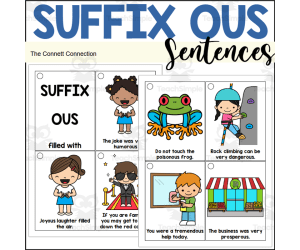
Suffix OUS Sentence Reading Rings
ELA, Language Development, Phonics, Grade 2, 3, 4, Activities, Centers, Worksheets & Printables, Task Cards
Practice reading words with the suffix -OUS with these sentence reading rings. Students will read words with the suffixes -ous in the context of sentences. Each card also includes a bold and colorful image to illustrate each sentence and to help students to learn the meanings of each word. What is Included: This resource includes one reading ring activity for the suffix ous. There are cards each featuring a different word with the suffix ous, with a sentence using the word in context and an image to illustrate that sentence. When to Use Early Finishers - If students finish their work early, they can use these reading rings for extra practice. Small Group Work - Teachers can use these reading rings to target small groups of students who need more practice reading words with suffixes. Independent Practice - Students can work independently at their desks to read this set of suffix cards. Morning Work - Students can read and review this reading ring for morning work as their classmates arrive to class. How to Make: Teachers will print out the pages and cut each card apart. Once cut apart, the teacher can choose to laminate the cards for durability. Then, use a hole punch to punch a hole in the top left corner of the card. Place the cards on a ring to create your reading ring, making sure the cover card is on top. Skills Assessed: These reading rings help with identifying words with suffixes These reading rings help with learning the meaning of suffixes These reading rings help students learn how suffixes change the meaning of words. These affixes reading rings are a low prep activity for teachers to prepare for students to use. Once created, these cards can be used over and over to practice reading words with suffixes in the context of a sentence.
Author The Connett Connection
Rating
Tags Affixes, Morphology, Literacy Activities, Reading Words With Suffixes, Suffixes

Change - Convert - Customary Length: Miles, Yards, & Feet Digital Math
Math, Measurements, Grade 4, 5, Activities
Change - Convert - Customary Length: Miles, Yards, & Feet Digital Math An engaging and interactive learning resource designed for Grade 4 and Grade 5 educators. This focuses on strengthening students' understanding of changing units of customary length. The Resource Features: A self-checking puzzle picture format that encourages comprehension in a fun way 12 unique problems on the topic of changing customary length featuring miles, yards, and feet A digital teaching approach using Google Slides which promotes hands-on learning This Tool Can Be Used For: Morning work activities or math warm-ups Serving as homework assignments where it could stimulate student-centered learning at home with fun yet challenging measurement exercises Note: This resource readily integrates with any learning management system like Google Classroom due to its no-prep design for quick assignment allocation by educators. Alongside this teacher answer keys are provided—saving precious preparation time without compromising quality education delivery. Other Uses Include: Serving as exit tickets following lessons or checks that gauge student comprehension post-lectures Fostering reteach/review sessions effectively supplementing primary instructional materials already incorporated into curriculum planning efforts. In conclusion this multi-use teaching resource is dedicated towards developing thorough proficiency via its innovative structure targeting mathematical architecture around measurements topic.</p
Author Digitally Yours Shop
Tags Convert, Customary Length, Miles, Yards, Feet

Melody Blocks in Bb | Interactive Music Listening Activity
Creative Arts, Art, Music, Grade 1, 2, 3, 4, Activities
Melody Blocks in Bb: A Fun, Interactive Method to Improve Musical Aptitude Designed with educators in mind, Melody Blocks in Bb is an engaging learning tool perfect for both public school teachers and homeschoolers to enhance the musical skills of students. Developed as an effective listening activity , this digital product presents a unique way of honing the aural faculties and sightreading abilities of learners. About Melody Blocks in Bb As the name implies, Melody Blocks in Bb revolves around interactive exercises that challenge students' capacity to identify notes by ear. Suitable for beginners and fitting seamlessly into approximately the first three years of instrumental or singing study, this tool encourages progression. Initially starting off with two different notes, it gradually ramps up complexity as learners advance through units. The Application of Melody Blocks Functioning well as preparatory material before interval work or sight-singing tests featured in aural examinations. Serving effectively across multiple learning scenarios – from individual work to group exercises. Fostering plenty of classroom interaction if implemented within a large group setting while also offering productive practice at home as an exciting homework assignment . The Technology Behind Melody Blocks Melody Blocks brilliantly takes advantage of technology without creating any unnecessary hassle for instructors or their pupils. To make use effortless on computers and tablets alike, product links are delivered through PDF format files which will need unzipping upon download; instructions are provided succinctly within these documents. Mac users will be able to access web and tablet versions but not file downloads meant for offline usage. Note: The standard package encompasses both tablet use and computer links seamlessly initiated through 'Launch Story.' If using tablets requires storage with a free app (Articulate Mobile Player), clear directions are contained within the PDF document detailing how to go about acquiring it—thus launching your interactive educational journey could never be easier! Who can use Melody Blocks? Created particularly bearing grades 1-4 students studying arts & music curriculum topics focusing especially on music activities - melody blocks embody innovation while adhering strictly to important educational objectives. With its unique approach and wide range of applications, Melody Blocks makes learning a joyous, interactive activity rather than a monotonous chore.
Author Hbmusicsolutions's Shop
Tags Interactive Learning, Musical Aptitude, Aural Skills, Sightreading Abilities, Educational Technology