



3,992 products added recently
Page 91 - Science Activities
Ignite your students' interest in science with activities that make learning interactive and exciting. This collection offers experiments, demonstrations, and inquiry-based projects covering various scientific fields. By integrating these science activities into your lessons, you can encourage critical thinking, foster curiosity, and deepen understanding of scientific concepts.

 Show filters


Acid and Base Nomenclature ESL: Korean version
Science, Chemistry, Grade 8, 9, 10, 11, 12, Activities
Acid and Base Nomenclature ESL: Korean version This chemistry resource provides 40 problems covering acid and base nomenclature practice. Students write the names and molecular formulas for 20 compounds. A Korean translation under each question aids ESL students whose first language is Korean. These translations were done by a native bilingual Korean student. This supplemental resource works for whole class instruction, small groups, individual practice, or homework. The word document format allows editing to fit lesson needs. Answers are included to support student learning. Teachers can use this resource to help Korean ESL students better understand important chemistry concepts around acid and base nomenclature.
Author Schrim's Chem
Tags Acid And Base, Nomenclature, ESL Chemistry, Chemistry In Korean, Acid/Base In Korean
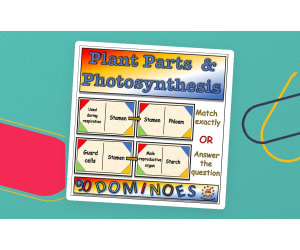
Plant Anatomy and Photosynthesis Dominoes Game - Middle School Science
Science, Life Sciences, Biology, Nature & Plants, Grade 6, 7, 8, 9, Activities, Games, Worksheets
Plant Anatomy and Photosynthesis Dominoes Game for Middle School Science Navigating the world of plants becomes fun, educative, and interactive with the Plant Anatomy and Photosynthesis Dominoes Game. Ideal for public school teachers or homeschooling parents, this game serves as a comprehensive teaching tool for students in Grades 6 through 9. About the game This resource blends learning with play effectively by incorporating plant anatomy and photosynthesis into a dominoes game. It consists of 90 dominoes, each carrying either a word related to plant functions or questions/answers about them. Coverage of Topics The different parts of plants such as roots, stems, leaves and flowers Concepts like transpiration, guard cells stomata xylem phloem chlorophyll chloroplasts The process of photosynthesis. In addition to this, basic functions like glucose conversion into insoluble starch for storage in roots are covered along with more complex topics such as comparison between respiration and photosynthesis Interactive Nature A unique feature is an animation-enhanced PowerPoint that explains how to play the game. This resource encourages interaction making it ideal both individually or group settings. The competitive nature promotes peer-to-peer learning boosting their independent research skills. Focusing on Real-Life Scientific Processes An important aspect about this product is its emphasis on real-life scientific processes such as photosynthesis respiration comparative analysis between two Among educational games available market Plant Anatomy serves not only educational tool but also innovative way keep classroom engrossed science subject matter . It strikes balance between being educational entertaining at same time. Conclusion This game promises not only a learning experience but also a fun, interactive approach to mastering essential topics within the school curriculum. Whether used as a whole-class instruction tool, for small-group collaboration, or even as homework assignment – it supports a diverse range of digital platforms providing an easy to use application.
Author Elf off the Shelf Resources
Rating
Tags Plant Anatomy, Photosynthesis, Middle School Science, Educational Game, Interactive Learning
Time for Sunshine To The Half Hour Clock Activity
Math, Time, Science, Earth and Environmental Sciences, Earth Sciences, Preschool, Grade 1, 2, Activities, Worksheets
This activity is great for helping students practice telling time to the half hour on an analog clock. It's simple and easy to use, and it's a great way for teachers to help their students learn.
Author Have Fun Teaching
Tags Telling Time, Seasons, Clocks

Months of the Year Activity
Math, Time, Science, Earth and Environmental Sciences, Earth Sciences, Numbers, Preschool, Grade 1, 2, Activities
This Months of the Year Activity is a great way for students to build their calendar skills. By putting the months in order, they will learn how to read a calendar and understand the order of the months. This is a valuable skill for students to have as they move on to higher level math and time management.
Author Have Fun Teaching
Tags Statistics, Seasons, Calendars

Brain Lobes Activity
Science, Life Sciences, Human Body, Grade 3, 4, 5, 6, 7, 8, 9, 10, 11, 12, Activities
Activity Overview The human body is full of fascinating wonders to learn. This activity is created to help the students recognize the anatomy and the job of the human body. Brain Lobes Every part and organ in our human body is vital so let's see how important they are. Have you ever imagined how we look like if we didn't have a skeleton? Did you know that because we have our amazing muscles we can stand! Do you know how many teeth do we have? Have you ever wondered about the food journey inside our body? Can you name all the glands in our body? Why do we have skin? Our nervous system is really good at sending signals. Can you tell us more about it? Are you really good at Mathematics, painting, or any other thing? You should really thank your brain about it! The famous five senses are really doing a great work? Can you explain how every sense works? Brain Lobes Activity The activity is perfect for encouraging the researching skills for the students, while learning more about our fantastic human body. Brain Lobes This friendly designed worksheet is suitable for students at school, homeschooling, and as a group activity. Instruction Colour code each lobe of the brain based on its function. Format Available in a PDF format.
Author Educational Voice
Tags Brain Lobes Activity, Brain Lobes, Brain Lobe , Brain Lobes Facts, Brain Lobes Facts For Kids, Brain, Brain Facts, Brain Facts For Kids, Human Body, Human Body Facts

Elements, Compounds, Chemical Symbols, Formulae and Naming Compounds Board Game
Science, Chemistry, Grade 6, 7, 8, 9, Activities, Games
With 48 question cards on atoms, molecules, elements, compounds, chemical symbols, formulae and naming compounds, this is an enjoyable and challenging board game for up to six players per set. It is suitable for all abilities. Included in this Pack Game board 48 Question cards with questions of varying difficulty Teacher answer sheet Instruction sheet. Preparation Photocopy Board onto A3 paper or card (Colour and greyscale versions included). Photocopy question sheets onto paper or card (Colour and greyscale versions included) and cut into question cards. How to Play Highest score of dice starts Pupils take turns and work their way around the board following the instructions in the squares. Certain squares indicate that the pupil takes a question card from the face down pile. If correct they move on 2 spaces. If a player thinks an answer given by an opponent is incorrect they can challenge. If the challenge is correct the challenger moves forward 2 spaces. If the challenge is wrong the challenger moves back two spaces. In the event of a challenge, pupils are encouraged to consult their books but the teacher has a quick-check answer sheet. See more Elf Off the Shelf resources on this topic and many others
Author Elf off the Shelf Resources
Tags Science Board Game, Chemistry Board Game, Elements And Compounds, Naming Compounds Board Game, Chemical Elements Game, Science Elements Game
Classroom Design Challenge
Science, Physics, Not Grade Specific, Activities
Classroom Design Challenge: Your Next Gen Pedagogical Tool! The Classroom Design Challenge offers a unique platform for hands-on learning, promoting engagement and facilitating high-quality education for all types of learners. It has potential use across a range of settings: afterschool programs, camps, STEAM classes or library time. Versatility & Usability This educational resource can be incorporated into your existing curriculum during 'choice' time periods or focused on independent study sessions. In essence, Classroom Design Challenge comprises 'Ready-to-Use' design briefs that give students the opportunity to address real-life scenarios. Each brief comes with: Contextual information The specifics of the design challenge Necessary specifications and constraints List of required materials and tools Detailed steps guiding students through their project along with insightful tips. A Standards-Based Approach To Learning Objectives Befittingly aligned to Standards-Based Learning Objectives - this teaching tool is 'Grade Non-Specific'. It makes subjects such as Physical Science engaging by encouraging creativity in solution crafting. This not only fosters innovation amongst learners but also promotes critical thinking abilities. Fits Group Sizes & Dynamic Scheduling: Each activity can easily be scaled down from collective classroom projects to smaller groups or even individual assignments as homework providing flexible scheduling options based on class dynamics. In conclusion, Classroom Design Challenge bridges creative arts (design) and physical sciences offering great opportunity for interdisciplinary learning – making it an educator’s go-to tool inside today's dynamic classrooms.
Author WhyMaker
Tags Hands-on Learning, Educational Design, Practical Education, Interdisciplinary Integration, Critical Thinking

Reflection or Refraction Activity
Science, Basic Science, Physics, Grade 3, 4, 5, 6, 7, 8, 9, 10, Activities, Experiments
Activity Introduction An amazing activity designed for the students to learn more about STEM subjects. Reflection or Refraction Do you like STEM subjects? what is your favorite one? Have you ever tried to plant a seed? If yes, tell us more about it. Or have you ever tried to invent something? If yes, tell us more about it. And how do you think it will help us? Have you ever seen a microorganism under a microscope? What was it? And how it looked like? Mathematics is a marvelous subject. Let' sharpen our brains and solve some equations. Do you like timetable tricks? What is your favorite one? Do you know how to code? Have you ever created an app or a game before? If yes, how was it like? Reflection or Refraction Activity The activity is perfect for encouraging the researching skills for the students, while learning more about this topic. Reflection or Refraction This friendly designed worksheet is suitable for students at school, homeschooling, and as a group activity. Instructions Cut the items out below and sort them into the correct column. Format Available in a PDF format.
Author Educational Voice
Tags Reflection Or Refraction Activity, Reflection Or Refraction, Reflection, Reflection Activity, Reflection Facts, Reflection Facts For Kids, Refraction, Refraction Activity, Refraction Facts, Refraction Facts For Kids

Four Seasons Activity
Math, Time, Science, Earth and Environmental Sciences, Earth Sciences, Preschool, Grade 1, 2, Activities
The seasons of the year can be a difficult concept for students to grasp. This resource provides a fun and interactive way for students to learn about the seasons. The calendar and seasons activity are perfect for science class or as a supplement to your lesson plans.
Author Have Fun Teaching
Tags Seasons, Calendars
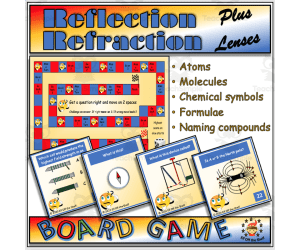
Light- Reflection, Refraction and Lenses Board Game fir Middle School
Science, Physics, Grade 5, 6, 7, 8, 9, Activities, Games
Light- Reflection, Refraction and Lenses Board Game for Middle School This is an interactive and engaging avenue to deepen students' understanding of critical scientific concepts in Physics -- specifically permanent reflection, refraction, and lenses; it’s suitable for students from Grade 5 through Grade 9. This versatile teaching resource adapts smoothly across varying learning environments. Resource Description The product comprises multiple file types that suit diverse teaching contexts and thus enhances the learning experience. The resource entails a fun-filled board game with distinct elements: A game board (color or grayscale options available) 54 question cards of multi-level difficulty An answer sheet for teachers’ review ease Instructions on how to play the game Purpose: To promote collaborative learning while fostering conceptual development and problem-solving skills. Pre-requisite knowledge & Benefits A basic prior understanding of light properties is necessary to derive maximum benefit from this game. The product aptly prepares students for higher complexities like concave/convex lens diagrams or understanding long/short sight correction differences. By weaving subtle competition within a questions-and-challenges routine inside the playing rules, it exponentially enhances learner engagement while refining their conceptual clarity. Note: The gaming experience adheres strictly to contemporary educational standards governing US public schools curriculum framework catering middle-grade Physics education requisites ensuring reliable academic alignment. The Edge: You can trust this resource due its authentic content handcrafted by experienced educators who understand the holistic growth imperatives of middle-school students, making complex Physics concepts easier through intriguing learn-through-play methodologies aligning commonplace Physics lessons into real-world instances seamlessly didactically rewarding way to illuminate young minds with the principles of light Physics.
Author Elf off the Shelf Resources
Tags Light Properties, Reflection, Refraction, Lenses, Board Game, Light Refraction And Lenses

Middle School TEKS Team-Building Challenge: 11-Station Journey
Science, Basic Science, Physics, Grade 6, 7, 8, Activities
Middle School TEKS Team-Building Challenge: 11-Station Journey Introducing a dynamic way to kick off the school year or shake up the classroom routine with our Middle School TEKS Team-Building Challenge. This collection includes 11 interactive station activities tailored to align with the Texas Essential Knowledge and Skills (TEKS) for middle school. These stations come ready for easy implementation both in-person and online, complete with fully formatted Google versions for digital access. Every station is designed to promote cooperation, setting a tone for the semester and/or offering a refreshing change of pace from regular class activities. Your Comprehensive Package Includes: A suite of 11 Interactive Stations available in PowerPoint , Google, and PDF formats A point-based system where students earn rewards for task completion, emphasizing teamwork An engaging method to establish a positive class culture at the term's outset An environment ripe for fun and cooperative learning experiences How to Use Them: Put your students into groups of 2-4 Place the 11 stations around the room and instruct the groups to move from station to station completing the activities Great way to create a fun and inclusive learning environment I've used these stations in my classroom to great success. It gets my students out of their seats, engaging in science, and learning to work together.
Author Teach With Fergy
Tags Start Of Year, Team Building
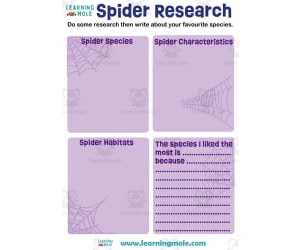
Spider Activity
Science, Life Sciences, Biology, Animals, Grade 3, 4, 5, 6, 7, 8, Activities
Activity Introduction An amazing activity designed for the students to learn more about famous places in different countries. The Spider Do you like animals? what is your favorite one? Do you own a pet? If yes, tell us more about it, like what its name? And what do you like most about it? What are the animal kingdoms? Can you write down the characteristics of each animal class like mammals, birds, reptiles, amphibian, fish and mollusks. Do you know that some animals can sing, can you name any of them? What is the largest and the smallest mammal in the world? What is the largest and the smallest bird in the world? What is the largest and the smallest fish in the world? Spider Activity The activity is perfect for encouraging the researching skills for the students, while learning more about this fantastic place. Spider This friendly designed worksheet is suitable for students at school, homeschooling, and as a group activity. Instructions Do some research then write about your favorite species. Format Available in a PDF format.
Author Educational Voice
Tags Spider Activity, Spider, Spiders, Spiders Facts, Spiders Facts For Kids, Animals, Animals Facts, Animal, Animals Facts For Kids
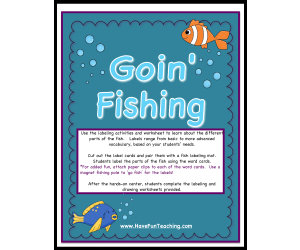
Fish Parts Activity
Science, Life Sciences, Animals, Biology, Earth and Environmental Sciences, Earth Sciences, Preschool, Grade 1, Activities
This activity is perfect for helping students label the parts of a fish and build their understanding of a fish's anatomy. It's a great way to engage students and help them learn about the world around them.
Author Have Fun Teaching
Tags Living And Non-Living Things

St. Patrick’s Day Kindergarten STEM Activities and March-themed Challenge Task Cards
Science, Technology, Engineering, STEM, Preschool, Grade 1, Activities
St. Patrick's Day Kindergarten STEM Activities and March-themed Challenge Task Cards This educational tool is a game-changer that introduces Kindergarten and Grade 1 students to the fascinating world of Science, Technology, Engineering, and Mathematics (STEM) with an exciting twist of St. Patrick's Day themed challenges. Key Skills Nurtured Problem-solving Creative thinking Making connections Fostering a growth mindset The teaching resource includes four STEM challenges per month associated with monthly themes or special days such as St Patrick's Day in March. Pack Composition Differentiated challenge cards catering to all skill levels Differentiated planning sheets which include general ones as well as challenge-specific sheets. (Posters come both in color & black/white thus facilitating reinforcement of concept understanding.) The STEAM design process underpinned by information on STEAM application during early years of education including scripted talking points. (Available tools in three sizes each have been made considering various classroom layouts hence enhancing their usability) Educator Resource Utilization Modes: (Either use the resource efficiently incorporating it into large group activities where everyone tackles the same challenge or assigns different tasks for individual practice.) Leveraging optional buddy-system engagement so older students can assist younger ones with shared tasks promoting collaborative learning among peers. (For a student-driven approach, the detailed lesson plans provided alongside design process poster assists them work without educator assistance) Effective during learning center time by providing ready-to-implement activity centers. With given observation sheets specific to STEAM activities, you'll easily track student progress. A material list from Maker Space included ensures adherence towards recommended resources aimed at enriching the learning experience. In conclusion, this resource is excellent for educators aiming to boost students' STEAM skills through a hands-on and fun approach.
Author Creativity Powered Kindergarten
Tags STEM Activities, St Patrick's Day, Kindergarten, March-themed Challenges, Hands-on Learning

Calorimetry Practice Problems ESL: Korean Version
Science, Chemistry, Grade 8, 9, 10, 11, 12, Activities
Calorimetry Practice Problems ESL: Korean Version is a chemistry teaching resource that provides 10 practice problems covering calorimetry calculations using the formula q=mcΔT. Students are tasked with calculating temperature, mass, specific heat, and other variables. The questions can be edited to fit lesson plans and include an answer key with step-by-step solutions. This resource also includes a Korean translation under each question to support English Language Learners whose first language is Korean. Developed by a bilingual AP chemistry student, the translations aim to improve comprehension for non-native speakers. This supplemental word problem activity can be utilized in whole group instruction, small group practice, individual practice, or as a homework assignment to give students extra practice applying calorimetry concepts. The problems are appropriate for grade 8 through 12 chemistry classes.
Author Schrim's Chem
Tags Calorimetry , Practice Problems, Chemistry Korean, ESL

Good or Bad Ozone Activity
Science, Earth and Environmental Sciences, Earth Sciences, Grade 3, 4, 5, 6, 7, 8, 9, 10, Activities
Activity Introduction An amazing activity designed for the students to learn more about STEM. Good or Bad Ozone Do you like STEM subjects? what is your favorite one? Have you ever tried to plant a seed? If yes, tell us more about it. Or have you ever tried to invent something? If yes, tell us more about it. And how do you think it will help us? Have you ever seen a microorganism under a microscope? What was it? And how it looked like? Mathematics is a marvelous subject. Let' sharpen our brains and solve some equations. Do you like timetable tricks? What is your favorite one? Do you know how to code? Have you ever created an app or a game before? If yes, how was it like? Good or Bad Ozone Activity The activity is perfect for encouraging the researching skills for the students, while learning more about this fantastic topic. Good or Bad Ozone This friendly designed worksheet is suitable for students at school, homeschooling, and as a group activity. Instructions Write the names for bad and good ozone layers, then write down why one is considered good and one is considered bad. Format Available in a PDF format.
Author Educational Voice
Tags Good Or Bad Ozone Activity, Ozone Activity, Bad For The Ozone, Bad For The Ozone Activity, Bad For The Ozone Facts, Bad For The Ozone Facts For Kids, Good For The Ozone, Good For The Ozone Facts
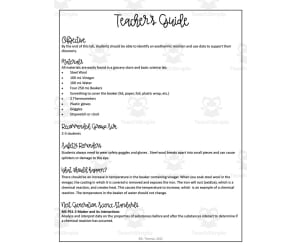
Heat Transfer Science Lab
Science, Chemistry, Grade 6, 7, 8, Activities, Projects
Heat Transfer Science Lab is an engaging hands-on science activity focused on endothermic and exothermic chemical reactions. Students in grades 6-8 follow procedures to combine various household substances and document detailed observations. Learners identify physical and chemical changes that produce or absorb heat energy. This project facilitates small groups collaborating on an experiment from start to finish - preparing materials, collecting qualitative and quantitative data, analyzing results, and drawing conclusions. Implement Heat Transfer Science Lab to reinforce chemistry concepts like phase changes, energy transfers, and chemical bonds. The detailed student lab sheet scaffolds the scientific process and develops critical thinking skills. Heat Transfer Science Lab allows educators to facilitate an inquiry-based lab that aligns to next generation science standards.
Author Maude in the Middle
Tags Heat Transfer, Science Lab, Chemical Reactions, Data Collection, Science Observations

Planet Photoshop Activity
Science, Technology, Grade 7, 8, 9, 10, Activities
Students will work with digital tools in the Planet Photoshop Activity . Students will create a planet using an existing satellite photo. Step by step directions are included.
Author OK Products
Tags Planets, Astronomy, Technology, Computer Science, Computer Activities, Photoshop, Photopea, Graphic Design
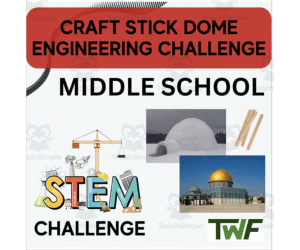
Craft Stick Dome Challenge - MIDDLE SCHOOL - STEM Engineering
Science, Basic Science, Technology, Engineering, Physics, STEM, Grade 6, 7, 8, Activities
Craft Stick Dome STEM Challenge for High School Students. My Craft Stick Dome Challenge is an excellent way to get your students' excited for STEM in an engaging hands-on way. It also is a great way to introduce them to the world of engineering. This activity is designed for High School students. If you're looking for something for Middle School, please click here. In this activity, students will work in groups to design and build a Craft Stick Dome using only craft sticks with the goal of creating the most stable dome possible. By doing this activity, your students will experience the process of creating something new as they brainstorm, plan, design, and test their ideas. This challenge allows students to apply what they're learning in science and math classes, including geometry, physics, material science and more as they problem-solve to create the Craft Stick Dome using only simple materials. Additionally, they will develop critical thinking, creativity, communication, and collaboration skills while working in a group setting. Your STEM Challenge comes with: A full set of instructions Reflection questions An explanation on the science behind the challenge Instructions on creating their design Tips for getting started on the challenge The Craft Stick Dome Challenge is an activity your students will enjoy. It will allow them to: explore how shapes and structure affect stability. learn principles of weight distribution. use the engineering design process. develop perseverance, resourcefulness and an ability to learn from setbacks and mistakes. This activity is easy to implement with step-by-step instructions and is adaptable to different learning styles and abilities as you can customize it however you like to suit your students. It encourages students to embrace productive failure and to work together to create something tangible.
Author Teach With Fergy
Tags Stem, Engineering, Stem Challenge, Engineering Challenge, Paper Chair, Paper Chair Challenge, Paper Chair STEM

Student Astronaut Project Photoshop Activity
Science, Technology, Grade 7, 8, 9, 10, Activities, Projects
Students will work with digital tools in the Student Astronaut Project Photoshop Activity. Students will create a space scene and insert themselves as an astronaut. Step by step directions are included.
Author OK Products
Tags Astronauts, Outer Space, Technology, Graphic Design, Animations, Computer Activity, Small Group, Planets

Average Atomic Mass Practice
Science, Chemistry, Grade 8, 9, 10, 11, 12, Activities
This resource presents 13 practice problems which cover the topic of average atomic mass. Students are expected to practice t he calculation of the amu of elements, the relative abundance, and to use mass spec data for the determination of the identity of an element. The answers and solutions to all questions are provided. Answers included!
Author Schrim's Chem
Tags Average Atomic Mass, Amu Of Elements, Relative Abundance, Identify Of Element

Characteristics of Living Things Mini Research
Science, Life Sciences, Biology, Research, Grade 6, 7, Activities, Projects
This is a Characteristics of Living Things Mini Research. All you have to do is print and go. Your science students will explore more about living things through research. They will have a graphic organizer to help them jot notes as they research. Then they will used to lined paper to complete an informative writing piece.
Author Sarah Miller Tech
Tags Living Things, Science Project, Biology, Research, Writing Prompts, Characteristics Of Living Things Activity

Thermal Camera Activity
Science, Technology, Grade 3, 4, 5, 6, 7, 8, 9, Activities
Activity Introduction An amazing activity designed for the students to learn more about STEM subjects. Thermal Camera Do you like STEM subjects? what is your favorite one? Have you ever tried to plant a seed? If yes, tell us more about it. Or have you ever tried to invent something? If yes, tell us more about it. And how do you think it will help us? Have you ever seen a microorganism under a microscope? What was it? And how it looked like? Mathematics is a marvelous subject. Let' sharpen our brains and solve some equations. Do you like timetable tricks? What is your favorite one? Do you know how to code? Have you ever created an app or a game before? If yes, how was it like? Thermal Camera Activity The activity is perfect for encouraging the researching skills for the students, while learning more about this topic. Thermal Camera This friendly designed worksheet is suitable for students at school, homeschooling, and as a group activity. Instructions Draw what a thermal camera might show under the cloak. Can you describe how thermal cameras work? Format Available in a PDF format.
Author Educational Voice
Tags Thermal Camera Activity, Thermal Camera, Thermal Camera Facts, Thermal Camera Facts For Kids, STEM, STEM Facts, Stem Facts For Kids, Technology
Arm Muscles Model Activity
Science, Life Sciences, Human Body, Biology, Grade 2, 3, 4, 5, 6, 7, 8, Activities
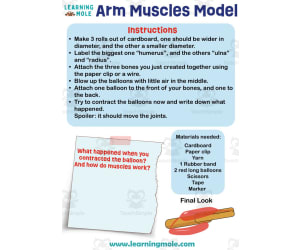
Activity Introduction The human body is full of fascinating wonders to learn. This activity is created to help the students recognize the anatomy and the job of the human body. Arm Muscles Model Every part and organ in our human body is vital so let's see how important they are. Have you ever imagined how we look like if we didn't have a skeleton? Did you know that because we have our amazing muscles we can stand! Do you know how many teeth do we have? Have you ever wondered about the food journey inside our body? Can you name all the glands in our body? Why do we have skin? Our nervous system is really good at sending signals. Can you tell us more about it? Are you really good at Mathematics, painting, or any other thing? You should really thank your brain about it! The famous five senses are really doing a great work? Can you explain how every sense works? Arm Muscles Model Activity The activity is perfect for encouraging the researching skills for the students, while learning more about our fantastic human body. Arm Muscles Model This friendly designed worksheet is suitable for students at school, homeschooling, and as a group activity. Instructions Make 3 rolls out of cardboard, one should be wider in diameter, and the other a smaller diameter. Label the biggest one "humerus", and the others "ulna" and "radius". Attach the three bones you just created together using the paper clip or a wire. Blow up the balloons with little air in the middle. Attach one balloon to the front of your bones, and one to the back. Try to contract the balloons now and write down what happened. Format Available in a PDF format.
Author Educational Voice
Tags Arm Muscles Model Activity, Arm Muscles Model, Arm Muscles, Arm Muscles Facts, Arm Muscles Facts For Kids, Muscular System, Muscular System Facts, Muscular System Facts For Kids, Human Body