



3,947 products added recently
Page 62 - Centers
Enhance your classroom with a variety of centers designed to support active learning across different subjects. These resources provide engaging activities that promote collaboration, independence, and hands-on experiences. Implementing centers in your classroom can help differentiate instruction and accommodate diverse learning styles, keeping students motivated and involved in their learning process.

 Show filters


Social Studies Reading Passages: Psychology and Society (Fillable PDF)
ELA, Reading, Reading Comprehension, Strategies, Resources for Teachers, Social Studies, Psychology, Sociology, Grade 6, 7, 8, 9, Writing Prompts, Worksheets & Printables, Centers, Activities, Teacher Tools, Assessments, Quizzes and Tests, Quizzes, Tests
Social Studies Reading Comprehension Passages: Psychology and Society (Fillable PDF) This resource introduces a collection of Social Studies reading comprehension passages about Psychology and Society. The passages are carefully designed to bridge the gap between social studies and literacy through strengthening reading comprehension and sparking knowledge curiosity in middle school students. Each passage blends English Language Arts skills with accurate social studies content. Ideal for interdisciplinary learning in ELA and Social Studies. Suitable for Grade 9 review, too! These worksheets are designed as fillable PDFs , which means students can type their answers directly into the document on any computer or tablet . Each page includes highlighted text fields that show them exactly where to type! What Is Included in this Collection? There are three informational passages (with full answer keys): Facing Fear: Understanding Phobias Color Therapy: Can Colors Help You Feel Better Inside the Mind of a Criminal: Profiling at Work For Each Passage, students will have multiple tasks to complete as follow: 5 multiple-choice questions targeting main idea, key details, inference, vocabulary in context, and use of evidence 5 vocabulary matching items with clear, student-friendly definitions 5 text-based questions that require citing specific lines or facts 1 summary prompt that asks students to condense central ideas accurately Available Formats for this Resource PDF Word Docs Google Docs FULL CATALOG OF DOWNLOADING LINKS HERE For more Social Studies Reading Passages, check the following Links: Ancient Civilizations PDF Fillable PDF Word Docs Google Docs Early Empires and Trade Networks PDF Fillable PDF Word Docs Google Docs The Founding of the United States PDF Fillable PDF Word Docs Google Docs Language, Culture, and Meaning PDF Fillable PDF Word Docs Google Docs Psychology and Society PDF Fillable PDF Word Docs Google Docs Global Festivals and Traditions PDF Fillable PDF Word Docs Google Docs Extreme Environments and People PDF Fillable PDF Word Docs Google Docs Food, Culture, and Preservation PDF Fillable PDF Word Docs Google Docs Global Food Customs PDF Fillable PDF Word Docs Google Docs Media, Communication, and Popular Culture PDF Fillable PDF Word Docs Google Docs Human Impact on the Environment PDF Fillable PDF Word Docs Google Docs Civic Action and Social Change PDF Fillable PDF Word Docs Google Docs Fashion, Society, and Power PDF Fillable PDF Word Docs Google Docs People, Places, and Unusual Histories PDF Fillable PDF Word Docs Google Docs How to Use These PDFs Click on the highlighted area to start typing your answer. Move to the next question by clicking in the next highlighted box. When you are finished, close the document and select SAVE so your answers stay recorded. If you want to keep a blank copy for later, choose Save As and give your completed version a new name. Product Details Length: 15 pages total Grades: 6–8, also suitable for Grade 9 review Use cases: close reading, stations, homework, intervention, test prep, and sub plans Why Teachers Choose This Set Authentic social studies content paired with rigorous literacy practice Consistent task structure across all passages for easier planning and smoother student routines Clear, age-appropriate writing that builds confidence without oversimplifying Use this set to reinforce ELA skills in social studies, to add literacy to your lessons, and to support independent work. The passages strengthen main idea, evidence use, vocabulary in context, inference, cause and effect, and summary writing. With ready-to-use assessments and complete answer keys, you can provide focused practice that is simple to run and fast to review.
Author Middle & High School - CORED Education
Rating
Tags Middle School, Reading Comprehension, Reading Strategies, ELA, Centers, Reading Passage, Assessments, Vocabulary, Social Studies, Psychology

Alphabet Beading Center
ELA, Language Development, Pre-Reading, Kindergarten, Preschool, Centers, Activities
This alphabet fine motor beading center will assist students in practicing letter recognition and in building their fine motor skills. This task box alphabet activity will allow students to stay engaged and have fun while learning to recognize letters. What is Inside: This fine motor activity provides letter recognition cards with five capital or lowercase letters on each card. Some letter cards feature letters in alphabetical order while the others have the letters all mixed up. There is also a worksheet where the students, or the teacher, can write their own letter sequences to create with the alphabet beads. How to use: Students will choose one alphabet card. They will then hunt for the beads that are a match to the letters on their card. Afterwards, they will string the beads in the correct order onto their pipe cleaner. Types of Activities Literacy or Fine Motor Center - Place the cards, beads and pipe cleaners inside a center for students to complete. Small Group Activity - These work well for small group activity for students who need extra practice in identifying letters. Morning Tub or Basket - These cards work well as a morning activity as students wait for classmates to arrive to class. This beading center can be used in a variety of different locations inside the classroom. These alphabet cards can be stored in a pencil box to create an easy to set up literacy center. Students will have all they need to complete this activity all in one spot. By using pencil boxes, the students can easily clean up the center and put it away. Skills Assessed: This beading activity helps students practice identifying letters and letter recognition, for both capital letters and lowercase letters. In addition to letter knowledge, students will also practice their fine motor skills by stringing beads on the pipe cleaners.
Author The Connett Connection
Tags Alphabet Beading, Fine Motor Center, Fine Motor Skills, Alphabet Activities, Alphabet Center

Guided Reading Level N - The Power of the Team (with Lesson Plan)
ELA, Resources for Teachers, Reading Comprehension, Reading, Language Development, P.E. & Health, Sports, Social Emotional Learning (SEL), Special Resources, Physical Education, Grade 2, 3, 4, Worksheets & Printables, Worksheets, Teacher Tools, Centers, Activities, Literacy Readers, Quizzes, Quizzes and Tests, Assessments
This Guided Reading Book - The Power of the Team (Level N) with lesson plan includes: Guided Reading Color Label (front cover x1) This is a quick way to match the book’s demands to what students can generally handle.. The overall goal is to use the level/color to pick books for several smaller groups. To qualify for a certain level, a student is expected to read a book from that level with about 90–94% accuracy. If a student is consistently accurate and understands, move up a level. If the student is struggling at that level, drop down and add more support. Each student will improve at completely different rates, but it is generally one of the best ways to check progress across the class. DOWNLOAD THE CATALOG TO VIEW ALL GUIDED READING BOOKS AVAILABLE (SORTED LEVELS A-Z) Pre-Reading Question (x1) Teacher asks the prompt aloud, can be while showing the cover or first page. Students share what they already know, or make educated guesses from the cover. Prompt them to use the target vocabulary. Write some of their responses on the board to look back at during the reading. Vocabulary Words (x5) Introduce the five words, best doing it one at a time. Start by saying it, while students repeat and then see if anyone knows what it means before reading further. Read through the meaning and try to briefly connect each word to a picture or gesture so it’s meaningful. Ask students to flip through the book pages and point to where they see each of the vocabulary words. While reading the book pause upon coming across one of the vocab words or read the sentence twice to make sure students understand the word has appeared. Optional: Ask students to raise hands whenever they see/hear one of the new words. Guided Reading Pages (x10) Check the book snapshot (below) for: primary topic - do you need to prep extra reading or intro materials on this? what is taught best - decide on 1-2 bullets to focus on, use the prompt or words provided here for best results. learning goals - what you are checking for students to be able to do after the session, elicit answers using prompts or words provided. key vocabulary (see section above). questions overview - so you know what is coming up and if you need to prep extra materials to assist understanding. Run the lesson You may have already looked at a few of the pages together, but you can show them some of the pictures again first to set meaning. Depending on how much time you have and how familiar your students are with guided reading class, you may want to read the book aloud first with the group first. Students whisper or partner read, while you listen in. If time, do it as a group, one student reading a page each. Use the guided page’s prompts to coach: “Check the picture / does it make sense?” “Point under the words / try the first sound” “Reread the sentence smoothly”. Try to focus more on one student per session (rotating every time), so you can work out if they are ready to move up or need to move down a level. Comprehension Questions (back cover x3) This is your way to check that students didn’t just say the words, but actually understood the text. First, let students answer by pointing to the page/picture and saying a short sentence. After any answer, follow with: “Show me where you found that in the text.” In bigger groups, have partners answer first (10–20 seconds), then call on 2–3 students to share. Differentiation tips: Emerging speakers/struggling readers: oral + pointing On-level: oral in a full sentence Higher: one written sentence or draw + label Book Snapshot Title: The Power of the Team Genre: Nonfiction (informational) Subject: SEL / Physical Education / Reading Primary Topic: Teamwork skills that help teams succeed Estimated Guided Reading Level (A–Z): N What This Book Teaches Best Teamwork and shared goals: Teamwork happens when people work together to reach a common goal and play “for the whole group.” Communication in fast-paced play: Players use loud voices or hand signals to share information so everyone knows what to do next. Trust and cooperation through passing: Passing the ball (or puck) makes it harder for the other team to take it and shows teammates trust each other. Support and encouragement: Teammates help each other after mistakes and keep spirits high when things get difficult. Planning, practice, and coordination: Teams use strategy, practice together, and coordinate timing (like passing a relay baton) to perform smoothly. Learning Goals Students will explain what teamwork is and what it helps a team reach, using details from the text. Students will describe how communication helps a team during a fast-paced game. Students will explain why passing is important and what it shows about trust on a team. Students will describe ways teammates support one another with encouragement when someone struggles or makes a mistake. Students will explain how strategy and practice help a team work “like a single machine.” Students will describe how coordination and shared defense help teams succeed. Key Vocabulary From the Text cooperation — working together to reach a goal. vital — very important. encouragement — kind support that helps someone keep trying. strategy — a plan for the best way to play. coordination — moving and working together at the right time. Discussion Prompts Pre-reading question: How can working together help a team do better in a sport? Comprehension questions: What does the text say teamwork helps a group of people reach? According to the text, what do players use to share information during a fast-paced game? What does the text say teamwork teaches people how to be in every game they play? Printing Tips 1. Best Printing Method (Recommended) “Booklet” Printing (Best if Available) If your printer or PDF viewer supports Booklet Printing , use this. Settings to use: Print mode: Booklet Paper size: Letter or A4 (either works) Orientation: Landscape Print on both sides: Yes Flip on: Short edge Scaling: Fit to printable area Booklet subset: First test: Front sides only Then: Back sides only This will automatically: Pair pages correctly Put the cover on the outside Align everything for folding After printing, fold in half and staple along the spine . 2. If “Booklet” Printing Is NOT Available You can still print this correctly with manual duplex printing . Step-by-step: Open the PDF. Choose Print . Set: Orientation: Landscape Pages per sheet: 1 Print on both sides: Yes Flip on: Short edge Print all pages . Because each PDF page already contains two facing book pages, the result will still fold cleanly into a book. Thousands of Cored Education products are included with your TeachSimple membership. Download links and encyclopedia index available here.
Author Cored Education
Rating
Tags Reading Comprehension, Reading Passages, Reading, Guided Reading, Guided Reading Lesson Plan, Guided Reading Activity, Pre-reading, Vocabulary, Sports, P.e. Lesson Plans

Reading Comprehension Fiction Set 7: Ian's Friday Nights (Forms)
ELA, Reading, Language Development, Common Core, ESL, Vocabulary, Children’s Literature, Literature, Writing, Reading Comprehension, Grade 2, 3, Centers, Activities, Assessments, Teacher Tools, Tests, Quizzes and Tests
Reading Comprehension Passages Fiction Set 7 Sample Overview Fascinating reading comprehension passages, each with an array of activities included. Stories are written for the modern classroom and topics are designed to promote enthusiasm from each student. Each lesson contains a mixed questions section to check understanding, a vocabulary or spelling activity to help remember key language introduced, and a writing exercise. Full answer keys are provided. For a more detailed overview, check the section under the links at the bottom of this description. Passage Included 3.Ian's Friday Nights: Ian wants to be anywhere but the bleachers on Friday nights. Forms Version This is the Forms editable and fillable/self grading version. This download is available in GOOGLE Docs, GOOGLE Forms, GOOGLE Slides. PDF, PPT, WORD. FULL CATALOG OF DOWNLOAD LINKS HERE Grade 2/3 Links Fiction Set 1 - Nature Google Docs Google Forms Google Slides PDF PPT Word Guided Reading Materials Fiction Set 2 - Animals Google Docs Google Forms Google Slides PDF PPT Word Guided Reading Materials Fiction Set 3 - Food Google Docs Google Forms Google Slides PDF PPT Word Guided Reading Materials Fiction Set 4 - School Google Docs Google Forms Google Slides PDF PPT Word Guided Reading Materials Fiction Set 5 - Friends Google Docs Google Forms Google Slides PDF PPT Word Guided Reading Materials Fiction Set 6 - Family Google Docs Google Forms Google Slides PDF PPT Word Guided Reading Materials Fiction Set 7 - Sports Google Docs Google Forms Google Slides PDF PPT Word Guided Reading Materials Nonfiction Set 1 - Technology Google Docs Google Forms Google Slides PDF PPT Word Guided Reading Materials Nonfiction Set 2 - Nutrition Google Docs Google Forms Google Slides PDF PPT Word Guided Reading Materials Nonfiction Set 3 - Animals Google Docs Google Forms Google Slides PDF PPT Word Guided Reading Materials Reading Passages Overview Each passage is especially written for Grade 2-3 students, including key vocabulary required for this age group. Topics are varied and are accompanied by colorful graphics. Topics are meant to educate, yet entertain the modern student. These passages are perfect for the modern classroom. Whereas textbooks can become outdated in no time, any changes to technology or the world will result in updates to this product. Mixed Questions The mixed questions section of each lesson includes a variation of fivecomprehension, vocabulary and math questions. In addition, key reading strategies are frequently covered including cause & effect, summarizing, compare & contrast and making conclusions. Three of the questions will be MCQs and two will require a written response of some kind. Full answers and example responses appear at the end of the lesson. Spelling & Vocab Each reading passage contains a variety of words and phrases designed for Grade 2-3 students. Spelling and vocab activities provide the opportunity to build fluency with these words. As it can become quite mundane doing the same activities over and over, each lesson in a set will contain a different spelling and vocab activity . Writing Prompts Writing prompts are designed to continue the theme or lessons learned in the story. Students are persuaded to write in a variety of ways and each prompt includes several cues to help. As with the spelling/vocab section, writing prompts will vary. This includes research pieces, reading responses, poetry and creative writing prompts. Full Answer Keys Full answer keys and sample responses are provided so no matter how busy you are, you know you're covered! Mixed question answers provide evidence from the text, math questions contain the relevant workings. Answers are designed for use by the teacher, but also suitable as a handout to the student. Additional File One lesson will have an additional file. This is something fun to extend the lesson with. For similar downloads and other frees, do check out Cored Group on TeachSimple.
Author Cored Education
Tags Elementary, Reading, Comprehension, Vocabulary, Answers, Ccss, Common Core, Spelling, Writing, Digital Centers

Suffix MENT Sentence Reading Rings
ELA, Language Development, Phonics, Grade 2, 3, 4, Activities, Centers, Worksheets & Printables, Task Cards
Practice reading words with the suffix -MENT with these sentence reading rings. Students will read words with the suffixes -ment in the context of sentences. Each card also includes a bold and colorful image to illustrate each sentence and to help students to learn the meanings of each word. What is Included: This resource includes one reading ring activity for the suffix ment. There are cards each featuring a different word with the suffix ment, with a sentence using the word in context and an image to illustrate that sentence. When to Use Early Finishers - If students finish their work early, they can use these reading rings for extra practice. Small Group Work - Teachers can use these reading rings to target small groups of students who need more practice reading words with suffixes. Independent Practice - Students can work independently at their desks to read this set of suffix cards. Morning Work - Students can read and review this reading ring for morning work as their classmates arrive to class. How to Make: Teachers will print out the pages and cut each card apart. Once cut apart, the teacher can choose to laminate the cards for durability. Then, use a hole punch to punch a hole in the top left corner of the card. Place the cards on a ring to create your reading ring, making sure the cover card is on top. Skills Assessed: These reading rings help with identifying words with suffixes These reading rings help with learning the meaning of suffixes These reading rings help students learn how suffixes change the meaning of words. These affixes reading rings are a low prep activity for teachers to prepare for students to use. Once created, these cards can be used over and over to practice reading words with suffixes in the context of a sentence.
Author The Connett Connection
Rating
Tags Affixes, Morphology, Literacy Activities, Reading Words With Suffixes, Suffixes

Chanel, Dior, and Women's Lives: Social Studies Reading Passage (Word)
ELA, Reading, Reading Comprehension, Strategies, Resources for Teachers, Social Studies, Sociology, Grade 6, 7, 8, 9, Writing Prompts, Worksheets & Printables, Centers, Activities, Teacher Tools, Assessments, Quizzes and Tests, Quizzes, Tests
Chanel, Dior, and Women's Lives: Social Studies Reading Comprehension Passage (Word) This resource introduces a unique Social Studies reading comprehension passage with questions about Chanel, Dior, and Women's Lives. The passage is carefully designed to bridge the gap between social studies and literacy through strengthening reading comprehension and sparking knowledge curiosity in middle school students. Each passage blends English Language Arts skills with accurate social studies content . Ideal for interdisciplinary learning in ELA and Social Studies. Suitable for Grade 9 review, too! Student Tasks throughout the passage: 5 multiple-choice questions targeting the following skills: main idea, key details, inference, vocabulary in context, and use of evidence 5 vocabulary matching items with clear, student-friendly definitions 5 text-based questions that require citing specific lines or facts 1 summary prompt that asks students to condense central ideas accurately Full answer key for every section Available Formats for this Resource: PDF Fillable PDF Google Docs FULL CATALOG OF DOWNLOADING LINKS HERE Social Studies Reading Comprehension Collection Links: 1. Ancient Civilizations PDF Fillable PDF Word Docs Google Docs 2. Early Empires and Trade Networks PDF Fillable PDF Word Docs Google Docs 3. The Founding of the United States PDF Fillable PDF Word Docs Google Docs 4. Language, Culture, and Meaning PDF Fillable PDF Word Docs Google Docs 5. Psychology and Society PDF Fillable PDF Word Docs Google Docs 6. Global Festivals and Traditions PDF Fillable PDF Word Docs Google Docs 7. Extreme Environments and People PDF Fillable PDF Word Docs Google Docs 8. Food, Culture, and Preservation PDF Fillable PDF Word Docs Google Docs 9. Global Food Customs PDF Fillable PDF Word Docs Google Docs 10. Media, Communication, and Popular Culture PDF Fillable PDF Word Docs Google Docs 11. Human Impact on the Environment PDF Fillable PDF Word Docs Google Docs 12. Civic Action and Social Change PDF Fillable PDF Word Docs Google Docs 13. Fashion, Society, and Power PDF Fillable PDF Word Docs Google Docs 14. People, Places, and Unusual Histories PDF Fillable PDF Word Docs Google Docs Product Details: Length: 5 pages Grades: 6–8, also suitable for Grade 9 review Use cases: close reading, stations, homework, intervention, test prep, and sub plans Why Teachers Choose This Passage: Authentic social studies content paired with rigorous literacy practice Consistent task structure for easier planning and smoother student routines Clear, age-appropriate writing that builds confidence without oversimplifying Use this passage to reinforce ELA skills in social studies, to add literacy to your lessons, and to support independent work. The passage strengthens main idea, evidence use, vocabulary in context, inference, cause and effect, and summary writing. With ready-to-use assessments and complete answer keys, you can provide focused practice that is simple to run and fast to review.
Author Middle & High School - CORED Education
Rating
Tags Middle School, Reading Comprehension, Reading Strategies, ELA, Centers, Reading Passage, Assessments, Vocabulary, Social Studies, Sociology
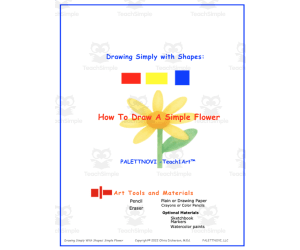
Drawing Simply With Shapes - How to Draw A Simple Flower
Creative Arts, Art, Fine Arts, Graphic Arts, Not Grade Specific, Crafts, Activities, Centers, Worksheets & Printables
Drawing lesson: Simply Drawing With Shapes - How To Draw A Simple Flower. This drawing lesson was created to teach how shapes may be used to create a drawing or artwork. In this drawing lesson, a student will use the basic shapes - circle, rectangle, and oval to draw a flower. This product contains two pages. A list of tools and materials is found at the bottom of the first page. The second page contains steps to complete the drawing or artwork. It may be printed separately as a guide for students to use. A teacher may use the lesson to teach drawing using shapes through demonstration in a classroom setting or online. The drawing may be created on different type of papers - plain printer, drawing, etc. or in sketchbook or art journal. The lesson is designed for students of various ages and grades. There are no answer keys. The file maybe downloaded in PDF format. #art # drawing #artwork #art-activities
Author Teach1Art™
Rating
Tags Drawing, Artwork, Art Activities, Sketchbook, Art Lesson
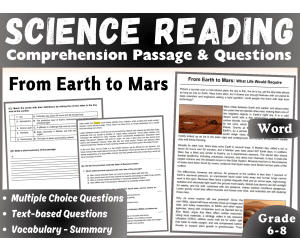
Earth Science Reading Comprehension Passage: From Earth to Mars (Word)
Science, ELA, Reading, Reading Comprehension, Strategies, Resources for Teachers, Earth and Environmental Sciences, Space, Grade 6, 7, 8, 9, Writing Prompts, Worksheets & Printables, Centers, Activities, Teacher Tools, Assessments, Quizzes and Tests, Quizzes, Tests
Science Reading Comprehension Passages and Questions: From Earth to Mars (Word) This very engaging earth science reading passage about Mars is designed to bridge the gap between science and literacy through strengthening reading comprehension and sparking scientific curiosity in middle school students. The passage blends English Language Arts skills with accurate science content that supports NGSS classroom practice. Ideal for interdisciplinary learning in ELA and Science. Suitable for Grade 9 review, too! Student Tasks for The Passage: 5 multiple-choice questions targeting main idea, key details, inference, vocabulary in context, and use of evidence 5 vocabulary matching items with clear, student-friendly definitions 5 text-based questions that require citing specific lines or facts 1 summary prompt that asks students to condense central ideas accurately Full answer key for every section Available Formats for this Resource PDF Fillable PDF Google Docs FULL CATALOG OF DOWNLOADING LINKS HERE Product Details Length: 5 pages total Grades: 6–8, also suitable for Grade 9 review Use cases: close reading, stations, homework, intervention, test prep, and sub plans Standards support: reinforces informational-text skills and supports NGSS-style sense making through observation, modeling, and clear use of claim, evidence, and reasoning Why Teachers Choose This Set Authentic science content paired with rigorous literacy practice Consistent task structure across all passages for easier planning and smoother student routines Clear, age-appropriate writing that builds confidence without oversimplifying Other Science Reading Collections you May find in the store: 1. Astronomy & Space Science 2. Volcanoes, Rocks, & Mountains 3. Rock Cycle, Soil, & Sinkholes 4. Mars, Glaciers, & Antarctica 5. Water Cycle, Acid Rain, & Wastewater 6. Insects, Animals, & Ecosystems 7. Bioluminescence & Insects 8. Animal Skin, Cats, & T. Rex 9. Human Body and Senses 10. Health & Applied Bioscience 11. Waves, Light, & Imaging 12. Electricity & Energy 13. Motion & Materials 14. Chemistry and Materials Science Use this set to reinforce ELA skills in science, to add literacy to your lessons, and to support independent work. The passages strengthen main idea, evidence use, vocabulary in context, inference, cause and effect, and summary writing. With ready-to-use assessments and complete answer keys, you can provide focused practice that is simple to run and fast to review.
Author Middle & High School - CORED Education
Rating
Tags Middle School, Reading Comprehension, Reading Strategies, ELA, Centers, Reading Passage, Assessments, Vocabulary, Environmental Science, Space
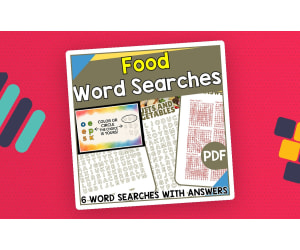
Food Word Searches (PDF)
ELA, Language Development, Resources for Teachers, Vocabulary, Spelling, ESL, Grade 2, 3, 4, 5, Worksheets & Printables, Worksheets, Teacher Tools, Centers, Activities, Word Searches
Wordsearch Series This wordsearch series is designed for students in grades 2–5. Each set of wordsearches is built around a clear vocabulary theme, helping students develop word recognition, improve spelling, and boost topic-related understanding through engaging visual puzzles. Every wordsearch also includes a fun hidden shape for students to guess—adding an interactive twist to traditional vocabulary practice. These wordsearches are student-friendly, classroom-ready, and perfect for integrating into literacy warmups, seasonal units, fast-finisher tasks, or home learning extensions. Each puzzle reinforces themed vocabulary in a playful, structured format that keeps learners motivated. Food Word Search Word List 1. Fruits and Vegetables Apple, Banana, Carrot, Grapes, Lettuce, Orange, Tomato, Berry 2. Breakfast Foods Eggs, Toast, Pancake, Cereal, Milk, Juice, Butter, Honey 3. Sweet Treats Cake, Cookie, Chocolate, Candy, Ice cream, Cupcake, Sprinkles, Lollipop 4. Drinks and Snacks Water, Juice, Milk, Tea, Popcorn, Crackers, Yogurt, Nuts 5. Foods from Around the World Pizza, Taco, Rice, Noodles, Cheese, Bread, Soup, Sushi 6. Healthy Foods Carrot, Apple, Fish, Eggs, Beans, Nuts, Spinach, Water PDF Version Other versions will appear here when available. Follow the store for the lastest on new products. How to Use These Wordsearches These wordsearches are ideal for: Morning work or early finisher bins Vocabulary centers or anchor activities Holiday or seasonal review lessons Independent literacy stations or take-home enrichment Each puzzle includes a themed word list and a shaped grid for students to complete. Word directions may vary (horizontal, vertical, diagonal), and answer keys are included for easy checking. Optional vocabulary challenges or writing tasks can be added to extend the learning experience. Whether you're reviewing key vocabulary, exploring a seasonal topic, or offering fun literacy practice, these wordsearches provide a flexible and engaging tool to support vocabulary growth in grades 2–5. More Food Themed Products CROSSWORDS FULL CATALOG OF DOWNLOAD LINKS HERE Themed Word Search Links Addition PDF Animals PDF Around the Home PDF Birthday PDF Candy PDF Christmas PDF Cinco de Mayo PDF Clothes PDF Colors PDF Days and Months PDF Division PDF Earth Day PDF Easter PDF Easy Word Searches PDF Fall PDF Father's Day PDF Food PDF Geography (Set 1) PDF Geography (Set 2) PDF Geography (Set 3) PDF Graduation PDF Health PDF History (Set 1) PDF History (Set 2) PDF History (Set 3) PDF Human Body PDF Kindness PDF Life Skills PDF Mother's Day PDF Multiplication PDF Science Word Searches (Set 1) PDF Science Word Searches (Set 2) PDF Science Word Searches (Set 3) PDF Shapes PDF Social Skills PDF Spring PDF Sports PDF St. Patrick's Day PDF Subtraction PDF Summer PDF Thanksgiving PDF Transport PDF Valentine's Day PDF Winter PDF Wordsearches in Depth Structure Each wordsearch is crafted around a focused sub-theme and includes a visual puzzle shaped like a related object (e.g., balloon, gift, snowman). Students complete each puzzle using the provided themed word list, strengthening both content knowledge and spelling skills in a highly engaging format. Each completed set includes: A shaped wordsearch puzzle with 10 vocabulary words A student instruction guide with search directions (horizontal, vertical, diagonal) An answer key for teacher support or student self-checking A Did You Know? fact connected to the theme for enrichment or discussion Themes Included The wordsearches cover a wide range of fun, age-appropriate themes, including: Seasons & Holidays (e.g., Halloween, Easter, Valentine’s Day) Math Concepts (e.g., Addition, Number Words) Everyday Topics (e.g., Animals, Weather, School) Special Units (e.g., Health, Earth Day, Sports, Kindness) Each topic is selected to reflect students’ real-life experiences and interests while reinforcing literacy skills and content understanding in a playful, visual way. For similar downloads and other frees, do check out Cored Group on TeachSimple.
Author Cored Education
Rating
Tags Vocabulary, Spelling, Food, Fruits And Vegetables, Breakfast Foods, Foods From Around The World, Healthy Foods, Food Activities, Word Searches, Food Word Searches

Science Reading Passage: The Dinosaur Tyrannosaurus rex (Fillable PDF)
Science, ELA, Reading, Reading Comprehension, Strategies, Resources for Teachers, Life Sciences, Animals, Biology, Grade 6, 7, 8, 9, Writing Prompts, Worksheets & Printables, Centers, Activities, Teacher Tools, Assessments, Quizzes and Tests, Quizzes, Tests
Life Science Reading Comprehension Passage and Questions: The Dinosaur Tyrannosaurus rex (Fillable PDF) This very engaging science reading passage about Tyrannosaurus rex and how scientists use fossils to understand how it lived. It explains what fossils are, where and when T. rex lived, and what fossil evidence reveals about its size, teeth, skull, movement, speed, diet, hunting, and scavenging. It also shows how modern tools, such as CT scans, imaging, computer simulations, and coprolites , help paleontologists build a clearer picture of T. rex as a powerful predator from the late Cretaceous period. This passage is designed to bridge the gap between science and literacy through strengthening reading comprehension and sparking scientific curiosity in middle school students. The passage blends English Language Arts skills with accurate science content that supports NGSS classroom practice. Ideal for interdisciplinary learning in ELA and Science. Suitable for Grade 9 review, too! This passage is designed as a fillable PDF , which means students can type their answers directly into the document on any computer or tablet . Each page includes highlighted text fields that show them exactly where to type! Student Tasks for The Passage: 5 multiple-choice questions targeting main idea, key details, inference, vocabulary in context, and use of evidence 5 vocabulary matching items with clear, student-friendly definitions 5 text-based questions that require citing specific lines or facts 1 summary prompt that asks students to condense central ideas accurately Full answer key for every section Available Formats for this Resource PDF Word Docs Google Docs FULL CATALOG OF DOWNLOADING LINKS HERE Product Details Length: 5 pages total Grades: 6–8, also suitable for Grade 9 review Use cases: close reading, stations, homework, intervention, test prep, and sub plans Standards support: reinforces informational-text skills and supports NGSS-style sense making through observation, modeling, and clear use of claim, evidence, and reasoning Why Teachers Choose This Set Authentic science content paired with rigorous literacy practice Consistent task structure across all passages for easier planning and smoother student routines Clear, age-appropriate writing that builds confidence without oversimplifying Other Science Reading Collections you May find in the store: 1. Astronomy & Space Science 2. Volcanoes, Rocks, & Mountains 3. Rock Cycle, Soil, & Sinkholes 4. Mars, Glaciers, & Antarctica 5. Water Cycle, Acid Rain, & Wastewater 6. Insects, Animals, & Ecosystems 7. Bioluminescence & Insects 8. Animal Skin, Cats, & T. Rex 9. Human Body and Senses 10. Health & Applied Bioscience 11. Waves, Light, & Imaging 12. Electricity & Energy 13. Motion & Materials 14. Chemistry and Materials Science Use this set to reinforce ELA skills in science, to add literacy to your lessons, and to support independent work. The passages strengthen main idea, evidence use, vocabulary in context, inference, cause and effect, and summary writing. With ready-to-use assessments and complete answer keys, you can provide focused practice that is simple to run and fast to review.
Author Middle & High School - CORED Education
Rating
Tags Middle School, Reading Comprehension, Reading Strategies, ELA, Centers, Reading Passage, Assessments, Vocabulary, Life Science, The Dinosaur Tyrannosaurus Rex

Reading Comprehension Nonfiction Set 3 - Mammals (Presentable PDF)
ELA, Reading, Reading Comprehension, Common Core, ESL, Language Development, Spelling, Vocabulary, Creative Writing, Writing, Grade 4, 5, Worksheets & Printables, Worksheets, Assessments, Teacher Tools, Tests, Quizzes and Tests, Centers, Activities
Reading Comprehension Passages Nonfiction Set 3 Snapshot Title: READING COMPREHENSION: Nonfiction Grade 4–5 Mammals Genre: Nonfiction (informational articles with comprehension/practice pages) Subject: Reading (Informational Text) / Life Science Primary Topic: Mammal traits, habitats, and survival (big cats + other mammals) Estimated Guided Reading Level (A–Z): T What This Teaches Best Building science knowledge from nonfiction (lions, tigers, horses, beavers, Canadian lynx, and cheetahs, including diet, habitat, and behavior). Cause-and-effect explanations (how living in prides supports lions; why beavers are called “nature’s engineers”; why cheetahs are becoming endangered). Comparing and distinguishing related animals (cheetahs vs. leopards; lions vs. other big cats; Canadian lynx vs. Eurasian lynx). Learning domain vocabulary in context (e.g., prides, solitary, habitat loss, ruff, ambush, diurnal, and carnivore appear within the articles). Support-page QA note: Some skill pages include words not used verbatim in the related article (e.g., Lion spelling includes impressive ; Horse spelling cues include attach / barrier while the article uses tack and obstacle courses ). Learning Goals Explain how lions live and hunt in prides using details from the text. Describe how tiger mothers care for cubs and what makes that job difficult. Identify costs and responsibilities connected to owning and caring for horses in the article. Explain how beavers change their environment and how dams and lodges help them survive. Describe how the Canadian lynx finds food and why it relies heavily on the snowshoe hare. Explain how cheetahs are adapted for speed and how they hunt differently from other big cats. Passages Include 1.Lions: Read about the second largest wild cat in this article. 2.Tiger Time: Tigers are such solitary creatures. Find out more in this lesson. 3.All About Horses: How is the author preparing to become a vet when she gets older? 4.All About Beavers: Here's all you need to know about 'nature's engineers'. 5.The Canadian Lynx: Canadian Lynxes look unique, and truly are amazing animals. 6.All About Cheetahs: The cheetah is the earth's fastest mammal. It can run as fast as 70 miles an hour! FULL CATALOG OF DOWNLOAD LINKS HERE PRESENTABLE PDF VERSION Run it like a slide show straight from a PDF, with no PowerPoint or extra software needed, just open, project, and teach. Other versions are available in the links list below or in the full catalog. For similar downloads and other frees, do check out Cored Group on TeachSimple.
Author Cored Education
Rating
Tags Elementary, Reading, Comprehension, Vocabulary, Common Core, Spelling, Writing, Passages, Reading Centers, Reading Comprehension Assessments

Letter Boxes: Find and Cover Center
ELA, Language Development, Pre-Reading, Kindergarten, Preschool, Centers, Activities
Letter Boxes: Find and Cover Center An ideal teaching resource that supports students on their journey to letter recognition familiarity. This product is an advantageous tool for educators, especially public school teachers and homeschoolers. It primarily targets early learners, preschool students, and kindergarteners. What's Inside? This product offering is a 20-page printable PDF. The guide comprises of: Letter cards specifically designed for understanding both uppercase and lowercase letters, Title cover options provided for efficient storage solutions. Versatility at Its Best! Elegantly designed with versatility in mind, the Letter Boxes: Find and Cover Center offers numerous ways to utilize within your teaching environment. Ideal applications include small group activities or whole class sessions where student interaction flourishes. The Concept: This multi-sensory experience involves drawing a card then locating each letter on their game board to subsequently covering each one with a counter token. There are also options available like bingo daubers or stamps or even alternating between uppercase letter sets and lowercase boards to cater different skill levels among students. The Setup Process: Print the letter cards & game boards, Add mini erasers, counters (or any small object) into a storage box for easy accessibility during gameplay, Aim to meet intervention needs by implementing this aide tool with children who need focus assistance in identifying either uppercase or lowercase letters respectively. In conclusion, With strategic design elements promoting engagement teamed with its inherent focus on strengthening foundational reading skills—Letter Boxes: Find and Cover Center is a must-include resource in your suite of teaching tools.
Author The Proactive Classroom
Tags Letter Recognition, Preschool Activities, Interactive Learning, Multi-sensory, Literacy Skills

Diwali: SAMPLE Social Studies Reading Comprehension Passage (Docs)
ELA, Reading, Reading Comprehension, Strategies, Resources for Teachers, Social Studies, Psychology, Sociology, Grade 6, 7, 8, 9, Writing Prompts, Worksheets & Printables, Centers, Activities, Teacher Tools, Assessments, Quizzes and Tests, Quizzes, Tests
This is a ONE PASSAGE SAMPLE. The following is the description of the FULL resource and the downloading links: Social Studies Reading Comprehension Passages: Global Festivals and Traditions (Docs) This resource introduces a collection of Social Studies reading comprehension passages about Global Festivals and Traditions. The passages are carefully designed to bridge the gap between social studies and literacy through strengthening reading comprehension and sparking knowledge curiosity in middle school students. Each passage blends English Language Arts skills with accurate social studies content. Ideal for interdisciplinary learning in ELA and Social Studies. Suitable for Grade 9 review, too! What Is Included in this Collection? There are three informational passages (with full answer keys): Diwali Around the World: One Festival, Many Lights Traditional Costumes: Clothing That Tells a Story Lucky Cash: What Money Superstitions Tell Us For Each Passage, students will have multiple tasks to complete as follow: 5 multiple-choice questions targeting main idea, key details, inference, vocabulary in context, and use of evidence 5 vocabulary matching items with clear, student-friendly definitions 5 text-based questions that require citing specific lines or facts 1 summary prompt that asks students to condense central ideas accurately Available Formats for this Resource PDF Fillable PDF Word Docs FULL CATALOG OF DOWNLOADING LINKS HERE For more Social Studies Reading Passages, check the following Links: Ancient Civilizations PDF Fillable PDF Word Docs Google Docs Early Empires and Trade Networks PDF Fillable PDF Word Docs Google Docs The Founding of the United States PDF Fillable PDF Word Docs Google Docs Language, Culture, and Meaning PDF Fillable PDF Word Docs Google Docs Psychology and Society PDF Fillable PDF Word Docs Google Docs Global Festivals and Traditions PDF Fillable PDF Word Docs Google Docs Extreme Environments and People PDF Fillable PDF Word Docs Google Docs Food, Culture, and Preservation PDF Fillable PDF Word Docs Google Docs Global Food Customs PDF Fillable PDF Word Docs Google Docs Media, Communication, and Popular Culture PDF Fillable PDF Word Docs Google Docs Human Impact on the Environment PDF Fillable PDF Word Docs Google Docs Civic Action and Social Change PDF Fillable PDF Word Docs Google Docs Fashion, Society, and Power PDF Fillable PDF Word Docs Google Docs People, Places, and Unusual Histories PDF Fillable PDF Word Docs Google Docs Product Details Length: 14 pages total Grades: 6–8, also suitable for Grade 9 review Use cases: close reading, stations, homework, intervention, test prep, and sub plans Why Teachers Choose This Set Authentic social studies content paired with rigorous literacy practice Consistent task structure across all passages for easier planning and smoother student routines Clear, age-appropriate writing that builds confidence without oversimplifying Use this set to reinforce ELA skills in social studies, to add literacy to your lessons, and to support independent work. The passages strengthen main idea, evidence use, vocabulary in context, inference, cause and effect, and summary writing. With ready-to-use assessments and complete answer keys, you can provide focused practice that is simple to run and fast to review.
Author Middle & High School - CORED Education
Rating
Tags Middle School, Reading Comprehension, Reading Strategies, ELA, Centers, Reading Passage, Assessments, Vocabulary, Social Studies, Global Festivals And Traditions
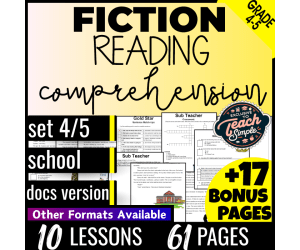
Reading Comprehension and Questions Fiction Set 4 - School (Docs)
ELA, Reading, Common Core, ESL, Language Development, Vocabulary, Spelling, Reading Comprehension, Literature, Writing, Grade 4, 5, Worksheets & Printables, Worksheets, Writing Prompts, Assessments, Teacher Tools, Tests, Quizzes and Tests, Centers, Activities
Reading Comprehension Passages Fiction Set 4 Overview No prep reading comprehension lessons, with enjoyable stories and topics. Each lesson has a blend of post-reading activities. Mixed questions to check overall understanding. Vocabulary activities, plus a writing section. Lessons also contain a bonus extension exercise at the end. Some you may like, some you may not, either way they are there if you wish to use them. Full answer keys are provided. Passages Include 1.The Principal: Kaitlin and Diann have to see the principal. Who's fault was it? 2.Fear: Tyson tries to look fearless. However, he has a lot on his mind lately. 3.Warm Welcome: Read about Juliet's first day at Westside Elementary. 4.Funny Photos: Darlene and her class have a good idea for their funny photos. 5.Gold Star: Amber's class has a new competition. The winner gets a goldstar. 6.Sub Teacher: Ed isn't excited to meet the sub teacher - Mr. Strict! 7.President Lina: Lina is too shy to run for school president. But after some persuasion... 8.Devon's Science Project: Devon helps save the world in this fun passage. 9.On the Stage: Tera and her class build a stage for their school out of adobe. 10.Eve's Amazing Day: Eve had a great day at school. Read all about it in this lesson. Docs Version This is the Docs editable and fillable version. This download is available in GOOGLE Docs, GOOGLE Forms, GOOGLE Slides. PDF, PPT, WORD. Browse the Complete Cored Catalog — 2,000+ Resources Included Reading Passages Each reading passage has been written specifically for students in Grades 4–5, using vocabulary and language that match their age and ability level. The collection covers a wide range of engaging topics, supported by colorful visuals that help bring the content to life. Every lesson is designed to build knowledge while keeping students interested and motivated to read. These resources are also designed with flexibility in mind. Unlike traditional textbooks that can quickly become outdated, lessons can be updated over time to reflect changes in technology, discoveries, and the world around us. Mixed Questions Every lesson includes a variety of questions that help students think more deeply about what they have read. The question section combines reading comprehension, vocabulary, and math skills, while also regularly reinforcing important reading strategies such as cause and effect, summarizing, compare and contrast, and drawing conclusions. Most lessons include a mix of multiple-choice and written-response questions, giving students opportunities to explain their thinking as well as select answers. Complete answer keys and sample responses are provided at the end of each lesson for quick and easy reference. Spelling & Vocabulary Each passage introduces students to useful words and phrases appropriate for Grades 4–5. To help build confidence and word knowledge, every lesson includes a spelling or vocabulary activity. Rather than repeating the same task throughout the collection, activities vary from lesson to lesson to keep practice fresh and engaging. Activities may include spelling challenges, sentence matching, decoding activities, mixed-up text exercises, and other vocabulary-building tasks connected directly to the reading. Writing Prompts Each lesson includes a writing activity that extends the ideas, themes, or topics explored in the passage. Students are encouraged to write in a variety of formats, with prompts providing helpful guidance and ideas to get them started. Writing tasks vary throughout the collection and may include creative writing, research activities, personal responses, poetry, opinion writing, and other engaging assignments. Full Answer Keys Complete answer keys and sample responses are included with every lesson, making planning and marking quicker and easier. Reading comprehension answers include evidence and support from the text, while math-based questions show the relevant working where appropriate. The answer keys are designed primarily for teachers but can also be shared with students when needed. Just for Fun Each lesson finishes with an optional extension activity called Just for Fun . These bonus activities provide an enjoyable way to extend learning beyond the main lesson and often encourage creativity, discussion, or independent thinking. They are completely optional, giving you the flexibility to use the activities that best suit your students and classroom needs. For similar downloads and other frees, do check out Cored Group on TeachSimple.
Author Cored Education
Rating
Tags Elementary, Reading, Comprehension, Vocabulary, Answers, Common Core, Spelling, Writing, Digital Centers, Vocabulary Assessments
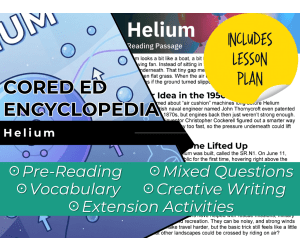
Helium Reading Comprehension Passage - Cored Ed Encyclopedia
ELA, Reading Comprehension, Reading, Science, Technology, Pre-Reading, Language Development, Physics, Earth and Environmental Sciences, Chemistry, Grade 2, 3, 4, 5, Worksheets & Printables, Worksheets, Teacher Tools, Centers, Activities, Writing Prompts, Assessments, Quizzes and Tests, Quizzes, Lesson Plans
This helium reading comprehension with lesson plan includes: Visualization (on the front cover) Start your lesson by taking a minute to think and share something about the topic. Read the script aloud (slowly), perhaps prepare some music or sound effects. Student close their eyes and let their imaginations wander. Students open their eyes, read the question aloud and give them a few minutes to complete. Ask a few students to share or keep answers until the end to compare with what they learn in the passage. Quick pause—thousands of Cored Education products are included with your TeachSimple membership. Download links and encyclopedia index available here. Pre-Reading Trivia Students will write down one thing they already know about the subject and then read five more facts and discuss. These facts are fun, and the students will enjoy learning about the subject before reading more. Give 1 minute for students to write what they already know (no pressure—best guess is fine). Read the five facts together. After each fact, do ask a student for their opinion, was it surprising? Set a purpose by asking students to highlight/underline one fact they want to learn more about during the reading. Reading Passage The text is a high-interest reading passage with set paragraphs, roughly three to four paragraphs long. It contains a variety of themes about the topic, anywhere from history to technology. The passage is between 250 and 350 words in length. First, ask students to look at the headings and see what they’ll learn about today. What do they know about the topic/heading? First read options: Teacher read-aloud (best for support). Partner reading (paragraph by paragraph). While reading, students underline important details, and vocabulary words they think may come up in the questions section. Mixed Questions The first question page contains four multiple-choice questions, each with a choice of four answers, and three written response questions that require a sentence or two from the student. Students complete the mcqs first independently, then review quickly as a class. For the 3 written responses, try to get students giving the answer with some form of evidence: “I think ___ because the text says ___.” If students get stuck, send them back to check the passage. Vocabulary Questions Practice seven key words from the text in this section across two activities. First section is scrambled words where students will unscramble three words given a clue for each. The second section is a word to meaning matching activity. Before starting, have some students read out words they underlined in the passage. Ask students to say the word and read aloud the sentence(s) around each word. Ask students to do scrambled words and the matching exercise in pairs then go through answers as a class. For the scrambled spelling task, get four pairs to come up to the board and write the words for extra practice with the other student reading out the clue. For the matching task, prompt students to give full sentences: “I matched ___ with ___ because ___.” Creative Writing In this question, the student will be required to write a five to eight sentence paragraph on a question related to the topic. Before starting, ask students write down 3 key ideas they are going to include in their piece. Ask students for ideas to share around the class to help those struggling. Pro writing expectations: 5–8 sentences At least 2 facts or details from the passage At least 2 vocabulary words from the previous page Students read their paragraphs while classmates listen for facts and vocabulary words. Extension Activities This page is optional for fast finishers or to take home. There are several activities, each one requiring a different skill. Do some, do none, do all, completely optional - but you will feel reassured knowing every possibility is planned for. Includes summary writting question and additional facts. Answer Key There are answers for the multiple-choice questions, written response questions have sample answers, vocabulary answers and if there is a summary question then a sample summary will be provided as well. Lesson Plan Included Customized lesson plan for this lesson is included. Lesson Snapshot Title: Helium Genre: Nonfiction (informational text) Subject: Science / Engineering (transportation technology) Primary Topic: How an air-cushion craft hovers and is used Estimated Guided Reading Level (A–Z): Q What This Lesson Teaches Best Explains how a “Helium” craft rides on a cushion of air trapped underneath instead of sitting in water. Describes why an air cushion reduces rubbing so the craft can “slide along” over surfaces like water, sand, or flat grass. Connects invention history to technology improvements (early ideas, a patented concept, then a smarter way to prevent air leaking). Shows how design changes solved problems (the flexible “skirt” helped hold the air cushion and climb over obstacles). Shares real-world uses and limitations (ferries, rescue missions, military landings, racing/recreation; noise and wind/waves). Learning Goals Students will describe how the craft moves differently from a regular boat, using details from the passage. Students will explain what an “air cushion” does and why it helps the craft slide over different surfaces. Students will identify one inventor or engineer named in the text and describe what problem they helped solve. Students will explain how the flexible “skirt” improved the craft’s ability to hover and travel. Students will list at least two jobs the craft can do (such as ferries or rescue missions) using evidence from the text. Students will describe one challenge mentioned in the passage that can make travel harder (winds or rough waves). Key Vocabulary From the Text cushion — a pocket of air that holds something up. patented — officially claimed an invention idea by law. pressure — pushing force under the craft that can lift it. hovering — staying just above a surface, not touching it. skirt — flexible part that helps hold air underneath. FULL CATALOG OF DOWNLOAD LINKS AND ENCYCLOPEDIA INDEX HERE
Author Cored Education
Rating
Tags Vocabulary, Reading Comprehension, Reading Passages, Lesson Plans, Ela Lesson Plans, Reading Comprehension Lesson Plans, Pre-reading, Science Lesson Plans, Physics, Chemistry

KG Morning Work | 180 Days of Spiral Review | Math & ELA | 1st Quarter
ELA, Math, Kindergarten, Centers, Activities, Lesson Plans, Teacher Tools, Worksheets & Printables
Kindergarten Morning Work | 1st Quarter Student Pages + Full-Year Teacher Resources Make kindergarten mornings easier, calmer, and more purposeful with 45 days of Kindergarten morning work for Quarter 1 . This resource includes ALL teacher resources for the complete 180-day program , while the student practice pages in this pack are specifically for 1st Quarter: Days 1–45 . What’s Included ⭐ FULL-YEAR TEACHER RESOURCES You receive the complete teacher toolkit for planning, organizing, differentiating, and tracking the entire 180-day Kindergarten morning work program : Teacher Guide Month-by-month Pacing Guide Skills Checklist Common Core Standards Alignment Fully Editable Morning Work Schedule Complete Answer Key for Days 1–180 Student Progress Tracker Parent letters and home-practice forms Three Certificates of Completion Bonus Morning Routine Pack 📚 STUDENT PAGES INCLUDED: 1ST QUARTER The student portion of this product includes Days 1–45 , providing 45 days of Kindergarten morning work . Each daily page includes five short activities : Early Literacy — letters, sounds, rhyming, phonics, or sight words Handwriting — letters, numbers, names, words, and early sentences Math — counting, number sense, addition, shapes, and color-by-code Fine Motor — tracing, mazes, dot-to-dot, or drawing Thinking Skills — patterns, matching, visual discrimination, and “Which One Does Not Belong?” Important: The student practice pages included in this product are Days 1–45 only . The teacher resources and complete Answer Key cover all 180 days . How It Works in the Classroom Use this Kindergarten morning work as a daily morning routine, independent practice, early finisher activity, or beginning-of-day skill review. Each page is designed to take approximately 10–15 minutes and uses short, simple activities that young learners can complete with increasing independence. The first few weeks can be completed together. As students learn the routine, they can work more independently while you take attendance, greet students, or prepare for the day. The Quarter 1 routine follows a helpful weekly rotation: Monday: Letters, counting, tracing, and shapes Tuesday: Beginning sounds, number sense, and patterns Wednesday: Sight word, addition, and fine motor practice Thursday: Rhyming, shapes, and matching Friday: Weekly review, color-by-code, puzzles, and draw-and-write Use the pages for: Morning work Bell ringers Independent practice Early finishers Fine motor practice Literacy centers Math warm-ups Spiral review Sub plans At-home practice The pages are black-and-white and ink-friendly , so you can simply print and go. Standards & Learning Goals This Kindergarten morning work resource supports important Kindergarten readiness skills and Common Core standards across early literacy, handwriting, math, fine motor development, and thinking skills. 📖 Early Literacy & Writing Students practice: Uppercase letter recognition Lowercase letter recognition Letter sounds Beginning, middle, and ending sounds Rhyming Syllables CVC words Word families Sight words Phonological awareness Name writing Letter formation Early sentence writing The standards alignment includes RF.K.1, RF.K.2, RF.K.3, RF.K.4, L.K.1, L.K.2, and W.K.1–W.K.2 . 🔢 Math Students practice: Writing numbers 0–20 Counting objects Counting to 50 and 100 Comparing groups More, less, and equal Ten frames Addition within 10 Subtraction within 10 Teen numbers 2-D shapes Patterns Measurement comparisons The resource aligns with Kindergarten standards including K.CC.A.1–3, K.CC.B.4–5, K.CC.C.6–7, K.OA.A.1–4, K.NBT.A.1, K.MD.A.1–2, and K.G.A.2/K.G.B.5 . ✏️ Fine Motor & Thinking Skills Students also build important kindergarten readiness skills through: Tracing Mazes Dot-to-dots Drawing Visual discrimination Matching Pattern completion Sorting and identifying differences These activities help students develop the pencil control, visual skills, and problem-solving habits they need for successful classroom learning. Why Teachers Love It ✨ You get ALL the teacher resources for the entire year. The teacher materials support the complete 180-day program , not just Quarter 1. ✨ Students get exactly what they need for Quarter 1. Days 1–45 provide a complete first-quarter student set. ✨ Designed specifically for kindergarten. Large print, short directions, plenty of white space, and picture-based tasks make the pages accessible to young learners. ✨ Build independence from the beginning. Children can gradually move from teacher-supported practice to independent morning work. ✨ Zero prep. Print the week and go. The activities are already drawn directly on the pages, with no extra manipulatives required. ✨ A real developmental progression. Quarter 1 begins with letters, numbers to 10, shapes, and names , giving students a strong foundation for the rest of the year. ✨ Practice multiple readiness skills every day. Students get daily practice in literacy, handwriting, math, fine motor skills, and thinking. ✨ Keep students engaged. Mazes, dot-to-dots, patterns, picture tasks, color-by-code activities, matching, and drawing provide variety without overwhelming young learners. ✨ Track student growth. The Student Progress Tracker covers skills such as letter recognition, sounds, rhyming, CVC words, sight words, counting, shapes, patterns, addition, subtraction, and fine motor development. ✨ Keep families informed. The included family materials provide simple ways to share what students are practicing and encourage short home activities. ✨ Celebrate the end of the year. The teacher resources include certificates celebrating 180 days of Kindergarten Morning Work and student effort. ✨ Get a valuable bonus pack. The bonus materials include a morning routine chart, visual schedule cards, calendar pieces, weather chart, name tags, alphabet chart, number chart to 100, sight word flashcards, fine motor task cards, and an early-finisher choice board. Looking for Kindergarten morning work for Quarter 1 that saves prep time and builds essential early learning skills? This pack includes 45 days of student practice (Days 1–45) PLUS ALL teacher resources for the full 180-day program . Give your kindergarteners a predictable, engaging morning routine that builds literacy, handwriting, math, fine motor skills, and independence from the very beginning! Print it, prep it, and make your kindergarten mornings easier! 💛
Author Bright Classroom Ideas Marketplace
Rating
Tags Math, Ela, Morning Work, Back To School

Free Reading Passage: Minerals (Google Docs)
ELA, Reading, Reading Comprehension, Science, Earth and Environmental Sciences, Earth Sciences, Common Core, ESL, Language Development, Spelling, Grade 2, 3, 4, Centers, Activities, Assessments, Teacher Tools, Tests, Quizzes and Tests, Worksheets & Printables, Worksheets
Free Reading Passage on Minerals for Earth Science What's inside this free product? Science Reading Comprehension Passage31 : Minerals Independent Google Docs Version: This is the independent Google Docs version containingone lesson with full answer keys. Product Info: 5 PAGES (US English with Answers) Google Docs Version Teaching Duration: 90 Minutes Science Reading Comprehension Outline: Targeted for students in 3rd and 4th grades, these reading passages are enhanced with illustrations and graphs to elucidate critical points. Each lesson aligns with the Common Core State Standards, allowing you to integrate science reading practice effortlessly, knowing that minimal preparation is needed on your part. Each passage comes with a variety of questions in different formats, including multiple-choice formats, data analysis, and fill-in-the-blanks. The topics covered strike a balance between engaging content and core curriculum-based science subjects. Versatile in application, these lessons are suitable for a variety of settings such as whole-class instruction, morning activities, independent desk work, small group discussions, contingency plans for substitute teachers, homework assignments, or even special holiday-themed tasks. FULL CATALOG OF DOWNLOAD LINKS HERE Grade 3/4 Links: Physical Science Part 1 - Properties of Objects and Materials Google Docs/Slides/Forms PDF PPT Word Free Supplementary Pack Accompanying Videos Physical Science Part 2 - Position and Motion of Objects Google Docs/Slides/Forms PDF PPT Word Free Supplementary Pack Accompanying Videos Physical Science Part 3 - Light, Heat, Electricity, Magnetism Google Docs/Slides/Forms PDF PPT Word Free Supplementary Pack Accompanying Videos Life Science Part 1 - Characteristics of Organisms Google Docs/Slides/Forms PDF PPT Word Free Supplementary Pack Accompanying Videos Life Science Part 2 - Life Cycles of Organisms Google Docs/Slides/Forms PDF PPT Word Free Supplementary Pack Accompanying Videos Life Science Part 3 - Organisms and Environments Google Docs/Slides/Forms PDF PPT Word Free Supplementary Pack Accompanying Videos Earth Science Part 1 - Properties of Earth Materials Google Docs/Slides/Forms PDF PPT Word Free Supplementary Pack Accompanying Videos Earth Science Part 2 - Changes in the Earth and Sky Google Docs/Slides/Forms PDF PPT Word Free Supplementary Pack Accompanying Videos Earth Science Part 3 - Objects in the Sky Google Docs/Slides/Forms PDF PPT Word Free Supplementary Pack Accompanying Videos For similar products and other frees, do check out Cored Group on TeachSimple .
Author Cored Education
Tags Science, Elementary, Reading, Comprehension, Vocabulary, Answers, Physics, Physical Science, Ccss, Common Core

Guided Reading Level M - All About Sand (with Lesson Plan)
ELA, Resources for Teachers, Reading Comprehension, Reading, Science, Earth and Environmental Sciences, Life Sciences, Technology, Geography, Social Studies, Grade 1, 2, 3, Worksheets & Printables, Worksheets, Teacher Tools, Centers, Activities, Literacy Readers, Quizzes, Quizzes and Tests, Assessments
This Guided Reading Book - All About Sand (Level M) with lesson plan includes: Guided Reading Color Label (front cover x1) This is a quick way to match the book’s demands to what students can generally handle.. The overall goal is to use the level/color to pick books for several smaller groups. To qualify for a certain level, a student is expected to read a book from that level with about 90–94% accuracy. If a student is consistently accurate and understands, move up a level. If the student is struggling at that level, drop down and add more support. Each student will improve at completely different rates, but it is generally one of the best ways to check progress across the class. DOWNLOAD THE CATALOG TO VIEW ALL GUIDED READING BOOKS AVAILABLE (SORTED LEVELS A-Z) Pre-Reading Question (x1) Teacher asks the prompt aloud, can be while showing the cover or first page. Students share what they already know, or make educated guesses from the cover. Prompt them to use the target vocabulary. Write some of their responses on the board to look back at during the reading. Vocabulary Words (x5) Introduce the five words, best doing it one at a time. Start by saying it, while students repeat and then see if anyone knows what it means before reading further. Read through the meaning and try to briefly connect each word to a picture or gesture so it’s meaningful. Ask students to flip through the book pages and point to where they see each of the vocabulary words. While reading the book pause upon coming across one of the vocab words or read the sentence twice to make sure students understand the word has appeared. Optional: Ask students to raise hands whenever they see/hear one of the new words. Guided Reading Pages (x10) Check the book snapshot (below) for: primary topic - do you need to prep extra reading or intro materials on this? what is taught best - decide on 1-2 bullets to focus on, use the prompt or words provided here for best results. learning goals - what you are checking for students to be able to do after the session, elicit answers using prompts or words provided. key vocabulary (see section above). questions overview - so you know what is coming up and if you need to prep extra materials to assist understanding. Run the lesson You may have already looked at a few of the pages together, but you can show them some of the pictures again first to set meaning. Depending on how much time you have and how familiar your students are with guided reading class, you may want to read the book aloud first with the group first. Students whisper or partner read, while you listen in. If time, do it as a group, one student reading a page each. Use the guided page’s prompts to coach: “Check the picture / does it make sense?” “Point under the words / try the first sound” “Reread the sentence smoothly”. Try to focus more on one student per session (rotating every time), so you can work out if they are ready to move up or need to move down a level. Comprehension Questions (back cover x3) This is your way to check that students didn’t just say the words, but actually understood the text. First, let students answer by pointing to the page/picture and saying a short sentence. After any answer, follow with: “Show me where you found that in the text.” In bigger groups, have partners answer first (10–20 seconds), then call on 2–3 students to share. Differentiation tips: Emerging speakers/struggling readers: oral + pointing On-level: oral in a full sentence Higher: one written sentence or draw + label Book Snapshot Title: All About Sand Genre: Nonfiction (informational text) Subject: Science (Earth science) Primary Topic: How sand forms and why it matters Estimated Guided Reading Level (A–Z): M What This Book Teaches Best How sand forms over millions of years through weathering (rain, wind, and ice breaking rocks into smaller pieces). How rivers move rock pieces and help make them “smooth and round,” and how ocean waves help build beaches. How sand can be different colors and how those colors can come from different materials (like volcanic lava, coral, and seashells). How sand can look different under a microscope and what sand’s colors can reveal about minerals inside it. Why sand is important to people and nature (uses in products and roles like protecting coastlines and providing habitat). Learning Goals Students will describe where sand is found and what it can cover in the world. Students will explain how weathering breaks rocks into smaller and smaller pieces over time. Students will describe how rivers carry rock fragments and how moving water changes the rocks’ edges. Students will explain what happens when a river reaches the ocean and how waves help create a beach. Students will identify different kinds/colors of sand described in the text and what they come from. Students will describe at least one way sand helps humans and one way it helps Earth’s surface. Key Vocabulary From the Text weathering — breaking rocks into smaller pieces over time. fragments — small broken pieces. volcanic — related to volcanoes and lava. microscope — tool that helps you see tiny things. habitat — place where a plant or animal lives. Discussion Prompts Pre-reading question: What are some natural forces that might change big rocks over a long time? Comprehension questions: What does the text say weathering does to rocks over millions of years? Comprehension questions: According to the text, what happens when a river reaches the ocean that helps create a beach? Comprehension questions: What are two things the text says humans use sand to make? Printing Tips 1. Best Printing Method (Recommended) “Booklet” Printing (Best if Available) If your printer or PDF viewer supports Booklet Printing , use this. Settings to use: Print mode: Booklet Paper size: Letter or A4 (either works) Orientation: Landscape Print on both sides: Yes Flip on: Short edge Scaling: Fit to printable area Booklet subset: First test: Front sides only Then: Back sides only This will automatically: Pair pages correctly Put the cover on the outside Align everything for folding After printing, fold in half and staple along the spine . 2. If “Booklet” Printing Is NOT Available You can still print this correctly with manual duplex printing . Step-by-step: Open the PDF. Choose Print . Set: Orientation: Landscape Pages per sheet: 1 Print on both sides: Yes Flip on: Short edge Print all pages . Because each PDF page already contains two facing book pages, the result will still fold cleanly into a book. Thousands of Cored Education products are included with your TeachSimple membership. Download links and encyclopedia index available here.
Author Cored Education
Rating
Tags Reading Comprehension, Reading Passages, Reading, Guided Reading, Guided Reading Lesson Plan, Guided Reading Activity, Pre-reading, Vocabulary, Science Lesson Plans, Earth Science

It's Fall! Kindergarten Math & Literacy Center: Part-Part-Whole
Math, Addition and Subtraction, Subtraction, Common Core, Kindergarten, Preschool, Grade 1, Centers, Activities
Fall has arrived, so add some fun to your classroom with these engaging math and literacy center worksheet sets! Designed to meet Common Core Standards for Kindergarten. May be used with Preschool students as well. This product teaches math using the part-part-whole method. This is an ebook download in PDF format. Keywords: kindergarten, addition, subtraction, part part whole, number bonds, center, common core, math, autumn, fall
Author Knowledge Box Central
Tags Addition, Subtraction, Autumn, Common Core, Whole Part Part Math, Part And Whole Math
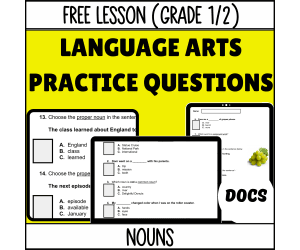
Nouns Sample - Grades 1-2 Grammar (Docs)
ELA, Language Development, ESL, Grammar, Common Core, Resources for Teachers, Grade 1, 2, Lesson Plans, Teacher Tools, Tests, Quizzes and Tests, Assessments, Worksheets & Printables, Centers, Activities
Nouns - 1 Sample Lesson ELA MCQS Overview: In this series of lessons, students will embark on an engaging exploration of the grammar skills that bring our language to life. These lessons are designed to help students identify, understand, and effectively use language arts skills in their writing and speech. Used with the free supplementary materials available for all topics, each lesson builds on the last, offering a mix of direct instruction, interactive group activities, and independent practice. Through fun and creative tasks, students will learn how to recognize grammar in sentences, understand their role in sentences and use them to enhance their own writing and speech. Nouns Overview: Includes: Common Nouns Proper Nouns Irregular Plurals Possessive Nouns Collective Nouns Docs Version This is the Docs editable and fillable version. This download is available in GOOGLE Docs, GOOGLE Forms, GOOGLE Slides. PDF, PPT, WORD, check the links below for more details. FULL CATALOG OF DOWNLOAD LINKS HERE Grade 1/2 Links: Capitalization and Punctuation Google Docs Google Forms Google Slides PDF PPT Word Free Supplementary Materials Pack Adjectives Google Docs Google Forms Google Slides PDF PPT Word Free Supplementary Materials Pack Nouns Google Docs Google Forms Google Slides PDF PPT Word Free Supplementary Materials Pack Pronouns Google Docs Google Forms Google Slides PDF PPT Word Free Supplementary Materials Pack Verbs Google Docs Google Forms Google Slides PDF PPT Word Free Supplementary Materials Pack Prefixes & Suffixes Google Docs Google Forms Google Slides PDF PPT Word Free Supplementary Materials Pack Sentence Structure Google Docs Google Forms Google Slides PDF PPT Word Free Supplementary Materials Pack Subject-Verb Agreement Google Docs Google Forms Google Slides PDF PPT Word Free Supplementary Materials Pack ELA Review Questions Overview Questions have three answer choices. There are a handful of pictures on each test for aesthetic purposes, as well as a review sheet covering most of the topics covered in the product. Introduction or Example Sheet Each topic will include an introduction or example sheet to go through first with your students. Full Answer Keys Full answer keys and sample responses are provided so no matter how busy you are, you know you're covered! In the Supplementary Pack Interactive Ice Breakers: Fun, hands-on activities that get students thinking about adjectives right from the start. Guided Practice: Teacher-led exercises that reinforce the day’s lesson, ensuring students can confidently identify and use adjectives. Group and Partner Tasks: Collaborative activities that allow students to work together to solve problems, categorize adjectives, and create descriptive sentences. Independent Worksheets: Structured worksheets that provide individual practice and help solidify understanding of key concepts. Exit Tasks: Quick, reflective activities at the end of each lesson that assess understanding and encourage students to apply what they’ve learned. For similar downloads and other frees, do check out Cored Group on TeachSimple.
Author Cored Education
Tags Elementary, Reading, Comprehension, Vocabulary, Answers, Ccss, Common Core, Spelling, Writing, Digital Centers

Social Studies Reading Passage: Milk Carton Program (Docs)
ELA, Reading, Reading Comprehension, Strategies, Resources for Teachers, Social Studies, Sociology, Grade 6, 7, 8, 9, Writing Prompts, Worksheets & Printables, Centers, Activities, Teacher Tools, Assessments, Quizzes and Tests, Quizzes, Tests
Missing Children Milk Carton Program: Social Studies Reading Comprehension Passage (Docs) This resource introduces a unique Social Studies reading comprehension passage with questions about The Missing Children Milk Carton Program. The passage is carefully designed to bridge the gap between social studies and literacy through strengthening reading comprehension and sparking knowledge curiosity in middle school students. Each passage blends English Language Arts skills with accurate social studies content . Ideal for interdisciplinary learning in ELA and Social Studies. Suitable for Grade 9 review, too! Student Tasks throughout the passage: 5 multiple-choice questions targeting the following skills: main idea, key details, inference, vocabulary in context, and use of evidence 5 vocabulary matching items with clear, student-friendly definitions 5 text-based questions that require citing specific lines or facts 1 summary prompt that asks students to condense central ideas accurately Full answer key for every section Available Formats for this Resource: PDF Fillable PDF Word Docs FULL CATALOG OF DOWNLOADING LINKS HERE Social Studies Reading Comprehension Collection Links: 1. Ancient Civilizations PDF Fillable PDF Word Docs Google Docs 2. Early Empires and Trade Networks PDF Fillable PDF Word Docs Google Docs 3. The Founding of the United States PDF Fillable PDF Word Docs Google Docs 4. Language, Culture, and Meaning PDF Fillable PDF Word Docs Google Docs 5. Psychology and Society PDF Fillable PDF Word Docs Google Docs 6. Global Festivals and Traditions PDF Fillable PDF Word Docs Google Docs 7. Extreme Environments and People PDF Fillable PDF Word Docs Google Docs 8. Food, Culture, and Preservation PDF Fillable PDF Word Docs Google Docs 9. Global Food Customs PDF Fillable PDF Word Docs Google Docs 10. Media, Communication, and Popular Culture PDF Fillable PDF Word Docs Google Docs 11. Human Impact on the Environment PDF Fillable PDF Word Docs Google Docs 12. Civic Action and Social Change PDF Fillable PDF Word Docs Google Docs 13. Fashion, Society, and Power PDF Fillable PDF Word Docs Google Docs 14. People, Places, and Unusual Histories PDF Fillable PDF Word Docs Google Docs Product Details: Length: 5 pages Grades: 6–8, also suitable for Grade 9 review Use cases: close reading, stations, homework, intervention, test prep, and sub plans Why Teachers Choose This Passage: Authentic social studies content paired with rigorous literacy practice Consistent task structure for easier planning and smoother student routines Clear, age-appropriate writing that builds confidence without oversimplifying Use this passage to reinforce ELA skills in social studies, to add literacy to your lessons, and to support independent work. The passage strengthens main idea, evidence use, vocabulary in context, inference, cause and effect, and summary writing. With ready-to-use assessments and complete answer keys, you can provide focused practice that is simple to run and fast to review.
Author Middle & High School - CORED Education
Rating
Tags Middle School, Reading Comprehension, Reading Strategies, ELA, Centers, Reading Passage, Assessments, Vocabulary, Social Studies, Sociology
Elementary Math Centers or Stations: Equivalent Fractions (Gr 4 & 5)
Math, Fractions, Grade 4, 5, Centers, Activities
If you are teaching your students about equivalent fractions, check out this ready-to-print set of 5 math stations to enhance your unit! I believe that using a variety of instructional methodologies is a great way to reach more students. These centers allow students to try different activities and work cooperatively with their peers, all while practicing their equivalent fraction math skills. The first stop includes four word problems for you students to try. You can put out whiteboards for them to use instead of scrap paper. Next they get to play a dice game (with 6-sided dice). They practice drawing equivalent fractions. After that, students get to solve a riddle by matching equivalent fractions. The fourth station includes financial literacy: students calculate sale prices using fractions that are equivalent. Finally, the last station has students share their ideas about math clearly in words and visuals as they answer a math journal prompt. This product comes with an answer key too! Grades to Use With: These stations are designed for students in grades 4 and 5 who are strengthening their understanding of equivalent fractions (in preparation for learning to add and subtract fractions in particular). They could be used in middle school special education classes as well. Ways to Use: I often use stations like these before a math unit test. I split the class into 5 groups and have them start at different stations. They can either rotate every 15-20 minutes, or work at their own pace. If you find math stations useful, I have others available in my store: Multiples and Factors Place Value from Hundred Millions to Millionths Concepts for Early Algebra: Tables, Graphs, and Expressions Geometry: Perimeter, Area, Volume for Shapes with Right Angles Rates and Ratios Integers: Addition and Subtraction Geometry of Triangles: Types, Area, and Angles Probability and Statistics for Grades 5-7 Fractions, Decimals, and Percentages
Author Grace Under Pressure
Tags Math Stations, Math Centers, Math Centres, Fractions, Equivalent Fractions, Grade 4 Math, 4th Grade Math, Grade 5 Math, 5th Grade Math
Multiplication Task Cards Cinco de Mayo Math Activity Times Tables
Math, Basic Operations, Early Math, Multiplication, Multiplication and Division, Homeschool Curriculum, Grade 3, 4, 5, Activities, Centers, Games, Task Cards, Worksheets & Printables
Do your students need a little more practice with multiplication facts, but you want something more engaging than another worksheet? This Cinco de Mayo-themed Math Activity gives students a fun way to review times tables from 1–12 while still keeping the lesson focused, simple, and easy to manage. This resource works well when you want multiplication practice that feels fresh for May, but still supports number fluency and fact recall. What’s Included Multiplication task cards for facts 1–12 Student recording sheet Answer key for quick checking Suitable for math centers, small groups, or SCOOT-style practice Why This Works Multiplication facts take practice. A lot of it. But I’ve found students are much more willing to keep going when the activity feels a bit different from the usual daily drill. These task cards give students short, manageable questions, which can help them focus on one fact at a time. The Cinco de Mayo theme adds a seasonal touch without distracting from the actual math skill. Ideal For This resource is ideal for Grades 3–6 , especially students who are: Building multiplication fluency Reviewing times tables 1–12 Practicing before assessments Working on independent math tasks Needing repeated fact practice in a more engaging format How It Can Be Used You can use these multiplication task cards in a few different ways: Whole class SCOOT activity Small group math review Math centers or rotations Early finisher task Partner practice Independent multiplication review You might even keep them in a seasonal math tub for May activities. Easy to pull out. Easy to explain. No complicated setup. Skills Covered The multiplication practice in this pack supports students as they work with the 1–12 times tables in a range of ways, including: matching repeated addition to multiplication equations using arrays to write multiplication number sentences finding missing factors in multiplication problems calculating products from two given numbers writing multiplication equations to match groups, sets, and pictures completing skip-counting and number pattern sequences connecting multiplication with repeated addition solving multiplication facts using visual clues using illustrations to support problem-solving and fact fluency This Cinco de Mayo multiplication task card activity is a handy option when your students need meaningful times tables practice, but you want something a little more fun and classroom-ready. Follow the SCOOT game with these missing-number multiplication worksheets .
Author Teach2Tell
Rating
Tags Multiplication Task Cards, Cinco De Mayo Math, Times Tables Practice, Multiplication Facts, Math Centers, Scoot Activity, Third Grade Math, Fourth Grade Math, Fifth Grade Math, Multiplication Fluency
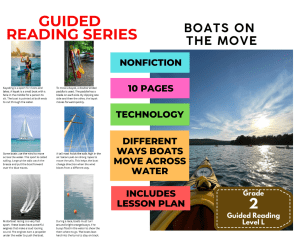
Guided Reading Level L - Boats on the Move (with Lesson Plan)
ELA, Resources for Teachers, Reading Comprehension, Reading, Science, Engineering, Technology, Physics, Sports, P.E. & Health, Grade 2, 3, 4, Worksheets & Printables, Worksheets, Teacher Tools, Centers, Activities, Literacy Readers, Quizzes, Quizzes and Tests, Assessments, Lesson Plans
This Guided Reading Book - Boats on the Move (Level L) with lesson plan includes: Guided Reading Color Label (front cover x1) This is a quick way to match the book’s demands to what students can generally handle.. The overall goal is to use the level/color to pick books for several smaller groups. To qualify for a certain level, a student is expected to read a book from that level with about 90–94% accuracy. If a student is consistently accurate and understands, move up a level. If the student is struggling at that level, drop down and add more support. Each student will improve at completely different rates, but it is generally one of the best ways to check progress across the class. DOWNLOAD THE CATALOG TO VIEW ALL GUIDED READING BOOKS AVAILABLE (SORTED LEVELS A-Z) Pre-Reading Question (x1) Teacher asks the prompt aloud, can be while showing the cover or first page. Students share what they already know, or make educated guesses from the cover. Prompt them to use the target vocabulary. Write some of their responses on the board to look back at during the reading. Vocabulary Words (x5) Introduce the five words, best doing it one at a time. Start by saying it, while students repeat and then see if anyone knows what it means before reading further. Read through the meaning and try to briefly connect each word to a picture or gesture so it’s meaningful. Ask students to flip through the book pages and point to where they see each of the vocabulary words. While reading the book pause upon coming across one of the vocab words or read the sentence twice to make sure students understand the word has appeared. Optional: Ask students to raise hands whenever they see/hear one of the new words. Guided Reading Pages (x10) Check the book snapshot (below) for: primary topic - do you need to prep extra reading or intro materials on this? what is taught best - decide on 1-2 bullets to focus on, use the prompt or words provided here for best results. learning goals - what you are checking for students to be able to do after the session, elicit answers using prompts or words provided. key vocabulary (see section above). questions overview - so you know what is coming up and if you need to prep extra materials to assist understanding. Run the lesson You may have already looked at a few of the pages together, but you can show them some of the pictures again first to set meaning. Depending on how much time you have and how familiar your students are with guided reading class, you may want to read the book aloud first with the group first. Students whisper or partner read, while you listen in. If time, do it as a group, one student reading a page each. Use the guided page’s prompts to coach: “Check the picture / does it make sense?” “Point under the words / try the first sound” “Reread the sentence smoothly”. Try to focus more on one student per session (rotating every time), so you can work out if they are ready to move up or need to move down a level. Comprehension Questions (back cover x3) This is your way to check that students didn’t just say the words, but actually understood the text. First, let students answer by pointing to the page/picture and saying a short sentence. After any answer, follow with: “Show me where you found that in the text.” In bigger groups, have partners answer first (10–20 seconds), then call on 2–3 students to share. Differentiation tips: Emerging speakers/struggling readers: oral + pointing On-level: oral in a full sentence Higher: one written sentence or draw + label Book Snapshot Title: Boats on the Move Genre: Nonfiction (informational) Subject: Science (Forces & Motion) / Reading (Informational Text) Primary Topic: Different ways boats move across water Estimated Guided Reading Level (A–Z): L What This Book Teaches Best Different ways boats move on water (wind, oars, paddles, engines). How specific boat parts help movement (sails, mast, ropes, propeller). How coordinated actions affect motion (oars dipping “at the same time” to go straight). How markers guide movement during a race (boats turn around bright orange buoys to stay on track). Comparing speed and movement styles (quiet glide vs fast roar; forward motion by alternating paddle sides). Learning Goals Students will identify several ways boats move across the water using details from the text. Students will explain how sails and wind help pull a boat forward. Students will describe how rowers use oars together to move a boat straight ahead. Students will describe how a double-ended paddle helps a kayak move forward quickly. Students will explain how an engine and propeller help push a motorboat through the water. Students will describe why boats turn around buoys during a race, based on the text. Key Vocabulary From the Text mast — a tall pole that holds sails up. rhythm — a steady pattern of movement. double-ended — having an end on both sides. propeller — a spinning part that helps push a boat. buoys — floating markers that show where to go. Discussion Prompts Pre-reading question: What are some different ways a boat could move across the water? Comprehension questions: How do large white sails help a boat move forward? What do rowers do “at the same time,” and what does that help the boat do? Why must boats turn around bright orange buoys during a race? Printing Tips 1. Best Printing Method (Recommended) “Booklet” Printing (Best if Available) If your printer or PDF viewer supports Booklet Printing , use this. Settings to use: Print mode: Booklet Paper size: Letter or A4 (either works) Orientation: Landscape Print on both sides: Yes Flip on: Short edge Scaling: Fit to printable area Booklet subset: First test: Front sides only Then: Back sides only This will automatically: Pair pages correctly Put the cover on the outside Align everything for folding After printing, fold in half and staple along the spine . 2. If “Booklet” Printing Is NOT Available You can still print this correctly with manual duplex printing . Step-by-step: Open the PDF. Choose Print . Set: Orientation: Landscape Pages per sheet: 1 Print on both sides: Yes Flip on: Short edge Print all pages . Because each PDF page already contains two facing book pages, the result will still fold cleanly into a book. Thousands of Cored Education products are included with your TeachSimple membership. Download links and encyclopedia index available here.
Author Cored Education
Rating
Tags Reading Comprehension, Reading Passages, Reading, Guided Reading, Guided Reading Lesson Plan, Guided Reading Activity, Pre-reading, Science Lesson Plans, Physics, Technology