



3,952 products added recently
Page 236 - Cut and Paste Activities
Enhance learning through tactile experiences with cut and paste activities that combine creativity and skill development. This collection includes sorting exercises, craft projects, and interactive worksheets. By integrating these activities into your lessons, you can support manual dexterity and engagement.

 Show filters

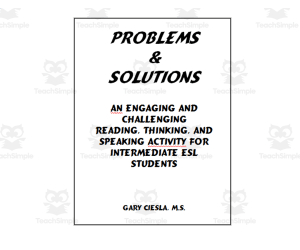
Problems & Solutions: ESL Edition
, Adult Education, Not Grade Specific, Activities, Games
Problems & Solutions: ESL Edition Problems & Solutions: ESL Edition is an engaging teaching resource designed to enhance reading, thinking, and speaking skills for intermediate ESL students. This exciting teaching tool includes 72 problems, each accompanied by three correct solutions on separate cards. The essence of this tool lies in its unique structure - the solution card a student has does not match with their problem card. The aim is for students to interact with each other, strategically swapping solution cards until they acquire the three correct solutions that solve their assigned problem. Structure of Units and Sets The resource is divided into six units labeled A-F, each containing 12 Problem & Solution card sets. A clear subdivision exists within these units; sets are grouped into batches of four i.e., 1-2-3-4, 5-6-7-8 and 9–10–11–12 that operate independently. This strategic division allows classes larger or smaller than twelve to adapt by using more or fewer card sets according to the number of participants yet still abide by the grouping rule—always working with bundles consisting four Problem & Solution sets. Note: Classes can adjust this based on class size. In addition to its flexibility in application options; this game-like teaching resource aims at high-profile levels English language acquisition amongst learners through interactive classroom dialogues while developing problem-solving skills and creative thinking. Problems & Solutions: ESL Edition is a tremendous method schools can apply to offer extra language support while equipping students for real-life situations like cultural differences and linguistic obstacles. Possible Implementation Methods: All-Class Deployment: This allows all pupils participate simultaneously promoting a healthy competition. Small Group Sessions: The tool can be used to stimulate teamwork and cooperation amongst a smaller group of pupils. Homework Assignments: Cards can be assigned as homework tasks focussing on individual development outside the group setting. This setup creates an opportunity for interaction between household members stimulating natural English conversation often hard to replicate in classrooms.
Author Gary Ciesla
Tags ESL, Problem-solving Skills, Reading Comprehension, Speaking Practice, Interactive Learning

Ancient Greece: Athens Reading Passages & Question Worksheet | Social
History: Ancient, History, Social Studies, Reading, ELA, Grade 4, 5, Centers, Activities, Assessments, Teacher Tools
Engaging and Educational! Enhance your students’ understanding of Ancient Greece with this reading comprehension resource focused on the city of Athens. Designed for upper elementary and middle school learners, this activity helps students build reading comprehension and critical thinking skills while exploring one of the most influential cities in ancient history. Students will learn about the government, culture, education, daily life, and achievements of Athens through five informational reading passages. Each passage includes five comprehension questions that encourage students to analyze information, strengthen vocabulary, and improve historical understanding. This resource features a clear and student-friendly layout that supports independent learning and classroom instruction. It is perfect for social studies lessons, literacy centers, homework, substitute plans, morning work, small-group activities, and homeschool learning. Ideal for Grades 4–8, ESL and ELL learners, intervention groups, and history enrichment activities. The ready-to-print PDF format makes lesson preparation quick and easy for busy teachers. File type: PDF
Author Sadigitalart
Rating
Tags Ancient Greece, Athens Reading Passages, Passages & Question , Social Studies

Geography Crossword - Set 1: 1 Page Sample (PDF)
ELA, Language Development, Vocabulary, Spelling, ESL, Resources for Teachers, Geography, Social Studies, Grade 2, 3, 4, 5, Worksheets & Printables, Worksheets, Teacher Tools, Crosswords Puzzles, Centers, Activities
THIS IS A ONE PAGE SAMPLE OF A SIX CROSSWORD DOWNLOAD FULL SIX CROSSWORD DOWNLOAD INFORMATION: Crossword Series (Themed) This crossword series is designed for students in grades 2–5. Each set of crosswords is built around a clear vocabulary theme, allowing students to strengthen their word recognition, build subject-based knowledge, and reinforce early literacy and thinking skills. Each topic includes six crossword sets , and each set features the following consistent structure: 1. 8 vocabulary clues 2. Crossword puzzle 3. Answer key 4. 1 Did You Know fact related to the set These crosswords are designed to be student-friendly, classroom-ready, and easily integrated into thematic units, seasonal learning, morning work, or independent literacy stations. Geography Crosswords Set 1 Word List 1. Countries of the World Canada, Brazil, China, India, Egypt, France, Japan, Mexico 2. Famous Cities New York, Paris, London, Tokyo, Sydney, Cairo, Rome, Rio 3. Famous Landmarks Eiffel Tower, Great Wall, Statue of Liberty, Colosseum, Taj Mahal, Mount Everest, Amazon River, Grand Canyon 4. Continents and Oceans Asia, Africa, Europe, Australia, Antarctica, Pacific, Atlantic, Indian 5. Natural Wonders Niagara Falls, Grand Canyon, Mount Everest, Amazon Rainforest, Sahara Desert, Great Barrier Reef, Victoria Falls, Northern Lights 6. Landforms and Geography Terms Mountain, River, Desert, Island, Peninsula, Volcano, Valley, Glacier PDF Version Other versions will appear here when available. Follow the store for the lastest on new products. How to Use This Crossword These crosswords are ideal for whole-class work, small groups, literacy centers, or take-home activities. Use one set per day, or spread them across a week or month depending on your curriculum needs. Each clue has been crafted to align with the reading level of grades 2–5, with support for both decoding and meaning. The Did You Know? facts offer additional extension opportunities for writing, drawing, or display work. Whether you're reinforcing vocabulary, exploring a seasonal topic, or adding variety to your literacy block, these crosswords provide a fun, flexible, and focused way to boost early literacy in an engaging format. More Geography Themed Products Geography Crosswords (Set 2) PDF Geography Crosswords (Set 3) PDF FULL CATALOG OF DOWNLOAD LINKS HERE Themed Crossword Links Addition PDF Animals PDF Around the Home PDF Birthday PDF Candy PDF Christmas PDF Cinco de Mayo PDF Clothes PDF Colors PDF Days and Months PDF Division PDF Earth Day PDF Easter PDF Easy Crosswords PDF Fall PDF Father's Day PDF Food PDF Geography (Set 1) PDF Geography (Set 2) PDF Geography (Set 3) PDF Graduation PDF Health PDF History (Set 1) PDF History (Set 2) PDF History (Set 3) PDF Human Body PDF Kindness PDF Life Skills PDF Mother's Day PDF Multiplication PDF Science Crosswords (Set 1) PDF Science Crosswords (Set 2) PDF Science Crosswords (Set 3) PDF Shapes PDF Social Skills PDF Spring PDF Sports PDF St. Patrick's Day PDF Subtraction PDF Summer PDF Thanksgiving PDF Transport PDF Valentine's Day PDF Winter PDF Crosswords in Depth Structure Each crossword clue is written in simplified language to suit early readers, and follows a strict number-and-clue format (e.g., 1.A shape with four sides ). Students complete each puzzle using the themed vocabulary provided, helping to build both content knowledge and spelling confidence. Each completed set includes: A questions section with clearly formatted clues An answers section to support teacher checking or independent correction A Did You Know? fact tied to the topic (one per set) to add curiosity and cross-curricular value Themes Included The crosswords cover a wide variety of engaging, age-appropriate themes such as: Seasons & Holidays (e.g., Winter, Easter, Valentine’s Day) Math Concepts (e.g., Addition, Subtraction, Multiplication, Division) Everyday Topics (e.g., School, Colors, Animals, Weather) Special Units (e.g., Health, Earth Day, Sports, Graduation, Kindness) Each theme is carefully selected to reflect the experiences and interests of young learners, while reinforcing vocabulary and comprehension. For similar downloads and other frees, do check out Cored Group on TeachSimple.
Author Cored Education
Rating
Tags Vocabulary, Spelling, Crosswords, Geography, Geography Crosswords, Countries Of The World, Famous Cities, Famous Landmarks, Natural Wonders, Continents And Oceans

Defining Words Practice Questions - Vocabulary Grade 5-6 (Slides)
ELA, Language Development, ESL, Common Core, Resources for Teachers, Vocabulary, Grade 5, 6, 7, Quizzes and Tests, Teacher Tools, Tests, Assessments, Activities
Defining Words Grammar Practice MCQS ELA MCQS Overview: In this series of lessons, students will embark on an engaging journey to master the language arts skills that make communication effective and expressive. These lessons are designed to help students recognize, understand, and apply key grammar, vocabulary, and writing conventions in both their writing and speech. Each lesson builds upon the previous one, providing a structured blend of direct instruction, interactive group activities, and independent practice. With engaging tasks and thought-provoking questions, students will explore sentence structure, word choice, punctuation, and grammar rules to strengthen their understanding of English language conventions. Accompanied by free supplementary materials covering all topics, this series ensures a well-rounded and enjoyable learning experience. Through practice and exploration, students will develop the skills needed to analyze language, construct clear sentences, and express themselves with confidence. Defining Words Overview: Matching Words to Definition Matching Definition to Words Accurately Defining Meanings More Defining Word Practice Slides Version This is the Slides editable and interactive version. There is a fillable answer sheet at the end. This download is available in GOOGLE Docs, GOOGLE Forms, GOOGLE Slides. PDF, PPT, WORD, check the links below for more details. FULL CATALOG OF DOWNLOAD LINKS HERE Grade 5/6 Links: Capitalization & Punctuation Google Docs Google Forms Google Slides PDF PPT Word Free Supplementary Materials Pack Adjectives Google Docs Google Forms Google Slides PDF PPT Word Free Supplementary Materials Pack Nouns Google Docs Google Forms Google Slides PDF PPT Word Free Supplementary Materials Pack Pronouns Google Docs Google Forms Google Slides PDF PPT Word Free Supplementary Materials Pack Verbs Google Docs Google Forms Google Slides PDF PPT Word Free Supplementary Materials Pack Prefixes & Suffixes Google Docs Google Forms Google Slides PDF PPT Word Free Supplementary Materials Pack Sentence Structure Google Docs Google Forms Google Slides PDF PPT Word Free Supplementary Materials Pack Subject Verb Agreement Google Docs Google Forms Google Slides PDF PPT Word Free Supplementary Materials Pack Tenses Google Docs Google Forms Google Slides PDF PPT Word Free Supplementary Materials Pack Context Clues Google Docs Google Forms Google Slides PDF PPT Word Free Supplementary Materials Pack Defining Words Google Docs Google Forms Google Slides PDF PPT Word Free Supplementary Materials Pack Fill in the Blanks Google Docs Google Forms Google Slides PDF PPT Word Free Supplementary Materials Pack Homophones Google Docs Google Forms Google Slides PDF PPT Word Free Supplementary Materials Pack Synonyms Google Docs Google Forms Google Slides PDF PPT Word Free Supplementary Materials Pack ELA Review Questions Overview Questions have three answer choices. There are a handful of pictures on each test for aesthetic purposes, as well as a review sheet covering most of the topics covered in the product. Introduction or Example Sheet Each topic will include an introduction or example sheet to go through first with your students. Full Answer Keys Full answer keys and sample responses are provided so no matter how busy you are, you know you're covered! In the Supplementary Pack Interactive Ice Breakers: Engaging warm-up activities that introduce students to key ELA concepts, such as quick capitalization corrections and punctuation challenges. Guided Practice: Structured teacher-led exercises that reinforce grammar and punctuation rules, helping students identify and apply them correctly in sentences. Group and Partner Tasks: Collaborative activities where students work together to edit sentences, correct capitalization, and improve punctuation through peer discussion and teamwork. Independent Worksheets: Carefully designed worksheets that provide focused practice, allowing students to apply learned concepts and refine their skills independently. Exit Tasks: Quick assessments at the end of each lesson, prompting students to reflect on what they’ve learned and apply their knowledge in writing and editing tasks. For More Like This For similar downloads and other frees, do check out Cored Group on TeachSimple.
Author Cored Education
Tags Elementary, Answers, Ccss, Common Core, Tests, Test Prep, Assessment, Grade 5, Grade 6, Vocabulary

Fidget Spinner Boards: Yoga, Balance + Flexibility
P.E. & Health, Physical Education, Yoga, Not Grade Specific, Activities
This is a set of Fidget Spinner Boards: Yoga, Balance + Flexibility. There are 9 pre-set spinner boards. Each board displays 7 different yoga, balance and flexibility movements. This is a PE activity that students are sure to love!! Directions for implementation are included.
Author Cap'n Pete's Power PE
Tags Physical Education, Exercise Boards, Fidget Spinners, Yoga
Past Tense Sample - Grammar Grade 3-4 (Slides)
ELA, Language Development, ESL, Grammar, Common Core, Resources for Teachers, Grade 3, 4, Quizzes and Tests, Teacher Tools, Tests, Assessments, Presentations, Activities, Centers
Past Tense Sample Lesson ELA MCQS Overview: In this series of lessons, students will embark on an engaging journey to explore the grammar skills that make our language vibrant and expressive. These lessons are crafted to help students identify, comprehend, and effectively apply language arts skills in both writing and speech. Accompanied by free supplementary materials available for all topics, each lesson builds on the previous one, offering a balanced mix of direct instruction, interactive group activities, and independent practice. Through fun and creative tasks, students will learn to recognize grammar within sentences, understand their function, and use them to enrich their own writing and speech. Past Tense Overview: Includes: Past Simple Past Continuous Past Perfect Mistake Finding Slides Version This is the Slides editable and interactive version. There is a fillable answer sheet at the end. This download is available in GOOGLE Docs, GOOGLE Forms, GOOGLE Slides. PDF, PPT, WORD, check the links below for more details. FULL CATALOG OF DOWNLOAD LINKS HERE Grade 3/4 Links: Adjectives Google Docs Google Forms Google Slides PDF PPT Word Free Supplementary Materials Pack Adverbs Google Docs Google Forms Google Slides PDF PPT Word Free Supplementary Materials Pack Conjunctions Google Docs Google Forms Google Slides PDF PPT Word Free Supplementary Materials Pack Nouns Google Docs Google Forms Google Slides PDF PPT Word Free Supplementary Materials Pack Pronouns Google Docs Google Forms Google Slides PDF PPT Word Free Supplementary Materials Pack Verbs Google Docs Google Forms Google Slides PDF PPT Word Free Supplementary Materials Pack Sentence Structure Google Docs Google Forms Google Slides PDF PPT Word Free Supplementary Materials Pack Present Tense Google Docs Google Forms Google Slides PDF PPT Word Free Supplementary Materials Pack Past Tense Google Docs Google Forms Google Slides PDF PPT Word Free Supplementary Materials Pack Future Tense Google Docs Google Forms Google Slides PDF PPT Word Free Supplementary Materials Pack Context Clues Google Docs Google Forms Google Slides PDF PPT Word Free Supplementary Materials Pack Defining Words Google Docs Google Forms Google Slides PDF PPT Word Free Supplementary Materials Pack Fill the Blanks Google Docs Google Forms Google Slides PDF PPT Word Free Supplementary Materials Pack Homophones Google Docs Google Forms Google Slides PDF PPT Word Free Supplementary Materials Pack Synonyms Google Docs Google Forms Google Slides PDF PPT Word Free Supplementary Materials Pack ELA Review Questions Overview Questions have three answer choices. There are a handful of pictures on each test for aesthetic purposes, as well as a review sheet covering most of the topics covered in the product. Introduction or Example Sheet Each topic will include an introduction or example sheet to go through first with your students. Full Answer Keys Full answer keys and sample responses are provided so no matter how busy you are, you know you're covered! In the Supplementary Pack Interactive Ice Breakers: Fun, hands-on activities that get students thinking about adjectives right from the start. Guided Practice: Teacher-led exercises that reinforce the day’s lesson, ensuring students can confidently identify and use adjectives. Group and Partner Tasks: Collaborative activities that allow students to work together to solve problems, categorize adjectives, and create descriptive sentences. Independent Worksheets: Structured worksheets that provide individual practice and help solidify understanding of key concepts. Exit Tasks: Quick, reflective activities at the end of each lesson that assess understanding and encourage students to apply what they’ve learned. For similar downloads and other frees, do check out Cored Group on TeachSimple.
Author Cored Education
Tags Elementary, Answers, Ccss, Common Core, Grammar, Tests, Test Prep, Assessment, Grade 3, Grade 4
Measurement: Spinner Game - PC Software
Math, Measurements, Common Core, Kindergarten, Preschool, Grade 1, 2, Activities, Games
Measurement: Spinner Game - PC Software This is a dynamic teaching resource designed specifically for early learners in preschool, kindergarten, and grades 1 and 2, with the main focus on math concepts subtly highlighting measurements. Flexible Teaching Approach The software can be incorporated into various modes of teaching – large group settings to encourage cohesiveness; small groups or pair work activities to encourage problem-solving skills. It's also an effective outbound homework assignment tool that encourages independent learning outside the classroom. Motivating Gameplay Interface The Measurement Spinner Game consists of a spinning wheel with six measurement-specific queries. The goal is to engage young minds in competitive fun while instilling an understanding towards STEM-approved subjects. Standards Compatibility: Common Core State Standards (CCSS) Next Generation Science Standards (NGSS) correlates National Council for Teachers of Mathematics (NCTM) standards set Ease of Use: This education resource comes bundled as a zip file containing PC-compatible software files. Easy-to-follow installation instructions mean that it requires minimal setup time before students can start using it. Main Aim: To combine play and lesson time seamlessly aiding educators with hands-on applications for their mathematics curriculum effectively. This makes tackling complex math ideas such as measurements notably easier, especially at initial grade levels where such concepts pose challenges. In conclusion, this game-based teaching aid transforms conventional teachings into motivational cheerleading sessions that create a stronger comprehension towards math concepts among learners.
Author Classroom Complete Press
Tags Measurement Game, Spinner Game, Digital Math, Digital Activities, Digital Measurement

Credit Card Project
Life Studies, Finance, Home Economics, Math, Money, Grade 6, 7, 8, 9, 10, 11, 12, Activities, Teacher Tools, Lesson Plans, Projects
Diving into the world of consumer math and understanding how credit cards work can be quite a challenge, especially for younger students who might not have any firsthand experience. This teaching resource simplifies the complexity surrounding credit cards, giving students an informed perspective on their usage, advantages, and potential pitfalls: Credit Card Project Geared towards middle and high school students, this Credit Card Project resource offers a straightforward view of several key aspects: The mechanics of how credit cards operate. Insight into how credit card companies generate revenue. The processes of making payments and understanding the billing cycle . Tips and guidance on using credit cards responsibly. To make the learning process engaging, this package is designed as a project containing a series of worksheets. These worksheets are complemented by informative videos about credit cards, and a sample credit card statement to help students visualize real-world applications. Additionally, to assist educators in assessing the students' understanding and engagement with the project, a rubric is provided. Whether you wish to integrate this resource into your classroom activities or assign it as a home-based project, its flexible structure allows for both. It serves as an invaluable introduction to credit cards, equipping students with knowledge that is crucial as they step into adulthood. For educators who want to ensure that the content aligns with their teaching methods or specific classroom requirements, the entire project is editable. This customization feature ensures that the material remains relevant and adaptable to diverse student needs and academic levels. If you're an educator aiming to impart practical knowledge about credit cards to your students in a concise and clear manner, this resource will certainly serve as a robust tool in achieving that objective. By the end of the project, students will not only have a foundational understanding of credit cards but also be better prepared for the financial choices they'll make in the real world.
Author Mister G's Teacher Shop
Tags Credit Cards, Consumer Math, Finances, Financial Literacy, Project, Small Group, Quiz, Reflection, Google Slides

Short u Vowel Families Making Words Game
ELA, Language Development, Pre-Reading, Phonics, Reading, Literature, Poetry, Preschool, Grade 1, 2, 3, Activities, Games
Short u Vowel Families Making Words Game This interactive PowerPoint game helps young learners master foundational reading skills involving short u vowel families and CVC words. Kids will love playing this engaging whole class, small group, or individual activity designed to help them recognize and analyze short u word patterns, transform letter sounds into words, and build their own short u words. Emerging readers need strong phonological awareness to become fluent readers. This game focuses on short u families like -ug, -ut, -uck, -un, -ub, and -ump to develop abilities like isolating medial vowels, distinguishing long and short vowel sounds, and recognizing rhyme. Using vowel families and CVC words allows students to see the consonant-vowel-consonant word structure that is the basis for so many simple, familiar words. Mastering short vowel sounds paves the way for stronger overall reading skills. This game makes learning to read short u words interactive and entertaining!
Author Primary 206 Mix
Tags Powerpoint, Game, Vowel Families, Short U Sound, Making Words, Rhyming Words

Arctic Reading Comprehension Passage - Cored Ed Encyclopedia
ELA, Language Development, Resources for Teachers, Reading Comprehension, Reading, Pre-Reading, Strategies, Science, Geography, Social Studies, Grade 2, 3, 4, 5, Worksheets & Printables, Worksheets, Teacher Tools, Centers, Activities, Writing Prompts, Assessments, Tests, Quizzes and Tests, Quizzes
This Arctic reading comprehension contains the following: Pre-Reading Trivia Students will write down one thing they already know about the subject and then read five more facts and discuss. These facts are fun, and the students will enjoy learning about the subject before reading more. VIDEO NOW AVAILABLE (EMBEDDED AFTER PREVIEW PICTURES IN PRODUCT DESCRIPTION) Reading Passage The text is a high-interest reading passage with set paragraphs, roughly three to four paragraphs long. It contains a variety of themes about the topic, anywhere from history to technology. The passage is between 250 and 350 words in length. Mixed Questions The first question page contains four multiple-choice questions, each with a choice of four answers, and three written response questions that require a sentence or two from the student. Creative Writing In this question, the student will be required to write a five to eight sentence paragraph on a question related to the topic. Extension Activities This page is optional for fast finishers. If there are five to ten minutes left at the end of the lesson, the student can choose one of three activities, each one requiring a different skill. Answer Key There are answers for the multiple-choice questions and three written response questions have sample answers. FULL CATALOG OF DOWNLOAD LINKS AND ENCYCLOPEDIA INDEX HERE Cored Ed Encyclopedia Overview The Cored Ed Encyclopedia is a weekly series of lessons that you can pick up and use right away. These short readings fit into whatever time you have available. Each one includes a warm-up, a reading, and a set of questions, but it’s flexible — you can do just the reading, the full lesson, or skip the writing section if you need to. Each lesson focuses on a single topic so students don’t get lost. The writing is clear but never childish, making it perfect for grades two through five. Topics range from animals and science to history, inventions, and everyday things. No matter the level of the student, everyone should take away at least one new idea or fact from each lesson. The materials are easy to print, easy to explain, and require no setup. They work well for whole-class teaching, partner work, or independent study.
Author Cored Education
Rating
Tags Vocabulary, Spelling, Reading Comprehension, Reading Passages, Cored Encyclopedia, Facts, Reading, Geography, Arctic, Science
Cars Reading Comprehension Passage - Cored Ed Encyclopedia
ELA, Language Development, Resources for Teachers, Reading Comprehension, Reading, Pre-Reading, Writing, Science, Physics, Strategies, Grade 2, 3, 4, 5, Worksheets & Printables, Worksheets, Teacher Tools, Centers, Activities, Writing Prompts, Assessments, Tests, Quizzes and Tests, Quizzes
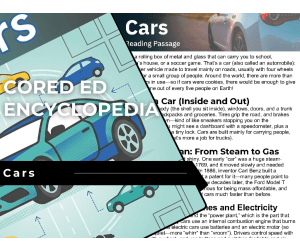
This cars reading comprehension contains the following: Pre-Reading Trivia Students will write down one thing they already know about the subject and then read five more facts and discuss. These facts are fun, and the students will enjoy learning about the subject before reading more. Reading Passage The text is a high-interest reading passage with set paragraphs, roughly three to four paragraphs long. It contains a variety of themes about the topic, anywhere from history to technology. The passage is between 250 and 350 words in length. Mixed Questions The first question page contains four multiple-choice questions, each with a choice of four answers, and three written response questions that require a sentence or two from the student. Creative Writing In this question, the student will be required to write a five to eight sentence paragraph on a question related to the topic. Extension Activities This page is optional for fast finishers. If there are five to ten minutes left at the end of the lesson, the student can choose one of three activities, each one requiring a different skill. Answer Key There are answers for the multiple-choice questions and three written response questions have sample answers. FULL CATALOG OF DOWNLOAD LINKS AND ENCYCLOPEDIA INDEX HERE Cored Ed Encyclopedia Overview The Cored Ed Encyclopedia is a weekly series of lessons that you can pick up and use right away. These short readings fit into whatever time you have available. Each one includes a warm-up, a reading, and a set of questions, but it’s flexible — you can do just the reading, the full lesson, or skip the writing section if you need to. Each lesson focuses on a single topic so students don’t get lost. The writing is clear but never childish, making it perfect for grades two through five. Topics range from animals and science to history, inventions, and everyday things. No matter the level of the student, everyone should take away at least one new idea or fact from each lesson. The materials are easy to print, easy to explain, and require no setup. They work well for whole-class teaching, partner work, or independent study.
Author Cored Education
Rating
Tags Vocabulary, Spelling, Reading Comprehension, Reading Passages, Cored Encyclopedia, Facts, Reading, Creative Writing, Physical Science, Cars

Love Your Earth Color-By-Number Fun
Math, Early Math, Preschool, Grade 1, 2, 3, Activities
Get ready for lots of colorful activities that teach about your favorite animals with 17 printable activities! Children will complete color by number, dot-to-dot puzzles and color pictures, each with a fact about the animal featured! With the ability to print the pages over and over, your child can complete the activities again and again! Includes: • Color By Number Activities • Dot-to-Dots • Coloring Pages • Fun animal facts with each activity
Author Twin Sisters Digital Media
Tags Earth, Dinosaurs, Coloring, Color By Number, Activity

Stepping Out In Space With The MMU Audio Book
Science, Life Sciences, Human Body, Preschool, Grade 1, 2, Read Alouds, Activities
Stepping Out In Space With The MMU Audio Book This resource offers an engaging way to inspire students and expand their knowledge about space exploration history, specifically focusing on the use of the Manned Maneuvering Unit (MMU). This device allowed astronauts to leave their spacecraft during missions and its importance cannot be overstated. The Product This product is primarily comprised of a single MP3 file. The use of audio books: Captivates student attention through sound-based learning, Promotes an effective way to process information, and Nurtures creativity and imagination. Suitable For... Although initially designed for Kindergarten through second-grade levels, it's versatility means educators across different platforms can utilize it based on what meets their students' needs best. It is perfect in settings that encourage curiosity about science! The Usage Among all the uses, this tool comes handy when: Educators employ this tool during whole group instruction, Distributed for small group activities where students collaborate and listen together, or around; Serve as an excellent addition to listening centers within classrooms or media centers/library spaces. Homeschooling parents can assign it as enriching homework experience — kids can explore beyond Earth's boundaries right from home! In conclusion: Stepping Out In Space with The MMU Audio Book offers dynamic versatility that makes complex scientific concepts accessible no matter your age. After all who doesn't admire astronauts!
Author Twin Sisters Digital Media
Tags Space Exploration, MMU, Audio Book, Science Education, Auditory Learning
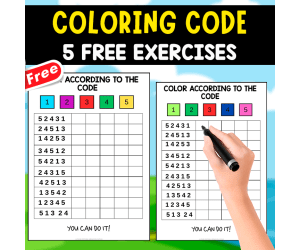
CODE COLORING ACTIVITY | 5 FREE EXERCISES
Math, Special Resources, Early Learning, Elementary, Homeschool Resources, Not Grade Specific, Pre-K, Worksheets & Printables, Activities, Worksheets, Coloring Pages
CODE COLORING ACTIVITY | 5 FREE EXERCISES INFORMATION OF THE AUTHOR: At EDITORIAL ARENAS EDUCATIVAS, we specialize in designing high-quality educational materials. We want every child to discover that learning can be both entertaining and creative. I invite you to explore my educational store and discover the wide collection of resources available for your classroom or home. MAIN DESCRIPTION OF THIS RESOURCE: What is the name of your product and what makes it special? This beautiful product is called “CODE COLORING ACTIVITY”, and it is very special because it was carefully designed or compiled. With this educational resource, we want students to learn with enthusiasm and fun, because we believe learning is fun. How many pages are included in this resource? This fabulous document contains the following number of pages: 5 What size is it designed in (A4, letter, etc.)? This resource is designed in A4 format and compiled as a PDF. This makes downloading and printing simple and convenient, and PDFs are also easy to store and carry anywhere.PDF A4 TAGS: MATH, MATH RESOURCE, BRAIN GAMES,BRAIN,CODE,CODING,COLORING. THANK YOU SO MUCH FOR PREFERRING MY PRODUCTS! PLEASE VISIT MY STORE, BECAUSE I HAVE A LOT OF FREE PRODUCTS FOR YOU!. SECONDARY AND COMPLEMENTARY INFORMATION: What subject, skill, or topic does it cover? This resource is designed to cover essential learning areas for children, generally literacy and math. What learning objectives does it achieve? This document fulfills a playful objective—it’s meant to be attractive and engaging for children. At the same time, it ensures that students learn or reinforce their knowledge. Who can use it best (teachers, parents, students, therapists, homeschoolers)? We are all part of education. Whether you are a teacher, parent, student, or therapist, this document can adapt perfectly to your learning goals, depending on your creativity. What additional materials are recommended (printer, scissors, markers, etc.)? The more immersed students are in learning, the greater their results. That’s why it’s ideal to complement this resource with pencils, crayons, markers, and even other art tools.
Author EDITORIAL LAURA EDUCA
Rating
Tags FREE, FREE RESOURCES, COLORING, CODE, MATHS, PATTERN, BRAIN GAMES
Executive Order 9066 Notes and Activity
Social Studies, History, History: USA, Grade 9, 10, 11, 12, Activities
Executive Order 9066 Notes and Activity A comprehensive teaching tool designed to enlighten students on the pivotal era of World War II, this engaging resource is suitable for Grades 9 through 12, making it an excellent choice for high school history instruction especially in the field of US History. About the Resource This practical and interactive assignment delves into "Japanese-American internment during WWII", challenging students to critically analyze historical events from different perspectives. The assignment begins with a group activity that places students in a simulation reminiscent of what Japanese Americans experienced post-Pearl Harbor attack. To deepen their understanding, excerpts from "Farewell to Manzanar" are included which offer a sense of empathy towards those affected by these internment policies. These primary source quotes serve as powerful tools that humanize history lessons beyond simple facts or summaries. Digital Integration Adding an up-to-date twist is a linked TED Talk video featuring former interned Japanese American recounting personal experiences during this trying time in our nation's history. To encourage deeper reflection on this presentation, follow-up questions are provided creating room for thoughtful discussions among peers. Tech Requirements In terms of logistics and tech requirements; teachers can expect downloadable content via ZIP file format fully compatible with PowerPoint interfaces ensuring ease-of-use within classrooms equipped with modern multimedia resources. Educational Benefits: This educational resource promises not only factual dissemination but also fosters empathy allowing learners to relate better with humanity behind historic events like Executive Order 9066. As we understand educators' needs' diversity it caters public school teachers’ need who wants active engagement while teaching complex topics and also homeschooling parents seeking quality materials promoting self-study and independent analysis skills among their young scholars.
Author Jason Stein
Tags World War II, Executive Order 9066, Japanese-American Internment, Farewell To Manzanar, TED Talk

This Little Pig Animated Song
Creative Arts, Art, Music, Kindergarten, Songs, Activities
Product Description: Embark on a magical musical adventure with the 'This Little Pig Animated Song '. Aimed at sparking the interest of children in early learning phases, this interactive tool adroitly combines elements of music, art, and literacy to provide kids an enjoyable educational experience. The animation brings forth a modern twist to teaching the beloved nursery rhyme "This Little Pig". The animated video adds substance to music lessons by visualizing lyrics in an exciting manner. As children sing along and mimic their favorite characters going "wee-wee-wee…all the way home", they inadvertently brush up on crucial early literacy skills. Package Contents: An MP4 animated song This tool flawlessly fits into diverse teaching environments. Be it group classes or smaller learning sessions in public schools or homeschooling scenarios, it serves as an exceptional resource to stimulate student interaction and bolster understanding. *Tip for educators: Supplement regular homework with periodic viewings of this alluring video. Every subsequent viewing will reinforce children's comprehension of rhythm patterns along with language nuances whilst ensuring they have fun. About 'This Little Pig Animated Song ': Focused primarily on subjects related to art & music among varied types, This Little Pig Animated Song uses a universally appreciated nursery rhyme as its foundation. It does more than simply provide entertainment — it incites active engagement from children leading them towards a better understanding of academic concepts. In Conclusion: This Little Pig Animated Song , shines brightly as an educational instrument creating fun-filled learning episodes for young learners while simultaneously enabling them to seamlessly master critical developmental benchmarks.
Author Twin Sisters Digital Media
Tags Animated Song, Nursery Rhyme, Early Literacy, Music Education, Engagement

I have...Who Has...? On the Farm Edition
Science, Earth and Environmental Sciences, Life Sciences, Nature & Plants, Not Grade Specific, Activities, Games
On the Farm Edition of I have...Who Has Card Game The On the Farm Edition offers an interactive way for students to learn agriculture vocabulary and concepts. This card game promotes listening skills, cooperation, and peer learning. Educators can implement it as an engaging small group activity or fast-paced whole class game to liven up science lessons focused on farming. The goal is for students to work together matching vocabulary term cards with their corresponding definition cards. One learner starts by reading their "I have" vocabulary card aloud and asking "Who has...?" the definition. The student with the right definition card responds "I have..." and continues the pattern. The game proceeds rapidly around the group until the sequence is complete. This creative activity brings shy pupils into active discussion and captivates even the most reluctant scholars. Teach agricultural concepts like farm machinery, crops, livestock, and more with this entertaining educational game .
Author Better Teaching Resources
Tags Farm, Farming, Vocabulary, Animals, Matching

Safety Life Skills: Brian Learns to Provide Emergency Information
Special Resources, Social Emotional Learning (SEL), Special Education Needs (SEN), Speech Therapy, Life Skills, Grade 10, 11, 12, Activities, Worksheets & Printables, Worksheets
In "Brian Learns to Provide Emergency Information," Brianna and Brian share insights on handling emergency situations in a simple and approachable manner. This Safety Life Skills resource provides students with the opportunity to: • Learn about identifying themselves when dialing 911 and the vital details to convey to the 911 Operator, including name and address. • Understand the straightforward steps to take in various emergency scenarios through clear and uncomplicated language. • Initiate discussions about emergency preparedness, using this life skills story as a starting point. • Actively participate in conversations and respond to questions that reinforce their comprehension of the narrative and the associated concepts. • Benefit from real-life scenarios and age-appropriate visual aids, like illustrations and diagrams , which enhance the value of this conversational story as a tool for teaching social narratives. • Embrace the straightforward and direct language of this social narrative, making it well-suited for high school students and adults with intellectual disabilities by setting clear expectations. The story includes seven (7) reading comprehension questions and answers to reinforce and measure the student's understanding of the Safety Life Skills contained in the story! This life skills story will assist high school students and young adults in developing the necessary independent living skills to become more independent at school, at home, and in their communities. This story is designed to be used by special education teachers, occupational therapists, speech therapists, ABA therapists, registered behavior technicians (RBT), parents, supported living coaches, and life skills teachers to teach their students valuable life skills. In addition to interactive instruction, this resource is ideal for hands-on and community-based learning, defining, setting, and measuring IEP goals. Related Products for Developing Independent Living Skills How to Create an Emergency Exit Plan How to Create a Medication List How to Create a Supplement List Understanding and Tracking Allergies How to Read a Prescription Label How to Create a Strong Password What to do When the Doorbell Rings Engage your special education class with this highly interactive High School Safety Life Skills Story! It's printable , easy to use, and ready to hand out! A PDF file with five(5) pages. Color and black-and-white versions of each page are available for this pdf resource.
Author Adulting Life Skills Resources
Tags Adulting On The Spectrum, IEP Goal-Oriented Skills, Functional Self-Care Resources, Summer Life Skills Activities, Resource For Supported Living Coach , Resource For Speech Therapists, Resource For ABA Therapists, Interactive Safety Lessons, Autism Visual Aid Life Skills, Autism Life Skills Stories

Space Number Puzzles 1-20
Math, Counting, Early Math, Numbers, Kindergarten, Preschool, Activities
This resource contains a set of space themed puzzles designed to engage preschool and kindergarten students in a thorough exploration of numbers and counting objects from 1-20. Built around an appealing space theme, this engages students to practice counting and recognizing numbers up to 20. With its bold, and brightly colored cards, these simple puzzles layouts, kindergartners and preschoolers can stay engaged and have fun with counting! What is Included: there are twenty-one 3 piece puzzles where students can match numbers with the correct number of objects, and with the number word. How to Use: Students will take a rocket top piece with a number on it. Students will then pair that piece with the matching body piece with the correct number of objects or with the number word. When these Puzzles: Task Box Activities - These puzzles can easily be stored in task boxes and provide for easy set up, clean up, and storage. Math Center - The puzzles can be placed inside a math center for students to work alone or with a partner. Morning Tubs or Baskets - The puzzles can be placed in a morning bin for students to do while they wait for their classmates to arrive. Small Group Activities - The teacher can pull aside a small group of students who need practice with counting and number recognition to work on these puzzles. Quiet Time Activity - In the preschool classroom, these puzzles are a perfect activity for non-nappers to work on quietly. Skills Assess by these Puzzles Students can practice number recognition and counting up to 20, including the number zero. These space number puzzles are low prep. They just need to be printed and cut apart. The teacher can laminate these puzzles for durability if desired. Once created, the puzzles can be laminated for durability, making this activity reusable.
Author The Connett Connection
Rating
Tags Number Recognition, Counting Objects, Counting Puzzles, Number Puzzles

Poetry Activities for an Elegy (w/ To an Athlete Dying Young')
ELA, Literature, Poetry, Grade 9, 10, 11, 12, Activities
Here's how to implement this versatile poetry analysis resource, focusing on A. E. Housman's celebrated poem "To an Athlete Dying Young." Get introduced to elegy poems through structured annotation, thorough literary analysis tasks (including short answer questions and an essay assignment), and an interesting creative poem-writing exercise. Witness the transformative power of this resource as your students engage in depth with poetry analysis! Instructing with this resource is straightforward! Initiate with the introduction and discussion of the poem using the provided poem analysis activity, perfect as a class opener. Following this, allocate time for students to undertake the guided annotation task and respond to the analysis question that's part of the lesson (an answer key is provided for reference!). Then, students are offered a chance to compose their own poem, drawing on the poetic concept analyzed previously. In conclusion, evaluate students' understanding of the poem and its poetic elements with a literary analysis essay. This final assignment includes a prompt, writing suggestions, peer review, and a Common Core-compatible rubric! Your TeachSimple download includes: A POEM ANALYSIS ACTIVITY: Give students the opportunity to read A. E. Housman's "To an Athlete Dying Young” (text included) and analyze the poem via an annotation activity and accompanying analysis questions (answer key included). Ideal for a bell ringer! A CREATIVE WRITING ASSIGNMENT: Provide students the opportunity to further develop their understanding of elegies with a creative poem writing assignment (tied to one Common Core Writing Standard). Ideal for sub plans! A LITERARY ANALYSIS ESSAY: This essay assignment builds on students' understanding of elegies and Housman's "To an Athlete Dying Young.” The assignment handout includes essay guidelines, analysis prompt, literary analysis writing tips, and a peer review checklist. The included rubric is tied to 4 Common Core ELA Standards and includes a link to an editable rubric that allows for grading customization and seamless integration into Google Classroom and many other Learning Management Systems (LMS's) Although this resource can be fitted for any secondary Language Arts classroom, it has been carefully designed to work best in grades 9 through 12. The included rubric is subtly but specifically tied to Common Core ELA Standards for Language (1 and 2) and Writing (2 and 4). This resource is provided in print-ready, bookmarked, and adjustable PDF files and PowerPoint Show files. This resource contains 5 pages and 1 Google Sheet.
Author The Language of Educational Art, LLC
Tags Literature, Literary Analysis, Creative Writing, Poetry

PE Super Friends Fitness Blasts
P.E. & Health, Physical Education, Not Grade Specific, Activities
These are PE Super Friends Fitness Blasts. Included are 27 mini-blast workouts that are great for warm-ups or intertwined in your PE lesson. Within each Fitness Blast, there are 6 different exercises that students will perform for a set amount of time. Directions are included for prep and implementation.
Author Cap'n Pete's Power PE
Tags Super Friends, Fitness Blasts, Physical Education, Brain Breaks, Task Cards

Cut, Sort, & Glue-Stick Out Or Blend In?
Special Resources, Life Skills, Kindergarten, Preschool, Grade 1, 2, Activities
"Cut, Sort, & Glue-Stick Out Or Blend In?" Activity The "Cut, Sort, & Glue-Stick Out Or Blend In?" activity is an engaging instructional resource that plays a vibrant role in developing critical life skills among children. Suitable primarily for students ranging from preschool to Grade 2, this PDF sorting activity can also be adapted for older individuals. The main learning objective is to provide learners with a deeper understanding of social settings and how best to navigate them. The Concept: The fundamental idea driving this teaching tool involves inspiring youngsters to determine when it's apt to stand out – taking charge or showcasing unique talents – and when they should ideally blend in with their peers in group scenarios. Such discernment proves vital as kids learn the complex dynamics of social interactions. In-Resource Activities: This resource creates numerous opportunities for students by presenting different situations where they may need to either blend into a crowd or adopt a firm stance on matters such as bullying and discrimination while exhibiting pride in their unique capabilities. The learning process is facilitated through intriguing imagery featuring two characters: the adaptable chameleon (representing abilities to blend) and the distinctive giraffe (denoting uniqueness). Learners can engage actively through cut-and-paste activities where vivid illustrations are sorted onto the images of either our symbolic chameleon or giraffe based on whether blending-in or standing-out applies. Implementation: This product can be utilized across various educational structures depending upon student needs. It works equally well with whole groups engaging broad discussions about societal norms; small groups encouraging introspection based on personal experiences; and solo assignments fostering self-understanding. In Summary In essence, "Cut, Sort & Glue-Stick Out Or Blend In" transcends its role as merely an enriching classroom activity . It paves the way for children to be well-prepared for real-life situations beyond school boundaries by making them aware of their personal strengths and the dynamics of their surrounding environment.
Author Jennifer Moyer Taylor
Tags Critical Thinking, Social Skills, Adaptability, Blending In, Standing Out

Armed Forces Day Reading Comprehension Passage and Questions
Reading, ELA, Elementary, Read Alouds, Activities
Armed Forces Day, observed on the third Saturday of May in the United States, honors all branches of the military. It recognizes the dedication and service of active-duty personnel, reservists, and veterans. Celebrations often include parades, military displays, and public tributes. Are you looking for a fun and engaging way to celebrate Military Appreciation Month? This reading passage is a great resource for celebrating Armed Forces Day in schools while practicing reading skills. This educational resource features simple, kid-friendly pages designed to make learning both enjoyable and interactive. Great for homeschooling, classroom education, or extra practice. Number of pages: 8 pages (4 BW + 4 COLOR) Format PDF file size: 8.5*11 Inches If you and your students or your children enjoy using this educational and engaging resource. please rate it and follow my store to be the first to know about my new teaching resources and freebies. Enjoy!
Author Wonderland School
Tags Armed Forces Day, Armed Forces Day Coloring Pages, Armed Forces Day Reading Passages, Memorial Day, Military Appreciation Month, Reading, Reading Passages
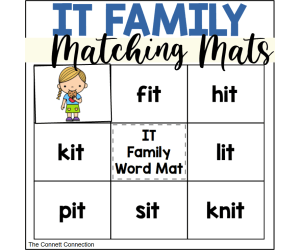
IT Words Matching Mats
ELA, Language Development, Phonics, Reading, Reading Comprehension, Preschool, Grade 1, Activities, Centers
Students can practice reading comprehension skills with these IT word family mats. Students can practice reading IT words in isolation and in the context of sentences. The words in this set follow a CVC or CCVC spelling pattern. Included in this resource: This resource includes one word mat and one sentence mat, both for reading IT words in insolation and in context. There are also picture cards that correspond with each word and sentence. To complete this activity, students will read each IT word or sentence on the mat and then match the corresponding pictures. Students can work independently or with a partner to complete this activity. How to Use these IT word Family Mats: The students can simply lay the images on top of the word or sentence. They can be placed in a file folder utilizing hook and loop fasteners to attach the images. A magnetic activity can be created by using a baking sheet and magnets to affix the images. Students will love the hands-on nature of this activity. The bold and colorful images will capture students' attention, and the easy to recognize pictures are sure to keep students engaged in learning. These literacy activities allow students to practice target words both in the context of sentences and in isolation. Where can these mats be used? Literacy Center - Students can work independently or with a partner to read these words Morning Tub or Basket - The cards can be placed in a morning bin for students to work on as students arrive to class. Small Group Activity - The teacher can choose a small group of students or a specific group of words for students to work on in a small group setting with the teacher. Hands On Assessment - The teacher can use these to test students on reading the target words in context or in isolation. Skills assessed through this activity: Reading IT words in context of a sentence and in isolation Reading comprehension The low-prep nature of this IT words matching mats activity makes it an easy to assign activity. The mats simply need to be printed out, while the matching cards need to be printed and cut. Lamination is optional for increased durability. Once created, this resource can be used repeatedly in literacy centers or small group activities, providing ongoing support for students' learning journey.
Author The Connett Connection
Tags Literacy Center, Phonics Activity, Kindergarten Literacy, Matching Mats, Simple Sentences, Reading Comprehension, CVC Words, It Words, It Word Family