



3,886 products added recently
Page 64 - Cut and Paste Activities
Enhance learning through tactile experiences with cut and paste activities that combine creativity and skill development. This collection includes sorting exercises, craft projects, and interactive worksheets. By integrating these activities into your lessons, you can support manual dexterity and engagement.

 Show filters


Frogs Know-It-Alls! Audio Book
Science, Life Sciences, Animals, Grade 2, 3, 4, Read Alouds, Activities
As part of the unique, science Know-It-Alls! Series that features interesting science facts, this audiobook puts the spotlight on Frogs! Did you know as a frog grows it has to shed its skin? This is called molting. The frog pulls off its old skin with its feet and then eats it. Awesome narration and sound effects plus many interesting facts, makes this audiobook fun and exciting for young science enthusiasts age 4 and up! Titles in the Know-It-Alls! Series include: Butterflies, Crocodiles, Dinosaurs, Farm Animals, Safari Babies, Snakes, Sharks, Spiders, Whales, Wolves, Puppies, Wild Cats, Bugs, Birds of Prey, Fish, Frogs, Apes, Seals, Bats, Bears, Predators, Mummies, Volcanoes, Lizards, Kittens and Horses.
Author Twin Sisters Digital Media
Tags Frogs, Science, Learning, Ebook, Education
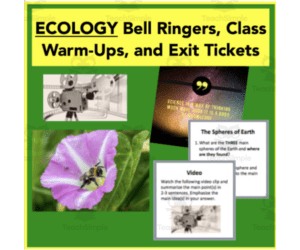
Ecology - Bell Ringers, Class Warm-Ups, and Exit Tickets
Science, Life Sciences, Biology, Grade 9, 10, 11, 12, Activities
Ecology - Bell Ringers, Class Warm-Ups, and Exit Tickets A highly resourceful educational tool designed for educators seeking effective teaching materials related to the subject of ecology. Featuring a comprehensive range of materials sufficient for at least 20 days, this resource can play a critical role in both initiating engaging classroom conversations through bell ringers/class warm-ups and marking the end of the class with thoughtful exit tickets. The Significant Aspects: The product is structured to equip teachers with useful resources and promote continuous learning among students. Aims at establishing an enriching classroom routine that initiates individual thought processing even before formal teaching begins. Serving as Versatile Tools: These activities are more than just whole group instruction; they can be easily adapted for small groups or as part of homework assignments. The concepts covered are vast; exploring topics from Spheres of Earth and Energy Flow In Ecosystems to Biomass & Fossil Fuels and Invasive Species. Included in this kit: Questions such as fill-in-the-blanks, short answer inquiries and drawings that test comprehension directly related down to previous lessons; Quotesrelating personally or broadly to ecology's overarching themes aiming at introspective thinking; Videosserving as interesting starting points by linking scientific knowledge with real-world applications. This resource makes daily routine structuring easier while keeping student engagement high! Fully Adaptable based on Your Needs: You can opt to mark on any particular section without overhauling your workload substantially! Aimed particularly towards Grade 9-12 Science Teachers specializing in Biology sub-field or homeschoolers seeking structured ecological instruction methodology - this Ecology - Bell Ringers Class Warm-Ups and Exit Tickets is a teaching resource truly proving its worthiness in bridging student learning gaps in the Subject of Ecology while bringing fluency to teaching methodology with much ease!
Author Teach With Fergy
Tags Ecology, Bell Ringers, Class Warm-ups, Exit Tickets, Teaching Resource

Examining Self-Esteem in the Young: Book 1
Life Studies, Special Resources, Life Skills, Preschool, Grade 1, 2, 3, 4, Activities
The Examining Self-Esteem in the Young: Book 1 is a 49-page download divided into 2 main sections - the theoretical base and activity pages. Teachers are able to focus on the importance of healthy self-esteem with the activities in this book. Students will explore topics such as what they do well, when they are happy, things that are special to them and so much more.
Author Ready-Ed Publications
Tags Self-esteem Lessons, School Counselor Worksheets, Life Skills, Student Confidence

Pill Bug Flipbook crafts Roly Poly Animal Science Study writing prompt
Animals, Life Sciences, Science, Biology, Grade 1, 2, 3, 4, Crafts, Activities, Parts of and Anatomy of, Worksheets & Printables, Writing Prompts
Make learning about pill bugs (roly-polies) fun and interactive with this printable DIY flipbook craft! Students will explore the fascinating world of pill bugs by learning about their habitat, diet, body features, life cycle, adaptations, and interesting facts while strengthening reading comprehension and writing skills through engaging science activities. I like using this resource during invertebrate units, bug and insect studies, animal science lessons, classroom centers, independent work, and homeschool learning. It’s a low-prep activity that combines science, reading, writing, and creativity into one meaningful project. What You Will Get This resource includes a printable Pill Bug (Roly Poly) DIY flipbook that helps students organize and record what they learn about this fascinating terrestrial crustacean through reading, writing, and hands-on learning. What’s Included in this Flipbook? • Pill Bug (Roly Poly) DIY flipbook craft templates • Reading and writing activities • Animal facts and science research pages • Habitat, diet, and life cycle sections • Physical characteristics and adaptations pages • Writing prompts and reflection activities • Easy-to-follow assembly instructions This resource is perfect for: • Animal science lessons • Invertebrate studies • Bug and insect units • Classroom science centers • Homeschool learning • Independent work and early finishers Why you will love this? • Easy to print and assemble • Encourages reading, writing, and scientific thinking • Builds nonfiction reading comprehension skills • Supports research and observation skills • Makes science learning hands-on and engaging • Creates a meaningful keepsake students can share This Pill Bug (Roly Poly) DIY Flipbook Craft is a fun and interactive way for students to discover the unique characteristics, adaptations, and life cycle of these fascinating little creatures while developing reading, writing, and science skills through creative, hands-on learning.
Author Perfect_Printables
Rating
Tags Animal Science, Writing Prompt, Science Craft, Nonfiction Activities, Science Centers, Animal Research, Flipbook, Pill Bug, Pill Bug Flipbook, Roly Poly
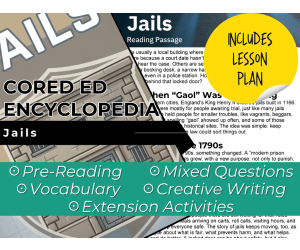
Jails Reading Comprehension Passage - Cored Ed Encyclopedia
ELA, Reading Comprehension, Reading, Pre-Reading, Language Development, Vocabulary, History, Social Studies, Law, Spelling, Grade 2, 3, 4, 5, Worksheets & Printables, Worksheets, Teacher Tools, Centers, Activities, Writing Prompts, Assessments, Quizzes and Tests, Quizzes, Lesson Plans
This Jails reading comprehension with lesson plan includes: Visualization (on the front cover) Start your lesson by taking a minute to think and share something about the topic. Read the script aloud (slowly), perhaps prepare some music or sound effects. Student close their eyes and let their imaginations wander. Students open their eyes, read the question aloud and give them a few minutes to complete. Ask a few students to share or keep answers until the end to compare with what they learn in the passage. Quick pause—thousands of Cored Education products are included with your TeachSimple membership. Download links and encyclopedia index available here. Pre-Reading Trivia Students will write down one thing they already know about the subject and then read five more facts and discuss. These facts are fun, and the students will enjoy learning about the subject before reading more. Give 1 minute for students to write what they already know (no pressure—best guess is fine). Read the five facts together. After each fact, do ask a student for their opinion, was it surprising? Set a purpose by asking students to highlight/underline one fact they want to learn more about during the reading. Reading Passage The text is a high-interest reading passage with set paragraphs, roughly three to four paragraphs long. It contains a variety of themes about the topic, anywhere from history to technology. The passage is between 250 and 350 words in length. First, ask students to look at the headings and see what they’ll learn about today. What do they know about the topic/heading? First read options: Teacher read-aloud (best for support). Partner reading (paragraph by paragraph). While reading, students underline important details, and vocabulary words they think may come up in the questions section. Mixed Questions The first question page contains four multiple-choice questions, each with a choice of four answers, and three written response questions that require a sentence or two from the student. Students complete the mcqs first independently, then review quickly as a class. For the 3 written responses, try to get students giving the answer with some form of evidence: “I think ___ because the text says ___.” If students get stuck, send them back to check the passage. Vocabulary Questions Practice seven key words from the text in this section across two activities. First section is scrambled words where students will unscramble three words given a clue for each. The second section is a word to meaning matching activity. Before starting, have some students read out words they underlined in the passage. Ask students to say the word and read aloud the sentence(s) around each word. Ask students to do scrambled words and the matching exercise in pairs then go through answers as a class. For the scrambled spelling task, get four pairs to come up to the board and write the words for extra practice with the other student reading out the clue. For the matching task, prompt students to give full sentences: “I matched ___ with ___ because ___.” Creative Writing In this question, the student will be required to write a five to eight sentence paragraph on a question related to the topic. Before starting, ask students write down 3 key ideas they are going to include in their piece. Ask students for ideas to share around the class to help those struggling. Pro writing expectations: 5–8 sentences At least 2 facts or details from the passage At least 2 vocabulary words from the previous page Students read their paragraphs while classmates listen for facts and vocabulary words. Extension Activities This page is optional for fast finishers or to take home. There are several activities, each one requiring a different skill. Do some, do none, do all, completely optional - but you will feel reassured knowing every possibility is planned for. Includes summary writting question and additional facts. Answer Key There are answers for the multiple-choice questions, written response questions have sample answers, vocabulary answers and if there is a summary question then a sample summary will be provided as well. Lesson Plan Included Customized lesson plan for this lesson is included. Lesson Snapshot Title: Jails Genre: Nonfiction (informational text) Subject: Social Studies (Civics) / Reading (Informational Text) Primary Topic: What jails are and how they differ from prisons Estimated Guided Reading Level (A–Z): S What This Lesson Teaches Best Explains what a jail is and why people may be there for a short time (waiting for a court date or serving short sentences). Uses history to show how jails were used long ago (England, 1166) and why the spelling “gaol” appeared. Clarifies the difference between “jail” and “prison” in formal American and Canadian English (pretrial custody/shorter sentences vs. longer sentences). Connects jails to community routines and civic values (rules, safety checks, fairness, harm prevention, justice). Builds understanding of how word choice and definitions matter when discussing systems and government roles (counties vs. state/federal). Learning Goals Describe what a jail is and give two reasons people may be held there. Explain how early jails in England were used and what “gaol” means in the passage. Explain what changed in the 1790s in the United States, according to the text. Compare a jail and a prison using details from the passage. Identify examples of routines and rules in jails and explain why they matter. Key Vocabulary From the Text booking — recording a new person in jail. cells — small rooms where people are held. trial — a court process to decide a case. convicted — found guilty of a crime. reform — help someone change for the better. FULL CATALOG OF DOWNLOAD LINKS AND ENCYCLOPEDIA INDEX HERE
Author Cored Education
Rating
Tags Vocabulary, Reading Comprehension, Reading Passages, Lesson Plans, Ela Lesson Plans, Reading Comprehension Lesson Plans, Pre-reading, Social Studies Lesson Plans, History, Jails
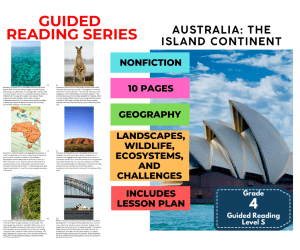
Australia - Island Continent: Guided Reading Level S with Lesson Plan
ELA, Resources for Teachers, Reading Comprehension, Reading, Science, Geography, Social Studies, History, Life Sciences, Earth and Environmental Sciences, Grade 3, 4, 5, Worksheets & Printables, Worksheets, Teacher Tools, Centers, Activities, Literacy Readers, Quizzes, Quizzes and Tests, Assessments, Lesson Plans
This Australia: The Island Continent (level s) guided reading book with lesson plan includes: Guided Reading Color Label (front cover x1) This is a quick way to match the book’s demands to what students can generally handle.. The overall goal is to use the level/color to pick books for several smaller groups. To qualify for a certain level, a student is expected to read a book from that level with about 90–94% accuracy. If a student is consistently accurate and understands, move up a level. If the student is struggling at that level, drop down and add more support. Each student will improve at completely different rates, but it is generally one of the best ways to check progress across the class. DOWNLOAD THE CATALOG TO VIEW ALL GUIDED READING BOOKS AVAILABLE (SORTED LEVELS A-Z) Pre-Reading Question (x1) Teacher asks the prompt aloud, can be while showing the cover or first page. Students share what they already know, or make educated guesses from the cover. Prompt them to use the target vocabulary. Write some of their responses on the board to look back at during the reading. Vocabulary Words (x5) Introduce the five words, best doing it one at a time. Start by saying it, while students repeat and then see if anyone knows what it means before reading further. Read through the meaning and try to briefly connect each word to a picture or gesture so it’s meaningful. Ask students to flip through the book pages and point to where they see each of the vocabulary words. While reading the book pause upon coming across one of the vocab words or read the sentence twice to make sure students understand the word has appeared. Optional: Ask students to raise hands whenever they see/hear one of the new words. Guided Reading Pages (x10) Check the book snapshot (below) for: primary topic - do you need to prep extra reading or intro materials on this? what is taught best - decide on 1-2 bullets to focus on, use the prompt or words provided here for best results. learning goals - what you are checking for students to be able to do after the session, elicit answers using prompts or words provided. key vocabulary (see section above). questions overview - so you know what is coming up and if you need to prep extra materials to assist understanding. Run the lesson You may have already looked at a few of the pages together, but you can show them some of the pictures again first to set meaning. Depending on how much time you have and how familiar your students are with guided reading class, you may want to read the book aloud first with the group first. Students whisper or partner read, while you listen in. If time, do it as a group, one student reading a page each. Use the guided page’s prompts to coach: “Check the picture / does it make sense?” “Point under the words / try the first sound” “Reread the sentence smoothly”. Try to focus more on one student per session (rotating every time), so you can work out if they are ready to move up or need to move down a level. Comprehension Questions (back cover x3) This is your way to check that students didn’t just say the words, but actually understood the text. First, let students answer by pointing to the page/picture and saying a short sentence. After any answer, follow with: “Show me where you found that in the text.” In bigger groups, have partners answer first (10–20 seconds), then call on 2–3 students to share. Differentiation tips: Emerging speakers/struggling readers: oral + pointing On-level: oral in a full sentence Higher: one written sentence or draw + label Book Snapshot Title: Australia: The Island Continent Genre: Nonfiction Subject: Social Studies (Geography/Culture) Primary Topic: Australia’s landscapes, wildlife, ecosystems, and challenges Estimated Guided Reading Level (A–Z): S What This Book Teaches Best Explains Australia’s unique identity as the only country that is also an entire continent, located in the Southern Hemisphere between the Indian and Pacific Oceans. Builds understanding of diverse landscapes, from the arid Outback (including Uluru) to the Great Barrier Reef and the Daintree Rainforest. Teaches how isolation supports unique wildlife, highlighting marsupials (kangaroos, koalas) and monotremes (platypus) with survival traits and behaviors. Connects place to people by describing Uluru’s importance to the Anangu and the long history of Aboriginal and Torres Strait Islander peoples, including “songlines” and rock art sites. Introduces modern Australia through coastal city life in Sydney and present-day environmental challenges like climate change, bushfires, drought, and conservation work. Learning Goals Students will explain why Australia is called the “island continent” using details from the text. Students will describe two Australian environments (such as the Outback, reef, or rainforest) with text evidence. Students will explain what the text says about Uluru, including what it is and why it is sacred to the Anangu people. Students will identify one animal from the text and describe a feature or behavior that helps it survive. Students will describe how the text presents Australia’s long human history through Aboriginal and Torres Strait Islander peoples, “songlines,” and rock art. Students will explain modern challenges Australia faces and summarize how scientists and conservationists respond. Key Vocabulary From the Text Hemisphere — half of the Earth. arid — very dry, with little rain. monolith — one huge rock that stands alone. marsupials — mammals that carry babies in a pouch. biodiversity — many different living things in one place. Discussion Prompts Pre-reading question: What places, animals, or environments do you expect to learn about in Australia? Comprehension questions: Where does the text say Australia is located, and what oceans are nearby? Comprehension questions: What does the text explain about the Great Barrier Reef and what lives there? Comprehension questions: What are two modern challenges Australia faces, according to the text? Printing Tips 1. Best Printing Method (Recommended) “Booklet” Printing (Best if Available) If your printer or PDF viewer supports Booklet Printing , use this. Settings to use: Print mode: Booklet Paper size: Letter or A4 (either works) Orientation: Landscape Print on both sides: Yes Flip on: Short edge Scaling: Fit to printable area Booklet subset: First test: Front sides only Then: Back sides only This will automatically: Pair pages correctly Put the cover on the outside Align everything for folding After printing, fold in half and staple along the spine . 2. If “Booklet” Printing Is NOT Available You can still print this correctly with manual duplex printing . Step-by-step: Open the PDF. Choose Print . Set: Orientation: Landscape Pages per sheet: 1 Print on both sides: Yes Flip on: Short edge Print all pages . Because each PDF page already contains two facing book pages, the result will still fold cleanly into a book. Thousands of Cored Education products are included with your TeachSimple membership. Download links and encyclopedia index available here.
Author Cored Education
Rating
Tags Reading Comprehension, Reading Passages, Reading, Guided Reading, Guided Reading Lesson Plan, Guided Reading Activity, Pre-reading, Social Studies, Geography, History
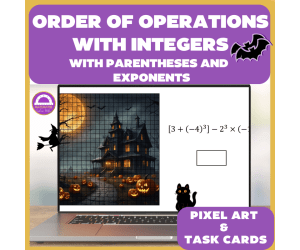
Halloween Order of Operations with Integers Challenging Pixel Art
Math, Addition and Subtraction, Addition, Subtraction, Order Of Operations, Multiplication and Division, Multiplication, Division, Grade 6, 7, 8, Worksheets & Printables, Activities, Task Cards
Have a howling good time this Halloween and make math fun and engaging with this no-prep pixel art activity to help 7th graders master the order of operations with positive and negative integers. This is great to get higher-order math skills in with an engaging, no-prep, self-checking resource where students apply the order of operations to solve expressions containing integers using parentheses and exponents. With each problem solved, a different Halloween-themed picture in pixel art form will appear; math has never been easier and more fun! Product Highlights: Grade Level: 7th Grade Activity Type: Digital and printing resources Focus Skills: Reinforces order of operations with parentheses and exponents to build confidence in handling both positive and negative integers. Self-Checking & Immediate Feedback: Students immediately know if their answers are correct; students are allowed to find and correct errors on their own. 20 Engaging Problems: An extended set of exercises that will make students work but keep them at an engaging level. No-Prep for Teachers: Just assign it, and the students can jump right into it independently-saving precious time. Halloween Theme: Adds seasonal excitement to keep students interested and motivated as they work through each question. Autosave Feature: Students can pick up where they left off on the same device and browser using the "Continue" button; great for working across multiple sessions. What's Included: Digital Pixel Art Activity: A Halloween image is revealed as students solve each problem correctly; making the learning process a bit more fun. Again, this can make the process of learning a bit more fun for them. Printable Task Cards & Handouts: Accommodates classrooms that need the activity in both digital and printable formats. Suitable for all sorts of learning situations: in-class, at home or hybrid learning activities. Solution Key Provided: Makes grading easy and allows students to review work. Why Teachers Love This Activity: Engage the Students in Interactive Practice Math: The Halloween theme and reward system lighten the disposition towards the math to be learned through this pixel art. Independent, self-paced learning: The self-checking format encourages independence in learning; students will be able to work on the problems with minimal intervention from others. Advanced Integer Skills: Emphasizing parentheses, exponents, and the order of operations, this activity reinforces basic math skills. Make Order of Operations Practice a Holiday of Fun! Get your students into learning about the order of operations with integers through this no-prep, Halloween-themed pixel art activity. Assign it today, and let them work at their own pace through math challenges as they get to enjoy the seasonal fun!
Author Matemaths
Tags Matemaths, Pixel Art, Math, Integer, Fall, Order Of Operations
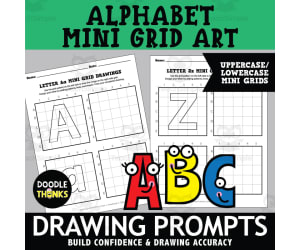
Alphabet Mini Grid Art Prompts | Build Confidence & Drawing Accuracy
ELA, Creative Arts, Art, Language Development, Pre-Reading, Fine Arts, Preschool, Grade 1, 2, 3, 4, Drawing Templates & Outlines, Worksheets & Printables, Activities
Alphabet Mini Grid Art Prompts | Build Confidence & Drawing Accuracy The Alphabet Mini Grid Drawing Prompts is an engaging and educational resource designed for students in kindergarten through 4th grade. This tool, which focuses on Language Arts, Art and Music, enhances skills while making learning fun. For more creative ideas, visit Doodle Thinks website. Incorporating this Resource into Everyday Teaching: Integrating this tool into your standard teaching routine encourages students to broaden their creative minds through art whilst solidifying their knowledge of the alphabet. These simple grid drawing exercises transform complex images into manageable pieces - thereby fostering detail orientation and precision. Included in this download: 52 mini grid drawing prompts An uppercase set A lowercase set This provides plenty of opportunities for students to explore different aspects of art - not just in classrooms but as homework or holiday assignments too. Pedagogical Applications: This resource can be effectively used during whole group instruction. Individual activities or when working in small groups. Your learners will find the prompts easy to understand and they help facilitate interactive peer-learning when utilized within team settings. Plus, you may even use them as a calming brain break activity, homeschool drawing time, sub days, or they could serve as engaging tasks for early finishers! Versatility & Effectiveness: This educational resource creates an engaging blend that aims at nurturing creativity, focus, and confidence in art while ensuring that all learners enjoy each accompanied session with mini grid drawings. The Alphabet Mini Grid Drawing Prompts is an excellent tool suitable for both traditional schooling scenarios and homeschool environments where unique expressive styles are honed. Have fun learning and drawing!
Author Doodle Thinks
Rating
Tags Grid Drawing, Alphabet, Art Education, Fine Motor Skills, Creativity, Drawing, Build Confidence, Learn The Alphabet, Drawing Accuracy, Art Printables

Therapy Dog Door Signs – Clear Communication
Social Emotional Learning (SEL), Special Resources, Social Skills, Special Education Needs (SEN), Life Skills, Animals, Life Sciences, Science, Classroom Management, Resources for Teachers, High School, Middle School, Elementary, Early Learning, Pre-K, Not Grade Specific, Adult Education, Classroom Decor, Banners, Bulletin Boards, Projects, Activities, Drawing Templates & Outlines, Worksheets & Printables, Coloring Pages, Worksheets
Therapy Dog Door Signs – Keep Your Classroom Calm & Organized 🐶🚪 A therapy dog in school is wonderful—but clear communication makes it even better! When a therapy dog is part of your school, it’s important that everyone—students, teachers, and visitors—knows how to interact appropriately. Sometimes the dog is available for visits, sometimes resting, and other times they need a quiet space to recharge. Instead of constantly reminding students when it’s okay to interact, these removable door signs do the work for you! With simple, easy-to-read messages, these signs help set clear expectations so that students respect the therapy dog’s needs while still enjoying all the benefits of having one at school. 🐾 Why These Signs Are Helpful for Any Therapy Dog Program ✔ Prevents classroom disruptions – No more students knocking or entering at the wrong time. ✔ Helps students learn respect – Teaches kids to recognize when the therapy dog needs rest. ✔ Perfect for schools, counseling offices, and classrooms – Works anywhere a school therapy dog is present. ✔ Easy to switch – The signs are removable, so you can update them as needed throughout the day. ✔ Kid-friendly design – Simple words and visuals make it easy for even young students to understand. 📌 What’s Included? 📜 A Set of Printable Therapy Dog Door Signs 🐶 "Therapy Dog Inside – Please Enter Quietly" 🐶 "Therapy Dog Resting – Do Not Disturb" 🐶 "Therapy Dog on a Break – Will Be Back Soon" ✔ Clear and student-friendly wording ✔ Easy-to-print format for flexible use 💡 How to Use These Signs in Your School 📍 Print & laminate for durability. These signs will last all year with lamination! 📍 Attach with Velcro or a removable adhesive. This makes it quick and easy to change the sign depending on the therapy dog’s schedule. 📍 Place them at the classroom or office door. Anywhere the therapy dog is working or resting, these signs help students understand what to do. 📍 Let students take responsibility. Assign a student helper to change the sign when needed—it’s a great way to involve them in learning about animal care and respect. Why Teachers Love These Signs ✔ "My students used to walk in loudly, but now they stop and check the sign first!" ✔ "It’s made a big difference—fewer interruptions, and our therapy dog is much calmer." ✔ "I laminated them, and now they’re a daily part of our routine. So helpful!" 🐶 A Simple Solution for a Well-Organized Therapy Dog Program Bringing a therapy dog into a school setting is such a rewarding experience, but a little structure makes it even smoother. These removable therapy dog door signs help set clear expectations so that both students and the therapy dog feel safe and comfortable. 📥 Print them today and make your school’s therapy dog experience even better! 🐾✨ 📍 Best wishes, Heike from Lernfitness Did You Know? I teach with a certified therapy dog, and together we create a positive and inspiring learning environment. 🐶✨
Author Lernfitness
Tags Therapy Dog, Animal-assisted Learning, Inclusive Education Tools, Therapy Dog Rules, Classroom Pet Guidelines, Therapy Dog In School, Social-emotional Learning, SEL, Dog Classroom Sign

Social Studies Comprehension Passages: Global Food Customs (PDF)
ELA, Reading, Reading Comprehension, Strategies, Resources for Teachers, Social Studies, Sociology, Grade 6, 7, 8, 9, Writing Prompts, Worksheets & Printables, Centers, Activities, Teacher Tools, Assessments, Quizzes and Tests, Quizzes, Tests
Social Studies Reading Comprehension Passages and Questions: Global Food Customs (PDF) This resource introduces a collection of Social Studies reading comprehension passages with questions about Global Food Customs. The passages are carefully designed to bridge the gap between social studies and literacy through strengthening reading comprehension and sparking knowledge curiosity in middle school students. Each passage blends English Language Arts skills with accurate social studies content . Ideal for interdisciplinary learning in ELA and Social Studies. Suitable for Grade 9 review, too! What Is Included in this Collection? There are three informational passages (with full answer keys): On the Menu: Why Some Cultures Eat Insects More Than a Drink: Tea Customs Sweet Cravings: Understanding Sugar “Addiction” For Each Passage, students will have multiple tasks to complete as follow: 5 multiple-choice questions targeting main idea, key details, inference, vocabulary in context, and use of evidence 5 vocabulary matching items with clear, student-friendly definitions 5 text-based questions that require citing specific lines or facts 1 summary prompt that asks students to condense central ideas accurately Available Formats for this Resource Fillable PDF Word Docs Google Docs FULL CATALOG OF DOWNLOADING LINKS HERE For more Social Studies Reading Passages, check the following Links: Ancient Civilizations PDF Fillable PDF Word Docs Google Docs Early Empires and Trade Networks PDF Fillable PDF Word Docs Google Docs The Founding of the United States PDF Fillable PDF Word Docs Google Docs Language, Culture, and Meaning PDF Fillable PDF Word Docs Google Docs Psychology and Society PDF Fillable PDF Word Docs Google Docs Global Festivals and Traditions PDF Fillable PDF Word Docs Google Docs Extreme Environments and People PDF Fillable PDF Word Docs Google Docs Food, Culture, and Preservation PDF Fillable PDF Word Docs Google Docs Global Food Customs PDF Fillable PDF Word Docs Google Docs Media, Communication, and Popular Culture PDF Fillable PDF Word Docs Google Docs Human Impact on the Environment PDF Fillable PDF Word Docs Google Docs Civic Action and Social Change PDF Fillable PDF Word Docs Google Docs Fashion, Society, and Power PDF Fillable PDF Word Docs Google Docs People, Places, and Unusual Histories PDF Fillable PDF Word Docs Google Docs Product Details Length: 14 pages total Grades: 6–8, also suitable for Grade 9 review Use cases: close reading, stations, homework, intervention, test prep, and sub plans Why Teachers Choose This Set Authentic social studies content paired with rigorous literacy practice Consistent task structure across all passages for easier planning and smoother student routines Clear, age-appropriate writing that builds confidence without oversimplifying Use this set to reinforce ELA skills in social studies, to add literacy to your lessons, and to support independent work. The passages strengthen main idea, evidence use, vocabulary in context, inference, cause and effect, and summary writing. With ready-to-use assessments and complete answer keys, you can provide focused practice that is simple to run and fast to review.
Author Middle & High School - CORED Education
Rating
Tags Middle School, Reading Comprehension, Reading Strategies, ELA, Centers, Reading Passage, Assessments, Vocabulary, Social Studies, Food And Culture
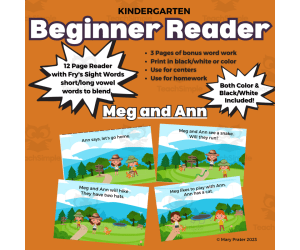
Meg and Ann Beginner Reader - Fry Sight Words
ELA, Language Development, Pre-Reading, Reading, Preschool, Grade 1, Teacher Tools, Lesson Plans, Activities
Meg and Ann Beginner Reader introduces young readers to Fry sight words through a charming 12-page story. Students join friends Meg and Ann on an exciting adventure while exposed to common sight words and blended words woven throughout the tale. After reading, students complete 3 comprehension pages to reinforce literacy skills. This packet works well for reading groups, literacy centers , or homework. Print pages back-to-back to save paper. Use the included 5-day lesson plan to introduce new sight words, review through games, read aloud while students identify words, echo read critical words, partner read, and complete comprehension pages. Extend the plan into a second week as needed. 3 other readers feature friends Tim and Tai and Dax and Gab. Together, these create a sight word series perfect for building mastery.
Author The Kinder Lady
Tags Comprehension, Reading, Emergent Reading, Kindergarten Reading, Reading Booklets, Reading First Grade, Frys Sight Words, Fluency

Niels Bohr – Scientist Profile & Comprehension Activities - PDF + H5P
Life Sciences, Science, STEM, Social Studies, Biographies, Inventors, Basic Science, Physics, Chemistry, Human Body, Grade 6, 7, 8, 9, 10, 11, Worksheets, Worksheets & Printables, Quizzes, Quizzes and Tests, Teacher Tools, Projects, Activities
Niels Bohr – A Look at One of the Founders of Atomic Theory Informational Text, Student Tasks, and Interactive Quiz (PDF + H5P) 🧪🔬 A ready-to-use classroom resource for grades 7–10 🧪 This material introduces students to Niels Bohr and his ideas about the atom – ideas that still shape how we teach atomic structure today. The text is short and easy to follow, so it works well for younger students or for those who are just starting to learn about atomic models. I’ve used this kind of format when I needed a quick but meaningful activity – for example, during a unit on atomic theory or as part of a lesson on scientists and their discoveries. It’s also been useful in cover lessons, especially when someone without a science background had to step in. Everything is included and explained clearly. What’s in the file: A short reading text about Niels Bohr A profile worksheet for students to fill out Quiz questions with an answer key Two optional tasks: – Students write their own questions – Students answer a partner’s questions You get everything as a printable PDF, a modifiable .docx file (text only), and a simple H5P version for use in digital learning systems How you might use it: Students can read the text alone or in pairs. They then fill in the profile and answer the quiz questions. If there’s still time, they can come up with their own questions about the text and swap them with a classmate. The H5P version is helpful if your students are working online or if you want them to check their answers themselves. It’s a flexible resource that doesn’t need a lot of explanation – and works just as well in regular science lessons as in emergency planning. Have fun exploring the world of science with your students! Warmly, Lernfitness Did You Know? I teach with a certified therapy dog, and together we focus on creating a positive and inspiring learning environment.
Author Lernfitness
Rating
Tags Science, Famous Scientists Lesson, H5P, Interactive Science Exercises, STEM, History, Scientists, Chemistry, Scientific Concepts, Niels Bohr

"Ruff," Says The Dog! Video Storybook
ELA, Early Learning, Pre-K, Read Alouds, Activities
Help baby learn what special sounds different farm animals make with this adorably illustrated video. Black and white art and bursts of color will capture baby’s attention with large, simple pictures that encourage learning. Includes: “Ruff” say the dog! “Quack” says the duck. “Meow” says the cat! “Oink” says the pig! “Neigh” says the horse! “Cluck” says the chicken! “Moo” says the cow! And “Baa” says the lamb. Other video in the Baby’s First Learning Video series include: “Spash” goes the Hippo!, My Day, and Let’s Play.
Author Twin Sisters Digital Media
Tags Learning, Baby, Cow, Dog, Ebook, Dog Says Ruff
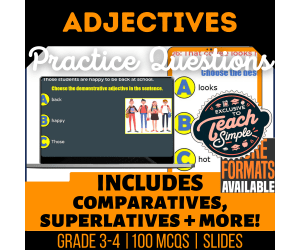
Adjectives Practice Questions - Grade 3-4 Grammar (Google Slides)
ELA, Language Development, ESL, Grammar, Common Core, Resources for Teachers, Grade 3, 4, Quizzes and Tests, Teacher Tools, Tests, Assessments, Presentations, Activities
Adjectives Grammar Practice MCQS ELA MCQS Overview: In this series of lessons, students will embark on an engaging journey to explore the grammar skills that make our language vibrant and expressive. These lessons are crafted to help students identify, comprehend, and effectively apply language arts skills in both writing and speech. Accompanied by free supplementary materials available for all topics, each lesson builds on the previous one, offering a balanced mix of direct instruction, interactive group activities, and independent practice. Through fun and creative tasks, students will learn to recognize grammar within sentences, understand their function, and use them to enrich their own writing and speech. Adjectives Overview: Includes: Identifying Adjectives Gap Filling Comparatives Superlatives Additional Practice Google Slides Version This is the Slides editable and interactive version. There is a fillable answer sheet at the end. This download is available in GOOGLE Docs, GOOGLE Forms, GOOGLE Slides. PDF, PPT, WORD, check the links below for more details. FULL CATALOG OF DOWNLOAD LINKS HERE Grade 3/4 Links: Adjectives Google Docs Google Forms Google Slides PDF PPT Word Free Supplementary Materials Pack Adverbs Google Docs Google Forms Google Slides PDF PPT Word Free Supplementary Materials Pack Conjunctions Google Docs Google Forms Google Slides PDF PPT Word Free Supplementary Materials Pack Nouns Google Docs Google Forms Google Slides PDF PPT Word Free Supplementary Materials Pack Pronouns Google Docs Google Forms Google Slides PDF PPT Word Free Supplementary Materials Pack Verbs Google Docs Google Forms Google Slides PDF PPT Word Free Supplementary Materials Pack Sentence Structure Google Docs Google Forms Google Slides PDF PPT Word Free Supplementary Materials Pack Present Tense Google Docs Google Forms Google Slides PDF PPT Word Free Supplementary Materials Pack Past Tense Google Docs Google Forms Google Slides PDF PPT Word Free Supplementary Materials Pack Future Tense Google Docs Google Forms Google Slides PDF PPT Word Free Supplementary Materials Pack Context Clues Google Docs Google Forms Google Slides PDF PPT Word Free Supplementary Materials Pack Defining Words Google Docs Google Forms Google Slides PDF PPT Word Free Supplementary Materials Pack Fill the Blanks Google Docs Google Forms Google Slides PDF PPT Word Free Supplementary Materials Pack Homophones Google Docs Google Forms Google Slides PDF PPT Word Free Supplementary Materials Pack Synonyms Google Docs Google Forms Google Slides PDF PPT Word Free Supplementary Materials Pack ELA Review Questions Overview Questions have three answer choices. There are a handful of pictures on each test for aesthetic purposes, as well as a review sheet covering most of the topics covered in the product. Introduction or Example Sheet Each topic will include an introduction or example sheet to go through first with your students. Full Answer Keys Full answer keys and sample responses are provided so no matter how busy you are, you know you're covered! In the Supplementary Pack Interactive Ice Breakers: Fun, hands-on activities that get students thinking about adjectives right from the start. Guided Practice: Teacher-led exercises that reinforce the day’s lesson, ensuring students can confidently identify and use adjectives. Group and Partner Tasks: Collaborative activities that allow students to work together to solve problems, categorize adjectives, and create descriptive sentences. Independent Worksheets: Structured worksheets that provide individual practice and help solidify understanding of key concepts. Exit Tasks: Quick, reflective activities at the end of each lesson that assess understanding and encourage students to apply what they’ve learned. For similar downloads and other frees, do check out Cored Group on TeachSimple.
Author Cored Education
Tags Elementary, Answers, Ccss, Common Core, Grammar, Tests, Test Prep, Assessment, Grade 3, Grade 4

Chemistry Binder Covers – Templates for Classroom Use
Life Sciences, Science, STEM, Inventors, Basic Science, Chemistry, Special Resources, Montessori, Classroom Management, Resources for Teachers, Homeschool Templates, Grade 7, 8, 9, 10, 11, 12, Worksheets, Worksheets & Printables, Teacher Tools, Projects, Activities, Workbooks, Drawing Templates & Outlines, Templates, Graphic Organizers, Experiments
Chemistry Binder Covers – Templates for Classroom Use Organize your chemistry handouts, notes, and units with visual clarity Simple and flexible templates to help organize your chemistry materials In my chemistry classes, it can be a challenge to keep things organized - especially when it comes to multiple units, lab notes, worksheets and review materials. To make it easier for my students and myself, I designed these simple binder sleeves. There are 12 different pages. The covers have a clean, colorful blob layout that is friendly but not distracting. I usually print them out and use them as cover sheets or as dividers in folders for students or teachers. They also work well for digital learning environments, e.g. as section covers in PDF files or on classroom platforms. I like that the color scheme allows students to quickly find what they are looking for, and it brings a little more structure to a subject that is often riddled with formulas and technical terms. When used as cover sheets, students can choose their favorite color for their cover sheet. This resource is handy - and has saved me a lot of time in lesson preparation and follow-up. What’s included: 12 chemistry-themed cover pages different colors zu choose as a cover sheet as a divider between the individual chemistry topics I've printed these on colored paper for my own binder and also used them digitally in student notebooks. Works well for both teacher organization and student-facing materials. 📍 Best wishes, Heike from Lernfitness Chemistry teacher (Biology teacher, Math teacher) in Germany Did You Know? I teach with a certified therapy dog, and together we create a positive and inspiring learning environment. 🐶✨
Author Lernfitness
Rating
Tags Science, STEM, Chemistry, Binder, Template, Cover Sheet, Organizer, Organize, GoodNotes, PDF

Whales Reading Comprehension Passage - Cored Ed Encyclopedia
ELA, Language Development, Reading Comprehension, Reading, Pre-Reading, Science, Animals, Life Sciences, Vocabulary, Writing, Grade 2, 3, 4, 5, Worksheets & Printables, Worksheets, Teacher Tools, Centers, Activities, Writing Prompts, Assessments, Quizzes and Tests, Quizzes, Lesson Plans
This whales reading comprehension with lesson plan includes: Visualization (on the front cover) Start your lesson by taking a minute to think and share something about the topic. Read the script aloud (slowly), perhaps prepare some music or sound effects. Student close their eyes and let their imaginations wander. Students open their eyes, read the question aloud and give them a few minutes to complete. Ask a few students to share or keep answers until the end to compare with what they learn in the passage. Quick pause—thousands of Cored Education products are included with your TeachSimple membership. Download links and encyclopedia index available here. Pre-Reading Trivia Students will write down one thing they already know about the subject and then read five more facts and discuss. These facts are fun, and the students will enjoy learning about the subject before reading more. Give 1 minute for students to write what they already know (no pressure—best guess is fine). Read the five facts together. After each fact, do ask a student for their opinion, was it surprising? Set a purpose by asking students to highlight/underline one fact they want to learn more about during the reading. Reading Passage The text is a high-interest reading passage with set paragraphs, roughly three to four paragraphs long. It contains a variety of themes about the topic, anywhere from history to technology. The passage is between 250 and 350 words in length. First, ask students to look at the headings and see what they’ll learn about today. What do they know about the topic/heading? First read options: Teacher read-aloud (best for support). Partner reading (paragraph by paragraph). While reading, students underline important details, and vocabulary words they think may come up in the questions section. Mixed Questions The first question page contains four multiple-choice questions, each with a choice of four answers, and three written response questions that require a sentence or two from the student. Students complete the mcqs first independently, then review quickly as a class. For the 3 written responses, try to get students giving the answer with some form of evidence: “I think ___ because the text says ___.” If students get stuck, send them back to check the passage. Vocabulary Questions Practice seven key words from the text in this section across two activities. First section is scrambled words where students will unscramble three words given a clue for each. The second section is a word to meaning matching activity. Before starting, have some students read out words they underlined in the passage. Ask students to say the word and read aloud the sentence(s) around each word. Ask students to do scrambled words and the matching exercise in pairs then go through answers as a class. For the scrambled spelling task, get four pairs to come up to the board and write the words for extra practice with the other student reading out the clue. For the matching task, prompt students to give full sentences: “I matched ___ with ___ because ___.” Creative Writing In this question, the student will be required to write a five to eight sentence paragraph on a question related to the topic. Before starting, ask students write down 3 key ideas they are going to include in their piece. Ask students for ideas to share around the class to help those struggling. Pro writing expectations: 5–8 sentences At least 2 facts or details from the passage At least 2 vocabulary words from the previous page Students read their paragraphs while classmates listen for facts and vocabulary words. Extension Activities This page is optional for fast finishers or to take home. There are several activities, each one requiring a different skill. Do some, do none, do all, completely optional - but you will feel reassured knowing every possibility is planned for. Includes summary writting question. Answer Key There are answers for the multiple-choice questions, written response questions have sample answers, vocabulary answers and if there is a summary question then a sample summary will be provided as well. Lesson Plan Included Customized lesson plan for this lesson is included. Lesson Snapshot Title: Whales Genre: Nonfiction (informational text) Subject: Life Science / Informational Reading Primary Topic: Whales as mammals, feeding types, fossils, human impacts Estimated Guided Reading Level (A–Z): Q What This Lesson Teaches Best Whales are mammals that breathe air with lungs through blowholes , so they must surface as part of everyday life. Whales can have two different feeding tools : baleen plates that strain food like krill, or sharp teeth used to grab fish or squid. Fossils provide evidence that early whale relatives were land mammals and changed over millions of years to live in the ocean. Human activity affects whales today (fishing gear tangles, ships strike, and loud noise can fill the water where whales communicate), and scientists use tracking tools to help protect them. Learning Goals Students will explain why whales rise to the surface using details about breathing and blowholes. Students will compare how baleen whales and toothed whales get food, using evidence from the text. Students will describe what fossils show about where whales came from long ago. Students will identify one modern problem that can make whale communication harder, based on the passage. Students will describe at least one way scientists track whales to protect them, using details from the text. Key Vocabulary From the Text blowholes — nostrils on top of a whale’s head. baleen — mouth plates that strain tiny food from water. krill — tiny sea creatures baleen whales hold onto. streamlined — shaped to move smoothly through water. fossils — old remains in rock that give clues. FULL CATALOG OF DOWNLOAD LINKS AND ENCYCLOPEDIA INDEX HERE
Author Cored Education
Rating
Tags Vocabulary, Reading Comprehension, Reading Passages, Lesson Plans, Ela Lesson Plans, Reading Comprehension Lesson Plans, Pre-reading, Science Lesson Plans, Life Science, Animals
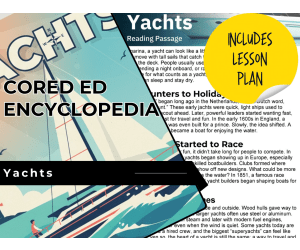
Yachts Reading Comprehension Passage - Cored Ed Encyclopedia
ELA, Language Development, Reading Comprehension, Reading, Science, History, Social Studies, Technology, Engineering, Pre-Reading, Grade 2, 3, 4, 5, Worksheets & Printables, Worksheets, Teacher Tools, Centers, Activities, Writing Prompts, Assessments, Quizzes and Tests, Quizzes, Lesson Plans
This yachts reading comprehension with lesson plan includes: Visualization (on the front cover) Start your lesson by taking a minute to think and share something about the topic. Read the script aloud (slowly), perhaps prepare some music or sound effects. Student close their eyes and let their imaginations wander. Students open their eyes, read the question aloud and give them a few minutes to complete. Ask a few students to share or keep answers until the end to compare with what they learn in the passage. Quick pause—thousands of Cored Education products are included with your TeachSimple membership. Download links and encyclopedia index available here. Pre-Reading Trivia Students will write down one thing they already know about the subject and then read five more facts and discuss. These facts are fun, and the students will enjoy learning about the subject before reading more. Give 1 minute for students to write what they already know (no pressure—best guess is fine). Read the five facts together. After each fact, do ask a student for their opinion, was it surprising? Set a purpose by asking students to highlight/underline one fact they want to learn more about during the reading. Reading Passage The text is a high-interest reading passage with set paragraphs, roughly three to four paragraphs long. It contains a variety of themes about the topic, anywhere from history to technology. The passage is between 250 and 350 words in length. First, ask students to look at the headings and see what they’ll learn about today. What do they know about the topic/heading? First read options: Teacher read-aloud (best for support). Partner reading (paragraph by paragraph). While reading, students underline important details, and vocabulary words they think may come up in the questions section. Mixed Questions The first question page contains four multiple-choice questions, each with a choice of four answers, and three written response questions that require a sentence or two from the student. Students complete the mcqs first independently, then review quickly as a class. For the 3 written responses, try to get students giving the answer with some form of evidence: “I think ___ because the text says ___.” If students get stuck, send them back to check the passage. Vocabulary Questions Practice seven key words from the text in this section across two activities. First section is scrambled words where students will unscramble three words given a clue for each. The second section is a word to meaning matching activity. Before starting, have some students read out words they underlined in the passage. Ask students to say the word and read aloud the sentence(s) around each word. Ask students to do scrambled words and the matching exercise in pairs then go through answers as a class. For the scrambled spelling task, get four pairs to come up to the board and write the words for extra practice with the other student reading out the clue. For the matching task, prompt students to give full sentences: “I matched ___ with ___ because ___.” Creative Writing In this question, the student will be required to write a five to eight sentence paragraph on a question related to the topic. Before starting, ask students write down 3 key ideas they are going to include in their piece. Ask students for ideas to share around the class to help those struggling. Pro writing expectations: 5–8 sentences At least 2 facts or details from the passage At least 2 vocabulary words from the previous page Students read their paragraphs while classmates listen for facts and vocabulary words. Extension Activities This page is optional for fast finishers or to take home. There are several activities, each one requiring a different skill. Do some, do none, do all, completely optional - but you will feel reassured knowing every possibility is planned for. Includes summary writting question. Answer Key There are answers for the multiple-choice questions, written response questions have sample answers, vocabulary answers and if there is a summary question then a sample summary will be provided as well. Lesson Plan Included Customized lesson plan for this lesson is included. Lesson Snapshot Title: Yachts Genre: Nonfiction (informational text) Subject: Social Studies (history of technology) / Informational Reading Primary Topic: What yachts are, their history, and how they changed Estimated Guided Reading Level (A–Z): Q What This Lesson Teaches Best Describes what a yacht can look and sound like at a marina, and explains that yachts may move by sails or by a motor beneath the deck. Explains how people use yachts for pleasure, such as cruising along a coast, spending a night onboard, or racing across open water, and notes that many yachts have a cabin where someone can sleep and stay dry. Traces how the word “yacht” began in Netherlands from a Dutch word meaning “hunt,” and how early yachts were quick ships used to chase pirates and scout ahead before becoming boats for travel and fun. Shows how yacht racing grew in Europe in the 1600s and how a race in 1851 helped launch the America’s Cup, influencing yacht designs for speed and handling. Explains how yachts changed over time (new materials like fiberglass, larger yachts using steel or aluminum, and engines arriving from steam to modern fuel engines), including very large “superyachts” that may need a hired crew. Learning Goals Students will identify two ways yachts can be powered using details from the text. Students will describe what the passage says people do on yachts for pleasure. Students will explain how the meaning and use of “yacht” changed over time in the passage. Students will describe how racing influenced yacht design, using the passage’s examples. Students will describe at least two changes in yacht materials or engines mentioned in the text. Key Vocabulary From the Text marina — a place where boats dock. cabin — a room where someone can sleep and stay dry. hulls — the outer bodies of boats. fiberglass — a newer material used instead of wood. crew — a hired group to run a yacht. FULL CATALOG OF DOWNLOAD LINKS AND ENCYCLOPEDIA INDEX HERE
Author Cored Education
Rating
Tags Vocabulary, Reading Comprehension, Reading Passages, Lesson Plans, Ela Lesson Plans, Reading Comprehension Lesson Plans, Pre-reading, History Lesson Plans, Science Lesson Plans, Engineering

Kangaroos Reading Comprehension Passage - Cored Ed Encyclopedia
ELA, Language Development, Resources for Teachers, Reading Comprehension, Reading, Pre-Reading, Writing, Animals, Life Sciences, Science, Grade 2, 3, 4, 5, Worksheets & Printables, Worksheets, Teacher Tools, Centers, Activities, Writing Prompts, Assessments, Tests, Quizzes and Tests, Quizzes
This kangaroos reading comprehension contains the following: Visualize on the Cover (Teacher Read Aloud Script) Start your lesson by taking a few moments to visualize the topic and share thoughts or feelings about it. Pre-Reading Trivia Students will write down one thing they already know about the subject and then read five more facts and discuss. These facts are fun, and the students will enjoy learning about the subject before reading more. Reading Passage The text is a high-interest reading passage with set paragraphs, roughly three to four paragraphs long. It contains a variety of themes about the topic, anywhere from history to technology. The passage is between 250 and 350 words in length. Mixed Questions The first question page contains four multiple-choice questions, each with a choice of four answers, and three written response questions that require a sentence or two from the student. Vocabulary Questions Practice seven key words from the text in this section across two activities. First section is scrambled words where students will unscramble three words given a clue for each. The second section is a word to meaning matching activity. Creative Writing In this question, the student will be required to write a five to eight sentence paragraph on a question related to the topic. Extension Activities This page is optional for fast finishers or to take home. There are several activities, each one requiring a different skill. Do some, do none, do all, completely optional - but you will feel reassured knowing every possibility is planned for. Includes summary writting question. Answer Key There are answers for the multiple-choice questions, written response questions have sample answers, vocabulary answers and if there is a summary question then a sample summary will be provided as well. FULL CATALOG OF DOWNLOAD LINKS AND ENCYCLOPEDIA INDEX HERE Lesson Snapshot Title: Kangaroos Genre: Nonfiction (informational text) Subject: Life Science (Animals) / Reading (Informational Text) Primary Topic: Kangaroo traits, joey growth, and group living Estimated Guided Reading Level (A–Z): K What This Lesson Teaches Best Kangaroos are marsupials , meaning their babies grow in a pouch . How body parts support movement: strong back legs , big feet , and a tail that can help make a steady “tripod” when moving slowly. A joey’s early life: starting very small, climbing into the pouch , staying there, then peeking out for short trips as it grows. Kangaroo habitats and survival: living on open land in Australia (and also New Guinea ), eating plants, and facing challenges like drought and predators. Social behavior: kangaroos gathering in groups called mobs for safety and recognizing neighbors with nose touches and quick sniffs. Learning Goals Students will explain what a marsupial is using details from the text. Students will describe at least two body parts that help kangaroos move and what each part does. Students will retell the steps of a joey’s early growth (from very small to peeking out). Students will identify where kangaroos live and describe what the land is like there. Students will describe why kangaroos gather in mobs and how they recognize one another. Students will identify challenges kangaroos can face in hot, dry places, including drought . Key Vocabulary From the Text marsupial — a mammal whose baby grows in a pouch. pouch — a warm pocket where a baby kangaroo grows. joey — a baby kangaroo. tripod — three-part support that helps balance. drought — a long time with very little rain. Cored Ed Encyclopedia Overview The Cored Ed Encyclopedia is a weekly series of lessons that you can pick up and use right away. These short readings fit into whatever time you have available. Each one includes a warm-up, a reading, and a set of questions, but it’s flexible — you can do just the reading, the full lesson, or skip the writing section if you need to. Each lesson focuses on a single topic so students don’t get lost. The writing is clear but never childish, making it perfect for grades two through five. Topics range from animals and science to history, inventions, and everyday things. No matter the level of the student, everyone should take away at least one new idea or fact from each lesson. The materials are easy to print, easy to explain, and require no setup. They work well for whole-class teaching, partner work, or independent study.
Author Cored Education
Rating
Tags Vocabulary, Spelling, Reading Comprehension, Reading Passages, Reading, Creative Writing, Reading Strategies, Writing Prompts, Animals, Kangaroos

Valentine's Day Editable Bingo - Practice Sight Words, Phonics, Letters, Numbers, Math Facts and more
ELA, Preschool, Grade 1, 2, Activities, Games
Valentine's Day Editable Bingo - Practice Sight Words, Phonics, Letters, Numbers, Math Facts and more This teaching resource is a versatile tool designed to cater to students from kindergarten up through second grade. On offer are two sets of 30 bingo cards. One set features a 5x5 format while the other displays a simpler 3x3 layout. Tailor made for education with fun in mind, this Valentine’s Day themed game promotes stimulating learning. Teachers can plug in their choice of teaching content—ranging across sight words or phonics lessons for language arts or math equations. Lessons morph into games and homework takes on the guise of an exciting challenge with this edit. Convenience For Educators The convenience factor shines brightly for educators using this resource. Upon entering either 30 words (for the larger cards) or ten words (for smaller ones) just once, all essential bingo cards generate instantaneously! This saves teachers' precious time! All necessary instructions are provided ensuring ease of use. Note:To effectively use these resources you need Adobe Acrobat Reader installed on your device—it’s free and probably already there. An added perk: Yellow autofill fields that appear highlighted will not show up when the resource is printed out! Note:You cannot change font types or color within PDF files but don’t worry—you can re-conjure these files as often as you want with new word lists and numerical sequences! Promote number familiarity to kindergartners via whole group activities during class time. Cement understanding between first graders and phonics knowledge through small reading groups. Increase math aptitude in second-grade students by assigning individual math problems for homework. Enchant homeschooled children via engaging language art exercises. Sparkle every learning experience with this magical Valentine’s Day Editable Bingo Game . Happy Teaching!
Author Cherry Workshop
Tags Valentine's Day, Bingo Game, Sight Words, Phonics, Math Facts

Literary Devices: The Meaning of Setting - FLASH-MAC
ELA, Literature, Grade 5, 6, 7, 8, Activities
Literary Devices: The Meaning of Setting - FLASH-MAC This teaching resource, specifically designed for grades 5 through 8, focuses on enhancing students' understanding of a fundamental concept in literary studies - the meaning of setting. This software is made to be interactive and hands-on to foster a deep grasp of this essential element in storytelling. Within this single zip file optimized for MAC systems, educators will discover an intuitive toolset geared towards learning through action. The core activity revolves around a Setting Map Graphic Organizer mini-project. This exercise provides an engaging mode of learning wherein students are tasked with identifying and appropriating sections from the text that describe the setting. By physically dragging these selections onto the correct position on their maps, pupils not only practice discerning contextual clues but also build multifaceted skills in critical reading and analysis. This distinctive approach ensures that learners comprehend how settings influence narratives' mood, character development, and plot progression. More importantly, it encourages them to appreciate how settings transcend mere backdrops to become vital entities delivering profound meanings within stories. Adaptable across different platforms such as whole-group discussions or small breakout sessions or even individual homework assignments – whichever method suits your classroom's needs best – this flexible utility educates while stimulating students’ creativity simultaneously. The Teaching Resource "Literary Devices: The Meaning of Setting - FLASH-MAC" Refines learner's cognitive agility regarding language arts Nurtures their storytelling prowess with literature sub-subjects specifically Energize your instructive strategies by integrating this dynamic software into your lesson plans today!
Author Classroom Complete Press
Tags Setting, Graphic Organizer, Story Elements, Literature, Language Arts

Reading Comprehension and Questions Fiction Set 5 - Sports (Slides)
ELA, Reading, Language Development, Spelling, Common Core, Vocabulary, ESL, Writing, Literature, Resources for Teachers, Grade 4, 5, Teacher Tools, Presentations, Activities, Assessments, Tests, Quizzes and Tests
Reading Comprehension Passages Fiction Set 5 Overview No prep reading comprehension lessons, with enjoyable stories and topics. Each lesson has a blend of post-reading activities. Mixed questions to check overall understanding. Vocabulary activities, plus a writing section. Lessons also contain a bonus extension exercise at the end. Some you may like, some you may not, either way they are there if you wish to use them. Full answer keys are provided. Passages Include 1.Olympics: Lauren and her class get excited when talking about the Olympics. 2.Tryouts: Max is getting himself ready for the basketball tryouts. 3.Big Brienne: Kitty has the game of her life against Big Brienne. 4.A Skate on the Lake: Aimee has a nice evening at the lake with her dad and friends. 5.Baseball Boy: Mitch goes to watch the Chicago Hitters. Read about his day. 6.Running: An informative, yet light piece about running. Slides Version This is the Slides editable and fillable version. This download is available in GOOGLE Docs, GOOGLE Forms, GOOGLE Slides. PDF, PPT, WORD. Browse the Complete Cored Catalog — 2,000+ Resources Included Reading Passages Each reading passage has been written specifically for students in Grades 4–5, using vocabulary and language that match their age and ability level. The collection covers a wide range of engaging topics, supported by colorful visuals that help bring the content to life. Every lesson is designed to build knowledge while keeping students interested and motivated to read. These resources are also designed with flexibility in mind. Unlike traditional textbooks that can quickly become outdated, lessons can be updated over time to reflect changes in technology, discoveries, and the world around us. Mixed Questions Every lesson includes a variety of questions that help students think more deeply about what they have read. The question section combines reading comprehension, vocabulary, and math skills, while also regularly reinforcing important reading strategies such as cause and effect, summarizing, compare and contrast, and drawing conclusions. Most lessons include a mix of multiple-choice and written-response questions, giving students opportunities to explain their thinking as well as select answers. Complete answer keys and sample responses are provided at the end of each lesson for quick and easy reference. Spelling & Vocabulary Each passage introduces students to useful words and phrases appropriate for Grades 4–5. To help build confidence and word knowledge, every lesson includes a spelling or vocabulary activity. Rather than repeating the same task throughout the collection, activities vary from lesson to lesson to keep practice fresh and engaging. Activities may include spelling challenges, sentence matching, decoding activities, mixed-up text exercises, and other vocabulary-building tasks connected directly to the reading. Writing Prompts Each lesson includes a writing activity that extends the ideas, themes, or topics explored in the passage. Students are encouraged to write in a variety of formats, with prompts providing helpful guidance and ideas to get them started. Writing tasks vary throughout the collection and may include creative writing, research activities, personal responses, poetry, opinion writing, and other engaging assignments. Full Answer Keys Complete answer keys and sample responses are included with every lesson, making planning and marking quicker and easier. Reading comprehension answers include evidence and support from the text, while math-based questions show the relevant working where appropriate. The answer keys are designed primarily for teachers but can also be shared with students when needed. Just for Fun Each lesson finishes with an optional extension activity called Just for Fun . These bonus activities provide an enjoyable way to extend learning beyond the main lesson and often encourage creativity, discussion, or independent thinking. They are completely optional, giving you the flexibility to use the activities that best suit your students and classroom needs. For similar downloads and other frees, do check out Cored Group on TeachSimple.
Author Cored Education
Rating
Tags Elementary, Reading, Comprehension, Vocabulary, Answers, Ccss, Common Core, Spelling, Writing, Passages
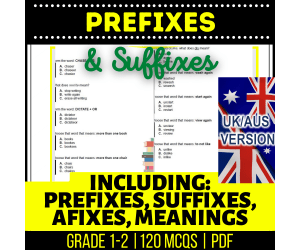
UK/Aus Spelling Prefixes and Suffixes Practice - Year 2-3 (PDF)
ELA, Language Development, ESL, Grammar, Common Core, Resources for Teachers, Grade 1, 2, Worksheets & Printables, Worksheets, Assessments, Teacher Tools, Tests, Quizzes and Tests, Centers, Activities
THIS IS THE UK/AUS ENGLISH SPELLING VERSION. CHECK THE CATALOG FOR THE ORIGINAL AMERICAN ENGLISH VERSION. Prefixes and Suffixes Grammar Practice MCQS: 8 lessons, 120 MCQS, 35 pages ELA MCQs Overview: This grammar resource gives students plenty of focused practice with two essential writing skills: capitalisation and punctuation. Across 10 lessons and 150 multiple-choice questions, students work through clear, manageable practice that helps them spot mistakes, improve accuracy, and build real confidence over time. The lessons are designed to feel structured without becoming dry or repetitive. Each one builds naturally on the previous lesson, giving students the chance to review, strengthen, and apply what they have learned. With a mix of direct teaching, group work, and independent practice, the resource works well for whole-class lessons, revision, homework, or extra support. This UK/Aus English version is especially useful for schools, teachers, and families working with British-based spelling and language conventions. It is a helpful option for classrooms using UK curriculum expectations, international programmes influenced by British English, or any setting where learners need to practise the correct capitalisation and punctuation forms for that version of English. Prefixes and Suffixes Overview: Includes: Intro to Prefixes Intro to Suffixes Forming Suffixes Determining Affix Word Meaning PDF Version This is the PDF uneditable version. This download is available in GOOGLE Docs, GOOGLE Forms, GOOGLE Slides. PDF, PPT, WORD, check the links below for more details. FULL CATALOG OF DOWNLOAD LINKS HERE ELA Review Questions Overview Each review test includes three answer choices for every question. The format is clear and easy for students to follow. A small number of pictures are included on each test to make the pages feel more welcoming and less plain. A review sheet is also included to help students go back over many of the main skills covered in the product. Introduction or Example Sheet Each topic includes an introduction or example sheet to use before students begin. This gives students a clear starting point. It also helps refresh key ideas before they move into the practice. Full Answer Keys Full answer keys are included for easy checking. Sample responses are also provided where needed. This helps save time and makes the resource easier to use, even on busy days. In the Supplementary Pack Interactive Ice Breakers: Simple hands-on activities to help students start thinking about the topic. Guided Practice: Teacher-led work that helps students build understanding before working alone. Group and Partner Tasks: Activities that encourage discussion, shared ideas, and teamwork. Independent Worksheets: Extra practice pages for students to complete by themselves. Exit Tasks: Short end-of-lesson activities to check understanding and review learning. For similar downloads and other frees, do check out Cored Group on TeachSimple.
Author Cored Education
Rating
Tags Elementary, Vocabulary, Answers, Ccss, Common Core, Spelling, Writing, Prefixes And Suffixes, Grammar, Grammar Worksheets
Yes, I Can!: Interdisciplinary Activities That Promote Success
, Kindergarten, Preschool, Grade 1, Activities
Yes, I Can!: Interdisciplinary Activities That Promote Success As an educator, your goal is to encourage comprehensive development in your students. The "Yes, I Can!: Interdisciplinary Activities That Promote Success" focuses on fine motor skills alongside visual perceptual motor, gross motor skills and more. It aims to engage kids aged three to six years old in interactive learning. A Blend of Academic and Fundamental Life Skills A resource focused on activities that make learning numbers, letters or colors a fun experience. Incorporates an exploration of seasons and holidays through shapes and animals or an array of other engaging topics. Holistic development: It fosters communication improvement along with growth in vocabulary counting abilities that build confidence and are essential tools throughout life journey. Fine movements: Goes beyond academics by improving fine-tuned movements via exercises aimed at strengthening sensory-motor function making this pack truly interdisciplinary. User-friendly Format for Diverse Learning Scenarios "Yes I Can!" is flexible for various teaching settings such as whole group instruction as well as small group scenarios. You can customize activities based on your requirements thus promoting consistent practice both within the classroom environment and at home. Key Features: A compilation of a whopping 144 pages compiled conveniently into one PDF document ready to print wherever needed! . No additional preparations required! . . Ideal for pre-schoolers progressing towards kindergarten but equally beneficial for Grade-1 students too! . . What really differentiates "Yes I Can!" is how seamlessly it integrates academic skills with play, balancing educators' objectives and children's interests. It makes learning appealing for young minds hence paving their future success path that reasserts the belief: "Yes, they can!"
Author Classroom Complete Press
Tags Matching Numbers, Concentration Games, Color Walk, Gross Motor Shapes, Ice Cube Race

Reading Comprehension Passages Fiction Set 3 - Friends (Google Docs)
ELA, Reading, Common Core, Reading Comprehension, ESL, Language Development, Spelling, Vocabulary, Literature, Writing, Grade 4, 5, Worksheets & Printables, Worksheets, Assessments, Teacher Tools, Tests, Quizzes and Tests, Centers, Activities
Reading Comprehension Passages Fiction Set 3 Overview No prep reading comprehension lessons, with enjoyable stories and topics. Each lesson has a blend of post-reading activities. Mixed questions to check overall understanding. Vocabulary activities, plus a writing section. Lessons also contain a bonus extension exercise at the end. Some you may like, some you may not, either way they are there if you wish to use them. Full answer keys are provided. Passages Include 1.A Friend's Promise: Josh's brother makes sure he keeps his promise to a friend. 2.The Rumor: April feels sad that Selena is getting attention from everybodynow. 3.Finishing Together: Fernando helps a teacher by taking part in a fundraiser. 4.Seniors Acting: Brooke is doing shows at the senior center. Will her friend find out? 5.Funland: Not such a fun day at Funland for the author in this story. 6.Back to School: The author hates the first day back. She doesn't know what to wear! Google Docs Version This is the Docs editable and fillable version. This download is available in GOOGLE Docs, GOOGLE Forms, GOOGLE Slides. PDF, PPT, WORD. Browse the Complete Cored Catalog — 2,000+ Resources Included Reading Passages Each reading passage has been written specifically for students in Grades 4–5, using vocabulary and language that match their age and ability level. The collection covers a wide range of engaging topics, supported by colorful visuals that help bring the content to life. Every lesson is designed to build knowledge while keeping students interested and motivated to read. These resources are also designed with flexibility in mind. Unlike traditional textbooks that can quickly become outdated, lessons can be updated over time to reflect changes in technology, discoveries, and the world around us. Mixed Questions Every lesson includes a variety of questions that help students think more deeply about what they have read. The question section combines reading comprehension, vocabulary, and math skills, while also regularly reinforcing important reading strategies such as cause and effect, summarizing, compare and contrast, and drawing conclusions. Most lessons include a mix of multiple-choice and written-response questions, giving students opportunities to explain their thinking as well as select answers. Complete answer keys and sample responses are provided at the end of each lesson for quick and easy reference. Spelling & Vocabulary Each passage introduces students to useful words and phrases appropriate for Grades 4–5. To help build confidence and word knowledge, every lesson includes a spelling or vocabulary activity. Rather than repeating the same task throughout the collection, activities vary from lesson to lesson to keep practice fresh and engaging. Activities may include spelling challenges, sentence matching, decoding activities, mixed-up text exercises, and other vocabulary-building tasks connected directly to the reading. Writing Prompts Each lesson includes a writing activity that extends the ideas, themes, or topics explored in the passage. Students are encouraged to write in a variety of formats, with prompts providing helpful guidance and ideas to get them started. Writing tasks vary throughout the collection and may include creative writing, research activities, personal responses, poetry, opinion writing, and other engaging assignments. Full Answer Keys Complete answer keys and sample responses are included with every lesson, making planning and marking quicker and easier. Reading comprehension answers include evidence and support from the text, while math-based questions show the relevant working where appropriate. The answer keys are designed primarily for teachers but can also be shared with students when needed. Just for Fun Each lesson finishes with an optional extension activity called Just for Fun . These bonus activities provide an enjoyable way to extend learning beyond the main lesson and often encourage creativity, discussion, or independent thinking. They are completely optional, giving you the flexibility to use the activities that best suit your students and classroom needs. For similar downloads and other frees, do check out Cored Group on TeachSimple.
Author Cored Education
Rating
Tags Elementary, Reading, Comprehension, Vocabulary, Answers, Common Core, Spelling, Writing, Digital Centers, Vocabulary Assessments