



3,926 products added recently
Page 12 - Diagrams
Diagrams are powerful tools that depict information visually, making complex concepts easier to understand. They can illustrate processes, structures, relationships, and more. By incorporating diagrams into your teaching, you cater to visual learners and facilitate better comprehension across various subjects.

 Show filters


Plants - Anatomy and Life Cycle Dominoes Game - Middle School Science
Science, Life Sciences, Biology, Grade 6, 7, 8, 9, Diagrams, Teacher Tools
Plants - Anatomy and Life Cycle Dominoes Game - Middle School Science An exclusive resource that makes learning fun through a domino-like game, meticulously designed to deepen understanding of plant anatomy, life cycle , and significant scientific terms related to botany. Ideal for the middle school science curriculum (Grades 6-9). The Gameplay: Learners match words or respond to questions based on the dominoes drawn. It provides an interactive way to learn about plant organs like roots, stems, leaves and flowers. Critical biological concepts such as transpiration process, guard cells’ function, stomatal physiology are explored alongside terms like xylem and phloem. The role of chlorophyll in photosynthesis is clarified as children connect matching domino pieces. Anatomy & Reproduction: Making sense of terminologies related to flower reproduction such as ovules & pollen grains becomes enjoyable. Different types of pollination; fertilization process; seed dispersal methods & germination concept become engaging rather than monotonous learning from textbooks. The Pack Includes: A set of 90 dominos. An animated PowerPoint explaining the rules with simplistic instructions — perfect for whole group settings or small study groups. Inventive homework assignments promoting regular revision in an entertaining manner. In case any incorrect matches get suspected- we have strict but fair rules for challenges- requiring players consultation with textbooks or their teacher- ensuring rigorous concept reinforcement while maintaining the game's spirit. This tool caters to various digital platforms and is highly suitable for homeschooling parents fostering reasoning skills - our innovative approach to middle school science education made fun!
Author Elf off the Shelf Resources
Tags Plant Anatomy, Life Cycle, Botany Terms, Photosynthesis, Reproduction, Bicycle Dominoes
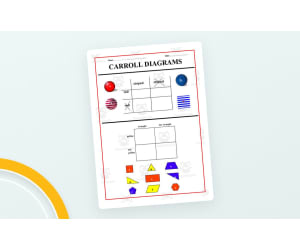
Carroll Diagrams – Math Patterns & Shape Attributes
Math, Patterns, Geometry, Grade 2, Diagrams, Teacher Tools
These Carroll Diagrams will provide a fun challenge for your math students. There are 2 diagrams on this page that will require students to pay attention to patterns and shape attributes. Answer key included.
Author Elementary Resources 4 U
Rating
Tags Geometry, Shapes, Shape Attributes, Carroll Diagrams, Patterns, Graphic Organizers, Math Challenge, Math Centers, Small Group

The Life Cycle of Pumpkins | Reading Activity Packet
ELA, Grammar, Grade 2, Diagrams, Teacher Tools
This resource is a The Life Cycle of Pumpkins Reading Activity Packet. It is a week's worth of work for reading class. It can be used with any life cycle pumpkin books. Included: - Sentence writing daily - Monday: Syllables - Tuesday: Adjectives - Wednesday: Plurals and possessives - Thursday: Parts of speech - Friday: Plurals There is a blank writing template with primary lines for students to write!
Author Second Grade Smartypants
Tags Life Cycle, Pumpkins, Grammar, October, Fall, Life Cycle Of Pumpkins, Pumpkins Life Cycle
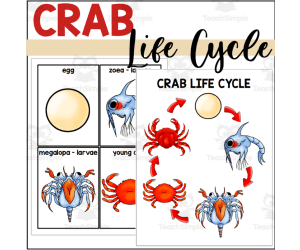
Crab Life Cycle Poster + Sequencing Cards
Science, Life Sciences, Animals, Kindergarten, Preschool, Grade 1, Diagrams, Teacher Tools
Using beautiful images, this crab life cycle poster and sequencing cards packet, allows students to become familiar with the life cycle of a crab. This makes a great science activity for summer or a beach theme. What is Included: This packet includes a crab life cycle poster as well as sequencing cards that go along with each step in the life cycle poster. How to Use: The life cycle poster makes a great visual display in a science center for students to look at and explore the life cycle of a crab. The sequencing cards can also be placed in the science center. Students can use the poster as a reference to place the sequencing cards in the correct order. Another way to use the sequencing cards is to place the cards on a ring in the correct order so students can flip through the life cycle of a crab. Where to Use: Besides the science center, the teacher can use the life cycle poster as an instructional tool to show and teach students about the life cycle of a crab. The cards can also be placed in a pocket chart by students or the teacher to represent the life cycle with a hands-on activity. The crab life cycle poster is a no prep display the teacher can use to teach about this science concept. The poster can be printed on card stock or laminated for durability. The sequencing cards require some easy prep. They need to be printed and cut apart. Again, laminating these cards for durability is an option. Skills Assessed: This set will help students identify the life cycle of a crab. Using the reference of the life cycle poster, students will place the life cycle cards in the correct order. Students will learn that crabs start off as eggs, hatch into larvae, and then mature into adult crabs.
Author The Connett Connection
Rating
Tags Crab Life Cycle, Life Cycle Of A Crab, Crab Science

COLOR CLIPARTS | 14 FREE CLIPARTS
Creative Arts, Special Resources, Early Learning, Elementary, Homeschool Resources, Not Grade Specific, Pre-K, Flashcards, Worksheets & Printables, Diagrams, Teacher Tools
COLOR CLIPARTS | 14 FREE CLIPARTS SUMMARY OF THIS PRODUCT: · What is its name?: COLOR CLIPARTS | 14 FREE CLIPARTS · How many pages does it have?: 7 · What format is it in (PDF, Word, PPT)?: PDF · Is it colorful, black & white, or both?: COLOR ABOUT THE AUTHOR: At EDITORIAL LAURA EDUCA, we work every day to create educational materials that turn learning into a fun game. Our mission is for every child to enjoy the process of learning. Visit my educational store and discover all the resources we have ready for you. MAIN INFORMATION OF THIS RESOURCE: What is the name of your product and what makes it special? This beautiful product is called “COLOR CLIPARTS | 14 FREE CLIPARTS”, and it is very special because it was carefully designed or compiled. With this educational resource, we want students to learn with enthusiasm and fun, because we believe learning is fun. How many pages are included in this resource? This fabulous document contains the following number of pages: 7 What size is it designed in (A4, letter, etc.)? This resource is designed in A4 format and compiled as a PDF. This makes downloading and printing simple and convenient, and PDFs are also easy to store and carry anywhere. PDF A4 Is the material in color or black and white? This pedagogical document comes in both black and white and color. This makes it more attractive for your learning sessions, but you have the freedom to choose how to print it. COLOR SECONDARY AND COMPLEMENTARY INFORMATION: What type of material is it (book, workbook, activity pack, posters, flashcards)? EDITORIAL ARENAS EDUCATIVAS creates a variety of materials such as packs, worksheets, games, and assessments. This resource belongs to one of those categories. For what ages, levels, or grades is it designed? My specialty is creating educational resources for children, especially for preschool (ages 3–5) and primary (ages 6–12). Sometimes, I also create Spanish resources for learners of all ages. What subject, skill, or topic does it cover? This resource is designed to cover essential learning areas for children, generally literacy and math. What learning objectives does it achieve? This document fulfills a playful objective—it’s meant to be attractive and engaging for children. At the same time, it ensures that students learn or reinforce their knowledge.
Author EDITORIAL LAURA EDUCA
Rating
Tags FREE, FREE RESOURCES, COLOR, CLIPARTS, VECTOR, RESOURCES FOR TEACHERS, CLASSROOM DECOR, DECOR

More Tape Diagram Problems
Math, Measurements, Grade 6, Diagrams, Teacher Tools
This resource is a More Tape Diagram Problems Worksheet . A tape diagram is an effective way to model a ratio when the two quantities in the ratio have the same units. These visual models will help you solve a ratio problem quickly and easily. Tape diagrams have been described as looking like a segments from a tape measure. This is a 3-page worksheet with 9 problems. Answer key is included.
Author AlwaysLearning
Tags Measurement, Math Cards, Tape Diagrams, Word Problems, Tape Diagram Worksheets, Tape Diagram For Addition, Vertical Tape Diagram, Tape Diagram Ratios
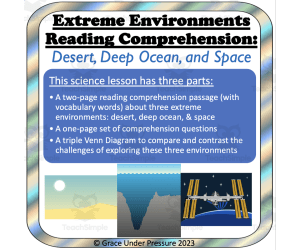
Extreme Environment Reading, Comprehension Questions, and Triple Venn Diagram: Desert, Deep Ocean, Space
ELA, Reading, Reading Comprehension, Science, Technology, Earth and Environmental Sciences, Environmental Science, Engineering, Earth Sciences, Grade 5, 6, 7, 8, Diagrams, Teacher Tools
Are you looking for an engaging middle school reading comprehension activity with a science twist? Or are you teaching a unit about extreme environments and looking for some new lesson ideas? This middle grades extreme environment reading comprehension package is chock full of information and activities including a fun triple Venn Diagram! This science and reading comprehensive lesson includes: Four parts in an easy to use 6 page PDF: First, students will tackle a 2-page reading comprehension passage about Extreme Environments. Specifically the environments of the desert, the deep ocean, and space are introduced and the challenges of human exploration in each one are addressed. This passage is written to be accessible to students with little background knowledge of these topics. Next, students will learn new vocabulary by defining eight important terms including pressure, scorching, and submersible. Then, students will answer seven comprehension questions about the reading passage. This section encourages critical thinking, close reading, and analysis. Finally, students will complete a tripe Venn Diagram comparing and contrasting the challenges faced and supplies needed to explore each of the three extreme environments. For example, pressure is a challenge in space and the deep ocean, but no the desert. A complete answer key is also included to eliminate any guesswork and make marking a snap! Grades to Use With: This lesson is designed for middle school students in grades 5-8 in science or earth science classes. It could also be used in middle school English classrooms as a non-fiction reading comprehension and vocabulary passage. What's Included: 6 Page PDF ready to print Title Page 2 Page Reading Comprehension Passage with 8 vocabulary words 7 Reading Comprehension Questions Triple Venn Diagram & Extension Complete Answer Key If you find this extreme environment lesson useful, check out others in my store: Extreme Environments Debate Extreme Environments Technology Design and Persuasive Presentation How Do Astronauts Meet Their Needs in Space?
Author Grace Under Pressure
Tags Extreme Environments, Reading Comprehension, Critical Thinking, Venn Diagram, Triple Venn Diagram, Comprehension Questions, Middle School Reading, Science, Space, Earth Science

Plants & Animals Sorting with Venn Diagrams
Science, Basic Science, Grade 1, 2, 3, 4, Diagrams, Teacher Tools
Product Title: Plants & Animals Sorting with Venn Diagrams This instructive resource, Plants & Animals Sorting with Venn Diagrams, enables students in grades 1 through 4 to delve into the fundamental building blocks of science. The resource emphasizes a clear distinction between the animal and plant kingdom which is relatable to students' everyday life as they explore their natural surroundings. Specially designed for use in a multitude of scenarios - from large classroom collaborations, small group projects to individual homework assignments. This comprehensive teaching tool offers remarkable adaptability. Thus, it's perfect whether you're facilitating an interactive lesson plan within mainstream school or providing enriching activities for homeschooling learners. This tool diversifies opportunities for both independent and collective learning. The single worksheet employs user-friendly Venn diagrams to bolster comprehension skills. Students classify words pertaining to animals and plants into distinct sections on the diagram – strengthening not only their grasp on classifying organisms but also enhancing their vocabulary relating to nature. The product's digital PDF format provides ease-of-use ensuring high-quality printouts every time, suitable for a range of needs - from a home assignment copy or multiple prints ideal for classroom applications. To streamline teachers' assessment procedures, this key resource comes complete with an answer key provided upfront simplifying grading processes. Encourages accurate evaluation regarding student's understanding level based on set objectives. This changeable teaching instrument includes editable properties fostering customization that perfectly tailors each educator’s unique teaching style whilst covering complex topics like Basic Science efficiently. A true blend of effectiveness and personal touch when dealing with such intricate areas! Download today and simplify science education by exploiting various advantages offered by Plants & Animals Sorting with Venn Diagrams directly into your educational architecture!
Author Elementary Resources 4 U
Tags Plants, Animals, Sorting, Venn Diagrams, Science Education

The Chicken Life Cycle: My Chick Life Cycle Journal
Science, Life Sciences, Animals, Preschool, Kindergarten, Grade 1, 2, Diagrams, Teacher Tools
The My Chick Life Cycle Journal will pair well with your studies of the chicken life cycle. It is a 29-page download that gives students everything they need to document their learning and observations. Included in their journals are: 1. Covers pages in black/white and color 2. What I already know about eggs draw & write 3. Eggs in the Incubator Observation Writing 4. Hatch from Eggs cut and paste 5. Label and color the eggs & soooo much more!!! Students will enjoy creating their journals and keeping track of the life cycle of the chicken!
Author Kindergarten Cafe
Tags Journal, Journal Writing, Baby Chick, Chicken Life Cycle, Chicken Journal, Chick Life, Life Cycle Of A Chick, Chick Life Cycle

Plants - 36 Taboo Cards on Anatomy, Life Cycle and Photosynthesis - Middle School
Science, Life Sciences, Biology, Grade 5, 6, 7, 8, 9, Diagrams, Teacher Tools
Thirty-six taboo cards on the anatomy and life cycle of the flowering plant and photosynthesis. Prior Knowledge Required >The root, stem, leaves and flowers as plant organs >The functions of the root, stem, leaf and flower; >The terms transpiration, guard cells, stomata, xylem, phloem, chlorophyll, chloroplast and photosynthesis; >Parts of the flower; >The ovule and pollen grain as the female and male reproductive cells. >Function of the leaf is photosynthesis. >Role of played by xylem, phloem, guard cells, stomata and chloroplasts in photosynthesis. >Rate of photosynthesis against, carbon dioxide concentration, light intensity and temperature. >Word equations for photosynthesis and respiration. >Comparison of photosynthesis and respiration. >Paraffin heaters as sources of carbon dioxide in greenhouses. >Use of glucose in plants. >Gas exchange in plants at different times of day. >Testing a leaf for starch >Effect of light intensity on rate of photosynthesis How to Use > Work in pairs. > Place cards in a pile face down. > Student takes a card and gives scientific clues to their partner to help them guess the word in the guess box. > The clue giver cannot use the words in the taboo box in the clues. See more Elf Off the Shelf resources on this topic and many others
Author Elf off the Shelf Resources
Tags Plants Life Cycle, Taboo Cards, Science Taboo Cards, Biology Taboo Cards, Plant Anatomy

Owl Life Cycle | Interactive Reading Packet
ELA, Reading, Preschool, Grade 1, 2, Diagrams, Teacher Tools
This resource is an Owl Life Cycle Interactive Reading Packet. This is a great component to your early finisher buckets or reading stations as you learn about owls! Included: - 5 page life cycle story - Sequencing cut and paste - 2 writing prompts - Fact or opinion - Word search - Picture cards (in color and black/white) - Write the room - Owls Can, Have, Are - Owl book report - Label the owl - Hibernating worksheet
Author Glitter and Grace
Tags Reading Packet, Owl Life Cycle, Animal Habitats, Word Search, Writing
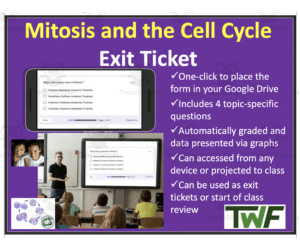
Mitosis and the Cell Cycle - Digital Exit Ticket and Review Activity
Science, Life Sciences, Biology, Grade 9, 10, 11, Diagrams, Teacher Tools
Mitosis and the Cell Cycle - Digital Exit Ticket and Review Activity Assess and enhance student comprehension of core concepts with this interactive exit ticket and review. This digital resource features a series of questions that gauge understanding of essential topics covered in class including; how we go from one cell to trillions, Why it Happens, the Cell Cycle, Genetic Material, Genes, Interphase, Mitosis Stages, Cytokinesis, Checkpoints in Mitosis, and Errors in Mitosis. With a single click, this Google Form will be copied into your Google drive for easy access. You will then be able to make any changes you feel necessary and distribute out to your students. With this exit ticket, educators can: Check for student understanding of key areas. Get instant insights into students' grasp of concepts through automatically graded questions and easy-to-read results charts. Identify areas students are struggling with to refine instruction. Incorporate exit ticket data into student grades as a formative assessment . Students are able to: Demonstrate their knowledge of concepts through short answer and multiple choice questions. Get immediate feedback on their responses to support metacognition. Review core ideas before a test or the next class. This digital review resource allows teachers to quickly assess student learning outcomes related to essential principles. The automatically graded Google Form provides data visualizations that highlight comprehension gaps to address. An engaging way to end or begin a class while promoting understanding without adding to your workload as a teacher.
Author Teach With Fergy
Tags Cells, Zygote, Mitosis, Cell Cycle, Genetic Material, Dna, Interphase, Cytokinesis, Errors In Mitosis, Genes
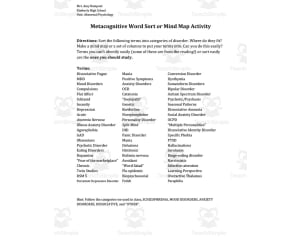
Metacognitive Word Sort or Mind Map Activity
Social Studies, History, Psychology, Grade 10, 11, 12, Diagrams, Teacher Tools
This resource is a Metacognitive Word Sort or Mind Map Activity. Students will sort the terms into categories of disorder. Where do they fit? Students will make a mind map or a set of columns to put their terms into. Terms that they can’t identify easily (some of these are from the reading!) or sort easily are the ones they should study.
Author Skinner's Box
Tags Metacognitive, Word Sort, Mind Map Activity, Psychology, Disorders

Butterfly Life-cycle Display Pack
, Preschool, Kindergarten, Grade 1, Diagrams, Teacher Tools
A pack of display items for a study of the butterfly life-cycle. Includes: A long banner ( 11 A4 pages which can be either pinned or strung on a string)) Butterfly life-cycle flow chart (8 A4 pages) Photos Poster (A4) Vocab cards for display or activities/games
Author Lilibette's Resources
Tags Butterfly Life-cycle, Butterfly Life-cycle Display Pictures, Butterfly Life-cycle Vocabulary, Butterfly Poster
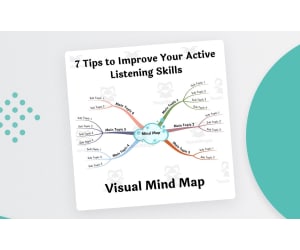
7 Tips to Improve Your Active Listening Skills - Visual Mind Map
Special Resources, Life Studies, Special Education Needs (SEN), Social Skills, Life Skills, Coaching, Business, Career, Creative Arts, Art, Not Grade Specific, Diagrams, Teacher Tools
◈ 7 Tips to Improve Your Active Listening Skills - Visual Mind Map ◈Active listening is a skill that is essential for effective communication and building strong relationships. It involves paying attention to not only the words being spoken, but also the nonverbal cues and emotions of the speaker. Active listeners use techniques such as reflective listening, paraphrasing, and asking open-ended questions to demonstrate understanding and show the speaker that they are being heard. Learn more about this from this mind map . ◈ A Visual Mind Map flows just like our brain does and they are NOT in Nice Neat Lines! A Mind Map enables free flow of ideas because you mostly use short phrases, keywords, images, and icons. You can jot down ideas a lot faster than usual, which results in an unobstructed flow of ideas. ✔✔ WHY MIND MAPS? Mind maps structure information:- Mind maps are graphical representations of information that convey the relationship between individual ideas and concepts. No matter how complex or broad a subject is, a mind map brings order into the chaos and helps you see the 'bigger picture'. Mind Maps foster creativity - There are very few techniques out there that have the ability to get your creative juices flowing like mind mapping. That is because mind maps use images and keywords to create new associations within your brain, which you can also transcribe with incredible speed. ✔✔ Benefits of downloading this product ◈ You will be able to develop new skills quickly ◈ You will be up-to-date with the latest market trends ◈ You will have the best ideas at your fingertips ◈ Learn a new skill - Mind Mapping - No Limits as to what Mind maps can be used for. Mind Mapping is suitable for all ages. Your child can’t read yet. But with the power of mind maps, they can learn. Use images instead of words! WHO NEEDS MIND MAPS? Anyone from a student to a CEO can use and benefit from this technique. Here are a few examples. Students:– Preparing for exams and wanting to boost their learning capabilities and results Event Planners:– Wanting to organize every aspect of an event Writers:– Wanting to Create original Content, Stories, Articles, etc Entrepreneurs:– Wanting to Create a road map or a dynamic Business plan Project Managers:– Wanting to present their ideas clearly to their team Teachers:– Wanting to improve communication in the classroom Marketers:– exploring potential Avenues for promoting a product or service Consultants / Advisors:– trying to visualize Client's Situation Collaborative Teams:– working on a project together Anybody:- Anybody can use mind maps to unleash their creativity, solve problems, visualize their goals, and organize their thoughts! Note: It is recommended that you view the Mind Maps on your Desktop/Laptop. Zoom in on a particular branch for the best view.
Author BookoMap
Tags Visual Mind Map, MindMap, Empathy, Nonverbal Cues, Verbal Cues, Reflective Listening, Paraphrasing, Open-ended Questions, Feedback, Understanding And Retention, 7 Active Listening Skills

Our Hatching Calendar: The Life Cycle of a Baby Chick
Science, Life Sciences, Animals, Preschool, Kindergarten, Grade 1, 2, Diagrams, Teacher Tools
Our Hatching Calendar: The Life Cycle of a Baby Chick is a 1-page printable to take your students through the 21 day life cycle of a baby chick gearing up to hatch! The description for each day is simple and concise. A picture of the baby chick inside the egg is included for every 5 days so that students can really get a visual for how the baby chick is growing. They will color in their square for each passing day! This hatching calendar would be especially ideal if your students are following the journey of a live baby chick about to hatch.
Author Kindergarten Cafe
Rating
Tags Life Cycle, Baby Chick, Chick Life Cycle, Hatching, Hatching Calendar

The Water Cycle: As Told by Pauly the Pirate
Science, Earth and Environmental Sciences, Environmental Science, Preschool, Grade 1, 2, Diagrams, Teacher Tools
If your lower elementary students are learning about the water cycle , I have an engaging and interactive resource that will pique their interest and simultaneously solidify their learning! This is an interactive presentation that can be opened in Microsoft PowerPoint or Google Slides. It is titled The Water Cycle : As Told by Pauly the Pirate. Learners will love following Pauly along on his journey while he teaches them about the water cycle . Pauly the Pirate will begin his mission by telling students that we need 4 things to continue the water cycle – air, heat, water, and energy. On each slide, Pauly will go into greater detail about what each of these components are and how they contribute to the water cycle . Following the learning, students will have the opportunity to complete interactive activities to show what they know. The activities include: --Students will type the correct number in the box to match each label from the picture. The labels are body of water, condensation, precipitation, the Sun, and evaporation. --Students will click and drag the events to the right down to the correct spot on the timeline.There are 4 events for students to complete. --Students will complete a Water Cycle word search by highlighting the 4 words they learned at the beginning. This resource is great for Kindergarten – 2nd grade students. I hope you enjoy! Here are similar resources for you to enjoy: https://teachsimple.com/product/growing-into-honesty-worksheet https://teachsimple.com/product/learning-goals-for-primary-intermediate-students https://teachsimple.com/product/there-was-an-old-lady-who-swallowed-a-bell-book-companion https://teachsimple.com/product/kindergarten-writing-rubric You can visit my storefront here: https://teachsimple.com/contributor/hook-learn-and-tinker I can be contacted for questions and concerns at amberhook22@gmail.com .
Author Hook Learn and Tinker
Tags The Water Cycle, Pauly The Pirate, Word Search, Science Vocabulary Terms, Labels, Matching Activity, Water Cycle Timeline, Sequencing, Science

Venn Diagrams - Part 2
Math, Statistics, Grade 8, 9, 10, Diagrams, Teacher Tools
This study worksheet also includes an answer key!
Author Peter Jonnard
Tags Equations, Language, Venn, Diagram
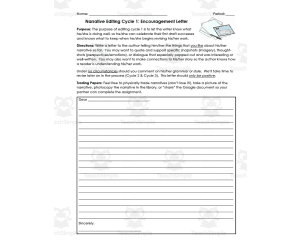
Narrative Editing Cycle 1: Encouragement Letter
ELA, Writing, Grade 9, 10, 11, 12, Diagrams, Teacher Tools
Narrative Editing Cycle 1: Encouragement Letter Specifically designed for educators, this resource aims to foster a positive revision culture in classrooms. It is primarily targeted at students in grades 9 through 12, falling within the themes of Language Arts and specifically focusing on improving writing competence. Purpose & Approach The essential purpose of this resource is to prompt the first editing cycle with an emphasis on reinforcement and encouragement. Teachers can highlight areas where students excel in their initial drafts, thus boosting their morale and nurturing self-confidence during the challenging process of refining written work. Design & Utilization This teaching aid comes as a single-page PDF that can be easily used in different educational settings. Its application ranges are wide, from writers' workshops to small group discussions. Being printable, it also allows for individual practice at home or use as benchmarks during assessment periods. Versatile: Applicable for various pedagogical activities User-friendly: Single-page PDF design Flexible: Printable for homework or assessments Aim & Benefits The primary goal is not just incite pride among students about their abilities but also to mold mindful writers aware of sustaining quality content by identifying positive aspects in their narratives. This approach stands by its motto – nurturing positivity elevates productivity – across every facet of its application. In summation, The Narrative Editing Cycle 1: Encouragement Letter catalyzes growth among young authors while preparing them for higher realms in writing—making it a valuable incorporation into any high school language arts curriculum.
Author ELA Resources
Tags Encouragement, Narrative Editing, Positive Reinforcement, Writing Competence, Revision Culture

The Periodic Table and BR Diagrams - Exit Ticket and Review Activity
Science, Chemistry, Grade 9, 10, Diagrams, Teacher Tools
The Periodic Table and Bohr Rutherford Diagrams - Digital Exit Ticket and Review Activity Assess and enhance student comprehension of core concepts with this interactive exit ticket and review. This digital resource features a series of questions that gauge understanding of essential topics covered in class including; Periodic Table History, Elements, Current Periodic Table, Atomic Number, Atomic Mass, Isotopes, Valence Electrons, Periodic Table Properties, Atomic Radius, Electronegativity, and Bohr-Rutherford Diagrams. With a single click, this Google Form will be copied into your Google drive for easy access. You will then be able to make any changes you feel necessary and distribute out to your students. With this exit ticket, educators can: Check for student understanding of key areas. Get instant insights into students' grasp of concepts through automatically graded questions and easy-to-read results charts. Identify areas students are struggling with to refine instruction. Incorporate exit ticket data into student grades as a formative assessment . Students are able to: Demonstrate their knowledge of concepts through short answer and multiple choice questions. Get immediate feedback on their responses to support metacognition. Review core ideas before a test or the next class. This digital review resource allows teachers to quickly assess student learning outcomes related to essential principles. The automatically graded Google Form provides data visualizations that highlight comprehension gaps to address. An engaging way to end or begin a class while promoting understanding without adding to your workload as a teacher.
Author Teach With Fergy
Tags Periodic Table, Periodic Table History, Elements, Atomic Number, Atomic Mass, Isotopes, Valence Electrons, Periodic Table Properties, Atomic Radius

Rocks vs. Minerals Venn Diagram
, Grade 6, 7, 8, Diagrams, Teacher Tools
If you are a science teacher who is searching for some resources to incorporate with your students, I have just the resource for you. This is a Rocks vs. Minerals Venn Diagram that your students will love! This is great for middle school students but could work for younger or older students. The objective of this activity is for students to correctly describe differences and similarities between rocks and minerals. What is included? This is a 1-page printable PDF that features a single Venn Diagram. How To Implement This Resource: You can print off enough copies of this worksheet for an entire class set. You may also choose to print off a few copies and laminate them. Students can use dry erase markers to complete the Venn Diagram. This makes a great science center or small group activity. This is a great resource to determine and activate background knowledge for students. You could use this Rocks vs. Minerals Venn Diagram prior to instruction. Encourage students to write everything they know about rocks and minerals. After students have had time to complete their Venn Diagram, they can share out as a whole group or small group. When you have completed instruction on this topic, you can have students complete the Rocks vs. Minerals Venn Diagram a second time. It will be great for the teacher and students to see how much they have learned. I hope you enjoy! Here are more of my resources for you to enjoy: Interactions in the Environment Review and Test Short Story Graphic Organizer Elements of Art and Principles of Design Lesson Book Club, but with a twist! Playdough Alphabet Mats DIY Music Podcast You can find more resources at my storefront here: Resource Garden
Author Resource Garden
Tags Resources, Graphic Organizers, Compare, Contrast, Rocks, Minerals, Venn Diagram, Science Center

Life Cycle of a Plant Book
ELA, Reading, Writing, Science, Earth and Environmental Sciences, Earth Sciences, Math, Geometry, Preschool, Grade 1, 2, Diagrams, Teacher Tools
This Life Cycle of a Plant Book is perfect for helping students understand the different stages of a plant's life. With clear and concise illustrations, this book is a great resource for any teacher looking to introduce their students to the plant life cycle.
Author Have Fun Teaching
Tags Shapes, Life Cycle, Plants, Handwriting, Lined Paper, Narratives, Poetry, Sentences, Themed Writing Paper, Plant Life Cycle Book

Lab Safety | Diagram The Science Room Challenge
, Not Grade Specific, Diagrams, Teacher Tools
Lab Safety | Diagram The Science Room Challenge: A Comprehensive Learning Aid The significance of a safe learning environment is paramount, especially in a science lab setup. 'Lab Safety | Diagram The Science Room Challenge' functions as an indispensable asset ensuring students visualize and comprehend the positioning of 10 key safety elements within the confines of their science classroom. An Engaging Back-to-School Activity & More Serves as an effective learning activity , it allows demonstration of student thinking patterns and modeling skills. The tool provides insight into different aspects like student temperament; spatial intelligence; observation abilities; diagram precision and labeling techniques they utilize. Versatility in Application As an educator, you can use this resource across small group activities or even assign it for homework activities. No matter how you choose to apply it, learners are assured an enriching experience. Aligns with NGSS Science and Engineering Practices 'Lab Safety | Diagram The Science Room Challenge' encourages productive model utilization thereby aligning perfectly with NGSS Science and Engineering Practices. It's not just about factual knowledge transmission but initiates active engagement among students developing a profound understanding of science lab safety measures. Included Materials: Two Page PDF File The first page consists of 'Lab Safety: Diagram The Science Classroom Activity ' The second page provides a detailed description for Purpose & Teacher Use/Observations for this activity A Unique Blend Critical Thinking Exercises & Practical Lab Safety Awareness This resource uses critical thinking exercises combined with practical training on lab safety awareness making 'Lab Safety | Diagram The Science Room Challenge' more effective than traditional resources.
Author Flow State Science
Tags Safety Precautions, Science Classroom, Lab Equipment, Diagramming Skills, NGSS
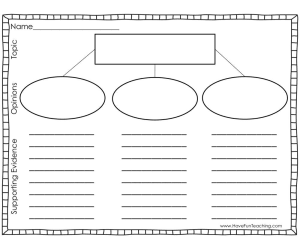
Topic Opinion and Supporting Evidence Mind Map Worksheet
ELA, Reading, Grade 3, 4, 5, Diagrams, Teacher Tools
on that topic and three pieces of evidence to support each opinion. This activity is great for helping your students develop critical thinking and writing skills. ThisTopic Opinion and Supporting Evidence Mind Map Worksheet will help your students develop critical thinking and writing skills. By assigning them a topic and having them develop three opinions on that topic with three pieces of evidence to support each opinion, your students will be challenged to really think about the topic at hand. This is a great activity to help them practice these skills.
Author Have Fun Teaching
Tags Fact And Opinion