



3,888 products added recently
Page 73 - Lesson Plan Templates
Simplify your preparation with lesson plan templates designed to help you organize objectives, activities, and assessments. These templates provide a structured framework to ensure comprehensive coverage of material. Incorporate them to save time and enhance the effectiveness of your teaching.

 Show filters


I WONDER - How Dangerous Are Greenhouse Gases | Animated Video Lesson
Environmental Science, Earth and Environmental Sciences, Science, Earth Sciences, Grade 4, 5, 6, 7, 8, 9, 10, Lesson Plans, Teacher Tools
Video Introduction An amazing video designed for the students to learn more about STEM. I WONDER - How Dangerous Are Greenhouse Gases | Animated Video Lesson Do you like STEM subjects? what is your favorite one? Have you ever tried to plant a seed? If yes, tell us more about it. Or have you ever tried to invent something? If yes, tell us more about it. And how do you think it will help us? Have you ever seen a microorganism under a microscope? What was it? And how it looked like? Mathematics is a marvelous subject. Let' sharpen our brains and solve some equations. Do you like timetable tricks? What is your favorite one? Do you know how to code? Have you ever created an app or a game before? If yes, how was it like? I WONDER - How Dangerous Are Greenhouse Gases | Animated Video Lesson The video is perfect for encouraging the researching skills for the students, while learning more about this fantastic topic. I WONDER - How Dangerous Are Greenhouse Gases | Animated Video Lesson This friendly designed video is suitable for students at school, homeschooling, and as a group activity. Format Available in MP4 format.
Author Educational Voice
Tags How Dangerous Are Greenhouse Gases, How Dangerous Are Greenhouse Gases Video, Greenhouse Gases, Greenhouse Gases Facts, Greenhouse Gases Facts For Kids, Greenhouse Gases Video, Greenhouse Gases Video For Kids

Saguaro National Park Geography Unit
Social Studies, Geography, Grade 6, 7, 8, 9, Teacher Tools, Lesson Plans
Saguaro National Park Geography Unit provides middle school students with a comprehensive study of this iconic desert landscape. The reading sheets, videos, worksheets, presentation, and project materials equip learners to explore the park's history, wildlife, climate, and geography. Students can complete projects like informational posters and booklets using the title cards and image sets. This versatile unit works for whole class, small group, or individual assignments. Whether learning about the towering saguaro cacti, desert wildlife adaptations, or the park's early history, students will come away more knowledgeable about this unique ecosystem. The materials aim to bring Saguaro National Park to life for students through diverse and engaging content.
Author Mr Gray History
Tags Geography Unit, Geography Lesson, Geography Vocabulary, Climate, Wildlife, Landmarks, Saguaro National Park, Independent Work

I WONDER - What Is A Solid | Animated Video Lesson
Chemistry, Science, Grade 4, 5, 6, 7, 8, 9, 10, Lesson Plans, Teacher Tools
Video Introduction An amazing activity designed for the students to learn more about STEM. I WONDER - What Is A Solid | Animated Video Lesson Do you like STEM subjects? what is your favorite one? Have you ever tried to plant a seed? If yes, tell us more about it. Or have you ever tried to invent something? If yes, tell us more about it. And how do you think it will help us? Have you ever seen a microorganism under a microscope? What was it? And how it looked like? Mathematics is a marvelous subject. Let' sharpen our brains and solve some equations. Do you like timetable tricks? What is your favorite one? Do you know how to code? Have you ever created an app or a game before? If yes, how was it like? I WONDER - What Is A Solid | Animated Video Lesson The video is perfect for encouraging the researching skills for the students, while learning more about this fantastic topic. I WONDER - What Is A Solid | Animated Video Lesson This friendly designed video is suitable for students at school, homeschooling, and as a group activity. Format Available in MP4 format.
Author Educational Voice
Tags What Is A Solid, What Is A Solid Video, Solid, Solids, Solids Facts, Solids Facts For Kids, Solids Facts Video, State Of Matter, States Of Matter, States Of Matter Facts
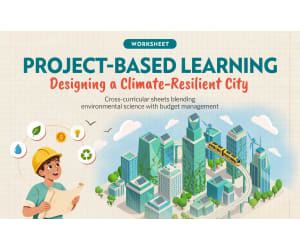
Project-Based Learning Designing a Climate-Resilient City
Science, Earth and Environmental Sciences, Life Sciences, Earth Sciences, Environmental Science, Geology, Space, Nature & Plants, STEM, Special Resources, Grade 6, 7, 8, 9, 10, 11, 12, Teacher Tools, Lesson Plans, Quizzes and Tests, Quizzes, Tests, Worksheets & Printables, Workbooks, Worksheets, Word Searches, Assessments
Transform your classroom into a hub of real-world problem-solving with this comprehensive Project-Based Learning (PBL) module: Designing a Climate-Resilient City! Are you looking for a rigorous, engaging, and cross-curricular project that prepares students for the challenges of the 21st century? This turnkey resource is the perfect solution. It masterfully blends Environmental Science, Earth Science, Mathematics, Economics, and Civics into one high-impact simulation. Students step into the dual role of a city's Chief Sustainability Officer and Chief Financial Officer. Tasked with a $500,000,000 budget , they must make critical decisions to protect their fictional municipality, "Nova Civitas," from the escalating impacts of climate change. From urban heat islands and flood defense to renewable energy transitions and waste management, every choice has both ecological and financial consequences. This isn't just a worksheet packet; it's a complete, three-phase educational experience: Phase 1: Core Content & Theory (Student Field Manual): A detailed guide that teaches the foundational scientific and economic principles, including concepts like CapEx vs. OpEx, Return on Investment (ROI), green vs. grey infrastructure, and the circular economy. Phase 2: The Student Workbook: Ten detailed, scaffolded worksheets guide students through the entire city-planning process. They will perform calculations, analyze data, and justify their budgetary decisions, tackling everything from energy grids and public transit to disaster insurance and sustainable housing. Phase 3: Visuals & Teacher Resources: This package is ready to go with printable/projectable visual aids (flowcharts, graphs, mind maps) and a comprehensive, step-by-step answer key with exemplar responses and crucial teacher notes. Perfect for in-class, hybrid, or homeschool environments, this project fosters critical thinking, financial literacy, data analysis, and collaborative problem-solving. Empower your students to grapple with relevant, real-world issues and discover that the most sustainable solutions are often the most economically sound. Download today and empower your students to build a better, more resilient future! Keywords: Project-Based Learning (PBL), STEM, STEAM, Climate Change, Environmental Science, AP Environmental Science (APES), Earth Science, Economics, Civics, Sustainability, Urban Planning, City Design, Budgeting, Financial Literacy, Math, Critical Thinking, Real-World Application, Cross-Curricular, Middle School, High School, Digital Resource, Printable Worksheets. Why Parents/Schools Love It: Teaches Real-World Skills: This project moves beyond theory. It teaches critical 21st-century skills like financial literacy, data-driven decision-making, and long-term strategic planning that students will use their entire lives. Deeply Engaging & Relevant: The role-playing simulation is highly engaging. Students are not just learning about climate change; they are actively working to solve its challenges, making the topic personal and urgent. Truly Cross-Curricular: In an era of siloed subjects, this resource beautifully demonstrates how science, math, and social studies are interconnected in the real world, promoting holistic understanding. Complete Turnkey Solution: It is a massive time-saver for educators. The package includes all student-facing materials, teacher visuals, and a comprehensive answer key with detailed calculations, saving hours of prep work. Target Audience: Student Classes : Based on the complexity of the concepts (e.g., municipal finance, payback periods, ROI) and the level of mathematics, target the following: High School (Grades 9-12): This is the primary target. It is perfect for: Environmental Science / AP Environmental Science (APES): This is a perfect fit, covering numerous topics from the APES curriculum. Earth Science: Excellent for units on human impact and climate systems. Economics / Government / Civics: Provides a practical, tangible application of public finance, policy-making, and resource allocation. General Math / Financial Algebra: A fantastic real-world application for math concepts. STEM or PBL Elective Courses: An ideal capstone or unit-long project. Advanced Middle School (Grades 7-8): This resource would be highly effective for gifted and talented programs, advanced science or math classes, or a school with a strong PBL focus. The concepts are challenging but achievable with the right guidance. Copyright/Terms of Use: This Book was copyrighted by Syed Hammad Rizvi. This resource is for personal and single classroom use only. You may not alter, redistribute, or sell any part of this resource. In other words, you may not put it on the Internet where it could be publicly found and downloaded. If you want to share this resource with colleagues, please purchase additional licenses from Teachsimple. Thank you for respecting these terms of use. This product is happily brought to you by Syed Hammad Rizvi
Author Creative Book Store
Rating
Tags EnvironmentalScience, EarthScience, STEM, STEAM, Economics, ClimateChange, Sustainability, Civics, UrbanPlanning, Ecology
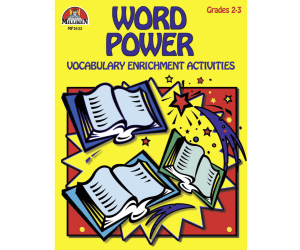
Word Power Gr 2-3
ELA, Language Development, Vocabulary, Grade 2, 3, Teacher Tools, Lesson Plans
Word Power Gr 2-3 Word Power Gr 2-3 is a dynamic teaching resource explicitly designed to enhance vocabulary skills in students navigating through Grade 2 and Grade 3. A part of the comprehensive Word Power series, this particular book delivers an impressive visual aid to the complex world of words, empowering educators across various fields. This digital PDF resource boasts several unique features. With an offering of more than 60 challenging new vocabulary words carefully selected from popular literature suited for second and third-grade reading levels, it broadens students' basic vocabularies while ensuring practicality and usability in their conversations. The Word Power Gr 2-3 includes: A total of thirty ready-to-print pages containing twenty-two diverse activities which effortlessly introduce these new words within meaningful contexts. Engaging student activities like matching words with their corresponding meanings, alphabetizing tasks or pairing up suitable antonyms. Reinforcement elements such as three two-page reviews that are aimed at further ingraining learning. Added puzzles amplify the fun factor while facilitating a hands-on feel for the language immersion process. Differentiating itself from conventional resources available on the market today, every lesson included in Word Power Gr 2-3 has been meticulously crafted by experienced teachers themselves. This prompts educators so they can personalize instructions according to individual student requirements or manage group activities optimally within varying classroom requirements - making it beneficial whether used as whole group instruction material or small study groups even inclusive as enriching homework assignments. This exhaustive teaching guide also consists of: An exclusive list showcasing source books recommended specifically for each grade level - thereby offering ample reference points when planning lessons around Language Arts focusing on Vocabulary skill-building exercises. In essence, this potent fusion of interactive learning techniques incorporated into aptly sequenced Lesson Plans adheres effectively towards propelling grade-specific Language Art progression prominently focusing on vocabulary development. The dynamic Word Power Gr 2-3 is your ultimate teaching companion for moulding competent communicators of tomorrow.
Author Classroom Complete Press
Tags Alphabetizing, Enrichment Activities, Puzzles, Antonyms, Matching

I WONDER - What Are Metabolic Reactions | Animated Video Lesson
STEM, Human Body, Life Sciences, Science, Biology, Grade 6, 7, 8, 9, 10, 11, 12, Lesson Plans, Teacher Tools
Video Overview The human body is full of fascinating wonders to learn. This video is created to help the students recognize the anatomy and the job of the human body. I WONDER - What Are Metabolic Reactions | Animated Video Lesson Every part and organ in our human body is vital so let's see how important they are. Have you ever imagined how we look like if we didn't have a skeleton? Did you know that because we have our amazing muscles we can stand! Do you know how many teeth do we have? Have you ever wondered about the food journey inside our body? Can you name all the glands in our body? Why do we have skin? Our nervous system is really good at sending signals. Can you tell us more about it? Are you really good at Mathematics, painting, or any other thing? You should really thank your brain about it! The famous five senses are really doing a great work? Can you explain how every sense works? I WONDER - What Are Metabolic Reactions | Animated Video Lesson The video is perfect for encouraging the researching skills for the students, while learning more about our fantastic human body. I WONDER - What Are Metabolic Reactions | Animated Video Lesson This friendly designed video is suitable for students at school, homeschooling, and as a group activity. Format Available in MP4 format.
Author Educational Voice
Tags What Are Metabolic Reactions, What Are Metabolic Reactions Video, Metabolic Reactions, Metabolic Reaction, Metabolic Reactions Facts, Metabolic Reactions Facts For Kids, Metabolic Reactions Video
I WONDER - Why Do Giraffes Always Stand | Animated Video Lesson
STEM, Biology, Life Sciences, Science, Animals, Grade 1, 2, 3, 4, 5, 6, 7, 8, Lesson Plans, Teacher Tools
Video Introduction Animal kingdoms are full of fascinating wonders to learn. This video is designed for the students to learn more about animals in different countries. I WONDER - Why Do Giraffes Always Stand | Animated Video Lesson Do you like animals? what is your favorite one? Do you own a pet? If yes, tell us more about it, like what its name? And what do you like most about it? What are the animal kingdoms? Can you write down the characteristics of each animal class like mammals, birds, reptiles, amphibian, fish and mollusks. Do you know that some animals can sing, can you name any of them? What is the largest and the smallest mammal in the world? What is the largest and the smallest bird in the world? What is the largest and the smallest fish in the world? I WONDER - Why Do Giraffes Always Stand | Animated Video Lesson The video is perfect for encouraging the researching skills for the students, while learning more about these fantastic animals. I WONDER - Why Do Giraffes Always Stand | Animated Video Lesson This friendly designed video is suitable for students at school, homeschooling, and as a group activity. Format Available in MP4 format.
Author Educational Voice
Tags Why Do Giraffes Always Stand, Why Do Giraffes Always Stand Video, Giraffe, Giraffes, Giraffes Facts, Giraffes Facts For Kids, Giraffes Video, Giraffes Video For Kids, Animal, Animals

Darts Reading Comprehension Passage - Cored Ed Encyclopedia
ELA, Language Development, Reading Comprehension, Reading, Pre-Reading, History, Social Studies, Math, Sports, P.E. & Health, Grade 2, 3, 4, 5, Worksheets & Printables, Worksheets, Teacher Tools, Centers, Activities, Writing Prompts, Assessments, Quizzes and Tests, Quizzes, Lesson Plans
This darts reading comprehension with lesson plan includes: Visualization (on the front cover) Start your lesson by taking a minute to think and share something about the topic. Read the script aloud (slowly), perhaps prepare some music or sound effects. Student close their eyes and let their imaginations wander. Students open their eyes, read the question aloud and give them a few minutes to complete. Ask a few students to share or keep answers until the end to compare with what they learn in the passage. Quick pause—thousands of Cored Education products are included with your TeachSimple membership. Download links and encyclopedia index available here. Pre-Reading Trivia Students will write down one thing they already know about the subject and then read five more facts and discuss. These facts are fun, and the students will enjoy learning about the subject before reading more. Give 1 minute for students to write what they already know (no pressure—best guess is fine). Read the five facts together. After each fact, do ask a student for their opinion, was it surprising? Set a purpose by asking students to highlight/underline one fact they want to learn more about during the reading. Reading Passage The text is a high-interest reading passage with set paragraphs, roughly three to four paragraphs long. It contains a variety of themes about the topic, anywhere from history to technology. The passage is between 250 and 350 words in length. First, ask students to look at the headings and see what they’ll learn about today. What do they know about the topic/heading? First read options: Teacher read-aloud (best for support). Partner reading (paragraph by paragraph). While reading, students underline important details, and vocabulary words they think may come up in the questions section. Mixed Questions The first question page contains four multiple-choice questions, each with a choice of four answers, and three written response questions that require a sentence or two from the student. Students complete the mcqs first independently, then review quickly as a class. For the 3 written responses, try to get students giving the answer with some form of evidence: “I think ___ because the text says ___.” If students get stuck, send them back to check the passage. Vocabulary Questions Practice seven key words from the text in this section across two activities. First section is scrambled words where students will unscramble three words given a clue for each. The second section is a word to meaning matching activity. Before starting, have some students read out words they underlined in the passage. Ask students to say the word and read aloud the sentence(s) around each word. Ask students to do scrambled words and the matching exercise in pairs then go through answers as a class. For the scrambled spelling task, get four pairs to come up to the board and write the words for extra practice with the other student reading out the clue. For the matching task, prompt students to give full sentences: “I matched ___ with ___ because ___.” Creative Writing In this question, the student will be required to write a five to eight sentence paragraph on a question related to the topic. Before starting, ask students write down 3 key ideas they are going to include in their piece. Ask students for ideas to share around the class to help those struggling. Pro writing expectations: 5–8 sentences At least 2 facts or details from the passage At least 2 vocabulary words from the previous page Students read their paragraphs while classmates listen for facts and vocabulary words. Extension Activities This page is optional for fast finishers or to take home. There are several activities, each one requiring a different skill. Do some, do none, do all, completely optional - but you will feel reassured knowing every possibility is planned for. Includes summary writting question and additional facts. Answer Key There are answers for the multiple-choice questions, written response questions have sample answers, vocabulary answers and if there is a summary question then a sample summary will be provided as well. Lesson Plan Included Customized lesson plan for this lesson is included. Lesson Snapshot Title: Darts Genre: Nonfiction (informational text with headings) Subject: Reading (Informational Text) / Math (numbers & scoring context) Primary Topic: History, dartboard design, and how scoring works Estimated Guided Reading Level (A–Z): Q What This Lesson Teaches Best Explains how darts began as indoor throwing at targets in England and became a friendly challenge in taverns and homes. Teaches key dartboard features (20 pie-shaped sections, thin wires, double/triple rings, and a bull’s-eye that can be 50 points). Builds real-world math context by describing common game formats (301 or 501) where points are subtracted each turn. Uses a cause-and-claim structure to discuss uncertainties and evidence (a debated story about why numbers are scrambled; a court case about skill vs luck). Connects materials/technology to sports equipment (sisal fibers that close up; tungsten barrels for a slimmer grip) and modern leagues/championships. Learning Goals Students will summarize how the text describes darts’ early history and where people played. Students will identify key parts of a dartboard in the text and explain what they do for scoring. Students will explain how a 301 or 501 game works in the passage, including what happens each turn. Students will describe why the dartboard numbers might be scrambled and explain what the text says is uncertain about that story. Students will explain what happened in 1908 and how it relates to whether darts is luck or skill. Students will cite details about modern boards and darts (sisal fibers, tungsten barrels, leagues/championships). Key Vocabulary From the Text taverns — places where people gather for food and drink. oche — the throwing line you stand behind. subtracted — taken away from a total number. sisal — strong fibers used to make dartboards. tungsten — a dense metal used for slimmer dart barrels. Discussion Prompts FULL CATALOG OF DOWNLOAD LINKS AND ENCYCLOPEDIA INDEX HERE
Author Cored Education
Rating
Tags Vocabulary, Reading Comprehension, Reading Passages, Lesson Plans, Ela Lesson Plans, Reading Comprehension Lesson Plans, Pre-reading, Sports, History, Social Studies Lesson Plans

Simple Eco-Hero Stories & Green Habit Coloring Worksheets
Science, Earth and Environmental Sciences, Life Sciences, Earth Sciences, Environmental Science, Geology, Space, Nature & Plants, Human Body, STEM, Homeschool Curriculum, Homeschool Templates, Grade 1, 2, 3, 4, 5, Worksheets & Printables, Drawing Templates & Outlines, Workbooks, Worksheets, Coloring Pages, Word Searches, Teacher Tools, Assessments, Lesson Plans, Quizzes and Tests
You can use this all-inclusive, research-supported curriculum on environmental education to change your students from being eco-anxious to being empowered and confident eco-heros! This isn't just an assortment of worksheets. It's an entire framework designed to help students develop all of the daily habits associated with protecting the environment based on an understanding of environmental concepts transformed into narrative-kinesthetic activities. This can be used for Earth Day; as part of a year-long science curriculum; as a supplement for character education; etc. The combination of engaging stories about Eco-Heroes and hands-on literacy and visual arts activities will help students realize they too can protect the planet! What's Included in This 47-Page Resource? 1. Comprehensive Teacher's Guide: (10 Pages) An explanation of the educational philosophy by providing research-based rationale and examples from real-world scenarios to assure you of how to teach environmental principles effectively from a positive perspective. 2. Student Workbook: (21 Pages) Contains activities for students. Includes: 9 colorable images representing an eco-friendly habit (e.g., "The Water Champion," "The Carbon Tracker Team"), plus 10 age-appropriate worksheets (e.g., water conservation; energy; recycling; composting; plastic pollution) that require the use of fill-in-the-blank responses. 3. Certificate: Certifies the completion of a student’s commitment to becoming an eco-hero. Printable/collaborative format. 4. Complete Teacher Material: (16 Pages). In support of implementing the resources effectively and efficiently. Components are: - Pedagogical diagrams that help the Educator understand the principles. - Answer keys to all 10 worksheets. - A comprehensive guide showing the Educator how to use the materials with examples of differentiated instructional strategies for Grade Levels 1, 2, and 3. Important Topics In Environmental Education: Water & Energy Conserving Recycling, Upcycling & Waste Sorting Composting & Biodegrading Plastic Pollution & Reusables Alternatives Carbon Footprints & Alternative Transport Reforestation, Habitats & Photosynthesis Sustainable Agriculture & Locally Grown Food This resource requires no preparation; it can be printed out immediately and includes worksheets suitable for children of all ages. This resource will help teachers, parents, and club leaders to encourage children to become thoughtful, responsible global beings. Key Words: Earth Day, Environmental Science, Conservation, Recycling, Climate Change, Coloring Pages, Worksheets, 1st 2nd 3rd Grades, 1st, 2nd, 3rd Grade, Printable & Activites for Homeschooling. Things Parents/Teachers Like : Empowerment versus Fear: Helps to empower the child rather than leave them feeling overwhelmed by all the environmental issues around us (eco-anxiety), resulting in a child-to-hero relationship while focusing on positive actions that the child can do. Educational Not Just Boredom: Utilizes a “Narrative Kinesthetic” approach validated by educational psychology to teach habits through storytelling and action (coloring), resulting in a lasting behavioral change. Cross Curricula/All-in-one Unit: This resource is a unit containing integrated science, literacy (reading/writing), art and character education to provide teachers with time-saving resources. No-preparation Teacher Friendly: There is an implementation guide, visual supports and answer keys to help teachers immediately and confidently use the resource after posting on their site. Establishes Real-World Habits: Offers tools and ideas to replicate and create long-term positive programs that exist outside the classroom (e.g., conducting a "Home Waste Audit" as a follow up to an assignment). Audience Overview : - The text in this document identifies the target audience directly from key terms used, such as Grades 1-3 and primary aged learners. The level of difficulty of the student activities also provides direction for who this resource is written for. Primary Target - teachers for first, second, and third grade. The differentiated instructions at the end of this guide make it a very valuable resource for teachers that teach multiple grades or at least have multiple grade levels within their classroom(s). Secondary Target - Parents who are homeschooling their children, age 6-9 years old. Elementary Science Coordinators. After-school program coordinators (e.g., environmental club, boy/girl scout leaders). Parents looking for meaningful learning experiences that are centered around Earth Day. Copyright Notice/Terms of Use: The copyright for this book is owned by Syed Hammad Rizvi. This material is intended for personal and one classroom use only; it cannot be copied or altered in any way. In addition, it cannot be posted online where someone could possibly find it and download it. If you wish to use this product with other staff/professionals in different situations, please purchase an additional license(s) from Teachsimple. Thank you for your support of these terms of use. This product has been provided by Syed Hammad Rizvi.
Author Creative Book Store
Rating
Tags EnvironmentalScience, EnvironmentalEducation, SustainabilityForKids, Conservation, RecyclingActivities, CompostingForKids, WaterConservation, ClimateEducation, GreenHabits, EcoFriendlyKids
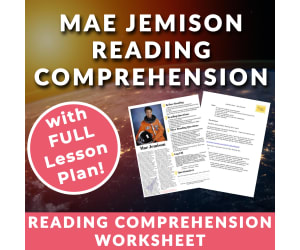
Mae Jemison - Astronaut & Pioneer - Reading Comprehension Worksheet & Lesson Plan
ELA, Reading, Grade 9, 10, 11, 12, Lesson Plans, Teacher Tools
Teach your students about Mae Jemison - the first African-American woman in space. Leading an inspiring life, Jemison should be a genuine role model for children and adults everywhere. Lesson includes: ✅ Pre-task Discussion ✅ Skimming and Scanning Reading Activities ✅Full Lesson Plan ✅ Vocabulary Review ✅ Comprehension Check ✅ Discussion.
Author The Laughing Linguist
Tags Mae Jemison Lesson Plan, Mae Jemison Activity, Reading Comprehension, Comprehension Worksheet, Astronaut Reading, Mae Jemison Clipart, Pioneer Worksheet
I WONDER - How Important Is Ice To Our Planet | Animated Video Lesson
Chemistry, Science, Geology, Earth and Environmental Sciences, Earth Sciences, Environmental Science, Grade 4, 5, 6, 7, 8, 9, 10, Lesson Plans, Teacher Tools
Video Introduction An amazing video designed for the students to learn more about STEM. I WONDER - How Important Is Ice To Our Planet | Animated Video Lesson Do you like STEM subjects? what is your favorite one? Have you ever tried to plant a seed? If yes, tell us more about it. Or have you ever tried to invent something? If yes, tell us more about it. And how do you think it will help us? Have you ever seen a microorganism under a microscope? What was it? And how it looked like? Mathematics is a marvelous subject. Let' sharpen our brains and solve some equations. Do you like timetable tricks? What is your favorite one? Do you know how to code? Have you ever created an app or a game before? If yes, how was it like? I WONDER - How Important Is Ice To Our Planet | Animated Video Lesson The video is perfect for encouraging the researching skills for the students, while learning more about this fantastic topic. I WONDER - How Important Is Ice To Our Planet | Animated Video Lesson This friendly designed video is suitable for students at school, homeschooling, and as a group activity. Format Available in MP4 format.
Author Educational Voice
Tags How Important Is Ice To Our Planet, How Important Is Ice To Our Planet Video, Ice, Ice Facts, Ice Facts For Kids, Ice Video, Ice Video Facts, Our Planet, Our Planet Facts, Our Planet Video For Kids
Data Analysis & Probability: Probability - FLASH-PC
Math, Statistics, Grade 1, 2, Teacher Tools, Lesson Plans
Data Analysis & Probability: Probability - FLASH-PC A comprehensive resource targeted at Grade 1 and Grade 2 students, with an emphasis on the field of statistics. Overview: Made to make learning probability easier and more engaging. Loaded with curriculum-based content for support in teaching Data Analysis and Probability effectively. Main Features: Pre- assessment materials: Tools to teste students' prior understanding. Detailed lesson plans: Designed specifically for ease of adaptation to varying stages of learning. "Real-world" word problems: Practical tasks designed to show probability's everyday role in the world around us. 'Time drill' activities:To boost speed and precise execution when tackling issues related to probability. In addition, other features include helpful math tools that fit different teaching environments. A handy teacher guide also comes as part of this educational package offering tips about how best to leverage all this resource has on offer! Fostering Fun While Learning: Besides these aspects, integrated memory match games, board games and spinner games themed around Data Analysis & Statistics make learning enjoyable. Serving Diverse Learners: A noteworthy aspect about FLASH-PC is its inclusivity - not limited just English-speaking learners but extends support via Spanish voice-over and text options ensuring no learner misses out because of language barriers. "SMART Response"- a modern tool included causes periodic assessments enabling teachers monitor progress over time while identifying areas needing attention. Summary: In short, Data Analysis & Probability: Probability - FLASH-PC is an excellent resource for educators wishing to elevate their teaching of statistics.
Author Classroom Complete Press
Tags Software (PC), Spanish Math Lesson Plan, Data Analysis, Probability, Statistics

Iron Beauties: The Statue of Liberty and The Eiffel Tower: A Cross-Curricular Unit
Science, Technology, Engineering, Grade 5, 6, Teacher Tools, Lesson Plans
Iron Beauties: The Statue of Liberty and The Eiffel Tower: A Cross-Curricular Unit This teaching unit is designed for fifth and sixth-grade educators. It focuses on educating learners about Gustave Eiffel's iconic creations - the Statue of Liberty and the Eiffel Tower. This unit incorporates principles from both science and engineering to provide a comprehensive exploration of these two global symbols. About Gustave Eiffel's Creative Process: The resource includes an in-depth non-fiction article that delves into Gustave Eiffel's creative process, his design approach, and how he brought his visions to life with iron in the form of two beautiful structures that adorn different parts of the world today. Cross-Curricular Worksheets: The worksheets provided help to further expand what's introduced in the articles. These are meticulously designed activities that engage students creatively, cognitively, and analytically all at once. The worksheets can be effortlessly incorporated into various learning situations such as: Whole-group instruction: as reinforcement for taught concepts or, Small group workshops: for hands-on application. Homeschooling Applications & Additional Activity Ideas: This valuable resource isn't just for traditional classrooms. It can also be utilized by homeschooling parents. In addition to academics, our Iron Beauties package also fosters teamwork skills amongst students while refining their grasp over core scientific themes discussed across lessons through additional activity ideas. Easily Accessible PDF: We make convenience paramount by offering this package as one simple PDF consisting of seven printable pages. It's ready-made and always within reach, making it perfect for educators across the globe. Iron Beauties truly exemplifies its name. It offers niche knowledge uniquely blended with extra-curricular aspects that are poised towards developing scholars' minds and guiding them up their academic ladder with strengthened competence.
Author Classroom Complete Press
Tags Statue Of Liberty, Eiffel Tower, Science Passage, Parts Of Speech, Verbs

I WONDER - Who Is Jane Goodall | Animated Video Lesson
Biographies, Social Studies, Grade 4, 5, 6, 7, 8, 9, 10, Lesson Plans, Teacher Tools
Video Introduction An amazing video designed for the students to learn more about famous people in different countries. I WONDER - Who Is Jane Goodall | Animated Video Lesson Do you know this person? How much do you know about him/her? Who is your idol? Why did you choose this person? Tell us more about him/her? Who is your favorite athlete? Or what is your favorite team? Have you recently heard a story about a famous person? Who was this person? Can you tell us more about him/her. Who is your favorite president, king, or queen? Why you chose that person? In your country, who are the most famous people? What did they do? Can you tell us more about them. What is your favorite invention? Who invented it? Who is your favorite artist? What is the most famous thing he/she have done? What is the most enjoyable you have read before? Who wrote it? I WONDER - Who Is Jane Goodall | Animated Video Lesson The video is perfect for encouraging the researching skills for the students, while learning more about this fantastic place. I WONDER - Who Is Jane Goodall | Animated Video Lesson This friendly designed video is suitable for students at school, homeschooling, and as a group activity. Format Available in MP4 format.
Author Educational Voice
Rating
Tags Who Is Jane Goodall, Who Is Jane Goodall Video, Jane Goodall, Jane Goodall Facts, Jane Goodall Video, Jane Goodall Video For Kids, Jane Goodall Facts For Kids, Jane Goodall Life, Famous People
I WONDER - Do Animals With Bigger Hearts Live Longer | Animated Video
STEM, Biology, Life Sciences, Science, Animals, Grade 1, 2, 3, 4, 5, 6, 7, 8, Lesson Plans, Teacher Tools
Video Introduction Animal kingdoms are full of fascinating wonders to learn. This video is designed for the students to learn more about animals in different countries. I WONDER - Do Animals With Bigger Hearts Live Longer | Animated Video Lesson Do you like animals? what is your favorite one? Do you own a pet? If yes, tell us more about it, like what its name? And what do you like most about it? What are the animal kingdoms? Can you write down the characteristics of each animal class like mammals, birds, reptiles, amphibian, fish and mollusks. Do you know that some animals can sing, can you name any of them? What is the largest and the smallest mammal in the world? What is the largest and the smallest bird in the world? What is the largest and the smallest fish in the world? I WONDER - Do Animals With Bigger Hearts Live Longer | Animated Video Lesson The video is perfect for encouraging the researching skills for the students, while learning more about these fantastic animals. I WONDER - Do Animals With Bigger Hearts Live Longer | Animated Video Lesson This friendly designed video is suitable for students at school, homeschooling, and as a group activity. Format Available in MP4 format.
Author Educational Voice
Tags Do Animals With Bigger Hearts Live Longer, Do Animals With Bigger Hearts Live Longer Video, Animals With Bigger Hearts, Animals With Bigger Hearts Facts, Animals With Bigger Hearts Facts For Kids, Animals With Bigger Hearts Video

Native Plant Vs. Invasive Species Sorting Maps
Science, Life Sciences, Nature & Plants, Earth and Environmental Sciences, Earth Sciences, Environmental Science, Geology, Basic Science, Inventors, Theories, Homeschool Curriculum, Grade 3, 4, 5, 6, 7, 8, Worksheets & Printables, Workbooks, Worksheets, Word Searches, Teacher Tools, Lesson Plans, Quizzes and Tests, Quizzes, Tests
Transform your students from passive observers into active ecological detectives! This comprehensive, no-prep ecology unit on Native Plants vs. Invasive Species is designed to make complex environmental science concepts accessible, engaging, and unforgettable for elementary and middle school students. Say goodbye to "green-wall" blindness! This resource moves beyond simple plant identification and dives deep into the why —why native plants are ecosystem heroes and how invasive species disrupt the delicate balance of nature. Through a compelling blend of theory, real-world case studies (like Monarchs & Milkweed, Kudzu, and Garlic Mustard), and hands-on visual sorting activities, students will build a foundational understanding of their local ecosystems. This isn't just a set of worksheets; it's a complete pedagogical toolkit designed to foster critical thinking, scientific observation, and a sense of environmental stewardship. Perfect for your Earth Day unit, life science curriculum, or any time you want to connect students with the natural world in their own backyards. WHAT'S INCLUDED (34 Pages): Part 1: In-Depth Educator's Guide (Chapters 1-4) Foundations of Ecology: Clear explanations of Co-evolution, Native, Non-Native, and Invasive Species. Compelling Case Studies: Flora that Helps (Oak, Milkweed) and Flora that Harms (Garlic Mustard, Kudzu). Classroom Implementation Guide: Step-by-step instructions for a seamless teaching experience, from abstract concepts to concrete outdoor activities. Key Vocabulary & Glossary: A perfect student reference sheet or spelling list. Part 2: Engaging Student Workbook (10 Worksheets) 10 scaffolded, fill-in-the-blank worksheets covering key topics like: The Foundation of Local Ecology Pollinator Pathways & Food Webs The Root of the Matter – Soil Security Woodland, Wetland, and Backyard Ecosystems Mechanisms of Invasion & Restoration Strategies A final "Design a Native Oasis" capstone project! Part 3: Visuals & Teacher Resources Printable Classroom Posters/Anchor Charts: Flora Classification Mind Map, Ecosystem Impact Comparison Chart (Helps vs. Harms), and a Field Identification Flowchart. Comprehensive Answer Key: Detailed answers for worksheet. Teacher Implementation Guide: Includes a pedagogical framework, suggested lesson sequencing (4-Day plan), and differentiation strategies for both emerging and advanced learners. Keywords: Native Plants, Invasive Species, Ecology, Ecosystem, Biodiversity, Food Web, Lesson Plan, Worksheet, Activity, 4th Grade Science, 5th Grade Science, 3rd Grade, 6th Grade, NGSS, STEM, Environmental Science, Earth Day, Printable, Digital, Homeschool, Life Science, Plant Unit. Why Parents/Schools Love It: Turns Abstract Science into Concrete Action: It masterfully bridges the gap between textbook theory and the real world, equipping students to identify plants and ecological issues in their own schoolyards and parks. Fosters Critical Thinking, Not Rote Memorization: Instead of just learning plant names, students analyze relationships, cause-and-effect, and ecosystem functions, developing true scientific literacy. Comprehensive & Teacher-Friendly: This is a complete, "plug-and-play" unit with a teacher's guide, lesson plans, differentiation strategies, student worksheets, visuals, and a full answer key, saving educators dozens of hours of prep time. Engaging for Multiple Learning Styles: The curriculum appeals to visual learners (charts, maps), kinesthetic learners (sorting activities), and narrative learners (compelling case studies), ensuring the entire class stays engaged. Promotes Real Environmental Stewardship: The ultimate goal of this unit is to empower a new generation of informed environmentalists who understand and value their local biodiversity, making it a lesson with a lasting impact. Target Student Audience : Based on the content's language, concepts, and structure, primary target audience is: Sweet Spot: 4th and 5th Grade Students. The document explicitly mentions "fourth-grade student" and the cognitive development of nine-to-ten-year-olds. The concepts (e.g., allelopathy, keystone species) are challenging but presented in a scaffolded way that is perfect for this age group. Expanded Range: 3rd to 6th Grade. The material can be easily adapted. For 3rd graders, you can focus more on the visual sorting and the core "helper vs. harmer" concepts. For 6th graders, you can use the "For Advanced Learners" suggestions and expand on the research and restoration project ideas. Other Markets: This is also an excellent resource for homeschooling co-ops , environmental clubs , nature centers , and after-school STEM programs . Copyright/Terms of Use: This Book was copyrighted by Syed Hammad Rizvi. This resource is for personal and single classroom use only. You may not alter, redistribute, or sell any part of this resource. In other words, you may not put it on the Internet where it could be publicly found and downloaded. If you want to share this resource with colleagues, please purchase additional licenses from Teachsimple. Thank you for respecting these terms of use. This product is happily brought to you by Syed Hammad Rizvi
Author Creative Book Store
Rating
Tags LifeScience, ScienceLesson, STEM, STEAMEducation, ScienceForKids, FoodWeb, EnvironmentalEducation, ScienceActivities, EnvironmentalScience, Ecosystem

North America: Human and Environmental Interactions Gr. 5-8
Social Studies, Geography, Grade 5, 6, 7, 8, Teacher Tools, Lesson Plans
North America: Human and Environmental Interactions Gr. 5-8 "North America: Human and Environmental Interactions Gr. 5-8" is an educational teaching resource targeting students from Grades 5 through 8. It focuses on enlarging their comprehension of geographical aspects and human interactions within the North American environment. Main Emphasis The core emphasis lies in enhancing map-reading skills and geographic understanding. Against this backdrop, students are inspired to investigate: Various physical characteristics across North America. The subsequent impacts these attributes have on respective communities. Bigger Picture Analysis Furthermore, it opens up a broader discussion surrounding the differing countries within North America stretching from its northernmost regions down to its southern borders. Determining geolocational influences such as coastal proximity could elucidate why certain cities sprouted where they are today. Critical Thinking Skills Development An unusual feature is its potential to stir critical thinking processes by using real-world situations as discussion points around whether or not certain phenomena denote positive or adverse human/environmental interactions. Potential Applications This resource can be deployed effectively: In large scale classroom activities, i>Dedicated study groups, , In a homeschooling curricula, , Or even with individual homework assignments. Skill Reinforcement Methods Included . Quick concept reinforcement methodologies offered: . Crosswords accol; Word search puzzles , Comprehension quizzes. . Conclusion . Upon successful engagement with this intriguing lesson plan tool, learners can expect a broadened insight into North American geography. Thus it forms a robust launching pad to higher-level social studies syllabus explorations adding on their knowledge profiles as globally conscious citizens.
Author Classroom Complete Press
Tags PDF

How to Write an Essay: Writing an Informative Essay
ELA, Writing, Common Core, Grade 5, 6, 7, 8, Teacher Tools, Lesson Plans
How to Write an Essay: Writing an Informative Essay This product is designed with educators of grades 5 through 8 in mind. It serves as a teaching resource, supplementing current writing programs or fostering independent study. Its main goal is to remove the fear of essay writing, introducing students to clear and effective strategies that can be utilized throughout the entire writing process. Honoring Bloom’s taxonomy approach, this resource supports diverse stages of student understanding. It features lessons on: Four common types of essays Critical language aspects such as verbs, adjectives, and pronouns "Writing an Informative Essay" This chapter slice taken from the comprehensive lesson plan "How to Write an Essay" aims at teaching students how to structure and write effective informative essays while also articulating their viewpoints robustly. Graphic Organizers: The package includes six colorful graphic organizers ideal for introducing skills focus and guiding students through their successful writing exercise. A Complete Resource: This package further offers: - A detailed implementation guide - Student assessment rubrics - Word puzzles - Comprehension quizzes It's worth noting that all content aligns with Common Core State Standards, guaranteeing credibility within standardized education parameters. This easily accessible PDF file makes learning enjoyable yet rewarding one step at a time!
Author Classroom Complete Press
Tags PDF

Whales Mini Unit
Science, Life Sciences, Animals, Grade 6, 7, 8, 9, Teacher Tools, Lesson Plans
Whales Mini Unit This is a Whales Mini Unit that will provide students with resources from the beginning to end of a unit. This unit will leave students feeling more knowledgeable about this animal species and equipped to tackle any and all comprehensive activities related to whales. This unit is great for middle school students. What You Get: You will receive a zip file that includes: 1. A Presentations Folder with 19 PowerPoints 2. A Separated Materials Folder with 22 PDFs 3. A Teacher Note PDF 4. A Whale Card Game PDF 5. A Whales Complete Worksheet Set PDF 6. A Whales Modified Worksheet Set PDF 7. Whales Preview Sheet as PDF, PowerPoint and JPEG files 8. Whales Test PDF How to Use the Whales Mini Unit: This is a comprehensive unit of study that will have many components to make learning come to life. The glossary is an essential component that will provide students with the basic vocabulary they’ll need to understand and grasp the major topics included in the unit. Lesson one teaches students about the evolution of whales from Pakicetus to the present day. Students then complete a timeline activity . Lesson two teaches about the major differences in the diets of toothed and baleen whales. Students then complete a basic organizer activity . Lesson three teaches about the different ways in which both toothed and baleen whales communicate and use sound to detect prey and dangers. Lesson four covers the major body parts of most whales. Diagrams are available in basic or extended versions for students to complete. Lesson five shows students the history of whaling from ancient times to the present day and how many species were nearly wiped out by humans. Each lesson comes with a PowerPoint presentation featuring enlarged readings, images, and movie links. Information and project sheets are provided for twelve different whale species for students to create different presentation projects with. Whale information cards and instructions are included to play a special game of Top Trumps. All worksheets also have modified versions to help you support students with differing learning needs. Students can complete a crossword activity at the end of the unit. The crossword is provided in a regular and modified version with an answer key included. An end of unit test is also included in the file featuring short response and image-based questions for students to complete. You will have an answer key for this as well. I hope you enjoy!! Take A Look At My Best Sellers: Japanese Ema Prayer Boards The Underground Railroad Mini Unit United Kingdom Country Study Food Production and Farming Unit Alexander Hamilton Mini Unit The Tuskegee Airmen Mini Unit You Can Find More Resources At My Store Front Here: Mr. Gray History
Author Mr Gray History
Tags Whales Mini Unit, Animals Unit, Animals Crossword Puzzle, Whales Lesson Plan, Whales Presentation, Types Of Whales, Science Worksheets
Career Exploration – Skills Matching & Resume Builders
Math, Statistics, Money, Career, Life Studies, Coaching, Business, Finance, Home Economics, Leadership, Homeschool Curriculum, Homeschool Templates, Grade 9, 10, 11, 12, Worksheets & Printables, Workbooks, Worksheets, Word Searches, Teacher Tools, Assessments, Lesson Plans, Quizzes and Tests, Quizzes, Tests
Unlock Your Students' Potential Using The Ultimate Career Exploration And Resume Builder Unit Are you finding it difficult to have your students honour their value by turning their life experiences into an exciting and valuable resume to apply to college / their first job? This 45-page complete unit has no prep required for you because it will transform your students' perception of writing a resume (which can be an overwhelming task) into the experience that they discover of who they are and create a professional brand for themselves. This is more than just a resume template. There is an entire pedagogical framework that is created for our modern high school student (Grades 10-12). This framework teaches beyond just formatting; it teaches the critical thought process of how to create a powerful resume. Thus allowing your students to articulate their abilities and accomplishments with confidence. WHAT DOES THIS 3-PHASE PROGRAM INCLUDE? Phase 1: Core Principles and Paradime Shift of Resume Writing - This phase focuses on the purpose behind writing resumes as it relates to what the learner can expect in regard to outcomes. This will require learners to deconstruct previous experiences, define their hard, soft, and transferable skills, and understand the psychological impact of creating a successful resume. Utilising real-world case studies, this phase helps students to develop a better understanding of concepts learned. Phase 2: Step-by-Step Student Workbook - Students will complete ten step-by-step worksheets that will help them create a plan of action using the following worksheets: The Comprehensive Skills Inventory (self-assessment of their skills); Mapping Your Ikigai (finding where you fit between what you love, what the world needs, and what you can be rewarded for); Job Description Forensics (decoding the job description to find out what the employer is really looking for); Forging the Professional Summary (creating a strong elevator pitch); Academic & Extracurricular Translations (how to turn project work in school and hobbies into professional accomplishments); The STAR Method & Action Verb Activation (writing strong bullet points with evidence); Career Non-Negotiables (establishing your values as they relate to long-term career satisfaction); Skill Gap Analysis (creating a plan for future growth and development); The Master Resume Architect (conducting one final and quality check of the resume). Phase 3: Teacher Resources & Visuals - All of the resources you need to successfully execute this phase of the program are contained here! 3 Professional Visuals/Anchor Charts to be used as teacher presentation/learning tools and classroom displays (Skill Translation Chart, Resume Overall Anatomy Chart, The STAR Method Chart). Diagnostic Rubric & Answer Key: The use of detailed rubrics showing what 'Unacceptable', 'Developing' and 'Exemplary' work looks like enables you to be much fairer to students when grading their subjective work than merely saying "yes/no". Great for: CTE (Career, Technical, Education) classes Life Skills or AVID programs Persuasive writing (English Language Arts) units Advisory/homeroom College/career readiness counseling Provide confidence and resources for students to become leaders. Download this amazing unit right now! This Curriculum offers a clear narrative about 'no experience' through effective strategies. 1. No experience to a strong story - learn to translate everyday activities such as sports, part-time jobs and babysitting into a powerful, high-impact, professional language for college admissions officers and hiring managers. 2. Step-by-step and actionable - these 10 structured worksheets take students from confused to confident and provide tangible, high-quality resumes at the end of the process. 3. Built for teachers - includes a complete answer key and diagnostic rubrics to use when grading, removing the guesswork & making this essential life skills easy to teach. 4. Teaches modern, real-world practices and principles - this curriculum is current and teaches critical modern concepts such as how to optimize resumes for Applicant Tracking Systems (ATS), using the STAR method in interviews, and developing a professional digital footprint. The target grade levels for students to use this book include: The terminology used in the text, e.g., "semiotics", "metamorphosis", "pedagogical framework", actually defines the grade levels we should focus on when developing a curriculum for preparing for college and nursing school applications and internships. 10th grades: it is an excellent year to be introducing students to these very important concepts 11th grades: this is the best time to teach these very important skills; at this time, the student is getting ready to apply for school. 12th grades: it is absolutely critical and very beneficial to help students refine and perfect their applications and resumes as they leave school. Additionally, this could also be a useful resource for college freshmen who need help developing their very first resume for clubs and internships while in college. Copyright notice/Terms of Use: This Book was copyrighted by Syed Hammad Rizvi. You can use this resource for personal and single classroom use. You are not allowed to change, give away, or sell any part of this product. You may also not post this on the Internet, where it can be publicly accessed, downloaded, etc. If you wish to share this with your colleagues, you will need to purchase an additional license from Teachsimple. Thank you for your cooperation with these terms of use. Syed Hammad Rizvi presents this product!
Author Creative Book Store
Rating
Tags ResumeWriting, CareerExploration, ResumeBuilder, HighSchoolTeacher, CollegeAndCareerReadiness, JobSkills, LifeSkills, CollegePrep, BusinessEducation, AdvisoryPeriod
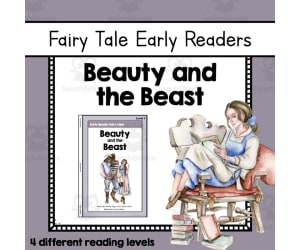
"Beauty and the Beast" | Fairy Tale Early Reader Unit
ELA, Reading, Kindergarten, Preschool, Grade 1, Lesson Plans, Teacher Tools
This comprehensive Beauty and the Beast language arts unit engages students with a classic fairy tale story adapted to four reading levels. Easily find the right fit for each learner's needs. Vibrant custom illustrations by Leila Alieva bring the tale to life in student-facing booklets structured like real books. The bundle equips teachers with differentiated reading materials including teacher guides outlining standards-aligned activities. Extend student learning through supplemental texts on the fairy tale's history and original author. Printable writing tasks allow students to reimagine plot points. Emerging writers will appreciate tracing activities while more advanced students can craft their own Beauty and the Beast adventures. Practice essential literacy skills such as vocabulary, comprehension, fluency, and phonics with ready-made flashcards, worksheets, readers theater scripts, sequencing tasks, and more. Assessment materials like reading logs allow teachers to track progress. Editing and descriptive writing activities challenge students to enrich their own fairy tale renditions. With definitions, visual references, and multiple learning formats, unit components ensure concept accessibility for a diversity of learners. Adaptable to various classroom contexts, this fairy tale kit saves valuable teacher prep time. It can inspire an entire multi-week unit with interdisciplinary connections or supplement existing plans as a targeted small group or center activity . With abundant materials at each reading level, differentiation and remediation is simplified. Motivate young readers as a beloved tale comes alive at just the right level. Check out other resources from my store: Simply Schoolgirl! I can be contacted for questions and concerns at simplyschoolgirl1@gmail.com
Author Simply Schoolgirl
Tags Fairy Tales, Beauty And The Beast, Early Reader, Elements Of Fairy Tales, Reading Posters, EBook, Vocabulary, Decoding, Sequencing, Folk Tale, Beauty And The Beast Fairy Tales, Beauty And The Beast Fairy Tale, Fairy Tail Beauty And The Beast, The Beauty And The Beast Fairy Tale, Fairy Tales Beauty And The Beast, Fairy Tale Beauty And The Beast
What is a Perimeter? | Interactive Math Video Lesson
Math, Geometry, Grade 2, 3, 4, Lesson Plans, Teacher Tools
This animated video is a math lesson all about perimeter. Students will love this engaging and interactive video. This video serves as a great introduction or review video for your learners. This is a 2-minute video lesson.
Author Educational Voice
Tags Perimeter, Area, Geometry, Shapes, Math Lesson

I WONDER - Could The Archaeopteryx Fly | Animated Video Lesson
History: Ancient, History, Social Studies, History: World, Animals, Life Sciences, Science, Grade 4, 5, 6, 7, 8, 9, 10, Lesson Plans, Teacher Tools
Video Introduction An amazing video designed for the students to learn more about dinosaurs in different countries. I WONDER - Could The Archaeopteryx Fly | Animated Video Lesson Do you like dinosaurs? what is your favorite one? Do you own a pet? If yes, tell us more about it, like what its name? And what do you like most about it? Do you think that your pet has been evolved from a dinosaur? Can you write down the characteristics of your favourite dinosaur like it's shape, their rivals, where did it use to live and what was their favourite food? What is the largest and the smallest dinosaur that ever found? Why is the T-rex is so famous? Have you ever read any interesting facts about it? Can you name any of the carnivores or herbivores dinosaurs? I WONDER - Could The Archaeopteryx Fly | Animated Video Lesson The video is perfect for encouraging the researching skills for the students, while learning more about dinosaurs. I WONDER - Could The Archaeopteryx Fly | Animated Video Lesson This friendly designed video is suitable for students at school, homeschooling, and as a group activity. Format Available in MP4 format.
Author Educational Voice
Rating
Tags Could The Archaeopteryx Fly, Could The Archaeopteryx Fly Video, Archaeopteryx, Archaeopteryx Video, Archaeopteryx Facts, Archaeopteryx Facts For Kids, Archaeopteryx Video For Kids, Dinosaur

Basic Story Elements Notes
ELA, Reading, Grade 7, 8, 9, 10, Teacher Tools, Lesson Plans
This resource is a Basic Story Elements Notes Packet. The product includes: · PowerPoint introducing or reviewing vocabulary · Guided notes template that goes with the Powerpoint · Google Drive Stations activity to practice vocabulary Students will have everything they need to learn more about the varying story elements and the literary triangle while also applying what they know.
Author Time Thrifty Teacher
Tags Story Elements, Literature, Literary Triangle, Vocabulary, Comprehension