



3,950 products added recently
Page 151 - Elementary Lesson Plans
Support your elementary students with lesson plans that cover a broad range of subjects and skills. These resources are designed to promote cognitive, social, and emotional growth. Incorporate them into your teaching to provide a well-rounded education that meets the needs of all your students.

 Show filters

Reducing Your School's Carbon Footprint: Footprints in Your Lunch Gr. 5-8
Science, Earth and Environmental Sciences, Environmental Science, Grade 5, 6, 7, 8, Teacher Tools, Lesson Plans
Teaching Resource: "Reducing Your School's Carbon Footprint: Footprints in Your Lunch Gr. 5-8" This educational resource aims to guide students of grade 5 to 8 about the direct effects of their school's activities on climate change, primarily via its carbon footprint. Designed with Bloom's Taxonomy and STEAM initiatives, this tool is a comprehensive aid for teachers and classrooms. Instructional Applications: Whole Group Instruction - Facilitates building shared understanding Small Group Exercises - Encourages collaborative problem-solving Individual Assignments - Enhances independent exploration of concepts Learner Activities: Analyze event-chain related to greenhouse gas emission from a slice of bread Numerical exercise calculating CO2 offset by planting trees around school 'Idle-Free Zones' at schools is a key concept introduced as potential energy-saving solution, which could be applied by individual students or put forth as community initiatives. Auxiliary Tools Included: "Graphic Organizers" for enhancing visual comprehension "Carbon Footprint Calculator" providing interactive learning experiences along with results interpretation assistance [emphasis] A Crossword stimulating familiarization with environmental terminology [/emphasis] " Comprehension Quizzes "for testing knowledge retention ensuring learners comprehend key concepts][/emphasis] This tool's inherent value extends beyond mere academics, empowering students to get involved in reducing their school's carbon footprint. It is a vitally essential step towards nurturing environmentally conscious future citizens.
Author Classroom Complete Press
Tags Recycling, Environment, Science Quiz, Reading Passage, Crossword Puzzle

Number & Operations: Fractions - Learn the Skill - FLASH-MAC
Math, Fractions, Common Core, Grade 1, 2, Teacher Tools, Lesson Plans
Number & Operations: Fractions - Learn the skill - FLASH-MAC The Number & Operations: Fractions - Learn the Skill - FLASH-MAC product is an interactive, hands-on teaching resource catered toward first and second grade educators that are focused on enhancing their learners' understanding of fractions. This tool can offer a glance into number operations involving fractions in context, aiming to bridge the gap between theoretical learning and real-world applications. Cross-curriculum Learning Outcomes Positioned as a chapter mini, this software provides curriculum-aligned content with learning outcomes centered around mastering skill-based problem-solving techniques. The problems presented simulate real-world scenarios for students to apply math concepts in practical situations ensuring maximum understanding of fractions and number operations. Interactive Learning Features Incorporation of math tools that facilitate interactive forms of learning essential in modern classrooms. Reinforces key concepts enabling students to visualize problem-solving steps promoting cognitive reinforcement. Multilingual Education Support This resource includes both English voice over with text along with a Spanish voice-over option attached for dual language classes or teachers working in academically diverse settings. Noteable Achievements of FLASH-MAC Educational Software: `Meetings Common Core State Standards ` `Contributing towards STEM initiatives` `Designed following guidelines set by NCTM standards` This versatile tool can be used for various classroom settings: Whole group instruction where teachers lead discussions while guiding students through problems Small groups where peers can collaborate on problem solutions Individual practice through homework assignments or even flipped classroom models Grab the opportunity to enhance your effective teaching strategy toolkit with Number & Operations: Fractions - Learn the Skill – FLASH-MAC – shaping minds one fraction at a time!
Author Classroom Complete Press
Tags Software (Mac)

Global Warming REDUCTION: Lowering Your Greenhouse Gas Emissions - FLASH-PC
Science, Earth and Environmental Sciences, Environmental Science, Common Core, Grade 5, 6, 7, 8, Teacher Tools, Lesson Plans
Global Warming REDUCTION: Lowering Your Greenhouse Gas Emissions - FLASH-PC An insightful resource that empowers educators in teaching their students a vital aspect of our world's current environmental circumstances. This chapter mini focuses on the understanding of the essential practices to lower greenhouse gas emissions as part of global warming reduction measures. Aligned specifically to Grades 5 to 8, it focuses attention towards environmental science. This teaching toolbox encompasses: Reading passages Comprehension activities for use both before and after reading Vocabulary flash cards Interactive elements such as video and audio materials. CATAPULT prepares supplementary printables that can be utilized for either on-site learning sessions such as whole class or small group activities or off-site reinforcements through homework assignments, allowing teachers to tailor-fit instructions based on the students' diverse learning needs and styles. The inclusion of vocabulary flash cards aids in simplifying complex terms into an approachable lexicon, fostering a higher level understanding while nurturing better information recall ability among students. Awareness towards global events In summary, 'Global Warming REDUCTION: Lowering Your Greenhouse Gas Emissions - FLASH-PC', harnesses 21st-century pedagogy; immerses students into valid societal discussions about environmental preservation stimulating not only academic growth but also awareness appreciation towards staying connected with the world's current events. Adherence ardently to Common Core State Standards leveraging Bloom's Taxonomy’s model propelling higher-order thinking skills helps educators design effective instructional strategies appropriating this software-based product onto their lesson plans effectively. .
Author Classroom Complete Press
Tags Software (PC)

Intent Versus Impact -SEL Presentation
Special Resources, Social Emotional Learning (SEL), Social Skills, Special Education Needs (SEN), Middle School, Elementary, Teacher Tools, Lesson Plans, Presentations
In this product, there is a 9 slide PowerPoint and a Scenario handout. This is an SEL presentation. Students will learn about the concept of intent versus impact. This lesson is especially good for students who joke around without realizing their jokes/teasing is hurtful. The PowerPoint guides the lesson. There are slide notes for additional lesson instructions. This can also be uploaded as a Google Slide presentation. There are also 3 short Videolink videos in this lesson as well as a group activity to apply a relatable scenario to the concept. The group will analyze a situation and decide what is the intent and impact of the situation and then share out to the class about their scenario. This is appropriate for students in 4th, 5th, 6th, 7th, 8th, and 9th grade. This is an important concept for students to learn how their behaviors impacts others' feelings. Students will learn in a relatable way how joking and other behaviors that seem to them to be harmless, may be hurtful to others. For other SEL presentations, SEL coloring pages and SEL activities and lessons, please visit my store at: https://teachsimple.com/contributor/jennifer-moyer-taylor If you enjoy this type of SEL product and resource and would like to see more, please check out these other SEL resources for this age group: https://teachsimple.com/product/venting-or-gossiping-sel-powerpoint-presentation-and-reflection-handout (In this SEL presentation, students will learn the difference between venting and gossiping. This is a very important and tricky distinction for students in upper elementary and middle school. Often times, students mix gossiping with venting without seeing the risk of making the situation worse. In this lesson, students are taught how to know when they are venting (trying to get help, advice, with a trusted person who will not gossip-versus when they are gossiping-they are mad, want others to know the negative things to tarnish their relationships, etc.) https://teachsimple.com/product/responsible-decision-making-an-sel-lesson-learning-about-mental-time-travel (Responsible decision-making lesson. Students will learn about "mental time travel" and goal setting.) https://teachsimple.com/product/how-to-avoid-digital-drama-an-sel-lesson-plan (How to Avoid Digital Drama SEL Lesson. In this lesson, students will learn about how to avoid digital drama online. They will also learn how to respond to digital drama.)
Author Jennifer Moyer Taylor
Tags SEL, Lesson, Self-Awareness, Social-emotional Learning, Relationship Skills, Self-management, SEL Presentations, Social Emotional Learning, Friendship Skills

Advertising Gr. 5-7
Life Studies, Social Studies, Economics, Grade 5, 6, Teacher Tools, Lesson Plans
Advertising Gr. 5-7: Distinctive Teaching Resources Advertising Gr. 5-7 distinguishes itself through its unmatched functionality and streamlined structure. This unique teaching resource explores the fascinating world of advertising, enabling students in grades 5 to 7 to deepen their understanding of promotional techniques and their economic impacts. Fundamentals for Fun Learning Students are introduced to the basics of advertising with comprehensive notes designed for handouts or projection systems. The information is concise yet informative, making it easy to understand at a level perfect for middle school pupils studying Life Studies. The “Just the Facts” section lays a strong foundation with essential details that can become focal points for various assignments—an asset most educators will find invaluable when designing lesson plans. The student task sheets highlight fun alongside effective learning strategies—achieving an equilibrium between enjoyment and knowledge acquisition. Promoting Teamwork via Group Projects To enhance teamwork skills while enriching knowledge on marketing tactics, "Group project" engages students on group tasks related to exciting advertising topics - sure to ignite curiosity amongst young learners. This resource is intentionally designed with teachers in mind; it seamlessly fits into large-group instruction scenarios as well as smaller tutoring situations alike. It can also serve as homework assignments encouraging independent learning outside school hours. Included Social Studies Lesson This award-winning product includes a high-quality Social Studies lesson comprising reading passages, crossword puzzles that evoke critical thinking skills, word searches along with prompt activities specifically created by seasoned educators—a key accompaniment fitted accurately to every exercise providing instructors smooth ease during tuition sessions. The resource is stored conveniently in PDF format—for immediate access anytime post-purchase on any device compatible with such files. In conclusion, Advertising Gr. 5-7 delivers a balanced blend of understanding theory and gaining practical exposure to the economic influence of advertising—a key ally in closing the comprehension gaps many students encounter at this phase. This resource aids teachers in molding knowledgeable minds ready to explore further and ask relevant questions about our dynamic business environment.
Author Classroom Complete Press
Tags PDF

Maine: A Micro-Learning Deck | Digital Geography Lesson
Social Studies, Geography, Grade 4, 5, 6, 7, Teacher Tools, Lesson Plans
Bring the state of Maine to life for your students with the Maine: A Micro-Learning Deck | Digital Geography Lesson – a captivating and interactive resource designed especially for educators. This 14-slide digital mini-lesson is packed with multimedia elements that offer authentic insights into the essence of this fascinating state. Included are video and audio content, informative text, graphic organizers, engaging digital activities, and opportunities for summarizing. This cutting -edge educational tool transports your students into a world of discovery as they explore Maine's cultural richness through geography lessons enriched with real-life context and immersive experiences. Our PowerPoint presentation contains 14 visually captivating slides crafted with meticulous attention to detail, delivering both valuable information and enjoyable interaction. Teachers around the globe have embraced this seamless integration of multimedia resources because it offers an unparalleled learning experience for their pupils. Dive into exploring Maine’s diverse landscape by incorporating comprehensive micro-learning content in your classroom. Revolutionize how you teach geography by using our creative resource that offers remarkable detail while maintaining a lively atmosphere throughout! Your students will enjoy being immersed in this colorful journey showcasing all that Maine has to offer!
Author Teach Me This
Tags Digital Geography, Digital Lesson Plan, Geography Activity, Maine Learning Deck, Interactive Slides
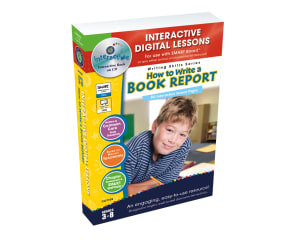
How to Write a Book Report - Digital Lesson Plan Gr. 5-8 - FLASH-MAC
ELA, Writing, Grade 3, 4, 5, 6, 7, 8, Teacher Tools, Lesson Plans
How to Write a Book Report - Digital Lesson Plan Gr. 5-8 - FLASH-MAC An exceptional teaching resource designed to develop comprehensive book report writing skills in students from grades 5 through 8. This resource is tailored to help educators, including public school teachers and homeschoolers, by providing them with an interactive and well-designed lesson plan. Highlights of the Tool This easy-to-use digital tool comes with an engaging package of 80 screen-pages filled with activities that focus on the crucial components of effective book report writing. The digital lesson plan incorporates step-by-step instructions on how students can produce stellar book reports from start to finish. Prewriting, drafting, revising, and proofreading, each aspect of constructing a quality book report has been carefully included. A striking feature is the integration of graphic organizers , which assists students in methodically organizing their thoughts throughout their writing process. The ready-made screens' content not only elevates knowledge but also enhances retention via reading passages alongside interactive activities available both before and after reading. Inclusive Resources Additionals, such as test preparations materials, memory-match games , crosswords word searches as well as supporting videos & audio are seamlessly integrated all under one roof. Regardless if you're facilitating group analysis or encouraging independent study or assigning homework on book reports; these multifaceted features make it seamless. Educational Standards Met The How to Write a Book Report - Digital Lesson Plan meets state standards and aligns perfectly with Bloom’s Taxonomy focused on nurturing higher-order thinking skills in children across all age groups within our target grade spectrum (Grade 3 through Grade 8). For any educator looking at nurturing adept writers in Language Arts amongst their student community; this product is indeed quite instrumental!
Author Classroom Complete Press
Tags Software (Mac)

Animal Science Unit | All About Whales | Learning about Animals
Science, Life Sciences, Animals, Kindergarten, Preschool, Grade 1, 2, Lesson Plans, Teacher Tools
Whales Unit Study | Learn All About Whales Dive into learning all about the amazing world of whales with this expansive unit study! Budding marine biologists will discover real photos, differentiated reading materials, arts, crafts , worksheets, and writing activities specially designed to teach preK-2nd graders about whale classification, habitats, life cycles, anatomy, ecosystems, and more. Teachers can utilize the abundant teacher resources such as discussion questions, project ideas, and whale-related media to create engaging whole class, small group, or independent learning opportunities. The variety of high-quality printables, games, and hands-on crafts like articulated paper whales, masks, dioramas ensure young students actively apply their learnings. Equip little ones to appreciate these giants of the sea with this comprehensive whale unit.
Author Simply Schoolgirl
Tags Zoology, Marine Mammal, Mammals, Migration, Ocean, Whale Crafts, Whale Printables, Whale Lesson, Whale Worksheets, Whale Activities

I WONDER - What Is Tempo | Animated Video Lesson
Music, Creative Arts, Grade 3, 4, 5, 6, 7, 8, 9, Lesson Plans, Teacher Tools
Video Introduction An amazing video designed for the students to learn more about music. I WONDER - What Is Tempo | Animated Video Lesson Tempo is the speed at which a piece of music is played, measured in beats per minute (BPM). It can greatly affect the mood and feel of a piece. Faster tempos often create excitement and energy, while slower tempos may convey a sense of calm or sadness. Musicians use Italian words to describe tempo, like "allegro" for a fast and lively pace, "adagio" for a slow and peaceful pace, or "moderato" for a medium pace. Sometimes, a composer will use a metronome marking to indicate the exact tempo they want the piece to be played at. I WONDER - What Is Tempo | Animated Video Lesson The video is perfect for encouraging the artistic skills for the students, while learning more about this fantastic topic. I WONDER - What Is Tempo | Animated Video Lesson This friendly designed video is suitable for students at school, homeschooling, and as a group activity. Format Available in MP4 format.
Author Educational Voice
Rating
Tags What Is Tempo, What Is Tempo Video, Tempo, Tempo Facts, Tempo Video, Tempo Video For Kids, Tempo Facts For Kids, Music, Music Facts, Music Video

Fight Tooth and Nail | Figurative Language Activity | Micro-Learning Deck
ELA, Reading, Reading Comprehension, Grade 2, 3, 4, 5, Teacher Tools, Lesson Plans
This resource allows students to explore figurative learning in a fun way. The figurative language term for this learning deck is "Fight Tooth and Nail." Through close reading and a reading passage with audio, your students will better comprehend figurative language! Included: -Video lesson on language concept -Reading passage w/ audio Comprehension -Quick write
Author Teach Me This
Tags Reading Lesson, Figurative, Language, Activity, Learning Deck

Baseball Reading Comprehension Passage - Cored Ed Encyclopedia
ELA, Language Development, Reading Comprehension, Reading, Social Studies, Writing, Vocabulary, History, Geography, Pre-Reading, Grade 2, 3, 4, 5, Worksheets & Printables, Worksheets, Teacher Tools, Centers, Activities, Writing Prompts, Assessments, Quizzes and Tests, Quizzes, Lesson Plans
This baseball reading comprehension with lesson plan includes: Visualization (on the front cover) Start your lesson by taking a minute to think and share something about the topic. Read the script aloud (slowly), perhaps prepare some music or sound effects. Student close their eyes and let their imaginations wander. Students open their eyes, read the question aloud and give them a few minutes to complete. Ask a few students to share or keep answers until the end to compare with what they learn in the passage. COMPANION VIDEO NOW AVAILABLE (EMBEDDED AFTER PREVIEW PICTURES IN PRODUCT DESCRIPTION) Quick pause—thousands of Cored Education products are included with your TeachSimple membership. Download links and encyclopedia index available here. Pre-Reading Trivia Students will write down one thing they already know about the subject and then read five more facts and discuss. These facts are fun, and the students will enjoy learning about the subject before reading more. Give 1 minute for students to write what they already know (no pressure—best guess is fine). Read the five facts together. After each fact, do ask a student for their opinion, was it surprising? Set a purpose by asking students to highlight/underline one fact they want to learn more about during the reading. Reading Passage The text is a high-interest reading passage with set paragraphs, roughly three to four paragraphs long. It contains a variety of themes about the topic, anywhere from history to technology. The passage is between 250 and 350 words in length. First, ask students to look at the headings and see what they’ll learn about today. What do they know about the topic/heading? First read options: Teacher read-aloud (best for support). Partner reading (paragraph by paragraph). While reading, students underline important details, and vocabulary words they think may come up in the questions section. Mixed Questions The first question page contains four multiple-choice questions, each with a choice of four answers, and three written response questions that require a sentence or two from the student. Students complete the mcqs first independently, then review quickly as a class. For the 3 written responses, try to get students giving the answer with some form of evidence: “I think ___ because the text says ___.” If students get stuck, send them back to check the passage. Vocabulary Questions Practice seven key words from the text in this section across two activities. First section is scrambled words where students will unscramble three words given a clue for each. The second section is a word to meaning matching activity. Before starting, have some students read out words they underlined in the passage. Ask students to say the word and read aloud the sentence(s) around each word. Ask students to do scrambled words and the matching exercise in pairs then go through answers as a class. For the scrambled spelling task, get four pairs to come up to the board and write the words for extra practice with the other student reading out the clue. For the matching task, prompt students to give full sentences: “I matched ___ with ___ because ___.” Creative Writing In this question, the student will be required to write a five to eight sentence paragraph on a question related to the topic. Before starting, ask students write down 3 key ideas they are going to include in their piece. Ask students for ideas to share around the class to help those struggling. Pro writing expectations: 5–8 sentences At least 2 facts or details from the passage At least 2 vocabulary words from the previous page Students read their paragraphs while classmates listen for facts and vocabulary words. Extension Activities This page is optional for fast finishers or to take home. There are several activities, each one requiring a different skill. Do some, do none, do all, completely optional - but you will feel reassured knowing every possibility is planned for. Includes summary writting question and additional facts. Answer Key There are answers for the multiple-choice questions, written response questions have sample answers, vocabulary answers and if there is a summary question then a sample summary will be provided as well. Lesson Plan Included Customized lesson plan for this lesson is included. Lesson Snapshot Title: Baseball Genre: Nonfiction (informational passage) Subject: Physical Education / Social Studies (Sports history) / Reading (Informational Text) Primary Topic: How baseball works and how it spread Estimated Guided Reading Level (A–Z): S What This Lesson Teaches Best Clear explanation of how a baseball game works (bases in a diamond, two teams, innings, outs, extra innings). How shared written rules helped organize the modern game (clubs writing rules; later standards like nine innings and a 90-foot base path). A brief timeline of key turning points using dates and evidence (1845 rules, 1869 first all-professional team, 1903 World Series, 1872 introduction in Japan). How baseball changed as it grew (teams traveling, paid players, big leagues forming, some leagues using timing rules). How baseball spread beyond its early American home (popularity across parts of the Americas and East Asia). Learning Goals Identify key parts of a baseball game described in the passage (bases, teams, innings, outs, extra innings). Explain how keeping shared rules helped baseball become more organized. Describe the “safer idea” included in the 1845 rules. Describe what it meant for baseball to turn “professional,” using details from the text. Retell the passage’s key dates in order and explain what happened at each date. Describe how the passage shows baseball spreading to new places and continuing to change. Key Vocabulary From the Text inning — part of the game when teams take turns playing. outs — times when a player is put out. standards — agreed-upon rules that many people follow. professional — paid to play as a job. leagues — organized groups of teams that play each other. FULL CATALOG OF DOWNLOAD LINKS AND ENCYCLOPEDIA INDEX HERE
Author Cored Education
Rating
Tags Vocabulary, Reading Comprehension, Reading Passages, Lesson Plans, Ela Lesson Plans, Reading Comprehension Lesson Plans, Pre-reading, History, History Lesson Plans, Social Studies Lesson Plans
I WONDER - How Does Gravitational Pull Work | Animated Video Lesson
Physics, Science, Grade 4, 5, 6, 7, 8, 9, 10, Lesson Plans, Teacher Tools
Video Introduction An amazing activity designed for the students to learn more about STEM. I WONDER - How Does Gravitational Pull Work | Animated Video Lesson Do you like STEM subjects? what is your favorite one? Have you ever tried to plant a seed? If yes, tell us more about it. Or have you ever tried to invent something? If yes, tell us more about it. And how do you think it will help us? Have you ever seen a microorganism under a microscope? What was it? And how it looked like? Mathematics is a marvelous subject. Let' sharpen our brains and solve some equations. Do you like timetable tricks? What is your favorite one? Do you know how to code? Have you ever created an app or a game before? If yes, how was it like? I WONDER - How Does Gravitational Pull Work | Animated Video Lesson The video is perfect for encouraging the researching skills for the students, while learning more about this fantastic topic. I WONDER - How Does Gravitational Pull Work | Animated Video Lesson This friendly designed video is suitable for students at school, homeschooling, and as a group activity. Format Available in MP4 format.
Author Educational Voice
Tags How Does Gravitational Pull Work, How Does Gravitational Pull Work Video, Gravitational Pull, Gravitational Pull Facts, Gravitational Pull Facts For Kids, Gravitational Pull Facts Video, Physics, Physics Video For Kids

I WONDER - Do Fish Have Eyelids | Animated Video Lesson
STEM, Biology, Life Sciences, Science, Animals, Grade 1, 2, 3, 4, 5, 6, 7, 8, Lesson Plans, Teacher Tools
Video Introduction Animal kingdoms are full of fascinating wonders to learn. This video is designed for the students to learn more about animals in different countries. I WONDER - Do Fish Have Eyelids | Animated Video Lesson Do you like animals? what is your favorite one? Do you own a pet? If yes, tell us more about it, like what its name? And what do you like most about it? What are the animal kingdoms? Can you write down the characteristics of each animal class like mammals, birds, reptiles, amphibian, fish and mollusks. Do you know that some animals can sing, can you name any of them? What is the largest and the smallest mammal in the world? What is the largest and the smallest bird in the world? What is the largest and the smallest fish in the world? I WONDER - Do Fish Have Eyelids | Animated Video Lesson The video is perfect for encouraging the researching skills for the students, while learning more about these fantastic animals. I WONDER - Do Fish Have Eyelids | Animated Video Lesson This friendly designed video is suitable for students at school, homeschooling, and as a group activity. Format Available in MP4 format.
Author Educational Voice
Tags Do Fish Have Eyelids, Do Fish Have Eyelids Video, Fish Eyelids, Fish Eyelids Facts, Fish Eyelids Facts For Kids, Fish Eyelids Video, Fish Eyelids Video For Kids, Fish, Fish Facts, Fish Video

All About Dinosaurs | Animated Animals Video Lesson
Science, Life Sciences, Animals, Grade 3, 4, 5, 6, Lesson Plans, Teacher Tools
All About Dinosaurs | Animated Animals Video Lesson: A Must-Have Teaching Resource The product being discussed is 'All About Dinosaurs | Animated Animals Video Lesson', a teaching resource tailored for passionate educators in the pursuit of enlightening young minds. This fantastic tool leaps off traditional educational methods into innovative learning, utilizing animation to pique students’ curiosity and make the lesson more captivating. Challenges In Teaching Science Teaching Science often poses challenges in explaining complex concepts, but this is where our video lesson shines. Constructed on animated content about dinosaurs, it takes learners on an exciting journey of discovery across 11 minutes of rich knowledge nuggets. The video format doesn't just provide visual stimulus but also auditory learning opportunities - an ideal combination for modern students' varied learning styles. Purposeful Content Arrangement Each segment within the video has been methodically arranged to deliver information about dinosaurs in a way that isn't overwhelming. Instead, it's structured thoughtfully so that youngsters from Grade 3 through Grade 6 can easily digest each fact shared about these ancient creatures' intriguing existence. Versatile Use Cases This innovative teaching resource in MP4 format offers flexibility depending on your unique classroom or homeschooling environment's needs. Possible operations include: Whole group instruction session: As part of science topics introduction or zoology subtopics related to animals and their evolution over time. Disscusion Groups: Educators could compose smaller post-viewing discussion groups where pupils can share their impressions and learnings from the video. Homeschoolers or distance learners: Using this resource as an assignment will help deepen understanding when complemented with additional readings or exercises. Conclusion The 'All About Dinosaurs | Animated Animals Video Lesson' signifies not just another addition to your educational arsenal but a valuable ally towards making science lessons enjoyable yet profound experiences for grade school learners under your wing.
Author Educational Voice
Tags Dinosaurs, Animation, Science Education, Zoology, Interactive Learning

I WONDER - How Tall Are Giraffes | Animated Video Lesson
STEM, Biology, Life Sciences, Science, Animals, Grade 1, 2, 3, 4, 5, 6, 7, 8, Lesson Plans, Teacher Tools
Video Introduction Animal kingdoms are full of fascinating wonders to learn. This video is designed for the students to learn more about animals in different countries. I WONDER - How Tall Are Giraffes | Animated Video Lesson Do you like animals? what is your favorite one? Do you own a pet? If yes, tell us more about it, like what its name? And what do you like most about it? What are the animal kingdoms? Can you write down the characteristics of each animal class like mammals, birds, reptiles, amphibian, fish and mollusks. Do you know that some animals can sing, can you name any of them? What is the largest and the smallest mammal in the world? What is the largest and the smallest bird in the world? What is the largest and the smallest fish in the world? I WONDER - How Tall Are Giraffes | Animated Video Lesson The video is perfect for encouraging the researching skills for the students, while learning more about these fantastic animals. I WONDER - How Tall Are Giraffes | Animated Video Lesson This friendly designed video is suitable for students at school, homeschooling, and as a group activity. Format Available in MP4 format.
Author Educational Voice
Tags How Tall Are Giraffes, How Tall Are Giraffes Video, Giraffes, Giraffe, Giraffes Facts, Giraffes Facts For Kids, Giraffes Video, Giraffes Video For Kids, Giraffe Facts, Giraffe Video
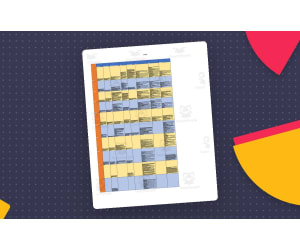
Curriculum Map for 3rd Grade - Georgia
Common Core, Grade 3, Lesson Plans, Teacher Tools
This is a Curriculum Map for 3rd Grade - Georgia. It covers all math, language arts, social studies and science standards for 3rd grade. This is an Excel file that is fully editable for you to adjust to meet your needs.
Author DK's Creations
Tags Curriculum Map, Georgia, State Standards, Planning, 3rd Grade Map

I WONDER - How Does A Skunk Protect Itself | Animated Video Lesson
Animals, Life Sciences, Science, STEM, Grade 1, 2, 3, 4, 5, 6, 7, 8, Lesson Plans, Teacher Tools
Video Introduction Animal kingdoms are full of fascinating wonders to learn. This video is designed for the students to learn more about animals in different countries. I WONDER - How Does A Skunk Protect Itself | Animated Video Lesson Do you like animals? what is your favorite one? Do you own a pet? If yes, tell us more about it, like what its name? And what do you like most about it? What are the animal kingdoms? Can you write down the characteristics of each animal class like mammals, birds, reptiles, amphibian, fish and mollusks. Do you know that some animals can sing, can you name any of them? What is the largest and the smallest mammal in the world? What is the largest and the smallest bird in the world? What is the largest and the smallest fish in the world? I WONDER - How Does A Skunk Protect Itself | Animated Video Lesson The video is perfect for encouraging the researching skills for the students, while learning more about these fantastic animals. I WONDER - How Does A Skunk Protect Itself | Animated Video Lesson This friendly designed video is suitable for students at school, homeschooling, and as a group activity. Format Available in MP4 format.
Author Educational Voice
Tags How Does A Skunk Protect Itself, How Does A Skunk Protect Itself Video, Skunk, Skunks, Skunk Facts, Skunk Facts For Kids, Skunk Video, Skunk Video For Kids, Skunks Protect Itself, Skunks Protect Itself Video

Yogurt Reading Comprehension Passage - Cored Ed Encyclopedia
ELA, Language Development, Reading Comprehension, Reading, Life Sciences, Science, Physics, Social Studies, History, Technology, Grade 2, 3, 4, 5, Worksheets & Printables, Worksheets, Teacher Tools, Centers, Activities, Writing Prompts, Assessments, Quizzes and Tests, Quizzes, Lesson Plans
This yogurt reading comprehension with lesson plan includes: Visualization (on the front cover) Start your lesson by taking a minute to think and share something about the topic. Read the script aloud (slowly), perhaps prepare some music or sound effects. Student close their eyes and let their imaginations wander. Students open their eyes, read the question aloud and give them a few minutes to complete. Ask a few students to share or keep answers until the end to compare with what they learn in the passage. Quick pause—thousands of Cored Education products are included with your TeachSimple membership. Download links and encyclopedia index available here. Pre-Reading Trivia Students will write down one thing they already know about the subject and then read five more facts and discuss. These facts are fun, and the students will enjoy learning about the subject before reading more. Give 1 minute for students to write what they already know (no pressure—best guess is fine). Read the five facts together. After each fact, do ask a student for their opinion, was it surprising? Set a purpose by asking students to highlight/underline one fact they want to learn more about during the reading. Reading Passage The text is a high-interest reading passage with set paragraphs, roughly three to four paragraphs long. It contains a variety of themes about the topic, anywhere from history to technology. The passage is between 250 and 350 words in length. First, ask students to look at the headings and see what they’ll learn about today. What do they know about the topic/heading? First read options: Teacher read-aloud (best for support). Partner reading (paragraph by paragraph). While reading, students underline important details, and vocabulary words they think may come up in the questions section. Mixed Questions The first question page contains four multiple-choice questions, each with a choice of four answers, and three written response questions that require a sentence or two from the student. Students complete the mcqs first independently, then review quickly as a class. For the 3 written responses, try to get students giving the answer with some form of evidence: “I think ___ because the text says ___.” If students get stuck, send them back to check the passage. Vocabulary Questions Practice seven key words from the text in this section across two activities. First section is scrambled words where students will unscramble three words given a clue for each. The second section is a word to meaning matching activity. Before starting, have some students read out words they underlined in the passage. Ask students to say the word and read aloud the sentence(s) around each word. Ask students to do scrambled words and the matching exercise in pairs then go through answers as a class. For the scrambled spelling task, get four pairs to come up to the board and write the words for extra practice with the other student reading out the clue. For the matching task, prompt students to give full sentences: “I matched ___ with ___ because ___.” Creative Writing In this question, the student will be required to write a five to eight sentence paragraph on a question related to the topic. Before starting, ask students write down 3 key ideas they are going to include in their piece. Ask students for ideas to share around the class to help those struggling. Pro writing expectations: 5–8 sentences At least 2 facts or details from the passage At least 2 vocabulary words from the previous page Students read their paragraphs while classmates listen for facts and vocabulary words. Extension Activities This page is optional for fast finishers or to take home. There are several activities, each one requiring a different skill. Do some, do none, do all, completely optional - but you will feel reassured knowing every possibility is planned for. Includes summary writting question. Answer Key There are answers for the multiple-choice questions, written response questions have sample answers, vocabulary answers and if there is a summary question then a sample summary will be provided as well. Lesson Plan Included Customized lesson plan for this lesson is included. Lesson Snapshot Title: Yogurt Genre: Nonfiction (informational text) Subject: Science (food science/microbiology) & Informational Reading Primary Topic: How yogurt forms, bacteria “helpers,” and history Estimated Guided Reading Level (A–Z): R What This Lesson Teaches Best Explains that warm milk can change during travel , becoming thicker and a little sour, and people learned this new food could last longer than fresh milk. Teaches the science of yogurt-making: tiny bacteria eat sugar in milk and make lactic acid , which helps milk proteins clump so yogurt turns thick and creamy. Shows why warmth matters : keeping milk warm for several hours gives the tiny workers time to do their job. Builds a brief history of how yogurt was studied and spread, including a 1905 observation by Stamen Grigorov and later interest from Ilya Metchnikov that helped it become better known in Europe. Connects history to modern life by describing how Isaac Carasso began selling yogurt in Barcelona and how yogurt comes in many styles today, including fruit-mixed cups and thick strained kinds. Learning Goals Students will describe how yogurt may have been discovered when milk changed during a journey. Students will explain how bacteria help milk turn thick and creamy, using details from the passage. Students will identify why keeping milk warm is important for making yogurt, according to the text. Students will describe what the passage says happened in 1905 that helped people understand yogurt better. Students will sequence key events about yogurt over time (long ago, 1905, 1919) using information from the text. Students will describe a simple home method for making yogurt that is stated in the passage. Key Vocabulary From the Text bacteria — tiny helpers you cannot see without a microscope. lactic acid — an acid bacteria make that changes milk. proteins — milk parts that clump together as yogurt thickens. microscope — a tool used to see tiny living things. cultures — live helpers added to start yogurt thickening. FULL CATALOG OF DOWNLOAD LINKS AND ENCYCLOPEDIA INDEX HERE
Author Cored Education
Rating
Tags Vocabulary, Reading Comprehension, Reading Passages, Lesson Plans, Ela Lesson Plans, Reading Comprehension Lesson Plans, Pre-reading, Life Science, Science Lesson Plans, History

I WONDER - What Did Ancient Civilizations Think Thunder Was
History: Ancient, History, Social Studies, History: World, Geography, Grade 4, 5, 6, 7, 8, 9, 10, Lesson Plans, Teacher Tools
Video Introduction An amazing video designed for the students to learn more about history. I WONDER - What Did Ancient Civilizations Think Thunder Was | Animated Video Lesson Do you like history? Which topic do you really enjoy about history? Have you ever read an interesting fact about the Vikings? If yes, can you mention them? What do you like most about the Victorian era? Can you name all the Tudors? Have you ever wondered how people used to live in ancient Japan and ancient China? Do you know any interesting facts about ancient Egyptians and the Pharaohs? Have you ever visited South America? What do you know about Incas and Aztecs? Celtic culture was really one of a kind, can you name any of the places that Celts used to live in? Imagine yourself living during the ancient Roman empire, how your life will look like? Ancient Greece was an amazing place to live in. What do you know about ancient Greek life? I WONDER - What Did Ancient Civilizations Think Thunder Was | Animated Video Lesson The video is perfect for encouraging the researching skills for the students, while learning more about history. I WONDER - What Did Ancient Civilizations Think Thunder Was | Animated Video Lesson This friendly designed video is suitable for students at school, homeschooling, and as a group activity. Format Available in MP4 format.
Author Educational Voice
Tags What Did Ancient Civilizations Think Thunder Was, What Did Ancient Civilizations Think Thunder Was Video, Ancient Civilizations, Ancient Civilizations Facts, Ancient Civilizations Video, Ancient Civilizations Video For Kids

I WONDER - Why Should We Use Natural Pesticides | Animated Video
Earth Sciences, Earth and Environmental Sciences, Science, Environmental Science, Nature & Plants, Life Sciences, Insects, Animals, Grade 6, 7, 8, 9, 10, 11, 12, Lesson Plans, Teacher Tools
Video Introduction An amazing video designed for the students to learn more about STEM. I WONDER - Why Should We Use Natural Pesticides | Animated Video Lesson Do you like STEM subjects? what is your favorite one? Have you ever tried to plant a seed? If yes, tell us more about it. Or have you ever tried to invent something? If yes, tell us more about it. And how do you think it will help us? Have you ever seen a microorganism under a microscope? What was it? And how it looked like? Mathematics is a marvelous subject. Let' sharpen our brains and solve some equations. Do you like timetable tricks? What is your favorite one? Do you know how to code? Have you ever created an app or a game before? If yes, how was it like? I WONDER - Why Should We Use Natural Pesticides | Animated Video Lesson The video is perfect for encouraging the researching skills for the students, while learning more about this fantastic topic. I WONDER - Why Should We Use Natural Pesticides | Animated Video Lesson This friendly designed video is suitable for students at school, homeschooling, and as a group activity. Format Available in MP4 format.
Author Educational Voice
Tags Why Should We Use Natural Pesticides, Why Should We Use Natural Pesticides Video, Natural Pesticides, Natural Pesticide, Natural Pesticides Facts, Natural Pesticides Facts For Kids, Natural Pesticides Video

Geometry: Decomposing Geometric Shapes - Practice the Skill 2 - MAC Software
Math, Geometry, Common Core, Kindergarten, Preschool, Grade 1, 2, Teacher Tools, Lesson Plans
Geometry: Decomposing Geometric Shapes - Practice the Skill 2 - MAC Software This teaching resource has been specifically designed to assist educators and homeschoolers in imparting comprehensive knowledge about the sub-category, Decomposing Geometric Shapes, of Geometry. Adhering to the Common Core State Standards and STEM initiatives, this robust tool presents curriculum -based content through engaging timed drill activities. Key Features: An emphasis on helping students identify sides and corners of geometric shapes. Inclusivity through English and Spanish voice-overs and text options for bilingual learners. A math tool kit integrated into software for use across diverse educational settings: whole group instruction, small group activities or individual assignments at home. The product arrives in a zip file compatible with MAC software systems which ensures quick and efficient installation. This solution is ideal for preschool aged kids right up to those attending grade 2 classes. Created by experienced educators who understand classroom needs intimately, this geometry lesson plan enhances spatial reasoning skills while fostering an early appreciation for mathematical principles among young learners. The Goal: The Geometry: Decomposing Geometric Shapes - Practice the Skill 2 - MAC Software aims at cultivating curiosity while supporting concrete comprehension in Geometry.
Author Classroom Complete Press
Tags Decomposing, Geometric, Shapes, Math Skills, Digital Math
I WONDER - Where Does Carbon Come From | Animated Video Lesson
Environmental Science, Earth and Environmental Sciences, Science, Earth Sciences, Grade 4, 5, 6, 7, 8, 9, 10, Lesson Plans, Teacher Tools
Video Introduction An amazing video designed for the students to learn more about STEM. I WONDER - Where Does Carbon Come From | Animated Video Lesson Do you like STEM subjects? what is your favorite one? Have you ever tried to plant a seed? If yes, tell us more about it. Or have you ever tried to invent something? If yes, tell us more about it. And how do you think it will help us? Have you ever seen a microorganism under a microscope? What was it? And how it looked like? Mathematics is a marvelous subject. Let' sharpen our brains and solve some equations. Do you like timetable tricks? What is your favorite one? Do you know how to code? Have you ever created an app or a game before? If yes, how was it like? I WONDER - Where Does Carbon Come From | Animated Video Lesson The video is perfect for encouraging the researching skills for the students, while learning more about this fantastic topic. I WONDER - Where Does Carbon Come From | Animated Video Lesson This friendly designed video is suitable for students at school, homeschooling, and as a group activity. Format Available in MP4 format.
Author Educational Voice
Tags Where Does Carbon Come From, Where Does Carbon Come From Video, Carbon, Carbon Facts, Carbon Facts For Kids, Carbon Video, Carbon Video For Kids, Environment, Science

French Math: Mesures 2 - Plan de leçon numérique An. 3-5 | PC Software
Math, Measurements, Grade 3, 4, 5, Teacher Tools, Lesson Plans
French Math: Mesures 2 - Digital Lesson Plan for Grades 3-5 | PC Software An innovative and meticulously crafted educational resource designed specifically for the unique learning requirements of students in grades 3 through 5. Conveniently downloadable, it is an ideal teaching tool for public school educators and homeschooling parents alike. Highlights of the Software: Over 230 independent activities spread over more than 80 immersive digital pages. A comprehensive guide to all standards found within the Measurement strand of both NCTM and State Curriculum Math. A pedagogical design that transforms teaching measurements into an engaging process, reinforces problem-solving skills, and bridges theory with practical real-life situations through word problems. An additional set of about150 drill problems introduced post-lesson to reinforce procedural proficiency in Mathematics. Beyond Lessons and Drills: This math program goes beyond traditional lessons by offering interactive content like: Test Preparations Memory-Match Games Board Games Spinner Games This diverse educational approach paired with dual-language (French and English) feature incorporated simultaneously increases its effectiveness multifold. Offering a user-friendly experience on personal PCs has never been this easy! Inclusive Supplementary Features : Inclusion of useful features such as : Text -to-speech functionality (both English Spanish) Numerous printables Math tools available in both imperial and metric units all stuffed in a singular downloadable zip file. All these attributes together make this resource an excellent tool for mastering measurements, making learning both fun and effortless for students of grades 3 to 5.
Author Classroom Complete Press
Tags Digital Math, French Math Lesson, French Measurement Lesson, Digital Measuring, Lesson Plan

All About Vertebrates | Animated Animals Video Lesson
Science, Life Sciences, Animals, Grade 3, 4, 5, 6, 7, Lesson Plans, Teacher Tools
All About Vertebrates | Animated Animals Video Lesson This is a highly beneficial instructional tool for educators. It aims to introduce and broaden the knowledge base of students in grades 3-7 about vertebrates. This resource perfectly aligns with zoology subtopics as part of science subject instruction. With engaging animations and informative content, students will appreciate this fascinating seven-minute video lesson. The content is delivered in an MP4 file format which can readily be used on various devices, making it a versatile teaching asset. Incorporation into Curriculum This educational resource can be worked into any curriculum and adapted to suit different teaching formats effectively. It could serve as a platform for whole group classroom activities or discussions. In smaller study groups, it promises higher concentration levels and improved retention rates among learners. Homeschool Parents: Homeschool parents will find this tool incredibly helpful due to its flexible usability offering individualized learning experiences while being time-efficient. A New Age Educational Powerhouse! The All About Vertebrates | Animated Animals Video Lesson makes learning fun by cultivating curiosity about nature's complexities. It fuels genuine interest among students towards acquiring new information thereby essentially rejuvenating conventional methods of transmission of education unravelling new arenas for innovative pedagogical approaches within modern classroom settings.
Author Educational Voice
Tags Vertebrates, Animals, Zoology, Educational Resource, Animated Video, Vertebrates Videos