



3,888 products added recently
Page 39 - Science Lesson Plan Template
Enhance your science instruction with a flexible lesson plan template designed for educators. This tool helps you structure objectives, materials, procedures, and assessments efficiently. Use it to create organized and impactful science lessons that cater to your students' needs.

 Show filters


Ecosystems: Microorganisms
Science, Life Sciences, Biology, Common Core, Grade 5, 6, 7, 8, Teacher Tools, Lesson Plans
Ecosystems: Microorganisms Introducing students in grades 5 to 8 to the intriguing world of ecosystems with a special focus on microorganisms. An educational resource that makes complex ecosystem concepts graspable for young learners. Key Learning Areas The distinctive roles of Producers, Consumers, and Decomposers within an ecosystem. Evolution and change within ecosystems over time. The interconnected nature of food chains and food webs. An understanding of Photosynthesis, one of the most critical processes driving life on Earth; explained in student-friendly terms. The interaction between the water cycle , manmade environments, and tiny microorganisms - highlighting its importance across diverse habitats. This resource recognises that each organism (from humans to tiny bacteria) contributes towards creating a functioning ecosystem. Each component plays essential roles affecting others around them in captivating ways. A Comprehensive Teaching Tool Ecosystems: Microorganisms is designed as a comprehensive teaching tool for educators working with science-related subjects such as Biology, making it also suitable for homeschooling parents engaging in STEM-based education practices. Activities are versatile enough for both whole-class instruction or group and individual assignments at home. The use of simplified language along with ready-to-use reading passages, engaging activities and colourful mini posters makes digesting these scientific concepts easier! Note:This resource is particularly helpful for remedial students struggling with grasping scientific concepts. It aligns well with Common Core State Standards while incorporating Bloom's Taxonomy viewpoints along with STEM initiatives – ensuring learners develop not just knowledge but analytical thinking skills too! Now available as a PDF file download for your teaching needs.
Author Classroom Complete Press
Tags PDF
I WONDER - How Useful Are Lasers | Animated Video Lesson
Physics, Science, Grade 6, 7, 8, 9, 10, 11, 12, Lesson Plans, Teacher Tools
Video Introduction An amazing video designed for the students to learn more about STEM. I WONDER - How Useful Are Lasers | Animated Video Lesson Do you like STEM subjects? what is your favorite one? Have you ever tried to plant a seed? If yes, tell us more about it. Or have you ever tried to invent something? If yes, tell us more about it. And how do you think it will help us? Have you ever seen a microorganism under a microscope? What was it? And how it looked like? Mathematics is a marvelous subject. Let' sharpen our brains and solve some equations. Do you like timetable tricks? What is your favorite one? Do you know how to code? Have you ever created an app or a game before? If yes, how was it like? I WONDER - How Useful Are Lasers | Animated Video Lesson The video is perfect for encouraging the researching skills for the students, while learning more about this fantastic topic. I WONDER - How Useful Are Lasers | Animated Video Lesson This friendly designed video is suitable for students at school, homeschooling, and as a group activity. Format Available in MP4 format.
Author Educational Voice
Tags How Useful Are Lasers, How Useful Are Lasers Video, Lasers, Laser, Lasers Facts, Lasers Facts For Kids, Lasers Video, Lasers Video For Kids, Physics, Physics Video

I WONDER - What Job Does DNA Do | Animated Video Lesson
Biology, Life Sciences, Science, Human Body, STEM, Grade 6, 7, 8, 9, 10, 11, 12, Lesson Plans, Teacher Tools
Video Overview The human body is full of fascinating wonders to learn. This video is created to help the students recognize the anatomy and the job of the human body. I WONDER - What Job Does DNA Do | Animated Video Lesson Every part and organ in our human body is vital so let's see how important they are. Have you ever imagined how we look like if we didn't have a skeleton? Did you know that because we have our amazing muscles we can stand! Do you know how many teeth do we have? Have you ever wondered about the food journey inside our body? Can you name all the glands in our body? Why do we have skin? Our nervous system is really good at sending signals. Can you tell us more about it? Are you really good at Mathematics, painting, or any other thing? You should really thank your brain about it! The famous five senses are really doing a great work? Can you explain how every sense works? I WONDER - What Job Does DNA Do | Animated Video Lesson The video is perfect for encouraging the researching skills for the students, while learning more about our fantastic human body. I WONDER - What Job Does DNA Do | Animated Video Lesson This friendly designed video is suitable for students at school, homeschooling, and as a group activity. Format Available in MP4 format.
Author Educational Voice
Tags What Job Does DNA Do, What Job Does DNA Do Video, DNA, DNA Facts, DNA Facts For Kids, DNA Video, DNA Video For Kids, Human Body, Human Body Video, Human Body Facts
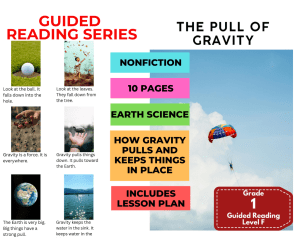
The Pull of Gravity: Guided Reading Level F with Lesson Plan
ELA, Resources for Teachers, Reading Comprehension, Reading, Science, Language Development, Vocabulary, Physics, Earth and Environmental Sciences, Pre-Reading, Kindergarten, Grade 1, 2, Worksheets & Printables, Worksheets, Teacher Tools, Centers, Activities, Literacy Readers, Quizzes, Quizzes and Tests, Assessments, Lesson Plans
This The Pull of Gravity (level f) guided reading book with lesson plan includes: Guided Reading Color Label (front cover x1) This is a quick way to match the book’s demands to what students can generally handle.. The overall goal is to use the level/color to pick books for several smaller groups. To qualify for a certain level, a student is expected to read a book from that level with about 90–94% accuracy. If a student is consistently accurate and understands, move up a level. If the student is struggling at that level, drop down and add more support. Each student will improve at completely different rates, but it is generally one of the best ways to check progress across the class. DOWNLOAD THE CATALOG TO VIEW ALL GUIDED READING BOOKS AVAILABLE (SORTED LEVELS A-Z) COMPANION VIDEO NOW AVAILABLE (EMBEDDED AFTER PREVIEW PICTURES IN PRODUCT DESCRIPTION) Pre-Reading Question (x1) The teacher says the question aloud, either while showing the cover or the first page. Students share what they already know or make sensible guesses based on the cover. Encourage them to use the target vocabulary where possible. Write a few of their ideas on the board so you can return to them during or after the reading. Vocabulary Words (x5) Introduce the five words one at a time. Say each word aloud, have students repeat it, and then ask if anyone already knows what it means. Read the meaning together and briefly connect each word to a picture, action, or gesture so it feels more memorable. Ask students to flip through the book and point to any pages where they spot the vocabulary words. While reading, pause when one of the words appears, or reread the sentence so students clearly notice and understand it in context. Optional: Ask students to raise their hands whenever they see or hear one of the new words. Guided Reading Pages (x10) Check the book snapshot below for: Primary topic — decide whether students need a quick introduction or extra background first. What this lesson teaches best — choose 1–2 key points to focus on during the session. Learning goals — keep in mind what students should be able to understand or say by the end. Key vocabulary — review and reinforce these throughout the lesson. Questions overview — look ahead so you know what students will be asked and whether any extra support is needed. Run the lesson You may already have looked at a few pages together, but it can help to revisit some of the pictures first to build meaning. Depending on your time and how confident the group is with guided reading, you may want to read the whole book aloud to them first. Students can then whisper-read or partner-read while you listen in. If time allows, you can also read as a group, with each student taking a page. Use the guided reading prompts to support them, such as: “Check the picture—does it make sense?” “Point under the words.” “Try the first sound.” “Reread the sentence smoothly.” It can be helpful to focus more closely on one student each session, rotating over time, so you can better judge whether they are ready to move up or may need more support at their current level. Comprehension Questions (back cover x3) This is where you check that students understood the text, not just the words on the page. Start by letting students answer by pointing to a page or picture and saying a short sentence. After they respond, follow up with: “Show me where you found that in the text.” In larger groups, let partners discuss their answer first for 10–20 seconds, then invite 2–3 students to share. Differentiation tips Emerging speakers / struggling readers: oral response + pointing On-level: oral response in a full sentence Higher: one written sentence or a drawing with labels Lesson Snapshot Title: The Pull of Gravity Genre: Nonfiction (informational) Subject: Science (Physical Science) Primary Topic: How gravity pulls things and helps keep them in place Estimated Guided Reading Level (A–Z): F What This Lesson Teaches Best Explains that gravity is a force and that it is all around us. Shows that gravity pulls things down and toward the Earth. Uses simple, everyday examples like a ball, leaves, water, rocks, sand, and air to show gravity in action. Helps students understand that larger objects, like Earth, have a stronger pull. Introduces the idea that gravity is also in space and helps pull the moon. Learning Goals Students will identify that gravity is a force found everywhere. Students will describe how gravity pulls things down and toward the Earth. Students will give examples from the text of things gravity pulls or keeps in place. Students will explain what the text says about Earth’s strong pull. Students will answer questions about gravity using details from the book. Key Vocabulary From the Text gravity — a pull that makes things go down force — a push or a pull toward — moving closer to something space — the place above Earth mountain — a very high hill of land Discussion Prompts Pre-reading question: What do you think makes things fall down to the ground? Comprehension question: What does the book say gravity is? Comprehension question: What does gravity pull things toward? Comprehension question: Name one thing the book says gravity keeps in place. 1. Best Printing Method (Recommended) Booklet printing is the best option if your printer or PDF viewer supports it. This method usually places the pages in the correct order automatically and makes folding much easier. Settings to use: Print mode: Booklet Paper size: Letter or A4 Orientation: Landscape Print on both sides: Yes Flip on: Short edge Scaling: Fit to printable area Booklet subset: First, print front sides only Then, print back sides only This will automatically: Pair the pages correctly Place the cover on the outside Help everything line up properly for folding After printing, fold the pages in half and staple along the spine. 2. If “Booklet” Printing Is Not Available You can still print the book correctly by using manual duplex printing . Step-by-step: Open the PDF. Click Print . Use these settings: Orientation: Landscape Pages per sheet: 1 Print on both sides: Yes Flip on: Short edge Print all pages. Since each PDF page already contains two facing book pages, the pages should still fold neatly into a book. Thousands of Cored Education products are included with your TeachSimple membership. Download links and encyclopedia index available here.
Author Cored Education
Rating
Tags Reading Comprehension, Reading Passages, Reading, Guided Reading, Guided Reading Lesson Plan, Guided Reading Activity, Pre-reading, Science Lesson Plans, Earth Science, Physics

I WONDER - How Long Does It Take For Food To Get To Our Stomachs
Human Body, Life Sciences, Science, Biology, STEM, Grade 2, 3, 4, 5, 6, 7, 8, Lesson Plans, Teacher Tools
Video Overview The human body is full of fascinating wonders to learn. This video is created to help the students recognize the anatomy and the job of the human body. I WONDER - How Long Does It Take For Food To Get To Our Stomachs | Animated Video Lesson Every part and organ in our human body is vital so let's see how important they are. Have you ever imagined how we look like if we didn't have a skeleton? Did you know that because we have our amazing muscles we can stand! Do you know how many teeth do we have? Have you ever wondered about the food journey inside our body? Can you name all the glands in our body? Why do we have skin? Our nervous system is really good at sending signals. Can you tell us more about it? Are you really good at Mathematics, painting, or any other thing? You should really thank your brain about it! The famous five senses are really doing a great work? Can you explain how every sense works? I WONDER - How Long Does It Take For Food To Get To Our Stomachs | Animated Video Lesson The video is perfect for encouraging the researching skills for the students, while learning more about our fantastic human body. I WONDER - How Long Does It Take For Food To Get To Our Stomachs | Animated Video Lesson This friendly designed video is suitable for students at school, homeschooling, and as a group activity. Format Available in MP4 format.
Author Educational Voice
Tags How Long Does It Take For Food To Get To Our Stomachs, How Long Does It Take For Food To Get To Our Stomachs Video, Stomach, Stomachs, Stomach Facts, Stomach Facts For Kids, Stomach Video

I WONDER - What Effect Does Climate Change Have On Ecosystems
Earth Sciences, Earth and Environmental Sciences, Science, Environmental Science, Grade 6, 7, 8, 9, 10, 11, 12, Lesson Plans, Teacher Tools
Video Introduction An amazing video designed for the students to learn more about STEM. I WONDER - What Effect Does Climate Change Have On Ecosystems | Animated Video Lesson Do you like STEM subjects? what is your favorite one? Have you ever tried to plant a seed? If yes, tell us more about it. Or have you ever tried to invent something? If yes, tell us more about it. And how do you think it will help us? Have you ever seen a microorganism under a microscope? What was it? And how it looked like? Mathematics is a marvelous subject. Let' sharpen our brains and solve some equations. Do you like timetable tricks? What is your favorite one? Do you know how to code? Have you ever created an app or a game before? If yes, how was it like? I WONDER - What Effect Does Climate Change Have On Ecosystems | Animated Video Lesson The video is perfect for encouraging the researching skills for the students, while learning more about this fantastic topic. I WONDER - What Effect Does Climate Change Have On Ecosystems | Animated Video Lesson This friendly designed video is suitable for students at school, homeschooling, and as a group activity. Format Available in MP4 format.
Author Educational Voice
Tags What Effect Does Climate Change Have On Ecosystems, What Effect Does Climate Change Have On Ecosystems Video, Climate Change, Climate Change Facts, Climate Change Facts For Kids, Climate Change Video
I WONDER - Are Icebergs Important For Animals | Animated Video Lesson
STEM, Animals, Life Sciences, Science, Biology, Earth Sciences, Earth and Environmental Sciences, Geology, Grade 1, 2, 3, 4, 5, 6, 7, 8, Lesson Plans, Teacher Tools
Video Introduction Animal kingdoms are full of fascinating wonders to learn. This video is designed for the students to learn more about animals in different countries. I WONDER - Are Icebergs Important For Animals | Animated Video Lesson Do you like animals? what is your favorite one? Do you own a pet? If yes, tell us more about it, like what its name? And what do you like most about it? What are the animal kingdoms? Can you write down the characteristics of each animal class like mammals, birds, reptiles, amphibian, fish and mollusks. Do you know that some animals can sing, can you name any of them? What is the largest and the smallest mammal in the world? What is the largest and the smallest bird in the world? What is the largest and the smallest fish in the world? I WONDER - Are Icebergs Important For Animals | Animated Video Lesson The video is perfect for encouraging the researching skills for the students, while learning more about these fantastic animals. I WONDER - Are Icebergs Important For Animals | Animated Video Lesson This friendly designed video is suitable for students at school, homeschooling, and as a group activity. Format Available in MP4 format.
Author Educational Voice
Tags Are Icebergs Important For Animals, Are Icebergs Important For Animals Video, Icebergs, Iceberg, Icebergs Facts, Icebergs Video, Animals, Animal, Animals Facts, Animals Video

I WONDER - Do Koalas And Humans Have Anything In Common | Animated
STEM, Biology, Life Sciences, Science, Animals, Grade 1, 2, 3, 4, 5, 6, 7, 8, Lesson Plans, Teacher Tools
Video Introduction Animal kingdoms are full of fascinating wonders to learn. This video is designed for the students to learn more about animals in different countries. I WONDER - Do Koalas And Humans Have Anything In Common | Animated Video Lesson Do you like animals? what is your favorite one? Do you own a pet? If yes, tell us more about it, like what its name? And what do you like most about it? What are the animal kingdoms? Can you write down the characteristics of each animal class like mammals, birds, reptiles, amphibian, fish and mollusks. Do you know that some animals can sing, can you name any of them? What is the largest and the smallest mammal in the world? What is the largest and the smallest bird in the world? What is the largest and the smallest fish in the world? I WONDER - Do Koalas And Humans Have Anything In Common | Animated Video Lesson The video is perfect for encouraging the researching skills for the students, while learning more about these fantastic animals. I WONDER - Do Koalas And Humans Have Anything In Common | Animated Video Lesson This friendly designed video is suitable for students at school, homeschooling, and as a group activity. Format Available in MP4 format.
Author Educational Voice
Tags Do Koalas And Humans Have Anything In Common, Do Koalas And Humans Have Anything In Common Video, Koalas, Koala, Koalas Facts, Koalas Facts For Kids, Koalas Video, Koalas Video For Kids

I WONDER - What Happens To The Air That We Breathe | Animated Video
Biology, Life Sciences, Science, Human Body, STEM, Grade 3, 4, 5, 6, 7, 8, 9, Lesson Plans, Teacher Tools
Video Overview The human body is full of fascinating wonders to learn. This video is created to help the students recognize the anatomy and the job of the human body. I WONDER - What Happens To The Air That We Breathe | Animated Video Lesson Every part and organ in our human body is vital so let's see how important they are. Have you ever imagined how we look like if we didn't have a skeleton? Did you know that because we have our amazing muscles we can stand! Do you know how many teeth do we have? Have you ever wondered about the food journey inside our body? Can you name all the glands in our body? Why do we have skin? Our nervous system is really good at sending signals. Can you tell us more about it? Are you really good at Mathematics, painting, or any other thing? You should really thank your brain about it! The famous five senses are really doing a great work? Can you explain how every sense works? I WONDER - What Happens To The Air That We Breathe | Animated Video Lesson The video is perfect for encouraging the researching skills for the students, while learning more about our fantastic human body. I WONDER - What Happens To The Air That We Breathe | Animated Video Lesson This friendly designed video is suitable for students at school, homeschooling, and as a group activity. Format Available in MP4 format.
Author Educational Voice
Tags What Happens To The Air That We Breathe, What Happens To The Air That We Breathe Video, Breath, Breathing, Breathing Facts, Breathing Facts For Kids, Breathing Video, Breathing Video For Kids

Climate Change: Causes: Greenhouse Gases: Carbon Dioxide Gr. 5-8
Science, Earth and Environmental Sciences, Environmental Science, Grade 5, 6, 7, 8, Teacher Tools, Lesson Plans
Climate Change: Causes: Greenhouse Gases: Carbon Dioxide Gr. 5-8 An in-depth teaching tool providing students with a solid scientific perspective on climate changes, separating fact from fiction. Main Features: A relevant resource for Environmental Science topics within Grades 5 to 8. Closely aligned with Bloom's Taxonomy and STEAM initiatives. Packed with engaging content that intricately explores various facets of climatic changes through comprehensive lessons. Detailed Overview: The lesson plan kicks off by exploring the wonders of our atmosphere and the effects of human activities on Earth's systems. By providing hands-on experience, students will be able to learn more effectively. An in-depth investigation into the different layers of our atmosphere. A series of experiments focusing on how an object’s color can influence radiation absorption rates - making learning more experiential and concrete. Moreover, it enables learners to understand rising temperatures' impact on oceans and carbon cycle dynamics better as they delve deeper into building their own models. Main Highlights: - A unique educational experience around sustainability presented through ways in which methane's residence time within our atmosphere can positively shape climate change combat strategies. Further highlighting health implications brought upon by fluctuating ozone levels while uncovering beneficial aspects about nitrogen-fixing bacteria as a likely alternative for nitrogen fertilizers. Students are also provided insights regarding synthetic gases – the reasons behind their banning and the duration for which their effects persist within our atmosphere. To aid learning beyond core lessons supplementary activities are included such as word searches or crossword puzzles . Perfectly suitable for either large group discussions or smaller group activities. Periodic Evaluation: Embedded within this resource are comprehension quizzes. These periodic evaluations help in ensuring student understanding while presenting opportunities for reinforcement or intervention wherever necessary. Accessible through a PDF format, Climate Change: Causes: Greenhouse Gases: Carbon Dioxide Gr. 5-8, is versatile and easily adaptable across independent assignments or homework tasks too when required. In summary, this product is a single, complete Lesson Plan designed efficiently around fundamental environmental science concepts - making it an indispensable tool for all educators investing in nurturing informed perspectives regarding Climate Change amongst students in their classrooms.
Author Classroom Complete Press
Tags PDF

Senses, Nervous & Respiratory Systems: The Respiratory System Gr. 5-8
Science, Life Sciences, Human Body, Grade 5, 6, 7, 8, Teacher Tools, Lesson Plans
Senses, Nervous & Respiratory Systems: The Respiratory System Gr. 5-8 Senses, Nervous & Respiratory Systems: The Respiratory System Gr. 5-8 is a comprehensive teaching resource designed to inspire a deeper understanding of the human body's complex structures among Grade 5 to 8 science students. This particular chapter focuses on our respiratory system. The materials deliver essential curriculum -based content in an approachable, student-friendly format. Its goal is to diminish the barriers often associated with learning intricate scientific notions and foster a more engaging and meaningful educational experience. Intriguing Questions and Active Learning Delving into specifics related to the nervous system, sensory organs, and respiratory structures supports the development of foundational knowledge in these critical areas. It seeks to answer intriguing questions like "How long is a nerve cell?" or"How are our lungs like a train station?" . A Treasure Trove for Students & Educators The resource includes reading passages designed for students from grade levels five through eight. The material also provides related activities that kids can delve into physically. Colorful mini posters offer visual aids perfect for individual study or group discussions alike! This resource extends its use for remote learning setups too! Efficient supplementary exercises or homework assignments ensure helpful feedback checks thanks to hints placed strategically along puzzles plus word searches tucked inside this material. To gauge progress effectively before exams arrive, quizzes plus test preparation tasks are included. Designed aligning with Bloom's Taxonomy and STEM initiatives ensures learning remains comprehensive, structured in-step with current educational climate. Note: The resource is supplied as a PDF file providing ease in accessibility and printing. A valuable tool for any science educator focusing on the human body; particularly those targeting education about our respiratory system at grade levels five to eight.
Author Classroom Complete Press
Tags PDF

DINOSAURS Gr. 4-6
Science, Life Sciences, Animals, Grade 4, 5, Teacher Tools, Lesson Plans
DINOSAURS Gr. 4-6 Teaching Resource This expertly designed teaching resource is perfect for igniting your students' interest in the world of dinosaurs. The program covers a wide variety of dinosaur species such as: Brontosaurus Diplodocus Brachiosaurus Tyrannosaurus Rex Stegosaurus Tstationtriceratops and other interesting species.. The Package Includes: The DINOSAURS Gr. 4-6 contains 118 ready-to-print pages formatted in PDF with well organized resources in one file, offering easy access to all materials. Tutor's Flexibility: This unit allows tutors to adapt the extensive content for different class sizes and even homework assignments, facilitating versatile instruction methods. Creative Activities Integrated: Apart from factual knowledge on dinosaurs, there are thirty-four integrated research and creative activities which include fun elements like crossword puzzles, word finds etc.to reinforce learning. Reading Program Integration : Teachers can complement these resources with an established reading program about dinosaurs adding an interdisciplinary approach between science and language arts lessons. One distinguishing feature this tool provides is its alignment with Bloom's Taxonomy wherein each activity addresses different levels of cognitive development catering to a differentiated approach when instructing. The DINOSAURS Gr. 4-6 resource is applicable across grades four through six proving cost-effective whilst enriching teacher's classroom experience particularly beneficial when instructing Zoology as part of Science at elementary level.
Author Classroom Complete Press
Tags Dinosaurs, Science Printable, Discussion Questions, Crossword Puzzles, Dinosaur Activity
I WONDER - What Are Fireworks Made Of | Animated Video Lesson
Chemistry, Science, Physics, STEM, Grade 6, 7, 8, 9, 10, 11, 12, Lesson Plans, Teacher Tools
Video Introduction An amazing video designed for the students to learn more about STEM. I WONDER - What Are Fireworks Made Of | Animated Video Lesson Do you like STEM subjects? what is your favorite one? Have you ever tried to plant a seed? If yes, tell us more about it. Or have you ever tried to invent something? If yes, tell us more about it. And how do you think it will help us? Have you ever seen a microorganism under a microscope? What was it? And how it looked like? Mathematics is a marvelous subject. Let' sharpen our brains and solve some equations. Do you like timetable tricks? What is your favorite one? Do you know how to code? Have you ever created an app or a game before? If yes, how was it like? I WONDER - What Are Fireworks Made Of | Animated Video Lesson The video is perfect for encouraging the researching skills for the students, while learning more about this fantastic topic. I WONDER - What Are Fireworks Made Of | Animated Video Lesson This friendly designed video is suitable for students at school, homeschooling, and as a group activity. Format Available in MP4 format.
Author Educational Voice
Rating
Tags What Are Fireworks Made Of, What Are Fireworks Made Of Video, Fireworks, Fireworks Video, Fireworks Facts, Fireworks Video For Kids, Fireworks Facts For Kids, STEM, STEM Video

I WONDER - How Long Does It Take To Digest Food | Animated Video
Human Body, Life Sciences, Science, Biology, STEM, Grade 2, 3, 4, 5, 6, 7, 8, Lesson Plans, Teacher Tools
Video Overview The human body is full of fascinating wonders to learn. This video is created to help the students recognize the anatomy and the job of the human body. I WONDER - How Long Does It Take To Digest Food | Animated Video Lesson Every part and organ in our human body is vital so let's see how important they are. Have you ever imagined how we look like if we didn't have a skeleton? Did you know that because we have our amazing muscles we can stand! Do you know how many teeth do we have? Have you ever wondered about the food journey inside our body? Can you name all the glands in our body? Why do we have skin? Our nervous system is really good at sending signals. Can you tell us more about it? Are you really good at Mathematics, painting, or any other thing? You should really thank your brain about it! The famous five senses are really doing a great work? Can you explain how every sense works? I WONDER - How Long Does It Take To Digest Food | Animated Video Lesson The video is perfect for encouraging the researching skills for the students, while learning more about our fantastic human body. I WONDER - How Long Does It Take To Digest Food | Animated Video Lesson This friendly designed video is suitable for students at school, homeschooling, and as a group activity. Format Available in MP4 format.
Author Educational Voice
Tags How Long Does It Take To Digest Food, How Long Does It Take To Digest Food Video, Digesting Food, Digesting Food Facts, Digesting Food Facts For Kids, Digesting Food Video, Digesting Food Video For Kids
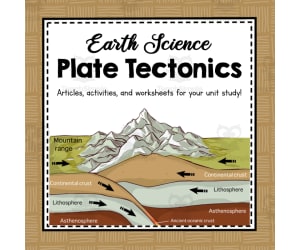
Plate Tectonics Earth Science Unit – Grades 1–4
Science, Earth and Environmental Sciences, Earth Sciences, Grade 1, 2, 3, 4, Lesson Plans, Teacher Tools
All About Plate Tectonics | Earth Science Unit Tailor your instructional approach with this meticulously crafted resource, empowering teachers to lead students from grade 1 to grade 4 on an enlightening journey into the world of plate tectonics. Engaging poster-style visuals which double as interactive slides for online classrooms. Print them and create a classroom display if you desire! Two articles provided at differentiated reading levels – 'The Earth is Always Moving' and 'Ancient Pangaea'. A Sample Earth Science Lesson Plan Schedule Suggested Projects and Activities Included Video Links (QR codes & URL addresses) Bolster comprehension with beginner-friendly tools: Cut-and-glue activities exploring types of tectonic boundaries. Inclusive early writing templates. Vocabulary strips for technical terms like Oceanic Crust or Divergent Boundary. Contact with knowledge beyond textbooks! Creative projects included like constructing a Tectonic Plates Puzzle or modeling Globes in three variations. Also integrated is a Printable Questions & Review Game Rules setup guide for structuring both whole group instruction and collaborative small groups exploration. Dive Right In! Magnify the magic our earth possesses through 'All About Plate Tectonics | Earth Science Unit'. Empower young minds today by grounding their understanding of how our world moves right under our feet.
Author Simply Schoolgirl
Rating
Tags Earth Science, Writing Templates, Hands-on Activities
I WONDER - What Is An Alloy | Animated Video Lesson
Chemistry, Science, Basic Science, Grade 4, 5, 6, 7, 8, 9, 10, Lesson Plans, Teacher Tools
Video Introduction An amazing activity designed for the students to learn more about STEM. I WONDER - What Is An Alloy | Animated Video Lesson Do you like STEM subjects? what is your favorite one? Have you ever tried to plant a seed? If yes, tell us more about it. Or have you ever tried to invent something? If yes, tell us more about it. And how do you think it will help us? Have you ever seen a microorganism under a microscope? What was it? And how it looked like? Mathematics is a marvelous subject. Let' sharpen our brains and solve some equations. Do you like timetable tricks? What is your favorite one? Do you know how to code? Have you ever created an app or a game before? If yes, how was it like? I WONDER - What Is An Alloy | Animated Video Lesson The video is perfect for encouraging the researching skills for the students, while learning more about this fantastic topic. I WONDER - What Is An Alloy | Animated Video Lesson This friendly designed video is suitable for students at school, homeschooling, and as a group activity. Format Available in MP4 format.
Author Educational Voice
Tags What Is An Alloy, What Is An Alloy Video, Alloy, Alloy Facts, Alloy Facts For Kids, Alloy Video, Alloy Facts Video For Kids, Metal, Metals, Metals Facts

I WONDER - What Is A Compound | Animated Video Lesson
Chemistry, Science, Grade 6, 7, 8, 9, 10, 11, 12, Lesson Plans, Teacher Tools
Video Introduction An amazing video designed for the students to learn more about STEM. I WONDER - What Is A Compound | Animated Video Lesson Do you like STEM subjects? what is your favorite one? Have you ever tried to plant a seed? If yes, tell us more about it. Or have you ever tried to invent something? If yes, tell us more about it. And how do you think it will help us? Have you ever seen a microorganism under a microscope? What was it? And how it looked like? Mathematics is a marvelous subject. Let' sharpen our brains and solve some equations. Do you like timetable tricks? What is your favorite one? Do you know how to code? Have you ever created an app or a game before? If yes, how was it like? I WONDER - What Is A Compound | Animated Video Lesson The video is perfect for encouraging the researching skills for the students, while learning more about this fantastic topic. I WONDER - What Is A Compound | Animated Video Lesson This friendly designed video is suitable for students at school, homeschooling, and as a group activity. Format Available in MP4 format.
Author Educational Voice
Tags What Is A Compound, What Is A Compound Video, Compound, Compound Facts, Compound Facts For Kids, Compounds , Compounds Video, Compounds Video For Kids, Chemistry Video For Kids

I WONDER - Are All Oranges, Orange In Colour | Animated Video Lesson
Nature & Plants, Life Sciences, Science, Grade 4, 5, 6, 7, 8, 9, 10, Lesson Plans, Teacher Tools
Video Introduction An amazing activity designed for the students to learn more about STEM. I WONDER - Are All Oranges, Orange In Colour | Animated Video Lesson Do you like STEM subjects? what is your favorite one? Have you ever tried to plant a seed? If yes, tell us more about it. Or have you ever tried to invent something? If yes, tell us more about it. And how do you think it will help us? Have you ever seen a microorganism under a microscope? What was it? And how it looked like? Mathematics is a marvelous subject. Let' sharpen our brains and solve some equations. Do you like timetable tricks? What is your favorite one? Do you know how to code? Have you ever created an app or a game before? If yes, how was it like? I WONDER - Are All Oranges, Orange In Colour | Animated Video Lesson The video is perfect for encouraging the researching skills for the students, while learning more about this fantastic topic. I WONDER - Are All Oranges, Orange In Colour | Animated Video Lesson This friendly designed video is suitable for students at school, homeschooling, and as a group activity. Format Available in MP4 format.
Author Educational Voice
Tags Are All Oranges, Orange In Colour, Are All Oranges, Orange In Colour Video, Oranges, Oranges Facts, Oranges Facts For Kids, Oranges Video, Oranges Facts Video, Oranges Video For Kids, Fruits

I WONDER - Are There Different Types Of Tea | Animated Video Lesson
Nature & Plants, Life Sciences, Science, Grade 6, 7, 8, 9, 10, 11, 12, Lesson Plans, Teacher Tools
Video Introduction An amazing activity designed for the students to learn more about STEM. I WONDER - Are There Different Types Of Tea | Animated Video Lesson Do you like STEM subjects? what is your favorite one? Have you ever tried to plant a seed? If yes, tell us more about it. Or have you ever tried to invent something? If yes, tell us more about it. And how do you think it will help us? Have you ever seen a microorganism under a microscope? What was it? And how it looked like? Mathematics is a marvelous subject. Let' sharpen our brains and solve some equations. Do you like timetable tricks? What is your favorite one? Do you know how to code? Have you ever created an app or a game before? If yes, how was it like? I WONDER - Are There Different Types Of Tea | Animated Video Lesson The video is perfect for encouraging the researching skills for the students, while learning more about this fantastic topic. I WONDER - Are There Different Types Of Tea | Animated Video Lesson This friendly designed video is suitable for students at school, homeschooling, and as a group activity. Format Available in MP4 format.
Author Educational Voice
Tags Are There Different Types Of Tea, Are There Different Types Of Tea Video, Types Of Tea, Types Of Tea Facts, Types Of Tea Facts For Kids, Types Of Tea Video, Types Of Tea Video For Kids, Types Of Tea Facts Video
I WONDER - What Is A Loop In Coding | Animated Video Lesson
STEM, Computer Science, Technology, Science, Grade 6, 7, 8, 9, 10, 11, 12, Lesson Plans, Teacher Tools
Video Introduction An amazing video designed for the students to learn more about STEM. I WONDER - What Is A Loop In Coding | Animated Video Lesson Do you like STEM subjects? what is your favorite one? Have you ever tried to plant a seed? If yes, tell us more about it. Or have you ever tried to invent something? If yes, tell us more about it. And how do you think it will help us? Have you ever seen a microorganism under a microscope? What was it? And how it looked like? Mathematics is a marvelous subject. Let' sharpen our brains and solve some equations. Do you like timetable tricks? What is your favorite one? Do you know how to code? Have you ever created an app or a game before? If yes, how was it like? I WONDER - What Is A Loop In Coding | Animated Video Lesson The video is perfect for encouraging the researching skills for the students, while learning more about this fantastic topic. I WONDER - What Is A Loop In Coding | Animated Video Lesson This friendly designed video is suitable for students at school, homeschooling, and as a group activity. Format Available in MP4 format.
Author Educational Voice
Tags What Is A Loop In Coding, What Is A Loop In Coding Video, Loop In Coding, Loop, Loop Facts, Loop Facts For Kids, Loop Video, Loop Video For Kids, Loop In Coding Video, Loop In Coding Facts

Science Seek and Find Plants and Animals
Science, Life Sciences, Nature & Plants, Grade 2, 3, 4, Teacher Tools, Lesson Plans
Science Seek and Find Plants and Animals Resource The Science Seek and Find Plants and Animals resource is an engaging teaching tool, designed specifically for educators working with students in grades 2 through 4. This resource integrates botany learning with effective pedagogical practices as part of the science curriculum. Scope: This tool provides students a view into plants and animals knowledge. The twenty meticulously designed lessons intended to enhance young learners understanding on diverse characteristics, habitats, and intrinsic fascinations surrounding flora and fauna. Illustrations: Each lesson boasts finely detailed illustrations that encourage deeper understanding—reinforcing knowledge while stimulating curiosity. Engaging artwork across brings dual benefits: capturing attention while offering useful visual cues for memory enhancement. Versatility: This tool can adapt to several formats: In-class whole group instruction - Provokes discussions around animals & plants fostering critical thinking In smaller group instruction - Encourages detailed exploration of each aspect discussed related to flora & fauna As individual homework - Assists learners at their pace in unravelling key concepts about botany while encouraging them to know more about the immense animal diversity across earth's habitats Digital Format: We offer this product in a user-friendly PDF format which can be smoothly integrated into your lesson strategy, maintaining focus on learner outcomes without compromising on fun during the science learning journey – all set to light their interest path towards natural sciences from early age. In Nutshell... "Science Seek & Find: Plants &Animals" helps build bridges between fact-based education application including creative exploration giving enriching experience for student through comprehensive understanding leaning toward scientific literacy concerning plant life along triggering curiosity regarding myriad gorgeous species sharing Earth with us.</i
Author Classroom Complete Press
Tags PDF

I WONDER - What Can Elephants Do With Their Trunks | Animated Video
STEM, Animals, Life Sciences, Science, Biology, Grade 1, 2, 3, 4, 5, 6, 7, 8, Lesson Plans, Teacher Tools
Video Introduction Animal kingdoms are full of fascinating wonders to learn. This video is designed for the students to learn more about animals in different countries. I WONDER - What Can Elephants Do With Their Trunks | Animated Video Lesson Do you like animals? what is your favorite one? Do you own a pet? If yes, tell us more about it, like what its name? And what do you like most about it? What are the animal kingdoms? Can you write down the characteristics of each animal class like mammals, birds, reptiles, amphibian, fish and mollusks. Do you know that some animals can sing, can you name any of them? What is the largest and the smallest mammal in the world? What is the largest and the smallest bird in the world? What is the largest and the smallest fish in the world? I WONDER - What Can Elephants Do With Their Trunks | Animated Video Lesson The video is perfect for encouraging the researching skills for the students, while learning more about these fantastic animals. I WONDER - What Can Elephants Do With Their Trunks | Animated Video Lesson This friendly designed video is suitable for students at school, homeschooling, and as a group activity. Format Available in MP4 format.
Author Educational Voice
Tags What Can Elephants Do With Their Trunks, What Can Elephants Do With Their Trunks Video, Elephants Trunks, Elephants Trunks Facts, Elephants Trunks Facts For Kids, Elephants Trunks Video, Elephants Trunks Video For Kids

Chemical Symbols, Formulas & Compounds - Lesson Bundle
Science, Chemistry, Grade 10, 11, 12, Teacher Tools, Lesson Plans
Chemical Symbols, Formulas & Compounds - Lesson Bundle A comprehensive teaching resource designed for educators teaching Science and Chemistry, specifically targeting students from Grade 10 to 12. This meticulously designed product excels with its adaptability in both traditional classroom settings and remote/distance learning environments. This two-day instructional bundle incorporates diverse digital tools such as: Google Slides , PowerPoint presentations, Word Documents, and Google Docs. The course content aids student understanding of chemical symbols, formulas and compounds through engaging instruction methods. Methods incorporated into the lesson include: An auto-graded exit ticket for assessing student understanding post-lesson, An informative handout included for student reference throughout the lesson. Main topics covered: Symbols identification; Naming elements; Understanding atom counting; Navigating combining capacity; Applying the criss-cross rule; Identifying compound names using periodic charts, And other robust chemistry-centric subjects. To enhance its accessibility across multiple teaching scenarios: The Chemical Symbols Formulas & Compounds - Lesson Bundle can be accessed anywhere with any device irrespective of platform. This functionality addresses IT pressure if your institution exclusively uses Google tools, while also increasing accessibility options supporting educational wellness in new-age challenges due to remote learning constraints. To further heighten flexibility in a digital space, this resource can be easily incorporated into platforms like Google Classroom. This allows for one-click placement of the complete resource into your digital repository, enabling direct assignment to students. Lastly, this practical educational package aids educators with supportive and versatile tools that enrich teaching efficiency and student outcomes in chemistry.
Author Teach With Fergy
Tags Chemical Symbols, Formulas, Compounds, Teaching Resource, Chemistry
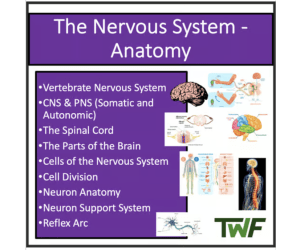
The Nervous System - Anatomy - Senior Biology lesson
Science, Life Sciences, Biology, Grade 11, 12, Teacher Tools, Lesson Plans
The Nervous System - Anatomy - Senior High School Biology lesson Your lesson covers the anatomy and structure of the nervous system. In order, the lesson teaches; CNS & PNS (Somatic and Autonomic), the Spinal Cord, the Parts of the Brain, Cells of the Nervous System, Neuron Cell Division, Neuron Anatomy, the Neuron Support System, and the Reflex Arc. Your lesson includes the teacher and student version of the presentation, FOUR embedded videos, an auto-graded exit ticket, and a student lesson handout so the students can record the notes on a more condensed medium. This lesson is designed to be your go-to resource, whether you're in a traditional classroom or a virtual one. With both a teacher version and a student version, it seamlessly fits into your lesson plans, making learning engaging and adaptable. Assessment made easy We've included an auto-graded Exit Ticket and a quiz with an answer key because I know you don't have an excess of time. I know you don't, because I don't and I know I'll do whatever I can to reduce my grading time. Whether you use PowerPoint or Google Slides, prefer Word or Google Docs, this lesson has you covered. This lesson comes in both Office and Google formats for your convenience. The student version of the presentation has strategically placed blanks for them to fill in as you're teaching. It keeps them active and engaged, encourages discussion, and leaves more time for those "aha" moments.
Author Teach With Fergy
Tags Senior Biology, Biology Lesson, CNS And PNS, Spinal Cord, Brain, Nervous System, Neuron Anatomy, Neuron Support System, Reflex Arc