



3,906 products added recently
Page 55 - Social Studies Lesson Plans
Enrich your social studies curriculum with lesson plans that bring history, geography, and cultures to life. These resources offer projects and discussions that connect past and present. Incorporate them to help students understand societal structures and their roles within them.

 Show filters

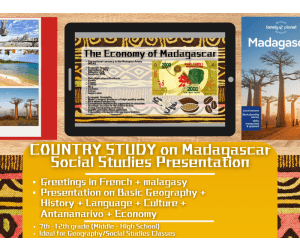
Country Study Presentation - Madagascar - Geography - East Africa
Social Studies, Economics, Geography, History: African, History, Not Grade Specific, Middle School, High School, Adult Education, Presentations, Teacher Tools, Lesson Plans
Country Study Presentation - Madagascar - Geography + Social Studies - East Africa Try this Teaching Resource on Madagascar (Introductory Presentation Lesson - PDF Printable), designed for Geography + African History (East Africa) + Social Studies lessons. Suitable for Grades 7–12 (Middle school and High School students), this Introductory PDF Presentation offers a ready to use lesson that requires little to no preparation. Geography and Social Studies students will learn about Madagascar ’s geography, history, culture, language and economy — making it perfect for classroom instruction, homeschooling, or online learning. 📘 Teachers can find the following topics in this Social Studies and Geograhy Teaching resource ✅ Greetings in French + Malagasy ✅ Geography of Madagascar (East Africa) – Key facts, borders, and an interactive Google Maps link to its location. ✅ Quick Facts – Population, capital city, currency and other essential details. ✅ Languages of Madagascar : French + Malagasy - introduction in the languages spoken + basic vocabuary ✅ History Overview – A concise summary of the most important events in the history of Madagascar (East Africa) ✅ Geography & Environment – Details about the country’s land area, regions, and climate zones. ✅ Madagascar's Economy – paragraph on Madagascar ’s industries, exports, currency and economic strengths (East Africa) ✅ Antananavario – Explore the capital city of Madagascar , its famous landmarks, and cultural highlights. ✅ Other Major Cities – A map showcasing additional important cities in Madagascar (East Africa) ✅ Madagascar's Culture & Traditions – A look at the customs and values that define Madagascar (East Africa) ✅ Farewell in French + Malagasy 🎯 This Geography and Social Studies Teaching Resource can be perfect for: Geography classes Social Studies lessons World cultures units Country study projects Substitute teacher toolbox Digital learning In-class or online teaching 📂 Resource Details Format: PDF Digital Presentation Grade Levels: 7th–12th Grade (Middle School and High School students) Learning with Alan is an educational resource store created to help teachers, educators, and tutors reach their teaching goals while building a fun, engaging, and stimulating learning environment . Because learning should always be meaningful—and fun! 🎓✨ If you want to browse more of my Teaching Resources, click here Learning with Alan!!
Author Learning with Alan
Rating
Tags Social Studies, Country Study, Madagascar, Geography, Africa, History, Lesson, Presentation, Introduction, Activity
I WONDER - Did Romans Wear Jewellery | Animated Video Lesson
History, Social Studies, History: Europe, History: Ancient, Grade 4, 5, 6, 7, 8, 9, 10, Lesson Plans, Teacher Tools
Video Introduction An amazing video designed for the students to learn more about history. I WONDER - Did Romans Wear Jewellery | Animated Video Lesson Do you like history? Which topic do you really enjoy about history? Have you ever read an interesting fact about the Vikings? If yes, can you mention them? What do you like most about the Victorian era? Can you name all the Tudors? Have you ever wondered how people used to live in ancient Japan and ancient China? Do you know any interesting facts about ancient Egyptians and the Pharaohs? Have you ever visited South America? What do you know about Incas and Aztecs? Celtic culture was really one of a kind, can you name any of the places that Celts used to live in? Imagine yourself living during the ancient Roman empire, how your life will look like? Ancient Greece was an amazing place to live in. What do you know about ancient Greek life? I WONDER - Did Romans Wear Jewellery | Animated Video Lesson The video is perfect for encouraging the researching skills for the students, while learning more about history. I WONDER - Did Romans Wear Jewellery | Animated Video Lesson This friendly designed video is suitable for students at school, homeschooling, and as a group activity. Format Available in MP4 format.
Author Educational Voice
Tags Did Romans Wear Jewellery, Did Romans Wear Jewellery Video, Romans Jewellery, Ancient Romans Jewellery, Ancient Romans Jewellery Facts, Ancient Romans Jewellery Video, Ancient Romans Jewellery Video For Kids

I WONDER - Where Does Lava Come From | Animated Video Lesson
Geography, Social Studies, Earth Sciences, Earth and Environmental Sciences, Science, Environmental Science, Grade 4, 5, 6, 7, 8, 9, 10, Lesson Plans, Teacher Tools
Video Introduction An amazing video designed for the students to learn more about natural disasters in different countries. I WONDER - Where Does Lava Come From | Animated Video Lesson What do you know about this natural disaster? Do you know in which part of the world this could happen? Have you ever read about the safety misusers that we could have to protect ourselves from this natural disaster? If yes, can you tell us more about them? Can you name other natural disasters? If yes, tell us more about where they are likely to happen? And how frequently? Do you like reading about Geography? What is your favorite country in the whole world? If you are going on a trip where it will be? Which country? What you are going to see there? Does this country has a famous place to visit? Do you like reading about Geology? If yes, what is your favourite topic? I WONDER - Where Does Lava Come From | Animated Video Lesson The video is perfect for encouraging the researching skills for the students, while learning more about this fantastic phenomenon. I WONDER - Where Does Lava Come From | Animated Video Lesson This friendly designed video is suitable for students at school, homeschooling, and as a group activity. Format Available in MP4 format.
Author Educational Voice
Tags Where Does Lava Come From, Where Does Lava Come From Video, Lava, Lava Facts, Lava Facts For Kids, Lava Video, Lava Video For Kids, Volcanoes, Volcano, Volcano Video

I WONDER - Are There Different Zones In The Ocean | Animated Video
Geography, Social Studies, Grade 6, 7, 8, 9, 10, 11, 12, Lesson Plans, Teacher Tools
Video Introduction An amazing video designed for the students to learn more about famous places in different countries. I WONDER - Are There Different Zones In The Ocean | Animated Video Lesson What do you know about this place? Do you know in which part of the world it is? Have you ever visited this place? If yes, can you tell us more about your adventure, and what do you like the most about this place? Do you like reading about Geography? What is your favorite country in the whole world? If you are going on a trip where it will be? Which country? What you are going to see there? Does this country has a famous place to visit? I WONDER - Are There Different Zones In The Ocean | Animated Video Lesson The activity is perfect for encouraging the researching skills for the students, while learning more about this fantastic place. I WONDER - Are There Different Zones In The Ocean | Animated Video Lesson This friendly designed video is suitable for students at school, homeschooling, and as a group activity. Format Available in MP4 format.
Author Educational Voice
Tags Are There Different Zones In The Ocean, Are There Different Zones In The Ocean Video, Different Zones In The Ocean, Different Zones In The Ocean Video, Different Zones In The Ocean Video For Kids, Different Zones In The Ocean Facts
I WONDER - What Did Omnivore Dinosaurs Eat | Animated Video Lesson
History: Ancient, History, Social Studies, History: World, Animals, Life Sciences, Science, Grade 2, 3, 4, 5, 6, 7, 8, Lesson Plans, Teacher Tools
Video Introduction An amazing video designed for the students to learn more about dinosaurs in different countries. I WONDER - What Did Omnivore Dinosaurs Eat | Animated Video Lesson Do you like dinosaurs? what is your favorite one? Do you own a pet? If yes, tell us more about it, like what its name? And what do you like most about it? Do you think that your pet has been evolved from a dinosaur? Can you write down the characteristics of your favourite dinosaur like it's shape, their rivals, where did it use to live and what was their favourite food? What is the largest and the smallest dinosaur that ever found? Why is the T-rex is so famous? Have you ever read any interesting facts about it? Can you name any of the carnivores or herbivores dinosaurs? I WONDER - What Did Omnivore Dinosaurs Eat | Animated Video Lesson The video is perfect for encouraging the researching skills for the students, while learning more about dinosaurs. I WONDER - What Did Omnivore Dinosaurs Eat | Animated Video Lesson This friendly designed video is suitable for students at school, homeschooling, and as a group activity. Format Available in MP4 format.
Author Educational Voice
Rating
Tags What Did Omnivore Dinosaurs Eat, What Did Omnivore Dinosaurs Eat Video, Omnivore Dinosaurs, Omnivore Dinosaurs Facts, Omnivore Dinosaurs Video, Omnivore Dinosaurs Video For Kids, Omnivore Dinosaurs Facts For Kids

Foreign Policy Unit & Simulation (Slides, simulation sheets, worksheets+)
Social Studies, History, History: USA, Government, Grade 7, 8, 9, 10, 11, 12, Lesson Plans, Teacher Tools
Engaging Foreign Policy Unit and Simulation for Secondary Students\nThis foreign policy unit equips secondary teachers with an engaging resource to help students understand the interconnectedness of the world. It examines the various tools countries use to influence global events, from diplomacy to military intervention. The unit includes an informative slide deck explaining key foreign policy concepts, embedded videos, and a simulation activity inspired by real-world events. Students take on roles of world leaders and use negotiation, threats, or force to achieve their goals. Supporting materials provide implementation guidance and worksheets like a Crash Course viewing guide. With over 40 pages of compelling content, this unit offers an outstanding value. It has everything needed to teach an illuminating unit on foreign policy and how nations interact on the global stage.
Author Ed Dynamic
Tags Foreign Policy, Simulation, Global Issues, World Leaders, Negotiation
World Political Leaders: Margaret Thatcher (United Kingdom) Gr. 5-8
Social Studies, Government, Grade 5, 6, 7, 8, Teacher Tools, Lesson Plans
World Political Leaders: Margaret Thatcher (United Kingdom) Gr. 5-8 This educational resource is designed for grade 5 to grade 8 students who are newcomers to the world of politics and international impacts. It's part of a broader lesson plan that includes twelve influential political leaders from the past century. Leadership Styles and Historical Impact The material uncovers insights into George W. Bush's 'war on terrorism', Ronald Reagan's Cold War involvement, as well as Vicente Fox's mediating role between Fidel Castro and George W.Bush. Prominent Female Leader: Margaret Thatcher Besides touching upon these global figures, it also spends considerable focus on Margaret Thatcher from United Kingdom, whose role was pivotal in ending apartheid in South Africa. This makes it highly applicable for gender studies or during Women’s History Month discussions. Mikhail Gorbachev's journey from leading the Soviet Union to becoming Nobel Peace Prize laureate Nelson Mandela’s fight towards equal rights in South Africa Dalai Lama – A spiritual leader & Tibet Lama known for his contribution towards Buddhism and Asian cultural heritage This downloadable package is an all-in-one PDF file having 25 ready-to-print pages,Bloom's Taxonomy-aligned and State Standards-based, filled with various engaging activities including: writing assignments riddles (crosswords puzzles & word search games) quizzes for comprehension assessment - suitable for whole group teachings session, small groups or individual homework assignments! This comprehensive teaching tool with included answer keys ensures that you're prepared to give your students a multifaceted approach to political study, making the material more interesting and interactive. It's a perfect fit for social studies lessons or government related topics sparking classrooms conversations and debates.
Author Classroom Complete Press
Tags World Leaders, Political Leaders, United Kingdom, Reagan, Terrorism

Wool Reading Comprehension Passage - Cored Ed Encyclopedia
ELA, Language Development, Reading Comprehension, Reading, Pre-Reading, Science, Technology, Physics, History, Social Studies, Grade 2, 3, 4, 5, Worksheets & Printables, Worksheets, Teacher Tools, Centers, Activities, Writing Prompts, Assessments, Quizzes and Tests, Quizzes, Lesson Plans
This wool reading comprehension with lesson plan includes: Visualization (on the front cover) Start your lesson by taking a minute to think and share something about the topic. Read the script aloud (slowly), perhaps prepare some music or sound effects. Student close their eyes and let their imaginations wander. Students open their eyes, read the question aloud and give them a few minutes to complete. Ask a few students to share or keep answers until the end to compare with what they learn in the passage. Quick pause—thousands of Cored Education products are included with your TeachSimple membership. Download links and encyclopedia index available here. Pre-Reading Trivia Students will write down one thing they already know about the subject and then read five more facts and discuss. These facts are fun, and the students will enjoy learning about the subject before reading more. Give 1 minute for students to write what they already know (no pressure—best guess is fine). Read the five facts together. After each fact, do ask a student for their opinion, was it surprising? Set a purpose by asking students to highlight/underline one fact they want to learn more about during the reading. Reading Passage The text is a high-interest reading passage with set paragraphs, roughly three to four paragraphs long. It contains a variety of themes about the topic, anywhere from history to technology. The passage is between 250 and 350 words in length. First, ask students to look at the headings and see what they’ll learn about today. What do they know about the topic/heading? First read options: Teacher read-aloud (best for support). Partner reading (paragraph by paragraph). While reading, students underline important details, and vocabulary words they think may come up in the questions section. Mixed Questions The first question page contains four multiple-choice questions, each with a choice of four answers, and three written response questions that require a sentence or two from the student. Students complete the mcqs first independently, then review quickly as a class. For the 3 written responses, try to get students giving the answer with some form of evidence: “I think ___ because the text says ___.” If students get stuck, send them back to check the passage. Vocabulary Questions Practice seven key words from the text in this section across two activities. First section is scrambled words where students will unscramble three words given a clue for each. The second section is a word to meaning matching activity. Before starting, have some students read out words they underlined in the passage. Ask students to say the word and read aloud the sentence(s) around each word. Ask students to do scrambled words and the matching exercise in pairs then go through answers as a class. For the scrambled spelling task, get four pairs to come up to the board and write the words for extra practice with the other student reading out the clue. For the matching task, prompt students to give full sentences: “I matched ___ with ___ because ___.” Creative Writing In this question, the student will be required to write a five to eight sentence paragraph on a question related to the topic. Before starting, ask students write down 3 key ideas they are going to include in their piece. Ask students for ideas to share around the class to help those struggling. Pro writing expectations: 5–8 sentences At least 2 facts or details from the passage At least 2 vocabulary words from the previous page Students read their paragraphs while classmates listen for facts and vocabulary words. Extension Activities This page is optional for fast finishers or to take home. There are several activities, each one requiring a different skill. Do some, do none, do all, completely optional - but you will feel reassured knowing every possibility is planned for. Includes summary writting question. Answer Key There are answers for the multiple-choice questions, written response questions have sample answers, vocabulary answers and if there is a summary question then a sample summary will be provided as well. Lesson Plan Included Customized lesson plan for this lesson is included. Lesson Snapshot Title: Wool Genre: Nonfiction (informational text) Subject: Life Science / Informational Reading Primary Topic: How wool works, history, and uses Estimated Guided Reading Level (A–Z): R Support pages present: Pre-reading trivia, mixed questions, vocabulary activities, creative writing, extension activities, and an answer key (all match the passage’s ideas and terms). What This Lesson Teaches Best Explains what wool is made of (tiny protein fibers) and how a natural wave called crimp helps fibers cling when spun into yarn. Teaches a clear cause-and-effect science idea : wool cloth traps air pockets, and trapped air helps keep warmth close. Builds understanding of how humans and sheep changed over time , including breeding for thicker coats, learning to shear, and wool becoming valuable through trade. Describes the process from fleece to finished materials , including shearing, lanolin in fresh wool, washing/sorting, spinning into yarn, and rubbing fibers into felt. Highlights real-world uses and properties of wool , including moisture handling and resistance to melting/dripping in fire because it chars instead. Learning Goals Students will explain how crimp helps wool fibers cling together when making yarn. Students will describe how wool cloth keeps warmth close using details about trapped air. Students will identify two ways people have used wool, based on examples in the text. Students will sequence key steps from fleece to yarn or felt that are stated in the passage. Students will describe why freshly shorn wool is called “greasy,” using evidence from the passage. Key Vocabulary From the Text fleece — a sheep’s coat that can be sheared off. protein — a natural building block that wool fibers are made of. crimp — a natural wave in each wool fiber. lanolin — a waxy substance from a sheep’s skin. felt — thick material made when fibers lock together. FULL CATALOG OF DOWNLOAD LINKS AND ENCYCLOPEDIA INDEX HERE
Author Cored Education
Rating
Tags Vocabulary, Reading Comprehension, Reading Passages, Lesson Plans, Ela Lesson Plans, Reading Comprehension Lesson Plans, Pre-reading, Science Lesson Plans, History Lesson Plans, Wool

I WONDER - Why Is The Statue Of Liberty A Symbol For The US
Geography, Social Studies, Grade 6, 7, 8, 9, 10, 11, 12, Lesson Plans, Teacher Tools
Video Introduction An amazing video designed for the students to learn more about famous places in different countries. I WONDER - Why Is The Statue Of Liberty A Symbol For The US | Animated Video Lesson What do you know about this place? Do you know in which part of the world it is? Have you ever visited this place? If yes, can you tell us more about your adventure, and what do you like the most about this place? Do you like reading about Geography? What is your favorite country in the whole world? If you are going on a trip where it will be? Which country? What you are going to see there? Does this country has a famous place to visit? I WONDER - Why Is The Statue Of Liberty A Symbol For The US | Animated Video Lesson The activity is perfect for encouraging the researching skills for the students, while learning more about this fantastic place. I WONDER - Why Is The Statue Of Liberty A Symbol For The US | Animated Video Lesson This friendly designed video is suitable for students at school, homeschooling, and as a group activity. Format Available in MP4 format.
Author Educational Voice
Tags Why Is The Statue Of Liberty A Symbol For The US, Why Is The Statue Of Liberty A Symbol For The US Video, The Statue Of Liberty, The Statue Of Liberty Facts, The Statue Of Liberty Video, The Statue Of Liberty Video For Kids

I WONDER - What Is The Mariana Trench | Animated Video Lesson
STEM, Geography, Social Studies, Grade 4, 5, 6, 7, 8, 9, 10, Lesson Plans, Teacher Tools
Video Introduction An amazing video designed for the students to learn more about famous places in different countries. I WONDER - What Is The Mariana Trench | Animated Video Lesson What do you know about this place? Do you know in which part of the world it is? Have you ever visited this place? If yes, can you tell us more about your adventure, and what do you like the most about this place? Do you like reading about Geography? What is your favorite country in the whole world? If you are going on a trip where it will be? Which country? What you are going to see there? Does this country has a famous place to visit? I WONDER - What Is The Mariana Trench | Animated Video Lesson The activity is perfect for encouraging the researching skills for the students, while learning more about this fantastic place. I WONDER - What Is The Mariana Trench | Animated Video Lesson This friendly designed video is suitable for students at school, homeschooling, and as a group activity. Format Available in MP4 format.
Author Educational Voice
Tags What Is The Mariana Trench, What Is The Mariana Trench Video, Mariana Trench, Mariana Trench Facts, Mariana Trench Facts For Kids, Mariana Trench Video, Mariana Trench Video For Kids, Geography
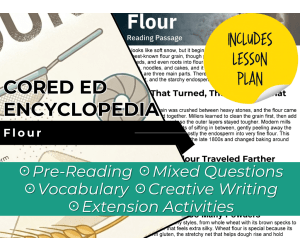
Flour Reading Comprehension Passage - Cored Ed Encyclopedia
ELA, Reading Comprehension, Reading, Science, Technology, Language Development, Social Studies, History, Pre-Reading, Life Sciences, Grade 2, 3, 4, 5, Worksheets & Printables, Worksheets, Teacher Tools, Centers, Activities, Writing Prompts, Assessments, Quizzes and Tests, Quizzes, Lesson Plans
This flour reading comprehension with lesson plan includes: Visualization (on the front cover) Start your lesson by taking a minute to think and share something about the topic. Read the script aloud (slowly), perhaps prepare some music or sound effects. Student close their eyes and let their imaginations wander. Students open their eyes, read the question aloud and give them a few minutes to complete. Ask a few students to share or keep answers until the end to compare with what they learn in the passage. Quick pause—thousands of Cored Education products are included with your TeachSimple membership. Download links and encyclopedia index available here. Pre-Reading Trivia Students will write down one thing they already know about the subject and then read five more facts and discuss. These facts are fun, and the students will enjoy learning about the subject before reading more. Give 1 minute for students to write what they already know (no pressure—best guess is fine). Read the five facts together. After each fact, do ask a student for their opinion, was it surprising? Set a purpose by asking students to highlight/underline one fact they want to learn more about during the reading. Reading Passage The text is a high-interest reading passage with set paragraphs, roughly three to four paragraphs long. It contains a variety of themes about the topic, anywhere from history to technology. The passage is between 250 and 350 words in length. First, ask students to look at the headings and see what they’ll learn about today. What do they know about the topic/heading? First read options: Teacher read-aloud (best for support). Partner reading (paragraph by paragraph). While reading, students underline important details, and vocabulary words they think may come up in the questions section. Mixed Questions The first question page contains four multiple-choice questions, each with a choice of four answers, and three written response questions that require a sentence or two from the student. Students complete the mcqs first independently, then review quickly as a class. For the 3 written responses, try to get students giving the answer with some form of evidence: “I think ___ because the text says ___.” If students get stuck, send them back to check the passage. Vocabulary Questions Practice seven key words from the text in this section across two activities. First section is scrambled words where students will unscramble three words given a clue for each. The second section is a word to meaning matching activity. Before starting, have some students read out words they underlined in the passage. Ask students to say the word and read aloud the sentence(s) around each word. Ask students to do scrambled words and the matching exercise in pairs then go through answers as a class. For the scrambled spelling task, get four pairs to come up to the board and write the words for extra practice with the other student reading out the clue. For the matching task, prompt students to give full sentences: “I matched ___ with ___ because ___.” Creative Writing In this question, the student will be required to write a five to eight sentence paragraph on a question related to the topic. Before starting, ask students write down 3 key ideas they are going to include in their piece. Ask students for ideas to share around the class to help those struggling. Pro writing expectations: 5–8 sentences At least 2 facts or details from the passage At least 2 vocabulary words from the previous page Students read their paragraphs while classmates listen for facts and vocabulary words. Extension Activities This page is optional for fast finishers or to take home. There are several activities, each one requiring a different skill. Do some, do none, do all, completely optional - but you will feel reassured knowing every possibility is planned for. Includes summary writting question and additional facts. Answer Key There are answers for the multiple-choice questions, written response questions have sample answers, vocabulary answers and if there is a summary question then a sample summary will be provided as well. Lesson Plan Included Customized lesson plan for this lesson is included. Lesson Snapshot Title: Flour Genre: Nonfiction (Informational Text) Subject: Science (Food Science) / Reading (Informational Text) Primary Topic: How flour is made from seeds and grains Estimated Guided Reading Level (A–Z): P What This Lesson Teaches Best Explains what flour is made from: flour begins as a seed , and people grind grains (and other plants) into powder used for many foods. Teaches the three main parts inside a grain seed — bran , germ , and endosperm —and what each part is like. Describes how milling changed over time, from heavy stones to steel rollers and lots of sifting to make very fine flour. Builds understanding of why white flour became popular (it kept longer) and what “enriched” flour means in this text. Connects ingredient science to baking by explaining how wheat proteins can form gluten , helping dough rise and hold bubbles of air. Learning Goals Students will explain how flour begins as a seed and becomes powder through grinding. Students will identify the three main parts of a grain seed: bran, germ, and endosperm. Students will describe how modern mills use rollers and sifting to make fine flour. Students will explain why white flour kept longer, based on what the text says about oils. Students will describe what “enriched” flour means in the passage and why it mattered. Students will explain how gluten helps dough rise and hold bubbles of air. Key Vocabulary From the Text bran — the outer part of a grain seed. germ — the tiny part that could sprout. endosperm — the starchy part that feeds the seed. enriched — flour with certain vitamins and iron added back. gluten — stretchy net that helps dough rise and hold air. FULL CATALOG OF DOWNLOAD LINKS AND ENCYCLOPEDIA INDEX HERE
Author Cored Education
Rating
Tags Vocabulary, Reading Comprehension, Reading Passages, Lesson Plans, Ela Lesson Plans, Reading Comprehension Lesson Plans, Pre-reading, Science Lesson Plans, History, Technology

Baseball Reading Comprehension Passage - Cored Ed Encyclopedia
ELA, Language Development, Reading Comprehension, Reading, Social Studies, Writing, Vocabulary, History, Geography, Pre-Reading, Grade 2, 3, 4, 5, Worksheets & Printables, Worksheets, Teacher Tools, Centers, Activities, Writing Prompts, Assessments, Quizzes and Tests, Quizzes, Lesson Plans
This baseball reading comprehension with lesson plan includes: Visualization (on the front cover) Start your lesson by taking a minute to think and share something about the topic. Read the script aloud (slowly), perhaps prepare some music or sound effects. Student close their eyes and let their imaginations wander. Students open their eyes, read the question aloud and give them a few minutes to complete. Ask a few students to share or keep answers until the end to compare with what they learn in the passage. COMPANION VIDEO NOW AVAILABLE (EMBEDDED AFTER PREVIEW PICTURES IN PRODUCT DESCRIPTION) Quick pause—thousands of Cored Education products are included with your TeachSimple membership. Download links and encyclopedia index available here. Pre-Reading Trivia Students will write down one thing they already know about the subject and then read five more facts and discuss. These facts are fun, and the students will enjoy learning about the subject before reading more. Give 1 minute for students to write what they already know (no pressure—best guess is fine). Read the five facts together. After each fact, do ask a student for their opinion, was it surprising? Set a purpose by asking students to highlight/underline one fact they want to learn more about during the reading. Reading Passage The text is a high-interest reading passage with set paragraphs, roughly three to four paragraphs long. It contains a variety of themes about the topic, anywhere from history to technology. The passage is between 250 and 350 words in length. First, ask students to look at the headings and see what they’ll learn about today. What do they know about the topic/heading? First read options: Teacher read-aloud (best for support). Partner reading (paragraph by paragraph). While reading, students underline important details, and vocabulary words they think may come up in the questions section. Mixed Questions The first question page contains four multiple-choice questions, each with a choice of four answers, and three written response questions that require a sentence or two from the student. Students complete the mcqs first independently, then review quickly as a class. For the 3 written responses, try to get students giving the answer with some form of evidence: “I think ___ because the text says ___.” If students get stuck, send them back to check the passage. Vocabulary Questions Practice seven key words from the text in this section across two activities. First section is scrambled words where students will unscramble three words given a clue for each. The second section is a word to meaning matching activity. Before starting, have some students read out words they underlined in the passage. Ask students to say the word and read aloud the sentence(s) around each word. Ask students to do scrambled words and the matching exercise in pairs then go through answers as a class. For the scrambled spelling task, get four pairs to come up to the board and write the words for extra practice with the other student reading out the clue. For the matching task, prompt students to give full sentences: “I matched ___ with ___ because ___.” Creative Writing In this question, the student will be required to write a five to eight sentence paragraph on a question related to the topic. Before starting, ask students write down 3 key ideas they are going to include in their piece. Ask students for ideas to share around the class to help those struggling. Pro writing expectations: 5–8 sentences At least 2 facts or details from the passage At least 2 vocabulary words from the previous page Students read their paragraphs while classmates listen for facts and vocabulary words. Extension Activities This page is optional for fast finishers or to take home. There are several activities, each one requiring a different skill. Do some, do none, do all, completely optional - but you will feel reassured knowing every possibility is planned for. Includes summary writting question and additional facts. Answer Key There are answers for the multiple-choice questions, written response questions have sample answers, vocabulary answers and if there is a summary question then a sample summary will be provided as well. Lesson Plan Included Customized lesson plan for this lesson is included. Lesson Snapshot Title: Baseball Genre: Nonfiction (informational passage) Subject: Physical Education / Social Studies (Sports history) / Reading (Informational Text) Primary Topic: How baseball works and how it spread Estimated Guided Reading Level (A–Z): S What This Lesson Teaches Best Clear explanation of how a baseball game works (bases in a diamond, two teams, innings, outs, extra innings). How shared written rules helped organize the modern game (clubs writing rules; later standards like nine innings and a 90-foot base path). A brief timeline of key turning points using dates and evidence (1845 rules, 1869 first all-professional team, 1903 World Series, 1872 introduction in Japan). How baseball changed as it grew (teams traveling, paid players, big leagues forming, some leagues using timing rules). How baseball spread beyond its early American home (popularity across parts of the Americas and East Asia). Learning Goals Identify key parts of a baseball game described in the passage (bases, teams, innings, outs, extra innings). Explain how keeping shared rules helped baseball become more organized. Describe the “safer idea” included in the 1845 rules. Describe what it meant for baseball to turn “professional,” using details from the text. Retell the passage’s key dates in order and explain what happened at each date. Describe how the passage shows baseball spreading to new places and continuing to change. Key Vocabulary From the Text inning — part of the game when teams take turns playing. outs — times when a player is put out. standards — agreed-upon rules that many people follow. professional — paid to play as a job. leagues — organized groups of teams that play each other. FULL CATALOG OF DOWNLOAD LINKS AND ENCYCLOPEDIA INDEX HERE
Author Cored Education
Rating
Tags Vocabulary, Reading Comprehension, Reading Passages, Lesson Plans, Ela Lesson Plans, Reading Comprehension Lesson Plans, Pre-reading, History, History Lesson Plans, Social Studies Lesson Plans
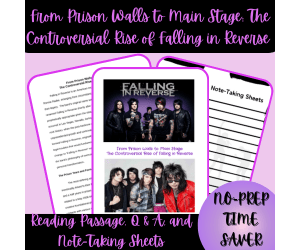
High School Falling in Reverse Reading Passage and Q & A
ELA, Reading, Writing, Music, Creative Arts, Resources for Teachers, Research, History, Social Studies, High School, Homeschool Resources, Teacher Tools, Assessments, Lesson Plans, Quizzes and Tests, Worksheets & Printables, Writing Prompts
As a homeschool mom to a high schooler, I know how challenging it can be to find engaging reading materials that actually capture our teens' attention while developing their critical thinking skills. This comprehensive resource about Falling in Reverse Reading Passage, Q & A, and Note-Taking Sheets offers the perfect blend of contemporary relevance and academic rigor that high school students crave. The fascinating story of lead vocalist Ronnie Radke's journey from incarceration to musical success provides a compelling foundation for deep literary analysis and meaningful classroom discussions. Your students/homeschoolers will be genuinely interested in this real-world narrative while unknowingly strengthening essential reading comprehension and analytical writing skills. INCLUDED IN THIS RESOURCE: Comprehensive reading passage about Falling in Reverse's controversial journey from formation to mainstream success 20 sophisticated critical analysis questions Complete answer key with detailed sample responses 10 note-taking sheets TOPICS COVERED: Symbolic analysis and metaphorical interpretation in contemporary music narratives Critical examination of redemption themes and second chances in popular culture Analysis of author bias, tone, and rhetorical techniques in biographical writing Ethical debates about separating artistic merit from personal accountability and moral complexity As someone who's been homeschooling my 9th grader and creating resources for years, I have learned that the magic happens when we stop fighting against our teens' interests and start working with them instead. My own daughter rolled her eyes at traditional literature analysis until we started exploring stories like this one – suddenly she was asking thoughtful questions and writing paragraphs I actually wanted to read! This Falling in Reverse Reading Passage, Q & A, and Note-Taking Sheets resource represents my philosophy that we do not have to choose between rigorous academics and genuine engagement. When my daughter can analyze complex themes in a story about a band she is actually heard of, she is developing the exact same critical thinking skills she will need for college – she is just enjoying the process instead of enduring it. If you are tired of the daily battle over "boring" assignments and ready to watch your teenager light up during English class, this is the kind of resource that changes everything. If you and your students/homeschoolers enjoyed this resource, please leave a review. Thank you for your support! Tina - Big Easy Homeschooling Mom
Author Homeschool with Big Easy Homeschooling Mom
Rating
Tags High School Music Reading Passage, Homeschool English Curriculum, Contemporary Nonfiction, Redemption Literature, Teen Literature, Music Culture Education, Literary Analysis, Falling In Reverse Reading Comprehension Activities For High School, Critical Analysis Questions About Contemporary Music Culture, Analytical Writing Practice With Band Biographies For Teenagers
I WONDER - How Many Types Of Rocks Are There | Animated Video Lesson
Social Studies, Geography, Grade 1, 2, 3, 4, 5, 6, 7, 8, Lesson Plans, Teacher Tools
Video Introduction An amazing video designed for the students to learn more about famous places in different countries. I WONDER - How Many Types Of Rocks Are There | Animated Video Lesson What do you know about this place? Do you know in which part of the world it is? Have you ever visited this place? If yes, can you tell us more about your adventure, and what do you like the most about this place? Do you like reading about Geography? What is your favorite country in the whole world? If you are going on a trip where it will be? Which country? What you are going to see there? Does this country has a famous place to visit? I WONDER - How Many Types Of Rocks Are There | Animated Video Lesson The activity is perfect for encouraging the researching skills for the students, while learning more about this fantastic place. I WONDER - How Many Types Of Rocks Are There | Animated Video Lesson This friendly designed video is suitable for students at school, homeschooling, and as a group activity. Format Available in MP4 format.
Author Educational Voice
Tags How Many Types Of Rocks Are There, How Many Types Of Rocks Are There Video, Types Of Rocks, Types Of Rocks Video, Types Of Rocks Video For Kids, Types Of Rocks Facts, Types Of Rocks Facts For Kids

I WONDER - How Big Is Brazil | Animated Video Lesson
Geography, Social Studies, Grade 2, 3, 4, 5, 6, 7, 8, Lesson Plans, Teacher Tools
Video Introduction An amazing video designed for the students to learn more about famous places in different countries. I WONDER - How Big Is Brazil | Animated Video Lesson What do you know about this place? Do you know in which part of the world it is? Have you ever visited this place? If yes, can you tell us more about your adventure, and what do you like the most about this place? Do you like reading about Geography? What is your favorite country in the whole world? If you are going on a trip where it will be? Which country? What you are going to see there? Does this country has a famous place to visit? I WONDER - How Big Is Brazil | Animated Video Lesson The activity is perfect for encouraging the researching skills for the students, while learning more about this fantastic place. I WONDER - How Big Is Brazil | Animated Video Lesson This friendly designed video is suitable for students at school, homeschooling, and as a group activity. Format Available in MP4 format.
Author Educational Voice
Tags How Big Is Brazil, How Big Is Brazil Video, Brazil, Brazil Facts, Brazil Facts For Kids, Brazil Video, Brazil Video For Kids, Country, Countries, Countries Facts

I WONDER - What Were The Main Roles For Ancient Greek Men
History: Ancient, History, Social Studies, History: Europe, Grade 4, 5, 6, 7, 8, 9, 10, Lesson Plans, Teacher Tools
Video Introduction An amazing video designed for the students to learn more about history. I WONDER - What Were The Main Roles For Ancient Greek Men | Animated Video Lesson Do you like history? Which topic do you really enjoy about history? Have you ever read an interesting fact about the Vikings? If yes, can you mention them? What do you like most about the Victorian era? Can you name all the Tudors? Have you ever wondered how people used to live in ancient Japan and ancient China? Do you know any interesting facts about ancient Egyptians and the Pharaohs? Have you ever visited South America? What do you know about Incas and Aztecs? Celtic culture was really one of a kind, can you name any of the places that Celts used to live in? Imagine yourself living during the ancient Roman empire, how your life will look like? Ancient Greece was an amazing place to live in. What do you know about ancient Greek life? I WONDER - What Were The Main Roles For Ancient Greek Men | Animated Video Lesson The video is perfect for encouraging the researching skills for the students, while learning more about history. I WONDER - What Were The Main Roles For Ancient Greek Men | Animated Video Lesson This friendly designed video is suitable for students at school, homeschooling, and as a group activity. Format Available in MP4 format.
Author Educational Voice
Tags What Were The Main Roles For Ancient Greek Men, What Were The Main Roles For Ancient Greek Men Video, Ancient Greek Men, Ancient Greek Men Facts, Ancient Greek Men Video, Ancient Greek Men Video For Kids

I WONDER - What Is A Dinosaur Biped | Animated Video Lesson
History: Ancient, History, Social Studies, History: World, Grade 3, 4, 5, 6, 7, 8, 9, Lesson Plans, Teacher Tools
Video Introduction An amazing video designed for the students to learn more about dinosaurs in different countries. I WONDER - What Is A Dinosaur Biped | Animated Video Lesson Do you like dinosaurs? what is your favorite one? Do you own a pet? If yes, tell us more about it, like what its name? And what do you like most about it? Do you think that your pet has been evolved from a dinosaur? Can you write down the characteristics of your favourite dinosaur like it's shape, their rivals, where did it use to live and what was their favourite food? What is the largest and the smallest dinosaur that ever found? Why is the T-rex is so famous? Have you ever read any interesting facts about it? Can you name any of the carnivores or herbivores dinosaurs? I WONDER - What Is A Dinosaur Biped | Animated Video Lesson The video is perfect for encouraging the researching skills for the students, while learning more about dinosaurs. I WONDER - What Is A Dinosaur Biped | Animated Video Lesson This friendly designed video is suitable for students at school, homeschooling, and as a group activity. Format Available in MP4 format.
Author Educational Voice
Rating
Tags What Is A Dinosaur Biped, What Is A Dinosaur Biped Video, Dinosaur Biped, Dinosaur Biped Video, Dinosaur Biped Facts, Dinosaur Biped Video For Kids, Dinosaur Biped Facts For Kids, Dinosaur

Polynesian Unit
Social Studies, History, History: Asian, History: Ancient, Geography, Grade 5, 6, 7, 8, Lesson Plans, Teacher Tools
As several of my students are still interested in the Moana movie I decided to make .this mini unit on Polynesia for them. Lessons in the unit include: - Polynesian Geography - The History and Culture of Polynesia - Polynesian Myths With this resource, students will learn about the geography of Polynesia using different reading and mapping sheets. Materials included are also available for students to learn about the history and culture of Polynesia. Teachers can use a PowerPoint presentation to help guide students through the lesson materials. Additionally, reading sheets are included to teach students about three important Polynesian myths: Rangi and Papa, The Story of Maui, and Maui and the Sun
Author Mr Gray History
Tags Polynesia, Polynesian, Moana

"Constitutional Foundations" Online Unit Access, US History
Social Studies, History, History: USA, Grade 10, 11, 12, Teacher Tools, Lesson Plans
Constitutional Foundations Online Unit Access, US History This is an exceptional educational resource, developed to aid public school teachers and homeschooling educators for effective learning and teaching of American history. It offers instant access to a variety of beneficial coursework focused on The foundations of the US constitution through InnovationAssessments.com. A Unique Educational Tool With Advanced Technology What stands out with this tool is its intelligent grading assistant that uses advanced AI technology. This feature notably excels in evaluating short answer tasks, thus making judgment quick, simple but dependable for teachers. Consequently, educators are enabled to seamlessly monitor the completion status of each student by viewing their results upon task completion. An Essential Tool Across Multiple Grades The main target group being eleventh graders per the New York State Frameworks curriculum ; however, students ranging from grade 7-12 studying US history could also potentially benefit based on state-specific curriculums. Course materials include pre-tests primarily based around constitutional foundation topics, Vocabulary exercises that bolster students' understanding of terminology, Analytical Etudes pairing media content with question sets yielding multi-sensorial learning experience. Versatile Learning from Video Lessons Key historical events are encapsulated in video lessons which can be paired with multiple-choice or short answer questions for immediate feedback while reinforcing learned subject matter. Some subjects covered within these lessons are: America’s shift From Protest to Revolution,the various stages of the American War for Independence, comprehensive examination into different parts of the Constitution and elements leading up to Bill Rights among others. After task accomplishment , grade data can be accessed via allowing your learners take screenshots or print out, hence providing an efficient way to track progress. Benefits for Subscribers at InnovationAssessments.com Subscribers at InnovationAssessments.com will enjoy the added advantage of effectively storing and analyzing student submissions, distributing reports better than ever thus making this teaching toolkit a game-changer in their pedagogical journey. Concluding with Comprehensive Assessments Keeping up to its name – Constitutional Foundations concludes the course by presenting comprehensive assessments such as quizzes,post tests which helps educators in determining students’ understanding levels- revealing weak areas that may need more reinforcement or consolidated areas of learning achieved from the required coursework. Note: This digital product includes secure access codes within its downloadable PDF that lets students explore into the roots of American History. Whether for whole group instruction or division into smaller groups for deeper comprehension, this versatile online tool offers flexibility well aligned with your unique teaching strategies making history learning effective and easily accessible.
Author Innovation Assessments LLC
Tags Constitutional Foundations, US History, Online Unit, Educational Resource, AI Grading Assistant

I WONDER - Are There Any UNESCO Sites In Northern Ireland
Geography, Social Studies, Grade 4, 5, 6, 7, 8, 9, 10, Lesson Plans, Teacher Tools
Video Introduction An amazing video designed for the students to learn more about famous places in different countries. I WONDER - Are There Any UNESCO Sites In Northern Ireland | Animated Video Lesson What do you know about this place? Do you know in which part of the world it is? Have you ever visited this place? If yes, can you tell us more about your adventure, and what do you like the most about this place? Do you like reading about Geography? What is your favorite country in the whole world? If you are going on a trip where it will be? Which country? What you are going to see there? Does this country has a famous place to visit? I WONDER - Are There Any UNESCO Sites In Northern Ireland | Animated Video Lesson The activity is perfect for encouraging the researching skills for the students, while learning more about this fantastic place. I WONDER - Are There Any UNESCO Sites In Northern Ireland | Animated Video Lesson This friendly designed video is suitable for students at school, homeschooling, and as a group activity. Format Available in MP4 format.
Author Educational Voice
Rating
Tags Are There Any UNESCO Sites In Northern Ireland, Are There Any UNESCO Sites In Northern Ireland Video, Northern Ireland, Northern Ireland Facts, Northern Ireland Video, UNESCO Sites, UNESCO Sites Video
I WONDER - Who Invented The Yo-yo | Animated Video Lesson
History: Ancient, History, Social Studies, History: Europe, History: World, Grade 2, 3, 4, 5, 6, 7, 8, Lesson Plans, Teacher Tools
Video Introduction An amazing video designed for the students to learn more about history. I WONDER - Who Invented The Yo-yo | Animated Video Lesson Do you like history? Which topic do you really enjoy about history? Have you ever read an interesting fact about the Vikings? If yes, can you mention them? What do you like most about the Victorian era? Can you name all the Tudors? Have you ever wondered how people used to live in ancient Japan and ancient China? Do you know any interesting facts about ancient Egyptians and the Pharaohs? Have you ever visited South America? What do you know about Incas and Aztecs? Celtic culture was really one of a kind, can you name any of the places that Celts used to live in? Imagine yourself living during the ancient Roman empire, how your life will look like? Ancient Greece was an amazing place to live in. What do you know about ancient Greek life? I WONDER - Who Invented The Yo-yo | Animated Video Lesson The video is perfect for encouraging the researching skills for the students, while learning more about history. I WONDER - Who Invented The Yo-yo | Animated Video Lesson This friendly designed video is suitable for students at school, homeschooling, and as a group activity. Format Available in MP4 format.
Author Educational Voice
Tags Who Invented The Yo-yo, Who Invented The Yo-yo Video, Yo-yo, Yo-yo Facts, Yo-yo Facts For Kids, Yo-yo Video, Yo-yo Video For Kids, Yo-yo History, Yo-yo History Video, Yo-yo History Facts

Egypt Temples
Social Studies, History, History: Ancient, Grade 6, 7, 8, 9, Teacher Tools, Lesson Plans
Egypt Temples Mini-Unit The "Egypt Temples Mini-Unit" is an engaging and enriching teaching resource, intended to spark curiosity and deepen understanding about eight prominent temples of ancient Egyptian civilization. This product is designed to be optimal for use by 6th through 9th grade educators in public schools or homeschool settings, specifically for social studies classes with a focus on ancient history. This comprehensive mini-unit provides a wide array of tools crafted to facilitate meaningful learning experiences: Reading materials: Paired with corresponding image sheets that amplify the comprehension factor of the information presented. Graphic organizers with Answer Keys: Help structure different approaches to learning and deciphering information. These tools augment critical thinking over various aspects of historical Egypt while ensuring clarity and catering to different learning styles. Project instructions along with corresponding worksheets: To support deeper analysis and encourage independent thought. These interactive elements prompt learners to actively process acquired knowledge and synthesize it coherently. Crossword puzzle: Drills essential facts in a fun way while consolidating vocabulary related to studied concepts— acting as an enjoyable revision booster! A PowerPoint presentation:: Visualizing data as a slideshow can tremendously enhance retention levels among students as they link concepts together more efficiently through integrated graphics. This resource ensures comprehensive content coverage making learning efficient yet engaging. As an additional note – downloadable files come in zip format for ease-of-use across multiple platforms meaning you won’t struggle opening or sharing files! Experienced teachers know variety makes all the difference between seeing eyes glazed-over versus lit-up from fascination – guess what choice “Egypt Temples Mini-Unit” offers?
Author Mr Gray History
Tags Ancient Egypt, Temples Study, Social Studies, Interactive Learning, History Analysis
I WONDER - What Is A Log Cabin | Animated Video Lesson
Geography, Social Studies, Grade 6, 7, 8, 9, 10, 11, 12, Lesson Plans, Teacher Tools
Video Introduction An amazing video designed for the students to learn more about famous places in different countries. I WONDER - What Is A Log Cabin | Animated Video Lesson What do you know about this place? Do you know in which part of the world it is? Have you ever visited this place? If yes, can you tell us more about your adventure, and what do you like the most about this place? Do you like reading about Geography? What is your favorite country in the whole world? If you are going on a trip where it will be? Which country? What you are going to see there? Does this country has a famous place to visit? I WONDER - What Is A Log Cabin | Animated Video Lesson The activity is perfect for encouraging the researching skills for the students, while learning more about this fantastic place. I WONDER - What Is A Log Cabin | Animated Video Lesson This friendly designed video is suitable for students at school, homeschooling, and as a group activity. Format Available in MP4 format.
Author Educational Voice
Tags What Is A Log Cabin, What Is A Log Cabin Video, Log Cabin, Log Cabin Facts, Log Cabin Facts For Kids, Log Cabin Video, Log Cabin Video For Kids, Geography, Geography Facts, Geography Video
Australia: Movement
Social Studies, Geography, Common Core, Grade 5, 6, 7, 8, Teacher Tools, Lesson Plans
Australia: Movement This chapter slice forms a vital part of the complete lesson plan on Australia. Primarily concentrating on detailed information about Australia's geography and transportation system, it provides an interactive study element for middle-grade learners. Integrated Elements in the Study Module An adventurous exploration of various regions and cities in Australia, emphasizing geographical locations in comparison to the rest of the world. Detailed elucidation about physical characteristics, unique wildlife species, distinct vegetation types and different climatic conditions within diverse Australian regions. A thorough understanding gained about humanmade transport systems alongside natural waterways influencing movements within Australia. An insight into goods/services movement along with resource traversal over large geographical expanses revealing trade dynamics operating in this country. Critical factors related to environmental interactions impacting not just Australian ecology but also globally are a key focus here. Inclusion of Student Activities & Tools The module is equipped with 28 ready-to-print PDF pages stuffed with carefully crafted student assignments designed for high engagement. Crosswords & word searches challenge comprehension abilities reinforcing central topics engagingly! Besides this, 12 color maps along with blackline student editions aid tremendously in shaping their spatial awareness comprehension. Curriculum Alignment & Application Areas: The resource has been thoughtfully designed considering curriculum requirements for grade 5 through grade 8. It successfully aligns with Common Core State Standards making use of simplified structural vocabulary blended together to render complex geographical concepts easily understandable. This versatile module can be flexibly applied across differing learning settings whether it’s whole group lessons or small group activities or even individual assignments rendering its adaptation value priceless as an integral aspect of every social studies or geography teaching setup.
Author Classroom Complete Press
Tags Social Studies, Australia, Geography, Reading Passage, True Or False