



3,955 products added recently
Page 84 - Popular Lesson Plans
Explore a curated selection of popular lesson plans that have proven successful in classrooms. Covering various subjects and topics, these resources provide innovative ideas and activities. Use them to refresh your curriculum and engage your students with tried-and-true methods.

 Show filters


I WONDER - How Did The Viking Gods Visit Earth | Animated Video Lesson
History: Ancient, History, Social Studies, History: British, History: Europe, Grade 3, 4, 5, 6, 7, 8, 9, Lesson Plans, Teacher Tools
Video Introduction An amazing video designed for the students to learn more about mythological creatures in different cultures. I WONDER - How Did The Viking Gods Visit Earth | Animated Video Lesson Do you know who are mermaids and what they look like? How do you think they have been created and in which mythology we can find them? Have you ever read about Cerberus the dog with three faces? If yes, tell us where it lived and what was its job? How did Minotaur look like? Did it has a unique story to tell from the Greek mythology? Why do people love to put gnomes in their gardens? In which mythology we can find them? Do you know that not all dragons are same some dragons are really scary and some can bring good luck. So let's discover the difference between the western dragons and Chinese dragons. Tell us which ones do you prefer? I WONDER - How Did The Viking Gods Visit Earth | Animated Video Lesson The video is perfect for encouraging the creativity skills for the students, while learning more about this fantastic mythical creature. I WONDER - How Did The Viking Gods Visit Earth | Animated Video Lesson This friendly designed video is suitable for students at school, homeschooling, and as a group activity. Format Available in MP4 format.
Author Educational Voice
Rating
Tags How Did The Viking Gods Visit Earth, Viking Gods, Viking Gods Facts, Viking Gods Video, Viking Gods Facts For Kids, Viking Gods Video For Kids, Viking Gods Visit Earth, Viking Goddesses, Viking Mythology Video

ADHD Planner for Adults & Students Book
Life Studies, Coaching, P.E. & Health, Health, Mental Health, Physical Education, Mindfulness, Psychology, Social Studies, Sociology, Homeschool Curriculum, Homeschool Templates, Grade 9, 10, 11, 12, Teacher Tools, Assessments, Lesson Plans, Outlines, Rubrics, Workbooks, Worksheets & Printables, Activities, Projects, Centers
Are you or your students having trouble focusing, overcoming chronic procrastination, or coping with too many things to do in a day? Traditional planners do not address issues associated with non-neurotypical brains and depend on willpower and strict timelines. This comprehensive 402 page guide is designed specifically for university (college) students and upper level academic learners ages 18-40, as well as early to mid-career professionals. The workbook provides a framework to serve as an external brain to help those with executive dysfunction bypass structural issues associated with ADHD in adulthood. The 90 chapters of this digital planner provide actionable items to create a bridge between psychological validation and implementation. The content goes beyond stereotypical childhood limitations associated with ADHD in order to show the complexities that adult ADHD presents in a fast paced world. THE CONTENTS OF THIS 402-PAGES INCLUDE: --> The How Your Brain Works: In-depth analysis of dopamine/norepinephrine pathways to help you understand why your concentration is affected; replaces the shameful feelings you might have been carrying with science-based self-compassion. --> Overcoming Time Blindness: Simple strategies to help you accomplish your tasks; including variations on the Pomodoro Technique, different tracking formats for estimating time, and methods to schedule time effectively. --> Advanced Academic Tools: New strategies to use when taking notes using the Cornell Method, as well as ways to improve your active textbook reading, to assist in breaking down long-term essays, and ways to perform well during exams. --> Achieving Professional Mastery: Methods for dealing with distractions at work, gaining control over the multitude of emails in your inbox, advocating for yourself if you are on the receiving end of workplace accommodation requests, and preparing for an annual work performance review. --> Regulating Your Emotions And Lifestyle: New ways to help cope if you experience rejection sensitive dysphoria (RSD), experience intense/quickly changing emotions, or if you cannot get enough sleep and/or do not have control over your finances. --> The Digital Work Space: An evaluation of digital task managers, tools that help limit distractions, mind map software, and ways to automate tasks. WHO CAN USE THIS TECHNOLOGY: Higher Education: It can be even helpful for students with their independent research as they pursue their undergraduate, graduate, and doctoral degrees. College Readiness: High school seniors will transition beautifully from a structured environment at home to being in a college setting. Career Starters: Neurodivergent adults will do well using this technology as they begin their careers. Coaches/Educators: This technology is a simple plug-and-play manual for academic special education departments at high schools and for resource centres at universities, as well as for executive ADHD coaching clients. DIGITAL DOWNLOAD CONSISTS OF: *) 1 High-Quality / Professionally Categorised PDF Book (402 Pages) *) Complete Table of Contents for easy access between sections *) Chapters that can be printed or chapters that can be displayed on Digital Format Develop Your Executive Functioning Skills so you can Create Your Own Predictable Success System. Keywords: ADHD Planner, Adult ADHD Worksheet, Executive Functioning Tools, College Student Organisation, ADHD Time Management, Stop Procrastinating, Neurodivergent Planner, PDF Digital Planner, TPT Digital Download. Why is This Program Loved by Schools/Parents: *) Bridges Autonomy Transition: Secondary schools and parents appreciate the program's direct support for students transitioning from a structured high school setting to a self-governed postsecondary setting, teaching students how to construct their own pathway. *) Evidence-Based / Science-Supported: The Manual does not provide a lot of general or "try your best" advice (versus cognitive-behaviorally-based principles, pre-frontal cortex functions, and structured note-taking frameworks such as the Cornell Method) and is therefore a trusted and credible resource by educational institutions. *) Removes Internalized Education Shame: Educators appreciate how the Manual shifts the conversation from labeling a less than stellar student "unmotivated" or "lazy" to understanding structural executive dysfunctions and promotes healthy self-compassion. *) More than just a Calendar / One Tool for Life Readiness: Schools and parents appreciate that it is more than just a calendar; The Manual addresses all of the holistic issues that impact us in our daily lives (financial management, workplace boundaries, annotating a text, sleep hygiene). Who Should Use This Book? The Target Audiences : Additional Considerations: Your Focus, Language Level, and Intent – Determine the Most Appropriate Audiences for Your Classes’ Students Your Comprehensive Reading of the Manuscript will provide a good understanding of the Architectural Focus (the Functional Purpose and Functionality of the Building) and Language Level (written communication used), in addition to the Objective of Each Chapter. *Your Primary Target Audience will be Students in University/College and Adult Learners: Both Undergraduate and Graduate Students will find most of the Information available in Chapters 1-7 (College Lectures, Academic Writing, Searching for Information (Research Rubrics), and Effective Communication in the Workplace) useful for students 18 years of age through 40 years of age. *Your Secondary Target Audience consists of High School (Grade 11 & 12). The Focus of this section should be primarily on “College Readiness” (support for students with special needs), “Transition Planning for Special Education,” and “Support for Executive Functioning” (tools that students can use after they graduate) as most high school teachers and counselors are looking to support students with special needs (neurodiversity) in their transition from high school to post-secondary education. Copyright and Terms of Use : Syed Hammad Rizvi's Copyrighted Book - Personal Usage Only - May Not be Modified, Distributed or Sold in Any Way by Anyone, Including You, Once You Have Downloaded It. Sharing this resource with Colleagues: Please Purchase Additional Licences Through Teachsimple! Thank You for Your Cooperation with These Terms of Use! Brought to You By Syed Hammad Rizvi
Author Creative Book Store
Rating
Tags ADHDPlanner, ADHDDigitalPlanner, AdultADHDWorkbook, ADHDPlannerPDF, NeurodivergentPlanner, ADHDJournal, DigitalPlannerPDF, PrintableADHDPlanner, NeurospicyPlanner, ADHDOrganization
The Necklace: Full Lesson Plan w/ PowerPoints & Graphic Organizers
ELA, Literature, Grade 9, 10, 11, 12, Lesson Plans, Teacher Tools
The Necklace Full Lesson Plan Bundle for High School ELA This bundle provides a complete lesson plan and set of resources for teaching the short story "The Necklace" by Guy de Maupassant to grade 9-12 students. The pack includes a comprehensive lesson plan with learning objectives, instructional strategies, assessments, and answer keys. It also comes with a student worksheet, graphic organizers covering key literary elements and analysis skills, and 8 PowerPoint presentations to use for direct instruction. This resource facilitates a full, detailed study of "The Necklace" to teach and assess comprehension, character analysis, theme, figurative language, imagery, plot structure, and more. Teachers can utilize the components for whole-group instruction, small group discussion, independent practice, formative assessments, homework, and summative assessments.
Author Quality Teaching Products
Tags Literature, Short Story, Fiction Text, Narrator Voice, Reading Lesson Plan

Unplugged Algorithms & Coding Logic
Resources for Teachers, Classroom Management, Community Building, STEM, Technology, Science, Computer Science, Engineering, Special Resources, Special Education Needs (SEN), Homeschool Curriculum, Homeschool Templates, Grade 2, 3, 4, 5, 6, Worksheets & Printables, Workbooks, Worksheets, Word Searches, Teacher Tools, Lesson Plans, Quizzes and Tests, Quizzes, Tests, Assessments
Ditch the screens and ignite critical thinking! Are you looking for a way to teach foundational coding skills without increasing screen time? This comprehensive 41-page curriculum, Unplugged Algorithms & Coding Logic: Zero Screen Time Edition , is your all-in-one solution for bringing computational thinking to life in your elementary classroom or homeschool setting. Based on the powerful pedagogy of embodied cognition , this unit transforms abstract concepts into tangible, kinesthetic activities. Students won't just learn about coding; they will become the computer! By physically walking through mazes, performing "Code Dances," and debugging physical sequences, they will build a deep, intuitive understanding of the logic that powers all technology. What's Inside This 41-Page Power-Packed Unit? Phase 1: Core Content & Theory Guide: A robust guide for educators explaining the "why" behind the method. It covers the core pillars of computational thinking: Algorithms & Sequencing: The basic "recipe" for all code. Iteration (Loops): The power of repeating actions efficiently. Conditional Logic ("If/Then"): The fundamentals of decision-making in code. Systematic Debugging: Turning errors into powerful learning opportunities. Phase 2: The Student Workbook (10 Worksheets): A progressive series of 10 engaging worksheets that translate theory into practice. Students will solve puzzles, navigate paper mazes, and identify patterns in a fun, game-like format. Includes a final "Master Programmer" comprehensive challenge! Phase 3: Visuals & Teacher Resources: Everything you need to teach with confidence! Classroom Visuals: Clear, printable flowcharts and diagrams for looping and conditional logic. Comprehensive Answer Key: Detailed solutions and logical explanations for every problem. Teacher Implementation Guide: Expert advice on differentiating for grade levels (2nd-5th), managing kinesthetic activities, and unique methods for assessing student mastery without traditional tests. This isn't just a set of worksheets; it's a transformative approach to teaching 21st-century skills. Perfect for the Hour of Code, STEM centers, a full computer science unit, or for any educator wanting to build resilient, logical, and creative problem-solvers. Keywords for SEO: Unplugged coding, coding without a computer, computational thinking, STEM, STEAM, hour of code, elementary coding, 2nd grade, 3rd grade, 4th grade, 5th grade, algorithms, loops, if/then logic, debugging, kinesthetic learning, embodied cognition, screen-free activities, homeschool curriculum, computer science fundamentals, problem-solving, logic puzzles. Why Parents/Schools Love It: Promotes Screen-Free Learning: Addresses the widespread concern over excessive screen time by teaching vital tech skills in a completely offline, hands-on way. Kinesthetic & Engaging for All Learners: By using physical movement ("Human Robot" protocol) and tactile puzzles, it captures the attention of all students, especially active learners who struggle with passive instruction. Builds Real Foundational Skills: This is not just fluff. It teaches the core logic (sequencing, loops, conditionals, debugging) that forms the backbone of all programming languages, setting students up for future success. Fosters a "Growth Mindset" toward Errors: The entire unit, especially the debugging module, frames mistakes as puzzles to be solved, not failures. The motto "The Bug is a Teacher, Not a Failure" (page 33) is a powerful tool for building resilience. Comprehensive & Teacher-Friendly: It's a "print and go" resource. With a teacher's guide, student worksheets, visual aids, and a full answer key, it saves educators valuable prep time. Target Student Grade Levels : Based on the content, language, and the explicit "Modulating Rigor" guide on page 40, target: Primary Target: 2nd Grade through 5th Grade The resource is brilliantly designed for differentiation across this range: For 2nd - 3rd Graders: The activities on sequential logic, basic loops ("Code Dances"), and relative direction are perfectly suited. The focus is on concrete, physical actions. For 4th - 5th Graders: The curriculum challenges them with more complex concepts like nested loops (Worksheet 9), compound conditional logic ("Else If"), and writing more precise, efficient algorithms. Copyright/Terms of Use: This Book was copyrighted by Syed Hammad Rizvi. This resource is for personal and single classroom use only. You may not alter, redistribute, or sell any part of this resource. In other words, you may not put it on the Internet where it could be publicly found and downloaded. If you want to share this resource with colleagues, please purchase additional licenses from Teachsimple. Thank you for respecting these terms of use. This product is happily brought to you by Syed Hammad Rizvi
Author Creative Book Store
Rating
Tags UnpluggedCoding, ComputationalThinking, STEM, STEAM, CodingForKids, HourOfCode, ComputerScience, KidsWhoCode, LearnToCode, STEMEducation
I WONDER - Where Do Blizzards Happen | Animated Video Lesson
Earth Sciences, Earth and Environmental Sciences, Science, Environmental Science, Geology, Grade 3, 4, 5, 6, 7, 8, Lesson Plans, Teacher Tools
Video Introduction An amazing video designed for the students to learn more about natural disasters in different countries. I WONDER - Where Do Blizzards Happen | Animated Video Lesson Do you like summer days where the sun is shinning and you can see beautiful flowers everywhere or winter days where it is raining or snowing and where you can set by the fireplace and enjoy the scene from outside your windows? How to do you thing the blizzards and hurricanes or tornadoes got their names? Can you name a volcanic mountain? Have you ever read about earthquakes? Do you know why earthquakes happen? I WONDER - Where Do Blizzards Happen | Animated Video Lesson The video is perfect for encouraging the researching skills for the students, while learning more about this fantastic phenomenon. I WONDER - Where Do Blizzards Happen | Animated Video Lesson This friendly designed video is suitable for students at school, homeschooling, and as a group activity. Format Available in MP4 format.
Author Educational Voice
Rating
Tags Where Do Blizzards Happen, Blizzards, Blizzard, Blizzards Facts, Blizzards Facts For Kids, Blizzards Video, Blizzards Video For Kids, Natural Disaster, Natural Disasters, Natural Disasters Facts

I WONDER - What Famous Building Uses Geothermal Energy
Environmental Science, Earth and Environmental Sciences, Science, Grade 6, 7, 8, 9, 10, Lesson Plans, Teacher Tools
Video Introduction An amazing video designed for the students to learn more about STEM. I WONDER - What Famous Building Uses Geothermal Energy | Animated Video Lesson Do you like STEM subjects? what is your favorite one? Have you ever tried to plant a seed? If yes, tell us more about it. Or have you ever tried to invent something? If yes, tell us more about it. And how do you think it will help us? Have you ever seen a microorganism under a microscope? What was it? And how it looked like? Mathematics is a marvelous subject. Let' sharpen our brains and solve some equations. Do you like timetable tricks? What is your favorite one? Do you know how to code? Have you ever created an app or a game before? If yes, how was it like? I WONDER - What Famous Building Uses Geothermal Energy | Animated Video Lesson The video is perfect for encouraging the researching skills for the students, while learning more about this fantastic topic. I WONDER - What Famous Building Uses Geothermal Energy | Animated Video Lesson This friendly designed video is suitable for students at school, homeschooling, and as a group activity. Format Available in MP4 format.
Author Educational Voice
Tags What Famous Building Uses Geothermal Energy, What Famous Building Uses Geothermal Energy Video, Geothermal Energy, Geothermal Energy Facts, Geothermal Energy Facts For Kids, Geothermal Energy Video

I WONDER - What Systems Use JAVA | Animated Video Lesson
STEM, Science, Computer Science, Technology, Grade 6, 7, 8, 9, 10, 11, 12, Lesson Plans, Teacher Tools
Video Introduction An amazing video designed for the students to learn more about STEM. I WONDER - What Systems Use JAVA | Animated Video Lesson Do you like STEM subjects? what is your favorite one? Have you ever tried to plant a seed? If yes, tell us more about it. Or have you ever tried to invent something? If yes, tell us more about it. And how do you think it will help us? Have you ever seen a microorganism under a microscope? What was it? And how it looked like? Mathematics is a marvelous subject. Let' sharpen our brains and solve some equations. Do you like timetable tricks? What is your favorite one? Do you know how to code? Have you ever created an app or a game before? If yes, how was it like? I WONDER - What Systems Use JAVA | Animated Video Lesson The video is perfect for encouraging the researching skills for the students, while learning more about this fantastic topic. I WONDER - What Systems Use JAVA | Animated Video Lesson This friendly designed video is suitable for students at school, homeschooling, and as a group activity. Format Available in MP4 format.
Author Educational Voice
Tags What Systems Use JAVA, What Systems Use JAVA Video, JAVA Systems, JAVA Systems Facts, JAVA Systems Facts For Kids, JAVA Systems Video, JAVA Systems Video For Kids, JAVA, JAVA Facts
I WONDER - What Is In Our Blood | Animated Video Lesson
Human Body, Life Sciences, Science, Biology, STEM, Grade 4, 5, 6, 7, 8, 9, 10, Lesson Plans, Teacher Tools
Video Overview The human body is full of fascinating wonders to learn. This video is created to help the students recognize the anatomy and the job of the human body. I WONDER - What Is In Our Blood | Animated Video Lesson Every part and organ in our human body is vital so let's see how important they are. Have you ever imagined how we look like if we didn't have a skeleton? Did you know that because we have our amazing muscles we can stand! Do you know how many teeth do we have? Have you ever wondered about the food journey inside our body? Can you name all the glands in our body? Why do we have skin? Our nervous system is really good at sending signals. Can you tell us more about it? Are you really good at Mathematics, painting, or any other thing? You should really thank your brain about it! The famous five senses are really doing a great work? Can you explain how every sense works? I WONDER - What Is In Our Blood | Animated Video Lesson The video is perfect for encouraging the researching skills for the students, while learning more about our fantastic human body. I WONDER - What Is In Our Blood | Animated Video Lesson This friendly designed video is suitable for students at school, homeschooling, and as a group activity. Format Available in MP4 format.
Author Educational Voice
Tags What Is In Our Blood, What Is In Our Blood Video, Blood, Blood Facts, Blood Facts For Kids, Blood Video, Blood Video For Kids, Human Body, Human Body Facts, Human Body Facts For Kids

I WONDER - How Do Reindeers Keep Warm | Animated Video Lesson
Animals, Life Sciences, Science, Biology, STEM, Grade 1, 2, 3, 4, 5, 6, 7, 8, Lesson Plans, Teacher Tools
Video Introduction Animal kingdoms are full of fascinating wonders to learn. This video is designed for the students to learn more about animals in different countries. I WONDER - How Do Reindeers Keep Warm | Animated Video Lesson Do you like animals? what is your favorite one? Do you own a pet? If yes, tell us more about it, like what its name? And what do you like most about it? What are the animal kingdoms? Can you write down the characteristics of each animal class like mammals, birds, reptiles, amphibian, fish and mollusks. Do you know that some animals can sing, can you name any of them? What is the largest and the smallest mammal in the world? What is the largest and the smallest bird in the world? What is the largest and the smallest fish in the world? I WONDER - How Do Reindeers Keep Warm | Animated Video Lesson The video is perfect for encouraging the researching skills for the students, while learning more about these fantastic animals. I WONDER - How Do Reindeers Keep Warm | Animated Video Lesson This friendly designed video is suitable for students at school, homeschooling, and as a group activity. Format Available in MP4 format.
Author Educational Voice
Tags How Do Reindeers Keep Warm, How Do Reindeers Keep Warm Video, Reindeers, Reindeer, Reindeers Facts, Reindeers Facts For Kids, Reindeers Video, Reindeers Video For Kids, Reindeer Video

I WONDER - What Wildlife Lives On The Matterhorn | Animated Video
Geography, Social Studies, Insects, Life Sciences, Science, Nature & Plants, Animals, Grade 6, 7, 8, 9, 10, 11, 12, Lesson Plans, Teacher Tools
Video Introduction An amazing video designed for the students to learn more about famous places in different countries. I WONDER - What Wildlife Lives On The Matterhorn | Animated Video Lesson What do you know about this place? Do you know in which part of the world it is? Have you ever visited this place? If yes, can you tell us more about your adventure, and what do you like the most about this place? Do you like reading about Geography? What is your favorite country in the whole world? If you are going on a trip where it will be? Which country? What you are going to see there? Does this country has a famous place to visit? I WONDER - What Wildlife Lives On The Matterhorn | Animated Video Lesson The activity is perfect for encouraging the researching skills for the students, while learning more about this fantastic place. I WONDER - What Wildlife Lives On The Matterhorn | Animated Video Lesson This friendly designed video is suitable for students at school, homeschooling, and as a group activity. Format Available in MP4 format.
Author Educational Voice
Tags What Wildlife Lives On The Matterhorn, What Wildlife Lives On The Matterhorn Video, Matterhorn, Matterhorn Facts, Matterhorn Facts For Kids, Matterhorn Video, Matterhorn Video For Kids, Matterhorn Wildlife
I WONDER - What Is Genetic Variation | Animated Video Lesson
Human Body, Life Sciences, Science, STEM, Biology, Grade 6, 7, 8, 9, 10, 11, 12, Teacher Tools, Lesson Plans
Video Overview The human body is full of fascinating wonders to learn. This video is created to help the students recognize the anatomy and the job of the human body. I WONDER - What Is Genetic Variation | Animated Video Lesson Every part and organ in our human body is vital so let's see how important they are. Have you ever imagined how we look like if we didn't have a skeleton? Did you know that because we have our amazing muscles we can stand! Do you know how many teeth do we have? Have you ever wondered about the food journey inside our body? Can you name all the glands in our body? Why do we have skin? Our nervous system is really good at sending signals. Can you tell us more about it? Are you really good at Mathematics, painting, or any other thing? You should really thank your brain about it! The famous five senses are really doing a great work? Can you explain how every sense works? I WONDER - What Is Genetic Variation | Animated Video Lesson The video is perfect for encouraging the researching skills for the students, while learning more about our fantastic human body. I WONDER - What Is Genetic Variation | Animated Video Lesson This friendly designed video is suitable for students at school, homeschooling, and as a group activity. Format Available in MP4 format.
Author Educational Voice
Tags What Is Genetic Variation, What Is Genetic Variation Video, Genetic Variation, Genetic Variation Facts, Genetic Variation Facts For Kids, Genetic Variation Video, Genetic Variation Video For Kids, DNA

Media Literacy & Advertising Influence Analysis Worksheets
Science, Technology, Computer Science, Engineering, Research, Resources for Teachers, Classroom Management, Community Building, Special Resources, Social Emotional Learning (SEL), Grade 7, 8, 9, 10, 11, 12, Worksheets & Printables, Workbooks, Worksheets, Word Searches, Teacher Tools, Assessments, Lesson Plans, Quizzes and Tests, Quizzes, Tests
Are your students overwhelmed by the endless stream of digital information, unsure how to separate true facts from falsehoods and other types of media manipulation? With the rise of influencers, hyper-targeted algorithms, and an attention economy, media literacy as it was once traditionally defined is insufficient in the world of today. Your students will benefit from our Ultimate Media Literacy & Advertising Analysis Unit by gaining the critical thinking skills they'll need to make it in today's world. This thorough "turnkey" media literacy curriculum offers students an understanding of the psychological underpinnings of modern persuasion, going far beyond just an ability to identify "fake news." It uses proven theoretical concepts and real-world examples to give students tools for breaking down the actual media they consume each day. THIS PAGE CONTAINS OVER 50 PAGES OF VALUE! PHASE 1 CONTENT & THEORY: 4 Chapters full of valuable information about the major themes of the 21st century demonstrating the foundational knowledge needed to be an informed citizen on each of these themes, written in academic language but accessible to all. 1. The Attention Economy - (infinite scrolling, micro moment) 2. Psychological Exploitation - (Real vs Ideal self, FOMO, Parasitical relationships) 3. Semiotics: The Language Behind Language - (signifiers and signified, "greenwashing") 4. Algorithmic Targeting - (psychographics, echo chambers, microtargeting) PHASE 2 STUDENT WORKBOOK (10 RIGOROUS WORKSHEETS): Each worksheet has a modern and relevant case study for students to analyze using the following questions with a final creative application activity throughout each unit with regard to each of the case studies. - How do I deconstruct and identify possible target audiences? - How can I understand emotional and visual manipulation? - What is the role of algorithms and filter bubbles? - How do I identify logical fallacies in rhetoric? - What is native advertising and how does it work? - What is the economic value of social media influencers and how do I identify parasocial exploitation? - What is data harvesting and how does it contribute to surveillance capitalism? - What are dark patterns in user experience or user interface? - How do I manage a brand crisis? CAPSTONE PROJECT: Develop your own counter-narrative campaign! PHASE 3: Finish Teacher Materials – All the support materials you will need to teach this unit successfully! To provide visual frameworks for your students, you will receive three highly effective printable anchor charts or diagrams (Hyper-targeted advertising, The Disinformation Triangle and The SIFT Method) for students to use as visual scaffolds while they build their understanding. If you need a complete set of example answers for all ten of the worksheets, you will find a highly organized answer key that provides you with detailed exemplar responses to each of the ten worksheets. This resource will save you countless hours preparing for your classes. You will receive a comprehensive teacher implementation guide that provides a pedagogical overview along with a complete teacher 5-day pacing and lesson plan so that you can easily implement this complete unit successfully! While this isn't just a bundle of worksheets, it is a number of vital resources that will support students in developing digital citizenship, critical consumption and intellectual sovereignty. It is suitable for use in English, Media Studies, Social Studies and Business classes. Download this resource today so you can empower your students to be active decoders instead of passive consumers! Key terms: Media Literacy, Critical Thinking, Advertising, Propaganda, Fake News, Disinformation, Digital Citizenship, High School English, Social Studies, Rhetoric, Persuasion, Logical Fallacies, Worksheets, Printables, Lesson Plans, Unit Plans, Google Classroom. Parents and Schools Appreciate it Because: Real World Preparation - This unit looks at the digital world students live in today, provides students with critical thinking skills to evaluate the influencers, ads aimed at them, and social media platforms already used daily by students. Develops Deep Thinking Skills – This unit goes beyond the standard checklist used to identify "fake news" and teaches students about the psychological and economic constructs that allow manipulation of modern media. Relevant and Engaging Content – Lessons are told through modern examples such as the meal delivery subscription model, greenwashing by fast-fashion companies, and student-to-YouTuber relationships to make otherwise complex content relatable and interesting. Comprehensive and Teacher Friendly – This is a "turnkey" unit, including theory, 10 worksheets, graphic organizers, and an answer key, along with a 5-day lesson plan to allow educators to save dozens of hours of prep time. Target Student Audience : Based on the vocabulary, concepts and themes within the PDF document, it is targeted toward the following audiences: High School Students (Grades 9-12). The material is most relevant for high school students due to the fact that they are primarily marketed to by way of advertising and media tactics discussed. Complex vocabulary, including "semiotics," "psychographics" and "algorithmic panopticon"; may be challenging for some students but are age-appropriate. Early College/University Students (100 Level). This resource would be an excellent resource for introductory courses in communications, sociology or media studies. Copyright/Terms of Use: This Book is a copyrighted possession of Dr. Syed Hammad Rizvi. This resource can only be used for personal use and in a single class room only. No parts of this resource may be altered, redistributed, or sold. In other words, this resource may not be placed on the internet and publicly accessible or downloadable. We encourage you to share this resource with your colleagues; however, you must purchase additional licenses from 'Teachsimple. Thank you for understanding and following our Copyright Policy/Terms of Use. This product is proudly provided to you by Dr. Syed Hammad Rizvi
Author Creative Book Store
Rating
Tags MediaLiteracy, CriticalThinking, DigitalLiteracy, Advertising, Propaganda, Marketing, 21stCenturySkills, DigitalCitizenship, Disinformation, FakeNews
I WONDER - Are There Any Legends About The Cliffs Of Moher
Geography, Social Studies, History, Grade 4, 5, 6, 7, 8, 9, 10, Lesson Plans, Teacher Tools
Video Introduction An amazing video designed for the students to learn more about famous places in different countries. I WONDER - Are There Any Legends About The Cliffs Of Moher | Animated Video Lesson What do you know about this place? Do you know in which part of the world it is? Have you ever visited this place? If yes, can you tell us more about your adventure, and what do you like the most about this place? Do you like reading about Geography? What is your favorite country in the whole world? If you are going on a trip where it will be? Which country? What you are going to see there? Does this country has a famous place to visit? I WONDER - Are There Any Legends About The Cliffs Of Moher | Animated Video Lesson The activity is perfect for encouraging the researching skills for the students, while learning more about this fantastic place. I WONDER - Are There Any Legends About The Cliffs Of Moher | Animated Video Lesson This friendly designed video is suitable for students at school, homeschooling, and as a group activity. Format Available in MP4 format.
Author Educational Voice
Tags Are There Any Legends About The Cliffs Of Moher, Are There Any Legends About The Cliffs Of Moher Video, The Cliffs Of Moher, The Cliffs Of Moher Facts, The Cliffs Of Moher Video, The Cliffs Of Moher Facts For Kids
I WONDER - How Are Glaciers Formed | Animated Video Lesson
Geography, Social Studies, Grade 3, 4, 5, 6, 7, 8, 9, Lesson Plans, Teacher Tools
Video Introduction An amazing video designed for the students to learn more about famous places in different countries. I WONDER - How Are Glaciers Formed | Animated Video Lesson What do you know about this place? Do you know in which part of the world it is? Have you ever visited this place? If yes, can you tell us more about your adventure, and what do you like the most about this place? Do you like reading about Geography? What is your favorite country in the whole world? If you are going on a trip where it will be? Which country? What you are going to see there? Does this country has a famous place to visit? I WONDER - How Are Glaciers Formed | Animated Video Lesson The activity is perfect for encouraging the researching skills for the students, while learning more about this fantastic place. I WONDER - How Are Glaciers Formed | Animated Video Lesson This friendly designed video is suitable for students at school, homeschooling, and as a group activity. Format Available in MP4 format.
Author Educational Voice
Tags How Are Glaciers Formed, How Are Glaciers Formed Video, Glaciers, Glacier, Glaciers Facts, Glaciers Facts For Kids, Glaciers Video, Glaciers Video For Kids, Polar Region, Polar Regions

I WONDER - What Did Ancient Romans Wear | Animated Video Lesson
History: Europe, History, Social Studies, History: Ancient, Grade 4, 5, 6, 7, 8, 9, 10, Lesson Plans, Teacher Tools
Video Introduction An amazing video designed for the students to learn more about history. I WONDER - What Did Ancient Romans Wear | Animated Video Lesson Do you like history? Which topic do you really enjoy about history? Have you ever read an interesting fact about the Vikings? If yes, can you mention them? What do you like most about the Victorian era? Can you name all the Tudors? Have you ever wondered how people used to live in ancient Japan and ancient China? Do you know any interesting facts about ancient Egyptians and the Pharaohs? Have you ever visited South America? What do you know about Incas and Aztecs? Celtic culture was really one of a kind, can you name any of the places that Celts used to live in? Imagine yourself living during the ancient Roman empire, how your life will look like? Ancient Greece was an amazing place to live in. What do you know about ancient Greek life? I WONDER - What Did Ancient Romans Wear | Animated Video Lesson The video is perfect for encouraging the researching skills for the students, while learning more about history. I WONDER - What Did Ancient Romans Wear | Animated Video Lesson This friendly designed video is suitable for students at school, homeschooling, and as a group activity. Format Available in MP4 format.
Author Educational Voice
Tags What Did Ancient Romans Wear, What Did Ancient Romans Wear Video, Ancient Romans, Ancient Romans Facts, Ancient Romans Facts For Kids, Ancient Romans Video, Ancient Romans Video For Kids
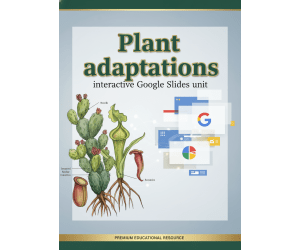
Plant Adaptations Interactive Google Slides Unit
Science, Earth and Environmental Sciences, Earth Sciences, Environmental Science, Geology, Space, Life Sciences, Animals, Nature & Plants, Biology, Grade 3, 4, 5, 9, 10, 11, 12, Experiments, Activities, Labs, Projects, Assessments, Teacher Tools, Diagrams, Lesson Plans, Outlines, Presentations
Find the best 4th Grade Plant Adaptations Interactive Google Slides Unit – a complete no-prep digital science resource that is perfectly correlated to NGSS 4-LS1-1! This teacher edition is a game-changer for teaching plant biology as an interactive adventure for students! With this resource, students will enjoy a hands-on approach to learning about plant adaptations as they explore interactive slides featuring desert succulents/cacti, rainforest drip tips/epiphytes, water plants floating leaves/stretching stems, structural vs. behavioral adaptations, roots, stem/leaf adaptations, defense structures, carnivorous plants Venus flytrap/pitcher plant, seed dispersal, mystery plant analysis, and a final knowledge check with answer keys! Students will actively engage in classifying adaptations, creating their own extremophiles, analyzing scenarios using Claim Evidence Reasoning, and connecting science to ELA, math, engineering, and technology using cross-curricular activities. It includes a teacher guide, standard alignment, steps to integrate into Google Classroom, instructional tips, interactive slide ideas, image credits, and ideas for self-grading. It can be used in a variety of learning environments, such as in-class learning, distance learning, homeschooling, etc. It saves automatically in Google Slides. Keywords: plant adaptation 4th grade, NGSS 4-LS1-1, Google Slides, interactive science unit, desert rainforest aquatic plants, carnivorous plants, seed dispersal activities, digital science resource, structure and function NGSS, no prep plant biology. Why Parents/Schools Love It : NGSS-Aligned & Standards-Ready: No planning required – lesson plans, objectives, and assessments are provided and align perfectly with 4th grade requirements. Truly Interactive & Engaging: Drag and drop sorting, CER plant mysteries, and biome builders ensure all students (including reluctant ones) are actively engaged and motivated to learn for hours. Cross-Curricular Powerhouse: Perfectly blends ELA (informative writing, vocabulary), math (data analysis, volume calculation), and engineering (biomimicry design challenges). Google Classroom Perfection: One-click “make a copy for each student,” auto-saving, and self-grading features save teachers 10+ hours per unit. Differentiation Built-In: Visual aids, scaffolding, and differentiation in activity levels and types meet the needs of diverse learners and challenge advanced students. Target Student Classes : This lesson is designed for 4th grade science (ages 9-10), specifically targeting the 4-LS1-1 standard for Structure and Function in plants/animals, as well as the cross cutting concepts of Systems and System Models + the Science and Engineering Practices of Engaging in Argument from Evidence. This lesson is suitable as the main resource for: Standard 4th grade life science curriculum for 4th grade students in public/private schools Homeschool 4th grade science curriculum (allows for fast or slow pacing for gifted or remedial students) Advanced 3rd grade science for 3rd grade students or 5th grade review for 5th grade students Special education or ESL students (visual learning tool of drag and drop CERs) Not recommended as the main resource for middle school students (6th+). Copyright/Terms of Use: This Book is copyrighted by Syed Hammad Rizvi. This is for your personal and single classroom use only. You may not change, reproduce, redistribute, or sell this in any way. This means you may not put it on the Internet in a way that it can be located and downloaded by others. If you wish to share this resource with others, please consider purchasing additional licenses from Teachsimple. Thank you for respecting these copyright laws! This product is happily brought to you by Syed Hammad Rizvi
Author Creative Book Store
Rating
Tags PlantAdaptations, 4thGradeScience, NGSS4LS11, GoogleSlidesScience, InteractiveScience, ScienceTeachers, ElementaryScience, NGSSScience, PlantAdaptationsUnit, DigitalScienceResource
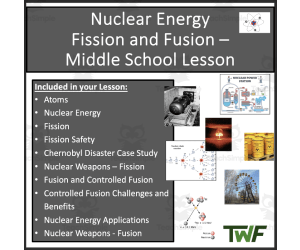
Nuclear Energy
Fission and Fusion – Middle School Lesson
Science, Physics, Grade 5, 6, 7, Teacher Tools, Lesson Plans
Nuclear Energy - Fission and Fusion - Middle School Physical Science Lesson Your lesson covers looks at the atom and how it can be split through fission or combined via fusion to release a great deal of energy and what that energy can be used for. In order, the lesson teaches about; Atoms, Nuclear Energy, Fission, Fission Safety, the Chernobyl Disaster Case Study, Nuclear Weapons – Fission, Fusion and Controlled Fusion, Controlled Fusion Challenges and Benefits, Nuclear Energy Applications, and Nuclear Weapons - Fusion. Your lesson includes the teacher and student version of the presentation, FOUR embedded videos, an auto-graded exit ticket, and a student lesson handout so the students can record the notes on a more condensed medium. This lesson is designed to be your go-to resource, whether you're in a traditional classroom or a virtual one. With both a teacher version and a student version, it seamlessly fits into your lesson plans, making learning engaging and adaptable. Assessment made easy We've included an auto-graded Exit Ticket and a quiz with an answer key because I know you don't have an excess of time. I know you don't, because I don't and I know I'll do whatever I can to reduce my grading time. Whether you use PowerPoint or Google Slides, prefer Word or Google Docs, this lesson has you covered. This lesson comes in both Office and Google formats for your convenience. The student version of the presentation has strategically placed blanks for them to fill in as you're teaching. It keeps them active and engaged, encourages discussion, and leaves more time for those "aha" moments.
Author Teach With Fergy
Tags Nuclear Energy, Energy, Fission, Fusion, Electricity, Science Lesson, Middle School Science Lesson, Middle School Energy

Fractions Worksheets - Math Activities - Pack 1
Math, Fractions, Kindergarten, Grade 1, 2, 3, Activities, Teacher Tools, Assessments, Lesson Plans, Centers
Fractions Worksheets - Math Activities turn the "ugh" in fractions into "aha!" With 15 pages of elementary-level fun, this resource is here to make sure your students actually enjoy dividing pies, pizzas, and maybe even their candy bars. (No promises on sharing, though.) These worksheets are packed with activities that break fractions down into manageable pieces, because nobody needs a math meltdown. From shading halves to solving fraction puzzles, every page is designed to sneak in learning while your students are too busy having fun to notice. And the best part? Zero prep for you. Just print, pass, and sit back while the magic happens. Ways to Use: Morning brain boosters that beat sleepy yawns. Math centers for hands-on, screen-free learning. Homework that doesn’t make parents call you for answers. Lifesavers for those last-minute sub days. Advantages: Makes fractions as easy as pie. Literally. Builds math confidence without boring drills. Fun for solo or group learning adventures. Standards-aligned, so you can teach guilt-free. Turn "What even is a fraction?!" into "I totally get this!" Grab this resource and let the fractional fun begin, no calculators required!
Author Ponder Palette Plazza
Tags Fractions, Fractions Activities, Fractions And Partitioning, Partioning, Partitioning Worksheets, Fractions Worksheets, Math Worksheets, Math First Grade
I WONDER - What Did Marie Curie Invent | Animated Video Lesson
Biographies, Social Studies, Inventors, Basic Science, Science, Grade 4, 5, 6, 7, 8, 9, 10, Lesson Plans, Teacher Tools
Video Introduction An amazing video designed for the students to learn more about famous people in different countries. I WONDER - What Did Marie Curie Invent | Animated Video Lesson Do you know this person? How much do you know about him/her? Who is your idol? Why did you choose this person? Tell us more about him/her? Who is your favorite athlete? Or what is your favorite team? Have you recently heard a story about a famous person? Who was this person? Can you tell us more about him/her. Who is your favorite president, king, or queen? Why you chose that person? In your country, who are the most famous people? What did they do? Can you tell us more about them. What is your favorite invention? Who invented it? Who is your favorite artist? What is the most famous thing he/she have done? What is the most enjoyable you have read before? Who wrote it? I WONDER - What Did Marie Curie Invent | Animated Video Lesson The video is perfect for encouraging the researching skills for the students, while learning more about this fantastic place. I WONDER - What Did Marie Curie Invent | Animated Video Lesson This friendly designed video is suitable for students at school, homeschooling, and as a group activity. Format Available in MP4 format.
Author Educational Voice
Rating
Tags What Did Marie Curie Invent, What Did Marie Curie Invent Video, Marie Curie, Marie Curie Video, Marie Curie Video For Kids, Marie Curie Facts For Kids, Marie Curie Inventions, Marie Curie Inventions Video

All About Numbers 1-20 | Animated Math Video Lesson
Math, Numbers, Kindergarten, Preschool, Grade 1, Lesson Plans, Teacher Tools
All About Numbers 1-20 Animated Math Video Lesson: Product Description The All About Numbers 1-20 Animated Math Video Lesson is an educational tool designed to enrich the learning experience of young students. Tailored specifically for preschoolers, kindergarteners, and first graders, this tool centers around helping children familiarize themselves with numbers from 1-20. Animation as a Teaching Medium Elevating the traditional math class experience, this video lesson employs animation – a compelling teaching medium for young minds. The crux of its design revolves around fostering interaction and engagement in students while introducing them or reinforcing their knowledge of numbers. Balancing Brevity and Content Being a 10-minute MP4 video lesson, it strikes a perfect balance between brevity and content richness that matches with the attention span of young learners. This duration allows sufficient time to navigate through all numbers from 1-20 without rushing or overstretching, maintaining student interests without diminishing their concentration levels. Focused Teaching Resource This teaching resource remains focused on number introduction and reinforcement at all times thus giving your lessons a sharply defined edge. The potential benefits can be realized through several implementable approaches like: Integrating it in whole group instruction, Using it for small group activities, Assigning it as an individual homework exercise. Versatility in Application: Classroom & Homechooling Approach This animated math video lesson aligns well with conventional education principles as well as homeschooling approach – offering universal advantages irrespective of individual teaching methodologies. It is designed from the ground up keeping ease-of-use at its core yet uncompromising on imparting knowledge effectively. Achieve a fun-filled and insightful learning experience simultaneously, no matter where the classroom may be!
Author Educational Voice
Tags Numbers, Math, Animated, Video Lesson, Interactive

How to Write an Essay: What is a Persuasive Essay?
ELA, Writing, Common Core, Grade 5, 6, 7, 8, Teacher Tools, Lesson Plans
Teaching Resource Overview: How to Write an Essay: What is a Persuasive Essay? This teaching resource primarily designed for grades 5-8 aims to eliminate the fear factor associated with writing and enable students to confidently express their ideas in essays. Resource Description 'How to Write an Essay: What is a Persuasive Essay?' comes as part of the larger lesson plan titled 'How to Write an Essay.' It offers simplified lessons that tackle every stage of writing. The highlight here lies with Bloom’s taxonomy underpinning this resource, offering structured modules that focus on four primary types of essays: Persuasive Expository Narrative Descriptive Note: Integrated review sessions around verbs, adjectives, and pronouns are included. This feature turns this material into effective supplement material for existing writing programs or enables productive independent student work. Tailored Guidance & Implementation Features Besides providing educators with practical deployment instructions, it also includes a distinctive assessment rubric enabling accurate measurement of student progress. The implementation flexibility offered extends upto: Giving out as daily lessons in whole group instruction Distributing as small groups task from more focused learning approach Assigning it as homework for learners self-study at home when needed. User-Engagement & Comprehensibility Components With features such as word puzzles and comprehension quizzes incorporated within - learner engagement remains high. Moreover, six color graphic organizers included ensure user-friendly guidance in overall writing exercises undertaken by students. While accommodating for Common Core State Standards and ensuring alignment towards Bloom's Taxonomy, it ensures a completely pedagogically sound learning experience. Envisaged as an essential tool within every language arts course – this resource is ready-to-go material to operate seamlessly with your existing lesson plans. Download this PDF now and reinforce the development of student writing proficiency.
Author Classroom Complete Press
Tags PDF

I WONDER - Why Is Plastic In The Oceans Dangerous | Animated Video
Environmental Science, Earth and Environmental Sciences, Science, Earth Sciences, Nature & Plants, Life Sciences, Grade 4, 5, 6, 7, 8, 9, 10, Lesson Plans, Teacher Tools
Video Introduction An amazing video designed for the students to learn more about STEM. I WONDER - Why Is Plastic In The Oceans Dangerous | Animated Video Lesson Do you like STEM subjects? what is your favorite one? Have you ever tried to plant a seed? If yes, tell us more about it. Or have you ever tried to invent something? If yes, tell us more about it. And how do you think it will help us? Have you ever seen a microorganism under a microscope? What was it? And how it looked like? Mathematics is a marvelous subject. Let' sharpen our brains and solve some equations. Do you like timetable tricks? What is your favorite one? Do you know how to code? Have you ever created an app or a game before? If yes, how was it like? I WONDER - Why Is Plastic In The Oceans Dangerous | Animated Video Lesson The video is perfect for encouraging the researching skills for the students, while learning more about this fantastic topic. I WONDER - Why Is Plastic In The Oceans Dangerous | Animated Video Lesson This friendly designed video is suitable for students at school, homeschooling, and as a group activity. Format Available in MP4 format.
Author Educational Voice
Tags Why Is Plastic In The Oceans Dangerous, Why Is Plastic In The Oceans Dangerous Video, Plastic, Plastic Facts, Plastic Video, Oceans, Oceans Facts, Oceans Video, Ocean Pollution, Ocean Pollution Video

I WONDER - Why Were There No Windows In Longhouses | Animated Video
History: Ancient, History, Social Studies, History: British, History: Canada, History: Europe, History: USA, History: World, Grade 4, 5, 6, 7, 8, 9, 10, Lesson Plans, Teacher Tools
Video Introduction An amazing video designed for the students to learn more about history. I WONDER - Why Were There No Windows In Longhouses | Animated Video Lesson Do you like history? Which topic do you really enjoy about history? Have you ever read an interesting fact about the Vikings? If yes, can you mention them? What do you like most about the Victorian era? Can you name all the Tudors? Have you ever wondered how people used to live in ancient Japan and ancient China? Do you know any interesting facts about ancient Egyptians and the Pharaohs? Have you ever visited South America? What do you know about Incas and Aztecs? Celtic culture was really one of a kind, can you name any of the places that Celts used to live in? Imagine yourself living during the ancient Roman empire, how your life will look like? Ancient Greece was an amazing place to live in. What do you know about ancient Greek life? I WONDER - Why Were There No Windows In Longhouses | Animated Video Lesson The video is perfect for encouraging the researching skills for the students, while learning more about history. I WONDER - Why Were There No Windows In Longhouses | Animated Video Lesson This friendly designed video is suitable for students at school, homeschooling, and as a group activity. Format Available in MP4 format.
Author Educational Voice
Tags Why Were There No Windows In Longhouses, Why Were There No Windows In Longhouses Video, Longhouses, Longhouse, Longhouses Facts, Longhouses Facts For Kids, Longhouses Video, Longhouses Video For Kids

Lifestyles ESL TEFL Upper Intermediate Lesson Plan
ELA, Language Development, ESL, Vocabulary, Reading, Writing, Resources for Teachers, Not Grade Specific, Middle School, Adult Education, High School, Homeschool Resources, Teacher Tools, Lesson Plans, Worksheets & Printables
Lifestyles ESL TEFL ELL ELA Upper Intermediate ESL Lesson Plan This upper intermediate English lesson plan helps students learn about different lifestyles through informative texts and engaging exercises. Educators can implement it in various settings like whole class instruction, small groups, or as a homework assignment. Students will read texts on topics like culture, health, and leisure activities. Afterwards, they will demonstrate comprehension via fill-in-the-blanks, multiple choice questions, discussions, and an audio exercise. This versatile ESL ELA resource works for in-person or remote teaching. The answer key allows teachers to quickly assess student understanding. Overviewing unique lifestyles builds intercultural awareness while practicing reading, writing, listening, and speaking skills. The ESL lesson plan includes flashcards, a warmer, grammar rules, exercises, role-play, conversation, writing drill, activity, answers and an extra study that would be good to set as homework. There are 30+ pages and there are teachers notes to guide the teacher.
Author TEAM TEFL
Tags Lifestyles, ESL, Language Arts, Audio, Comprehension