



3,930 products added recently
Page 4 - Popular Parts of and Anatomy of

 Show filters


Life Cycle of a Duck Worksheet- Farm Animal Science Unit Study
STEM, Animals, Life Sciences, Science, Preschool, Kindergarten, Grade 1, 2, 3, Parts of and Anatomy of, Worksheets & Printables, Flashcards, Coloring Pages, Worksheets
Introduce your students to the fascinating life of ducks with this fun and educational Life Cycle of a Duck Worksheet! Perfect for Pre-K to 3rd grade, this resource is designed to help young learners explore how ducks grow and change—from eggs to fluffy ducklings and finally to adult ducks. This simple science unit blends hands-on activities with key life science concepts, making it perfect for farm animal units or springtime learning. What’s Included in this worksheet? Duck at a Glance – A short, kid-friendly overview about ducks, where they live, and why they’re important farm animals. Life Cycle Diagram – Easy-to-follow chart showing the four main stages: egg, hatchling, duckling, and adult duck. Cut-and-Paste Activity – A fun way for kids to sequence the life cycle stages using pictures. Matching Activity – Helps students connect vocabulary to the correct life cycle stage. Life Cycle Flashcards – Great for review, games, or centers. Bonus Coloring Page – A cheerful duck illustration for creative fun! This file is Perfect For: Farm animal or spring science units Classroom centers and hands-on lessons Homeschool activities Building sequencing, vocabulary, and observation skills This duck life cycle worksheet makes science engaging and memorable. A great addition to any farm-themed learning day!
Author Perfect_Printables
Rating
Tags Life Cycle Of A Duck, Duck Life Cycle Worksheet, Farm Animal Life Cycle, Duck Science Worksheet, Duck Worksheet For Kids, Duck Unit Study, Farm Animals Worksheet, Life Cycle Printables, Life Cycle Worksheets For Kids, Duck Printables For Preschool

Brush Up On Parts Of Speech (9-14 years)
ELA, Grammar, Grade 4, 5, 6, Parts of and Anatomy of, Worksheets & Printables
Brush Up On Parts Of Speech teaches children ages 9-14 parts of speech and other language skills. This resource pack helps improve grammar, punctuation, spelling, sentence structure, and use of literary devices through structured exercises and answer keys. With concise lessons covering key grammar concepts, Brush Up On Parts Of Speech supports individual or whole-group instruction. Students complete worksheets independently then check answers. Alternatively, an educator leads lessons for a small group session with worksheets for extra practice later. This comprehensive pack develops language abilities crucial for strong reading and writing skills. A series of 8 tests with answer keys assesses areas like vocabulary, capitalization, punctuation, and spelling. Tracking progress through assessments allows a teacher to customize follow-up lessons accordingly.
Author Guinea Pig Education
Tags Parts Of Speech, Verbs, Adjectives, Nouns, Prepositions

The Biophilic Blueprint A Gamified Technical Literacy & Engineering
Science, Life Sciences, Earth and Environmental Sciences, Earth Sciences, Environmental Science, Geology, Space, Basic Science, Human Body, Nature & Plants, Grade 2, 3, 4, 5, 6, 7, 8, Worksheets & Printables, Parts of and Anatomy of, Worksheets, Word Searches, Writing Prompts, Crosswords Puzzles, Dot To Dots, Mazes, Word Problems, Workbooks
Gamified STEM-based Reading Comprehension Activities for Valentine's & Groundhog Day Willeng Activity Packet Your elementary classroom will be transformed with our exciting new gamified reading comprehension activity pack that combines science, engineering and seasonal fun into a single resource! The Biophilic Blueprint is a total of 41 pages in a PDF format designed as both a complete teacher's guide and a student workbook. This packet utilizes biophilic design concepts to convert traditional Groundhog Day and Valentine's Day celebrations into a rigorous STEM based reading comprehension and education program. By using concepts such as how groundhogs build burrows, the science of hibernation, the shape of hearts, and how species in the environment coexist (symbiosis), students will develop skills such as identifying main ideas, finding supporting details/inferences/cause and effect relationships, vocabulary, sequencing, and text analysis. This educational resource packet provides a thorough theoretical framework for teachers (included in Chapters 1-4 and Appendix) along with items such as 10 fun and engaging student worksheets that incorporate real-world passages related to topics including groundhog engineering; the history of Valentine’s Day; folklore based on meteorology; and examples of how two different species can work together during winter months. There are also diagrams, answer keys, and procedures for implementing the activities. The activities focus on winter-themed concepts and are designed to promote higher-order thinking through the use of analogies (for example, “Taproot Main Idea” or “Burrow Blueprinting”) to help students connect abstract concepts in literacy to concrete knowledge. This packet is appropriate for use by home-schoolers, as a part of a classroom's learning centers, or as a holiday unit for teachers. It is a printable PDF with no preparation required prior to printing and will conform to Reading Informational Text-WO Common Core Standards for third and fourth grades (RI.3.1 and RI.4.2). Using these resources will also promote the love of bio-literacy among children. Groundhog Day Reading Comprehension Worksheets, Valentine’s Day Main Idea Worksheets, Winter STEM Activities for Kids, Resources for Biophilic Education, Elementary Engineering Simulation, 3rd Grade Literacy Packet, 4th Grade Inference Worksheet, Seasonal Holiday Printables, February-Themed Teacher Resources. Why Parents/Schools Appreciate It: - Involving the STEM Literacy Fusion: Exposure to STEM information from a fun angle, such as celebrating Groundhogs Day or Valentine's Day, makes reading lessons an interactive simulation, sparking students curiosity, engaging them in critical thinking, and not feeling as traditional drill type exercise. - No Additional Preparation, Differentiated Resources: Provides teachers with materials written in ready-to-print format, with answer keys, diagrams, and tiered instruction; saving them time while allowing both homeschool and classroom teachers to tailor these resources according to individual student needs (from struggling to gifted). - Facilitates Higher-Order Thinking: Structures reading as a form of "Narrative Engineering", which includes tapping into analogy resources, logic mapping, and building out main idea/s, inference/s, and synthesis, while providing Common Core compliant alignment; exposing students to a gamified assessment process for test preparation. - Biophilia and Thematic Connection: Utilizes nature-based thematic units (ex: burrow as blueprints, hearts as systems of circulation) to promote environmental awareness and emotional connection between students and the unit content, making the unit lessons memorable. - Proven Retention Strategies: Incorporates Kinesthetic exercises (ex. developing a tracing image of leaf's venous structure) and visualization techniques (ex. red/blue annotation) that support retention of comprehension from the information being presented, as will be supported by the research-based material as referenced in the PDF. Target Audience/Students: The target audience/students based on careful re-evaluation of the PDF (entire document), in terms of defined target audience, print complexity, differentiated method of instructing the content contained within, and activity level as follows: Primary Audience: Third and Fourth Grade Students – The PDF is specifically geared toward Third and Fourth Grade students. Both grades focus on "Technical Literacy Threshold," where students transition from "Learning to Read" to "Reading to Learn." Worksheets are designed to focus on extracting a main idea; use of inferences; determining vocabulary from context; mapping cause and effect; and synthesizing information, including examples of using biology from the hibernation of a groundhog to exploring the symbiosis of Valentine's Day To promote engagement with these activities in the above context utilizes graphic organizers, logic puzzles, and text related questions within the reading level of Third and Fourth Grade (Example: Non-fiction passages regarding burrows or honey bee hives.) Expanded Audience: Second Grade (Lower Level/On-Level Readers) and Fifth Grade (Higher Level/Gifted Students) – Use of a simplified "Tier 1" strategy with second graders in terms of visual anchor via diagrams and color codes. To utilize advanced applications with Fifth graders, such as "Compare/Contrast Winter Matrix" and "synthesis writing" (Example: Debate isolation vs. co-operation) in a survival situation. Overall targeted audience is Grades 2-5, however, the depth of content is most appropriate for level two elementary cohorts at classroom, home-schools or after school programs, related to STEM seasonal integration with Literacy. Copyright and Terms of Use Copyright is owned by Syed Hammad Rizvi. This material is for personal use and/or use in a single classroom only. You are not permitted to change, share or sell any parts of this material. This also includes uploading the material online so it is available to the general public for download. If you want to share this resource with others, you must purchase an additional license through Teachsimple. Thank you for your understanding of this copyright policy. This product is proudly provided by Syed Hammad Rizvi
Author Creative Book Store
Rating
Tags BiophilicBlueprint, GamifiedLearning, TechnicalLiteracy, EngineeringSimulation, ReadingComprehension, GroundhogDayActivities, ValentinesDayWorksheets, MainIdeaPassage, WinterActivityPacket, ElementarySTEM
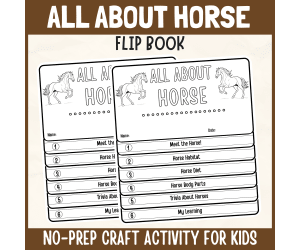
Horse Flipbook craft Farm Animal Science Study writing prompt activity
Animals, Life Sciences, Science, Biology, Grade 1, 2, 3, 4, Crafts, Activities, Parts of and Anatomy of, Worksheets & Printables, Writing Prompts
Make learning about horses fun and interactive with this printable flipbook craft! Students will explore the fascinating world of horses by learning about their habitat, diet, body features, life cycle, adaptations, and interesting facts while strengthening reading comprehension and writing skills through engaging science activities. I like using this resource during farm animal units, animal science lessons, agriculture studies, classroom centers, independent work, and homeschool learning. It’s a low-prep activity that combines science, reading, writing, and creativity into one meaningful project. What You Will Get This resource includes a printable Horse flipbook that helps students organize and record what they learn about this amazing farm animal through reading, writing, and hands-on learning. What’s Included in this Flipbook? • Horse flipbook craft templates • Reading and writing activities • Animal facts and science research pages • Habitat, diet, and life cycle sections • Physical characteristics and adaptations pages • Writing prompts and reflection activities • Easy-to-follow assembly instructions This resource is perfect for: • Farm animal lessons • Animal science units • Agriculture studies • Classroom science centers • Homeschool learning • Independent work and early finishers Why you will love this? • Easy to print and assemble • Encourages reading, writing, and scientific thinking • Builds nonfiction reading comprehension skills • Supports research and observation skills • Makes science learning hands-on and engaging • Creates a meaningful keepsake students can share This Horse Flipbook Craft is a fun and interactive way for students to discover the characteristics, adaptations, and importance of horses while developing reading, writing, and science skills through creative, hands-on learning.
Author Perfect_Printables
Rating
Tags Animal Science, Writing Prompt, Science Craft, Nonfiction Activities, Science Centers, Animal Research, Horse Flipbook, Farm Animal Flipbook, Farm Animal Study, Flipbook
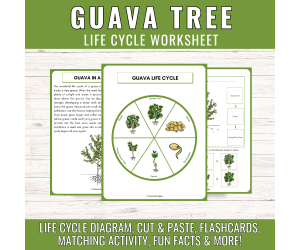
Guava Fruit Life Cycle Tropical Plant Science Unit Study Cut & Paste
Life Sciences, Science, Biology, Nature & Plants, Kindergarten, Preschool, Grade 1, 2, 3, Coloring Pages, Worksheets, Worksheets & Printables, Parts of and Anatomy of, Flashcards, Diagrams, Teacher Tools, Lesson Plans
Help students explore the fascinating life cycle of a guava plant with this engaging tropical plant science activity! Students will learn about the different stages of guava plant growth while practicing sequencing, cutting, pasting, and science vocabulary. I like using this resource during plant life cycle units, tropical plant studies, fruit and plant lessons, science centers, and homeschool learning. It's a hands-on way for students to explore how a guava plant grows and develops from seed to a mature plant that produces flowers and fruit. What You Will Get This printable guava fruit life cycle activity gives students an easy and engaging way to learn about tropical plant growth and development. What's Included in this Resource? • Guava plant life cycle activity • Life cycle sequencing practice • Cut-and-paste activities • Plant growth stages • Guava fruit and plant science vocabulary • Student-friendly printable pages • Hands-on science learning activity This resource is perfect for: • Plant life cycle units • Tropical plant studies • Fruit and plant science • Life science lessons • Science centers • Cut-and-paste activities • Preschool and elementary science • Homeschool learning Why you will love this? • Easy to print and use • Builds sequencing and observation skills • Introduces students to the life cycle of a tropical fruit plant • Provides hands-on cutting and pasting practice • Reinforces plant science vocabulary • Makes science learning interactive and engaging This Guava Fruit Life Cycle Activity is a fun way for students to explore the growth stages of a tropical fruit plant while strengthening sequencing, fine motor, and early science skills through hands-on cut-and-paste learning.
Author Perfect_Printables
Rating
Tags Life Cycle, Plant Life Cycle, Tropical Plants, Plant Science Activity, Plants Worksheet, Fruits Life Cycle, Fruit Plant, Life Cycle Activity, Guava Plant, Guava Plant Body Parts

Brine Shrimp Flipbook craft Animal Science Study writing prompt
Animals, Life Sciences, Science, Biology, Grade 1, 2, 3, 4, Crafts, Activities, Parts of and Anatomy of, Worksheets & Printables, Writing Prompts
Make learning about Brine Shrimp (Artemia) fun and interactive with this printable flipbook craft! Students will explore the fascinating life, habitat, body features, diet, and adaptations of these tiny aquatic animals while strengthening reading comprehension and writing skills through engaging science activities. I like using this resource during animal science units, ocean life studies, invertebrate lessons, classroom centers, independent work, and homeschool learning. It's a low-prep activity that combines science, reading, writing, and creativity into one meaningful project. What You Will Get This resource includes a printable Brine Shrimp (Artemia) flipbook that helps students organize and record what they learn about this unique aquatic animal through reading, writing, and hands-on learning. What's Included in this Flipbook? • Brine Shrimp (Artemia) flipbook craft templates • Reading and writing activities • Animal facts and science research pages • Habitat, diet, and life cycle sections • Physical characteristics and adaptations pages • Writing prompts and reflection activities • Easy-to-follow assembly instructions This resource is perfect for: • Animal science lessons • Ocean and aquatic animal units • Invertebrate studies • Classroom science centers • Homeschool learning • Independent work and early finishers Why you will love this? • Easy to print and assemble • Encourages reading, writing, and scientific thinking • Builds nonfiction reading comprehension skills • Supports research and observation skills • Makes science learning hands-on and engaging • Creates a meaningful keepsake students can share This Brine Shrimp (Artemia) Flipbook Craft is a fun and interactive way for students to discover the amazing world of these tiny aquatic animals while developing reading, writing, and science skills through creative, hands-on learning.
Author Perfect_Printables
Rating
Tags Brine Shrimp, Artemia Flipbook, Animal Science, Ocean Animals, Writing Prompt, Science Craft, Aquatic Animals, Life Cycle, Nonfiction Activities, Science Centers

Future-Ready Navigator: Guided Career & Skill Pathway Planner
Special Resources, Life Skills, Social Emotional Learning (SEL), Social Skills, Special Education Needs (SEN), Speech Therapy, STEM, Life Studies, Career, Coaching, Homeschool Curriculum, Grade 5, 9, 10, 11, 12, Projects, Activities, Teacher Tools, Assessments, Lesson Plans, Presentations, Outlines, Worksheets & Printables, Parts of and Anatomy of, Workbooks
The Future Ready Navigator has been designed to develop the careers of High School Students (Grades 9-12) as they transition into the workplace. This comprehensive GIANAWORK workbook includes a combination of both theoretical concepts of career guidance as well as interactive worksheets that help with the development of an individualized, resilient career path, through research that incorporates both technological and job market trends. Together, these pieces of information will help ensure that high school students and all lifelong learners have access to career planning tools to build a strong foundation for a successful transition into the ever-changing job market. The workbook consists of 27 pages containing various types of content, such as the Adaptive Trajectory Framework (ATF), which provides information on how to identify your true abilities, assess your current skill set, and develop a dynamic plan to achieve your goals. It will also teach you how to create effective AI prompts that can be used for identifying trends and researching jobs and developing future skills. The workbook includes several real-world case studies, guidelines around the ethical use of AI, and a number of educator resources, such as SVG diagrams (flowcharts, mind maps, Venn diagrams) to use as reference tools. This printable career planning workbook will also prepare users for jobs that will be created as a result of the technological disruption reforming our world, for those looking to move to the gig economy, to develop premium future skills, such as critical thinking, emotional intelligence, and digital literacy. There are many uses for this career planning workbook, including use by students taking classes, and as a resource for teachers providing career development coaching to their students. It can also be used as another way for people who want to develop professionally to use this career development workbook to develop the skills needed for the job market. Download now to create engaging, relevant education-ready for counselors, parents, or any educators looking for high school career counseling resources, or workers developing skill sets with integration of the AI process, or resources/strategies that encourage lifelong learning. Keywords: AI-based career planning tools, High School Career Counseling, Future Skills Workbook, Career Development for Teens, Educational PDF Printable, & Student Self Assessment Worksheets. Parents and schools appreciate it for a variety of reasons: It Prepares Students for Real-World Success: It incorporates both self-discovery activities and AI-based insights to help teenagers identify new career opportunities and align them with their own values and strengths as well as the demands of the market (e.g., Precision Agriculture Technician, AI Ethics Advisor), which is especially important in an economy disrupted by technology. Interactive and Engaging Tools: Printable worksheets that guide students through prompt engineering, skill-gap analyses, and career exploration are not only engaging and educational, but there are also high-quality SVG graphics (flowcharts, mind maps, Venn diagrams) to help students understand complex concepts easily and enjoyably in both traditional classroom and home school environments. Responsible Use of AI with Practical Tips: Helps students learn how to use AI responsibly and how to address issues related to bias, data privacy, and the interaction between people and AIs, and provides specific ways for students to upskill through certification programs, internship opportunities, and side projects, allowing them to take the initiative to continue learning throughout their lives. Versatility for Various Learners: Available for students in grades 9-12+ and includes case studies of real-life transitions (e.g., from Clinical Research to Bioethics), making it great for individualized educational plans, group settings, or for parents who want to do educational activities with their children, complete with teacher answer keys for each unit. Fostering Future Skills: By focusing on "future skills," such as critical thinking, adaptability, and digital fluency, and using data from reputable sources (e.g., World Economic Forum) to assist parents and schools in preparing their students to thrive in a gig-work world and during periods of rapid technological advancement. Student/Target Class: The target audience of this 27-page PDF analysis is specified as grades 9-12+. This content consists of theoretical content of AI-enhanced career planning, student worksheets for self-reflection and prompt creation, real-life examples of how high school-aged learners and adult learners are changing careers through AI as well as resources for teachers (with images) about these items. It was determined that the primary target audience for the content and example case studies of students and adults was high school students ages 14-18 in grades 9-12. Case studies utilized for reference were from students in their 10th and 11th grade year, included high school scenarios such as expected academic performance (i.e., transcripts) to identify which extra curricular activities students would participate in, such as: extracurricular activities (e.g., debate club, robotics); and student worksheets will have students reflect on their interests (e.g., interest in space exploration or environmental projects) and what path they would pursue through a community college or university. This resource is perfect for career education classes, guidance counseling sessions, or homeschooling activities related to getting ready for the job market after high school and the impact on their jobs in an unstable economy. The secondary audience of the content and the example case studies was all post-high school students ages 12+ including: young adults transitioning to a 4-year college, first-year college freshmen, and working adults looking to upskill/re-skill. Additionally; case studies of older adults (past PhD graduates and adults in their late 20s seeking to transition from administrative positions to logistics in the bio-tech industry) demonstrate that the resource promotes lifelong learning, investigation, and adapting to shifting technologies (e.g., AI and quantum computing).Some target classes could be the introductory college career development course; vocational training program; and adult learning/education workshops about Artificial Intelligence Ethics and skill bridging. With an emphasis on marketing to high school career preparation classes, but also demonstrate the versatility of the program to appeal to transitional learners in larger markets. Copyright / Terms of Use : Copyrighted by Syed Hammad Rizvi This resource is intended for your own personal use and/or one classroom use only. You are not permitted to modify, redistribute or sell any part of this resource, nor may you place this resource on the internet publicly for download. (In other words, you may not post this resource publicly on the internet where it may be available to download). If you are interested in sharing this resource with your colleagues, please purchase an additional license for each colleague on Teachsimple. Thank you for following our terms of use! This product is provided courtesy of Syed Hammad Rizvi
Author Creative Book Store
Rating
Tags AICareerPlanner, FutureReadyNavigator, AIGuidedCareer, SkillPathwayPlanner, HighSchoolCareerGuidance, TeenCareerDevelopment, FutureSkillsWorkbook, CareerPlanningPDF, AIinEducation, StudentSelfAssessment

Anatomy of a Cow – Hand-Illustrated Poster
Science, Life Sciences, Animals, Grade 1, 2, 3, 4, 5, Parts of and Anatomy of, Worksheets & Printables
Anatomy of a Cow Teaching Resource This top-notch, hand-illustrated watercolor teaching resource paves an exciting way for primary learners to dive into zoology. Primarily aimed at learners from Grade 1 through 5, it provides engaging and interactive learning into the world of animal physiology. A Lively Learning Aid This infographic-style poster simplifies the otherwise complex details about cow anatomy making it a lively and insightful learning aid that sparks curiosity among young students. Multipurpose Usage Suitable for whole group instruction encouraging an interactive classroom environment. Fosters collaborative efforts in small study groups promoting peer-to-peer discussions. A valuable asset for educators seeking to provide individualized instructions via independent assignment tasks during labs or as homework tasks.” User-friendly Format The PNG format digital download is convenient and easy to print. The A4 size landscape design aspect ensures swift implemention without any extensive preparation required from the teachers' end. Zoology within Reach! \ Add this Anatomy of a Cow resource to bring scientific subjects like zoology within reach for students over different stages starting from Grade 1 upwards. An early interest in intricate subjects might well turn out to be founding steps towards future studies in life sciences!
Author Fiddleticks Education
Rating
Tags Cow Anatomy, Zoology, Watercolor Poster, Farm Animals, Elementary Learners, Anatomy Of A Cow
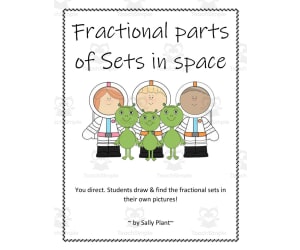
Fractional Parts of a Set in Space
Math, Fractions, Grade 3, Parts of and Anatomy of, Worksheets & Printables
This is a math activity called Fractional Parts of a Set in Space. It is great for your 3rd grade students. • Each student will need a blank piece of white paper, both 9 x 12 and 8 ½ x 11 will work, but the larger paper will make it easier to draw pictures big and clear enough to count later on. • Make it clear that students’ pictures will end up looking very different, but they must follow the instructions for how many things to draw and color very carefully. • You may opt to have students use the attached “cheat sheet” on which they can redraw their objects in a row in order to better figure out the fractional parts of each set. This depends on how deep their understanding of the concept goes at this point. The first one is already done for them. • You will probably want to work through the first couple of instructions as a class, also depending on how deep you are into the concept. On their paper, students will create the following: 8 planets 4 aliens with 3 eyes and 2 antennae each 6 spaceships with 2 exhaust pipes and 3 stickers each 24 stars 9 moons 5 astronauts wearing boots and gloves For each thing they draw , they will be directed to color a portion of the pictures accordingly. Students will have a cheat sheet to help them. When they have followed the directions and completed their space picture, students will answer a set of questions about their picture. This is a fun way to review fractions!
Author At the Core
Tags Fraction Parts, Space Activity, Space Drawing, Outerspace, Astronauts, Parts Of A Whole, Fraction Worksheet, Small Group, Independent Work

Plants - Anatomy of the flowering Plant for Middle School
Science, Life Sciences, Biology, Grade 5, 6, 7, 8, 9, Parts of and Anatomy of, Worksheets & Printables
This fully resourced lesson on the parts of a plant includes an animated PowerPoint which: > identifies the root, stem, leaves and flowers as plant organs and; > explains the functions of the root, stem, leaf and flower; > explains the terms transpiration, guard cells, stomata, xylem, phloem, chlorophyll, chloroplast and photosynthesis; > labels the parts of the flower; > identifies the ovule and pollen grain as the female and male reproductive cells. What’s Included > Animated PowerPoint for teaching with exit ticket quiz > Flip it (pupil writes questions to given answers) > Anticipation Guides (combined starter and plenary) > Foldable (students use to make their own notes) > Cut-and-stick activity pupil uses to make their own notes) > Worksheet to support the PowerPoint > Fact sheet > Homework plus answers > Fact share worksheet > 12 Taboo cards > Pupil progress self- assessment checklist > Exit Ticket > Suggested lesson plan showing choices possible between resources This pack contains 13 resources and it is intended that the teacher uses them to build their own unique lesson to take account of student ability and time available. Literacy, oracy, self- assessment and peer assessment are all built in to the resources. These features are clearly marked on the comprehensive one-page flow chart lesson plan which shows where the logical choices between resources can be made. See more Elf Off the Shelf resources on this topic and many others
Author Elf off the Shelf Resources
Tags Label The Parts Of A Flower, Function Of The Root Stem And Leaves, Xylem And Phloem Cells, Parts Of The Plant, Transpiration Guard Cells And Chloroplasts
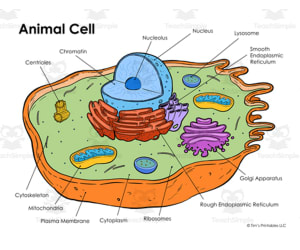
Animal Cell Diagram
Science, Life Sciences, Animals, Biology, High School, Elementary, Middle School, Worksheets & Printables, Worksheets, Diagrams, Teacher Tools, Parts of and Anatomy of
A printable animal cell diagram for learning the parts of the animal cell. Perfect for elementary, middle and high school biology lessons. The parts labeled in the document include: cytoplasm, ribosomes, nucleus, nucleolus, Golgi apparatus, rough endoplasmic reticulum, smooth endoplasmic reticulum, cytoskeleton, centrioles, chromatin, mitochondria, and lysosomes. This PDF includes both the color and black and white versions of the diagram. The first two pages contain the labeled diagram. The third and fourth pages contain the blank diagram with lines for labeling. The fifth and sixth pages contain only the illustrations of the animal cell diagram to use as decoration etc. Animal Cell Diagram created by Tim van de Vall. It is copyright Tim’s Printables LLC. Terms of use: Content may be printed/downloaded for personal and educational purposes only. Commercial Use is strictly prohibited. Thank you for respecting these terms! 6 pages total. The page dimensions are: letter-sized 8.5”x11”. PDF format.
Author Tim's Printables
Rating
Tags Animal Cell, Biology, Science, Cell Parts, Prokaryotes, Worksheet, Printable, Cell, Nucleus, Golgi Bodies
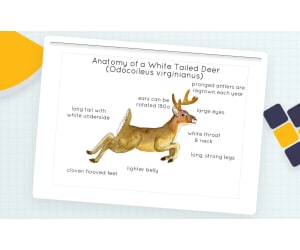
Anatomy of a White-Tailed Deer – Watercolor Print
Science, Life Sciences, Animals, Grade 1, 2, 3, 4, 5, Parts of and Anatomy of, Worksheets & Printables
This fantastic hand-painted watercolor illustration is perfect for teaching students about the white-tailed deer is the smallest among the deer family found in North, Central, and South America. They have a white tail when displayed vertically. To create a tactile finished item, I highly recommend printing onto high-quality paper. I like to use watercolor paper, which means that every piece looks and feels like an original painting.
Author Fiddleticks Education
Rating
Tags Anatomy , White Tailed Deer , Printable , Deer, Whitetail Deer Organ Diagram, Deer Anatomy, Anatomy Of A Deer, Anatomy Of A Whitetail, Anatomy Of Deer, Anatomy Of Whitetail Deer, Deer Anotomy, Deers Anatomy, Deer Organs Diagram, Dear Anatomy, Whitetail Deer Anatomy Diagrams

Parts of a Plant Anchor Chart – Edible Plants
Science, Life Sciences, Nature & Plants, Biology, Kindergarten, Preschool, Grade 1, Parts of and Anatomy of, Worksheets & Printables
Did you know we can eat all parts of plants. This parts of a plant anchor chart posters includes real images of fruits and vegetables for students to familiarize themselves with all the parts of a plant they can eat! This poster set includes flowers, seeds, leaves, stems, roots, and fruits. There are 6 images for each plant part. Pictures Included: Flowers: artichoke, broccoli, cauliflower, dandelion, honeysuckle, squash blossom Fruits: apple, banana, blueberry, lime, pepper, raspberry Leaves: kale, lettuce, mint, parsley, purple cabbage, spinach Roots: carrot, garlic, onion, parsnip, radish, sweet potato Seeds: almonds, beans, coconut, corn, peas, sesame seeds Stems: asparagus, bamboo shoots, celery, leek, rhubarb, scallions How to Use: These charts can be used as wall decor in a science center or as an instructional tool to teach about the plants we eat. By relating the science standard of identifying parts of a plant to foods that students commonly eat, it will ensure that students have fun and stay engaged with learning about plants! Where to Use: Wall Display in a Science Center - Place these posters on the wall of a science center while you are learning about the parts of plants. They can also be placed in a science center simply as a reference tool for students to use while completing other plant based activities. Instructional Tool - These posters make an excellent instructional tool for teachers to use to introduce to students the concept of parts of a plant in relation to the foods we eat. The real photographs in this set provide students with easy to recognize images of different edible plants. Students will love seeing all the pictures of the different kinds of plants that they can actually eat. These anchor charts and posts are no prep. The posters just need to be printed out and laminated for durability if desired.
Author The Connett Connection
Rating
Tags Plants We Eat, Parts Of A Plant
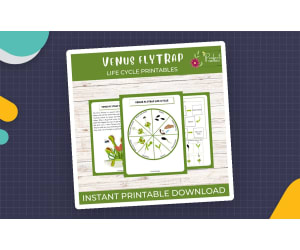
Life Cycle of a Venus Flytrap Worksheet- Plant Science Unit Study
Montessori, Life Sciences, Science, Biology, Nature & Plants, Kindergarten, Preschool, Grade 1, 2, 3, Posters, Classroom Decor, Flashcards, Worksheets & Printables, Parts of and Anatomy of
Let’s explore one of the most exciting plants in nature – the Venus Flytrap! This simple and fun worksheet helps students learn all about how this amazing carnivorous plant grows and survives. It’s a great way to spark curiosity and get kids excited about plant science. What’s Included in this Worksheet? A Short Overview : A short and easy-to-understand description of what makes the Venus Flytrap special and where it grows. Life Cycle Diagram: A clear chart showing each stage of the plant’s life, from seed to fully grown trap. Cut-and-Paste Activity: A fun hands-on way for students to put the life cycle stages in the correct order. Flashcards: You will get a flashcards set of All stages of life Bonus Coloring Page: A venus flytrap coloring page also included! This is Perfect For: Science lessons about plants and unique species Classroom centers or independent activities Homeschool plant studies Spring or nature-themed units What you will learn from this project? Understand each stage in the Venus Flytrap’s life cycle Learn how it catches insects and survives in its habitat Build sequencing and observation skills through interactive activities This resource is a fun mix of science and creativity—designed to make learning about the Venus Flytrap simple, exciting, and memorable for young learners.
Author Perfect_Printables
Rating
Tags Venus Flytrap , Life Cycle, Carnivorous Plant , Plant Science Unit, Life Cycle Printables, Homeschool Botany, Venus Flytrap Activities, STEM Plant Study, Nature Study For Kids, Montessori Botany Unit
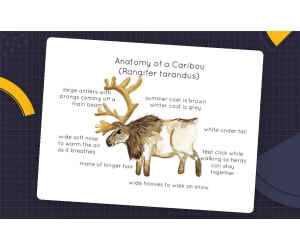
Anatomy of a Caribou
Science, Life Sciences, Animals, Grade 3, 4, 5, Parts of and Anatomy of, Worksheets & Printables
The Anatomy of a Caribou Teaching Resource Our set of expertly hand-illustrated, watercolor flashcards are designed explicitly for Grades 3 to 5 Science educators. Through the fascinating world of Zoology, these detail-oriented tools impeccably depict the intricate anatomy of the captivating caribou species. The cards come as digital downloads in PNG format sized to A4, providing an enriching visual aid during lectures or study sessions. The lush use of colors taps into younger students' visual learning abilities, making each session more engaging with bursts of vibrant colors that bring life to scientific concepts. Dual Functionality and High-quality File Type Crisp visuals: Our high-quality file type ensures that even when printed on regular paper, the diagrams retain their clarity. Tactile experience: For an interactive experience enhancing artistic skills alongside science instruction, teachers may opt to print on watercolor paper—letting students participate through painting and adding personal touches. Versatile Learning Tool An ideal tool for not only whole-class instruction but also effective supplementary material during small group discussions or independent study sequences. This gives students time and freedom for self-paced analysis without overwhelming them with too much information simultaneously. Simple instructions in each card's design layout enrich it with educational content—becoming a surefire hit in classrooms! Additionally offering maximum flexibility during utilization makes it perfect not only within traditional classroom settings but also beneficial homeschool environments catering elementary-level learners interested in exploring science topics intensely. In Conclusion, >/p Foster appreciation for art and nature's beauty by utilizing our Anatomy of a Caribou pack. It's a wonderful way to seamlessly infuse student enthusiasm for learning core sciences and creative skill-building to achieve excellent academic performance as well as immerse students in the wonders of nature.
Author Fiddleticks Education
Tags Caribou Anatomy, Zoology, Flashcards, Watercolor Illustrations, Science Education

Life Cycle of a Squid Worksheet | Ocean Animal/Marine Unit Study
Montessori, Animals, Life Sciences, Science, STEM, Kindergarten, Preschool, Grade 1, 2, 3, Parts of and Anatomy of, Worksheets & Printables, Flashcards, Coloring Pages, Worksheets
Dive deep into the ocean and explore the fascinating life of one of the sea’s most mysterious creatures — the squid! This Life Cycle of a Squid Worksheet is a fun and educational resource designed especially for young learners who are curious about marine animals and ocean life. With clear visuals and simple explanations, students will learn about each stage in a squid’s life cycle — from tiny eggs to fully grown adults. This unit makes science engaging with hands-on activities, fun facts, and creative learning opportunities that are perfect for the classroom or homeschool. What’s Included In this life cycle worksheet Easy-to-read life cycle diagram of a squid Cut-and-paste sequencing activity Fun facts about squids and their ocean habitat Bonus coloring page to spark creativity This activities is perfect for: Ocean and marine biology units Science centers and animal studies Homeschool lessons about sea life Summer or ocean-themed activities Introduce your students to the wonders of the deep sea with this exciting squid life cycle worksheet — a perfect blend of learning and fun!
Author Perfect_Printables
Rating
Tags Squid Life Cycle, , Squid Worksheet, Ocean Animal Unit, Marine Biology For Kids, Life Cycle Printables, Homeschool Science, Squid Activities For Kids, STEM Marine Study, Underwater Animal Worksheet, Preschool Ocean Science
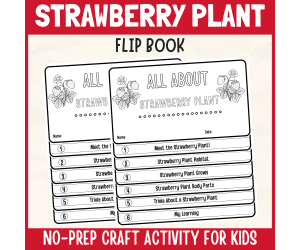
Strawberry Plant Flipbook Craft DIY Science Study Writing activity
Life Sciences, Science, Biology, Nature & Plants, Grade 1, 2, 3, 4, Crafts, Activities, Parts of and Anatomy of, Worksheets & Printables, Writing Prompts
Make learning about strawberry plants fun and interactive with this printable DIY flipbook craft! Students will explore the fascinating world of strawberry plants by learning about their habitat, plant parts, life cycle, growth stages, adaptations, and importance while strengthening reading comprehension and writing skills through engaging science activities. I like using this resource during spring science units, berry plant studies, botany lessons, gardening activities, classroom centers, independent work, and homeschool learning. It's a low-prep activity that combines science, reading, writing, and creativity into one meaningful project. What You Will Get This resource includes a printable Strawberry Plant DIY flipbook that helps students organize and record what they learn about this popular fruit-bearing plant through reading, writing, and hands-on learning. What's Included in this Flipbook? • Strawberry Plant DIY flipbook craft templates • Reading and writing activities • Plant facts and science research pages • Habitat, life cycle, and growth stages sections • Plant parts and adaptations pages • Writing prompts and reflection activities • Easy-to-follow assembly instructions This resource is perfect for: • Spring science lessons • Berry plant studies • Botany units • Gardening activities • Classroom science centers • Homeschool learning • Independent work and early finishers Why you will love this? • Easy to print and assemble • Encourages reading, writing, and scientific thinking • Builds nonfiction reading comprehension skills • Supports research and observation skills • Connects science learning with seasonal gardening themes • Creates a meaningful keepsake students can share This Strawberry Plant DIY Flipbook Craft is a fun and interactive way for students to discover the life cycle, structure, adaptations, and importance of strawberry plants while developing reading, writing, and science skills through creative, hands-on learning.
Author Perfect_Printables
Rating
Tags Plant Science, Botany, Science Activities, Writing Activities, Craft Activities, DIY Flipbook Craft, Berries, Plant Activities, Plant Flipbook, Strawberry
Cow Farm Animal Flipbook Craft DIY Science Study Writing Prompt
Animals, Life Sciences, Science, Biology, Grade 1, 2, 3, 4, Crafts, Activities, Parts of and Anatomy of, Worksheets & Printables, Writing Prompts
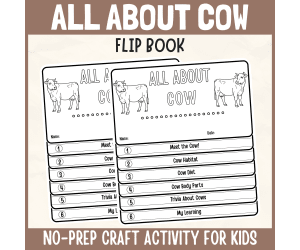
Make learning about cows fun and interactive with this printable DIY flipbook craft! Students will explore the fascinating world of cows by learning about their habitat, diet, body features, life cycle, adaptations, and importance on the farm while strengthening reading comprehension and writing skills through engaging science activities. I like using this resource during farm animal units, agriculture studies, animal science lessons, classroom centers, independent work, and homeschool learning. It's a low-prep activity that combines science, reading, writing, and creativity into one meaningful project. What You Will Get This resource includes a printable Cow DIY flipbook that helps students organize and record what they learn about this important farm animal through reading, writing, and hands-on learning. What's Included in this Flipbook? • Cow DIY flipbook craft templates • Reading and writing activities • Animal facts and science research pages • Habitat, diet, and life cycle sections • Physical characteristics and adaptations pages • Writing prompts and reflection activities • Easy-to-follow assembly instructions This resource is perfect for: • Farm animal lessons • Animal science units • Agriculture studies • Classroom science centers • Homeschool learning • Independent work and early finishers Why you will love this? • Easy to print and assemble • Encourages reading, writing, and scientific thinking • Builds nonfiction reading comprehension skills • Supports research and observation skills • Makes science learning hands-on and engaging • Creates a meaningful keepsake students can share This Cow DIY Flipbook Craft is a fun and interactive way for students to discover the characteristics, adaptations, life cycle, and importance of cows while developing reading, writing, and science skills through creative, hands-on learning.
Author Perfect_Printables
Rating
Tags Animal Science, Writing Prompt, Science Craft, Nonfiction Activities, Science Centers, Animal Research, DIY Flipbook, Cow Flipbook, Cow Research Project, Farm Animal Flipbook
Anatomy of a Leopard Seal
Science, Life Sciences, Animals, Grade 1, 2, 3, 4, 5, Parts of and Anatomy of, Worksheets & Printables
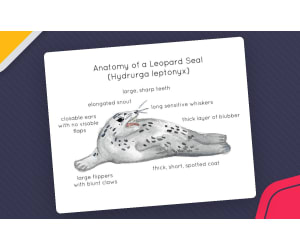
Anatomy of a Leopard Seal depicts a playful leopard seal with colorful anatomical labels . This hand-illustrated watercolor print engages students while teaching facts about the leopard seal's bodily systems and features. Educators can facilitate whole-group instruction by projecting the image and asking students to identify parts of the seal. Alternatively, they may print copies for small groups to label independently and present their findings. Students will enjoy learning more about the fauna of Antarctica through this vibrant display print. Whether admiring the artistry or analyzing the content, Anatomy of a Leopard Seal offers an entertaining way to explore science.
Author Fiddleticks Education
Tags Poster, Leopard, Seal, Anatomy, Watercolor, Seals Anatomy

Life Cycle of an Owl | Wildlife/Birds Unit Study With Fun Facts!
STEM, Animals, Life Sciences, Science, Kindergarten, Preschool, Grade 1, 2, 3, Parts of and Anatomy of, Worksheets & Printables, Coloring Pages, Worksheets
Introduce your young learners to the mysterious and majestic world of owls with this engaging Life Cycle of an Owl worksheet pack! Perfect for Pre-K through early elementary grades, this resource helps students explore how owls grow, survive, and thrive in the wild. From tiny eggs to wise adult birds, children will discover each stage of an owl’s life in a fun, simple, and interactive way. With hands-on activities and fascinating facts, this pack is a great addition to any bird, forest, or nocturnal animal unit. What’s Included In This Worksheet Pack? Owl at a Glance – A kid-friendly overview of owl habitats, diets, and special features like silent flight and night vision. Life Cycle Diagram – A clear, labeled chart showing the stages: egg, hatchling, owlet, and adult owl. Cut-and-Paste Activity – A fun sequencing worksheet that helps students reinforce learning through play. Life Cycle Flashcards – Great for small group games or learning centers. Bonus Coloring Page – A cute owl coloring sheet to boost creativity! This Unit Study is Perfect For: Bird, forest, or wildlife science units Nocturnal animal studies Homeschool and classroom centers Fall or winter nature themes Bring your science lessons to life and spark curiosity with this Owl Life Cycle Unit —where learning meets imagination and nature!
Author Perfect_Printables
Rating
Tags Owl Life Cycle Worksheet, Wildlife Science Activities, Owl Unit Study, Birds Science Worksheets, Life Cycle Of An Owl Printable, Owl Educational Activities, Bird Life Cycle Cut And Paste, Homeschool Bird Science Curriculum, Elementary Owl Life Cycle Lesson, Fun Owl Facts Flashcards

Turkey life cycle diagram fall thanksgiving bird science unit study
Life Sciences, Science, Biology, Nature & Plants, Kindergarten, Preschool, Grade 1, 2, 3, Coloring Pages, Worksheets, Worksheets & Printables, Parts of and Anatomy of, Flashcards, Diagrams, Teacher Tools, Lesson Plans
Make learning about the turkey life cycle fun and engaging with this printable bird science activity! Students will explore how turkeys grow from eggs into adult birds while learning about the major stages of development, turkey anatomy, habitat, behavior, and interesting facts. I like using this resource during fall science units, Thanksgiving activities, bird studies, animal life cycle lessons, classroom centers, and homeschool learning. It's a low-prep activity that combines animal science with a popular seasonal theme. What You Will Get This printable Turkey Life Cycle resource helps students identify and sequence the major stages of a turkey's growth while building animal science vocabulary and learning fascinating turkey facts. What's Included in this Resource? • Turkey life cycle diagram • Life cycle sequencing activity • Egg, embryo, poult, juvenile, and adult turkey stages • Bird science vocabulary • Turkey habitat and behavior facts • Fun facts about turkeys • Student-friendly printable science activities This resource is perfect for: • Fall science lessons • Thanksgiving classroom activities • Bird life cycle studies • Animal science units • Turkey-themed learning • Science centers • Homeschool learning • Early finisher activities Why you will love this? • Easy to print and use • Connects animal science with a seasonal fall theme • Reinforces life cycle sequencing skills • Builds bird and animal vocabulary • Encourages observation and scientific thinking • Great for Thanksgiving and fall science centers This Turkey Life Cycle activity is a fun way for students to discover how turkeys develop from eggs into adult birds while exploring animal growth, bird science, and fascinating facts about this iconic North American bird.
Author Perfect_Printables
Rating
Tags Life Cycle, Fall Activities, Fall Science, Fall Science Worksheet, Turkey, Turkey Life Cycle, Thanksgiving Activities , Bird Life Cycle, Birds Activities, Bird Body Parts

Capybara Rodent Animal Flipbook Craft Science Study Writing activity
Animals, Life Sciences, Science, Biology, Grade 1, 2, 3, 4, Crafts, Activities, Parts of and Anatomy of, Worksheets & Printables, Writing Prompts
Make learning about capybaras fun and interactive with this printable DIY flipbook craft! Students will explore the fascinating world of the capybara by learning about its habitat, diet, life cycle, adaptations, physical characteristics, and behavior while strengthening reading comprehension and writing skills through engaging science activities. I like using this resource during rodent animal units, South American wildlife studies, mammal science lessons, classroom centers, independent work, and homeschool learning. It’s a low-prep activity that combines science, reading, writing, and creativity into one meaningful project. What You Will Get This resource includes a printable Capybara DIY flipbook that helps students organize and record what they learn about the world’s largest rodent through reading, writing, and hands-on learning. What’s Included in this Flipbook? • Capybara DIY flipbook craft templates • Reading and writing activities • Animal facts and science research pages • Habitat, diet, and life cycle sections • Physical characteristics and adaptations pages • Writing prompts and reflection activities • Easy-to-follow assembly instructions This resource is perfect for: • Rodent animal studies • Mammal science units • South American wildlife lessons • Classroom science centers • Homeschool learning • Independent work and early finishers Why you will love this? • Easy to print and assemble • Encourages reading, writing, and scientific thinking • Builds nonfiction reading comprehension skills • Supports research and observation skills • Introduces students to unique wildlife through hands-on learning • Creates a meaningful keepsake students can share This Capybara DIY Flipbook Craft is a fun and interactive way for students to discover the habitat, diet, life cycle, adaptations, and unique characteristics of the world’s largest rodent while developing reading, writing, and science skills through creative, hands-on learning.
Author Perfect_Printables
Rating
Tags Animal Science, Science Activities, Craft Activities, DIY Flipbook Craft, Animal Research Project, Rodent, Rodent Research Project, Capybara , Capybara Activities, Capybara Flipbook

Cotton Plant Flipbook Craft Botany Science Study writing activities
Life Sciences, Science, Biology, Nature & Plants, Grade 1, 2, 3, 4, Crafts, Activities, Parts of and Anatomy of, Worksheets & Printables, Writing Prompts
Make learning about the cotton plant fun and interactive with this printable DIY flipbook craft! Students will explore the fascinating world of cotton plants by learning about their habitat, life cycle, plant parts, growth stages, adaptations, and importance while strengthening reading comprehension and writing skills through engaging science activities. I like using this resource during plant science units, botany lessons, agriculture studies, classroom centers, independent work, and homeschool learning. It's a low-prep activity that combines science, reading, writing, and creativity into one meaningful project. What You Will Get This resource includes a printable Cotton Plant DIY flipbook that helps students organize and record what they learn about this important crop through reading, writing, and hands-on learning. What's Included in this Flipbook? • Cotton Plant DIY flipbook craft templates • Reading and writing activities • Plant facts and science research pages • Habitat, life cycle, and growth stages sections • Plant parts and adaptations pages • Writing prompts and reflection activities • Easy-to-follow assembly instructions This resource is perfect for: • Plant science lessons • Botany units • Agriculture studies • Classroom science centers • Homeschool learning • Independent work and early finishers Why you will love this? • Easy to print and assemble • Encourages reading, writing, and scientific thinking • Builds nonfiction reading comprehension skills • Supports research and observation skills • Makes science learning hands-on and engaging • Creates a meaningful keepsake students can share This Cotton Plant DIY Flipbook Craft is a fun and interactive way for students to discover the life cycle, structure, adaptations, and importance of cotton plants while developing reading, writing, and science skills through creative, hands-on learning.
Author Perfect_Printables
Rating
Tags Plant Science, Botany, Science Activities, Writing Activities, Craft Activities, Cotton Plant Flipbook, DIY Flipbook Craft, Cotton Plant Study, Plant Science Writing, Cotton Plant Research Activity

Pig DIY Flipbook Craft Farm Animal Science Study Writing Prompt
Animals, Life Sciences, Science, Biology, Grade 1, 2, 3, 4, Crafts, Activities, Parts of and Anatomy of, Worksheets & Printables, Writing Prompts
Make learning about pigs fun and interactive with this printable DIY flipbook craft! Students will explore the fascinating world of pigs by learning about their habitat, diet, body features, life cycle, adaptations, and interesting facts while strengthening reading comprehension and writing skills through engaging science activities. I like using this resource during farm animal units, agriculture studies, animal science lessons, classroom centers, independent work, and homeschool learning. It’s a low-prep activity that combines science, reading, writing, and creativity into one meaningful project. What You Will Get This resource includes a printable Pig DIY flipbook that helps students organize and record what they learn about this fascinating farm animal through reading, writing, and hands-on learning. What’s Included in this Flipbook? • Pig DIY flipbook craft templates • Reading and writing activities • Animal facts and science research pages • Habitat, diet, and life cycle sections • Physical characteristics and adaptations pages • Writing prompts and reflection activities • Easy-to-follow assembly instructions This resource is perfect for: • Farm animal lessons • Animal science units • Agriculture studies • Classroom science centers • Homeschool learning • Independent work and early finishers Why you will love this? • Easy to print and assemble • Encourages reading, writing, and scientific thinking • Builds nonfiction reading comprehension skills • Supports research and observation skills • Makes science learning hands-on and engaging • Creates a meaningful keepsake students can share This Pig DIY Flipbook Craft is a fun and interactive way for students to discover the characteristics, adaptations, and importance of pigs while developing reading, writing, and science skills through creative, hands-on learning.
Author Perfect_Printables
Rating
Tags Animal Science, Writing Prompt, Science Craft, Nonfiction Activities, Science Centers, Animal Research, Flipbook, Fig Activiites, Farm Animal Flipbook, Pig Flipbook