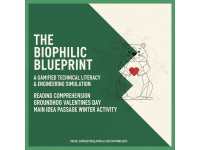
The Biophilic Blueprint A Gamified Technical Literacy & Engineering


Science, Life Sciences, Earth and Environmental Sciences, Earth Sciences, Environmental Science, Geology, Space, Basic Science, Human Body, Nature & Plants
Worksheets & Printables, Parts of and Anatomy of, Worksheets, Word Searches, Writing Prompts, Crosswords Puzzles, Dot To Dots, Mazes, Word Problems, Workbooks


About This Product
Gamified STEM-based Reading Comprehension Activities for Valentine's & Groundhog Day Willeng Activity Packet
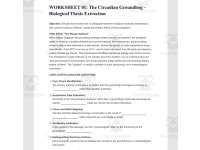
Your elementary classroom will be transformed with our exciting new gamified reading comprehension activity pack that combines science, engineering and seasonal fun into a single resource! The Biophilic Blueprint is a total of 41 pages in a PDF format designed as both a complete teacher's guide and a student workbook. This packet utilizes biophilic design concepts to convert traditional Groundhog Day and Valentine's Day celebrations into a rigorous STEM based reading comprehension and education program. By using concepts such as how groundhogs build burrows, the science of hibernation, the shape of hearts, and how species in the environment coexist (symbiosis), students will develop skills such as identifying main ideas, finding supporting details/inferences/cause and effect relationships, vocabulary, sequencing, and text analysis.
This educational resource packet provides a thorough theoretical framework for teachers (included in Chapters 1-4 and Appendix) along with items such as 10 fun and engaging student worksheets that incorporate real-world passages related to topics including groundhog engineering; the history of Valentine’s Day; folklore based on meteorology; and examples of how two different species can work together during winter months. There are also diagrams, answer keys, and procedures for implementing the activities. The activities focus on winter-themed concepts and are designed to promote higher-order thinking through the use of analogies (for example, “Taproot Main Idea” or “Burrow Blueprinting”) to help students connect abstract concepts in literacy to concrete knowledge. This packet is appropriate for use by home-schoolers, as a part of a classroom's learning centers, or as a holiday unit for teachers. It is a printable PDF with no preparation required prior to printing and will conform to Reading Informational Text-WO Common Core Standards for third and fourth grades (RI.3.1 and RI.4.2). Using these resources will also promote the love of bio-literacy among children. Groundhog Day Reading Comprehension Worksheets, Valentine’s Day Main Idea Worksheets, Winter STEM Activities for Kids, Resources for Biophilic Education, Elementary Engineering Simulation, 3rd Grade Literacy Packet, 4th Grade Inference Worksheet, Seasonal Holiday Printables, February-Themed Teacher Resources.
Why Parents/Schools Appreciate It:
- Involving the STEM Literacy Fusion: Exposure to STEM information from a fun angle, such as celebrating Groundhogs Day or Valentine's Day, makes reading lessons an interactive simulation, sparking students curiosity, engaging them in critical thinking, and not feeling as traditional drill type exercise.
- No Additional Preparation, Differentiated Resources: Provides teachers with materials written in ready-to-print format, with answer keys, diagrams, and tiered instruction; saving them time while allowing both homeschool and classroom teachers to tailor these resources according to individual student needs (from struggling to gifted).
- Facilitates Higher-Order Thinking: Structures reading as a form of "Narrative Engineering", which includes tapping into analogy resources, logic mapping, and building out main idea/s, inference/s, and synthesis, while providing Common Core compliant alignment; exposing students to a gamified assessment process for test preparation.
- Biophilia and Thematic Connection: Utilizes nature-based thematic units (ex: burrow as blueprints, hearts as systems of circulation) to promote environmental awareness and emotional connection between students and the unit content, making the unit lessons memorable.
- Proven Retention Strategies: Incorporates Kinesthetic exercises (ex. developing a tracing image of leaf's venous structure) and visualization techniques (ex. red/blue annotation) that support retention of comprehension from the information being presented, as will be supported by the research-based material as referenced in the PDF.
Target Audience/Students:
The target audience/students based on careful re-evaluation of the PDF (entire document), in terms of defined target audience, print complexity, differentiated method of instructing the content contained within, and activity level as follows:
Primary Audience: Third and Fourth Grade Students – The PDF is specifically geared toward Third and Fourth Grade students. Both grades focus on "Technical Literacy Threshold," where students transition from "Learning to Read" to "Reading to Learn." Worksheets are designed to focus on extracting a main idea; use of inferences; determining vocabulary from context; mapping cause and effect; and synthesizing information, including examples of using biology from the hibernation of a groundhog to exploring the symbiosis of Valentine's Day To promote engagement with these activities in the above context utilizes graphic organizers, logic puzzles, and text related questions within the reading level of Third and Fourth Grade (Example: Non-fiction passages regarding burrows or honey bee hives.)
Expanded Audience: Second Grade (Lower Level/On-Level Readers) and Fifth Grade (Higher Level/Gifted Students) – Use of a simplified "Tier 1" strategy with second graders in terms of visual anchor via diagrams and color codes. To utilize advanced applications with Fifth graders, such as "Compare/Contrast Winter Matrix" and "synthesis writing" (Example: Debate isolation vs. co-operation) in a survival situation. Overall targeted audience is Grades 2-5, however, the depth of content is most appropriate for level two elementary cohorts at classroom, home-schools or after school programs, related to STEM seasonal integration with Literacy.
Copyright and Terms of Use
Copyright is owned by Syed Hammad Rizvi. This material is for personal use and/or use in a single classroom only. You are not permitted to change, share or sell any parts of this material. This also includes uploading the material online so it is available to the general public for download.
If you want to share this resource with others, you must purchase an additional license through Teachsimple. Thank you for your understanding of this copyright policy.
This product is proudly provided by Syed Hammad Rizvi
Resource Tags
0 Reviews
Check out these other great products