



3,911 products added recently
Page 123 - Worksheets
Enhance your classroom with a wide array of worksheets covering various subjects and grade levels. These resources offer engaging activities to reinforce lessons, assess understanding, and provide extra practice. Utilize them to supplement your curriculum and support student learning effectively.

 Show filters


Vegetables Reading Comprehension Passage - Cored Ed Encyclopedia
ELA, Language Development, Reading Comprehension, Reading, Pre-Reading, Science, Life Sciences, Health, P.E. & Health, Nature & Plants, Grade 2, 3, 4, 5, Worksheets & Printables, Worksheets, Teacher Tools, Centers, Activities, Writing Prompts, Assessments, Quizzes and Tests, Quizzes, Lesson Plans
This vegetables reading comprehension with lesson plan includes: Visualization (on the front cover) Start your lesson by taking a minute to think and share something about the topic. Read the script aloud (slowly), perhaps prepare some music or sound effects. Student close their eyes and let their imaginations wander. Students open their eyes, read the question aloud and give them a few minutes to complete. Ask a few students to share or keep answers until the end to compare with what they learn in the passage. Quick pause—thousands of Cored Education products are included with your TeachSimple membership. Download links and encyclopedia index available here. COMPANION VIDEO NOW AVAILABLE (EMBEDDED AFTER PREVIEW PICTURES IN PRODUCT DESCRIPTION) Pre-Reading Trivia Students will write down one thing they already know about the subject and then read five more facts and discuss. These facts are fun, and the students will enjoy learning about the subject before reading more. Give 1 minute for students to write what they already know (no pressure—best guess is fine). Read the five facts together. After each fact, do ask a student for their opinion, was it surprising? Set a purpose by asking students to highlight/underline one fact they want to learn more about during the reading. Reading Passage The text is a high-interest reading passage with set paragraphs, roughly three to four paragraphs long. It contains a variety of themes about the topic, anywhere from history to technology. The passage is between 250 and 350 words in length. First, ask students to look at the headings and see what they’ll learn about today. What do they know about the topic/heading? First read options: Teacher read-aloud (best for support). Partner reading (paragraph by paragraph). While reading, students underline important details, and vocabulary words they think may come up in the questions section. Mixed Questions The first question page contains four multiple-choice questions, each with a choice of four answers, and three written response questions that require a sentence or two from the student. Students complete the mcqs first independently, then review quickly as a class. For the 3 written responses, try to get students giving the answer with some form of evidence: “I think ___ because the text says ___.” If students get stuck, send them back to check the passage. Vocabulary Questions Practice seven key words from the text in this section across two activities. First section is scrambled words where students will unscramble three words given a clue for each. The second section is a word to meaning matching activity. Before starting, have some students read out words they underlined in the passage. Ask students to say the word and read aloud the sentence(s) around each word. Ask students to do scrambled words and the matching exercise in pairs then go through answers as a class. For the scrambled spelling task, get four pairs to come up to the board and write the words for extra practice with the other student reading out the clue. For the matching task, prompt students to give full sentences: “I matched ___ with ___ because ___.” Creative Writing In this question, the student will be required to write a five to eight sentence paragraph on a question related to the topic. Before starting, ask students write down 3 key ideas they are going to include in their piece. Ask students for ideas to share around the class to help those struggling. Pro writing expectations: 5–8 sentences At least 2 facts or details from the passage At least 2 vocabulary words from the previous page Students read their paragraphs while classmates listen for facts and vocabulary words. Extension Activities This page is optional for fast finishers or to take home. There are several activities, each one requiring a different skill. Do some, do none, do all, completely optional - but you will feel reassured knowing every possibility is planned for. Includes summary writting question. Answer Key There are answers for the multiple-choice questions, written response questions have sample answers, vocabulary answers and if there is a summary question then a sample summary will be provided as well. Lesson Plan Included Customized lesson plan for this lesson is included. Lesson Snapshot Title: Vegetables Genre: Nonfiction (Informational text) Subject: Science (Life Science: plants, nutrition) / Reading (informational text) Primary Topic: What vegetables are and why they matter Estimated Guided Reading Level (A–Z): N What This Lesson Teaches Best What counts as a vegetable (in this text): Defines vegetables as edible parts of plants people choose to eat, including roots (carrot), leaves (spinach), and flower buds (broccoli). Plant parts and categories: Explains that many vegetables come from soft-stemmed, herbaceous plants rather than woody trees, and that vegetables come in many shapes because plants have many useful parts. Early farming and seed-saving: Describes how people once gathered edible plants from the wild, then began planting and saving seeds (about 10,000–7,000 BC), keeping and sharing plants that tasted better or grew bigger. Science vs. everyday language (tomato debate): Contrasts the botanical definition of “fruit” (seed-bearing part formed from a flower’s ovary) with how “vegetable” often means a savory plant food served with meals, noting a U.S. court decision in 1893 calling tomatoes vegetables for a tax rule. Nutrition and food preservation: States vegetables are usually low in fat and calories, filling because they bring water and fiber, and may contain vitamins/minerals (examples include vitamin A and vitamin C); also notes chilling, freezing, or canning to keep vegetables longer. Learning Goals Students will define a vegetable using examples from the text (root, leaf, bud). Students will describe where many vegetables come from (soft-stemmed, herbaceous plants) and explain what that means. Students will explain how seed-saving helped wild plants become “garden favorites,” using details from the passage. Students will compare the botanical meaning of fruit with the cooking meaning of vegetable, using the tomato example. Students will identify two reasons vegetables can be filling and healthy (water, fiber, vitamins/minerals) based on the text. Key Vocabulary From the Text edible — safe and good to eat. herbaceous — soft-stemmed; not woody. botanists — scientists who study plants. ovary — flower part that can form fruit. fiber — nutrient that helps you feel full. FULL CATALOG OF DOWNLOAD LINKS AND ENCYCLOPEDIA INDEX HERE
Author Cored Education
Rating
Tags Vocabulary, Reading Comprehension, Reading Passages, Lesson Plans, Ela Lesson Plans, Reading Comprehension Lesson Plans, Pre-reading, Science Lesson Plans, Nature And Plants, Health
Gliders Reading Comprehension Passage - Cored Ed Encyclopedia
ELA, Reading Comprehension, Reading, Science, Technology, Pre-Reading, Language Development, Physics, History, Social Studies, Grade 2, 3, 4, 5, Worksheets & Printables, Worksheets, Teacher Tools, Centers, Activities, Writing Prompts, Assessments, Quizzes and Tests, Quizzes, Lesson Plans
This gliders reading comprehension with lesson plan includes: Visualization (on the front cover) Start your lesson by taking a minute to think and share something about the topic. Read the script aloud (slowly), perhaps prepare some music or sound effects. Student close their eyes and let their imaginations wander. Students open their eyes, read the question aloud and give them a few minutes to complete. Ask a few students to share or keep answers until the end to compare with what they learn in the passage. Quick pause—thousands of Cored Education products are included with your TeachSimple membership. Download links and encyclopedia index available here. Pre-Reading Trivia Students will write down one thing they already know about the subject and then read five more facts and discuss. These facts are fun, and the students will enjoy learning about the subject before reading more. Give 1 minute for students to write what they already know (no pressure—best guess is fine). Read the five facts together. After each fact, do ask a student for their opinion, was it surprising? Set a purpose by asking students to highlight/underline one fact they want to learn more about during the reading. Reading Passage The text is a high-interest reading passage with set paragraphs, roughly three to four paragraphs long. It contains a variety of themes about the topic, anywhere from history to technology. The passage is between 250 and 350 words in length. First, ask students to look at the headings and see what they’ll learn about today. What do they know about the topic/heading? First read options: Teacher read-aloud (best for support). Partner reading (paragraph by paragraph). While reading, students underline important details, and vocabulary words they think may come up in the questions section. Mixed Questions The first question page contains four multiple-choice questions, each with a choice of four answers, and three written response questions that require a sentence or two from the student. Students complete the mcqs first independently, then review quickly as a class. For the 3 written responses, try to get students giving the answer with some form of evidence: “I think ___ because the text says ___.” If students get stuck, send them back to check the passage. Vocabulary Questions Practice seven key words from the text in this section across two activities. First section is scrambled words where students will unscramble three words given a clue for each. The second section is a word to meaning matching activity. Before starting, have some students read out words they underlined in the passage. Ask students to say the word and read aloud the sentence(s) around each word. Ask students to do scrambled words and the matching exercise in pairs then go through answers as a class. For the scrambled spelling task, get four pairs to come up to the board and write the words for extra practice with the other student reading out the clue. For the matching task, prompt students to give full sentences: “I matched ___ with ___ because ___.” Creative Writing In this question, the student will be required to write a five to eight sentence paragraph on a question related to the topic. Before starting, ask students write down 3 key ideas they are going to include in their piece. Ask students for ideas to share around the class to help those struggling. Pro writing expectations: 5–8 sentences At least 2 facts or details from the passage At least 2 vocabulary words from the previous page Students read their paragraphs while classmates listen for facts and vocabulary words. Extension Activities This page is optional for fast finishers or to take home. There are several activities, each one requiring a different skill. Do some, do none, do all, completely optional - but you will feel reassured knowing every possibility is planned for. Includes summary writting question and additional facts. Answer Key There are answers for the multiple-choice questions, written response questions have sample answers, vocabulary answers and if there is a summary question then a sample summary will be provided as well. Lesson Plan Included Customized lesson plan for this lesson is included. Lesson Snapshot Title: Gliders Genre: Nonfiction (informational text) Subject: Science (flight/engineering) Primary Topic: How gliders fly using lift and launch methods Estimated Guided Reading Level (A–Z): Q What This Lesson Teaches Best Explains what makes a glider different from a small airplane (no motor; quiet flight; “trade height for distance”). Describes how gliders get into the sky (help at the start, including being towed; later mentions aerotows and winches). Teaches how moving air helps a glider climb—especially rising warm air (“thermals”) and wind pushed upward at a ridge or hill. Shows how design features support gliding (long, narrow wings; smooth body; low drag to lose little energy). Connects gliders to early flight experiments through Otto Lilienthal’s repeated testing and “fly hill.” Learning Goals Students will describe how a glider is similar to and different from a small airplane. Students will explain how a glider usually starts flying using details from the text. Students will identify two kinds of lift described in the passage and tell how each helps a glider climb. Students will explain why long, narrow wings and low drag help a glider glide efficiently. Students will describe how gliders and launch methods changed over time, using examples from the text. Students will explain how spoilers or airbrakes help with landing safely. Key Vocabulary From the Text cockpit — where the pilot sits and reads instruments. thermals — rising columns of warm air. drag — air resistance that slows motion. aerotows — launches where an airplane tows the glider. spoilers — panels that help a glider slow down and descend. FULL CATALOG OF DOWNLOAD LINKS AND ENCYCLOPEDIA INDEX HERE
Author Cored Education
Rating
Tags Vocabulary, Reading Comprehension, Reading Passages, Lesson Plans, Ela Lesson Plans, Reading Comprehension Lesson Plans, Pre-reading, Science Lesson Plans, Physics, History
K-2 Sight Words Practice Reading Comprehension Passages
ELA, Reading, Preschool, Grade 1, 2, Worksheets & Printables, Worksheets
K-2 Sight Words Practice Reading Comprehension Passages Elevate your teaching resources with the K-2 Sight Words Practice Reading Comprehension Passages. This educational tool features a 35-page collection of graduated reading passages specifically designed to motivate beginning readers with a keen focus on practicing reading fluency and comprehension. Each story within this set is distinct, engaging and filled with high-frequency sight words from the Pre-Primer, Primer, First Grade, and Second Grade Dolch word lists. The wealth of familiar high usage words ensures an extensive exposure for students developing their sight vocabulary. Each story is followed by a page of direct multiple-choice questions developed for evaluating comprehension. Answer keys are also included. The K-2 Sight Words Practice Reading Comprehension Passages go beyond Kindergarten through to second grade; they are adaptable to English Language Learners and beginners at any age who are keen on mastering K-2 sight words. These unique sight word-intensive passages can be used for independent practice or small group instruction. They also support intervention strategies aiming at reinforcing weak areas in reading or even remediation efforts – not forgetting extra practice sessions at home beyond school hours! The K-2 Sight Words Practice Reading Comprehension Passages is a handy PDF file, making it printable and usable in a variety of settings. It’s an educator's versatile friend ensuring that the journey to attaining literacy among their learners is not only rewarding but also engaging. Choose this resource to empower students as they steadily climb the ladder of effective reading comprehension. Stories included: The Frog and the Fish Birds and Boats Lunch Party Mother Never Forgets Hot Spell A Fish Named Fido Monty & Stella Save the Day Spots on Spot Bad Hair Day Give and Get Magic Zoo
Author WorksheetsPlus
Tags Sight Words, Reading Comprehension Practice, Fluency, Literacy Skills, Reading Passages
Science Reading Passages on Properties of Earth Materials (Word)
ELA, Reading, Reading Comprehension, Science, Earth and Environmental Sciences, Earth Sciences, Common Core, ESL, Language Development, Geology, Grade 2, 3, 4, Assessments, Teacher Tools, Tests, Quizzes and Tests, Worksheets, Worksheets & Printables
Reading Passages on Properties of Earth Materials for Earth Science Properties of Earth Materials: Reading Passages Earth Science: Enhance your teaching arsenal with these captivating science reading lessons. Aligned with the Common Core State Standards (CCSS) and encompassing high-interest topics paired with diverse question types, these materials make introducing your students to science reading a breeze. With most of the groundwork laid out for you, delve into fascinating subjects such as minerals, the rock cycle, and fossils, ensuring an enriching and streamlined educational experience. What's inside? Part 1 - Properties of Earth Materials Reading Passage 1: Earth Science and Earth Materials Reading Passage 2: Earth Materials and Their Uses Reading Passage 3: Minerals Reading Passage 4: Rocks and the Rock Cycle Reading Passage 5: Soils Reading Passage 6: Fossils Product Info: 36 PAGES (US English with Answers) Word Version Teaching Duration: 2 Weeks Science Reading Comprehension Outline: Targeted for students in 3rd and 4th grades, these reading passages are enhanced with illustrations and graphs to elucidate critical points. Each lesson aligns with the Common Core State Standards, allowing you to integrate science reading practice effortlessly, knowing that minimal preparation is needed on your part. Each passage comes with a variety of questions in different formats, including multiple-choice formats, data analysis, and fill-in-the-blanks. The topics covered strike a balance between engaging content and core curriculum-based science subjects. Versatile in application, these lessons are suitable for a variety of settings such as whole-class instruction, morning activities, independent desk work, small group discussions, contingency plans for substitute teachers, homework assignments, or even special holiday-themed tasks. FULL CATALOG OF DOWNLOAD LINKS HERE Grade 3/4 Links: Physical Science Part 1 - Properties of Objects and Materials Google Docs/Slides/Forms PDF PPT Word Free Supplementary Pack Accompanying Videos Physical Science Part 2 - Position and Motion of Objects Google Docs/Slides/Forms PDF PPT Word Free Supplementary Pack Accompanying Videos Physical Science Part 3 - Light, Heat, Electricity, Magnetism Google Docs/Slides/Forms PDF PPT Word Free Supplementary Pack Accompanying Videos Life Science Part 1 - Characteristics of Organisms Google Docs/Slides/Forms PDF PPT Word Free Supplementary Pack Accompanying Videos Life Science Part 2 - Life Cycles of Organisms Google Docs/Slides/Forms PDF PPT Word Free Supplementary Pack Accompanying Videos Life Science Part 3 - Organisms and Environments Google Docs/Slides/Forms PDF PPT Word Free Supplementary Pack Accompanying Videos Earth Science Part 1 - Properties of Earth Materials Google Docs/Slides/Forms PDF PPT Word Free Supplementary Pack Accompanying Videos Earth Science Part 2 - Changes in the Earth and Sky Google Docs/Slides/Forms PDF PPT Word Free Supplementary Pack Accompanying Videos Earth Science Part 3 - Objects in the Sky Google Docs/Slides/Forms PDF PPT Word Free Supplementary Pack Accompanying Videos For similar products and other frees, do check out Cored Group on TeachSimple .
Author Cored Education
Rating
Tags Science, Elementary, Reading, Comprehension, Vocabulary, Science Assessments, Reading Comprehension Assessments, Vocabulary Assessments, Earth Science
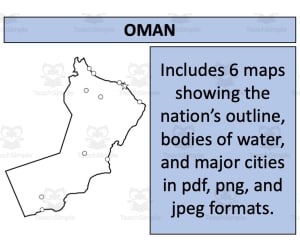
Oman Map Resources
Social Studies, Geography, Not Grade Specific, Worksheets & Printables, Worksheets
Oman Map Resources is a valuable educational tool designed specifically for educators interested in imparting knowledge on global geography. This resource consists of six distinct map sheets that can facilitate an in-depth study of Oman’s geographical landscape, including its immediate surroundings. Features: Each map sheet comes in different digital-friendly formats such as pdf, jpeg, and png, ensuring compatibility with most teaching devices. The maps detail various aspects from blank outlines to bodies of water and major settlements providng a comprehensive insight into Oman's geography and societal structures. A unique aspect is the depiction of Oman both as an isolated entity and within its surrounding national context. This helps students understand the country's strategic location effectively. About The Package: Beyond Oman, there's also a larger collection featuring detailed maps from 194 different nations at a significant discount. From elementary to high school education levels, these resources adapt well because they are not grade-specific. They could be adjusted based on individual student ability or curriculum demands. Possible Uses: As classroom aids, Can be integrated into your own products Easy downloading and managing these various types of files enhancing user experience substantially! Oman Map Resources serve as an essential guide helping teachers deliver interactive lessons that captivate students while deepening their understanding of world geography - all by focusing intensely at one country level.
Author Mr Gray History
Tags Oman Geography, Map Resources, Educational Tools, World Geography, Interactive Lessons

COLORING PICTURES | 16 FREE ILLUSTRATIONS
Creative Arts, Art, Early Learning, Elementary, Homeschool Resources, Not Grade Specific, Pre-K, Worksheets & Printables, Worksheets, Coloring Pages
COLORING PICTURES | 16 FREE ILLUSTRATIONS THIS RESOURCE HAVE 17 FREE ILLUSTRATIONS FOR COLORING. INTRODUCTION: We are EDITORIAL ARENAS EDUCATIVAS, and our mission is to produce a variety of educational materials so children can learn better and more effectively. We encourage you to visit our entire store to download our products. Also, remember that we produce reading, writing, math, and Spanish language learning materials. MAIN DESCRIPTION OF THIS PRODUCT: 1) What is the recommended printing method for this resource? I recommend printing this document in PDF format so you won't experience any errors when printing. 2) What educational standards were used as the basis for creating this material? This document was not developed based on any specific standard. 3) Who is the creator of this resource and how should it be cited? The creator of this document is EDITORIAL ARENAS EDUCATIVAS. 4) Is this resource available for free or does it require a purchase? Because we vocationally work for the education of thousands of students, we are offering this document for free. 5) This resource is for individual use only; what restrictions apply to its redistribution or sale? We ask that you share our link so more people can download our resource or recommend our store. It would help us greatly. SECONDARY AND COMPLEMENTARY INFORMATION: 1) Is this material up to date with the latest educational changes? Yes, this material primarily addresses all learning theories about children, which tell us that children should learn in an educational and fun way. 2) What printing format guarantees the best results? I recommend printing this document in PDF format. I would also ask you to carefully check whether you have a color or black and white printer. 3) What recognition or endorsement does the author of this material have? This document has been prepared by EDITORIAL ARENAS EDUCATIVAS, and we guarantee that this document has been carefully selected, ensuring that your students have a fun and successful learning experience. 4) Are there additional or complementary versions of this resource? No, there are no additional versions, unless we announce an update at some point.
Author EDITORIAL LAURA EDUCA
Rating
Tags FREE, FREE RESOURCES, COLORING, COLORING PAGES, SPANISH COLORING PAGES, WORKSHEETS, ACTIVITIES, GAMES

Health | 3rd Grade Unit 2: Growth and Development
P.E. & Health, Life Studies, Physical Education, Health, Special Resources, Life Skills, Social Emotional Learning (SEL), Social Skills, Grade 3, Teacher Tools, Lesson Plans, Worksheets & Printables, Worksheets
This 3rd Grade Health Unit focuses on Growth and Development and is essential to help students with their health and wellness. There are seven units in all taught in 3rd grade that focus on health. These units include: Unit 1 that focuses on Personal Health and Wellness Unit 2 that focuses on Growth and Development Unit 3 teaches students about Nutrition and Physical Activity and how to eat right and stay active Unit 4 that helps students with Substance Use and Abuse and how to avoid bad substances Unit 5 that will teach students about Injury/ Violence Prevention Control and Safety Unit 6 that covers what happened during Covid and how to protect themselves while learning about Prevention/Control of Disease Unit 7 discusses our environment and how to help save our planet with Environmental Consumer Health These units all about health can be taught out of order. They are only numbered for your convenience. At the end of each unit, there is an assessment to test students’ understanding. Through using this Health 3rd Grade Unit 2: Growth and Development, students will be able to study and learn about body organs, our body systems, and their emotional and physical features. Included in this 3rd Grade Health Unit are the following: In this unit, students will learn about several different organs in the body including: brain, lungs, heart, liver, kidneys, and the small and large intestines. They will find a worksheet with a blank body and label all these parts after reading about these vital organs. Students will also learn about the many different body systems we have which include: skeletal and nervous systems, circulatory system, digestive system, respiratory system, muscular system, and learn about our skin and hair. They will assemble in order how these systems look in a body as they compile a book. They will also label each system after looking a drawings. They will explore the emotional and physical features of people when they are sad, surprised, happy, etc. Lastly, they will compare their physical features to other classmates and come to understand how our genes are all different. This unit meets Common Core Standards. It is 13 pages of fun engaging activities! At the end of the unit, there is an assessment to check for understanding. There are seven units that cover all the health requirements for 3rd grade. Here are the links to other health units:
Author K-5 Treasures
Rating
Tags Health Unit, Personal Health, Healthy Goals, Unhealthy Choices, Health Activities, Physical Goals, Health Goals, Health And Wellness, 3rd Grade Health, Third Grade Health

Summer Count By 2
Math, Numbers, Preschool, Kindergarten, Grade 1, Worksheets & Printables, Worksheets
Summer Count By 2 is a summer-themed math resource that allows students to practice counting by 2s. This colorful one-page worksheet features a row of flip flops that students can color in. Below each sandal is a number written out, starting with zero and counting by 2s up to 20. However, some of the numbers are missing. Students must carefully count by 2s and write the missing numbers on the dotted lines to complete the sequence. This resource provides a fun way for children to reinforce counting skills. Use it for morning work, a small group activity, or individual practice in the classroom or at home. The summer theme makes learning the 2s facts engaging. Students will enjoy coloring the bright flip flops as they fill in the missing numbers on this beginner counting worksheet.
Author Cherry Workshop
Tags Summer, Counting, Count By 2, Numbers

Nonfiction Early Reader: Ancient Civilization Articles
ELA, Reading, Grade 2, 3, 4, Worksheets & Printables, Worksheets
Nonfiction Early Reader: Ancient Civilization Articles Nonfiction Early Reader: Ancient Civilization Articles is an essential educational resource developed for advancing the knowledge of young learners in grade 2 through grade 4 about various ancient civilizations. Our aim is to generate an understanding and love for history among these students through the riveting details about different ancient civilizations contained in our product. About The Product We offer a selection of 28 exclusive articles, each highlighting distinct aspects of ancient civilizations. Topics covered range from "Deadly Smallpox" and "Roman Builders", to "The Silk Road" and "The Olympic Games ". We provide students a wider perspective on crucial historical developments that altered our world. Furthermore, every article comes with an attractive color photo or clipart to significantly enhance its reader engagement potential. An Understanding Approach The content of these early reader articles has been designed keeping in mind the comprehension abilities of beginner readers. We ensure a balance between simplicity for easy understanding and valuable depth necessary for growth in knowledge. In Class Usage: Use as preliminary material prior to essay writing assignments or report creation tasks Foster insights through group discussions Enhance vocabulary by discussing highlighted keywords during reading sessions Solo Study Material: This material can also promote independent learning allowing pupils to explore history at their ease and personal pace. Homework Assignments:Teachers may also utilize this all-inclusive PDF file as homework material. What Makes Us Unique We are defined not only by our commitment toward enriching children's knowledge about history through Nonfiction Early Reader: Ancient Civilization Articles, our product also extends endless possibilities for teachers for its strategic usage. It can be merged seamlessly into your existing curriculum, ready to be used however and whenever you desire!
Author Simply Schoolgirl
Tags History Education, Ancient Civilizations, Nonfiction Reading, Primary Sources, Engagement

Mankind Story of All of Us: Episode 9 (Pioneers)
Social Studies, History, History: World, Grade 7, 8, 9, 10, 11, Worksheets & Printables, Worksheets
Mankind Story of All of Us: Episode 9 (Pioneers) This is a comprehensive educational tool that brings history to life. Based on the popular TV series, it explores key events that transformed mankind from hunter-gatherers to global citizens. Key Historical Events Included: Navigating the Ice Age Inventing farming techniques The invention of movable type The advent of the industrial revolution and space exploration This teaching tool transports students into an age of exploration while examining traditions in North America, Siberia, and Australia. Pivotal Moments in History Explored: The irrational fear leading to Salem’s witch trials and the justified outcry for freedom are part of this exciting resource. Notably, the American revolutionaries’ brave stance against mighty empires is detailed here. Features: Included are teacher-generated questions that help students focus during video viewings. A ready-to-print worksheet pattern is available along with a detailed answer key. Audience: Perfect for grade 7-11 scholars with social studies majors who focus primarily on world history. The file will be provided as PDF format for easy access. Inspiring Learning through History! Enrich your classroom environment by captivating your students with mankind’s journey throughout time using this fascinating teaching tool - Mankind Story. Let's inspire our future generations by sharing wonderful stories from our past!
Author EduPal Learning
Tags Mankind, World History, Exploration, Technological Advances, Progress

Following Steps in a Process | How To Make Slime
ELA, Preschool, Grade 1, 2, 3, 4, Worksheets & Printables, Worksheets
This resource is a fun activity your students will love as they practice following steps in a process. This is how to make unicorn rainbow slime. This resource will come with an ingredient list and instructions. There are arrows and graphics to be printed if you want students to write their directions down.
Author First in Line
Tags Directions, Steps, Slime, How To, Rainbow
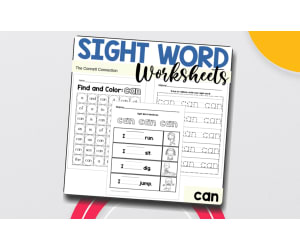
Sight Word Worksheets: can
ELA, Reading, Preschool, Grade 1, Worksheets, Worksheets & Printables
With these sight word worksheets, students will practice sight word recognition. Students will use these worksheets to find, spell, write, and read the target sight word. These worksheets are for the sight word: can. This product contains the following worksheets: With the Build a Sentence worksheet, students will cut out the words and unscramble a sentence using the target sight word. They will then draw a picture to illustrate the sentence. With the Sight Word Practice worksheet, students will color, trace, and write the sight word as well as cut out the letters that spell the word and glue them in the correct boxes. With the Sight Word Word Search worksheet, students will color, draw , and trace the sight word as well as locate the sight word in the word search. With the Sight Word Dab It worksheet, students will dab, color or cover the sight word. With the Sight Word Tracing worksheet, students can trace or rainbow write their sight word. With the Sight Word Color worksheet, students can color, rainbow write, or paint their sight words. With the Sight Word Write and Read worksheet, students will trace the sight word at the top of the page, write the sight word in the space in each sentence, and read the sentences. With the Sight Word Reading worksheet, students will read the story and then draw a picture to represent the story. Students can also circle or underline the target sight word. When to Use: Literacy Center - These worksheets can be used in literacy center for students to practice these sight words. Homework - These worksheets can be sent home from homework so parents can assist students in learning their sight words. Independent Practice - These worksheets make great independent practice for students learning sight words. Sub Plans - Since these worksheets have easy to follow directions, they make great activities to leave with substitutes.
Author The Connett Connection
Tags Sight Words, Sight Word Recognition, Sight Word Worksheets, Sight Word Can

Lots Of Writing Tasks Teaching Writing To Argue: 'Save Our Tree' (7-11 years)
ELA, Writing, Grade 3, 4, 5, Worksheets & Printables, Worksheets
Lots Of Writing Tasks Teaching Writing To Argue: 'Save Our Tree' (7-11 years) is a substantial teaching resource developed to involve young learners aged between 7 and 11 years old in stimulating, high-powered writing activities. This instructive package sparks thoughtful and creative writing, making it an excellent choice for teachers from traditional public schools as well as homeschooling environments. This vibrant learning tool explores the case of Anya's report for the TV show 'Save Our Tree.' The kids are introduced to varying perspectives on stopping deforestation. Using these outlooks as foundational blocks, they're encouraged to share their viewpoints on this environmental argument. Firstly, learners convey their opinions by drafting responses or reflections based on Anya's report. Then they use prompts included in this kit to guide them while crafting their newspaper articles discussing the situation. Following this intriguing task comes another where they get the chance to demonstrate persuasion skills by drafting a letter addressed to the council concerning the issue. The engagement doesn't stop here! A strategy encouraging analytical thinking is implemented where children are asked to cut out prescribed writing cues and sort them according to different viewpoints—providing first-hand experience in identifying shades of arguments—a crucial life skill. This resource takes on an exciting magazine-like format filled with captivating stories and non-fiction texts—it feels less like homework and more like fun reading time! Children enjoy tasks such as story-writing, play script composition even creating persuasive leaflets! Offering precise instructions coupled with examples leaving little space for misunderstandings—this resources PDF focuses heavily on assisting children familiarize themselves with varying writing techniques—it includes challenges that tackle forming basic sentences; increasing complexity using connectives; selective vocabulary selection; better understanding grammar along with efficient punctuation—a bonus especially during exam prep or helping ELL/ESL learners. An excellent fit into the language arts curriculum , the 'Lots Of Writing Tasks Teaching Writing To Argue: 'Save Our Tree'' resource is an enriching addition to any teaching toolkit aimed for students in 3rd, 4th or the 5th grade.
Author Guinea Pig Education
Tags Writing Tasks, Teaching Resource, Argumentative Writing, Creative Writing, Environmental Issues
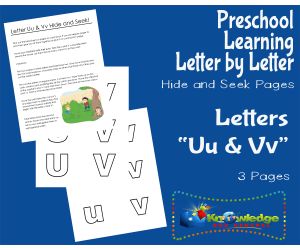
Preschool Letter by Letter: Letters U & V - Hide and Seek
ELA, Strategies, Kindergarten, Preschool, Worksheets & Printables, Worksheets
Learn about the alphabet, letter by letter! This ebook includes a fun hide & seek game for the letters 'U' and 'V'. There is a page that gives several suggestions for how to use this product. These were designed to make letter recognition fun and easy for Preschool children. This ebook format includes a downloadable PDF file. Keywords: preschool, alphabet, letters, letter recognition, tracing, early learning, coloring, writing, phonics, spelling
Author Knowledge Box Central
Tags Alphabet, Letters, Game
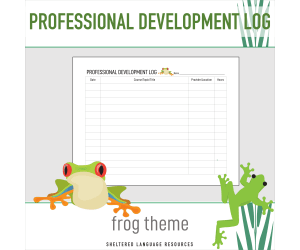
Professional Development PD Log Frog Theme
, Not Grade Specific, Worksheets & Printables, Worksheets
Can you think of any reason you shouldn't have a cute frog on your PD log? Me neither.
Author Sheltered Language Resources
Tags Professional, Development, PD Log, Teacher Meetings, Frog Printable
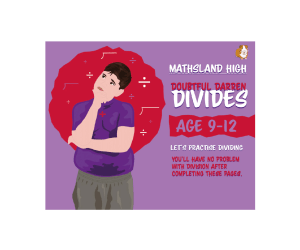
Division & Long Division Practice Questions - Age 9-12
Math, Multiplication and Division, Multiplication, Grade 4, 5, 6, Worksheets & Printables, Worksheets
A comprehensive pack of division and long division practice questions, with answers, that are designed to help kids, age 9-12, get to grips with all areas of division. The exercises include questions on: - simple division facts and mental division skills - division with and without remainders - division with a missing dividend or divisor - prime numbers - factors and HCF - dividing by 10, 100, 1000 - long division - written division problems We have devised these packs as a supplementary aid to learning maths. They have been created to help teach the problem areas that children struggle with most. Through my work as a tutor, I’ve discovered that children would have problems with particular areas in maths and would find it hard to get their head round difficult concepts. I found that most textbooks contained only a couple of pages of exercises to work through, which does not solve the problem. Therefore, I have devised some structured packs that deal with each subject in greater detail, giving the child loads of examples to work through. If they work through the packs ‘the penny will drop’ and they will grasp the concept. This is a great resource and children will love practising division alongside the kids of Mathsland High - Doubtful Darren Divides, Felicity Factor, Petite Penelope Prime and Loud Lenny Long Division. Answers included.
Author Guinea Pig Education
Tags Simple Division Facts, Long Division, Factors, Prime Numbers, Word Division Promblems, Long Division Facts, How To Teach Basic Division, Long Division Practice Problems, How To Teach Long Division, How To Explain Long Division To A Child, How To Teach A Child Division, When Is Long Division Taught, Teach Long Division

Letter Z Activities
ELA, Reading, Writing, Kindergarten, Preschool, Grade 1, Worksheets & Printables, Worksheets
This file is a PDF. It is a Letter Hunt for the letter Z. It can be used in grades pre-k, first grade, or homeschool. Students can use crayon to color in all the letter Zs or use dobbers. Once students color in all the Zs the dots will reveal a "hidden letter Z" in the Letter Hunt. As extra practice students can write over the colored dots to form the letter Z. Includes: Capital Letter Z hunt Lowercase Letter z hunt Mix of both upper and lowercase letter Z hunt Answer keys in color #LetterZActivities Enjoy! More Letter Hunts Links Below: Letter A Hunt Letter B Hunt Letter C Hunt Letter D Hunt Letter E Hunt Letter F Hunt Letter G Hunt Letter H Hunt Letter I Hunt Letter J Hunt Letter K Hunt Letter L Hunt Letter M Hunt Letter N Hunt Letter O Hunt Letter P Hunt Letter Q Hunt Letter R Hunt Letter S Hunt Letter T Hunt Letter U Hunt Letter V Hunt Letter W Hunt Letter X Hunt Letter Y Hunt Letter Z Hunt - - - - - - - - - - - - - - - - - - - - - - - - - - - - - - - - - - - - - - - Here are links to similar resources in my store: Alphabet Alliterations Character Analysis Worksheet Happy Culture Day Poster Darkling Beetle Life Cycle Display First Days of 2nd Grade Flipbook All About My Country Research Project Types of Communities Anchor Chart Check Out More Resources from My Store: A Traveling Maestra - - - - - - - - - - - - - - - - - - - - - - - - - - - - - - - - - - - - - - -
Author CraftEdPrints
Tags Letterhunt , Alphabet , Letters , Preschool , Homeschool , Elementary , Letteroftheweek , Letteroftheday , #LetterZActivities

Thanksgiving Greater Than Less Than
Math, Numbers, Preschool, Kindergarten, Grade 1, Worksheets & Printables, Worksheets
A fun and engaging Thanksgiving activity to Introduce and practice less than, great than, and equal to! Math activity that includes: 15 cards with Thanksgiving pictures to compare; 1-10 number cards <, >, = cards 4 worksheets .
Author Cherry Workshop
Tags Numbers , Great Than, Less Than, Thanksgiving, Basic Operations

Quotes and Notes From Great Classical Composers Copywork: Franz Joseph Haydn
Creative Arts, Art, Music, Grade 2, 3, 4, 5, 6, 7, 8, Worksheets & Printables, Worksheets
This Copywork Notebook walks your student through bite-sized portions of quotes from classical composer, Franz Joseph Haydn. This product includes regular spaced lines for older students. Copywork is designed to help your children to learn spelling, punctuation, sentence structure, and vocabulary while copying from historical information. The idea is that your student will actually begin to imitate the elements in his or own writing. This product is an ebook in PDF format. Keywords: Classical Composers, History, Classical, Music, Conductor, Strings, Woodwinds, Brass, Orchestra, Violin, Viola, Cello, Horn, Percussions, Copywork, Spelling, Punctuation, Sentence Structure, Vocabulary, Franz Joseph Haydn
Author Knowledge Box Central
Tags Haydn, Classical Composers, Music History, Classical Music, Copywork, Joseph Haydn Student

Mindfulness Coloring Pages – 32 Positive Quotes
Special Resources, Social Emotional Learning (SEL), Not Grade Specific, Coloring Pages, Worksheets, Worksheets & Printables
Promoting mindfulness, emotional awareness and positivity just got easier with these engaging Mindfulness Coloring Sheets. The set includes 32 beautifully illustrated pages featuring uplifting quotes that inspire reflection as students color. Each page is intricately designed to engage both the creative and contemplative aspects of the mind. The carefully chosen quotes serve as gentle reminders to cultivate gratitude, resilience, and mindfulness in the midst of life's demands. This resource is not confined to age or skill level, making it versatile for a broad audience, including classrooms, therapy sessions, or personal use. The coloring sheets feature a diverse range of designs, allowing users to explore different patterns while contemplating the accompanying positive quotes. This harmonious blend of art and mindfulness fosters an environment where self-expression and self-reflection can coexist, providing a moment of respite from the fast-paced nature of daily life. As children carefully color each page, they will slow down and focus on the present. The positive words and images foster relaxation while allowing students to express creativity. Coloring is therapeutic and reduces stress. Teachers can use these sheets for mindfulness breaks, calm down time or social-emotional learning. With their inspiring designs and uplifting messages, these Mindfulness Coloring Sheets are perfect for classrooms, counseling offices and at home. Kids will love coloring the gorgeous pages as they develop emotional awareness, resilience, optimism and presence. A wonderful self-care resource kids will always benefit from!
Author SEN Resource Source
Rating
Tags Mindfulness Coloring, Positive Quotes, Relaxation Activity, Stress Relief, Coloring Therapy, Motivational Quotes, Self-care, Affirmation, Meditation, Emotional Well-being

Guided Reading Level L - The Arctic Fox (with Lesson Plan)
ELA, Resources for Teachers, Reading Comprehension, Reading, Pre-Reading, Language Development, Life Sciences, Science, Vocabulary, Animals, Grade 1, 2, 3, Worksheets & Printables, Worksheets, Teacher Tools, Centers, Activities, Literacy Readers, Quizzes, Quizzes and Tests, Assessments
This Guided Reading Book - The Arctic Fox (Level L) with lesson plan includes: Guided Reading Color Label (front cover x1) This is a quick way to match the book’s demands to what students can generally handle.. The overall goal is to use the level/color to pick books for several smaller groups. To qualify for a certain level, a student is expected to read a book from that level with about 90–94% accuracy. If a student is consistently accurate and understands, move up a level. If the student is struggling at that level, drop down and add more support. Each student will improve at completely different rates, but it is generally one of the best ways to check progress across the class. DOWNLOAD THE CATALOG TO VIEW ALL GUIDED READING BOOKS AVAILABLE (SORTED LEVELS A-Z) Pre-Reading Question (x1) Teacher asks the prompt aloud, can be while showing the cover or first page. Students share what they already know, or make educated guesses from the cover. Prompt them to use the target vocabulary. Write some of their responses on the board to look back at during the reading. Vocabulary Words (x5) Introduce the five words, best doing it one at a time. Start by saying it, while students repeat and then see if anyone knows what it means before reading further. Read through the meaning and try to briefly connect each word to a picture or gesture so it’s meaningful. Ask students to flip through the book pages and point to where they see each of the vocabulary words. While reading the book pause upon coming across one of the vocab words or read the sentence twice to make sure students understand the word has appeared. Optional: Ask students to raise hands whenever they see/hear one of the new words. Guided Reading Pages (x10) Check the book snapshot (below) for: primary topic - do you need to prep extra reading or intro materials on this? what is taught best - decide on 1-2 bullets to focus on, use the prompt or words provided here for best results. learning goals - what you are checking for students to be able to do after the session, elicit answers using prompts or words provided. key vocabulary (see section above). questions overview - so you know what is coming up and if you need to prep extra materials to assist understanding. Run the lesson You may have already looked at a few of the pages together, but you can show them some of the pictures again first to set meaning. Depending on how much time you have and how familiar your students are with guided reading class, you may want to read the book aloud first with the group first. Students whisper or partner read, while you listen in. If time, do it as a group, one student reading a page each. Use the guided page’s prompts to coach: “Check the picture / does it make sense?” “Point under the words / try the first sound” “Reread the sentence smoothly”. Try to focus more on one student per session (rotating every time), so you can work out if they are ready to move up or need to move down a level. Comprehension Questions (back cover x3) This is your way to check that students didn’t just say the words, but actually understood the text. First, let students answer by pointing to the page/picture and saying a short sentence. After any answer, follow with: “Show me where you found that in the text.” In bigger groups, have partners answer first (10–20 seconds), then call on 2–3 students to share. Differentiation tips: Emerging speakers/struggling readers: oral + pointing On-level: oral in a full sentence Higher: one written sentence or draw + label Book Snapshot Title: The Arctic Fox: A Winter Survivor Genre: Nonfiction (informational) Subject: Life Science Primary Topic: Arctic fox adaptations for cold-weather survival Estimated Guided Reading Level (A–Z): L What This Book Teaches Best Explains the Arctic fox’s habitat (“far north”) and names the tundra as a vast, treeless land with deep winter snow. Describes seasonal camouflage: white winter fur to hide, and brown/gray summer fur to blend with rocks and plants. Shows physical adaptations that help the fox stay warm and move safely (small rounded ears; thick fur on paws like “warm socks”). Teaches hunting behaviors using precise actions and vocabulary (hearing prey under snow; pouncing by leaping and diving head-first). Introduces animal homes and young: a den as tunnels under hills/rocks, and baby foxes called kits born in spring. Learning Goals Describe where the Arctic fox lives and what the tundra is. Explain how the Arctic fox’s fur color helps it in winter and in summer. Describe two body features that help the Arctic fox stay warm in freezing weather. Explain how the Arctic fox finds prey under the snow using its hearing. Describe what “pouncing” is and how it helps the fox catch food. Describe what a den is and what kits do as they grow. Key Vocabulary From the Text tundra — cold, treeless land in the far north. lemmings — small animals the fox can hunt. prey — an animal another animal hunts and eats. pouncing — leaping and diving quickly to catch food. den — a home or shelter where an animal lives. Discussion Prompts Pre-reading question: What body parts or behaviors might help an animal stay warm in a cold, windy place? Comprehension questions: How does the Arctic fox’s fur help it hide in winter and in summer? What does the fox do with its tail when it goes to sleep? How does pouncing help the Arctic fox catch its food? Printing Tips 1. Best Printing Method (Recommended) “Booklet” Printing (Best if Available) If your printer or PDF viewer supports Booklet Printing , use this. Settings to use: Print mode: Booklet Paper size: Letter or A4 (either works) Orientation: Landscape Print on both sides: Yes Flip on: Short edge Scaling: Fit to printable area Booklet subset: First test: Front sides only Then: Back sides only This will automatically: Pair pages correctly Put the cover on the outside Align everything for folding After printing, fold in half and staple along the spine . 2. If “Booklet” Printing Is NOT Available You can still print this correctly with manual duplex printing . Step-by-step: Open the PDF. Choose Print . Set: Orientation: Landscape Pages per sheet: 1 Print on both sides: Yes Flip on: Short edge Print all pages . Because each PDF page already contains two facing book pages, the result will still fold cleanly into a book. Thousands of Cored Education products are included with your TeachSimple membership. Download links and encyclopedia index available here.
Author Cored Education
Rating
Tags Reading Comprehension, Reading Passages, Reading, Guided Reading, Guided Reading Lesson Plan, Guided Reading Activity, Pre-reading, Vocabulary, Science Lesson Plans, Animals

Counting Winter Icicles Clip Cards (0-10) - EBOOK
Math, Early Math, Kindergarten, Preschool, Worksheets & Printables, Worksheets
Counting Winter Icicles Clip Cards (0-10) Ebook: A Unique Teaching Resource The Counting Winter Icicles Clip Cards (0-10) Ebook is an engaging teaching resource aimed at improving students' numeracy skills and fine motor development. Specifically designed for early learning stages, this resource brings together numerical education and physical development in a fun way. The Concept: A child counts the number of icicles on the house depicted on the left side of a card. Marks their answer by placing a clip on the corresponding number on the right side. This unique exercise involves clipping, a simple task that enhances fine motor skills. The cards fit into small plastic photo boxes - your math center gets a dash of winter sparkle! Ebook Details: The ebook is designed as an 8-page downloadable electronic PDF file with 11 different cards featuring numbers from zero up to ten. An informative title card comes along for quick labeling. This flexible resource can be implemented in various settings such as whole group lessons, small group activities or even as engaging homework assignments! Difference from Conventional Tools: In contrast to conventional counting worksheets, Counting Winter Icicles Clip Cards provides engaging visuals and interactive elements making it stand out. Searching keywords like "math center", "preschool counting aid", or "fine motor skills activity ", will lead you back to this invaluable tool serving multiple pedagogical benefits simultaneously! New Sets Are Coming Soon! Apart from already existing sets like Counting Apples Clip Cards (0-10), teachers can expect more sets, ensuring repeated usefulness throughout the academic year.
Author Knowledge Box Central
Tags Winter Theme, Counting Skills, Clip Cards, Fine Motor Development, Numeracy

ESL Novel Study - Enola Holmes and the Case of the Missing Marquess
ELA, Language Development, ESL, Vocabulary, Writing, Creative Writing, Formal Writing, Grade 7, 8, 9, 10, 11, 12, Worksheets & Printables, Novel Studies, Worksheets, Writing Prompts
ESL Novel Study Worksheets - Enola Holmes and the Case of the Missing Marquess - Nancy Springer This ESL - EFL - TESOL (English Second or Foreign Language) teaching resource is a comprehensive novel study worksheet activity (2 printable PDF pages; Worksheets) focused on the novel "Enola Holmes and the Case of the Missing Marquess" (Nancy Springer's novels portraying Sherlock Holmes' sister's adventures in Victorian England). This Novel Study worksheets on "Enola Holmes and the Case of the Missing Marquess" (Nancy Springer's novels portraying Sherlock Holmes' sister's adventures in Victorian England) is tailored for middle and high school ESL students (7th – 12th grade) and provide a variety of thought provoking and language building activities. Whether you're teaching English as a Second Language (ESL), English as a Foreign Language (EFL), or in a TESOL context, this resource is classroom-ready and easy to use. Within this ESL Novel Study on "Enola Holmes and the Case of the Missing Marquess" (Nancy Springer's novels portraying Sherlock Holmes' sister's adventures in Victorian England) (2 printable PDF worksheets pages), English Second or Foreign Language (ESL - EFL - TESOL - TEFL) teachers can find the following activities: General information activity (author, genre, publishing date) Vocabulary building section – new words from the novel 1 Story timeline Personal reflection on a favorite chapter Student novel review and rating Creative writing task : pretending being a character you personally liked and writing 3 diary pages for 3 scenes as if you were this character This English Second or Foreign Language (ESL - EFL - TESOL - TEFL) Novel Study Activity Worksheets on the "Enola Holmes and the Case of the Missing Marquess" (Nancy Springer's novels portraying Sherlock Holmes' sister's adventures in Victorian England) can be ideal for learners from 7th grade to 12th grade to study this Novel (middle school + High School Students + Adult learners + University Students) ESL with Alan is a high-quality ESL teaching resources that inspire both teachers and students. Our goal is to make learning English fun, interactive, and meaningful. Discover more English Second or Foreign Language activities by visiting our store – because learning English should always be fun! If you want to browse more of my English Language and Literature Novel Study Activity Teaching Resources, click here ESL with Alan!
Author Learning with Alan
Rating
Tags ESL, English Second Language, English, Novel Study, Enola Holmes, Sherlock Holmes, Arthur Conan Doyle, Writing Activity, Worksheets, Printable

Invasive Species Reading Comprehension Article
Science, Life Sciences, Biology, Grade 8, 9, 10, Worksheets & Printables, Worksheets
Invasive Species Reading Comprehension engages students with an informative article explaining major concepts surrounding invasive species. Students will learn definitions, causes, impacts, and solutions regarding invasive species through text written at a 7th-8th grade reading level. Questions guide comprehension on topics like characteristics of invasive species, spread prevention, ecological impacts, and destructive examples. This resource works for whole class instruction, small groups, homework, substitute plans, literacy measurement, gifted programs and more. Format as editable Word doc, PDF, and Google Doc for seamless online assignments. Suitable for grades 8-10 science classes.
Author Teach With Fergy
Tags Invasive, Species, Biology, Reading, Comprehension, Invasive Species Worksheet