



3,984 products added recently
Page 72 - 5th Grade Activities
Support your fifth graders as they prepare for middle school with activities that promote independence and higher-order thinking. These resources offer interactive lessons and projects that make learning relevant and exciting. Incorporate them to enhance understanding and enthusiasm in your classroom.

 Show filters


Kelso's Choices Battle Brackets-A Fun SEL Game
Special Resources, Social Emotional Learning (SEL), Special Education Needs (SEN), Social Skills, Grade 1, 2, 3, 4, 5, Games, Activities
Basketball brackets can be used for anything-not just basketball! In this SEL product, students will get excited about participating in a Kelso's Choices bracket battle! Kelso's Choices are 9 ways to solve small problems. There are 5 different Kelso's Choices bracket templates and one blank one. One of the templates is nonverbal versus verbal choices. This is fully editable as it is a Google Slide Presentation. There are 24 different scenarios for students to contemplate and choose Kelso's Choices for. This can be played as a whole class or small group. To play, you give each group a certain scenario. Then they begin with discussing one of the 2 competitors among the 8 competitor choices. Students keep track of the votes and the winner moves on to the semi-final round (4 choices), then the winners of that, move on to the final round. You could even have all small groups talk about the same scenario and the whole class does a final vote for the winner. It is up to you how you wish to play the game . Some of the scenarios are; someone will not let you play, someone cut in front of you, someone teased you, someone called you a name, someone made fun of what you are wearing, someone accused you of cheating, etc. You can also edit the scenarios to make it work for your groups or class. The key to keeping this engaging and a higher-order activity is to have students say which choice they would use and why. Students can share a time they used that particular choice, when a choice works or does not work, or the best conflicts for each choice. Students can also share a time when a particular choice did not work and that is why they did not vote for it or share a time when a particular choice worked and that is why they voted for it. Have fun with this engaging resource!
Author Jennifer Moyer Taylor
Tags Kelso's Choices, SEL, Social Emotional Learning, School Counseling, Social Skills, Debate, Game, Conflict Resolution, Special Education, Social Emotional
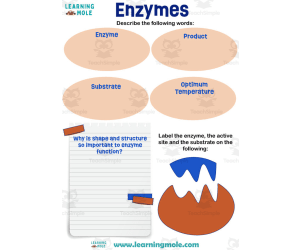
Enzymes Activity
Science, Life Sciences, Biology, Human Body, Grade 2, 3, 4, 5, 6, 7, 8, 9, Activities
Activity Overview The human body is full of fascinating wonders to learn. This activity is created to help the students recognize the anatomy and the job of the human body. Enzymes Every part and organ in our human body is vital so let's see how important they are. Have you ever imagined how we look like if we didn't have a skeleton? Did you know that because we have our amazing muscles we can stand! Do you know how many teeth do we have? Have you ever wondered about the food journey inside our body? Can you name all the glands in our body? Why do we have skin? Our nervous system is really good at sending signals. Can you tell us more about it? Are you really good at Mathematics, painting, or any other thing? You should really thank your brain about it! The famous five senses are really doing a great work? Can you explain how every sense works? Enzymes Activity The activity is perfect for encouraging the researching skills for the students, while learning more about our fantastic human body. Enzymes This friendly designed worksheet is suitable for students at school, homeschooling, and as a group activity. Instruction Describe the following words: Enzyme Product Substrate Optimum temperature Format Available in a PDF format.
Author Educational Voice
Tags Enzymes, Enzymes Activity, Enzyme, Enzymes Facts, Enzymes Facts For Kids, Human Body, Human Body Facts, Human Body Facts For Kids, STEM, Science

Independent, Dependent & Controlled Variables Lesson
Science, Basic Science, Grade 4, 5, 6, 7, 8, Activities, Experiments
This fun science lesson is a great introduction for a science fair unit or a beginning of the year scientific method unit when you need to teach your students how to carry out a true experiment . It teaches students about independent, dependent and controlled variables using humour and real-life situations. The first page has fill-in-the blank notes about a pretend experiment I completed that had some mistakes in the design. Students should stay engaged and focused throughout the lesson component as they have to fill in the blanks. They should start to think about why controlling variables matters, and they learn the relevant vocabulary. The second page gives students a chance to start brainstorming some basic experimental design ideas on their own or in pairs. They are given three situations and need to think of independent variables they could alter, what dependent variable that would affect, and all of the other variables they would need to carefully control. At the end, there is a quick review to reinforce the relevant vocabulary. Grades to Use With: This lesson can easily work in a variety of grades in the middle years, from grades 4-8 and possibly beyond! Standards: NGSS3-5-ETS1-3 Plan and carry out fair tests in which variables are controlled and failure points are considered to identify aspects of a model or prototype that can be improved. If you enjoy this science activity, check out some other options in my store: Personal Carbon Emissions /Footprint: Integrated Math and Earth Sciences Lesson: Ways to Slow Climate Change Periodic Table: Element Baseball Cards STEM Project: Extreme Environment Technology Design and "Shark Tank" Presentation STEM Project: Climate Change Solutions 8 Low-Prep STEM Tasks for Elementary and Middle School Students: Simple Handouts for Each Experiment
Author Grace Under Pressure
Rating
Tags Science Experiments, Independent Variable, Dependent Variable, Science Fair, Scientific Method, Control Variable, Experiment, STEM, Science, Elementary Science, Variables In Science Experiments, Independent And Controlled Variables, Controlled Scientific Experiment, Examples Of Independent Dependent And Controlled Variables, Controlled Variables In Science, Independent Dependent And Control Variables, What Are Independent Dependent And Controlled Variables, Science Experiment Control, Variables For Science Projects, Worksheet, Lesson, Science Worksheet, Science Lesson

Main Idea and Details Activities: Hamilton vs. History | Nonfiction Passage with Questions
Social Studies, History, History: USA, Grade 5, 6, 7, Activities
Main Idea and Details Activities: Hamilton vs. History | Nonfiction Passage with Questions This product is a fabulous offering for teaching vital reading comprehension skills. It is designed primarily for grade 5 to grade 7 students in the field of social studies, with a focus on American History. Core Materials: The main resources offered are activities that are uniquely designed around history and rap music lyrics. The approach used veers away from traditional worksheets, employing instead engaging rap song lyrics as reading passages. Engaging Students: Students will enjoy the rhythmic narratives about historical events while developing essential reading comprehension skills like identifying main ideas and supporting details – all wrapped up in one interesting package! Vocabulary Booster: Besides breaking monotony, this method boosts vocabulary exposure due to the content-specific words found within song lyrics — a double-sided benefit indeed! Evaluation Tools: A collection of multiple-choice questions follow each activity along with corresponding answer keys — making grading easier for teachers while reinforcing understanding for learners. Description This easily downloadable PDF file consists of 12 printable pages comprising exercises such as: 'What's The Main Idea?' 'Organizing Details' Further drills include 'Find The Main Idea' and a duo under 'Main idea on Beast Mode.' Its usefulness extends further by incorporating handy answer keys. This makes it an excellent tool both for standard classroom setting or dedicated homeschooling sessions. In conclusion, this package equips instructors with an educational tool certain to invoke excitement among learners whilst they peruse fascinating non-fiction recounting America's past via catchy rap verses.
Author Rap Opera for Kids!
Tags Nonfiction Passages, Reading Comprehension, History Education, Rap Music, Main Idea
Barbers Reading Comprehension Passage - Cored Ed Encyclopedia
ELA, Language Development, Reading Comprehension, Reading, Social Studies, Writing, Vocabulary, History, Pre-Reading, Spelling, Grade 2, 3, 4, 5, Worksheets & Printables, Worksheets, Teacher Tools, Centers, Activities, Writing Prompts, Assessments, Quizzes and Tests, Quizzes, Lesson Plans
This barbers reading comprehension with lesson plan includes: Visualization (on the front cover) Start your lesson by taking a minute to think and share something about the topic. Read the script aloud (slowly), perhaps prepare some music or sound effects. Student close their eyes and let their imaginations wander. Students open their eyes, read the question aloud and give them a few minutes to complete. Ask a few students to share or keep answers until the end to compare with what they learn in the passage. Quick pause—thousands of Cored Education products are included with your TeachSimple membership. Download links and encyclopedia index available here. Pre-Reading Trivia Students will write down one thing they already know about the subject and then read five more facts and discuss. These facts are fun, and the students will enjoy learning about the subject before reading more. Give 1 minute for students to write what they already know (no pressure—best guess is fine). Read the five facts together. After each fact, do ask a student for their opinion, was it surprising? Set a purpose by asking students to highlight/underline one fact they want to learn more about during the reading. Reading Passage The text is a high-interest reading passage with set paragraphs, roughly three to four paragraphs long. It contains a variety of themes about the topic, anywhere from history to technology. The passage is between 250 and 350 words in length. First, ask students to look at the headings and see what they’ll learn about today. What do they know about the topic/heading? First read options: Teacher read-aloud (best for support). Partner reading (paragraph by paragraph). While reading, students underline important details, and vocabulary words they think may come up in the questions section. Mixed Questions The first question page contains four multiple-choice questions, each with a choice of four answers, and three written response questions that require a sentence or two from the student. Students complete the mcqs first independently, then review quickly as a class. For the 3 written responses, try to get students giving the answer with some form of evidence: “I think ___ because the text says ___.” If students get stuck, send them back to check the passage. Vocabulary Questions Practice seven key words from the text in this section across two activities. First section is scrambled words where students will unscramble three words given a clue for each. The second section is a word to meaning matching activity. Before starting, have some students read out words they underlined in the passage. Ask students to say the word and read aloud the sentence(s) around each word. Ask students to do scrambled words and the matching exercise in pairs then go through answers as a class. For the scrambled spelling task, get four pairs to come up to the board and write the words for extra practice with the other student reading out the clue. For the matching task, prompt students to give full sentences: “I matched ___ with ___ because ___.” Creative Writing In this question, the student will be required to write a five to eight sentence paragraph on a question related to the topic. Before starting, ask students write down 3 key ideas they are going to include in their piece. Ask students for ideas to share around the class to help those struggling. Pro writing expectations: 5–8 sentences At least 2 facts or details from the passage At least 2 vocabulary words from the previous page Students read their paragraphs while classmates listen for facts and vocabulary words. Extension Activities This page is optional for fast finishers or to take home. There are several activities, each one requiring a different skill. Do some, do none, do all, completely optional - but you will feel reassured knowing every possibility is planned for. Includes summary writting question and additional facts. Answer Key There are answers for the multiple-choice questions, written response questions have sample answers, vocabulary answers and if there is a summary question then a sample summary will be provided as well. Lesson Plan Included Customized lesson plan for this lesson is included. Lesson Snapshot Title: Barbers Genre: Nonfiction (informational passage) Subject: Social Studies / Careers & Community Primary Topic: What barbers do and how barbering changed over time Estimated Guided Reading Level (A–Z): S Support pages noted in the PDF: visualize prompt, pre-reading trivia, mixed questions, vocabulary activity, creative writing prompt, extension activities + “final facts,” and an answer key. What This Lesson Teaches Best What barbers do: cut, trim, and style hair, and often shave or shape facial hair. How places like barber shops can be about community (talking and sharing news) as well as haircuts. How a job can change over time, including barbers doing medical tasks in the Middle Ages and later separating from doctors and surgeons. How symbols communicate meaning: the spinning striped barber pole connects to earlier work (red/white linked to blood and bandages; a blue stripe is common in the United States). Reading for precise details (e.g., hair “swirls” near the crown; how rotating stripes create an illusion). Learning Goals Students will identify at least two services the passage says many barbers provide. Students will explain why barber shops became popular gathering places in Greece, using details from the text. Students will describe how the barber’s job “grew in surprising directions” during the Middle Ages, based on the passage. Students will describe what “bloodletting” means in the passage. Students will explain what the red and white stripes on a barber pole are often linked to and how the spinning pole can trick the eyes. Students will describe how the passage connects a simple shop sign to a long history (“a simple sign can carry a long memory”). Key Vocabulary From the Text clippers — electric tools that cut hair. mustaches — hair above the upper lip. swirls — curved patterns that twist around. bloodletting — making a small cut to let blood flow. bandages — cloth used to cover a wound. FULL CATALOG OF DOWNLOAD LINKS AND ENCYCLOPEDIA INDEX HERE
Author Cored Education
Rating
Tags Vocabulary, Reading Comprehension, Reading Passages, Lesson Plans, Ela Lesson Plans, Reading Comprehension Lesson Plans, Pre-reading, History, History Lesson Plans, Social Studies Lesson Plans

Light - Reflection Find the Pair Game for - Middle School
Science, Physics, Grade 5, 6, 7, 8, 9, Activities, Games
The Light - Reflection Find the Pair Game for Middle School A captivating educational tool designed to facilitate understanding of light reflection in plane mirrors. This resource utilizes a memory game format, fostering active participation among students from grades 5 to 9. Participation and Format: Students engage in small groups of three or four. The interactive nature of the Middle School Light Reflection game provides a way to encourage teamwork and independent critical thinking skills. Each group works together to match 42 question-and-answer cards. Individuals take turns at revealing and pairing the cards. Challenging Element: This unique teaching resource features a challenging element that further encourages learning — if one team member believes that the selected pair does not match correctly, they can raise a challenge. Pupils may refer back to their study materials during these instances. An included quick-check answer sheet is available for teachers' guidance. If correct in their challenge, participants have the opportunity to earn points for their group. Simplicity In Use: Edge educators: Just print sets double-sided (potentially laminating them for increased durability) and distribute among groups fledge easy task generation set-ups. This reflective game addresses several key concepts about light transmission including: Tags: Images seen through periscope usage Luminous/non-luminous objects; , Opaque/transparent/translucent materials; Labeling incident rays and reflected rays; The normal point implementation. Potential Usage Spots: Classes handling science subjects like physics or during homeschooling sessions focusing broad-based scientific education around middle school level grades like grade 5 up till grade 9 constitute prime usage spots. Versatility In Use: The Light - Reflection Find the Pair Game doesn't restrict learning just within classroom boundaries and can also be implemented as an engaging homework assignment, thus offering versatility and ample opportunities for meaningful learning outside school walls.
Author Elf off the Shelf Resources
Tags Light Reflection, Plane Mirrors, Memory Game, Educational Tool, Science Education
ESL/ELL Skits | Food and Groceries - Going to the Market Skit
ELA, Language Development, ESL, Preschool, Grade 1, 2, 3, 4, 5, 6, Activities
This is a set of 10 skits that would be great practice for your ESL students. They are simple skits about food and groceries for students to practice their English skills.
Author Love Learning Languages
Tags Language Skit, ESL Skit, ELL Skit, Going To The Market, Group Activity
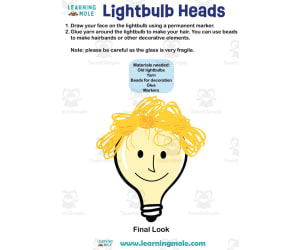
Lightbulb Heads Activity
Science, Basic Science, Physics, Grade 3, 4, 5, 6, 7, 8, 9, Activities
Activity Introduction An amazing activity designed for the students to learn more about famous places in different countries. The Lightbulb Heads Do you like STEM subjects? what is your favorite one? Have you ever tried to plant a seed? If yes, tell us more about it. Or have you ever tried to invent something? If yes, tell us more about it. And how do you think it will help us? Have you ever seen a microorganism under a microscope? What was it? And how it looked like? Mathematics is a marvelous subject. Let' sharpen our brains and solve some equations. Do you like timetable tricks? What is your favorite one? Do you know how to code? Have you ever created an app or a game before? If yes, how was it like? Lightbulb Heads Activity The activity is perfect for encouraging the researching skills for the students, while learning more about this fantastic place. Lightbulb Heads This friendly designed worksheet is suitable for students at school, homeschooling, and as a group activity. Instructions Draw your face on the lightbulb using a permanent marker. Glue yarn around the lightbulb to make your hair. You can use beads to make hairbands or other decorative elements. Note: Please be careful as the glass is very fragile. Materials Needed Old lightbulbs Yarn Beads for decoration Glue Markers Format Available in a PDF format.
Author Educational Voice
Tags Lightbulb Heads Activity, Lightbulb Heads, Lightbulb, Lightbulbs, Lightbulb Facts, Lightbulb Activity For Kids, Lightbulb Facts For Kids
U-Boats Reading Comprehension Passage - Cored Ed Encyclopedia
ELA, Language Development, Reading Comprehension, Reading, Science, Technology, Engineering, History, Social Studies, Physics, Grade 2, 3, 4, 5, Worksheets & Printables, Worksheets, Teacher Tools, Centers, Activities, Writing Prompts, Assessments, Quizzes and Tests, Quizzes, Lesson Plans
This U-boats reading comprehension with lesson plan includes: Visualization (on the front cover) Start your lesson by taking a minute to think and share something about the topic. Read the script aloud (slowly), perhaps prepare some music or sound effects. Student close their eyes and let their imaginations wander. Students open their eyes, read the question aloud and give them a few minutes to complete. Ask a few students to share or keep answers until the end to compare with what they learn in the passage. Quick pause—thousands of Cored Education products are included with your TeachSimple membership. Download links and encyclopedia index available here. Pre-Reading Trivia Students will write down one thing they already know about the subject and then read five more facts and discuss. These facts are fun, and the students will enjoy learning about the subject before reading more. Give 1 minute for students to write what they already know (no pressure—best guess is fine). Read the five facts together. After each fact, do ask a student for their opinion, was it surprising? Set a purpose by asking students to highlight/underline one fact they want to learn more about during the reading. Reading Passage The text is a high-interest reading passage with set paragraphs, roughly three to four paragraphs long. It contains a variety of themes about the topic, anywhere from history to technology. The passage is between 250 and 350 words in length. First, ask students to look at the headings and see what they’ll learn about today. What do they know about the topic/heading? First read options: Teacher read-aloud (best for support). Partner reading (paragraph by paragraph). While reading, students underline important details, and vocabulary words they think may come up in the questions section. Mixed Questions The first question page contains four multiple-choice questions, each with a choice of four answers, and three written response questions that require a sentence or two from the student. Students complete the mcqs first independently, then review quickly as a class. For the 3 written responses, try to get students giving the answer with some form of evidence: “I think ___ because the text says ___.” If students get stuck, send them back to check the passage. Vocabulary Questions Practice seven key words from the text in this section across two activities. First section is scrambled words where students will unscramble three words given a clue for each. The second section is a word to meaning matching activity. Before starting, have some students read out words they underlined in the passage. Ask students to say the word and read aloud the sentence(s) around each word. Ask students to do scrambled words and the matching exercise in pairs then go through answers as a class. For the scrambled spelling task, get four pairs to come up to the board and write the words for extra practice with the other student reading out the clue. For the matching task, prompt students to give full sentences: “I matched ___ with ___ because ___.” Creative Writing In this question, the student will be required to write a five to eight sentence paragraph on a question related to the topic. Before starting, ask students write down 3 key ideas they are going to include in their piece. Ask students for ideas to share around the class to help those struggling. Pro writing expectations: 5–8 sentences At least 2 facts or details from the passage At least 2 vocabulary words from the previous page Students read their paragraphs while classmates listen for facts and vocabulary words. Extension Activities This page is optional for fast finishers or to take home. There are several activities, each one requiring a different skill. Do some, do none, do all, completely optional - but you will feel reassured knowing every possibility is planned for. Includes summary writting question. Answer Key There are answers for the multiple-choice questions, written response questions have sample answers, vocabulary answers and if there is a summary question then a sample summary will be provided as well. Lesson Plan Included Customized lesson plan for this lesson is included. Lesson Snapshot Title: U-Boats Genre: Nonfiction (informational text) Subject: Social Studies (World History) Primary Topic: U-boats, convoys, and the Battle of the Atlantic Estimated Guided Reading Level (A–Z): R What This Lesson Teaches Best Explains what “U-boat” means and where the name comes from (German U-Boot , short for Unterseeboot , meaning “undersea boat”). Shows how underwater attacks shifted World War I fighting toward supply ships , and why food and materials crossing the Atlantic mattered. Teaches how convoys (merchant ships traveling together under protection) helped weaken the U-boat threat. Highlights how defenders used tools like sonar and radar to listen and search better during the Battle of the Atlantic, and how the balance began to swing by 1943. Describes the snorkel as a solution for getting air to submarine engines while staying mostly submerged, including testing in 1943 and wider use in 1944. Learning Goals Students will explain what the term “U-boat” means and where the name comes from using details from the text. Students will describe why supply ships crossing the Atlantic became so important in both World War I and World War II. Students will identify how convoys worked and explain how they helped weaken the U-boat threat. Students will explain how sonar and radar helped defenders find and track U-boats better. Students will describe what problem the snorkel solved for submarines and how it worked. Key Vocabulary From the Text convoys — groups of ships traveling together with protection. unrestricted — not limited by rules or limits. sonar — a tool that uses sound to find underwater objects. radar — a tool that helps detect objects by radio waves. snorkel — a tube that brings air while mostly underwater. FULL CATALOG OF DOWNLOAD LINKS AND ENCYCLOPEDIA INDEX HERE
Author Cored Education
Rating
Tags Vocabulary, Reading Comprehension, Reading Passages, Lesson Plans, Ela Lesson Plans, Reading Comprehension Lesson Plans, Pre-reading, History, History Lesson Plans, Physics
Kids Yoga Stories: Curiosity Cards for Children
P.E. & Health, Yoga, Grade 2, 3, 4, 5, Activities
This resource is perfect to get get children chatting and sharing their opinions and ideas! These questions were inspired by the Yamas and Niyamas of yoga and are meant to start conversations about what is important to children and how they can express their ideas. If you are looking for kids to connect and practice expressing themselves, this resource is for you: Primary school teachers kids yoga teachers parents caregivers health and recreation staff Ways in which you can use these cards as homeschoolers or in the classroom include: -For transition times -Morning routines or circle times -Brain breaks to calm their minds and bodies -Physical education -Occupational and/or physical therapy -With one child, small, or large groups Benefits of Yoga for kids include: -Increased strength -Increased flexibility -Improves sleep -Promotes positive interactions amongst adults and children -Develops self-confidence -Improves self-expression -Improves body awareness -Promotes a lifestyle that is active and healthy.
Author Kids Yoga Stories
Tags Kids Yoga Stories, Curiosity Cards, Opinion Sharing, Conversational Cards, Kids Conversations
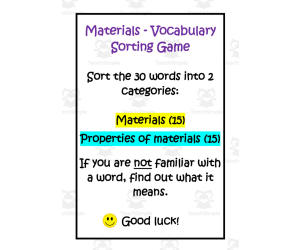
Materials and Properties of Materials Sorting Activity
, Grade 4, 5, 6, Activities
Teaching science to our elementary students opens them up to a whole new world of interests, but with a whole new take! They get to learn about the weather and its changes. They get to learn about animals and their offspring. They get to learn about natural wonders, such as volcanoes! There are so many engaging things for students to learn during science. What You Get: This is a Materials and Properties of Materials Sorting Activity that is ideal for elementary students! The objective is to correctly understand and sort science terms. How To Implement This Resource: When students have gained a basic understanding of materials and properties, this will be a great activity to assess mastery. You will print off all 5 pages. Each page consists of 6 terms. For added durability, you can print these pages on card stock and laminate them. This is a great activity for small groups and science centers . Students will sort all 30 words into two separate categories – materials and properties of materials. There may be words students are not familiar with. Encourage students to look these terms up so they can sort as many words as possible correctly. I hope you enjoy! Here are links to similar resources in my store: Candle Experiment Missing Verbs Worksheet Writing to Recount Template Electrical Words and Symbols Worksheet Place Value Loop Cards Factors Worksheet for Beginners Check Out More Resources from My Store: Elementary Resources 4 U
Author Elementary Resources 4 U
Tags Sorting Activity, Science Sorting, Science Vocabulary, Materials, Properties, Science Matching, Matching Cards, Small Group Science
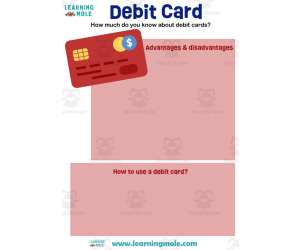
Debit Card Activity
Life Studies, Finance, Grade 3, 4, 5, 6, 7, 8, 9, Activities
Activity Introduction An amazing activity designed for the students to learn more about STEM subjects. Debit Card Do you like to learn more about financial matters? what is your favorite subject? Do you like to be an entrepreneur someday? If yes, who is your favourite entrepreneur? What your business will be about? Have you ever tried to calculate your monthly spendings? If yes, tell us more about it. Have you ever seen a grownup using a credit card to making a money transaction online? If yes, do you think it is safe? Mathematics is a marvelous subject. Let' sharpen our brains and solve some equations in our daily life. What are the different types of bank cards? Can you tell what is the job of every type? Using credit cards online is a little bit tricky. What do you think? Have you ever read about investments? If yes, tell us more about it. Debit Card Activity The activity is perfect for encouraging the researching skills for the students, while learning more about this topic. Debit Card This friendly designed worksheet is suitable for students at school, homeschooling, and as a group activity. Instructions How much do you know about debit cards? Format Available in a PDF format.
Author Educational Voice
Tags Debit Card Activity, Debit Card, Debit Cards, Debit Cards Facts For Kids, Debit Card Facts, Financial Literacy, Financial Literacy Facts, Financial Literacy Facts For Kids, Bank Cards

Saving Water Activity
Environmental Science, Earth and Environmental Sciences, Science, Earth Sciences, Grade 2, 3, 4, 5, 6, 7, 8, 9, 10, Activities
Activity Introduction An amazing activity designed for the students to learn more about STEM. Saving Water Do you like STEM subjects? what is your favorite one? Have you ever tried to plant a seed? If yes, tell us more about it. Or have you ever tried to invent something? If yes, tell us more about it. And how do you think it will help us? Have you ever seen a microorganism under a microscope? What was it? And how it looked like? Mathematics is a marvelous subject. Let' sharpen our brains and solve some equations. Do you like timetable tricks? What is your favorite one? Do you know how to code? Have you ever created an app or a game before? If yes, how was it like? Saving Water Activity The activity is perfect for encouraging the researching skills for the students, while learning more about this fantastic topic. Saving Water This friendly designed worksheet is suitable for students at school, homeschooling, and as a group activity. Instructions Can you think of ways to save water? What could you do? Format Available in a PDF format.
Author Educational Voice
Tags Saving Water Activity, Saving Water, Saving Water Facts, Water Activity, Saving Water Facts For Kids, Water Facts, Water Facts For Kids, Water Cycle, Earth, Earth Facts

Science Word Searches - Set 3 (PDF)
ELA, Language Development, Vocabulary, Spelling, ESL, Resources for Teachers, Science, Physics, Earth and Environmental Sciences, Life Sciences, Grade 2, 3, 4, 5, Worksheets & Printables, Worksheets, Teacher Tools, Centers, Activities, Word Searches
Wordsearch Series This wordsearch series is designed for students in grades 2–5. Each set of wordsearches is built around a clear vocabulary theme, helping students develop word recognition, improve spelling, and boost topic-related understanding through engaging visual puzzles. Every wordsearch also includes a fun hidden shape for students to guess—adding an interactive twist to traditional vocabulary practice. These wordsearches are student-friendly, classroom-ready, and perfect for integrating into literacy warmups, seasonal units, fast-finisher tasks, or home learning extensions. Each puzzle reinforces themed vocabulary in a playful, structured format that keeps learners motivated. Science Word Search Set 3 Word List 1. Human Body Systems Brain, Heart, Lungs, Muscles, Bones, Veins, Digest, Nerves 2. Ecosystems and Food Chains Ecosystem, Habitat, Producer, Consumer, Decomposer, Food Chain, Predator, Prey 3. States of Matter Matter, Solid, Liquid, Gas, Melt, Freeze, Evaporate, Condense 4. Space and the Universe Galaxy, Milky Way, Orbit, Gravity, Black Hole, Meteor, Astronomer, Telescope 5. Plants and Photosynthesis Roots, Stem, Leaf, Flower, Seed, Sunlight, Oxygen, Chlorophyll 6. Simple Machines and Engineering Lever, Pulley, Ramp, Wheel, Axle, Screw, Gears, Invent PDF Version Other versions will appear here when available. Follow the store for the lastest on new products. How to Use These Wordsearches These wordsearches are ideal for: Morning work or early finisher bins Vocabulary centers or anchor activities Holiday or seasonal review lessons Independent literacy stations or take-home enrichment Each puzzle includes a themed word list and a shaped grid for students to complete. Word directions may vary (horizontal, vertical, diagonal), and answer keys are included for easy checking. Optional vocabulary challenges or writing tasks can be added to extend the learning experience. Whether you're reviewing key vocabulary, exploring a seasonal topic, or offering fun literacy practice, these wordsearches provide a flexible and engaging tool to support vocabulary growth in grades 2–5. More Science Themed Products Science Crosswords (Set 1) PDF Science Crosswords (Set 2) PDF Science Crosswords (Set 3) PDF Science Word Searches (Set 1) PDF Science Word Searches (Set 2) PDF FULL CATALOG OF DOWNLOAD LINKS HERE Themed Word Search Links Addition PDF Animals PDF Around the Home PDF Birthday PDF Candy PDF Christmas PDF Cinco de Mayo PDF Clothes PDF Colors PDF Days and Months PDF Division PDF Earth Day PDF Easter PDF Easy Word Searches PDF Fall PDF Father's Day PDF Food PDF Geography (Set 1) PDF Geography (Set 2) PDF Geography (Set 3) PDF Graduation PDF Health PDF History (Set 1) PDF History (Set 2) PDF History (Set 3) PDF Human Body PDF Kindness PDF Life Skills PDF Mother's Day PDF Multiplication PDF Science Word Searches (Set 1) PDF Science Word Searches (Set 2) PDF Science Word Searches (Set 3) PDF Shapes PDF Social Skills PDF Spring PDF Sports PDF St. Patrick's Day PDF Subtraction PDF Summer PDF Thanksgiving PDF Transport PDF Valentine's Day PDF Winter PDF Wordsearches in Depth Structure Each wordsearch is crafted around a focused sub-theme and includes a visual puzzle shaped like a related object (e.g., balloon, gift, snowman). Students complete each puzzle using the provided themed word list, strengthening both content knowledge and spelling skills in a highly engaging format. Each completed set includes: A shaped wordsearch puzzle with 10 vocabulary words A student instruction guide with search directions (horizontal, vertical, diagonal) An answer key for teacher support or student self-checking A Did You Know? fact connected to the theme for enrichment or discussion Themes Included The wordsearches cover a wide range of fun, age-appropriate themes, including: Seasons & Holidays (e.g., Halloween, Easter, Valentine’s Day) Math Concepts (e.g., Addition, Number Words) Everyday Topics (e.g., Animals, Weather, School) Special Units (e.g., Health, Earth Day, Sports, Kindness) Each topic is selected to reflect students’ real-life experiences and interests while reinforcing literacy skills and content understanding in a playful, visual way. For similar downloads and other frees, do check out Cored Group on TeachSimple.
Author Cored Education
Rating
Tags Vocabulary, Spelling, Science, Human Body Systems, Ecosystems, Food Chains, States Of Matter, Plants And Photosynthesis, Science Word Searches, Word Searches
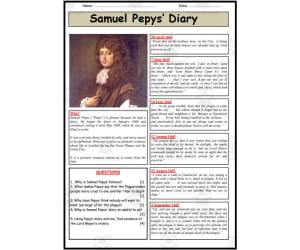
Samuel Pepys' Diary and The Plague
Social Studies, History, History: British, Grade 3, 4, 5, Activities
Introducing a 2-page informative booklet on Samuel Pepys' diary entries during the Great Plague of London. This resource explores life in 17th century London through the eyes of Pepys before and during the plague outbreak in 1665-1666. Students will analyze diary excerpts and answer reflective questions. Topics covered include daily life in 1600s London, the early days of the plague, the peak of the outbreak, and the aftermath. With passages written in Pepys' own words, this booklet helps bring history to life. Useful as a supplemental social studies resource for individual or whole class learning about pandemics in British history. Engaging and thought-provoking for grades 3-5.
Author Elementary Resources 4 U
Tags Samuel Pepys, Diary, Great Plague, 17th Century, London, Pandemic
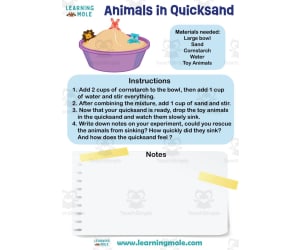
Quicksand Activity
Social Studies, Geography, Grade 3, 4, 5, 6, 7, 8, 9, Activities
Activity Introduction An amazing activity designed for the students to learn more about famous places in different countries. Animals in Quicksand What do you know about this place? Do you know in which part of the world it is? Have you ever visited this place? If yes, can you tell us more about your adventure, and what do you like the most about this place? Do you like reading about Geography? What is your favorite country in the whole world? If you are going on a trip where it will be? Which country? What you are going to see there? Does this country has a famous place to visit? Quicksand Activity The activity is perfect for encouraging the researching skills for the students, while learning more about this fantastic place. Quicksand This friendly designed worksheet is suitable for students at school, homeschooling, and as a group activity. Instructions Add 2 cups of cornstarch to the bowl, then add 1 cup of water and stir everything. After combining the mixture, add 1 cup of sand and stir. Now that your quicksand is ready, drop the toy animals in the quicksand and watch them slowly sink. Write down notes on your experiment , could you rescue the animals from sinking? How quickly did they sink? And how does the quicksand feel? Materials Needed Large bowl Sand Cornstarch Water Toy animals Format Available in a PDF format.
Author Educational Voice
Tags Quicksand Activity, Quicksand, Quicksand Facts, Quicksand Facts For Kids, Geography, Geography Facts, Geography Facts For Kids

World Wildlife Day Word Search 2nd 3rd 4th 5th Grade Worksheet
Common Core, Nature & Plants, Life Sciences, Science, Life Studies, Grade 2, 3, 4, 5, Activities, Word Searches, Worksheets, Worksheets & Printables
Introduction This World Wildlife Day Word Search Worksheet Activity inspires students to explore animals, habitats, conservation, and environmental awareness in an exciting and engaging manner. The word search activity sparks curiosity while developing academic skills in reading and vocabulary. Objective Students will engage in word recognition, spelling, and concentration while exploring significant vocabulary related to animals and environmental conservation. This activity promotes awareness of nature and conservation in an appropriate and suitable manner for students. Order, Outline, and Steps Students search for words in a systematically designed grid. Words are hidden in various directions, making it more interesting and intellectually stimulating. Once the search is over, students can color the black-and-white version. Grades or Ages Designed for 2nd through 5th grade classrooms. Implementation Format Ideal for science classes, Earth awareness activities, centers, homework, or early finisher activities. How to Use and Variations Can be used in conjunction with lessons on animals, habitats, or conservation efforts. Standards Meets science vocabulary and English language arts standards. File Type Printable PDF Number of Pages 3 pages total • 1 colored worksheet • 1 coloring worksheet • 1 answer key
Author Classsim
Rating
Tags World , Wildlife , Day , Word Search, 2nd 3rd 4th 5th Grade, Worksheet, Activity, World Wildlife Day, World Wildlife Day Word Search , World Wildlife Day Word Search 2nd 3rd 4th 5th Grade Worksheet Activity

Snapchat Exit Tickets
Special Resources, Social Skills, Grade 1, 2, 3, 4, 5, 6, 7, 8, Activities
Snapchat Exit Tickets Designed as a revolutionary teaching resource, Snapchat Exit Tickets gauges student comprehension effectively. It uniquely combines modern communication modes with traditional classroom assessments to provide an alternative tool for educators to assess and stimulate student learning. Geared towards Grades 1 through 8, this resource covers a diverse range of subjects, including unique resources and social skills development. The Appeal Blends familiar elements of popular social media platforms like Snapchat with educational tools. Captures students' interest while determining their understanding of the lesson. Versatile application allows use during whole group discussions, small group activities or as unique homework assignments. The Contents Included are 17 specially designed exit tickets that get students actively involved in different academic tasks. Each ticket presents a unique challenge that prompts learners to recall and apply what they've absorbed. The Benefits Catering to diverse learning styles, these tools offer regular review opportunities for students whilst giving teachers valuable insight into their cognitive development levels. Digital access on any device makes it convenient for busy teachers needing quick prints anytime necessary! Snapchat Exit Tickets is more than just another teaching tool. It cleverly blends fun with serious assessment duties—making every learning journey not only memorable but also meaningful! This product lends immense value to public school teachers and homeschoolers seeking new-age teaching aids.
Author Roombop
Tags Snapchat, Exit Tickets, Teaching Resource, Assessments, Student Learning
Food Word Searches (PDF)
ELA, Language Development, Resources for Teachers, Vocabulary, Spelling, ESL, Grade 2, 3, 4, 5, Worksheets & Printables, Worksheets, Teacher Tools, Centers, Activities, Word Searches
Wordsearch Series This wordsearch series is designed for students in grades 2–5. Each set of wordsearches is built around a clear vocabulary theme, helping students develop word recognition, improve spelling, and boost topic-related understanding through engaging visual puzzles. Every wordsearch also includes a fun hidden shape for students to guess—adding an interactive twist to traditional vocabulary practice. These wordsearches are student-friendly, classroom-ready, and perfect for integrating into literacy warmups, seasonal units, fast-finisher tasks, or home learning extensions. Each puzzle reinforces themed vocabulary in a playful, structured format that keeps learners motivated. Food Word Search Word List 1. Fruits and Vegetables Apple, Banana, Carrot, Grapes, Lettuce, Orange, Tomato, Berry 2. Breakfast Foods Eggs, Toast, Pancake, Cereal, Milk, Juice, Butter, Honey 3. Sweet Treats Cake, Cookie, Chocolate, Candy, Ice cream, Cupcake, Sprinkles, Lollipop 4. Drinks and Snacks Water, Juice, Milk, Tea, Popcorn, Crackers, Yogurt, Nuts 5. Foods from Around the World Pizza, Taco, Rice, Noodles, Cheese, Bread, Soup, Sushi 6. Healthy Foods Carrot, Apple, Fish, Eggs, Beans, Nuts, Spinach, Water PDF Version Other versions will appear here when available. Follow the store for the lastest on new products. How to Use These Wordsearches These wordsearches are ideal for: Morning work or early finisher bins Vocabulary centers or anchor activities Holiday or seasonal review lessons Independent literacy stations or take-home enrichment Each puzzle includes a themed word list and a shaped grid for students to complete. Word directions may vary (horizontal, vertical, diagonal), and answer keys are included for easy checking. Optional vocabulary challenges or writing tasks can be added to extend the learning experience. Whether you're reviewing key vocabulary, exploring a seasonal topic, or offering fun literacy practice, these wordsearches provide a flexible and engaging tool to support vocabulary growth in grades 2–5. More Food Themed Products CROSSWORDS FULL CATALOG OF DOWNLOAD LINKS HERE Themed Word Search Links Addition PDF Animals PDF Around the Home PDF Birthday PDF Candy PDF Christmas PDF Cinco de Mayo PDF Clothes PDF Colors PDF Days and Months PDF Division PDF Earth Day PDF Easter PDF Easy Word Searches PDF Fall PDF Father's Day PDF Food PDF Geography (Set 1) PDF Geography (Set 2) PDF Geography (Set 3) PDF Graduation PDF Health PDF History (Set 1) PDF History (Set 2) PDF History (Set 3) PDF Human Body PDF Kindness PDF Life Skills PDF Mother's Day PDF Multiplication PDF Science Word Searches (Set 1) PDF Science Word Searches (Set 2) PDF Science Word Searches (Set 3) PDF Shapes PDF Social Skills PDF Spring PDF Sports PDF St. Patrick's Day PDF Subtraction PDF Summer PDF Thanksgiving PDF Transport PDF Valentine's Day PDF Winter PDF Wordsearches in Depth Structure Each wordsearch is crafted around a focused sub-theme and includes a visual puzzle shaped like a related object (e.g., balloon, gift, snowman). Students complete each puzzle using the provided themed word list, strengthening both content knowledge and spelling skills in a highly engaging format. Each completed set includes: A shaped wordsearch puzzle with 10 vocabulary words A student instruction guide with search directions (horizontal, vertical, diagonal) An answer key for teacher support or student self-checking A Did You Know? fact connected to the theme for enrichment or discussion Themes Included The wordsearches cover a wide range of fun, age-appropriate themes, including: Seasons & Holidays (e.g., Halloween, Easter, Valentine’s Day) Math Concepts (e.g., Addition, Number Words) Everyday Topics (e.g., Animals, Weather, School) Special Units (e.g., Health, Earth Day, Sports, Kindness) Each topic is selected to reflect students’ real-life experiences and interests while reinforcing literacy skills and content understanding in a playful, visual way. For similar downloads and other frees, do check out Cored Group on TeachSimple.
Author Cored Education
Rating
Tags Vocabulary, Spelling, Food, Fruits And Vegetables, Breakfast Foods, Foods From Around The World, Healthy Foods, Food Activities, Word Searches, Food Word Searches

Training to Become a Sports Mascot: A Micro-Learning Deck | Reading Activities
ELA, Reading, Grade 4, 5, 6, 7, Activities
The Training to Become a Sports Mascot: A Micro-Learning Deck | Reading Activities resource is a 15-slide download that exposes your students to informational texts for Training to Become a Sports Mascot. This digital mini-lesson includes: -Video & Audio -Vocabulary -Close Reading -Digital & Interactive -Main Idea Students will enjoy interacting with this lesson and each of the activities!
Author Teach Me This
Tags Sports Mascot, Sports Training, Reading Activity, Digital Lesson, Interactive Lesson

Race to Space Board Game
Science, Earth and Environmental Sciences, Space, Grade 4, 5, Activities, Games
If your science students have started or finished a space unit , I have just the game they’ll love. This is a Race to Space Board Game that can be implemented at any time. It is great for an introduction or a review. This is great for upper elementary students in 4th and 5th grade. Game Play Directions: --The goal of the game is to reach Saturn. --The first player rolls the die and moves however many spaces indicated on the die. --If you land on the nova card space, pick a card and answer the question. --The keeper of the answers will check the accuracy of the answer. --If the question is answered incorrectly, they will have to move back 2 spaces. --If they answer correctly, they get to stay where they are. --The first to Saturn wins! Teacher Instructions: --Cut out and laminate the game board and adventure/nova cards --Label the nova and adventure cards or print them on different color paper --Blank nova cards are provided if you want to write your own questions --You will need one die and game pieces for each player --You may want to assign one student to be the “keeper of the answers” or you can check the student’s answers yourself. --This game works best when played with 3-6 players. I hope you enjoy! You can find more resources at my storefront here: https://teachsimple.com/contributor/the-comprehensive-teacher Here are other similar resources for you to enjoy: https://teachsimple.com/product/my-heritage-booklet-project https://teachsimple.com/product/the-crucible-booklet-project https://teachsimple.com/product/how-a-bill-becomes-a-law-hexagon-project https://teachsimple.com/product/levels-of-thinking-posters https://teachsimple.com/product/harry-potter-and-the-sorcerers-stone-student-handbook https://teachsimple.com/product/avengers-supply-labels
Author The Comprehensive Teacher
Tags Race To Space, Science Game, Board Game, Small Group Games, Astronomy, Outer Space, The Comprehensive Teacher, Science Vocabulary, How A Bill Becomes A Law Board Game
Main Idea and Details Activities: Molly Pitcher Biography | Nonfiction Passage with Questions
Social Studies, Biographies, Grade 5, 6, 7, Activities
Do your students need a break from traditional main idea and supporting details worksheets? Rap songs are your solution! Based on history and reading rap songs, these activities willkeep your students' attention using song lyrics as reading passageswhile they practice main idea and supporting details skills. Easily incorporate them intoindependent activitiesor complete them together as aclass lesson. The song lyrics for these activities are used as reading passages and have many content-vocabulary words from the song lyrics for students to practice main idea and supporting details. Teach reading skills to your students in a way that they will enjoy! Kids love music and will certainly enjoy main idea and supporting details in the song lyrics. These activities also feature simple explanations of how main idea and supporting details can guide students' comprehension. Multiple-choice questions with answer keys! All of these activities have multiple-choice questions with answer keys for easy grading. Everything included in this resource is listed below. - the song lyrics for use as a reading passage - What's the main idea? - Find the main idea practice - Details and graphic organizer practice - Organizing details to find the main idea - 4 Find the main idea - 1 Find the supporting detail - Main idea on beast mode - Main idea on beast mode graphic organizer ***Answer keys included.
Author Rap Opera for Kids!
Tags Main Ideas Reading Passage, Supporting Details Passage, Molly Pitcher Reading, Biography Reading Comprehension, What's The Big Idea Molly
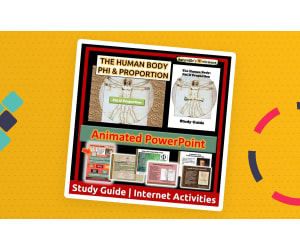
Human Body and Golden Ratio PowerPoint and Study Guide
Math, Grade 4, 5, 6, 7, 8, Projects, Activities, Presentations, Teacher Tools, Quizzes and Tests, Rubrics, Workbooks, Worksheets & Printables
Introduction to the Golden Ratio and the Human Body PowerPoint and Study Guide Lesson The Golden Ratio, or Phi, and the Human Body is a unique math PowerPoint exploration of the human body and Leonardo da Vinci's famous Vitruvian Man drawing. Academic connections are made with math, art and history. Another famous name for the Golden Ratio is the divine proportion, a proportion of beauty found throughout nature, science, art, and architecture. This lesson can be completed in one or two classes depending on how long teachers want to spend on projects. Learners will become enthralled by the idea of how math can be beautiful and learn to treat it like a treasure hunt by looking for the golden ration everywhere around them in art, nature and even their own bodies! Go down as many learning rabbit holes with NatureGlo's MathArt Library Golden Ratio and Human Body page. On this page you'll get videos, project ideas and curated website links. Enjoy the exploration! Student Objectives Students will: Complete the PowerPoint lesson Complete the study guide for the lesson. Watch the curated educational videos from the MathArt Virtual Library Website. Complete the journal in the study guide including a drawing with written descriptions. Complete the quiz. Choose and do a chosen project. Order, Outline and Steps Read the Quick Start guide that comes with the curriculum. Go through the PowerPoint lesson with the students. Students complete the study guide during or after the PowerPoint lesson. Students select and complete a chosen projects about the topic. Grades & Ages Grades 4 - 8 Ages 10 - 14 Implementation Format PowerPoint Study guide Use of Internet Activities Projects Answer Key - INCLUDED Number of Pages - 33 File Types - PowerPoint and PDF files Length of Lesson - At least one lesson, or, optionally two or more lessons
Author NatureGlo's eScience
Rating
Tags Golden Ratio, Human Body, Divine Proportion, Math Activities, Math Projects, Leonardo Da Vinci
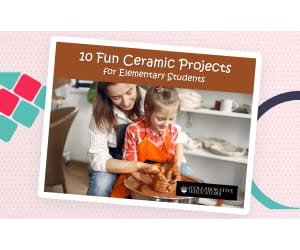
10 Fun Ceramic Projects for Elementary Students
Art, Creative Arts, Graphic Arts, Grade 1, 2, 3, 4, 5, Crafts, Activities, Projects
An entertaining and simple-to-follow e-book called 10 Fun Ceramic Projects for Elementary Students aims to encourage young students' creativity via practical ceramic art. This resource, which teaches elementary school kids the basics of working with clay through basic techniques like pinching, coiling, and slab building, is ideal for both in-class and at-home study. Beginners may easily complete the ten projects, which include clay monsters, wind chimes, leaf bowls, and pinch pot creatures. Each project includes detailed instructions and a list of basic ingredients. In addition to exposing pupils to three-dimensional art, the activities are designed to foster artistic expression, increase confidence, and develop fine motor abilities. For parents, homeschoolers, or art teachers who want to add creative, hands-on learning to their daily routine, this booklet is perfect. Projects allow for a great deal of individuality and may be modified for a variety of ages and skill levels. Students will enjoy using their imaginations while cultivating a respect for ceramics through projects like creating textured tiles and sculpting animal figures. This ebook provides an enjoyable and instructive experience that kids will love—and proudly take home to show off—whether you're introducing clay for the first time or are searching for new project ideas.
Author Bright Classroom Ideas Marketplace
Rating
Tags Ceramic, Project, Elementary, Pottery, Clay, Craft, Art