



3,924 products added recently
Page 188 - Activities By Subject
Simplify lesson planning by accessing activities organized by subject. Whether you're focusing on math, science, language arts, or social studies, these resources provide targeted support to enrich your teaching. Incorporate them to align with curriculum standards and engage students effectively.

 Show filters


ID Words Matching Mats
ELA, Language Development, Phonics, Reading, Reading Comprehension, Preschool, Grade 1, Activities, Centers
Students can practice reading comprehension skills with these ID word family mats. Students can practice reading ID words in isolation and in the context of sentences. The words in this set follow a CVC or CCVC spelling pattern. Included in this resource: This resource includes one word mat and one sentence mat, both for reading ID words in insolation and in context. There are also picture cards that correspond with each word and sentence. To complete this activity, students will read each ID word or sentence on the mat and then match the corresponding pictures. Students can work independently or with a partner to complete this activity. How to Use these Id word Family Mats: The students can simply lay the images on top of the word or sentence. They can be placed in a file folder utilizing hook and loop fasteners to attach the images. A magnetic activity can be created by using a baking sheet and magnets to affix the images. Students will love the hands-on nature of this activity. The bold and colorful images will capture students' attention, and the easy to recognize pictures are sure to keep students engaged in learning. These literacy activities allow students to practice target words both in the context of sentences and in isolation. Where can these mats be used? Literacy Center - Students can work independently or with a partner to read these words Morning Tub or Basket - The cards can be placed in a morning bin for students to work on as students arrive to class. Small Group Activity - The teacher can choose a small group of students or a specific group of words for students to work on in a small group setting with the teacher. Hands On Assessment - The teacher can use these to test students on reading the target words in context or in isolation. Skills assessed through this activity: Reading ID words in context of a sentence and in isolation Reading comprehension The low-prep nature of this ID words matching mats activity makes it an easy to assign activity. The mats simply need to be printed out, while the matching cards need to be printed and cut. Lamination is optional for increased durability. Once created, this resource can be used repeatedly in literacy centers or small group activities, providing ongoing support for students' learning journey.
Author The Connett Connection
Tags Literacy Center, Phonics Activity, Kindergarten Literacy, Matching Mats, Simple Sentences, Reading Comprehension, CVC Words, ID Words, ID Word Family

TeaRex Reading Literacy Packet
ELA, Reading, Kindergarten, Preschool, Grade 1, 2, Activities
TeaRex Reading Literacy Packet: A Comprehensive Teaching Resource Purpose: The TeaRex Reading Literacy Packet is designed for enhancing sentence building skills in preschoolers, kindergarteners, as well as first and second graders. It strengthens their foundation in language arts in an engaging manner. Inclusions: An intriguing teapot craft activity . Reading exercises to promote fluidity. In-depth introduction to important concepts such as cause and effect. Ease of Use: With straightforward instructions, this packet proves user-friendly for both teachers and parents. It comes ready-to-go once printed — a time-saving resource particularly suitable for today's busy teaching scenarios. Layout Overview: The packet encompasses 6 pages contained within a single PDF file. Flexibility is provided with the option of printing either in colour or black and white. The TeaRex Reading Literacy Packet enables flexible implementation across diverse learning scenarios like full class instruction, cooperative learning sessions, differentiated instruction among others. In brief , the TeaRex Reading Literacy Packet blends systematic learning materials with stimulating activities catering not only to cognitive development but also encouraging creativity — thus offering an interactive platform where young learners thrive on their literacy journey.
Author Glimmercat Education
Tags Reading Skills, Language Arts, Literacy Packet, Sentence Building, Teapot Craft

5 FREE PUZZLES OF CAPIBARA THEMED
Special Resources, STEM, Early Learning, Elementary, Pre-K, Activities, Worksheets & Printables
5 FREE PUZZLES OF CAPIBARA THEMED INTRODUCTION: HELLO! WELCOME TO THE EDITORIAL ARENAS EDUCATIVAS RESOURCE STORE! This time we bring you these fantastic resource for you! Your children's afternoons will no longer be boring thanks to these fantastic resource. MAIN INFORMATION: 1. Brief introduction: Hello, thank you very much for being interested in this educational document. This document will help you a lot both in the classroom if you are a teacher, as well as if you homeschool and want to stimulate your children from home. 2. Title of the educational resource: This document is titled "Teaching material for children" 3. Topic to work on: Thanks to this educational document, we are going to work on a basic topic that every child and/or student should master. 4. Area of knowledge where it should be applied: Thanks to this document, we will address a topic and at the same time an important area of learning. SECONDARY INFORMATION: 5. Who is the author of this document? The author, who was in charge of producing and compiling this educational material, is EDITORIAL ARENAS EDUCATIVAS. 6. In what area of knowledge can it be applied? You can apply this set of educational sheets according to your criteria, in the corresponding area. 7. Should I apply it individually or as a group in my class? Also, according to your criteria, see if it is better for these sheets to be applied individually or as a group. 8. What size and format is this resource in? This set of teaching sheets has been published in A4 size, PDF format, so that it is much easier to use. 9. Do I need any extra elements to apply it? Yes, perhaps your students need pencils, colors, markers and even sometimes scissors and erasers.
Author EDITORIAL LAURA EDUCA
Tags PUZZLES, PUZZLE, FREE, FREE RESOURCES, MAZES, PRINTABLES, ACTIVITIES
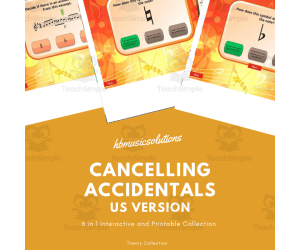
Beginner Music Theory: Cancelling Accidentals - US Version
Creative Arts, Art, Music, Grade 1, Activities
Beginner Music Theory: Cancelling Accidentals - US Version This resource is a comprehensive tool designed for Grade 1 music educators focusing on cancelling accidentals. It aligns with the ABRSM syllabus and comes as part of a seventeen-section series aimed at enhancing understanding of music theory. Resource Components: Tutorial PDF file Questions PDF file Answers PDF file Web module Tablet module Computer module The components guide learners through an in-depth exploration of cancelling accidentals, presented in an interactive format suitable for both classroom instruction and homework assignments. Note: To use this resource across different devices, we provide links to resources in accessible formats. These resources may come zipped for security purposes; unzipping instructions are provided within the package. A Guide to iPad Users: If you wish to utilize the tablet option, you will need to download 'Articulate Mobile Player' from online app stores. The package provides detailed installation steps. Educational Benefits: This resource puts emphasis on active learning by randomly drawing slides during study sessions which helps foster familiarity with basic musical notations in an engaging way without repetition. In conclusion, The digital resource is invaluable for instructors seeking tech-compatible lesson plans suitable for both face-to-face and distant teaching situations tailored towards guiding young beginner level students into their lifelong journey into music education.
Author Hbmusicsolutions's Shop
Tags Music Theory, Cancelling Accidentals, ABRSM Syllabus, Interactive Learning, Educational Resource
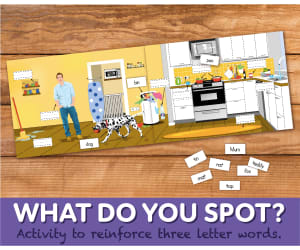
Play A Game Of ‘What Do You Spot?’ To Reinforce Three Letter Words (4-7 years)
ELA, Language Development, Phonics, Preschool, Kindergarten, Grade 1, Activities, Games
Introducing 'Play A Game Of 'What Do You Spot?' To Reinforce Three Letter Words (4-7 years) This invaluable resource is designed to assist early learners, primarily those in preschool up to grade 1. The game offers an engaging method for children to phonetically connect three-letter words with corresponding images. The game's concept: The simplicity of the game proves effective in encouraging young readers not only to vocalize phonic words but also link them with matching pictures. Focusing on three or four highlighted words per page provides significant advantages for beginners. Versatility and Effective Use: Ten-page PDF adaptable based on a learner's needs Can be given as homework for individual practice Suitable for small group play during class time or whole group tasks Integration into any teaching schedule Included in Zoggy Zero Scheme Remember that this unique educational tool is just one part of our innovative Zoggy Zero scheme. This comprehensive program boosts the foundational skills kids need on their journey towards reading and writing proficiency. Covered Key Focus Areas: Ideal homeschooling tool beside formal school settings where emphasis lies mutually upon nurturing literacy proficiency. Aiding Independent Progression & Confident Readers! Educators will appreciate how effortlessly 'Play A Game Of 'What Do You Spot?' To Reinforce Three Letter Words' can be incorporated into daily teaching schedules. Watch with joy as young learners progressively spell longer utterances independently, blossoming into confident readers!
Author Guinea Pig Education
Tags Phonics, Early Learning, Reading, Spelling, Language Arts

8 FREE WORKSHEETS FOR TRACING LINES | FREE RESOURCE
Writing, ELA, Handwriting, Early Learning, Elementary, Not Grade Specific, Pre-K, Homeschool Resources, Worksheets & Printables, Activities
8 FREE WORKSHEETS FOR TRACING LINES | FREE RESOURCE INTRODUCTION: HELLO! WELCOME TO THE EDITORIAL ARENAS EDUCATIVAS RESOURCE STORE! This time we bring you these fantastic resource for you! Your children's afternoons will no longer be boring thanks to these fantastic resource. MAIN INFORMATION ABOUT THIS PRODUCT: 1. Product name: You can use this educational resource in the primary education classroom. 2. Number of pages: This document contains the following number of pages. 3. Is it editable or not? This educational document is not editable, because this way you can use it better and you will not have any problem with the composition or design undergoing any variation. 4. Theme: This educational resource contains a topic for the primary education of children. 5. Document version: This educational document is available in PDF version, size A4. SECONDARY AND COMPLEMENTARY INFORMATION: 6. Is it available in color or black/white? This document and/or set of educational sheets is available in color and also in certain parts contains black and white, however it is generally suggested that the teaching material be designed in color so that it is much more attractive for your students, awakening their attention and interest. 7. In what version is it available? This document is available in PDF version, A4 size, because we consider that this size is the original and most common standard. 8. Editable/Non-Editable: This educational document and/or set of educational sheets is not editable, because this way you will be able to use it much more easily. 9. Age at which it can be applied: This educational resource can be applied to children of all ages, that is, students from 3 to 12 years old, who must acquire some basic knowledge that thanks to this document they will be able to address. 10. Tags or keywords that describe the content: didactic material, teaching sheets, material for children, printable educational material, printable material.
Author EDITORIAL LAURA EDUCA
Tags TRACING LINES, TRACING, HANDWRITING, FREE, FREE RESOURCES
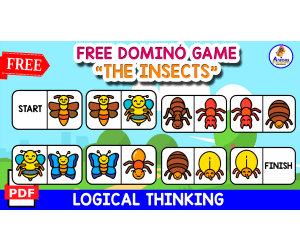
DOMINÓ GAME OF INSECTS | Free Resource
, Not Grade Specific, Activities, Games
TODAY WE BRING YOU THIS FANTASTIC DOMINO GAME! So take advantage now to download it and use it in class. THEN PLEASE READ THE FOLLOWING INFORMATION CAREFULLY SO THAT YOU KNOW WHAT THIS PRODUCT IS ABOUT. MAIN INFORMATION: 1. Why should teachers use educational materials in the classroom? Teachers should use resources in the classroom because they stimulate students' intelligence, in addition to activating other cognitive processes. 2. What is the name of this document? The name of this educational document is "Domino Game" 3. What topic will you address in this resource? The topic to be addressed or activated thanks to this resource are cognitive processes such as attention, visualization, memory and concentration. 4. For what ages is it recommended? This educational document is aimed at the general public but especially at children who enjoy this type of games the most. 5. Who is the author of this document? The author of this educational document is EDITORIAL ARENAS EDUCATIVAS, who are a publisher dedicated to the development of resources for children for different areas such as mathematics, literacy, as well as brain exercises and even worksheets for learning Spanish. SECONDARY INFORMATION: 6. In what area of knowledge can it be applied? You can apply this in any area of knowledge, especially those dedicated to brain exercises. 7. Should I apply it individually or in groups in my class? You can apply it in a group of 2 to 3 children who will quickly complete the game due to its ease. 8. What size and format is this resource in? This document is prepared in PDF format, A4 size. 9. Do I need some extra elements to apply it? Yes, you will need a printer as well as scissors to cut out each of the cards. 10. Is it in color or black and white? Document prepared in colors so that it is much more attractive for children. This file is for personal use only. It is not allowed to be resold or shared with others.
Author EDITORIAL LAURA EDUCA
Tags Domino, Domino Game, Puzzle, Puzzles, Free Resource
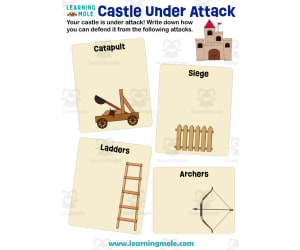
Castle Under Attack Activity
Social Studies, History, History: Europe, History: World, Geography, Grade 3, 4, 5, 6, 7, 8, 9, Activities
Activity Introduction An amazing activity designed for the students to learn more about castles in different countries. Castle Under Attack What do you know about this place? Do you know in which part of the world it is? Have you ever visited this place? If yes, can you tell us more about your adventure, and what do you like the most about this place? Do you like reading about Geography? What is your favorite country in the whole world? If you are going on a trip where it will be? Which country? What you are going to see there? Does this country has a famous place to visit? Castle Under Attack Activity The activity is perfect for encouraging the researching skills for the students, while learning more about this fantastic place. Castle Under Attack This friendly designed worksheet is suitable for students at school, homeschooling, and as a group activity. Instructions Your castle is under attack! Write down how you can defend it from the following attacks. Format Available in a PDF format.
Author Educational Voice
Tags Castle Under Attack, Castle Under Attack Activity, Castle Defense , History, History Facts, Hstory Facts For Kids, Castle, Castles, Castles Facts, Castles Facts For Kids

Prefixes and Suffixes Sample - Grades 1-2 Grammar (Slides)
ELA, Language Development, ESL, Grammar, Common Core, Resources for Teachers, Grade 1, 2, Presentations, Teacher Tools, Quizzes and Tests, Assessments, Activities
Prefixes and Suffixes - 1 Sample Lesson ELA MCQS Overview: In this series of lessons, students will embark on an engaging exploration of the grammar skills that bring our language to life. These lessons are designed to help students identify, understand, and effectively use language arts skills in their writing and speech. Used with the free supplementary materials available for all topics, each lesson builds on the last, offering a mix of direct instruction, interactive group activities, and independent practice. Through fun and creative tasks, students will learn how to recognize grammar in sentences, understand their role in sentences and use them to enhance their own writing and speech. Prefixes and Suffixes Overview: Includes: Intro to Prefixes Intro to Suffixes Forming Suffixes Determining Affix Word Meaning Slides Version This is the Slides editable and interactive version. There is a fillable answer sheet at the end. This download is available in GOOGLE Docs, GOOGLE Forms, GOOGLE Slides. PDF, PPT, WORD, check the links below for more details. FULL CATALOG OF DOWNLOAD LINKS HERE Grade 1/2 Links: Capitalization and Punctuation Google Docs Google Forms Google Slides PDF PPT Word Free Supplementary Materials Pack Adjectives Google Docs Google Forms Google Slides PDF PPT Word Free Supplementary Materials Pack Nouns Google Docs Google Forms Google Slides PDF PPT Word Free Supplementary Materials Pack Pronouns Google Docs Google Forms Google Slides PDF PPT Word Free Supplementary Materials Pack Verbs Google Docs Google Forms Google Slides PDF PPT Word Free Supplementary Materials Pack Prefixes & Suffixes Google Docs Google Forms Google Slides PDF PPT Word Free Supplementary Materials Pack Sentence Structure Google Docs Google Forms Google Slides PDF PPT Word Free Supplementary Materials Pack Subject-Verb Agreement Google Docs Google Forms Google Slides PDF PPT Word Free Supplementary Materials Pack ELA Review Questions Overview Questions have three answer choices. There are a handful of pictures on each test for aesthetic purposes, as well as a review sheet covering most of the topics covered in the product. Introduction or Example Sheet Each topic will include an introduction or example sheet to go through first with your students. Full Answer Keys Full answer keys and sample responses are provided so no matter how busy you are, you know you're covered! In the Supplementary Pack Interactive Ice Breakers: Fun, hands-on activities that get students thinking about adjectives right from the start. Guided Practice: Teacher-led exercises that reinforce the day’s lesson, ensuring students can confidently identify and use adjectives. Group and Partner Tasks: Collaborative activities that allow students to work together to solve problems, categorize adjectives, and create descriptive sentences. Independent Worksheets: Structured worksheets that provide individual practice and help solidify understanding of key concepts. Exit Tasks: Quick, reflective activities at the end of each lesson that assess understanding and encourage students to apply what they’ve learned. For similar downloads and other frees, do check out Cored Group on TeachSimple.
Author Cored Education
Tags Elementary, Reading, Comprehension, Vocabulary, Answers, Ccss, Common Core, Spelling, Writing, Passages

Science Reading Comprehension Passage: Chemical Bonding (Docs)
Science, ELA, Reading, Reading Comprehension, Strategies, Resources for Teachers, Chemistry, Grade 6, 7, 8, 9, 10, Writing Prompts, Worksheets & Printables, Centers, Activities, Teacher Tools, Assessments, Quizzes and Tests, Quizzes, Tests
Science Reading Comprehension Passage and Questions: Chemical Bonding (Google Docs) This very engaging science reading passage is about chemical bonding and how atoms connect to form the materials people use every day . It explains how outer electrons influence bonding and introduces three major bond types: ionic bonds, covalent bonds, and metallic bonds. Students explore examples such as sodium chloride, water, copper wire, aluminum foil, and iron beams while learning how bonding affects properties such as conductivity, strength, flexibility, and reactivity. This passage is designed to bridge the gap between science and literacy by strengthening reading comprehension while sparking scientific curiosity in middle school students. It blends English Language Arts skills with accurate science content, helping students build background knowledge, understand key concepts, use evidence from the text, and explain scientific ideas clearly. This resource supports science classroom practice while also reinforcing important literacy skills such as main idea, vocabulary, comprehension, and summarizing. Ideal for interdisciplinary learning in ELA and Science. Suitable for Grade 9 review, too! Student Tasks for The Passage: 10 multiple-choice questions targeting main idea, key details, science concepts, comparison, and real-world applications 10 True/False statements to check understanding and address common misconceptions 5 text-based short-answer questions that require students to explain important ideas from the passage 5 vocabulary matching items with clear, student-friendly definitions 1 summary prompt that asks students to condense the central ideas accurately Full answer key for every section Available Formats for this Resource PDF Fillable PDF Word Docs FULL CATALOG OF DOWNLOADING LINKS HERE Product Details Length: 7 pages total Grades: 6–8, also suitable for Grade 9 review Use cases: close reading, stations, homework, intervention, test prep, and sub plans Standards support: Reinforces informational-text skills and supports NGSS-style sense-making by helping students read scientific explanations, connect evidence to key concepts, interpret real-world examples, and explain cause-and-effect relationships in science. Why Teachers Choose This Set Authentic science content paired with rigorous literacy practice Consistent task structure across all passages for easier planning and smoother student routines Clear, age-appropriate writing that builds confidence without oversimplifying Other Science Reading Collections and Topics You May Find in the Store: 1. Astronomy & Space Science 2. Volcanoes, Rocks, & Mountains 3. Rock Cycle, Soil, & Sinkholes 4. Mars, Glaciers, & Antarctica 5. Water Cycle, Acid Rain, & Wastewater 6. Insects, Animals, & Ecosystems 7. Bioluminescence & Insects 8. Animal Skin, Cats, & T. Rex 9. Human Body and Senses 10. Health & Applied Bioscience 11. Waves, Light, & Imaging 12. Electricity & Energy 13. Motion & Materials 14. Chemistry and Materials Science 15. Electromagnetism 16. Acids and Bases 17. Gas Laws 18. Biotechnology 19. Periodic Trends 20. Protists and Fungi 21. Microevolution 22. Blood 23. Chemical Bonding 24. Magnets 25. Muscles 26. Nuclear Chemistry 27. Electromagnetic Devices 28. Epigenetics 29. The Law of Conservation of Mass 30. Atomic Models 31. Isotopes and Ions 32. Light 33. Human-Environment Interaction 34. Theory of Evolution 35. Photosynthesis 36. Origins of Life and Early Earth 37. Gene Expression and Regulation 38. Thermochemistry 39. Allergies 40. Coevolution 41. Birth to Adulthood 42. Cells 43. Entropy and Free Energy 44. The Human Brain 45. Mixtures and Solutions 46. Invertebrates 47. Zoo Animals 48. Biochemistry 49. Animal Behavior 50. Population Ecology ...and many more engaging science reading passages that cover intriguing and important topics designed to spark curiosity and support student learning. Use this passage to reinforce ELA skills in science, to add literacy to your lessons, and to support independent work. The passages strengthen main idea, evidence use, vocabulary in context, inference, cause and effect, and summary writing. With ready-to-use assessments and complete answer keys, you can provide focused practice that is simple to run and fast to review.
Author Middle & High School - CORED Education
Rating
Tags Middle School, Reading Comprehension, Reading Strategies, ELA, Centers, Reading Passage, Assessments, Vocabulary, Chemistry, Atomic Structure

"Dos Zumba" Math Song
Creative Arts, Art, Music, Math, Multiplication and Division, Division, Grade 3, 4, Songs, Activities
The "Dos Zumba" Math Song teaches 3rd and 4th grade students multiplication facts by 2 through an upbeat music video. Students will enjoy learning their multiplication tables by singing and dancing along to the rhythmic Spanish song. The video clearly explains the multiplication concept and provides various examples to reinforce student understanding. Use this engaging resource to introduce and practice two times tables. Play the catchy MP4 song multiple times across the unit for the objective of solving products correctly. Students can learn math in a lively way with the "Dos Zumba" Math Song. Check out similar multiplication, division, geometry, measurement, and language arts songs in my store to incorporate musical learning across the curriculum.
Author MathDog Media
Tags Math Songs, Math Music, Math Videos, Dos Zumba, Multiplications Facts, Fact Fluency, Multiplication Video, Multiplication Song

Letter T Train Alphabet Worksheets and Centers
ELA, Language Development, Phonics, Writing, Handwriting, Kindergarten, Preschool, Activities, Worksheets & Printables, Worksheets
Engage preschool and kindergarten students with these colorful Letter T Train activities that reinforce letter recognition, phonics skills, and handwriting practice. Students will sort train cards, complete cut-and-paste worksheets, and assemble letter T trains. This comprehensive letter T resource includes eight train engine cards, train car sorting cards, letter T matching cards, four sorting mats, task box materials, three handwriting practice sheets, and a phonics worksheet. Games, worksheets, and hands-on activities provide engaging letter T practice for whole group, small group, literacy centers , and independent practice. The train theme entertains students as they build letter skills. Sorting cards facilitate reusable hands-on learning while no-prep worksheets allow easy printable phonics and handwriting practice. This versatile resource builds letter T skills for the preschool and kindergarten classroom.
Author The Connett Connection
Tags Alphabet Trains, Alphabet Activities, Alphabet Worksheets, Alphabet Center, Literacy Center, Beginning Sounds, Handwriting Practice, Letter T, Letter T Worksheets, Letter T Activities

Around the Home Word Search: 1 Page Sample (PDF)
ELA, Language Development, Resources for Teachers, Vocabulary, Spelling, ESL, Grade 2, 3, 4, 5, Worksheets & Printables, Worksheets, Teacher Tools, Centers, Activities, Word Searches
THIS IS A ONE PAGE SAMPLE OF A SIX PAGE WORD SEARCH DOWNLOAD FULL SIX PAGE WORD SEARCH DOWNLOAD INFORMATION This wordsearch series is designed for students in grades 2–5. Each set of wordsearches is built around a clear vocabulary theme, helping students develop word recognition, improve spelling, and boost topic-related understanding through engaging visual puzzles. Every wordsearch also includes a fun hidden shape for students to guess—adding an interactive twist to traditional vocabulary practice. These wordsearches are student-friendly, classroom-ready, and perfect for integrating into literacy warmups, seasonal units, fast-finisher tasks, or home learning extensions. Each puzzle reinforces themed vocabulary in a playful, structured format that keeps learners motivated. Around the Home Word Search Word List 1. Rooms in the House Kitchen, Living room, Bedroom, Bathroom, Dining room, Garage, Laundry room, Attic 2. Furniture & Appliances Chair, Table, Couch, Bed, Refrigerator, Oven, Lamp, Bookshelf 3. Things Found in a Home Clock, Mirror, Rug, Curtains, Doorbell, Pillow, Blanket, Fan 4. Outdoor Spaces Backyard, Porch, Garden, Fence, Driveway, Mailbox, Swing, Treehouse 5. Cleaning & Chores Sweep, Mop, Vacuum, Dust, Laundry, Trash, Dish, Organize 6. Family & Home Activities Bake, Set, Sing, Color, Puzzle, Stretch, Laugh, Snuggle PDF Version Other versions will appear here when available. Follow the store for the lastest on new products. How to Use These Wordsearches These wordsearches are ideal for: Morning work or early finisher bins Vocabulary centers or anchor activities Holiday or seasonal review lessons Independent literacy stations or take-home enrichment Each puzzle includes a themed word list and a shaped grid for students to complete. Word directions may vary (horizontal, vertical, diagonal), and answer keys are included for easy checking. Optional vocabulary challenges or writing tasks can be added to extend the learning experience. Whether you're reviewing key vocabulary, exploring a seasonal topic, or offering fun literacy practice, these wordsearches provide a flexible and engaging tool to support vocabulary growth in grades 2–5. More Around the Home Themed Products CROSSWORDS FULL CATALOG OF DOWNLOAD LINKS HERE Themed Word Search Links Addition PDF Animals PDF Around the Home PDF Birthday PDF Candy PDF Christmas PDF Cinco de Mayo PDF Clothes PDF Colors PDF Days and Months PDF Division PDF Earth Day PDF Easter PDF Easy Word Searches PDF Fall PDF Father's Day PDF Food PDF Geography (Set 1) PDF Geography (Set 2) PDF Geography (Set 3) PDF Graduation PDF Health PDF History (Set 1) PDF History (Set 2) PDF History (Set 3) PDF Human Body PDF Kindness PDF Life Skills PDF Mother's Day PDF Multiplication PDF Science Word Searches (Set 1) PDF Science Word Searches (Set 2) PDF Science Word Searches (Set 3) PDF Shapes PDF Social Skills PDF Spring PDF Sports PDF St. Patrick's Day PDF Subtraction PDF Summer PDF Thanksgiving PDF Transport PDF Valentine's Day PDF Winter PDF Wordsearches in Depth Structure Each wordsearch is crafted around a focused sub-theme and includes a visual puzzle shaped like a related object (e.g., balloon, gift, snowman). Students complete each puzzle using the provided themed word list, strengthening both content knowledge and spelling skills in a highly engaging format. Each completed set includes: A shaped wordsearch puzzle with 10 vocabulary words A student instruction guide with search directions (horizontal, vertical, diagonal) An answer key for teacher support or student self-checking A Did You Know? fact connected to the theme for enrichment or discussion Themes Included The wordsearches cover a wide range of fun, age-appropriate themes, including: Seasons & Holidays (e.g., Halloween, Easter, Valentine’s Day) Math Concepts (e.g., Addition, Number Words) Everyday Topics (e.g., Animals, Weather, School) Special Units (e.g., Health, Earth Day, Sports, Kindness) Each topic is selected to reflect students’ real-life experiences and interests while reinforcing literacy skills and content understanding in a playful, visual way. For similar downloads and other frees, do check out Cored Group on TeachSimple.
Author Cored Education
Rating
Tags Vocabulary, Spelling, Rooms In The House, Furniture, Home Activities, Word Searches, Ela Word Searches, Home Word Searches, Word Search
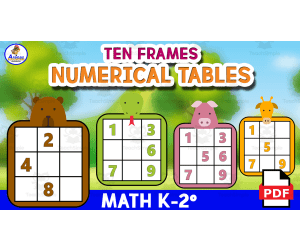
NUMERICAL TABLES 1 TO 10
Math, Numbers, Preschool, Grade 1, 2, 3, Activities, Games
Numerical Tables 1 to 10 Reinforce number sense and counting skills with this 8-page printable resource featuring colorful images to represent numbers 1 through 10. Young learners will match the numeral to the quantity shown in each playful scene. Blending math concepts with engaging visuals keeps students focused while firming their grasp of these foundational numbers. Teachers can implement this versatile resource in many ways. It works well for whole-group instruction using a projector or interactive whiteboard. Students can also work through the pages independently or in small groups, counting the objects and writing the matching numeral. The pages make excellent center or station activities too. Simply print, laminate if desired, cut out and provide to children with dry erase markers or pointing devices. As an extension, prompt them to create their own drawings representing numerals. This no-prep activity is perfect for differentiation, remediation, or math stations. Up the challenge by timing students as they complete the pages. It also serves as a colorful and inviting homework option requiring students to match the quantities to the numerals. Include the answer key to make it parent-friendly. This engaging game-based approach gives early learners valuable repeated practice recognizing numbers while having fun learning.
Author EDITORIAL LAURA EDUCA
Tags NUMBERS, NUMBERS 1 TO 10, FIRST NUMBERS
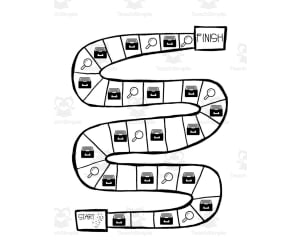
Game: Internet Safety
Science, Technology, Grade 1, 2, 3, 4, Activities, Games
Internet Safety Board Game: A Teaching Resource for Internet Safety This constructive resource tailored for students of grade 1- 4 attempts to bolster their digital literacy through an interactive board game. The printable format ensures flexibility and ease of use in the classroom scenario. Main Components: An engaging board design that charts the player's learning journey. Comprehensive instructions that guide users through the gameplay. Dice cards with questions about internet safety on one side and answers on the other, marked also with steps to move forward or backward on the board. Sorting cards designed to categorize various digital elements into appropriate segments illustrated by a t-chart. The Gameplay: The progress in this game is tied intrinsically to content knowledge – accurate answers help players advance quicker! The ultimate goal is not just crossing the finish line first but amassing correctly answered 'ERRORS' along your journey, each representing wise online choices. Detective card prompts interspersed in gameplay offer opportunities for players due prove their understanding by identifying insecure aspects within given scenarios. In hindsight, post-game discussions among students guided by educators significantly strengthen teachings from each round. This Internet Safety Board Game replaces traditional teaching methods making way for exploration within safe boundaries - ensuring smiles stay intact while enlightened young minds navigate technological waters!
Author Resource Garden
Tags Internet Safety, Board Game, Cyber Security, Digital Literacy, Interactive Learning

Practical Science: Life and Living Activities for 6-8 year olds
Science, Life Sciences, Biology, Grade 1, 2, 3, Activities
The Practical Science: Life and Living Activities resource is a 24-page download. It is filled with very explicit lessons for 6-8 year olds. There are a total of 8 lessons. Each lesson begins with teacher notes for the teacher to gather necessary materials and consider lesson ideas and integration ideas.
Author Ready-Ed Publications
Tags Body Parts, Basic Needs, Food Chains, Biology Activity, Plants Activity

Project Geos: A Brave New World Gr. 4-7
Social Studies, Geography, Grade 4, 5, Projects, Activities
Project Geos: A Brave New World Gr. 4-7 An innovative teaching resource, Project Geos: A Brave New World Gr. 4-7 is designed to ignite students' creativity while enhancing their understanding of Social Studies and Geography. This highly engaging unit plan is perfect for Grades 4 to5 students in both typical classrooms and homeschooling setups. This unique unit takes learning beyond explorations of conventional countries like Mexico or Argentina. Instead, it ventures into an exciting project where learners build their own nations on a new planet named "Geos". The activities are crafted to promote collaborative learning and develop creative thinking skills. The process begins with naming the country and choosing a capital city. Pupils proceed to create maps which illustrate the geographical layout of their self-designed countries. Beyond Land Mapping: Project Geos incorporates various projects extending learning beyond mere land mapping - pupils engage in creating national sports or designing coats of arms representing the culture and values embedded in each made-up country. This lesson plan aims at offering an immersive learning environment that offers more than just stimulating activities – it makes Social Studies interactive while fostering cooperation among peers. A Blend Of Creativeness And Educational Value: All tasks originate from pedagogical principles ensuring high educational value alongside creativity with clear instructions detailed for each task available in PDF format, making them suitable even for novice educators. A special evaluation section has been included providing: Guidelines for assessing student performance Examples that can serve as inspiration or benchmark references This whole package ensures a holistic teaching approach that caters not only for content delivery but also execution evaluation. Whether instructing in small study clusters, whole-group dynamics, or even extending tasks as homework assignments, Project Geos: A Brave New World Gr. 4-7 offers versatility addressing different learning preferences while promoting active engagement and comprehensive subject competency build-up.
Author Classroom Complete Press
Tags PDF
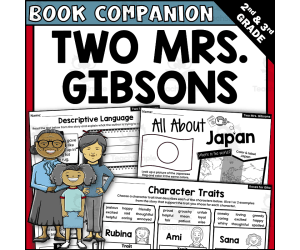
Two Mrs. Gibsons Read Aloud Book Companion Activities for IRA
ELA, Reading, Reading Comprehension, Literature, Grade 2, 3, 4, Read Alouds, Activities
This picture book companion is a complete supplemental resource for the book Two Mrs. Gibsons, by Toyomi Igus. With 35 print-and-go reading activities to choose from, this resource is ideal for customizing learning to your student's specific needs and academic abilities. Students will investigate characters, identify story elements, determine the theme, practice plotting story events, compare & contrast, make predictions, inferences, & connections, answer questions that require them to think beyond the text, and much more! Students will love the engaging and fun activities, and you will appreciate the time saved hunting for high-level resources to teach reading concepts that students frequently struggle with. The activities provided are designed to enable students to apply higher-level thinking skills, encourage them to provide text evidence to support their thinking, and challenge them to express their own thoughts and/or perspectives. ⭐️This Resource Includes:⭐️ ◾ Making Predictions: Before reading the book, students will make predictions about the text. ◾ Story Elements: Students fill in the boxes with words & pictures to represent the story elements. ◾ Sequencing: Students will retell & illustrate the important parts of the story. ◾ Summary: Students complete the Somebody, Wanted, Because, But, So graphic organizer and write a summary of the story. ◾ Story Event Sort: Students will describe a scene or event from the story that fits into each of the categories & explain how the event made them feel & how it relates to the category. ◾ Making Inferences: Students use clues & schema to make inferences while reading the story. ◾ Descriptive Language: Students read the text below from the story and explain what the author is trying to communicate. ◾ Recalling Events in Chronological Order (Viola): Students will describe and illustrate four memories of the narrator's time with Mrs. Gibson, her grandmother. ◾ Recalling Events in Chronological Order (Kazumi): Students will describe and illustrate four memories of the narrator's time with Mrs. Gibson, her mother. ◾ Making Connections: Students make connections to events in the story. ◾ Character Traits: Students will choose a character trait that describes each of the characters and provide evidence from the text to support those character traits. ◾ Character Inside & Out (Narrator): Students include details from the story to describe what the character says, thinks, does, and feels. ◾ Character Inside & Out (Viola): Students include details from the story to describe what the character says, thinks, does, and feels. ◾ Character Inside & Out (Kazumi): Students include details from the story to describe what the character says, thinks, does, and feels. ◾ Character Feelings (Narrator): Students describe the character's feelings throughout the story & give examples. ◾ Character Feelings (Viola): Students describe the character's feelings throughout the story & give examples. ◾ Character Feelings (Kazumi): Students describe the character's feelings throughout the story & give examples. ◾ Character Change (Narrator): Students will explain how the character changed from the beginning to the end of the story and describe the events that caused the change to happen. ◾ Character Change (Viola): Students will explain how the character changed from the beginning to the end of the story and describe the events that caused the change to happen. ◾ Character Change (Kazumi): Students will explain how the character changed from the beginning to the end of the story and describe the events that caused the change to happen. ◾ Character Summary: Students summarize the main character of the story. ◾ Compare & Contrast: Students will compare & contrast the two Mrs. Gibsons in the story. ◾ Character Acrostic Poem (Viola): Students will write an acrostic poem to describe Viola Gibson's character. ◾ Character Acrostic Poem (Kazumi): Students will write an acrostic poem to describe Kazumi Gibson's character. ◾ Sketch a Scene From the Story: Students will draw a scene from the story and explain why it's important to the plot. ◾ Setting Influences the Plot: Students will draw a scene from the story that takes place in one of the settings and write about what happened there and why it was important to the plot. ◾ Theme: Students answer the questions to determine which theme best fits the story and provide text evidence to support their choice. ◾ Thinking About the Text: Students will answer the questions about the story & include examples from the text to support their answers. ◾ Wait... There's More!: Students will write about what happens next in the story. ◾ Vocabulary Crossword Puzzle: Students use the clues to fill in the puzzle. Words can go across or down. Letters are shared when the words intersect (ANSWER KEY included). ◾ All About Japan: Students will research to learn more about the country of Japan. ◾ Weekend With Mrs. Gibson: Students think about what they would do if they could spend the weekend with one of the two Mrs. Gibsons and share what they did during their time together with pictures and captions. ◾ Someone Special: Students will write a paragraph about either their mother, grandma, or a mother figure in their life and include an illustration to go with their writing. ◾ Book Review: Students will color in the stars to rate how much they enjoyed the book and draw a new cover & their favorite character from the story. Then, they will explain why other kids should or should not read it. ◾ My Family Tree: Students fill in the family tree with names and illustrations and then share them with the class (in COLOR and B&W). 💡Need ideas for different ways you can implement these activities? ◾ Focus on different reading skills each day for targeted instruction, and have students complete a corresponding printable to check for understanding. ◾ During centers, students can independently read the story again and complete an activity that reviews a previously taught concept. ◾ Work with students on a reading concept they struggle with during guided reading or strategy groups. ◾ Students work with a partner or in literature circles to complete additional reading activities. This resource is for extension read-aloud activities only. The book is not included. ⭐️You may also like: ⭐ TEXT SET #1: "The Importance of Friendship" ◾ A Weekend With Wendell Read Aloud Book Companion Activities for IRA ◾ First Come the Zebra Read Aloud Book Companion Activities for IRA ◾ This is Our House Read Aloud Book Companion Activities for IRA ◾ Horace and Morris But Mostly Dolores Read Aloud Book Companion Activities for IRA ◾ The Old Woman Who Named Things Read Aloud Book Companion Activities for IRA TEXT SET #3: "Finding Your Way in a New Place" ◾ Grandfather Counts Read Aloud Book Companion Activities for IRA ◾ The Have a Good Day Cafe, Read Aloud Book Companion Activities for IRA ◾ Roses for Gita Read Aloud Book Companion Activities for IRA ◾ Mango, Abuela, and Me, Read Aloud Book Companion Activities for IRA ◾ Home at Last Read Aloud Book Companion Activities for IRA TEXT SET #7: "Exploring Narrative Nonfiction" ◾ Cactus Hotel Read Aloud Book Companion Activities for IRA ◾ A Log's Life Read Aloud Book Companion Activities for IRA ◾ Salmon Stream Read Aloud Book Companion Activities for IRA ◾ Think of an Eel Read Aloud Book Companion Activities for IRA ✨Be sure to check out my storefront here: https://teachsimple.com/contributor/creatively-gifted
Author Creatively Gifted
Tags IRA, Picture Book Activities, Read Aloud Lessons, Interactive Read Aloud Activities, Elementary Reading, Reading Comprehension, Fountas And Pinnell IRA, Family, Second Grade, Two Mrs. Gibsons, Two Mrs Gibsons, Two Mrs. Gibsons

7 Sheltered Strategies for both ELLs & Native English Speakers V2
ELA, Language Development, ESL, Grade 8, 9, 10, 11, 12, Activities
7 Sheltered Strategies for both ELLs & Native English Speakers V2 A comprehensive resource that expands teaching strategies to increase student responses while implementing sheltered instruction for both English Language Learners (ELLs) and native English speakers. This tool provides seven unique, engaging strategies that are not only easy to implement but also require minimal preparation time of 10 minutes or less. The targeted areas within these strategies are academic vocabulary and content acquisition, promoting rich student interaction. The use of sheltered language acquisition techniques ensures effective learning through important mediums: reading, writing, speaking and listening. Included Activities: Mind Reader:An interactive game where hints lead students to guess mystery words; Silent Conversation:A tranquil yet potent activity encouraging written interaction with academic content; Backwards Quiz:Juxtaposing the conventional quiz format by giving solutions first and prompting students to formulate questions. This resource allows peer editing practices using a method called 'Feedback Teams' in which pair-based activities help students master the art of providing as well as receiving feedback. 4-Square Brainstorm: Promotes brainstorming of content-based words within specific categories. Gives-One-Gets-One: Encourages active idea exchange amongst peers. The resource can be used across all disciplines creating a dynamic classroom environment suitable for Grade 8 up until Grade 12 levels. This comes in PDF format facilitating convenience for educators looking for vibrant additions to deliver professional development. Bonus Features The package includes robust lesson planning tools with clearly outlined directions on strategy usage, prep time requirement, and activity duration. Also, it comes with two printable templates that further support educational aims towards holistic language development in both school or homeschooling settings.
Author Sheltered Language Resources
Tags Sheltered Instruction, Language Acquisition, Academic Vocabulary, Interactive Activities, Peer Editing
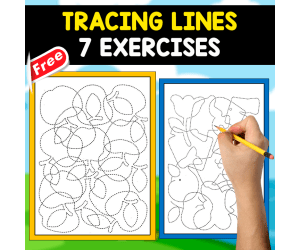
TRACING LINES EXERCISES | 7 FREE PAGES
ELA, Writing, Handwriting, Early Learning, Elementary, Pre-K, Activities, Worksheets & Printables
7 FREE PAGES FOR TRACING LINES | HANDWRITING INTRODUCTION: We are EDITORIAL ARENAS EDUCATIVAS, a publisher dedicated to designing educational resources for primary school children approximately between the ages of 3 and 12 who are learning mathematics, literacy, as well as worksheets for learning Spanish and some brain exercises. MAIN INFORMATION: 1. Why should teachers use educational material in the classroom? As is known, educational material helps students build their knowledge autonomously and, above all, in an unforgettable way. 2. What is the name of this document? This document is titled "Educational material for children" 3. What topic will be addressed in this resource? This document will address an educational topic that every child should learn in a basic way. 4. For what ages is it recommended? This set of educational sheets is recommended for children in general who are in the learning age and these sheets will be of great help to them. 5. Who is the author of this document? The author, who was in charge of producing and compiling this educational material, is EDITORIAL ARENAS EDUCATIVAS. 6. In what area of knowledge can it be applied? You can apply this set of educational sheets according to your criteria, in the corresponding area. SECONDARY INFORMATION: 7. Aimed at children of ages: This educational document is specifically aimed at children in primary education. 8. Area: This educational document may be used in some area of primary education for children. 9. Keywords: children, primary education, resources for children, free resources, primary resources, resources for primary education. 10. How do I print it? You can print this document in PDF format, A4 size. 11. How to apply it in class? You can apply this document individually or also in a group, it all depends on the criteria of the educator who is going to apply this sheet. 12. Will they need extra elements to use this sheet? Yes, perhaps the students when using this sheet will need pencils, colors, or perhaps scissors, eraser. It all depends on the point of view of the educator.
Author EDITORIAL LAURA EDUCA
Tags TRACING LINES, TRACING, TRACE, FREE , FREE RESOURCES, HANDWRITING
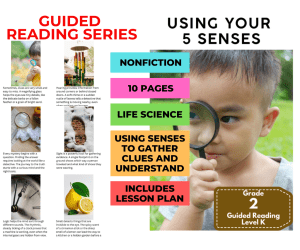
Guided Reading Level K - Using Your 5 Senses (with Lesson Plan)
ELA, Resources for Teachers, Reading Comprehension, Reading, Pre-Reading, Language Development, Human Body, Life Sciences, Science, Vocabulary, Grade 1, 2, 3, Worksheets & Printables, Worksheets, Teacher Tools, Centers, Activities, Literacy Readers, Quizzes, Quizzes and Tests, Assessments
This Guided Reading Book - Using Your 5 Senses (Level K) with lesson plan includes: Guided Reading Color Label (front cover x1) This is a quick way to match the book’s demands to what students can generally handle.. The overall goal is to use the level/color to pick books for several smaller groups. To qualify for a certain level, a student is expected to read a book from that level with about 90–94% accuracy. If a student is consistently accurate and understands, move up a level. If the student is struggling at that level, drop down and add more support. Each student will improve at completely different rates, but it is generally one of the best ways to check progress across the class. DOWNLOAD THE CATALOG TO VIEW ALL GUIDED READING BOOKS AVAILABLE (SORTED LEVELS A-Z) Pre-Reading Question (x1) Teacher asks the prompt aloud, can be while showing the cover or first page. Students share what they already know, or make educated guesses from the cover. Prompt them to use the target vocabulary. Write some of their responses on the board to look back at during the reading. Vocabulary Words (x5) Introduce the five words, best doing it one at a time. Start by saying it, while students repeat and then see if anyone knows what it means before reading further. Read through the meaning and try to briefly connect each word to a picture or gesture so it’s meaningful. Ask students to flip through the book pages and point to where they see each of the vocabulary words. While reading the book pause upon coming across one of the vocab words or read the sentence twice to make sure students understand the word has appeared. Optional: Ask students to raise hands whenever they see/hear one of the new words. Guided Reading Pages (x10) Check the book snapshot (below) for: primary topic - do you need to prep extra reading or intro materials on this? what is taught best - decide on 1-2 bullets to focus on, use the prompt or words provided here for best results. learning goals - what you are checking for students to be able to do after the session, elicit answers using prompts or words provided. key vocabulary (see section above). questions overview - so you know what is coming up and if you need to prep extra materials to assist understanding. Run the lesson You may have already looked at a few of the pages together, but you can show them some of the pictures again first to set meaning. Depending on how much time you have and how familiar your students are with guided reading class, you may want to read the book aloud first with the group first. Students whisper or partner read, while you listen in. If time, do it as a group, one student reading a page each. Use the guided page’s prompts to coach: “Check the picture / does it make sense?” “Point under the words / try the first sound” “Reread the sentence smoothly”. Try to focus more on one student per session (rotating every time), so you can work out if they are ready to move up or need to move down a level. Comprehension Questions (back cover x3) This is your way to check that students didn’t just say the words, but actually understood the text. First, let students answer by pointing to the page/picture and saying a short sentence. After any answer, follow with: “Show me where you found that in the text.” In bigger groups, have partners answer first (10–20 seconds), then call on 2–3 students to share. Differentiation tips: Emerging speakers/struggling readers: oral + pointing On-level: oral in a full sentence Higher: one written sentence or draw + label Book Snapshot Title: Using Your 5 Senses Genre: Nonfiction (informational) Subject: Science (Human Body) / Reading Primary Topic: Using senses to gather clues and understand Estimated Guided Reading Level (A–Z): K What This Book Teaches Best How to observe like a detective by starting with a question and looking for an answer. How sight can gather evidence by noticing details like footprints and tiny clues. How hearing can provide information (like movement nearby) even when you can’t see. How smell, touch, and taste each give different kinds of information about the world. How thinking and logic connect clues “like pieces of a puzzle” to understand what happened. Learning Goals Students will explain how asking questions helps begin solving a mystery. Students will identify what sight, hearing, smell, touch, and taste can tell a person, using details from the text. Students will describe how a magnifying glass helps the eyes see “tiny details.” Students will explain how hearing can give information about something moving nearby. Students will describe how logic helps connect clues to make a clear picture of what happened. Key Vocabulary From the Text detective — a person who looks for clues to solve. evidence — facts or clues that show what happened. magnifying — making something look bigger to see details. rhythmic — having a steady, repeating beat or pattern. observation — watching carefully and noticing details. Discussion Prompts Pre-reading question: How can your senses help you find clues about the world? Comprehension questions: What does the book say sight helps you learn from a single footprint? How can hearing tell a detective something is moving nearby? According to the book, why are the five senses “keys to understanding the world”? Printing Tips 1. Best Printing Method (Recommended) “Booklet” Printing (Best if Available) If your printer or PDF viewer supports Booklet Printing , use this. Settings to use: Print mode: Booklet Paper size: Letter or A4 (either works) Orientation: Landscape Print on both sides: Yes Flip on: Short edge Scaling: Fit to printable area Booklet subset: First test: Front sides only Then: Back sides only This will automatically: Pair pages correctly Put the cover on the outside Align everything for folding After printing, fold in half and staple along the spine . 2. If “Booklet” Printing Is NOT Available You can still print this correctly with manual duplex printing . Step-by-step: Open the PDF. Choose Print . Set: Orientation: Landscape Pages per sheet: 1 Print on both sides: Yes Flip on: Short edge Print all pages . Because each PDF page already contains two facing book pages, the result will still fold cleanly into a book. Thousands of Cored Education products are included with your TeachSimple membership. Download links and encyclopedia index available here.
Author Cored Education
Rating
Tags Reading Comprehension, Reading Passages, Reading, Guided Reading, Guided Reading Lesson Plan, Guided Reading Activity, Pre-reading, Vocabulary, Life Science, Human Body
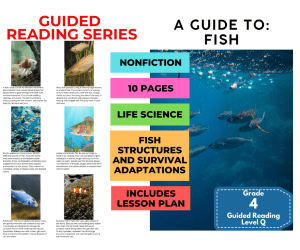
A Guide to Fish: Guided Reading Level Q with Lesson Plan
ELA, Resources for Teachers, Reading Comprehension, Reading, Science, Language Development, Life Sciences, Earth and Environmental Sciences, Pre-Reading, Vocabulary, Grade 3, 4, 5, Worksheets & Printables, Worksheets, Teacher Tools, Centers, Activities, Literacy Readers, Quizzes, Quizzes and Tests, Assessments, Lesson Plans
This A Guide to Fish (level q) guided reading book with lesson plan includes: Guided Reading Color Label (front cover x1) This is a quick way to match the book’s demands to what students can generally handle.. The overall goal is to use the level/color to pick books for several smaller groups. To qualify for a certain level, a student is expected to read a book from that level with about 90–94% accuracy. If a student is consistently accurate and understands, move up a level. If the student is struggling at that level, drop down and add more support. Each student will improve at completely different rates, but it is generally one of the best ways to check progress across the class. DOWNLOAD THE CATALOG TO VIEW ALL GUIDED READING BOOKS AVAILABLE (SORTED LEVELS A-Z) Pre-Reading Question (x1) Teacher asks the prompt aloud, can be while showing the cover or first page. Students share what they already know, or make educated guesses from the cover. Prompt them to use the target vocabulary. Write some of their responses on the board to look back at during the reading. Vocabulary Words (x5) Introduce the five words, best doing it one at a time. Start by saying it, while students repeat and then see if anyone knows what it means before reading further. Read through the meaning and try to briefly connect each word to a picture or gesture so it’s meaningful. Ask students to flip through the book pages and point to where they see each of the vocabulary words. While reading the book pause upon coming across one of the vocab words or read the sentence twice to make sure students understand the word has appeared. Optional: Ask students to raise hands whenever they see/hear one of the new words. Guided Reading Pages (x10) Check the book snapshot (below) for: primary topic - do you need to prep extra reading or intro materials on this? what is taught best - decide on 1-2 bullets to focus on, use the prompt or words provided here for best results. learning goals - what you are checking for students to be able to do after the session, elicit answers using prompts or words provided. key vocabulary (see section above). questions overview - so you know what is coming up and if you need to prep extra materials to assist understanding. Run the lesson You may have already looked at a few of the pages together, but you can show them some of the pictures again first to set meaning. Depending on how much time you have and how familiar your students are with guided reading class, you may want to read the book aloud first with the group first. Students whisper or partner read, while you listen in. If time, do it as a group, one student reading a page each. Use the guided page’s prompts to coach: “Check the picture / does it make sense?” “Point under the words / try the first sound” “Reread the sentence smoothly”. Try to focus more on one student per session (rotating every time), so you can work out if they are ready to move up or need to move down a level. Comprehension Questions (back cover x3) This is your way to check that students didn’t just say the words, but actually understood the text. First, let students answer by pointing to the page/picture and saying a short sentence. After any answer, follow with: “Show me where you found that in the text.” In bigger groups, have partners answer first (10–20 seconds), then call on 2–3 students to share. Differentiation tips: Emerging speakers/struggling readers: oral + pointing On-level: oral in a full sentence Higher: one written sentence or draw + label Book Snapshot Title: A Guide to: Fish Genre: Nonfiction (informational) Subject: Life Science Primary Topic: Fish structures and survival adaptations Estimated Guided Reading Level (A–Z): Q What This Book Teaches Best Explains how gills help fish breathe by extracting oxygen from water and releasing carbon dioxide. Describes how a fish’s streamlined shape and fins support efficient movement, stability, steering, and turning. Introduces the lateral line as a sensory system that detects vibrations and pressure changes to help fish navigate and find prey. Compares freshwater and saltwater habitats and explains how fish maintain the right internal balance of salt and water. Shows multiple survival strategies such as bioluminescence, camouflage, cartilaginous skeletons, and schooling (“safety in numbers”). Learning Goals Explain how fish breathe using gills and what happens as water passes over gill filaments. Describe how fins and a streamlined body shape help fish move, steer, and turn in water. Identify what the lateral line does and how it helps fish survive (navigation and finding prey). Compare how freshwater fish and saltwater fish manage water and salt in their bodies. Explain at least two survival adaptations described in the text (camouflage, bioluminescence, schooling). Describe what “cartilaginous fish” are and what the text says cartilage allows them to do. Key Vocabulary From the Text vertebrates — animals that have a backbone. specialized — made for a specific job or purpose. filaments — thin, threadlike parts of the gills. bioluminescence — the ability to make your own light. cartilaginous — having a skeleton made of cartilage, not hard bone. Discussion Prompts Pre-reading question: What body parts or behaviors might help fish survive in different kinds of water? Comprehension questions: What does the text explain that gills do for a fish? Comprehension questions: How does the lateral line help fish, according to the text? Comprehension questions: Why does the text say swimming in a school can help fish survive? Printing Tips 1. Best Printing Method (Recommended) “Booklet” Printing (Best if Available) If your printer or PDF viewer supports Booklet Printing , use this. Settings to use: Print mode: Booklet Paper size: Letter or A4 (either works) Orientation: Landscape Print on both sides: Yes Flip on: Short edge Scaling: Fit to printable area Booklet subset: First test: Front sides only Then: Back sides only This will automatically: Pair pages correctly Put the cover on the outside Align everything for folding After printing, fold in half and staple along the spine . 2. If “Booklet” Printing Is NOT Available You can still print this correctly with manual duplex printing . Step-by-step: Open the PDF. Choose Print . Set: Orientation: Landscape Pages per sheet: 1 Print on both sides: Yes Flip on: Short edge Print all pages . Because each PDF page already contains two facing book pages, the result will still fold cleanly into a book. Thousands of Cored Education products are included with your TeachSimple membership. Download links and encyclopedia index available here.
Author Cored Education
Rating
Tags Reading Comprehension, Reading Passages, Reading, Guided Reading, Guided Reading Lesson Plan, Guided Reading Activity, Pre-reading, Science Lesson Plans, Life Science, Earth Science

ABC Playdough Mats with Pictures
ELA, Language Development, Pre-Reading, Preschool, Kindergarten, Grade 1, Activities
ABC Playdough Mats with Pictures: An Effective Educational Resource The ABC Playdough Mats with Pictures is an effective educational resource, specifically created for early learners in kindergarten, preschool and Grade 1. This tool focuses on the subject of Language Arts, concentrating more on pre-reading subtopics. Considered a fun way to practice the formation of alphabet letters, these mats also play a significant role in enhancing fine motor skills among children. The activity that the students partake in involves molding dough into snake-like shapes and using these pieces to form specific letters. It's an educational process that is stimulating and interactive for students right from their nascent stages. Educational Details This teaching resource consists of a PDF file encompassing 26 printable pages - one for each letter of the alphabet - providing a thoroughly engaging approach towards letter recognition and holistic learning. Each page displays upper-case as well as lower-case versions of alphabetic letters accompanying relevant pictures representing objects or items starting with those particular letters. Versatility Futhermore,the ABC Playdough Mats are adaptable resources perfect not only for individual assignments but also function effectively within group settings be it large or small groups alike at schools or homeschooling contexts.Teachers may assign them during class as hands-on classroom activities or alternatively give them out as highly interactive homework involving parent-child bonding time. Integration across subjects:Instructors can cleverly integrate this exciting educational tool across various subjects by connecting it with topics such as Science (linking animals to specific alphabet characters), Mathematics (developing counting abilities through counting play-dough pieces), Art (by letting creativity shine shaping colorful figures) or social subjects (by forming dough under themes like community helpers etc.). In essence, these ABC Playdough Mats with Pictures provide an all-encompassing learning experience proven effective especially when aiming to make education more enlightening yet equally entertaining for your young learners.
Author Cherry Workshop
Tags Playdough Mats, Alphabet Recognition, Fine Motor Skills, Pre-reading, Interactive Learning
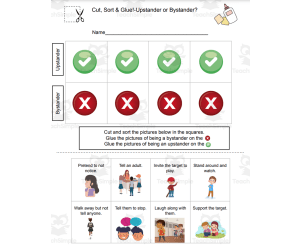
Cut, Sort, & Glue-Upstander or Bystander?
Special Resources, Life Skills, Grade 1, 2, 3, 4, Activities
In this cut, sort, & glue activity, students will learn the difference between being an upstander versus a bystander. This is a great reinforcement activity for any upstander lesson on standing up for others and getting help when there is bullying.
Author Jennifer Moyer Taylor
Tags Upstander, Bullying, Social-emotional Learning, SEL, School Counseling, Upstander Bystander, What Is The Difference Between A Bystander And An Upstander, Bystander Vs Upstander, Upstander Vs Bystander