



3,984 products added recently
Page 314 - Cut and Paste Activities
Enhance learning through tactile experiences with cut and paste activities that combine creativity and skill development. This collection includes sorting exercises, craft projects, and interactive worksheets. By integrating these activities into your lessons, you can support manual dexterity and engagement.

 Show filters

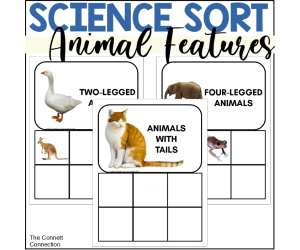
Animal Features Sort
Science, Life Sciences, Biology, Grade 1, 2, 3, Activities, Centers, Assessments, Teacher Tools
Allow students to sort animals by their various features. What is Included: There are sorting card headers for each animal feature. There are sorting mats for each animal feature. There are six picture cards for each of the sets of sorting activities. The animal features included in this set include: No legs, two legs, four legs, more than 4 legs, animals with fur, animals with scales, animals with feathers, animals with wings, animals with tails, animals that can fly, animals that can swim, animals that live in groups, animals that live alone, animals with tusks, animals with horns, animals that jump, animals with hooves, animals that lay eggs, animals with claws, animals with shells, animals with spots, and animals with stripes. Each sorting mat includes a real life example of an animal that belongs in that animal group. All of the picture cards also include real photographs of each animal. What Questions are Asked: To use these, students will lay out either the header cards or the sorting mats. They will then sort the animal images beneath or on top of the correct sorting mat. When to Use: Science Center - The sorting mats can be placed in a science center for students to learn about living things and what they eat. Morning Work - These animal sorts can allow teachers to create quick and easy morning activities for students while they wait on their classmates to arrive to class. Independent Practice - These animal sorts are great for students to independently work on living things. Emergency Sub Plans - The low prep nature and easy to set up activity , makes these worksheets a great activity to leave with subs to assign to students. Small Group Activity - These animal sorts can be used in small groups so teachers can target the students who need extra practice with living things. Writing Review Activity - These animal sorts work well as a review to reinforce student's learning of living things. These sorting activities are easy to create. The mats just need to be printed out. The picture cards need to be printed and cut apart. Once made, the sort can be used over and over.
Author The Connett Connection
Rating
Tags Science Sort, Hands On Assessment, Animal Features, Animal Adaptations
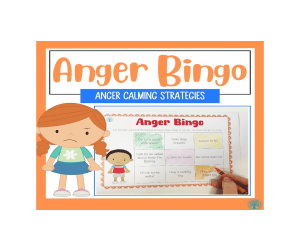
Anger and Calming Strategies Bingo Board
Special Resources, Social Emotional Learning (SEL), Special Education Needs (SEN), Social Skills, Not Grade Specific, Activities
Managing anger can be challenging for children. This bingo game provides a unique and engaging approach for teaching calming strategies to help children handle frustrating emotions. The set includes 3 different bingo boards each with 9 squares. Each square features a different calming technique like deep breathing, listening to music or going to a safe space. Children can use the blank board to fill in their own ideas or user the suggested strategies. Playing is simple - when feelings of anger arise, children use one of the calming methods and then mark off the matching square on their board. The goal is to complete rows horizontally, vertically, or diagonally, just like regular bingo. Not only does this provide motivation to try different strategies, but also gives a sense of accomplishment. Anger Bingo transforms a classic game into a tool for building emotional intelligence. It’s an excellent way to introduce anger management skills or reinforce concepts learned. Children feel empowered taking an active role to soothe themselves. Plus, by completing the boards, they’ll discover new coping methods tailored to their needs. This versatile resource works for individual and group settings with children of varying ages and abilities. Included in this resource are 3 PDF bingo boards. One in color, one in black and white and one blank one for children to fill in their own preferred strategies.
Author SEN Resource Source
Tags Anger, Behavior Support, Calming Strategies, SEN, Bingo

Project: Invasive Species
Science, Earth and Environmental Sciences, Environmental Science, Research, Grade 7, 8, 9, 10, Activities, Projects
Project: Invasive Species is a great resource for students to solve a real-life problem through practicing to solve a fictitious problem. The project involves assigning a ROLE, giving a PROBLEM, providing specific REQUIREMENTS and TOOLS.
Author Mitchell Zuvela
Tags Project, Invasive Species, Research Project, Oral Presentation, Dangerous Travelers Movie

Decimal Place Value Reference Strips - UNITS
Math, Decimals, Fractions, Place Value, Montessori, Grade 4, 5, 6, 7, Activities
Decimal Place Value Reference Strips - UNITS This is a teaching resource designed to enhance students' understanding of decimals, fractions, and place value. It targets grades 4 through 7 and aids educators in simplifying complex mathematical concepts for easier comprehension. Key Features: Presents decimal places from tenths of a thousandth up to the thousands in unit form. Contains two distinct versions which can be printed in landscape mode on standard-size printer paper or cardstock for practical use and durability. Borders may not appear visible when viewed on .PDF format but they print correctly maintaining the informative layout of the strips. Available in both colorful and monochrome designs, suitable for various teacher preferences or printing capabilities. In the colored version, different color tones are used for whole numbers and their decimal breakdowns according to Montessori learning principles. Each successive decimal place uses a lighter shade than its corresponding whole number place, depicting values getting broken into smaller pieces visually. Versatile Applications: An instructive tool during classroom lessons A useful enhancement for practice worksheets Paste them into student maths notebooks offering consistent access at home too, In conclusion, The Decimal Place Value Reference Strips - UNITS serves as an all-encompassing teaching aid that greatly simplifies intricate mathematical models making math education more engaging yet effective.
Author Virtually Montessori
Tags Decimal Place Value, Teaching Resource, Math Education, Fraction And Decimal, Reference Strips

The Day I Met A Dinosaur: Write The Story (9-13 years)
ELA, Writing, Creative Writing, Grade 3, 4, 5, 6, 7, 8, Activities
'The Day I Met A Dinosaur: Write The Story' (9-13 years) An engaging and informative teaching resource, ideal for educators of Grade 3 to Grade 8 learners. This valuable academic tool fosters creative writing practice among students, offering a unique opportunity to delve into the world of dinosaurs and narrative creation. Package Content: Designed For: This resource has been primarily crafted for children aged 9-13 years. Core Objective: It provides a platform for young minds to explore their creativity by constructing their own tale titled 'The Day I Met A Dinosaur'. An exemplary story is included in the package as an example yielding ideas on character development, plot devising and setting establishment. A Variety Of Activities:The activities span over three pages with innovative writing prompts which cater not only to Language Arts Practice but also enhance imaginative capabilities. Moreover, there's a dedicated planning sheet that caters to different elements of the story including characters, settings or plot. Diverse Learning Needs Adressed:This teaching tool challenges proficient pupils through more complex vocabulary usage while ensuring it remains accessible enough for those still grappling with foundational concepts. You can consider implementing these resources either in whole group settings—promoting collaborative learning—or assigned individually depending upon each student’s unique needs. They are also suitable for use as homework assignments ensuring constructive utilization of home-study hours while paving way for parental involvement. Digital Delivery & Practicality- The entire package is provided digitally as a PDF file type allowing easily reproducible copies catering to classroom-wide distribution without any hiccups maintaining high-quality print outputs every single instance subsequently minimizing overhead costs while maximizing learning outcomes. With 'The Day I Met A Dinosaur: Write The Story', Language Arts class will become an anticipated event for students as it nurtures critical creative writing capabilities. Explore the narratives your students concoct and in the process help them hone their storytelling skills, fostering a lifelong love for written expression.
Author Guinea Pig Education
Tags Writing Prompt, Creative Writing, Narrative Development, Character Development, Storytelling Skills

Space - Bell Ringers, Class Warm-Ups, and Exit Tickets
Science, Earth and Environmental Sciences, Space, Grade 9, 10, Activities
This Space unit comes with 23 days’ worth of materials that relate directly to your unit. This activity bundle is geared towards a grade 7-9 science class but will also work well for an advanced grade 5-6 or a lower-level grade 10-11 class. They can be used at the start of a class in the form of a bell ringer/class warm-up or at the end of class as an exit ticket This resource is set up for a space class and includes the topics listed below. Please have a look at the list of topics This resource covers the following topics - Space - An Introduction - Our Solar System - The Life and Death of Stars - The Seasons and Earth's Tilt - The Moon - Eclipse - Solar and Lunar - Galaxies, Other Objects and the Universe - The Immensity of the Universe - Life in outer space - how humans meet their needs These are meant to be used each day, however, the question periods are directly associated with topic lessons, so they are done on days that follow the completion of a lesson. For example, after you finish your lesson, you’d give your students the questions associated with the ecosystems lesson. Additional days will utilize the Quotes and Videos sections. There are two key reasons why this daily activity works: 1) It encourages your students to review their notes on a nightly basis so they’re ready for class. 2) It creates a routine in your classroom that encourages your student to arrive and get settled for class quickly and quietly. Once we’re done, the students are ready for class and have already gotten their brains working and thinking science. The Activities 1) Questions: Question types - Fill in the blanks - Short answer - Opinion - Drawing - Mix of above ● Everything will be included in your PowerPoint ● All questions relate directly to the previous lesson and work to test your students’ understanding ● If students are absent, they know they need to get caught up while away ● This process encourages students to keep up with the material and review their notes nightly 2) Quotes The quotes come from individuals and relate directly to the overarching topic. On these days, I have students read the quote and write down what they feel it means and/or the underlying message. 3) Videos The videos are an excellent way to settle your class down quickly and easily. Each video is selected specifically because it's interesting and relevant to students. Each video can be accessed directly from the slide. Simply click the video image while in slideshow mode and the video will automatically open in your browser. Process ● Each week, I hand out the week’s [Topic Name] - Student Worksheet ○ You can make this activity completely digital by making the sheet available online and have them submit it there as well ● As soon as the bell rings to start class, I hand the sheets out to my students. Once the sheets are out, I start the 4-minute timer. If students are late, they miss out on their time. ● Once the timer finishes, the students flip over their papers and pass them to the front. Structure Each day’s activities, unless otherwise stated, are to be done individually and without notes. However, depending on the ability level of your students, you may want to have them work in pairs and/or use their notes. Marking We all have enough marking already and the last thing we want to do is add to our pile. However, I’ve found that this process is so streamlined and efficient that I’m easily able to mark these while my students are working in class or copying down notes. Typically, I mark only the Questions section. However, if I’m busy or don’t have time in class, I won’t and that’s OK. The point of this isn’t to make your job harder but to help your students stay on track and keep focused. Additionally, I’ll mark one of the other sections (Quote or Video) at least every other week. Each day’s mark is out of 5 but since there aren’t always 5 questions (usually it’s somewhere between 1-3), I base my mark on their understanding of what I’ve asked them to complete. This can come across as subjective, but I’ve found it gives me an excellent indication of their knowledge and keeping it consistent makes things better for everyone. Keep in mind that the outline above describes how I use them in my class. Feel free to change it up however you like (including the questions as the entire thing is completely editable). Other teachers I’ve spoken to only utilize the questions following a lesson or only mark the questions following a lesson and for the other days, show the relevant videos but don’t require their students to submit anything. A few people only mark one submission per week while others mark everything. It’s completely up to you. Whether you use Questions, Quotes, or Videos in any given lesson, your goal is to create a routine, promote understanding, and get your students thinking about science as soon as they enter your class. If you have any questions, please send me an email - devon@teachwithfergy.com
Author Teach With Fergy
Tags Astronomy Bell Ringer, Science Exit Tickets, Our Solar System, Lunar Eclipses, Phases Of The Moon, Science Bell Ringers For Middle School, Bell Ringers For Middle School Science, Science Bell Ringers, Physical Science Bell Ringers, Science Warm Up Questions

Tic Tac Toe Practice Game: Fry Sight Words 5th 100
ELA, Reading, Language Development, Spelling, Vocabulary, Grade 1, 2, 3, Activities, Games
Tic Tac Toe Practice Game: Fry Sight Words 5th 100 This 11-page sight word resource can make reading practice entertaining. Incorporate a favorite children's game by having students play tic-tac-toe with Fry's fifth 100 sight words. Before placing their X or O, students must correctly read the sight word aloud. With over 100 total words to practice, this resource helps students repeatedly encounter high frequency vocabulary to boost retention. Use the tic-tac-toe boards for peer practice or small group instruction. The game format encourages participation and healthy competition while learning. Students will beg to practice their sight words with these engaging tic-tac-toe boards. Track progress as students become more fluent readers. Extend learning by having students spell the words correctly before marking their space. This versatile resource allows teachers, parents, and homeschoolers to make essential sight word practice fun.
Author TeacherYouWant
Tags Sight Words, Game, Fun Learning, Sight Words Game, Fry Words, Fifth 100, Sight Words Practice, Sight Words Worksheets

Beginner Music Theory: Accidentals - US Version
Creative Arts, Art, Music, Grade 1, Activities
Beginner Music Theory: Accidentals - US Version An all-encompassing learning resource designed specifically for educators in pursuit of an effective means to guide students through the essentials of music theory. This versatile seventeen-section module is perfect as either a digital or physical aid and adheres to the ABRSM syllabus, making it an optimal choice for traditionally schooled or homeschooled students embarking on their musical journey. This product offers a material glide into variegated features of music theory, starting with: Note values, Bar-lines, Time signatures Furthermore, it offers deep insights into note identification on staff and understanding various clefs. The following sections introduce them to intricate concepts such as: Sixteenth notes and beaming, Ties, dotted notes and rests. Versatile Learning Aid with Advanced Concepts The far-reaching scope proceeds beyond basic concepts offering its learners theoretical grasp over advanced topics like accidentals; simultaneously introducing half tones resulting in further enhancing one's familiarity with music. In addition, lessons in major scales& key signatures serves pivotal when advancing towards complex musical synchronization. Rounding Out The Course: Major Milestones Learners are introduced firstly to cancelling accidentals before proceeding towards other higher-level topics like degrees of scale & intervals which assists understanding spatial comprehension between different components linked with melody & harmony. Specialized lessons into tonic triad teaches how harmonious creations can gain depth eventually garnished by fascinating lessons inMusical Direction! Towards Completion: The Final Evaluative Test The course design culminates with an evaluative test at the finish line, having guided students through a gradual step-by-step learning process. Product Delivery and Reusability Offered in tutorial pdfs to interactive modules; optimized for both tablets and computers - ideal for various teaching scenarios from group instruction to individual learning or even as homework tasks. Extraordinarily multi-purpose due to its random slide generation feature ensuring fresh & engaging experience while saving precious educator prep-time. Who is this product for? Vivaciously versatile, Beginner Music Theory is especially efficient for Grade 1 Art & Music faculty, educators and homeschooling parents. Given its universal applicability within music education across all levels this set of resources quite literally tunes up a great path setting burgeoning musicians off on their exploration into melodious universe.. Product type being PDF ensures easy compilation resulting in seamless utilization.
Author Hbmusicsolutions's Shop
Tags Beginner Music Theory, Accidentals, Note Values, Key Signatures, Intervals
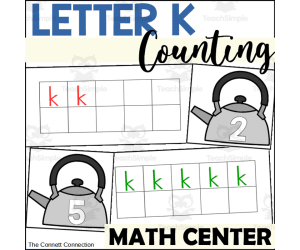
Letter K Counting to 10 Center
ELA, Math, Early Math, Numbers, Kindergarten, Preschool, Centers, Activities
This Letter K Counting to 10 Center is a counting to 10 math matching center for the letter K. This resource is great for letter recognition and practicing counting with tens frames. This is a quick and easy activity to give students who need practice with recognizing the lowercase form of the letter K, who need practice recognizing numbers up to 10, as well as for those students who need extra practice counting to 10. This counting math center can be used in the following ways * Math centers * Matching centers * Small group activities * Morning work * Emergency sub plans * Quick counting assessment * Quick number recognition assessment Skills assessed with this letter K counting activity * Lowercase letter K recognition * Ability to count to 10 * Recognizing amounts when represented in a tens frame * Ability to match numbers to the correct tens frame * Fine Motor Skills This counting math center is low prep. All that is required is for the teacher to print it out, cut it out and laminate if so desired. Once created, this counting center can be used over and over. The provide a great way for students to practice counting to 10 and practicing letter recognition at the same time. Students can work on this counting center independently, in pairs, or in small groups to complete. You can add manipulatives for students to cover each letter K as they count if they need a more hands on approach, or a more guided way to practice counting each letter K. For similar resources and more, visit my store!
Author The Connett Connection
Tags Letter K, Letter K Activity, Counting To 10, Counting To Ten, Alphabet Activity, Tens Frames, Preschool Math, Letter Recognition, Letter Of The Week, Number Recognition
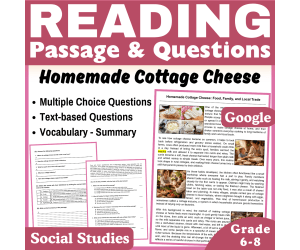
Cottage Cheese: Social Studies Reading Comprehension Passage (Docs)
ELA, Reading, Reading Comprehension, Strategies, Resources for Teachers, Social Studies, Sociology, Grade 6, 7, 8, 9, Writing Prompts, Worksheets & Printables, Centers, Activities, Teacher Tools, Assessments, Quizzes and Tests, Quizzes, Tests
Cottage Cheese: Social Studies Reading Comprehension Passage (Docs) This resource introduces a unique Social Studies reading comprehension passage with questions about Homemade Cottage Cheese. The passage is carefully designed to bridge the gap between social studies and literacy through strengthening reading comprehension and sparking knowledge curiosity in middle school students. Each passage blends English Language Arts skills with accurate social studies content . Ideal for interdisciplinary learning in ELA and Social Studies. Suitable for Grade 9 review, too! Student Tasks throughout the passage: 5 multiple-choice questions targeting the following skills: main idea, key details, inference, vocabulary in context, and use of evidence 5 vocabulary matching items with clear, student-friendly definitions 5 text-based questions that require citing specific lines or facts 1 summary prompt that asks students to condense central ideas accurately Full answer key for every section Available Formats for this Resource: PDF Fillable PDF Word Docs FULL CATALOG OF DOWNLOADING LINKS HERE Social Studies Reading Comprehension Collection Links: 1. Ancient Civilizations PDF Fillable PDF Word Docs Google Docs 2. Early Empires and Trade Networks PDF Fillable PDF Word Docs Google Docs 3. The Founding of the United States PDF Fillable PDF Word Docs Google Docs 4. Language, Culture, and Meaning PDF Fillable PDF Word Docs Google Docs 5. Psychology and Society PDF Fillable PDF Word Docs Google Docs 6. Global Festivals and Traditions PDF Fillable PDF Word Docs Google Docs 7. Extreme Environments and People PDF Fillable PDF Word Docs Google Docs 8. Food, Culture, and Preservation PDF Fillable PDF Word Docs Google Docs 9. Global Food Customs PDF Fillable PDF Word Docs Google Docs 10. Media, Communication, and Popular Culture PDF Fillable PDF Word Docs Google Docs 11. Human Impact on the Environment PDF Fillable PDF Word Docs Google Docs 12. Civic Action and Social Change PDF Fillable PDF Word Docs Google Docs 13. Fashion, Society, and Power PDF Fillable PDF Word Docs Google Docs 14. People, Places, and Unusual Histories PDF Fillable PDF Word Docs Google Docs Product Details: Length: 4 pages Grades: 6–8, also suitable for Grade 9 review Use cases: close reading, stations, homework, intervention, test prep, and sub plans Why Teachers Choose This Passage: Authentic social studies content paired with rigorous literacy practice Consistent task structure for easier planning and smoother student routines Clear, age-appropriate writing that builds confidence without oversimplifying Use this passage to reinforce ELA skills in social studies, to add literacy to your lessons, and to support independent work. The passage strengthens main idea, evidence use, vocabulary in context, inference, cause and effect, and summary writing. With ready-to-use assessments and complete answer keys, you can provide focused practice that is simple to run and fast to review.
Author Middle & High School - CORED Education
Rating
Tags Middle School, Reading Comprehension, Reading Strategies, ELA, Centers, Reading Passage, Assessments, Vocabulary, Social Studies, Sociology

Making Policy: No Vehicles in the Park!
Social Studies, History, History: USA, Law, Government, Grade 6, 7, 8, 9, 10, 11, 12, Activities, Projects
Something you probably know that your students might not? Making rules is a lot harder than it looks! This take on a classic activity is a great ice breaker for a conversation on policy, and is a lasting and memorable activity that can be referenced back to as the year goes on. Essentially, the city wants to pass a new law prohibiting vehicles in the park. Like often in policy, this simple rule gets far more complex when nuance is introduced. Students first learn about policy and law, and are then tasked with creating policy and law of their own. After they have created a no vehicles in the park policy, their policy is put to the test as exception after exception is put forth. What counts as a vehicle? What about non-motorized vehicles? Bikes? Ambulances? The list goes on! Students have the opportunity to dive into the complex world of policy creation as their policy is picked apart by exceptions. Included in this product are: A well-made and professional class slide show to guide the class through the activity A guided notes sheet for students to follow the activity with Slidedeck and notes cover the topics of law, public policy, the no vehicles in the park scenario, scenario exceptions, and reflection/discussion questions. Enjoy taking your students out of the textbook and into the complex world of policy!
Author Ed Dynamic
Tags Unit, Policy, Public Policy, Law, Activity, Government, Policy Making, Game, Civics, Politics
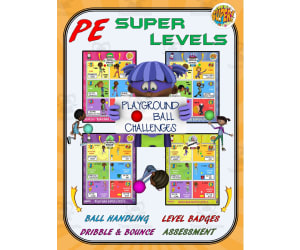
PE Super Levels - Playground Challenges
P.E. & Health, Physical Education, Not Grade Specific, Activities
PE Super Levels - Playground Challenges is a physical education resource focused on fun and engaging exercise movements for students. This resource includes two sets of grade-specific challenges, tailored for kindergarten through 6th graders. Students will love practicing playground-style movements like hopping, skipping, balancing, and more during indoor recess, brain breaks, or as energizing lesson warmups. Assessment badges allow teachers to track student progress. With both printable PDF and editable JPG files included, challenges can be printed for student handouts or inserted into presentation slides. Implement individually, in small groups, or with the whole class to get students moving while building physical literacy skills.
Author Cap'n Pete's Power PE
Tags Super Levels, Physical Education, Playground, Challenges, Exercise

Irrigation Methods Activity
Science, Earth and Environmental Sciences, Life Sciences, Nature & Plants, Basic Science, Grade 3, 4, 5, 6, 7, 8, 9, Activities
Activity Introduction An amazing activity designed for the students to learn more about STEM. Irrigation Methods Do you like STEM subjects? what is your favorite one? Have you ever tried to plant a seed? If yes, tell us more about it. Or have you ever tried to invent something? If yes, tell us more about it. And how do you think it will help us? Have you ever seen a microorganism under a microscope? What was it? And how it looked like? Mathematics is a marvelous subject. Let' sharpen our brains and solve some equations. Do you like timetable tricks? What is your favorite one? Do you know how to code? Have you ever created an app or a game before? If yes, how was it like? Irrigation Methods Activity The activity is perfect for encouraging the researching skills for the students, while learning more about this fantastic topic. Irrigation Methods This friendly designed worksheet is suitable for students at school, homeschooling, and as a group activity. Instructions Write what you know about the following irrigation methods: Furrow irrigation Flood irrigation Spray irrigation Drip irrigation Format Available in a PDF format.
Author Educational Voice
Tags Irrigation Methods Activity, Irrigation Methods, Irrigation Methods Facts, Irrigation Methods Facts For Kids, Irrigation, Irrigation For Kids, Irrigation Facts, Irrigation Facts For Kids, STEM

Fitness Adventure Series - Mindfulness Mission
P.E. & Health, Physical Education, Yoga, Not Grade Specific, Activities
This is a Fitness Adventure Series. The theme is Mindfulness Mission. These are fun exercise movements that can be used for indoor recess, brain breaks, lesson warmups and more. There are 15 signs that each have a different yoga kid. These can be printed with the PDF file or you can use the JPG files to insert them into presentation slides.
Author Cap'n Pete's Power PE
Tags Fitness Adventure, Mindfulness, Yoga, Physical Education, Task Cards

skip counting by 3s bingo - boards 16-20
Math, Patterns, Early Math, Numbers, Grade 1, 2, 3, Activities, Games
Need a fun, engaging activity for practicing skip counting by 3 with your kiddos? This math bingo game is perfect for getting your students focused on skip counting in 3s! Preparation: Print and laminate enough Bingo Boards for each student to have one Optional: print, cut and laminate the Playing Squares Print, cut and laminate the Calling Cards. Lamination is optional, but recommended, as it will ensure that the game remains in good condition and can be used for many years to come! To avoid excessive printing and laminating, the Playing Squares could be replaced with other manipulatives such as buttons or counters. Alternatively, students could mark squares off on their Bingo Boards with dry erase markers and then simply clean the boards again after playing (provided that you have laminated the boards) How to Play: Each student needs a Bingo Board and at least 7 Playing Squares (or other manipulatives or a dry erase marker) Shuffle the Calling Cards and place them in a pile. Draw a Calling Card and call out and/or display the contents of the card. Each student looks on their Bingo Board for a block that matches the Calling Card. If they find one, they cover that block with a Playing Square. Draw a new Calling Card and repeat the process. The game continues until somebody wins. To win, a student must shout out “BINGO!” when they have covered three blocks in a row (horizontally, vertically or diagonally). If the Calling Cards run out before anybody wins, simply shuffle them again and continue playing. Please note: Sometimes there may be more than one block on the Bingo Board that matches the Calling Card. The student may only cover one block on a turn. Once that turn is over, the Playing Square may not be moved to cover a different block. This resource includes 5 different bingo board, in colour as well as black and white. If you would like more bingo boards to use for your class, you can find them in here I also have other skip counting bingo games available - CLICK HERE to check them out! You may also be interested in some these resources: · Fractions bingo games · Fractions matching games · Number bonds activities · Number sense activities · Number recognition activities · Times tables board games · Times tables matching games Your kiddos will love practicing common fractions with this fun bingo game!
Author Colleen's Cosmic Collection
Tags Skip Counting, Counting, Skip Counting Games, Skip Counting Activities, Skip Counting Bingo, Skip Counting By 3s, Skip Counting By 3, Cccskb3s, Counting In 3s

Core Semantics Mats + Cards: Devices Pack
Special Resources, ELA, Speech Therapy, Language Development, ESL, Vocabulary, Kindergarten, Preschool, Grade 1, 2, Teacher Tools, Lesson Plans, Worksheets & Printables, Flashcards, Activities, Games
Core Semantics Mats + Cards: Underwear Pack This pack teaches vocabulary for underwear items. It includes 13 pages of colored and black-and-white images that can be used as writing prompts or conversation starters. Build language skills through matching activities, memory games , and giving instructions. Use for individual, small group, or whole class activities. Topics cover clothing, hygiene, and following routines. Supplement lessons or homework for speech therapy, ESL, foreign language, and developing cognitive skills. Combine with other semantic category packs on foods, locations, animals, people, and more sold separately. This engaging resource helps establish vocabulary and communication abilities.
Author WORDS ASIDE
Tags Poster Mats, Speech Therapy, Vocabulary, Semantics, Occupational Therapy, Illustrations, Esl, Language, Appliances, Words Aside

Kids Yoga Stories: Magical Creatures Yoga Cards
P.E. & Health, Yoga, Preschool, Kindergarten, Grade 1, 2, Activities
Use yoga poses to teach about Magical Creatures! This set of Magical Creatures Yoga Cards will help your students learn through movement either at home, in the classroom, or in a studio. Included in this deck of Magical Creatures Yoga Cards - A card with an index - Tips to teach yoga -20 cards illustrating the yoga poses -20 matching magical creatures - Instructions for all the poses The index indicates the order in which the yoga poses are to be used to flow from one pose to the next. There is multicultural representation featured in yoga kids! Recommended for ages 3+ Ways in which you can use these cards as homeschoolers or in the classroom include: -For transition times -Morning routines or circle times -Brain breaks to calm their minds and bodies -Physical education -Occupational and/or physical therapy -With one child, small, or large groups Benefits of Yoga for kids include: -Increased strength -Increased flexibility -Improves sleep -Promotes positive interactions amongst adults and children -Develops self-confidence -Improves self-expression -Improves body awareness -Promotes a lifestyle that is active and healthy.
Author Kids Yoga Stories
Tags Kids Yoga Stories, Magical Creatures, Yoga Cards, Kids Yoga, Yoga Poses

MEMORY GAME IN SPANISH - "AQUATIC ANIMALS" Animales Acuáticos
Science, Life Sciences, Animals, Grade 1, 2, 3, 4, Worksheets & Printables, Flashcards, Activities, Games
MEMORY GAME "AQUATIC ANIMALS" This document is easy to use because it can be quickly downloaded and printed. - This document is attractive and colorful for children. - This document is not editable. - This document comes in A4 size, you can print it without making any adjustments or adaptations. - This document is in color, you must have ink in your printer. 1. INTRODUCTION: Make your math class more amazing thanks to this fabulous resource, which will help your students learn their first words about aquatic animals, guided by reference images. 2. NAME AND OBJECTIVE(S): To reinforce the learning of their first basic words in Spanish. 3. ORGANIZATION: This product is organized in a simple way. Contains 2 simple pages 4. GRADES/AGES: K-3 5. APPLICATION FORMAT: You can use this product individually or in a group. 6. ANSWERS: This product does require answers. They are attached. 7. LABELS IN PHRASES: Spanish, learn Spanish 8. HOW TO USE AND VARIATIONS: Print this product, cut it out and laminate it to make it last longer. Then apply it in the classroom as reinforcement at the end or as a game. 9. STANDARDS: Not based on guidelines. 10. LINKS TO SIMILAR RESOURCES OR TO YOUR TS STORE: Follow us on our social networks! FACEBOOK: https://www.facebook.com/profile.php?id=100091145220279&mibextid=ZbWKwL INSTAGRAM: https://www.instagram.com/editorialarenaseducativas1/ TEACH SIMPLE: https://teachsimple.com/contributor/arenas-educativas YOUTUBE: https://www.youtube.com/@editorialarenaseducativas 11. CONTACT EMAIL ADDRESS: editorialarenaseducativas@gmail.com 12. FILE TYPE: PDF Format 13. # NUMBER OF PAGES: 2 pages
Author EDITORIAL LAURA EDUCA
Tags Animals, Flash Cards, Games, Memory Game
Research Organizer & Essay Assignment: Winston Churchill
Social Studies, ELA, Biographies, History, History: British, History: World, Grade 7, 8, 9, 10, Activities, Projects, Worksheets & Printables, Worksheets
Few prime ministers in British history were more influential than Winston Churchill. This resource provides your students with the opportunity to independently learn about and summarize the life and times of the English leader who led the allies through World War II with this engaging research planner and essay assignment. This carefully scaffolded and easy-to-assign-AND-assess resource has been designed to guide student learning from Winston Churchill fact-collection to the careful development of a five-paragraph research essay. Teaching this resource could not be easier! Start by handing out the background research and note-taking worksheet (you could also ONLY hand this out if you want a shorter lesson!). Once students have found their facts and sources, provide them with the essay outline activity, which guides them step-by-step through the requirements of a short research essay. From there, drafting their essay, using the provided peer review checklist, and submitting their final draft will be no problem at all. And then you can assess their work with the provided Common Core rubric! Use this entire resource as a complete research lesson or just part of it as a short research activity or sub plan! This TeachSimple download includes: - A Winston Churchill essay writing assignment with directions, requirements, research essay writing tips, a peer review checklist, and Common Core-tied grading rubric - An editable rubric, provided as a link, that lets you make adjustments to the grade values and guidelines. This link is provided as as Google Sheet specifically built for integration into Google Classroom, although you can also modify it for use in other Learning Management Systems (LMSs) - A Winston Churchill biography and note-taking worksheet that will guide your students through information gathering. This straightforward two-page handout includes instructions for background research, a fun drawing section, and an area to cite quality sources and organize conducted research - A research essay outlining worksheet, so students build on their Winston Churchill notes in a clear and simple manner as they build their work towards a draft and final paper - All 6-pages of this lesson are provided in full-color and B&W versions Although this resource can be fitted for any secondary Language Arts classroom, it has been carefully designed to work best in grades 8 through 11. The included rubric is subtly but specifically tied to Common Core ELA Standards for Language (3) and Writing (2 and 7). This resource is provided as a print-ready, bookmarked, and adjustable PDF file. The rubric is also included as an editable Google Sheet. This resource contains 6 pages and 1 Google Sheet.
Author The Language of Educational Art, LLC
Tags Essay, Rubric, Research, Notetaking, Outlining

Systems of Equations: Substitution PARTNER PRACTICE
Math, Algebra, Grade 8, Activities
Systems of Equations: Substitution PARTNER PRACTICE This educational tool aids educators in teaching 8th grade expressions and equations standards, specific to algebra. It integrates fun, engaging yet challenge exercise to deepen students' grasp on the subject. Main Focus The resource focuses mainly on analyzing and solving pairs of simultaneous linear equations. Students are given two variables linear equations to solve using the algebraic method which enhances critical thinking. The concept also includes estimating solutions by graphing their given equations, incorporating a visual learning dimension. PARTNER PRACTICE Concept This unique feature pairs each student with another student for collaboration. They work together to solve eight different systems of equations by substitution (y=mx+b coupled with ax+by=c). Although they receive different problem sets, their solutions should be identical. This stimulates teamwork skills and makes self-evaluation possible when answers differ. Nifty Features & Compatibility In-built answer keys for all sections help save teacher's time and aid students during study or review sessions. Designed as a PDF file format making it adaptable for most digital devices such as laptops or computers - an incredibly useful trait in a remote-learning landscape. Dedicated Coverage & Usage Scope This versatile resource offers features like comprehension checks & systematic practice techniques while maintaining an impressive balance between academic rigor and enjoyment. The main focus lies within Algebra under Mathematics discipline suitable mostly for Grade 8 level students. Thus ensuring both educators and learners have access to desirable quality education resources across subjects.
Author The Math Cafe
Tags Systems Of Equations, Substitution, Algebraic Method, Critical Thinking, Partner Practice
Adjectives Practice Questions - Grades 1-2 Grammar (Forms)
ELA, Language Development, ESL, Grammar, Common Core, Resources for Teachers, Grade 1, 2, Assessments, Teacher Tools, Tests, Quizzes and Tests, Centers, Activities
Adjectives Grammar Practice MCQS: 10 lessons, 150 MCQS, 10 forms ELA MCQS Overview: In this series of lessons, students will embark on an engaging exploration of the grammar skills that bring our language to life. These lessons are designed to help students identify, understand, and effectively use language arts skills in their writing and speech. Used with the free supplementary materials available for all topics, each lesson builds on the last, offering a mix of direct instruction, interactive group activities, and independent practice. Through fun and creative tasks, students will learn how to recognize grammar in sentences, understand their role in sentences and use them to enhance their own writing and speech. Adjectives Overview: Includes: Identifying Adjectives Gap Filling Comparatives Superlatives Additional Practice Forms Version This is the Forms editable and self grading version. This download is available in GOOGLE Docs, GOOGLE Forms, GOOGLE Slides. PDF, PPT, WORD, check the links below for more details. FULL CATALOG OF DOWNLOAD LINKS HERE Grade 1/2 Links: Capitalization and Punctuation Google Docs Google Forms Google Slides PDF PPT Word Free Supplementary Materials Pack Adjectives Google Docs Google Forms Google Slides PDF PPT Word Free Supplementary Materials Pack Nouns Google Docs Google Forms Google Slides PDF PPT Word Free Supplementary Materials Pack Pronouns Google Docs Google Forms Google Slides PDF PPT Word Free Supplementary Materials Pack Verbs Google Docs Google Forms Google Slides PDF PPT Word Free Supplementary Materials Pack Prefixes & Suffixes Google Docs Google Forms Google Slides PDF PPT Word Free Supplementary Materials Pack Sentence Structure Google Docs Google Forms Google Slides PDF PPT Word Free Supplementary Materials Pack Subject-Verb Agreement Google Docs Google Forms Google Slides PDF PPT Word Free Supplementary Materials Pack ELA Review Questions Overview Questions have three answer choices. There are a handful of pictures on each test for aesthetic purposes, as well as a review sheet covering most of the topics covered in the product. Introduction or Example Sheet Each topic will include an introduction or example sheet to go through first with your students. Full Answer Keys Full answer keys and sample responses are provided so no matter how busy you are, you know you're covered! In the Supplementary Pack Interactive Ice Breakers: Fun, hands-on activities that get students thinking about adjectives right from the start. Guided Practice: Teacher-led exercises that reinforce the day’s lesson, ensuring students can confidently identify and use adjectives. Group and Partner Tasks: Collaborative activities that allow students to work together to solve problems, categorize adjectives, and create descriptive sentences. Independent Worksheets: Structured worksheets that provide individual practice and help solidify understanding of key concepts. Exit Tasks: Quick, reflective activities at the end of each lesson that assess understanding and encourage students to apply what they’ve learned. For similar downloads and other frees, do check out Cored Group on TeachSimple.
Author Cored Education
Tags Elementary, Answers, Ccss, Common Core, Grammar, Language Arts, Test, Test Prep, Mcq, Digital Centers

American Revolution and Enlightment
Social Studies, History, History: USA, Grade 9, 10, 11, 12, Activities, Projects
American Revolution and Enlightenment: A High School Resource Product This resource primarily caters to grades 9 to 12. It seamlessly integrates into Social Studies classes with a distinct focus on the U.S. History section of the curriculum. The objective of this educational product is to kindle critical thinking about Enlightenment ideas' significant influence on the American Revolution and the establishment of United States government. The tasks involve analyzing different Enlightenment thinkers, understanding their vital contribution to America's birth as a republic. Unlike standalone projects, this resource offers comprehensive lesson plans that facilitate a smooth learning journey from inception to completion. A captivating introductory video link serves as an engagement trigger for each class session; priming students for in-depth knowledge assimilation. Closing Discussion Questions: 'Thoughtful closing discussion questions prompt learners towards synthesis - enabling them to consolidate their comprehension. Benefits: User-friendly zip file format, ensuring easy downloads and anytime accessibility. In summary, American Revolution and Enlightenment goes beyond being just another Social Studies project; it's an intellectual wave through history’s strategic turning points—all effortlessly assimilated within your curriculum framework. If you're an educator spearheading lessons at school or efficiently managing home-based schooling—this teaching resource is geared up not only for knowledge sharing but also shaping up future by reflecting upon our past..
Author Jason Stein
Tags American Revolution, Enlightenment Thinkers, US History, Critical Thinking, Active Learning

Chemistry Blackboard Cards – Chemical Elements 1–118
STEM, Science, Chemistry, Physics, Life Sciences, Montessori, Basic Science, Grade 7, 8, 9, 10, 11, 12, Activities, Worksheets & Printables, Task Cards, Teacher Tools, Flashcards, Classroom Decor, Door Decor, Bulletin Boards, Posters, Presentations
Chemistry Blackboard Cards – Chemical Elements 1–118 Visual support for teaching the periodic table in grades 7–11 🧪🧲 This printable set contains blackboard-sized cards for all 118 chemical elements, designed to make the periodic table more accessible and interactive in your classroom. Each card includes the element’s name, atomic number, and chemical symbol in a clean, easy-to-read format – perfect for whiteboard work, displays, and hands-on sorting tasks. The cards are arranged two per A4 page and can be printed, laminated, and reused across many lessons. I’ve used them to build a large-scale classroom periodic table, support sorting games by group or period, and even for spontaneous quizzes at the board. What’s included: 118 blackboard cards (PDF format) Each card shows: element name, chemical symbol, atomic number 2 cards per A4 page for easy printing Black-and-white, ideal for printing and possible color-coding How it’s used in class: These cards are great for front-of-class instruction but also work well in group activities or as a station-based task. Students can work in teams to arrange the elements in correct order, match symbols to names, or explore relationships between groups and periods. Because the design is simple and consistent, students can focus on the content rather than being distracted by layout. The cards support visual learning and active participation. They’re especially useful for mixed-ability classes: more confident students might work from memory, while others use a printed periodic table for support. You can also let students take on teaching roles by explaining selected elements to peers at the board. This is a practical tool for visualizing chemistry concepts – no extra prep required beyond printing and cutting. Laminate for longer use. 📍 Best wishes, Heike from @Lernfitness Did You Know? I teach with a certified therapy dog, and together we create a positive and welcoming learning environment. 🐶
Author Lernfitness
Rating
Tags Educational Card Games, Chemistry, Physics, STEM Science Matching Game, Chemical Elements, Periodic Table Matching Game, Game, Flashcards, Blackboard Cards, Blackboard
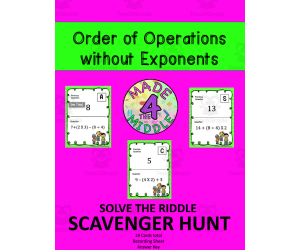
Math Scavenger Hunt: Order of Operations
Math, Order Of Operations, Grade 4, 5, 6, Activities
This is a Math Scavenger Hunt: Order of Operations that will challenge your math students in a fun way. There are 19 full page cards. The letters on each card will spell out the answer to a riddle. A recording sheet is included for students to write their answers An answer key is included.
Author Made 4 The Middle
Tags Order Of Operations, Task Cards, Math Riddles, Scavenger Hunt, Back To School, Scavenger Hunt Math, Math Scavenger Hunt