



3,922 products added recently
Page 8 - Popular Science Projects
Delight your students with popular science projects that have a track record of engaging learners. This collection includes volcano models, solar system explorations, and simple robotics. By integrating these projects into your teaching, you can capture students' interest and foster a love for science.

 Show filters

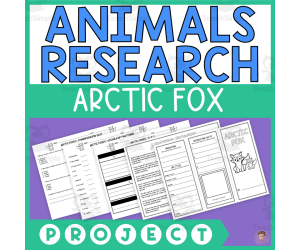
Animals Research Project | Nonfiction Reading, Worksheets, Brochure | Arctic Fox | Arctic Animals
ELA, Reading, Reading Comprehension, Grammar, Language Development, Vocabulary, Spelling, Writing, Science, Life Sciences, Animals, Research, Grade 2, 3, 4, Projects, Activities
Need an engaging way to help your students become arctic fox experts? Look no further than this NO PREP arctic animals research project! Perfect for elementary teachers and homeschoolers alike, this resource covers eight aspects—description, diet, habitat, life cycle, predators, adaptations, behaviors, and more interesting facts—of the arctic fox through cross-curricular activities. This project appeals to different types of learners: reading passage (reading or auditory); directed drawing (visual and kinesthetic); research brochure, worksheets, and comprehension quiz (writing); and more. A GREAT ADDITION TO YOUR: Arctic fox, arctic animals, or winter unit study Writing lessons or centers Science class ...or just for fun! This resource is designed with your ink cartridge in mind. It's no prep, color optional, and "no frills" — everything you need and nothing you don't. Just print and go inspire those budding zoologists with this fun arctic fox research project! CROSS-CURRICULAR SUBJECTS COVERED: Art (drawing and coloring) English language arts Grammar Reading Research Science Spelling Writing Are you interested in helping your elementary students become experts about other arctic animals? From arctic foxes to walruses, you can explore eight aspects—description, diet, habitat, life cycle, predators, adaptations, behaviors, and more interesting facts—of each animal through cross-curricular activities. Like this research project, each one appeals to different types of learners: reading passage (reading or auditory); directed drawing (visual and kinesthetic); research brochure, worksheets, and comprehension quiz (writing); and more. Check out my other arctic animal research projects here! Perfect pair: I also have 5-day arctic animal unit studies. Check them out here!
Author Heather Huhman
Tags Arctic Animals, Animals, Zoology, Science, Research Project, Arctic, Research, Brochure, Arctic Foxes, Worksheets, Arctic Animals Worksheets For Preschool Pdf, Arctic Animals Worksheets

Coding with HTML: Famous Figure Social Media Project
Science, Technology, Computer Science, Research, Grade 5, 6, 7, 8, 9, 10, 11, 12, Projects, Activities
Coding with HTML: Famous Figure Social Media Project The resource, Coding with HTML: Famous Figure Social Media Project , is a proficient teaching material adeptly designed to involve students in grades 5 through 12. This interactive tool excellently combines the principle of learning by doing, coupled with enticing student curiosity about infamous figures from history as well as the contemporary world. In this lesson plan, students are inspired to create a social media profile for a high-profile figure that piques their interest or whom they appreciate. Enforcing both research and creativity requirements allows them to hunt for authentic data regarding their selected personality and showcase it imaginatively on the constructed social media network. To ensure no critical information is overlooked while fabricating these profiles, a thorough social media research organizer helps organize student research - prompting experiential learning mirroring real-world like tasks. Merging Unique Education Disciplines Of particular note is the fusion of different educational disciplines; Computer Science meets History or Social Studies. As students dive into profiling significant figures they learn HTML coding – valuable in today's increasingly digital era. Versatility in Education Setups This resource effectively caters to diverse educational setups: Ideal for whole-group discussions where each student presents their coded profiles contributing towards collaborative learning, Tailored perfectly for small group projects, Suitable as individual homework assignments ensuring comprehensive understanding among students. In conclusion,: The tool delivers an approach providing structure wedded with creative freedom necessary in engaging younger minds while preparing them significantly for global digital challenges.
Author WhyMaker
Tags Coding, HTML, Famous Figures, Social Media Project, Research

Science Project: Aquaponics
Science, Earth and Environmental Sciences, Earth Sciences, Grade 7, 8, 9, 10, Projects, Activities
This resource fits with BC science 9 curriculum. It includes a an inquiry project on aquaponics with STEM connections. Included all needed information to carry on the project, open-ended questions, and unit assessment.
Author Mitchell Zuvela
Tags Science Project, Aquaponics, Aquaponics System, Science 9 Curriculum

Research Organizer & Essay Assignment: Alexander Graham Bell
Social Studies, History, History: USA, Science, Basic Science, Grade 8, 9, 10, 11, 12, Activities, Projects, Worksheets & Printables, Worksheets
Research Organizer & Essay Assignment: Alexander Graham Bell Biography Alexander Graham Bell had a tremendous impact on modern life through his inventions, most notably the telephone. This 6-page educational resource guides students to research Bell's life and innovations, take notes, and write an informative essay. The resource includes: - A research planner outlining essay requirements like word count, paragraph structure, citing sources properly, and tips for drafting and self-editing. The attached rubric ties to 8th-11th grade Common Core ELA standards. - A biography worksheet for Bell with space to sketch an invention, record key facts, and list quality online/print sources. This scaffolds notetaking before writing. - An outline worksheet to help students organize research into an engaging introductory paragraph, three body paragraph topics, and a conclusion. This scaffolded research project can be adjusted for length and depth depending on needs. Use the full lesson or individual components to build nonfiction literacy skills. The student-centered design encourages independence in secondary grades. Customize the rubric for your classroom grading. With clear expectations and scaffolds for citing sources, outlining ideas, writing drafts, peer editing, and teacher feedback, this Bell biography assignment develops research and communication abilities.
Author The Language of Educational Art, LLC
Tags Research, Essay, Notetaking, Outlining, Alexander Graham Bell
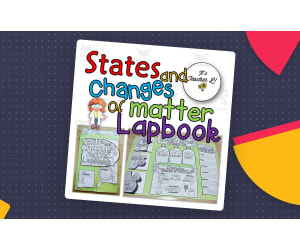
States and Changes of Matter Lapbook (Science/ELA)
ELA, Language Development, ESL, Science, Physics, Grade 4, 5, 6, Activities, Projects
States and Changes of Matter is a project that focuses on the states or phases of matter and the changes they go through. Each component of the lapbook can be completed from the activities done in your Science class. This is designed to be engaging and fun way for the learners to check their understanding of the lessons through a very creative means. This Science lapbook is also made for either individual or group project that is very helpful to teachers and will give them the freedom to decide how the output would be done. With the cute graphics and purposeful activities, both teachers and learners will surely love this project's output! Content Pages: A. Instruction page B. Lapbook Content 1.2 Styles of front cover / title page 2.2 Name pages for individual and group project 3. Inner pop-up and states of matter title page 4. 36 examples of matters in droplets 5. Solid fold page: Students will research on their lesson notes to complete this page. 6. Liquid fold page: Students will research on their lesson notes to complete this page. 7. Gas fold page Students will research on their lesson notes to complete this page. 8. Changes of State page: Students will research or refer back to their notes about freezing, melting, vaporization, condensation, sublimation, and deposition. This resource is great to assess various skills on students, including organizational skills and research skills. Additionally, it is great resource to use as formative assessment !
Author It's Teacher L
Tags Science Lapbook, States Of Matter, Phases Of Matter, Solid, Liquid, Gas, Science Project

Exploring the Solar System Project - Middle School Space
Science, Earth and Environmental Sciences, Space, Grade 6, 7, 8, Activities, Projects
Blast off on an exciting expedition through our cosmic neighborhood with this immersive 6-part solar system project! Students will embark on a journey of discovery to expand their knowledge of the planets that orbit our sun. The adventure begins by surveying key characteristics of the planets. Students will compare and contrast attributes like composition, size, moons, and more using interactive charts . These activities will build a foundation of knowledge about our stellar surroundings. Each student will then adopt an alien identity from one of the planets. Their mission is to gather intelligence about their new home world to create an engaging planetary fact file. This top-secret document will contain maps of unique features, details about survival in extreme conditions, and the planet's orbital path. Students will encrypt their findings in informative infographics. The quest continues as student aliens form contacts with beings from other worlds. In their teams, they will decipher similarities and differences between their planets using techniques like Venn diagrams. Patterns between planetary traits will become clearer. The students will then band together to design hidden settlements tailored to their adopted planet's environment. Infrastructure, culture, geography, and survival needs will dictate the layout of these extraterrestrial cities. Teams will create coded maps, diagrams, and written records to conceal their covert communities. Immersing themselves in alien personas, students will log journal entries chronicling daily life on their assigned planets. By pretending to inhabit these cosmic spheres, perspectives will be broadened. Finally, the project concludes by welcoming visitors to an intergalactic Planets Fair. Student aliens will showcase their classified findings by hosting creative exhibits about the celestial bodies we call neighbors. This galactic get-together celebrates exploration of the wonders in our solar system and beyond!
Author Teach With Fergy
Tags Space, Solar System, Astronomy, Planets, Sun, Space Project
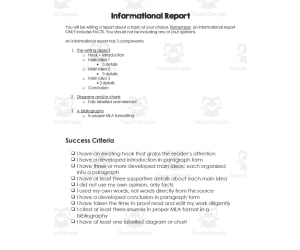
Ecosystems Informational Report
Science, Earth and Environmental Sciences, Environmental Science, Grade 7, 8, Activities, Projects
Ecosystem Informational Report Support your students’ learning with this Ecosystem Report Summative Task. This resource was specifically designed for students to show what they know through a written task. This resource was crafted for your middle school science students. What You Get: A 5-page PDF that includes: -- Informational Report Information Sheet -- Graphic Organizer -- Self-Editing Checklist -- Bibliography Information Sheet -- Ecosystem Report Rubric How to Use the Ecosystem Informational Report: Once you have completed instruction for yourEcosystemsunit, you can print all the pages needed for each of your students completing this report. The information sheet and bibliography sheet will provide students with the guidance they need to complete their reports. While the report is something that will be completed independently, there are opportunities for students to engage in partner or small group discussions. ThisEcosystems Informational Reportwill leave your students feeling more knowledgeable about this topic! I hope you enjoy!! Here Are More of My Resources for You to Enjoy: Transformations Review and Test Addition File Folder Elements of Art Lesson Class Logo Project Short Story Graphic Organizer Heat in the Environment Science Test For similar resources and other engaging resources, visit my store: Resource Garden
Author Resource Garden
Tags Ecosystems, Science Report, Graphic Organizer, Informational Report, Environmental Science, Bibliography, Writing Template, Writing Prompts
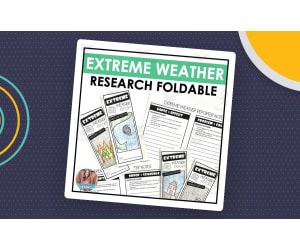
Extreme Weather Research Project Foldable
Science, Earth and Environmental Sciences, Environmental Science, Earth Sciences, Research, Grade 3, 4, 5, 6, Activities, Projects
If you are looking for science activities that are designed to let your students get creative, look no more. This is an Extreme Weather Research Project Foldable that will allow students to learn about weather types and present research in an interactive way! What You Get: -- Foldables for 9 different natural disasters -- Different brochure page options -- A digital Google Slides version for students -- Notes pages to accompany and guide students’ research How To Use the Extreme Weather Research Project Foldable: The Extreme Weather Research Project Foldable will give students a chance to work together to research different natural disasters and then report on their findings. There are blank brochures and brochures with directions. Choose which templates best fit your students’ needs and get to the fun! You can let students pick which natural disaster they want to research, or you can have them draw out of a hat to find out what they’ll be researching. Each notes page will include text structure focused questions to guide research and help with completing the foldable. This activity is perfect for Open House or Parent’s Night for students to show off their hard work! I hope you enjoy! Here’s A Look at Some of My Best Sellers: 3rd Grade Language Mastery Quick Checks 4th Grade Language Mastery Quick Checks Grammar Go Fish: Parts of Speech (Summer Edition) Finish the Story: Back to School Writing Prompts Summer Grammar Word Search Packet Nouns Animal Mysteries Activity You Can Find My Store Front Here: Blooming with Blake 1 PDF with 53 usable pages and Google Classroom links
Author Blooming with Blake
Tags Science Project, Research Project, Extreme Weather, Weather, Natural Disasters, Google Slides

Brazil Wildlife Animal Project
Science, Life Sciences, Animals, Biology, Earth and Environmental Sciences, Earth Sciences, Grade 3, 4, 5, Projects, Activities
This Brazil Wildlife Animal Project is perfect for students who want to learn about the animals that live in Brazil. With this project, students research, design a poster, create a model and give a presentation.
Author Have Fun Teaching
Tags Living And Non-Living Things, Rainforest

Research Organizer & Essay Assignment: Elon Musk
Social Studies, History, History: World, Science, Technology, Grade 7, 8, 9, 10, 11, 12, Activities, Projects, Worksheets & Printables, Worksheets
It's hard to imagine a more fascinating twenty-first century figure than billionaire Elon Musk. This resource provides your students with the opportunity to independently learn about and summarize the life of the businessman and Tesla founder with this engaging research planner and essay assignment. This carefully scaffolded and easy-to-assign-AND-assess resource has been designed to guide student learning from Elon Musk fact-collection to the careful development of a five-paragraph research essay. Teaching this resource could not be easier! Start by handing out the background research and note-taking worksheet (you could also ONLY hand this out if you want a shorter lesson!). Once students have found their facts and sources, provide them with the essay outline activity, which guides them step-by-step through the requirements of a short research essay. From there, drafting their essay, using the provided peer review checklist, and submitting their final draft will be no problem at all. And then you can assess their work with the provided Common Core rubric! Use this entire resource as a complete research lesson or just part of it as a short research activity or sub plan! This TeachSimple download includes: - An Elon Musk essay writing assignment with directions, requirements, research essay writing tips, a peer review checklist, and Common Core-tied grading rubric - An editable rubric, provided as a link, that lets you make adjustments to the grade values and guidelines. This link is provided as as Google Sheet specifically built for integration into Google Classroom, although you can also modify it for use in other Learning Management Systems (LMSs) - An Elon Musk biography and note-taking worksheet that will guide your students through information gathering. This straightforward two-page handout includes instructions for background research, a fun drawing section, and an area to cite quality sources and organize conducted research - A research essay outlining worksheet, so students build on their Elon Musk notes in a clear and simple manner as they build their work towards a draft and final paper - All 6-pages of this lesson are provided in full-color and B&W versions Although this resource can be fitted for any secondary Language Arts classroom, it has been carefully designed to work best in grades 8 through 11. The included rubric is subtly but specifically tied to Common Core ELA Standards for Language (3) and Writing (2 and 7). This resource is provided as a print-ready, bookmarked, and adjustable PDF file. The rubric is also included as an editable Google Sheet. This resource contains 6 pages and 1 Google Sheet.
Author The Language of Educational Art, LLC
Tags Essay, Rubric, Research, Notetaking, Outlining, Elon Musk

TinkerCAD step-by-step instructions for Christmas Swirl Ornament
Special Resources, Science, Technology, Engineering, Grade 5, 6, 7, 8, 9, 10, 11, 12, Activities, Projects
TinkerCAD step-by-step instructions for Christmas Swirl Ornament. Students only need to know the bare basics to complete this. I tested this with a fifth-grade class and most could complete it with no help. Designed to print with no supports for easy printing. Include TinkerCAD tool guide! Has a content page. Great beginners’ tool for learning to make 3D models and learn TinkerCAD. TinkerCAD is a free online program that makes 3D model that work on 3D printers, laser etching machines, water jets, plasma cutters and many more!! Tinkercad is an easy-to-use, browser-based computer-aided design (CAD) software developed by Autodesk. It is primarily used for creating and designing 3D models, particularly in the field of 3D printing. Tinkercad is popular among beginners and hobbyists due to its intuitive interface and simplified tools. Here are some key features and uses of Tinkercad: 1) 3D Modeling: Tinkercad allows users to create 3D models by combining basic shapes and manipulating them using tools such as scaling, rotating, and moving. It provides a wide range of primitive shapes like cubes, spheres, cylinders, and more, which can be customized to create complex designs. 2) Design Customization: Users can apply various modifications to their designs, including resizing, rounding edges, adding text, creating holes, and aligning objects. These tools help in refining the models and making them suitable for specific purposes or fitting them with other components. 3)Import and Export: Tinkercad supports the import of existing 3D models in STL and OBJ formats, allowing users to modify and incorporate them into their designs. It also offers export options to save the designs as STL files, which are widely used in 3D printing. 4) Collaboration and Sharing: Tinkercad provides features for collaboration, allowing multiple users to work on the same project simultaneously. It enables real-time sharing and editing, making it convenient for team projects or educational purposes. 5) Electronics Integration: One notable aspect of Tinkercad is its integration with electronics. It offers a range of electronic components, including resistors, LEDs, motors, and microcontrollers, which can be used to create interactive models and prototypes. Users can simulate circuit connections and test their designs before implementation. 6) Educational Tool: Tinkercad is widely used in educational settings, particularly for teaching students about 3D design, modeling, and prototyping. Its simple interface and beginner-friendly tools make it accessible to users of all ages and skill levels. Overall, Tinkercad is a versatile and user-friendly CAD software that allows individuals to create and customize 3D models. Whether you're a hobbyist, student, or professional, Tinkercad provides a valuable platform for designing, prototyping, and exploring the world of 3D printing and modeling. Total pages: 23 pages Commands to be learned: Group Ungroup Align Mirror Duplicate Holes Solids Rotate Move Drop Subjects: Geometry Engineering Career and technical education Types: Projects Handouts Printables
Author MontyWorks
Tags TinkerCAD, 3D Printing, 3D Printer, Projects, Christmas

TinkerCAD step-by-step instructions for Thug Life Sunglasses
Special Resources, Science, Technology, Engineering, Grade 5, 6, 7, 8, 9, 10, 11, 12, Activities, Projects
TinkerCAD step-by-step instructions for Thug Life Sunglasses. Students only need to know the bare basics to complete this. I tested this with a fifth-grade class and most could complete it with no help. Designed to print with no supports for easy printing. Include TinkerCAD tool guide! Has a content page. Great beginners’ tool for learning to make 3D models and learn TinkerCAD. TinkerCAD is a free online program that makes 3D model that work on 3D printers, laser etching machines, water jets, plasma cutters and many more!! Tinkercad is an easy-to-use, browser-based computer-aided design (CAD) software developed by Autodesk. It is primarily used for creating and designing 3D models, particularly in the field of 3D printing. Tinkercad is popular among beginners and hobbyists due to its intuitive interface and simplified tools. Here are some key features and uses of Tinkercad: 1) 3D Modeling: Tinkercad allows users to create 3D models by combining basic shapes and manipulating them using tools such as scaling, rotating, and moving. It provides a wide range of primitive shapes like cubes, spheres, cylinders, and more, which can be customized to create complex designs. 2) Design Customization: Users can apply various modifications to their designs, including resizing, rounding edges, adding text, creating holes, and aligning objects. These tools help in refining the models and making them suitable for specific purposes or fitting them with other components. 3)Import and Export: Tinkercad supports the import of existing 3D models in STL and OBJ formats, allowing users to modify and incorporate them into their designs. It also offers export options to save the designs as STL files, which are widely used in 3D printing. 4) Collaboration and Sharing: Tinkercad provides features for collaboration, allowing multiple users to work on the same project simultaneously. It enables real-time sharing and editing, making it convenient for team projects or educational purposes. 5) Electronics Integration: One notable aspect of Tinkercad is its integration with electronics. It offers a range of electronic components, including resistors, LEDs, motors, and microcontrollers, which can be used to create interactive models and prototypes. Users can simulate circuit connections and test their designs before implementation. 6) Educational Tool: Tinkercad is widely used in educational settings, particularly for teaching students about 3D design, modeling, and prototyping. Its simple interface and beginner-friendly tools make it accessible to users of all ages and skill levels. Overall, Tinkercad is a versatile and user-friendly CAD software that allows individuals to create and customize 3D models. Whether you're a hobbyist, student, or professional, Tinkercad provides a valuable platform for designing, prototyping, and exploring the world of 3D printing and modeling. Total pages: 33 pages Commands to be learned: Group Ungroup Align Mirror Duplicate Holes Solids Rotate Move Drop Subjects: Geometry Engineering Career and technical education Types: Projects Handouts Printables
Author MontyWorks
Tags TinkerCAD, 3D Printing, 3D Printer, Projects

TinkerCAD step-by-step instructions for Derby Car
Special Resources, Science, Technology, Engineering, Grade 5, 6, 7, 8, 9, 10, 11, 12, Activities, Projects
TinkerCAD step-by-step instructions for Derby Car. Students only need to know the bare basics to complete this. I tested this with a fifth-grade class and most could complete it with no help. Designed to print with no supports for easy printing. Include TinkerCAD tool guide! Has a content page. Great beginners’ tool for learning to make 3D models and learn TinkerCAD. TinkerCAD is a free online program that makes 3D model that work on 3D printers, laser etching machines, water jets, plasma cutters and many more!! Tinkercad is an easy-to-use, browser-based computer-aided design (CAD) software developed by Autodesk. It is primarily used for creating and designing 3D models, particularly in the field of 3D printing. Tinkercad is popular among beginners and hobbyists due to its intuitive interface and simplified tools. Here are some key features and uses of Tinkercad: 1) 3D Modeling: Tinkercad allows users to create 3D models by combining basic shapes and manipulating them using tools such as scaling, rotating, and moving. It provides a wide range of primitive shapes like cubes, spheres, cylinders, and more, which can be customized to create complex designs. 2) Design Customization: Users can apply various modifications to their designs, including resizing, rounding edges, adding text, creating holes, and aligning objects. These tools help in refining the models and making them suitable for specific purposes or fitting them with other components. 3)Import and Export: Tinkercad supports the import of existing 3D models in STL and OBJ formats, allowing users to modify and incorporate them into their designs. It also offers export options to save the designs as STL files, which are widely used in 3D printing. 4) Collaboration and Sharing: Tinkercad provides features for collaboration, allowing multiple users to work on the same project simultaneously. It enables real-time sharing and editing, making it convenient for team projects or educational purposes. 5) Electronics Integration: One notable aspect of Tinkercad is its integration with electronics. It offers a range of electronic components, including resistors, LEDs, motors, and microcontrollers, which can be used to create interactive models and prototypes. Users can simulate circuit connections and test their designs before implementation. 6) Educational Tool: Tinkercad is widely used in educational settings, particularly for teaching students about 3D design, modeling, and prototyping. Its simple interface and beginner-friendly tools make it accessible to users of all ages and skill levels. Overall, Tinkercad is a versatile and user-friendly CAD software that allows individuals to create and customize 3D models. Whether you're a hobbyist, student, or professional, Tinkercad provides a valuable platform for designing, prototyping, and exploring the world of 3D printing and modeling. Total pages: 65 pages Commands to be learned: Group Ungroup Align Mirror Duplicate Holes Solids Rotate Move Drop Subjects: Geometry Engineering Career and technical education Types: Projects Handouts Printables
Author MontyWorks
Tags TinkerCAD, 3D Printing, 3D Printer, Projects
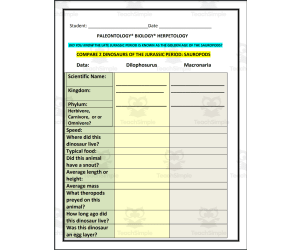
Project: Compare 2 Dinosaurs of the Jurassic Period: Sauropods
Science, Life Sciences, Biology, Research, Grade 5, 6, 7, 8, Activities, Projects
This Project: Compare 2 Dinosaurs of the Jurassic Period: Sauropods resource is designed for students to engage in research and compare and contrast two dinosaurs of the same period. Students will practice their research skills, writing skills, and presentation skills. The two dinosaurs students are asked to research with this resource are Dilophosurus and Macronaria. The information to be found is listed and includes (but is not limited to): Scientific Name: Kingdom: Phylum: Herbivore, Carnivore, or Omnivore? Speed: Where did this dinosaur live? Typical food: Did this animal have a snout? Average length or height: As students begin to find this information, they can fill in the spaces provided for easier organization. Students can present their findings in different ways: Oral presentation, posters , digital slides , brochures, etc. And they also can be required to turn in this resource! This resource Project: Compare 2 Dinosaurs of the Jurassic Period: Sauropods was designed for middle school students, however it can also be used for high schoolers. Students may work independently, in pairs, or in groups. If students work in groups, make sure each student has their part of the research assigned so that everyone does their part in completing the research project. Find more interesting resources in my store here!
Author THE LANTERN OF KNOWLEDGE
Tags Paleontology, Biology, Hepetology, Dinosaurs, Jurassic Period, Sauropods, Writing, Research Project

Project: Array Zoo
Science, Technology, Engineering, Grade 2, 3, Activities, Projects
Introducing: Project Array Zoo A teaching resource ideally suited for science educators and homeschoolers, specifically tailored to meet the educational requirements of Grade 2 and Grade 3 students. This resource offers a unique opportunity for students to learn arrays in an entertaining and captivating manner. About Project Array Zoo: The key premise of Project Array Zoo is engaging the students in constructing zoo gates using grid paper, subsequently leading them towards understanding multiplication or division through structured arrays. This approach acts as a rewarding tool that fosters fundamental understanding of an essential mathematical concept. Creative Engagement: This project is designed with pedagogical techniques that encourage creativity among students. The flexibility in design allows children to express their imaginative flair by creating a variety of colourful zoo animals within their array structures Zoo Science Meets Engineering: In addition to enhancing cognitive skills, this product made available under 'Science' further broadens learners' perspective through its subcategory linkages with 'Engineering'. The interconnectedness between scientific application and engineering concepts contribute largely towards holistic learning experience. User Reviews: "My kids absolutely LOVED this activity." Teaching Resource Details: Type: PDF format, Ease: Ready-to-use, Suitability: Ideal during an array unit or as introduction tutorial In summary, Project : Array Zoo offers comprehensive educational benefits through experiential learning by creatively building structural frameworks symbolizing zoo gates while fostering innovative creativities via designing colorful creatures - all bundled up on grid papers turned into engrossing arrays-cum-zoo!
Author Teach With Baker
Tags Science Education, Arrays, Multiplication/Division, Engineering Concepts, Creativity Cultivation
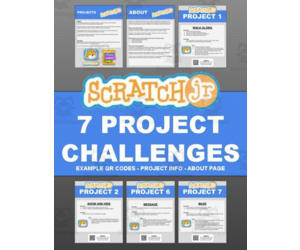
ScratchJr: 7 Project Challenges
Science, Technology, Computer Science, Preschool, Kindergarten, Grade 1, 2, 3, 4, 5, Projects, Activities
It isn't always necessary to remember syntax in programming, but it is extremely important to learn the concepts behind programming. This resource includes 7 project challenges for students working with Scratch Jr. They introduce the meanings of the different buttons through simple, interactive projects . All the project challenges are scaffold and build on each other, where the student learns different skills along the way. Each project consists of questions that you can ask the students, a challenge for them to complete and hints if they get stuck. Each project page includes a QR code that links the students to a animated gif showing what the final outcome of the project should look like. Scratch Jr is great for the 5-7 age range however it works for all ages. Scratch Jr is a great way to introduce programming to anyone.
Author Roombop
Tags Scratchjr, Scratch Jr Projects, Scratch Jr Work, Scratch Challanges
Science: Investigation Booklet
Science, Basic Science, Not Grade Specific, Activities, Projects
The Science: Investigation Booklet The Science: Investigation Booklet is an invaluable resource suitable for all grade levels, promoting active participation in scientific processes. This wide-ranging tool can assist educators in enhancing their students' comprehension and engagement with scientific investigations, applicable in both public school or homeschooling contexts. Design & Usability This resource encompasses an editable 5-page booklet that can be adjusted to any science experiment. It includes straightforward headings for clean organization, enabling teachers and students to seamlessly comprehend its intentional design. It fits perfectly into whole-class laboratory experiments , small-group investigations, individual projects at home or even extended research tasks. Key Features: Editable 5-page booklet customizable to any science experiment Clean organization with straightforward headings Versatile usage including lab experiments , group investigations & homework projects Reusability & Customization A notable strength of the Science: Investigation Booklet lies within its reusability across unimaginable possibilities—ideal for promoting continuity across different topics within the expansive subject of science. The blank format permits flexibility letting teachers tailor-fit the content appropriate to their lesson plans covering diverse competencies or interests. For instance, biology lessons may vary from chemistry or physics classes—all these achievable via one informative tool! Note: Fully editable feature grants complete autonomy over instruction manual bespoke aligned with personalized strategies. Additional Convenience Feature: Packaging: This package comes as a Zip file - ensuring ease of downloading and storage whilst maintaining high-quality displays during class hours. The Science: Investigation Booklet offers a practical solution that promotes involved learning experiences enhancing critical thinking skills enabling students to delve deep into basic sciences with guided procedures. It simplifies cooperative analysis across settings, turning every lab period into interesting explorations. Avail this versatile educational material today!
Author Elementary Resources 4 U
Tags Science Investigation, Active Participation, Scientific Processes, Teaching Strategies, Critical Thinking

Pumpkin Investigation
ELA, Writing, Science, Basic Science, Math, Measurements, Grade 3, 4, 5, Activities, Projects
Pumpkin Investigation This pumpkin investigation aligns with science, math, and writing opportunities for grades three through five, if students are prepped accordingly. Students need to be in the mindset of scientists and serious observers or mathematicians. If you are in an area where pumpkins are a main crop, it is beneficial to connect it to your local economics, as well. This cross curricular, hands-on opportunity allows for parent or other staff volunteers and a small group setting for investigation. Included in this product: Teacher notes for how to implement the project in class Nonfiction reading passage explaining scientist skills like observation and communication A pumpkin observation packet, leading students through estimations, observations, and measurements of a pumpkin (either individual or in a group. Some pages have standard measurement and others have metric A rubric for grading the packet Intended for science grading, but could also be used for math if points were specific to those skills Parent permission notes for students to participate Parent volunteer letter and guidelines Supplies Needed: 1 pumpkin per group Newspaper or butcher paper – to cover desks or tables Bucket (0r buckets) filled with water – towels to dry Baby/bathroom scale Cloth/flexible tape measures Large spoons or scoops Adults willing to use knives Next Gen Science Standards Covered (On top of the previously tagged Math and Writing standards) 3-5-ETS1-1. Define a simple design problem reflecting a need or a want that includes specified criteria for success and constraints on materials, time, or cost. 3-5-ETS1-3. Plan and carry out fair tests in which variables are controlled and failure points are considered to identify aspects of a model or prototype that can be improved. **Check pages carefully, as there are duplicates of the questions with some asking for standard units of measurement and some asking for metric units. Total Pages: 13 pages Answer Key: Rubric only Teaching Duration: 2 hour session for project, skills apply multiple times throughout the year
Author Kel's Klass
Tags Hands-on, Cross Curricular, Observation, Communication, Estimation, Measurement, Data Writing

Periodic Table: Element Baseball Cards Project
Science, Chemistry, Grade 5, 6, 7, 8, Activities, Projects
This is a great activity to help get students excited about the periodic table of elements! Students can work independently or in groups to research an element from the periodic table. On the front of the card, they will include images of the element, its name, and its symbol. On the back of the card, they will complete research to discover the element’s “statistics” including: Atomic number and atomic mass Electron configuration (including a diagram) Family Melting and boiling points History of discovery Uses and fun facts Then students can present their cards to the rest of the class so everyone learns about several different elements. Grades to Use With: This project is great for the middle grades (5-8) when the periodic table and elements are first introduced. It could also be used in a high school special education classroom. Standards: This project can help support the knowledge required for this standard. Once students understand the configuration of elements, they can use this knowledge to learn about simple molecules. NGSSMS-PS1-1 Develop models to describe the atomic composition of simple molecules and extended structures. Emphasis is on developing models of molecules that vary in complexity. Examples of simple molecules could include ammonia and methanol. Examples of extended structures could include sodium chloride or diamonds. Examples of molecular-level models could include drawings, 3D ball and stick structures, or computer representations showing different molecules with different types of atoms. Assessment does not include valence electrons and bonding energy, discussing the ionic nature of subunits of complex structures, or a complete depiction of all individual atoms in a complex molecule or extended structure. If you enjoy this science activity, check out others in my store like Climate Change Solutions STEM Project
Author Grace Under Pressure
Tags Periodic Table, Chemistry Project, Elements, Science Project, Atomic Mass, Atomic Number, Chemistry, Early Science, Elementary Science, 3d Periodic Table Project Ideas, Periodic Table Project, Periodic Table Valentines Day Card, Periodic Table Ideas For Project, Element Ball Project, Periodic Table Element Cards, Creative Periodic Table Projects School, Periodic Table Cards, Periodic Table Project High School, Periodic Table Of What Project, Periodic Table Element Project, Periodic Table Project Ideas, Project On Periodic Table, Periodic Table Project Examples, Periodic Trends Project, Periodic Table Of Elements Project, Periodic Table Element Projects, Creative Periodic Table Project Ideas, Periodic Table Projects

Project: Invasive Species
Science, Earth and Environmental Sciences, Environmental Science, Research, Grade 7, 8, 9, 10, Activities, Projects
Project: Invasive Species is a great resource for students to solve a real-life problem through practicing to solve a fictitious problem. The project involves assigning a ROLE, giving a PROBLEM, providing specific REQUIREMENTS and TOOLS.
Author Mitchell Zuvela
Tags Project, Invasive Species, Research Project, Oral Presentation, Dangerous Travelers Movie
Heat Transfer Science Lab
Science, Chemistry, Grade 6, 7, 8, Activities, Projects
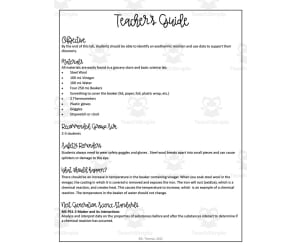
Heat Transfer Science Lab is an engaging hands-on science activity focused on endothermic and exothermic chemical reactions. Students in grades 6-8 follow procedures to combine various household substances and document detailed observations. Learners identify physical and chemical changes that produce or absorb heat energy. This project facilitates small groups collaborating on an experiment from start to finish - preparing materials, collecting qualitative and quantitative data, analyzing results, and drawing conclusions. Implement Heat Transfer Science Lab to reinforce chemistry concepts like phase changes, energy transfers, and chemical bonds. The detailed student lab sheet scaffolds the scientific process and develops critical thinking skills. Heat Transfer Science Lab allows educators to facilitate an inquiry-based lab that aligns to next generation science standards.
Author Maude in the Middle
Tags Heat Transfer, Science Lab, Chemical Reactions, Data Collection, Science Observations
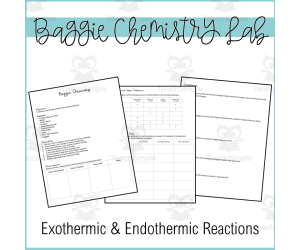
Baggie Chemistry Lab | Endothermic and Exothermic Reactions
Science, Chemistry, Grade 6, 7, 8, Activities, Projects
Baggie Chemistry Lab | Endothermic and Exothermic Reactions Students explore chemical reactions and their resulting energy changes with this engaging baggie chemistry lab . Learners follow procedures to combine household ingredients in plastic bags, closely observing the vivid reactions that result. Comparing endothermic and exothermic processes, they identify indicators like temperature change, bubbles, color shifts, and precipitates formed. This activity builds critical thinking as students collect qualitative data, draw conclusions about energy transfers occurring, and differentiate between physical changes and chemical reactions. Use this lab to reinforce chemistry concepts for middle schoolers or high schoolers in small groups or as an independent inquiry project.
Author Maude in the Middle
Tags Chemistry, Lab, Endothermic, Exothermic Reactions, Science Activity, Endothermic And Exothermic Reactions Lab, Exothermic And Endothermic Reactions Lab, Exothermic Reaction Experiment

Florida Wildlife Animal Project
Science, Life Sciences, Animals, Biology, Earth and Environmental Sciences, Earth Sciences, Grade 3, 4, 5, Projects, Activities
This product is perfect for teachers who want to help their students learn about the animals that live in Florida. The Florida Wildlife Animal Project includes research, poster design, model creation, and presentation elements that will engage and educate students.
Author Have Fun Teaching
Tags Living And Non-Living Things

Cell Analogy Choice Board
Science, Life Sciences, Biology, Grade 7, Activities, Projects
The Cell Analogy Choice Board will provide your 7th graders with an engaging way to apply what they know. The choice board presents them with 4 analogy options and then 4 delivery options to choose from. When students have completed their project, they will submit it in Google Classroom.
Author Sarah Miller Tech
Tags Science Project, Choice Board, Cell Analogy, Narrative Essay, Prezi, Choice Boards For Social Studies, Project Choice Board, Thanksgiving Choice Board