



3,923 products added recently
Page 68 - 3rd Grade Lesson Plans
Support your third graders' expanding abilities with lesson plans that encourage exploration and deeper understanding. Covering a range of subjects, these resources offer hands-on activities and discussions. Use them to create a vibrant learning atmosphere that fosters enthusiasm.

 Show filters


Data Analysis Unit Vocabulary Words Interactive Foldable for 3rd Grade – EBOOK
Math, Numbers, Grade 2, 3, 4, Lesson Plans, Teacher Tools
This set includes 1 vocabulary interactive foldable based on combined state standards for 3rd Grade Data Analysis Units. This foldable is offered in three formats, words only, definitions only, and words with definitions. This foldable covers: *Bar graph *Categorical data *Data *Dot plot *Frequency table *Pictograph This product is downloadable as a PDF file. Print, cut, fold, and create! Keywords: math, vocabulary, second grade, third grade, fourth grade, Candie Donner, interactive, foldable, number
Author Knowledge Box Central
Tags Math, Bar Graph, Data, Categorical Data, Numbers, Literary Elements Foldable

I WONDER - What Was The Most Famous School In Ancient Greece
History: Ancient, History, Social Studies, History: Europe, Grade 3, 4, 5, 6, 7, 8, 9, Lesson Plans, Teacher Tools
Video Introduction An amazing video designed for the students to learn more about history. I WONDER - What Was The Most Famous School In Ancient Greece | Animated Video Lesson Do you like history? Which topic do you really enjoy about history? Have you ever read an interesting fact about the Vikings? If yes, can you mention them? What do you like most about the Victorian era? Can you name all the Tudors? Have you ever wondered how people used to live in ancient Japan and ancient China? Do you know any interesting facts about ancient Egyptians and the Pharaohs? Have you ever visited South America? What do you know about Incas and Aztecs? Celtic culture was really one of a kind, can you name any of the places that Celts used to live in? Imagine yourself living during the ancient Roman empire, how your life will look like? Ancient Greece was an amazing place to live in. What do you know about ancient Greek life? I WONDER - What Was The Most Famous School In Ancient Greece | Animated Video Lesson The video is perfect for encouraging the researching skills for the students, while learning more about history. I WONDER - What Was The Most Famous School In Ancient Greece | Animated Video Lesson This friendly designed video is suitable for students at school, homeschooling, and as a group activity. Format Available in MP4 format.
Author Educational Voice
Tags What Was The Most Famous School In Ancient Greece, What Was The Most Famous School In Ancient Greece Video, The Most Famous School In Ancient Greece, The Most Famous School In Ancient Greece Video, The Most Famous School In Ancient Greece Facts
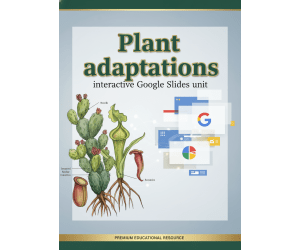
Plant Adaptations Interactive Google Slides Unit
Science, Earth and Environmental Sciences, Earth Sciences, Environmental Science, Geology, Space, Life Sciences, Animals, Nature & Plants, Biology, Grade 3, 4, 5, 9, 10, 11, 12, Experiments, Activities, Labs, Projects, Assessments, Teacher Tools, Diagrams, Lesson Plans, Outlines, Presentations
Find the best 4th Grade Plant Adaptations Interactive Google Slides Unit – a complete no-prep digital science resource that is perfectly correlated to NGSS 4-LS1-1! This teacher edition is a game-changer for teaching plant biology as an interactive adventure for students! With this resource, students will enjoy a hands-on approach to learning about plant adaptations as they explore interactive slides featuring desert succulents/cacti, rainforest drip tips/epiphytes, water plants floating leaves/stretching stems, structural vs. behavioral adaptations, roots, stem/leaf adaptations, defense structures, carnivorous plants Venus flytrap/pitcher plant, seed dispersal, mystery plant analysis, and a final knowledge check with answer keys! Students will actively engage in classifying adaptations, creating their own extremophiles, analyzing scenarios using Claim Evidence Reasoning, and connecting science to ELA, math, engineering, and technology using cross-curricular activities. It includes a teacher guide, standard alignment, steps to integrate into Google Classroom, instructional tips, interactive slide ideas, image credits, and ideas for self-grading. It can be used in a variety of learning environments, such as in-class learning, distance learning, homeschooling, etc. It saves automatically in Google Slides. Keywords: plant adaptation 4th grade, NGSS 4-LS1-1, Google Slides, interactive science unit, desert rainforest aquatic plants, carnivorous plants, seed dispersal activities, digital science resource, structure and function NGSS, no prep plant biology. Why Parents/Schools Love It : NGSS-Aligned & Standards-Ready: No planning required – lesson plans, objectives, and assessments are provided and align perfectly with 4th grade requirements. Truly Interactive & Engaging: Drag and drop sorting, CER plant mysteries, and biome builders ensure all students (including reluctant ones) are actively engaged and motivated to learn for hours. Cross-Curricular Powerhouse: Perfectly blends ELA (informative writing, vocabulary), math (data analysis, volume calculation), and engineering (biomimicry design challenges). Google Classroom Perfection: One-click “make a copy for each student,” auto-saving, and self-grading features save teachers 10+ hours per unit. Differentiation Built-In: Visual aids, scaffolding, and differentiation in activity levels and types meet the needs of diverse learners and challenge advanced students. Target Student Classes : This lesson is designed for 4th grade science (ages 9-10), specifically targeting the 4-LS1-1 standard for Structure and Function in plants/animals, as well as the cross cutting concepts of Systems and System Models + the Science and Engineering Practices of Engaging in Argument from Evidence. This lesson is suitable as the main resource for: Standard 4th grade life science curriculum for 4th grade students in public/private schools Homeschool 4th grade science curriculum (allows for fast or slow pacing for gifted or remedial students) Advanced 3rd grade science for 3rd grade students or 5th grade review for 5th grade students Special education or ESL students (visual learning tool of drag and drop CERs) Not recommended as the main resource for middle school students (6th+). Copyright/Terms of Use: This Book is copyrighted by Syed Hammad Rizvi. This is for your personal and single classroom use only. You may not change, reproduce, redistribute, or sell this in any way. This means you may not put it on the Internet in a way that it can be located and downloaded by others. If you wish to share this resource with others, please consider purchasing additional licenses from Teachsimple. Thank you for respecting these copyright laws! This product is happily brought to you by Syed Hammad Rizvi
Author Creative Book Store
Rating
Tags PlantAdaptations, 4thGradeScience, NGSS4LS11, GoogleSlidesScience, InteractiveScience, ScienceTeachers, ElementaryScience, NGSSScience, PlantAdaptationsUnit, DigitalScienceResource
Math Phonics Addition & Subtraction: Quick Tips and Alternative Techniques for Math Mastery
Math, Addition and Subtraction, Addition, Grade 1, 2, 3, Teacher Tools, Lesson Plans
Math Phonics Addition & Subtraction: Quick Tips and Alternative Techniques for Math Mastery Math Phonics Addition & Subtraction: Quick Tips and Alternative Techniques for Math Mastery offers an innovative approach to teaching mathematics. It is firmly rooted in the understanding that when students view subjects through multiple lenses, their skills are not only honed but solidly cemented. Serving as a refreshing alternative to traditional methods of instruction, the program employs rules, patterns and memory techniques parallel to those in language arts. This unique method encourages children to learn complex math concepts like addition and subtraction with ease and confidence. Specifically Designed Resource For Teachers Instructing Grades 1 Through 3 This instructional resource is tailor-made for teachers instructing students in grades 1 through 3. This indispensable tool contains: Ten comprehensive lesson plans brimming with engaging exercises. The material spans worksheets, take-home pages, evaluation pages alongside various support mediums promoting better understanding of addition and subtraction concepts. Flexible Curriculum Integration The Math Phonics Addition & Subtraction guide can easily slide into your existing curriculum framework without rigid restructuring. The flexibility it provides allows you— To implement its use in a whole group setting for collective learning experiences or break it down into smaller groups advocating peer interaction and personal attention towards each student's needs. You may also assign relevant portions as homework assignments amplifying out-of-class learning opportunities. Digital Accessibility Built-In For Versatile Usage Scenarios The strategic teaching resource has been created considering every educator's versatile teaching style keeping content accessibility at its core; available as a downloadable PDF file to ensure convenient use no matter where you are—the classroom or homeschooling set up. A Perfect Resource for Interactive Math Lessons For educators on the lookout for creative strategies enhancing interactive math lessons—The Math Phonics Addition & Subtraction: Quick Tips and Alternative Techniques for Math Mastery serves as the ideal solution; assuring improved arithmetic proficiency in early learners.
Author Classroom Complete Press
Tags PDF
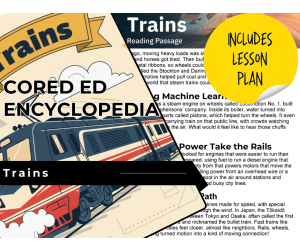
Trains Reading Comprehension Passage - Cored Ed Encyclopedia
ELA, Language Development, Reading Comprehension, Reading, Science, Technology, Engineering, History, Social Studies, Physics, Grade 2, 3, 4, 5, Worksheets & Printables, Worksheets, Teacher Tools, Centers, Activities, Writing Prompts, Assessments, Quizzes and Tests, Quizzes, Lesson Plans
This trains reading comprehension with lesson plan includes: Visualization (on the front cover) Start your lesson by taking a minute to think and share something about the topic. Read the script aloud (slowly), perhaps prepare some music or sound effects. Student close their eyes and let their imaginations wander. Students open their eyes, read the question aloud and give them a few minutes to complete. Ask a few students to share or keep answers until the end to compare with what they learn in the passage. Quick pause—thousands of Cored Education products are included with your TeachSimple membership. Download links and encyclopedia index available here. Pre-Reading Trivia Students will write down one thing they already know about the subject and then read five more facts and discuss. These facts are fun, and the students will enjoy learning about the subject before reading more. Give 1 minute for students to write what they already know (no pressure—best guess is fine). Read the five facts together. After each fact, do ask a student for their opinion, was it surprising? Set a purpose by asking students to highlight/underline one fact they want to learn more about during the reading. Reading Passage The text is a high-interest reading passage with set paragraphs, roughly three to four paragraphs long. It contains a variety of themes about the topic, anywhere from history to technology. The passage is between 250 and 350 words in length. First, ask students to look at the headings and see what they’ll learn about today. What do they know about the topic/heading? First read options: Teacher read-aloud (best for support). Partner reading (paragraph by paragraph). While reading, students underline important details, and vocabulary words they think may come up in the questions section. Mixed Questions The first question page contains four multiple-choice questions, each with a choice of four answers, and three written response questions that require a sentence or two from the student. Students complete the mcqs first independently, then review quickly as a class. For the 3 written responses, try to get students giving the answer with some form of evidence: “I think ___ because the text says ___.” If students get stuck, send them back to check the passage. Vocabulary Questions Practice seven key words from the text in this section across two activities. First section is scrambled words where students will unscramble three words given a clue for each. The second section is a word to meaning matching activity. Before starting, have some students read out words they underlined in the passage. Ask students to say the word and read aloud the sentence(s) around each word. Ask students to do scrambled words and the matching exercise in pairs then go through answers as a class. For the scrambled spelling task, get four pairs to come up to the board and write the words for extra practice with the other student reading out the clue. For the matching task, prompt students to give full sentences: “I matched ___ with ___ because ___.” Creative Writing In this question, the student will be required to write a five to eight sentence paragraph on a question related to the topic. Before starting, ask students write down 3 key ideas they are going to include in their piece. Ask students for ideas to share around the class to help those struggling. Pro writing expectations: 5–8 sentences At least 2 facts or details from the passage At least 2 vocabulary words from the previous page Students read their paragraphs while classmates listen for facts and vocabulary words. Extension Activities This page is optional for fast finishers or to take home. There are several activities, each one requiring a different skill. Do some, do none, do all, completely optional - but you will feel reassured knowing every possibility is planned for. Includes summary writting question. Answer Key There are answers for the multiple-choice questions, written response questions have sample answers, vocabulary answers and if there is a summary question then a sample summary will be provided as well. Lesson Plan Included Customized lesson plan for this lesson is included. Lesson Snapshot Title: Trains Genre: Nonfiction (informational text) Subject: Science (Technology & Engineering) Primary Topic: How rails and train power changed over time Estimated Guided Reading Level (A–Z): R What This Lesson Teaches Best Explains how smooth rails reduce “rubbing,” helping heavy loads move more easily than wagons on muddy roads. Uses a real historical example (the Stockton and Darlington Railway opening in 1825) to show steam trains carrying coal and people. Describes how a steam locomotive works (water becomes steam, steam pushes pistons, pistons help turn wheels). Compares train power types—steam, diesel (engine spins a generator), and electric (overhead wire or third rail). Shows how high-speed rail was designed for speed (special tracks, trains shaped to slice through wind), including Japan’s Tōkaidō Shinkansen (1964) “bullet train.” QA check (support pages vs. passage): The pre-reading trivia uses the word “friction,” but the main passage describes the idea as “rubbing.” Other questions and vocabulary (boiler, pistons, diesel, generator, third rail, high-speed rail) match the passage. Learning Goals Students will explain why smooth rails helped heavy loads move with less rubbing. Students will identify what happened in 1825 with the Stockton and Darlington Railway. Students will describe how steam in a boiler can help power wheel movement using pistons. Students will compare steam, diesel, and electric explanations of how trains get power in the text. Students will describe how train design and tracks can increase speed, using details about high-speed rail. Key Vocabulary From the Text locomotive — the front engine that pulls the train cars. boiler — the part where water is heated to make steam. pistons — parts steam pushes to help turn the wheels. generator — a machine that makes electricity for the train. soot — black dirty particles in the air from smoke. FULL CATALOG OF DOWNLOAD LINKS AND ENCYCLOPEDIA INDEX HERE
Author Cored Education
Rating
Tags Vocabulary, Reading Comprehension, Reading Passages, Lesson Plans, Ela Lesson Plans, Reading Comprehension Lesson Plans, Pre-reading, History, History Lesson Plans, Physics

Landmarks and Landforms of Africa | Continent of Africa Unit Study | Geography Bundle
Social Studies, Geography, Grade 3, 4, 5, 6, 7, Lesson Plans, Teacher Tools
Enjoy 12 informative colorful postcards featuring famous landmarks and landforms found in Africa including Victoria Falls, The Great Pyramid, The Great Sphinx, Mount Kilimanjaro, Nile River, The Serengeti, Volcanoes National Park, Tabletop Mountain, Great Rift Valley, Namib Desert, Goree Island, and The Sahara Desert.. Each postcard is double sided with a beautiful photo on one side and a post-note on the other directed towards the students. Matching game with photos and clues to help students memorize and reinforce learning. Service opportunity included! How To Use This: Look through all the resources and decide which ones to use. Print the postcards double sided (or print and lightly glue). Laminate for re-use. Use these as resources to learn about countries, landmarks, or landforms. Use them to write reports, or give oral presentations . Color and cut out stamps to put in your "Passport" to show you've learned about that country! Play the "I have, Who has" game as review! What You Get: - 12 double-sided landmark and landform information cards using the metric system. - 12 double-sided landmark and landform information cards using the imperial system. - 24 memory game cards to play with your students, picture of each landmark on one card, clues about the landmark on the other. Want More Africa Study Resources?: - Countries of Africa: Brochures and Activities - Plants of Africa: Informational Cards - Animals of Africa: Informational Cards - Map work for Africa - Postcards for Africa: Landmarks and Landforms - Africa Unit Test *I have resources like this for every continent. So make sure to check them out if your'e trying to put together a comprehensive geography study! Check out other resources from my store: Simply Schoolgirl! I can be contacted for questions and concerns at simplyschoolgirl1@gmail.com
Author Simply Schoolgirl
Tags Postcards, Africa, Geography Lesson, Game Cards, Social Studies Activities, Pyramids, Victoria Falls, Serengeti, Sahara, Sphinx, Africa Landmarks, Landforms Of Africa, Landmarks Africa, Africa Land Marks

Nonfiction table of contents lesson
ELA, Literature, Grade 1, 2, 3, Lesson Plans, Teacher Tools
The concept of nonfiction can be very abstract, making it difficult to teach the concept. These worksheets look at the nonfiction text feature; table of contents. Within these worksheets are two activities that are designed to help students understand the concept table of contents. This download includes a printable worksheet with two activities, a printable checklist with a checklist for individual students and for the class and finally an answer sheet with answers to the activities. The objectives of these worksheets is to deepen the understanding of exactly what a table of contents is and what can be found on a table of contents. The first activity encourages students to identify the page numbers as this is an important element found in a table of contents, the second activity has two variations, the first variation is writing the headings in the correct order in the space provided and the second variation is cutting and pasting the headings in the correct order in the space provided. These activities are great for grade 1,2 and 3 and can be used as an introduction, recap, support or enrichment. Simply print the activity and hand out students. If you like these worksheets, have a look at the nonfiction text feature table of contents lesson which goes alongside these PDFs and contains the online versions of the activities given as well as lesson slides that are animated with speaker notes. Number of pages: Activities: 7, Answer sheets: 7, Checklist: 8
Author Ezee 101
Tags Nonfiction Text Features, Table Of Contents, Worksheets, Activities, Nonfiction
I WONDER - How Do Animals Use Their Tongues | Animated Video Lesson
STEM, Biology, Life Sciences, Science, Animals, Grade 1, 2, 3, 4, 5, 6, 7, 8, Lesson Plans, Teacher Tools
Video Introduction Animal kingdoms are full of fascinating wonders to learn. This video is designed for the students to learn more about animals in different countries. I WONDER - How Do Animals Use Their Tongues | Animated Video Lesson Do you like animals? what is your favorite one? Do you own a pet? If yes, tell us more about it, like what its name? And what do you like most about it? What are the animal kingdoms? Can you write down the characteristics of each animal class like mammals, birds, reptiles, amphibian, fish and mollusks. Do you know that some animals can sing, can you name any of them? What is the largest and the smallest mammal in the world? What is the largest and the smallest bird in the world? What is the largest and the smallest fish in the world? I WONDER - How Do Animals Use Their Tongues | Animated Video Lesson The video is perfect for encouraging the researching skills for the students, while learning more about these fantastic animals. I WONDER - How Do Animals Use Their Tongues | Animated Video Lesson This friendly designed video is suitable for students at school, homeschooling, and as a group activity. Format Available in MP4 format.
Author Educational Voice
Tags How Do Animals Use Their Tongues, How Do Animals Use Their Tongues Video, Animals Tongues, Animals' Tongues, Animals' Tongues Facts, Animals' Tongues Facts For Kids, Animals' Tongues Video
Number & Operations: Base-Ten & Place Value for 3rd-5th - Practice the Skill 2 - MAC Software
Math, Place Value, Common Core, Grade 3, 4, 5, Teacher Tools, Lesson Plans
Number & Operations: Base-Ten & Place Value for 3rd-5th - Practice the Skill 2 - MAC Software Number & Operations: Base-Ten & Place Value for 3rd-5th - Practice the Skill 2 - MAC Software is a comprehensive teaching tool intended to fortify student comprehension of Base-Ten and Place Value concepts in Number and Operations. This software is geared towards pupils studying in Grades 3, 4, and 5. The focal point resides in enabling learners to discern what numerical value represented by given base-ten blocks through timed drill exercises. This pedagogical resource disseminates ample content founded on standard curriculum principles with an emphasis on experiential learning via intentionally timed drills. The continuous recurrence of these activities bolsters students' fluency in mathematical concepts while steadily challenging their understanding. Inclusive Learning Tools The appealing incorporation of math tools acts as a pivotal aid to propel problem-solving capabilities among learners. Critically, it encompasses software that carries out voice overs in both English and Spanish granting complete bilingual functionality. A textual option is integrated to serve as extra reinforcement or potential multilingual approach expanding its linguistic scope diverse enough to meet various learning needs. The content aligns harmoniously with Common Core State Standards interlaced intricately with STEM initiatives adhering closely to modern educational norms guided by NCTM guidelines. Versatile Use Cases As an educator or homeschooler, this tool can be employed diversely within your teaching methods such as spearheading whole group instruction, Organizing small group tasks or delegating it as homework practice drills. This comprehensive package comes compiled into one downloadable zip file emcompassing all essential MAC software enabling swift setup thus saving you prep time devoting more to actual teaching facilitation. In conclusion, investing in this pedagogical asset indicates channeling towards total mastery of Base-Ten and Place Value concepts. Its structured approach, user-friendly interface, and compatibility with international educational standards make it sine qua non within any current educator's resource pool.
Author Classroom Complete Press
Tags Math Skills, Place Value Practice, Base-ten Worksheet, Operations, Digital Math

I WONDER - What Is A Rectangle | Animated Video Lesson
STEM, Geometry, Math, Preschool, Kindergarten, Grade 1, 2, 3, 4, 5, Lesson Plans, Teacher Tools
Video Introduction An amazing video designed for the students to learn more about STEM. I WONDER - What Is A Rectangle | Animated Video Lesson Do you like STEM subjects? what is your favorite one? Have you ever tried to plant a seed? If yes, tell us more about it. Or have you ever tried to invent something? If yes, tell us more about it. And how do you think it will help us? Have you ever seen a microorganism under a microscope? What was it? And how it looked like? Mathematics is a marvelous subject. Let' sharpen our brains and solve some equations. Do you like timetable tricks? What is your favorite one? Do you know how to code? Have you ever created an app or a game before? If yes, how was it like? I WONDER - What Is A Rectangle | Animated Video Lesson The video is perfect for encouraging the researching skills for the students, while learning more about this fantastic topic. I WONDER - What Is A Rectangle | Animated Video Lesson This friendly designed video is suitable for students at school, homeschooling, and as a group activity. Format Available in MP4 format.
Author Educational Voice
Tags What Is A Rectangle, What Is A Rectangle Video, Rectangle, Rectangle Facts, Rectangle Facts For Kids, Rectangle Video, Rectangle Video For Kids, Shape, Shapes, Shapes Video For Kids
Math Phonics Multiplication & Division: Quick Tips and Alternative Techniques for Math Mastery
Math, Multiplication and Division, Division, Grade 3, 4, 5, 6, Teacher Tools, Lesson Plans
Math Phonics Multiplication & Division: Quick Tips and Alternative Techniques for Math Mastery A uniquely tailored program that includes rules, patterns, and memory techniques similar to those utilized in language arts. This approach aids in instilling challenging mathematical concepts into young minds. Ideal for: 3rd Grade Students 4th Grade Students 5th Grade Students 6th Grade Students Focusing on:Multiplication. The resource comprises of ten new lesson plans filled with engaging content. Essential content like worksheets and take-home pages is also provided, assisting educators in reinforcing students' understanding of multiplication and division during class time or as homework assignments. In addition to lesson plans and practice materials, the program includes assessment pages, enabling effective measurement of progress. These can be used to gauge individual student performance or comprehension across a group setting. Included Support Materials: Supplementary resources are also bundled within the package aiming at providing teachers with extra tools needed while teaching these concepts such as extra practice activities or learning games. All presented in an easily accessible PDF format – perfect for printouts if paper-based learning best fits your student's needs. A Versatile tool for mastering math! With great flexibility regarding its implementation modes - being able to cater from classrooms packed with eager learners down to one-on-one sessions - this product aligns perfectly whether you’re an educator striving towards math mastery.
Author Classroom Complete Press
Tags PDF

I WONDER - How Tall Are Giraffes | Animated Video Lesson
STEM, Biology, Life Sciences, Science, Animals, Grade 1, 2, 3, 4, 5, 6, 7, 8, Lesson Plans, Teacher Tools
Video Introduction Animal kingdoms are full of fascinating wonders to learn. This video is designed for the students to learn more about animals in different countries. I WONDER - How Tall Are Giraffes | Animated Video Lesson Do you like animals? what is your favorite one? Do you own a pet? If yes, tell us more about it, like what its name? And what do you like most about it? What are the animal kingdoms? Can you write down the characteristics of each animal class like mammals, birds, reptiles, amphibian, fish and mollusks. Do you know that some animals can sing, can you name any of them? What is the largest and the smallest mammal in the world? What is the largest and the smallest bird in the world? What is the largest and the smallest fish in the world? I WONDER - How Tall Are Giraffes | Animated Video Lesson The video is perfect for encouraging the researching skills for the students, while learning more about these fantastic animals. I WONDER - How Tall Are Giraffes | Animated Video Lesson This friendly designed video is suitable for students at school, homeschooling, and as a group activity. Format Available in MP4 format.
Author Educational Voice
Tags How Tall Are Giraffes, How Tall Are Giraffes Video, Giraffes, Giraffe, Giraffes Facts, Giraffes Facts For Kids, Giraffes Video, Giraffes Video For Kids, Giraffe Facts, Giraffe Video

I WONDER - What Was Bronze Age Art Like | Animated Video Lesson
History: Asian, History, Social Studies, History: Ancient, History: African, History: Europe, History: World, Grade 3, 4, 5, 6, 7, 8, 9, Lesson Plans, Teacher Tools
Video Introduction An amazing video designed for the students to learn more about history. I WONDER - What Was Bronze Age Art Like | Animated Video Lesson Do you like history? Which topic do you really enjoy about history? Have you ever read an interesting fact about the Vikings? If yes, can you mention them? What do you like most about the Victorian era? Can you name all the Tudors? Have you ever wondered how people used to live in ancient Japan and ancient China? Do you know any interesting facts about ancient Egyptians and the Pharaohs? Have you ever visited South America? What do you know about Incas and Aztecs? Celtic culture was really one of a kind, can you name any of the places that Celts used to live in? Imagine yourself living during the ancient Roman empire, how your life will look like? Ancient Greece was an amazing place to live in. What do you know about ancient Greek life? I WONDER - What Was Bronze Age Art Like | Animated Video Lesson The video is perfect for encouraging the researching skills for the students, while learning more about history. I WONDER - What Was Bronze Age Art Like | Animated Video Lesson This friendly designed video is suitable for students at school, homeschooling, and as a group activity. Format Available in MP4 format.
Author Educational Voice
Tags What Was Bronze Age Art Like, What Was Bronze Age Art Like Video, Bronze Age, Bronze Age Facts, Bronze Age Video, Bronze Age Facts For Kids, Bronze Age Video For Kids, Bronze Age Art

Kids Yoga Stories: Kids Yoga Yearly Planner
P.E. & Health, Yoga, Preschool, Kindergarten, Grade 1, 2, 3, Teacher Tools, Lesson Plans
This resource shows themes for each month of the year using fun topics. Theme ideas for each month serves as a guide to include recommendations to Kids Yoga Stories products to make yoga classes for kids a successful experience. Yoga themes are designed for children 3-8 years old, but could be adapted. Suitable for: Yoga teachers Caregivers Parents Health Practitioners Recreation Staff
Author Kids Yoga Stories
Tags Kids Yoga Stories, Kids Yoga, Yearly Planner, Lesson Plans Yoga
I WONDER - What is The Smallest Vertebrate In The World
STEM, Animals, Life Sciences, Science, Biology, Grade 1, 2, 3, 4, 5, 6, 7, 8, Lesson Plans, Teacher Tools
Video Introduction Animal kingdoms are full of fascinating wonders to learn. This video is designed for the students to learn more about animals in different countries. I WONDER - What is The Smallest Vertebrate In The World | Animated Video Lesson Do you like animals? what is your favorite one? Do you own a pet? If yes, tell us more about it, like what its name? And what do you like most about it? What are the animal kingdoms? Can you write down the characteristics of each animal class like mammals, birds, reptiles, amphibian, fish and mollusks. Do you know that some animals can sing, can you name any of them? What is the largest and the smallest mammal in the world? What is the largest and the smallest bird in the world? What is the largest and the smallest fish in the world? I WONDER - What is The Smallest Vertebrate In The World | Animated Video Lesson The video is perfect for encouraging the researching skills for the students, while learning more about these fantastic animals. I WONDER - What is The Smallest Vertebrate In The World | Animated Video Lesson This friendly designed video is suitable for students at school, homeschooling, and as a group activity. Format Available in MP4 format.
Author Educational Voice
Tags What Is The Smallest Vertebrate In The World, What Is The Smallest Vertebrate In The World Video, Smallest Vertebrate In The World, Smallest Vertebrate In The World Facts, Smallest Vertebrate In The World Video

All About 2D Shapes | Animated Math Video Lesson
Math, Geometry, Grade 1, 2, 3, Lesson Plans, Teacher Tools
All About 2D Shapes | Animated Math Video Lesson This animated math video lesson is a valuable resource for both educators and students. Primarily designed for Grade 1 to Grade 3 students, it concentrates on the important subject of geometry. Engaging Duration and Content If you’re looking for a crisp way to teach 2D shapes, this resource stands out with its easy-to-digest length of 11 minutes. Highlighting circles, squares, rectangles, and more the lesson brings these shapes alive in a dynamic manner that encourages comprehension among all learners. Versatile Learning Tool at Home or School The lesson is not just an excellent supplement to classroom teachings but also serves as an effective home learning tool under parental supervision. Teachers can even use this method as homework assignment material for better grasp in understanding shapes concept. Distinguishing Features User-friendly Language: The content uses language that captures children’s imagination while being level-appropriate keeping their attention focused. Vivid Illustrations: Utilizes bright imagery and clear instructions guiding step-by-step shape identification process. Multidevice Support: Available as an MP4 file which makes it playable on various devices like computers and tablets. Laying Strong Foundation & Promoting Recognition Skills This dynamic teaching tool ensures educators develop solid foundational skills pertaining to geometric concepts in their students' minds. It prompts necessary recognition skills that eventually help students appreciate complex geometrical principles along with practical cognition needed in daily life scenarios – from art forms recognition to basic maps understanding. Dealing with tech-savvy kids who understand better through audio-visual aids than traditional methods? Look no further. The 'All About 2D Shapes | Animated Math Video Lesson' is surely going to up your teaching game whether you are imparting lessons one-on-one or leading a group study session!
Author Educational Voice
Tags Shapes, Geometry, Math Lesson, 2D Shapes, Animated

Multiplication Pictorial Math Manipulatives
Special Resources, Special Education Needs (SEN), Math, Addition and Subtraction, Addition, Multiplication and Division, Division, Grade 2, 3, 4, Teacher Tools, Lesson Plans, Worksheets & Printables, Flashcards, Activities, Worksheets
A bundle of three ( 3 ) math materials with A4 mats and cards for teaching repeated addition and multiplication concepts . With 70 pages of visual explanations each of "how things work" to get the math facts, you can combine this resource with manipulatives ( cubes, coins, bricks... ) to cover all dimensions of math teaching . Use as presentation posters in your classroom or for remote sessions on screen . Laminate and reuse with markers in your centers . Choose between color or black and white versions . Offer them as math coloring pages . * Custom make the FACTS CARDS included . With each book you get : 1 . Mats with images / math cubes / number symbols combined as repeated addition . 2 . Mats with images / math cubes / number symbols combined as multiplication equations . 3 . Mats with images / math cubes . 4 . Black and white version of no3 . 5 . Various versions of facts cards ( dot to dot, tracable, cut and paste ) . - x 2 book is BANANA themed . - x 3 book is BROCCOLI themed . - x 4 book is PIZZA themed . These resources have proven to be very effective for "standard" classroom teaching and also for sped sessions and home schooling educational contexts . The crystal clear visual presentations become self proven explanations of how repeated addition equals multiplication and can function alone or as an addition to other materials . 3 books with visual presentations / explanations of multiplication concept in x 2, x 3 and x 4, with images, math cubes and numbers . 210 pages of mats and cards in both color and b / w versions . For more pdf materials on numeracy, basic math and pictorial / manipulative approach to learning, you can click WORDS ASIDE .
Author WORDS ASIDE
Tags Facts And Factors, Repeated Addition, Multiplication, Mats, Boards, Cards, Math Cubes, Math Centers, Slides, Words Aside
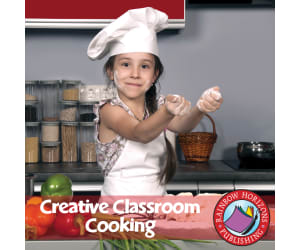
Creative Classroom Cooking Gr. 3-8
Life Studies, Home Economics, Grade 3, 4, Teacher Tools, Lesson Plans
Creative Classroom Cooking Gr. 3-8 A unique approach to teaching, integrating language skills into practical activities. About the Product: Creative Classroom Cooking is a brilliant crossover between Home Economics and Social Studies, providing an engaging hands-on learning experience for students from Grade 3 up to Grade 8. Main Features: 36 Non-Cook Recipes: Easy-to-understand instructions that require minimal teacher supervision to maximise student engagement. The recipes focus heavily on nutritious snacks, promoting health-conscious choices among youngsters. Practical Language Skills: Apart from enhancing cooking vocabulary, it includes concepts like ingredients, utensils and methods - ideal for building student's financial literacy repertoire. Bonus Tools Included: Vocabulary Journal Word Cards: Aids in remembering crucial recipe-specific vocabulary and aids as building blocks towards understanding texts independently and confidently. Metric Measurements System: Familiar context for Canadian learners & broadening understanding of different units of measure for others – subtly incorporating numeracy into the lesson plan without making it overwhelming or off-topic. Action-Packed Activities & Games : The lesson plans also include interactive activities such ton word searches inside them – great for group work or individual practice. The product neatly packages detailed lesson plans in a simple PDF format – ensuring convenient access anytime! In Summary... Creative Classroom Cooking Gr. 3-8 offers an enriching blend of practical skills and theoretical knowledge. It aims to shape students into independent thinkers doers via stimulating educational journeys packed with learning - offering a fresh take on conventional classroom lessons!
Author Classroom Complete Press
Tags PDF
I WONDER - How Many Blood Vessels Are In Brain | Animated Video
Biology, Life Sciences, Science, Human Body, Grade 3, 4, 5, 6, 7, 8, 9, Lesson Plans, Teacher Tools
Video Overview The human body is full of fascinating wonders to learn. This video is created to help the students recognize the anatomy and the job of the human body. I WONDER - How Many Blood Vessels Are In Brain | Animated Video Lesson Every part and organ in our human body is vital so let's see how important they are. Have you ever imagined how we look like if we didn't have a skeleton? Did you know that because we have our amazing muscles we can stand! Do you know how many teeth do we have? Have you ever wondered about the food journey inside our body? Can you name all the glands in our body? Why do we have skin? Our nervous system is really good at sending signals. Can you tell us more about it? Are you really good at Mathematics, painting, or any other thing? You should really thank your brain about it! The famous five senses are really doing a great work? Can you explain how every sense works? I WONDER - How Many Blood Vessels Are In Brain | Animated Video Lesson The video is perfect for encouraging the researching skills for the students, while learning more about our fantastic human body. I WONDER - How Many Blood Vessels Are In Brain | Animated Video Lesson This friendly designed video is suitable for students at school, homeschooling, and as a group activity. Format Available in MP4 format.
Author Educational Voice
Rating
Tags How Many Blood Vessels Are In Brain, Blood Vessels, Blood Vessels Facts, Blood Vessels Video, Blood Vessels Facts For Kids, Blood Vessels Video For Kids, Brain, Brain Facts, Brain Video
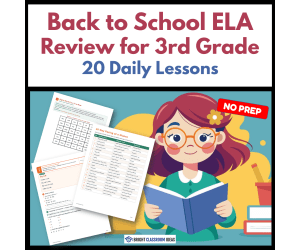
Back to School ELA Review for 3rd Grade | 20 Daily Lessons
ELA, Grade 3, Assessments, Teacher Tools, Lesson Plans, Worksheets & Printables
Make the first month of school smoother with this 3rd grade back to school ELA review designed to revisit essential Grade 2 reading, grammar, vocabulary, word study, and writing skills. With 20 structured daily lessons plus 16 print-and-play literacy games, this resource helps third graders rebuild confidence, establish routines, and prepare for Grade 3 learning. Each lesson follows a predictable four-part rhythm— Read & Think, Language & Grammar, Word Work, and Write About It —so students can review multiple ELA strands in manageable daily practice. The Teacher Guide recommends approximately 15–25 minutes per full lesson, with skills spiraling from lighter review into combined practice. What’s Included This 3rd grade ELA review includes a complete beginning-of-year literacy package: ✅ 20 daily ELA review lessons ✅ 40 pages of daily student lessons ✅ Short fiction, nonfiction, and fable passages ✅ Reading comprehension questions ✅ Text evidence practice ✅ Grammar and language review ✅ Phonics and word study ✅ Vocabulary practice ✅ Daily writing prompts ✅ 16 print-and-play literacy games and activities ✅ Partner and small-group games ✅ Literacy center activities ✅ Complete answer key for all 20 days ✅ Teacher guide ✅ 20-day pacing overview ✅ Four-week planning guide ✅ Differentiation ideas ✅ Game preparation directions ✅ Game-to-skill quick-reference map ✅ Class progress record sheet ✅ Family letter for home-school connection ✅ Student reflection ✅ Reading Star Award The Student Workbook contains 20 daily lessons plus 16 print-and-play games , covering reading, grammar, word work, vocabulary, and writing across 62 pages. The complete Answer Key provides answers for all 20 days, organized by section for efficient checking, with reasonable student wording accepted for open writing and reflection tasks. How It Works in the Classroom Use this 3rd grade back to school ELA review as a first-month literacy routine, morning work option, whole-group warm-up, independent review, intervention support, homework practice, or beginning-of-year skills check. Each day follows the same student-friendly structure: 📖 Read & Think — Students read a short fiction, nonfiction, or fable passage and answer comprehension questions, including text-based thinking ✏️ Language & Grammar — Students review a focused Grade 2 language skill 🔤 Word Work — Students practice phonics, vocabulary, morphology, and word relationships 📝 Write About It — Students complete a short writing task connected to the day’s reading or skill focus A full lesson is designed to take about 15–25 minutes . The predictable routine supports independence, while the spiraled sequence gradually combines reading, language, vocabulary, and writing skills. Use the resource for: ⭐ Back-to-school ELA review ⭐ Third grade morning work ⭐ Grade 2 skills review ⭐ Beginning-of-year literacy practice ⭐ Reading comprehension review ⭐ Grammar warm-ups ⭐ Vocabulary practice ⭐ Word study ⭐ Literacy centers ⭐ Partner practice ⭐ Small groups ⭐ Early finishers ⭐ Intervention and reteaching ⭐ Formative assessment ⭐ Homework or home practice The 20-Day Pacing at a Glance chart on page 6 of the Teacher Guide visually maps each day’s reading, language, and word-work focus. Students move from main idea and details, character traits, setting, sequence, and theme into inference, cause and effect, compare and contrast, author’s purpose, point of view, text features, fact and opinion, text evidence, context clues, summarizing, making connections, editing, and mixed review. For a four-week routine, the Teacher Guide suggests using daily workbook practice Monday through Thursday and reserving Friday for a game, center rotation, or catch-up. Standards & Learning Goals This third grade literacy review revisits essential Grade 2 learning across five major ELA strands: 📚 Reading Comprehension — main idea and details, character traits, setting, sequence and plot, theme or central message, inference, cause and effect, compare and contrast, author’s purpose, point of view, text features, fact and opinion, text evidence, context clues, making connections, and summarizing ✏️ Grammar & Language — complete sentences and fragments, subject and predicate, common and proper nouns, verb tense, adjectives and adverbs, pronouns, subject-verb agreement, possessive nouns, capitalization, commas in a series and dates, quotation marks, conjunctions, compound sentences, contractions, irregular plural nouns, irregular past-tense verbs, combining sentences, and editing 🔤 Phonics & Word Study — r-controlled vowels, diphthongs, prefixes, suffixes, root words, long vowel teams, compound words, and syllables 💬 Vocabulary — synonyms, antonyms, context clues, multiple-meaning words, homophones, shades of meaning, word relationships, comparatives, similes, and academic vocabulary 📝 Writing — sentence and paragraph writing, opinion writing with reasons, informative writing, sequencing, comparison writing, text-based responses, summarizing, personal connections, dialogue, descriptive writing, and reflection The workbook provides targeted daily practice that moves from foundational review into more complex application. For example, students practice character traits with subject and predicate on Day 2, sequence and plot with verb tense on Day 4, compare and contrast with possessive nouns on Day 8, point of view with commas on Day 10, text evidence with contractions on Day 14, and summarizing with editing on Day 17. Why Teachers Love It ✨ One predictable routine every day. The consistent four-part structure helps students know what to expect while building independence. ✨ Review multiple ELA skills without overwhelming students. Reading, grammar, word work, vocabulary, and writing are divided into manageable daily practice. ✨ Get 20 days of ready-to-use review. The pacing is already mapped for a smooth first month of third grade. ✨ Build deeper reading comprehension. Students practice main idea, character traits, setting, theme, inference, cause and effect, compare and contrast, author’s purpose, point of view, text features, fact and opinion, text evidence, context clues, and summarizing. ✨ Strengthen grammar and sentence skills. Practice includes sentences and fragments, subjects and predicates, verb tense, adjectives and adverbs, pronouns, possessives, capitalization, commas, quotation marks, conjunctions, compound sentences, contractions, irregular plurals, irregular past-tense verbs, and editing. ✨ Expand vocabulary and word knowledge. Students work with synonyms, antonyms, prefixes, suffixes, context clues, compound words, multiple-meaning words, homophones, root words, shades of meaning, word relationships, similes, and academic vocabulary. ✨ Add hands-on practice with 16 literacy games. Activities include: Parts of Speech Sort Contraction Match Synonym Match Roll-an-R-Controlled Word Tricky Word BINGO Tricky Word Roll & Read Vowel Team Sort Same & Opposite Match Reading Road Race Main Idea Baskets Fact or Opinion Sort Sentence Building Tiles Fix-It Cards Sequence Cards Homophone Match Syllable Sort The Game → Skill Quick Map on page 9 of the Teacher Guide clearly pairs each game with its target skill, including parts of speech, contractions, synonyms, r-controlled vowels, Grade 3 high-frequency words, word fluency, long vowel teams, antonyms, mixed reading and language, main idea and details, fact versus opinion, compound and expanded sentences, editing, sequencing, homophones, and syllables. ✨ Prep once and reuse the games. Print game pages on cardstock, laminate boards and cards, cut reusable pieces apart, and store activities in labeled bags for repeated center use. ✨ Differentiate for varied learning needs. The Teacher Guide includes practical adjustments for below-level readers, on-level learners, above-level students, and multilingual learners. ✨ Support stronger written responses. Daily writing tasks include opinion with reasons, sensory description, sequencing, comparing, dialogue, text-based responses, summaries, personal connections, similes, and reflection. ✨ Monitor progress without adding another formal assessment. The short daily pages can serve as low-stakes formative checks. The Class Record Sheet shown on page 10 of the Teacher Guide provides columns for Weeks 1–4 plus notes, making it easy to track students who are on target and identify skills to revisit. ✨ Save time checking work. The included answer key provides organized responses for all 20 daily lessons. ✨ Support home-school connection. A ready-to-send family letter explains the daily ELA review routine and suggests simple ways caregivers can support literacy at home. Give your students a confident, structured start to third grade with this 3rd grade back to school ELA review . Download it to review second grade skills, establish a predictable literacy routine, strengthen reading and writing confidence, and keep students engaged with 20 daily lessons plus 16 print-and-play games. Perfect for teachers searching for third grade morning work , second grade skills review, beginning of year ELA activities, 3rd grade literacy centers, reading comprehension practice, grammar review, vocabulary activities, word study, first month of school activities, formative assessment, or a complete back-to-school literacy review.
Author Bright Classroom Ideas Marketplace
Rating
Tags Daily, Assessment, Lesson, Ela, Reading, Writing, Grammar, Back To School
I WONDER - How Hot Is Lightning | Animated Video Lesson
Earth Sciences, Earth and Environmental Sciences, Science, Grade 3, 4, 5, 6, 7, 8, 9, Lesson Plans, Teacher Tools
Video Introduction An amazing video designed for the students to learn more about famous phenomena in different countries. I WONDER - How Hot Is Lightning | Animated Video Lesson What do you know about this phenomenon? Where it happens? When it happens? What are the safety measures that we should take to be safe during this phenomenon? Are there any other places in the world that experienced this phenomenon? If yes, tell us more about them. Why do you think it happens? Do you like reading about Geography? What is your favorite country in the whole world? I WONDER - How Hot Is Lightning | Animated Video Lesson The video is perfect for encouraging the researching skills for the students, while learning more about this fantastic phenomenon. I WONDER - How Hot Is Lightning | Animated Video Lesson The video is perfect for encouraging the researching skills for the students, while learning more about this fantastic phenomenon. Format Available in a PDF format.
Author Educational Voice
Rating
Tags How Hot Is Lightning, How Hot Is Lightning Video, Lightning, Lightning Facts, Lightning Video, Lightning Video For Kids, Lightning Facts For Kids, Weather, Weather Facts, Weather Video

Map Work of Antarctica | Continent of Antarctica Unit Study | Geography Bundles
Social Studies, Geography, Grade 3, 4, 5, 6, 7, Lesson Plans, Teacher Tools
Map Work of Antarctica | Continent of Antarctica Unit Study | Geography Bundles A comprehensive teaching resource that educates students about the unique geography of the southernmost continent. It's perfect for educators working with Grade 3-7. Clear, concise information is combined with engaging visual aids and interactive elements to make learning super appealing and accessible. Creating Detailed Map of Antarctica: This unit begins by guiding students through creating their own detailed map of Antarctica It teaches essential mapping skills like understanding keys, compass roses etc. To deepen their understanding, students will mark significant features on their maps such as: Ice shelves Volcanoes The South Pole locations etc. Educational Tools: Flashcards:This bundle integrates flashcards into the study unit program to reinforce terrain recognition skills while stimulating memory retention. Mapped diagram in digital formats included! Oftentimes a printable template is available too. Contact Information: Reach out at simplyschoolgirl1@gmail.com for any questions or concerns.
Author Simply Schoolgirl
Tags Map Skills, Antarctica Geography, Mapping Activities, Flashcards, Discussion Questions
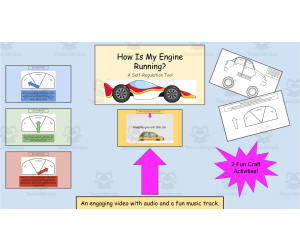
How Is My Engine Running? A Car SEL Lesson On Self-Regulation
Special Resources, Social Emotional Learning (SEL), Preschool, Grade 1, 2, 3, 4, Teacher Tools, Lesson Plans
How Is My Engine Running? A Car SEL Lesson On Self-Regulation This is a fascinating and advanced teaching resource that aims to facilitate teachers in incorporating self-regulation lessons for children. The main target audience is young learners from Kindergarten to Grade 4. The lesson plan utilizes the simple analogy of a car engine and is presented in Google Slides with vibrant and interesting visual aids. Included in the Lesson: Two hands-on craft activities to emphasize the key points through hands-on learning. A revision section to revisit all vital learnings from the module. An incorporated video with audio narration and music to enhance cognitive comprehension skills. The material comes in easy-to-use PDF format. Plus, an image link has been added on PDF which will take you directly to Google Slides. The versatility of this resource allows its use by: public school teachers during class discussions, small focused group studies, or \ even as homework assignments for independent exploration outside of school hours. This extends its usability not just for public school teachers but also homeschoolers looking for innovative curriculum plans at home! \ All these aspects make 'How Is My Engine Running? A Car SEL Lesson On Self-Regulation' an all-encompassing toolset promising educators help teach self-awareness among children – a prerequisite skill needed throughout their lives.
Author Jennifer Moyer Taylor
Tags Self-regulation, Car Analogy, Social-emotional Learning, Interactive Activities, Multimedia
I WONDER - What Is Tidal Energy | Animated Video Lesson
Earth Sciences, Earth and Environmental Sciences, Science, Environmental Science, Grade 3, 4, 5, 6, 7, 8, 9, Lesson Plans, Teacher Tools
Video Introduction An amazing video designed for the students to learn more about STEM. I WONDER - What Is Tidal Energy | Animated Video Lesson Do you like STEM subjects? what is your favorite one? Have you ever tried to plant a seed? If yes, tell us more about it. Or have you ever tried to invent something? If yes, tell us more about it. And how do you think it will help us? Have you ever seen a microorganism under a microscope? What was it? And how it looked like? Mathematics is a marvelous subject. Let' sharpen our brains and solve some equations. Do you like timetable tricks? What is your favorite one? Do you know how to code? Have you ever created an app or a game before? If yes, how was it like? I WONDER - What Is Tidal Energy | Animated Video Lesson The video is perfect for encouraging the researching skills for the students, while learning more about this fantastic topic. I WONDER - What Is Tidal Energy | Animated Video Lesson This friendly designed video is suitable for students at school, homeschooling, and as a group activity. Format Available in MP4 format.
Author Educational Voice
Tags What Is Tidal Energy, What Is Tidal Energy Video, Tidal Energy, Tidal Energy Facts, Tidal Energy Facts For Kids, Tidal Energy Video, Tidal Energy Video For Kids, Energy, Energy Video, Energy Video For Kids