



3,973 products added recently
Page 2 - Physical Education Lesson Plans
Foster investigative skills with research lesson plans that guide students through the process of gathering and analyzing information. These activities promote critical thinking and effective communication. Use them to prepare students for academic success and informed decision-making.

 Show filters


Health 2nd Grade Unit 3: Nutrition and Physical Activity
P.E. & Health, Health, Physical Education, Special Resources, Life Skills, Social Emotional Learning (SEL), Social Skills, Grade 2, Lesson Plans, Teacher Tools, Worksheets & Printables, Worksheets
For 2nd Grade Health there are seven standards that need to be taught. Unit 1 Personal Health Unit 2 Growth and Development Unit 3 Nutrition and Physical Activity Unit 4 Substance Use and Abuse Unit 5 Injury/ Violence Prevention Control and Safety Unit 6 Prevention/Control of Disease Unit 7 Environmental Consumer Health These units can be taught out of order. They are only numbered for your convenience. At the end of each unit, there is an assessment to test students’ understanding. Through using this Health 2nd Grade Unit 3: Nutrition and Physical Activity students will explore and learn to identify: * Healthy foods they should and foods that they should not eat that are unhealthy for their bodies. * Physical activities beneficial to their health and suggestions of which types of activities they can do. * Consequences of being active vs inactive * Students will also learn the importance of eating a healthy balanced diet and the benefits of being physically active at school, at home, and with their friends. This unit meets Common Core Standards for 2nd grade health. A total of 10 pages for this 2nd Grade Health Unit 3 on Nutrition and Physical Activity. At the end of the unit, there is an assessment to check for understanding. There are seven units that cover all the health requirements for second grade. Here are the links to other health units: Health 2nd Grade Unit 1: Personal Health Health 2nd Grade Unit 2: Growth and Development Health 1st Grade Unit 3: Nutrition and Physical Activity Health 2nd Grade Unit 4: Substance Use and Abuse Health 2nd Grade Unit 5: Injury / Violence Prevention and Safety Health 2nd Grade Unit 6: Prevention / Control of Disease Health 2nd Grade Unit 7: Environmental / Consumer Health 2nd grade Coronavirus / Covid-19 Facts
Author K-5 Treasures
Tags Health Unit, Nutrition, Physical Activity, Healthy Food, 2nd Grade Health, Second Grade Health, Physical Health, Eating Healthy, Health Resources, 2nd Grade Health Resources
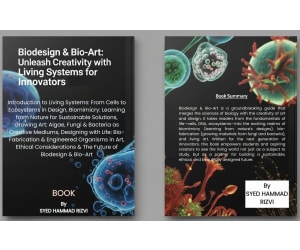
Biodesign & Bio-Art Unleash Creativity with Living Systems for Innovat
Health, P.E. & Health, Mental Health, Physical Education, Basic Science, Science, Biology, Life Sciences, Human Body, Physics, Homeschool Curriculum, Grade 9, 10, 11, 12, Lesson Plans, Teacher Tools, Assessments, Workbooks, Worksheets & Printables, Presentations
Unlock the creative power of biology! “Biodesign & Bio-Art: Unleash Creativity with Living Systems for Innovators” is the ultimate resource for the next generation of biological and creative minds. With this book, students will no longer be passive recipients of knowledge; they will instead take an active part in the process of innovation. Paddle into the world of 80 fascinating chapters where the basics of life, such as cells, DNA, and biotic systems, are first introduced, followed by the fascinating applications of such knowledge through biomimetics, biomaterials, or living art. The students will be able to learn design concepts from nature, materials developed out of fungus or bacteria, genetics, and ethics. Chock-full of smart insights, practical case studies, and visionary project ideas, this volume is more than an educational textbook - it is a springboard that launches young scholars into their future careers in biodesign, synthetic biology, and more. This textbook is suitable and ideal for STEM and STEAM education as it encourages critical thinking, practical application, and an deep appreciation and respect for natural intelligence. Empower young minds with all the knowledge and inspiration needed to create their beautiful and sustainable world. Technical Features: 80 Chapters of core biology and innovative applications. Interdisciplinary Fusion: It seamlessly integrates biology, art, design, and engineering. Future-Focused Skills Biomimicry/Biofabrication/ Genetic Engineering/ Project-Based Learning It encourages project-based learning with algae, fungi, and bacteria, among many others. Appropriate for STEM/STEAM: Aligns with current learning outcomes for critical thinking and creativity. Why Parents & Schools Will Love It: Prepares for the Future: Beyond book memorization, the university will provide knowledge of applicable, interdisciplinary skills essential for the job market in areas such as biotechnology, sustainable design, and ecological engineering. Fosters Critical & Ethical Thinking: It not only describes how to manipulate life, but also goes in-depth on why and whether they should, as it strives to promote ethical thinking. Interests Varied Students: Exquisitely designed for both scientifically inclined and creatively inclined students, highlighting the need for both qualities in order to truly innovate. This is perfect for getting students who would otherwise be uninterested in a systemized subject. Aligned with Modern STEM/STEAM Objectives: It wholly supports education schemes combined with Science, Technology, Engineering, Art, and Mathematics learning and applications. Comprehensive & All-in-One Resource: touches on a vast range of topics—from cell biology to bio-art, making it a helpful textbook or supplement for a variety of lessons and pursuits. Student Audience Primary: High School Students, Grades 10-12 (ages 15-18). The sophistication of material, chapter organization, and conceptual difficulty (such as central dogma, ethics of genetic engineering) are precisely suited to highly advanced high school programs for biology and art. Secondary Level: Honors/AP level grade 9 students and first year college or university-level introductory courses for biology, bio-design, or Arts courses. Audience Niche: Targeting aspiring scientists, artists, designers, and any student looking at STEM/STEAM, environmental science, sustainable designs, biotechnology, conceptual art, and more. Copyright/Terms of Use "This Book is copyrighted by Syed Hammad Rizvi." "You may only use this resource personally, and within one classroom." "You are not permitted to change, distribute, or sell copies of parts or whole of this resource." In other words, "You are not permitted to put it on the internet where it can be downloaded." If you would like to share the resource within your school, you can purchase additional licenses from Teachers Pay Teachers. I appreciate you following these terms of use. This product is proudly brought to you by Syed Hammad Rizvi
Author Creative Book Store
Rating
Tags Biodesign, BioArt, STEMeducation, STEAMlearning, BiologyBook, ScienceArt, Biomimicry, BioFabrication, HomeschoolScience, HighSchoolBiology

Sports Kids Love Gr. 1
P.E. & Health, Physical Education, Grade 1, Teacher Tools, Lesson Plans
Sports Kids Love Gr. 1: A Comprehensive Teaching Resource An inclusive teaching resource, Sports Kids Love Gr. 1 remarkably coalesces physical education and literacy skills into a curriculum explicitly designed for first-grade students. The material's special emphasis on sports offers an engaging way of enhancing the reading and writing competencies of young learners, making it an excellent resource for both traditional school educators and homeschooling parents. Unique Curriculum The lessons cover a wide spectrum of sports such as Hockey, Baseball, Golf, Soccer, Volleyball, Swimming, Gymnastics,Lacrosse, and Running. Agent in developing early-year readers through focus on sight word recognition. Presents physically engaging topics to improve literacy skills. User-friendly Layout & Flexibility in Implementation Methods The user-centric layout ensures convenience with outlined lessons and suggested activities that can either be used for whole-class instruction or individual study groups. The flexibility extends to homework assignments or even one-on-one tutoring sessions providing teachers with ample options based on their preferred teaching strategies. Evaluation Section & Unit Test Besides the main features there is also an evaluation section to monitor student progress assess their understanding areas where they might need extra focus finishing off each unit with a comprehensive test gauging the mastery of concepts by students. Sports Kids Love Gr 1, undoubtedly encourages children towards attaining academic success in not only an interesting manner but also proves essential in driving home importance both physical mental dexterity Aiming to ease teacher's workload it also includes downloadable PDF file providing easy accessibility quick reference boosting productivity reducing time spent hunting materials Discernibly, Sports Kids Love Gr.1 allows educators to creatively reinvent methods of teaching early literacy skills while fostering the belief that learning can indeed be fun. Employing an innovative mix of sports and academics, it promises to lay a solid foundation in reading and writing skills for first-grade students, making their first steps into education exhilaratingly exciting.
Author Classroom Complete Press
Tags PDF

Glucose Spikes & Mindful Eating Charts
P.E. & Health, Health, Mental Health, Physical Education, Sports, Yoga, Mindfulness, Science, Basic Science, Theories, Grade 4, 5, 6, 7, 8, 9, 10, Worksheets & Printables, Workbooks, Worksheets, Word Searches, Writing Prompts, Teacher Tools, Lesson Plans, Quizzes and Tests, Quizzes, Tests
Tired of the post-lunch "afternoon slump" in your classroom? Empower your students to take control of their own energy and focus with this engaging, no-prep Health and Science mini-unit on blood sugar and mindful movement! This comprehensive resource transforms the abstract concept of "energy crashes" into a visible, understandable, and manageable biological process. Through simple line graphs and relatable analogies, students will discover the powerful connection between what they eat, how they move, and how they feel. This isn't just a health lesson; it's a life skill that integrates science, math, and critical thinking. Perfect for 4th, 5th, and 6th-grade science or health classes, this unit uses a cross-curricular approach to boost data literacy (reading line graphs) while teaching foundational biology. Students learn why a short walk after a meal is a "magic trick" for preventing fatigue and brain fog, empowering them to make positive choices that directly impact their academic performance and well-being. WHAT'S INCLUDED (49-Page PDF): PART 1: In-Depth Teacher Guide: Four chapters explaining the core science (The Journey of a Carbohydrate, The Spike and Crash, The Role of Skeletal Muscle, Reading Line Graphs) with real-world case studies. PART 2: Student Workbook with 10 Activities: A complete set of printable or digital worksheets that build from basic concepts to advanced application. Activities include: Anatomy of an Energy Graph Analyzing Sedentary vs. Active Scenarios The "Muscle Sponge" Effect Interpreting Data Tables & Timing Experiments Mindful Observation and Real-World Scenarios Culminating "Be the Health Scientist" Final Project PART 3: Teacher Resources & Visuals: Full Answer Key: A complete, question-by-question answer key for all 10 worksheets. High-Fidelity Visuals: Clear, simple graphs and flowcharts perfect for projection or printing. Teacher Implementation Guide: Tips on pedagogical framing, kinesthetic mapping activities, and vital guidance on inclusion, equity, and adaptability for all students. Keywords: Health and Nutrition, Blood Sugar Lesson, Glucose Spikes, Mindful Eating, Line Graph Worksheets, Data Literacy, Science and Math Integration, STEM, Biology, Afternoon Slump, Energy Crash, 5th Grade Health, 6th Grade Science, Middle School, Printable & Digital, No-Prep, Sub Plans, Case Study, Answer Key Included. Why Parents/Schools Love It: Empowers Students: It teaches children the "why" behind feeling tired or focused, giving them actionable tools (like a 10-minute walk) to manage their own energy and well-being. Boosts Academic Focus: By preventing the post-lunch "energy crash," this lesson directly contributes to improved concentration, mood, and engagement in afternoon classes. Integrates Core Subjects: This is not just a health lesson. It masterfully blends Science (biology), Math (data literacy, graphing), and Reading (case studies) into one seamless, high-impact unit. Promotes a Healthy Mindset: The curriculum focuses on positive, inclusive action (mindful movement) rather than restrictive dieting, fostering a healthy long-term relationship with food and activity. Saves Teachers Time: It’s a complete, "no-prep" unit with a detailed teacher guide, student worksheets, visuals, and a full answer key, making it incredibly easy to implement. Target Student Audience : Based on the content, language, and concepts presented (like abstract reasoning for line graphs), target: Primary Target: 5th Grade (as explicitly mentioned in the document). Secondary Target: 4th Grade (as an introduction to data and health) and 6th Grade (as a foundational or review unit). Broader Target: Middle School Health or General Science Classes looking for an engaging, real-world application of biology and data analysis. Copyright/Terms of Use: This Book was copyrighted by Syed Hammad Rizvi. This resource is for personal and single classroom use only. You may not alter, redistribute, or sell any part of this resource. In other words, you may not put it on the Internet where it could be publicly found and downloaded. If you want to share this resource with colleagues, please purchase additional licenses from Teachsimple. Thank you for respecting these terms of use. This product is happily brought to you by Syed Hammad Rizvi
Author Creative Book Store
Rating
Tags HealthEducation, NutritionEducation, BiologyForKids, STEMEducation, StudentHealth, MetabolicHealth, GlucoseSpikes, AfternoonSlump, StudentWellness, HealthyHabits

Health 1st Grade Unit 1: Personal Health
P.E. & Health, Creative Arts, Art, Health, Physical Education, Social Skills, Special Resources, Life Skills, Social Emotional Learning (SEL), Grade 1, Lesson Plans, Teacher Tools, Worksheets & Printables, Worksheets
For 1st Grade Health there are seven standards that need to be taught. Unit 1 Personal Health Unit 2 Growth and Development Unit 3 Nutrition and Physical Activity Unit 4 Substance Use and Abuse Unit 5 Injury/ Violence Prevention Control and Safety Unit 6 Prevention/Control of Disease Unit 7 Environmental Consumer Health These units can be taught out of order. They are only numbered for your convenience. At the end of each unit, there is an assessment to test students’ understanding. Through using this Health 1st Grade Unit 1: Personal Health students will explore and learn to identify daily healthy habits. Included in this unit: * Understanding what active verses unactive movements and activities. * Being physically active and choosing which activity is healthy vs unhealthy. * Identifying healthy foods in a fun wordsearch. * How to understand your emotions and when to talk to someone to get help. At the end of the unit, there is an assessment to check for understanding. Included in this unit is an assessment with answer key. A total of 10 pages for Health 1st Grade Unit 1: Personal Health. There are seven units that cover all the health requirements for first grade. Here are the links to other health units: Health 1st Grade Unit 1: Personal Health Health 1st Grade Unit 2: Growth and Development Health 1st Grade Unit 3: Nutrition and Physical Activity Health 1st Grade Unit 4: Substance Use and Abuse Health 1st Grade Unit 5: Injury / Violence Prevention and Safety Health 1st Grade Unit 6: Prevention / Control of Disease Health 1st Grade Unit 7: Environmental / Consumer Health You can also teach your students about keeping yourself safe by studying about the Coronavirus, where and when it started and facts that plagued our world with this virus. 1st grade Coronavirus / Covid-19 Facts by Teach Simple This unit meets Common Core Standards.
Author K-5 Treasures
Tags Personal Health, Health Unit , Healthy Habits, Self-care, 1st Grade Health, First Grade Health, Healthy Foods, Healthy Eating, Physical Activity, Personal Development

Health 1st Grade Unit 5: Injury / Violence Prevention and Safety
P.E. & Health, Special Resources, Health, Physical Education, Life Skills, Social Emotional Learning (SEL), Social Skills, Grade 1, Lesson Plans, Teacher Tools, Worksheets, Worksheets & Printables
For 1st Grade Health there are seven standards that need to be taught. Unit 1 Personal Health Unit 2 Growth and Development Unit 3 Nutrition and Physical Activity Unit 4 Substance Use and Abuse Unit 5 Injury/ Violence Prevention Control and Safety Unit 6 Prevention/Control of Disease Unit 7 Environmental Consumer Health These units can be taught out of order. They are only numbered for your convenience. At the end of each unit, there is an assessment to test students’ understanding. Through using this Health 1st Grade Unit 5: Injury / Violence Prevention and Safety students will learn to identify personal information, safety in their environment, trusted adults in their community, and bullying. Included in this unit: * Students will learn how to be safe in their community, household, and community. * Students will learn the importance of knowing their personal information. * Students will learn how to identify trusted adults in their community. * Students will learn when to call 911. * Students will learn about stranger danger. * Students will learn about bullying and who to talk to if this occurs. At the end of the unit, there is an assessment to check for understanding. A total of 14 pages for Health 1st Grade Unit 5: Injury / Violence Prevention and Safety. There are seven units that cover all the health requirements for first grade. Here are the links to other health units: Health 1st Grade Unit 1: Personal Health Health 1st Grade Unit 2: Growth and Development Health 1st Grade Unit 3: Nutrition and Physical Activity Health 1st Grade Unit 4: Substance Use and Abuse Health 1st Grade Unit 5: Injury / Violence Prevention and Safety Health 1st Grade Unit 6: Prevention / Control of Disease Health 1st Grade Unit 7: Environmental / Consumer Health You can also teach your students about keeping yourself safe by studying about the Coronavirus, where and when it started and facts that plagued our world with this virus. 1st grade Coronavirus / Covid-19 Facts by Teach Simple This unit meets Common Core Standards.
Author K-5 Treasures
Tags Health Unit, Injury Prevention, Violence Prevention, Safety, 1st Grade Health, First Grade Health, Healthy Habits, Health Resources, Health, First Grade Resources

Health | 3rd Grade Unit 2: Growth and Development
P.E. & Health, Life Studies, Physical Education, Health, Special Resources, Life Skills, Social Emotional Learning (SEL), Social Skills, Grade 3, Teacher Tools, Lesson Plans, Worksheets & Printables, Worksheets
This 3rd Grade Health Unit focuses on Growth and Development and is essential to help students with their health and wellness. There are seven units in all taught in 3rd grade that focus on health. These units include: Unit 1 that focuses on Personal Health and Wellness Unit 2 that focuses on Growth and Development Unit 3 teaches students about Nutrition and Physical Activity and how to eat right and stay active Unit 4 that helps students with Substance Use and Abuse and how to avoid bad substances Unit 5 that will teach students about Injury/ Violence Prevention Control and Safety Unit 6 that covers what happened during Covid and how to protect themselves while learning about Prevention/Control of Disease Unit 7 discusses our environment and how to help save our planet with Environmental Consumer Health These units all about health can be taught out of order. They are only numbered for your convenience. At the end of each unit, there is an assessment to test students’ understanding. Through using this Health 3rd Grade Unit 2: Growth and Development, students will be able to study and learn about body organs, our body systems, and their emotional and physical features. Included in this 3rd Grade Health Unit are the following: In this unit, students will learn about several different organs in the body including: brain, lungs, heart, liver, kidneys, and the small and large intestines. They will find a worksheet with a blank body and label all these parts after reading about these vital organs. Students will also learn about the many different body systems we have which include: skeletal and nervous systems, circulatory system, digestive system, respiratory system, muscular system, and learn about our skin and hair. They will assemble in order how these systems look in a body as they compile a book. They will also label each system after looking a drawings. They will explore the emotional and physical features of people when they are sad, surprised, happy, etc. Lastly, they will compare their physical features to other classmates and come to understand how our genes are all different. This unit meets Common Core Standards. It is 13 pages of fun engaging activities! At the end of the unit, there is an assessment to check for understanding. There are seven units that cover all the health requirements for 3rd grade. Here are the links to other health units:
Author K-5 Treasures
Rating
Tags Health Unit, Personal Health, Healthy Goals, Unhealthy Choices, Health Activities, Physical Goals, Health Goals, Health And Wellness, 3rd Grade Health, Third Grade Health
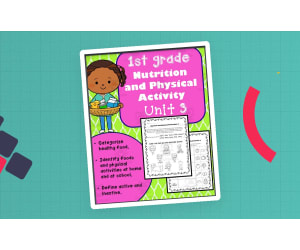
Health 1st Grade Unit 3: Nutrition and Physical Activity
P.E. & Health, Health, Physical Education, Special Resources, Life Skills, Social Emotional Learning (SEL), Social Skills, Grade 1, Lesson Plans, Teacher Tools, Worksheets & Printables, Worksheets
For 1st Grade Health there are seven standards that need to be taught. Unit 1 Personal Health Unit 2 Growth and Development Unit 3 Nutrition and Physical Activity Unit 4 Substance Use and Abuse Unit 5 Injury/ Violence Prevention Control and Safety Unit 6 Prevention/Control of Disease Unit 7 Environmental Consumer Health These units can be taught out of order. They are only numbered for your convenience. At the end of each unit, there is an assessment to test students’ understanding. Through using this Health 1st Grade Unit 3: Nutrition and Physical Activity students will explore and learn to identify: * Students will be able to categorize healthy foods. * Students will be able to identify healthy foods and physical activities to help them stay healthy. * Students will be able to identify active verses inactive and understand the consequences of being active vs inactive At the end of the unit, there is an assessment to check for understanding. A total of 11 pages for Health 1st Grade Unit 3: Nutrition and Physical Activity. There are seven units that cover all the health requirements for first grade. Here are the links to other health units: Health 1st Grade Unit 1: Personal Health Health 1st Grade Unit 2: Growth and Development Health 1st Grade Unit 3: Nutrition and Physical Activity Health 1st Grade Unit 4: Substance Use and Abuse Health 1st Grade Unit 5: Injury / Violence Prevention and Safety Health 1st Grade Unit 6: Prevention / Control of Disease Health 1st Grade Unit 7: Environmental / Consumer Health You can also teach your students about keeping yourself safe by studying about the Coronavirus, where and when it started and facts that plagued our world with this virus. 1st grade Coronavirus / Covid-19 Facts by Teach Simple This unit meets Common Core Standards.
Author K-5 Treasures
Tags Health Unit, Nutrition, Physical Activity, Healthy Foods, Active Vs. Inactive, 1st Grade Health, First Grade Health, Personal Health, Physical Activities, 1st Grade Resources

Health 2nd Grade Unit 5: Injury / Violence Prevention and Safety
P.E. & Health, Health, Physical Education, Special Resources, Life Skills, Social Emotional Learning (SEL), Social Skills, Common Core, Grade 2, Lesson Plans, Teacher Tools, Worksheets & Printables, Worksheets
For 2nd Grade Health there are seven standards that need to be taught. Unit 1 Personal Health Unit 2 Growth and Development Unit 3 Nutrition and Physical Activity Unit 4 Substance Use and Abuse Unit 5 Injury/ Violence Prevention Control and Safety Unit 6 Prevention/Control of Disease Unit 7 Environmental Consumer Health These units can be taught out of order. They are only numbered for your convenience. At the end of each unit, there is an assessment to test students’ understanding. Through using this Health 2nd Grade Unit 5: Injury / Violence Prevention and Safety students will learn to identify personal information, safety in their environment, trusted adults in their community, and how to identify bullying and ways to report it and stop bullying. Students will also learn the following concepts: * Know their address and phone number as they practice writing it and reciting it. * Understand safety in your environment. * Students will be able to identify trusted adults in community. * Students will learn safety procedures in home. * Students will understand what is bullying. At the end of the unit, there is an assessment to check for understanding. A total of 12 pages for this 2nd Grade Health unit on Injury / Violence Prevention and Safety. There are seven units that cover all the health requirements for second grade. Here are the links to other health units: Health 2nd Grade Unit 1: Personal Health Health 2nd Grade Unit 2: Growth and Development Health 1st Grade Unit 3: Nutrition and Physical Activity Health 2nd Grade Unit 4: Substance Use and Abuse Health 2nd Grade Unit 5: Injury / Violence Prevention and Safety Health 2nd Grade Unit 6: Prevention / Control of Disease Health 2nd Grade Unit 7: Environmental / Consumer Health 2nd grade Coronavirus / Covid-19 Facts This unit meets Common Core Standards.
Author K-5 Treasures
Tags Health Unit, Injury, Violence Prevention, Safety, 2nd Grade Health, Second Grade Health, Community Workers, Bully Prevention, Health Activities, 2nd Grade Health Resources
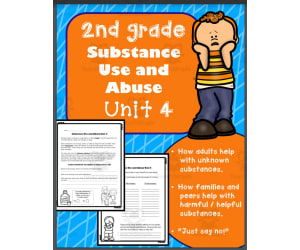
Health 2nd Grade Unit 4: Substance Use and Abuse
P.E. & Health, Health, Physical Education, Special Resources, Life Skills, Social Emotional Learning (SEL), Social Skills, Grade 2, Lesson Plans, Teacher Tools, Worksheets & Printables, Worksheets
For 2nd Grade Health there are seven standards that need to be taught. Unit 1 Personal Health Unit 2 Growth and Development Unit 3 Nutrition and Physical Activity Unit 4 Substance Use and Abuse Unit 5 Injury/ Violence Prevention Control and Safety Unit 6 Prevention/Control of Disease Unit 7 Environmental Consumer Health These units can be taught out of order. They are only numbered for your convenience. At the end of each unit, there is an assessment to test students’ understanding. Through using this Health 2nd Grade Unit 4: Substance Use and Abuse students will learn to identify how adults can help with unknown substances and understand what is a safe and what is not safe or otherwise what is known as an unsafe substance. Students will also learn the following concepts: * How adults help students to understand what is an unknown substance. * Students will learn to “Just say no” to many harmful substances that are not healthy and habit forming. * How families and peers help with harmful / helpful substances. At the end of the unit, there is an assessment to check for understanding. A total of 10 pages for this 2nd Grade Health Unit 4 on Substance Use and Abuse. There are seven units that cover all the health requirements for second grade. Here are the links to other health units: Health 2nd Grade Unit 1: Personal Health Health 2nd Grade Unit 2: Growth and Development Health 1st Grade Unit 3: Nutrition and Physical Activity Health 2nd Grade Unit 4: Substance Use and Abuse Health 2nd Grade Unit 5: Injury / Violence Prevention and Safety Health 2nd Grade Unit 6: Prevention / Control of Disease Health 2nd Grade Unit 7: Environmental / Consumer Health 2nd grade Coronavirus / Covid-19 Facts This unit meets Common Core Standards.
Author K-5 Treasures
Tags Health Unit, Substance Use, Substance Abuse, Safe And Unsafe Substances, 2nd Grade Health, Second Grade Health, Health, Elementary Health, Health Resources, Health For 2nd Grade

Kindergarten Health: Unit 2
P.E. & Health, Life Studies, Health, Physical Education, Special Resources, Life Skills, Social Emotional Learning (SEL), Social Skills, Kindergarten, Lesson Plans, Teacher Tools, Worksheets & Printables, Worksheets
For Kindergarten Health there are seven standards that need to be taught to achieve healthy habits! Unit 1 Personal Health Unit 2 Growth and Development Unit 3 Nutrition and Physical Activity Unit 4 Substance Use and Abuse Unit 5 Injury/ Violence Prevention Control and Safety Unit 6 Prevention/Control of Disease Unit 7 Environmental Consumer Health These units can be taught out of order. They are only numbered for your convenience. Through using this Kindergarten Health: Unit 2, students will explore and learn to identify daily healthy habits. Included in this unit: * Students will be able to understand their five senses. * Students will be able to match their senses to their body parts. * Students will sort out the five senses by cutting, matching, and pasting pictures to the correct sense. * As a group, students will be able to identify different characteristics that make them different from their classmates. Students will learn about the five senses and understand the parts of their body that help identify those five senses. They will also learn about the different characteristics they have compared to their classmates. There is a total of 8 pages included in this Unit 1 for Kindergarten Health. There are seven units that cover all the health requirements for Kindergarten. Here are the links to other health units: Kindergarten Health: Unit 1 Personal Health Kindergarten Health: Unit 2 Growth and Development Kindergarten Health: Unit 3 Nutrition and Physical Activity Kindergarten Health: Unit 4 Substance Use and Abuse Kindergarten Health: Unit 5 Injury / Violence Prevention Control and Safety Kindergarten Health: Unit 6 Prevention / Control of Disease Kindergarten Health: Unit 7 Enviromental Consumer Health You can also teach your students about keeping yourself safe by studying about the Coronavirus, where and when it started and facts that plagued our world with this virus. Kindergarten Health: Covid 19 / Coronavirus Facts This unit meets Common Core Standards.
Author K-5 Treasures
Tags Kindergarten Health, Health, Health Units, Health For Kindergarten, Healthy Foods, Healthy Habits, Healthy Kids, Elementary Health, Physical Activity, Kindergarten Resources

Grade 6 Scheme of Work: BASKETBALL
P.E. & Health, Physical Education, Grade 6, Teacher Tools, Lesson Plans
Introducing the Grade 6 Scheme of Work: BASKETBALL An outstanding teaching resource to provide an enriching physical education experience concentrating on basketball. Designed specifically for Sixth-Grade students, this scheme proffers eight weeks' activities, objectives, and unrivaled guidance to efficiently deliver the principles and various intricacies involved in playing the game. A Comprehensive Teaching Guide This resource is committed not only to what should be taught but also focuses deeply on how it can be imparted effectively. Every week is dedicated to a unique learning aim with relevant objectives, thus ensuring that the lesson plans are goal-oriented and provide maximum benefits. Skill Development: Specifies key activities for efficient class planning alongside essential resources that need seamless implementation. Vocabulary: Ensures linguistic support by providing necessary basketball terminology. Evaluation Methods: Contains organic assessment techniques integrated seamlessly within the learning process. Besides classroom instructions, critical insights regarding potential homework assignments and useful discussion questions are part of this comprehensive guide. This aids in reinforcing classroom teachings while simultaneously supporting comprehension checks or thought-provoking discussions among students. Your Flexible Companion for PE Lessons This precise guide isn't just confined to classrooms; it equally thrives during small-group setups or one-to-one teaching sessions with trivial personalization required. It's versatile - could be easily modified according to different grades due to its lucid structure & thoroughly scrutinized content. The Ultimate Learning Resource For Students And Teachers Alike In essence, Grade 6 Scheme of Work: BASKETBALL is a complete roadmap towards the proficiency of playing basketball. It is also conveniently ready-for-print, making life simpler for busy educators. Potential for Adapting to Other Sports Importantly enough, while initially drafted focusing on basketball, overlapping strategy details could potentially inspire creative adaptations to other sport types as well. In conclusion, with the Grade 6 Scheme of Work: BASKETBALL at your disposal; you are not just teaching but facilitating transformative learning experiences.
Author The PE Tutor
Tags Basketball Education, Teaching Resource, Physical Education, Learning Objectives, Lesson Plans

BADMINTON (Grade 9) - SCHEME OF WORK
P.E. & Health, Physical Education, Grade 9, Teacher Tools, Lesson Plans
BADMINTON (Grade 9) - SCHEME OF WORK is a resource that includes the lesson plans for 6 weeks for Physical Education of 9 graders. Ready-to-go plans for 6 weeks!
Author The PE Tutor
Tags Grade 9 PE, Scheme Of Work PE , Badminton , Grade 9 PE Lesson Plans

Winter Sports Gr. 2
P.E. & Health, Physical Education, Grade 2, Teacher Tools, Lesson Plans
Winter Sports Gr. 2 Step into the exciting world of winter sports with this comprehensive and engaging Grade 2 lesson unit. Winter Sports Gr. 2 is designed around popular winter activities such as: Bobsled Hockey Curling Luge Cross Country Skiing, Downhill Skiing, Snowmobiling Skating. The daily anticipation of discovering another game brings joy to education as students immerse themselves in diverse sporting activities. The lesson plans come equipped with suggested strategies that offer an effective teaching guide for each sport-themed topic of study. Beginning the lessons with brainstorming sessions sets up every chapter on a lively note; stimulating creativity and fostering group involvement. The inclusion of new vocabulary studies each day enhances language art skills while keeping content fresh and intriguing for learners. The curriculum also includes spelling activities aligned to each day's chosen winter sport; fortifying your pupils linguistic proficiency systematically over time. In addition to these elements are daily tasks assigned from both an activity book and writing book included within this resourceful kit which deepens comprehension while amplifying practicum aspects of learning modules. Beyond Classroom- Consider extending the fascination beyond classroom hours by leveraging the homework pages provided in Winter Sports Gr. 2 unit. This ensures that learning continues at home; reinforcing concepts taught during school hours for improved understanding and retention. Paragraph highlighted-" To cap off each chapter tastefully is accompanying crossword puzzles and word searches themed along specific sports enhancing critical thinking capacity yet maintaining thematic consistency. " All files come grouped under one easily manageable product file downloadable as PDF format ensuring ease-of-use regardless if being used by traditional classrooms or homeschoolers alike. Winter Sports Gr .2 speaks directly to Physical Education & Health curricula making it a dependable choice when seeking robust supplemental educational tools under this category curated especially for second graders.
Author Classroom Complete Press
Tags Winter, Sports, Language Arts, Vocabulary, Writing

Health | 3rd Grade Unit 4: Substance Use and Abuse
P.E. & Health, Life Studies, Physical Education, Health, Life Skills, Special Resources, Social Skills, Grade 3, Teacher Tools, Lesson Plans, Worksheets & Printables, Worksheets
This 3rd Grade Health Unit focuses on Substance Use and Abuse and is essential to help students with their health and wellness. There are seven units in all taught in 3rd grade that focus on health. These units include: Unit 1 that focuses on Personal Health and Wellness Unit 2 that focuses on Growth and Development Unit 3 teaches students about Nutrition and Physical Activity and how to eat right and stay active Unit 4 that helps students with Substance Use and Abuse and how to avoid bad substances Unit 5 that will teach students about Injury/ Violence Prevention Control and Safety Unit 6 that covers what happened during Covid and how to protect themselves while learning about Prevention/Control of Disease Unit 7 discusses our environment and how to help save our planet with Environmental Consumer Health These units can be taught out of order. They are only numbered for your convenience. At the end of each unit, there is an assessment to test students’ understanding. Through using this 3rd Grade Health Unit 4: Substance Use and Abuse, students will explore and learn to identify daily healthy habits. Included in this 3rd Grade Health Unit are the following: Students will learn and discuss substances that are legal and illegal such as over the counter drugs vs. drugs that are harmful. There is information on smoking, drugs, and drinking alcohol. Students will come to understand the importance of avoiding these substances and discuss their answers with their classmates. . Understanding labels on medication is an important skill for students. They will learn how to read these labels on over-the-counter medications and discuss the information learned and complete questions pertaining to this information. Also included is an assessment to check for understanding. This unit meets Common Core Standards. It is 9 pages of fun engaging activities! There are seven units that cover all the health requirements for 3rd grade. Go to K-5 Treasures to check out the other 3rd Grade Health Units to help students complete the entire Health Standards for the year! This unit meets Common Core Standards.
Author K-5 Treasures
Rating
Tags Health Unit, Personal Health, Healthy Goals, Unhealthy Choices, Health Activities, Physical Goals, Health Goals, Health And Wellness, 3rd Grade Health, Third Grade Health

Hiking Reading Comprehension Passage - Cored Ed Encyclopedia
ELA, Reading Comprehension, Reading, Pre-Reading, Language Development, History, Social Studies, Geography, P.E. & Health, Physical Education, Grade 2, 3, 4, 5, Worksheets & Printables, Worksheets, Teacher Tools, Centers, Activities, Writing Prompts, Assessments, Quizzes and Tests, Quizzes, Lesson Plans
This hiking reading comprehension with lesson plan includes: Visualization (on the front cover) Start your lesson by taking a minute to think and share something about the topic. Read the script aloud (slowly), perhaps prepare some music or sound effects. Student close their eyes and let their imaginations wander. Students open their eyes, read the question aloud and give them a few minutes to complete. Ask a few students to share or keep answers until the end to compare with what they learn in the passage. Quick pause—thousands of Cored Education products are included with your TeachSimple membership. Download links and encyclopedia index available here. Pre-Reading Trivia Students will write down one thing they already know about the subject and then read five more facts and discuss. These facts are fun, and the students will enjoy learning about the subject before reading more. Give 1 minute for students to write what they already know (no pressure—best guess is fine). Read the five facts together. After each fact, do ask a student for their opinion, was it surprising? Set a purpose by asking students to highlight/underline one fact they want to learn more about during the reading. Reading Passage The text is a high-interest reading passage with set paragraphs, roughly three to four paragraphs long. It contains a variety of themes about the topic, anywhere from history to technology. The passage is between 250 and 350 words in length. First, ask students to look at the headings and see what they’ll learn about today. What do they know about the topic/heading? First read options: Teacher read-aloud (best for support). Partner reading (paragraph by paragraph). While reading, students underline important details, and vocabulary words they think may come up in the questions section. Mixed Questions The first question page contains four multiple-choice questions, each with a choice of four answers, and three written response questions that require a sentence or two from the student. Students complete the mcqs first independently, then review quickly as a class. For the 3 written responses, try to get students giving the answer with some form of evidence: “I think ___ because the text says ___.” If students get stuck, send them back to check the passage. Vocabulary Questions Practice seven key words from the text in this section across two activities. First section is scrambled words where students will unscramble three words given a clue for each. The second section is a word to meaning matching activity. Before starting, have some students read out words they underlined in the passage. Ask students to say the word and read aloud the sentence(s) around each word. Ask students to do scrambled words and the matching exercise in pairs then go through answers as a class. For the scrambled spelling task, get four pairs to come up to the board and write the words for extra practice with the other student reading out the clue. For the matching task, prompt students to give full sentences: “I matched ___ with ___ because ___.” Creative Writing In this question, the student will be required to write a five to eight sentence paragraph on a question related to the topic. Before starting, ask students write down 3 key ideas they are going to include in their piece. Ask students for ideas to share around the class to help those struggling. Pro writing expectations: 5–8 sentences At least 2 facts or details from the passage At least 2 vocabulary words from the previous page Students read their paragraphs while classmates listen for facts and vocabulary words. Extension Activities This page is optional for fast finishers or to take home. There are several activities, each one requiring a different skill. Do some, do none, do all, completely optional - but you will feel reassured knowing every possibility is planned for. Includes summary writting question and additional facts. Answer Key There are answers for the multiple-choice questions, written response questions have sample answers, vocabulary answers and if there is a summary question then a sample summary will be provided as well. Lesson Plan Included Customized lesson plan for this lesson is included. Lesson Snapshot Title: Hiking Genre: Nonfiction (informational text) Subject: Health / Physical Education Primary Topic: What hiking is, its history, and staying safe Estimated Guided Reading Level (A–Z): Q What This Lesson Teaches Best Defines hiking as “more than a stroll” and describes what hiking feels like on a trail or footpath. Explains how walking shifted from serious reasons (like religious pilgrimages) to walking for pleasure and adventure. Describes how trails needed signs, maps, and protection as hiking grew, including work to build and maintain the Appalachian Trail. Teaches basic hiking safety and preparedness (boots/shoes, backpack supplies, and the “Ten Essentials” such as a compass and first-aid kit). Names risks hikers can face when weather shifts or routes disappear, including dehydration and hypothermia. Learning Goals Students will describe what hiking is using details from the passage. Students will explain why people walked long ago and how walking for pleasure grew later. Students will identify why trails needed signs, maps, and protection as more people hiked. Students will describe what the passage says about the Appalachian Trail (where it stretches and how long it is). Students will list items hikers pack to “stay alert” and connect them to safety. Students will name risks mentioned in the text that can affect hikers’ bodies. Key Vocabulary From the Text pilgrimages — long journeys taken for religious reasons. destinations — places people want to go or visit. organizations — groups that work together for a purpose. dehydration — not enough water in the body. hypothermia — when the body gets too cold. FULL CATALOG OF DOWNLOAD LINKS AND ENCYCLOPEDIA INDEX HERE
Author Cored Education
Rating
Tags Vocabulary, Reading Comprehension, Reading Passages, Lesson Plans, Ela Lesson Plans, Reading Comprehension Lesson Plans, Pre-reading, Health Lesson Plans, Social Studies Lesson Plans, P.e.

Adaptive Sensory-Friendly Fitness Routines
Science, Life Sciences, Human Body, P.E. & Health, Health, Physical Education, Sports, Yoga, Mental Health, Mindfulness, Homeschool Curriculum, Homeschool Templates, Grade 9, 10, 11, 12, Teacher Tools, Quizzes and Tests, Quizzes, Tests, Worksheets & Printables, Assessments, Workbooks, Worksheets, Word Searches, Lesson Plans
Transform your approach to fitness and somatic care for adults with profound physical and neurological barriers. This comprehensive, 40-page digital curriculum, "Adaptive Sensory-Friendly Fitness Routines," is a groundbreaking resource designed for special education teachers, transition specialists, occupational therapists (OT), physical therapists (PT), and direct support professionals. Frustrated with traditional fitness models that are inaccessible or dysregulating? This evidence-based program is built on the Low-Arousal Adaptive Somatic Framework (LAASF) , which shifts the focus from impossible standards to dignity, comfort, and neurological safety. It redefines "fitness" for individuals with conditions such as severe cerebral palsy, traumatic brain injury (TBI), advanced multiple sclerosis, cortical visual impairment (CVI), and profound neurodevelopmental differences. This is more than just a set of exercises; it's a complete pedagogical system. WHAT'S INCLUDED: Part 1: In-Depth Clinical Guide (Pages 1-12): A professional deep dive into the neurobiology of sensory-friendly movement. Understand the science behind sensory gating, proprioceptive deficits, CVI adaptations, and low-stimulation design. Features two detailed case studies. Part 2: The Data-Driven Workbook (Pages 13-28): Ten meticulously designed, printable worksheets to guide your practice and document progress. These logs are the core of the program and include: Environmental Sensory Baseline (Pre-Workout Assessment) Somatic Readiness & Pain Scale Range of Motion (ROM) Micro-Movements Log Breath Control and Pacing Tracker Isometric Engagement & Release Log Assisted Mobility & Proprioceptive Input Logs Post-Exertion Decompression & Transition Protocols Weekly Neurological Fatigue Mapping Part 3: Visuals & Teacher Resources (Pages 29-40): Everything you need for successful implementation. Clear visual diagrams explaining the sensory ecosystem. A "Neurological Barrier Adaptation Matrix" for specific student profiles. A comprehensive Answer Key and Assessment for facilitator training. A sample "Exemplar Key" showing how to fill out the logs for a hypothetical case. A step-by-step Teacher Implementation Guide. This curriculum champions an age-appropriate, non-infantilizing approach, using high-contrast, minimalist visuals to reduce cognitive load and promote autonomy. Empower your students and clients to engage with their bodies in a safe, consensual, and meaningful way. Perfect for: Special Education Transition Programs (18+) Occupational Therapy & Physical Therapy Sessions Adult Day Programs & Supported Living Facilities Adapted Physical Education (APE) Caregiver and Paraprofessional Training Download today and unlock a world of intentional, accessible movement for the individuals you support. Keywords: Adaptive PE, Special Education, Life Skills, Adult Day Program, Transition Program, Occupational Therapy, Physical Therapy, Cerebral Palsy, TBI, CVI, Non-Verbal, Sensory-Friendly, Low Stimulation, Visual Supports, Workout Log, Data Tracking, IEP Goals, Somatic, Neurodiversity. Why Parents/Schools Love It: Dignity-Centered & Age-Appropriate: It rejects the infantilizing cartoons and primary colors common in special education, treating adults with the respect they deserve through mature, minimalist design. Inclusively Designed for the Most Profound Needs: This isn't a one-size-fits-all program. It's one of the few resources specifically engineered for individuals with the most significant physical, neurological, and sensory barriers, providing a path to engagement where none existed before. Data-Driven and Goal-Oriented: The 10-part workbook provides a clear, professional way to track subtle but critical progress—from breathing patterns to neurological fatigue. This is invaluable for IEPs, therapy goals, and demonstrating program efficacy. Empowers Staff & Ensures Safety: The comprehensive guide and implementation keys act as a powerful training tool, equipping staff with the knowledge to create a neurologically safe environment, prevent sensory overload, and facilitate movement consensually and effectively. Target Audience : This PDF is highly specialized. target the professionals and caregivers who will be implementing the program, not the end-users themselves. Primary Target Audience: Special Education Teachers (specifically those working in high school transition programs, ages 18-22). Occupational Therapists (OTs) and Physical Therapists (PTs) who work with adults with severe disabilities. Adapted Physical Education (APE) Teachers . Directors and Lead Staff at adult day programs, group homes, and supported living facilities. Case Managers and Transition Specialists for adults with disabilities. Parents and Guardians who are actively involved in directing the care of their adult children with profound needs. The content is written at a very high clinical level, so it reflect that professionalism. This is a tool for trained professionals to enhance their practice. Copyright/Terms of Use: This Book was copyrighted by Syed Hammad Rizvi. This resource is for personal and single classroom use only. You may not alter, redistribute, or sell any part of this resource. In other words, you may not put it on the Internet where it could be publicly found and downloaded. If you want to share this resource with colleagues, please purchase additional licenses from Teachsimple. Thank you for respecting these terms of use. This product is happily brought to you by Syed Hammad Rizvi
Author Creative Book Store
Rating
Tags AdaptiveFitness, SensoryFriendly, LowStimulation, SomaticCare, VisualSupports, SensoryRegulation, ProprioceptiveInput, AdaptedWorkout, SomaticAwareness, NeurologicalSupport
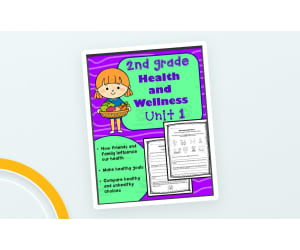
2nd Grade Health – Unit 1 Personal Health
P.E. & Health, Health, Physical Education, Common Core, Special Resources, Life Skills, Social Emotional Learning (SEL), Social Skills, Grade 2, Lesson Plans, Teacher Tools, Worksheets & Printables, Worksheets
For 2nd Grade Health there are seven standards that need to be taught. Unit 1 Personal Health Unit 2 Growth and Development Unit 3 Nutrition and Physical Activity Unit 4 Substance Use and Abuse Unit 5 Injury/ Violence Prevention Control and Safety Unit 6 Prevention/Control of Disease Unit 7 Environmental Consumer Health These units can be taught out of order. They are only numbered for your convenience. At the end of each unit, there is an assessment to test students’ understanding. Through using this Health 2nd Grade Unit 1: Personal Health students will explore and learn to identify daily healthy habits by knowing what foods are best to eat and how to set goals for physical activity. Habits included are: * Students will learn about healthy and unhealthy activities. These activities will include what is the difference between physical activities and sedimentary activities. * Students will learn how to make healthy choices that will benefit their nutritional goals. * They will learn about goals. Along with knowing the difference between long-term and short-term goals. And how to set both. * Students will come to understand their emotions and how to they can express those emotions as they learn to deal with their feelings. * Lastly, students will learn when and who they can rely on and who to talk to an adult about how they are feeling and how to get help when needed. At the end of the unit, there is an assessment to check for understanding. A total of 11 pages for this 2nd Grade Health Unit 1 on Personal Health There are seven units that cover all the health requirements for second grade. Here are the links to other health units: Health 2nd Grade Unit 1: Personal Health Health 2nd Grade Unit 2: Growth and Development Health 1st Grade Unit 3: Nutrition and Physical Activity Health 2nd Grade Unit 4: Substance Use and Abuse Health 2nd Grade Unit 5: Injury / Violence Prevention and Safety Health 2nd Grade Unit 6: Prevention / Control of Disease Health 2nd Grade Unit 7: Environmental / Consumer Health 2nd grade Coronavirus / Covid-19 Facts This unit meets Common Core Standards.
Author K-5 Treasures
Rating
Tags Health Unit, Personal Health, Healthy Goals, Unhealthy Choices, Health Activities, Physical Goals, Health Goals, Health And Wellness, 2nd Grade Health, Second Grade Health
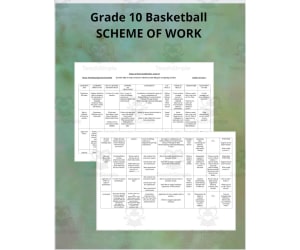
Scheme of Work 7 weeks: BASKETBALL Grade 10
P.E. & Health, Physical Education, Grade 10, Teacher Tools, Lesson Plans
SCHEME OF WORK is a resource that includes the lesson plans for 7 weeks for Physical Education of BASKETBALL FOR 10th graders. Ready-to-go plans for 7 weeks!
Author The PE Tutor
Tags Basketball, Grade 10 PE, Scheme Of Work , Physical Education Lesson Plans, Scheme Of Work For PE

Grade 10/11 Athletics SCHEME OF WORK
P.E. & Health, Physical Education, Grade 10, Teacher Tools, Lesson Plans
Grade 10/11 Athletics SCHEME OF WORK is a resource that includes the lesson plans for 6 weeks for Physical Education of 10/11 graders. Ready-to-go plans for 6 weeks!
Author The PE Tutor
Tags Grade 10 PE, Grade 11 PE, PE 10/11 Athletics, Scheme Of Work For 10th Grade, Scheme Of Work For 11th Grade, 6 Weeks Lesson Plans PE, 11athletics
Task Initiation & Micro-Step Breakdown
Life Studies, Career, Leadership, Physical Education, P.E. & Health, Mental Health, Mindfulness, Resources for Teachers, Science, Classroom Management, Grade 6, 7, 8, 9, 10, 11, 12, Teacher Tools, Worksheets & Printables, Workbooks, Worksheets, Word Searches, Assessments, Lesson Plans, Quizzes and Tests, Quizzes, Tests
Are your students or kids stuck with a blank page due to a large assignment? Do they know how to do the assignment but can’t figure out the best way to jump into it? This is not because of laziness—this is an example of a breakdown in Task Initiation, which is one of the key executive functions of the brain. Support your students to move from being passive and procrastinating to becoming active creators of their success with our comprehensive neuroscience-based curriculum. This 42-page instructional manual and workbook supports creating a step-by-step strategy to overcome your student's brain's resistance to getting started with completing tasks. By applying the principles of cognitive offloading and granular sequencing, this manual and workbook will provide you with the ultimate guide to how to accomplish your goals. This resource is designed for teachers, parents, school counselors, and executive function coaches to support helping to create lifelong habits, build confidence in school, and decrease the anxiety and stress associated with homework. Contents of this 42-page document. The Neuroscience Guide (Part 1) (The “Why”) The neuroscience of procrastination. Easy-to-understand explanations for the science of procrastination (brain science) include energy, limbic friction, activation energy, time blindness, etc. Real-life examples of the science from students and short quizzes to test knowledge and understanding. The Student Workbook (Part 2) (The “How”) 10 in-depth printed worksheets provide a complete scaffolded framework for developing executive function. Actionable Steps: Deconstruct larger projects into small tasks, identify and eliminate friction, create a five-minute launchpad, master micro steps, create an executive execution ladder, eliminate distractions, and create empathy for your future self. Capstone Project: A master blueprint for a major project using taught strategies. Part Three: Visual & Teacher/Parent Resources (The “Tools”) Three Strong Visual Supports: Printables and classroom appropriate anchor charts will give students' cognitive relief through visual representation of how to use their brain there are three charts to choose from (The Anatomy of Task Paralysis, The Micro-Step Bridge, The Task Activation Loop). Complete Answer Key: An answer key for all ten student worksheets so that teachers can provide students with a comprehensive answer key. Teacher Implementation Guide: A detailed scripted guide on how to introduce these concepts and protocols such as the “Body Double” technique. Differentiation for Neurodivergent Learners: A separate section for specific, powerful strategies for students with ADHD, ASD, and Dyslexia. Not only is this a study skills printable, but it is a powerful cognitive resource that helps students understand themselves so that they may use the resources available to them to work more efficiently with their brain, rather than against it. Keywords: Executive Functioning, Study Skills, Procrastination, Task Initiation, ADHD Support, Neurodiversity, SEL, Middle School, High School, Printable Workbook, Digital Download, Homework Help, Time Management, Metacognition, Growth Mindset, Resources for Teachers, Resources for School Counselors, Parent Guide. What Makes It Busy and Maternal/School Parent-Friendly : Based on Neuroscience (not-created based off "Shame"): It regards procrastination as a normal neurological event, not an individual's defect nor character flaw. This removes guilt associated with procrastination by providing students with a "hacker" mindset to achieve the best outcome for their situation based on the wiring of their brains. Has Actionable, Step-By-Step Tools: Instead of vague and subjective statements like “just break it down,” this curriculum focuses on rigorous, rigorous sequencing (providing valuable resource worksheets/checklists) and concrete ways that a student can apply the information immediately. Targets Neurodivergent Learners: The section on differentiation for ADHD, ASD and Dyslexia students is a must-have addition to any inclusive classroom and will meet needs of all parents with children needing specific support; therefore, it is an extremely "valuable" and "highly-valuable" resource. Develops Lifelong Skills (beyond a one-time project): In addition to a single project, skills presented include metacognition, self-regulation, and planning—all important life-skills needed to continue and succeed throughout high school, college and after. The primary target audience is middle school students (6th-8th grade). The multiple case studies included (6th, 8th grade), the reorganization of the prefrontal cortex and task characteristics align directly with this group. The second target audience is upper elementary (4th-5th Grade) and high school (9th-12th Grade). As stated in the "Visuals & Teacher Keys" section: "(Grade 4-8)". The concepts provided are foundational and lend themselves readily to alteration, both upwards and downwards. High school students with executive functioning issues, especially those diagnosed with ADHD, would see tremendous benefit from this resource. Copyright Notice: This book was copyrighted by Syed Hammad Rizvi. This resource is available for personal use in a single-classroom setting only and cannot be changed (modifications), No part of this book can be shared, sold, or posted on the Internet to be found or downloaded by the public. Please note that if you wish to share this resource with others (teachers), you must buy additional licenses (a fee) from Teachsimple. Thank you for your cooperation in following these terms of usage. This product has been brought to you with pride by Syed Hammad Rizvi.
Author Creative Book Store
Rating
Tags Procrastination, Motivation, StudySkills, TimeManagement, Organization, Neuroscience, ADHD, GrowthMindset, ExecutiveFunctioning, TaskInitiation
No-Prep Substitute Teacher P.E. Pack – Professional Edition
P.E. & Health, Health, Mental Health, Mindfulness, Physical Education, Sports, Yoga, Life Studies, Coaching, Career, Grade 1, 2, 3, 4, 5, 10, 11, 12, Activities, Games, Projects, Teacher Tools, Charts, Assessments, Diagrams, Lesson Plans, Presentations, Graphic Organizers
Unlock the Ultimate No-Prep Substitute Teacher P.E. Pack – Professional Edition – Your Complete 46-Page Lifesaver for Emergency PE Lessons! Created especially for substitute teachers and school administrators, this instant-download digital PDF is your complete solution for no-equipment, high-energy PE lessons in any gym, PE classroom, or outdoor space! From the Substitute Survival Guide and Universal Warm-Up Protocol to Classic Tag Varieties, Relay Races for Large Groups, Simon Says Fitness Edition, Indoor Desk-Side Challenges, Rock-Paper-Scissors Tournaments, Cooperative Team Games, Red Light Green Light Remixes, and a complete Discipline & Behavior Cheat Sheet – it’s all included! Ideal for elementary PE sub plans, rainy-day indoor activities, or last-minute coverage, this pack will keep 20 to 100+ students engaged, safe, and moving while developing teamwork, focus, and sportsmanship. No printing needed, no equipment required – just open, read, and play! Perfect for K-8 physical education teachers in search of professional resources that will make you the hero sub every school needs. Instant access – chaos to confident, active learning in an instant! Why Parents/Schools Love It: Zero Prep, Maximum Impact: Subs walk in and start instantly – no prep work needed. Safety First & Inclusive: Built-in safety bubbles, freeze signals, cool-down zones, and adaptations for all abilities ensure every child is safe, active, and included. High Engagement, Low Chaos: Proven games + attention getters + behavior cheat sheet transform high-energy kids into focused, cooperative learners – school administrators rave about the calm transitions back into class. Standards-Aligned & Professional: Motor skills, teamwork, mindfulness – all while leaving detailed notes for the regular teacher. Versatile for Any Day: Indoors/outdoors, rain or shine – parents appreciate knowing their kids stay happy and healthy even when a substitute is needed! Target Student Classes : This content appears to be best suited for elementary- to early middle-school-aged students, specifically in the Grade K-8 range, with the best fit in the K-6 range. Primary focus: K-5 (Blob Tag, Hospital Tag, Simon Says Fitness, Remixes of Red Light/Green Light, Desk-Intervals, Imaginative Locomotor themes specifically mentioned as "primary" focus, K-3). Adaptable extensions: 4-8 (World Champ RPS, Strategic Relays, Human Knot, Competitive Cheering - these work well in the middle school setting). Not suited for high school students - no sports skills, no athletics, focus on fun, inclusive, low-cost, low-tech movement and classroom management techniques. Large group-friendly - 20 to 100+ students, gym or classroom setting. Copyright/Terms of Use: This Book was copyrighted by Syed Hammad Rizvi. This resource is for personal and single classroom use only. You cannot modify, redistribute, and sell this resource. In other words, do not place this resource on the Internet where it can be publicly found and downloaded. If you want to share this resource with your colleagues, please purchase the license from Teachsimple. Thanks for respecting the Terms of Use. This product is happily brought to you by Syed Hammad Rizvi
Author Creative Book Store
Rating
Tags SubstituteTeacher, NoPrepPE, PEGames, ElementaryPE, SubPlans, SubstitutePE, PhysicalEducation, NoPrepActivities, SubstituteTeacherPEPack, NoPrepSubstituteTeacher
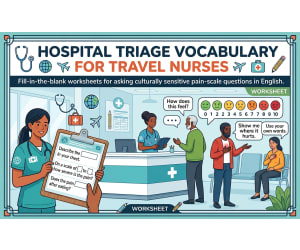
Hospital Triage Vocabulary for Travel Nurses
P.E. & Health, Health, Mental Health, Physical Education, Mindfulness, Research, Resources for Teachers, Classroom Management, Community Building, Science, Homeschool Curriculum, Homeschool Templates, Grade 9, 10, 11, 12, Teacher Tools, Lesson Plans, Quizzes and Tests, Quizzes, Tests, Worksheets & Printables, Workbooks, Worksheets, Word Searches, Assessments
Transform your patient communication and elevate your nursing practice with the ultimate guide to culturally sensitive pain assessment. Are you an ESL travel nurse or a nursing educator seeking to bridge the communication gap in a multicultural healthcare setting? This comprehensive 43-page workbook is meticulously designed to equip international nurses with the nuanced English vocabulary and empathetic communication strategies needed for accurate and compassionate patient triage. Move beyond the limitations of the standard "0-to-10" pain scale. This resource delves into the principles of ethnolinguistics and clinical anthropology, teaching you how to navigate cultural differences in pain expression—from stoic patients who minimize their suffering to expressive patients who use vivid metaphors. Through targeted fill-in-the-blank exercises, real-world case studies, and advanced role-play scenarios, you will master the art of building patient trust and ensuring better health outcomes. What's Inside This 43-Page Digital PDF Resource: In-Depth Theoretical Foundation: Understand the linguistics of pain, cultural variations (Stoic vs. Expressive), and the importance of mitigation and functional anchoring. 10 Comprehensive Student Worksheets: Covering topics like sensory adjectives, addressing stoicism, functional pain assessment, traditional remedies, somatic expressions of pain, and pediatric/geriatric considerations. Real-World Case Studies & Triage Scenarios: Follow nurses like Mariya, Diego, and Fatima as they navigate complex patient interactions in diverse settings. Clinical Visual Aids: Includes a Cultural Pain Expressions Framework mind map, a Linguistic Mapping of the 0-10 Scale chart, and a Triage Interview Navigation Flowchart to anchor learning. Complete Teacher/Instructor Resources: Full Answer Keys for all worksheets. A Thematic Grading Guide for deeper assessment. A Teacher Implementation Guide with pedagogical foundations (CLIL). Advanced Role-Play Mechanics with detailed scenarios for "Nurse," "Patient," and "Observer" roles, complete with checklists and debriefing questions. Who is This For? ESL (English as a Second Language) Nurses & Nursing Students Travel Nurses working in diverse cultural environments Nursing Schools & Continuing Education Programs Clinical Educators & Medical English (ESP) Instructors Healthcare institutions focused on improving cultural competency and patient-centered care. Download today and gain the confidence to provide safe, equitable, and compassionate care, regardless of the cultural borders you cross. Keywords: ESL Nurse, Travel Nurse, Cultural Competence, Pain Assessment, Medical English, Nursing Worksheets, Patient Communication, Cultural Sensitivity, Triage Vocabulary, Fill-in-the-blank, Nursing Scenarios, Role-Play, ESP, CLIL, Medical Terminology, Patient-Centered Care, Nursing Education. Why Nursing Educators & Institutions Love It: Comprehensive & Turnkey Solution: This isn't just a worksheet; it's a complete, self-contained educational module with theory, practice, visual aids, answer keys, and a full instructor's guide for implementation. Promotes Real-World Application: The use of realistic case studies, complex dialogue scenarios, and detailed role-play exercises ensures that learners can immediately apply these linguistic skills in a clinical setting. Fosters Critical Soft Skills: It goes beyond simple medical terminology to teach the crucial soft skills of empathy, cultural humility, and adaptive communication, which are essential for modern patient-centered care. Improves Patient Safety & Outcomes: By equipping nurses to perform more accurate assessments, this resource directly contributes to better diagnoses, more appropriate interventions, and a reduction in medical errors stemming from miscommunication. Designed for Adult Learners: The content respects the existing clinical expertise of professional nurses, focusing specifically on bridging the linguistic and cultural gaps they face. Target Audience (Classes/Students) : Based on the highly specific and advanced content, This is a professional development resource for a niche audience. Primary target learners are: ESL (English as a Second Language) Nursing Professionals: Specifically, registered nurses or advanced practice nurses who are not native English speakers and are working, or plan to work, in an English-speaking country (like the US, UK, Canada, Australia). Travel Nurses: This group is explicitly mentioned. They move frequently between different hospitals, regions, and patient populations, making cultural adaptability a critical skill. Students in Medical English / English for Specific Purposes (ESP) Programs: This is a perfect resource for instructors teaching English to healthcare professionals. Continuing Education & Professional Development for Nurses: Hospitals and healthcare systems can use this for in-house training to improve their staff's cultural competency and patient satisfaction scores. University Nursing Programs: This could be used as a supplementary module in university courses focused on transcultural nursing, patient communication, or clinical assessment. Copyright/Terms of Use: This Book was copyrighted by Syed Hammad Rizvi. This resource is for personal and single classroom use only. You may not alter, redistribute, or sell any part of this resource. In other words, you may not put it on the Internet where it could be publicly found and downloaded. If you want to share this resource with colleagues, please purchase additional licenses from Teachsimple. Thank you for respecting these terms of use. This product is happily brought to you by Syed Hammad Rizvi
Author Creative Book Store
Rating
Tags ESLNurse, TravelNurse, CulturalCompetence, PainAssessment, MedicalEnglish, TransculturalNursing, TriageNurse, NursingVocabulary, PatientCommunication, InternationalNurse

Kindergarten Health: Unit 7
P.E. & Health, Life Studies, Physical Education, Health, Special Resources, Life Skills, Social Emotional Learning (SEL), Social Skills, Kindergarten, Teacher Tools, Lesson Plans, Worksheets & Printables, Worksheets
For Kindergarten Health there are seven standards that need to be taught to achieve healthy habits! Unit 1 Personal Health Unit 2 Growth and Development Unit 3 Nutrition and Physical Activity Unit 4 Substance Use and Abuse Unit 5 Injury/ Violence Prevention Control and Safety Unit 6 Prevention/Control of Disease Unit 7 Environmental Consumer Health These units can be taught out of order. They are only numbered for your convenience. Discover the comprehensive and engaging Kindergarten Health: Unit 7, a top-notch digital educational package designed to help you educate young minds about essential health concepts, habits, and practices. Focused on Environmental Consumer Health, this unit equips students with the knowledge to stay safe from sun exposure and appreciate the role healthcare workers play in their community. This fun-filled material offers interactive activities like cut-and-paste worksheets where children can learn about dressing appropriately for sun protection. They'll also get introduced to sunscreen usage for additional safety measures. With 12 insightful pages adhering to Common Core Standards, Kindergarten Health: Unit 7 is an indispensable resource for educators seeking high-quality content on environmental consumer health topics tailored towards kindergarten learners. Maximize your kindergarten instruction by exploring all seven units of the Kindergarten Health series by Teach Simple. Give your students a solid foundation in understanding personal wellbeing essentials while keeping them informed about current facts concerning Covid-19. Students will cut, paste, and decide how to best protect our bodies from the sun. They will also learn about health care workers in our community and how they keep us safe. There are a total of 12 pages included in this unit for Kindergarten Health. There are seven units that cover all the health requirements for Kindergarten. Here are the links to other health units: Kindergarten Health: Unit 1 Personal Health Kindergarten Health: Unit 2 Growth and Development Kindergarten Health: Unit 3 Nutrition and Physical Activity Kindergarten Health: Unit 4 Substance Use and Abuse Kindergarten Health: Unit 5 Injury / Violence Prevention Control and Safety Kindergarten Health: Unit 6 Prevention / Control of Disease Kindergarten Health: Unit 7 Enviromental Consumer Health You can also teach your students about keeping yourself safe by studying about the Coronavirus, where and when it started and facts that plagued our world with this virus. Kindergarten Health: Covid 19 / Coronavirus Facts This unit meets Common Core Standards.
Author K-5 Treasures
Tags Health Units, Health Worksheets, Worksheets On Health, Kindergarten Health, Personal Health, Healthy Habits, Healthy Foods, Healthy Kids, Elementary Health