



3,948 products added recently
Page 7 - Popular Worksheets
Discover a collection of popular worksheets that have been well-received by educators. Covering a variety of subjects and grade levels, these resources offer proven effectiveness in reinforcing concepts. Incorporate them into your lesson plans to save time and provide engaging activities for your students.

 Show filters


Coloring Is Fun: Kindergarten Volume 1
Creative Arts, Art, Kindergarten, Preschool, Grade 1, Coloring Pages, Worksheets, Worksheets & Printables
Reviewed, evaluated, edited, and creatively written by teaching professionals, this Kindergarten-themed digital workbook implements current teaching strategies and aligns with grade-level standards to teach colors. With the ability to print the pages over and over, your child can complete the activities again and again until the skills have been mastered. Includes: • Crosswords and mazes • Following directions • Matching, coloring , tracing, drawing, and more!
Author Twin Sisters Digital Media
Tags Crosswords, Mazes, Coloring, Directions, Activity

Drawing Nets for 3-D Objects: Applied & Real-World Math 6th 7th 8th
Math, Geometry, Measurements, Grade 6, 7, 8, Worksheets & Printables, Word Problems, Worksheets, Activities
Here is an 8th grade math lesson that incorporates Indigenous cultural learning along with math skills for calculating surface area and volume, drawing different views of 3-D objects, and constructing nets for 3-D objects. Students will learn about indigenous bentwood boxes and practice drawing nets of these items to help calculate surface area and volume in real-world scenarios. How to Use: Print four pages of worksheets for each student. Go through the first page together to learn about bentwood boxes. Either show the video and webpages to the whole class or let students complete research in pairs or small groups. They must sketch at least one bentwood box and take some notes. Next, students complete calculations with the sample red box. NOTE: Assume the lid sits ON the sides (and does not cover the sides) like a true bentwood box. I have only used right angles here, which is not completely realistic for a bentwood box, but is appropriate for this level of math. The sides of the lid would have to be thick for this to work in real life. Students calculate the volume and surface area of the box and consider how capacity is different than volume in this case. On pages three and four, students draw nets for the three pieces of the bentwood box and use a simple scale (1 grid square = 8cm). Remind them that the box’s sides are made from one continuous piece of wood that is scored and bent. Finally, students can create a design on their net. See if they can determine what way the pieces fit together to ensure their design is oriented correctly. This is a great way to apply geometry learning to a real-life task, and it incorporates indigenous culture into your math classroom. Grades to Use With: This lesson was specifically designed for British Columbia Mathematics 8 curriculum, but it can work in any classroom that is learning about surface area, volume, and nets of 3-D shapes in grades 6, 7, or 8. What's Included: 6-Page PDF: Ready to Print and Use! - Teacher Instructions - Learn about Bentwood Boxes Handout - Calculating Volume & Surface Area Worksheet - Drawing Nets Worksheets - Complete Answer Key
Author Grace Under Pressure
Rating
Tags Nets, Geometry Nets, 3-d Objects, Bentwood Boxes, First Peoples Principles, Applied Math, Real World Math, Middle School Math, Middle School Geometry, Surface Area

Geometry - Task Sheets Vol. 4 Gr. 6-8
Math, Geometry, Common Core, Grade 6, 7, 8, Worksheets & Printables, Worksheets
Geometry - Task Sheets Vol. 4 Gr. 6-8: A Coherent Teaching Tool for Educators Geometry - Task Sheets Vol. 4 Gr. 6-8 is a valuable tool for educators seeking to provide their grade 6-8 students with an engaging way to master geometry concepts as addressed by the NCTM standards. This resource uses real-world problems, which bring relevancy and context to abstract geometric principles. Main Features: The task sheets are designed based on students' lived experiences, making math less intimidating and more enjoyable. The lessons cover a range of topics like two- and three-dimensional shapes, fractions, coordinate points, and composing or decomposing shapes. The color activity posters included add an element of fun in exploring these areas. Tech integration promotes digital skills development among students. Evaluation Tools: A reflective space in the task sheets encourages critical thinking and self-awareness regarding progress in understanding. Assessment rubrics have been aligned with not only NCTM but also Bruner's spiral curriculum concept through Bloom's Taxonomy observation markers depicted in STEM standards graphs. Bonus worksheets give learners additional opportunities for practice while reinforcing new knowledge dynamically tailored towards enhancing content retention within cognitive realms. All content meets the requirements brought forth by Common Core State Standards (CCSS) creating reliable alignment with national mathematics education syllabus protocols thus making Geometry - Task Sheets Vol.4 suited for varied educational settings from public schools classrooms to homeschool arrangements either as main lesson plans or supplementary tasks catering individual homeworks or group activities collaboratively convened whether during whole-class settings or small-group scenarios. This package consists of a single product file in an easy-to-use PDF format. In essence, Geometry - Task Sheets Vol.4 Gr.6-8 simplifies teaching geometry while imbuing learners with essential mathematical skills required for achieving success in today's world.
Author Classroom Complete Press
Tags PDF

The River Trip: Reinforces The Phonic Sounds au, aw, gh, ght, wa, qua, war
ELA, Language Development, Phonics, Preschool, Kindergarten, Grade 1, Worksheets & Printables, Worksheets
Read the story called 'The River Trip' and revise the sounds au and aw. Also introduces gh, ght, wa, qua and war. Learn To Read With Phonics Reading Packs are a quick and easy way to teach children to read in just six months. They are ideal for all ages (from 4 years plus), especially reluctant older readers of 7, 8, 9+, children with learning difficulties and children where English is a foreign language. The packs are designed to be used one to one or in small groups with a teacher and child or parent/guardian and child learning together. The packs consist of a structured course that build 44 phonic sounds into the text. As the children read the adventures of a loveable boy called Sam, they can have fun searching for hidden sounds. They will build up 44 sounds in total. This will enable them to read 80% of words in the English language, by breaking them down into sounds or syllables - pl ay ing. Children using phonics in this way progress fast. A series of stories, The Bouncing Castle and The Famous Cousin From The Country reinforce the complex middle sounds being learnt. By the end of the scheme, the child will be ready to progress to 'solo' reading books, such as Roald Dahl's 'Georges Marvellous Medicine' and 'Fantastic Mr Fox'. Many of the packs have cut out practice pages for matching words to pictures and phrases to pictures, to fix the sound words in the child's memory. The simple text and fun colour sketches, appeal to young readers and have helped the authors to teach many, many children to read. The reading packs may be used in any order, just pick the pack for the sound you require. However, when using the packs for a complete non reader we suggest you start with packs teaching initial sounds (word building with three or four letter words). Then move on to learning phonic sounds in this order: ch, sh, wh, th, oo, ee, ar, or, ur, ir, er, magic e, ea, oa, ai, ay, oi, oy, oa, short y (as in happy), long y (as in sky), soft c (as in mice), soft g (as in engine), ou, ow, au and aw. Next, move onto more complex sounds as in, tion, le, el, ough, gue, que, ine, ue, ie, ei, prefixes and suffixes. How To Use Each pack introduces a sound. 1) Learn the sound with the child/children 2) Read the sentences or stories several times, encouraging the child/children to talk about the pictures. 3) At the end of the sentences or story, there is a list of words and phrases, which the child can match to the pictures. Practise each sound several times, until the child is familiar with it.
Author Guinea Pig Education
Tags Phonics, Phonics Activities, Phonics Sounds, Learn To Read, Letters And Sounds, Aw Sounds, Gh Sounds
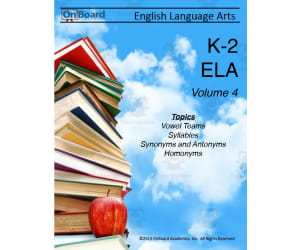
K-2 ELA Volume 4
ELA, Preschool, Grade 1, 2, Worksheets & Printables, Worksheets
K-2 ELA Volume 4: An Informative Teaching Resource for Kindergarten to Second Grade Educators A comprehensive academic workbook focusing primarily on reading skills, K-2 ELA Volume 4 is designed specifically for Kindergarten, first grade and second-grade educators. This essential tool addresses various levels of student comprehension with its 32-page content loaded with informative activities. These include: Creative writing prompts, Fill-in-the-blank exercises, Multiple-choice questions, and Informal assessments . This enormous academic resource book introduces students to significant language arts subjects like vowel teams, syllables, synonyms & antonyms, and homonyms. It will boost comprehension while encouraging active learner participation. The intensity flexibility it allows caters directly to individual students' needs. It fits perfectly as a core curriculum material or supplementary reinforcement. K-2 ELA Volume 4's inherent versatility offers implementation flexibility according to the educator's unique teaching strategies - working seamlessly with whole groups or small study circles. Its easily printable format guarantees anytime accessibility - in class or during homework assignment hours. Elevator Checks: The quick elevator checks at the end of lessons offer essential informal evaluation without the need for rigorous tests. Utilize sheets containing swift questions designed at succinctly drawing out students' understanding while quickly tracking their progress. The workbook is made available in PDF format allowing ready-to-print convenience straight off your computer —An advantage devoid of typical hassles tied around print dialog boxes setup each time! Incorporating K-2 ELA Volume 4 into your teaching routine will definitely streamline your planning process while boosting your language arts instruction journey. It offers engaging content that aligns flawlessly with grade standards.
Author Classroom Complete Press
Tags Vowel Teams, Syllables, Synonyms, Antonyms, Homonyms
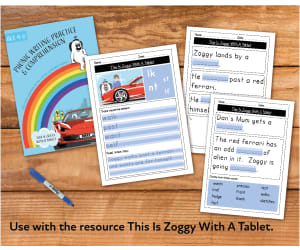
Writing And Comprehension Practice: This Is Zoggy With A Tablet (4-8 years)
ELA, Language Development, Phonics, Kindergarten, Preschool, Grade 1, 2, Worksheets & Printables, Worksheets
Writing and Comprehension Practice: This is Zoggy with a Tablet Workbook This resource provides a simple, effective remedy for educators aiming to reinforce crucial phonic reading and spelling skills in children aged 4-8. The workbook combines engrossing storytelling with the perfect mix of interactive content, tailored to perfectly suit immediate learning needs. Relevance: The learning material is a part of the Mission Spelling Zero Book: This is Zoggy with a Tablet within the blue level of education. It assists those who are already using these books for enhancing their child's linguistic abilities. However, it may not be beneficial for those without access to this Zoggy series. Worksheet Features: Comprised of 14 organized printable pages Including post-learning tasks tied back to phonics studied in The Mission Spelling series Covering reinforcement exercises for letter sounds coupled with tracing & writing letters and words Evaluation techniques ensure concepts are absorbed well beyond simple engagement period Add-Ons: The workbook incorporates comprehension activities based on relatable stories from within its storytelling structure - this method ensures students remember their lessons by engaging their creative sides as well. Versatility: Educators can seamlessly adapt these worksheets into various lesson plans -whether they're group tasks that promote teamwork or breakout sessions designed around each student's attention level; its usefulness extends across scales! Also available as homework assignments that require no preparation; extend overall lesson retention at each student's pace. Zoggy - Adding Fun Element In Education: Your children will enjoy learning alongside alien whizkid Zoggy via superhero tales themed around initial sound assimilation which further extend towards double consonant blends and vowel digraphs-teaching has never been so exciting! Suitable for Multiple Grades: This English Language Arts resource focuses on phonics for Preschool through Grade 2 children. This ingenious learning tool is designed to cater specifically to educators' needs, thereby maximizing potential among early learners-all compactly presented in an easily distributable PDF format.
Author Guinea Pig Education
Tags Interactive Learning, Phonics Practice, Reading Comprehension, Spelling Skills, Early Education

Guided Reading Level H - The Story of the Wheel
ELA, Resources for Teachers, Reading Comprehension, Reading, Language Development, Vocabulary, Engineering, Technology, Science, Physics, Kindergarten, Grade 1, 2, Worksheets & Printables, Worksheets, Teacher Tools, Centers, Activities, Literacy Readers, Quizzes, Quizzes and Tests, Assessments
This Guided Reading Book - The Story of the Wheel (Level H) includes: Guided Reading Color Label (front cover x1) This is a quick way to match the book’s demands to what students can generally handle.. The overall goal is to use the level/color to pick books for several smaller groups. To qualify for a certain level, a student is expected to read a book from that level with about 90–94% accuracy. If a student is consistently accurate and understands, move up a level. If the student is struggling at that level, drop down and add more support. Each student will improve at completely different rates, but it is generally one of the best ways to check progress across the class. DOWNLOAD THE CATALOG TO VIEW ALL GUIDED READING BOOKS AVAILABLE (SORTED LEVELS A-Z) Pre-Reading Question (x1) Teacher asks the prompt aloud, can be while showing the cover or first page. Students share what they already know, or make educated guesses from the cover. Prompt them to use the target vocabulary. Write some of their responses on the board to look back at during the reading. Vocabulary Words (x5) Introduce the five words, best doing it one at a time. Start by saying it, while students repeat and then see if anyone knows what it means before reading further. Read through the meaning and try to briefly connect each word to a picture or gesture so it’s meaningful. Ask students to flip through the book pages and point to where they see each of the vocabulary words. While reading the book pause upon coming across one of the vocab words or read the sentence twice to make sure students understand the word has appeared. Optional: Ask students to raise hands whenever they see/hear one of the new words. Guided Reading Pages (x10) Check the book snapshot (below) for: primary topic - do you need to prep extra reading or intro materials on this? what is taught best - decide on 1-2 bullets to focus on, use the prompt or words provided here for best results. learning goals - what you are checking for students to be able to do after the session, elicit answers using prompts or words provided. key vocabulary (see section above). questions overview - so you know what is coming up and if you need to prep extra materials to assist understanding. Run the lesson You may have already looked at a few of the pages together, but you can show them some of the pictures again first to set meaning. Depending on how much time you have and how familiar your students are with guided reading class, you may want to read the book aloud first with the group first. Students whisper or partner read, while you listen in. If time, do it as a group, one student reading a page each. Use the guided page’s prompts to coach: “Check the picture / does it make sense?” “Point under the words / try the first sound” “Reread the sentence smoothly”. Try to focus more on one student per session (rotating every time), so you can work out if they are ready to move up or need to move down a level. Comprehension Questions (back cover x3) This is your way to check that students didn’t just say the words, but actually understood the text. First, let students answer by pointing to the page/picture and saying a short sentence. After any answer, follow with: “Show me where you found that in the text.” In bigger groups, have partners answer first (10–20 seconds), then call on 2–3 students to share. Differentiation tips: Emerging speakers/struggling readers: oral + pointing On-level: oral in a full sentence Higher: one written sentence or draw + label Book Snapshot Title: The Story of the Wheel Genre: Nonfiction (informational) Subject: Science (Engineering / Simple Machines) Primary Topic: How wheels changed over time and how they work Estimated Guided Reading Level (A–Z): H What This Book Teaches Best What wheels are and what they help people do: move heavy things with less effort. How wheels changed over time (from heavy stone/wood wheels to spoked wheels to modern rubber tires). Why different wheels are designed differently for different jobs (tractor treads for mud; thin bicycle wheels for speed; small wheels for gliding). That not all wheels are for travel—gears are wheels with teeth that help machines move. Learning Goals Students will explain what wheels are used for using a detail from the text. Students will describe how the first wheels were made long ago, according to the book. Students will explain why spoked wheels helped carts move faster using the book’s comparison. Students will describe how treads help tractor wheels move through thick, wet mud. Students will identify one way gears are different from travel wheels and tell what gears do in machines. Key Vocabulary From the Text spokes — thin parts connecting the center to the outside. oxen — strong animals that pull heavy loads. rubber — stretchy material used to make tires. treads — deep grooves that help a tire grip ground. gears — wheels with teeth that help machines move. Discussion Prompts Pre-reading question: How do you think wheels help people move things more easily? Comprehension questions: What does the book say wheels are used for? What were the very first wheels made from long ago? What are gears, and what do they help machines do? Printing Tips 1. Best Printing Method (Recommended) “Booklet” Printing (Best if Available) If your printer or PDF viewer supports Booklet Printing , use this. Settings to use: Print mode: Booklet Paper size: Letter or A4 (either works) Orientation: Landscape Print on both sides: Yes Flip on: Short edge Scaling: Fit to printable area Booklet subset: First test: Front sides only Then: Back sides only This will automatically: Pair pages correctly Put the cover on the outside Align everything for folding After printing, fold in half and staple along the spine . 2. If “Booklet” Printing Is NOT Available You can still print this correctly with manual duplex printing . Step-by-step: Open the PDF. Choose Print . Set: Orientation: Landscape Pages per sheet: 1 Print on both sides: Yes Flip on: Short edge Print all pages . Because each PDF page already contains two facing book pages, the result will still fold cleanly into a book. Thousands of Cored Education products are included with your TeachSimple membership. Download links and encyclopedia index available here.
Author Cored Education
Rating
Tags Vocabulary, Reading Comprehension, Reading Passages, Leveled Reading, Nonfiction, Reading, Guided Reading, Physics, Engineering, Technology
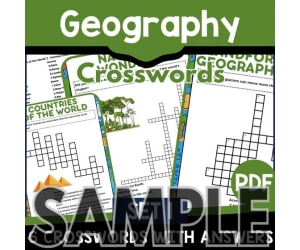
Geography Crossword - Set 1: 1 Page Sample (PDF)
ELA, Language Development, Vocabulary, Spelling, ESL, Resources for Teachers, Geography, Social Studies, Grade 2, 3, 4, 5, Worksheets & Printables, Worksheets, Teacher Tools, Crosswords Puzzles, Centers, Activities
THIS IS A ONE PAGE SAMPLE OF A SIX CROSSWORD DOWNLOAD FULL SIX CROSSWORD DOWNLOAD INFORMATION: Crossword Series (Themed) This crossword series is designed for students in grades 2–5. Each set of crosswords is built around a clear vocabulary theme, allowing students to strengthen their word recognition, build subject-based knowledge, and reinforce early literacy and thinking skills. Each topic includes six crossword sets , and each set features the following consistent structure: 1. 8 vocabulary clues 2. Crossword puzzle 3. Answer key 4. 1 Did You Know fact related to the set These crosswords are designed to be student-friendly, classroom-ready, and easily integrated into thematic units, seasonal learning, morning work, or independent literacy stations. Geography Crosswords Set 1 Word List 1. Countries of the World Canada, Brazil, China, India, Egypt, France, Japan, Mexico 2. Famous Cities New York, Paris, London, Tokyo, Sydney, Cairo, Rome, Rio 3. Famous Landmarks Eiffel Tower, Great Wall, Statue of Liberty, Colosseum, Taj Mahal, Mount Everest, Amazon River, Grand Canyon 4. Continents and Oceans Asia, Africa, Europe, Australia, Antarctica, Pacific, Atlantic, Indian 5. Natural Wonders Niagara Falls, Grand Canyon, Mount Everest, Amazon Rainforest, Sahara Desert, Great Barrier Reef, Victoria Falls, Northern Lights 6. Landforms and Geography Terms Mountain, River, Desert, Island, Peninsula, Volcano, Valley, Glacier PDF Version Other versions will appear here when available. Follow the store for the lastest on new products. How to Use This Crossword These crosswords are ideal for whole-class work, small groups, literacy centers, or take-home activities. Use one set per day, or spread them across a week or month depending on your curriculum needs. Each clue has been crafted to align with the reading level of grades 2–5, with support for both decoding and meaning. The Did You Know? facts offer additional extension opportunities for writing, drawing, or display work. Whether you're reinforcing vocabulary, exploring a seasonal topic, or adding variety to your literacy block, these crosswords provide a fun, flexible, and focused way to boost early literacy in an engaging format. More Geography Themed Products Geography Crosswords (Set 2) PDF Geography Crosswords (Set 3) PDF FULL CATALOG OF DOWNLOAD LINKS HERE Themed Crossword Links Addition PDF Animals PDF Around the Home PDF Birthday PDF Candy PDF Christmas PDF Cinco de Mayo PDF Clothes PDF Colors PDF Days and Months PDF Division PDF Earth Day PDF Easter PDF Easy Crosswords PDF Fall PDF Father's Day PDF Food PDF Geography (Set 1) PDF Geography (Set 2) PDF Geography (Set 3) PDF Graduation PDF Health PDF History (Set 1) PDF History (Set 2) PDF History (Set 3) PDF Human Body PDF Kindness PDF Life Skills PDF Mother's Day PDF Multiplication PDF Science Crosswords (Set 1) PDF Science Crosswords (Set 2) PDF Science Crosswords (Set 3) PDF Shapes PDF Social Skills PDF Spring PDF Sports PDF St. Patrick's Day PDF Subtraction PDF Summer PDF Thanksgiving PDF Transport PDF Valentine's Day PDF Winter PDF Crosswords in Depth Structure Each crossword clue is written in simplified language to suit early readers, and follows a strict number-and-clue format (e.g., 1.A shape with four sides ). Students complete each puzzle using the themed vocabulary provided, helping to build both content knowledge and spelling confidence. Each completed set includes: A questions section with clearly formatted clues An answers section to support teacher checking or independent correction A Did You Know? fact tied to the topic (one per set) to add curiosity and cross-curricular value Themes Included The crosswords cover a wide variety of engaging, age-appropriate themes such as: Seasons & Holidays (e.g., Winter, Easter, Valentine’s Day) Math Concepts (e.g., Addition, Subtraction, Multiplication, Division) Everyday Topics (e.g., School, Colors, Animals, Weather) Special Units (e.g., Health, Earth Day, Sports, Graduation, Kindness) Each theme is carefully selected to reflect the experiences and interests of young learners, while reinforcing vocabulary and comprehension. For similar downloads and other frees, do check out Cored Group on TeachSimple.
Author Cored Education
Rating
Tags Vocabulary, Spelling, Crosswords, Geography, Geography Crosswords, Countries Of The World, Famous Cities, Famous Landmarks, Natural Wonders, Continents And Oceans

Guided Reading Activities with Lesson Plans: Fiction Set 2 - Animals
ELA, Reading, Reading Comprehension, Common Core, ESL, Language Development, Pre-Reading, Vocabulary, Resources for Teachers, Grade 2, 3, Worksheets & Printables, Worksheets, Teacher Tools, Lesson Plans, Activities
Guided Reading Activities with Lesson Plans Fiction Set 2 Note: This download DOES NOT include the passages themselves. If you have not already done so, download in a format of your choice in the "reading links" section below. Overview The perfect companion materials for Cored Education reading comprehension downloads. This collection of guided reading lessons includes a wide array of engaging themes that aim to foster comprehension, vocabulary development, and creative thinking. Each lesson is crafted to be interactive and immersive, making learning enjoyable while promoting essential literacy skills. The lessons are designed for students to actively engage with both the material and the world around them, creating connections to their personal experiences while developing key skills. Includes Guided Reading Materials For: 1.Unexpected Visitors 2.Feeding Time 3.New Pup Next Door 4.Stargazing 5.On the Search 6.Tadpoles 7.Lucky Caterpillar 8.Karl the Photographer 9.Chasing Pheasants 10.Part of the Family Reading Links: This is the guided reading materials version and DOES NOT include the passages themselves. The passages related to this download are available here in GOOGLE Docs, GOOGLE Forms, GOOGLE Slides. PDF, PPT, WORD. Google Docs Google Forms Google Slides PDF PPT Word Details Pre-reading Discussions Each lesson begins with pre-reading questions that help activate prior knowledge and engage students in the theme of the lesson. This allows students to make personal connections with the content before diving into the reading material. Vocabulary Development Every lesson includes vocabulary exploration that introduces key terms students will encounter in the reading. These words are essential for understanding the passage, and activities encourage students to apply the new vocabulary in context. Comprehension Check After the reading, the lessons provide comprehension questions (typically multiple-choice) that assess students’ understanding of the story. These questions help students reflect on key events, characters, and concepts within the text, reinforcing their comprehension. Creative Writing Prompts To foster creativity, the lessons include writing activities that challenge students to apply what they've learned in imaginative ways. These prompts allow students to practice creative expression while reinforcing the lesson’s theme. Discussion Topics Each lesson ends with wrap-up discussion questions that encourage students to think critically and engage in group conversations. These discussions can enhance social learning and deepen understanding by connecting the lesson's content to broader real-world applications. Theme-Based Learning The themes (e.g., winter, nature walks, photography, flowers) are universally appealing and offer opportunities for cross-curricular connections with science, art, and environmental studies. This makes the lessons versatile for a wide range of teaching contexts. Student-Centered Approach The activities are designed to be interactive and student-driven, allowing them to explore the content through discussions, hands-on vocabulary practice, and personal reflections. This promotes active learning and keeps students engaged. FULL CATALOG OF DOWNLOAD LINKS HERE Grade 2/3 Links Fiction Set 1 - Nature Google Docs Google Forms Google Slides PDF PPT Word Guided Reading Materials Fiction Set 2 - Animals Google Docs Google Forms Google Slides PDF PPT Word Guided Reading Materials Fiction Set 3 - Food Google Docs Google Forms Google Slides PDF PPT Word Guided Reading Materials Fiction Set 4 - School Google Docs Google Forms Google Slides PDF PPT Word Guided Reading Materials Fiction Set 5 - Friends Google Docs Google Forms Google Slides PDF PPT Word Guided Reading Materials Fiction Set 6 - Family Google Docs Google Forms Google Slides PDF PPT Word Guided Reading Materials Fiction Set 7 - Sports Google Docs Google Forms Google Slides PDF PPT Word Guided Reading Materials Nonfiction Set 1 - Technology Google Docs Google Forms Google Slides PDF PPT Word Guided Reading Materials Nonfiction Set 2 - Nutrition Google Docs Google Forms Google Slides PDF PPT Word Guided Reading Materials Nonfiction Set 3 - Animals Google Docs Google Forms Google Slides PDF PPT Word Guided Reading Materials Reading Passages Overview Each passage is especially written for Grade 2-3 students, including key vocabulary required for this age group. Topics are varied and are accompanied by colorful graphics. Topics are meant to educate, yet entertain the modern student. These passages are perfect for the modern classroom. Whereas textbooks can become outdated in no time, any changes to technology or the world will result in updates to this product. Mixed Questions The mixed questions section of each lesson includes a variation of fivecomprehension, vocabulary and math questions. In addition, key reading strategies are frequently covered including cause & effect, summarizing, compare & contrast and making conclusions. Three of the questions will be MCQs and two will require a written response of some kind. Full answers and example responses appear at the end of the lesson. Spelling & Vocab Each reading passage contains a variety of words and phrases designed for Grade 2-3 students. Spelling and vocab activities provide the opportunity to build fluency with these words. As it can become quite mundane doing the same activities over and over, each lesson in a set will contain a different spelling and vocab activity . Writing Prompts Writing prompts are designed to continue the theme or lessons learned in the story. Students are persuaded to write in a variety of ways and each prompt includes several cues to help. As with the spelling/vocab section, writing prompts will vary. This includes research pieces, reading responses, poetry and creative writing prompts. Full Answer Keys Full answer keys and sample responses are provided so no matter how busy you are, you know you're covered! Mixed question answers provide evidence from the text, math questions contain the relevant workings. Answers are designed for use by the teacher, but also suitable as a handout to the student. Additional File One lesson will have an additional file. This is something fun to extend the lesson with. For similar downloads and other frees, do check out Cored Group on TeachSimple.
Author Cored Education
Tags Elementary, Reading, Comprehension, Vocabulary, Answers, Common Core, Guided Reading, Guided Reading Activity, Guided Reading Lesson Plans, Guided Reading Lesson Plan

Pumpkin Patch Project with Social Studies and Math for Elementary
Social Studies, Economics, Math, Addition and Subtraction, Addition, Subtraction, Multiplication and Division, Division, Multiplication, Grade 1, 2, 3, 4, 5, Activities, Projects, Worksheets & Printables, Worksheets
Embark on an exciting autumn adventure as you step into the shoes of a pumpkin patch owner this fall season! Construct your very own immersive 3D pumpkin patch, delve into the intricacies of growing seasons, meticulously document your findings on an informative chart, and even engage in the rewarding experience of selling your bountiful pumpkins at a bustling market. This comprehensive project comprises six engaging steps that seamlessly blend various academic disciplines. As students partake in this hands-on endeavor, they'll explore the realms of economics, delve into the rich tapestry of social studies, hone practical life skills, and sharpen their basic math proficiency—all while having a blast. Upon project completion, students will proudly possess a portfolio filled with valuable information. This includes thoughtfully crafted charts, region-specific research findings about pumpkin growth, and a stunning 3D pumpkin patch they can showcase with pride. So what’s included? 1 hands-on project 3 corresponding worksheets 2 reading/learning pages How to Use and Supplies List Student Guide for independent use Answer Keys Bonus Pumpkin Freebie How to use in your classroom For Pumpkin Week - Easily set up your elementary classroom around this project. With 6 unique steps that lead the student to "growing" their own pumpkin patch, you'll have plenty to do! As a Cumulative Assessment - This is the easiest way to teach basic economics to elementary students. Use all 6 steps to assess what they've learned and give a grade. Independent Project - Because of the included Student Guide, older elementary students can complete this project with minimal adult supervision. Group Project - With separate steps and activities, students could easily split this up into different parts and create their own group pumpkin patch. Science Fair Project - Looking for an economics-focused fair project? Try this one this fall! Tags pumpkin math, pumpkin math worksheets, pumpkin math activities, elementary math, elementary math worksheets, easy math worksheets, printable math worksheets, print and go math worksheets, pumpkin-themed worksheets, pumpkin project, project-based learning, elementary economics, pumpkin economics, pumpkin economics project Grab the full Pumpkin Life Cycle Art & Crafts Bundle here! Please enjoy! -Abbey Allen ARTventurous Animals
Author ARTventurousanimals
Rating
Tags Pumpkin Math, Pumpkin Math Worksheets, Pumpkin Project, Project Based Learning, Pumpkin Project Based Learning, Steam, Stem, Pumpkin Social Studies, Pumpkin Economics

Science Word List Posters - Set 3 (PDF)
ELA, Language Development, Vocabulary, Spelling, ESL, Resources for Teachers, Science, Physics, Earth and Environmental Sciences, Life Sciences, Grade 2, 3, 4, 5, Worksheets & Printables, Worksheets, Teacher Tools, Centers, Activities, Mazes, Posters, Classroom Decor
Word List Poster Series This word list poster series is designed for students in grades 2–5. Each printable focuses on a clear, kid-friendly theme and features 8 target vocabulary words with short, student-friendly meanings or fun facts. The clean layout works as both an anchor chart and a write-in sheet, giving students a quick, visual reference they can revisit during centers and independent work. These posters are student-friendly, classroom-ready, and perfect for warmups, vocabulary walls, sub plans, or take-home reference. Display a single poster to support the day’s lesson, or group several to build a themed wall across your unit. Note: Each poster is a companion piece to its matching themed product in the series—pair it with the corresponding maze, wordsearch, or activity pack for a consistent set of 8 focus words. Science Set 3 Word List 1. Human Body Systems Brain, Heart, Lungs, Muscles, Bones, Veins, Digest, Nerves 2. Ecosystems and Food Chains Ecosystem, Habitat, Producer, Consumer, Decomposer, Food Chain, Predator, Prey 3. States of Matter Matter, Solid, Liquid, Gas, Melt, Freeze, Evaporate, Condense 4. Space and the Universe Galaxy, Milky Way, Orbit, Gravity, Black Hole, Meteor, Astronomer, Telescope 5. Plants and Photosynthesis Roots, Stem, Leaf, Flower, Seed, Sunlight, Oxygen, Chlorophyll 6. Simple Machines and Engineering Lever, Pulley, Ramp, Wheel, Axle, Screw, Gears, Invent PDF Version Other versions will appear here when available. Follow the store for the lastest on new products. How to Use These Word List Posters Perfect for: Morning work or early-finisher bins Vocabulary centers or anchor walls Holiday/seasonal review lessons Independent stations, sub plans, or take-home reference More Science Themed Products Science Crosswords (Set 1) PDF Science Crosswords (Set 2) PDF Science Crosswords (Set 3) PDF Science Word Searches (Set 1) PDF Science Word Searches (Set 2) PDF Science Word Searches (Set 3) PDF Science Mazes (Set 1) PDF Science Mazes (Set 2) PDF Science Mazes (Set 3) PDF FULL CATALOG OF DOWNLOAD LINKS HERE Themed Word List Posters Links Addition PDF Animals PDF Around the Home PDF Birthday PDF Candy PDF Christmas PDF Cinco de Mayo PDF Clothes PDF Colors PDF Days and Months PDF Division PDF Earth Day PDF Easter PDF Easy Word List Posters PDF Fall PDF Father's Day PDF Food PDF Geography (Set 1) PDF Geography (Set 2) PDF Geography (Set 3) PDF Graduation PDF Health PDF History (Set 1) PDF History (Set 2) PDF History (Set 3) PDF Human Body PDF Kindness PDF Life Skills PDF Mother's Day PDF Multiplication PDF Science (Set 1) PDF Science (Set 2) PDF Science (Set 3) PDF Shapes PDF Social Skills PDF Spring PDF Sports PDF St. Patrick's Day PDF Subtraction PDF Summer PDF Thanksgiving PDF Transport PDF Valentine's Day PDF Winter PDF Word List Posters in Depth Structure Each poster is built around a focused sub-theme and presents 8 target words with short, student-friendly meanings or fun facts. The clean A4 portrait layout works as an anchor chart on your board or as a student reference at desks. These posters are designed as companion pieces to the matching themed products (mazes, wordsearches, activity packs), so the same vocabulary stays visible across your unit. Each poster set includes: A themed word list poster with 8 words + brief meanings/facts A clean, high-contrast layout for easy printing and display Space that can double as write-in/draw-to-show-meaning during centers Themes Included Seasons & Holidays (e.g., Halloween, Easter, Valentine’s Day) Everyday Topics (e.g., Animals, Weather, School) Math & Science Connections (e.g., Number Words, Simple Machines) Special Units (e.g., Health, Earth Day, Sports, Kindness) Each topic reflects real-life experiences and interests while strengthening vocabulary recognition and content understanding in a clear, visual way. Easy extensions (optional) Sketch it: students draw a quick icon for each word Sort it: group words by category (e.g., actions, objects) Star it: highlight “I already know” vs. “I’m learning” words Match it: point to examples in a reading, video, or picture set Say it: brief oral definition or example sentence during share-out Differentiation tips Pre-teach 2–3 anchor words; add the rest later in the week Offer picture cues or gestures for emerging readers/ELLs Let students choose 4 of 8 to focus on first, then build up Color-code by part of speech or concept family for quick scanning For similar downloads and other frees, do check out Cored Group on TeachSimple.
Author Cored Education
Rating
Tags Vocabulary, Spelling, Science, Human Body Systems, Ecosystems, Food Chains, States Of Matter, Plants And Photosynthesis, Posters, Science Word Lists
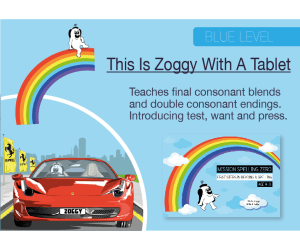
Final Consonant Blends & Double Consonant Endings: Zoggy With A Tablet
ELA, Language Development, Phonics, Kindergarten, Preschool, Grade 1, 2, Worksheets & Printables, Worksheets
Final Consonant Blends & Double Consonant Endings: Zoggy With A Tablet is a teaching resource for enhancing learners' understanding of final consonant blends and double consonant endings. It promotes reading comprehension and spelling proficiency using an engaging, narrative-driven method. The resource centers around the joyous character - Zoggy, an alien who's highly skilled in computing and enjoys solving problems. Learners develop foundational phonics skills through stories narrated by Zoggy interspersed with appropriate spelling exercises. This product is housed under the 'Mission Spelling Zero' series, characterized by seven levels each represented in varying rainbow colors. These levels range from Early Learning up until Grade 2 levels, designed to increase in difficulty and complexity. The course starts with introduction to initial sounds followed by exercises focusing on double consonant blends and vowel digraphs presented through riveting Zoggy-narrated stories. Included within this package are Phonic Writing Practice worksheets catering direct learning applications post every lesson's completion. To further reinforce comprehension skills, Comprehension Worksheets are provided that encourage vocabulary expansion derived from each read story. Packed into 29 easy-to-print PDF pages, these worksheets can be distributed across a variety of classroom setups—be it large scale instruction following along Zoggy's journey or smaller break-out sessions for more adept discussions about phonics rules revealed during respective reading explorations. Also suitable as take-home assignments enabling independent practice of newly acquired phonics subjects beyond school hours. Final Consonant Blends & Double Consonant Endings: Zoggy With A Tablet, offers learners not just mere memorization but meaningful understanding of sounds and spellings within relatable contexts, thereby ensuring a purposeful learning experience.
Author Guinea Pig Education
Tags Final Consonant Blends, Double Consonant Endings, Phonics Education, Reading Comprehension, Spelling Proficiency

Guitars Reading Comprehension Passage - Cored Ed Encyclopedia
ELA, Language Development, Resources for Teachers, Reading Comprehension, Reading, Pre-Reading, Writing, Music, Creative Arts, Strategies, Grade 2, 3, 4, 5, Worksheets & Printables, Worksheets, Teacher Tools, Centers, Activities, Writing Prompts, Assessments, Tests, Quizzes and Tests, Quizzes
This guitars reading comprehension contains the following: Pre-Reading Trivia Students will write down one thing they already know about the subject and then read five more facts and discuss. These facts are fun, and the students will enjoy learning about the subject before reading more. Reading Passage The text is a high-interest reading passage with set paragraphs, roughly three to four paragraphs long. It contains a variety of themes about the topic, anywhere from history to technology. The passage is between 250 and 350 words in length. Mixed Questions The first question page contains four multiple-choice questions, each with a choice of four answers, and three written response questions that require a sentence or two from the student. Creative Writing In this question, the student will be required to write a five to eight sentence paragraph on a question related to the topic. Extension Activities This page is optional for fast finishers. If there are five to ten minutes left at the end of the lesson, the student can choose one of three activities, each one requiring a different skill. Answer Key There are answers for the multiple-choice questions and three written response questions have sample answers. FULL CATALOG OF DOWNLOAD LINKS AND ENCYCLOPEDIA INDEX HERE Cored Ed Encyclopedia Overview The Cored Ed Encyclopedia is a weekly series of lessons that you can pick up and use right away. These short readings fit into whatever time you have available. Each one includes a warm-up, a reading, and a set of questions, but it’s flexible — you can do just the reading, the full lesson, or skip the writing section if you need to. Each lesson focuses on a single topic so students don’t get lost. The writing is clear but never childish, making it perfect for grades two through five. Topics range from animals and science to history, inventions, and everyday things. No matter the level of the student, everyone should take away at least one new idea or fact from each lesson. The materials are easy to print, easy to explain, and require no setup. They work well for whole-class teaching, partner work, or independent study.
Author Cored Education
Rating
Tags Vocabulary, Spelling, Reading Comprehension, Reading Passages, Reading, Creative Writing, Reading Strategies, Writing Prompts, Guitars, Music

Algebra - Drill Sheets Vol. 4 Gr. 6-8
Math, Algebra, Common Core, Grade 6, 7, 8, Worksheets & Printables, Worksheets
Algebra - Drill Sheets Vol. 4 Gr. 6-8 A comprehensive teaching resource designed to meet the algebraic concepts addressed by the NCTM standards for grades 6-8. Encourages students to revisit and practice algebra concepts in unique ways, reinforcing comprehension and mathematical proficiency. Catalogues various warm-up activities ideal for kick-starting lessons, along with timed activities that challenge student application under time constraints. Covers key algebra principles across different difficulty levels—providing numerous opportunities for differentiated learning, making it easy to cater to individual student needs. The drill sheets cover areas such as: patterning; solving equations with variables; creating, simplifying, and graphing algebraic expressions; computing quotients; and using scientific notation, among others. Adds a reflection space after each sheet—an essential element in consolidating learned skills—making sure students interpret results correctly or pinpoint areas where they need more support. A special feature within this resource is its emphasis on strategic technology use — encouraging learners to incorporate digital tools into their review process. In addition: Included in this single PDF are assessment rubrics aligned with Common Core State Standards (CCSS), coupled with NCTM standard focus points via review sheets. Bonus worksheets that provide extra practice outside normal instruction—a handy tool for different group setups or individual homework assignments are present. Anchoring on CCSS requirements plus Bloom's Taxonomy approach towards learning stages alongside STEM-oriented curriculum goals — the Algebra - Drill Sheets Vol. 4 Gr. 6-8 serves as an all-around guide for building comprehensive lesson plans.
Author Classroom Complete Press
Tags PDF
Dyslexia-Friendly Visual Phonics Decoding
Classroom Management, Resources for Teachers, Community Building, Life Skills, Special Resources, Social Emotional Learning (SEL), Social Skills, Special Education Needs (SEN), Speech Therapy, Science, Kindergarten, Preschool, Grade 1, 2, 3, 4, 5, Worksheets & Printables, Workbooks, Worksheets, Word Searches, Teacher Tools, Lesson Plans, Quizzes and Tests, Quizzes, Tests, Assessments
If your students have difficulty with b/d reversals, visual crowding, or reading anxiety, phonics worksheets often do not work for kids who are neurodivergent because they create a cognitive overload situation. The Visual Phonics Decoding Program is a complete no-frills paradigm shift in reading interventions. Using the proprietary Visuo-Phonological Anchor Model (VPAM), this program creates a connection between auditory processing and the visual-spatial pathways, enabling students (first, second and third graders) to develop automaticity when decoding. The Visual Phonics Decoding packet also follows the principles of the Science of Reading and the cognitive principle of Orthographic Mapping and removes unnecessary visual distractions and replaces them with structured visual anchors. What’s Being Offered In Our 25 Page Complete PDF? Educator Theory and Implementation Manual: A deep dive into the Neurological Structure of Dyslexic Reading, Double-Deficit Hypothesis, and Orthographic Mapping with practical application chapters. Actual Case Studies with Practical Application: Profiles to show how to use these methods with Early Elementary School-Aged Children. Intervention Worksheet Series: Intervention worksheets have been developed utilizing Typographic Grounding, Chromatic Categorization and Spatial Bounding principles. Medial Short Vowels (CVC orthography), Consonant Digraphs (sh, ch, th, wh, ck), Initial Consonant Blends. Teacher Reference Materials/Visual Aids: Contains Visual Aids for Cognitive Orthographic Mapping Protocol and the anatomy of a Dyslexic Friendly Worksheet. Complete Answer Keys and Formative Assessment Protocols. Great For Special Education (SPED) Tier II and Tier III Reading Intervention, Home Schooling & Orton Gillingham Compatible Teaching Methods. Help struggling readers to stop guessing and to have the confidence to code words correctly using decoding! Reasons that Parents/Schools Appreciate It: Elimination of Visual Clutter: Heavy bottom, sans serif fonts, and greater spacing are used strategically to help identify and prevent visual representation of b, d, p, q from being represented as flipping or floating through space. Working Memory Limitations are Bypassed: Students are able to visually lock into a vowel team or digraph without being overwhelmed by using the use of Chromatic Anchor System and bounding boxes. No Fluff & No Distractions: All worksheets were specifically created to conserve as much of a dyslexic child's cognitive energy as possible. Therefore, no clip art, decorative art, or unnecessary instructions are contained to help conserve any cognitive energy from teaching a child to read. Creates Teacher and Parent Power: Also, all worksheets have a clear and complete "Educator Rationales" so parents and teachers can better understand the rationale and methodology for teaching their children. Gives Children the opportunity to Create True Orthographic Mapping: Children are prevented from memorizing and guessing from the visual image or picture, therefore, they are developing the skills to accurately map sounds to letters, which is the basis for long-term efficiency when it comes to reading. Target Audiences: Identify your target audience based on the curriculum's own Tiered Decoding Progression Model (pg. 22) and Introduction (pg. 1). Target Specifically: Grade Levels: 1st, 2nd, and 3rd. Audience: Students with a diagnosis of Dyslexia, students exhibiting signs of reading anxiety, children who are guessing at reading, children struggling with traditional written Phonics, as well as neurodivergent children from all backgrounds. Skills: Students needing support with CVC (consonant-vowel-consonant) words, students needing support with consonant digraphs (sh, ch, th) and students needing support with initial consonant blends. Buyers: Special Education Teachers, Reading Interventionists, Parents Home Schooling, General Education/Primary School Teachers. Terms of Use/Copyright: This Book is the copyright property of Syed Hammad Rizvi. You may only use this resource personally and within a single classroom. You are prohibited from altering, selling, or otherwise distributing any part of this resource. You may not post the entire resource or any part of it on the Internet for access or for download by the general public. If you would like to share this resource with your fellow teachers, you must purchase additional licenses through Teachsimple. Thank you for your support of these terms of use. Syed Hammad Rizvi would like to thank you for using this product.
Author Creative Book Store
Rating
Tags ScienceOfReading, SoR, StructuredLiteracy, OrthographicMapping, Phonics, PhonicsInstruction, PhonemicAwareness, Decoding, ReadingFluency, LiteracyMatters

Kindergarten Health: Unit 5
P.E. & Health, Life Studies, Physical Education, Health, Special Resources, Life Skills, Social Emotional Learning (SEL), Social Skills, Kindergarten, Lesson Plans, Teacher Tools, Worksheets & Printables, Worksheets
For Kindergarten Health there are seven standards that need to be taught to achieve healthy habits! Unit 1 Personal Health Unit 2 Growth and Development Unit 3 Nutrition and Physical Activity Unit 4 Substance Use and Abuse Unit 5 Injury/ Violence Prevention Control and Safety Unit 6 Prevention/Control of Disease Unit 7 Environmental Consumer Health These units can be taught out of order. They are only numbered for your convenience. Through using this Kindergarten Health: Unit 5, students will explore and learn to identify daily healthy habits. Included in this unit : Students will learn what to do if they are lost by learning their phone numbers of a parent or guardian. Students will also learn their address and full name, and guardian's names if lost. Students will complete a cut and paste activity for when to call 911 and when not to call 911. Students will learn about bike safety and the signals used when riding a bike. Playground safety is also taught in this unit . Learning about stranger danger is outlined in this unit with a cut and paste activity . Lastly, students will learn about bullying and what it means to be bullied and what to do. This excellent product comprises 11 pages chock-full of useful resources aimed at fostering critical life skills for the well-being of young learners. Embrace Kindergarten Health: Unit 5 in your classroom today! There are seven units that cover all the health requirements for Kindergarten. Here are the links to other health units: Kindergarten Health: Unit 1 Personal Health Kindergarten Health: Unit 2 Growth and Development Kindergarten Health: Unit 3 Nutrition and Physical Activity Kindergarten Health: Unit 4 Substance Use and Abuse Kindergarten Health: Unit 5 Injury / Violence Prevention Control and Safety Kindergarten Health: Unit 6 Prevention / Control of Disease Kindergarten Health: Unit 7 Enviromental Consumer Health You can also teach your students about keeping yourself safe by studying about the Coronavirus, where and when it started and facts that plagued our world with this virus. Kindergarten Health: Covid 19 / Coronavirus Facts This unit meets Common Core Standards.
Author K-5 Treasures
Tags Health Worksheets, Health, Kindergarten Health, Personal Health, Kids Health, Worksheets On Health, Elementary Health, Healthy Foods, Healthy Habits, Health Units

Measurement - Task & Drill Sheets Gr. PK-2
Math, Measurements, Grade 1, 2, Worksheets & Printables, Worksheets
Measurement - Task & Drill Sheets Gr. PK-2 The valuable teaching resource for Mathematics at the primary level (Grades PK-2). It aids in introducing students to integral mathematical concepts through practical and real-world instances, thus making learning beneficial and enjoyable. Content Overview A blend of tasks that help children recognize and estimate measurements while comprehending relations based on size, weight, and volume. Differentiated tasks offering hands-on experiences with using small objects for measurement of larger ones like furniture or volumes of water. Exercises that challenge students' critical thinking skills where they need to compare pairs of items identifying which one weighs more or reason out why certain objects are hot or cold. Tailored Learning Approach The Measurement - Task & Drill Sheets Gr. PK-2 focuses on a leveled approach towards mastering math concepts beginning from prekindergarten escalating up till grade 2. As the student skill-set improves, the content becomes progressively challenging ensuring a thorough understanding over all essential aspects linked with Measurements within a Mathematics syllabus Suitable for Educators This PDF file product offers flexibility in implementation methods thus making it an excellent resource appreciated by public school teachers as well as homeschoolers. The worksheets can be utilized in various ways: In-classroom group sessions catering entire classes at once; Smaller groups focus-driven workshops; Homework assignments stimulating independent problem-solving skills; One-to-one tutorial sessions for personalized attention. Certification: Adhering to State Standards and NCTM standards; this resource offers reproducible task sheets, drill sheets plus review and answer key ensuring a steadfast academic integrity while enhancing students' procedural proficiency skills. Conclusion: The Measurement - Task & Drill Sheets Gr. PK-2 is essentially a 'must-have' teaching resource due to its interactive approach that encourages creativity while reinforcing math facts.
Author Classroom Complete Press
Tags PDF

Writing And Comprehension Practice: Zoggy’s Shadow (4-8 years)
ELA, Language Development, Phonics, Preschool, Grade 1, 2, Worksheets & Printables, Worksheets
Writing and Comprehension Practice: Zoggy’s Shadow (4-8 years) Writing and Comprehension Practice: Zoggy’s Shadow (4-8 years) is a resourceful workbook aimed primarily at enhancing writing, reading, and comprehension skills in children between 4 to 8 years old. This teaching aid provides a range of activities that facilitate the learning process for students introduced to Mission Spelling Zero Book: Zoggy’s Shadow. This effective workbook enables educators to implement various skill-building exercises. These include: Reinforcing letter sounds Tracing and writing letters & words Pactical spelling activities Focused comprehension tasks based on Zoggy's Shadow story Mission Spelling Zero presents its content through seven progressive levels using rainbow colours. These allow children's skills to grow steadily. Within these levels, students encounter the intriguing character of Zoggy—an alien expert in computer skills—which brings a fun storytelling element into their learning journey. The Workbook's Unique Attributes Zoggy’s Shadow series intelligently combines character interaction with gradual phonics development—enriching teaching sessions efficiently for both whole & small group lessons. The workbook can serve as valuable homework enthusiasts for extended reinforcement at home. In Language Arts classes focused on Phonics sub-topics, this tool can be very effective. The practice provided through this book covers double consonant blends and vowel digraphs while making studies fun & interactive! This 22-page PDF file serves not only as another worksheet pack but as a comprehensive study tool that students will love! In essence, after completing the corresponding Mission Spelling Zero book, this workbook stands as a great follow-up activity compilation; providing psychologically sound exposure towards formulating first sentences & refining handwriting abilities—complemented by fun learning games! This invaluable source takes students beyond simple worksheets. It's a full-fledged tool for mastering initial reading and spelling skills!
Author Guinea Pig Education
Tags Writing Skills, Reading Comprehension, Phonics, Spelling Practice, Educational Games
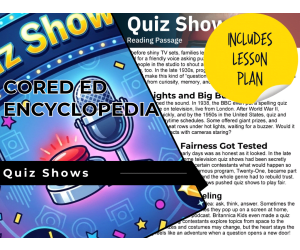
Quiz Shows Reading Comprehension Passage - Cored Ed Encyclopedia
ELA, Language Development, Reading Comprehension, Reading, Pre-Reading, Writing, Strategies, Vocabulary, History, Social Studies, Grade 2, 3, 4, 5, Worksheets & Printables, Worksheets, Teacher Tools, Centers, Activities, Writing Prompts, Assessments, Quizzes and Tests, Quizzes, Lesson Plans
This quiz shows reading comprehension includes: Visualization (on the front cover) Start your lesson by taking a minute to think and share something about the topic. Read the script aloud (slowly), perhaps prepare some music or sound effects. Student close their eyes and let their imaginations wander. Students open their eyes, read the question aloud and give them a few minutes to complete. Ask a few students to share or keep answers until the end to compare with what they learn in the passage. Quick pause—thousands of Cored Education products are included with your TeachSimple membership. Download links and encyclopedia index available here. Pre-Reading Trivia Students will write down one thing they already know about the subject and then read five more facts and discuss. These facts are fun, and the students will enjoy learning about the subject before reading more. Give 1 minute for students to write what they already know (no pressure—best guess is fine). Read the five facts together. After each fact, do ask a student for their opinion, was it surprising? Set a purpose by asking students to highlight/underline one fact they want to learn more about during the reading. Reading Passage The text is a high-interest reading passage with set paragraphs, roughly three to four paragraphs long. It contains a variety of themes about the topic, anywhere from history to technology. The passage is between 250 and 350 words in length. First, ask students to look at the headings and see what they’ll learn about today. What do they know about the topic/heading? First read options: Teacher read-aloud (best for support). Partner reading (paragraph by paragraph). While reading, students underline important details, and vocabulary words they think may come up in the questions section. Mixed Questions The first question page contains four multiple-choice questions, each with a choice of four answers, and three written response questions that require a sentence or two from the student. Students complete the mcqs first independently, then review quickly as a class. For the 3 written responses, try to get students giving the answer with some form of evidence: “I think ___ because the text says ___.” If students get stuck, send them back to check the passage. Vocabulary Questions Practice seven key words from the text in this section across two activities. First section is scrambled words where students will unscramble three words given a clue for each. The second section is a word to meaning matching activity. Before starting, have some students read out words they underlined in the passage. Ask students to say the word and read aloud the sentence(s) around each word. Ask students to do scrambled words and the matching exercise in pairs then go through answers as a class. For the scrambled spelling task, get four pairs to come up to the board and write the words for extra practice with the other student reading out the clue. For the matching task, prompt students to give full sentences: “I matched ___ with ___ because ___.” Creative Writing In this question, the student will be required to write a five to eight sentence paragraph on a question related to the topic. Before starting, ask students write down 3 key ideas they are going to include in their piece. Ask students for ideas to share around the class to help those struggling. Pro writing expectations: 5–8 sentences At least 2 facts or details from the passage At least 2 vocabulary words from the previous page Students read their paragraphs while classmates listen for facts and vocabulary words. Extension Activities This page is optional for fast finishers or to take home. There are several activities, each one requiring a different skill. Do some, do none, do all, completely optional - but you will feel reassured knowing every possibility is planned for. Includes summary writting question. Answer Key There are answers for the multiple-choice questions, written response questions have sample answers, vocabulary answers and if there is a summary question then a sample summary will be provided as well. Lesson Plan Included Customized lesson plan for this lesson is included. Lesson Snapshot Title: Quiz Shows Genre: Nonfiction (informational reading passage) Subject: Reading (Informational Text) / Social Studies (media history) Primary Topic: Quiz shows from radio to TV to podcasts Estimated Guided Reading Level (A–Z): R What This Lesson Teaches Best How quiz shows changed over time, from radio “question games” to television and modern podcasts. Key historical milestones and examples (late 1930s radio programs; 1938 BBC spelling quiz on TV; 1950s U.S. daytime quiz/game shows). Understanding fairness and trust in media (some shows were “rigged,” followed by investigations, hearings, and stronger rules). Text structure practice using section headings to track ideas (early radio → TV era → fairness tested → today). Strong built-in supports that match the passage (questions, vocabulary work, writing prompt, and extensions align to passage details). Learning Goals Students will describe how people participated in quiz shows before TVs were common, using details from the passage. Students will explain how television changed quiz shows, including what it was like for contestants under cameras and lights. Students will explain what “rigged” means in the passage and why quiz shows had to “rebuild trust.” Students will identify ways quiz shows appear today (board, screen at home, or podcast), based on the passage. Students will use the section headings to state the main idea of each section and support it with one detail. Key Vocabulary From the Text contestants — people who compete in a game rigged — secretly fixed so it is not fair producers — people who run and plan a show investigations — careful searches to find out what happened genre — a type or category of show FULL CATALOG OF DOWNLOAD LINKS AND ENCYCLOPEDIA INDEX HERE
Author Cored Education
Rating
Tags Vocabulary, Reading Comprehension, Reading Passages, Reading, Creative Writing, Reading Strategies, Writing Prompts, Lesson Plans, Quiz Shows, History
Career Exploration – Skills Matching & Resume Builders
Math, Statistics, Money, Career, Life Studies, Coaching, Business, Finance, Home Economics, Leadership, Homeschool Curriculum, Homeschool Templates, Grade 9, 10, 11, 12, Worksheets & Printables, Workbooks, Worksheets, Word Searches, Teacher Tools, Assessments, Lesson Plans, Quizzes and Tests, Quizzes, Tests
Unlock Your Students' Potential Using The Ultimate Career Exploration And Resume Builder Unit Are you finding it difficult to have your students honour their value by turning their life experiences into an exciting and valuable resume to apply to college / their first job? This 45-page complete unit has no prep required for you because it will transform your students' perception of writing a resume (which can be an overwhelming task) into the experience that they discover of who they are and create a professional brand for themselves. This is more than just a resume template. There is an entire pedagogical framework that is created for our modern high school student (Grades 10-12). This framework teaches beyond just formatting; it teaches the critical thought process of how to create a powerful resume. Thus allowing your students to articulate their abilities and accomplishments with confidence. WHAT DOES THIS 3-PHASE PROGRAM INCLUDE? Phase 1: Core Principles and Paradime Shift of Resume Writing - This phase focuses on the purpose behind writing resumes as it relates to what the learner can expect in regard to outcomes. This will require learners to deconstruct previous experiences, define their hard, soft, and transferable skills, and understand the psychological impact of creating a successful resume. Utilising real-world case studies, this phase helps students to develop a better understanding of concepts learned. Phase 2: Step-by-Step Student Workbook - Students will complete ten step-by-step worksheets that will help them create a plan of action using the following worksheets: The Comprehensive Skills Inventory (self-assessment of their skills); Mapping Your Ikigai (finding where you fit between what you love, what the world needs, and what you can be rewarded for); Job Description Forensics (decoding the job description to find out what the employer is really looking for); Forging the Professional Summary (creating a strong elevator pitch); Academic & Extracurricular Translations (how to turn project work in school and hobbies into professional accomplishments); The STAR Method & Action Verb Activation (writing strong bullet points with evidence); Career Non-Negotiables (establishing your values as they relate to long-term career satisfaction); Skill Gap Analysis (creating a plan for future growth and development); The Master Resume Architect (conducting one final and quality check of the resume). Phase 3: Teacher Resources & Visuals - All of the resources you need to successfully execute this phase of the program are contained here! 3 Professional Visuals/Anchor Charts to be used as teacher presentation/learning tools and classroom displays (Skill Translation Chart, Resume Overall Anatomy Chart, The STAR Method Chart). Diagnostic Rubric & Answer Key: The use of detailed rubrics showing what 'Unacceptable', 'Developing' and 'Exemplary' work looks like enables you to be much fairer to students when grading their subjective work than merely saying "yes/no". Great for: CTE (Career, Technical, Education) classes Life Skills or AVID programs Persuasive writing (English Language Arts) units Advisory/homeroom College/career readiness counseling Provide confidence and resources for students to become leaders. Download this amazing unit right now! This Curriculum offers a clear narrative about 'no experience' through effective strategies. 1. No experience to a strong story - learn to translate everyday activities such as sports, part-time jobs and babysitting into a powerful, high-impact, professional language for college admissions officers and hiring managers. 2. Step-by-step and actionable - these 10 structured worksheets take students from confused to confident and provide tangible, high-quality resumes at the end of the process. 3. Built for teachers - includes a complete answer key and diagnostic rubrics to use when grading, removing the guesswork & making this essential life skills easy to teach. 4. Teaches modern, real-world practices and principles - this curriculum is current and teaches critical modern concepts such as how to optimize resumes for Applicant Tracking Systems (ATS), using the STAR method in interviews, and developing a professional digital footprint. The target grade levels for students to use this book include: The terminology used in the text, e.g., "semiotics", "metamorphosis", "pedagogical framework", actually defines the grade levels we should focus on when developing a curriculum for preparing for college and nursing school applications and internships. 10th grades: it is an excellent year to be introducing students to these very important concepts 11th grades: this is the best time to teach these very important skills; at this time, the student is getting ready to apply for school. 12th grades: it is absolutely critical and very beneficial to help students refine and perfect their applications and resumes as they leave school. Additionally, this could also be a useful resource for college freshmen who need help developing their very first resume for clubs and internships while in college. Copyright notice/Terms of Use: This Book was copyrighted by Syed Hammad Rizvi. You can use this resource for personal and single classroom use. You are not allowed to change, give away, or sell any part of this product. You may also not post this on the Internet, where it can be publicly accessed, downloaded, etc. If you wish to share this with your colleagues, you will need to purchase an additional license from Teachsimple. Thank you for your cooperation with these terms of use. Syed Hammad Rizvi presents this product!
Author Creative Book Store
Rating
Tags ResumeWriting, CareerExploration, ResumeBuilder, HighSchoolTeacher, CollegeAndCareerReadiness, JobSkills, LifeSkills, CollegePrep, BusinessEducation, AdvisoryPeriod

Guided Reading Level B: Soccer - The World's Game
ELA, Resources for Teachers, Reading Comprehension, Reading, Language Development, Pre-Reading, Vocabulary, Sports, P.E. & Health, Physical Education, Kindergarten, Preschool, Grade 1, Worksheets & Printables, Worksheets, Teacher Tools, Centers, Activities, Literacy Readers, Quizzes, Quizzes and Tests, Assessments
This Guided Reading Book - Soccer: The World's Game (Level B) includes: Guided Reading Color Label (front cover x1) This is a quick way to match the book’s demands to what students can generally handle.. The overall goal is to use the level/color to pick books for several smaller groups. To qualify for a certain level, a student is expected to read a book from that level with about 90–94% accuracy. If a student is consistently accurate and understands, move up a level. If the student is struggling at that level, drop down and add more support. Each student will improve at completely different rates, but it is generally one of the best ways to check progress across the class. DOWNLOAD THE CATALOG TO VIEW ALL GUIDED READING BOOKS AVAILABLE (SORTED LEVELS A-Z) Pre-Reading Question (x1) Teacher asks the prompt aloud, can be while showing the cover or first page. Students share what they already know, or make educated guesses from the cover. Prompt them to use the target vocabulary. Write some of their responses on the board to look back at during the reading. Vocabulary Words (x5) Introduce the five words, best doing it one at a time. Start by saying it, while students repeat and then see if anyone knows what it means before reading further. Read through the meaning and try to briefly connect each word to a picture or gesture so it’s meaningful. Ask students to flip through the book pages and point to where they see each of the vocabulary words. While reading the book pause upon coming across one of the vocab words or read the sentence twice to make sure students understand the word has appeared. Optional: Ask students to raise hands whenever they see/hear one of the new words. Guided Reading Pages (x10) Check the book snapshot (below) for: primary topic - do you need to prep extra reading or intro materials on this? what is taught best - decide on 1-2 bullets to focus on, use the prompt or words provided here for best results. learning goals - what you are checking for students to be able to do after the session, elicit answers using prompts or words provided. key vocabulary (see section above). questions overview - so you know what is coming up and if you need to prep extra materials to assist understanding. Run the lesson You may have already looked at a few of the pages together, but you can show them some of the pictures again first to set meaning. Depending on how much time you have and how familiar your students are with guided reading class, you may want to read the book aloud first with the group first. Students whisper or partner read, while you listen in. If time, do it as a group, one student reading a page each. Use the guided page’s prompts to coach: “Check the picture / does it make sense?” “Point under the words / try the first sound” “Reread the sentence smoothly”. Try to focus more on one student per session (rotating every time), so you can work out if they are ready to move up or need to move down a level. Comprehension Questions (back cover x3) This is your way to check that students didn’t just say the words, but actually understood the text. First, let students answer by pointing to the page/picture and saying a short sentence. After any answer, follow with: “Show me where you found that in the text.” In bigger groups, have partners answer first (10–20 seconds), then call on 2–3 students to share. Differentiation tips: Emerging speakers/struggling readers: oral + pointing On-level: oral in a full sentence Higher: one written sentence or draw + label Book Snapshot Title: Soccer: The World’s Game Genre: Nonfiction (concept book) Subject: Reading / Health & PE Primary Topic: Soccer words for people, places, and gear Estimated Guided Reading Level (A–Z): B What This Book Teaches Best Builds sports vocabulary by naming soccer-related nouns (ball, field, goal, team, trophy). Introduces soccer roles and equipment with clear, repetitive labels (player, goalie, cleats, jersey, whistle). Supports early print concepts by pairing a short phrase with each picture (“The ____.”). Strengthens categorizing skills by noticing items that belong to the same topic (soccer). Learning Goals Students will identify the topic of the book as soccer. Students will name at least three soccer things the book labels. Students will identify two soccer people named in the book (player, goalie). Students will retell the book by naming the items in order from the pages. Students will match key words from the text to the correct picture (e.g., goal, jersey, trophy). Key Vocabulary From the Text cleats — shoes with bumps that help you grip. goalie — player who protects the goal. jersey — shirt a player wears. whistle — tool that makes a loud sound. trophy — prize you win. Discussion Prompts Pre-reading question: What soccer things do you think this book will name? Comprehension questions: What is the first thing named in the book? Name one person named in the book. What is the last thing named in the book? Printing Tips 1. Best Printing Method (Recommended) “Booklet” Printing (Best if Available) If your printer or PDF viewer supports Booklet Printing , use this. Settings to use: Print mode: Booklet Paper size: Letter or A4 (either works) Orientation: Landscape Print on both sides: Yes Flip on: Short edge Scaling: Fit to printable area Booklet subset: First test: Front sides only Then: Back sides only This will automatically: Pair pages correctly Put the cover on the outside Align everything for folding After printing, fold in half and staple along the spine . 2. If “Booklet” Printing Is NOT Available You can still print this correctly with manual duplex printing . Step-by-step: Open the PDF. Choose Print . Set: Orientation: Landscape Pages per sheet: 1 Print on both sides: Yes Flip on: Short edge Print all pages . Because each PDF page already contains two facing book pages, the result will still fold cleanly into a book. Thousands of Cored Education products are included with your TeachSimple membership. Download links and encyclopedia index available here.
Author Cored Education
Rating
Tags Vocabulary, Reading Comprehension, Reading Passages, Leveled Reading, Nonfiction, Reading, Guided Reading, P.E., Sports, Soccer
Reading Response Forms: Evaluating Gr. 5-6
ELA, Reading, Grade 5, 6, Worksheets & Printables, Worksheets
Reading Response Forms: Evaluating Gr. 5-6 - An Invaluable Educational Resource The Reading Response Forms: Evaluating Gr. 5-6 educational resource is a brilliant tool providing middle school students with a plethora of unique ways to display their comprehension and imaginatively express their thoughts about the literature they have read. This versatile product possesses several remarkable features that contribute to its immense popularity across Language Arts classrooms, such as: Expanded Vocabulary: It encourages vocabulary expansion by suggesting synonyms and antonyms for words found in texts, aiding students in developing a richer and more expressive language base. Creative Application: Tasks like rewriting sections of stories from varied perspectives instigate creativity while engaging closely with original text, aiding character empathy development and deeper understanding of plot structure. A Valuable Tool for Critical Thinking Besides broadening vocabulary skills, this resource also cultivates critical thinking abilities amongst its users. Students are prompted to write alternative story endings based on thorough text analysis —>This not only introduces them to creative writing but helps shape analytical skills. Pupils are also tasked with quote evaluations that necessitate deep text understanding; learners delve into significant quotes within the story context. An aptitude test in the form of a comprehension quiz is included so educators can confidently measure individual student progress levels. All-Around Curriculum Integration This product aligns perfectly with your State Standards and thoughtfully incorporates elements aligned with Bloom's Taxonomy. This ensures it provides solid academic rigor while offering entertaining learning tasks that keep students captivated during classrooms or homework sessions! Long-term Education Value Crossword puzzles and other enjoyable activities further serve to facilitate knowledge retention while simultaneous vocabulary augmentation! The Reading Response Forms: Evaluating Gr.5-6 comes as a handy PDF file, filled with varied activities plus answer keys — perfect for Grade 5 and Grade 6 education. Whether you're running public school classrooms or homeschooling small groups, this reliable resource can adapt smoothly to different teaching environments while fostering comprehensive reading, creative expression, and critical thinking among young learners.
Author Classroom Complete Press
Tags PDF

Weather & Extreme Events Prediction Worksheets
Resources for Teachers, Basic Science, Science, Inventors, Theories, Earth and Environmental Sciences, Earth Sciences, Environmental Science, Nature & Plants, Life Sciences, Grade 5, 6, 7, 8, 9, 10, 11, Workbooks, Worksheets & Printables, Worksheets, Word Searches, Teacher Tools, Lesson Plans, Quizzes and Tests, Quizzes, Tests, Assessments
Using this Complete Weather and Extreme Events Prediction Unit, you can convert your students from passive observers of weather to skilled analytical forecasters! Are you sick of units that merely scratch the surface of the science of weather? This 30-page, ready-to-go unit challenges students in middle and high school to delve into deeper levels of meteorological investigation, such as thermodynamics and tornado development. The assessment in this unit is not just a bank of worksheets - it is a complete pedagogical system that promotes critical thought, data analysis, and an in-depth understanding of the atmospheric forces at work around us. The unit is broken down into three phases, which makes it simple to implement over a two-week time frame or as separate lessons/activities. The purpose of this unit is to prepare students to effectively educate others about severe weather. 30 page unit will be broken down into two phases. Phase 1 - Core Content & Theory - 10 Pages - This includes four chapters that represent the foundation of the unit. These chapters will help to explain to students complex topics in simple terms with real-life examples (i.e., 1900 Galveston Hurricane and the 1993 Superstorm). Chapter 1 - The Engine of the Sky (Air Masses & Thermodynamics) Chapter 2 - The Structure of Storms (Cyclogenesis & Frontal Boundaries) Chapter 3 - The Mechanics of Fury (Tornadoes & Hurricanes) Chapter 4 - The Meteorologists Toolkit (Data, Models, & Human Intuition) -This phase will contain real-life examples of each of these chapters. Phase 2 - Student Workbook - 11 Pages - The student workbook contains 10 worksheets with a variety of question types (e.g. Fill-in-the-blank, Data Analysis, Scenario Analysis, & Short Response) that will test the student's knowledge of the topics discussed in phase 1. Some possible topics that the student workbook could cover are: - Instruments used to measure weather and how to read a Synoptic Map. - How thunderstorms develop and how tornadoes develop. - Tropical Cyclones and Flash Floods - How blizzards develop, heat waves develop, droughts develop, and how to model a weather event using predictive modeling software. Phase 3: Visuals and Teacher's Resources (91 pages): The ultimate resource for teachers to help save time and increase lesson effectiveness. Professional Quality Visuals: 3 professionally designed and scalable diagrams/charts covering key concepts (Atmospheric Variables, Forecast Process, and Storm Intensification), which can be used to project or print. Detailed Answer Key: All the answers for each workbook question, including explanations for scenario-based problems. Teacher Implementation Guide: A complete blueprint for success, including a detailed pedagogical rationale, a suggested 2-week pacing guide, and differentiated instruction strategies for input of both developing and advanced learners. This resource is well-suited for: Grades 7 to 10 - Earth Science Advanced/Honors Middle School Science Electives in Meteorology or Environmental Science Homeschool Co-ops and STEM Clubs Emergency Sub Plans (No Preparation Needed!). Mastering the Process of Weather Predicting and Learning how meteorologists complete their work. Download for More Information. Keywords: Weather Units, Meteorology, Extreme Weather, Earth Science, Middle School Science, High School Science, NGSS, Worksheets, Activities, Tornados, Hurricanes, Weather Prediction, STEM, Print & Go, No Prep, Sub Plans, Cyclogenesis, Climates, Teacher Resources. There are Many Reasons Why Schools/Parents Enjoy Using This Innovation: Teaches Students to Analyze the Real World: In addition to teaching students about types of clouds, this program develops their analytical abilities through collecting and analysing data; using models for interpretation; and understanding the inter-relationships between the factors that cause changes within the Earth system. Ready to Use and Saves Time: The entire unit takes two weeks to complete and is complete with a teacher’s resource guide, a pacing schedule and an answer key. This makes preparing for instruction very easy. Connects Science with Human Influence: The case studies from amazing weather events (the Joplin tornado, the Galveston hurricane) provide relevance to this type of science and illustrate how vital it is to be able to predict weather (saving lives). Allows for Differentiation for All Students: The lesson plans in the teacher resource guide have been designed with differentiated strategies to enable every child to be successful (both developing learners and advanced learners). Professionally Designed Visuals that are Easy to Understand: Each lesson in this unit is supported by visually appealing drawings and charts (professional looking) that will help make concepts such as pressure gradients and forecasting workflows tangible and concrete for all students. Student Class Targeting : Identify students based on evidence from the teacher guide or complexity of material: 1) Primary Target Group: 7th and 8th Grade Middle Schoolers taking Earth or Integrated Sciences courses. This material is high-level material and meets the systemic thinking capacity of these high schoolers. 2) Secondary Target Group: 9th and 10th Grade High School students taking introductory Earth or Environmental Science classes. This material could be used as a great “building block” or as an in-depth “review” for students who will take advanced classes their junior year. 3) Niche Target Group: Need for 6th Grade students with advanced/gifted potential for a challenging “niche” curriculum AND Home School Families with students interested in deep investigations of Meteorology The original author of this Book - Syed Hammad Rizvi - has placed restrictions on how you can use it. The Book is for your own personal use only or for use by only one classroom teacher (single use per purchase). You cannot modify, redistribute, or sell any portion of this Book to anyone else or put it on the Internet for anyone else to access. If you'd like to share this Book with other educators and/or teachers, please purchase more than one copy (i.e., additional licenses) through Teachsimple. Thank you for your cooperation with this copyright and use policy!
Author Creative Book Store
Rating
Tags ScienceTeacher, WeatherForecastingUnit, Iteachscience, Weather, Meteorology, ExtremeWeather, EarthScience, AtmosphericScience, WeatherPrediction, WeatherForecasting

Homophone Car Race Board Game and Worksheets, 4th Grade ELA Printables
ELA, Language Development, Vocabulary, Spelling, Grammar, Grade 4, 5, Worksheets & Printables, Worksheets, Games, Activities
Homophone Car Race Board Game and Worksheets Add a dash of fun and variety to your ELA classroom resources with a board game and a set of themed worksheets that include a set of homophone-based jokes! Your students will get lots of practice reading, writing, pronouncing and spelling homophones, words that sound the same but are spelled differently and have different meanings, in this highly motivating collection of fun and funny homophone activities. The 32-page PDF includes: **** a Homophone Car Race Board Game, complete with Teacher Notes, Rules for students to read and play the game, the Homophones Car Race Track Board, race car player pieces, and 78 Sentence cards with missing homophones. The game is designed as a pair or small group activity and includes correct answers so that students can play on their own. To move around the race track board and make it to the Finish line, students must say and spell the homophone missing from a sentence with a race car theme. The Sentence cards can also be used on their own as practice Homophone Flash Cards. Print in color, then cut out and laminate the game pieces, or make the game prep a hands-on student craft activity by providing economical black-and-white printouts for students to cut out, color, and glue to cardboard backing. **** 6 NO-PREP fill-in-the-missing-homophones worksheets with answer keys, which are ideal for use as homework, seat work, and in centres or stations: Worksheet 1 has 4 pairs of easier homophones to be placed in 8 sentences Worksheet 2 has car race theme sentences similar to the ones in the board game Worksheet 3 has sentences with a skateboard theme Worksheet 4 has a skateboard theme and focuses on "it's, its, to, too, two" Worksheet 5 has skateboard theme sentences with "their, there, they're, your, you're" Worksheet 6 has jokes based on homophones which must be guessed and spelled Recommended grade level: 4th grade and higher
Author WorksheetsPlus
Tags Homophones, Homophone, Game, Worksheet, Fourth Grade, Printable, Activity, Vocabulary, Spelling, Fun