Weather & Extreme Events Prediction Worksheets

Resources for Teachers, Basic Science, Science, Inventors, Theories, Earth and Environmental Sciences, Earth Sciences, Environmental Science, Nature & Plants, Life Sciences
Workbooks, Worksheets & Printables, Worksheets, Word Searches, Teacher Tools, Lesson Plans, Quizzes and Tests, Quizzes, Tests, Assessments


About This Product
Using this Complete Weather and Extreme Events Prediction Unit, you can convert your students from passive observers of weather to skilled analytical forecasters! Are you sick of units that merely scratch the surface of the science of weather? This 30-page, ready-to-go unit challenges students in middle and high school to delve into deeper levels of meteorological investigation, such as thermodynamics and tornado development.
The assessment in this unit is not just a bank of worksheets - it is a complete pedagogical system that promotes critical thought, data analysis, and an in-depth understanding of the atmospheric forces at work around us. The unit is broken down into three phases, which makes it simple to implement over a two-week time frame or as separate lessons/activities.
The purpose of this unit is to prepare students to effectively educate others about severe weather.
30 page unit will be broken down into two phases.
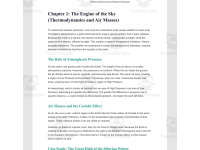
Phase 1 - Core Content & Theory - 10 Pages - This includes four chapters that represent the foundation of the unit. These chapters will help to explain to students complex topics in simple terms with real-life examples (i.e., 1900 Galveston Hurricane and the 1993 Superstorm).
Chapter 1 - The Engine of the Sky (Air Masses & Thermodynamics)
Chapter 2 - The Structure of Storms (Cyclogenesis & Frontal Boundaries)
Chapter 3 - The Mechanics of Fury (Tornadoes & Hurricanes)
Chapter 4 - The Meteorologists Toolkit (Data, Models, & Human Intuition)
-This phase will contain real-life examples of each of these chapters.
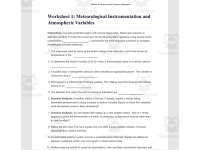
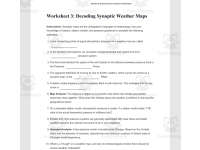
Phase 2 - Student Workbook - 11 Pages - The student workbook contains 10 worksheets with a variety of question types (e.g. Fill-in-the-blank, Data Analysis, Scenario Analysis, & Short Response) that will test the student's knowledge of the topics discussed in phase 1.
Some possible topics that the student workbook could cover are:
- Instruments used to measure weather and how to read a Synoptic Map.
- How thunderstorms develop and how tornadoes develop.
- Tropical Cyclones and Flash Floods
- How blizzards develop, heat waves develop, droughts develop, and how to model a weather event using predictive modeling software.
Phase 3: Visuals and Teacher's Resources (91 pages): The ultimate resource for teachers to help save time and increase lesson effectiveness.
Professional Quality Visuals: 3 professionally designed and scalable diagrams/charts covering key concepts (Atmospheric Variables, Forecast Process, and Storm Intensification), which can be used to project or print.
Detailed Answer Key: All the answers for each workbook question, including explanations for scenario-based problems.
Teacher Implementation Guide: A complete blueprint for success, including a detailed pedagogical rationale, a suggested 2-week pacing guide, and differentiated instruction strategies for input of both developing and advanced learners.
This resource is well-suited for:
Grades 7 to 10 - Earth Science
Advanced/Honors Middle School Science
Electives in Meteorology or Environmental Science
Homeschool Co-ops and STEM Clubs
Emergency Sub Plans (No Preparation Needed!).
Mastering the Process of Weather Predicting and Learning how meteorologists complete their work. Download for More Information.
Keywords: Weather Units, Meteorology, Extreme Weather, Earth Science, Middle School Science, High School Science, NGSS, Worksheets, Activities, Tornados, Hurricanes, Weather Prediction, STEM, Print & Go, No Prep, Sub Plans, Cyclogenesis, Climates, Teacher Resources.
There are Many Reasons Why Schools/Parents Enjoy Using This Innovation:
Teaches Students to Analyze the Real World: In addition to teaching students about types of clouds, this program develops their analytical abilities through collecting and analysing data; using models for interpretation; and understanding the inter-relationships between the factors that cause changes within the Earth system.
Ready to Use and Saves Time: The entire unit takes two weeks to complete and is complete with a teacher’s resource guide, a pacing schedule and an answer key. This makes preparing for instruction very easy.
Connects Science with Human Influence: The case studies from amazing weather events (the Joplin tornado, the Galveston hurricane) provide relevance to this type of science and illustrate how vital it is to be able to predict weather (saving lives).
Allows for Differentiation for All Students: The lesson plans in the teacher resource guide have been designed with differentiated strategies to enable every child to be successful (both developing learners and advanced learners).
Professionally Designed Visuals that are Easy to Understand: Each lesson in this unit is supported by visually appealing drawings and charts (professional looking) that will help make concepts such as pressure gradients and forecasting workflows tangible and concrete for all students.
Student Class Targeting :
Identify students based on evidence from the teacher guide or complexity of material:
1) Primary Target Group: 7th and 8th Grade Middle Schoolers taking Earth or Integrated Sciences courses. This material is high-level material and meets the systemic thinking capacity of these high schoolers.
2) Secondary Target Group: 9th and 10th Grade High School students taking introductory Earth or Environmental Science classes. This material could be used as a great “building block” or as an in-depth “review” for students who will take advanced classes their junior year.
3) Niche Target Group: Need for 6th Grade students with advanced/gifted potential for a challenging “niche” curriculum AND Home School Families with students interested in deep investigations of Meteorology
The original author of this Book - Syed Hammad Rizvi - has placed restrictions on how you can use it. The Book is for your own personal use only or for use by only one classroom teacher (single use per purchase). You cannot modify, redistribute, or sell any portion of this Book to anyone else or put it on the Internet for anyone else to access. If you'd like to share this Book with other educators and/or teachers, please purchase more than one copy (i.e., additional licenses) through Teachsimple. Thank you for your cooperation with this copyright and use policy!
Resource Tags
0 Reviews
Check out these other great products