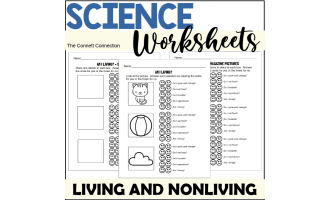
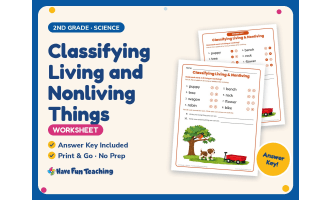
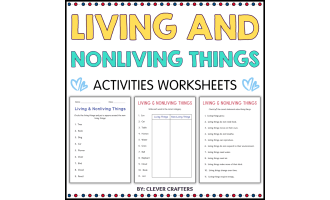
Living and Nonliving Things Worksheets & Activities | K-Grade 2

Science, Basic Science, Life Sciences, Animals, Biology, Nature & Plants, ELA, Language Development
Kindergarten, Grade 1, 2
Activities, Centers, Crafts, Classroom Decor, Worksheets & Printables, Flashcards, Task Cards, Workbooks, Worksheets


About This Product
Living and Nonliving Things Worksheets & Activities | K-Grade 2
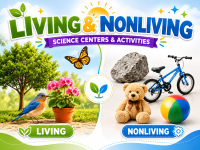
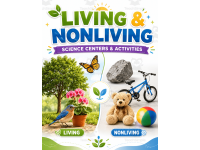
Help young learners explore the differences between living and nonliving things with this Living and Nonliving Things Science Centers & Activities Pack! Designed for kindergarten, first grade, and second grade learners, this 34-page printable science resource combines colorful teaching posters, realistic illustrations, vocabulary cards, sorting activities, mystery clue cards, and engaging worksheets.
Students will investigate the characteristics of living things, explore the basic needs of plants and animals, and develop scientific observation, classification, and critical thinking skills.
What's Included:
34 pages of printable learning materials
Teacher instructions
Colorful science teaching posters
6 illustrated science vocabulary cards
20 living and nonliving sorting cards
Living and nonliving sorting mat
Cut-and-paste classification worksheets
12 mystery clue cards
Scientific observation and evidence-based activities
Living and nonliving hunt
Living and nonliving mini book
Science review worksheets
Activities Included:
Identify living and nonliving things.
Sort pictures into living and nonliving categories.
Recognize the basic needs of plants and animals.
Explore how living things grow and change.
Identify characteristics of living things.
Understand why movement alone does not determine whether something is living.
Explore nonliving materials that come from living things.
Identify scientific evidence using multiple clues.
Complete a living and nonliving scavenger hunt.
Make a simple scientific claim and support it with evidence.
Solve mystery clue cards.
Color, cut, and assemble a living and nonliving mini book.
Complete science review questions.
Learning Objectives:
Distinguish between living and nonliving things.
Recognize plants and animals as living organisms.
Understand that living things have basic needs.
Describe how living things grow, change, and respond to their environment.
Recognize that different living things have different needs.
Develop sorting and classification skills.
Strengthen scientific observation and reasoning skills.
Build foundational life science vocabulary.
Use observations and evidence to explain scientific ideas.
Develop fine motor skills through cutting, pasting, and coloring.
Encourage scientific curiosity and independent learning.
Perfect For:
Kindergarten, first grade, and second grade classrooms
Elementary science lessons
Living and nonliving things units
Life science and biology lessons
Plant and animal studies
Interactive science centers
Classroom science displays
Small-group and whole-group instruction
Homeschool science
Independent practice
Morning work
Outdoor science activities
Science review and assessment
Hands-on and screen-free learning
How to Use:
Begin by introducing students to the characteristics of living and nonliving things using the colorful teaching posters and illustrated vocabulary cards. Discuss how plants and animals grow, change, have needs, and respond to their surroundings.
Print and cut apart the sorting cards. Students can classify each picture using the living and nonliving sorting mat. Laminate the cards for repeated use in science centers.
Use the cut-and-paste worksheets and mystery clue cards to reinforce classification skills and encourage students to look for more than one scientific clue.
Guide students through the living and nonliving hunt in a safe classroom or outdoor environment. Encourage learners to observe their surroundings, record their discoveries, and explain their thinking using evidence.
Reinforce learning by having students color, cut, and assemble their own living and nonliving mini book. Complete the review worksheets to assess understanding.
Younger learners may discuss their answers verbally with an adult, while more advanced learners can independently record their observations and explanations.
Product Details:
Grade Levels: Kindergarten, Grade 1, and Grade 2
Subjects: Science, Life Science, Biology, Animals, Nature and Plants, and English Language Arts
Resource Type: Science Centers, Posters, Flashcards, Task Cards, Crafts, Worksheets, and Printables
File Format: PDF
Total Pages: 34
Design: Color and Black-and-White
Editable: No
Answer Key: Included
Make science meaningful, interactive, and fun while helping young learners discover the fascinating differences between living and nonliving things with this ready-to-print educational resource!
Look, observe, classify, and discover!
Resource Tags
0 Reviews
Check out these other great products