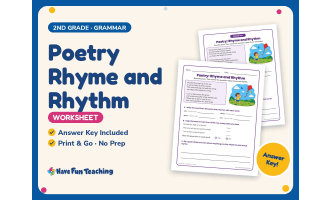
Rhythm and Rhyme Worksheet – 3rd Grade Insects & Poetry Practice



About This Product
Rhythm and Rhyme Worksheet helps third grade learners practice insects with clear directions and a clean, kid-friendly layout. Print it and it is ready for class, homework, or homeschool lessons.
Learning objective: By the end of this activity, students will be able to use their insects skills accurately and explain their thinking.
Why it works: Students stay on task because the directions are short and the practice is the right size for one sitting. Teachers save time because the page is ready to print and easy to check.
What's included:
1 printable worksheet page
Clear, student-friendly directions
Answer key (1 page)
Cover page
How it's organized: The page opens with these directions: "Read the poem below carefully. Listen for its steady rhythm and its rhyming words." Students then complete the practice items in order and check their work before turning it in.
Grade level: Designed for third grade students. It also works well for second grade and fourth grade students who need extra practice or a fresh review.
How to use it: Use it for whole-group practice, small-group instruction, independent work, centers, morning work, homework, or an emergency sub plan.
Answer key: An answer key is included, so you can check work quickly or let students self-correct.
Teaching tips and variations:
Use it as an exit ticket the day after a insects lesson to see who needs more support.
Slip the page into a sheet protector so students can practice again with dry-erase markers.
Pair students to compare answers and talk through any differences.
Skills covered: Insects, Poetry, Rhyming, English, Science, Writing
Standards: Supports Common Core RL.3.5.
File type: PDF, ready to print.
Number of pages: 3 (1 worksheet page, 1 answer key page, 1 cover page).
This printable is part of the Have Fun Teaching collection of grammar resources for elementary classrooms and homeschools. Visit our shop for more practice pages on related skills. Have Fun Teaching on Teach Simple
Resource Tags
0 Reviews
Check out these other great products