



3,952 products added recently
Page 58 - Reading Comprehension Activitites
Support your students in developing strong reading comprehension skills with a variety of engaging activities. This collection includes worksheets, graphic organizers, and discussion questions designed to help students understand and analyze texts. By integrating these resources into your teaching, you can enhance students' ability to interpret information and draw meaningful conclusions.

 Show filters

Reading Comprehension Nonfiction Set 3 - Mammals (Docs)
ELA, Reading, Common Core, Reading Comprehension, ESL, Language Development, Vocabulary, Spelling, Writing, Resources for Teachers, Grade 4, 5, Worksheets & Printables, Worksheets, Writing Prompts, Assessments, Teacher Tools, Tests, Quizzes and Tests, Centers, Activities
Reading Comprehension Passages Nonfiction Set 3 Overview No prep reading comprehension lessons, with enjoyable articles and topics. Each lesson has a blend of post-reading activities. Mixed questions to check overall understanding. Vocabulary activities, plus a writing section. Lessons also contain a bonus extension exercise at the end. Some you may like, some you may not, either way they are there if you wish to use them. Full answer keys are provided. Passages Include 1.Lions: Read about the second largest wild cat in this article. 2.Tiger Time: Tigers are such solitary creatures. Find out more in this lesson. 3.All About Horses: How is the author preparing to become a vet when she gets older? 4.All About Beavers: Here's all you need to know about 'nature's engineers'. 5.The Canadian Lynx: Canadian Lynxes look unique, and truly are amazing animals. 6.All About Cheetahs: The cheetah is the earth's fastest mammal. It can run as fast as 70 miles an hour! Docs Version This is the Docs editable and fillable version. This download is available in GOOGLE Docs, GOOGLE Forms, GOOGLE Slides. PDF, PPT, WORD. Browse the Complete Cored Catalog — 2,000+ Resources Included Reading Passages Each reading passage has been written specifically for students in Grades 4–5, using vocabulary and language that match their age and ability level. The collection covers a wide range of engaging topics, supported by colorful visuals that help bring the content to life. Every lesson is designed to build knowledge while keeping students interested and motivated to read. These resources are also designed with flexibility in mind. Unlike traditional textbooks that can quickly become outdated, lessons can be updated over time to reflect changes in technology, discoveries, and the world around us. Mixed Questions Every lesson includes a variety of questions that help students think more deeply about what they have read. The question section combines reading comprehension, vocabulary, and math skills, while also regularly reinforcing important reading strategies such as cause and effect, summarizing, compare and contrast, and drawing conclusions. Most lessons include a mix of multiple-choice and written-response questions, giving students opportunities to explain their thinking as well as select answers. Complete answer keys and sample responses are provided at the end of each lesson for quick and easy reference. Spelling & Vocabulary Each passage introduces students to useful words and phrases appropriate for Grades 4–5. To help build confidence and word knowledge, every lesson includes a spelling or vocabulary activity. Rather than repeating the same task throughout the collection, activities vary from lesson to lesson to keep practice fresh and engaging. Activities may include spelling challenges, sentence matching, decoding activities, mixed-up text exercises, and other vocabulary-building tasks connected directly to the reading. Writing Prompts Each lesson includes a writing activity that extends the ideas, themes, or topics explored in the passage. Students are encouraged to write in a variety of formats, with prompts providing helpful guidance and ideas to get them started. Writing tasks vary throughout the collection and may include creative writing, research activities, personal responses, poetry, opinion writing, and other engaging assignments. Full Answer Keys Complete answer keys and sample responses are included with every lesson, making planning and marking quicker and easier. Reading comprehension answers include evidence and support from the text, while math-based questions show the relevant working where appropriate. The answer keys are designed primarily for teachers but can also be shared with students when needed. Just for Fun Each lesson finishes with an optional extension activity called Just for Fun . These bonus activities provide an enjoyable way to extend learning beyond the main lesson and often encourage creativity, discussion, or independent thinking. They are completely optional, giving you the flexibility to use the activities that best suit your students and classroom needs. For similar downloads and other frees, do check out Cored Group on TeachSimple.
Author Cored Education
Rating
Tags Elementary, Reading, Comprehension, Vocabulary, Answers, Common Core, Spelling, Writing, Digital Centers, Vocabulary Assessments

Lobsters Reading Comprehension Passage - Cored Ed Encyclopedia
ELA, Language Development, Resources for Teachers, Reading Comprehension, Reading, Pre-Reading, Writing, Science, Animals, Life Sciences, Grade 2, 3, 4, 5, Worksheets & Printables, Worksheets, Teacher Tools, Centers, Activities, Writing Prompts, Assessments, Tests, Quizzes and Tests, Quizzes
This lobsters reading comprehension contains the following: Visualize on the Cover (Teacher Read Aloud Script) Start your lesson by taking a few moments to visualize the topic and share thoughts or feelings about it. Pre-Reading Trivia Students will write down one thing they already know about the subject and then read five more facts and discuss. These facts are fun, and the students will enjoy learning about the subject before reading more. Reading Passage The text is a high-interest reading passage with set paragraphs, roughly three to four paragraphs long. It contains a variety of themes about the topic, anywhere from history to technology. The passage is between 250 and 350 words in length. Mixed Questions The first question page contains four multiple-choice questions, each with a choice of four answers, and three written response questions that require a sentence or two from the student. Vocabulary Questions Practice seven key words from the text in this section across two activities. First section is scrambled words where students will unscramble three words given a clue for each. The second section is a word to meaning matching activity. Creative Writing In this question, the student will be required to write a five to eight sentence paragraph on a question related to the topic. Extension Activities This page is optional for fast finishers or to take home. There are several activities, each one requiring a different skill. Do some, do none, do all, completely optional - but you will feel reassured knowing every possibility is planned for. Includes summary writting question. Answer Key There are answers for the multiple-choice questions, written response questions have sample answers, vocabulary answers and if there is a summary question then a sample summary will be provided as well. FULL CATALOG OF DOWNLOAD LINKS AND ENCYCLOPEDIA INDEX HERE Lesson Snapshot Title: Lobsters Genre: Nonfiction (informational text) with a short sensory “visualize” opener Subject: Life Science (Animals) / Reading (Informational Text) Primary Topic: Lobster body parts, molting, habitat, and life cycle Estimated Guided Reading Level (A–Z): L What This Lesson Teaches Best Basic lobster classification and habitat: lobsters are crustaceans , related to crabs and shrimp, living on the ocean floor in crevices or burrows . How lobster body parts help them survive: two different “job” claws , antennae with sensors, eyes on stalks , and a strong tail that can flick to shoot backward. Molting as a growth process: a lobster’s exoskeleton can’t stretch, so it molts , leaving it soft and unprotected until the new shell hardens. Day vs. night behavior: hiding among rocks during the day and crawling out at night to hunt or scavenge . Early life stages: females carry thousands of eggs on their swimmerets , and tiny hatchlings float near the surface at first. Learning Goals Identify what kind of animal a lobster is and where it lives, using text evidence. Describe the two different claws and explain what each one does. Explain why lobsters molt and what happens to the lobster during and after molting. Compare what lobsters do during the day versus at night, based on the passage. Describe one way lobsters move or escape danger using their tail. Describe how baby lobsters begin life and what females do with eggs. Key Vocabulary From the Text crustacean — an animal with a hard outer shell. crevice — a narrow crack or small opening in rock. exoskeleton — a hard outer shell that protects the body. molt — shed an old outer covering so a new one grows. scavenge — search for and eat leftover or dead food. Cored Ed Encyclopedia Overview The Cored Ed Encyclopedia is a weekly series of lessons that you can pick up and use right away. These short readings fit into whatever time you have available. Each one includes a warm-up, a reading, and a set of questions, but it’s flexible — you can do just the reading, the full lesson, or skip the writing section if you need to. Each lesson focuses on a single topic so students don’t get lost. The writing is clear but never childish, making it perfect for grades two through five. Topics range from animals and science to history, inventions, and everyday things. No matter the level of the student, everyone should take away at least one new idea or fact from each lesson. The materials are easy to print, easy to explain, and require no setup. They work well for whole-class teaching, partner work, or independent study.
Author Cored Education
Rating
Tags Vocabulary, Spelling, Reading Comprehension, Reading Passages, Reading, Creative Writing, Reading Strategies, Writing Prompts, Lobsters, Animals

Reading Comprehension Nonfiction Set 4 - Nature (Slides)
ELA, Reading, Language Development, Vocabulary, Common Core, Reading Comprehension, Spelling, ESL, Creative Writing, Writing, Grade 4, 5, Teacher Tools, Presentations, Assessments, Activities, Tests, Quizzes and Tests
Reading Comprehension Passages Nonfiction Set 4 Overview No prep reading comprehension lessons, with enjoyable articles and topics. Each lesson has a blend of post-reading activities. Mixed questions to check overall understanding. Vocabulary activities, plus a writing section. Lessons also contain a bonus extension exercise at the end. Some you may like, some you may not, either way they are there if you wish to use them. Full answer keys are provided. Passages Include 1.Best Season: Is winter the best season? What activities do we do? Read more in this article. 2.Changing Leaves: This article explains how and why leaves change in fall. 3.Pesky Weeds: Love them or hate them, dandelions are more useful that you think. 4.All About Hurricanes: Here's all you need to know about hurricanes. 5.Earth Day: What can we do to help our world on a daily basis? 6.Caspian Sea: What? Where? How? Why? Learn about the history of the Caspian Sea in his lesson. Slides Version This is the Slides editable and fillable version. This download is available in GOOGLE Docs, GOOGLE Forms, GOOGLE Slides. PDF, PPT, WORD. FULL CATALOG OF DOWNLOAD LINKS HERE Grade 4/5 Links Fiction Set 1 - Animals Google Docs Google Forms Google Slides PDF PPT Word Guided Reading Materials Fiction Set 2 - Family Google Docs Google Forms Google Slides PDF PPT Word Guided Reading Materials Fiction Set 3 - Friends Google Docs Google Forms Google Slides PDF PPT Word Guided Reading Materials Fiction Set 4 - School Google Docs Google Forms Google Slides PDF PPT Word Guided Reading Materials Fiction Set 5 - Sports Google Docs Google Forms Google Slides PDF PPT Word Guided Reading Materials Nonfiction Set 1 - Birds Google Docs Google Forms Google Slides PDF PPT Word Guided Reading Materials Nonfiction Set 2 - Insects Google Docs Google Forms Google Slides PDF PPT Word Guided Reading Materials Nonfiction Set 3 - Mammals Google Docs Google Forms Google Slides PDF PPT Word Guided Reading Materials Nonfiction Set 4 - Nature Google Docs Google Forms Google Slides PDF PPT Word Guided Reading Materials Nonfiction Set 5 - Sea Animals Google Docs Google Forms Google Slides PDF PPT Word Guided Reading Materials Reading Passages Overview Each passage is especially written for Grade 4-5 students, including key vocabulary required for this age group. Topics are varied and are accompanied by colorful graphics. Topics are meant to educate, yet entertain the modern student. These passages are perfect for the modern classroom. Whereas textbooks can become outdated in no time, any changes to technology or the world will result in updates to this product. Mixed Questions The mixed questions section of each lesson includes a variation of five comprehension, vocabulary and math questions. In addition, key reading strategies are frequently covered including cause & effect, summarizing, compare & contrast and making conclusions. Two or three of the questions will be MCQs and other questions will require a written response of some kind. Full answers and example responses appear at the end of the lesson. Spelling & Vocab Each reading passage contains a variety of words and phrases designed for Grade 4-5 students. Spelling and vocab activities provide the opportunity to build fluency with these words. As it can become quite mundane doing the same activities over and over, each lesson in a set will contain a different spelling and vocab activity . Activities include: spelling games, sentence match-ups, mixed-up text and decoding words from the lesson. Writing Prompts Writing prompts are designed to continue the theme or lessons learned in the story. Students are persuaded to write in a variety of ways and each prompt includes several cues to help. As with the spelling/vocab section, writing prompts will vary. This includes research pieces, reading responses, poetry and creative writing prompts. Full Answer Keys Full answer keys and sample responses are provided so no matter how busy you are, you know you're covered! Mixed question answers provide evidence from the text, math questions contain the relevant workings. Answers are designed for use by the teacher, but also suitable as a handout to the student. Just for Fun Each lesson will have a bonus extension exercise. This is something fun to extend the lesson with. You can find these at the end of each lesson, titled Just for Fun. Just for Funs are optional. Some you may like, some you may not. Either way, they are there to do with as you wish. For similar downloads and other frees, do check out Cored Group on TeachSimple.
Author Cored Education
Tags Elementary, Reading, Comprehension, Vocabulary, Answers, Ccss, Common Core, Spelling, Writing, Passages

Illinois State Flipbook (Capital, Bird, Flower, Flag, Animal)
Creative Arts, Art, Social Studies, ELA, History, History: USA, Geography, Reading, Reading Comprehension, Grammar, Language Development, Spelling, Writing, Grade 2, 3, 4, Activities
Introducing the Illinois State Flipbook The Illinois State Flipbook is an engrossing, hands-on initiative created to enlighten elementary school students about the significant symbols of Illinois. This low-maintenance tool provides an appealing activity for public educators and homeschoolers wanting to implement a captivating exercise to their course outline. The flipbook meticulously explains five crucial aspects of Illinois: The state capital, Its specific species of bird The unique flower The iconic flag And the representative animal of the state. An Interactive Cross-Curricular Activity This interactive cross-curricular activity offers an immersive learning experience by combining elements from several disciplines into one comprehensive study unit. By incorporating art through drawing and coloring activities, delving into English language arts with reading passages, local geography with map studies, grammar through structured research report writing guides, and historical context related to the state's symbols. Reading for understanding materials about the state's rich heritage even opens up avenues for independent scientific research about native birds and plants of Illinois. Additional Topics Covered: Social studies: Midwest region focused study; Spelling exercises : New terms introduced during lessons getting linked; Writing prompts : Encouraging further exploration beyond facts contained within unit scope. You can opt between two print versions: One that requires cutting skills or a cut-free version. There are also two design options - featuring visual illustrations accompanying information or text-based representation only. The purpose-filled flipbooks cater different lesson requirements - whether it’s introducing fresh topics around Illinois' cultural symbols or revisiting previously taught material through engaging classroom activities. They work perfectly for both independent or group tasks at social studies/history corners. This hefty package has no less than 37 PDF pages containing instructions for four easily assembled flipbooks each detailing seven key themes associated with Illinois—the state's capital among others. For teachers eager to venture further into unique facts across all fifty states, the resource profile link provides other notably enriching cross-curricular activities testing effective teaching practices' boundaries. Illinois State Flipbook - Opening a World of Knowledge! True to its name, the Illinois State Flipbook flips open a world of knowledge, discovery and educational fun!
Author Heather Huhman
Tags Flipbook, Illinois Symbols, Hands-on Learning, Interactive Activity, Cross-curricular
Life Science Reading Comprehension Passage: Insects (PDF)
Science, ELA, Reading, Reading Comprehension, Strategies, Resources for Teachers, Life Sciences, Insects, Grade 6, 7, 8, 9, Writing Prompts, Worksheets & Printables, Centers, Activities, Teacher Tools, Assessments, Quizzes and Tests, Quizzes, Tests
Life Science Reading Comprehension Passage and Questions: Insects (PDF) This very engaging life science reading passage about insects . It explains that insects may be small, but they have a huge impact. They help pollinate plants , spread seeds , recycle waste , and provide food for many animals . It also explains what makes an insect an insect, including its exoskeleton, three body parts, six legs, and antennae . This passage is designed to bridge the gap between science and literacy through strengthening reading comprehension and sparking scientific curiosity in middle school students. The passage blends English Language Arts skills with accurate science content that supports NGSS classroom practice. Ideal for interdisciplinary learning in ELA and Science. Suitable for Grade 9 review, too! Student Tasks for The Passage: 5 multiple-choice questions targeting main idea, key details, inference, vocabulary in context, and use of evidence 5 vocabulary matching items with clear, student-friendly definitions 5 text-based questions that require citing specific lines or facts 1 summary prompt that asks students to condense central ideas accurately Full answer key for every section Available Formats for this Resource Fillable PDF Word Docs Google Docs FULL CATALOG OF DOWNLOADING LINKS HERE Product Details Length: 4 pages total Grades: 6–8, also suitable for Grade 9 review Use cases: close reading, stations, homework, intervention, test prep, and sub plans Standards support: reinforces informational-text skills and supports NGSS-style sense making through observation, modeling, and clear use of claim, evidence, and reasoning Why Teachers Choose This Set Authentic science content paired with rigorous literacy practice Consistent task structure across all passages for easier planning and smoother student routines Clear, age-appropriate writing that builds confidence without oversimplifying Other Science Reading Collections you May find in the store: 1. Astronomy & Space Science 2. Volcanoes, Rocks, & Mountains 3. Rock Cycle, Soil, & Sinkholes 4. Mars, Glaciers, & Antarctica 5. Water Cycle, Acid Rain, & Wastewater 6. Insects, Animals, & Ecosystems 7. Bioluminescence & Insects 8. Animal Skin, Cats, & T. Rex 9. Human Body and Senses 10. Health & Applied Bioscience 11. Waves, Light, & Imaging 12. Electricity & Energy 13. Motion & Materials 14. Chemistry and Materials Science Use this set to reinforce ELA skills in science, to add literacy to your lessons, and to support independent work. The passages strengthen main idea, evidence use, vocabulary in context, inference, cause and effect, and summary writing. With ready-to-use assessments and complete answer keys, you can provide focused practice that is simple to run and fast to review.
Author Middle & High School - CORED Education
Rating
Tags Middle School, Reading Comprehension, Reading Strategies, ELA, Centers, Reading Passage, Assessments, Vocabulary, Life Science, Insects

Fog Free Reading Comprehension Passage
ELA, Reading Comprehension, Reading, Language Development, ESL, Strategies, Library, Resources for Teachers, Earth and Environmental Sciences, Science, Grade 2, 3, 4, 5, Worksheets & Printables, Worksheets, Teacher Tools, Centers, Activities, Writing Prompts, Assessments, Quizzes and Tests, Quizzes, Tests
Fog reading comprehension: This Product Includes Reading Passage Each lesson begins with a high-interest reading passage written in clear, student-friendly paragraphs. The passage is usually three to four paragraphs long and explores different parts of the topic, such as history, science, technology, people, places, or real-world connections. Most passages are between 250 and 350 words, making them long enough to build reading stamina but short enough to fit easily into a regular lesson. Before reading, ask students to look at the heading and make a quick prediction: What do they think the passage will be about? What do they already know about this topic? What words or ideas might appear in the text? First Read Options You can choose the reading format that best fits your class: Teacher read-aloud – Great for support, modeling fluency, and helping students access the text. Partner reading – Students read paragraph by paragraph with a partner. Independent reading – Best for students who are ready to work with more independence. While reading, students can underline important details and any vocabulary words they think might appear later in the questions. Mixed Questions The first question page includes four multiple-choice questions and three written response questions. The multiple-choice questions each include four answer choices. These are useful for checking basic understanding, key details, vocabulary, and reading skills. Students can complete the multiple-choice questions independently first, then quickly review the answers as a class. The written response questions require students to answer in one or two complete sentences. Encourage students to include evidence from the passage when possible. A helpful sentence frame is: “I think ___ because the text says ___.” If students get stuck, remind them to return to the passage and look for the part that helps answer the question. Creative Writing The creative writing task asks students to write a short paragraph of five to eight sentences based on a question connected to the topic. Before writing, have students jot down three key ideas they want to include. You can also ask a few students to share ideas with the class to support anyone who needs help getting started. Writing Expectations Students should aim to include: 5–8 complete sentences At least 2 facts or details from the passage At least 2 vocabulary words from the previous page After writing, students can read their paragraphs aloud while classmates listen for facts, details, and vocabulary words. Answer Key An answer key is included for the multiple-choice questions. Written response questions include sample answers to show what a strong response might look like. Vocabulary answers are also provided. If the lesson includes a summary question, a sample summary is included as well.
Author Cored Education
Rating
Tags Reading Comprehension, Reading Passages, Reading, Ela Mcqs, Creative Writing, Comprehension, Free, Free Reading, Science, Earth Science

The story of Mother's Day (Reading Comprehension Activities)
ELA, Reading, Reading Comprehension, Grade 4, 5, 6, 7, Activities
This product concerns children from eight to twelve years old. The material includes an extensive text on the history of Mother's Day, i.e. how and why it was established. The text is accompanied by a worksheet with related comprehension tasks (multiple choice, answering questions, writing a paragraph). The material also includes a related picture to be shown to the whole class. This product can be used both at school and at home. It can also be an opportunity (at home) for mother and child to work together so that they can complete the worksheet together. Check out the follwing product's about Mother's Day For students of same age you can also use the follwing products Story Telling Poster Story Telling (6 A4 Posters) AWAKENING CREATIVITY in the English – Language Arts classroom Part 4 AWAKENING CREATIVITY in the English – Language Arts classroom Part 1 AWAKENING CREATIVITY in the English – Language Arts classroom Part 3 AWAKENING CREATIVITY in the English – Language Arts classroom Part 2 Sensory Language: Poster 2 (I describe using my 5 senses...) What is Sensory Language? It is the use of sensory details in description. Sensory Language: Descriptive Writing Activities 2 Sensory Language: Roll and tell! (A rolling die game with task cards) Sensory Language: Poster 1 (I read using my 5 senses...) Sensory Language: Poster 3 (What is sensory language?) Sensory Language: Descriptive Writing Activities 3 READING COMPREHENSION worksheets for INFORMATIONAL texts READING COMPREHENSION worksheets for ANY text Let’s READ about ZEBRAS Poster: I'm reading=I'm thinking Story Mountain Plot your story! (Story Mountan) Story Telling Poster Story Character (A4 poster) READING COMPREHENSION worksheets for ANY story Part 1 READING COMPREHENSION worksheets for ANY story Part 2 I offer the follwing products that you might find interesting Trace and colour 4 (farm animimals) Trace and colour 7 (school stuff) Trace and colour 6 (farm animals) Trace and colour 5 (farm animals) Trace and colour 8 (means of transportation) Trace and colour 3 Trace and colour 9 (football-soccer) Trace and colour 1 Trace and clolour 2 Summer Vocabulary Part 1 Summer Vocabulary Part 2 Fall/Autumn Vocabulary Part 1 Fall/Autumn Vocabulary Part 2 Spring Vocabulary Part 1 Spring Vocabulary Part 2 Winter: Vocabulary (word-wall) Seasons (4 A4 posters) The 4 seasons (A4 poster)
Author Teach To Heaven, Reoulita.com
Tags Mother's Day, Reading Comprehension, Multiple Choice, Question Answering, Paragraph Writing, Worksheet, Printout, Image

Social Studies Reading Passage: Milk Carton Program (Word)
ELA, Reading, Reading Comprehension, Strategies, Resources for Teachers, Social Studies, Sociology, Grade 6, 7, 8, 9, Writing Prompts, Worksheets & Printables, Centers, Activities, Teacher Tools, Assessments, Quizzes and Tests, Quizzes, Tests
Missing Children Milk Carton Program: Social Studies Reading Comprehension Passage (Word) This resource introduces a unique Social Studies reading comprehension passage with questions about The Missing Children Milk Carton Program. The passage is carefully designed to bridge the gap between social studies and literacy through strengthening reading comprehension and sparking knowledge curiosity in middle school students. Each passage blends English Language Arts skills with accurate social studies content . Ideal for interdisciplinary learning in ELA and Social Studies. Suitable for Grade 9 review, too! Student Tasks throughout the passage: 5 multiple-choice questions targeting the following skills: main idea, key details, inference, vocabulary in context, and use of evidence 5 vocabulary matching items with clear, student-friendly definitions 5 text-based questions that require citing specific lines or facts 1 summary prompt that asks students to condense central ideas accurately Full answer key for every section Available Formats for this Resource: PDF Fillable PDF Google Docs FULL CATALOG OF DOWNLOADING LINKS HERE Social Studies Reading Comprehension Collection Links: 1. Ancient Civilizations PDF Fillable PDF Word Docs Google Docs 2. Early Empires and Trade Networks PDF Fillable PDF Word Docs Google Docs 3. The Founding of the United States PDF Fillable PDF Word Docs Google Docs 4. Language, Culture, and Meaning PDF Fillable PDF Word Docs Google Docs 5. Psychology and Society PDF Fillable PDF Word Docs Google Docs 6. Global Festivals and Traditions PDF Fillable PDF Word Docs Google Docs 7. Extreme Environments and People PDF Fillable PDF Word Docs Google Docs 8. Food, Culture, and Preservation PDF Fillable PDF Word Docs Google Docs 9. Global Food Customs PDF Fillable PDF Word Docs Google Docs 10. Media, Communication, and Popular Culture PDF Fillable PDF Word Docs Google Docs 11. Human Impact on the Environment PDF Fillable PDF Word Docs Google Docs 12. Civic Action and Social Change PDF Fillable PDF Word Docs Google Docs 13. Fashion, Society, and Power PDF Fillable PDF Word Docs Google Docs 14. People, Places, and Unusual Histories PDF Fillable PDF Word Docs Google Docs Product Details: Length: 5 pages Grades: 6–8, also suitable for Grade 9 review Use cases: close reading, stations, homework, intervention, test prep, and sub plans Why Teachers Choose This Passage: Authentic social studies content paired with rigorous literacy practice Consistent task structure for easier planning and smoother student routines Clear, age-appropriate writing that builds confidence without oversimplifying Use this passage to reinforce ELA skills in social studies, to add literacy to your lessons, and to support independent work. The passage strengthens main idea, evidence use, vocabulary in context, inference, cause and effect, and summary writing. With ready-to-use assessments and complete answer keys, you can provide focused practice that is simple to run and fast to review.
Author Middle & High School - CORED Education
Rating
Tags Middle School, Reading Comprehension, Reading Strategies, ELA, Centers, Reading Passage, Assessments, Vocabulary, Social Studies, Sociology

Science Reading Passage: The Science of Clothing (Fillable PDF)
Science, ELA, Reading, Reading Comprehension, Strategies, Resources for Teachers, Technology, Engineering, Grade 6, 7, 8, 9, Writing Prompts, Worksheets & Printables, Centers, Activities, Teacher Tools, Assessments, Quizzes and Tests, Quizzes, Tests
Science Reading Comprehension Passage and Questions: The Hidden Science of Clothing (Fillable PDF) This very engaging science reading passage is about how modern clothing uses science and technology to improve safety, performance, comfort, and exploration . It explains different examples of high-tech clothing and materials, including compression clothing for athletes, flame-resistant clothing for firefighters and workers, aerogel for astronaut suits and space rovers, and smart fabrics that can play music, answer calls, or track a heartbeat. The visuals on page 1 support these examples by showing athletic clothing, protective work gear, and space-related clothing. This passage is designed to bridge the gap between science and literacy through strengthening reading comprehension and sparking scientific curiosity in middle school students. The passage blends English Language Arts skills with accurate science content that supports NGSS classroom practice. Ideal for interdisciplinary learning in ELA and Science. Suitable for Grade 9 review, too! These worksheets are designed as fillable PDFs , which means students can type their answers directly into the document on any computer or tablet . Each page includes highlighted text fields that show them exactly where to type! Student Tasks for The Passage: 5 multiple-choice questions targeting main idea, key details, inference, vocabulary in context, and use of evidence 5 vocabulary matching items with clear, student-friendly definitions 5 text-based questions that require citing specific lines or facts 1 summary prompt that asks students to condense central ideas accurately Full answer key for every section Available Formats for this Resource PDF Word Docs Google Docs FULL CATALOG OF DOWNLOADING LINKS HERE Product Details Length: 4 pages total Grades: 6–8, also suitable for Grade 9 review Use cases: close reading, stations, homework, intervention, test prep, and sub plans Standards support: reinforces informational-text skills and supports NGSS-style sense making through observation, modeling, and clear use of claim, evidence, and reasoning Why Teachers Choose This Set Authentic science content paired with rigorous literacy practice Consistent task structure across all passages for easier planning and smoother student routines Clear, age-appropriate writing that builds confidence without oversimplifying Other Science Reading Collections you May find in the store: 1. Astronomy & Space Science 2. Volcanoes, Rocks, & Mountains 3. Rock Cycle, Soil, & Sinkholes 4. Mars, Glaciers, & Antarctica 5. Water Cycle, Acid Rain, & Wastewater 6. Insects, Animals, & Ecosystems 7. Bioluminescence & Insects 8. Animal Skin, Cats, & T. Rex 9. Human Body and Senses 10. Health & Applied Bioscience 11. Waves, Light, & Imaging 12. Electricity & Energy 13. Motion & Materials 14. Chemistry and Materials Science Use this set to reinforce ELA skills in science, to add literacy to your lessons, and to support independent work. The passages strengthen main idea, evidence use, vocabulary in context, inference, cause and effect, and summary writing. With ready-to-use assessments and complete answer keys, you can provide focused practice that is simple to run and fast to review.
Author Middle & High School - CORED Education
Rating
Tags Middle School, Reading Comprehension, Reading Strategies, ELA, Centers, Reading Passage, Assessments, Vocabulary, Technology

Apple Orchard Reading Passage - Reading Activity
ELA, Holiday & Seasonal, Reading, Reading Comprehension, Seasons, Fall, Kindergarten, Preschool, Grade 1, 2, 3, Activities
Take your students on a crisp fall adventure with the Apple Orchard Reading Passage! This 2-page reading activity will have them practically smelling fresh apples and feeling the crunch of leaves underfoot all without leaving their seats. Perfect for autumn-themed lessons or when you just want to bring a little nature into your reading time, this passage is packed with fun and educational content. As they read about a day at the orchard, students will learn about the sights, sounds, and apple-related activities—think apple picking, cider sipping, and maybe even a pie or two. Once they’ve soaked up the story, they’ll tackle comprehension questions that test their understanding without feeling like a chore. It’s like a bite-sized field trip that won’t require permission slips, just a love for learning and, well, apples. Whether your students are fans of Granny Smiths, Honeycrisps, or are more into the “apple pie” side of things, this reading passage is sure to delight. Who knows, it might even inspire them to ask you for a classroom apple tasting .
Author Ponder Palette Plazza
Tags Reading, Reading Passages, Reading Comprehension Passages, Vocabulary, Autumn Reading Passages, Fall Reading Passages, Apples, Fall Activities

Ancient Greece : Sparta Reading Comprehension & Question Worksheet Gre
Reading Comprehension, Reading, ELA, History: Ancient, History, Social Studies, Grade 4, 5, Centers, Activities, Assessments, Teacher Tools
Engaging and Informative! Take students on a journey through Ancient Greece with this reading comprehension resource focused on the powerful city-state of Sparta. Designed for upper elementary and middle school learners, this activity helps students strengthen reading comprehension and critical thinking skills while exploring Spartan history, culture, and military traditions. Students will learn about the origins of Sparta, the training of Spartan warriors, the roles of women in Spartan society, the lives of the helots, and Sparta’s involvement in major wars. Each informational passage includes comprehension questions that encourage students to analyze information, improve vocabulary, and deepen their understanding of Ancient Greek civilization. The resource features a clear and student-friendly format that supports both independent learning and classroom instruction. It is ideal for social studies lessons, literacy centers, homework, substitute plans, morning work, small-group activities, and homeschool learning. Perfect for Grades 4–8, ESL and ELL learners, intervention groups, and history enrichment activities. File type: PDF
Author Sadigitalart
Rating
Tags Ancient Greece, Sparta Reading, Worksheet Greek, History Of Sparta
Social Studies SAMPLE Passage: The U.S. Constitution (Fillable PDF)
ELA, Reading, Reading Comprehension, Strategies, Resources for Teachers, Social Studies, Biographies, Government, History: USA, History, Grade 6, 7, 8, 9, Writing Prompts, Worksheets & Printables, Centers, Activities, Teacher Tools, Assessments, Quizzes and Tests, Quizzes, Tests
This is a ONE PASSAGE SAMPLE. The following is the description of the FULL resource and the downloading links: Social Studies Reading Comprehension Passages: The Founding of the United States (Fillable PDF) This resource introduces a collection of Social Studies reading comprehension passages about Benjamin Franklin and Writing the constitution (Founding the United States). The passages are carefully designed to bridge the gap between social studies and literacy through strengthening reading comprehension and sparking knowledge curiosity in middle school students. Each passage blends English Language Arts skills with accurate social studies content. Ideal for interdisciplinary learning in ELA and Social Studies. Suitable for Grade 9 review, too! What Is Included in this Collection? There are three informational passages (with full answer keys): Franklin’s Notebook of Virtues Benjamin Franklin: Man of Ideas Writing the Constitution: Three Branches, One Nation For Each Passage, students will have multiple tasks to complete as follow: 5 multiple-choice questions targeting main idea, key details, inference, vocabulary in context, and use of evidence 5 vocabulary matching items with clear, student-friendly definitions 5 text-based questions that require citing specific lines or facts 1 summary prompt that asks students to condense central ideas accurately Available Formats for this Resource Fillable PDF Word Docs Google Docs FULL CATALOG OF DOWNLOADING LINKS HERE For more Social Studies Reading Passages, check the following Links: Ancient Civilizations PDF Fillable PDF Word Docs Google Docs Early Empires and Trade Networks PDF Fillable PDF Word Docs Google Docs The Founding of the United States PDF Fillable PDF Word Docs Google Docs Language, Culture, and Meaning PDF Fillable PDF Word Docs Google Docs Psychology and Society PDF Fillable PDF Word Docs Google Docs Global Festivals and Traditions PDF Fillable PDF Word Docs Google Docs Extreme Environments and People PDF Fillable PDF Word Docs Google Docs Food, Culture, and Preservation PDF Fillable PDF Word Docs Google Docs Global Food Customs PDF Fillable PDF Word Docs Google Docs Media, Communication, and Popular Culture PDF Fillable PDF Word Docs Google Docs Human Impact on the Environment PDF Fillable PDF Word Docs Google Docs Civic Action and Social Change PDF Fillable PDF Word Docs Google Docs Fashion, Society, and Power PDF Fillable PDF Word Docs Google Docs People, Places, and Unusual Histories PDF Fillable PDF Word Docs Google Docs Product Details Length: 13 pages total Grades: 6–8, also suitable for Grade 9 review Use cases: close reading, stations, homework, intervention, test prep, and sub plans Why Teachers Choose This Set Authentic social studies content paired with rigorous literacy practice Consistent task structure across all passages for easier planning and smoother student routines Clear, age-appropriate writing that builds confidence without oversimplifying Use this set to reinforce ELA skills in social studies, to add literacy to your lessons, and to support independent work. The passages strengthen main idea, evidence use, vocabulary in context, inference, cause and effect, and summary writing. With ready-to-use assessments and complete answer keys, you can provide focused practice that is simple to run and fast to review.
Author Middle & High School - CORED Education
Rating
Tags Middle School, Reading Comprehension, Reading Strategies, ELA, Centers, Reading Passage, Assessments, Vocabulary, Social Studies, U.S Government

Bugs for Lunch Read Aloud Book Companion
ELA, Reading, Reading Comprehension, Literature, Science, Life Sciences, Insects, Grade 2, 3, 4, Read Alouds, Activities
This picture book companion is a complete supplemental resource for the book Bugs for Lunch by Margery Facklam. It includes 15 print-and-go reading activities to choose from, making this resource ideal for customizing learning to your student's specific needs and academic abilities. Students will investigate various bugs and insects, conduct research to learn more about people all over the world who eat bugs, compare & contrast, make inferences and connections, learn and apply new vocabulary, answer questions that require them to think beyond the text, and much more! Students will be captivated by the stimulating activities, while educators will value the saved effort in searching for premium resources to tackle complex reading concepts. The activities on offer aim to promote advanced cognitive skills, urge students to cite textual justifications for their conclusions, and motivate them to articulate their personal opinions and views. ⭐️This Resource Includes:⭐️ ◾ Bug Lunch Match-Up: Students cut out the insects and glue them in the box next to who might eat them for lunch (ANSWER KEY INCLUDED). ◾ Who Am I?: Students will match the insects and animals in the word bank to the descriptions below. Then, for each one, draw and color a picture (ANSWER KEY INCLUDED). ◾ Words That Rhyme: Students read the word pairs and come up with other words that rhyme. ◾ Word Scramble: Students use the details from the book to unscramble the words (ANSWER KEY INCLUDED). ◾ 3-2-1: Students will describe three ways that the animals or insects in the book catch their lunch, explain two things they learned, and name one animal or insect they want to learn about and explain why. ◾ Write & Illustrate a Poem: Students choose an animal or insect not featured in the book and write a four-line poem about it. Then they create an illustration to go with their poem. ◾ Crossword Puzzle: Students use the clues and the word bank to fill in the crossword puzzle (ANSWER KEY INCLUDED). ◾ Word Search Puzzle: Students use the clues to fill in the puzzle. Words can go across or down. Letters are shared when the words intersect (ANSWER KEY INCLUDED). ◾ Bug-tastic Recipe: Students create a bug-based recipe. They will list the ingredients, write step-by-step cooking instructions, and draw a picture of your bug-inspired dish. ◾ Crawly Café Menu: Students create a bug-based menu for breakfast, lunch, or dinner. ◾ Book Review: Students will rate and review the book. ◾ Buggy Bites Around the World: Students will scan the QR code to learn more about people all over the world who eat bugs. Then, in the boxes on the map below, they will describe what bugs are eaten in each country. ◾ Critter Research (3 versions are included): Students roll a die to see which insect or animal they will research to learn more about. Then, they conduct research using teacher-approved websites and informational texts to look for information to answer the provided questions. This resource is for extension read-aloud activities only. The book is not included. ⭐️You may also like: ⭐ TEXT SET #1: "The Importance of Friendship" ◾ A Weekend With Wendell Read Aloud Book Companion Activities for IRA ◾ First Come the Zebra Read Aloud Book Companion Activities for IRA ◾ This is Our House Read Aloud Book Companion Activities for IRA ◾ Horace and Morris But Mostly Dolores Read Aloud Book Companion Activities for IRA ◾ The Old Woman Who Named Things Read Aloud Book Companion Activities for IRA TEXT SET #3: "Finding Your Way in a New Place" ◾ Grandfather Counts Read Aloud Book Companion Activities for IRA ◾ The Have a Good Day Cafe, Read Aloud Book Companion Activities for IRA ◾ Roses for Gita Read Aloud Book Companion Activities for IRA ◾ Mango, Abuela, and Me, Read Aloud Book Companion Activities for IRA ◾ Home at Last Read Aloud Book Companion Activities for IRA TEXT SET #7: "Exploring Narrative Nonfiction" ◾ Cactus Hotel Read Aloud Book Companion Activities for IRA ◾ A Log's Life Read Aloud Book Companion Activities for IRA ◾ Salmon Stream Read Aloud Book Companion Activities for IRA ◾ Think of an Eel Read Aloud Book Companion Activities for IRA ✨Be sure to check out my storefront here: https://teachsimple.com/contributor/creatively-gifted
Author Creatively Gifted
Tags IRA, Picture Book Activities, Read Aloud Lessons, Interactive Read Aloud Activities, Elementary Reading, Reading Comprehension, Fountas And Pinnell IRA, Family, Second Grade, Memory Stories
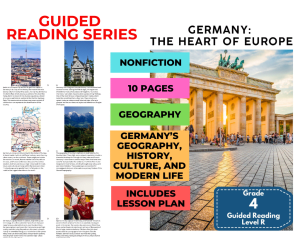
Germany: The Heart of Europe: Guided Reading Level R with Lesson Plan
ELA, Resources for Teachers, Reading Comprehension, Reading, Science, Geography, Social Studies, History, Earth and Environmental Sciences, Technology, Grade 3, 4, 5, Worksheets & Printables, Worksheets, Teacher Tools, Centers, Activities, Literacy Readers, Quizzes, Quizzes and Tests, Assessments, Lesson Plans
This Germany: The Heart of Europe (level r) guided reading book with lesson plan includes: Guided Reading Color Label (front cover x1) This is a quick way to match the book’s demands to what students can generally handle.. The overall goal is to use the level/color to pick books for several smaller groups. To qualify for a certain level, a student is expected to read a book from that level with about 90–94% accuracy. If a student is consistently accurate and understands, move up a level. If the student is struggling at that level, drop down and add more support. Each student will improve at completely different rates, but it is generally one of the best ways to check progress across the class. DOWNLOAD THE CATALOG TO VIEW ALL GUIDED READING BOOKS AVAILABLE (SORTED LEVELS A-Z) Pre-Reading Question (x1) Teacher asks the prompt aloud, can be while showing the cover or first page. Students share what they already know, or make educated guesses from the cover. Prompt them to use the target vocabulary. Write some of their responses on the board to look back at during the reading. Vocabulary Words (x5) Introduce the five words, best doing it one at a time. Start by saying it, while students repeat and then see if anyone knows what it means before reading further. Read through the meaning and try to briefly connect each word to a picture or gesture so it’s meaningful. Ask students to flip through the book pages and point to where they see each of the vocabulary words. While reading the book pause upon coming across one of the vocab words or read the sentence twice to make sure students understand the word has appeared. Optional: Ask students to raise hands whenever they see/hear one of the new words. Guided Reading Pages (x10) Check the book snapshot (below) for: primary topic - do you need to prep extra reading or intro materials on this? what is taught best - decide on 1-2 bullets to focus on, use the prompt or words provided here for best results. learning goals - what you are checking for students to be able to do after the session, elicit answers using prompts or words provided. key vocabulary (see section above). questions overview - so you know what is coming up and if you need to prep extra materials to assist understanding. Run the lesson You may have already looked at a few of the pages together, but you can show them some of the pictures again first to set meaning. Depending on how much time you have and how familiar your students are with guided reading class, you may want to read the book aloud first with the group first. Students whisper or partner read, while you listen in. If time, do it as a group, one student reading a page each. Use the guided page’s prompts to coach: “Check the picture / does it make sense?” “Point under the words / try the first sound” “Reread the sentence smoothly”. Try to focus more on one student per session (rotating every time), so you can work out if they are ready to move up or need to move down a level. Comprehension Questions (back cover x3) This is your way to check that students didn’t just say the words, but actually understood the text. First, let students answer by pointing to the page/picture and saying a short sentence. After any answer, follow with: “Show me where you found that in the text.” In bigger groups, have partners answer first (10–20 seconds), then call on 2–3 students to share. Differentiation tips: Emerging speakers/struggling readers: oral + pointing On-level: oral in a full sentence Higher: one written sentence or draw + label Book Snapshot Title: Germany: The Heart of Europe Genre: Nonfiction Subject: Social Studies (Geography/Culture/History) Primary Topic: Germany’s geography, history, culture, and modern life Estimated Guided Reading Level (A–Z): R What This Book Teaches Best Germany’s central location in Europe and how that makes it a crossroads for trade, travel, and cultural exchange. Physical geography and waterways , including the Bavarian Alps and the Rhine River’s role in transportation. History meeting modern life through Berlin’s past division (Berlin Wall) and the Brandenburg Gate as a symbol of reunification. Cultural traditions , including long-held festivals, music (Bach and Beethoven), and traditional clothing like lederhosen and dirndls. Modern strengths and priorities , such as engineering/technology, renewable energy, public transportation, and environmental conservation. Learning Goals Students will describe where Germany is located in Europe and explain why its location matters in the text. Students will identify major physical features of Germany (plains, mountains, or the Bavarian Alps) using details from the text. Students will explain why the text says rivers like the Rhine are important for moving goods between cities. Students will describe Berlin as the capital and explain one way the text shows history and modern life together there. Students will describe what the text says about castles from the Middle Ages and what they are used for today. Students will identify examples of Germany today (technology/engineering, renewable energy, conservation, education, or democracy) using text evidence. Key Vocabulary From the Text crossroads — central meeting place where routes and people connect. metropolis — a very large, busy city. reunification — joining back together after being separated. renewable — energy source replaced naturally, like wind or sun. conservation — protecting nature so it stays healthy for the future. Discussion Prompts Pre-reading question: What kinds of facts do you think a book about Germany might teach you? Comprehension questions: Why does the text say Germany is a major crossroads within the European Union? Comprehension questions: What does the text say the Brandenburg Gate represents today? Comprehension questions: What is one way the text says Germany works to protect the climate? Printing Tips 1. Best Printing Method (Recommended) “Booklet” Printing (Best if Available) If your printer or PDF viewer supports Booklet Printing , use this. Settings to use: Print mode: Booklet Paper size: Letter or A4 (either works) Orientation: Landscape Print on both sides: Yes Flip on: Short edge Scaling: Fit to printable area Booklet subset: First test: Front sides only Then: Back sides only This will automatically: Pair pages correctly Put the cover on the outside Align everything for folding After printing, fold in half and staple along the spine . 2. If “Booklet” Printing Is NOT Available You can still print this correctly with manual duplex printing . Step-by-step: Open the PDF. Choose Print . Set: Orientation: Landscape Pages per sheet: 1 Print on both sides: Yes Flip on: Short edge Print all pages . Because each PDF page already contains two facing book pages, the result will still fold cleanly into a book. Thousands of Cored Education products are included with your TeachSimple membership. Download links and encyclopedia index available here.
Author Cored Education
Rating
Tags Reading Comprehension, Reading Passages, Reading, Guided Reading, Guided Reading Lesson Plan, Guided Reading Activity, Pre-reading, Social Studies, Geography, History
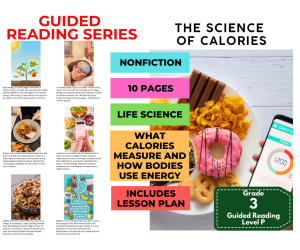
The Science of Calories: Guided Reading Level P with Lesson Plan
ELA, Resources for Teachers, Reading Comprehension, Reading, Science, Life Sciences, Health, P.E. & Health, Physics, Language Development, Grade 2, 3, 4, Worksheets & Printables, Worksheets, Teacher Tools, Centers, Activities, Literacy Readers, Quizzes, Quizzes and Tests, Assessments, Lesson Plans
This The Science of Calories (level p) guided reading book with lesson plan includes: Guided Reading Color Label (front cover x1) This is a quick way to match the book’s demands to what students can generally handle.. The overall goal is to use the level/color to pick books for several smaller groups. To qualify for a certain level, a student is expected to read a book from that level with about 90–94% accuracy. If a student is consistently accurate and understands, move up a level. If the student is struggling at that level, drop down and add more support. Each student will improve at completely different rates, but it is generally one of the best ways to check progress across the class. DOWNLOAD THE CATALOG TO VIEW ALL GUIDED READING BOOKS AVAILABLE (SORTED LEVELS A-Z) Pre-Reading Question (x1) Teacher asks the prompt aloud, can be while showing the cover or first page. Students share what they already know, or make educated guesses from the cover. Prompt them to use the target vocabulary. Write some of their responses on the board to look back at during the reading. Vocabulary Words (x5) Introduce the five words, best doing it one at a time. Start by saying it, while students repeat and then see if anyone knows what it means before reading further. Read through the meaning and try to briefly connect each word to a picture or gesture so it’s meaningful. Ask students to flip through the book pages and point to where they see each of the vocabulary words. While reading the book pause upon coming across one of the vocab words or read the sentence twice to make sure students understand the word has appeared. Optional: Ask students to raise hands whenever they see/hear one of the new words. Guided Reading Pages (x10) Check the book snapshot (below) for: primary topic - do you need to prep extra reading or intro materials on this? what is taught best - decide on 1-2 bullets to focus on, use the prompt or words provided here for best results. learning goals - what you are checking for students to be able to do after the session, elicit answers using prompts or words provided. key vocabulary (see section above). questions overview - so you know what is coming up and if you need to prep extra materials to assist understanding. Run the lesson You may have already looked at a few of the pages together, but you can show them some of the pictures again first to set meaning. Depending on how much time you have and how familiar your students are with guided reading class, you may want to read the book aloud first with the group first. Students whisper or partner read, while you listen in. If time, do it as a group, one student reading a page each. Use the guided page’s prompts to coach: “Check the picture / does it make sense?” “Point under the words / try the first sound” “Reread the sentence smoothly”. Try to focus more on one student per session (rotating every time), so you can work out if they are ready to move up or need to move down a level. Comprehension Questions (back cover x3) This is your way to check that students didn’t just say the words, but actually understood the text. First, let students answer by pointing to the page/picture and saying a short sentence. After any answer, follow with: “Show me where you found that in the text.” In bigger groups, have partners answer first (10–20 seconds), then call on 2–3 students to share. Differentiation tips: Emerging speakers/struggling readers: oral + pointing On-level: oral in a full sentence Higher: one written sentence or draw + label Book Snapshot Title: The Science of Calories Genre: Nonfiction (informational science text) Subject: Science (Nutrition/Human Body) Primary Topic: What calories measure and how bodies use energy Estimated Guided Reading Level (A–Z): P What This Book Teaches Best Defines energy as what living things need to survive and function, and connects energy to everyday examples like cars and lamps. Explains that a calorie measures energy in food (not weight or size) and describes it as a scientific unit of measurement. Shows how most energy starts with the sun , and how plants use photosynthesis to turn light into chemical energy stored in plant parts. Describes how the human body uses energy all the time (even during rest or sleep) to power the heart, lungs, and brain. Explains how food energy is released through digestion , how activity increases energy demand, and how extra calories may be stored as body fat. Learning Goals Explain what energy is and why living things need it. Describe what a calorie measures according to the text. Explain how plants get energy from the sun and where that energy is stored in a plant. Describe how digestion helps the body unlock energy from food. Describe how physical activity changes the body’s need for calories. Explain what happens when more calories are consumed than the body needs for daily activities. Key Vocabulary From the Text measurement — finding out how much of something there is. photosynthesis — plants use sunlight to make chemical energy. digestion — the process that unlocks energy in food. intestines — long tubes that help finish breaking down food. converted — changed from one form into another. Discussion Prompts Pre-reading question: What do you think calories tell us about the food we eat? Comprehension questions: What does the book say a calorie measures? Comprehension questions: How does the book explain that plants capture and store energy from the sun? Comprehension questions: What does the book say happens when a person consumes more calories than needed for daily activities? Printing Tips 1. Best Printing Method (Recommended) “Booklet” Printing (Best if Available) If your printer or PDF viewer supports Booklet Printing , use this. Settings to use: Print mode: Booklet Paper size: Letter or A4 (either works) Orientation: Landscape Print on both sides: Yes Flip on: Short edge Scaling: Fit to printable area Booklet subset: First test: Front sides only Then: Back sides only This will automatically: Pair pages correctly Put the cover on the outside Align everything for folding After printing, fold in half and staple along the spine . 2. If “Booklet” Printing Is NOT Available You can still print this correctly with manual duplex printing . Step-by-step: Open the PDF. Choose Print . Set: Orientation: Landscape Pages per sheet: 1 Print on both sides: Yes Flip on: Short edge Print all pages . Because each PDF page already contains two facing book pages, the result will still fold cleanly into a book. Thousands of Cored Education products are included with your TeachSimple membership. Download links and encyclopedia index available here.
Author Cored Education
Rating
Tags Reading Comprehension, Reading Passages, Reading, Guided Reading, Guided Reading Lesson Plan, Guided Reading Activity, Pre-reading, Science Lesson Plans, Life Science, Health

Guided Reading Level B: Simple Machines at Home
ELA, Resources for Teachers, Reading Comprehension, Reading, Science, Language Development, Pre-Reading, Vocabulary, Physics, Kindergarten, Preschool, Grade 1, Worksheets & Printables, Worksheets, Teacher Tools, Centers, Activities, Literacy Readers, Quizzes, Quizzes and Tests, Assessments
This Guided Reading Book - Simple Machines at Home (Level B) includes: Guided Reading Color Label (front cover x1) This is a quick way to match the book’s demands to what students can generally handle.. The overall goal is to use the level/color to pick books for several smaller groups. To qualify for a certain level, a student is expected to read a book from that level with about 90–94% accuracy. If a student is consistently accurate and understands, move up a level. If the student is struggling at that level, drop down and add more support. Each student will improve at completely different rates, but it is generally one of the best ways to check progress across the class. DOWNLOAD THE CATALOG TO VIEW ALL GUIDED READING BOOKS AVAILABLE (SORTED LEVELS A-Z) Pre-Reading Question (x1) Teacher asks the prompt aloud, can be while showing the cover or first page. Students share what they already know, or make educated guesses from the cover. Prompt them to use the target vocabulary. Write some of their responses on the board to look back at during the reading. Vocabulary Words (x5) Introduce the five words, best doing it one at a time. Start by saying it, while students repeat and then see if anyone knows what it means before reading further. Read through the meaning and try to briefly connect each word to a picture or gesture so it’s meaningful. Ask students to flip through the book pages and point to where they see each of the vocabulary words. While reading the book pause upon coming across one of the vocab words or read the sentence twice to make sure students understand the word has appeared. Optional: Ask students to raise hands whenever they see/hear one of the new words. Guided Reading Pages (x10) Check the book snapshot (below) for: primary topic - do you need to prep extra reading or intro materials on this? what is taught best - decide on 1-2 bullets to focus on, use the prompt or words provided here for best results. learning goals - what you are checking for students to be able to do after the session, elicit answers using prompts or words provided. key vocabulary (see section above). questions overview - so you know what is coming up and if you need to prep extra materials to assist understanding. Run the lesson You may have already looked at a few of the pages together, but you can show them some of the pictures again first to set meaning. Depending on how much time you have and how familiar your students are with guided reading class, you may want to read the book aloud first with the group first. Students whisper or partner read, while you listen in. If time, do it as a group, one student reading a page each. Use the guided page’s prompts to coach: “Check the picture / does it make sense?” “Point under the words / try the first sound” “Reread the sentence smoothly”. Try to focus more on one student per session (rotating every time), so you can work out if they are ready to move up or need to move down a level. Comprehension Questions (back cover x3) This is your way to check that students didn’t just say the words, but actually understood the text. First, let students answer by pointing to the page/picture and saying a short sentence. After any answer, follow with: “Show me where you found that in the text.” In bigger groups, have partners answer first (10–20 seconds), then call on 2–3 students to share. Differentiation tips: Emerging speakers/struggling readers: oral + pointing On-level: oral in a full sentence Higher: one written sentence or draw + label Book Snapshot Title: Simple Machines at Home Genre: Nonfiction Subject: Science Primary Topic: Simple machines at home and what they do Estimated Guided Reading Level (A–Z): B What This Book Teaches Best Recognizing that “machines are at home” and used in everyday life. Learning what specific simple machines can do (cut, stop, slice, help, hold, turn, roll, lift). Building early reading fluency with repeated sentence patterns (“The ___ can ___.”). Using text-and-picture support to connect tool names to actions (lever, wedge, ramp, screw, wheel, pulley). Learning Goals Students will identify the topic of the book as simple machines at home. Students will name at least three simple machines mentioned in the text. Students will describe what a lever, wedge, ramp, screw, wheel, or pulley can do using the book’s sentences. Students will answer who/what questions by pointing to or rereading a matching page. Students will use the sentence frame “The ___ can ___.” to retell information from the book. Key Vocabulary From the Text lever — a tool that helps you cut. wedge — a tool that can stop or slice. ramp — a slanted surface that can help. screw — a piece that can hold things together. pulley — a tool that can lift. Discussion Prompts Pre-reading question: What machines do you think you might find at home? Comprehension questions: What can the lever do? What are two things the wedge can do? What does the last page say about simple machines? Printing Tips 1. Best Printing Method (Recommended) “Booklet” Printing (Best if Available) If your printer or PDF viewer supports Booklet Printing , use this. Settings to use: Print mode: Booklet Paper size: Letter or A4 (either works) Orientation: Landscape Print on both sides: Yes Flip on: Short edge Scaling: Fit to printable area Booklet subset: First test: Front sides only Then: Back sides only This will automatically: Pair pages correctly Put the cover on the outside Align everything for folding After printing, fold in half and staple along the spine . 2. If “Booklet” Printing Is NOT Available You can still print this correctly with manual duplex printing . Step-by-step: Open the PDF. Choose Print . Set: Orientation: Landscape Pages per sheet: 1 Print on both sides: Yes Flip on: Short edge Print all pages . Because each PDF page already contains two facing book pages, the result will still fold cleanly into a book. Thousands of Cored Education products are included with your TeachSimple membership. Download links and encyclopedia index available here.
Author Cored Education
Rating
Tags Vocabulary, Reading Comprehension, Reading Passages, Leveled Reading, Nonfiction, Reading, Guided Reading, Physical Science, Simple Machines, Physics

ENGLISH TEXT + 6 ANCHOR CHARTS | The Balloon that Wanted to Sink
Reading Comprehension, Reading, ELA, Strategies, Creative Writing, Writing, Formal Writing, Adult Education, Early Learning, Elementary, High School, Homeschool Resources, Middle School, Not Grade Specific, Activities, Worksheets & Printables, Teacher Tools, Anchor Charts, Charts, Quizzes and Tests
ENGLISH TEXT + 6 ANCHOR CHARTS | The Balloon that Wanted to Sink This resource have 1 english text + 6 comprehension anchor charts. ABOUT THE AUTHOR: INTRODUCTION: We are EDITORIAL ARENAS EDUCATIVAS, and our mission is to produce a variety of educational materials so children can learn better and more effectively. We encourage you to visit our entire store to download our products. Also, remember that we produce reading, writing, math, and Spanish language learning materials. MAIN DESCRIPTION OF THIS RESOURCE: 1) What age ranges is this resource designed for? This document is designed for children in pre-kindergarten and elementary school. It is simply intended for children in elementary school, but it is also freely available to other grades who may need this document. 2) What version or edition does this material correspond to? This document is designed in PDF format so you can print and use it much more quickly. 3) What is the recommended printing method for this resource? I recommend printing this document in PDF format so you won't experience any errors when printing. 4) What educational standards were used as the basis for creating this material? This document was not developed based on any specific standard. SECONDARY AND COMPLEMENTARY INFORMATION: 1) What is the title of this resource? This resource is titled "Educational Resource for Better Learning" developed by EDITORIAL ARENAS EDUCATIVAS. 2) How many pages does the file contain in total? This educational document contains enough pages to make this resource ideal for promoting fun and successful learning. 3) Does this material allow for custom editing? This educational document is available in PDF format, so you cannot edit it. You simply need to download and then print it. 4) What main topic does the resource cover? This document has been developed to address a basic topic that children in kindergarten through elementary school should master. This document will also be helpful to the general public who want to learn.
Author EDITORIAL LAURA EDUCA
Rating
Tags FREE, FREE RESOURCES, ENGLISH LANGUAGE ART, COMPREHENSION, READING, COMPREHENSION ANCHOR CHART, ANCHOR CHART

Amelia's Road, by Linda Jacobs Altma Interactive Read-Aloud Activities
ELA, Reading, Reading Comprehension, Grade 2, 3, 4, Read Alouds, Activities
This picture book companion is a comprehensive supplemental resource for Amelia's Road, by Linda Jacobs Altman. It includes 34 ready-to-use, print-and-go activities designed to meet the needs of all learning levels. Created with teachers in mind, this resource saves you time while providing students with engaging opportunities to demonstrate their understanding and newly acquired knowledge through interactive read-alouds. The activities cover a range of skills, from basic comprehension to critical thinking. INCLUDED IN THIS RESOURCE: Making Predictions Judging by the Cover Story Elements Sequencing Recalling Events in Chronological Order Summary Story Event Sort Making Connections Making Inferences Character Traits Character Feelings Character Inside & Out Character Development Character Change Overcoming Obstacles Acrostic Poem Sketch a Scene From the Story Setting the Scene Compare & Contrast Left Behind Thinking About the Text Thinking Beyond the Text Theme 3-2-1 Author's Message Dear Ms. Ramos Dear Diary Special Places Amelia’s Map Crossword Puzzle Word Search Puzzle Wait... There's More! Treasured Things Book Review This resource is for extension read-aloud activities only. The book is not included.
Author Creatively Gifted
Tags Reading Comprehension, Reading, Upper Elementary Reading, Picture Book , Read-aloud Activities, Interactive Read-aloud Activities, Book Companion, ELAR

A Whole New World Twisted Tales Week 1 Freebie | Novel Study Preview
ELA, Reading, Literature, Reading Comprehension, Grade 6, 7, 8, Activities, Worksheets & Printables
Kick off your A Whole New World (Twisted Tales) novel study with this Week 1 FREE sample pack , designed to give students a strong foundation in vocabulary, comprehension, and close reading skills. This freebie is a preview of the full novel study unit and is perfect for testing out the resource before purchasing the complete version. What’s Included: Weekly pacing guide Vocabulary list with definitions Vocabulary quiz with answer key Daily comprehension worksheets Chapter questions with answer key Chapter quiz with answer key Perfect For: 6th–8th grade ELA Novel study units Sub plans Reading comprehension practice Teacher-prep free samples Check out the full version of the Twisted Tales- A Whole New World in my store. Check back for more other reading units on the Twisted Tales Series. You can also check out the other popular reading series: Wings of Fire where books 1-15 are completed along with their Week 1 Freebies in my store.
Author A Day In Elementary
Rating
Tags Reading, Novel Study, Book Unit, Reading Unit, Disney

Tops and Bottoms Read Aloud Book Companion
ELA, Reading, Reading Comprehension, Literature, Grade 2, 3, 4, Read Alouds, Activities
This picture book companion is a complete supplemental resource for the book Tops and Bottoms by Janet Stevens. It includes 29 print-and-go reading activities to choose from making this resource ideal for customizing learning to your student's specific needs and academic abilities. Students will investigate characters, identify story elements, determine the theme, practice plotting story events, compare & contrast, make predictions, inferences, & connections, answer questions that require them to think beyond the text, and much more! Students will thoroughly enjoy the captivating activities, and you'll value the time saved from scouring for advanced resources to address challenging reading concepts. The offered activities are crafted to foster higher-order thinking, prompt students to present textual proof for their reasoning, and inspire them to share their personal insights and viewpoints. ⭐️This Resource Includes:⭐️ ◾ Elements of a Trickster Tale Anchor Chart or Notes Handout: Color and B&W ◾ Making Predictions: Before reading the book, students will make predictions about the text. ◾ Elements of a Trickster Tale: Students fill in the chart with the details of the story that characterize it as a trickster tale. ◾ Trickster Tale Tidbits: Students will answer the questions with details from the story that proves it's a trickster tale. ◾ Story Elements: Students fill in the boxes with words & pictures to represent the story elements. ◾ Sequencing: Students will retell & illustrate the important parts of the story. ◾ Recalling events in Chronological Order: Students describe and illustrate four major events in the story in chronological order. ◾ Summary: Students complete the Somebody, Wanted, Because, But, So graphic organizer and write a summary of the story. ◾ Story Event Sort: Students will describe a scene or event from the story that fits into each of the categories & explain how the event made them feel & how it relates to the category. ◾ Making Inferences: Students use clues & schema to make inferences while reading the story. ◾ Making Connections: Students make connections to an event from the story. ◾ Author's Message: Students describe four important events from the story in chronological order and answer the questions about the author's message ◾ Character Traits: Students choose the most important character traits that describe each of the characters and give 1-2 examples from the story that support the traits they chose. ◾ Character Inside & Out (Hare): Students include details from the story to describe what the character says, thinks, does, and feels. ◾ Character Inside & Out (Bear): Students include details from the story to describe what the character says, thinks, does, and feels. ◾ Character Feelings (Hare): Students describe how the character's feelings change throughout the story & give examples of the events that cause them to feel the way they do. ◾ Character Feelings (Bear): Students describe how the character's feelings change throughout the story & give examples of the events that cause them to feel the way they do. ◾ Character Development (Hare): Students select the character traits that best describe the character at different times throughout the story and provide examples from the book to support each character trait. ◾ Character Development (Bear): Students select the character traits that best describe the character at different times throughout the story and provide examples from the book to support each character trait. ◾ Character Change (Hare): Students will explain how the character changed from the beginning to the end of the story and describe the events that caused the change to happen. ◾ Character Change (Bear): Students will explain how the character changed from the beginning to the end of the story and describe the events that caused the change to happen. ◾ Sketch a Scene From the Story: Students draw a scene from the story & explain why it's important to the plot. ◾ Setting Influences the Plot: Students will draw a scene from the story that takes place in one of the settings and write about what happened there and why it was important to the plot. ◾ Setting the Scene: Students identify three different settings in the story and explain how they know that the setting changed. ◾ Tops or Bottoms?: Students will draw the vegetables that were planted for each harvest, include details to show the parts of the plants that grow above the ground and the parts that grow below the ground, and answer the questions. ◾ Theme: Students answer the questions to determine which theme best fits the story and provide text evidence to support their choice. ◾ Thinking About the Text: Students will answer the questions about the story & include examples from the text to support their answers. ◾ Tricked Again: Students will draw a picture of what they think Bear is thinking when he realizes Hare has misled him again and is taking the corn. Then, they will draw a picture of Hare and add what he is thinking or might say when he realizes he has been able to mislead Bear yet again. ◾ Wait... There's More!: Students will write about what happens next in the story. ◾ Book Review: Students color in the stars to rate how much they enjoyed the book and draw a new cover & their favorite character from the story. Then, they will explain why other kids should or should not read it. 💡Need ideas for different ways you can implement these activities? ◾ Focus on different reading skills each day for targeted instruction, and have students complete a corresponding printable to check for understanding. ◾ During centers, students can independently read the story again and complete an activity that reviews a previously taught concept. ◾ Work with students on a reading concept they struggle with during guided reading or strategy groups. ◾ Students work with a partner or in literature circles to complete additional reading activities. This resource is for extension read-aloud activities only. The book is not included. ⭐️You may also like: ⭐ TEXT SET #1: "The Importance of Friendship" ◾ A Weekend With Wendell Read Aloud Book Companion Activities for IRA ◾ First Come the Zebra Read Aloud Book Companion Activities for IRA ◾ This is Our House Read Aloud Book Companion Activities for IRA ◾ Horace and Morris But Mostly Dolores Read Aloud Book Companion Activities for IRA ◾ The Old Woman Who Named Things Read Aloud Book Companion Activities for IRA TEXT SET #3: "Finding Your Way in a New Place" ◾ Grandfather Counts Read Aloud Book Companion Activities for IRA ◾ The Have a Good Day Cafe, Read Aloud Book Companion Activities for IRA ◾ Roses for Gita Read Aloud Book Companion Activities for IRA ◾ Mango, Abuela, and Me, Read Aloud Book Companion Activities for IRA ◾ Home at Last Read Aloud Book Companion Activities for IRA TEXT SET #7: "Exploring Narrative Nonfiction" ◾ Cactus Hotel Read Aloud Book Companion Activities for IRA ◾ A Log's Life Read Aloud Book Companion Activities for IRA ◾ Salmon Stream Read Aloud Book Companion Activities for IRA ◾ Think of an Eel Read Aloud Book Companion Activities for IRA ✨Be sure to check out my storefront here: https://teachsimple.com/contributor/creatively-gifted
Author Creatively Gifted
Tags IRA, Picture Book Activities, Read Aloud Lessons, Interactive Read Aloud Activities, Elementary Reading, Reading Comprehension, Fountas And Pinnell IRA, Second Grade, Tops And Bottoms, Trickster Tales

Life Science Reading Comprehension Passage: Biotechnology (PDF)
Science, ELA, Reading, Reading Comprehension, Strategies, Resources for Teachers, Life Sciences, Biology, Grade 6, 7, 8, 9, 10, Writing Prompts, Worksheets & Printables, Centers, Activities, Teacher Tools, Assessments, Quizzes and Tests, Quizzes, Tests
Life Science Reading Comprehension Passage and Questions: Biotechnology (PDF) This very engaging science reading passage is about biotechnology and how living things can be used as tools to solve real-world problems . It explains how people use cells, bacteria, genes, plants, and other biological processes to create useful products and improve everyday life. The passage connects biotechnology to familiar examples such as bread, yogurt, vaccines, insulin, genetically modified crops, bioremediation, lab-grown meat, and biofuels. It also shows students how biotechnology can support medicine, agriculture, environmental cleanup, and a more sustainable future. This passage is designed to bridge the gap between science and literacy by strengthening reading comprehension while sparking scientific curiosity in middle school students. It blends English Language Arts skills with accurate science content, helping students build background knowledge, understand key concepts, use evidence from the text, and explain scientific ideas clearly. This resource supports science classroom practice while also reinforcing important literacy skills such as main idea, vocabulary, comprehension, and summarizing. Ideal for interdisciplinary learning in ELA and Science. Suitable for Grade 9 review, too! Student Tasks for The Passage: 10 multiple-choice questions targeting main idea, key details, science concepts, comparison, and real-world applications 10 True/False statements to check understanding and address common misconceptions 5 text-based short-answer questions that require students to explain important ideas from the passage 5 vocabulary matching items with clear, student-friendly definitions 1 summary prompt that asks students to condense the central ideas accurately Full answer key for every section Available Formats for this Resource Fillable PDF Word Docs Google Docs FULL CATALOG OF DOWNLOADING LINKS HERE Product Details Length: 7 pages total Grades: 6–8, also suitable for Grade 9 review Use cases: close reading, stations, homework, intervention, test prep, and sub plans Standards support: Reinforces informational-text skills and supports NGSS-style sense-making by helping students read scientific explanations, connect evidence to key concepts, interpret real-world examples, and explain cause-and-effect relationships in science. Why Teachers Choose This Set Authentic science content paired with rigorous literacy practice Consistent task structure across all passages for easier planning and smoother student routines Clear, age-appropriate writing that builds confidence without oversimplifying Other Science Reading Collections and Topics You May Find in the Store: 1. Astronomy & Space Science 2. Volcanoes, Rocks, & Mountains 3. Rock Cycle, Soil, & Sinkholes 4. Mars, Glaciers, & Antarctica 5. Water Cycle, Acid Rain, & Wastewater 6. Insects, Animals, & Ecosystems 7. Bioluminescence & Insects 8. Animal Skin, Cats, & T. Rex 9. Human Body and Senses 10. Health & Applied Bioscience 11. Waves, Light, & Imaging 12. Electricity & Energy 13. Motion & Materials 14. Chemistry and Materials Science 15. Electromagnetism 16. Acids and Bases 17. Gas Laws 18. Biotechnology 19. Periodic Trends 20. Protists and Fungi 21. Microevolution 22. Blood 23. Chemical Bonding 24. Magnets 25. Muscles 26. Nuclear Chemistry 27. Electromagnetic Devices 28. Epigenetics 29. The Law of Conservation of Mass 30. Atomic Models 31. Isotopes and Ions 32. Light 33. Human-Environment Interaction 34. Theory of Evolution 35. Photosynthesis 36. Origins of Life and Early Earth 37. Gene Expression and Regulation 38. Thermochemistry 39. Allergies 40. Coevolution 41. Birth to Adulthood 42. Cells 43. Entropy and Free Energy 44. The Human Brain 45. Mixtures and Solutions 46. Invertebrates 47. Zoo Animals 48. Biochemistry 49. Animal Behavior 50. Population Ecology ...and many more engaging science reading passages that cover intriguing and important topics designed to spark curiosity and support student learning. Use this passage to reinforce ELA skills in science, to add literacy to your lessons, and to support independent work. The passages strengthen main idea, evidence use, vocabulary in context, inference, cause and effect, and summary writing. With ready-to-use assessments and complete answer keys, you can provide focused practice that is simple to run and fast to review.
Author Middle & High School - CORED Education
Rating
Tags Middle School, Reading Comprehension, Reading Strategies, ELA, Centers, Reading Passage, Assessments, Vocabulary, Biology, Life Science
Guided Reading Level N - Nanjing (with Lesson Plan)
ELA, Resources for Teachers, Reading Comprehension, Reading, Social Studies, Geography, Earth and Environmental Sciences, Science, History, Economics, Grade 2, 3, 4, Worksheets & Printables, Worksheets, Teacher Tools, Centers, Activities, Literacy Readers, Quizzes, Quizzes and Tests, Assessments, Lesson Plans
This Guided Reading Book - Nanjing (Level N) with lesson plan includes: Guided Reading Color Label (front cover x1) This is a quick way to match the book’s demands to what students can generally handle.. The overall goal is to use the level/color to pick books for several smaller groups. To qualify for a certain level, a student is expected to read a book from that level with about 90–94% accuracy. If a student is consistently accurate and understands, move up a level. If the student is struggling at that level, drop down and add more support. Each student will improve at completely different rates, but it is generally one of the best ways to check progress across the class. DOWNLOAD THE CATALOG TO VIEW ALL GUIDED READING BOOKS AVAILABLE (SORTED LEVELS A-Z) Pre-Reading Question (x1) Teacher asks the prompt aloud, can be while showing the cover or first page. Students share what they already know, or make educated guesses from the cover. Prompt them to use the target vocabulary. Write some of their responses on the board to look back at during the reading. Vocabulary Words (x5) Introduce the five words, best doing it one at a time. Start by saying it, while students repeat and then see if anyone knows what it means before reading further. Read through the meaning and try to briefly connect each word to a picture or gesture so it’s meaningful. Ask students to flip through the book pages and point to where they see each of the vocabulary words. While reading the book pause upon coming across one of the vocab words or read the sentence twice to make sure students understand the word has appeared. Optional: Ask students to raise hands whenever they see/hear one of the new words. Guided Reading Pages (x10) Check the book snapshot (below) for: primary topic - do you need to prep extra reading or intro materials on this? what is taught best - decide on 1-2 bullets to focus on, use the prompt or words provided here for best results. learning goals - what you are checking for students to be able to do after the session, elicit answers using prompts or words provided. key vocabulary (see section above). questions overview - so you know what is coming up and if you need to prep extra materials to assist understanding. Run the lesson You may have already looked at a few of the pages together, but you can show them some of the pictures again first to set meaning. Depending on how much time you have and how familiar your students are with guided reading class, you may want to read the book aloud first with the group first. Students whisper or partner read, while you listen in. If time, do it as a group, one student reading a page each. Use the guided page’s prompts to coach: “Check the picture / does it make sense?” “Point under the words / try the first sound” “Reread the sentence smoothly”. Try to focus more on one student per session (rotating every time), so you can work out if they are ready to move up or need to move down a level. Comprehension Questions (back cover x3) This is your way to check that students didn’t just say the words, but actually understood the text. First, let students answer by pointing to the page/picture and saying a short sentence. After any answer, follow with: “Show me where you found that in the text.” In bigger groups, have partners answer first (10–20 seconds), then call on 2–3 students to share. Differentiation tips: Emerging speakers/struggling readers: oral + pointing On-level: oral in a full sentence Higher: one written sentence or draw + label Book Snapshot Title: World Cities: Nanjing Genre: Nonfiction (informational text) Subject: Social Studies (Geography) Primary Topic: Nanjing’s rivers, landmarks, and seasonal changes Estimated Guided Reading Level (A–Z): N What This Book Teaches Best How Nanjing’s location along the Yangtze River helped it become a travel and trade hub. How a major river can divide a city and lead to bridges being built to connect districts. How landforms and green spaces (like Purple Mountain’s forests) can help keep a city’s air clean and support plant life. How human-built features (the ancient city wall) can follow natural geography like hills and lakes. How climate and seasons change a city’s landscape through spring blossoms, autumn leaf color, and summer shade from “green tunnels.” Learning Goals Students will describe where Nanjing is located and what major river it sits along. Students will explain why bridges were built across the Yangtze River in Nanjing. Students will identify Purple Mountain and explain how its forests help the city. Students will describe how Nanjing’s ancient city wall follows the natural geography of the land. Students will describe one role Xuanwu Lake plays (islands/bridges or collecting rainwater). Students will describe how Nanjing’s humid subtropical climate connects to changes across seasons. Key Vocabulary From the Text districts — parts of a city. subtropical — warm climate, often with lots of humidity. transformation — a big change. fertile — good for plants to grow. geography — land features of a place. Discussion Prompts Pre-reading question: How might rivers and hills help a city grow and change? Comprehension questions: Where does the text say Nanjing is located, and what river runs through it? Comprehension questions: Why were massive bridges built across the Yangtze River in Nanjing? Comprehension questions: What change does the text describe happening in Nanjing during autumn? Printing Tips 1. Best Printing Method (Recommended) “Booklet” Printing (Best if Available) If your printer or PDF viewer supports Booklet Printing , use this. Settings to use: Print mode: Booklet Paper size: Letter or A4 (either works) Orientation: Landscape Print on both sides: Yes Flip on: Short edge Scaling: Fit to printable area Booklet subset: First test: Front sides only Then: Back sides only This will automatically: Pair pages correctly Put the cover on the outside Align everything for folding After printing, fold in half and staple along the spine . 2. If “Booklet” Printing Is NOT Available You can still print this correctly with manual duplex printing . Step-by-step: Open the PDF. Choose Print . Set: Orientation: Landscape Pages per sheet: 1 Print on both sides: Yes Flip on: Short edge Print all pages . Because each PDF page already contains two facing book pages, the result will still fold cleanly into a book. Thousands of Cored Education products are included with your TeachSimple membership. Download links and encyclopedia index available here.
Author Cored Education
Rating
Tags Reading Comprehension, Reading Passages, Reading, Guided Reading, Guided Reading Lesson Plan, Guided Reading Activity, Pre-reading, Geography, Social Studies Lesson Plans, History

Compare and Contrast Activities: Moana Movie | Passage with Questions
ELA, Reading, Reading Comprehension, Grade 4, 5, 6, 7, Activities
Compare and Contrast Activities: Moana Movie | Passage with Questions Main Features: Engages students in targeted language arts comprehension activities Creative approach using a rap song related to the popular movie, Moana Suitable for grades 4 through 7 Innovative alternative to conventional worksheets integrating music and movies About This Resource: The lyrics from the rap songs serve as intriguing reading passages, creating an interactive and stimulating learning environment. This comprehensive resource is perfect for both independent assignments or whole class lessons. This exciting teaching tool: Makes learning reading skills enjoyable and effective without children even noticing it. Explains how comparing and contrasting strategies can enhance comprehension abilities, thus aiding students' understanding. Add-Ons: The package also includes the following: Mulitple-choice questions along with answer keys:eases grading process. Graphic Organizer , paragraph writing exercise simplifying complex language art concepts frugally. li Mundo diretamente relacionado com Moana que lida com sinônimos e antônimos dando ao repertório de vocabulário dos alunos um impulsionamento divertido e entretenimento enquanto refina sua compreensão sobre os principais conceitos da língua. It also entails innovative tasks such as '6 Moana synonyms' and '6 Moana antonyms', helping children have a better grasp on other areas of Language Arts. This indispensable kit contains all requisite material, including song lyrics for use as reading passages, along with insightful comprehension exercises. The entire content is packed in a convenient PDF format that comprise of ready-to-print pages to ensure ease-of-use. Final Thoughts: In essence 'Compare and Contrast Activities: Moana Movie | Passage with Questions', blends popular elements that children love (like music and movies) while incorporating key educational language arts components making learning innovative. This resource takes the dreariness out of grading and turns it into an easy process.
Author Rap Opera for Kids!
Tags Compare And Contrast, Moana, Language Arts, Comprehension Activities, Reading Passages

Earth Science Reading Comprehension Passage: Types of Mountains SAMPLE
Science, ELA, Reading, Reading Comprehension, Strategies, Resources for Teachers, Earth and Environmental Sciences, Earth Sciences, Grade 6, 7, 8, 9, Writing Prompts, Worksheets & Printables, Centers, Activities, Teacher Tools, Assessments, Quizzes and Tests, Quizzes, Tests
This is a free passage sample from the complete resource. The full version includes everything needed for a complete reading comprehension activity: the passage, multiple-choice questions, short-answer questions, vocabulary matching, a summary-writing task, and a detailed answer key. Download the complete passage resource by clicking on the following links: PDF Fillable PDF Word Docs Google Docs Science Reading Comprehension Passages and Questions: Types of Mountains (PDF) This very engaging earth science reading passage about Types of Mountains is designed to bridge the gap between science and literacy through strengthening reading comprehension and sparking scientific curiosity in middle school students. The passage blends English Language Arts skills with accurate science content that supports NGSS classroom practice. Ideal for interdisciplinary learning in ELA and Science. Suitable for Grade 9 review, too! Student Tasks for The Passage: 5 multiple-choice questions targeting main idea, key details, inference, vocabulary in context, and use of evidence 5 vocabulary matching items with clear, student-friendly definitions 5 text-based questions that require citing specific lines or facts 1 summary prompt that asks students to condense central ideas accurately Full answer key for every section FULL CATALOG OF DOWNLOADING LINKS HERE Product Details Length: 4 pages total Grades: 6–8, also suitable for Grade 9 review Use cases: close reading, stations, homework, intervention, test prep, and sub plans Standards support: reinforces informational-text skills and supports NGSS-style sense making through observation, modeling, and clear use of claim, evidence, and reasoning Why Teachers Choose This Set Authentic science content paired with rigorous literacy practice Consistent task structure across all passages for easier planning and smoother student routines Clear, age-appropriate writing that builds confidence without oversimplifying Other Science Reading Collections you May find in the store: 1. Astronomy & Space Science 2. Volcanoes, Rocks, & Mountains 3. Rock Cycle, Soil, & Sinkholes 4. Mars, Glaciers, & Antarctica 5. Water Cycle, Acid Rain, & Wastewater 6. Insects, Animals, & Ecosystems 7. Bioluminescence & Insects 8. Animal Skin, Cats, & T. Rex 9. Human Body and Senses 10. Health & Applied Bioscience 11. Waves, Light, & Imaging 12. Electricity & Energy 13. Motion & Materials 14. Chemistry and Materials Science Use this set to reinforce ELA skills in science, to add literacy to your lessons, and to support independent work. The passages strengthen main idea, evidence use, vocabulary in context, inference, cause and effect, and summary writing. With ready-to-use assessments and complete answer keys, you can provide focused practice that is simple to run and fast to review.
Author Middle & High School - CORED Education
Rating
Tags Middle School, Reading Comprehension, Reading Strategies, ELA, Centers, Reading Passage, Assessments, Vocabulary, Environmental Science, Earth Science