



3,993 products added recently
Page 76 - Science Activities
Ignite your students' interest in science with activities that make learning interactive and exciting. This collection offers experiments, demonstrations, and inquiry-based projects covering various scientific fields. By integrating these science activities into your lessons, you can encourage critical thinking, foster curiosity, and deepen understanding of scientific concepts.

 Show filters

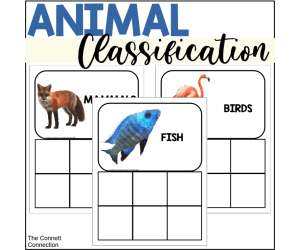
Animal Classification Sort
Science, Life Sciences, Biology, Grade 1, 2, 3, Activities, Centers, Assessments, Teacher Tools
Allow students to sort animals by their classifications. Students can sort by animal classes: mammals, birds, fish, amphibians, reptiles, and insects as well as sorting by vertebrate and invertebrate. What is Included: There are eight sorting card headers for mammals, birds, fish, amphibians, reptiles, insects, vertebrates, and invertebrates. There are eight sorting mats for mammals, birds, fish, amphibians, reptiles, insects, vertebrates, and invertebrates. There are six picture cards for each of the eight sets of sorting activities. Each sorting mat includes a real life example of an animal that belongs in that animal group. All of the picture cards also include real photographs of each animal. What Questions are Asked: To use these, students will lay out either the header cards or the sorting mats. They will then sort the animal images beneath or on top of the correct sorting mat. When to Use: Science Center - The sorting mats can be placed in a science center for students to learn about living things and their classifications. Morning Work - These animal sorts can allow teachers to create quick and easy morning activities for students while they wait on their classmates to arrive to class. Independent Practice - These animal sorts are great for students to independently work on living things. Emergency Sub Plans - The low prep nature and easy to set up activity , makes these worksheets a great activity to leave with subs to assign to students. Small Group Activity - These animal sorts can be used in small groups so teachers can target the students who need extra practice with living things. Writing Review Activity - These animal sorts work well as a review to reinforce student's learning of living things. These sorting activities are easy to create. The mats just need to be printed out. The picture cards need to be printed and cut apart. Once made, the sort can be used over and over. Move from pictures to a word bank with this animal classification worksheet .
Author The Connett Connection
Rating
Tags Science Sort, Hands On Assessment, Animal Classification, Classification Of Animals
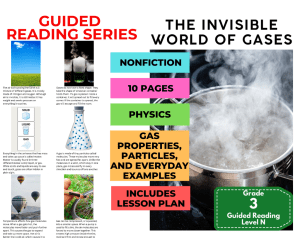
Guided Reading Level N - Invisible World of Gases (with Lesson Plan)
ELA, Resources for Teachers, Reading Comprehension, Reading, Language Development, Science, Physics, Engineering, Technology, Pre-Reading, Grade 2, 3, 4, Worksheets & Printables, Worksheets, Teacher Tools, Centers, Activities, Literacy Readers, Quizzes, Quizzes and Tests, Assessments
This Guided Reading Book - The Invisible World of Gases (Level N) with lesson plan includes: Guided Reading Color Label (front cover x1) This is a quick way to match the book’s demands to what students can generally handle.. The overall goal is to use the level/color to pick books for several smaller groups. To qualify for a certain level, a student is expected to read a book from that level with about 90–94% accuracy. If a student is consistently accurate and understands, move up a level. If the student is struggling at that level, drop down and add more support. Each student will improve at completely different rates, but it is generally one of the best ways to check progress across the class. DOWNLOAD THE CATALOG TO VIEW ALL GUIDED READING BOOKS AVAILABLE (SORTED LEVELS A-Z) Pre-Reading Question (x1) Teacher asks the prompt aloud, can be while showing the cover or first page. Students share what they already know, or make educated guesses from the cover. Prompt them to use the target vocabulary. Write some of their responses on the board to look back at during the reading. Vocabulary Words (x5) Introduce the five words, best doing it one at a time. Start by saying it, while students repeat and then see if anyone knows what it means before reading further. Read through the meaning and try to briefly connect each word to a picture or gesture so it’s meaningful. Ask students to flip through the book pages and point to where they see each of the vocabulary words. While reading the book pause upon coming across one of the vocab words or read the sentence twice to make sure students understand the word has appeared. Optional: Ask students to raise hands whenever they see/hear one of the new words. Guided Reading Pages (x10) Check the book snapshot (below) for: primary topic - do you need to prep extra reading or intro materials on this? what is taught best - decide on 1-2 bullets to focus on, use the prompt or words provided here for best results. learning goals - what you are checking for students to be able to do after the session, elicit answers using prompts or words provided. key vocabulary (see section above). questions overview - so you know what is coming up and if you need to prep extra materials to assist understanding. Run the lesson You may have already looked at a few of the pages together, but you can show them some of the pictures again first to set meaning. Depending on how much time you have and how familiar your students are with guided reading class, you may want to read the book aloud first with the group first. Students whisper or partner read, while you listen in. If time, do it as a group, one student reading a page each. Use the guided page’s prompts to coach: “Check the picture / does it make sense?” “Point under the words / try the first sound” “Reread the sentence smoothly”. Try to focus more on one student per session (rotating every time), so you can work out if they are ready to move up or need to move down a level. Comprehension Questions (back cover x3) This is your way to check that students didn’t just say the words, but actually understood the text. First, let students answer by pointing to the page/picture and saying a short sentence. After any answer, follow with: “Show me where you found that in the text.” In bigger groups, have partners answer first (10–20 seconds), then call on 2–3 students to share. Differentiation tips: Emerging speakers/struggling readers: oral + pointing On-level: oral in a full sentence Higher: one written sentence or draw + label Book Snapshot Title: The Invisible World of Gases Genre: Nonfiction (informational) Subject: Physical Science Primary Topic: Gas properties, particles, and everyday examples Estimated Guided Reading Level (A–Z): N What This Book Teaches Best Explains matter as anything with mass that takes up space, and names three states: solid, liquid, and gas. Describes gas molecules as tiny particles that move fast, spread far apart, and bounce off one another. Teaches key gas properties: gases have no fixed shape , take the shape of a container, and can spread out to fill a space. Connects temperature to motion by explaining that when a gas gets hot, molecules move faster, spread out, and the gas expands . Gives real-world examples of gases and their effects, including air pressure, pumping air into a tire, water vapor/steam, and helium balloons. Learning Goals Identify what the text says matter is and give the three states of matter named in the book. Describe how gas molecules move and how they are spaced compared to molecules in a solid. Explain what the book says happens to gas molecules when a gas gets hot. Explain how gas can be compressed and how that creates high pressure in a tire. Describe how water can change into water vapor and how steam forms when it cools. Use text details to explain why a helium balloon floats unless it is tethered. Key Vocabulary From the Text molecules — tiny particles that make up a gas. mixture — different things combined together. pressure — a pushing force on something. compressed — squeezed into a smaller space. atmosphere — a thick layer of gases around Earth. Discussion Prompts Pre-reading question: What do you think might be in the air around us even when we can’t see it? Comprehension questions: What does the text say matter is? How does the text explain what happens to gas molecules when a gas gets hot? Why does a balloon filled with helium float up unless it is tethered? Printing Tips 1. Best Printing Method (Recommended) “Booklet” Printing (Best if Available) If your printer or PDF viewer supports Booklet Printing , use this. Settings to use: Print mode: Booklet Paper size: Letter or A4 (either works) Orientation: Landscape Print on both sides: Yes Flip on: Short edge Scaling: Fit to printable area Booklet subset: First test: Front sides only Then: Back sides only This will automatically: Pair pages correctly Put the cover on the outside Align everything for folding After printing, fold in half and staple along the spine . 2. If “Booklet” Printing Is NOT Available You can still print this correctly with manual duplex printing . Step-by-step: Open the PDF. Choose Print . Set: Orientation: Landscape Pages per sheet: 1 Print on both sides: Yes Flip on: Short edge Print all pages . Because each PDF page already contains two facing book pages, the result will still fold cleanly into a book. Thousands of Cored Education products are included with your TeachSimple membership. Download links and encyclopedia index available here.
Author Cored Education
Rating
Tags Reading Comprehension, Reading Passages, Reading, Guided Reading, Guided Reading Lesson Plan, Guided Reading Activity, Pre-reading, Vocabulary, Science Lesson Plans, Physics
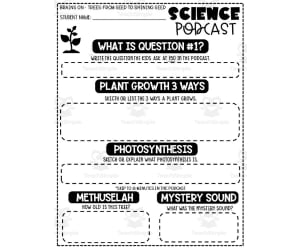
Science Podcast Packet
Science, Life Sciences, Nature & Plants, Grade 4, 5, Activities
This is a Science Podcast Packet that your 4th and 5th grade students to enjoy in-person or virtually. There are 9 podcasts included to cover sound, photosynthesis, cooking and more. Students will listen to the podcast and then there is a quick comprehension sheet to go along with each podcast. Answer keys are included.
Author Teaching on the Island
Tags Science Podcasts, Photosynthesis, Science Station, Comprehension, September

Boyles and Charles Law Practice Problems
Science, Chemistry, Grade 8, 9, 10, 11, 12, Activities
This resource of 20 practice calculations will allow students to practice calculating using Boyles and Charles Law formulas (P1V1 = P2V2 and V1/T1 = V2T2). It includes 10 Boyles and 10 Charles Law problems. The solutions to all problems are included, though the resource can be edited to meet your lesson's needs.
Author Schrim's Chem
Tags Boyles And Charles Law, Chemistry Law, Chemistry Practice, Chemistry Formulas

Wildlife Conservation Activity
Science, Life Sciences, Nature & Plants, Earth and Environmental Sciences, Environmental Science, Animals, Grade 3, 4, 5, 6, 7, 8, 9, 10, Activities
Activity Introduction An amazing activity designed for the students to learn more about STEM. Wildlife Conservation Do you like STEM subjects? what is your favorite one? Have you ever tried to plant a seed? If yes, tell us more about it. Or have you ever tried to invent something? If yes, tell us more about it. And how do you think it will help us? Have you ever seen a microorganism under a microscope? What was it? And how it looked like? Mathematics is a marvelous subject. Let' sharpen our brains and solve some equations. Do you like timetable tricks? What is your favorite one? Do you know how to code? Have you ever created an app or a game before? If yes, how was it like? Wildlife Conservation Activity The activity is perfect for encouraging the researching skills for the students, while learning more about this fantastic topic. Wildlife Conservation This friendly designed worksheet is suitable for students at school, homeschooling, and as a group activity. Instructions You're tasked as a journalist working at World News to write an article about raising awareness for wildlife conservation. Fill out the sections below, and don't forget to add pictures, and mention local organizations that stand for this matter. Format Available in a PDF format.
Author Educational Voice
Tags Wildlife Conservation Activity, Wildlife Conservation, Wildlife Conservation Facts, Wildlife Conservation Facts For Kids, Wildlife Conservations, Environment, Environment Facts, Environment Facts For Kids

Pixel Pics Spreadsheet Activity: Christmas Edition
Science, Technology, Computer Science, Not Grade Specific, Activities
Pixel Pics Spreadsheet Activity: Christmas Edition Give your students a fun computer skills project this holiday season! This Christmas-themed activity provides opportunities for students to use Microsoft Excel while completing festive pixel art scenes. Students are given access to 1 spreadsheet with 5 separate tabs. Each tab features pixel art templates of popular Christmas images like elves, penguins, gingerbread men, and reindeer. By following the color coding, students can fill in the templates to reveal the hidden pictures. Tabs can be assigned or students can choose which pixel art scenes to create. A completed example spreadsheet is provided. This self-directed project is adaptable for all ages and allows students to showcase their spreadsheet skills. Whether working individually or collaboratively in class or computer lab settings, young learners will enjoy putting their tech know-how to use with this engaging holiday activity!
Author Lab LLama - Computer Skills Resources
Tags Lab Llama, Pixel Pics, Spreadsheet Activity, Google, Microsoft, Computer Skills, Christmas Activity, December, Color By Number, Digital Coloring

Sustainable Food Activity
Science, Basic Science, Life Sciences, Human Body, Grade 2, 3, 4, 5, 6, 7, 8, 9, Activities
Activity Introduction An amazing activity designed for the students to learn more about famous places in different countries. The Sustainable Foods Do you like STEM subjects? what is your favorite one? Have you ever tried to plant a seed? If yes, tell us more about it. Or have you ever tried to invent something? If yes, tell us more about it. And how do you think it will help us? Have you ever seen a microorganism under a microscope? What was it? And how it looked like? Mathematics is a marvelous subject. Let' sharpen our brains and solve some equations. Do you like timetable tricks? What is your favorite one? Do you know how to code? Have you ever created an app or a game before? If yes, how was it like? Sustainable Foods Activity The activity is perfect for encouraging the researching skills for the students, while learning more about this fantastic place. Sustainable Foods This friendly designed worksheet is suitable for students at school, homeschooling, and as a group activity. Instructions Cut out the foods you think are sustainable, glue them on the plate, then write down why you chose them. Format Available in a PDF format.
Author Educational Voice
Tags Sustainable Food Activity, Sustainable Food, Sustainable Food Facts, Sustainable Food Facts For Kids, Food, Food Facts, Food Facts For Kids

Bicycles Reading Comprehension Passage - Cored Ed Encyclopedia
ELA, Language Development, Resources for Teachers, Reading Comprehension, Reading, Pre-Reading, Creative Writing, Writing, Physics, Science, Grade 2, 3, 4, 5, Worksheets & Printables, Worksheets, Teacher Tools, Centers, Activities, Writing Prompts, Assessments, Tests, Quizzes and Tests, Quizzes
This bicycles reading comprehension contains the following: Pre-Reading Trivia Students will write down one thing they already know about the subject and then read five more facts and discuss. These facts are fun, and the students will enjoy learning about the subject before reading more. COMPANION VIDEO NOW AVAILABLE (EMBEDDED AFTER PREVIEW PICTURES IN PRODUCT DESCRIPTION) Reading Passage The text is a high-interest reading passage with set paragraphs, roughly three to four paragraphs long. It contains a variety of themes about the topic, anywhere from history to technology. The passage is between 250 and 350 words in length. Mixed Questions The first question page contains four multiple-choice questions, each with a choice of four answers, and three written response questions that require a sentence or two from the student. Creative Writing In this question, the student will be required to write a five to eight sentence paragraph on a question related to the topic. Extension Activities This page is optional for fast finishers. If there are five to ten minutes left at the end of the lesson, the student can choose one of three activities, each one requiring a different skill. Answer Key There are answers for the multiple-choice questions and three written response questions have sample answers. FULL CATALOG OF DOWNLOAD LINKS AND ENCYCLOPEDIA INDEX HERE Cored Ed Encyclopedia Overview The Cored Ed Encyclopedia is a weekly series of lessons that you can pick up and use right away. These short readings fit into whatever time you have available. Each one includes a warm-up, a reading, and a set of questions, but it’s flexible — you can do just the reading, the full lesson, or skip the writing section if you need to. Each lesson focuses on a single topic so students don’t get lost. The writing is clear but never childish, making it perfect for grades two through five. Topics range from animals and science to history, inventions, and everyday things. No matter the level of the student, everyone should take away at least one new idea or fact from each lesson. The materials are easy to print, easy to explain, and require no setup. They work well for whole-class teaching, partner work, or independent study.
Author Cored Education
Rating
Tags Vocabulary, Spelling, Reading Comprehension, Reading Passages, Cored Encyclopedia, Facts, Reading, Creative Writing, Bicycles, Physics
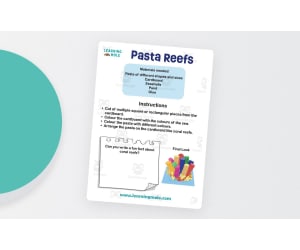
Pasta Reefs Activity
Life Sciences, Science, Animals, Earth and Environmental Sciences, Biology, Nature & Plants, Kindergarten, Grade 1, 2, Activities
Activity Introduction An amazing activity/craft designed for the students to have fun learning about our daily activities or even to have fun doing some DIY crafts. Pasta Reefs Do you like group activities or crafts that you can enjoy with your friends and family? Or do you like individua activities and crafts that you can do on your own then show the world how creative you are? Have you ever tried to do a do it yourself craft? If yes tell us more about it, like has any one helped you, what was it about, what materials dd you use to create it and how much time did you suspend creating it? Do you like colouring? What is your favourite colour? Pasta Reefs Activity The activity is perfect for encouraging the creativity skills for the students, while having fun with our cool activities and crafts. Pasta Reefs This friendly designed worksheet is suitable for students at school, homeschooling, and as a group activity. Instructions Cut of multiple square or rectangular pieces from the cardboard. Colour the cardboard with the colours of the sea. Colour the pasta with different colours. Arrange the pasta on the cardboard like coral reefs. Format Available in a PDF format.
Author Educational Voice
Rating
Tags Pasta Reefs Activity, Pasta Reefs, Coral Reefs Activity, Coral Reefs, Coral Reefs Facts, Coral Reefs Facts For Kids, Coral Reef, Fun Activity, Craft, Crafts

Mixtures - Solutions, Suspensions, Dissolving and Saturated Solutions - Dominoes Game for Middle School
Science, Chemistry, Grade 5, 6, 7, 8, 9, Activities, Games
A dominoes game for middle school with questions and statements on mixtures including solutions, suspensions, solubility and saturated solutions. Prior Knowledge > Elements and compounds are pure substance and mixtures are not. > Meaning of the terms solute, solvent, solution, soluble and insoluble. > Particle theory to explain why stirring, temperature and particle size affect the rate of dissolving. > Particle theory to explain dissolving, suspensions and saturated solutions. > Extracting information from solubility curves What You Get > 80 dominos > Animated PowerPoint explaining the rules and how to play. Rules of the Game > Each player selects seven dominos from the top of the face-down pile and holds them in their hand like playing cards. > The player whose surname begins with a letter closest to the letter A starts and play proceed in a clockwise direction. > Dominos can be matched exactly, or a name can be matched with a symbol or descriptions, sketches and circuit diagrams can be matched. > If a player thinks a match is wrong, they can challenge. If the challenger is correct, they give a card from their own hand to the challenged player. If the challenged player is correct, they give a card from their hand to the challenger. Pupils are encouraged to check their books for the correct answer and consult their teacher if a consensus is not reached. > If a player cannot play a domino, they pick up from the face down pile and can play if possible or add it to their hand. See more Elf Off the Shelf resources on this topic and many others
Author Elf off the Shelf Resources
Tags Mixtures, Saturated Solution, Dissolving, Solvent, Solute, Saturated Mixtures
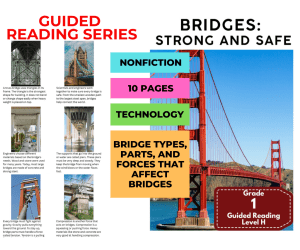
Guided Reading Level H - Bridges Strong and Safe
ELA, Resources for Teachers, Reading Comprehension, Reading, Language Development, Pre-Reading, Vocabulary, Science, Technology, Engineering, Kindergarten, Grade 1, 2, Worksheets & Printables, Worksheets, Teacher Tools, Centers, Activities, Literacy Readers, Quizzes, Quizzes and Tests, Assessments
This Guided Reading Book - Bridges Strong and Safe (Level H) includes: Guided Reading Color Label (front cover x1) This is a quick way to match the book’s demands to what students can generally handle.. The overall goal is to use the level/color to pick books for several smaller groups. To qualify for a certain level, a student is expected to read a book from that level with about 90–94% accuracy. If a student is consistently accurate and understands, move up a level. If the student is struggling at that level, drop down and add more support. Each student will improve at completely different rates, but it is generally one of the best ways to check progress across the class. DOWNLOAD THE CATALOG TO VIEW ALL GUIDED READING BOOKS AVAILABLE (SORTED LEVELS A-Z) Pre-Reading Question (x1) Teacher asks the prompt aloud, can be while showing the cover or first page. Students share what they already know, or make educated guesses from the cover. Prompt them to use the target vocabulary. Write some of their responses on the board to look back at during the reading. Vocabulary Words (x5) Introduce the five words, best doing it one at a time. Start by saying it, while students repeat and then see if anyone knows what it means before reading further. Read through the meaning and try to briefly connect each word to a picture or gesture so it’s meaningful. Ask students to flip through the book pages and point to where they see each of the vocabulary words. While reading the book pause upon coming across one of the vocab words or read the sentence twice to make sure students understand the word has appeared. Optional: Ask students to raise hands whenever they see/hear one of the new words. Guided Reading Pages (x10) Check the book snapshot (below) for: primary topic - do you need to prep extra reading or intro materials on this? what is taught best - decide on 1-2 bullets to focus on, use the prompt or words provided here for best results. learning goals - what you are checking for students to be able to do after the session, elicit answers using prompts or words provided. key vocabulary (see section above). questions overview - so you know what is coming up and if you need to prep extra materials to assist understanding. Run the lesson You may have already looked at a few of the pages together, but you can show them some of the pictures again first to set meaning. Depending on how much time you have and how familiar your students are with guided reading class, you may want to read the book aloud first with the group first. Students whisper or partner read, while you listen in. If time, do it as a group, one student reading a page each. Use the guided page’s prompts to coach: “Check the picture / does it make sense?” “Point under the words / try the first sound” “Reread the sentence smoothly”. Try to focus more on one student per session (rotating every time), so you can work out if they are ready to move up or need to move down a level. Comprehension Questions (back cover x3) This is your way to check that students didn’t just say the words, but actually understood the text. First, let students answer by pointing to the page/picture and saying a short sentence. After any answer, follow with: “Show me where you found that in the text.” In bigger groups, have partners answer first (10–20 seconds), then call on 2–3 students to share. Differentiation tips: Emerging speakers/struggling readers: oral + pointing On-level: oral in a full sentence Higher: one written sentence or draw + label Book Snapshot Title: Bridges: Strong and Safe Genre: Nonfiction (informational) Subject: Science (Engineering) Primary Topic: Bridge types, parts, and forces that affect bridges Estimated Guided Reading Level (A–Z): H What This Book Teaches Best Explains what bridges do: connect two places and help people and vehicles cross obstacles. Introduces several bridge types and what makes each one work (beam, arch, suspension, truss). Teaches key bridge parts and supports (deck, abutments, piers) using clear definitions in context. Builds science/engineering understanding of forces that act on bridges (gravity, tension, compression). Shows that scientists and engineers work together to keep bridges safe. Learning Goals Students will explain how bridges help people, cars, and trains travel using text details. Students will identify and describe at least two types of bridges named in the book. Students will use the book’s words to tell what a bridge deck is and what it does. Students will describe how gravity, tension, and compression affect bridges, based on the text. Students will explain what piers do and why they must be deep and steady. Key Vocabulary From the Text deck — the flat top part of a bridge. abutments — the ends an arch bridge pushes against. tension — a pulling force that stretches materials. compression — a pushing or squeezing force. piers — supports that go into ground or water. Discussion Prompts Pre-reading question: How do you think bridges help people get from one place to another? Comprehension questions: What do bridges help cars, trains, and people do? What is the flat top of a beam bridge called? What do piers keep a bridge from doing when wind blows or water flows fast? Printing Tips 1. Best Printing Method (Recommended) “Booklet” Printing (Best if Available) If your printer or PDF viewer supports Booklet Printing , use this. Settings to use: Print mode: Booklet Paper size: Letter or A4 (either works) Orientation: Landscape Print on both sides: Yes Flip on: Short edge Scaling: Fit to printable area Booklet subset: First test: Front sides only Then: Back sides only This will automatically: Pair pages correctly Put the cover on the outside Align everything for folding After printing, fold in half and staple along the spine . 2. If “Booklet” Printing Is NOT Available You can still print this correctly with manual duplex printing . Step-by-step: Open the PDF. Choose Print . Set: Orientation: Landscape Pages per sheet: 1 Print on both sides: Yes Flip on: Short edge Print all pages . Because each PDF page already contains two facing book pages, the result will still fold cleanly into a book. Thousands of Cored Education products are included with your TeachSimple membership. Download links and encyclopedia index available here.
Author Cored Education
Rating
Tags Vocabulary, Reading Comprehension, Reading Passages, Leveled Reading, Nonfiction, Reading, Guided Reading, Bridges, Technology, Engineering

Periodic Table: Element Baseball Cards Project
Science, Chemistry, Grade 5, 6, 7, 8, Activities, Projects
This is a great activity to help get students excited about the periodic table of elements! Students can work independently or in groups to research an element from the periodic table. On the front of the card, they will include images of the element, its name, and its symbol. On the back of the card, they will complete research to discover the element’s “statistics” including: Atomic number and atomic mass Electron configuration (including a diagram) Family Melting and boiling points History of discovery Uses and fun facts Then students can present their cards to the rest of the class so everyone learns about several different elements. Grades to Use With: This project is great for the middle grades (5-8) when the periodic table and elements are first introduced. It could also be used in a high school special education classroom. Standards: This project can help support the knowledge required for this standard. Once students understand the configuration of elements, they can use this knowledge to learn about simple molecules. NGSSMS-PS1-1 Develop models to describe the atomic composition of simple molecules and extended structures. Emphasis is on developing models of molecules that vary in complexity. Examples of simple molecules could include ammonia and methanol. Examples of extended structures could include sodium chloride or diamonds. Examples of molecular-level models could include drawings, 3D ball and stick structures, or computer representations showing different molecules with different types of atoms. Assessment does not include valence electrons and bonding energy, discussing the ionic nature of subunits of complex structures, or a complete depiction of all individual atoms in a complex molecule or extended structure. If you enjoy this science activity, check out others in my store like Climate Change Solutions STEM Project
Author Grace Under Pressure
Tags Periodic Table, Chemistry Project, Elements, Science Project, Atomic Mass, Atomic Number, Chemistry, Early Science, Elementary Science, 3d Periodic Table Project Ideas, Periodic Table Project, Periodic Table Valentines Day Card, Periodic Table Ideas For Project, Element Ball Project, Periodic Table Element Cards, Creative Periodic Table Projects School, Periodic Table Cards, Periodic Table Project High School, Periodic Table Of What Project, Periodic Table Element Project, Periodic Table Project Ideas, Project On Periodic Table, Periodic Table Project Examples, Periodic Trends Project, Periodic Table Of Elements Project, Periodic Table Element Projects, Creative Periodic Table Project Ideas, Periodic Table Projects

Human Body Organs and Their Functions Pamphlet Craftivity
Science, Life Sciences, Biology, Grade 4, 5, 6, 7, 8, Activities
Human Body Organs and Their Functions Pamphlet Craftivity An innovative, interactive teaching resource designed for 3rd to 5th grade students, focused on providing engaging and factual information about the human body's organs, their positions within the body, and their specific functions. Craftable Pamphlet This product gives a hands-on experience using a craftable pamphlet that unfolds to reveal vibrant diagrams of various organs such as lungs, liver, stomach, heart, brain intestines and kidneys. It also features compelling facts about these organs. Educational Content & Design Elements Created with meticulous attention to detail in regard to both graphic design elements and educational content relevance—this resource aims not only at teaching but stimulating curiosity too. Pupils are sure to marvel as they watch their individual cut-and-glue pamphlets come alive in class! The accompanying worksheets integrate a 'mini scavenger hunt' design. This encourages students to find answers within the very pamphlets they've crafted—an approach that brilliantly reinforces facts learned. Versatile Usage This product can be employed for: Whole-group instruction or small-group projects in science classes focused on biology or health education topics involving human anatomy subject matter areas. Educational continuity during substitute teacher days by filling instructional time gaps with rigorous yet enjoyable work both teachers & learners will appreciate. It readily adapts into homework assignments too—it adjusts nicely into higher grade level activities fostering multi-grade deepened learning experiences! Instructions & Answer Keys Complete with printable instructions & answer keys—the Human Body Organs And Their Functions Pamphlet Craftivity helps set your students on an exciting voyage of exploration into biological sciences offering them immersive way station stops at key points within our amazing human body!
Author Soumara Siddiqui
Tags Human Body, Organs, Functions, Craftivity, Biology

Photosynthesis and Cellular Respiration - Digital Scavenger Hunt Activity
Science, Life Sciences, Biology, Grade 6, 7, 8, 9, Activities
Photosynthesis and Cellular Respiration - Device-Based Scavenger Hunt Activity. This activity is the coolest thing I've created and your kids are going to love it, mine do. Think of a scavenger hunt, then add devices (Smartphones, Chromebooks, Laptops, or Tablets), engaged students, and learning through assessment and you have this resource. Quick Disclaimer. In order to use this activity, your classroom must have at least 1 device per 3 students. Smartphones, Chromebooks, Laptops, and Tablets will all work perfectly. The wording and delivery make this resource perfect for a wide range of grade levels. If for some reason you feel this hunt isn't perfect for your classroom, I'm happy to refund your purchase no questions asked. Download the Sample to see firsthand, exactly how the Hunts work and why your kids will love them. Included in the sample is the full version of - Our Solar System - Static Electricity The Content Includes: • The importance of photosynthesis and cellular respiration • An introduction to how each occurs • The structures involved in each • Which organisms do each process and why • What would happen if one or both processes stopped • Practical applications ****************************************************** Scavenger Hunt User Comments: - "My kids loved it!" - We did "Physical and Chemical Changes" in class yesterday! My students loved it!" - "I can't wait to share these with my students! They love this QR thing! :-)" - "Fantastic! I love this scavenger hunt, I am changing my schedule for tomorrow's astronomy class and we are definitely doing the scavenger hunt." - "Really awesome resource." ****************************************************** Here's how you implement them: • Print the QR codes and place them around the room • Place your students into groups • Let them loose! They move from Location to Location as they complete their tasks. Each Task is assigned by scanning the QR code and there are 5 Tasks per Scavenger Hunt Activity. • Have them submit their answers directly to your email via a form on my website. ********************************************************************** I've created a video that walks you through the entire activity. I did it using screen capture software on my phone so you can see exactly what your students will see. CLICK HERE to have a look . ********************************************************************** This activity: • Lets your students utilize their devices • Cuts down on wasted paper • Combines learning with assessment • Is a lot of fun • Comes in both Word and PDF formats Each Hunt is different and offers a unique way for your students to explore the topic. From Hunt-to-Hunt, possible tasks your students will face include: • Video analysis • Simulations • Fully automated and marked Quiz • Finish the story • Start the story • Calculations • News article • Opinion • Word scramble • Short answer • Web research --------------------------------------------------------------------------------------------- There are other Hunts as well and I'm continually adding more. Currently, the Hunts I have available include: Biology: • Cell Organelles • The Digestive System • The Circulatory System • Biochemistry - Macromolecules • Photosynthesis and Cellular Respiration • Mitosis and Cell Division • Cells and the Cell Theory – A Device-Based Scavenger Hunt Activity Ecology: • Energy Flow in Ecosystems • Invasive Species • Photosynthesis and Cellular Respiration • Cycling of Matter in Ecosystems • Ecosystems and Ecological Succession Space and Earth Science: • The Seasons • Our Solar System • The Moon • The International Space Station - Meeting Our Needs • Climate Change Electricity: • Static Electricity • Electricity Generation Chemistry: • Atoms: Atomic Theory and Structure • Physical and Chemical Changes • Elements and the Periodic Table • Chemical Reactions • Types of Chemical Reactions and Balancing • Acids, Bases and pH Physics: • Friction • Energy Transfer --------------------------------------------------------------------------------------------- Also, please visit my website Teach With Fergy for my thoughts on teaching, learning and everything in between.
Author Teach With Fergy
Tags Photosynthesis, Cellular Respiration, Scavenger Hunt, Cellular Respiration Games

Write about Bugs Activity
ELA, Writing, Science, Life Sciences, Insects, Grade 1, 2, 3, Activities
This activity is perfect for students who are struggling with writing. It provides them with a structure that they can follow, and it also allows them to be creative in their writing. This activity is also great for students who are interested in bugs and insects.
Author Have Fun Teaching
Tags Essays

Pig Facts Activity
Science, Life Sciences, Biology, Animals, Grade 3, 4, 5, 6, 7, 8, 9, Activities
Activity Introduction An amazing activity designed for the students to learn more about famous places in different countries. The Nocturnal Animals Do you like animals? what is your favorite one? Do you own a pet? If yes, tell us more about it, like what its name? And what do you like most about it? What are the animal kingdoms? Can you write down the characteristics of each animal class like mammals, birds, reptiles, amphibian, fish and mollusks. Do you know that some animals can sing, can you name any of them? What is the largest and the smallest mammal in the world? What is the largest and the smallest bird in the world? What is the largest and the smallest fish in the world? Nocturnal Animals Hall of Fame Activity The activity is perfect for encouraging the researching skills for the students, while learning more about this fantastic place. Nocturnal Animals Hall of Fame This friendly designed worksheet is suitable for students at school, homeschooling, and as a group activity. Instructions Pig facts: True or false? Format Available in a PDF format.
Author Educational Voice
Tags Pig Facts Activity, Pig, Pigs, Pig Facts, Pigs Facts, Pigs Facts For Kids, Animal, Animals, Animals Facts, Animals Facts For Kids

Integumentary System – Lab Station Activity
Science, Life Sciences, Human Body, Grade 7, 8, 9, 10, 11, 12, Labs, Experiments, Activities
This fully editable Lab Station Activity on the Integumentary System is meant to get your students out of their seats and engaged in the content. This activity was designed for middle and high school biology students. Each station not only offers a unique opportunity to test your students' knowledge (offer an opinion, answer questions based on a video or reading, draw, etc.) but also provides a fantastic learning opportunity where your kids are learning through assessment. Each station comes with a description card while some also contain more detailed instructions, a reading, questions to answer, etc. Students are equipped with a recording sheet (passport) to write their answers. There is almost no prep for you. Simply print the cards, lay them out around the room and you're all set. An answer key is also provided where applicable. This resource covers the following topics: - Skin layers - Hair - Sweat - Skin color - Sunburn and tanning - Nails Bonus Activities: To ensure your students don't have any downtime between stations, your lab also includes a 10-word word scramble and word search, both with an answer key. You can use them as part of their mark, as a bonus so it's not mandatory, etc. However you choose to use it, it will ensure that your students are always busy and never idle. Note: For stronger classes, I give the word scramble and for weaker ones, the word search. How do the Lab Stations work? Each station is specially designed to be a unique complement to the material while at the same time, provide a valuable learning experience. Below is an overview of how each station works. In your activity , each will be tailored to the specific content. Station 1: Get Hands-On – using their creative skills, students are required to draw or build. Station 2: Research – using a classroom computer or their own device, students must research a specific question/issue surrounding the topic. Station 3: Explain yourself – students write down an opinion to a question in paragraph form. Station 4: Rest Station - students can use this time to catch up on work they didn't have time to complete at a previous station or prepare themselves for an upcoming one. Station 5 - Applicability reading – students read a short passage from an article, website, etc. which directly connects the classroom content to a real-life application. Station 6: Test your knowledge – students answer 5 multiple choice questions than provide a written explanation for how/why they came to their conclusions. Station 7: Learn from the expert – using a classroom computer or their own device, students must watch a short video clip and answer the associated questions. They may stop, rewind and restart as often as they like during the time frame. Station 8 - Rest Station. Station 9: Become the question master – Students must create 2 multiple-choice questions, 2 true/false questions and 1 short answer question. Students must also supply the answers. ------------------------------- You might also be interested in my other lab station activities Biology: • Cell and the Cell Theory • The Human Digestive System • The Circulatory System • The Human Respiratory System • Mitosis and the Cell Cycle • Cellular Respiration and Photosynthesis • Photosynthesis • Cancer: Cell Division Gone Wrong - Volume I • Cancer: Cell Division Gone Wrong - Volume II • Cell Membrane and Transport • Hearing and the Human Ear • The Human Eye • Genetic Material: DNA and RNA • The Nervous System • Energy Flow In Ecosystems • DNA Manipulation and GMOs • Transcription and Translation • Cellular Respiration • Thermoregulation • Proteins and Nucleic Acids • Mutations • Meiosis • DNA, Genes, Chromosomes, and Alleles • Genetic Disorders • Fats • Reproductive Technologies • Muscular and Skeletal System • Integumentary System Coming Soon: - Excretory system - Endocrine system - Carbohydrates and Lipids Physics: • Newton's Three Laws of Motion • Kinetic and Gravitational Potential Energy • Current Electricity and Circuit Diagrams • Static Electricity • Light Optics and the Production of Light • Sound, Sound Energy and Speed • One and Two-Dimensional Motion • Uniform Acceleration • How Planes Fly • Refraction • Friction • Energy and Its Forms • Density and Buoyancy • Electricity Production • Calculating Average Speed, Velocity, and Displacement • Mass, Volume, Density, & Buoyancy • Work and Energy • Renewable Energy • Plate Tectonics • The Rock Cycle • Natural Disasters • Pressure, Volume, and Temperature Coming Soon: - Work = F x d - Nonrenewable energy sources - Projectile Motion - Momentum, Conservation of Momentum and Impulse - Power - The Doppler Effect and Supersonic Travel Chemistry: • Atomic Model, Notation and Atoms • Chemical Reactions and Balancing Equations • Molecular and Ionic Compounds • Physical and Chemical Properties & Changes • Acids, Bases, and Neutralization Reactions • The Periodic Table • Single and Double Displacement Reactions • Balancing Chemical Equations • Synthesis, Decomposition and Combustion Reactions • Atomic Theory, Atomic Structure and Isotopes • Types of Bonds and Intermolecular Forces • The Mole/Avogadro's Number • Density and Buoyancy • The Particle Theory and the Classification of Matter • Pure Substances and Mixtures • Solutions and Mechanical Mixtures Coming Soon: - Periodic table group properties General Science: • The Scientific Method and Science Skills • The Different Types of Clouds Ecology and the Environment: • Ecosystems • The Classification of Living Things • Biodiversity and Invasive Species • The Carbon and Water Cycle • Climate Change • Photosynthesis • Cellular Respiration and Photosynthesis • Ecological Succession • Plant Sexual and Asexual Reproduction • Earth's Seasons • Interactions Within Ecosystems • Physical and Behavioral Adaptations Space Science: • The Life and Death of Stars • The Moon and its Phases • Life In Space • Our Solar System • Solar and Lunar Eclipse • Earth's Seasons • Asteroids, Comets and Meteors These station cards are meant to be used as a lab activity but can also be utilized in a review task before a test or a quiz. Used either way, your students will love it! I know mine do and I'm telling you from first-hand experience as I've used this activity in my own class. Thank you for your interest in my products. If you have any questions, please send me an email - devon@teachwithfergy.com
Author Teach With Fergy
Tags Integumentary, System, Functions, Structure, Lab Station, Lab 8 Integumentary System Answers, Excretory System Labs
Solar System Projects Assessments Activities Vocabulary FULL UNIT
Science, Space, Earth and Environmental Sciences, Grade 5, Activities
Solar System full unit for all your need! From teaching to projects to assessments, you will be able to cover the solar system. This resource is great to do with a full class on your digital board or you can assign the Google Slides presentation to your students and have them complete the research themselves. The activities included go along with the information from the Google Slides. Students will be able to answer questions on all of the planets, the moon, the sun, constellations and more. Included are: reading comprehension passages vocabulary cards infographic slides assessments projects fill in the blank matching column phases of the moon activities constellation identification games fact slides pictures and so much more! Teachers can use these activities as: small group work independent work homework bell ringer morning work centers Students will learn about: Mercury Venus Earth Mars Jupiter Saturn Uranus Neptune penumbra umbra gravity rotation revolution constellations phases of the moon the sun It is very user friends with answers keys when necessary.
Author Big Apple Teaching
Rating
Tags Solar System, Mercury, Venus, Earth, Mars, Jupiter, Saturn, Uranus, Neptune, Moon

Light - Lenses, The Eye, The Pinhole Camera and the Camera Dominoes Game for Middle School
Science, Physics, Grade 5, 6, 7, 8, 9, Activities
A dominoes game with questions and statements on lenses, the eye, the pinhole camera and the camera instead of numbers. Prior Knowledge > Convex lenses are used in magnifying glasses, telescopes and spectacles to correct long sight. > Concave lenses are used in lasers, flashlights, peepholes and spectacles to correct short sight. > Label the following structures on a diagram of the eye; retina; ciliary muscle; iris; pupil; lens; suspensory ligament; optic nerve. > Draw ray diagrams and explain how the eye sees distant and close objects. > Draw ray diagrams and explain how lenses are used to correct long and short sight. > Draw diagrams and explain how the iris controls the size of the pupil and therefore the amount of light which enters the eye. > Draw a ray diagram of the pinhole camera, know that the image is inverted sand diminished, moving the object closer enlarges the image and multiple pinholes produce multiple images > Label a diagram of the camera and explain how a picture is taken. > The differences and similarities between the eye and the camera. What You Get > 80 dominos >m Animated PowerPoint explaining the rules and how to play. Rules of the Game > Each player selects seven dominos from the top of the face-down pile and holds them in their hand like playing cards. > The player whose surname begins with a letter closest to the letter A starts and play proceed in a clockwise direction. > Dominos can be matched exactly, or a name can be matched with a symbol or descriptions, sketches and circuit diagrams can be matched. > If a player thinks a match is wrong, they can challenge. If the challenger is correct, they give a card from their own hand to the challenged player. If the challenged player is correct, they give a card from their hand to the challenger. Pupils are encouraged to check their books for the correct answer and consult their teacher if a consensus is not reached. > If a player cannot play a domino, they pick up from the face down pile and can play if possible or add it to their hand. See more Elf Off the Shelf resources on this topic and many others
Author Elf off the Shelf Resources
Tags Lenses, Eye, Pinhole Camera, Camera

Simple Machines Scavenger Hunt Activity
Science, Basic Science, Physics, Grade 3, 4, 5, 6, 7, 8, 9, Activities
Activity Introduction An amazing activity designed for the students to learn more about STEM subjects. Simple Machines Do you like STEM subjects? what is your favorite one? Have you ever tried to plant a seed? If yes, tell us more about it. Or have you ever tried to invent something? If yes, tell us more about it. And how do you think it will help us? Have you ever seen a microorganism under a microscope? What was it? And how it looked like? Mathematics is a marvelous subject. Let' sharpen our brains and solve some equations. Do you like timetable tricks? What is your favorite one? Do you know how to code? Have you ever created an app or a game before? If yes, how was it like? Simple Machines Activity The activity is perfect for encouraging the researching skills for the students, while learning more about this topic. Simple Machines This friendly designed worksheet is suitable for students at school, homeschooling, and as a group activity. Instructions Look for things around your house or school, analyze how they work with simple machines, then fill out the boxes below. Format Available in a PDF format.
Author Educational Voice
Tags Simple Machines Scavenger Hunt Activity, Simple Machines Scavenger Hunt, Scavenger Hunt Activity, Simple Machines Activity, Simple Machines, Simple Machines Facts, Simple Machines Facts For Kids
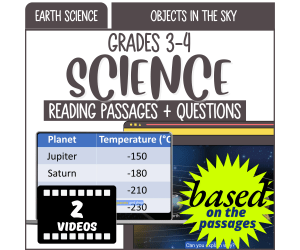
Science Reading Comprehension on Objects in the Sky (Videos)
ELA, Reading, Reading Comprehension, Common Core, ESL, Language Development, Pre-Reading, Earth Sciences, Earth and Environmental Sciences, Science, Grade 2, 3, 4, Activities, Teacher Tools
Accompanying Videos Based on Reading Passages on Objects in the Sky for Earth Science These accompanying videos contain scripts extracted from the Science Reading Passages series. With stock footage, subtitles, voiceovers, animation and diagrams, they will help students understand the topic more. Ideal for starting or ending a lesson, each video runs at less than 5 minutes and is at least 95% identical to the passage itself. What's inside? Part 3 Videos - Objects in the Sky Reading Passage 1: Objects in the Sky Reading Passage 2: The Sun Science Reading Comprehension Outline: Targeted for students in 3rd and 4th grades, these reading passages are enhanced with illustrations and graphs to elucidate critical points. Each lesson aligns with the Common Core State Standards, allowing you to integrate science reading practice effortlessly, knowing that minimal preparation is needed on your part. Each passage comes with a variety of questions in different formats, including multiple-choice formats, data analysis, and fill-in-the-blanks. The topics covered strike a balance between engaging content and core curriculum-based science subjects. Versatile in application, these lessons are suitable for a variety of settings such as whole-class instruction, morning activities, independent desk work, small group discussions, contingency plans for substitute teachers, homework assignments, or even special holiday-themed tasks. FULL CATALOG OF DOWNLOAD LINKS HERE Grade 3/4 Links: Physical Science Part 1 - Properties of Objects and Materials Google Docs/Slides/Forms PDF PPT Word Free Supplementary Pack Accompanying Videos Physical Science Part 2 - Position and Motion of Objects Google Docs/Slides/Forms PDF PPT Word Free Supplementary Pack Accompanying Videos Physical Science Part 3 - Light, Heat, Electricity, Magnetism Google Docs/Slides/Forms PDF PPT Word Free Supplementary Pack Accompanying Videos Life Science Part 1 - Characteristics of Organisms Google Docs/Slides/Forms PDF PPT Word Free Supplementary Pack Accompanying Videos Life Science Part 2 - Life Cycles of Organisms Google Docs/Slides/Forms PDF PPT Word Free Supplementary Pack Accompanying Videos Life Science Part 3 - Organisms and Environments Google Docs/Slides/Forms PDF PPT Word Free Supplementary Pack Accompanying Videos Earth Science Part 1 - Properties of Earth Materials Google Docs/Slides/Forms PDF PPT Word Free Supplementary Pack Accompanying Videos Earth Science Part 2 - Changes in the Earth and Sky Google Docs/Slides/Forms PDF PPT Word Free Supplementary Pack Accompanying Videos Earth Science Part 3 - Objects in the Sky Google Docs/Slides/Forms PDF PPT Word Free Supplementary Pack Accompanying Videos For similar products and other frees, do check out Cored Group on TeachSimple .
Author Cored Education
Rating
Tags Science, Elementary, Reading, Comprehension, Vocabulary, Science Assessments, Reading Comprehension Assessments, Vocabulary Assessments, Earth Science

Farm Animals Activity
ELA, Science, Life Sciences, Animals, Math, Numbers, Language Development, Vocabulary, Special Resources, Life Skills, Preschool, Kindergarten, Grade 1, Activities
Farm Animals Activity
Author Have Fun Teaching
Tags Statistics
Free Reading Passage: Food Chains and Food Webs (Google Docs)
ELA, Reading, Reading Comprehension, Science, Life Sciences, Biology, Common Core, Resources for Teachers, ESL, Language Development, Grade 2, 3, 4, Centers, Activities, Assessments, Teacher Tools, Tests, Quizzes and Tests
Free Reading Passage on Food Chains and Food Webs for Life Science What's inside this free product? Science Reading Comprehension Passage26 : Food Chains and Food Webs Independent Google Docs Version: This is the independent Google Docs version containingone lesson with full answer keys. Product Info: 7 PAGES (US English with Answers) Google Docs Version Teaching Duration: Approximately 90 Minutes Science Reading Comprehension Outline: Targeted for students in 3rd and 4th grades, these reading passages are enhanced with illustrations and graphs to elucidate critical points. Each lesson aligns with the Common Core State Standards, allowing you to integrate science reading practice effortlessly, knowing that minimal preparation is needed on your part. Each passage comes with a variety of questions in different formats, including multiple-choice formats, data analysis, and fill-in-the-blanks. The topics covered strike a balance between engaging content and core curriculum-based science subjects. Versatile in application, these lessons are suitable for a variety of settings such as whole-class instruction, morning activities, independent desk work, small group discussions, contingency plans for substitute teachers, homework assignments, or even special holiday-themed tasks. FULL CATALOG OF DOWNLOAD LINKS HERE Grade 3/4 Links: Physical Science Part 1 - Properties of Objects and Materials Google Docs/Slides/Forms PDF PPT Word Free Supplementary Pack Accompanying Videos Physical Science Part 2 - Position and Motion of Objects Google Docs/Slides/Forms PDF PPT Word Free Supplementary Pack Accompanying Videos Physical Science Part 3 - Light, Heat, Electricity, Magnetism Google Docs/Slides/Forms PDF PPT Word Free Supplementary Pack Accompanying Videos Life Science Part 1 - Characteristics of Organisms Google Docs/Slides/Forms PDF PPT Word Free Supplementary Pack Accompanying Videos Life Science Part 2 - Life Cycles of Organisms Google Docs/Slides/Forms PDF PPT Word Free Supplementary Pack Accompanying Videos Life Science Part 3 - Organisms and Environments Google Docs/Slides/Forms PDF PPT Word Free Supplementary Pack Accompanying Videos Earth Science Part 1 - Properties of Earth Materials Google Docs/Slides/Forms PDF PPT Word Free Supplementary Pack Accompanying Videos Earth Science Part 2 - Changes in the Earth and Sky Google Docs/Slides/Forms PDF PPT Word Free Supplementary Pack Accompanying Videos Earth Science Part 3 - Objects in the Sky Google Docs/Slides/Forms PDF PPT Word Free Supplementary Pack Accompanying Videos For similar products and other frees, do check out Cored Group on TeachSimple .
Author Cored Education
Tags Science, Elementary, Reading, Comprehension, Vocabulary, Answers, Physics, Physical Science, Ccss, Digital Centers
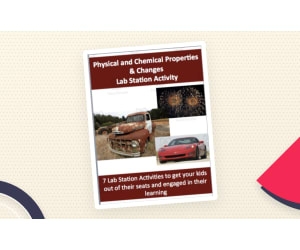
Physical and Chemical Properties – Lab Station Activity
Science, Chemistry, Grade 7, 8, 9, 10, Labs, Experiments, Activities
Physical and Chemical Properties Lab Station Activity engages students as they rotate through 9 stations testing their knowledge of matter's physical and chemical properties. Students get hands-on drawing atoms, researching questions, watching videos, answering multiple choice questions and more. Covers key concepts like states of matter, qualitative vs quantitative properties, physical and chemical changes, and energy transformations. The activity comes with station description cards, detailed instructions, articles, video links, and recording sheets. Questions assess student learning and bonus scramble and word search activities ensure no downtime. This versatile resource works for whole group, small groups, or independent lab work. Easy to print and implement with no prep required. Applicable for middle and high school chemistry and physical science classrooms.
Author Teach With Fergy
Tags Physical, Chemical, Properties, States Of Matter, Lab Stations, Physical And Chemical Changes Lab High School, Lab Chemical And Physical Changes Worksheet, Physical And Chemical Changes Lab Middle School, Physical And Chemical Changes Activities For Middle School