



3,926 products added recently
Page 127 - Activities
Explore a wide array of educational activities designed to enrich your teaching and captivate students' interest. From hands-on projects to interactive games, these resources span various subjects and grade levels. Incorporate these activities into your lesson plans to foster an engaging and dynamic learning environment for all students.

 Show filters

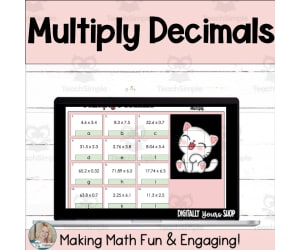
Multiply Decimals Digital Self-Checking Activity
Math, Decimals, Multiplication and Division, Division, Grade 5, 6, Activities
Welcome to Multiply Decimals Digital Self-Checking Activity This digital activity, designed as a fun, interactive tool, enhances students' understanding of multiplying decimals. The self-checking function offers immediate instructional feedback - Correct entries turn green and unlock part of a mystery picture. Incorrect responses however turn red, promoting student error analysis. Creating Versatility with Google Sheets This activity created in Google Sheets can be used in various ways: A morning exercise or homework assignment. An exit ticket after lessons on decimal multiplication. An initial warm-up at the beginning of class sessions. Note:Ideal for Grade 5 and Grade 6 math classes with advanced learners or those who may require additional reinforcement in Matt's subject matter. Compatibility with Online Learning Platforms No extra preparation needed! Directly assign tasks through Google Classroom or other Learning Management Systems. Included Resources for Accountability Student Recording Sheet: Helps learners chart their problem-solving processes while keeping track of their thinking process; Teachers Answer Key:Saves grading time by providing solution guides to all twelve problems featured within the activity. . Purchase Today! Purchase our Multiply Decimals Digital Self-Checking Activity today! Equip yourself with tools that not only foster procedural fluency but also enhance conceptual understanding about decimal operations - embracing learning that’s both efficient and interactive!
Author Digitally Yours Shop
Tags Interactive, Self-checking, Multiplying Decimals, Digital Activity, Instructional Feedback

Improve Letter Writing Skills with ABC Worksheets Interactive Letter
Creative Arts, Resources for Teachers, Infant, Toddler, Activities, Worksheets & Printables, Drawing Templates & Outlines, Workbooks, Worksheets, Writing Prompts
❤️⭐️⭐️ ABC Worksheets Interactive Letter Recognition ⭐️⭐️⭐️⭐️ These turnaround tables, using interactive screens, help children practice handwriting and recognize letters. The alphabet worksheet series we offer helps out young students get to know all 26 letters of the alphabet.The worksheets are designed for both preschoolers and early elementary students. Delivered via easy-to-use PDF format, they can be printed or deployed digitally by parents at home and teachers in the classroom.Each worksheet is focused on important literacy skills such as letter recognition, letter formation, phonics and letter sequencing. In this way we are able to remove one interest for young students—it's not school but super entertainment instead!Using a spiral learning method, these worksheets guide children step by step through learning letters. First they come to know the letters, next they write them and last they recognize order and sequence of letters. By reinforcing these basic skills it hopes that children will have some ability to read and write in the future. They could promote easier learning for themselves after all.With these interactive exercises children can also gain phonemic awareness and make word-sound relationships, which are important tools for budding readers.With 26 pages, or one for each letter of the alphabet, these worksheets afford learners ample opportunity to write and make progress. Parents and teachers alike can easily see how well their children are progressing with these answer sheets included.Test them at home or bring them out into the classroom. The purpose of our worksheets is to properly support young children's early literacy. Whether you are teaching your child to recognize, write, or sequence letters, you will find on these worksheets learning results will not only be satisfactory but -- also fun and easy.Start building a strong foundation in literacy today with our Watts 25 Worksheets for Interactive Letter Recognition--because every child deserves the best on their reading journey!
Author BrightPrintsNY
Rating
Tags ABC Worksheets, Interactive Letter Recognition, Letter Writing Practice, Letter Recognition Activities, Letter Writing Exercises, Alphabet Worksheets, Letter Formation Practice, Letter Recognition Worksheets

Is Song (Animated Music Video)
ELA, Reading, Preschool, Kindergarten, Grade 1, 2, Songs, Activities
Hello fellow educators! Are you searching for an engaging way to teach your students the essential sight word "IS"? Look no further, as we present our fantastic IS Song (Animated Music Video)! This digital resource has been developed by experienced educators and musicians to create an enjoyable learning experience that both you and your students will love. The IS Song features a lively animated music video that will captivate your young learners while making it easy and fun for them to grasp this crucial sight word. The catchy tune is not only memorable but also carefully crafted to ensure that it's straightforward for kids to follow. We all know how important it is for early readers to master sight words such as "IS," playing a vital role in building a strong foundation in reading skills. Our Animated Music Video offers an immersive learning environment, encouraging better retention of information while keeping education exciting! Give your students the gift of literacy development - add the IS Song (Animated Music Video) from Teach Simple into your teaching resources today! Let's make learning a joyous experience together!
Author Have Fun Teaching
Tags Counting

Rent Role Play Activity
ELA, Language Development, ESL, Not Grade Specific, Activities
This resource is a Rent Role Play Activity . Students will enjoy acting out a variety of scenarios while practicing their language skills. Directions are included.
Author Golden Promise
Tags Role Play, Housing, Money, World Languages, ESL
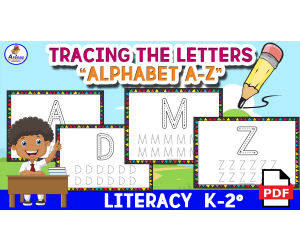
ALPHABET TRACING LETTERS - 26 Exercises Pages
ELA, Writing, Handwriting, Kindergarten, Preschool, Grade 1, Activities
Learning letters is essential for children, and they need to improve learning through fun strokes. On this occasion we will practice tracing the capital letters from A to Z. To do this, I have created this fantastic compendium of strokes of the capital letters from A to Z, in a simple format. I hope it is very useful in your work classroom, or if you do school work at home, too! 1. Product name: "Simple strokes of the capital letters of the alphabet" 2. Page number: This document contains 26 pages. 3. Is it editable or not? This pedagogical document is not editable, it is ready to be printed. 4. Theme: The topic to be developed is the capital letters of the alphabet. 5. Document version: It is available in PDF version, so it is much easier to print. 6. Color or white/black: The edges of each sheet are in color, and the molds of the letter strokes are in black and white. 7. Aimed at children of ages: This educational resource is aimed at children aged 4,5,6 years who are learning the capital letters of the alphabet. 8. Area: This document corresponds to be used in the area of literacy or language for children. 9. Keywords: alphabet, strokes of the abc, strokes of the alphabet, tracing the alphabet, literacy, learning to write, writing, sheets to trace, strokes for children, letters for children, tracing letters. 10. How do I print it? Print this preferably in color, but if not, there is no problem because the basic templates for reviewing the letters are in black and white. 11. How to apply it in class? I suggest that each child work alone with their own set of cards. 12. Will you need extra elements to use this sheet? Yes, you will need a pencil and eraser. If you also wish, you can laminate or laminate the cards so that the children can use marker on them, erase them and reuse them again and again.
Author EDITORIAL LAURA EDUCA
Tags Tracing, Tracing Letters, Letters For Kids, Alphabet For Kids

Cesar Chavez - "Si, Se Puede" ("Yes, it can be done")
Social Studies, ELA, Biographies, Reading, Reading Comprehension, Writing, Grade 4, 5, 6, Activities
About This Product Cesar Chavez – “Si, Se Puede” (“Yes, it can be done”) Thistop-seller Level T Fifth Gradereader is a great way for your students to learn more about the life of Cesar Chavez, a champion for the rights of migrant farm workers. The resource includes objectives to be taught as well as the sight words needed for successfully reading the information about Cesar Chavez. The sight words (vocabulary) are listed in a table on the first page so students can preview the words to ensure understanding. The passage is three pages long followed by multiple practice pages to include a word search for students to find some of the vocabulary words, several multiple-choice questions, and open-ended questions for students to respond with their own words. Through the completion of these activities, students will be engaging in reading, language development, spelling, and writing while reviewing key ELA and Social Studies concepts. Many ELA Common Core Standards are aligned with this text. Additionally, this resource comes with an Answer Key for the teacher to easily review their students' work and plan subsequent lessons. ThisCesar Chavez – “Si, Se Puede” (“Yes, it can be done”)resource can be used with a variety of students besides 5th grade readers, including: · Younger students who are advanced readers · Special Ed students · ELLs with different reading levels · Homeschooling students The text, Teacher's Guide, and Student Activities complete this 8-page resource.
Author Sue Peterson
Tags English Language Arts, Informational Text, Worksheets, Biography, Cesar Chavez, Reading Comprehension, Writing, Si Se Puede Quote, Cesar Chavez Si Se Puede, Si Se Puede Cesar Chavez
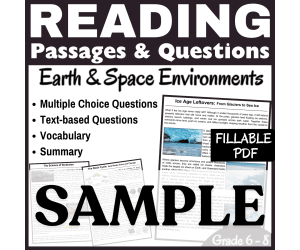
Science Reading Passage: SAMPLE Glaciers, & Antarctica (FILLABLE PDF)
Science, Space, Earth and Environmental Sciences, ELA, Reading, Reading Comprehension, Strategies, Resources for Teachers, Environmental Science, Grade 6, 7, 8, 9, Writing Prompts, Worksheets & Printables, Centers, Activities, Teacher Tools, Assessments, Quizzes and Tests, Quizzes, Tests
This is a ONE PASSAGE SAMPLE. The following is the description of the FULL resource and the downloading links: Mars, Glaciers, and Antarctica: Reading Comprehension Passages (FILLABLE PDF) This very engaging and fillable collection of science reading passages about Mars, Glaciers, and Antarctica (Earth and Space Environments) is designed to bridge the gap between science and literacy through strengthening reading comprehension and sparking scientific curiosity in middle school students. Each passage blends English Language Arts skills with accurate science content that supports NGSS classroom practice. Ideal for interdisciplinary learning in ELA and Science. Suitable for Grade 9 review, too! These worksheets are designed as fillable PDFs , which means students can type their answers directly into the document on any computer or tablet . Each page includes highlighted text fields that show them exactly where to type! What Is Included? There are (3) informational passages: Antarctica: Science at the End of the Earth From Earth to Mars: What Life Would Require Ice Age Leftovers: From Glaciers to Sea Ice Student Tasks for Each Passage: 5 multiple-choice questions targeting main idea, key details, inference, vocabulary in context, and use of evidence 5 vocabulary matching items with clear, student-friendly definitions 5 text-based questions that require citing specific lines or facts 1 summary prompt that asks students to condense central ideas accurately Full answer key for every section Available Formats for this Resource Word Docs Google Docs FULL CATALOG OF DOWNLOADING LINKS HERE Other Science Reading Collections and Topics You May Find in the Store: 1. Astronomy & Space Science 2. Volcanoes, Rocks, & Mountains 3. Rock Cycle, Soil, & Sinkholes 4. Mars, Glaciers, & Antarctica 5. Water Cycle, Acid Rain, & Wastewater 6. Insects, Animals, & Ecosystems 7. Bioluminescence & Insects 8. Animal Skin, Cats, & T. Rex 9. Human Body and Senses 10. Health & Applied Bioscience 11. Waves, Light, & Imaging 12. Electricity & Energy 13. Motion & Materials 14. Chemistry and Materials Science 15. Electromagnetism 16. Acids and Bases 17. Gas Laws 18. Biotechnology 19. Periodic Trends 20. Protists and Fungi 21. Microevolution 22. Blood 23. Chemical Bonding 24. Magnets 25. Muscles 26. Nuclear Chemistry 27. Electromagnetic Devices 28. Epigenetics 29. The Law of Conservation of Mass 30. Atomic Models 31. Isotopes and Ions 32. Light 33. Human-Environment Interaction 34. Theory of Evolution 35. Photosynthesis 36. Origins of Life and Early Earth 37. Gene Expression and Regulation 38. Thermochemistry 39. Allergies 40. Coevolution 41. Birth to Adulthood 42. Cells 43. Entropy and Free Energy 44. The Human Brain 45. Mixtures and Solutions 46. Invertebrates 47. Zoo Animals 48. Biochemistry 49. Animal Behavior 50. Population Ecology ...and many more engaging science reading passages that cover intriguing and important topics designed to spark curiosity and support student learning. How to Use These PDFs Click on the highlighted area to start typing your answer. Move to the next question by clicking in the next highlighted box. When you are finished, close the document and select SAVE so your answers stay recorded. If you want to keep a blank copy for later, choose Save As and give your completed version a new name. Product Details Length: 15 pages total Grades: 6–8, also suitable for Grade 9 review Use cases: close reading, stations, homework, intervention, test prep, and sub plans Standards support: reinforces informational-text skills and supports NGSS-style sense making through observation, modeling, and clear use of claim, evidence, and reasoning Why Teachers Choose This Set Authentic science content paired with rigorous literacy practice Consistent task structure across all passages for easier planning and smoother student routines Clear, age-appropriate writing that builds confidence without oversimplifying Use this set to reinforce ELA skills in science, to add literacy to your lessons, or to support independent work. The passages strengthen main idea, evidence use, vocabulary in context, inference, cause and effect, and summary writing. With ready-to-use assessments and complete answer keys, you can provide focused practice that is simple to run and fast to review.
Author Middle & High School - CORED Education
Rating
Tags Middle School, Reading Comprehension, Reading Strategies, Reading Passages, ELA, Centers, Reading Passage, Assessments, Vocabulary, Earth Science
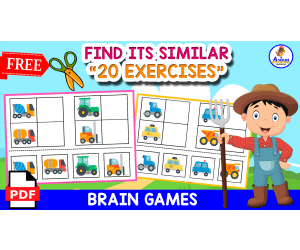
FIND ITS SIMILAR | 20 Exercises of Memory Game
Special Resources, Speech Therapy, Life Skills, Kindergarten, Preschool, Grade 1, 2, Games, Activities
PLEASE READ THE FOLLOWING PRIMARY PRODUCT INFORMATION SO THAT YOU KNOW WHAT IT IS ABOUT AND MAKE THE DECISION TO DOWNLOAD IT NOW. A-The name of this educational resource is: The title of this pedagogical resource is "20 exercises to find the simulate object" B-This document contains this number of pages: This educational resource is made up of 5 pages, each page contains 4 exercises, which means that in the end you have 20 similar image recognition exercises. C-This educational resource has been prepared by: Prepared by EDITORIAL ARENAS EDUCATIVAS, we are a publisher dedicated to the development of fabulous resources for the education of children. D-You can apply this educational document in different contexts such as: Yes, you can apply it in the classroom if you are a teacher and need to exercise your children's intelligence, also if you are a mother or father and want your children to use their leisure time productively and thus be able to carry out these types of activities that promote his intelligence. E-Is this document in black and white and color? This educational document is available in color to make it more attractive to students. NOW PLEASE READ THIS SECONDARY INFORMATION REGARDING THIS PRODUCT SO THAT YOU CONTINUE TO BE INFORMED ABOUT WHAT IT IS ABOUT. F-For what ages is this document recommended to apply? Recommended for children of all ages who wish to carry out this reasoning activity , it is mainly recommended for ages 4 and up, because they will need scissors to make cuts. G-At what point in class can I apply it? You can apply it during class or perhaps at the end as a relaxation or leisure activity . H-Should I apply it individually or in groups? You can apply it individually because the activity is simple or perhaps in groups of 2 to 3 students so that they complete the activity together. I-Keywords that describe the product: memory exercises, memory games, cutouts, cutouts, cutouts for children. This file is for personal use only. It is not allowed to be resold or shared with others.
Author EDITORIAL LAURA EDUCA
Tags Memory Game, Printables, Games For Kids, Free Resources

A-E Phonic Game To Develop Phonemic Awareness
Special Resources, ELA, Language Development, Pre-Reading, Phonics, Reading, Spelling, Kindergarten, Preschool, Grade 1, 2, Activities, Games
Here is a fun, print 'n play phonic game for the split digraph a-e! Help your pupils to grasp the tricky split digraph concept as they play! Who is the a-e game suitable for? All learners of phonics, including young children, SEN/special needs, ESL etc... Aims and Objectives Some children, when starting to learn about the long /a-e/ sound will start to make every /a/ into a long /a-e/ sound. While this is common among all children, some children need more help to overcome this difficulty. Therefore, this game has two aims: 1.To help children to be able to hear the long vowel sound a-e in words 2.To help children understand that some words have a short /a/ and some have a long /a-e/; the child must listen to hear which word has which - not guess. How to play: This is a game for two ore three players, one of which should be an adult. The game can be played with either pictures or sounds. Each player takes a game board (either pictures or sounds) which will indicate whether the player should listen for words with a short /a/ sound or a long /a-e/ sound. The adult reads a word on the word card, and the pupils must listen for 'e' or no 'e'? If the pupil has the sound/ picture on his/her board, she/he covers up a space. the winner fills hi/her board first. Teaching tips: Help children to hear the vowel sound by emphasizing it and stretching it out. Help the child to do this as well. Have fun - as this eases children over those tricky spots! What is included? 1 PDF with 2 game sound boards, 2 picture boards, squares to cover up and a word (readers) card. See more fun phonic games in the Lilibette's Resources store! Find: AR Game A-E Game Games for initial/final sounds and much MORE!
Author Lilibette's Resources
Tags A-e, Print N Play Phonic Games, Split Digraph, Split Digraph A-e, Phonics, Phonics Games, Special Needs, ESL, Phonics For ESL, Phonics For Special Needs

Cross-Curricular Building Blocks - Grades 3-4: Ready-To-Use Activities to Supplement Any Teaching Situation
, Grade 3, 4, Activities
The Cross-Curricular Building Blocks - Grades 3-4 A diverse teaching resource packed with articles and activities that cater to a wide range of interests. Encompassing topics from science, history, geography to the arts, this is an ideal supplement for educators seeking engaging materials to enrich their curriculum. Eclectic Eduactive Articles Geographical and Biological exploration: Articles about elephants, bones, glaciers and deserts. History: Articles about the Wright brothers' groundbreaking flight and ancient Egyptians' culture. Arts: Vincent Van Gogh's life story. Astronomy: An exploration into stars. Literature: About author Louisa May Alcott. In addition noses are covered various natural phenomena such as tornados plus delightful nature-centred content like butterflies; promotes not mere learnedness but holistic curiosity fulfilment! Fruitful Activities Beyond the collection of fact-rich articles are 36 reproducible activities crafted with care to strengthen information absorption. Designed along national standards’ guidance lines, these exercises not only reinforce lessons learnt but also ensure students stay within education benchmarks. The vast usability spans across different teaching situations such as whole group classroom engagement or small group focused study; homework assignments or quick in-between lessons breaks; extended comprehensive units coverage or topic-specific revision – effortlessly fitting into any educator’s pedagogical plan. "Hook inquisitive minds"”/b> complements The Cross-Curricular Building Blocks - Grades 3-4 experience by offering information diversity in application-friendly formats carefully calibrated curriculums across grades 3 and 4 alike. Delivery Method The material components featured comes conveniently packaged as a Print-and-Use setup housed within one neatly organized PDF file featuring all of our expertly curated materials compiled across generous span of 64 clearly laid-out pages. A versatile resource on hand, designed around tested pedagogical approaches with information depth that positively impacts learner’s overall information consumption and retention patterns. Look forward to vibrant classroom discussions flourishing, opening up new discussions, debates and realizations with every article they read and each activity they attempt. Satisfy their burgeoning curiosity with Cross-Curricular Building Blocks - Grades 3-4 teaching resource. Take steps towards staging a vibrant learning platform where education truly transcends traditional textbook confines.
Author Classroom Complete Press
Tags Ready To Use, Activities, Building Blocks, Teaching Resources, Supplemental Worksheets

Dolphins by Seymour Simon Interactive Read-Aloud Activities
ELA, Reading, Reading Comprehension, Language Development, Vocabulary, Research, Grade 2, 3, 4, Read Alouds, Activities
This picture book companion is a complete supplemental resource for the book Dolphins by Seymour Simon. With 28 print-and-go reading activities to choose from, this resource is ideal for customizing learning to your student's specific needs and academic abilities. Students will apply listening and note-taking skills, investigate different types of dolphins, compare & contrast, make inferences and connections, learn and apply new vocabulary, determine text structure, answer questions that require them to think beyond the text, and much more! Students will love the engaging and fun activities, and you will appreciate the time saved hunting for high-level resources to teach reading concepts that students frequently struggle with. The activities provided are designed to enable students to apply higher-level thinking skills, encourage them to provide text evidence to support their thinking, and challenge them to express their own thoughts and/or perspectives. ⭐️This Resource Includes:⭐️ Making Predictions: Before reading the book, students will make predictions about the text. Who Am I?: Students will match the words in the word bank to the descriptions and draw and color a picture of each dolphin (ANSWER KEY INCLUDED). Word Scramble: Students use the details from the book to unscramble the words (ANSWER KEY INCLUDED). Fact or Fiction: Students determine whether the details are facts from the story or made-up (ANSWER KEY INCLUDED). True or False (bubble answers ONLY): Students read the details and determine if they are true or false (ANSWER KEY INCLUDED). True or False (bubble answers and correct the false details): Students determine if the details are true or false and rewrite the false statements to make them true (ANSWER KEY INCLUDED). Dolphin Playing Cards: Students create playing cards that include one or two facts they learned about each dolphin and include a colored illustration. Dolphin Diagram: Students will label the parts of a dolphin using the words in the word bank and describe the function of each part (ANSWER KEY INCLUDED). Crossword Puzzle: Students use the clues and the word bank to fill in the crossword puzzle (ANSWER KEY INCLUDED). Word Search Puzzle: Students use the clues to fill in the puzzle. Words can go across or down. Letters are shared when the words intersect (ANSWER KEY INCLUDED). Book Review: Students will rate and review the book. Dolphin Roll & Research: Students roll a die to see which dolphin they will research to learn more about. Then, they conduct research using teacher-approved websites and informational texts to look for information to answer the provided questions. Acrostic Poem: Students create an acrostic poem to describe dolphins. Compare & Contrast: Students compare and contrast dolphins and porpoises. Text Structure: Students take note of how the author organized and presented the information about dolphins on the selected pages given. Then, they determine the main idea, supporting details, and text structure the author used to organize the information. Problem & Solution: Students review the details on pages 29 and 30 to help them fill in the solutions to each problem in the graphic organizer. All About Dolphins Flipbook: While reading the story, students will take notes in their flipbooks. This activity includes 5 pages (ANSWER KEY included). Long Research Project on Dolphins: Students conduct research to learn more about dolphins and complete graphic organizers, which include answering questions, drawing and labeling an illustration, recording fun facts, defining and illustrating new vocabulary, and completing a summary report. One-Page Research Project on Dolphins: Students conduct research to learn more about dolphins and complete a one-page report with facts regarding the habitat, features, diet, movement, and interesting facts.
Author Creatively Gifted
Tags Dolphins, Seymour Simon, Fountas And Pinnell, Second Grade, Elementary Ela, Reading, Nonfiction, Habitat, Science, Animals

Language Vocabulary Flashcards ESL 30
ELA, Language Development, Vocabulary, ESL, Speech Therapy, Special Resources, Special Education Needs (SEN), Not Grade Specific, Worksheets & Printables, Flashcards, Centers, Activities, Classroom Decor, Word Walls
Boost your English Vocabulary Language skills with these fun and interactive flashcards resource series ! They' re perfect for kids and adults, whether you' re a native English speaker or learning English as a Foreign / Second Language . These cards are designed to help you build everyday vocabulary and communication skills, with pictures and words that match real- life contexts . You can use them in a class setting, one-on-one with a tutor, or even at home, whether for fun or educational purposes . The cards cover all sorts of modern topics, like animals, clothes, hobbies, food, and many many more . They' re super versatile and can be used in many subjects, from science to language arts . With this resource, you can create your personal " go-to " folder, for all ages and subjects . Here' s what you instantly get with this download : A4- sized cards with pictures and words and one set with just pictures . Smaller cards with pictures and words and one set with just pictures ( 6 on a page ) . Smaller cards with just words ( 6 on a page, no pictures ) . These cards are perfect for : English language learners . Students with learning difficulties . Occupational therapists . Speech and Language therapists / pathologists . Classroom teachers ( in mainstream or special education ) . So, get ready to have fun and improve your language vocabulary skills ! 4 1 PDF pages with greek vocabulary flash cards, in two size versions, with and without words . Print and laminate for better application . Use on your screens to save on ink and paper ! For more P D F materials and educational and therapy resources on language, special education, numeracy, basic math and pictorial / manipulative approach to learning, you can click WORDS ASIDE
Author WORDS ASIDE
Tags Oral Communication, Social Skills, Pragmatics, Speech, Occupational Therapy, SEN, Centers, Mini Books, Esl, Words Aside
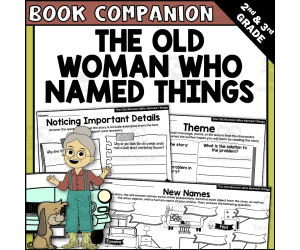
The Old Woman Who Named Things Read Aloud Book Companion Activities
ELA, Reading, Reading Comprehension, Grade 2, 3, 4, Read Alouds, Activities
The Old Woman Who Named Things Read Aloud Book Companion Activities This is a comprehensive teaching resource that goes hand-in-hand with the popular picture book, The Old Woman Who Named Things, by Cynthia Rylant. The package includes 21 differently engaging reading tasks which can be conveniently printed and integrated into your existing curriculum. These activities cover various learning needs and academic competencies – making them easily adaptable for any educator. Main Features - Encourages in-depth character study, identification of story elements, theme extraction and plot story events. - Helps in enhancing comprehension skills: A crucial skill necessary for handling more complex texts in their schooling journey. - Promotes creative expression while improving understanding of diverse concepts related to literature. Catering to Diverse Learning Scenarios Individual or Group Learning: The activities are flexible enough to be used regardless of the size of your student group. Versatile Use: Use it daily OR during centers or guided reading sessions. Different Educator Roles: Serve as a facilitator during group work or mentor during one-on-one tutoring sessions. User-Friendly & Cost-Effective Resource Management & Assessment Your students may continue working on these materials during independent studying periods allowing you an opportunity for assessing student understanding without investing excessive amounts on high-level resources. Despite its broad scope, this product has been designed keeping user convenience in mind. A suitable companion resource for both public school educators as well as homeschooling parents handling multiple grade levels at once. Please Note: - This resource only includes extension read-aloud activities centered around The Old Woman Who Named Things; the actual book is not included. - It does not include any references towards external sites or platforms. Who Should Buy This? Teachers dealing with Grade 2-4 language arts classes focusing on Comprehension and Reading will find this product extremely beneficial. A PDF file including various materials from Book companion activities to worksheets tailored for strengthening learning outcomes is offered.
Author Creatively Gifted
Tags Old Woman, Named Things, Read Aloud, Book Companion Activities, Comprehensive Teaching Resource, The Old Woman Who Named Things

Kids Yoga Stories: Yoga Card Games for Kids
P.E. & Health, Yoga, Kindergarten, Preschool, Grade 1, 2, 3, Games, Activities
Kids Yoga Stories: Yoga Card Games for Kids Yoga Card Games for Kids is a comprehensive teaching resource designed mainly for educators working with students from Preschool to Grade 3. This interactive package introduces yoga to young learners through gameplay. A Resource Beyond Classroom Instruction This resource extends beyond regular classroom instruction by integrating yoga into everyday school routines, promoting physical activity and mindfulness. It's ideal for use in Physical Education or Health classes and can be adapted to suit varying conditions – from whole group activities during class time to small group settings in after-school clubs or even as creative homework assignments. About The Package Contents The 24-page PDF encloses complete instructions for 15 interesting games tailor-made for use with a selection of yoga cards (available separately). These game-based learning tools foster kinesthetic learning whilst improving motor skills and flexibility among early grade children. The Games: Each game listed comes with explicit details including A list of necessary materials The number of players required Step-by-step instructions on how to play each individual game. This singular resource guarantees that teachers can efficiently plan their lessons and smoothly conduct them without any hassle. Educational Value: Not just entertaining but also educationally meaningful, 'Kids Yoga Stories: Yoga Card Games for Kids' stands out as an exceptional addition to any teacher's kit; inspiring fun-filled experiences while instilling health habits amongst kids. With this unique blend of enjoyable and fitness-oriented games at your disposal, you not only encourage children’s involvement but also foster healthier lifestyle choices that can potentially sustain throughout their lifetime. Accessibility: This teaching resource has been curated keeping accessibility in mind. It aims to reinforce collaboration skills amongst children during gameplay and boost physical development, all whilst being submerged in fun!
Author Kids Yoga Stories
Tags Yoga Games, Physical Activity, Mindfulness, Kinesthetic Learning, Wellness Habits
Author's Point of View – Slideshow + Worksheets
ELA, Reading, Grade 3, 4, Activities
This is a packet for Author’s Point of View Informational Packet. This was designed for your 3rd and 4th grade reading students. The learning objective is Identifying the author’spoint of view and developing our own points of view in nonfiction text. Included are a slideshow and a printable worksheet set. The slideshow has a set of 18 editable slides. Within the slideshow, students will be presented with many questions at the beginning to allow them to explore and deepen their understanding of author’s point of view. Students will be presented with many questions: -What do we mean by author’s point of view? -What is the author’s attitude or opinion about the topic? Does the author share his or her opinion about the topic? If so, what is it? -What message is the author trying to send? Why has the author written the text? Does the author want to influence your opinion on the topic? -What kind of words does the author use to help make his or her feelings known? What kind of verbs, adverbs, and adjectives are in the text? Within the slideshow, students will get a chance to practice identifying the point of view. There are 6 different informational texts to practice with. For each informational text, there will be 5 questions for students to ask themselves. Because there are 6 practice texts, you can choose to break up the texts. You may begin modeling the first 2 texts without any input from students. Allowing students to see your thought process out loud will help them begin to properly think out loud. With the next 2 texts, students can work in partners or small groups to answer the questions. For the final 2 texts, students can complete them independently by writing their answers on a piece of paper and then discussing their answers out loud. The PDF included has each of the informational texts and their questions in a printable form.
Author Siri Latina
Rating
Tags Author's Point Of View, Informational Text, Reading Passages, Reading Printable, Reading Slideshow, Partner Work, Literacy Assessment, Author's Point Of View Worksheet Pdf, What Is An Author's Point Of View, What's The Author's Point Of View, Author’s Point Of View, What Is Author's Point Of View
Plan & Write A Story About the First Men To Climb Everest (9-12 years)
ELA, Writing, Creative Writing, Grade 3, 4, 5, 6, 7, Activities
Creative Story Writing Work Packs Perfect for young linguists in grades 3-7, this compendium aids students in extending their literacy skills and optimizing their performance in English assignments and examinations. Fundamental Aspects Developing engaging characters Establishing compelling settings Concocting riveting plots Building suspense Resolving conflict creatively Enhancing descriptions using a variety of sentence types and precise grammar usage. Narrative Sets Included: 'The White Fox' 'The Creepy Tale' 'The Rescue' . Prompt questions formulated to steer discussions before diving into each activity fosters a classroom atmosphere of objectivity while also defining individual student grasp on various literary concepts. Furthermore, comprehension exercises comprised of error-spotting tasks paired with cogent tips offer meticulous insight enabling correction at point-blank range. Homeschooling & Independent Studies: Apart from its practical use during supervised learning sessions - whether they be whole group or small group engagements - this resource could serve as excellent reinforcement material during independent study times or even homework assignments given its knack for mimicking virtual tutor conduct flawlessly. Additionally, it’s excellent as a supplementary language arts tool in homeschool setups that streamline education towards personalized paths. With each story being designed around suspenseful narratives that entice listeners when read aloud after completion promotes compulsory involvement among peers cultivating storytelling prowess collectively within your classroom setup. The PDF file type ensures easy accessibility across multiple devices ensuring teaching aids are always conveniently at hand whenever inspiration strikes!
Author Guinea Pig Education
Tags Story Planning, Narrative Development, Character Creation, Plot Building, Suspenseful Storytelling

Military Veteran Research Project
ELA, Writing, Research, Grade 6, 7, 8, 9, 10, Activities
Military Veteran Research Project: An Essential Academic Tool The Military Veteran Research Project is an essential academic tool for teachers and homeschoolers. It caters to students from grade 6 to grade 10 and simplifies the research processes about a U.S military veteran. The project integrates a step-by-step methodology enhancing the learning experience. Versatility of the Product This product can be used as both, a week-long research unit or as a unique Veterans Day project. You can use this versatile tool in various settings including: Whole-class scenarios Small group sessions Homework assignments A flexible teaching approach can be adopted using this tool. Detailed Structure of Activities The project begins with PowerPoint presentations introducing MLA Style to students, ensuring comprehension of essential essay formatting techniques extensively used today. It keeps students excited about project requirements and provides useful tips on research essay writing supplemented with checklists for self- assessment and peer review. Rubrics & Collaborative Exercises L-EA's Military Veteran Research Project tailors multiple grading rubrics meeting CCRA standards that facilitate not just essay writing but also formal presentations enhancing communication skills among learners. Moreover, it promotes cooperative learning environments through worksheets enabling interaction among peers. Compatibility with Technology-Enhanced Instruction & LMS This resource extends its functionality beyond classroom teaching into technology-enhanced instruction perfect for any Learning Management System (LMS). Be it face-to-face or remote learning scenarios, this resource complements every form contributing towards maintaining consistent educational experiences across diverse settings. Empowering Future Academic Pursuits Using this resource for language arts subjects under writing subcategories, learners learn argumentation tactics relevant across varied disciplines enabling them for future academic pursuits. It therefore stands as an invaluable asset to every educator.
Author The Language of Educational Art, LLC
Tags Military Veteran Research, Academic Tool, Research Process, Essay Writing, Communication Skills

Language Vocabulary Flashcards ESL 41
ELA, Language Development, Vocabulary, ESL, Speech Therapy, Special Resources, Special Education Needs (SEN), Not Grade Specific, Worksheets & Printables, Flashcards, Centers, Activities, Classroom Decor, Word Walls
Boost your English Vocabulary Language skills with these fun and interactive flashcards resource series ! They' re perfect for kids and adults, whether you' re a native English speaker or learning English as a Foreign / Second Language . These cards are designed to help you build everyday vocabulary and communication skills, with pictures and words that match real- life contexts . You can use them in a class setting, one-on-one with a tutor, or even at home, whether for fun or educational purposes . The cards cover all sorts of modern topics, like animals, clothes, hobbies, food, and many many more . They' re super versatile and can be used in many subjects, from science to language arts . With this resource, you can create your personal " go-to " folder, for all ages and subjects . Here' s what you instantly get with this download : A4- sized cards with pictures and words and one set with just pictures . Smaller cards with pictures and words and one set with just pictures ( 6 on a page ) . Smaller cards with just words ( 6 on a page, no pictures ) . These cards are perfect for : English language learners . Students with learning difficulties . Occupational therapists . Speech and Language therapists / pathologists . Classroom teachers ( in mainstream or special education ) . So, get ready to have fun and improve your language vocabulary skills ! 4 1 PDF pages with vocabulary flash cards, in two size versions, with and without words . Print and laminate for better application . Use on your screens to save on ink and paper ! For more P D F materials and educational and therapy resources on language, special education, numeracy, basic math and pictorial / manipulative approach to learning, you can click WORDS ASIDE
Author WORDS ASIDE
Tags Oral Communication, Social Skills, Pragmatics, Speech, Occupational Therapy, SEN, Centers, Mini Books, Esl, Words Aside
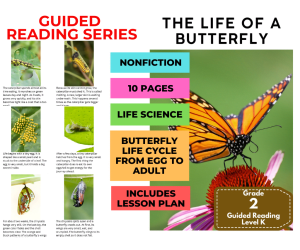
Guided Reading Level K - The Life of a Butterfly (with Lesson Plan)
ELA, Resources for Teachers, Reading Comprehension, Reading, Pre-Reading, Language Development, Insects, Life Sciences, Science, Vocabulary, Grade 1, 2, 3, Worksheets & Printables, Worksheets, Teacher Tools, Centers, Activities, Literacy Readers, Quizzes, Quizzes and Tests, Assessments
This Guided Reading Book - The Life of a Butterfly (Level K) with lesson plan includes: Guided Reading Color Label (front cover x1) This is a quick way to match the book’s demands to what students can generally handle.. The overall goal is to use the level/color to pick books for several smaller groups. To qualify for a certain level, a student is expected to read a book from that level with about 90–94% accuracy. If a student is consistently accurate and understands, move up a level. If the student is struggling at that level, drop down and add more support. Each student will improve at completely different rates, but it is generally one of the best ways to check progress across the class. DOWNLOAD THE CATALOG TO VIEW ALL GUIDED READING BOOKS AVAILABLE (SORTED LEVELS A-Z) Pre-Reading Question (x1) Teacher asks the prompt aloud, can be while showing the cover or first page. Students share what they already know, or make educated guesses from the cover. Prompt them to use the target vocabulary. Write some of their responses on the board to look back at during the reading. Vocabulary Words (x5) Introduce the five words, best doing it one at a time. Start by saying it, while students repeat and then see if anyone knows what it means before reading further. Read through the meaning and try to briefly connect each word to a picture or gesture so it’s meaningful. Ask students to flip through the book pages and point to where they see each of the vocabulary words. While reading the book pause upon coming across one of the vocab words or read the sentence twice to make sure students understand the word has appeared. Optional: Ask students to raise hands whenever they see/hear one of the new words. Guided Reading Pages (x10) Check the book snapshot (below) for: primary topic - do you need to prep extra reading or intro materials on this? what is taught best - decide on 1-2 bullets to focus on, use the prompt or words provided here for best results. learning goals - what you are checking for students to be able to do after the session, elicit answers using prompts or words provided. key vocabulary (see section above). questions overview - so you know what is coming up and if you need to prep extra materials to assist understanding. Run the lesson You may have already looked at a few of the pages together, but you can show them some of the pictures again first to set meaning. Depending on how much time you have and how familiar your students are with guided reading class, you may want to read the book aloud first with the group first. Students whisper or partner read, while you listen in. If time, do it as a group, one student reading a page each. Use the guided page’s prompts to coach: “Check the picture / does it make sense?” “Point under the words / try the first sound” “Reread the sentence smoothly”. Try to focus more on one student per session (rotating every time), so you can work out if they are ready to move up or need to move down a level. Comprehension Questions (back cover x3) This is your way to check that students didn’t just say the words, but actually understood the text. First, let students answer by pointing to the page/picture and saying a short sentence. After any answer, follow with: “Show me where you found that in the text.” In bigger groups, have partners answer first (10–20 seconds), then call on 2–3 students to share. Differentiation tips: Emerging speakers/struggling readers: oral + pointing On-level: oral in a full sentence Higher: one written sentence or draw + label Book Snapshot Title: The Life of a Butterfly Genre: Nonfiction (informational) Subject: Life Science Primary Topic: Butterfly life cycle from egg to adult Estimated Guided Reading Level (A–Z): K What This Book Teaches Best Explains the butterfly’s life cycle in order, beginning with a tiny egg and ending with an adult butterfly ready to fly. Describes how a caterpillar eats, grows quickly, and molts because its skin cannot grow. Introduces the chrysalis as the hard shell a caterpillar is inside while it changes. Describes what happens when the butterfly comes out, including how its wings change as they dry and become strong. Connects the butterfly’s feeding to plants by explaining it drinks nectar and helps flowers grow. Learning Goals Students can describe where the butterfly’s life begins, using details from the text. Students can explain why a caterpillar must shed its skin, according to the book. Students can describe what a chrysalis is and what happens inside it, using text details. Students can retell key events from the egg stage through the butterfly flying, in the correct order. Students can describe what the butterfly does to make its wings expand, dry, and become strong. Students can explain what the book says the butterfly drinks and how it helps flowers grow. Key Vocabulary From the Text underside — the bottom part of something. hatches — comes out of an egg. molting — shedding old skin so a new one can show. chrysalis — the hard shell a caterpillar is inside while it changes. nectar — sweet liquid in flowers that some insects drink. Discussion Prompts Pre-reading question: What changes do you think happen as a caterpillar becomes a butterfly? Comprehension questions: Where does the book say the butterfly’s life begins? Why does the caterpillar have to shed its skin, according to the text? What does the butterfly do while it waits for its wings to become strong? Printing Tips 1. Best Printing Method (Recommended) “Booklet” Printing (Best if Available) If your printer or PDF viewer supports Booklet Printing , use this. Settings to use: Print mode: Booklet Paper size: Letter or A4 (either works) Orientation: Landscape Print on both sides: Yes Flip on: Short edge Scaling: Fit to printable area Booklet subset: First test: Front sides only Then: Back sides only This will automatically: Pair pages correctly Put the cover on the outside Align everything for folding After printing, fold in half and staple along the spine . 2. If “Booklet” Printing Is NOT Available You can still print this correctly with manual duplex printing . Step-by-step: Open the PDF. Choose Print . Set: Orientation: Landscape Pages per sheet: 1 Print on both sides: Yes Flip on: Short edge Print all pages . Because each PDF page already contains two facing book pages, the result will still fold cleanly into a book. Thousands of Cored Education products are included with your TeachSimple membership. Download links and encyclopedia index available here.
Author Cored Education
Rating
Tags Reading Comprehension, Reading Passages, Reading, Guided Reading, Guided Reading Lesson Plan, Guided Reading Activity, Pre-reading, Vocabulary, Science Lesson Plans, Insects

Prefix Mis Sentence Reading Rings
ELA, Language Development, Phonics, Grade 2, 3, 4, Activities, Centers, Worksheets & Printables, Task Cards
Practice reading words with the prefix MIS- with these sentence reading rings. Students will read words with the prefix mis- in the context of sentences. Each card also includes a bold and colorful image to illustrate each sentence and to help students to learn the meanings of each word. What is Included: This resource includes one reading ring activity for the prefix mis. There are cards each featuring a different word with the prefix mis, with a sentence using the word in context and an image to illustrate that sentence. When to Use Early Finishers - If students finish their work early, they can use these reading rings for extra practice. Small Group Work - Teachers can use these reading rings to target small groups of students who need more practice reading words with prefixes. Independent Practice - Students can work independently at their desks to read this set of prefix cards. Morning Work - Students can read and review this reading ring for morning work as their classmates arrive to class. How to Make: Teachers will print out the pages and cut each card apart. Once cut apart, the teacher can choose to laminate the cards for durability. Then, use a hole punch to punch a hole in the top left corner of the card. Place the cards on a ring to create your reading ring, making sure the cover card is on top. Skills Assessed: These reading rings help with identifying words with prefixes These reading rings help with learning the meaning of prefixes These reading rings help students learn how prefixes change the meaning of words. These affixes reading rings are a low prep activity for teachers to prepare for students to use. Once created, these cards can be used over and over to practice reading words with prefixes in the context of a sentence.
Author The Connett Connection
Tags Affixes, Morphology, Prefixes, Literacy Activities, Reading Words With Prefixes

Guided Reading Level L - The Arctic Fox (with Lesson Plan)
ELA, Resources for Teachers, Reading Comprehension, Reading, Pre-Reading, Language Development, Life Sciences, Science, Vocabulary, Animals, Grade 1, 2, 3, Worksheets & Printables, Worksheets, Teacher Tools, Centers, Activities, Literacy Readers, Quizzes, Quizzes and Tests, Assessments
This Guided Reading Book - The Arctic Fox (Level L) with lesson plan includes: Guided Reading Color Label (front cover x1) This is a quick way to match the book’s demands to what students can generally handle.. The overall goal is to use the level/color to pick books for several smaller groups. To qualify for a certain level, a student is expected to read a book from that level with about 90–94% accuracy. If a student is consistently accurate and understands, move up a level. If the student is struggling at that level, drop down and add more support. Each student will improve at completely different rates, but it is generally one of the best ways to check progress across the class. DOWNLOAD THE CATALOG TO VIEW ALL GUIDED READING BOOKS AVAILABLE (SORTED LEVELS A-Z) Pre-Reading Question (x1) Teacher asks the prompt aloud, can be while showing the cover or first page. Students share what they already know, or make educated guesses from the cover. Prompt them to use the target vocabulary. Write some of their responses on the board to look back at during the reading. Vocabulary Words (x5) Introduce the five words, best doing it one at a time. Start by saying it, while students repeat and then see if anyone knows what it means before reading further. Read through the meaning and try to briefly connect each word to a picture or gesture so it’s meaningful. Ask students to flip through the book pages and point to where they see each of the vocabulary words. While reading the book pause upon coming across one of the vocab words or read the sentence twice to make sure students understand the word has appeared. Optional: Ask students to raise hands whenever they see/hear one of the new words. Guided Reading Pages (x10) Check the book snapshot (below) for: primary topic - do you need to prep extra reading or intro materials on this? what is taught best - decide on 1-2 bullets to focus on, use the prompt or words provided here for best results. learning goals - what you are checking for students to be able to do after the session, elicit answers using prompts or words provided. key vocabulary (see section above). questions overview - so you know what is coming up and if you need to prep extra materials to assist understanding. Run the lesson You may have already looked at a few of the pages together, but you can show them some of the pictures again first to set meaning. Depending on how much time you have and how familiar your students are with guided reading class, you may want to read the book aloud first with the group first. Students whisper or partner read, while you listen in. If time, do it as a group, one student reading a page each. Use the guided page’s prompts to coach: “Check the picture / does it make sense?” “Point under the words / try the first sound” “Reread the sentence smoothly”. Try to focus more on one student per session (rotating every time), so you can work out if they are ready to move up or need to move down a level. Comprehension Questions (back cover x3) This is your way to check that students didn’t just say the words, but actually understood the text. First, let students answer by pointing to the page/picture and saying a short sentence. After any answer, follow with: “Show me where you found that in the text.” In bigger groups, have partners answer first (10–20 seconds), then call on 2–3 students to share. Differentiation tips: Emerging speakers/struggling readers: oral + pointing On-level: oral in a full sentence Higher: one written sentence or draw + label Book Snapshot Title: The Arctic Fox: A Winter Survivor Genre: Nonfiction (informational) Subject: Life Science Primary Topic: Arctic fox adaptations for cold-weather survival Estimated Guided Reading Level (A–Z): L What This Book Teaches Best Explains the Arctic fox’s habitat (“far north”) and names the tundra as a vast, treeless land with deep winter snow. Describes seasonal camouflage: white winter fur to hide, and brown/gray summer fur to blend with rocks and plants. Shows physical adaptations that help the fox stay warm and move safely (small rounded ears; thick fur on paws like “warm socks”). Teaches hunting behaviors using precise actions and vocabulary (hearing prey under snow; pouncing by leaping and diving head-first). Introduces animal homes and young: a den as tunnels under hills/rocks, and baby foxes called kits born in spring. Learning Goals Describe where the Arctic fox lives and what the tundra is. Explain how the Arctic fox’s fur color helps it in winter and in summer. Describe two body features that help the Arctic fox stay warm in freezing weather. Explain how the Arctic fox finds prey under the snow using its hearing. Describe what “pouncing” is and how it helps the fox catch food. Describe what a den is and what kits do as they grow. Key Vocabulary From the Text tundra — cold, treeless land in the far north. lemmings — small animals the fox can hunt. prey — an animal another animal hunts and eats. pouncing — leaping and diving quickly to catch food. den — a home or shelter where an animal lives. Discussion Prompts Pre-reading question: What body parts or behaviors might help an animal stay warm in a cold, windy place? Comprehension questions: How does the Arctic fox’s fur help it hide in winter and in summer? What does the fox do with its tail when it goes to sleep? How does pouncing help the Arctic fox catch its food? Printing Tips 1. Best Printing Method (Recommended) “Booklet” Printing (Best if Available) If your printer or PDF viewer supports Booklet Printing , use this. Settings to use: Print mode: Booklet Paper size: Letter or A4 (either works) Orientation: Landscape Print on both sides: Yes Flip on: Short edge Scaling: Fit to printable area Booklet subset: First test: Front sides only Then: Back sides only This will automatically: Pair pages correctly Put the cover on the outside Align everything for folding After printing, fold in half and staple along the spine . 2. If “Booklet” Printing Is NOT Available You can still print this correctly with manual duplex printing . Step-by-step: Open the PDF. Choose Print . Set: Orientation: Landscape Pages per sheet: 1 Print on both sides: Yes Flip on: Short edge Print all pages . Because each PDF page already contains two facing book pages, the result will still fold cleanly into a book. Thousands of Cored Education products are included with your TeachSimple membership. Download links and encyclopedia index available here.
Author Cored Education
Rating
Tags Reading Comprehension, Reading Passages, Reading, Guided Reading, Guided Reading Lesson Plan, Guided Reading Activity, Pre-reading, Vocabulary, Science Lesson Plans, Animals
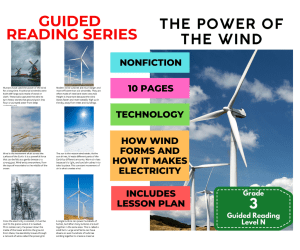
Guided Reading Level N - The Power of the Wind (with Lesson Plan)
ELA, Resources for Teachers, Reading Comprehension, Reading, Social Studies, Geography, Earth and Environmental Sciences, Science, Physics, Technology, Grade 2, 3, 4, Worksheets & Printables, Worksheets, Teacher Tools, Centers, Activities, Literacy Readers, Quizzes, Quizzes and Tests, Assessments, Lesson Plans
This Guided Reading Book - The Power of the Wind (Level N) with lesson plan includes: Guided Reading Color Label (front cover x1) This is a quick way to match the book’s demands to what students can generally handle.. The overall goal is to use the level/color to pick books for several smaller groups. To qualify for a certain level, a student is expected to read a book from that level with about 90–94% accuracy. If a student is consistently accurate and understands, move up a level. If the student is struggling at that level, drop down and add more support. Each student will improve at completely different rates, but it is generally one of the best ways to check progress across the class. DOWNLOAD THE CATALOG TO VIEW ALL GUIDED READING BOOKS AVAILABLE (SORTED LEVELS A-Z) Pre-Reading Question (x1) Teacher asks the prompt aloud, can be while showing the cover or first page. Students share what they already know, or make educated guesses from the cover. Prompt them to use the target vocabulary. Write some of their responses on the board to look back at during the reading. Vocabulary Words (x5) Introduce the five words, best doing it one at a time. Start by saying it, while students repeat and then see if anyone knows what it means before reading further. Read through the meaning and try to briefly connect each word to a picture or gesture so it’s meaningful. Ask students to flip through the book pages and point to where they see each of the vocabulary words. While reading the book pause upon coming across one of the vocab words or read the sentence twice to make sure students understand the word has appeared. Optional: Ask students to raise hands whenever they see/hear one of the new words. Guided Reading Pages (x10) Check the book snapshot (below) for: primary topic - do you need to prep extra reading or intro materials on this? what is taught best - decide on 1-2 bullets to focus on, use the prompt or words provided here for best results. learning goals - what you are checking for students to be able to do after the session, elicit answers using prompts or words provided. key vocabulary (see section above). questions overview - so you know what is coming up and if you need to prep extra materials to assist understanding. Run the lesson You may have already looked at a few of the pages together, but you can show them some of the pictures again first to set meaning. Depending on how much time you have and how familiar your students are with guided reading class, you may want to read the book aloud first with the group first. Students whisper or partner read, while you listen in. If time, do it as a group, one student reading a page each. Use the guided page’s prompts to coach: “Check the picture / does it make sense?” “Point under the words / try the first sound” “Reread the sentence smoothly”. Try to focus more on one student per session (rotating every time), so you can work out if they are ready to move up or need to move down a level. Comprehension Questions (back cover x3) This is your way to check that students didn’t just say the words, but actually understood the text. First, let students answer by pointing to the page/picture and saying a short sentence. After any answer, follow with: “Show me where you found that in the text.” In bigger groups, have partners answer first (10–20 seconds), then call on 2–3 students to share. Differentiation tips: Emerging speakers/struggling readers: oral + pointing On-level: oral in a full sentence Higher: one written sentence or draw + label Book Snapshot Title: The Power of the Wind Genre: Nonfiction (informational science text) Subject: Science (Energy/Earth Science) Primary Topic: How wind forms and how it makes electricity Estimated Guided Reading Level (A–Z): N What This Book Teaches Best Defines wind as the movement of air across Earth’s surface and describes wind as a breeze or a strong gust. Explains the cause of wind : the sun heats Earth unevenly, warm air rises, and cool air moves in to replace it. Shows how people have used wind over time, comparing traditional windmills (grinding grain, pumping water) to modern wind turbines. Describes how a wind turbine works, including blades spinning a shaft connected to a generator that makes electricity. Connects wind energy to sustainability by explaining wind farms , offshore wind farms , and wind energy as a clean, renewable resource. Learning Goals Students will explain what wind is using details from the text. Students will describe how the sun’s heating of Earth helps create wind. Students will describe how traditional windmills used wind to help people. Students will explain how wind turbines change wind’s motion into electricity. Students will describe what a wind farm is and why offshore wind farms can capture strong winds. Students will explain why wind energy is described as renewable and clean in the text. Key Vocabulary From the Text movement — going from one place to another. gust — a short, strong burst of wind. turbines — big machines with blades that spin in wind. generator — a machine that makes electricity. renewable — can be used again and won’t run out. Discussion Prompts Pre-reading question: Where have you seen wind do work, like moving something or making power? Comprehension questions: What does the text say creates wind? Comprehension questions: How did traditional windmills use wind to help people? Comprehension questions: How does a wind turbine turn wind into electricity, according to the text? Printing Tips 1. Best Printing Method (Recommended) “Booklet” Printing (Best if Available) If your printer or PDF viewer supports Booklet Printing , use this. Settings to use: Print mode: Booklet Paper size: Letter or A4 (either works) Orientation: Landscape Print on both sides: Yes Flip on: Short edge Scaling: Fit to printable area Booklet subset: First test: Front sides only Then: Back sides only This will automatically: Pair pages correctly Put the cover on the outside Align everything for folding After printing, fold in half and staple along the spine . 2. If “Booklet” Printing Is NOT Available You can still print this correctly with manual duplex printing . Step-by-step: Open the PDF. Choose Print . Set: Orientation: Landscape Pages per sheet: 1 Print on both sides: Yes Flip on: Short edge Print all pages . Because each PDF page already contains two facing book pages, the result will still fold cleanly into a book. Thousands of Cored Education products are included with your TeachSimple membership. Download links and encyclopedia index available here.
Author Cored Education
Rating
Tags Reading Comprehension, Reading Passages, Reading, Guided Reading, Guided Reading Lesson Plan, Guided Reading Activity, Pre-reading, Geography, Science Lesson Plans, Technology

Letter K Beginning Sounds Puzzles
ELA, Language Development, Phonics, Kindergarten, Preschool, Activities
The Letter K Beginning Sounds Puzzles provide educators with a fun phonics activity to help students recognize the letter K and identify words that start with the /k/ sound. This resource includes 12 two-piece letter K puzzles with colorful images of common words like kite, keys, kiss, and kangaroo. Young learners will enjoy matching the puzzle pieces while saying each word aloud and practicing the initial K sound. Teachers can use these puzzles for small group instruction, literacy centers , morning work, and individual practice. The letter K puzzles allow students to develop early literacy skills such as letter recognition, phonics, matching, and fine motor skills. This hands-on resource is designed for preschoolers and kindergarteners learning the basics of reading readiness. The printable letter K puzzles come ready-to-use so teachers can provide students with engaging beginning sound practice.
Author The Connett Connection
Tags Letter K, Letter K Activities, Alphabet Activities, Alphabet Puzzles, Alphabet Center, Beginning Sounds, Initial Sounds, Initial /k/ Sound, Initial K, Letter Of The Week

COLOR BY NUMBERS | 5 FREE IMAGES
Math, Early Learning, Elementary, Pre-K, Activities, Worksheets & Printables
COLOR BY NUMBERS | 5 FREE EXERCISES THANK YOU FOR BEING PART OF EDITORIAL ARENAS EDUCATIVAS We are an educational corporation that is dedicated to the development of fabulous resources for mathematics, literacy, as well as resources for teaching Spanish and brain exercises. MAIN INFORMATION: 1. Brief introduction: Hello, thank you very much for being interested in this educational document. This document will help you a lot both in the classroom if you are a teacher, as well as if you homeschool and want to stimulate your children from home. 2. Title of the educational resource: This document is titled "Teaching material for children" 3. Topic to work on: Thanks to this educational document, we are going to work on a basic topic that every child and/or student should master. 4. Area of knowledge where it should be applied: Thanks to this document, we will address a topic and at the same time an important area of learning. 5. Number of pages it contains: This educational document contains the following number of pages available and ready to be used by you, you just have to download and print the document to start using it in your classroom. 6. Is it available in color or black/white? This document and/or set of educational sheets is available in color and also in certain parts contains black and white, however it is generally suggested that the teaching material be designed in color so that it is much more attractive for your students, awakening their attention and interest. SECONDARY INFORMATION: 7. Should I apply it individually or as a group in my class? Also, according to your criteria, see if it is better for these sheets to be applied individually or as a group. 8. What size and format is this resource in? This set of teaching sheets has been published in A4 size, PDF format, so that it is much easier to use. 9. Do I need any extra elements to apply it? Yes, perhaps your students need pencils, colors, markers and even sometimes scissors and erasers. 10. Is it in color or black and white? This educational document has been designed mostly in color so that it is highly attractive to students. 11. Is this resource free or do you have to pay to use it? This document is available for free, so take advantage of the opportunity to download it now. 12. Does it have an answer key attached? No, it does not contain an answer key attached. This file is for personal use only. It is not allowed to be resold or shared with others.
Author EDITORIAL LAURA EDUCA
Tags COLORING, COLOR, COLOR BY, PAINTING, FREE RESOURCES, MATH RESOURCES, MATH