


9,608 products added recently
Page 512 - Newest Teaching Resources

 Show filters


ESL Reading Comprehension + Writing Activity Worksheets on "Spa"
ELA, Language Development, ESL, Reading, Reading Comprehension, Writing, Formal Writing, Creative Writing, Grade 7, 8, 9, 10, 11, 12, Worksheets & Printables, Writing Prompts, Worksheets
ESL Reading Comprehension + Writing Activity Worksheets on "Spa" This ESL EFL (English Second or Foreign Language) Teaching Resource on "Spa" (3 PDF Slides; Reading Comprehension + Writing Activity) can be ideal to train Language skills in English. Suitable participants for this ESL EFL TESOL Reading + Writing Activity are Foreign Students at middle and High School (7th-12th Grade; teens) . Newcomers or any ESL Learner is also more than suitable for this ESL EFL (English as a Second or Foreign Language) Activity on "Spa" (origins, background, history and evolution + treatments and activities + famous spas; Gellért and Széchenyi spas in Budapest, Blue Lagoon in Iceland etc). This Teaching Educational Resource Product can also be ideal for ESL EFL Centers worldwide or any English second language tutor. This ESL EFL TESOL Teaching Resource on "Spa" (Worksheet; 3 PDF Printable slides) can be ideal for Intermediate English as a Second or Foreign Language (ESL EFL) Learners. Within this English Second or Foreign Language (ESL EFL) Reading Comprehension + Essay Writing Activity Worksheet on "Spa" (origins, background, history and evolution + treatments and activities + famous spas; Gellért and Széchenyi spas in Budapest, Blue Lagoon in Iceland etc), ESL EFL TESOL teachers can find the following activities: 1 text on "Spa" (origins, background, history and evolution + treatments and activities + famous spas; Gellért and Széchenyi spas in Budapest, Blue Lagoon in Iceland etc) 17 Questions (with related space where students can answer) 2 essay prompts for a writing activity (writing an essay on your own personal opinion on spas; whether you have ever been at a spa, whether you like them or not and why + pretending to spend a day at a spa and to describe your imaginary experience in a page of diary) This ESL, EFL (English Second or Foreign Language) Teaching Resource Reading + Writing Activity on "Spa" (origins, background, history and evolution + treatments and activities + famous spas; Gellért and Széchenyi spas in Budapest, Blue Lagoon in Iceland etc) is great for Intermediate English as a second or foreign language learners (ESL- EFL). This English Second Language Worksheet on "Spa" (origins, background, history and evolution + treatments and activities + famous spas; Gellért and Széchenyi spas in Budapest, Blue Lagoon in Iceland etc) aims to train and Reading Comprehension + Writing Skills. "Learning with Alan" is dedicated to provide high-quality teaching resources and educational materials for ESL EFL TESOL teachers. It aims to support teachers, educators, and tutors in both online and offline environments, helping them achieve their teaching goals while creating a fun, stimulating atmosphere for learning English. Always remember: learning is fun, and so is English! If you want to browse more PDF ESL, EFL, TESOL Teaching Resources and Educational Material click here Learning with Alan!
Author Learning with Alan
Rating
Tags ESL, English Second Language, English, Spa, Baths, Activity, Reading Comprehension, Worksheets, Printable, Writing Activity

Butterfly Life Cycle Chart
Insects, Life Sciences, Science, Nature & Plants, Kindergarten, Grade 1, 2, Posters, Classroom Decor, Charts, Teacher Tools, Diagrams, Coloring Pages, Worksheets, Worksheets & Printables
Here is a beautiful, simple Butterfly Life Cycle Chart, with a black and white version, to brighten your classroom and make children want to ask questions and learn! Children love butterflies, so this chart is sure to please! Children will love to colour their own chart! This chart has simple pictures for the non-readers in your class, as well as labels to encourage reading. Uses for the Butterfly Life Cycle Chart: Use as part of a butterfly kindergarten science project. It is included in this pack Give a chart to each group of children on their desk to help them with their project/science writing. Use it as a poster as part of a display Use it as a visual aid for a lesson, which can be followed up with workheets. (included in this pack) Use it to compare the life cycles of various creatures Who is the Butterfly Life Cycle Chart for? The Butterfly Life Cycle Chart is for all: parents teachers classroom assistants Ages of use: The Butterfly Life Cycle Chart can be used with all ages Suggested tip It is advised that you laminate the chart to make it durable. What is included? 1 colour, A4 Butterfly Life Cycle Chart 1 black and white Butterfly Life Cycle Chart Worksheets and lesson outlines for a project to accompany this chart can be found here: https://teachsimple.com/product/butterflies-kindergarten-science-projects Butterflies are a good way to teach pupils about life cycles - the children see them in their environment, and they can easily lead to scientific research and learning. Stimulate the asking of questions: Do the colors of caterpillars indicate the colors of the adult butterfly? Are all caterpillars the same size? Do they shed their skins? Which other creatures do we know of that shed their skins? Can we tell by the leaf we find eggs on which kind of butterfly laid them?
Author Lilibette's Resources
Rating
Tags Butterfly Life Cycle, Life Cycles, Life Cycle Chart, Insects, Nature, Life Cycle Diagram, Life Cycle Diagrams, Butterflies, Science Coloring Pages

Daffodils Kindergarten Science Projects + Lesson Outline
Science, Life Sciences, Nature & Plants, Writing, ELA, Creative Writing, Kindergarten, Grade 1, Teacher Tools, Outlines, Parts of and Anatomy of, Worksheets & Printables
Take the humble Daffodil and transform it into an engaging Kindergarten Science Project that your pupils will love this spring. You will be able to cover much of the Curriculum for Science (Plants) without your pupils knowing they are learning. Suggestions are made and resources are provided to enable you to integrate your science work with language (poetry) and creativity. Who is it for? This Daffodils Science project is intended to be used with Kindergarten and Grade 1 children. Home educators can also use it in the course of nature study/Science learning. What does it contain? · PowerPoint The pack comes with an 18-slide PowerPoint, which can be used to either start your lesson or as a recap at the end. The PowerPoint begins with the bulb under the ground waiting for spring, and then shows how the Daffodil grows. It teaches about the parts of a Daffodil : the bulb, stem, leaves, buds, calyx (the papery covering protecting the buds), petals, trumpet and pollen. The PowerPoint is a taught lesson and comes with sound. · Lesson outlines Two lesson outlines are provided, one for ages 5-6 and another for ages 6-7, though other ages might also benefit. It can be used successfully with mixed age-range classes. Notes as to how to dissect a Daffodil. · Worksheets/Activities · Label the parts of a Daffodil. · 5 pages to make a Daffodil diary: choice of coloured or black/white front cover. Let the children make observations of a Daffodil growing near them that can be observed easily. · Poetry work – read the poem ‘Daffodils’ by William Wordsworth (provided) and use our suggestions to think about the poem. · Acrostic worksheets for pupils to write their own Daffodils acrostic poem. · Daffodil writing paper For display: Beautiful original photos · A5 photos of parts of a Daffodil · A4 pictures and vocabulary cards for Daffodil Life Cycle: use for Science work, language or display, word walls, etc… · Display headers What is included? 1 18-slide PowerPoint 1 PDF file with 47 pages
Author Lilibette's Resources
Rating
Tags Daffodils, Daffodils Life Cycle, Daffodils Science, Daffodils Plants Lesson, Daffodil Life Cycle, Kindergarten Science Projects, Nature, Plants, Parts Of A Flower

ESL Movie Guide Worksheets on "Titanic"
ELA, Language Development, ESL, Writing, Creative Writing, Formal Writing, Grade 7, 8, 9, 10, 11, 12, Worksheets & Printables, Writing Prompts, Worksheets
ESL Movie Guide Worksheets on "Titanic" This ESL teaching resource is a 3-page printable PDF movie guide for "Titanic" (1997 film by James Cameron with Leonardo DiCaprio and Kate Winslet starring; set aboard the RMS Titanic in 1912) designed to support English as a Second Language (ESL) learners. This resource can be great for post-movie activities and is ideal for Middle School and High School students , ranging from 7th to 12th grade . It's a versatile tool suitable for newcomers and any English language learners, making it an excellent choice to use in ESL classrooms, language centers, or by tutors worldwide. Within this ESL Movie Guide on "Titanic" (1997 film by James Cameron with Leonardo DiCaprio and Kate Winslet starring; set aboard the RMS Titanic in 1912), there are included the following film related activities: General Movie Information – Students fill in key details about the film, including the director, genre, and plot summary . Vocabulary Builder – A dedicated section for noting new words and phrases , expanding students’ English lexicon. Character Analysis – Students describe the main characters, helping them practice descriptive language and comprehension . Movie Timeline Activity – Students arrange scenes in chronological order to improve their understanding of the storyline . Favorite Scene Reflection – A fun writing exercise where students describe and explain their favorite moments from the film . Movie Review Writing – Learners express their opinions in a structured review, enhancing their persuasive and evaluative writing skills . Creative Writing Exercise – Students imagine themselves as one of the characters and write three diary entries from that character’s perspective, deepening their connection with the storyline. This "Titanic" (1997 film by James Cameron with Leonardo DiCaprio and Kate Winslet starring; set aboard the RMS Titanic in 1912) movie guide is designed to create an enjoyable and stimulating learning experience for intermediate advanced ESL learners. Learning with Alan is a Teaching Resources Store whose aim is to help English as a Second or foreign Language (ESL EFL) Teachers, Educators and Tutors around the world (be it online or offline) to achieve their teaching objectives while creating an enjoyable and stimulating learning environment. Never Forget! Learning is fun, So should English! Always If you want to browse more of my ESL, EFL, TESOL Teaching Resources, click here Learning with Alan!
Author Learning with Alan
Rating
Tags ESL, English Second Language, English, Movie Guides, Films, Titanic, Writing Activity, Activity, Printable, Worksheets
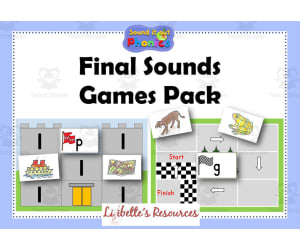
Final or Ending Sounds Phonic Game Phonemic Awareness Activity
Special Resources, ELA, Special Education Needs (SEN), Speech Therapy, Language Development, Phonics, Spelling, Kindergarten, Grade 1, 2, Activities, Games
Final or Ending Sounds Phonic Game Phonemic Awareness Activity A fun pack of two games to help children develop the important phonic skill of hearing the final (or ending) sound of a word. It covers the final sounds: t, d, k, g, p, b, m, s, n. Choose from: Build A Castle or Win the Race. The games are the same whichever you choose and use the same picture cards, but the choice of the game board means that children will not get bored playing the game again and again, plus the fact that you can increase the fun level to keep the children playing! (see below). Objectives This game pack has been designed to give children practice hearing the final sound of a word, something many children struggle with, especially those with a speech delay. It is hoped that, as the child has fun playing the game that the child's phonemic awareness can be developed. The game can also be used within speech therapy to help children distinguish between sounds which are produced in a like manner: k/g; p/b; t/d. Many children have difficulty with sounds that are produced using the same part of the mouth/voice/tongue. If this is true of your pupil, then I suggest that you start by playing the game with two sounds which are not at all similar. Once the child can confidently hear the final sound of a word, then the game can be played with sounds which are similar to help the child’s speech development and the ability to carefully discriminate between like sounds. Grade/ages These games are suitable for children of any age who need to learn to hear the final sound of a word. Games make learning easy, and children learn without knowing they are! Pre-K to teens with special needs will all love these games. The fact that the games allow for an increased challenge level is an added factor, making them games that children and young people will want to play again and again—all good practice for securing the skill of hearing that final sound! How many players? It is suggested that at first, each child plays alone with an adult until they hear the final sound. Then, up to 4 children can be invited to play together. Simply print out the number of game boards you need. Increase the fun level! Begin by playing the game simply. Once the child gains confidence and you wish to play again with sounds that are produced in a similar way or to give further practice, then add in some fun. Flag or wheel cards can be scattered amongst the pictures, and the teacher can choose what these mean - either extra turns or 'miss a go'. I made this game for a ten-year-old reluctant pupil. It worked, and now he can hear the final sound! Win Win!! What is included? 1 PDF File 2 versions of a game 63 picture cards Full instructions Picture Key
Author Lilibette's Resources
Rating
Tags Final Sounds, Fianl Sounds Game, Phonic Final Sound, Hearing The Final Sound Of Words, Phonics Final Sound Activities, Final Sound D, Final Sound T, Ending Sounds, Phonemic Awareness Activity
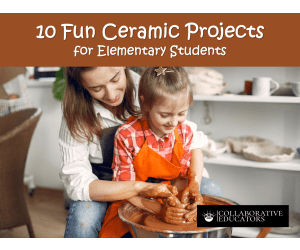
10 Fun Ceramic Projects for Elementary Students
Art, Creative Arts, Graphic Arts, Grade 1, 2, 3, 4, 5, Crafts, Activities, Projects
An entertaining and simple-to-follow e-book called 10 Fun Ceramic Projects for Elementary Students aims to encourage young students' creativity via practical ceramic art. This resource, which teaches elementary school kids the basics of working with clay through basic techniques like pinching, coiling, and slab building, is ideal for both in-class and at-home study. Beginners may easily complete the ten projects, which include clay monsters, wind chimes, leaf bowls, and pinch pot creatures. Each project includes detailed instructions and a list of basic ingredients. In addition to exposing pupils to three-dimensional art, the activities are designed to foster artistic expression, increase confidence, and develop fine motor abilities. For parents, homeschoolers, or art teachers who want to add creative, hands-on learning to their daily routine, this booklet is perfect. Projects allow for a great deal of individuality and may be modified for a variety of ages and skill levels. Students will enjoy using their imaginations while cultivating a respect for ceramics through projects like creating textured tiles and sculpting animal figures. This ebook provides an enjoyable and instructive experience that kids will love—and proudly take home to show off—whether you're introducing clay for the first time or are searching for new project ideas.
Author Bright Classroom Ideas Marketplace
Rating
Tags Ceramic, Project, Elementary, Pottery, Clay, Craft, Art

Butterflies: Kindergarten Science Projects
Science, Life Sciences, Biology, Kindergarten, Grade 1, 2, Teacher Tools, Lesson Plans
Here is a Kindergarten Science project to help you teach about butterflies! The Butterflies Kindergarten Science project is ideal for a mini spring topic. Use our Lesson notes to help you plan lessons around science, art and English. I like to help teachers use creatures that are commonly seen by children to explore the natural world, which is the building block of science. By using creatures with which children are familiar, we can cover much of the science curriculum in a way that the children will remember. Science lessons can be transformed as both pupils and teachers become engaged in the project, asking questions to stimulate further enquiry. Teaching notes include: Raising butterflies from eggs: a wonderful thing to do to really help bring science to life for your pupils. Helpful notes about each stage of the butterfly life cycle - help you to feel like an expert; we have done the research for you! Suggested questions to stimulate scientific enquiry. Art activities English Activities Science and English worksheets: By joining subjects together in a science-based project, we teach young children the way they learn - holistically! Four pictures to order the life cycle of a butterfly with matching vocabulary Matching words to pictures activity at 2 levels Anatomy of a butterfly Recording sheets for observations of a butterfly and a caterpillar Reading comprehension exercises 2 poems with comprehension exercises to follow each differentiated; 2 ability levels Decorated writing sheets Display resources: A good display is vital to capture children's interest and make the classroom a vibrant learning environment. Our resources help you to make such a display: Photographs, Labels for each part of the butterfly life cycle, Butterfly life cycle mat, to help children with their writing, or for display. A butterfly life cycle poster (A4) Who is the butterfly's Kindergarten Science project for? Teachers, Home-educators Parents Anyone!!! What is included in the Butterflies Kindergarten Science project? 1 pdf containing the above: 40 pages
Author Lilibette's Resources
Rating
Tags Butterfly Life-cycle, Butterflies, Caterpillars, Spring, Home-education, Kindergarten Science, Insects, Kindergarten Science Projects, Nature, Butterfly Life Cycle

Lesson Plan on Butterfly Life Cycle
Biology, Life Sciences, Science, Insects, Grade 2, 3, 4, Lesson Plans, Teacher Tools, Activities, Worksheets & Printables
Overview of the Lesson Plan: The Intriguing Life Cycle of Butterflies Get ready for an exciting 90-minute butterfly-themed adventure! For young students who are curious about the development and change of butterflies, this lesson is perfect. Together, we will learn about the four fascinating stages of a butterfly's life cycle: from tiny eggs to ravenous caterpillars (larvae), transformation into a pupa (chrysalis), and finally, beautiful adult butterflies. We'll begin with a fun conversation to find out what the students know about butterflies. We will then watch a fascinating and educational YouTube video called "Butterfly Life Cycle" that demonstrates these phases. In order to promote deeper reflection on their learning, students will answer guided questions after seeing the movie. After that, students will work through an interactive worksheet that includes activities like matching, event sequencing, vocabulary discovery, illustration, and solving some critical thinking problems. In addition to fostering creativity and curiosity, these exercises seek to strengthen important ideas. By the end of the lesson, students will understand the idea of metamorphosis, be able to confidently name and describe each stage of the butterfly's life cycle, and even give examples of other animals that experience amazing changes. Whether kids learn best through hands-on activities, visual aids, or aural experiences, this session provides an excellent chance to improve science abilities, increase vocabulary, and suit different learning styles. This lesson is ideal for students in grades two through four, but it can be easily modified for younger or older pupils. Additionally, all the materials you need are included, together with a helpful worksheet and answer key, to guarantee a smooth and successful teaching experience.
Author Bright Classroom Ideas Marketplace
Rating
Tags Butterfly, Life, Cycle, Biology, Insect, Lesson, Plan

IR Phonics Presentation
Special Resources, ELA, Special Education Needs (SEN), Language Development, Phonics, Kindergarten, Preschool, Grade 1, 2, 3, Presentations, Teacher Tools
This 'ir' digraph Phonics Presentation is a taught lesson especially suitable for those who have special needs or need a slower pace. This video aims to build phonemic awareness of the IR sound, and give plentiful exposure to the new sound so that children can begin to sound IR words out. Because we want pupils to learn the sound thoroughly to decode before the child becomes familiar with the words with the IR sound, which are few, we use some words that the child may not have heard of, but will increase vocabulary, I find that it is too easy for children to learn IR words by sight and not be familiar with the phonics. Special features of the 'ir' PowerPoint lesson This IR video lesson is one of a series, teaching phonics systematically, to enable every child to succeed. There are no distractions/annoying background music for the special needs child to have to 'block out' before s/he can learn - no jingly music, no comic pictures. Nothing moves quickly. Everything is explained very simply. Sound buttons are provided for use if necessary. What is included in/with the 'ck' Digraph PowerPoint? This 'IR' video is a narrated lesson. It is just like having your own phonics teacher! There are 35 slides. We begin by introducing 'IR' and hearing and segmenting orally words with the IR sound. The video then goes on to help the child to sound out words with ir to spell. Finally, there is a fun challenge to help the child track the IR sound in words - an important skill for the special needs/dyslexic child: words float onto the screen and the child must indicate when they see IR and when they do not. How can the ‘IR' video be used? It can be used in multiple ways: It can either be used by the child, with support from an adult, as well as to give the parents a feel for what is necessary - i.e., for training purposes. It can be sent home for a child to watch with his/her parents after seeing it in class - this will then act as revision as well as training the parent as to what is necessary to help the child. What is included? One video with 35 scenes Written by a teacher with over 30 years’ experience of teaching phonics to all abilities. Reading Made Simple: helping parents to teach their child to read.
Author Lilibette's Resources
Rating
Tags Phonics, Video, R Controlled, Phonemic Awareness, IR Digraph, Special Needs, Phonics Presentation

ESL Movie Guide Worksheets on "CODA"
ELA, Language Development, ESL, Writing, Formal Writing, Creative Writing, Grade 7, 8, 9, 10, 11, 12, Worksheets & Printables, Writing Prompts, Worksheets
ESL Movie Guide Worksheets on "CODA" This ESL teaching resource is a 3-page printable PDF movie guide for "CODA" (2021 Academy Award coming of age film; Sign Language) designed to support English as a Second Language (ESL) learners. This resource can be great for post-movie activities and is ideal for Middle School and High School students , ranging from 7th to 12th grade . It's a versatile tool suitable for newcomers and any English language learners, making it an excellent choice to use in ESL classrooms, language centers, or by tutors worldwide. Within this ESL Movie Guide on "CODA" (2021 Academy Award coming of age film; Sign Language), there are included the following film related activities: General Movie Information – Students fill in key details about the film, including the director, genre, and plot summary . Vocabulary Builder – A dedicated section for noting new words and phrases , expanding students’ English lexicon. Character Analysis – Students describe the main characters, helping them practice descriptive language and comprehension . Movie Timeline Activity – Students arrange scenes in chronological order to improve their understanding of the storyline . Favorite Scene Reflection – A fun writing exercise where students describe and explain their favorite moments from the film . Movie Review Writing – Learners express their opinions in a structured review, enhancing their persuasive and evaluative writing skills . Creative Writing Exercise – Students imagine themselves as one of the characters and write three diary entries from that character’s perspective, deepening their connection with the storyline. This "CODA" (2021 Academy Award coming of age film; Sign Language) movie guide is designed to create an enjoyable and stimulating learning experience for intermediate advanced ESL learners. Learning with Alan is a Teaching Resources Store whose aim is to help English as a Second or foreign Language (ESL EFL) Teachers, Educators and Tutors around the world (be it online or offline) to achieve their teaching objectives while creating an enjoyable and stimulating learning environment. Never Forget! Learning is fun, So should English! Always If you want to browse more of my ESL, EFL, TESOL Teaching Resources, click here Learning with Alan!
Author Learning with Alan
Rating
Tags ESL, English Second Language, English, Movie Guides, Films, CODA, Sign Language, ASL, Deaf, Worksheets

Weather Wordsearches and Other Puzzles
Science, Basic Science, Earth and Environmental Sciences, Earth Sciences, Preschool, Grade 1, 2, Worksheets & Printables, Worksheets
Weather Wordsearches and Other Puzzles Here are 18 fun, weather-related worksearches and puzzles sure to please all children. They are included in my Weather Project Pack but listed separately here in case anyone just wants the puzzles. Who are these Weather puzzles for? These worksheets were designed to be used alongside a topic on weather, but they can be used for early finishers or at other appropriate times. They can be used by children aged 5 to 8 as the worksheets are differentiated at three levels. They can be used in classes of single age , or mixed age. What do they teach? They can help to teach the weather component of the National Curriculum for Science and Geography in KS1 (UK) but can be used with other curriculums. What is covered? The Weather Puzzles cover 6 areas of weather: •What is the weather like today? •Hot and Cold •What shall I wear today? •It’s Windy •It’s Raining •General Weather Fully differentiated: There are 3 Worksheets for each: 1 easy activity for younger children/lower ability, 2 word searches, 1 easy and 1 hard. Benefits: Word searches are loved by children and can help to develop spelling skills as well as to enrich weather-related vocabulary. What is included: 18 puzzles in 1 PDF file.
Author Lilibette's Resources
Rating
Tags Weather Worksheets, Weather Puzzles, Differentiated Worksheets , Hot And Cold, Weather, Basic Science, Weather Wordsearches

Beginning Sounds Picture Cards: Alphabet Chart and Alphabet Flashcards
Special Resources, ELA, Special Education Needs (SEN), Language Development, ESL, Phonics, Kindergarten, Preschool, Grade 1, Charts, Teacher Tools, Flashcards, Worksheets & Printables
Alphabet Chart and Alphabet Flashcards This is a bumper pack of picture/letter cards to help you to teach initial sounds, or beginning sounds. It can be used by many different groups of people: parents, home educators, private tutors, ESL teachers, EFL teachers, SEN/D teachers, and generally in the Pre-K, or K classroom. The Initial sounds Teaching Pack contains over 170 picture cards, spread over 20 pages. It is in full colour. All vowels are marked in yellow to help children to recognise these important letters. In the pack you will find: An alphabet chart which can be used for display, or even laminated to make a placemat. Children love to use this to check their progress and see the letters they have learned and can recognise. Then we have 3 plus pages of pictures with the sound underneath, followed by the same cards without pictures so that pictures can be matched to the letters. Then we have picture cards for each letter of the alphabet; we provide 2 sets of these to minimise the chance of children memorising that 'a' is for apple without really hearing the sound at the beginning of the word. These are followed by 26 lowercase letters and 26 uppercase letters. These can be matched to each other, or to the pictures. Simple games can be made - can the child find the lowercase letter, the uppercase letter and both pictures that begin with that sound? Finally, we have two strips of vowels - one with picture cues and one without for children to practice the al important vowel sounds before moving onto blending and to use as a handy reference while learning to blend. Laminate the cards for durability. This pack will make your life so much easier! Teacher instructions and suggestions for activities are provided. The ability to hear the initial/beginning sound of a word is a vital skill that is overlooked by many modern phonic programmes in the rush to get children to blend, but such a rush often leaves many children unable to blend as they cannot hear the initial sound of a word to start with. In turn, this leads to children who memorise CVC words, and from there on, learn to guess. Many of these children then do not make progress in reading, So this pack is very important to help make sure that every child not only knows the sound each letter makes but can hear that sound at the beginning of words. What is included: 1 PDF with 20 useable pages and over 170 picture and letter cards Give F extra attention with these beginning-F picture cards .
Author Lilibette's Resources
Rating
Tags Initial Sounds, Beginnin Gsounds, Beginning Sounds, Alphabet Picture Cards, Initial Sounds Teachgin Resource, Initial Sounds Teachgin Resources, Alphabet Flashcards, Alphabet Chart

L blends Worksheets
Special Resources, ELA, Language Development, Pre-Reading, Phonics, Spelling, Kindergarten, Preschool, Grade 1, 2, Worksheets & Printables, Worksheets
L blends Worksheets Here is a bumper pack of 40 consonant L blend worksheets to teach bl, cl, fl, gl, pl, and sl. Who are these L-Blends Worksheets for? These worksheets are designed for a younger child, or an older child with processing difficulties, both of whom may need less on a page. These worksheets break learning down into small, bite-sized steps to enable very young learners or those with special needs to succeed. These worksheets are based on my 3-step process: see it, sound it out, and write it. By using the hand, we strengthen the links in the brain that help both reading and spelling. Reading and spelling are two sides of the same coin. Together, both are stronger. Order, Outline and Steps Each blend is introduced aurally. To begin with, the child is asked to colour the picture that starts with a given blend. There are 2 differentiated worksheets for each blend. A further set of worksheets asks children to sort words by their initial blend - there are 2 differentiated worksheets for this activity. Another set gives the child practice writing the blend, providing a multisensory component. We then move into reading and spelling words with a consonant blend and a short vowel sound - words like 'plum' and 'clap'. The next section gives further practice playing with blends and endings - word making. We then put the blends words into sentences and further into short paragraphs. We finish with a game. Who can use these L-Blends Worksheets? Children aged 3 to 6, SEN children of any age if they are suitable for the child's needs. Teachers Parents Home educators - can be used as part of the Reading Made Simple Phonic Reading and Writing Programme liked by home educators. Private tutors: What is included in the L- Blends Worksheet pack? 40 differentiated worksheets, including a game 30 flashcards
Author Lilibette's Resources
Rating
Tags Consonant B;ends, L-blends, L Blends, Phonics, Blends, K Phonics, Blends And Short Vowel Words, L Blends Worksheets, Phonic Worksheets, Kindergarten

Letters and Sounds : Sound Chart
Special Resources, ELA, Language Development, Phonics, Reading, Spelling, Kindergarten, Preschool, Grade 1, Posters, Classroom Decor, Writing Prompts, Worksheets & Printables
Letters and Sounds: Sound Chart This Letters and Sounds sound chart Phases 3 and 5 resource is a simple sound chart of all the graphemes taught in Phases 3 and 5. Children are delighted to use this colorful chart. Teachers are quick to reap the benefits: confident writers and less infringement on teacher time. Why not download it and help your children today? Uses for the Letters and Sounds graphemes Mat The Letters and Sounds Graphemes Mat can be used in multiple ways: 1. As a class display on the wall for handy reference by children when working, or just to encourage casual learning as they pass by and to encourage them to track their progress. 2. On the desk, support for learners who may benefit from having the graphemes close at hand for ease of recall when spelling words. 3. For use in small group/individual work 4. To send home where they can be used as posters, or laminated as placemats. Benefits to children of using the Letters and Sounds Graphemes Mat Aids faster learning of the graphemes through continual review, when the pupil has the mat close at hand while s/he works Helps writers become less dependent on the teacher for help spelling words Who can use the Letters and Sounds Graphemes Mat for Phases 3 and 5? Those who are using the Letters and Sounds phonic programme - or those who are using the revised Letters and Sounds programme - though the order of sounds will be slightly different. Parents Teachers Tutors Instructions: Print double-sided on card and laminate for a place mat. Print a single-sided poster . Laminate for durability. What is included in the download? 2 posters, A4 size For many more phonic resources, from games to worksheets to video lessons, please visit Lilibette's Resources. Quality products to help you teach at your best, and learners learn as fast as is possible.
Author Lilibette's Resources
Rating
Tags Letters And Sounds, Digraph Chart, Phoneme Chart, Phonics, Early Years, KS1, EYFS, Sound Chart

Grey Squirrels: Kindergarten Science Projects
Science, Life Sciences, Biology, Kindergarten, Preschool, Grade 1, Teacher Tools, Lesson Plans, Activities, Projects, Worksheets & Printables, Worksheets
Squirrels: Kindergarten Science Projects Although the photos are of grey squirrels, the lesson notes can equally apply to red squirrels. The Squirrels' Kindergarten Science project is ideal for a mini topic. Use our Lesson notes to help you plan lessons. I like to help teachers use creatures that are commonly seen by children to explore the natural world, which is the building block of science. By using creatures with which children are familiar, we can cover much of the science curriculum in a way that the children will remember. Science lessons can be transformed as both pupils and teachers become engaged in the project, asking questions to stimulate further enquiry. Lesson objectives: Help your pupils to learn about squirrels to describe squirrels, learn about their anatomy a Learn about the squirrel's habitat Learn about the squirrel's behaviour To encourage pupils to compare squirrels with other animals they may have seen or studied. Contents: This kindergarten Science project has 33 pages of resources. It includes: Squirrel's information notes for so that teachers have the answers to hand and can feel knowledgeable about their subject without taking precious time to research for the lesson Lesson notes and ideas to help you plan 18 Differentiated worksheets/activities which will provide you with ample for all abilities The worksheets cover Parts of a squirrel Labelling a squirrel (characteristics) Diet Habitat Writing paper for recording Comprehension sheets And more! The Squirrel worksheets can be used with: See our S quirrel PowerPoint which can be used to introduce your science project, or use it to conclude your mini-series of lessons. What is included? One 35 page PDF Lots of supporting materials to help you teach a great kindergarten science project More: A good display is vital to capture children's interest and make the classroom a vibrant learning environment. Our resources help you to make such a display: Squirrels Photo pack
Author Lilibette's Resources
Rating
Tags Squirrel Worksheets, Grey Squirrels, Squirrels, Animals, Habitats, Autumn, Squirrels Project, Squirrels Unit Study, Kindergarten Science Projects, Nature

Phonics Presentations: OR Lesson
Special Resources, ELA, Special Education Needs (SEN), Language Development, Phonics, Reading, Spelling, Kindergarten, Preschool, Grade 1, Lesson Plans, Teacher Tools
Phonics Presentations: OR Lesson This is a simply taught, phonic lesson, to teach the sound 'or'. The video format can be easily shared. There is no distracting music, or any unnecessary pictures. Who is the Or video lesson for? It is suitable for all ages and abilities, including those with special needs. An adult should sit with the child for maximum benefit. It is better if an adult teaches the child him/herself, so this video can also be used to see how a phonic lesson can be taught, simply and cheaply at home. For an OR workbook for special needs pupils, please see: https://teachsimple.com/product/or-phonic-worksheets-for-early-yearsintervention How can it be used? Parents can use it as a home-education resource. It can be used by parents to learn how to teach their child, breaking each skill up into tiny steps so needed by those with a special need. It can be shared with parents if their child is learning Or in school, on a school platform. It can be used for teacher training purposes. It can be used by private tutors. Lesson Format: The lesson begins with training the child's ear to hear the new sound /or/ in words. The child is then encouraged to finger trace the letters 'or' while saying /or/ and then to write the sound /or/. Next, the pupil is led into and activity where s/he must see the /or/ sound in words. This leads on into spelling words with /or/: short, torch, storm, thorn and finally horse with the silent 'e'. Finally, the pupil is given three sentences to read containing words with the sounds /or/. The pupil is taught to firs track the sentences for known sounds - such as /or/ and then to read the passage. 1 video with 48 'slides' Produced by a teacher with over 30 years of experience teaching phonics, and who makes resources, particularly for those with special needs.
Author Lilibette's Resources
Rating
Tags Or, Phonics, Phonics Or, Or Lesson, Phonics Presentations
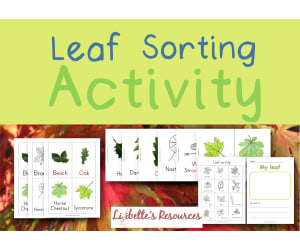
Leaf Sorting Activity: Kindergarten Science Projects
Science, Life Sciences, Nature & Plants, Biology, Grade 1, 2, Activities
Leaf Sorting Activity: Kindergarten Science Projects This Leaf Sorting lesson pack can help you to deliver the National Curriculum (or other Science curriculum for ages 5 to 6) for Science in Year 1. It is best carried out in autumn as the leaves fall, but can also be done in spring as new leaves emerge and children's interest in them can be excited. The Leaf Sorting Activity includes References to the relevant parts of the National Curriculum (but the activity does not have to be used in conjunction with the UK National Curriculum). * 12 pictures of varying leaves, suitable for sorting according to vein pattern, formation and leaf properties (e.g. prickly/rounded edges, deep cut edges etc..) - in two sizes for whole class/group use or display. * a My Leaf recording worksheet * a sheet of 12 small pictures to sort, cut out and stick. How to sort leaves Leaves can be sorted according to several different factors. Sort by one property at a time. Edge - wavy, prickly, jagged, sharp etc… (let the children suggest ideas) Veins: One ‘spine’ vein with branches (many leaves) Like umbrella spokes (Nasturtium) Several main veins coming from base of leaf, with branches from each (Sycamore) Feel/look: soft, hairy, sharp, prickly, smooth, rough, tough, shiny etc… Colour: shade of green in spring/summer, or autumn colours (red, orange, brown, yellow etc…) Can the children find: All the prickly leaves? All the deeply notched leaves? All the leaves with leaflets? All the soft leaves? Etc… Children may dispute whether a leaf falls into a category or not. Use this as valuable discussion, always securing a good reason for their thinking. How to use the activity Class sorting: Let individual children hold up to 5 large leaf pictures. Can the children see two leaves that might match and say how they match? Now can they see if any other leaves fit that group - hold up the other leaf pictures one by one and see if they fit, passing the picture to another child to join the group, if that leaf fits. Does this leaf have …? Try sorting by various properties before letting the children take a leaf to sketch and describe on the ‘My leaf’ sheet. Group sorting: A small group of children can be challenged to find a way of sorting the leaves so that as many of them as possible are in a group. Or, more simply: Can you find the leaves that are pointed/sharp/have leaflets, are soft etc… Children can then be given the sheet of small leaves to sort in the way the teacher outlines. More! See our Autumn Leaves PowerPoint and All about Autumn PowerPoint What is included? 1 PDF with 13 pages: 12 small leaf pictures 12 large matching leaf pictures A sheet of 12 small pictures to sort, cut out and stick. A 'My Leaf' recording sheet
Author Lilibette's Resources
Rating
Tags Leaf Sorting, Sorting Leaves, Leaf ID, Trees, Leaves, Autumn, Spring, Autumn Leaves, New Leaves, Kindergarten Science Projects

Color Foxgloves: Science Coloring Pages
Creative Arts, Art, Science, Life Sciences, Nature & Plants, Kindergarten, Preschool, Grade 1, Activities
Color Foxgloves: Science Coloring Pages Here is a picture of Foxgloves for children to colour this spring/summer! Who is this colouring picture of Holly for? Anybody. Older children will extend the activity further than younger ones, Suitable fro class use Suitable fro homeschool botany or nature study lessons, Charlotte Mason style. Uses for these colouring sheets Use to help children learn the name of Foxgloves and to recognise them. Use as part of a science lesson on plants/flowers/pollinators (as bees love Foxgloves!) Paint or colour. Use to make greeting card The study of the natural world is the foundation for the later study of science. The colouring of pictures of natural things, be it plants or animals is more than a pastime activity. It is a means of familiarising young children with these everyday subjects. The colouring of this Foxglove picture can of course be used as a pastime, or even as part of a creative lesson - the picture looks super made into a greeting card of all kinds. But it has the potential to teach much more. The Curriculum for Science expects children to be taught to use the local environment to study plants and animals, throughout the year. What better than to use familiar subjects - such as Foxgloves which is sure to attract attention in summer with their large, bright pink flowers? The name alone gives cause for thought: fox-gloves? And insects, especially bees can be seen following the trail on the landing pad up into the 'bell' to find nectar. There's plenty to talk about! Colouring can help children to become familiar with the parts of the Foxglove plant and ask questions: What are the leaves like? Why is there a pattern on the flower? What is inside a berry? (the nectar). Why do the flowers need the insects to pollinate them? Colouring a picture of Foxgloves can also help children become familiar with the particular characteristics of a plant - its shape, colour, and special features, for example. It is best if children colour the Foxglove picture following close observation, from reference books, or after looking at Foxgloves in real life. see if you can find them growing in the vicinity of your home/school. What is included in the pack? 1 sheet to be coloured 1 sheet giving an example of how the picture could be coloured.
Author Lilibette's Resources
Rating
Tags Colcour, Plants, Foxgloves, Flower, Wild Flowers, Summer, Nature Study, Charlotte Mason, Science Coloring Pages, Nature

Science Coloring Pages: Common Frog
Creative Arts, Art, Science, Life Sciences, Animals, Kindergarten, Preschool, Activities
Science Coloring Pages: Common Frog Here is an original drawing of a Common Frog for young children to colour. The study of the natural world is the foundation for the later study of science. The colouring of pictures of natural things, be it plants or animals is more than a pastime activity. It is a means of familiarising young children with these everyday subjects. The colouring of this Common Frog picture can of course be used as a pastime, or even as part of a creative lesson - the picture looks super framed - but it has the potential to teach much more. The UK National Curriculum for Science expects children to be taught to use the local environment to study plants and animals, throughout the year. What better than to use familiar subjects, such as the Common Frog, which is a familiar subject in springtime, to teach much about the natural world? Colouring can help children to become familiar with the parts of the Common Frog: ask questions: What colour are the legs? Can you see the stripes? How many legs does the frog have? Colouring a picture of the Common Frog can also help children to become familiar with the particular characteristics of a frog - its shape, and special features, for example. It is best if children colour the Common Frog picture either following a sighting of a frog or from reference books - whenever their interest is aroused! Who is this colouring picture of a Common Frog for? Anybody. Older children will extend the activity further than younger ones, Uses for the colouring picture of a Common Frog Use to help children learn the name of the frog and to recognise them. Use as part of a science lesson Use for a basis for collage work Paint or colour. What is included in the pack? 1 sheet to be coloured 1 sheet giving an example of how the picture could be coloured. What is included? 1 PDF, 1 picture to colour, 1 for display/aid to colouring
Author Lilibette's Resources
Rating
Tags Frog Pic To Colour, Frog Colouring Picture, Frog To Colour, Frog Colouring For Young Children, Science Coloring Pages, Science, Frog To Color
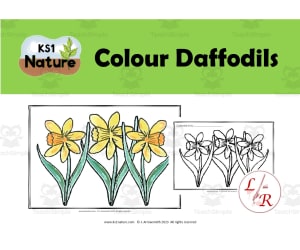
Science Coloring Pages: Daffodils
Creative Arts, Art, Science, Life Sciences, Nature & Plants, Kindergarten, Preschool, Activities
Science Coloring Pages: Daffodils Here is a picture of Daffodils for children to colour this spring! Who is this colouring picture of a Daffodil for? Anybody. Older children will extend the activity further than younger ones, Uses for these colouring sheets Use to help children learn the name of the Daffodil and to recognise them. Use as part of a science lesson Use for a basis for collage work Paint or colour. Use to make Mother's Day cards The study of the natural world is the foundation for the later study of science. The colouring of pictures of natural things, be it plants or animals is more than a pastime activity. It is a means of familiarising young children with these everyday subjects. The colouring of this Daffodil picture can of course be used as a pastime, or even as part of a creative lesson - the picture looks super made into a spring greeting card of all kinds. But it has the potential to teach much more. The UK National Curriculum for Science expects children to be taught to use the local environment to study plants and animals, throughout the year. What better than to use familiar subjects - such as the Daffodil, which are so common in springtime, to teach much about the natural world? Colouring can help children to become familiar with the parts of the Daffodil: ask questions: Where are the petals? What is this part called? Colouring a picture of Daffodils can also help children to become familiar with the particular characteristics of a flower - its shape, colour, and special features, for example. It is best if children colour the Daffoldil picture following close observation, or from reference books, or after having looked at Daffodils in real life. Why not take a bunch into the classroom and watch the buds unfold? Write a Daffodil diary. You could even use our Daffodil Lesson Resource Pack and PowerPoint to extend the lesson! What is included in the pack? 1 sheet to be coloured 1 sheet giving an example of how the picture could be coloured.
Author Lilibette's Resources
Rating
Tags Daffodils To Colour EYFS, Daffodils To Colour Y1, Picture Of Dafodils To Colour Young Chidlren, Picture Of Daffodils To Colour, Spring, Daffodils, Science Coloring Pages, Picture Of Daffodils To Color

Spring Kindergarten Science Projects
Science, Life Sciences, Biology, Kindergarten, Preschool, Grade 1, 2, Activities
Kindergarten Science Projects: Spring A bumper pack of educationally engaging Spring Science activities with some fun related art/craft activities included, for kindergarten (3 to 8 yr olds) that can be done easily around the local environment of the school or home. This pack of activities will provide the diligent teacher with an abundance of material to explore with their children this spring! Although we do not provide a lesson plan - as each country/state will have their own, the ideas can easily be matched to the aims and objectives of your state's/country's curriculum. What is included in the Spring Kindergarten Science Project? There are 70+ pages of Science activities Art and craft activities With supporting worksheets And supporting Information sheets to help you plan your lesson and teach confidently Plenty of questions to stimulate children to think and explore further! Each activity is labelled for ease of reference: reading, art, observing, doing and recording. The Spring Kindergarten Science Project Covers: Waking up Spring weather Eggs and baby birds Growing things Roots and shoots Brand new leaves Flowers Butterflies Spring on the farm Spring by the pond Spring in the woods Spring Poems These ideas are ideally suited to a cross-curriculum project, based around Science and spring. Cross-curricular topics are the best way to teach young children as they view the world holistically. This project will help your teaching to be relevant to the young child, and both you and the children will be so caught up in your discoveries that you will forget you are learning, for the good teacher is always learning new things! Better still, these are ideas that can be used over and over again for several years - children never tire of them and learn more every time! Prepare to learn things you never knew before as you learn with your children! Therefore, they are great if you teach the same class several years running, or if you teach a different set of pupils each year!
Author Lilibette's Resources
Rating
Tags Art Activities For Srping Ks1, Science Activites For Spring Ks1, Spring Project Ideas Ks1, Spring Project Ideas EYFS, Ks1 Spring Project, Kindergarten Science Projects

2 Times Table Multiplication Flashcards
Math, Fact Families, Multiplication and Division, Multiplication, Division, Grade 2, 3, Flashcards, Worksheets & Printables
This is a PowerPoint featuring Multiplication Flashcards for the 2 Times Table Number Facts and their related division sums. The flashcards can be used in order or shuffled to add an extra challenge. In addition, facts answered incorrectly can be moved and presented again at the end. If the teacher prepares the PowerPoint before the lesson, then the facts that are being worked on can be placed first. A quiz can be set up and timed to help children become proficient at the 2 X multiplication and division facts. A 'Ready, Steady, Go' slide helps to make the quiz more fun. A hundred square is included so that pupils can create the 2 X pattern. This can be used again and again. Students can then skip count in unison as the chart is created. This can be printed and given to the children for independent completion. The PowerPoint format allows for interactive lessons while saving the teacher valuable preparation time. The PowerPoint is fully editable It works well for grades 1 to 4. Use regularly, it can help to develop 2 times table fluency. What is included: 1 PoweRPoint 29 slides Please find the 3 and 4 times tables in Lilibette's Resources Store.
Author Lilibette's Resources
Rating
Tags Multiplication Flashcards, Multiplication Facts, Times Tables, Fact Families

Final NK Blend Worksheet: Phonemic Awareness activities
Special Resources, ELA, Special Education Needs (SEN), Language Development, Phonics, Kindergarten, Preschool, Worksheets & Printables, Worksheets
This final blend _NK fun, Find and Color worksheet for final blends is excellent for acquainting children orally with final consonant blends and helping them develop the necessary phonemic awareness in preparation for more advanced blending work, involving four phonemes. This activity is a great phonemic awareness activity. What is included in the pack? One PDF sheet for the final _NK blend. What do the worksheets involve? Pupils are instructed to combine the two letters on the worksheet and then look for objects that end with that consonant blend. Then, these items ought to be coloured, leaving the others uncoloured. Children can easily work on the sheet unaided once they have been instructed, although, with those children with special needs, it is strongly suggested that an adult works with the child for maximum benefit. How to use The introduction of the concept of final blends needs to be done thoroughly. When I work with children, especially those with a special need, I first like to teach children to blend two consonant letters. Then I work on developing the children's phonemic awareness: that being the ability to hear two consonant letters blended at the end of a word, easily. Some children find final blends easier than initial blends as they can sound out the first three sounds, and simply add a fourth: h-a-n: han-d. I call /n/ 'naughty' 'n' as he likes to hide in words: children are apt to miss out the nasal sound and spell hand as 'had'. I then ask them to sound back what they have written and we laugh. Often they can quickly insert the missing letter, having had plenty of practice aurally, such as this sheet affords. However all pupils need practice, some more than others. These worksheets can assist by first encouraging students to blend the two consonant letters and then by helping them to hear the blend at the end of a word. As often as you can, practice blending the letters in each final blend and encourage the students to follow suit. I find that modelling is key at this stage. Who are the final blends Find and colour worksheets for? Young learners Those with a special need Due to their non-babyish nature, they can be successfully used with older ESL/EFL pupils. Answer keys: The answer key is included on the sheet, in small print. Move from finding pictures to reading and writing with this NK phonics worksheet .
Author Lilibette's Resources
Rating
Tags Consonant Blends, Phonemic Awareness, Phonic Workssheets, Final Blends, Nk Blend, Nk Ending, Final Consonant Blends, Phonemic Awareness Activities

ESL Reading Comprehension + Writing Activity on "Chinese Dumplings"
ELA, Language Development, ESL, Reading, Reading Comprehension, Writing, Formal Writing, Creative Writing, Grade 7, 8, 9, 10, 11, 12, Worksheets & Printables, Writing Prompts, Worksheets
ESL Reading Comprehension + Writing Activity Worksheets on "Chinese Dumplings" This ESL EFL (English Second or Foreign Language) Teaching Resource on "Chinese Dumplings" (3 PDF Slides; Reading Comprehension + Writing Activity) can be ideal to train Language skills in English. Suitable participants for this ESL EFL TESOL Reading + Writing Activity are Foreign Students at middle and High School (7th-12th Grade; teens) . Newcomers or any ESL Learner is also more than suitable for this ESL EFL (English as a Second or Foreign Language) Activity on "Chinese Dumplings" (famous dish from China; origins, background and history + various kinds + importance in Chinese Culture + other variations in Asia). This Teaching Educational Resource Product can also be ideal for ESL EFL Centers worldwide or any English second language tutor. This ESL EFL TESOL Teaching Resource on "Chinese Dumplings" (Worksheet; 3 PDF Printable slides) can be ideal for Intermediate English as a Second or Foreign Language (ESL EFL) Learners. Within this English Second or Foreign Language (ESL EFL) Reading Comprehension + Essay Writing Activity Worksheet on "Chinese Dumplings" (famous dish from China; origins, background and history + various kinds + importance in Chinese Culture + other variations in Asia), ESL EFL TESOL teachers can find the following activities: 1 text on "Chinese Dumplings" (famous dish from China; origins, background and history + various kinds + importance in Chinese Culture + other variations in Asia) 17 Questions (with related space where students can answer) 3 essay prompts for a writing activity (writing an essay on your own personal opinion on Chinese Dumplings; whether you like them or not and why + writing an essay on another kind of dumplings and comparing them to Chinese dumplings + pretending to be a food blogger and to describe some special Chinese dumplings you have eaten) This ESL, EFL (English Second or Foreign Language) Teaching Resource Reading + Writing Activity on "Chinese Dumplings" (famous dish from China; origins, background and history + various kinds + importance in Chinese Culture + other variations in Asia) is great for Intermediate English as a second or foreign language learners (ESL- EFL). This English Second Language Worksheet on "Chinese Dumplings" (famous dish from China; origins, background and history + various kinds + importance in Chinese Culture + other variations in Asia) aims to train and Reading Comprehension + Writing Skills. "Learning with Alan" is dedicated to provide high-quality teaching resources and educational materials for ESL EFL TESOL teachers. It aims to support teachers, educators, and tutors in both online and offline environments, helping them achieve their teaching goals while creating a fun, stimulating atmosphere for learning English. Always remember: learning is fun, and so is English! If you want to browse more PDF ESL, EFL, TESOL Teaching Resources and Educational Material click here Learning with Alan!
Author Learning with Alan
Rating
Tags ESL, English Second Language, English, Reading Comprehension, Writing Activity, China, Chinese, Food, Dumplings, Asia