



5,119 products added recently
Page 81 - Newest Teaching Resources

 Show filters
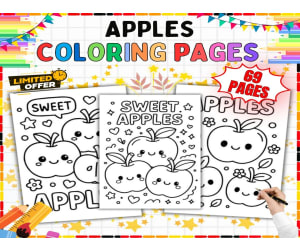
Apple Coloring Pages - 69 Printable Sheets for K-5
Art, Creative Arts, Nature & Plants, Life Sciences, Science, Kindergarten, Grade 1, 2, 3, 4, 5, Coloring Pages, Worksheets, Worksheets & Printables
Apple coloring pages give students a quiet, low-prep art task when you need something ready to print. This 69-page collection works well for classroom art, early finishers, literacy centers, and simple seasonal work tied to apples and the changing weather. Students can color one sheet in a short block or choose a page for a longer art period. What's Included 69 printable apple coloring pages for Kindergarten through Grade 5 Clear black-line drawings that leave room for crayons, colored pencils, or markers A mix of simple and more detailed pages for different ages and attention spans Pages that work as individual activities or as a small classroom packet A practical range of designs for apple units, fruit lessons, autumn art, and free-choice work How Teachers Use It Print one apple coloring page for morning work while students settle in Add a page to an early-finisher folder for a quiet independent activity Use the drawings during a fruit, plant, garden, or healthy-food lesson Pair apple coloring pages with read-aloud time, writing practice, or a short observation activity Keep a few printed sheets with substitute plans and classroom art supplies Let students choose a design, color it, and write a sentence about the apple they made Why You'll Love It Apple coloring pages are simple to prepare and easy to fit into the school day. The collection gives you many choices without asking students to complete the same picture again and again. Younger children can focus on staying inside the lines, while older students can add patterns, labels, shading, or a short caption. The pages also give students a break from screen work and a chance to use familiar materials in their own way. Printing Open the PDF and print the pages you need on standard letter-size paper. For a lighter classroom packet, print selected pages rather than the full collection. Crayons and colored pencils work well; markers can be used with thicker paper or a protective sheet underneath. Apple coloring pages can be printed in black and white so students make their own color choices, or printed as a quick art station set for small groups. This resource is for personal and educational classroom use. It is not licensed for commercial use or resale.
Author from Tetcher to you
Rating
Tags Apple Coloring Pages, Apple Worksheets, Fruit Coloring Pages, Fall Coloring Pages, Autumn Coloring Pages, Printable Coloring Sheets, Kindergarten Art, Elementary Art, Coloring Pages, Colouring Pages

Mary Oliver American Masters PBS Worksheet & Key + Google Forms
Reading Comprehension, Reading, ELA, Grade 8, 9, 10, 11, 12, Worksheets, Worksheets & Printables
Keep students watching and writing the whole way through with this fill-in-the-blank worksheet for American Masters: Mary Oliver: Saved by the Beauty of the World (PBS, 2026). The 25 questions follow the video in the order it plays, so students record each answer as that moment happens on screen instead of reconstructing it afterward — which holds their attention and leaves them with an organized set of notes to study from later. Built for English Language Arts, it is a natural fit for English/Language Arts and poetry units (grades 8-12) studying Mary Oliver, nature writing, and the American Transcendentalist tradition of Emerson, Whitman, and Thoreau that Oliver names as her own, and AP English Language and Composition and AP Literature classes working author study, voice, and the relationship between a writer's life and her craft, including the discipline and attention Oliver describes as her method. The film runs about 83 minutes, so the sheet is built to carry a multi-day study or a longer viewing block rather than a single sitting. Use it as a full-period viewing activity, a guided companion when you hand the room to a substitute, or a focused review at the end of a unit. A complete answer key is printed on the final page, so whoever is covering the class can run it with no preparation and no background knowledge. The 2-pages layout is clean and low-ink, designed to print two-sided. Everything is laid out for a low-prep class period: hand out the page, press play, and let students do the rest. The questions stay in the order the video presents them, so students can follow along without losing their place. If it works well for your students, a quick rating wherever you downloaded it helps other teachers find it. Questions or a correction are always welcome at contact@responseresources.studio .
Author Response Resources
Rating
Tags Mary Oliver, American Masters, PBS Documentary, Poetry Unit, Nature Writing, Transcendentalism, Wild Geese, The Summer Day, The Journey, Poet Study

Test Bank Marieb Human Anatomy and Physiology 12th Edition
Special Resources, Not Grade Specific, Worksheets & Printables
Human Anatomy & Physiology is one of the most challenging courses for students studying in nursing, pre-med, physical therapy and allied health programs. The Comprehensive A&P Exam Prep & Concept Mastery Toolkit is an academic study system with independently created study materials that help students learn and test their knowledge before actual exams. Instead of simply reading through huge textbooks, this digital workbook contains all necessary study templates, physiological pathway maps to fill in, diagnostic quiz templates and summary organizers for all body systems. Body Systems & Main Modules Unit 1: Organization of the body and Cellular Basics The definition of some anatomical direction words, planes and regions, the principles of negative and positive feedback The process of membrane transport, tonicity, and cellular organelles Histology matrix identification of epithelial, connective and muscle tissues Unit 2: Support and Movement (Integumentary, Skeletal, Muscular) Skin layers, epidermal cells and burn percentages Bone histology process, the process of osteogenesis, endochondral ossification, and bone repair Axial and appendicular skeleton differences The steps of the sliding filament theory and the NMJ Unit 3: Control and Regulation (Nervous System and Endocrine) The phases of action potential, the resting potential and synaptic transmission The similarities and differences of Central and Peripheral nervous if you have any question dm me
Author dealhube
Rating
Tags Test Bank Marieb Human Anatomy And Physiology 12th Edition
5 FREE Initial Sounds Worksheets: z
Language Development, ELA, Phonics, Kindergarten, Preschool, Worksheets & Printables, Worksheets
5 Initial Sounds Worksheets: z A pack of 5 worksheets to help children learn to recognise the letter ' z' by both its shape and its sound, while also building correct letter formation from the very start. Each worksheet approaches the sound from a slightly different angle, so the child gets plenty of repetition without it ever feeling repetitive. Worksheet 1 asks the child to read a row of letters, tracing each one and saying the sound aloud, before naming a set of pictures and writing the initial sound underneath each - bringing sound, shape and word together in one simple task. Worksheet 2 has the child trace a large, chunky version of the letter, then hunt through a group of jumbled letters to find every occurrence of the target letter, tracing and saying the sound each time they spot one - a lovely way to sharpen visual discrimination alongside letter recognition. Worksheets 3 to 5 build on this foundation with a variety of engaging activities - among them, listening for the target sound among a set of pictures and colouring only those that begin with it, matching the letter to pictures that share its sound, and a hands-on cut-and-stick activity where the child finds, names and sticks down the pictures that begin with the sound, saying it aloud as they go. Throughout the pack, correct pencil hold and letter formation are encouraged, with directional arrows and starting dots to guide the child. What is included: 1 PDF containing 5 worksheets. Printing and paper Print on A4 paper, or reduce to A5 if preferred. More This pack is one of a full set covering every initial sound, so you can build up your own complete collection one sound at a time, or move steadily through the alphabet alongside your phonics teaching. Find them in Lilibette's Resources Store
Author Lilibette's Resources
Rating
Tags Intial Sounds, Initial Sounds Worksheets, Learn To Read, Phonics Worksheets, Initial Sounds Z, Beginning Sounds Z
5 FREE Initial Sounds Worksheets: y
Language Development, ELA, Phonics, Kindergarten, Preschool, Worksheets & Printables, Worksheets
5 Initial Sounds Worksheets: y A pack of 5 worksheets to help children learn to recognise the letter ' y' by both its shape and its sound, while also building correct letter formation from the very start. Each worksheet approaches the sound from a slightly different angle, so the child gets plenty of repetition without it ever feeling repetitive. Worksheet 1 asks the child to read a row of letters, tracing each one and saying the sound aloud, before naming a set of pictures and writing the initial sound underneath each - bringing sound, shape and word together in one simple task. Worksheet 2 has the child trace a large, chunky version of the letter, then hunt through a group of jumbled letters to find every occurrence of the target letter, tracing and saying the sound each time they spot one - a lovely way to sharpen visual discrimination alongside letter recognition. Worksheets 3 to 5 build on this foundation with a variety of engaging activities - among them, listening for the target sound among a set of pictures and colouring only those that begin with it, matching the letter to pictures that share its sound, and a hands-on cut-and-stick activity where the child finds, names and sticks down the pictures that begin with the sound, saying it aloud as they go. Throughout the pack, correct pencil hold and letter formation are encouraged, with directional arrows and starting dots to guide the child. What is included: 1 PDF containing 5 worksheets. Printing and paper Print on A4 paper, or reduce to A5 if preferred. More This pack is one of a full set covering every initial sound, so you can build up your own complete collection one sound at a time, or move steadily through the alphabet alongside your phonics teaching. Find them in Lilibette's Resources Store
Author Lilibette's Resources
Rating
Tags Intial Sounds, Initial Sounds Worksheets, Learn To Read, Phonics Worksheets, Beginning Sounds Y, Initial Sounds Y
5 FREE Letter Sounds Worksheets: x
Language Development, ELA, Phonics, Kindergarten, Preschool, Worksheets & Printables, Worksheets
5 Initial Sounds Worksheets: x A pack of 5 worksheets to help children learn to recognise the letter ' x' by both its shape and its sound, while also building correct letter formation from the very start. Each worksheet approaches the sound from a slightly different angle, so the child gets plenty of repetition without it ever feeling repetitive. Worksheet 1 asks the child to read a row of letters, tracing each one and saying the sound aloud, before naming a set of pictures and writing the initial sound underneath each - bringing sound, shape and word together in one simple task. Worksheet 2 has the child trace a large, chunky version of the letter, then hunt through a group of jumbled letters to find every occurrence of the target letter, tracing and saying the sound each time they spot one - a lovely way to sharpen visual discrimination alongside letter recognition. Worksheets 3 to 5 build on this foundation with a variety of engaging activities - among them, listening for the target sound among a set of pictures and colouring only those that begin with it, matching the letter to pictures that share its sound, and a hands-on cut-and-stick activity where the child finds, names and sticks down the pictures that begin with the sound, saying it aloud as they go. Throughout the pack, correct pencil hold and letter formation are encouraged, with directional arrows and starting dots to guide the child. What is included: 1 PDF containing 5 worksheets. Printing and paper Print on A4 paper, or reduce to A5 if preferred. More This pack is one of a full set covering every initial sound, so you can build up your own complete collection one sound at a time, or move steadily through the alphabet alongside your phonics teaching. Find them in Lilibette's Resources Store
Author Lilibette's Resources
Rating
Tags Intial Sounds, Initial Sounds Worksheets, Learn To Read, Phonics Worksheets, Initial Sounds X, Beginning Sounds X
5 FREE Initial Sounds Worksheets: w
Language Development, ELA, Phonics, Kindergarten, Preschool, Worksheets & Printables, Worksheets
5 Initial Sounds Worksheets: w A pack of 5 worksheets to help children learn to recognise the letter ' w' by both its shape and its sound, while also building correct letter formation from the very start. Each worksheet approaches the sound from a slightly different angle, so the child gets plenty of repetition without it ever feeling repetitive. Worksheet 1 asks the child to read a row of letters, tracing each one and saying the sound aloud, before naming a set of pictures and writing the initial sound underneath each - bringing sound, shape and word together in one simple task. Worksheet 2 has the child trace a large, chunky version of the letter, then hunt through a group of jumbled letters to find every occurrence of the target letter, tracing and saying the sound each time they spot one - a lovely way to sharpen visual discrimination alongside letter recognition. Worksheets 3 to 5 build on this foundation with a variety of engaging activities - among them, listening for the target sound among a set of pictures and colouring only those that begin with it, matching the letter to pictures that share its sound, and a hands-on cut-and-stick activity where the child finds, names and sticks down the pictures that begin with the sound, saying it aloud as they go. Throughout the pack, correct pencil hold and letter formation are encouraged, with directional arrows and starting dots to guide the child. What is included: 1 PDF containing 5 worksheets. Printing and paper Print on A4 paper, or reduce to A5 if preferred. More This pack is one of a full set covering every initial sound, so you can build up your own complete collection one sound at a time, or move steadily through the alphabet alongside your phonics teaching. Find them in Lilibette's Resources Store
Author Lilibette's Resources
Rating
Tags Intial Sounds, Initial Sounds Worksheets, Learn To Read, Phonics Worksheets, Beginning Sounds W, Intial Sounds W
5 FREE Initial Sounds Worksheets: v
Language Development, ELA, Phonics, Kindergarten, Preschool, Worksheets & Printables, Worksheets
5 Initial Sounds Worksheets: v A pack of 5 worksheets to help children learn to recognise the letter ' v' by both its shape and its sound, while also building correct letter formation from the very start. Each worksheet approaches the sound from a slightly different angle, so the child gets plenty of repetition without it ever feeling repetitive. Worksheet 1 asks the child to read a row of letters, tracing each one and saying the sound aloud, before naming a set of pictures and writing the initial sound underneath each - bringing sound, shape and word together in one simple task. Worksheet 2 has the child trace a large, chunky version of the letter, then hunt through a group of jumbled letters to find every occurrence of the target letter, tracing and saying the sound each time they spot one - a lovely way to sharpen visual discrimination alongside letter recognition. Worksheets 3 to 5 build on this foundation with a variety of engaging activities - among them, listening for the target sound among a set of pictures and colouring only those that begin with it, matching the letter to pictures that share its sound, and a hands-on cut-and-stick activity where the child finds, names and sticks down the pictures that begin with the sound, saying it aloud as they go. Throughout the pack, correct pencil hold and letter formation are encouraged, with directional arrows and starting dots to guide the child. What is included: 1 PDF containing 5 worksheets. Printing and paper Print on A4 paper, or reduce to A5 if preferred. More This pack is one of a full set covering every initial sound, so you can build up your own complete collection one sound at a time, or move steadily through the alphabet alongside your phonics teaching. Find them in Lilibette's Resources Store
Author Lilibette's Resources
Rating
Tags Intial Sounds, Initial Sounds Worksheets, Learn To Read, Phonics Worksheets, Initial Sounds V, Beginning Sounds V

6th Grade Math Coloring Pages - 34 Math Themed Art Sheets
Art, Creative Arts, Math, Kindergarten, Grade 1, 2, 3, 4, 5, Coloring Pages, Worksheets, Worksheets & Printables
A smaller set for teachers who don't need eighty pages sitting in a drawer. Thirty-four 6th grade math coloring pages, ready to print, with a math theme running through every design. To be clear up front: these are coloring pages, not practice pages. No equations to solve, no answer key, nothing to grade. What's Included 34 printable coloring designs in a 38-page PDF Math word art, number characters, calculators, geometric shapes and study supplies A name and class page to head each student's set A one-page guide to coloring technique the students can follow themselves How Teachers Use It a brain break between two heavy lessons early finisher work that doesn't need explaining a quiet Friday activity in the last week before a break decoration for the math bulletin board, colored by the class a printable to leave with a substitute Why You'll Love It It buys you a genuinely quiet twenty minutes without handing out screens. Sixth graders are old enough to be picky about art that looks babyish, and these designs sit on the right side of that line - clean outlines, room to shade, nothing that belongs in a kindergarten room. The set fits in one folder. I keep mine behind the sub plans, and it has covered more than one unexpected afternoon. Printing Letter size, black and white, no scaling. Print at 100 percent so the borders stay even, and photocopy freely for your own classes. The math coloring pages copy well because the artwork is line based, so the third-generation copy still looks sharp. This resource is for personal and educational classroom use. It is not licensed for commercial use or resale.
Author from Tetcher to you
Rating
Tags 6th Grade Math, Math Coloring Pages, Math Colouring Sheets, Middle School Art, No Prep Printable, Math Themed Coloring, Early Finishers, Math Bulletin Board, Brain Break, Math Class Activity
5 FREE Initial Sounds Worksheets: u
Language Development, ELA, Phonics, Kindergarten, Preschool, Worksheets & Printables, Worksheets
5 Initial Sounds Worksheets: u A pack of 5 worksheets to help children learn to recognise the letter ' u' by both its shape and its sound, while also building correct letter formation from the very start. Each worksheet approaches the sound from a slightly different angle, so the child gets plenty of repetition without it ever feeling repetitive. Worksheet 1 asks the child to read a row of letters, tracing each one and saying the sound aloud, before naming a set of pictures and writing the initial sound underneath each - bringing sound, shape and word together in one simple task. Worksheet 2 has the child trace a large, chunky version of the letter, then hunt through a group of jumbled letters to find every occurrence of the target letter, tracing and saying the sound each time they spot one - a lovely way to sharpen visual discrimination alongside letter recognition. Worksheets 3 to 5 build on this foundation with a variety of engaging activities - among them, listening for the target sound among a set of pictures and colouring only those that begin with it, matching the letter to pictures that share its sound, and a hands-on cut-and-stick activity where the child finds, names and sticks down the pictures that begin with the sound, saying it aloud as they go. Throughout the pack, correct pencil hold and letter formation are encouraged, with directional arrows and starting dots to guide the child. What is included: 1 PDF containing 5 worksheets. Printing and paper Print on A4 paper, or reduce to A5 if preferred. More This pack is one of a full set covering every initial sound, so you can build up your own complete collection one sound at a time, or move steadily through the alphabet alongside your phonics teaching. Find them in Lilibette's Resources Store
Author Lilibette's Resources
Rating
Tags Intial Sounds, Initial Sounds Worksheets, Learn To Read, Phonics Worksheets, Initial Sounds U, Beginning Sounds U

Airplane Coloring Pages - 48 Printable Plane Coloring Sheets
Art, Creative Arts, Kindergarten, Grade 1, 2, 3, 4, 5, Coloring Pages, Worksheets, Worksheets & Printables
Every class has the kid who draws planes on every corner of every paper. This one is for them, and for the transportation unit that always needs one more station. Forty-eight airplane coloring pages, print and hand out. What's Included 48 printable coloring designs in a 50-page PDF Cartoon planes, jets, propeller planes, hot air balloon skies and cloud scenes Short caption pages like "Up, up and away" and "Let's soar" with big bubble letters to color Backgrounds filled with clouds, stars and little flowers, so there's no empty white space to rush through A welcome page with name, date and class lines How Teachers Use It a transportation or "things that go" unit station morning work while the room settles fine motor practice for small hands learning to stay inside the line indoor recess on a wet day a set left ready in the sub folder Why You'll Love It The full-page designs are what make these airplane coloring pages last more than three minutes. A page with one small plane in the middle gets finished fast and thrown away; these fill the whole sheet, so a child can spend twenty minutes on one and still have something worth taking home. Forty-eight of them means you never hand out the same plane twice in a term. Printing Black and white on standard letter paper, printed at 100 percent with no scaling. Copy paper works for crayons and pencils. The outlines are thick enough that photocopies of the plane coloring sheets stay clean, so print a class set without worrying about quality. This resource is for personal and educational classroom use. It is not licensed for commercial use or resale.
Author from Tetcher to you
Rating
Tags Airplane Coloring Pages, Airplane Colouring Pages, Plane Coloring Sheets, Transportation Coloring, Things That Go, No Prep Printables, Preschool Coloring, Fine Motor Practice, Transportation Unit, Airport Theme
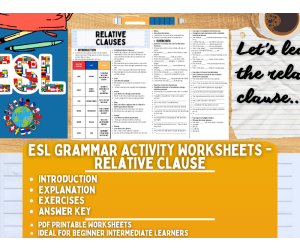
ESL Grammar Activity Worksheets - Relative Clauses
ELA, Language Development, ESL, Grammar, Middle School, Not Grade Specific, High School, Adult Education, Worksheets, Worksheets & Printables
ESL Grammar Activity Worksheets - Relative Clauses Make learning English grammar simple and engaging with this English Second or Foreign Language Teaching Resource focused on the essential Relative Clauses . This printable ESL Grammar Activity includes easy to follow explanations, grammar exercises, and an answer key, making it an excellent resource for beginner English learners. Designed for Beginner ESL - EFL - TESOL - TEFL students , this teaching resource is ideal for newcomers, English language learners, and students who are beginning to build their English grammar foundations. The activities provide learners with an opportunity to understand and practise the Relative Clauses in a clear and accessible way. This ESL Relative Clauses Grammar Activity can be used in a variety of educational settings. It is suitable for ESL classrooms, English language learning centers, tutoring sessions, homeschool lessons, and individual study . Teachers and ESL tutors can use the worksheets as part of a grammar lesson, for independent practice, revision, homework, or additional classroom activities. The printable PDF format makes this resource convenient and ready to use. Simply print the worksheets and provide your students with focused grammar practice without the need for extensive preparation. What Is Included? This ESL Relative Clauses Grammar Activity Worksheets includes: 1 Introduction to the topic 1 Clear Grammar Explanation Grammar Exercises for student practice Answer Key for easy correction and assessment Whether you are teaching English as a Second Language ( ESL ) or English as a Foreign Language ( EFL ) , this resource is a practical way to help beginner students develop confidence with Relative Clauses Give your students structured, accessible, and printable English grammar practice with this Relative Clauses ESL Worksheet Activity ! ESL with Alan is a Teaching Resources Store whose aim is to help English as a Second or foreign Language ( ESL - EFL - TESOL - TEFL ) Teachers, Educators and Tutors around the world ( be it online or offline ) to achieve their teaching objectives while creating an enjoyable and stimulating learning environment. Learning is fun, So should English! Always If you want to browse more of my ESL, EFL, TESOL Teaching Resources, click here right ESL with Alan!
Author Learning with Alan
Rating
Tags ESL, English Second Language, English, Grammar, Relative Clause, Exercises, Printable, Worksheets, Activity

8th Grade Math Coloring Pages - 69 Sheets for Early Finishers
Art, Creative Arts, Math, Kindergarten, Grade 1, 2, 3, 4, 5, Coloring Pages, Worksheets, Worksheets & Printables
This is the big set. Sixty-nine 8th grade math coloring pages in one file, which is enough to keep an early finisher bin stocked from September through June without repeats. Worth saying plainly: these are themed coloring pages, not practice worksheets. Nothing to solve, nothing to grade. What's Included 69 printable coloring designs in a 73-page PDF Math word art, number and symbol characters, calculators, protractors, shapes and supplies A name and class page for the front of each set A coloring tips page with six practical pointers students can use on their own How Teachers Use It an early finisher bin that stays full all year the recovery day after a big unit assessment indoor recess and rainy Friday afternoons a bulletin board the class colors together a stack in the sub folder that needs no explanation Why You'll Love It Volume is the point. Most math coloring pages sets run dry by November and you're back to photocopying the same three favorites. With sixty-nine designs you hand out something new every time, and eighth graders notice that. The line work is clean and detailed rather than cartoonish, which is what keeps this age group actually working instead of scribbling. I print twenty at a time and keep them in a magazine file by the door. Students grab one on the way past when they finish early. Printing Black and white, letter paper, 100 percent with no scaling. The artwork is line based so photocopies stay crisp, even the fourth-generation ones. Use card stock only for pages headed to a display. This resource is for personal and educational classroom use. It is not licensed for commercial use or resale.
Author from Tetcher to you
Rating
Tags 8th Grade Math, Math Coloring Pages, Math Colouring Sheets, Middle School Math, Early Finishers, No Prep Printables, Math Themed Coloring, Brain Break, Math Classroom Decor, Math Club
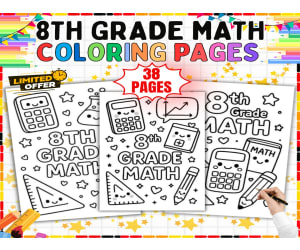
8th Grade Math Coloring Pages - 34 Printable No Prep Sheets
Art, Creative Arts, Math, Kindergarten, Grade 1, 2, 3, 4, 5, Coloring Pages, Worksheets, Worksheets & Printables
Eighth graders will color. They just won't admit it until the pages are on the table. These 8th grade math coloring pages are math-themed line art - number word art, calculators, geometric shapes, protractors and study supplies drawn with enough detail that the class doesn't feel babied. One thing to be clear about before you buy: this is an art set with a math theme. There are no problems to solve and no answer key. What's Included 34 printable coloring designs in a 38-page PDF Bold math word art plus calculators, rulers, shapes and pencil characters A name and class cover page A short coloring tips page on building color in layers How Teachers Use It the day after a test, when nothing new is going to stick early finishers during independent practice a wind-down activity in the last twenty minutes of a long block math club, math night, or a hallway display colored by the class printed and left in the sub folder Why You'll Love It Quiet, focused eighth graders are worth a lot on a Friday afternoon. The outlines are thick enough for markers and open enough for careful shading, so students who want to do a serious job can. And because the whole set of 8th grade math coloring pages prints in black and white, running a class set costs you nothing but paper. Printing Standard 8.5 x 11, black and white, printed at 100 percent with no scaling. Copy paper is fine. If the finished math coloring pages are going on a display board, card stock holds marker better and won't curl. This resource is for personal and educational classroom use. It is not licensed for commercial use or resale.
Author from Tetcher to you
Rating
Tags 8th Grade Math, Math Coloring Pages, Math Colouring Pages, Middle School Coloring, No Prep Math Activity, Math Themed Art, Early Finishers, Math Bulletin Board, End Of Year Activity, Sub Plans
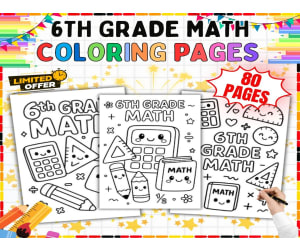
6th Grade Math Coloring Pages - 76 Printable No Prep Sheets
Art, Creative Arts, Math, Kindergarten, Grade 1, 2, 3, 4, 5, Coloring Pages, Worksheets, Worksheets & Printables
There is a stretch after a math test where nobody is ready for new content and nobody wants a worksheet. That is what this set is for. These 6th grade math coloring pages are themed art, not practice problems - calculators, protractors, number characters, pencils and math word art, drawn to be colored. Read that again before you buy: there are no problems to solve here. It's a coloring set with a math theme. What's Included 76 printable coloring designs in one 80-page PDF Number and symbol word art, plus friendly calculators, rulers, shapes and school supplies A name and class cover page A coloring tips sheet with six short pointers on layering color How Teachers Use It the fifteen minutes after a unit test when the room needs to reset early finishers during independent practice a math club or math night station hallway and bulletin board art for the math corridor a sub folder that keeps a class busy and quiet Why You'll Love It Kids who say they hate math will happily color a page that says MATH across the top, and that small shift matters more than it sounds. The designs are detailed enough that older students don't feel talked down to. Seventy-six 6th grade math coloring pages also means you're not reprinting the same three favorites all year. Printing Print in black and white on letter paper at 100 percent, no scaling. Card stock makes a nicer bulletin board piece if you're mounting the finished math coloring pages, but plain copy paper is fine for daily use. This resource is for personal and educational classroom use. It is not licensed for commercial use or resale.
Author from Tetcher to you
Rating
Tags 6th Grade Math, Math Coloring Pages, Math Colouring Pages, Middle School Coloring, Math Classroom Decor, No Prep Math Activity, Math Coloring Sheets, Early Finishers, Math Club, End Of Unit Activity
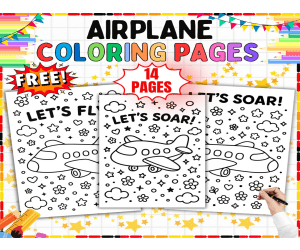
Free Airplane Coloring Pages - 12 Printable Plane Sheets K-5
Art, Creative Arts, Kindergarten, Grade 1, 2, 3, 4, 5, Coloring Pages, Worksheets, Worksheets & Printables
A free sample, so you can see how the pages print before you commit to a bigger set. Twelve airplane coloring pages, full page artwork, nothing to prepare. Print them tonight and they're on the tables tomorrow. What's Included 12 printable coloring designs in a 14-page PDF Cartoon planes and jets with cloud, star and flower backgrounds Caption pages with big bubble letters to color in, like "Up, up and away" Thick outlines that hold up to crayons, markers and colored pencils A welcome page with name, date and class lines How Teachers Use It a transportation or "things that go" unit station morning work while attendance gets sorted indoor recess when the field is soaked fine motor practice for preschool and kindergarten hands one page slipped into a take-home folder on a Friday an emergency page for the child who finished everything in four minutes Why You'll Love It Twelve pages is a real set, not two samples and a sales pitch. Each design fills the sheet, so a child settles in rather than finishing in a minute and asking for the next one. That's the whole difference between an art center that runs itself and one you have to keep feeding. Print a few of these free airplane coloring pages, watch how your class handles them, then decide whether the larger sets are worth your time. I'd rather you try them first than take my word for it. Printing Standard 8.5 x 11, black and white, printed at 100 percent with no scaling. Copy paper is fine for crayons and pencils, and the plane coloring sheets photocopy cleanly if you need a class set in a hurry. For anything going up on a display board, run those pages on card stock so marker doesn't bleed through to the next sheet. This resource is for personal and educational classroom use. It is not licensed for commercial use or resale.
Author from Tetcher to you
Rating
Tags Free Airplane Coloring Pages, Free Coloring Pages, Airplane Colouring Pages, Plane Coloring Sheets, Transportation Coloring, Free Printable, Things That Go, Preschool Coloring, Fine Motor Practice, No Prep Freebie
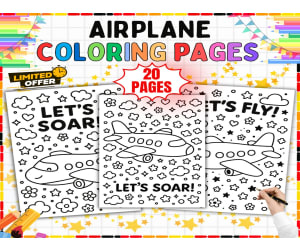
Airplane Coloring Pages - 18 Plane Coloring Sheets for Kids
Art, Creative Arts, Kindergarten, Grade 1, 2, 3, 4, 5, Coloring Pages, Worksheets, Worksheets & Printables
A short, tidy set of airplane coloring pages for the week the class is on transportation and you need one more thing on the table. Eighteen designs, one file, nothing to prep. What's Included 18 printable coloring designs in a 20-page PDF Cartoon planes and jets, cloud and star backgrounds, and caption pages with bubble letters Full-page artwork with no wasted white space Thick outlines that survive crayons, markers and heavy-handed colorers A welcome page with name, date and class lines How Teachers Use It a transportation unit center morning work or bell work something calm for the last fifteen minutes of the day fine motor practice in preschool and kindergarten a take-home page for a long weekend or a car trip a quiet page for the child who finishes everything first Why You'll Love It Eighteen pages is a stack you'll actually print. It staples into a small booklet each child can keep in their desk and work through over a couple of weeks, which stretches one file across a whole unit. The plane coloring sheets have thick, forgiving outlines, so a three year old with a crayon and a second grader with colored pencils both finish something they're pleased with. The bubble-letter caption pages are worth pointing out. Early readers sound out "Up, up and away" while they color it, and you get a little reading practice out of an art center without anyone noticing. Printing Letter size, black and white, 100 percent with no scaling. Plain copy paper is fine. If you're stapling the airplane coloring pages into booklets, print single sided so nothing shows through when the kids press hard with markers. This resource is for personal and educational classroom use. It is not licensed for commercial use or resale.
Author from Tetcher to you
Rating
Tags Airplane Coloring Pages, Airplane Colouring Sheets, Plane Coloring Pages, Transportation Coloring, Things That Go, No Prep Activity, Preschool Printables, Fine Motor Skills, Transportation Theme, Travel Unit

US State Presentation on Georgia
Social Studies, Economics, First Peoples (Native), Geography, History: USA, History, Middle School, Not Grade Specific, High School, Teacher Tools, Presentations, Lesson Plans
US State Presentation on Georgia Bring the United States to life in your classroom with this engaging US State Presentation on Georgia , a ready-to-use digital resource designed for Geography, Social Studies, and US History classes from 7th grade through 12th grade . This presentation provides students with a clear, structured introduction to one US state while combining essential geographical, historical, economic, and cultural information in an accessible format. This US State Presentation on Georgia , includes: The resource begins with a general introduction to the state , helping students understand its location, identity, and importance within the United States. Students then explore the state's borders and neighboring states , making it easier to place it within the broader geography of the country. A general data section introduces key facts such as population, area, population density, capital city, and other essential statistics , providing a useful foundation for further study. A paragraph that explores the history of this US state , highlighting important events, periods, people, and developments that have shaped its identity. This section is particularly useful for US History lessons because it allows students to connect state-level history with major events and themes in American history. A Geography section examines the state's physical characteristics, including its territory, landscapes, natural features, environment, and climate. Students can discover how mountains, rivers, plains, forests, coastlines, deserts, or other geographical characteristics have influenced settlement and human activity. A presentation also introduces the state's economy , explaining its major economic sectors, industries, natural resources, agricultural activities, and other economic strengths. This provides an excellent opportunity to connect geography with economics and understand why particular industries have developed in different parts of the United States. A dedicated section focuses on the capital city , introducing its importance as a political and administrative center. Students can also learn about other important cities , discovering major urban centers and their roles in business, transportation, education, culture, tourism, or industry. A paragraoh that explores culture , giving students an opportunity to learn about traditions, food, music, celebrations, landmarks, historical heritage, and other characteristics that contribute to the state's unique identity. This digital US State Presentation on Georgia is ideal for classroom instruction, student research, geography units, US History lessons, Social Studies activities, state studies, homework, review activities, and independent learning. Its organized structure makes it suitable for middle school and high school students , while its broad range of topics encourages students to view a state from multiple perspectives. Whether you are teaching a unit on the United States, American Geography, US History, state studies, or regional culture , this resource offers a convenient and engaging way to help students explore the diversity and complexity of the United States. Perfect for: Geography Classes, Social Studies Classes, US History Classes, Middle School, High School, Grades 7–12, State Studies, American Studies, Homeschooling, Student Research, and Digital Learning. Learning with Alan is an educational resource store created to help teachers, educators, and tutors reach their teaching goals while building a fun, engaging, and stimulating learning environment . Because learning should always be meaningful—and fun! 🎓✨ If you want to browse more of my Teaching Resources, click here Learning with Alan!!
Author Learning with Alan
Rating
Tags USA, United States Of America, Georgia, Lesson, Presentation, Introduction, Geography, Social Studies, US History, History

Apple Place Value Math Craft Fall Base
Math, Addition and Subtraction, Algebra, Calculus, Decimals, Grade 1, 2, Activities, Worksheets & Printables, Teacher Tools, Classroom Decor
Turn place value practice into a hands-on fall math experience with an apple-themed printable resource designed for 1st and 2nd grade learners. Students build, represent, compare, and explain numbers while completing engaging apple math activities that connect visual models with place value concepts. This low-prep resource combines place value practice, base-ten representations, math crafts, and seasonal classroom display possibilities in one easy-to-use packet. What's Included Apple-themed place value craft activity Base-ten block representation practice Tens and ones practice Hundreds, tens, and ones practice Standard, expanded, and word-form number work Place value recording pages Number comparison and ordering practice Apple-themed review activities Black-and-white student pages for easy printing Colorful classroom-ready cover Skills Developed Students practice: Identifying the value of digits Representing numbers with base-ten blocks Reading and writing numbers Writing numbers in expanded form Connecting visual models to numerical representations Comparing and ordering numbers Applying place value vocabulary Perfect For Use this apple place value resource for fall math centers, independent practice, small-group instruction, early-finisher work, place value review, apple-themed lessons, and classroom displays . Why Teachers Love It The activities give students a concrete way to see how numbers are built while adding a seasonal craft element that makes math practice feel purposeful and engaging. The black-and-white student pages are economical to print, easy for students to personalize, and well suited for classroom use. Bring place value, base-ten blocks, and autumn math together with an apple-themed resource that gives students meaningful practice while creating something they can proudly display.
Author TeachTrend Studio
Rating
Tags Activities Worksheets Hands-on Activities Bulletin Board Ideas Autumn

Grassland Habitat animals flashlight cards hidden picture activity
Animals, Life Sciences, Science, Environmental Science, Earth and Environmental Sciences, Kindergarten, Preschool, Toddler, Grade 1, 2, Flashcards, Worksheets & Printables, Centers, Activities, Games
Make learning about grassland habitats and animals fun and interactive with these Grassland Habitat Animals Flashlight Cards! Students will use a flashlight to reveal hidden animal pictures while practicing animal recognition and building science vocabulary through an exciting hands-on activity. I like using these flashlight cards during grassland habitat units, animal science lessons, wildlife studies, nature-themed activities, preschool and kindergarten science centers, and homeschool learning. It's an engaging, low-prep activity that adds a fun element of discovery to habitat and animal learning. What You Will Get This printable Grassland Habitat Animals Flashlight Cards resource gives students an exciting way to discover hidden grassland animals and review animal and habitat vocabulary. What's Included in this Resource? • Printable grassland animal flashlight cards • Hidden picture reveal activity • Grassland animal and habitat vocabulary • Hands-on flashlight discovery activity • Student-friendly science center format • Easy-to-use printable cards • Great for independent or small-group learning This resource is perfect for: • Grassland habitat science units • Grassland animal studies • Wildlife and nature lessons • Animal science activities • Preschool and kindergarten science centers • Life science learning • Small-group activities • Homeschool learning Why you will love this? • Easy to prepare and use • Creates an exciting hands-on learning experience • Builds observation and visual recognition skills • Reinforces grassland animal vocabulary • Encourages curiosity and independent discovery • Great for science centers and habitat-themed units These Grassland Habitat Animals Flashlight Cards are a fun way for young learners to discover hidden grassland animals, practice animal recognition, and build observation skills through an interactive habitat science activity.
Author Perfect_Printables
Rating
Tags Animal Science, Science Center Activities, Hidden Picture Activities, Flashlight Cards, Wildlife Activities, Animal Adaptation, Animal Habitat Activity, Grassland Animals, Grassland, Grassland Activity
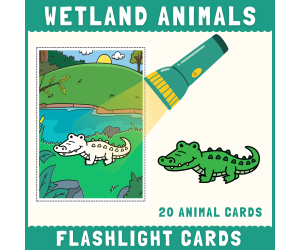
Wetland Habitat animals flashlight cards hidden picture activity
Animals, Life Sciences, Science, Environmental Science, Earth and Environmental Sciences, Kindergarten, Preschool, Toddler, Grade 1, 2, Flashcards, Worksheets & Printables, Centers, Activities, Games
Make learning about wetland habitats and animals fun and interactive with these Wetland Habitat Animals Flashlight Cards! Students will use a flashlight to reveal hidden animal pictures while practicing animal recognition and building science vocabulary through an exciting hands-on activity. I like using these flashlight cards during wetland habitat units, animal science lessons, wildlife studies, nature-themed activities, preschool and kindergarten science centers, and homeschool learning. It's an engaging, low-prep activity that adds a fun element of discovery to habitat and animal learning. What You Will Get This printable Wetland Habitat Animals Flashlight Cards resource gives students an exciting way to discover hidden wetland animals and review animal and habitat vocabulary. What's Included in this Resource? • Printable wetland animal flashlight cards • Hidden picture reveal activity • Wetland animal and habitat vocabulary • Hands-on flashlight discovery activity • Student-friendly science center format • Easy-to-use printable cards • Great for independent or small-group learning This resource is perfect for: • Wetland habitat science units • Wetland animal studies • Wildlife and nature lessons • Animal science activities • Preschool and kindergarten science centers • Life science learning • Small-group activities • Homeschool learning Why you will love this? • Easy to prepare and use • Creates an exciting hands-on learning experience • Builds observation and visual recognition skills • Reinforces wetland animal vocabulary • Encourages curiosity and independent discovery • Great for science centers and habitat-themed units These Wetland Habitat Animals Flashlight Cards are a fun way for young learners to discover hidden wetland animals, practice animal recognition, and build observation skills through an interactive habitat science activity.
Author Perfect_Printables
Rating
Tags Animal Science, Science Center Activities, Hidden Picture Activities, Flashlight Cards, Wildlife Activities, Animal Adaptation, Animal Habitat Activity, Wetland Animals, Wetland, Wetland Animals Activity
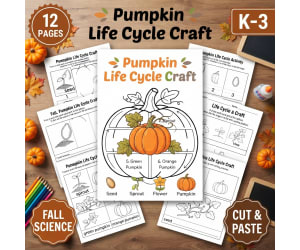
Pumpkin Life Cycle Craft Cut and Paste Activity Fall Science
Science, Pre-K, Bulletin Boards, Classroom Decor, Centers, Activities, Worksheets & Printables, Worksheets
Make pumpkin science hands-on with this engaging Pumpkin Life Cycle Craft designed for Kindergarten through 3rd Grade! Students learn how a pumpkin grows while sequencing the major stages of its life cycle through a simple cut-and-paste craft. This printable combines science learning, sequencing practice, vocabulary, fine-motor skills, cutting, gluing, and coloring in one classroom-friendly autumn activity. What's Included Pumpkin life cycle craft activity Clearly organized life cycle stages Black-and-white student pages for easy printing Cut-and-paste components Space for students to sequence and assemble the stages Simple labeling and vocabulary practice Final pumpkin craft suitable for classroom display Skills Developed Identify stages in a plant life cycle Sequence events in the correct order Recognize and use pumpkin life cycle vocabulary Develop fine-motor skills through cutting and gluing Connect visual representations with science concepts Practice careful coloring and craft assembly Perfect For Fall science units Pumpkin-themed learning Autumn centers Small-group activities Science notebook activities Independent practice Classroom displays and bulletin boards Early elementary seasonal learning Why Teachers Love It This activity gives young learners a concrete way to represent the pumpkin life cycle while practicing important classroom skills. The straightforward black-and-white format is economical to print and gives students opportunities to color, cut, sequence, and assemble their own science craft. Bring the pumpkin life cycle, fall science, sequencing, and hands-on learning together with a low-prep printable activity that's easy to use in Kindergarten, 1st Grade, 2nd Grade, and 3rd Grade classrooms.
Author petterbooka
Rating
Tags Worksheets, Printables, Center, Bulletin Board Ideas, Autumn, Activities

Special Education Lanyard Visuals Special Education Visuals Cue Cards
Special Education Needs (SEN), Special Resources, Speech Therapy, Kindergarten, Preschool, Grade 1, Teacher Tools
Special Education Lanyard Visuals Special Education Visuals Cue Cards for Autism and Special Education Students, Visual cue card for lanyards: these cue cards are meant to be placed on a ring and carried with all adults who are working with autistic children. That way, the team can provide consistency, and predictability with the visual cues they are using. Visual supports are an officially proven, evidence-based practice for autistic children. When verbal instructions become overwhelming, these visual cue cards act as a powerful communication bridge, enhancing both receptive and expressive skills. Designed to be placed on a ring and worn on a lanyard, these cards ensure that every adult working with the child delivers the exact same message every single time. Included Visual Cues (58 Cards Categorized for Quick Access): To provide complete predictability, this set includes over 50 essential visual cues divided into 5 core categories: 1. Classroom Routines & Transitions Line up / Carpet / Table / Desk / Classroom Clean up / Group / Library / Cafeteria / Office Bus / Car / Playground 2. Actions & Physical Prompts Sit / Sit on floor / Walk / Walk with teacher Stop / Go / Wait / Raise hand / Watch teacher 3. Behavioral Support & Boundaries Safe hands / Hands in lap / Hands to self / Calm body Quiet / No / Yes / Not available No hit / No bite / No kick / No spit / No pinch / No pull hair 4. Self-Regulation, Feelings & Needs Break / All done / Help / More Breathe / 3 deep breaths Bathroom / Drink / Wash hands / Sanitizer / Mask on Happy / Sad / Mad / Sorry 5. Therapy & Special Classes Speech therapy / OT (Occupational Therapy) / PT (Physical Therapy) PE/gym / Art class / Music class Please if you like it, leave your feedback and rate it ♥
Author Bambolina55
Rating
Tags Lanyard Visual, Visual Cue Cards, Special Education, Speech Therapy, Autism, Autistic Children, Special Education Visuals

Adaptive Sensory-Friendly Fitness Routines
Science, Life Sciences, Human Body, P.E. & Health, Health, Physical Education, Sports, Yoga, Mental Health, Mindfulness, Homeschool Curriculum, Homeschool Templates, Grade 9, 10, 11, 12, Teacher Tools, Quizzes and Tests, Quizzes, Tests, Worksheets & Printables, Assessments, Workbooks, Worksheets, Word Searches, Lesson Plans
Transform your approach to fitness and somatic care for adults with profound physical and neurological barriers. This comprehensive, 40-page digital curriculum, "Adaptive Sensory-Friendly Fitness Routines," is a groundbreaking resource designed for special education teachers, transition specialists, occupational therapists (OT), physical therapists (PT), and direct support professionals. Frustrated with traditional fitness models that are inaccessible or dysregulating? This evidence-based program is built on the Low-Arousal Adaptive Somatic Framework (LAASF) , which shifts the focus from impossible standards to dignity, comfort, and neurological safety. It redefines "fitness" for individuals with conditions such as severe cerebral palsy, traumatic brain injury (TBI), advanced multiple sclerosis, cortical visual impairment (CVI), and profound neurodevelopmental differences. This is more than just a set of exercises; it's a complete pedagogical system. WHAT'S INCLUDED: Part 1: In-Depth Clinical Guide (Pages 1-12): A professional deep dive into the neurobiology of sensory-friendly movement. Understand the science behind sensory gating, proprioceptive deficits, CVI adaptations, and low-stimulation design. Features two detailed case studies. Part 2: The Data-Driven Workbook (Pages 13-28): Ten meticulously designed, printable worksheets to guide your practice and document progress. These logs are the core of the program and include: Environmental Sensory Baseline (Pre-Workout Assessment) Somatic Readiness & Pain Scale Range of Motion (ROM) Micro-Movements Log Breath Control and Pacing Tracker Isometric Engagement & Release Log Assisted Mobility & Proprioceptive Input Logs Post-Exertion Decompression & Transition Protocols Weekly Neurological Fatigue Mapping Part 3: Visuals & Teacher Resources (Pages 29-40): Everything you need for successful implementation. Clear visual diagrams explaining the sensory ecosystem. A "Neurological Barrier Adaptation Matrix" for specific student profiles. A comprehensive Answer Key and Assessment for facilitator training. A sample "Exemplar Key" showing how to fill out the logs for a hypothetical case. A step-by-step Teacher Implementation Guide. This curriculum champions an age-appropriate, non-infantilizing approach, using high-contrast, minimalist visuals to reduce cognitive load and promote autonomy. Empower your students and clients to engage with their bodies in a safe, consensual, and meaningful way. Perfect for: Special Education Transition Programs (18+) Occupational Therapy & Physical Therapy Sessions Adult Day Programs & Supported Living Facilities Adapted Physical Education (APE) Caregiver and Paraprofessional Training Download today and unlock a world of intentional, accessible movement for the individuals you support. Keywords: Adaptive PE, Special Education, Life Skills, Adult Day Program, Transition Program, Occupational Therapy, Physical Therapy, Cerebral Palsy, TBI, CVI, Non-Verbal, Sensory-Friendly, Low Stimulation, Visual Supports, Workout Log, Data Tracking, IEP Goals, Somatic, Neurodiversity. Why Parents/Schools Love It: Dignity-Centered & Age-Appropriate: It rejects the infantilizing cartoons and primary colors common in special education, treating adults with the respect they deserve through mature, minimalist design. Inclusively Designed for the Most Profound Needs: This isn't a one-size-fits-all program. It's one of the few resources specifically engineered for individuals with the most significant physical, neurological, and sensory barriers, providing a path to engagement where none existed before. Data-Driven and Goal-Oriented: The 10-part workbook provides a clear, professional way to track subtle but critical progress—from breathing patterns to neurological fatigue. This is invaluable for IEPs, therapy goals, and demonstrating program efficacy. Empowers Staff & Ensures Safety: The comprehensive guide and implementation keys act as a powerful training tool, equipping staff with the knowledge to create a neurologically safe environment, prevent sensory overload, and facilitate movement consensually and effectively. Target Audience : This PDF is highly specialized. target the professionals and caregivers who will be implementing the program, not the end-users themselves. Primary Target Audience: Special Education Teachers (specifically those working in high school transition programs, ages 18-22). Occupational Therapists (OTs) and Physical Therapists (PTs) who work with adults with severe disabilities. Adapted Physical Education (APE) Teachers . Directors and Lead Staff at adult day programs, group homes, and supported living facilities. Case Managers and Transition Specialists for adults with disabilities. Parents and Guardians who are actively involved in directing the care of their adult children with profound needs. The content is written at a very high clinical level, so it reflect that professionalism. This is a tool for trained professionals to enhance their practice. Copyright/Terms of Use: This Book was copyrighted by Syed Hammad Rizvi. This resource is for personal and single classroom use only. You may not alter, redistribute, or sell any part of this resource. In other words, you may not put it on the Internet where it could be publicly found and downloaded. If you want to share this resource with colleagues, please purchase additional licenses from Teachsimple. Thank you for respecting these terms of use. This product is happily brought to you by Syed Hammad Rizvi
Author Creative Book Store
Rating
Tags AdaptiveFitness, SensoryFriendly, LowStimulation, SomaticCare, VisualSupports, SensoryRegulation, ProprioceptiveInput, AdaptedWorkout, SomaticAwareness, NeurologicalSupport