



3,931 products added recently
Page 61 - Social Studies Lesson Plans
Enrich your social studies curriculum with lesson plans that bring history, geography, and cultures to life. These resources offer projects and discussions that connect past and present. Incorporate them to help students understand societal structures and their roles within them.

 Show filters

Westward Expansion | Social Studies Unit
Social Studies, History, History: USA, Grade 9, 10, 11, 12, Teacher Tools, Lesson Plans
This resource is a Westward Expansion Social Studies Unit . This bundle of resources has everything you need to introduce the before, during, and after the Westward Expansion. A critical part in American history and this unit leaves no stone unturned. From research essays to lectures and quizzes , you can be confident in knowing that students will complete this unit well-informed! The best part is that every component is created with engagement in mind to keep your learners attention. The even better part is that each component can be printed or paperless. Instructions for accessibility are included.
Author Creating History
Tags Westward Expansion, American History, Underground Railroad, Review Games, War Of 1812

South America: Movement Gr. 5-8
Social Studies, Geography, Grade 5, 6, 7, 8, Teacher Tools, Lesson Plans
South America: Movement Gr. 5-8 Teaching Resource South America: Movement Gr. 5-8 is a detailed resource aimed at educating students about the rich geography, environment, and civilisations of South America. This chapter slice aims to create awareness and respect for environmental conservation and the remarkable wildlife of this continent. This teaching material is perfect for educators teaching social studies or geography for grades 5 through 8. It empowers them to provide exciting lessons focusing on various unique aspects of South America. The package covers a variety of subjects geared towards enhancing student knowledge about the alluring continent focusing on: Facts about tourist spots like the Caribbean Region In-depth information on Chile’s relative location based on its surroundings Dedicated research topics regarding notable features like Andes Mountains and Pampas region It includes an interactive Wildlife Organizer tool that lets learners document different animal species native to regions such as Andes Mountains, Amazon Rainforest or Pampas. The material inspires them to compare ancient civilizations versus modern-day ones with support from a 'Regions Change Over Time' graphic organizer. Pupils can further explore transportation systems in larger cities such as Caracas (Venezuela), Rio de Janeiro (Brazil). Some other useful resources included are: Crossword puzzles: This printable tool seeks to make learning engaging by converting information into puzzles that students can solve individually or in teams. Comprehension quizzes: An effective way of testing what students have learnt within each topic; the included answer key is handy for self-evaluation and grading. Map activities: TThese worksheets help students visually map out different countries together with their capital cities; a complementary feature which aligns well with State Standards and Five Themes of Geography. This 41-page PDF tool is ideal for both homeschooling parents and traditional classroom teachers. It's adaptable to cater to whole group instruction, smaller learning groups, or as take-home assignments. Download this easy-to-use resource to enrich your South America lesson plan.
Author Classroom Complete Press
Tags Reading Passage, Comprehension Questions, Geography Assessment, Pre-assessment, South America
Careers Now and Then | Community Workers Unit | Chippewa Communities
Social Studies, Life Studies, Career, Grade 1, 2, 3, 4, 5, Lesson Plans, Teacher Tools
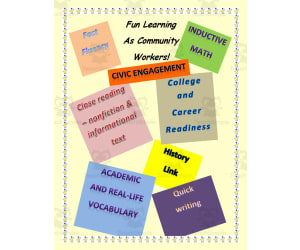
Careers Now and Then | Community Workers Unit | Chippewa Communities An educational resource meticulously tailored for educators from various fields ranging from elementary school teachers to homeschooling parents. It gives an immersive look into the present and historical perspectives of jobs specifically within Chippewa communities, ensuring engagement among learners. What to expect? A multidisciplinary approach drawing learning elements mainly from social studies but seamlessly integrating facets of math, reading comprehension, etc. A focus not just on fact absorption but on practicing fact fluency and participating in engaging activities like close reads. The incorporation of mathematical thinking to foster the development of critical thinking skills relevant to understanding careers. Inclusions: This resource is a neatly packaged PDF file comprising: 55 easy-to-print pages: The pages are designed for students across grades 1 through 5. Detailed lesson plans: Purposefully crafted for insightful week-long classes integrated with beneficial checklists for easy progress evaluation. The charm extends beyond in-depth content to adaptability across various settings – be it as comprehensive class lessons or homework tasks appropriate for lone students or small study groups at home. Essentially, this unit offers educators a dynamic kit designed not only for instructive lessons but also as an inspiration trigger that sparks lively debates amongst youngsters about societal roles in present times compared to historical Chippewa communities.
Author Anyone Can Learn
Tags Careers, Community Workers, Chippewa Communities, Social Studies, Experiential Learning

American Civil War: Key Events of the Civil War Gr. 5-8
Social Studies, History, History: USA, Grade 5, 6, 7, 8, Teacher Tools, Lesson Plans
American Civil War: Key Events of the Civil War Gr. 5-8 This informative and comprehensive teaching resource sheds light on the critical incidents and notable personalities during the American Civil War from 1861 to 1865. Perfect for social studies and history instruction, it is aimed at students in grades 5 through 8. Resource Contents: Trouble Within America: Students will delve into principal causes of this destructive internal conflict comprising slavery issues, disparities in economic trends (industry versus agriculture), and state rights. Key Figures: Learn about significant figures like Abraham Lincoln, Ulysses S. Grant, Jefferson Davis, Lincoln’s Gettysburg Address ,etc., and their roles in molding historical events. Versatile Teaching Tool: This resource is adaptable for whole-class instruction or small-group discussions. Ideal for engaging classroom activities or detailed homework assignments. Battles Beyond Strategies: Analysis of noteworthy battles such as Attack on Fort Sumter & Battle of Bull Run along with a study about societal impacts including viewpoints held by women & African Americans. Furthur Into History: Students are given a unique chance to closely analyze Lincoln's historic Gettysburg Address along with gaining insights about post-war constitutional modifications through educational briefs regarding Amendments 13th to15th feveloped after war termination. Educational Benefits: All content aligns with state standards; structured according to Blooms Taxonomy . Bonus Inclusions: Included are bonus learning tools - crossword puzzles (for vocabulary reinforcement), word search activities (for interactive class participation) and practical comprehension quizzes(with answer keys for ensuring comprehensive learning). Format Advantage: The resource is delivered in a easy-to-manage PDF file, rendering consistent, accessible material at hand. The American Civil War: Key Events of the Civil War Gr. 5-8 promises to invigorate history lessons for your enthusiastic young learners!
Author Classroom Complete Press
Tags PDF
Grade 8 History Skills Review | Back-to-School Diagnostic
History, Social Studies, Grade 8, Assessments, Teacher Tools, Lesson Plans, Worksheets & Printables
Start your school year with confidence using this 8th Grade Beginning of Year History Assessment and complete intervention system! This comprehensive Grade 8 History Skills Diagnostic helps you quickly identify student strengths and learning gaps in source analysis, evaluating evidence, historical thinking, data interpretation, and document-based writing so you can confidently plan targeted instruction from day one. More than just a pretest, this resource provides a complete Assess → Identify → Group → Practice → Reassess system with a 46-question diagnostic assessment , targeted intervention worksheets, enrichment activities, skill analysis tools, and detailed answer keys that transform assessment results into meaningful instruction. What's Included This 8th Grade Beginning of Year History Skills Assessment Bundle includes: ✅ Teacher Guide & Implementation Overview ✅ 46-question Beginning-of-Year History Skills Review ✅ Printable Student Answer Sheet ✅ Skill Analysis & Grouping Tools ✅ Item-to-Skill Mapping Guide ✅ Class Skill Grid ✅ Individual Student Profiles ✅ Grouping Planner ✅ Reassessment Tracker ✅ 26 Targeted Follow-Up Practice Worksheets ✅ Extension Activities ✅ Student Choice Board ✅ Complete Answer Key ✅ Scoring Guide ✅ Two Written Response Rubrics ✅ Printable PDF format ✅ No-prep, print-and-go resource Students are assessed across five major historical thinking strands : 📖 Source Analysis Primary source analysis Author's perspective Purpose Audience Historical context 🔍 Evaluating Evidence Bias & limitations Reliability of evidence Corroborating sources Conflicting accounts Evaluating evidence ⚖️ Causation & Change Cause vs. trigger Underlying & multiple causes Change & continuity Historical significance Consequences 📊 Data & Context Reading charts & tables Population data Economic data Quantitative evidence Data trends & inference 📝 Historical Argument & DBQ Constructing a thesis Claim-Evidence-Reasoning (CER) Using multiple documents Counterarguments Mini-DBQ analysis Selecting evidence The Teacher Guide explains that the complete bundle contains approximately 91 printable pages across seven coordinated resources , all connected through consistent skill codes that streamline assessment, intervention, and reassessment. How It Works in the Classroom This 8th Grade History Beginning of Year Assessment follows an easy five-step instructional cycle that turns assessment data into actionable teaching. Step 1 — Assess Students complete the 46-question History Skills Review using the separate Student Answer Sheet. Step 2 — Identify Skill Gaps Score assessments with the Answer Key and record student performance using the Class Skill Grid. Step 3 — Group Students Use the Grouping Planner to create flexible intervention groups based on shared skill needs. Step 4 — Assign Targeted Practice Assign only the Follow-Up Practice pages that correspond to each student's assessment results. Step 5 — Reassess Monitor growth using the Reassessment Tracker and regroup students as needed. The Teacher Guide recommends administering the assessment during the first week of school in approximately 55–60 minutes , or dividing it into five shorter sessions by skill area. Teachers may read questions aloud because the assessment measures historical thinking skills rather than reading ability. Perfect for: Beginning of Year Assessment History Pretest Back to School Activities Diagnostic Assessment U.S. History World History Social Studies RTI MTSS Intervention Small Groups Progress Monitoring Flexible Grouping Standards & Learning Goals This 8th Grade History Skills Diagnostic Assessment measures advanced historical thinking and evidence-based reasoning skills students should demonstrate at the beginning of Grade 8. Students develop and demonstrate understanding of: Source Analysis Analyzing primary sources Determining author perspective Identifying purpose and audience Understanding historical context Evaluating Evidence Identifying bias and limitations Evaluating source reliability Corroborating historical evidence Comparing conflicting accounts Selecting relevant evidence Causation & Change Distinguishing causes from triggers Identifying multiple causes Analyzing change and continuity Evaluating historical significance Recognizing intended and unintended consequences Data & Context Reading charts and tables Interpreting population and economic data Analyzing quantitative evidence Drawing evidence-based conclusions from data Historical Argument & DBQ Writing strong thesis statements Claim-Evidence-Reasoning (CER) Using multiple historical documents Building counterarguments Completing a Mini-DBQ Selecting supporting evidence Students demonstrate understanding through engaging historical tasks including: Primary source analysis Historical notices and documents Charts and graphs Economic data Population data Source comparison Mini-DBQ activities Multiple-choice questions Evidence-based written responses Every assessment question is tied directly to one historical thinking skill and aligns with matching intervention worksheets using the included Skill Analysis Tools. Why Teachers Love It ✨ More than a beginning-of-year assessment—it is a complete instructional system. ✨ Saves 10+ hours of planning by combining assessment, data analysis, intervention, enrichment, and reassessment into one easy-to-use resource. ✨ Every assessment question is aligned to a specific historical thinking skill, allowing teachers to pinpoint exactly where students need additional support. ✨ Build flexible intervention groups quickly using ready-to-use data analysis and grouping tools. ✨ Includes 26 targeted Follow-Up Practice worksheets , each featuring a student-friendly "Remember" mini lesson followed by fresh practice questions that reinforce essential skills without repeating assessment items. ✨ Differentiate instruction with confidence. Students who need additional support receive focused intervention while advanced learners complete meaningful enrichment activities designed to deepen historical thinking. ✨ Extension Activities challenge students through authentic historical inquiry, including: Primary source analysis labs Corroborating conflicting sources Cause vs. trigger investigations Historical significance arguments Data interpretation Mini-DBQ creation Thesis writing Counterargument practice These enrichment projects promote higher-order thinking, historical inquiry, evidence evaluation, and document-based reasoning while keeping advanced students meaningfully engaged. ✨ Skill Analysis Tools simplify instructional planning. Teachers receive: Item-to-Skill Map Class Skill Grid Student Profiles Grouping Planner Reassessment Tracker Every assessment item connects directly to a matching intervention worksheet, making differentiated instruction simple and efficient. ✨ Includes comprehensive scoring support. The Answer Key provides: Correct answers Skill codes Answer explanations Skill mastery bands Two written-response rubrics Teachers can quickly identify students who are Approaching , On Track , or Strong in every major skill area and immediately plan targeted instruction. ✨ Supports meaningful, data-driven instruction while remaining easy to administer, score, and implement throughout the school year. Give your students a strong start with this 8th Grade Beginning of Year History Assessment and complete intervention system. Whether you're looking for an 8th Grade History Diagnostic , Beginning of Year History Pretest , U.S. History Assessment , Historical Thinking Activities , Primary Source Analysis , DBQ Practice , Social Studies Assessment , RTI Resource , Progress Monitoring Tool , or a complete assessment-to-intervention solution, this bundle provides everything you need to assess, analyze, group, reteach, enrich, and monitor student growth throughout the school year.
Author Bright Classroom Ideas Marketplace
Rating
Tags History, Social Studies, Back To School, Assessment, Diagnostic
Countries of the World Unit
Social Studies, Geography, Grade 1, 2, 3, 4, Teacher Tools, Lesson Plans
This is a Countries of the World Unit. It is jam-packed with activities that your students are sure to enjoy. There are 9 countries included: 1. China 2. India 3. Brazil 4. Mexico 5. Egypt 6. Australia 7. Canada 8. Antartica 9. Italy For each country, there will be flags, crafts , activities and more!
Author Our Strange Class
Tags World, Geography, Countries, Word Search, Back To School
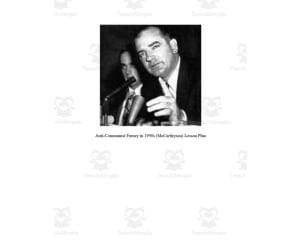
Anti-Communist Frenzy in 1950s (McCarthyism) Lesson Plan
Social Studies, History, History: USA, History: World, Grade 9, 10, 11, Teacher Tools, Lesson Plans
This is an Anti-Communist Frenzy in 1950s (McCarthyism) Lesson Plan. National Curriculum Standards: Learners will understand the impact across time and place of key historical forces, such as nationalism, imperialism, globalization, leadership, revolution, wars, concepts of rights and responsibilities, and religion. Specific Objectives: To analyze and evaluate the methods of interrogation of the McCarthy Era. To interview past historical characters. Materials: The worksheet provided here. Procedure: After a general lesson on the Cold War, it is important to understand how the Cold War affected Americans for a US History Class. After the Cold War lesson is over, explain briefly how people feared communism. Anyone suspected of being a communist was interrogated or put on a blacklist. Then tell the class that they’ll be FBI agents looking for communist spies. You are looking for at least two of them but there could be more. They will interrogate suspects and execute whoever they want. They should follow the instructions given on the worksheet which is self-explanatory. It is preferable that the class work in pairs for this activity. After they are done, ask them who they thought were the real spies. (Real spies were the Rosenberg’s and Alger Hiss. Give them away at the end after they have shared who they executed). Ask them how they selected their suspects and finally ask them whether the whole process was fair or not. Mention that even though after several decades when archives were released, we found that those three were real spies, the evidence provided at the time was circumstantial.
Author Creative Educator
Tags History Lesson, Communism, Imperialism, Cold War, McCarthyism, Revolution, Wars, U.S. History, Globalization, FBI Agents, Anti Mccarthyism, Anticommunism In The 1950s, 1950s Anti Communist, Mccarthyism Worksheet

World Political Leaders: Juan and Eva Peron (Argentina) Gr. 5-8
Social Studies, Government, Grade 5, 6, 7, 8, Teacher Tools, Lesson Plans
World Political Leaders: Juan and Eva Peron (Argentina) Gr. 5-8 is a meticulously designed teaching resource, curated specifically for Grade 5 to 8 learners. The core focus of this resource is on Social Studies, with a sub-focus on Government studies. The material herein zeroes in on the notable Argentinian political duo, Juan and Eva Peron, gleaning from the expansive lesson plan - "World Political Leaders". This educational tool charters students through a captivating journey across continents, evaluating the global influence of twelve key political leaders from the past century. Begins with an overview of leadership styles and political strategies of U.S figures like George W. Bush's 'war on terrorism' and Ronald Reagan's approach amidst Cold War tensions. Delves into international matters such as Mexico's Vicente Fox mediation efforts involving Fidel Castro during an international summit. Presents case studies such as Margaret Thatcher playing a pivotal role in stemming South Africa's apartheid regime. Covers significant historical transitions including Mikhail Gorbachev transitioning from leading Soviet Union to becoming Nobel Peace Prize laureate. Evaluates Nelson Mandela’s relentless fight for equal rights in South Africa. Moves onto examining Dalai Lama’s spiritual leadership role in Buddhist religion alongside his reincarnated spirit belief system. This educational aid incorporates Bloom’s Taxonomy principles while conforming to your State Standards, assuring all-round learning outcomes. To make lessons interactive & concept retention tangible: • Teaching supplements like writing tasks & crossword puzzles are included. • Word search activities focus on reinforcing introduced vocabulary. • Comprehension quizzes serve as understanding check-points. • Answer keys allow easy grading of acquired knowledge. Comprising 25 printer friendly pages, this comprehensive teaching resource offers an engaging method to discuss the deeds and global influences of world political leaders. It can be utilized in various ways such as full-length class lessons, small group discussions or individual homework assignments. The objective is simple: making history more accessible for students while fostering thoughtful contemplation about leadership.
Author Classroom Complete Press
Tags Social Studies, Government, Political Leaders, Argentina, Government Worksheet
George Washington | Reading Comprehension Deck | Interactive Lesson
Social Studies, Biographies, Grade 6, 7, 8, Teacher Tools, Lesson Plans
George Washington Reading Comprehension Lesson Deck Transport students back in time to learn about the fascinating life of George Washington with this interactive digital lesson deck for middle school grades. Students will watch an engaging video, read along with a passage about America's first president, analyze the text closely, and write a quick response to demonstrate comprehension. Educators can implement this versatile resource in various ways - as a whole class activity projected on a screen, a small group lesson at literacy centers , or even an independent homework assignment. This social studies resource brings George Washington to life through diverse modes of learning to deepen understanding and spark students' interest in history.
Author Teach Me This
Tags George Washington, Presidents, American History, Interactive Lesson, Social Studies

Genetics of Psychology Unit
Social Studies, History, Psychology, Grade 10, 11, 12, Lesson Plans, Teacher Tools
This resource is a Genetics of Psychology Unit. This is a bundle of resources that the AP Psych teacher can utilize to introduce, teach and review concepts. Included: - Psychology Lecture Slides - BF Skinner Applied - Cognition: Alike... But Different Activity - Confusing Pairs Review - Have a Ball Activity
Author Skinner's Box
Tags Genetics, Psychology, Bundle, Skinner, Theorists

Fall Curriculum Pack
Creative Arts, Art, Social Studies, ELA, Writing, Handwriting, Math, Early Math, Science, Life Sciences, Nature & Plants, Kindergarten, Lesson Plans, Teacher Tools
If your students are studying fall or are about to begin a seasons unit, I have just the resource to provide you with everything you need and more! This is a Fall Curriculum Pack complete with an abundance of printable resources and engaging activities for students to complete. This curriculum was designed for your preschool students. The curriculum goal is to gain additional knowledge about fall, the world around them, and the predictable events associated with this time of year. Skill-building will be facilitated through activities and projects related to this theme. The vocabulary that students will focus on is apple, harvest, autumn, leaves, season, stalks, tractor, pumpkins, fall, acorns, orchard, field, chilly, vines, rake, and gourds. This curriculum will come with colors of the week (orange and yellow, fall colors) and a letter of the week (P). This curriculum pack includes: --Sensory Table Ideas --Art Activities --Cooking Experience --Community Time --Math Activities --Home/School Connection Ideas --Science Table Enrichments --Science Concepts/Activities --Prop Box Ideas/Dramatic Play Enrichments --Movement and Motor --Playground/Walk Activities --Transition/Waiting Ideas --Block Area Enrichments --Flannel Board --Teacher Made Enrichment Ideas --Field Trip Ideas --Supplemental Learning Ideas/Activities At the start of this pack, you will receive a list of supplies needed for activities and projects. The worksheets, activities, and tasks included in this pack are intended to be completed in a variety of formats – whole group, small group, and independent work. I hope you enjoy!
Author Learning Foundations
Tags Fall Vocabulary, Letter Of The Week, Colors Of The Week, Sensory Table, Art Activities, Science Table Enrichments, Field Trip Ideas, October, September
I WONDER - Who Invented Alarm Clocks | Animated Video Lesson
History: Europe, History, Social Studies, History: Ancient, Grade 4, 5, 6, 7, 8, 9, 10, Lesson Plans, Teacher Tools
Video Introduction An amazing video designed for the students to learn more about history. I WONDER - Who Invented Alarm Clocks | Animated Video Lesson Do you like history? Which topic do you really enjoy about history? Have you ever read an interesting fact about the Vikings? If yes, can you mention them? What do you like most about the Victorian era? Can you name all the Tudors? Have you ever wondered how people used to live in ancient Japan and ancient China? Do you know any interesting facts about ancient Egyptians and the Pharaohs? Have you ever visited South America? What do you know about Incas and Aztecs? Celtic culture was really one of a kind, can you name any of the places that Celts used to live in? Imagine yourself living during the ancient Roman empire, how your life will look like? Ancient Greece was an amazing place to live in. What do you know about ancient Greek life? I WONDER - Who Invented Alarm Clocks | Animated Video Lesson The video is perfect for encouraging the researching skills for the students, while learning more about history. I WONDER - Who Invented Alarm Clocks | Animated Video Lesson This friendly designed video is suitable for students at school, homeschooling, and as a group activity. Format Available in MP4 format.
Author Educational Voice
Tags Who Invented Alarm Clocks, Who Invented Alarm Clocks Video, Alarm Clocks, Alarm Clock, Alarm Clocks Facts, Alarm Clocks History, Alarm Clocks Facts For Kids, Alarm Clocks Video, Alarm Clocks Video For Kids

Passport Series: Western Europe
Social Studies, Geography, Grade 5, 6, 7, 8, 9, Teacher Tools, Lesson Plans
Passport Series: Western Europe Passport Series: Western Europe is an enlightening teaching resource, designed to spark curiosity and broaden the minds of grade five to nine students. It covers a vast domain exploring language, food, culture, history, and geography across more than 50 countries. In-Depth Studies With Inclusive Activities The product boasts eight comprehensive books intended for in-depth studies about each country's unique attributes. The approach isn't just factual but includes activities: Experimental recipes: Taste buds are stimulated with delicious dishes from various regions. Educational games: Engaging games provide an interactive layer to enrich learning experiences. Versatile Delivery & Adaptability The Passport Series: Western Europe comes in a ready-to-print 189-page PDF file for accessible delivery of lesson plans according to teacher preferences. It supports various instructional arrangements – whole-group discussion or assignments for smaller groups or homework. Promoting Continuous Learning The series fosters continuous learning by suggesting ideas for extension activities. These opportunities cultivate valuable research skills among young learners beyond the classroom walls. Vivid Storytelling & Cross- Curriculum Opportunities Vivid illustrations and photographs enable student immersion within diverse societies while fostering global citizenship. The reproducible pages provide opportunities to connect lessons with other subjects aligning general education goals - making it a cornerstone tool not only for geography ages but also social studies instructors. In Conclusion... "Passport Series: Western Europe is more than just your average teaching tool; it transforms your classroom into a platform where every learner can metamorphose into an informed globetrotter ready to navigate our shared global village confidently. Consider this resource as a true investment in advancing the scope of education delivered to budding minds."
Author Classroom Complete Press
Tags Social Studies, Geography, Metric Conversions, Culture, Religion Reading Passage

I WONDER - What Is A Troll | Animated Video Lesson
History, Social Studies, Common Core, Grade 4, 5, 6, 7, 8, 9, 10, Lesson Plans, Teacher Tools
Video Introduction An amazing video designed for the students to learn more about mythological creatures in different cultures. I WONDER - What Is A Troll | Animated Video Lesson Mythology is full of wonders and spectacular stories. Ancient civilizations were trying to explore every aspect of life, while they search for new technologies, they wanted to believe in something big and can change the world, so they created mythical creatures and mythical stories. Let's hear about them! What do you know about these creatures? Cyclops, Centaurs, Selkies, Phoenix, Gnomes, Dragons, Gorgons, Orcs, Cerberus, Trolls, Minotaur, Griffins, Mermaids, Elves, Polyphemus, Pegasus, and Ogres. I WONDER - What Is A Troll | Animated Video Lesson The video is perfect for encouraging the creativity skills for the students, while learning more about this fantastic mythical creature. I WONDER - What Is A Troll | Animated Video Lesson This friendly designed video is suitable for students at school, homeschooling, and as a group activity. Format Available in MP4 format.
Author Educational Voice
Rating
Tags What Is A Troll, What Is A Troll Video, Troll, Troll Facts, Troll Video, Troll Video For Kids, Troll Facts For Kids, Trolls, Trolls Facts, Trolls Video
Hawaii: A Micro-Learning Deck | Digital Geography Lesson
Social Studies, Geography, Grade 4, 5, 6, 7, Teacher Tools, Lesson Plans
The Hawaii: A Micro-Learning Deck | Digital Geography Lesson resource is a 14-slide download that exposes your students to learning activities for the state of Hawaii. This digital mini-lesson includes: -Video and Audio -Informational Text - Graphic Organizers -Digital & Interactive components -Summarizing Students will enjoy interacting with this lesson and each of the activities!
Author Teach Me This
Tags Digital Lesson Plan, Hawaii Learning Deck, Hawaii Lesson, Geography Activities, Interactive Lesson

I WONDER - How Do People Drink Coffee | Animated Video Lesson
Nature & Plants, Life Sciences, Science, Social Studies, Sociology, Grade 6, 7, 8, 9, 10, 11, 12, Lesson Plans, Teacher Tools
Video Introduction An amazing activity designed for the students to learn more about STEM. I WONDER - How Do People Drink Coffee | Animated Video Lesson Do you like STEM subjects? what is your favorite one? Have you ever tried to plant a seed? If yes, tell us more about it. Or have you ever tried to invent something? If yes, tell us more about it. And how do you think it will help us? Have you ever seen a microorganism under a microscope? What was it? And how it looked like? Mathematics is a marvelous subject. Let' sharpen our brains and solve some equations. Do you like timetable tricks? What is your favorite one? Do you know how to code? Have you ever created an app or a game before? If yes, how was it like? I WONDER - How Do People Drink Coffee | Animated Video Lesson The video is perfect for encouraging the researching skills for the students, while learning more about this fantastic topic. I WONDER - How Do People Drink Coffee | Animated Video Lesson This friendly designed video is suitable for students at school, homeschooling, and as a group activity. Format Available in MP4 format.
Author Educational Voice
Tags How Do People Drink Coffee, How Do People Drink Coffee Video, Coffee, Coffee Facts, Coffee Facts For Kids, Coffee Video, Coffee Facts Video For Kids, Drinking Coffee, Culture, Science
I WONDER - What Clothes Did Rich Vikings Wear | Animated Video Lesson
History: USA, History, Social Studies, History: Europe, History: Canada, History: British, History: Ancient, Grade 4, 5, 6, 7, 8, 9, 10, Lesson Plans, Teacher Tools
Video Introduction An amazing video designed for the students to learn more about history. I WONDER - What Clothes Did Rich Vikings Wear | Animated Video Lesson Do you like history? Which topic do you really enjoy about history? Have you ever read an interesting fact about the Vikings? If yes, can you mention them? What do you like most about the Victorian era? Can you name all the Tudors? Have you ever wondered how people used to live in ancient Japan and ancient China? Do you know any interesting facts about ancient Egyptians and the Pharaohs? Have you ever visited South America? What do you know about Incas and Aztecs? Celtic culture was really one of a kind, can you name any of the places that Celts used to live in? Imagine yourself living during the ancient Roman empire, how your life will look like? Ancient Greece was an amazing place to live in. What do you know about ancient Greek life? I WONDER - What Clothes Did Rich Vikings Wear | Animated Video Lesson The video is perfect for encouraging the researching skills for the students, while learning more about history. I WONDER - What Clothes Did Rich Vikings Wear | Animated Video Lesson This friendly designed video is suitable for students at school, homeschooling, and as a group activity. Format Available in MP4 format.
Author Educational Voice
Tags What Clothes Did Rich Vikings Wear, What Clothes Did Rich Vikings Wear Video, Rich Vikings, Rich Vikings Facts, Rich Vikings Video, Rich Vikings Video For Kids, Rich Vikings Clothes, Rich Vikings Clothes Video
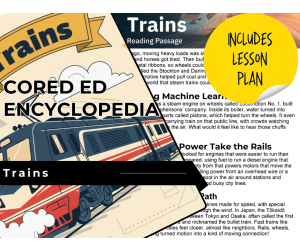
Trains Reading Comprehension Passage - Cored Ed Encyclopedia
ELA, Language Development, Reading Comprehension, Reading, Science, Technology, Engineering, History, Social Studies, Physics, Grade 2, 3, 4, 5, Worksheets & Printables, Worksheets, Teacher Tools, Centers, Activities, Writing Prompts, Assessments, Quizzes and Tests, Quizzes, Lesson Plans
This trains reading comprehension with lesson plan includes: Visualization (on the front cover) Start your lesson by taking a minute to think and share something about the topic. Read the script aloud (slowly), perhaps prepare some music or sound effects. Student close their eyes and let their imaginations wander. Students open their eyes, read the question aloud and give them a few minutes to complete. Ask a few students to share or keep answers until the end to compare with what they learn in the passage. Quick pause—thousands of Cored Education products are included with your TeachSimple membership. Download links and encyclopedia index available here. Pre-Reading Trivia Students will write down one thing they already know about the subject and then read five more facts and discuss. These facts are fun, and the students will enjoy learning about the subject before reading more. Give 1 minute for students to write what they already know (no pressure—best guess is fine). Read the five facts together. After each fact, do ask a student for their opinion, was it surprising? Set a purpose by asking students to highlight/underline one fact they want to learn more about during the reading. Reading Passage The text is a high-interest reading passage with set paragraphs, roughly three to four paragraphs long. It contains a variety of themes about the topic, anywhere from history to technology. The passage is between 250 and 350 words in length. First, ask students to look at the headings and see what they’ll learn about today. What do they know about the topic/heading? First read options: Teacher read-aloud (best for support). Partner reading (paragraph by paragraph). While reading, students underline important details, and vocabulary words they think may come up in the questions section. Mixed Questions The first question page contains four multiple-choice questions, each with a choice of four answers, and three written response questions that require a sentence or two from the student. Students complete the mcqs first independently, then review quickly as a class. For the 3 written responses, try to get students giving the answer with some form of evidence: “I think ___ because the text says ___.” If students get stuck, send them back to check the passage. Vocabulary Questions Practice seven key words from the text in this section across two activities. First section is scrambled words where students will unscramble three words given a clue for each. The second section is a word to meaning matching activity. Before starting, have some students read out words they underlined in the passage. Ask students to say the word and read aloud the sentence(s) around each word. Ask students to do scrambled words and the matching exercise in pairs then go through answers as a class. For the scrambled spelling task, get four pairs to come up to the board and write the words for extra practice with the other student reading out the clue. For the matching task, prompt students to give full sentences: “I matched ___ with ___ because ___.” Creative Writing In this question, the student will be required to write a five to eight sentence paragraph on a question related to the topic. Before starting, ask students write down 3 key ideas they are going to include in their piece. Ask students for ideas to share around the class to help those struggling. Pro writing expectations: 5–8 sentences At least 2 facts or details from the passage At least 2 vocabulary words from the previous page Students read their paragraphs while classmates listen for facts and vocabulary words. Extension Activities This page is optional for fast finishers or to take home. There are several activities, each one requiring a different skill. Do some, do none, do all, completely optional - but you will feel reassured knowing every possibility is planned for. Includes summary writting question. Answer Key There are answers for the multiple-choice questions, written response questions have sample answers, vocabulary answers and if there is a summary question then a sample summary will be provided as well. Lesson Plan Included Customized lesson plan for this lesson is included. Lesson Snapshot Title: Trains Genre: Nonfiction (informational text) Subject: Science (Technology & Engineering) Primary Topic: How rails and train power changed over time Estimated Guided Reading Level (A–Z): R What This Lesson Teaches Best Explains how smooth rails reduce “rubbing,” helping heavy loads move more easily than wagons on muddy roads. Uses a real historical example (the Stockton and Darlington Railway opening in 1825) to show steam trains carrying coal and people. Describes how a steam locomotive works (water becomes steam, steam pushes pistons, pistons help turn wheels). Compares train power types—steam, diesel (engine spins a generator), and electric (overhead wire or third rail). Shows how high-speed rail was designed for speed (special tracks, trains shaped to slice through wind), including Japan’s Tōkaidō Shinkansen (1964) “bullet train.” QA check (support pages vs. passage): The pre-reading trivia uses the word “friction,” but the main passage describes the idea as “rubbing.” Other questions and vocabulary (boiler, pistons, diesel, generator, third rail, high-speed rail) match the passage. Learning Goals Students will explain why smooth rails helped heavy loads move with less rubbing. Students will identify what happened in 1825 with the Stockton and Darlington Railway. Students will describe how steam in a boiler can help power wheel movement using pistons. Students will compare steam, diesel, and electric explanations of how trains get power in the text. Students will describe how train design and tracks can increase speed, using details about high-speed rail. Key Vocabulary From the Text locomotive — the front engine that pulls the train cars. boiler — the part where water is heated to make steam. pistons — parts steam pushes to help turn the wheels. generator — a machine that makes electricity for the train. soot — black dirty particles in the air from smoke. FULL CATALOG OF DOWNLOAD LINKS AND ENCYCLOPEDIA INDEX HERE
Author Cored Education
Rating
Tags Vocabulary, Reading Comprehension, Reading Passages, Lesson Plans, Ela Lesson Plans, Reading Comprehension Lesson Plans, Pre-reading, History, History Lesson Plans, Physics
All About The Pyramids | Geographical Wonders Video Lesson
Social Studies, Geography, Not Grade Specific, Lesson Plans, Teacher Tools
Introducing: All About The Pyramids | Geographical Wonders Video Lesson All About The Pyramids | Geographical Wonders Video Lesson, a 10-minute animated geography module, delves into the world of ancient marvels. This resource serves multi-grade level educators teaching Social Studies with a focus on geography. It unveils intriguing facets of these historical formations in an engaging manner. Video Lesson Format and Application The video lesson is presented in an easily comprehensible MP4 format making its application suitable for numerous educational settings. You can use it as part of small group studies or as supplemental material towards whole-group instruction. Furthermore, it fits perfectly for homework assignments - allowing students to delve deeper at their own pace. Promotes active learning Ensures student engagement Fosters appreciation for historical landmarks known the world over This makes it a valuable addition to any teaching regimen - whether you are homeschooling or are a public school teacher aiming to educate students about fascinating global features like pyramids. Beyond Traditional Classroom Boundaries You can also use this geographical wonders video lesson during flipped classroom days - proving its usefulness beyond traditional classroom boundaries. Plus, before exams or quizzes about essential geographical sites globally, this tool provides students with compelling visual content—ultimately solidifying their understanding levels around this facet of geography. A Fascinating Interaction between Education and Entertainment All About The Pyramids | Geographical Wonders Video Lesson stands sturdy as a captivating balance between education and entertainment – fostering enriched learning experiences while keeping interest levels soaring high!
Author Educational Voice
Tags Pyramids, Geographical Wonders, Ancient Marvels, Landforms, Landscapes

I WONDER - How Do You Use Roman Numerals | Animated Video Lesson
History: Ancient, History, Social Studies, History: Europe, Numbers, Early Math, Math, Grade 4, 5, 6, 7, 8, 9, 10, Lesson Plans, Teacher Tools
Video Introduction An amazing video designed for the students to learn more about history. I WONDER - How Do You Use Roman Numerals | Animated Video Lesson Do you like history? Which topic do you really enjoy about history? Have you ever read an interesting fact about the Vikings? If yes, can you mention them? What do you like most about the Victorian era? Can you name all the Tudors? Have you ever wondered how people used to live in ancient Japan and ancient China? Do you know any interesting facts about ancient Egyptians and the Pharaohs? Have you ever visited South America? What do you know about Incas and Aztecs? Celtic culture was really one of a kind, can you name any of the places that Celts used to live in? Imagine yourself living during the ancient Roman empire, how your life will look like? Ancient Greece was an amazing place to live in. What do you know about ancient Greek life? I WONDER - How Do You Use Roman Numerals | Animated Video Lesson The video is perfect for encouraging the researching skills for the students, while learning more about history. I WONDER - How Do You Use Roman Numerals | Animated Video Lesson This friendly designed video is suitable for students at school, homeschooling, and as a group activity. Format Available in MP4 format.
Author Educational Voice
Tags How Do You Use Roman Numerals, How Do You Use Roman Numerals Video, Roman Numerals, Roman Numerals Facts, Roman Numerals Video, Roman Numerals Video For Kids, Roman Numerals Facts For Kids

All About Christ the Redeemer | Geographical Wonders Video Lesson
Social Studies, Geography, Not Grade Specific, Lesson Plans, Teacher Tools
All About Christ the Redeemer | Geographical Wonders Video Lesson An engaging teaching resource designed for enlightening geography and social studies lessons. This resource incorporates an 8-minute animated video lesson that brings to light one of the world's most iconic monuments - Christ the Redeemer. It is perfectly tailored for flexible learning environments and does not target a specific grade level, making it versatile for any class curriculum. Main Content: An introduction to Christ The Redeemer, highlighting its geographical significance and reasons why it's considered one of the wonders of the world. Integrating Into Curriculum: This resource can be utilized within whole-group classroom instruction or embedded into small group activities. It serves as an excellent tool for remote or blended learning settings as well. Suitable For Homework & Self-Study: This video lesson can reinforce previous teachings on geographical landmarks in homework assignments or self-directed studies. The information presented matches grade 7-8 reading comprehension levels. Convenient Format : It comes in a handy MP4 file format, ensuring compatibility with various devices used by teachers today - making it convenient whether you conduct your classes online or offline on school premises. In conclusion, if you're seeking an educational tool that would engage all age groups while enriching your geography instruction - this video about 'Christ The Redeemer' is a valuable teaching aid!
Author Educational Voice
Tags Christ The Redeemer, Geographical Wonders, Landmark, Rio De Janeiro, Educational Resource

Death Valley National Park Geography Unit
Social Studies, Geography, Grade 6, 7, 8, 9, Teacher Tools, Lesson Plans
Death Valley National Park Geography Unit This robust, educational resource -the Death Valley National Park Geography Unit- is designed specifically to enhance understanding and stimulate students' curiosity about one of America's most unique landscapes – Death Valley National Park. Designed for middle school students in Grade 6 to Grade 9 studying Social Studies and specifically, Geography. The content of the unit includes: An insightful presentation that acts as a guide through the varied contents of the package. Preview sheets supplied both as JPEG files and PDFs for visual exploration. Worksheet sets specially created to reinforce learned knowledge. Pintable booklets ideal for reference or group projects. The reading sheets delve into an array of themes tied intrinsically with significant aspects of Death Valley such as its compelling history, unique geography distinct wildlife species and intriguing climatic conditions. There are two designs available – either a modified condensed form or an elaborate two-sheet format can be selected depending on student preference or needs. In order to engage students more deeply, QR codes linking them directly to relevant videos about the park have been embedded within each reading sheet. This effectively integrates technology into social studies education while still remaining engaging. Furthermore, in this package you will find crossword puzzles which are great fun for classroom activities as well complementing the learning process by reinforcing facts acquired during lessons about this natural landmark. High-resolution images included can be used by visual learners who want engage more deeply with curricular content or employed creatively in assigned projects related their study. Also provided are title cards that could prove crucial when crafting informative presentations or assembling detailed booklets regarding Death Valley. To sum up everything,This comprehensive unit seeks a balance between learning and engagement, providing an innovative solution for improved retention without the risk of lessons becoming redundant. This unit is versatile enough to be used in whole group settings, small study groups or even as homework assignments.
Author Mr Gray History
Tags Death Valley, Geography, National Park, Middle School, Interactive Materials

I WONDER - Are There Different Types Of Volcanoes | Animated Video
Geography, Social Studies, Environmental Science, Earth and Environmental Sciences, Science, Earth Sciences, Grade 3, 4, 5, 6, 7, 8, 9, Lesson Plans, Teacher Tools
Video Introduction An amazing video designed for the students to learn more about natural disasters in different countries. I WONDER - Are There Different Types Of Volcanoes | Animated Video Lesson What do you know about this natural disaster? Do you know in which part of the world this could happen? Have you ever read about the safety misusers that we could have to protect ourselves from this natural disaster? If yes, can you tell us more about them? Can you name other natural disasters? If yes, tell us more about where they are likely to happen? And how frequently? Do you like reading about Geography? What is your favorite country in the whole world? If you are going on a trip where it will be? Which country? What you are going to see there? Does this country has a famous place to visit? Do you like reading about Geology? If yes, what is your favourite topic? I WONDER - Are There Different Types Of Volcanoes | Animated Video Lesson The video is perfect for encouraging the researching skills for the students, while learning more about this fantastic phenomenon. I WONDER - Are There Different Types Of Volcanoes | Animated Video Lesson This friendly designed video is suitable for students at school, homeschooling, and as a group activity. Format Available in MP4 format.
Author Educational Voice
Tags Are There Different Types Of Volcanoes, Are There Different Types Of Volcanoes Video, Different Types Of Volcanoes, Different Types Of Volcanoes Facts, Different Types Of Volcanoes Video, Different Types Of Volcanoes Video For Kids
American Government: The Constitution of the U.S.A. Gr. 5-8
Social Studies, Government, Grade 5, 6, 7, 8, Teacher Tools, Lesson Plans
American Government: The Constitution of the U.S.A. Gr. 5-8 A comprehensive teaching resource, crafted specifically for demystifying the complex workings of the American government for students in grades 5 through 8. Engages learners to understand legislative, executive, and judicial branches of governance. Distinguishes between different forms of governance like constitutional monarchy, dictatorship, representative democracy to instill appreciation for democracy. Unique Focus on US Constitution: Gives insights into what a constitution is and its significance in shaping societal laws and rights. Bridges theory with practice by illustrating how such abstract principles impact lives every day. Constitutional Principles: The material explores textual amendments including those known collectively as Bill of Rights. Leverages hands-on exercises like tracking a hypothetical bill's journey from inception to becoming law – leaving lasting impressions about law-making procedures. Activity -Based Learning: Email incorporates varied activities such as: "Higher-order thinking skills": Writing tasks based on Bloom's Taxonomy. "Cognitive Agility": Crossword puzzles and word search games. "Knowledge Absorption": Comprehension quizzes. "Independent thinking": Guided self-correction thermosugh answer keys. Suitable Teaching Material: Product beliefs specifically designed as lesson plans under Social Studies sub-topic – Government: Suitable for public schools or homeschooling setup. Available in a single-file PDF format for easy navigation and drive empowering dialogue on civic Subjects.
Author Classroom Complete Press
Tags PDF